

By: Paul Healy // Last Updated:
Cosy bars, majestic castles and timeless architecture make Lisbon a cool and entrancing city. Our 3-day Lisbon itinerary puts it all together, so you have time to savour it all.
Lisbon is cool.
As a city unrestrained by convention, Lisbon is bursting with personality. Besides majestic architecture housing Portugal’s famous blue tiles, flea markets hum to the murmur of curious browsers.
Re-purposed industrial areas give it an edge for artistic expression, while timeless monasteries captivate with beguiling designs.
Windy lanes climbing up and down narrow streets hide tiny bars serving simple tapas and local wines. Live music spills from open windows; the wistful warbling of fado fills squares with an inexplicable yearning.
We’ve visited Lisbon several times, and this itinerary captures everything we love about this alluring city. From the best local areas to the top tourist spots, exquisite galleries to the coolest street art, glorious castles to quirky shops.
And of course, pastel de nata.


Lisbon Map
We’ve put this itinerary together after several visits to Lisbon. It has been designed to minimise the travel time between sights and you can follow most of this itinerary on foot. The map below is organised by each of the 3 days.
Our Lisbon Itinerary
Day 1: Alfama & Old Lisbon
Alfama, perched up on the hill, is a maze of alleyways winding between grand historic buildings. There are sweeping views over the city and the sea, similar to some of the vistas in Porto.
We always have a great time simply ambling around the area, but here is a recommended route.
São Jorge Castle
Start your 3 days in Lisbon at São Jorge Castle, high on the hill in Alfama. It was once a Moorish castle, but little remains from that period, and most of it has been rebuilt over the years.
The small museum could do with some improvements, but the views over the city from the rambling walls are excellent.
Castelo de São Jorge / Skip-the-Line Tickets

Church of São Vicente de Fora
Grab a quality coffee at Copenhagen Coffee Lab and Bakery before entering the Church of São Vicente de Fora.
The church itself is decent and worth a look, but the monastery and cloisters next door are incredibly impressive. Blue tiles, protected by vaulted ceilings, shimmer on the white walls.
The atmospheric side chapels have tombs adorned with skulls, with a cloaked statue standing guard.
Igreja de Sao Vicente de Fora / Check current opening times.

Graca’s Campo de Santa Clara
After the church, head over to Graca’s Campo de Santa Clara, where a massive flea market, Feira da Ladra, covers the streets (Tuesday and Saturday).
It sells everything you will never need: old rotary phones, broken mannequins and pre-loved vinyl. The market is great for people watching, and you may even pick up a bargain.
Lunch
There are plenty of atmospheric places to grab lunch near the market, we loved Tabernita for the traditional Portuguese dishes.


National Pantheon
In the afternoon, enter the striking Panteão Nacional. Originally built as a church, it now houses monuments to the great and the good of Portuguese history, including a shrine to Vasco da Gama, who brought massive wealth to Lisbon.
The entrance ticket grants access to the roof, offering excellent views of the city. From the upper terraces, take in a bird’s-eye view of the marble hall.

Lisbon Cathedral
Next, stroll the tightly packed twisty streets of Alfama.
Head past the cute stores and tiny bars to Miradouro das Portas do Sol observation deck for more views. Drop down the hill to the castellated fortress that is Lisbon Cathedral.
The Romanesque Lisbon Cathedral dates back to the 12th century. With an imposing facade and two bell towers on either side, it rises like a medieval fortress from the old town.
The view from the loft was the highlight for us.

Praça Do Comércio
Finally, leave Alfama and stroll down towards Praça do Comércio. The harbour-facing plaza is one of the largest in Portugal and the most beautiful in Europe. It was completely remodelled after the earthquake, and today it’s the seat of the Portuguese state departments.
The large ornate square is an excellent photo opportunity, but we’d suggest avoiding the restaurants around the square.

Fado Evening
In the evening, head to Bairro Alto.
Grab a drink on the steps at Meson Andaluz. Then, choose from the daily changing menu of local dishes at the tiny but charming Taberna da Rua das Flores.
Later in the evening, Tasca Do Chico offers an intimate, great-value fado experience. One block north, cool jazz drifts out of Páginas Tanta.
At Portas Largas, a mixed young crowd can be found enjoying live pop music. If you can’t decide, just go to all three. There’s no entrance charge and the drinks are cheap.

Day 2: BeléM & West Lisbon
The seafront area of Belém lies to the west of Lisbon city centre. Come here for engrossing architecture, the epicentre of modern art in the city, and the best pastel de nata in Lisbon.
Antiga Confeitara de BeléM
Take tram 15 to Belém and begin the second day of your 3-day Lisbon itinerary with coffee and pastel de nata (Portuguese custard tart) from Antiga Confeitara de Belém. Yes, it has become a large tourist institution, but the pastel de nata is still the best in town.
Jerónimo’s Church and Monastery
After breakfast, head to Jerónimo’s Church and Monastery.
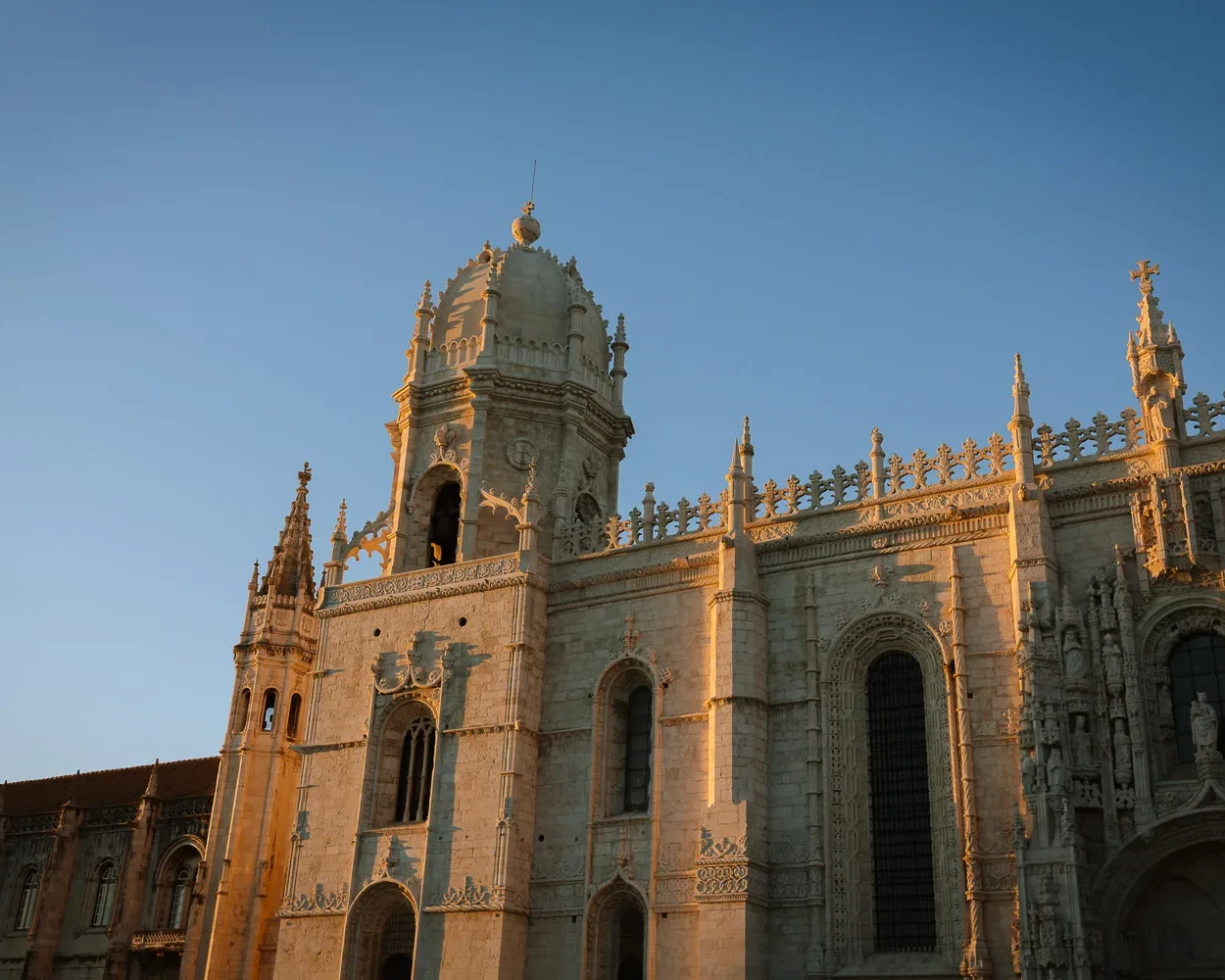
The remarkable vaulted ceiling of the church is held aloft by intricately carved stone pillars, illuminated by beams of light cascading through the colourful stained-glass windows.
The tomb of Vasco de Gama – the first person to sail around the Cape of Good Hope and therefore enable Portugal to build an empire – takes pride of place.
The church is free but we recommend paying to go into the monastery. The cloisters are magnificent and the view of the church from the upper choir is not to be missed.


Mac/Ccb Museum of Contemporary Art
End the morning at MAC/CCB Museum of Contemporary Art, Lisbon’s best modern art offering. The permanent collection is well-labelled and offers a history lesson in the development of modern art.
The temporary exhibitions have an excellent reputation; it was one of our favourite experiences in Lisbon on our last visit.


Belém Tower & Padrão Dos Descobrimentos
Cross the street and peer up at the tower of Belém.
The climb up to the top is not really worth the wait, so we’d suggest skipping in and strolling along the seafront to find a spot for lunch.
After recharging, pass by Padrão dos Descobrimentos, the photogenic monument to Portugal’s navigational prowess.


Lx Factory
Head toward the city on tram 15, but before you get there, jump off at LX Factory, an old textile factory that has been converted into a modern and creative space under the railway line.
There’s some excellent street art on old factory walls, indie shops, a very cool bookstore and some of the best coffee in town. It’s a great place to hang out and relax.
Santa Catarina
Hopping back on tram 15, spend the evening in the quaint neighbourhood of Santa Catarina, which sits on top of a hill.
A drink at Noobai Café offers views over the water. To get here, it’s a steep walk up the hill, or you could take the fun way and ride up on Elevador da Bica.

Day 3: Bairro Alto, Baixa & Chiado
The central area of Lisbon is an eclectic mix. Narrow alleyways crisscross grand shopping streets, dilapidated ruins sit next to striking hotels, and music wafts through open doors and windows. It’s a great part of the city.
Tram 28
On the last day of this 3-day Lisbon itinerary, get an early start (to avoid the queues) and head to Praça Martim Moniz to board Tram 28. This tram twists and turns up the hilliest, narrowest and most scenic lanes in Lisbon. It loops around Alfama, across the centre of town and back up into Chiado.
Praça de Principe Real
Jump off the tram in Chiadom, explore the shops around Praça Luis de Camōes and then head north into the tightly packed narrow lanes of Bairro Alto.
Check out the various new concept stores around Praça de Principe Real before lunch at A Cevicheria. Sit at the counter under a giant octopus, and admire the chef preparing mouth-watering fish dishes.


Miradouro de São Pedro de Alcântara
After lunch, check out the view at Miradouro de São Pedro de Alcântara, which we think gives you the best view in the city. Then make your way down to Rossio and Baixa.
You can either take the Elevador da Gloria tram or walk down the path alongside the tram tracks to inspect some of the coolest street art in Lisbon.
Igreja de São Domingos
You now find yourself in Rossio and Baixa – newer Lisbon neighbourhoods, built after the earthquake of 1755.
Explore the squares and statues, making sure you call in at Igreja de São Domingos. This atmospheric church suffered damage during the earthquake and was burnt down in 1959.
The roof was destroyed and has been rebuilt, but the walls bear the scars of both events.


Convento Do Carmo
Skip the long queues and only average views of Elevador de Santa Justa and take the free supermarket lift to Rua Garrett. It’s less glamorous, but just as effective.
Stroll the shops before visiting Convento do Carmo. The convent was damaged in the earthquake, and now only towering arches reach into the sky.
The chapel at the back contains a strange mix of fascinating artefacts: tombs of the famous, a 2nd-century Egyptian sarcophagus and most interestingly, two mummies of Peruvian children.
Bairro Alto
For the final evening, grab dinner at Artis Bar in Bairro Alto. It has a great local wine bar atmosphere and tasty dishes at reasonable prices. It’s also perfectly positioned for people spilling into the streets as music wafts in the air.


Planning & Logistics
Where to Stay in Lisbon
Lisbon is a relatively compact city, but it’s still a good idea to stay as centrally as possible. We recommend staying in Baixa/Chiado, Bairro Alto or Alfama. All these areas ooze the charm you’re looking for in Lisbon, and they’re centrally located.
We have more neighbourhood suggestions in our guide about where to stay in Lisbon, which also has more hotel recommendations.
- Casa C’Alma – Casa C’Alma is a beautifully decorated B&B with a small, friendly vibe and a big continental breakfast. It’s located in a lovely neighbourhood about 1 mile from the city centre.
- Casa Balthazar – The modern, self-catering apartments of Casa Balthazar are bang in the centre of town, yet exude a relaxed, chilled-out calm. The views are superb, but upgrade to the Jacuzzi Terrace.
- Memmo Alfama – For an emphasis on design with all the latest gadgets, it’s hard to go past Memmo Alfama. It will be hard to leave the rooftop bar and pool with sweeping views over the Tagus River.

Getting There
Lisbon’s Humberto Delgado Airport is 7km from the city centre. Direct flights connect Lisbon to most major European cities.
From the airport, the Metro red line drops you into the city centre in around 20 minutes and is by far the easiest and cheapest option.
Taxis and Ubers are readily available if you have heavy luggage, and the journey shouldn’t cost more than €15–20.
Getting Around
Lisbon is a compact city, and the best way to see it is on foot, though the hills will test your legs more than you might expect.
It also has a comprehensive public transport network, including trams, funiculars, buses and a metro, which easily connects you to various parts of the city.
Navegante Card // Lisbon’s public transport card is Navegante, a quick and easy way to pay for all your travel. The card costs €.50 and can be charged with individual tickets or day passes. We walked everywhere in Lisbon, so the card wasn’t worth it for us.

Best Time to Go to Lisbon
Lisbon is a year-round destination, but the best time to visit is spring (March to May) and early autumn (September to October).
This is the best time to explore the city on foot, when temperatures are generally comfortable, and fewer visitors are around. Accommodation may be cheaper over this time.
June to August is peak season. It’s a wonderful time to visit, but you do need to be prepared for crowds, heat, and higher prices.
Winter (November to February) is Lisbon’s quietest season and is honestly underrated. The city is cooler and occasionally rainy, but rarely cold by northern European standards, and you’ll find the main sights refreshingly uncrowded.
Lisbon Card
The Lisbon Card provides access to 52 museums and discounts on shops and attractions. The main attractions are: Torre de Belém, Mosteiro dos Jerónimos, Castelo de São Jorge, and Panteão Nacional. The costs are:
- 24-hour pass: €30
- 24-hour pass: €50
- 72-hour pass: €60
It also includes free passes on the metro, trams, and cable railways for the duration of your pass.


More Guides for Portugal
- Our curated list of the best things to do in Lisbon.
- The perfect 3-day itinerary for Lisbon.
- Book your accommodation with our guide to Lisbon’s neighbourhoods.
- Our top things to do in Funchal.
- An itinerary for a Lisbon to Sintra day trip.

reader-supported
When you buy through links on our site, we may earn a small affiliate commission at no extra cost to you.
Thanks for your support // Paul & Mark
Great itinerary and such a beautiful place
It sure is. Thanks for stopping by.
I love how you give insight into which viewpoints to skip and where to go instead. I love a beautiful viewpoint and would hate to waste precious time, and I would definitely need it to accomplish this amazing 3 day itinerary! #FarawayFiles
Lisbon is full of beautiful viewpoints. Lots of tired legs after climbing hills looking for them.
I so want to go there just by reading this…Surely making plans now…Thank you for this post!!
Thanks, Katherine – glad you found it inspiring. Good luck planning your trip.
You had me at Lisbon. Need to book a trip tomorrow. Or yesterday. Not that I needed to be sold, but your swoony pics and straightforward tips always sway me. Love this post. Dreamy. Thanks for sharing with #FarawayFiles. Cheers from Copenhagen.
Thanks, Erin! Lisbon is quite a swoony destination, the hills, the pretty streets, the excess of wine – all great.
Beautiful photos and a great itinerary and is perfect for 3 days. #farawayfiles
Thanks so much.
Brilliant guide – this is almost exactly what I did during my 3-day trip a few years back. A really interesting city – wish it hadn’t been so hilly though lol! #FarawayFiles
Thanks, Keri. I know what you mean, those hills can be hard work on the legs. That’s why you need to spend plenty of time recuperating in a little tapas bar somewhere.
We three days Lisbon, but were pleasantly surprised and wished for more time… I thought I was in shape until my calves told me differently the morning of the second day. #farawayfiles
Yes, those hills can be a bit of a workout. I think it was punishment for all those Portuguese tarts I consumed.
Paul Healy,
Just found out that your itinerary covers so much more than the average three days. Well executed and really interesting. Will be using your guide when I travel to Lisbon. #FarawayFiles
Glad you found it useful, Lydia. We had a great time in Lisbon.
I’ve a secret love affair with Portugal in general, and will be heading there for the fifth time hopefully this year. You’ve covered the best points about Lisbon, but honestly, the pastel de nata is still my favourite! I also love the feira de ladra market, and spent far too long there, and too much money, the last time I was there. An incredible city to visit.
WOW, 5 times! You must know the place inside out by now. I loved the pastel de nata too, I certainly sampled enough while I was there.
3 days in Lisbon is super ideal for me. I’m planning for a trip later this year.
I was also considering a day trip to Sintra in the 3 days. But from your post it looks like Lisbon itself has so much to see and do in all 3 days.
Jeronimo Monastery and Belem Tower are just so charming!
I’m gonna take your itinerary and tweak it a bit to suit me!
Yes, I’d definitely recommend 3 days in Lisbon, plus an extra day to head out to Sintra. You won’t get bored that’s for sure!
Beautiful photos and such a comprehensive list! Can’t believe I’ve yet to visit Portugal. It seems like the perfect mix between the ancient and modern. Will definitely be saving this for later when I do plan a trip!
Thanks, Daisy. You should definitely add Portugal to the list and Lisbon in particular. It’s a fantastic city.
It seems like you can cover a lot of ground in Lisbon in three days. I totally see what you mean that the charm of the city is not so much in its sights but in the city itself – I got that vibe just from looking at your photos. I’d love to try the ceviche there too. I feel like every country does ceviche a little differently and I’d be curious to see what Portuguese ceviche is like.
We can attest to the high quality of the ceviche in Lisbon, it was delicious.
I head to Lisbon next week so this post is going to come in very handy! There is so much to do in Lisbon isn’t there? Not sure how we will fit it all in, but we will give it a good go!
Fabulous tips and photos!
Aimsy xoxo
https://www.aimsysantics.co.uk
There’s a lot to squeeze in, but it’s worth every minute.
Oh Paul, this is a lovely blogpost and it has come up right when I am planning my itinerary to Portugal and Spain. It’s important to know what to do in Lisbon. I am planning to keep three solid days to spend there. I hope I can have all the fun like you did.
Excellent, I hope you find it useful. Good luck planning the trip – I’m sure you’ll have a great time.
Stunning pictures ! The last time I was in Lisbon was in 2008 – just over ten years ago – and your blog definitely took me back in memory lane! Did you feel like 3 days was enough in Lisbon, though?
Glad to hear it. Yes, I think 3 days in Lisbon is enough to get a taste for it. Of course, you could stay longer and down a few more pastal de nata.