

Cape Town, set in stunning scenery, has a fascinating backstory and an excellent food & wine culture. Our 5-day Cape Town itinerary captures all that is great about this African city.
By: Paul Healy | Last Updated:
Few cities compress as much contrast into one dramatic setting as Cape Town.
Here, African heritage and European colonial influence collide against a backdrop that feels almost cinematic.
Table Mountain rises abruptly above the city, and cliffs tumble into powder-white beaches, shared with penguins and seals.
It’s a place where you can hike at sunrise, sip world-class vintages by lunch, and bar-hop at night. The food scene — shaped by Malay, African, and European traditions — is among the best we’ve encountered anywhere.
But Cape Town isn’t just about aesthetics. Its beauty exists alongside a complex, often painful history. The legacy of apartheid remains visible in neighbourhoods and the culture.
We love Cape Town, and we’ve been there many times.
This 5-day itinerary is designed to help you experience the full spectrum: iconic sights and lesser-known corners, outdoor adventure and cultural experiences.

Map: Cape Town Itinerary
We’ve listed our favourite things to do in Cape Town based on four main areas that make up the city, and its surrounding areas: the city centre, outside the centre, the area east of Table Mountain and the Cape Peninsula.
Click on the top right corner to open our map in your Google Maps app. Click the star next to the title to save it to your Google account.
Our Cape Town Itinerary
Day 1: Central Cape Town
Start your 5-day Cape Town itinerary by exploring the urban centre, which covers the rich cultural heritage of the city.
District 6 Museum
The District Six Museum tells the story of the forcible ejection of local multi-racial communities from the Sixth District in inner Cape Town.
It has both permanent and temporary exhibitions and excellent guides offering personal insights into the museum.
Greenmarket Square
After the museum, grab a coffee at the excellent Uncle Bear Coffee Company before exploring the tourist market at Greenmarket Square and the old colonial buildings surrounding Company Gardens.
Next, grab lunch at Yours Truly, perched on a stool, watching the world go by.

Bo Kaap
In the afternoon, wander over to Bo Kaap.
Bo Kaap has a rich multicultural heritage, thanks mostly to the descendants of slaves brought over in the 16th and 17th centuries.
Today it’s an interesting place to stroll around and admire the colourful houses.
Check out the museum. Although the exhibits are average, a good TV presentation documents the residents of Bo Kaap as they reflect on their lives and the development of their community.
Loop & Long Street
Explore the shops of Loop and Long Street before grabbing an early evening drink at The Gin Bar on Wale Street.

Day 2: Cape Town Outskirts
Experience the many sides of Cape Town on day 2 with a visit to a township, then enjoy South Africa’s food and wine scene.
Langa Township
Head to Langa and join the morning Siviwe Township Tour.
Langa is a small, tight-knit township, just east of Table Mountain.
Touring this township opened our eyes to how many of Cape Town’s citizens live and the ongoing legacy of apartheid. It was one of our best experiences in Cape Town, and we highly recommend it.
If you don’t have your own transport, consider joining a tour. This full-day Cape Town Tour visits Langa, another township, and includes the Robben Island ferry tour.

Constantia Wine Route
Next, head over to Constantia and join the Constantia Wine Route, where you can stop at numerous vineyards and try their food and wine.
Groot Constantia and Fairview are a must for tastings, and Buitenverwachting is one of the top restaurants in Cape Town and a real treat for lunch.
Be there before 2 pm, otherwise you might have to do some fast talking to convince them to stay open for you!
Kirstenbosch Gardens
Before the afternoon completely disappears in a haze, make your way to Kirstenbosch for a leisurely stroll around the botanical gardens.
If you are here in summer, try to tie it up with one of their outdoor summer concerts, which are truly excellent.

Day 3: Table Mountain & Camps Bay
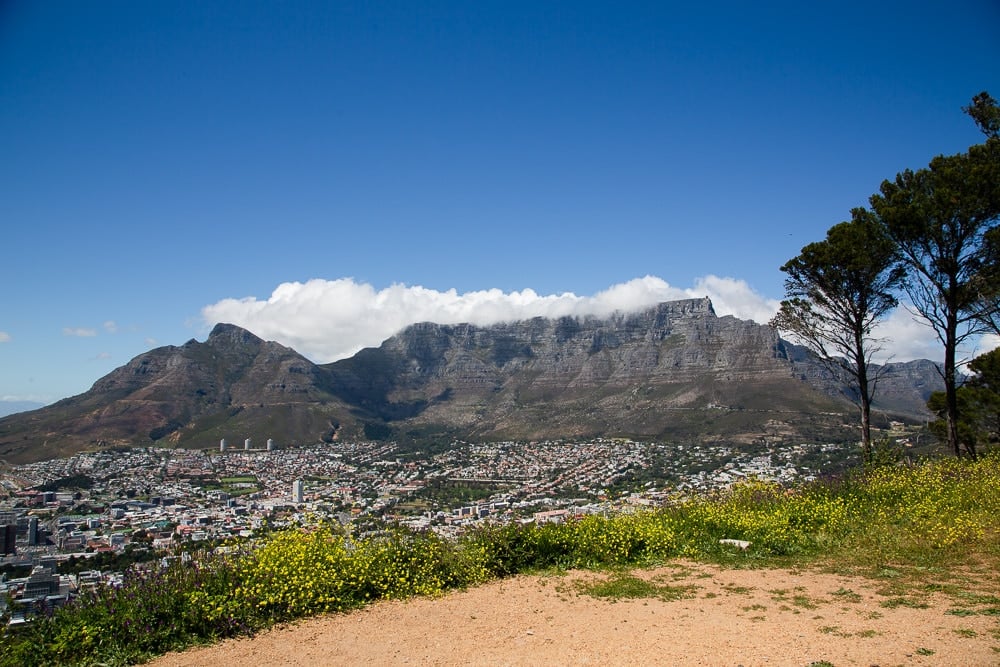
Day 3 of our 5-day Cape Town itinerary takes in two of the city’s most scenic locations, the imposing Table Mountain and the sandy shores of Camps Bay.
Table Mountain Cableway
The Table Mountain Cableway is a popular spot for locals and tourists alike, so booking ahead is essential.
With or without pre-booked tickets, you’ll likely need to queue, so get there as early as possible.
But fear not, your precious time is not wasted as the views across Cape Town, Lion’s Head, and the endless expanse of ocean are well worth the wait.

Kloof Street
After descending in the cable car, head the short distance to Kloof Street and grab lunch at one of the many options in the area. Kloof Street House was our pick.
Camps Bay
Time for a bit of R&R, so head over to the beach of your choice for some sun, sand and remarkably cold sea.
Camps Bay is a curving, wide stretch of beautiful white sand.
The four Clifton beaches under Lion’s Head each have their own vibe. Bloubergstrand, about a 20-minute drive from town, has great views back to Table Mountain and is a great spot for kitesurfing.
End the day with dinner and drinks at one of the many establishments overlooking Camps Bay. It’s sloppy tourist-driven fare, but the view, energy and sunset make up for it.

Day 4: Robben Island & Lion’s Head
Start day 4 by learning more about the era of apartheid in South Africa, followed by a strenuous but thoroughly rewarding hike to one of the best viewpoints in the city.
Robben Island Tour
Robben Island was used by the South African government as a prison for political prisoners and convicted criminals from 1961 until 1991.
Today, the island is home to a number of former inmates who work as tour guides, providing very personal – and at times – harrowing accounts of their experience in the prison.
Ferries to Robben Island depart from Victoria and Albert Waterfront, and booking in advance is recommended. The whole trip takes around 4 – 5 hours. You can also mix up the days and include it on a tour of a nearby township.
V&A Waterfront
Upon your return, explore the V&A Waterfront, a modern shopping complex by the harbour with some great dining, a good range of artisanal products and plenty of energy.
There’s often live music and entertainers, and if nothing else, it makes for great people watching.
Lion’s Head Hike
This afternoon, hike up Lion’s Head.
The well-trodden path winds its way up the mountain and offers spectacular views of Cape Town, Table Mountain, the Twelve Apostles and Camps Bay beach.
The views from the top are stunning. Make your way to the top by late afternoon as the sun drops and the surroundings are lit up in all their golden glory.
If you take a couple of beers with you to the top, you will have a truly memorable moment.
Park 500m up Signal Hill Road, just after turning off the M62 at Kloof Neck.
The path is easy to follow. There is a bit of scrambling towards the top, but if the sight of ropes and ladders leaves your palms sweaty, walk a bit further, and you’ll see another path avoiding these tricky bits.
The walk takes around 1 hour, 15 minutes up and 1 hour down.
To do it with a group, you could also book the sunrise or sunset guided tour.
Day 5: Cape Point Peninsula
Get out of the city today to enjoy the spectacular setting that makes a Cape Town visit such a memorable experience on a road trip down the Cape Peninsula.
It’s easy enough to drive yourself if you have hired a car, but otherwise, there are plenty of day tours visiting many of the highlights. Or you can hire your own guide.
Hout Bay & Chapman’s Peak
Take the M6 down to Harbour Road in Hout Bay, home to a traditional fishing harbour and market, which offers some excellent seafood and a cool seaside vibe.
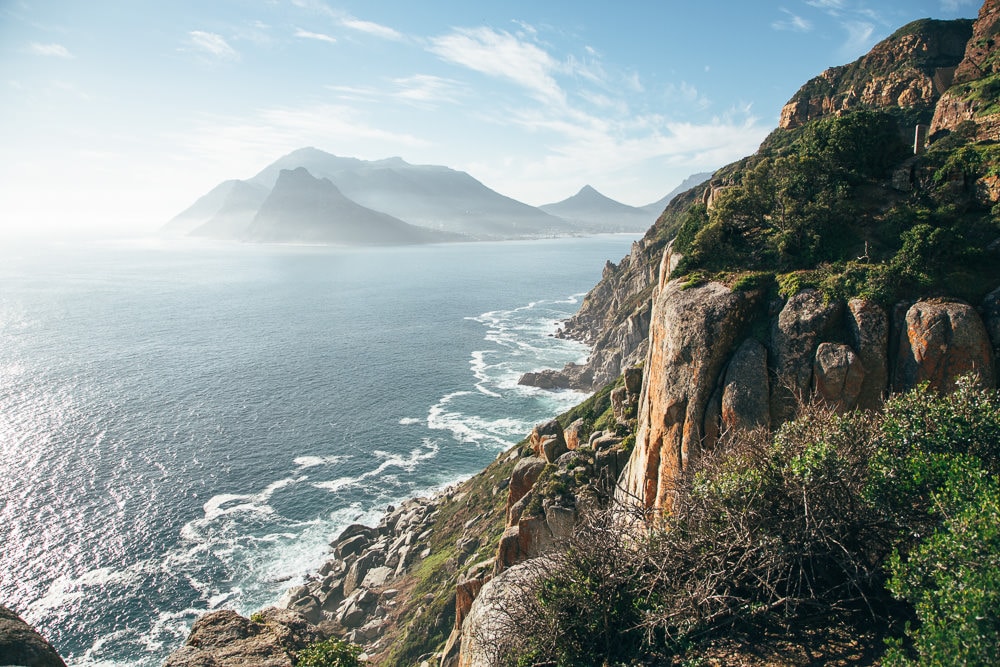
After a walk around Hout Bay Harbour, head to Cape Point via Chapman’s Peak.
This is a toll road, but you will not resent the small payment one bit; the drive is nothing short of spectacular.
Cape of Good Hope
Once the M6 hits the M65, turn right and go via Kommetjie, taking the circular route around the peninsula.
About 1h 20m after leaving Hout Bay, you will arrive at Table Mountain National Park.
Pay the entry fee, then follow the signs to The Cape of Good Hope. Walk up the hill nearby and keep your eyes peeled for whales.
After you’ve soaked up the views, drive up to Cape Point, walk up to the new lighthouse and out to the point that looks down over the old lighthouse.
Boulder’s Beach & St James
Back in the car, head up the east side of the peninsula to Boulder’s Beach (35min) and have a quick visit with the penguins.
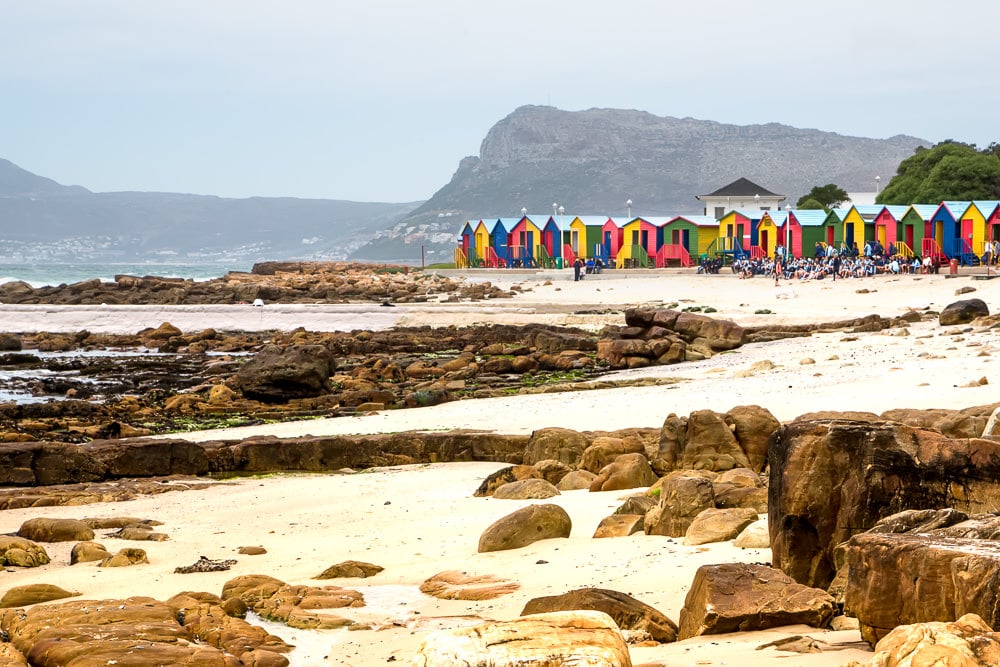
Continue to St James (25 min) and walk to the much-photographed brightly coloured beach huts framing a tidal rock pool.
Kalk Bay
Next, head back south to Kalk Bay to check out its coffee shops and bohemian vibe.
Then, have dinner at Livebait, a great, reasonably priced seafood restaurant so close to the front that the waves are lapping at the deck. Get there while it is still light to watch the sun go down.
Planning & Logistics
Where to Stay in Cape Town
Tamboerskloof and Camps Bay are both excellent locations, but for different reasons. Tamboerskloof is younger and cooler, close to the city centre with access to the café and bar scene of Kloof Street.
The views up to Table Mountain are pretty great as well.
Camps Bay, on the other hand, is a bit older, but stunningly set on one of the most beautiful city beaches in the world. A number of cocktail bars and restaurants line the front.
La Splendida – Clean lines and contemporary finishes in the heart of the Cape Town action with impressive sea views.
Jardin D’ébène Guesthouse – This quaint five-bedroom guesthouse in Tamboerskloof is decorated in modern African style with luxurious organic textiles. Breakfast on the deck beside the plunge pool is the perfect way to start your day.
The Marly – Located along Camp’s Bay’s stunning promenade, The Marly is great for unwinding on Cape Town’s most popular beach. With an enviable location, this is an excellent option for some boutique indulgence.

Book Before You Go
Cape Town can get very busy, so it’s a good idea to book a few things in advance of your trip.
The Table Mountain Cableway can close when conditions are windy, so don’t plan to go up on your final day in case it’s closed. While booking online does not skip all of the queues, it does make it considerably quicker.
If you are visiting in the summer months, check the Kirstenbosch events. The summer concerts in the gardens are excellent.
Cape Town is an excellent destination for sports fans. It is relatively easy to get tickets to world-class rugby and cricket at extremely good prices. Not to mention, Newlands Stadium is a stunning destination with great views over Table Mountain.
It’s also a good idea to book your Township Tour in advance.
Getting to Cape Town
The main airport in Cape Town is Cape Town International Airport (CPT), which has direct flights from some locations in Europe, Asia, the Middle East, and other African locations.
There are also direct flights from Washington Dulles (IAD) to Cape Town (CPT), and Delta flies direct from Atlanta (ATL) to CPT.
The airport is around 20km from the centre of town with easy connections to Cape Town.
Taxi from the Airport
The official, authorised taxi provider at the airport is Touch-Down Taxis. Picking up a taxi from the stands out front is usually no problem.
A taxi into the centre of Cape Town will cost between R350–R550. Night surcharges and traffic can push it to R600+.
Myciti Shuttle
A shuttle bus runs from the airport, every 20 minutes, between 5 am and 10 pm. The fare is around R60 to R100, depending on the time of travel.

Getting Around Cape Town
The MyCiti bus service operated from 5:00 to 22:00 daily, connecting the major areas of Cape Town, including the city centre, the Atlantic coast and Koof Rd.
More information, including rates and timetables, is available on the MyCiti website.
This is a fairly action-packed itinerary, so we recommend hiring a car at the airport.
Car hire is good value and makes getting around a slightly spread-out Cape Town much easier.
Parking is generally cheap and convenient, and the road network is very good.
Check Discover Cars for the best rates. They consolidate prices across all the major car rental companies.

Best Time to Go
Cape Town can be visited year‑round, but avoid the wetter, cooler months of July and August. For beach time, summer (December to March) brings temperatures in the high 20s°C and long days, though expect bigger crowds.
We recommend mid‑January to mid‑March for reliable good weather, long days, fewer crowds, and wine festivals or outdoor concerts.
Note that the seas around Cape Town stay cold year‑round, so swimming requires a deep breath whenever you go.
If you’re including Cape Town on a longer South Africa trip, read our article on the best time to visit South Africa’s different regions.

More South Africa Guides
- Plan your trip with our detailed Cape Town itinerary.
- Here are all our favourite places to visit in South Africa.
- Planning a trip? Read our 3-week South Africa Itinerary.
- Read our tips for planning your South Africa trip.
- These are the best things to do in Cape Town – food, attractions, hikes & more.
- How to do a self-drive Kruger Safari.
- Here’s why you should add the Drakensberg to your South Africa Trip.
- When to go? Read our guide on the best time to visit South Africa.

reader-supported
When you buy through links on our site, we may earn a small affiliate commission at no extra cost to you.
Thanks for your support // Paul & Mark
Paul – for next time – visit the Cape Winelands (Helderberg to Paarl) and the Cape Whale Route (Gordon’s Bay to Gansbaai) too. It is on par with everything the Peninsula/CBD has to offer! Just too many beautiful & special experiences to mention!
Hi Benhard,
We’re actually heading back to Cape Town in January next year and looking for some ideas so this is great. We were already thinking about spending more time in the Winelands area so we’ll definitely have a look at these two areas.
Paul.