

Feeling overwhelmed planning your Egypt itinerary? This guide covers where to go and how long to stay to make sure you cover the highlights, including a day-by-day breakdown with tips to help you save money.
By: Mark Barnes | Last Updated:
Egypt is one of the world’s most fascinating travel destinations, where ancient history, diverse religious cultures, and breathtaking experiences combine to create an unforgettable trip.
But planning an itinerary for Egypt can feel overwhelming, especially when deciding how to fit all these iconic sights into a limited timeframe.
We have been to Egypt twice: once on a tour and once independently. After these two trips, we believe 7 to 10 days is the ideal duration to experience Egypt’s most famous landmarks while allowing enough time to travel at a comfortable pace.
This guide covers everything you need to know to plan your itinerary. Even if you plan to book with a tour company, we have tips to make sure you get the most out of the experience.
We’ll cover the must-see destinations, suggest realistic travel timelines, explain how to choose the right Nile cruise, and provide detailed day-by-day itinerary options.
We also have booking options to help you save money.


What Not to Miss on Your Egypt Itinerary
There are three destinations we think every Egypt Itinerary should include. For our full list of places, read: Where to go in Egypt.
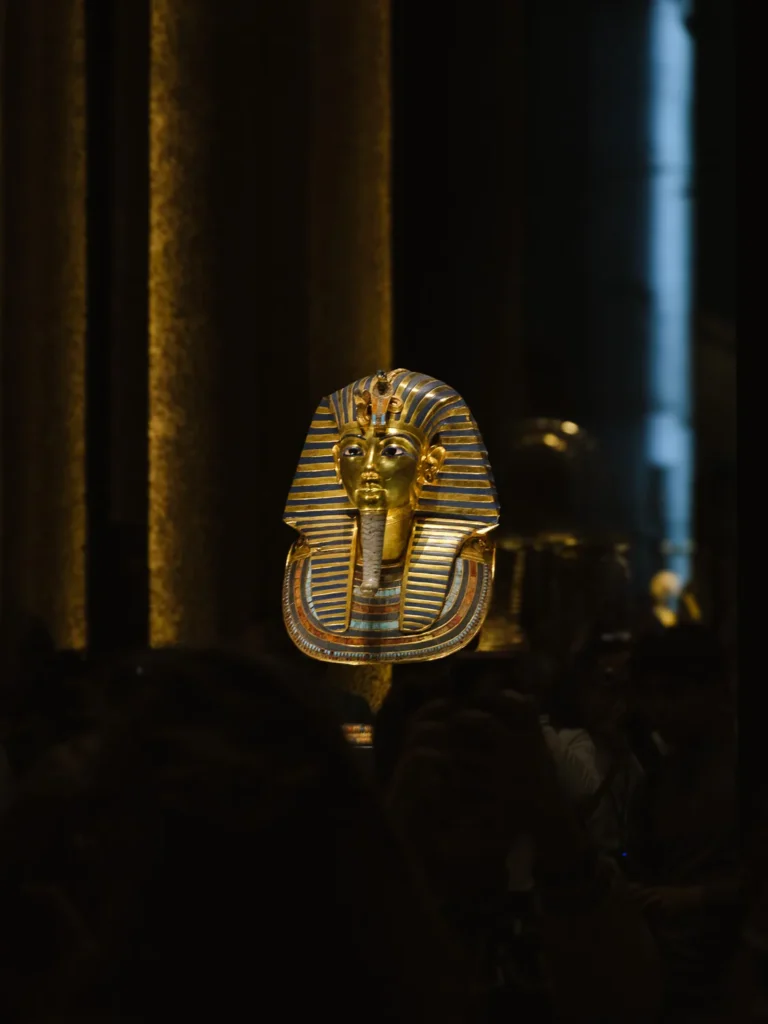
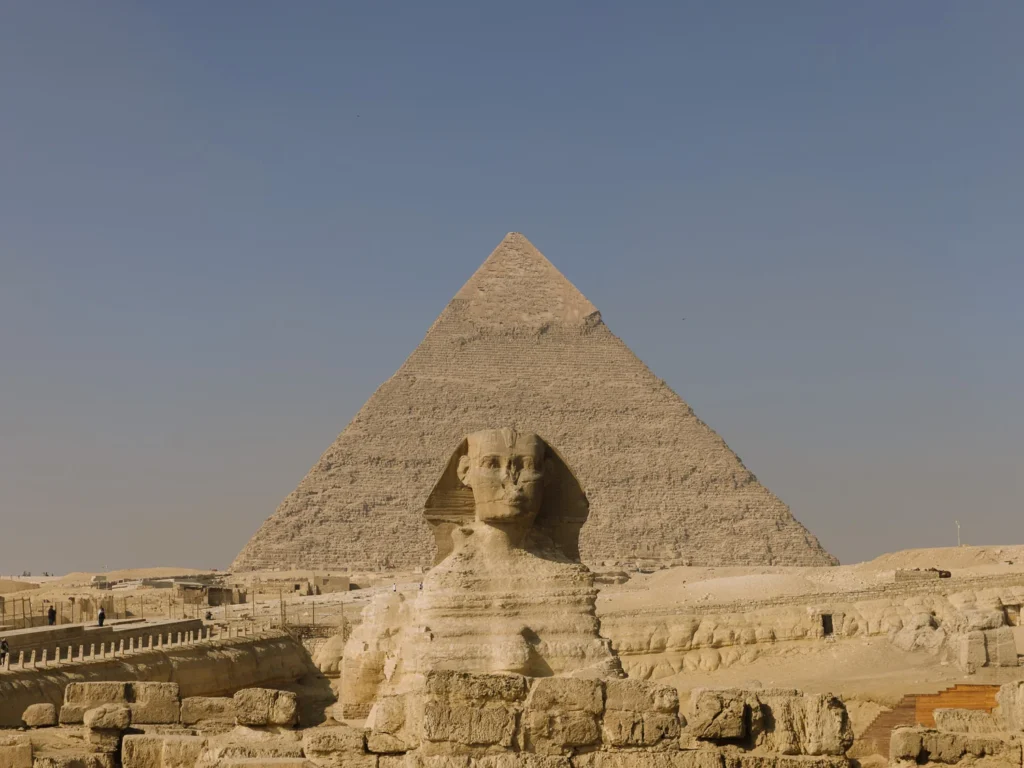
Cairo – The Pyramids at Giza are the only one of the Seven Ancient Wonders of the World still standing. Next door, the new Grand Egyptian Museum includes the miraculously well-preserved treasures from Tutankhamun’s tomb.
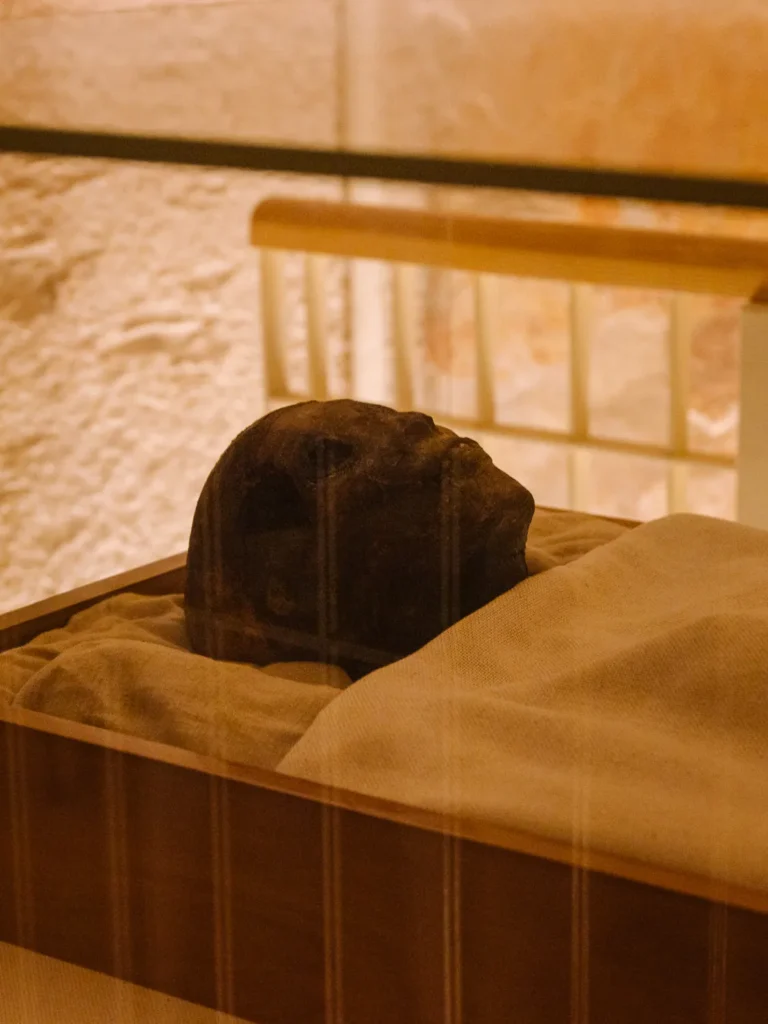
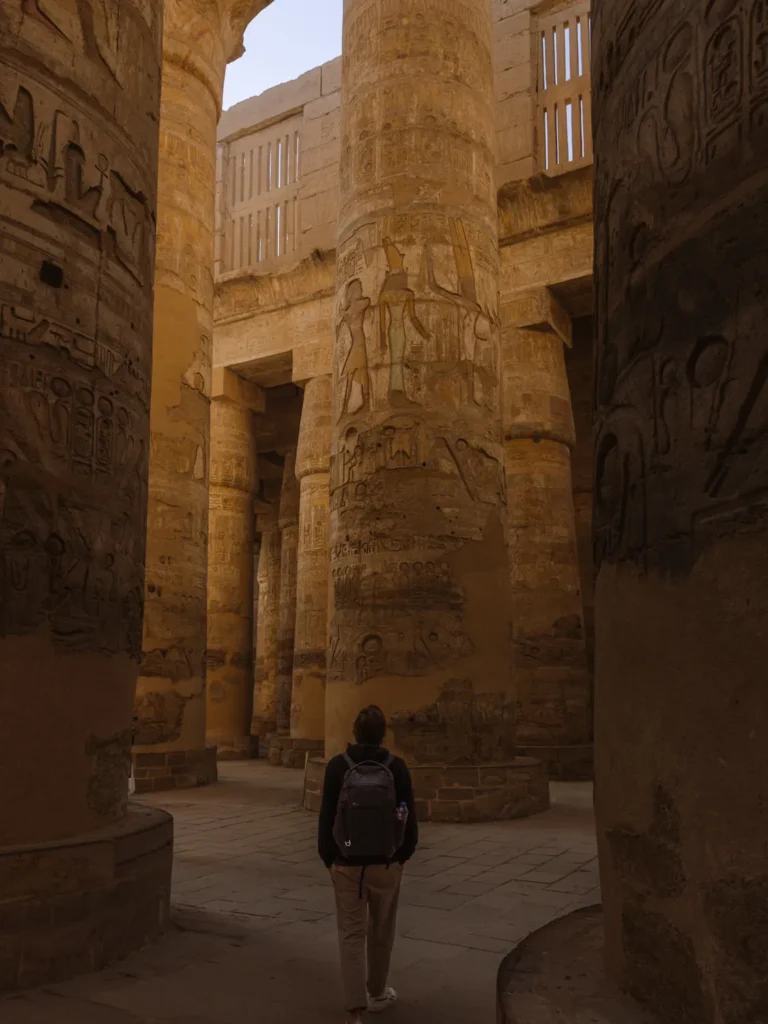
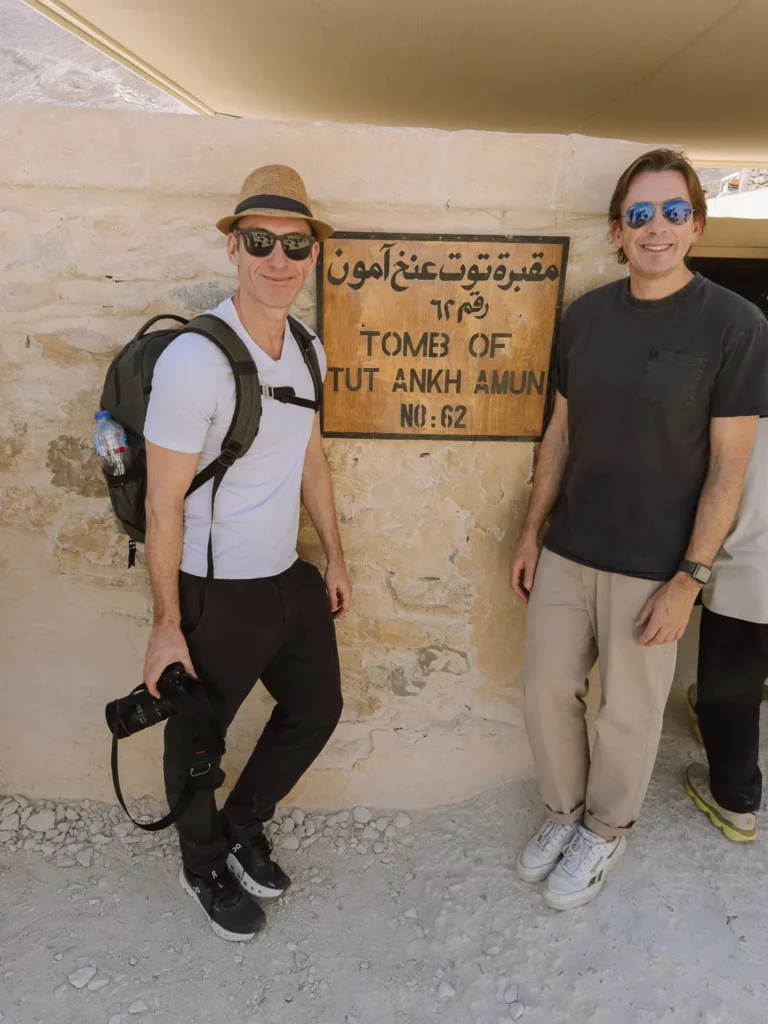
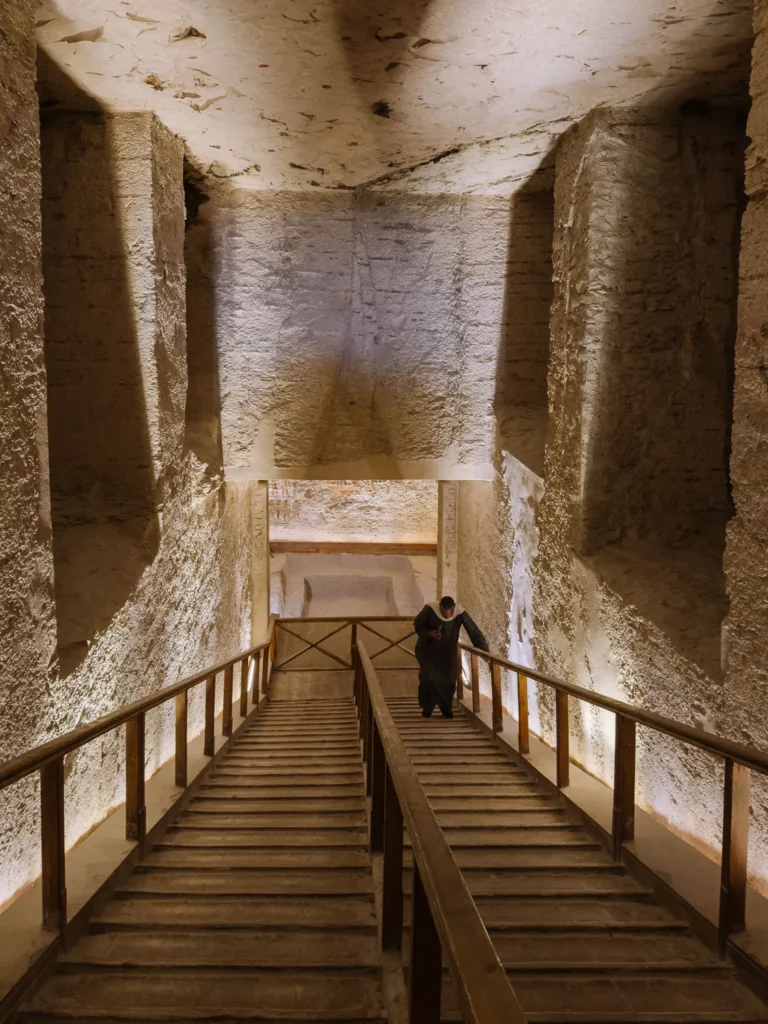
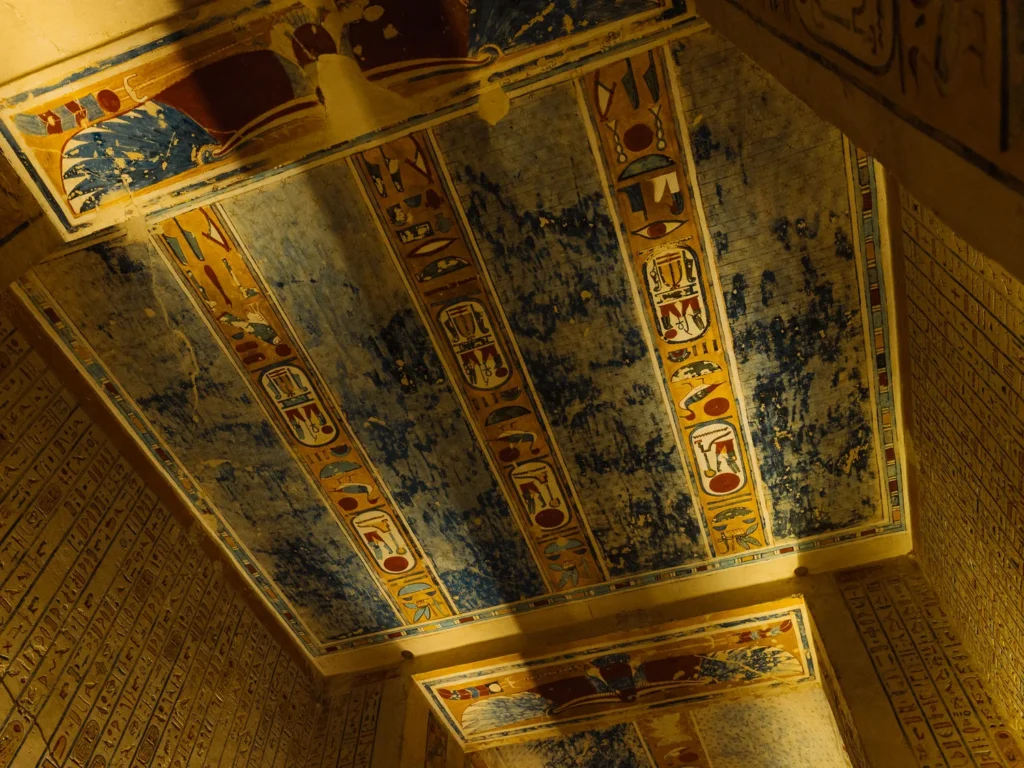
Luxor – Luxor has two of Egypt’s most unmissable sights: Karnak, a vast complex of temples with colossal structures, and the Valley of the Kings, containing the tombs of the most important pharaohs.
Nile Cruise – A Nile cruise allows you to visit historic sites that you couldn’t otherwise get to. The most popular section runs between Aswan and Luxor and typically takes 3 to 4 days.
How Long to Spend in Egypt
We recommend a minimum of 7 days for a visit to Egypt. This gives you just enough time to visit the pyramids at Giza, the tombs and temples at Luxor and enjoy a Nile Cruise. It’s a bit rushed but perfectly feasible.
Ten days is ideal and would allow you to slow the pace and add an extra day on the Nile Cruise, or include other excellent sights, such as the temple at Abu Simbel or the pyramids at Saqqara.
In 14 days, you could genuinely explore the country and even squeeze in a quick break at a Red Sea resort and hit the beach or go diving.
For other tips about planning your trip, read our guide covering everything you need to know before visiting Egypt.
How to Plan Your Egypt Itinerary
The best way to start is to build enough time to see the main attractions, which are:
- At least one day in Cairo to see the Pyramids and GEM.
- At least one day in Luxor to see the Valley of the Kings and Karnak Temple.
- A Nile Cruise between Aswan and Luxor that takes a minimum of 4 days / 3 nights.
- Time to fly between Cairo and Aswan and between Luxor and Cairo.
If you have only 7 days in Egypt, you can just fit everything in, but it’s a bit rushed. If you have more time, you can slow the pace and enjoy it all a little more.
Below, we outline our recommended 7-day itinerary. After that, we offer suggestions for additional days to turn it into a 10- or 14-day itinerary.
Finally, we share our personal tips for booking the right Nile cruise and saving money.
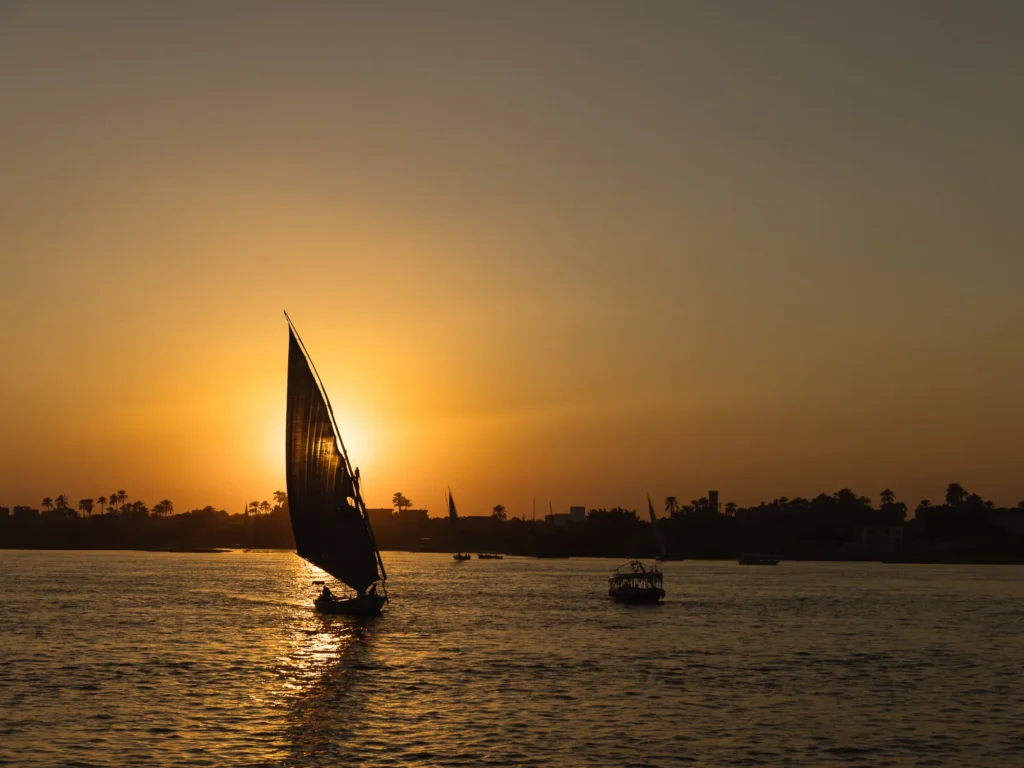
Classic 7-Day Egypt Itinerary
A week is enough time to see the three main highlights: the pyramids at Giza, the tombs and temples at Luxor, and a Nile Cruise.
After arriving at Cairo International Airport, we suggest the following 7-day itinerary.
- Day 1: Pyramids at Giza & Grand Egyptian Museum
- Day 2: Islamic Cairo & Fly to Aswan
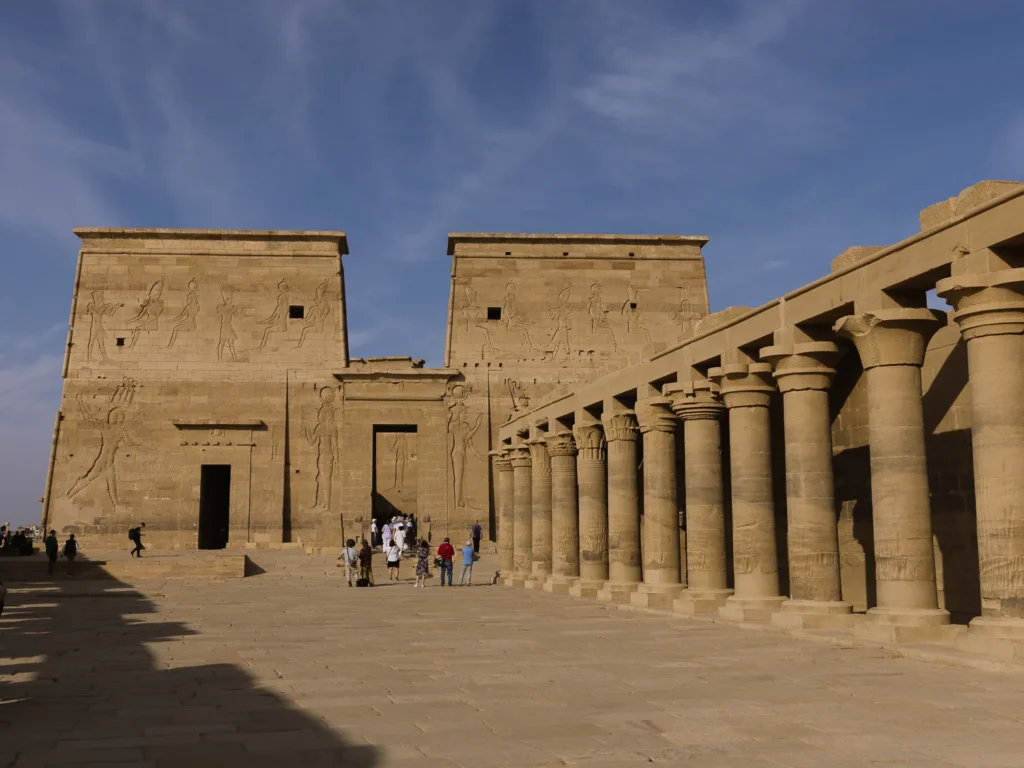
- Day 3: Philae Temple and embark on a Nile Cruise
- Day 4: Nile Cruise, stopping at Kom Ombo Temple
- Day 5: Nile Cruise, stopping at Edfu Temple
- Day 6: Depart the cruise at Luxor and explore Karnak and the Valley of the Kings
- Day 7: Fly to Cairo and depart
Begin by arriving at Cairo International Airport and checking into your hotel.
Day 1: Pyramids at Giza & Grand Egyptian Museum
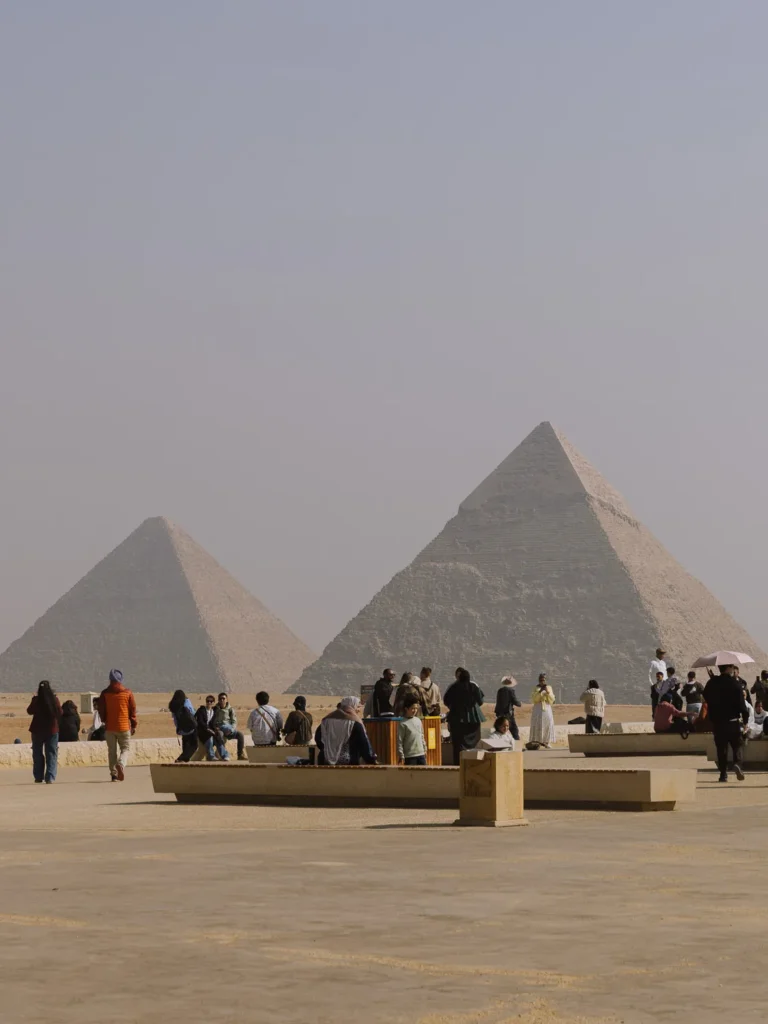
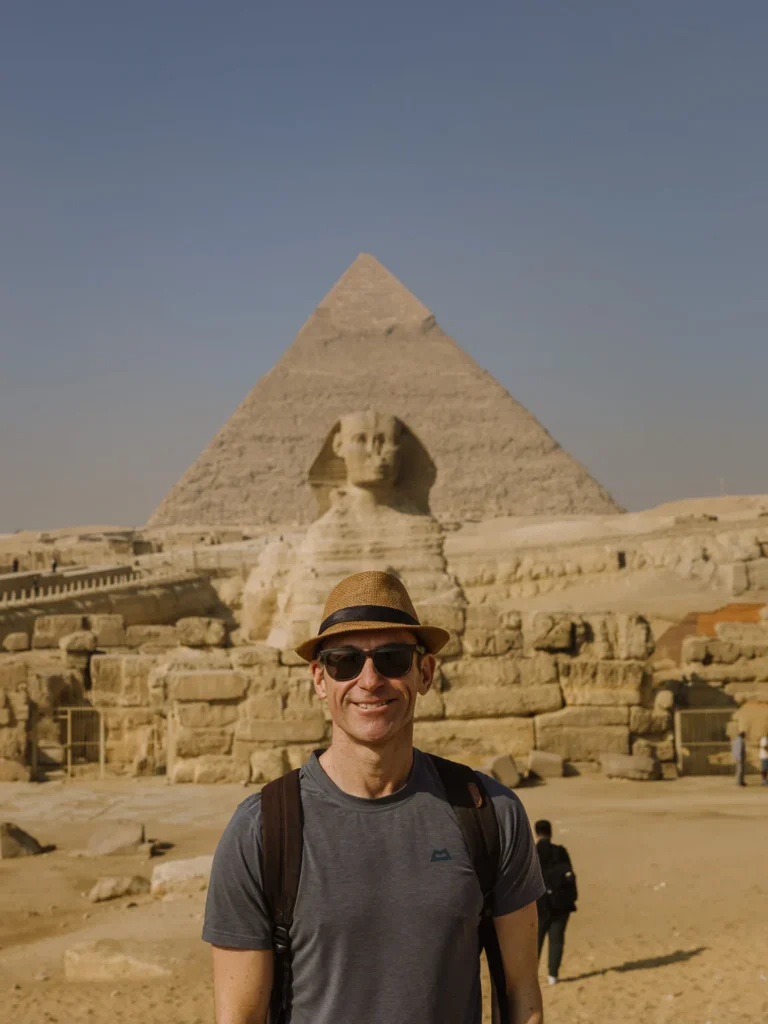
Start the day at the Great Pyramids in Giza. We recommend arriving around 8 AM, just as the new shuttle bus service begins, before the tour groups arrive.
It takes about half a day to explore the area, including:
- Seeing the Pyramids and Sphinx
- Getting photos at Panorama Point
- Taking a camel ride into the desert
- Walking into the tombs under the pyramids
You can find all the details on How to Visit the Pyramids at Giza.
In the afternoon, visit the new Grand Egyptian Museum.
The monumental space has a dramatic entrance hall dominated by a colossal statue of Ramses II. From here, it’s a voyage through history in the largest museum dedicated to a single civilisation.
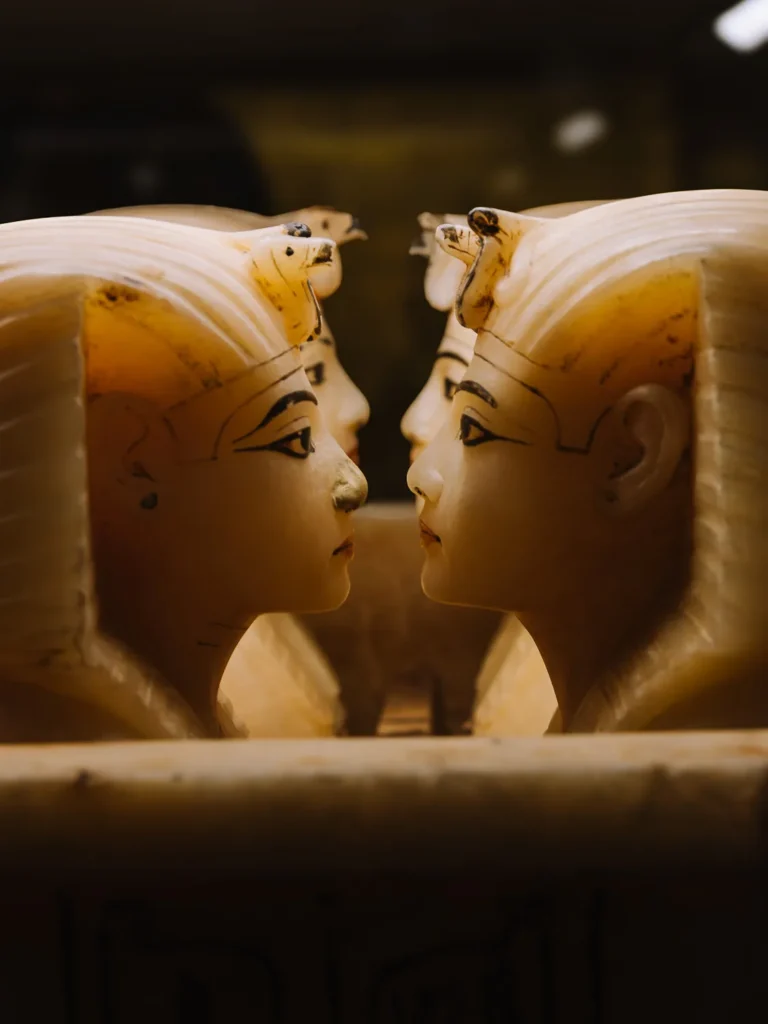
The highlight is the complete collection of artefacts from Tutankhamun’s tomb, including the famous golden death mask.
Full details for this day are on Day 1 of our 3-day Cairo itinerary, including recommendations for where to grab lunch and where to stay.
Day 2: Islamic Cairo & Fly to Aswan
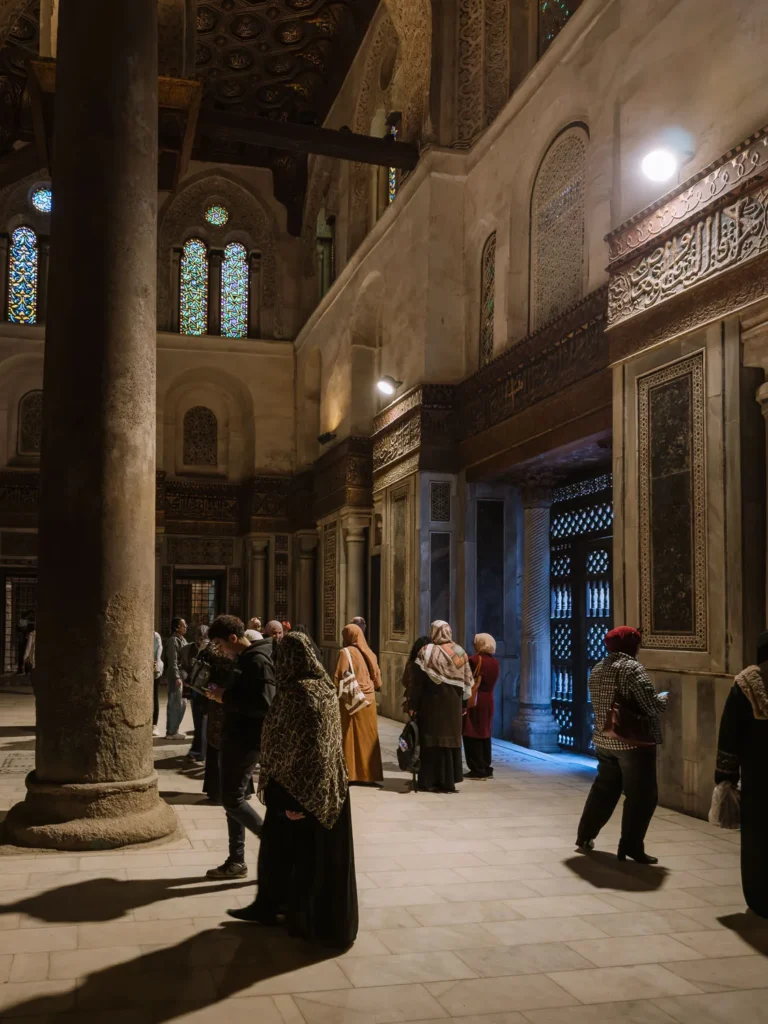
Most of this itinerary concentrates on Egypt’s Ancient Kingdoms, but to truly understand today’s Egypt, it’s important to visit Islamic Cairo.
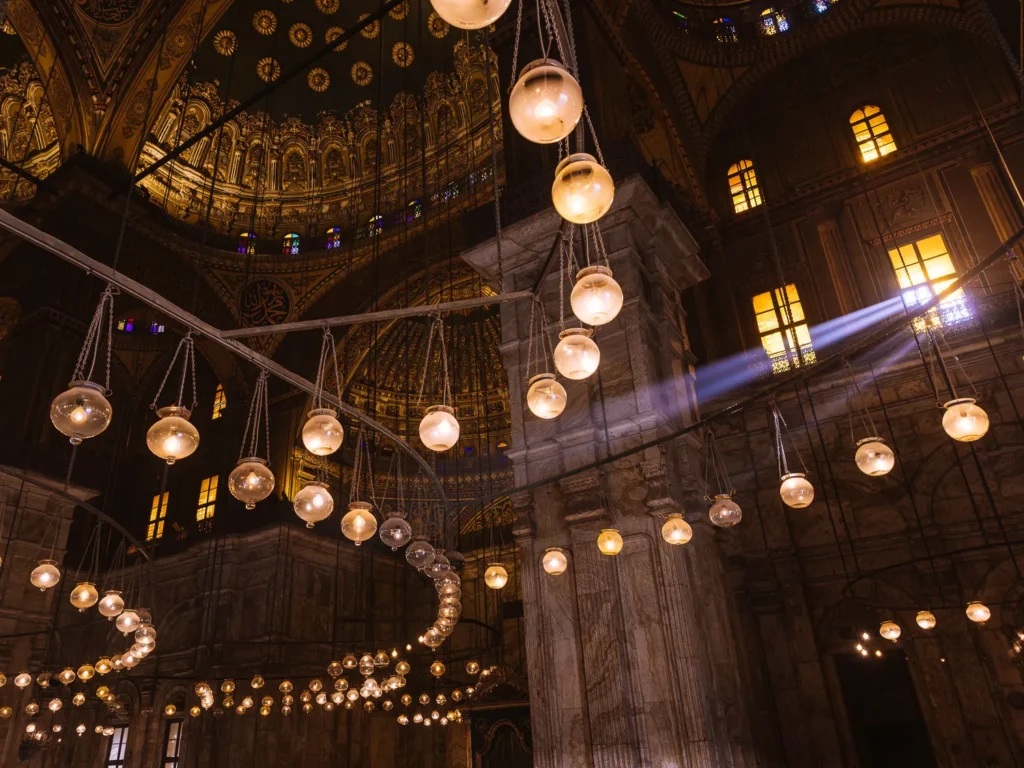
Start the day at Saladin Citadel, the medieval Islamic-era fortress perched on a limestone promontory above Cairo.
At its centre is the Muhammad Ali Mosque, modelled on the Blue Mosque in Istanbul, with Ottoman-style domes and slender minarets.
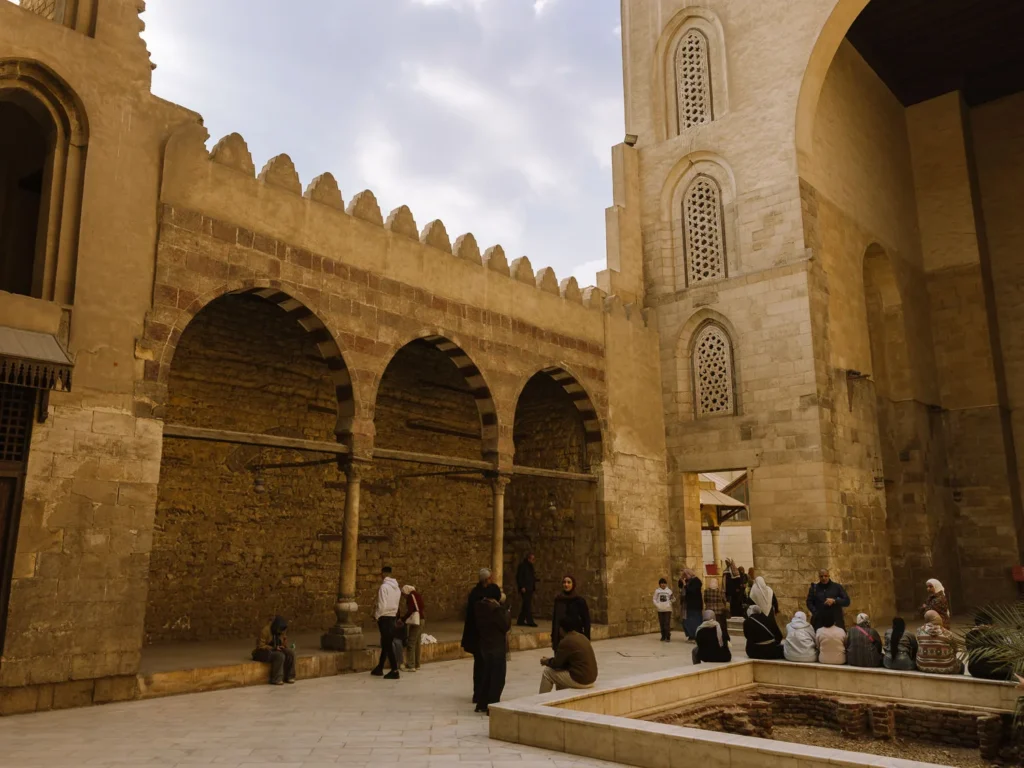
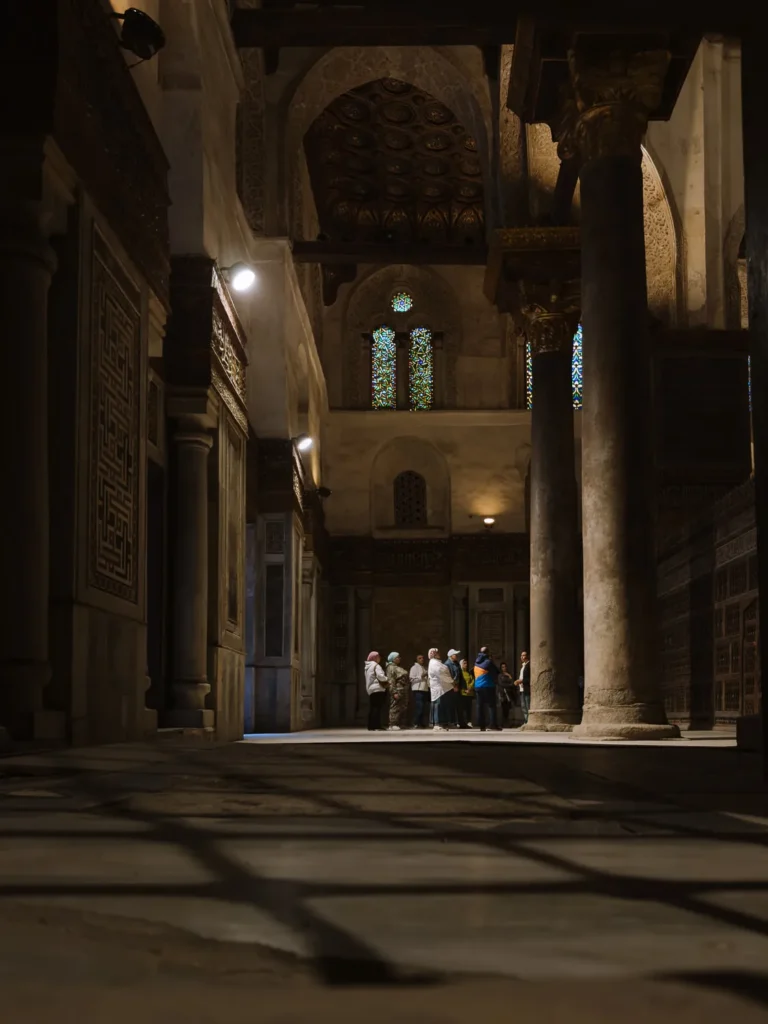
Next, take a taxi (or a lengthy one-hour walk) to Al-Muizz Li-Din Allah Street. Lined with mosques, madrasas and mausoleums, it contains some of the finest medieval Islamic architecture anywhere in the world.
The sprawling Khan el-Khalili Market is at the southern end of Al-Muizz Li-Din Allah Street. Explore the market before finding somewhere for lunch.
More ideas for what to do in the area are in our Cairo Itinerary.
In the late afternoon/evening, head out to Cairo Airport to fly to Aswan.

Day 3: Philae Temple and Start Your Nile Cruise
Different cruises run different timetables, and we will cover more options below. Most embark either at lunchtime or in the afternoon.
This gives you a morning to explore Aswan before departing.
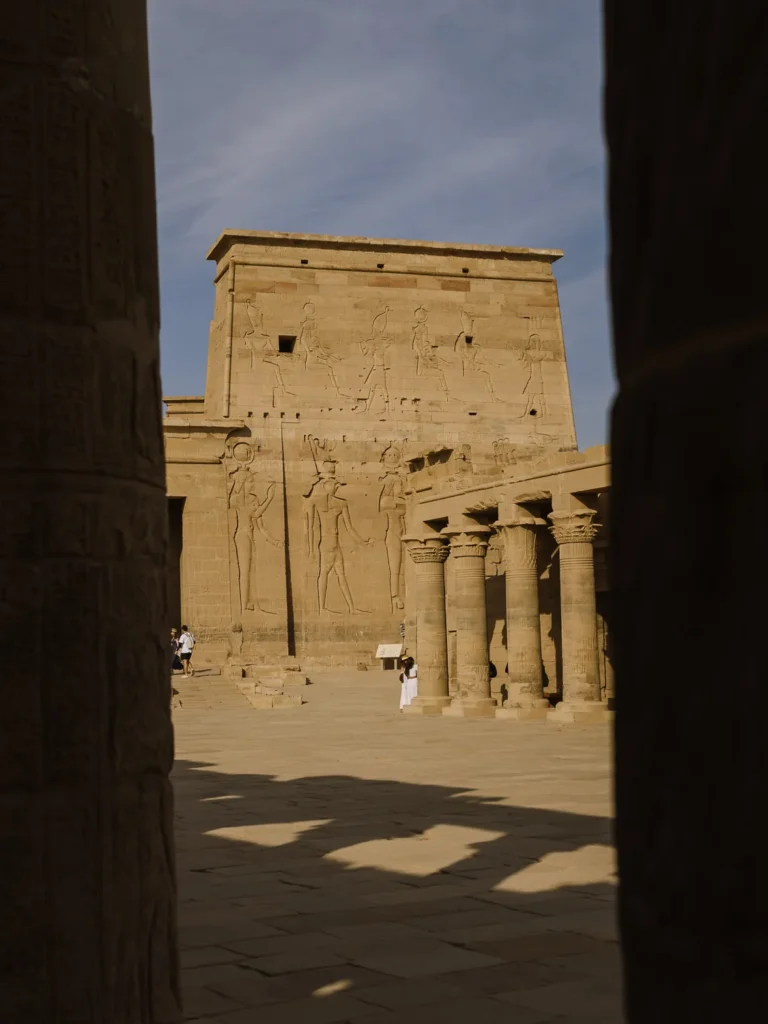
The most popular destination is Philae Temple. A mix of Egyptian, Ptolemaic, and Roman ruins spanning the 4th century BCE to the 2nd century CE. It was moved brick by brick from a nearby location when the construction of the lower and upper dams flooded the area.
Picturesquely set on an island, it is accessible only by water taxi. Many cruises include this in their packaged trip, so check in advance.
If you have time, other options in Aswan include the Unfinished Obelisk and the Nubian Village. Read more for all our favourite things to do in Aswan.
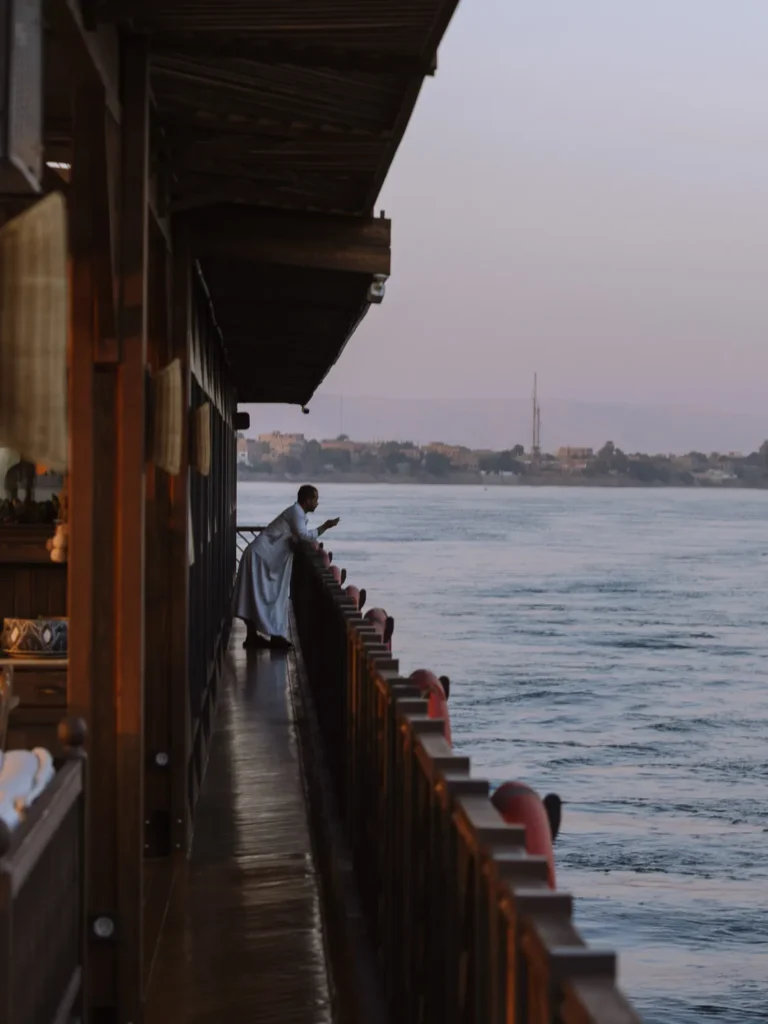
Once you join your cruise in the afternoon, you’ll be in the hands of the tour company and the boat you have booked. Depending on what you have booked, the itineraries will differ slightly, but below is our experience from our recent Nile Cruise.
Day 4: Nile Cruise, Stopping at Kom Ombo Temple
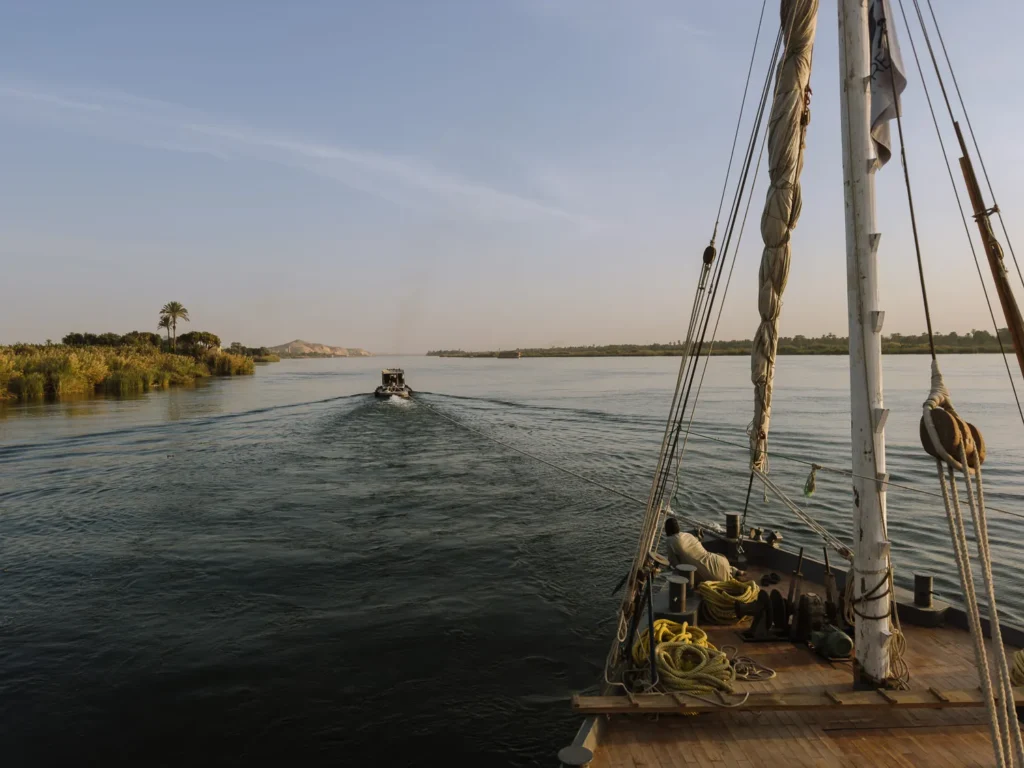
It’s the first full day of your Nile Cruise. Sit back, relax and watch the world go by. The banks of the Nile are surprisingly undeveloped, and the scenery is beautiful.
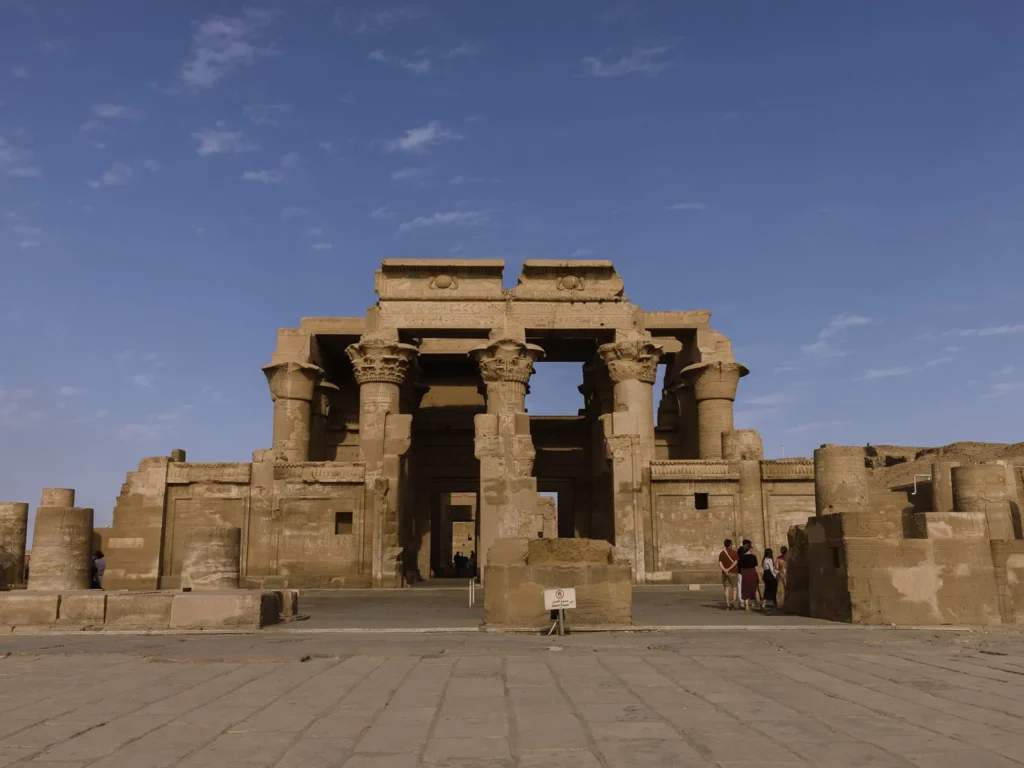
The first stop is Kom Ombo Temple. This temple is unusual because it is dedicated to two gods. Sitting above the Nile, it features interesting inscriptions of medical equipment and a calendar.
If you have booked a dahabiya cruise, there will be a second stop at Gebel el Silsila. This is an ancient sandstone quarry where giant blocks were quarried and transported downstream to construct the temples at Luxor.
Day 5: Nile Cruise, Stopping at Edfu Temple
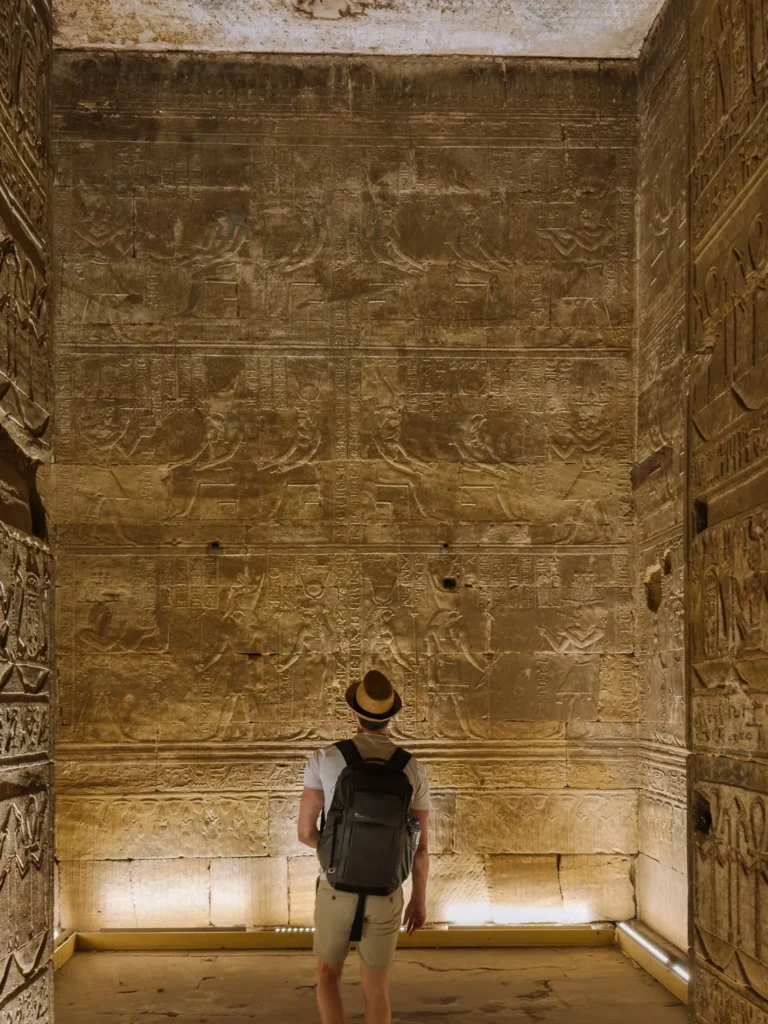
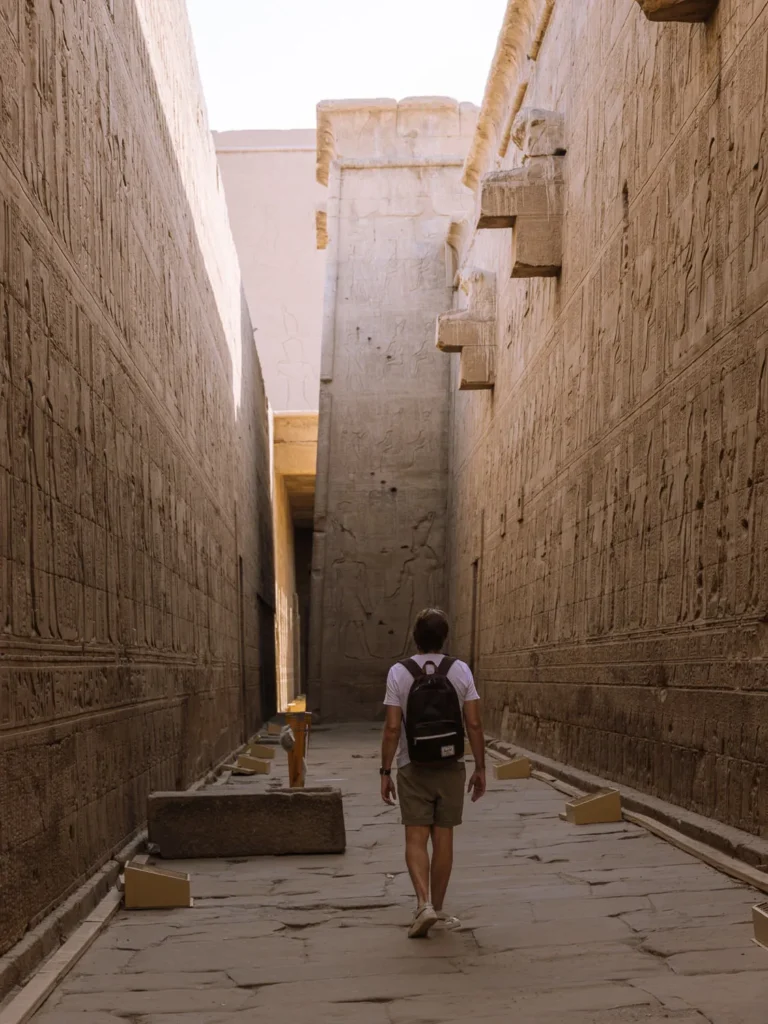
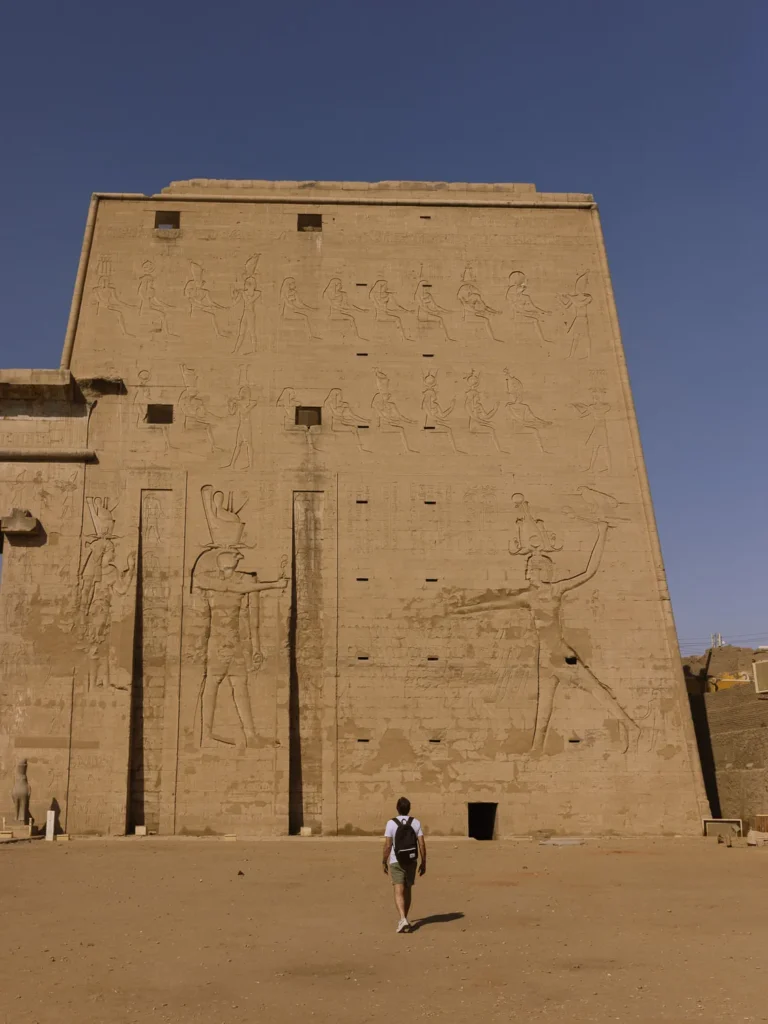
On the second full day cruising on the Nile, the boats make a stop at Edfu Temple, one of the best-preserved temples in Egypt.
The towering main entrance conceals a pillared hall and a myriad of well-decorated rooms. It was one of the highlights of our Egypt trip.
If you have booked a dahabiya cruise, there will be a second stop at El Kab Tombs. These ancient rock-cut tombs tell the stories of the high priests and noblemen who are buried there.
Day 6: Depart the Cruise at Luxor and Explore Karnak and the Valley of the Kings
The cruise ends after breakfast, after which you have an entire day to explore Luxor.
Many companies include today’s tour in their packages, but some do not, so check in advance.
Luxor (called Thebes in acient Times) was the capital of the New Kingdom of Ancient Egypt. During this period (1150-1069 BCE), the empire was at its most powerful, and the city was home to remarkable tombs and temples.
The highlights are the Valley of the Kings and Karnak Temple, but there is a lot more to see. You can find all our suggestions on our best things to do in Luxor.
Day 7: Fly to Cairo and Depart
On your final day, you’ll spend most of the day getting home. Take a flight from Luxor to Cairo, then catch an international flight back.
Additional Days for Your Egypt Itinerary
Above, we have detailed the classic 7-day Egyptian itinerary that stitches together the 3 essential highlights of any visit to Egypt.
However, if you can add more days, we strongly recommend it.
Here is our list of additional days you can add to the basic itinerary.
Option 1: an Extra Day on the Nile Cruise
Instead of a 4-day / 3-night cruise from Aswan to Luxor, take the 5-day / 4-night Dahabiya Cruise from Luxor to Aswan. Yes, it’s more expensive than a Nile Cruise Ship, but we honestly think it’s worth it.
To see if it’s worth the money, read our Dahabiya vs Nile Cruise comparison.
If you opt for the slower dahabiya, you need to reverse your itinerary: fly from Cairo to Luxor, take a Nile Cruise, then visit Aswan before flying back to Cairo.


Option 2: an Extra Day in Luxor
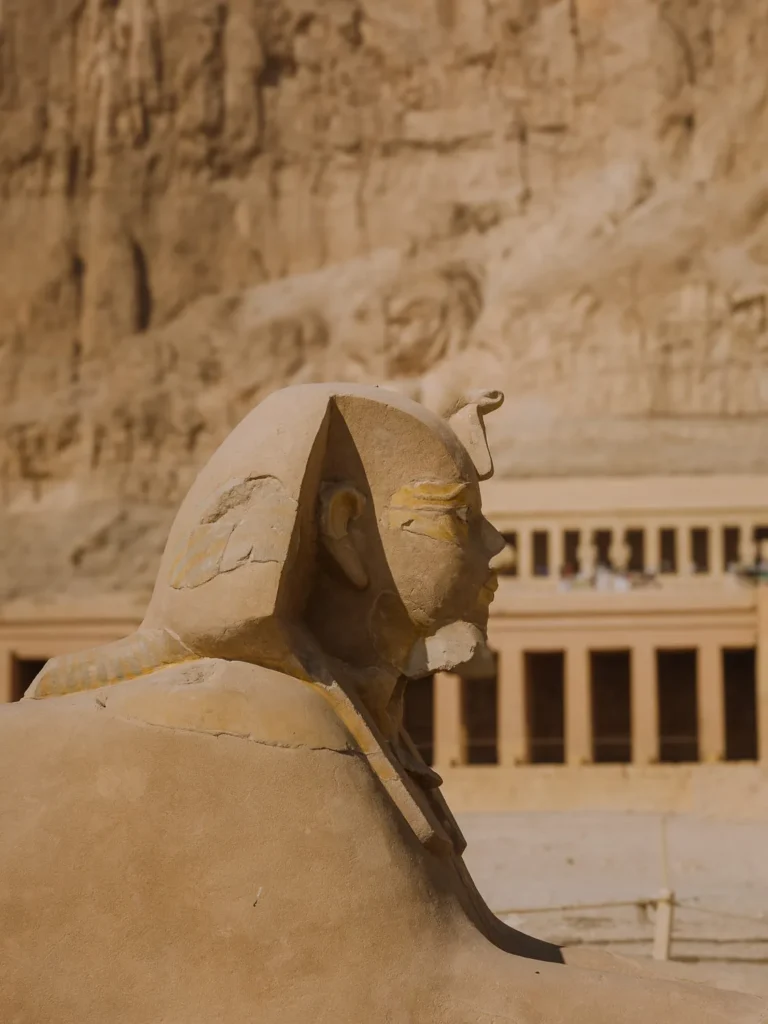
Luxor has some magnificent sights. In addition to Karnak and the Valley of the Kings, there is the incredible Mortuary Temple of Queen Hatshepsut, the Tombs of the Artisans, and the under-visited temple of Medinet Habu.
At dawn, you can float over the desert in a hot air balloon and at sunset, take a sail on a felucca or sip cocktails overlooking the Nile.
It’s a magical place to spend any extra time. We spent two days in Luxor and had a wonderful time.
You can see how we recommend you spend your time in our 2-day itinerary in our guide to Luxor.

Option 3: One or Two Day Trip to Abu Simbel
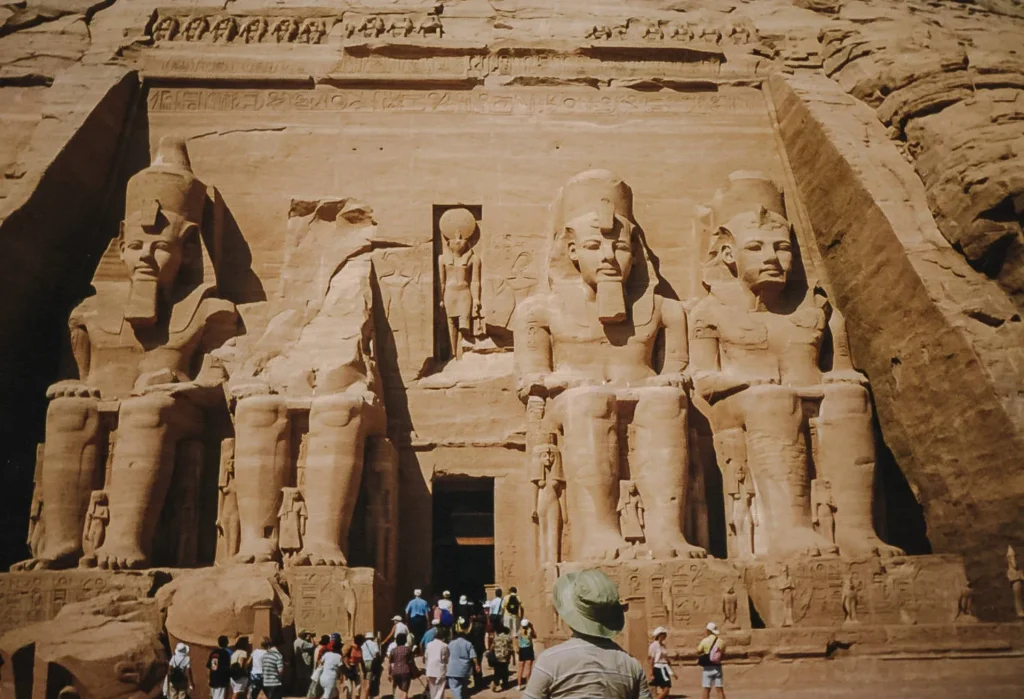
The most photographed and striking temple in Egypt is Abu Simbel.
The site has two temples; the main one is fronted by four enormous, seated statues of Ramesses II, each about 20m high. Inside, the reliefs and hieroglyphs are crisp and sharp.
The temple is about 300km south of Aswan and takes about 2 hours to look around. From Aswan, it’s a 3-hour drive or a 45-minute flight (much more expensive) each way.
Most people take a day tour and then return in the evening (add 1 day to your itinerary). However, due to the timing of the day trips, almost everyone visits Abu Simbel at the same time (late morning).
Our recommendation is to stay overnight if possible (add 2 days to your itinerary), attend the evening light-and-sound show, then return to the temple first thing the following morning, before everyone else arrives.
Option 4: an Extra Day in Aswan
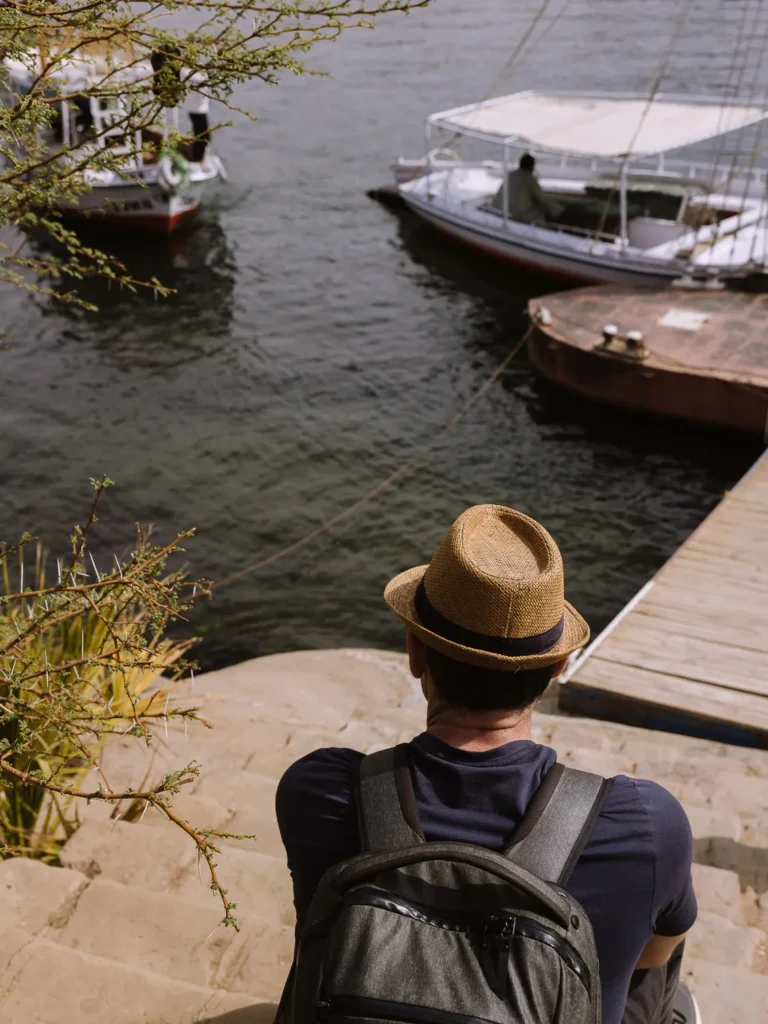
Aswan is a destination many people visit but never actually see. As the starting or ending point for most Nile cruises, the popular option is to disembark the cruise boat and head straight to Philae Temple or Abu Simbel.
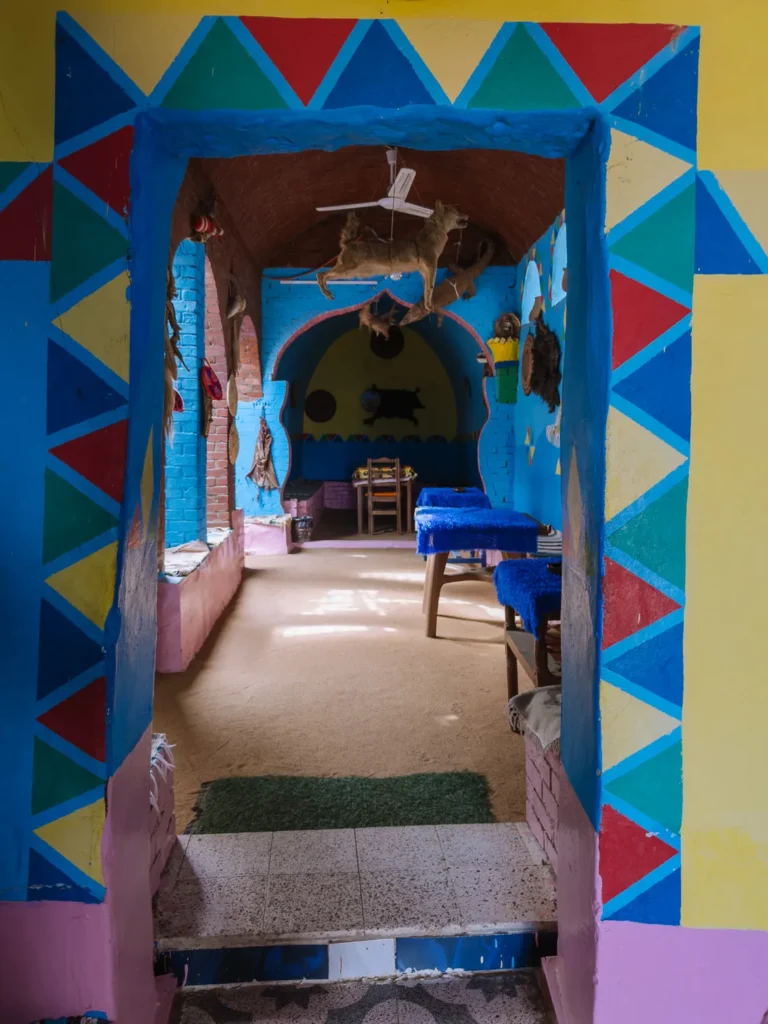
But you’d be missing out on a unique, low-key Egyptian city with plenty to see. There’s Nubian culture and history, ancient temples, an unfinished obelisk, local markets and several activities that make wonderful use of the Nile.
It’s easy to put together a fun day in an extremely atmospheric setting, and there are some great hotels to choose from. You can find all our suggestions on our best things to do in Aswan.
Option 4: Add Cairo Day Trips
There are many other things to do in Cairo, as well as some interesting day trips to the surrounding areas.
Coptic Cairo and Egyptian Civilisation Museum
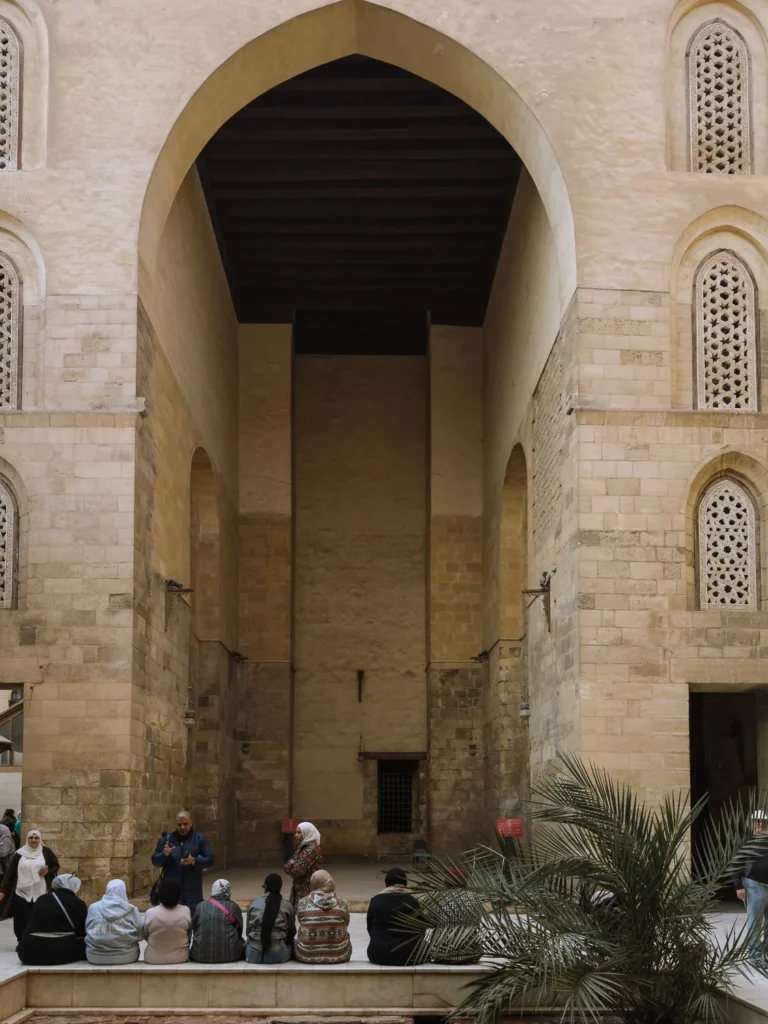
Coptic Cairo is a historic walled enclave in Old Cairo that was the city’s centre of Christianity from the 4th to 7th centuries, before Arabs conquered the country and converted it to Islam. It’s a fascinating place to explore and an insight into the different cultures that make up Cairo.
In the afternoon, head to the Egyptian Civilisation Museum, just a 10-minute taxi ride away.
It presents Egypt’s history from the ancient empire to the modern day.
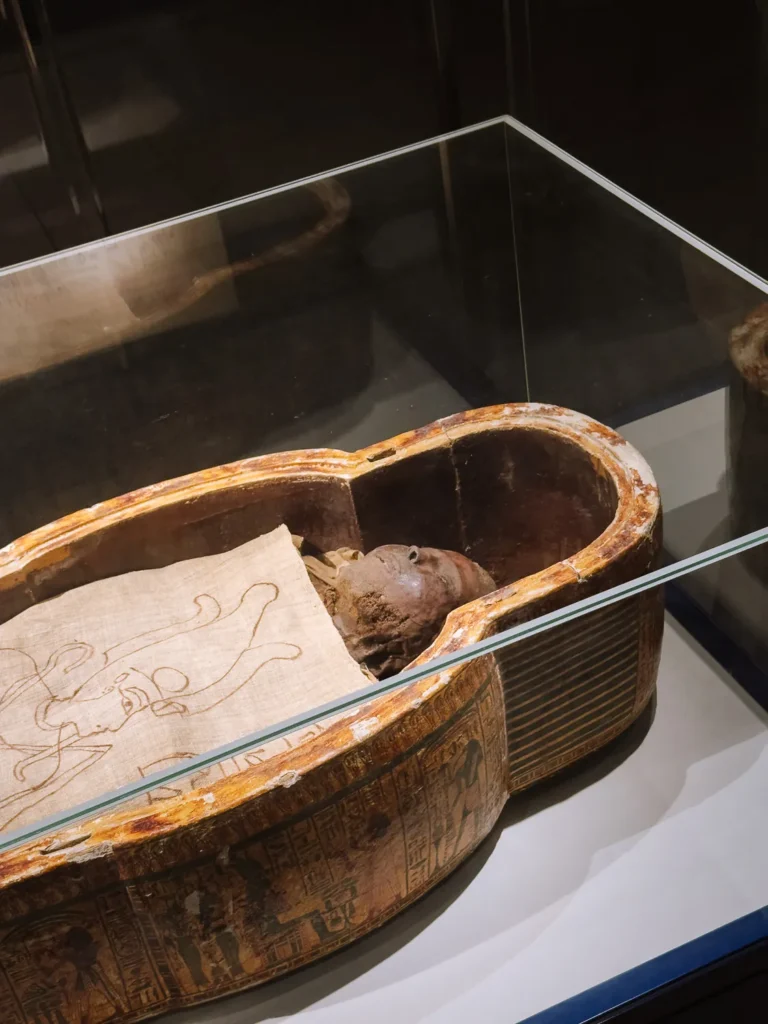
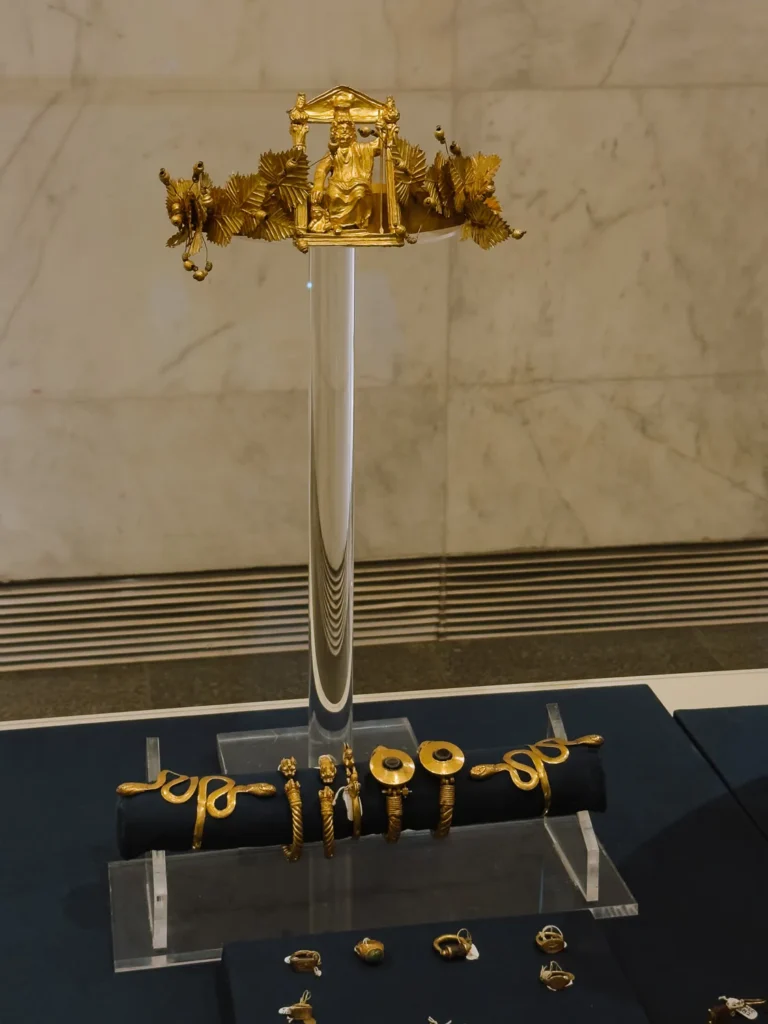
The highlight of the museum and the main reason we recommend visiting is the Royal Mummies Gallery, containing the pharaohs and queens from the Valley of the Kings, which are exhibited in climate-controlled cases.
More details are on Day 3 of our Cairo Itinerary.
Day Trip to Saqqara and Dashur
Saqqara is home to the Pyramid of Djoser. It is less than half the size of the Great Pyramid at Giza, but it is older (27th century BCE) and architecturally different (consisting of six giant steps rather than smooth-sided).
The site at Dashur features the Bent Pyramid (a failed attempt at the first smooth-sided pyramid) and the Red Pyramid (the first successful smooth-sided pyramid).
The two sights can be visited in a 4- to 5-hour day trip. They may not be as impressive as the Giza Pyramids, but they tell the story of the architectural evolution of pyramids in Egypt.
Desert Excursion
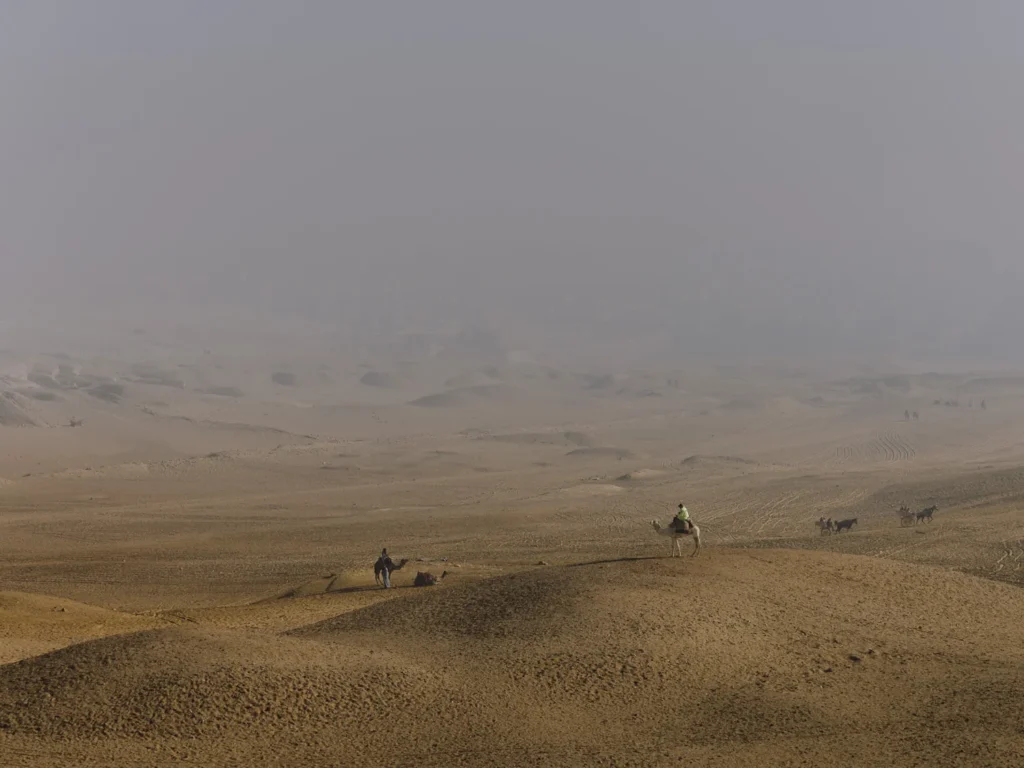
Exploring the Pyramids on the Giza Plateau, you get a feeling of life in the desert. But to truly get immersed in the dunes, you need to take a day trip.
This well-rated all-day tour includes a barbecue lunch in the desert, camel riding, sandboarding, dune bashing, and a visit to the waterfalls at Wadi El Rayan.
It’s about a 2-hour and 30-minute drive each way to the waterfalls, but stops are made along the way. We have not done it, but the reviews are excellent.
Option 5: Red Sea Resorts
If you have 14 days to explore Egypt, you should have time to squeeze in 2 or 3 days at a Red Sea Resort.
Sharm el-Sheikh is home to many resorts and is renowned for its diving. It is near Ras Mohammed, which has some of the finest coral reefs in the Red Sea. Sharm el-Sheikh is a flight from Cairo.
Another Red Sea resort option is Hurghada, which is more of a local city with beach resorts attached. It offers greater variety and a less polished look, but the diving is less good. It is a 4-hour drive from Luxor, so you do not need to fly.
Both Sharm el-Sheikh and Hurghada have international airports, so, depending on where you live, you might be able to fly home directly without returning to Cairo.


Our 10-Day Egypt Itinerary
On our last trip, we decided to spend 10 days in Egypt, which we think is ideal. This enabled us to add three days to the basic itinerary. We were not that keen to hang out at the beach, and we don’t dive, so we spent more time around the Nile.
We added an extra day to the Nile cruise, taking the 5-day/4-night dahabiya cruise from Luxor to Aswan.
We added an extra day in Luxor, giving us more time to explore this fabulous city.
We would have added a day trip to Abu Simbel if we had not been on our previous trip, but we recommend you include it on your itinerary.
That makes our recommended 10-day itinerary look like this:
Day 1: Visit the pyramids and the Grand Egyptian Museum, as in the 7-day itinerary.
Day 2: Explore Islamic Cairo and (if you have time) visit the Royal Mummies at the Grand Egyptian Museum. Afterwards, take an evening flight to Luxor.
Day 3: Explore all the West Bank sights in Luxor, including the Valley of the Kings, Queen Hatshepsut Temple, Medinet Habu, and the tombs of the Artisans. Finish the day with sunset drinks on a Felucca.
Day 4: Early morning balloon ride and then explore Karnak Temple and (if time) Luxor Temple before setting off on a 5-day / 4-night Dahabiya Nile cruise.
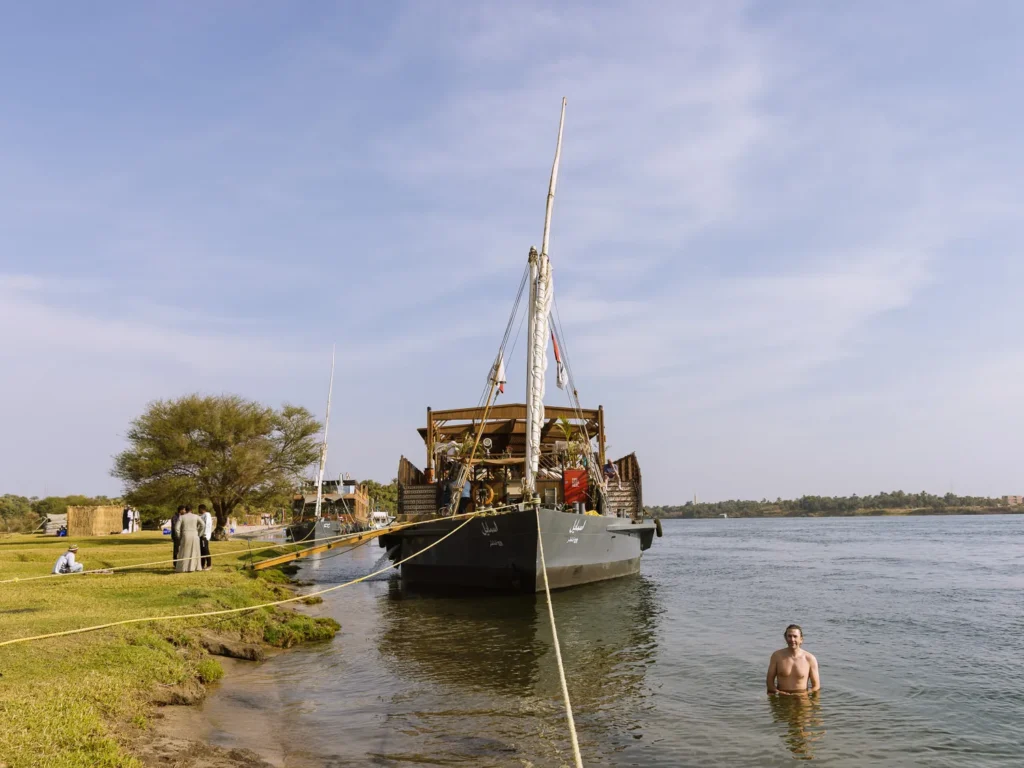
Days 5 to 7: Nile Cruise visiting El Kab Tombs, Edfu Temple, Gebel el Silsila quarry, Kom Ombo Temple, and Philae Temple. There’s even time for a walk along the banks and a swim in the river. See our Dahabiya Cruise Itinerary.
Day 8: Spend the day exploring Aswan. Visit the Nubian Village and Museum and the Unfinished Obelisk.
Day 9: Disembark in Aswan and take a day trip to Abu Simbel. Ideally, fly back from Abu Simbel to Cairo; if luggage or flight times are inconvenient (which they often are) and costs are high, return to Aswan.
Day 10: Fly back to Cairo and head home.
If you don’t want to fly into Cairo and out again on the same day, you can spend Day 8 doing the day trip to Abu Simbel, then Day 9 exploring the area around Aswan, before flying to Cairo that evening. You can then spend the night in Cairo and leave the next day.

How to Book Your Egypt Itinerary
Knowing where you want to go and what you want to see is one thing. Booking it is another.
There are a few options.
How to Pick Your Nile Cruise?
A vital part of any trip to Egypt is a Nile Cruise. The most popular stretch of the river is between Aswan and Luxor (or Luxor to Aswan). There are two main choices to consider: what type of boat and the duration of the cruise.
Type of Boat: Cruise Ship or Dahabiya
There are two types of boats you can take on the Nile: a dahabiya or a Nile Cruise Ship.
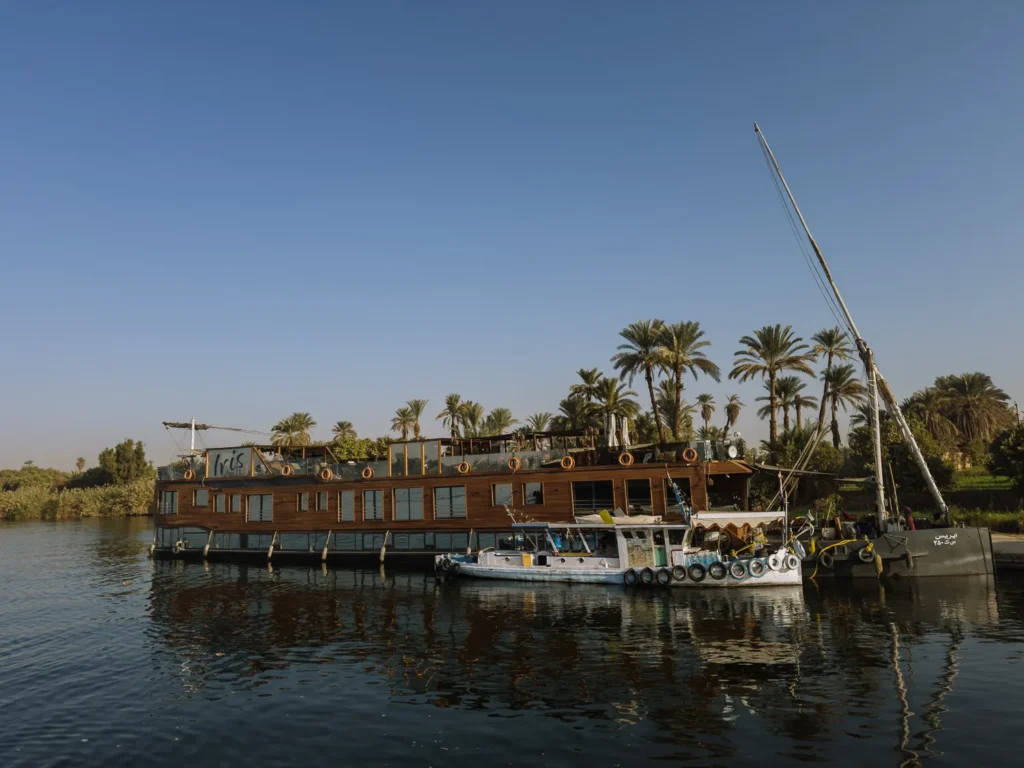
A Nile cruise ship is a multi-deck passenger vesselpurpose-built for river tourism. These floating hotels range from three to five-star standards and offer a comprehensive, resort-style experience on the water.
They carry 50–150 passengers, have engine power, and offer organised entertainment. The large ships operate on fixed schedules, can only stop at the larger docks, and only visit a couple of temples along the river.
A dahabiya is a traditional wooden sailing boat with twin lateen sails. Modern dahabiyas blend historical charm with contemporary comfort. They have only a few cabins, accommodating 12 to 20 passengers, and primarily depend on wind power to glide along the river.
These smaller boats can dock at more locations, making four or five stops along the river. It is a luxurious and highly relaxing way to sail, but it comes at a higher cost.
Choosing the right boat is important for getting the experience you want. You can read a detailed comparison on our Nile Cruise: Dahabiya vs Cruise Ship post. It includes a day-to-day breakdown of the available itineraries for each boat type.
How Long
The most popular Nile Cruise is between Aswan and Luxor. You can make the journey in either direction.
Cruise Ships (which are faster) complete the journey in 4 days/3 nights.
Dahabiyas (which rely on wind and a tugboat) are slower. They take 4 days / 3 nights when going downstream (Aswan to Luxor) or 5 days / 4 nights when going upstream (Luxor to Aswan).
Additional Tours from the Cruise Operator
Whichever type of boat you choose, it usually departs at lunchtime, and many operators include a morning tour in the price, with pickup after breakfast at your hotel.
After your final night, you disembark just after breakfast, but many tour companies still include a day tour on your departure day. Make sure you check what is and is not included in the price.
We had 10 days in Egypt and did a 5-day/4-night dahabiya cruise from Luxor to Aswan. It was excellent, and we highly recommend the experience.

How to Pick a Tour Operator
Western Tour Companies
Egypt is a popular destination for tour companies worldwide. Many firms offer both fixed itineraries and customised options, where you can specify your own route.
They usually include all accommodation, transport, and guides, as well as many of the meals. The only thing you need to add is money for tips and, occasionally, flights.
Egyptian Tour Companies
We are always keen to use local companies when booking trips. The benefit is lower cost and local knowledge, the downside is you’ve probably never heard of them, so you worry they won’t be up to scratch (or there at all).
Before our last trip, we did plenty of research and decided to book with Egypt Tours Plus. This is an Egyptian-owned and run company that’s been operating since 1955.
The reviews were excellent, and they used a Nile Cruise company called Ashranda, which had a fleet of 6 dahabiyas.
We refined the itinerary until we were satisfied we were seeing everything we wanted to see. Ultimately, the price was significantly lower than that of many Western companies.
The transfers were seamless, the accommodation was very good, and our guides were well-informed and engaging.
This is not a sponsored post, and we have not been paid to write this. We just believe the company provided an excellent trip at a very reasonable price.
We specifically requested a few items to be included in our itinerary. If you use Egypt Tours Plus or another tour company, compare their itinerary with ours to see whether you want to include anything. They are usually very accommodating.

How to Do It All Yourself
The most cost-effective way to follow this itinerary is to assemble it yourself.
The section in Cairo is straightforward. The pyramids and GEM do not require a guide, and you can visit them independently.
Uber makes using taxis simple, and travelling between Islamic Cairo and the Civilisation Museum is easy enough. The only challenge is managing your luggage to and from the airport.
In Luxor, you can hire a driver for a day to take you around the sights. Some sights benefit from a guide, so consider a day tour that includes a guide.
In Aswan, many of the sights are located on the islands in the Nile.
A day tour is the easiest option, but if you are good at haggling, you can negotiate your own water taxi for the day. Again, a guide can be useful, but if you have a good guidebook, it is not essential.
Finally, you are left to book the Nile Cruise. Several Egyptian Companies offer cruises with meeting points in Aswan or Luxor. Be sure you are clear about what they are offering. Is it just rooms and food? Or are they offering a guide to take you around the sights when the boat docks?
Also, check what is included on the day of departure and disembarkation; many offer day tours included in the price.
For a complete list of things to consider before leaving, read our Things to Know Before You Go to Egypt.

More Egypt Guides
- How to plan a 7- or 10-day Egypt itinerary.
- The best places to visit in Egypt.
- Essential tips for visiting Egypt: what to know before you travel.
- The best ancient temples in Egypt.
- Nile Cruise ship vs Dahabiya: which is the best experience?
- The best things to do in Cairo (including the Pyramids).
- Plan your trip with our 2- or 3-day itinerary for Cairo.
- All you need to know about visiting the Valley of the Kings.
- What to do in Aswan, Egypt’s southern escape.
- See the best and other great things to do in Luxor.
- Your complete guide to visiting the Pyramids of Giza.

reader-supported
When you buy through links on our site, we may earn a small affiliate commission at no extra cost to you.
Thanks for your support // Paul & Mark