

By: Mark Barnes // Last Updated:
From hidden schools to smelly souks, ancient cemeteries and regal palaces, the medieval Fez Medina is a maze of exotic discoveries. See it at your own pace on our self-guided walking tour.
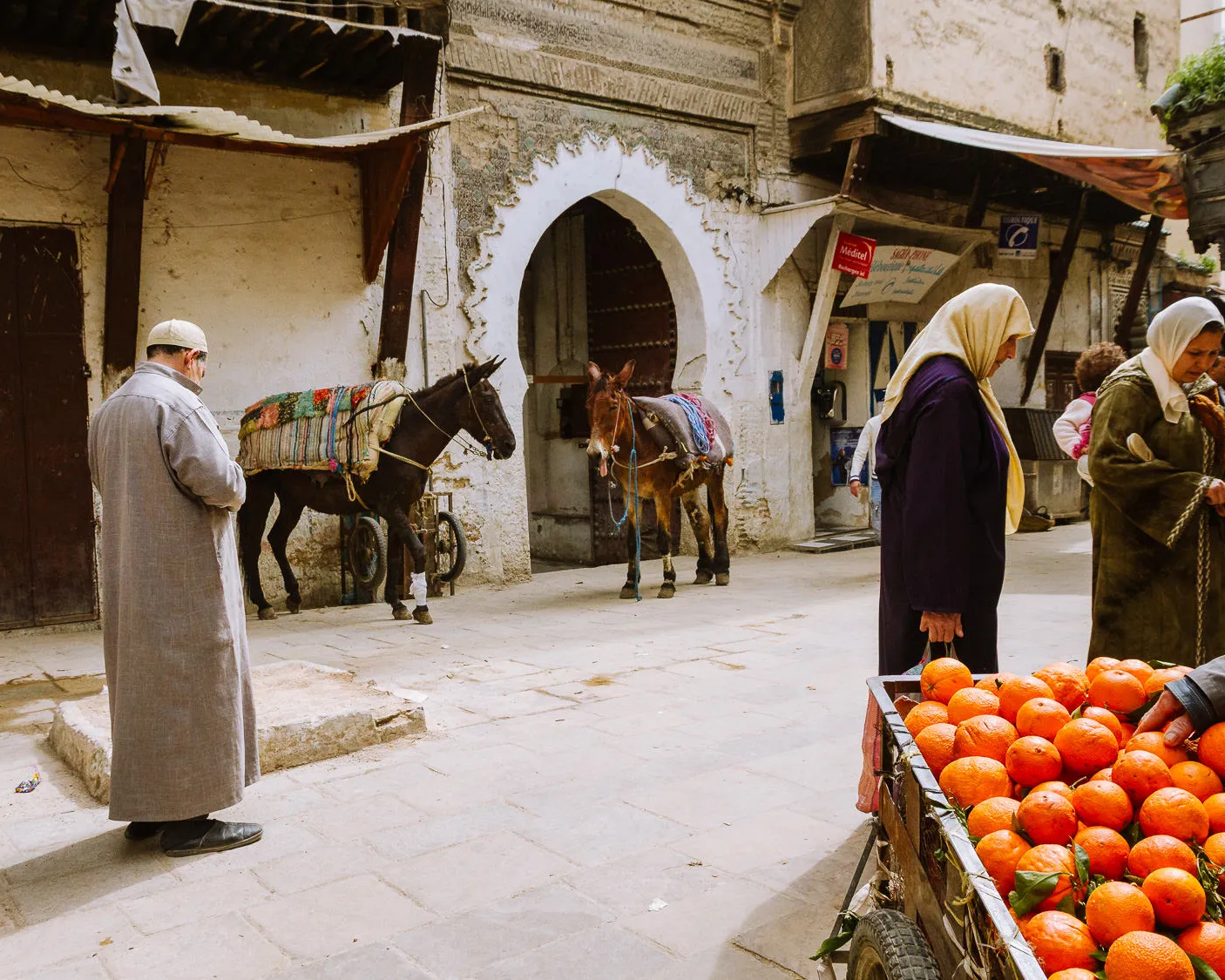
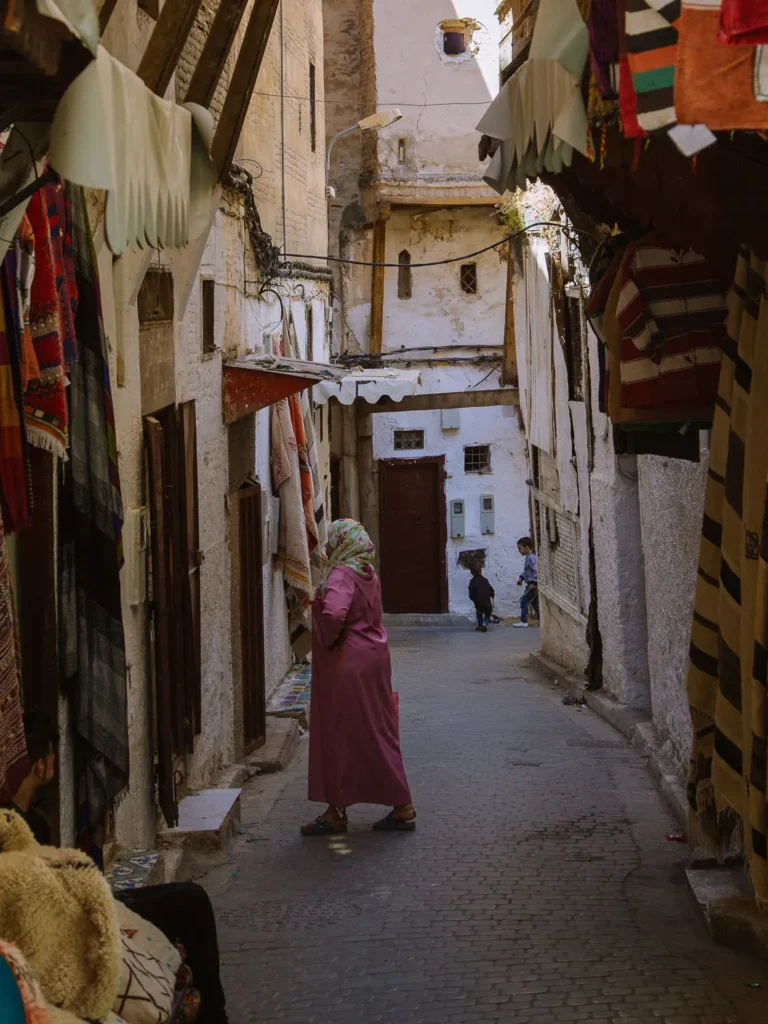
The Fez Medina is the largest urban car-free zone in the world; a medieval labyrinth where 70,000 people still live and work much as they have for centuries.
The call to prayer drifts over the clatter of metalworkers, tanners beat leather in ancient dye pits, and donkeys navigate the same cobbled lanes as bewildered tourists.
It’s an extraordinary place to explore, but also an overwhelming one.
The alleyways are unmarked, the crowds are relentless, and locals will go out of their way to send you in the wrong direction.
Our self-guided walking tour bypasses all that, taking you through the highlights with a detailed route and map to keep you on track.
The walk includes hidden medersas, the tanneries, bustling souks and neighbourhood mosques.
Map: Fez Medina & Overview
It is very easy to get lost in the Fez Medina.
The lanes are tiny, many are unmarked, and the labyrinth of streets can get very confusing. We suggest you use a couple of maps to help with navigation.
First, download the map below on your phone. This way, you’ll have the route with you as well as all the places we covered in our tour.
While Google Maps is great for the exhaustive list of attractions in Fez, Maps.me has a more detailed plan of the medina.
So, we suggest downloading the city of Fez in Maps.me app so you can refer to it offline while you’re strolling around the medina.
This came in handy for us in places where streets were missing on Google Maps.
- Start: The Blue Gate
- Distance: 7 kilometres
- Time: All day as a slow amble
Click on the top right corner to open our map in your Google Maps app. Click the star next to the title to save it to your Google account.
Our Fez Medina Walking Tour
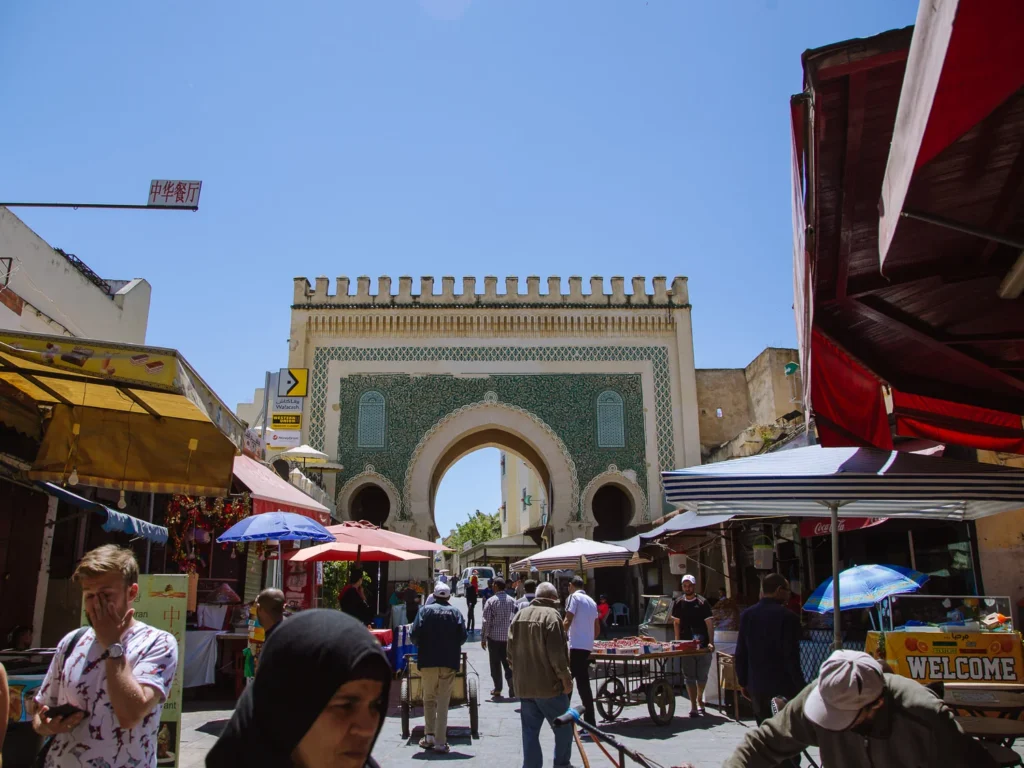
Blue Gate
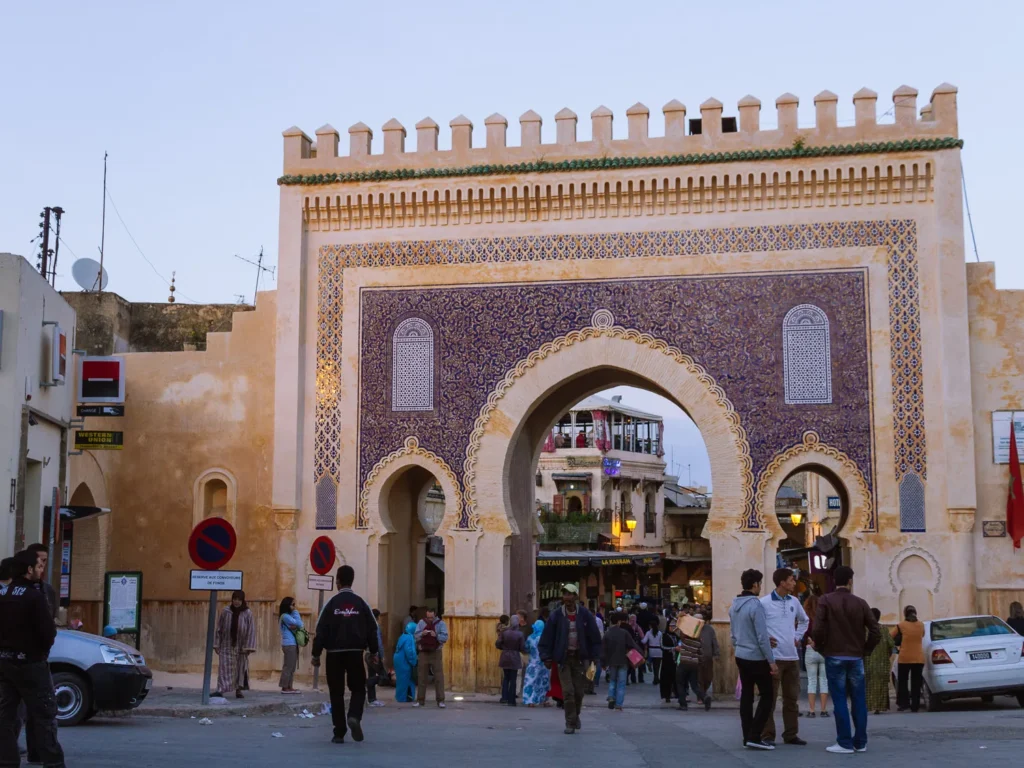
Start at the Bab Bou Jeloud (Blue Gate), on the west side of the Medina. Originally built in the 12th century, it was reconstructed as a triple-arched gate in 1913 by the French to create a grander entrance to the city.
Medersa Bou Inania
After entering the gate, take a quick left, then right onto Talaa Kebira.
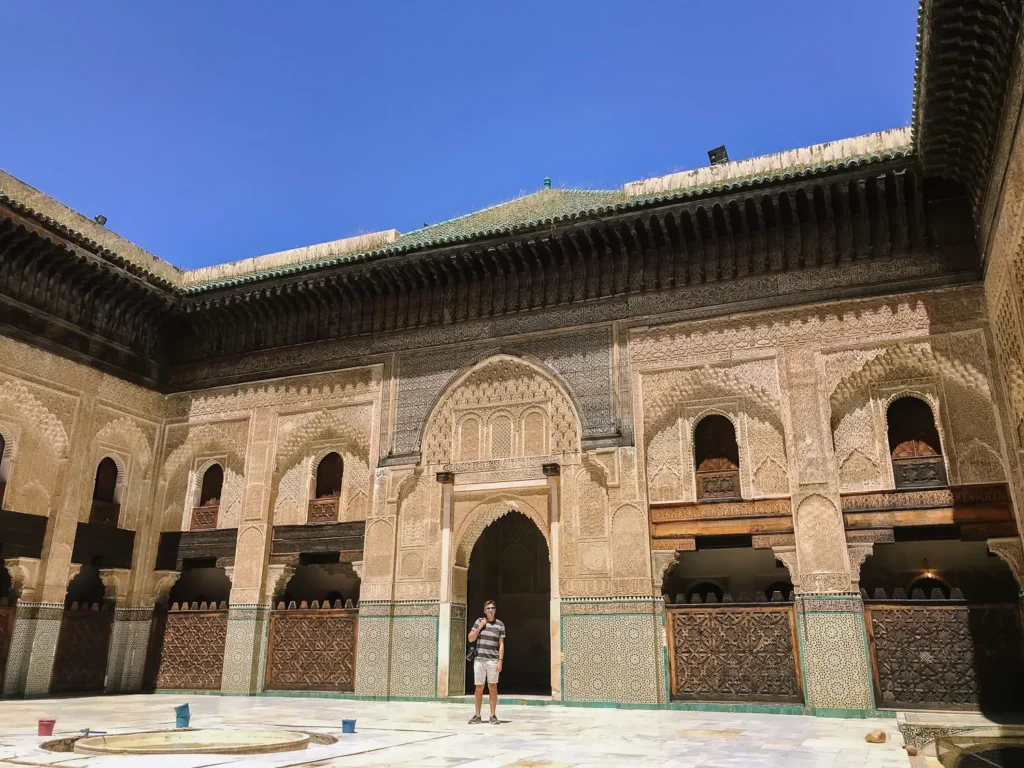
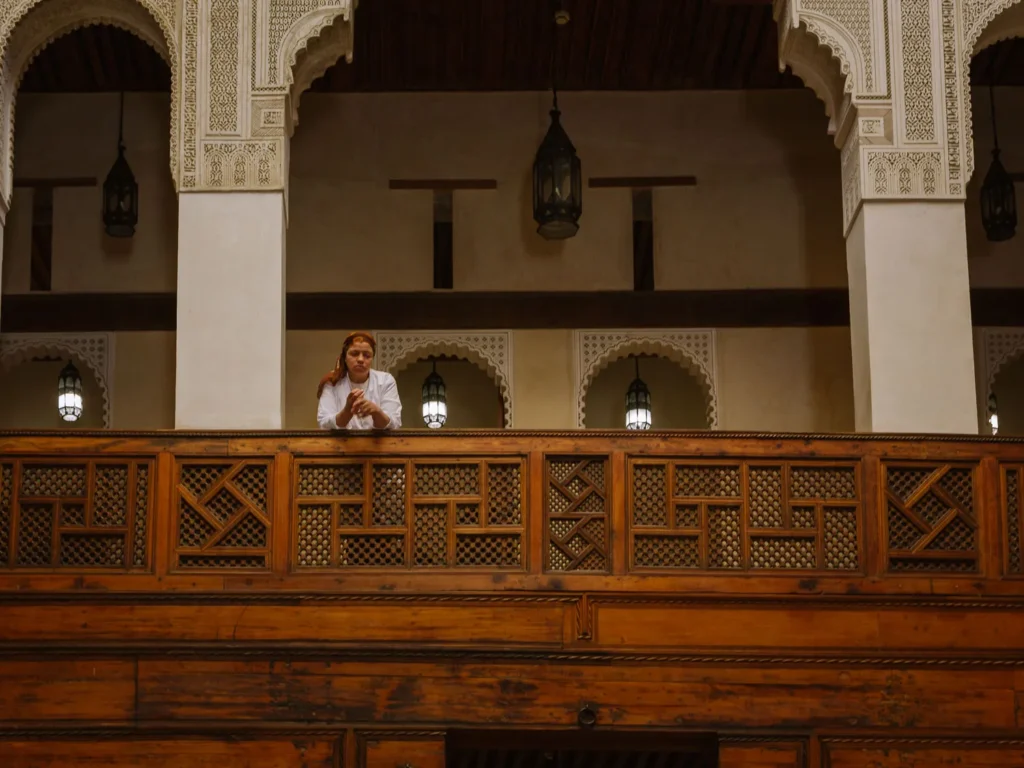
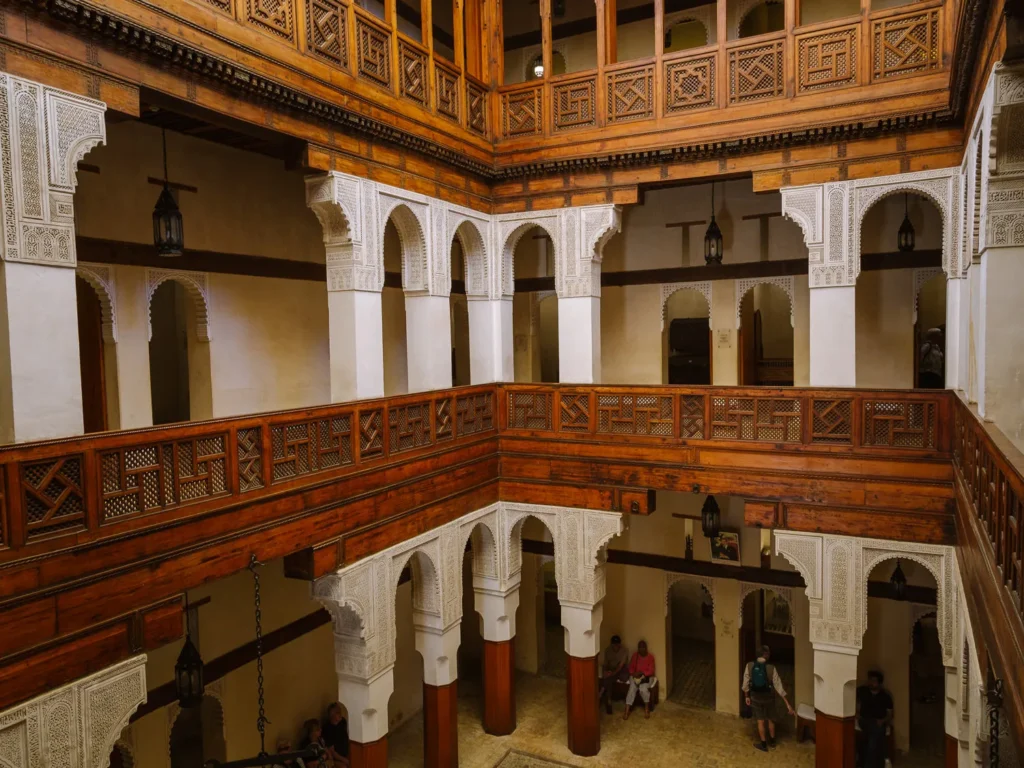
Passing a plethora of interesting stalls and cafés, pop into Medersa Bou Inania (20 Drh). Built in the 1350’s, the medersa is the finest theological school in the city and contains an entire mosque.
Chrabliyine Mosque
Continue on Talaa Kebira, popping into numerous fondouks (houses where traders and their animals could spend the night passing through the city).
Next, make a right and then an immediate left to arrive at the green-tiled Chrabliyine Mosque.
A little further on, turn left after Palais de Mérinides and then next right.
You are now just one street off the main tourist routes, where souvenir stalls are replaced by local food markets.
Follow the map below, dipping into the textiles souk, where you’ll find hundreds of women crammed into a small square in a seemingly desperate attempt to sell fabrics and shoes.
Next, follow the road clockwise to the tanneries.
The Tanneries
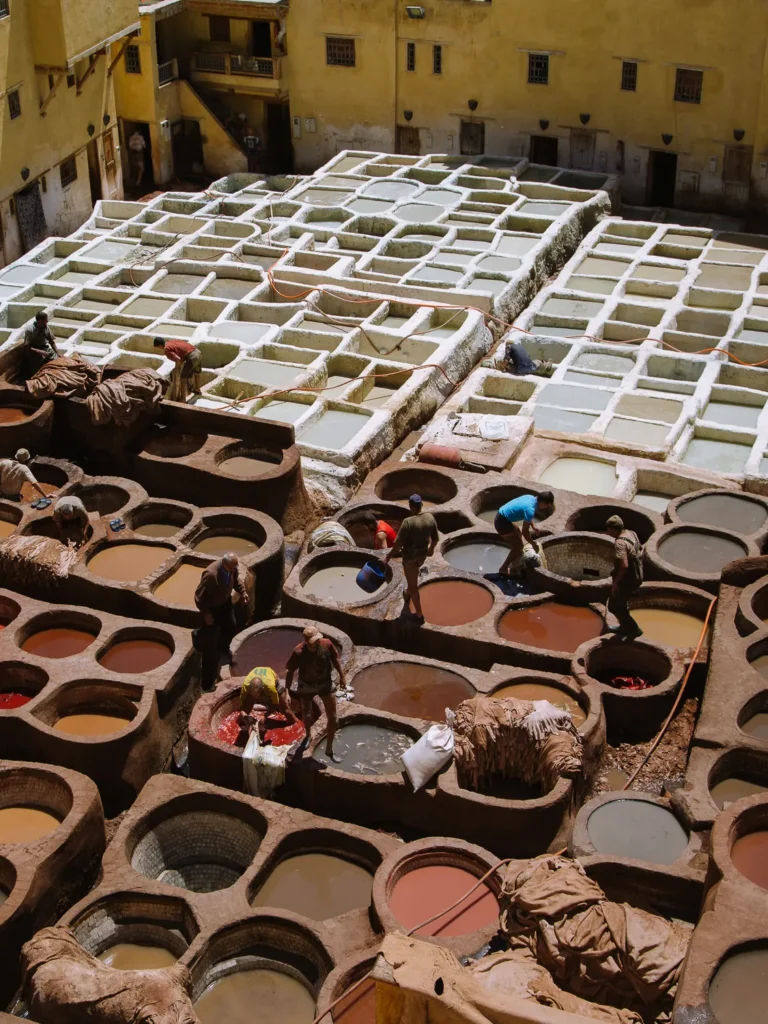
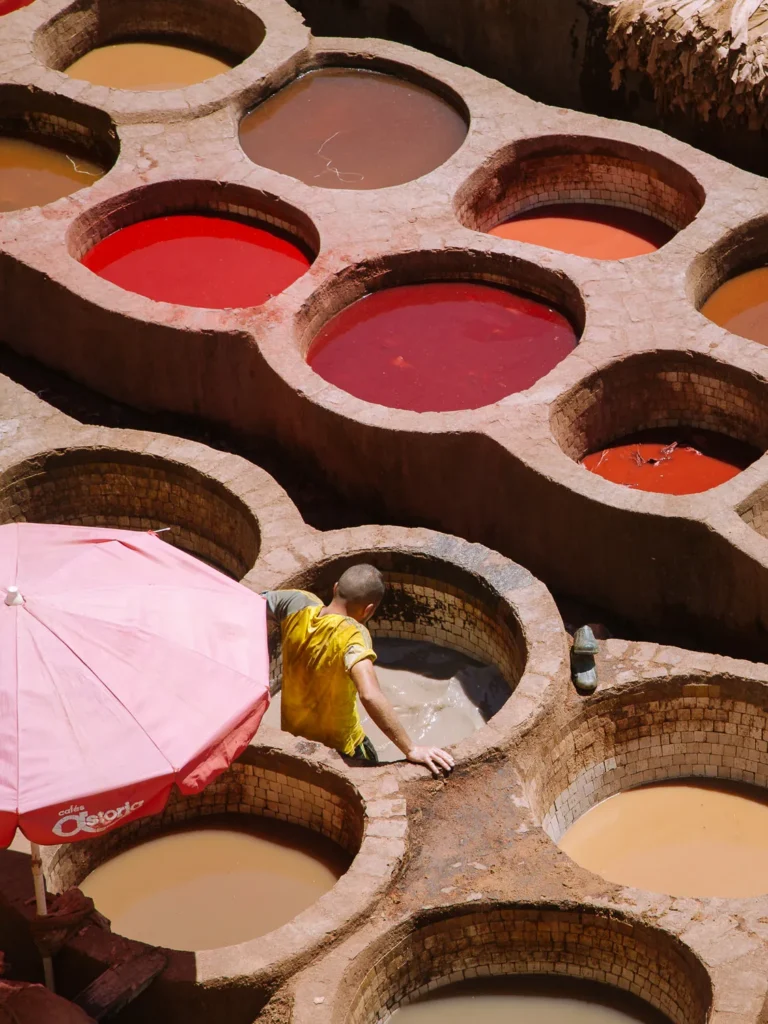
The tanneries are an assault on the senses.
Workers stand in large, pungent vats of dye, producing leather in a method that hasn’t changed for centuries.
It’s at the tanneries where you’re likely to get hassled the most. If you attempt to enter at ground level, you’ll more than likely be chased away.
Instead, pay the owner of Number 10 a few dirham and head into his store to view the tanneries from three floors up. He’ll try to sell you some leather goods from the staggering assortment he has crammed into every inch of his store, but the photo opportunities are worth it.
Place Ialla Ydouna & Place R’cif
Exit the store to take in some fresh air and head south, then turn left into Place Ialla Ydouna. Cross over the river, turn right and amble along the water into the large open square of Place R’Cif.
Cross back over the river, explore the R’Cif market full of local goods and clothes.
Turn right, passing the dyers’ souk and mirror stalls along Leather Street before arriving at charming Place Seffarine.
Place Seffarine
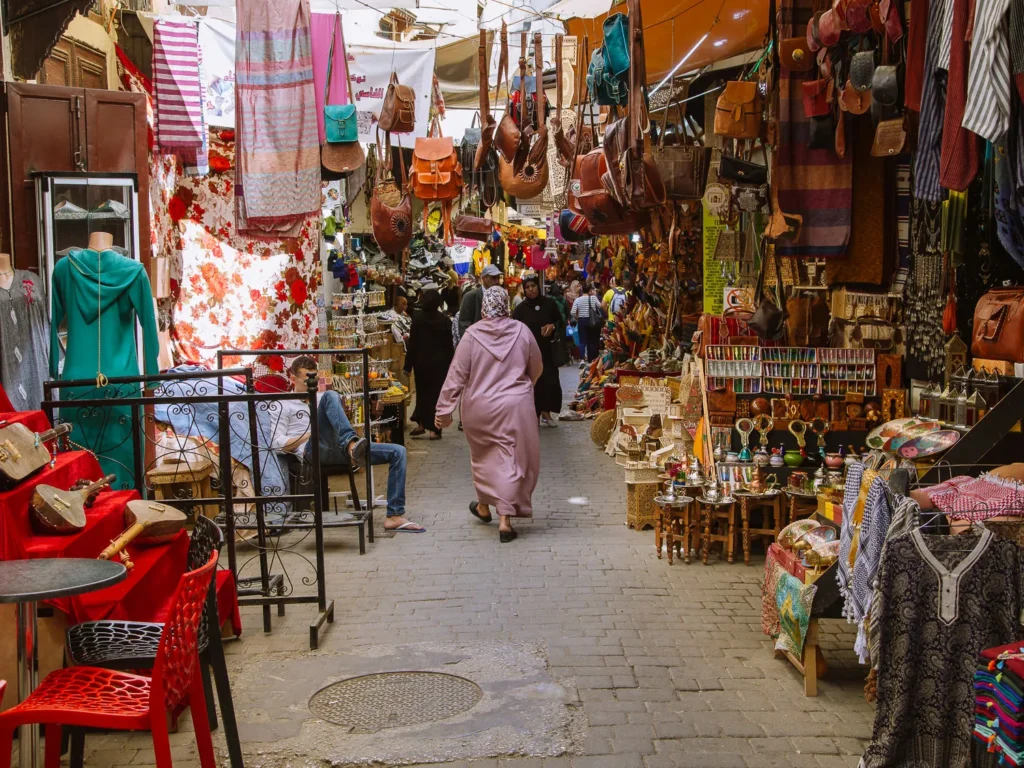
You’ve earned a rest now, and Place Seffarine is the perfect spot for a break.
Have a sweet mint tea on the pavement at Crèmerie la Place and watch the metal-workers beat their copper pots and pans into submission.
Fondouks
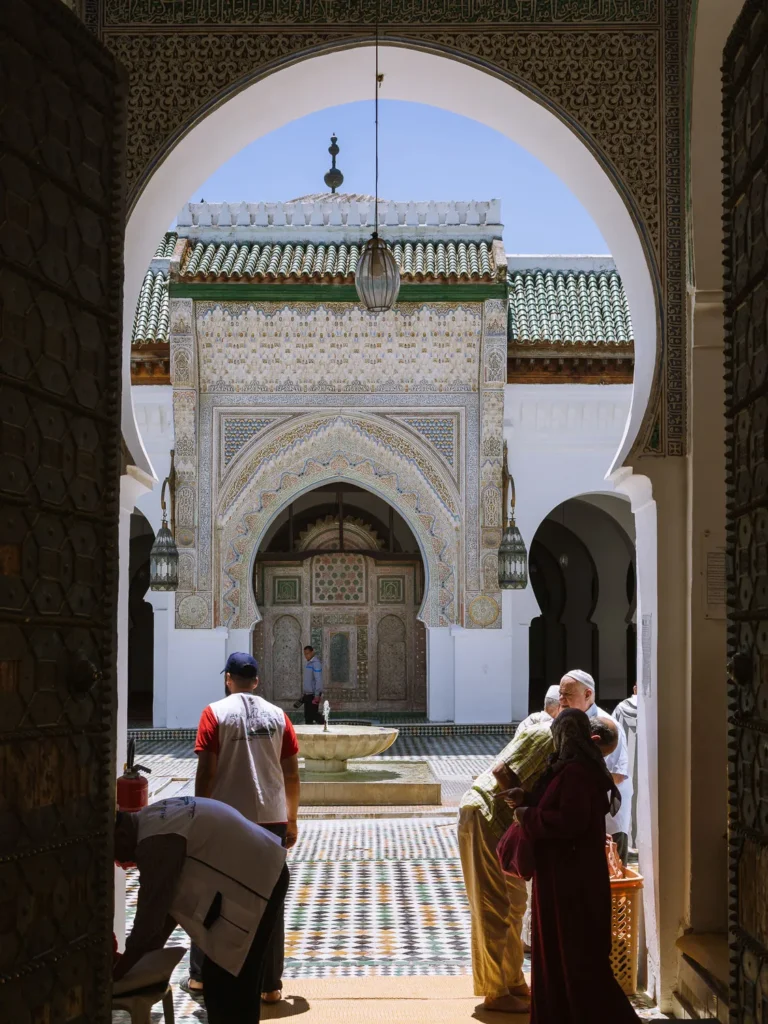
Refreshed, walk anti-clockwise around the university walls, pop into some excellently restored fondouks (especially Fondouk Staounyine) and see if you can get a glimpse of Kairaouine Mosque.
Hidden behind imposing walls, this magnificent building is easily missed. If you’re lucky, one of the gates will be open, and you can peer in as the locals head to prayer.
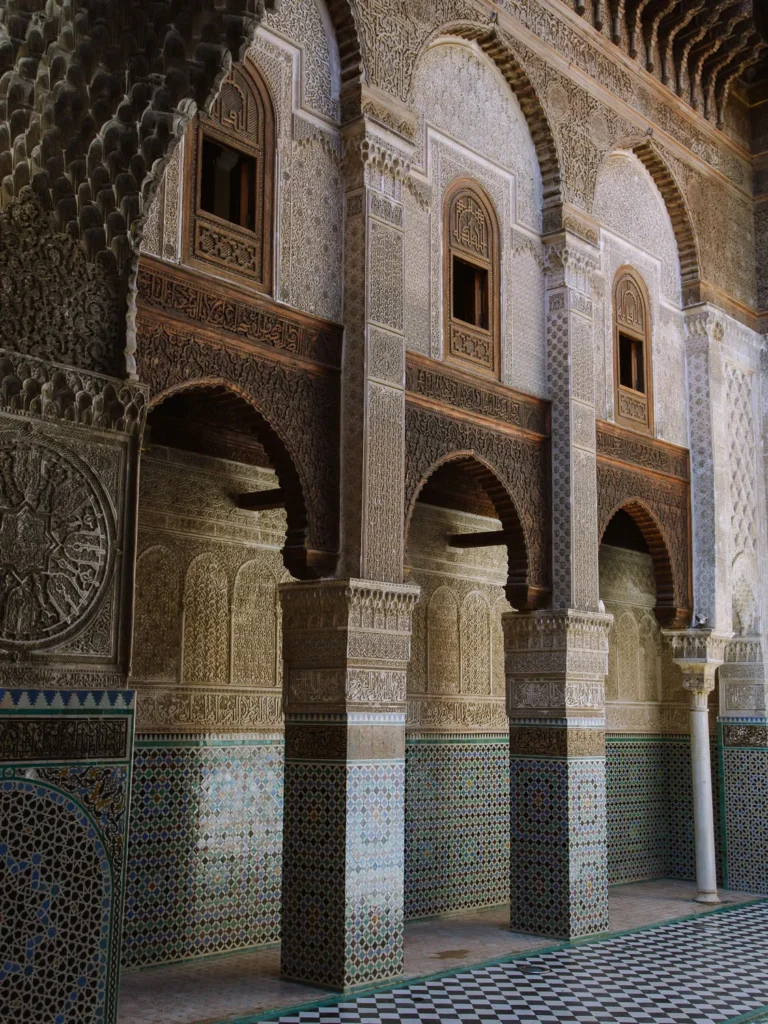
Just around the corner is the smaller but just as impressive Al Attarine Medersa.
Souks
You are now back in the main shopping streets.
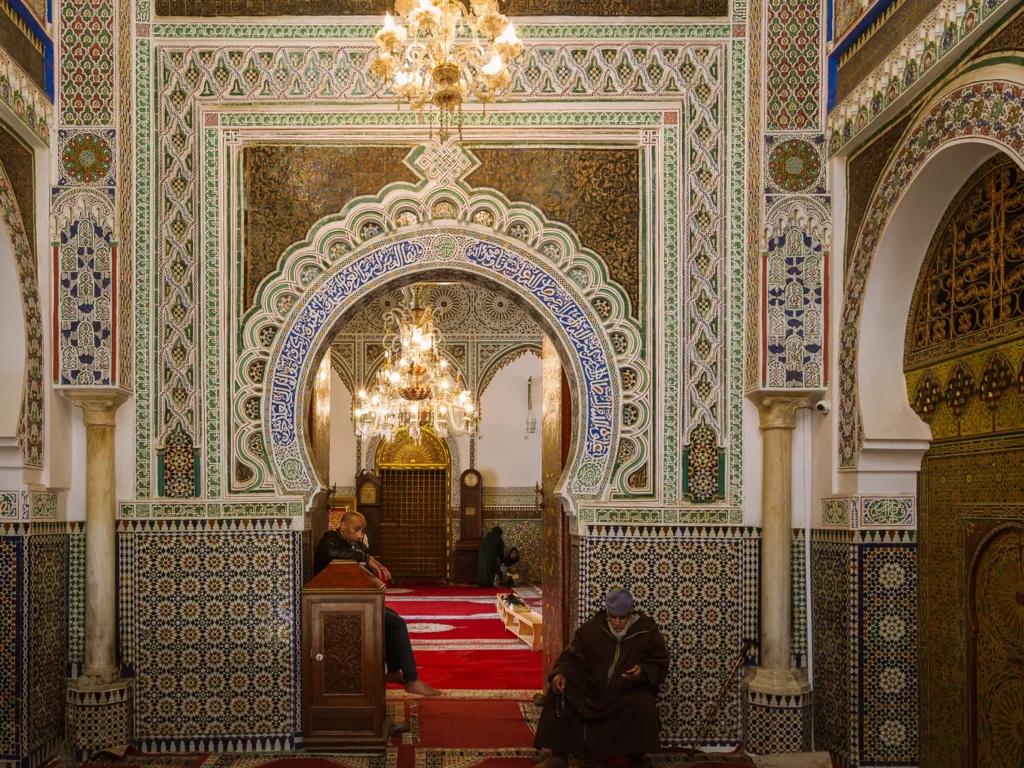
The beautiful Souk el Attarine sells all sorts of clothes and jewels and is flanked by the extremely ornate mausoleum of Moulay Idriss III. Built in 1323, many consider this the heart of the Medina.
Visit the Henna Souk and the Museum of Woods, Arts & Crafts at the restored fondouk in Place an-Nejjarine.
Then, head along Talaa Seghira and back to the Blue Gate to find a place for a late lunch.
Lunch
You have three good lunch options.
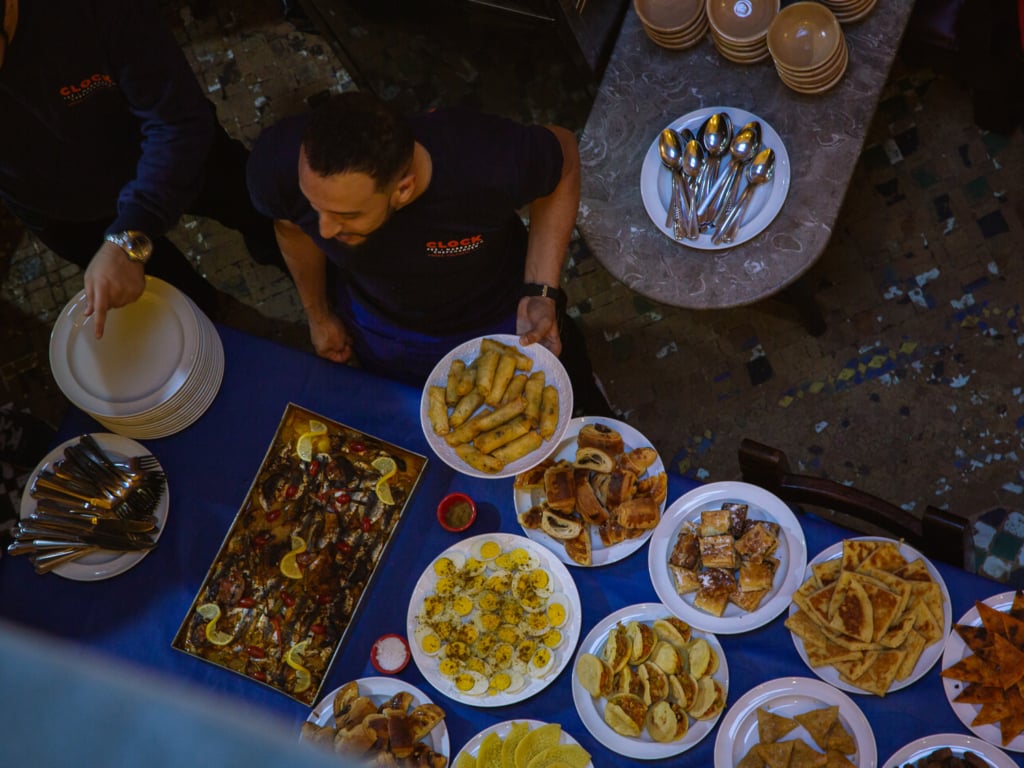
If you want to get above the hustle and bustle of Fez Medina, then head to Café Clock – the food is good, and the roof terrace is a great place to survey the medina.
For a relaxing escape from the craziness of Fez, try the Ruined Garden. Tucked behind large walls, this beautiful garden is like a medieval oasis (with good food).
You’ll have to get off the beaten track to get there, and you may encounter some locals trying to tell you it’s closed. Ignore them and proceed (see below for more advice on dealing with nuisances).
Our top choice for lunch would be Le Tarbouche. It serves excellent local food, and if you can get a seat on the pavement, you have a bird ‘s-eye view of all the comings and goings on Talaa Kebira.

Jnane S’bile Gardens
After lunch, exit the Fez Medina through the Blue Gate.
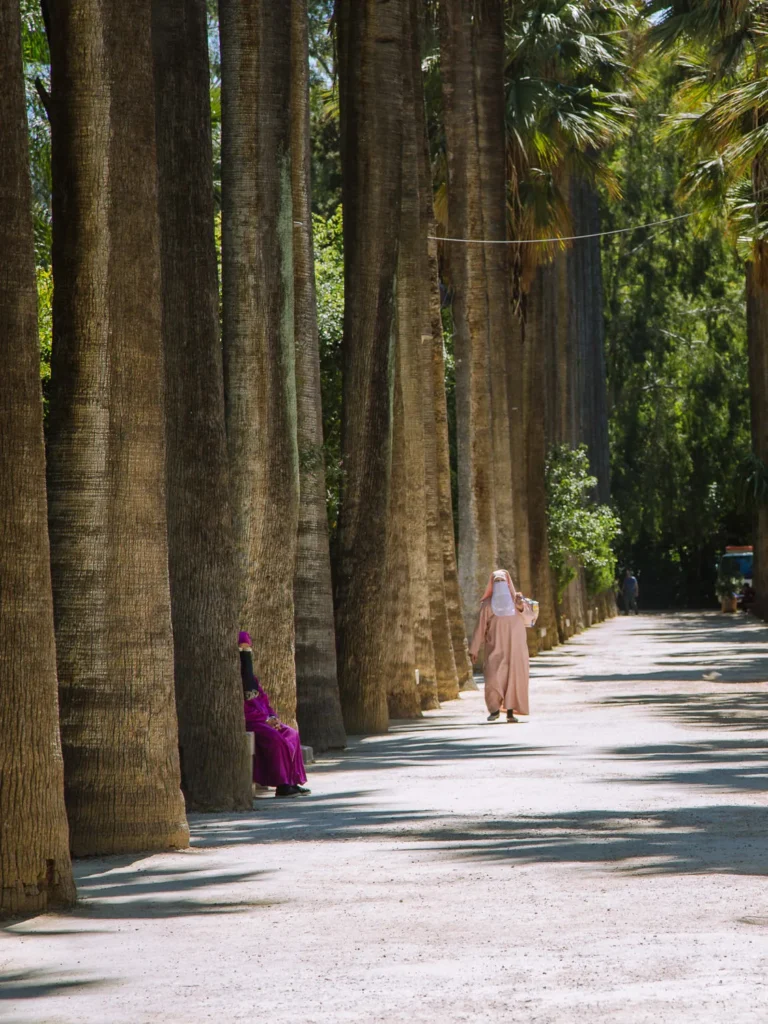
If you fancy a coffee, Yalla Yalla bucks the trend of coffee in Morocco and serves a decent cup. Otherwise, continue on to the picturesque Jnane S’bile Gardens, a breath of fresh air amongst the chaos.
You’ll find students escaping their cramped living conditions to study amongst the trees.
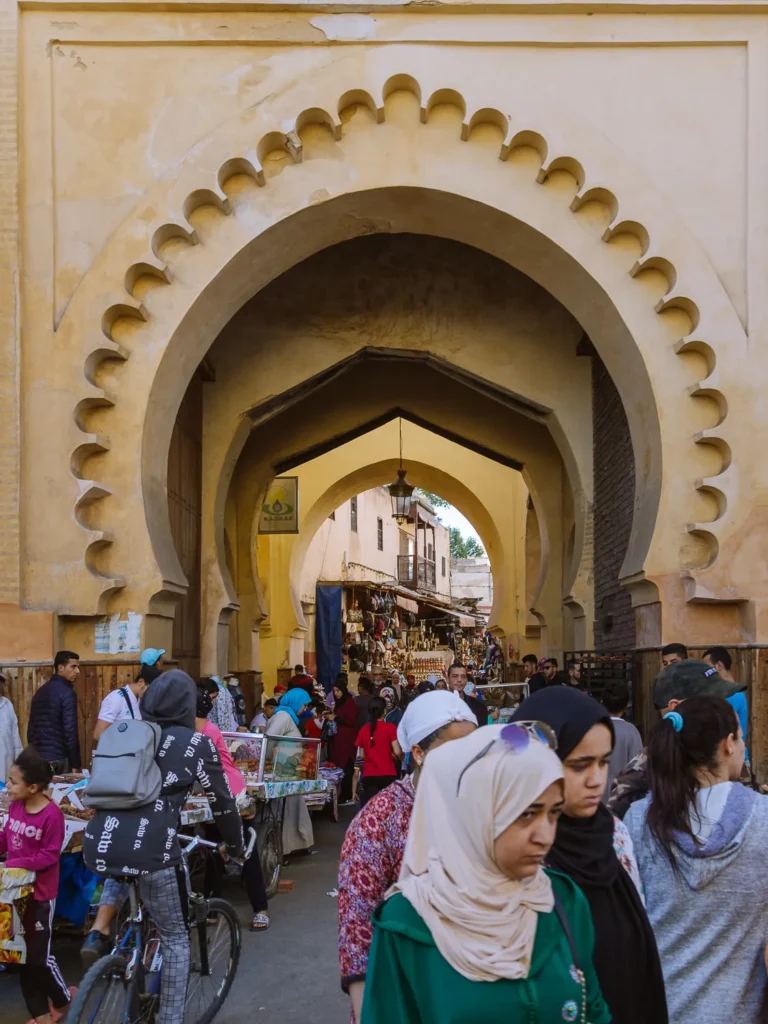
Exit the gardens at Bab Mechouar and follow the pedestrian walkway past another excellent local market to Semmarin Medina Gate.
Royal Palace
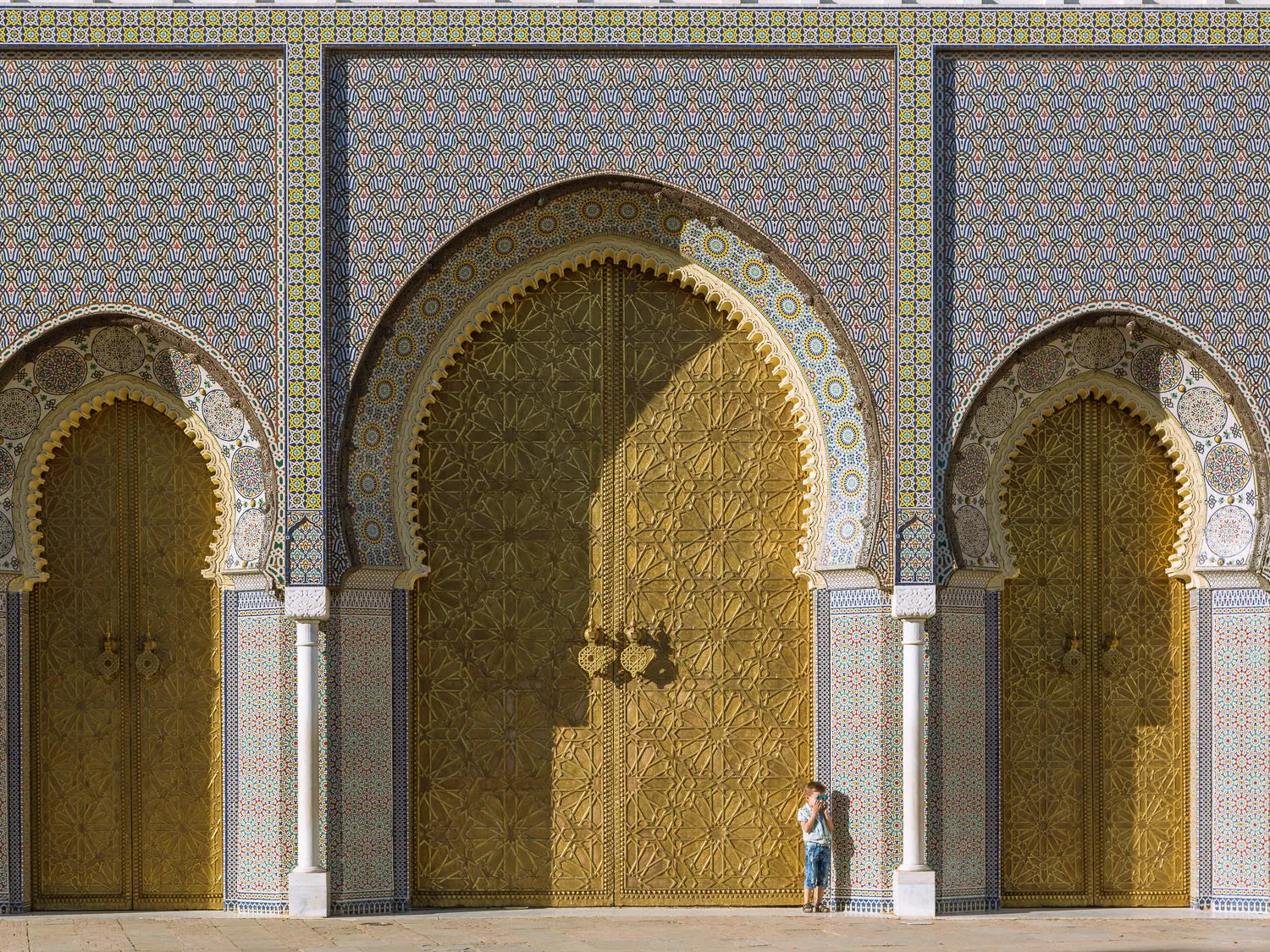
Turn right to get some photos of the towering gates of the Royal Palace, then head back via Rue des Mérinides.
This impressive street, lined with balconies and stucco work, is the heart of the mellah (walled Jewish quarter).
Head off the main route to visit Ibn Danan Synagogue.
The ground floor is an atmospheric place of prayer, but make sure you go downstairs to the washing area and two flights up for a view of the Jewish cemetery.
As the late afternoon light fades, head to Mezzanine for a cocktail and some tapas on their roof terrace.
Planning & Logistics
Where to Stay in Fez
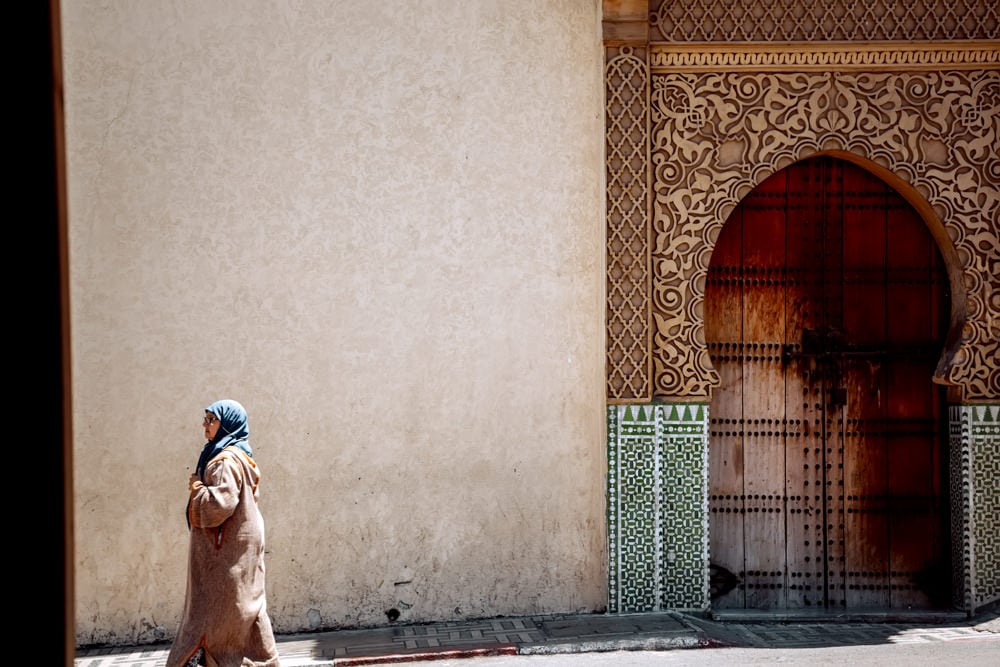
Fez gives you the opportunity to stay in some truly remarkable accommodation – privately owned riads with ornate central fountains tucked behind the grime of laneways filled with pesky kids.
We highly recommend staying either in the medina or just outside it. The best area is near Bab Jeloud (Blue Gate), where many of the best restaurants and cafes are located.
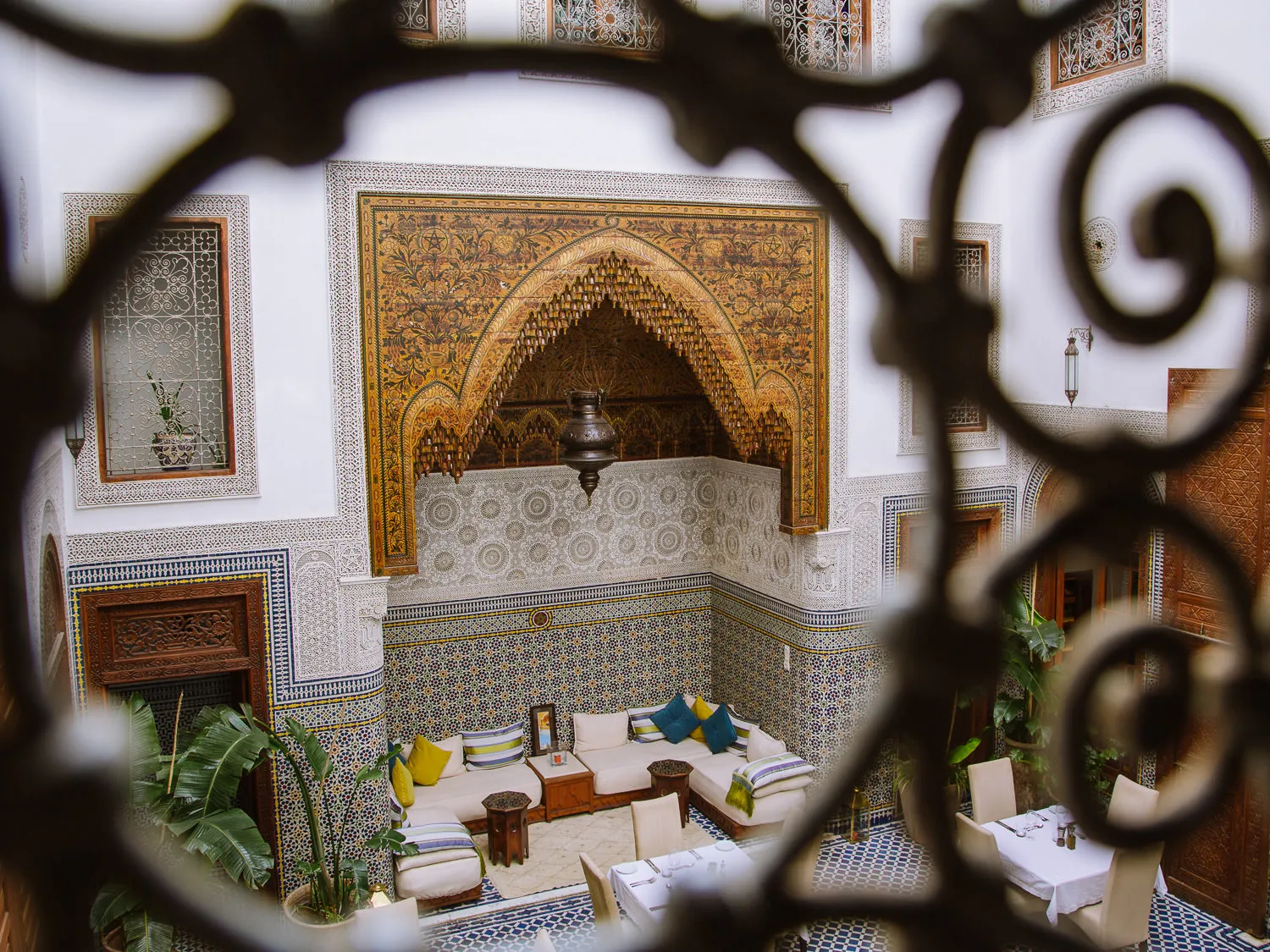
Dar Roumana – The central fountain in Dar Roumana is surrounded by magnificently carved stucco walls and towering cedarwood doors. The restaurant is the best in town.
Riad Dar Iline – A great budget option, on the outskirts of the medina. Each room has air-conditioning and a private, clean bathroom.
Riad Idrissy – After 6 years of painful refurbishment, Riad Idrissy, along with its Ruined Garden restaurant, is a chic retreat from the hustle and bustle of Fez.
Tips for Dealing with Pushy Locals
Morocco is an interesting place. Outside the cities, we found the locals warm and welcoming. A fresh mint tea was never far away and – even in Ramadan – food would be offered freely with a friendly conversation and a helpful nugget of advice to get the most out of this fascinating country.
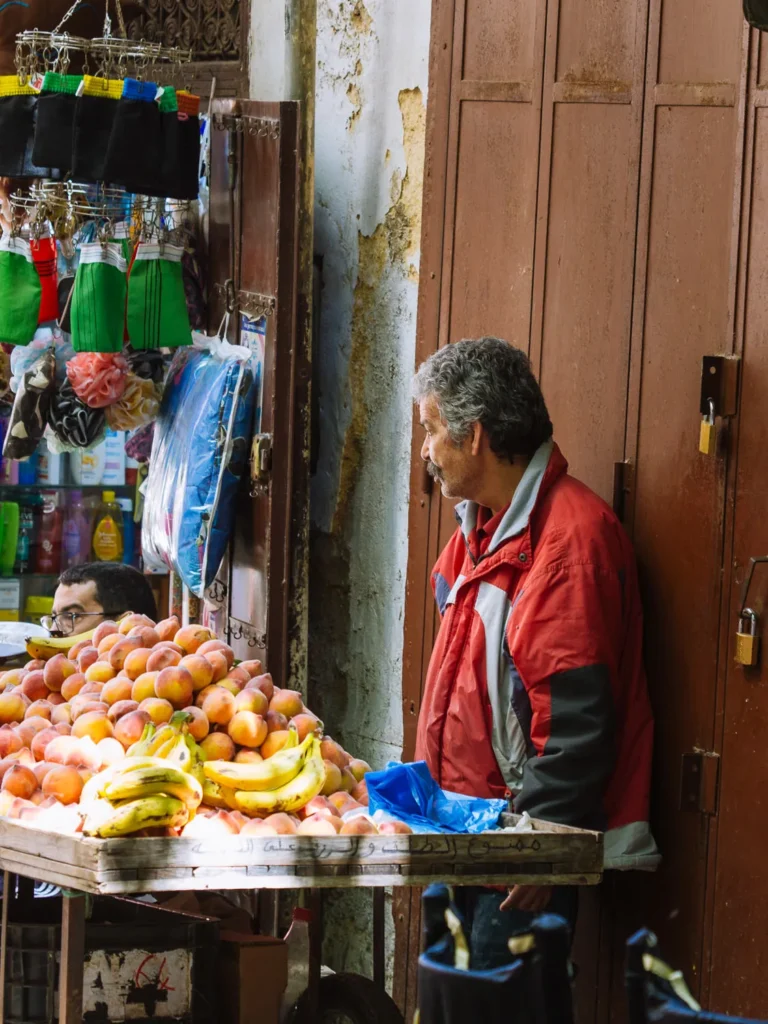
Sadly, in Fez, most people who offer to help are not trying to help you at all. Tourists are seen as an endless source of cash, and they’ll go out of their way to try and extract some from you.
If you walk around the streets using maps, trying to find your way, you’ll regularly be approached with ‘it’s not that way’ or ‘it’s closed’ – even though they have no idea where you want to go.
They will then offer to guide you somewhere. If you accept their offer, whatever you pay them will not be enough. If you decline, they can get quite pushy.
We recommend that you respond to all requests, saying ‘no thanks’ firmly but politely and walking on. If you can do so looking confident in where you’re going, even better.
If you are really lost and need some help, ask other tourists or go into a store and ask someone behind a counter. Try to stick close to the main streets so that if there are any issues, there are other people around.
Guided Tours of Fez Medina
While we generally love seeing a place on our own steam, if we were going to take a guided tour anywhere, Fez would be an ideal candidate.
Most hotels can arrange a tour for you. Otherwise, here are some we recommend which you can book before you leave.
- Get Your Guide – This highly rated tour can be booked for 3.5 or 6 hours.
- Viator – This tour is also well-rated and includes traditional ceramics and tanneries.
How to Get to Fez
Fez is well-connected and easier to reach than you might think, with a growing number of routes by air, rail, and road.
By Air
Fez-Saïss Airport (FEZ) receives direct international flights from several European cities, including London, Paris, Brussels, and Amsterdam.
Budget carriers like Ryanair operate some of these routes, so it’s worth checking for deals if you’re flying from Europe.
From the airport, a taxi to the medina takes around 20–30 minutes. Agree on a price before you get in, but expect to pay around 150–200 MAD.
From Marrakech
If you arrive into Marrakech first, you have two options to reach Fez.
The quickest is a one-hour internal flight. Alternatively, there is a train which takes around 7–8 hours and goes via Casablanca, with a change required along the way.
Morocco’s national rail network, ONCF, is reliable, and the seats are comfortable.
By Train from Casablanca
If you’re passing through Casablanca — whether arriving at Mohammed V International Airport or stopping en route — Fez is around 3.5–4 hours by direct train. The Casablanca Voyageurs station connects regularly to Fez and is easy to navigate.
By Car
Fez is accessible by road from most major Moroccan cities. From Casablanca it’s roughly a 3-hour drive along the A2 motorway, and from Marrakech around 6–7 hours.
Driving gives you the flexibility to stop off along the way. We did a 10-day Moroccan Road Trip, and it was a great way to see the country.


More Morocco Guides
- Experience Jemaa El Fna on your next trip to Marrakech.
- Here are the 20 most interesting places to visit in Morocco.
- Explore the best things to do around Ouarzazate.
- Go off the tourist trail in the Valley of the Roses.
- Read about all the best things to do in Marrakech.
- Take a great road trip with our Morocco Itinerary.
- The best things to do in Fez, Morocco’s medieval gem.
- All you need to know about driving in Morocco.
- Try this beautiful hike around the Todra Gorge.
- Enjoy the most beautiful valley in Morocco, the remote Ouirgane Valley.

reader-supported
When you buy through links on our site, we may earn a small affiliate commission at no extra cost to you.
Thanks for your support // Paul & Mark
I am in two minds about visiting Morocco because of mixed reviews I keep hearing. Firstly, I already live in a Middle Eastern country so exploring and learning about the Arab culture doesn’t appeal to me as much, which would’ve been the key reason for visiting Morocco. On the other, I keep hearing reviews like even you mention about Fez, that the locals aren’t too friendly and try to find ways to extract money from you. Good to know that its a possibility, one can be better equipped to handle such circumstances. It sure will be an adventure when I do get myself there, I can tell!
It’s really just in the medinas of Fez and Marrakesh where the locals can get a bit pushy, but it’s not too difficult to deal with as long as you are a little careful. It’s well worth it to experience all the great things about Morocco.
Your pics are amazing, as ever. It looks so beautiful but the pushy people trying to take advantage of visitors is what puts me off. I had some awful experiences in Egypt when I was younger which stopped me from visiting North Africa but I keep seeing how beautiful it is and think about giving it another go. Maybe being older, wiser and more confident will make a difference… #FarawayFiles
I haven’t been to Egypt so I’m not sure how it compares to Morocco but there is the hassling element to consider. But, I’m sure you’d be able to put them in their place, Keri!
Your Photos are amazing and detailed descriptions are so fascinating. I will be going to Fez soon. I wanted to download the map, but could not find the link in your post. Can you please send me the link. It would be extremely useful for us.
Thanks, Sudipta, so glad you found it useful. To save the map, make sure you are logged into your Google account, then click on the little star to the right of the title (beside Anywhere We Roam on the top of the map). This will save the map to Your PLaces – Maps, in Google Maps.