

By: Paul Healy // Last Updated:
Kosi Bay is a pristine wilderness in a remote part of South Africa. With wetlands teaming with wildlife and beautiful coastal forests, it’s a nature-lover’s paradise.
A five-hour drive from Durban and just south of the Mozambique border, Kosi Bay is a pristine, untouched wilderness. Part of the iSimangaliso Wetland Park, it consists of four interlinked lakes which create a complex estuary system with interconnected channels coursing out to sea.
Most importantly, however, it’s beautiful and one of the best places to see in South Africa.
Coastal forests back onto sand dunes, which drop into the Indian Ocean, forming hidden, untouched beaches. Wildlife is abundant at St Lucia, with hippos, crocodiles, tropical fish and a host of birdlife adding to the ecological mix.
Kosi Bay is a place to get away from the hustle and bustle of everyday life; to immerse yourself in a natural paradise, and go well and truly off the beaten track.
In this remote part of South Africa, explore hidden shores under star-filled skies bursting with natural beauty; encounter diverse wildlife, big and small, and wonder why you’re the only people here.

Map: Things to Do in Kosi Bay
Kosi Bay is in a remote part of South Africa near the Mozambique border, and your own car is required to see this pristine part of the country. We recommend rentalcars.com, which compares prices across all the major car rental companies.
Click on the top right corner to open our map in your Google Maps app. Click the star next to the title to save it to your Google account.
What to Do at Kosi Bay, South Africa
1. Kosi Bay Lake Tour
Hidden in an almost tropical coastal forest, the four lakes of Kosi Bay are home to abundant wildlife.
A boat tour through the channels connecting the four lakes is a great way to get your bearings in the area and see some amazing wildlife.
While hippos are known for roaming the streets in St Lucia, you can still see them wallowing up close on a boat tour. Capture colourful flamingos mid-strut and keep your eyes peeled for native eagles.
Learn about the life of local fishermen and how their cunningly designed traditional wood structures (kraals) channel fish into ever-decreasing catchment areas.
The lakes are remarkably clear and ideal for snorkelling. After spotting wildlife and learning about the delicate ecosystems in Kosi Bay, dive in to swim among the fish lurking within the web of mangrove roots.
There are two tours daily, each lasting about 3 hours. Tours leave from the 3rd lake behind the Kosi Bay Permit Office, although the tour operators will pick you up from your hotel.


2. Kosi Bay Mouth
As the water from the four lakes heads towards the Indian Ocean, it forms an estuary called Kosi Bay Mouth. One side is a golden sandy beach, the other a tranquil lake.
The lake is excellent for snorkelling, with crystal clear waters and an abundance of fish. If the tide is low and the surf is not too strong, it’s also possible to snorkel on the ocean side.
A shelf drops steeply just offshore, creating the right conditions for spotting impressively large fish.
As well as snorkelling, kayaking into the estuary or the ocean is a great opportunity to spot turtles up close and whales or dolphins in the distance.
The Kosi Bay Mouth entrance gate is a 30-minute drive north of the Kosi Bay Permit Office.
A permit for entry must be purchased from the permit office before going through the gate (permits cannot be purchased at the gate). Once through the gate, the mouth is a further 2-kilometre drive over sandy dunes, which require a 4×4 vehicle.
If you don’t have a 4×4, you can park at the gate and walk the 2 kilometres. Alternatively, your accommodation can organise a tour.
Try to go when the sea is not too rough and ask about tide times to maximise your day out. If you are snorkelling without a guide, wear shoes, as there are stonefish in the lake that are extremely dangerous to stand on.


3. Turtle Nesting Tour
Between November and March, loggerhead and leatherhead sea turtles travel onshore to lay their eggs in the sand dunes. During these dates, going to see them is a thoroughly rewarding Kosi Bay experience.
The tour leaves at 5 pm and arrives at the forest beach of Bhanga Nek at around 7 pm.
From here, it’s a walk along the beach in darkness, looking for turtle tracks in the sand. One set of tracks means the turtle is up in the dunes laying eggs; two means it has already returned to the sea.
We saw a magnificent leatherhead turtle, weighing in at around 500 kilograms, pulling herself back across the sand into the sea. It was a remarkable sight.
Less common but equally as rewarding is finding hatchlings from a previous nest making the arduous journey to the sea for the first time.
Compared to adults, they are tiny. Only around 3-4 out of every thousand will survive to adulthood. It’s a fascinating life cycle to witness.
The safety of the turtles is taken very seriously. Only 4 guides are authorised to run the tour at Kosi Bay.
There are 2 tours each day, and space is limited, so book ahead – especially during South African holiday periods. The tour goes for as long as it takes to see a turtle or until you all want to go home. Expect to walk up to a total of 6 kilometres on the sand.


4 – Beach Hopping Through the Coastal Forest
The coast near Kosi Bay is a unique landscape. A dense coastal forest has somehow sprouted from the sand dunes, making the remote beaches in this part of South Africa even more isolated.
A maze of sandy tracks winds through the forest, providing access to several of these stunning beaches.
A regular tour will visit Rocktail Beach in the south, the central beaches of Lala Nek and Black Rock before finishing at Bhanga Nek in the north. They’re all large sweeps of golden sand with no facilities and some of the most pristine beaches you’ll find anywhere.
The beach hopping tours are sold as an adventure activity – a 4×4 excursion over the forested sand dunes. There’s no doubt it’s an adventure – our tour guide got stuck twice, and we met a couple who tried the self-drive option but had to pick up a guide on the way.
However, the scenery between the beaches doesn’t change that much. So apart from a sense of adventure getting to them, the drive gets a bit boring after a while.
All accommodation in the area can organise a tailored tour, so our recommendation is to tell your tour guide that you just want to visit 2 beaches and spend a couple of hours at each.
This will still give you a chance to experience the sand dunes while allowing you to spend more time on the beautiful beaches.
If you intend to make the journey on your own, download Maps.me to help you find the tracks.
A permit from the Kosi Bay Permit Office is required. We didn’t self-drive the coastal forest, and after doing it with a guide, we’re glad we didn’t. But we did undertake the nerve-wracking Sani Pass 4×4 drive into Lesotho.


5. Kosi Bay Guided Walks
There are several hiking trails leading from the Kosi Bay Permit Office that can be explored either independently or with a guide.
Because Kosi Bay has a unique ecology, a guided walk in the area is a great way to learn more about the environment and the locals who call this beautiful corner of South Africa home.
The Raffia Palm Hike explores the area north of the lakes with a particular focus on the 16-metre-high Raffia Palms. Fun fact: they have the largest leaves in the plant kingdom. Lucky explorers will see a palm nut vulture, some red duikers, or perhaps even the very cute vervet monkeys.
Another guided hike visits the local Tsonga people to learn about their strange fishing technique using kraals. The guide explains the people’s cultural heritage and how their strange-looking wooden structures catch fish.
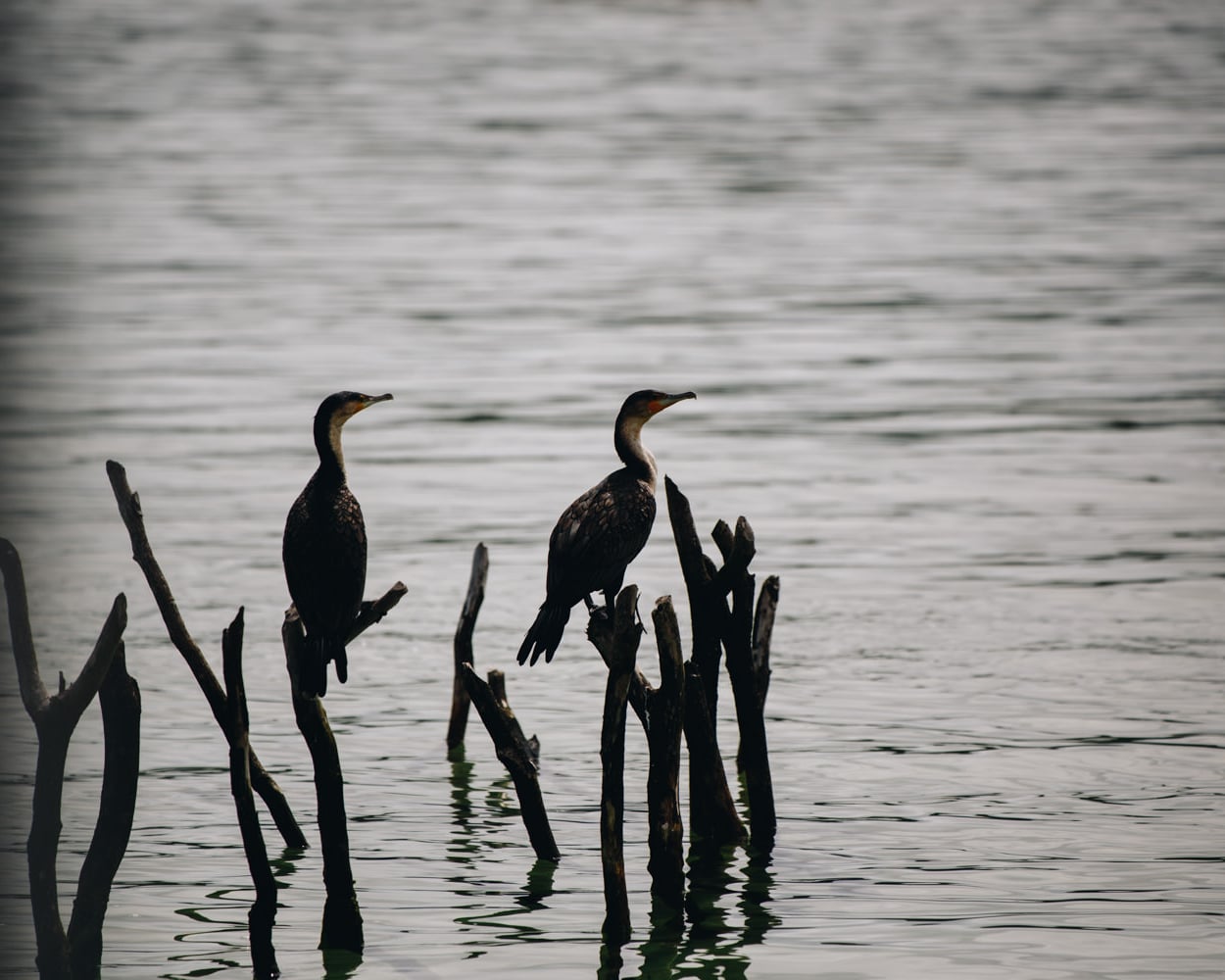
Finally, bird-watching tours explore the edges of the lakes in search of herons, egrets, eagles, vultures, fishing owls, and so much more. The wetland ecosystem of Kosi Bay is ideal for interesting bird-spotting.


6. Tembe Elephant Park
Tembe Elephant Park is about a 1-hour drive from Kosi Bay, just outside iSimangaliso Wetland Park. It’s home to some of the largest elephants in the world, including around 150 six-ton giant tuskers.
The sandy forests of Tembe are also home to the rest of the big 5: lion, rhino, cape buffalo, and leopard.
The best places for animal spotting in the park are at the Mahlasela hide, which overlooks a lovely waterhole, and along the West Swamp Road and East Swamp Road. (A map is available at the entrance with all the details)
You can self-drive the park, but it’s not easy. The sand is very deep in places, and tracks are often closed due to poor conditions.
During the rainy season, thick shrubs grow very quickly; their sharp needles are a threat to nice shiny cars.
We were there in January, early in the rainy season. The tracks were extremely narrow from the dense growth, and the sand was worryingly deep. We made it around OK, but the stress of keeping the car scratch-free and avoiding getting stuck in sand drained some of the fun from searching for the animals.
We’d definitely recommend taking a tour so you can relax and enjoy the experience or self-drive yourself around Hluhluwe-iMfolozi and the eastern and western shores of St. Lucia to the south.


Planning & Logistics
Booking Kosi Bay Activities
All accommodation places can help organise Kosi Bay activities, but most will use Thobeka Safaris. Thobeka is a backpacking lodge that offers a wide range of tours.
They’ll pick you up from wherever you are staying and drop you back after your excursion.
They’re very helpful and flexible with their tours. Chat to them about what type of experiences you’d like to have, and they’ll recommend how it can all be put together in the time you have.
Permits for Kosi Bay Activities
The only place to obtain permits in the Kosi Bay area is at the Ezemvelo KZN Wildlife Office just north of the third lake (marked with a star on the map below).
Even if you are going to Kosi Bay Mouth (30-minute drive north) or to the Coastal Forest via Malangeni (45-minute drive south), you must call at the office to get a permit.
The permit office is open at the following times:
| Day | Open | Lunch | Close |
|---|---|---|---|
| Weekdays | 08:00 | 12:00–13:00 | 16:00 |
| Saturday | 08:00 | 12:00–13:00 | 16:00 |
| Sunday | 07:00 | 12:00–13:00 | 15:00 |
| Public Holidays | 07:00 | 12:00–13:00 | 15:00 |
The gates to the park open from 6 am until 6 pm daily.
Entrance permits are R65 per person, R35 for children, and R65 for a vehicle. You can buy permits for the same day or a day in advance. Bring ID.
Most tours begin at the Ezemvelo Office, where permits are picked up for each person on the tour.
Rhino Club
If you are a South African resident planning to visit multiple Ezemvelo KZN Wildlife parks in KwaZulu-Natal, consider getting a Rhino Card.
It costs R420 per person per year and provides free day entry to Ezemvelo-managed parks, plus discounts on accommodation and activities.
Please note that it is no longer valid at iSimangaliso Wetland Park gates, including Kosi Bay — full entrance fees apply there regardless.


Where to Stay in Kosi Bay?
Kosi Bay is relatively new on the tourist map and is mostly visited by local South Africans. However, more and more accommodation options are popping up around the area. It’s a remote part of the country, so expect fewer facilities and more natural, homey service.
Food in guesthouses depends largely on what they can obtain, so choices can be limited. If you’re eating in-house, it’s probably a good idea to let them know in advance if you have any dietary requirements. In this part of South Africa, the internet can be patchy.
Thobeka Backpackers – Peter and Maryna run this good-value backpacker’s getaway just off the main road from the town of Manguzi. Their rustic self-catering lodge has double rooms, dormitories and family rooms.
Kingfisher Bush Lodge – Offering great value, these tents and excellently furnished luxury tented chalets are just a short drive from the permit office. There’s a small pool, wi-fi in the reception area, self-catering facilities and a restaurant.
Chinderea Eco Lodge – A wonderful hidden gem tucked away deep in the forest, Pam and Bill have created a lovely eco-lodge. The timber frame melds into the surrounding forest, and its balconies and terraces feel a mile away from anywhere.

How Many Days in Kosi Bay?
To make the most of this pristine hideaway in South Africa, we recommend staying for at least 2 full days.
This will give you time to explore the estuary mouth, take a boat tour, go on a hike and watch the turtles at night. Tembe Elephant Park could be included on your way to or from Kosi Bay, or you could add an extra day.
The best time to stay is April and May or September and October. During these times, the temperature is nice, and it’s not too wet.
However, if you want to see the turtles (and we highly recommend you do), then you’ll need to brave the hot summer months of December to March.
Tips for Visiting Kosi Bay
- Kosi Bay is a 5-hour drive from King Shaka International Airport, just north of Durban. The last hour has many cows wandering the road, and progress can be slow.
- Most accommodation at Kosi Bay can be reached using a 2WD. But if you want to skip the tours and drive yourself inside the park, then you will need a 4×4. The bigger the better. It’s also helpful to have experience driving on sand. We recommend rentalcars.com for your hire car.
- If you self-drive towards Bhanga Nek and the beaches, download maps offline before you go as it is a maze of unmarked tracks out there.
- If you have the urge to pop into Mozambique, it’s just a short drive north. Visas for most nationalities can be obtained at the border. Don’t forget your passport.
- Kosi Bay is a very low-risk malarial zone, but it is present. It’s generally not recommended to take anti-malarial medication, but as always, check with a doctor first. Wear long sleeves and use mosquito repellent in the early mornings and evenings.
- The closest supermarket, pharmacy, gas station & ATM are all in the town of Manguzi, 30 minutes from the permit office. Stock up on the way to your accommodation if you intend to self-cater.

More South Africa Guides
- Plan your trip with our detailed Cape Town itinerary.
- Here are all our favourite places to visit in South Africa.
- Planning a trip? Read our 3-week South Africa Itinerary.
- Read our tips for planning your South Africa trip.
- These are the best things to do in Cape Town – food, attractions, hikes & more.
- How to do a self-drive Kruger Safari.
- Here’s why you should add the Drakensberg to your South Africa Trip.
- When to go? Read our guide on the best time to visit South Africa.

reader-supported
When you buy through links on our site, we may earn a small affiliate commission at no extra cost to you.
Thanks for your support // Paul & Mark
great article!
Thanks, James. Glad you liked it.
Thank you Paul & Mark! The information you share is very helpful in planning our trip to Kosi Bay later this year.
Hi Leila – Glad to hear it and thanks for letting us know. Have a great trip!