

At 5,106m, the Larkya La (Larke Pass) is the highest and most challenging point on the Manaslu Circuit. Here’s what we learned from our recent crossing of this high-altitude pass.
By: Mark Barnes | Last Updated:
The Manaslu Circuit is one of the great treks in the Nepalese Himalayas, completing a semi-circle around Manaslu (8,163m), the world’s 8th-highest peak.
The trek typically takes 12 days, with the highest point reached on day 10 when you cross Larkya La Pass at 5,106m.
It’s the most breathtaking day of the trek—both figuratively and literally—as well as the most rewarding and challenging.
At over 5,000m, air pressure is almost half that at sea level, making breathing noticeably harder, and altitude sickness is a real risk at this elevation.
Snow and ice often cover the ground, and strong winds are common. To avoid the worst winds, the crossing starts early—well before dawn—and takes 10 to 12 hours to complete.
It’s a day that demands preparation, yet we found it the most memorable and enjoyable of the entire trek.
This guide covers the challenges you’ll face, what the day is actually like, and practical tips to help you prepare.
What Is the Larke Pass?
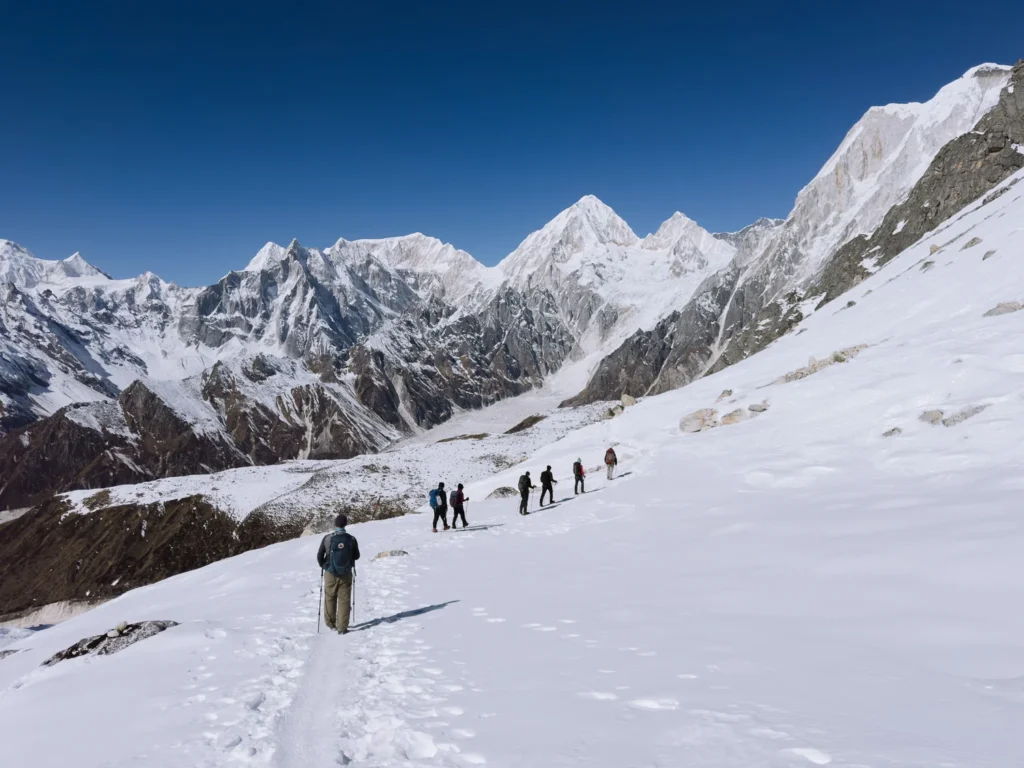
Larkya La is a high-altitude mountain pass at 5,106m, marking the highest point on the Manaslu Circuit trek.
The pass connects the Manaslu region to the Annapurna region, serving as a dramatic gateway between two of Nepal’s most spectacular mountain ranges.
The crossing itself spans the distance between Dharmshala (also called Larke Phedi) and Bimthang, making it one of the longest single-day sections in the Manaslu region. This is why the day requires an early start and can take 10 to 12 hours to complete.
Standing at the pass, you’re rewarded with sweeping panoramic views of peaks including Himlung Himal, Cheo Himal, Kang Guru, and Annapurna II—a stunning payoff for the challenging ascent.
Map: Manaslu Circuit
Below is a map of our 12-day Manaslu Circuit, which is completed in an anticlockwise direction.
The hike over Larkya La is on Day 10. It is 10 miles long (16 km) with 750 metres of ascent and 1,500 metres of descent.
It is the toughest day on the circuit and takes between 10 and 12 hours to complete.
Click on the top right corner to open our map in your Google Maps app. Click the star next to the title to save it to your Google account.
Our Hiking the Larkya la Pass
Arriving at Dharamshala
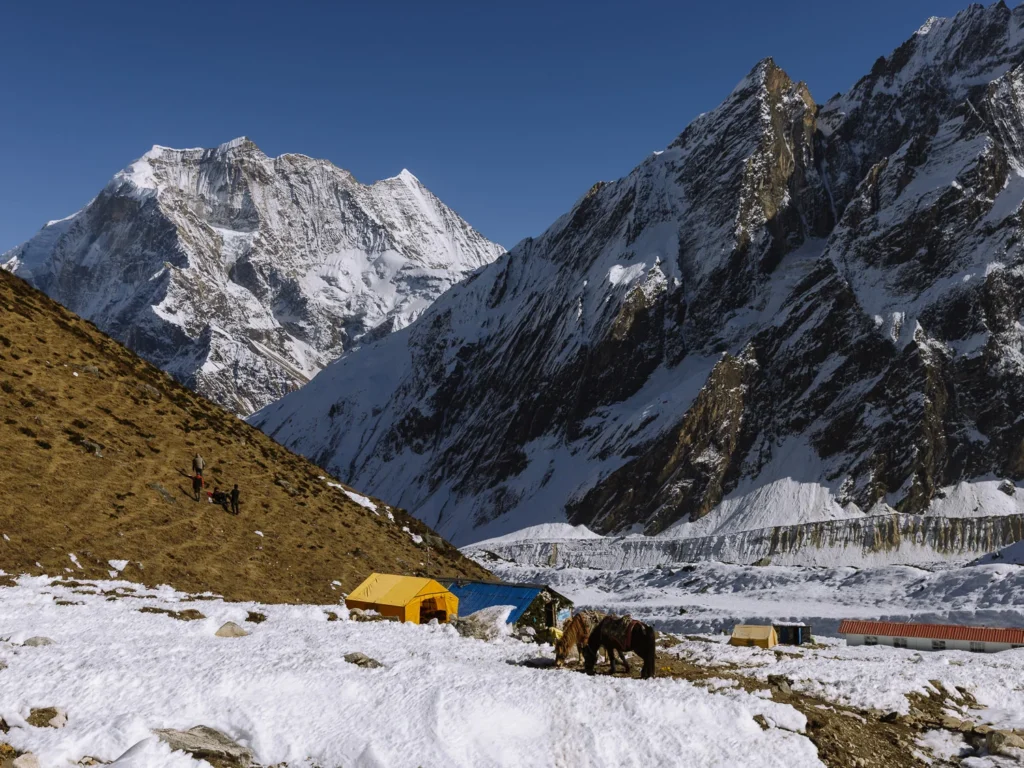
The day before we crossed the Larkya La Pass, we had made our way from Samdo (3,875m) to Dharamshala (4,460m). It’s a short trek (3–4 hours), and we arrived at camp by lunchtime.
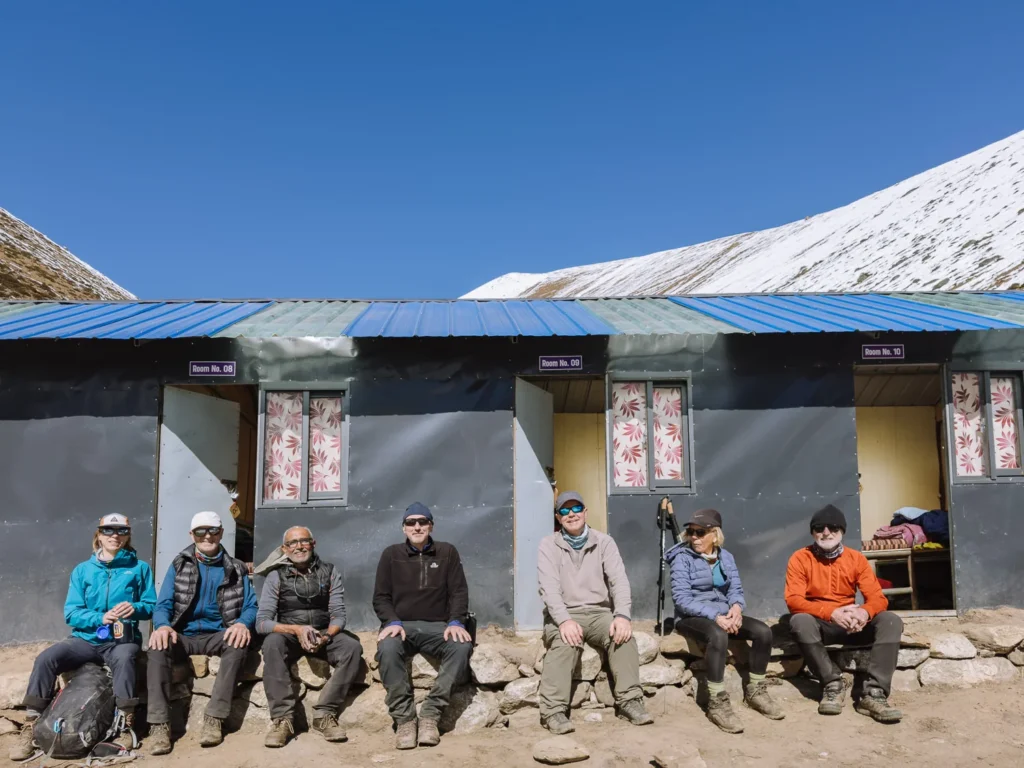
Dharamshala is not a local village. It has been built specifically for trekkers and consists of just three lodges. The lodges are simple structures made of stone and wood, with tarpaulin or sheet metal making up the roof.
We were told before the trek that if the pass was busy, we might have to sleep in a tent. But we were trekking in late November, which meant the pass was relatively quiet.
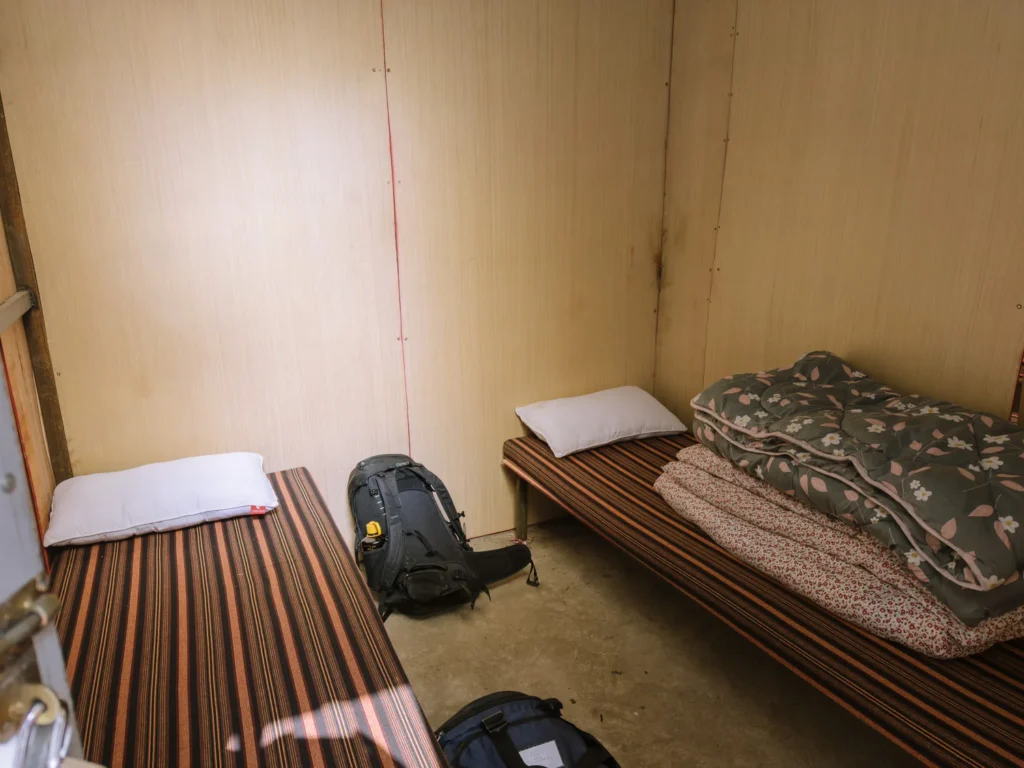
Fortunately, we got a small room with twin beds and a light. It was unheated, cold, and separated from our neighbours only by a thin piece of plywood.
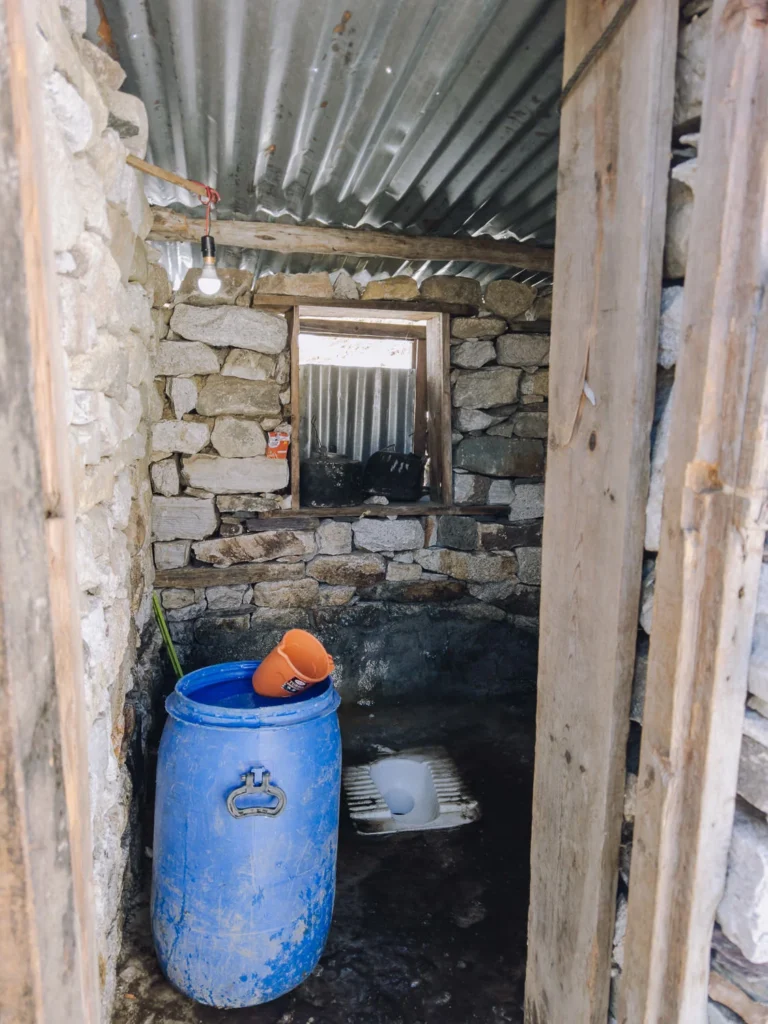
The facilities at Dharamshala are basic. There are shared squat toilets and a sink, but no showers.
Night Before the Pass
The communal dining hall at Dharamshala is a long, narrow room that seats around 50 people.
It’s the only room in the teahouse that is heated, and it was actually pretty cosy. But even sitting near the wood-burner, we were in plenty of warm clothes, including a down jacket.
Dinner was early—around 5:30 pm—because we had a very early start the following morning. We had a hearty portion of dal bhat, then played some cards for a while until the heat disappeared from the fires.
By 7:30 pm, we were all headed for bed. It may have been about −5 °C outside, but once we were in our merino base layers and tucked into our sleeping bag with two hot water bottles, we were very toasty.
Our guide advised us to pack all the clothes (except boots) we would wear the following day into the sleeping bag to keep them warm.
Early Start
High winds on the pass are very common and increase later in the day. For this reason, the hike over the pass starts very early.
Our alarm went off at 3:30 am, and we very quickly dressed in our warm clothes.
Stuffing the sleeping bag back into its cover and packing our rucksacks in the freezing temperatures took a little longer than usual.
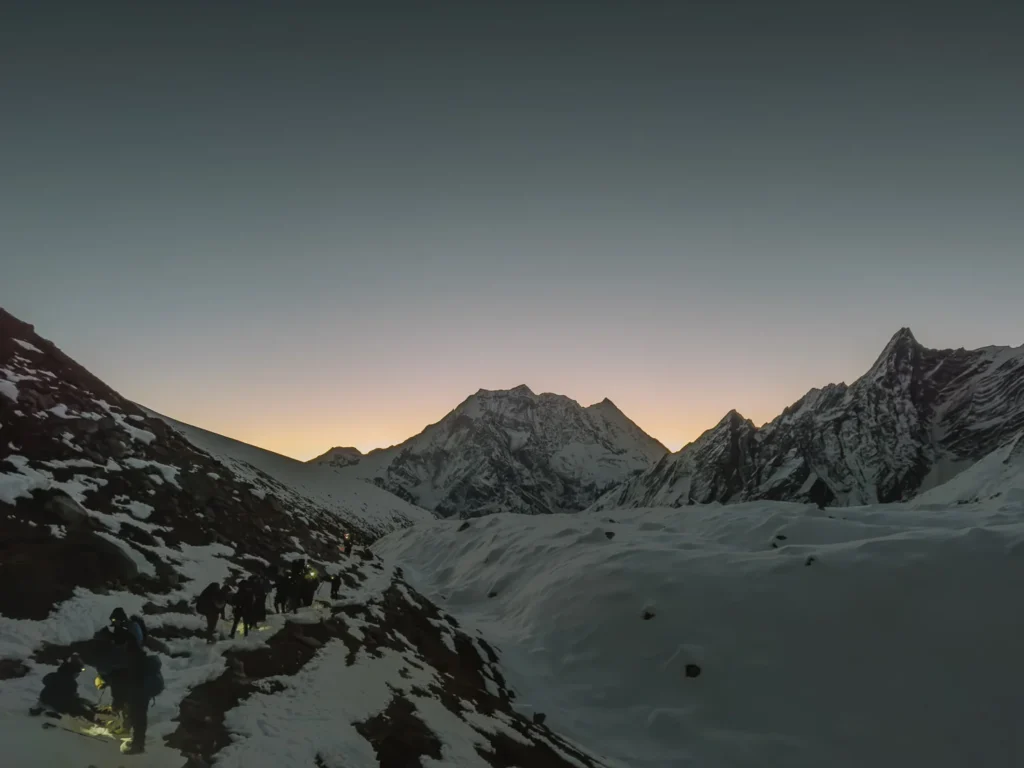
Leaving our little room, we were delighted to see stars in the sky, not a cloud in sight and hardly a breath of wind. It was about −8 °C.
After a bowl of porridge for breakfast, a cup of instant coffee and a quick visit to the squat toilets, we were ready to go by 4:30 am.
The Hike up to Larkya la
From Dharamshala (4,460m) there is about 700 m of ascent to the Larkya La (5,106m). Conditions change, but it is highly likely that the pass and the surrounding area will be snow-covered.
Fortunately, the route is straightforward, and the ascent is very gradual. At no point is it particularly steep. The challenge is to manage your body temperature and avoid slipping.
We set off wearing almost all the warm clothes we brought (see our Manaslu packing post) and were very comfortable.
It is essential to keep those extremities warm, so wear thick mittens, a buff, a woolly hat, and merino socks, as well as a thick down jacket (and, if windy, a waterproof jacket and trousers).
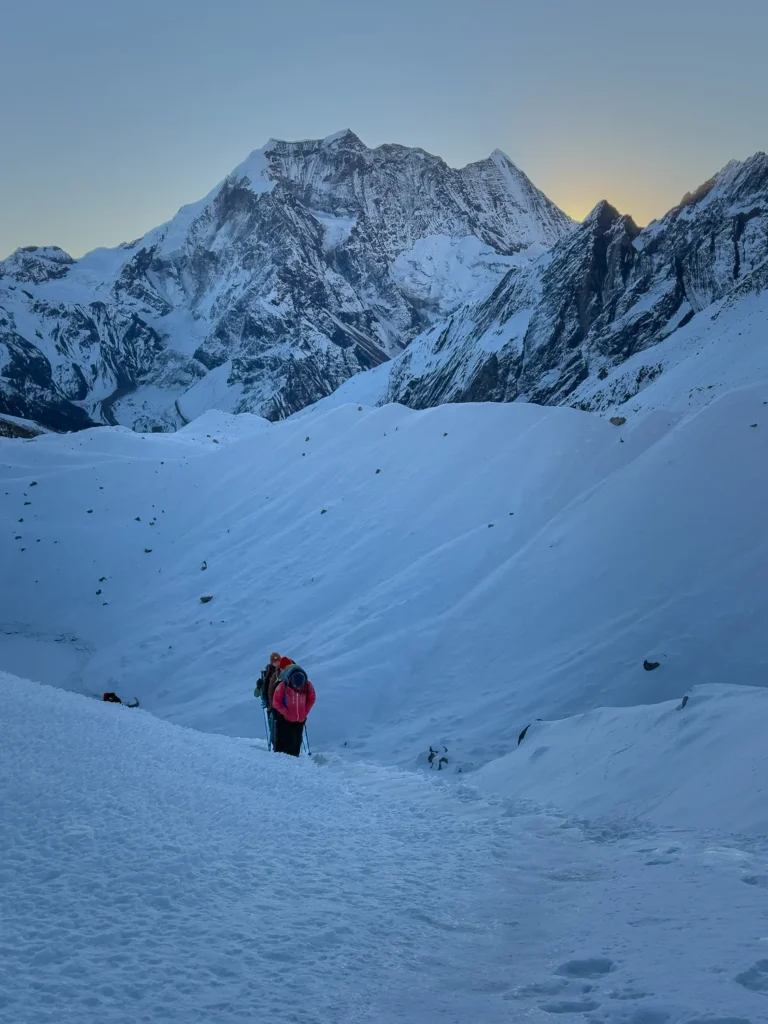
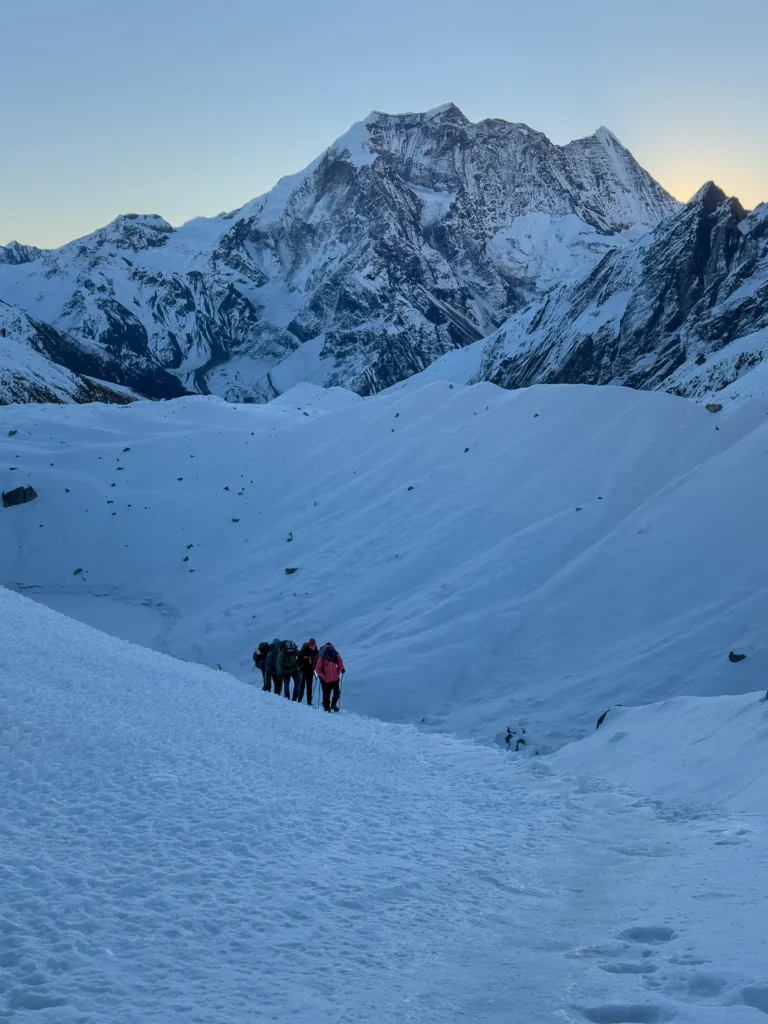
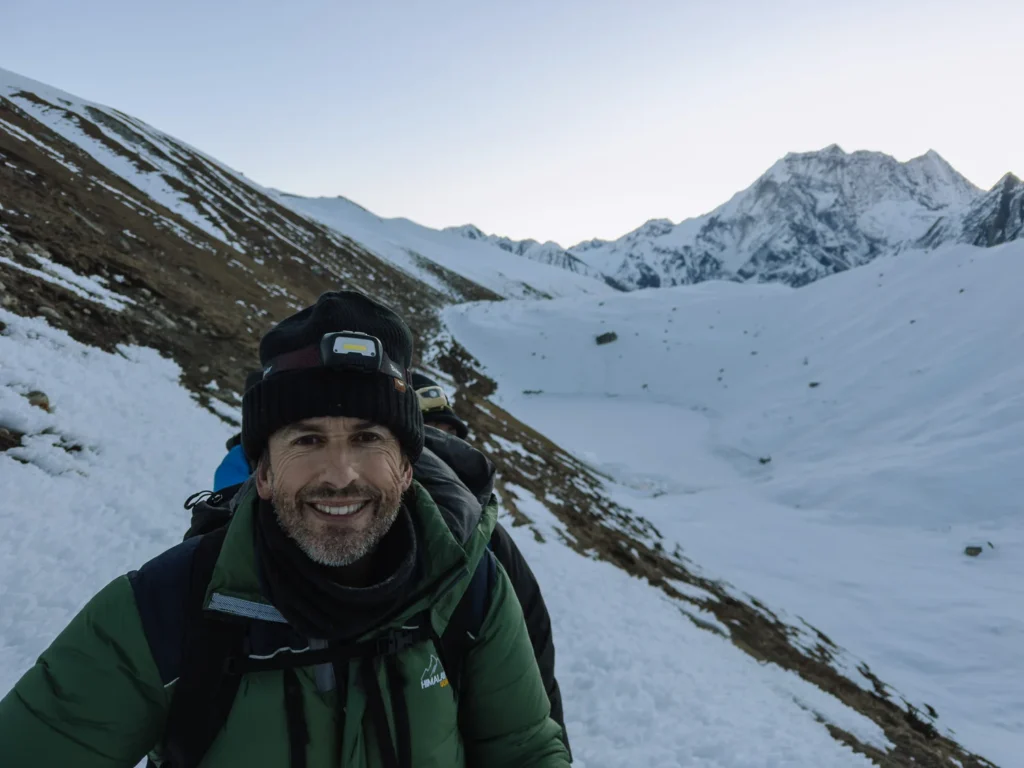
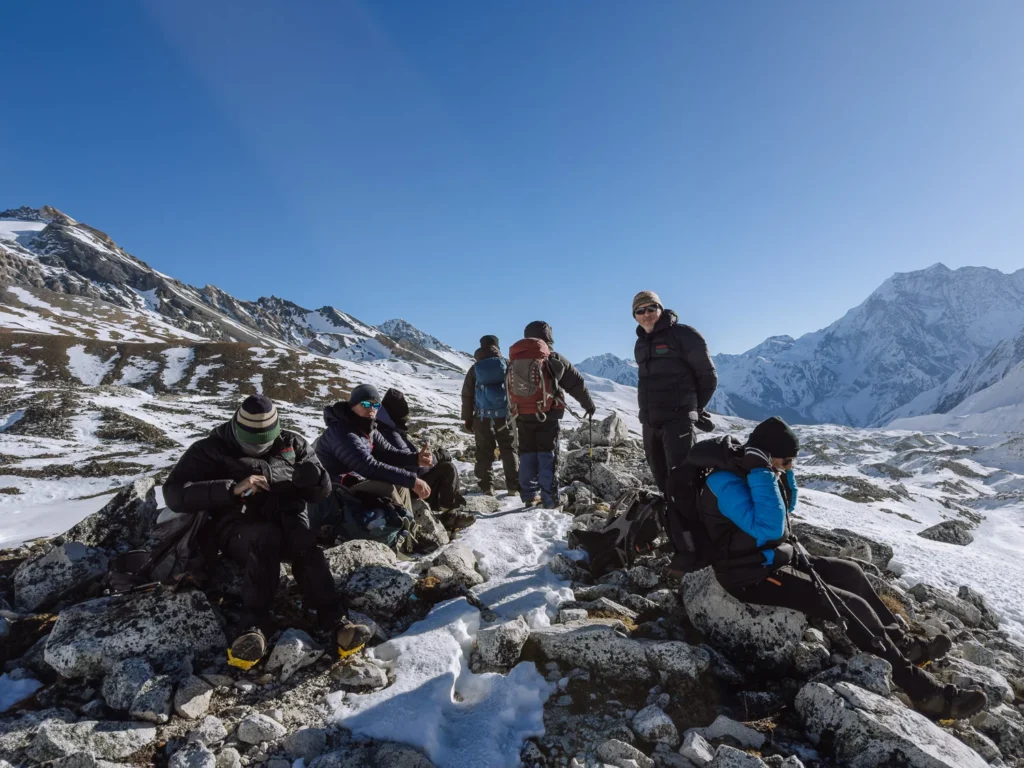
The first couple of hours are a bit of a slog in the dark. All the groups at the camp leave around the same time, and the path is narrow, so progress can be slow.
Just before reaching the snow, we all stopped to put on our microspikes.
As the sun started to come up, we remembered we had forgotten to put on sunblock. Applying it at these temperatures was pretty uncomfortable, so make sure you do it before leaving your room.
The glare from the snow can be intense, so it’s recommended to have at least category 3 UVA protection sunglasses.
After about three hours of walking, we stopped at a tiny hut selling tea. It’s a good spot to pause and recharge. We still could not see the top of the pass, but a steady stream of hikers was showing us the way through the snow.
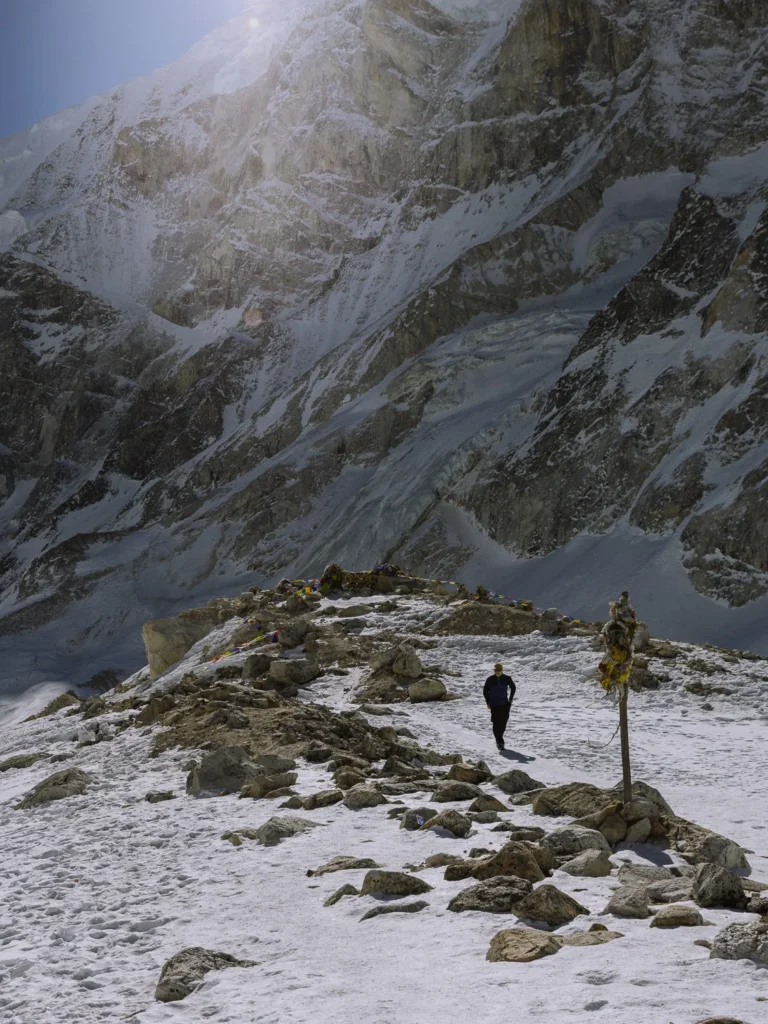
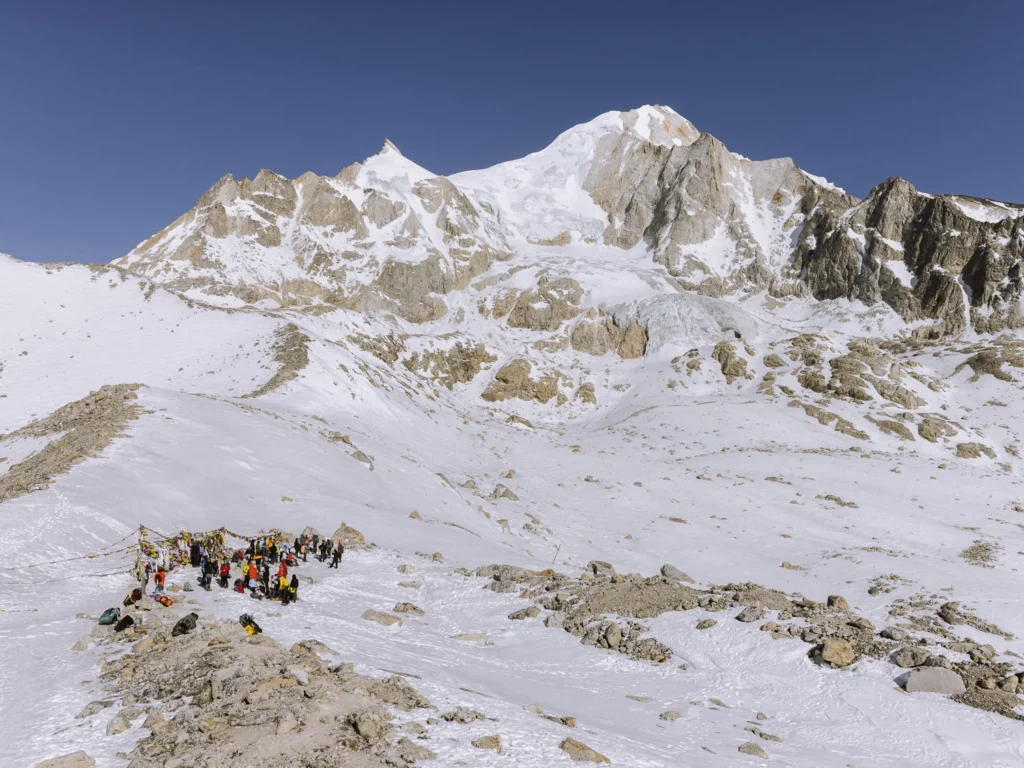
A final push and 4 hours and 30 minutes after leaving Dharamshala, we reached the top of the Larkya La pass.
The Top of the Larke Pass
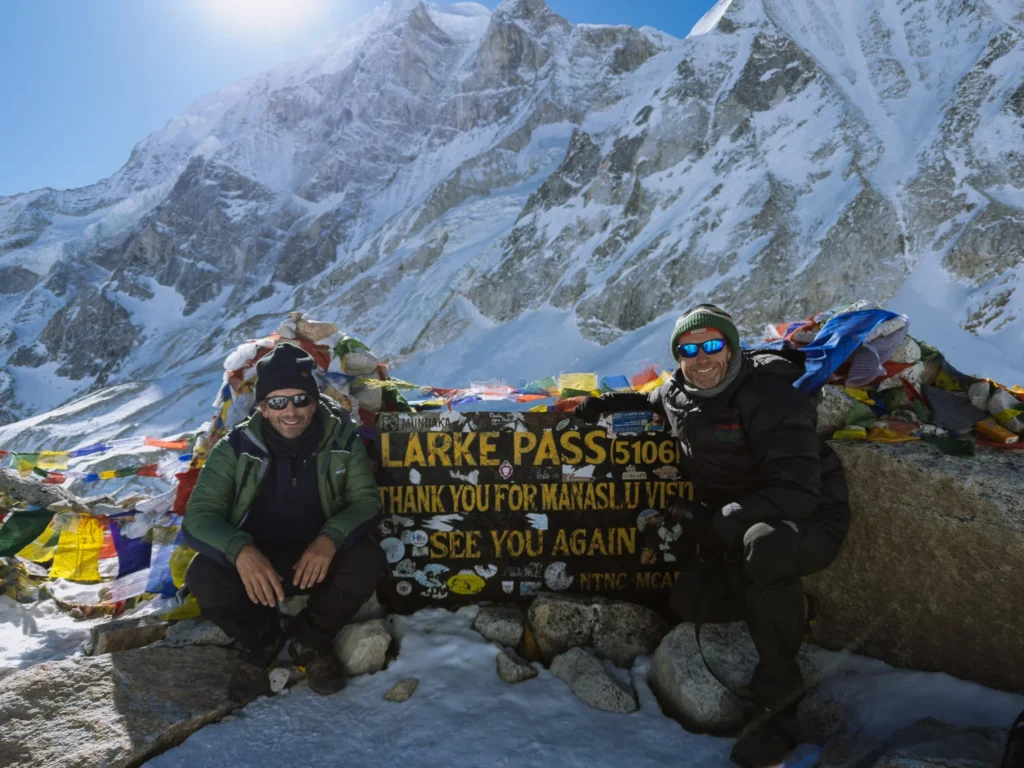
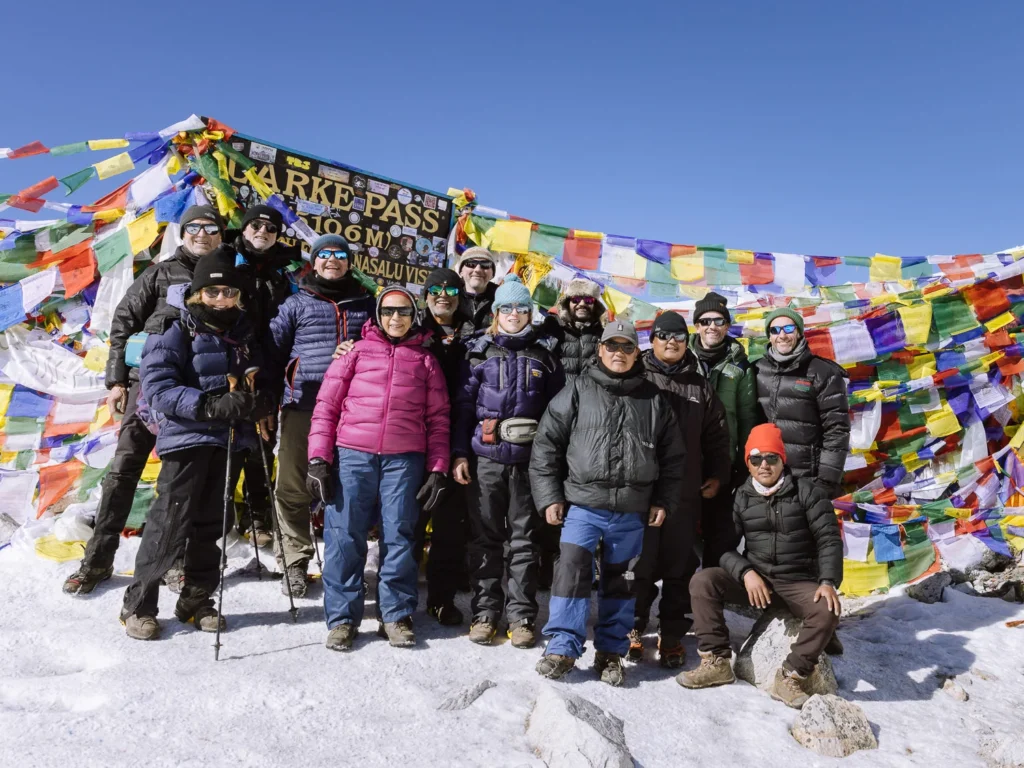
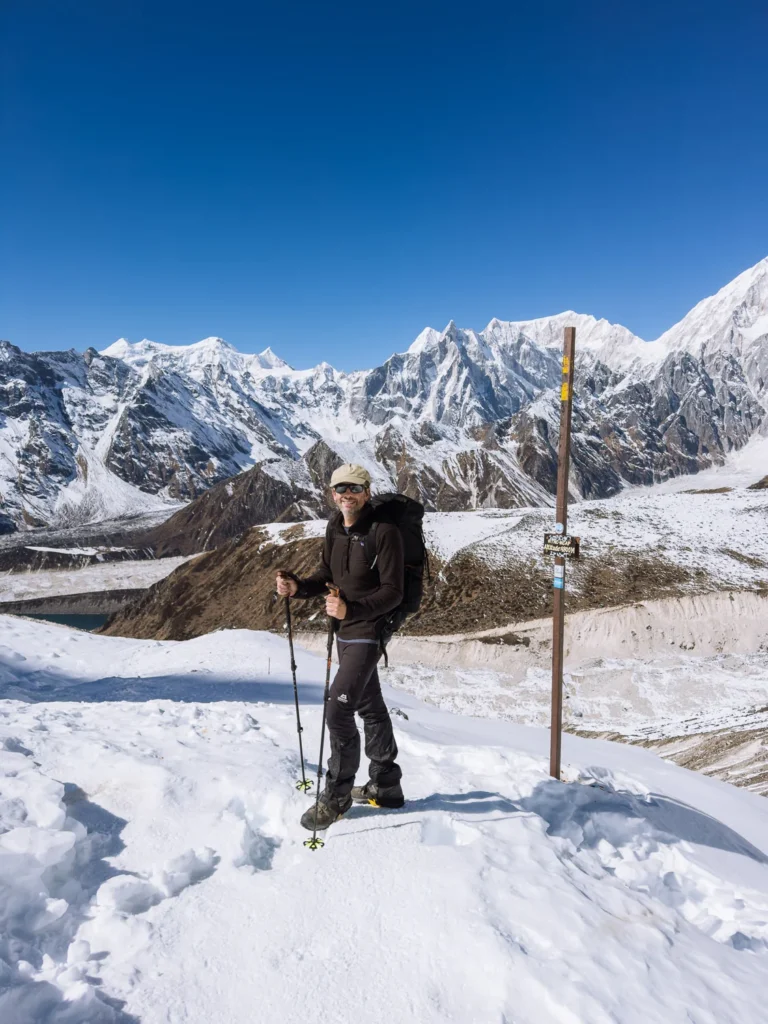
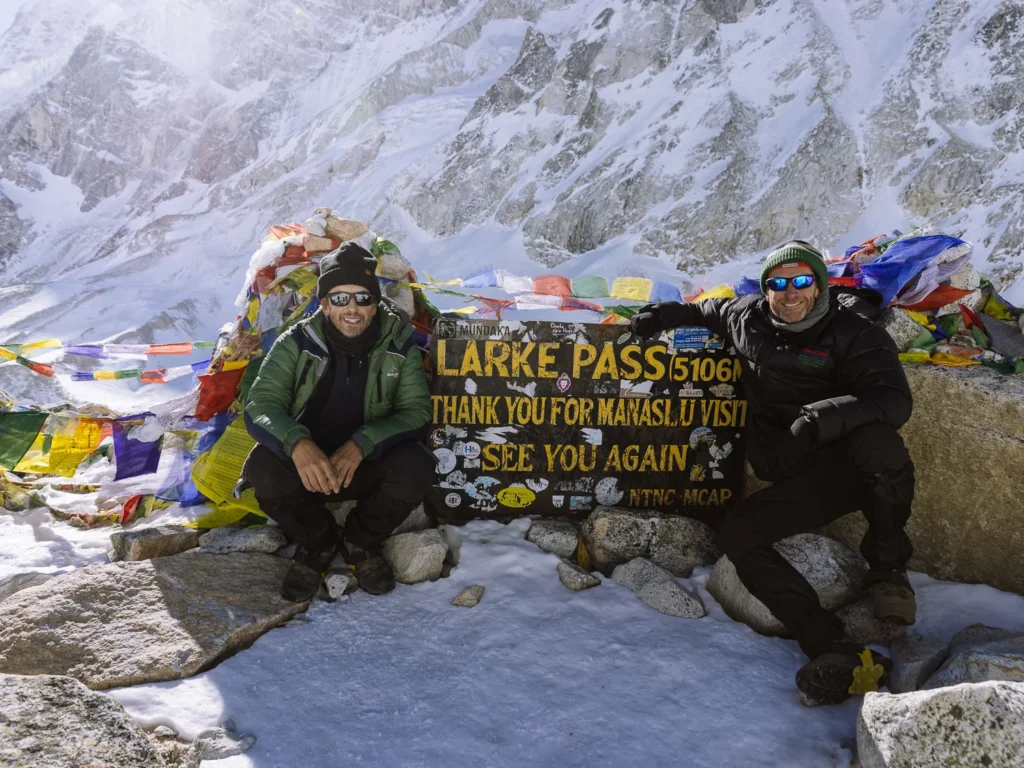
The Larkya La is adorned with prayer flags, and two signs mark the summit. Although both signs state 5,106m, the lower one is actually at 5,135m, while the higher one is at 5,160m.
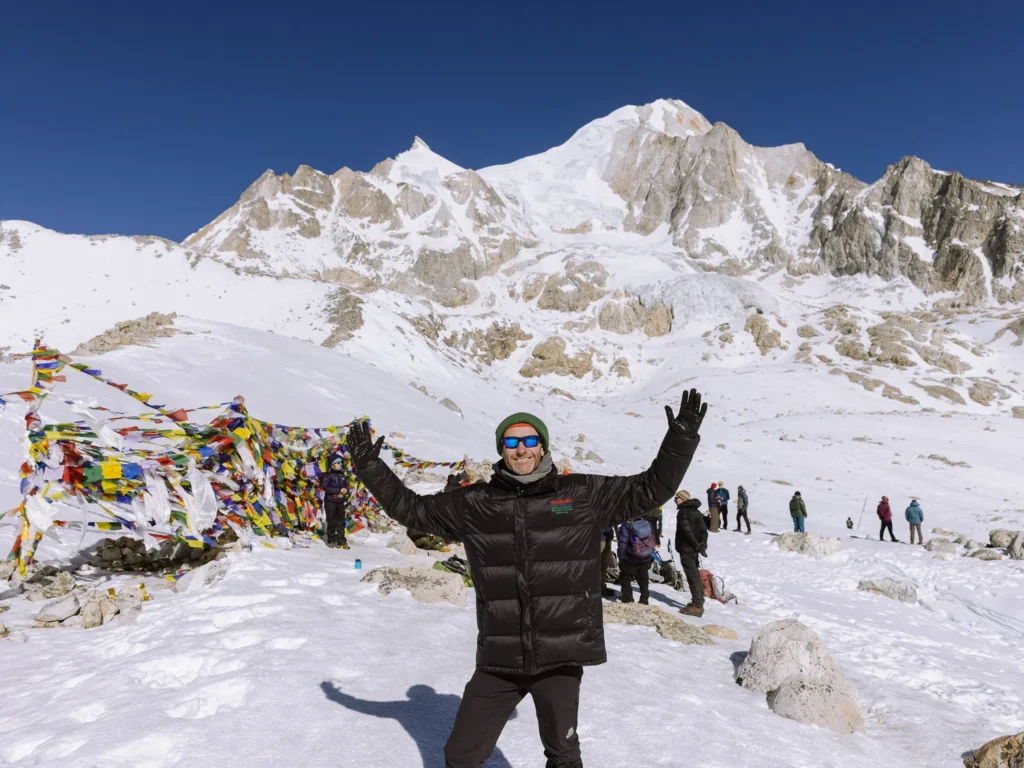
The views are good without being great (the best scenery on the trek comes later in the day), but we felt immense satisfaction sitting on top.
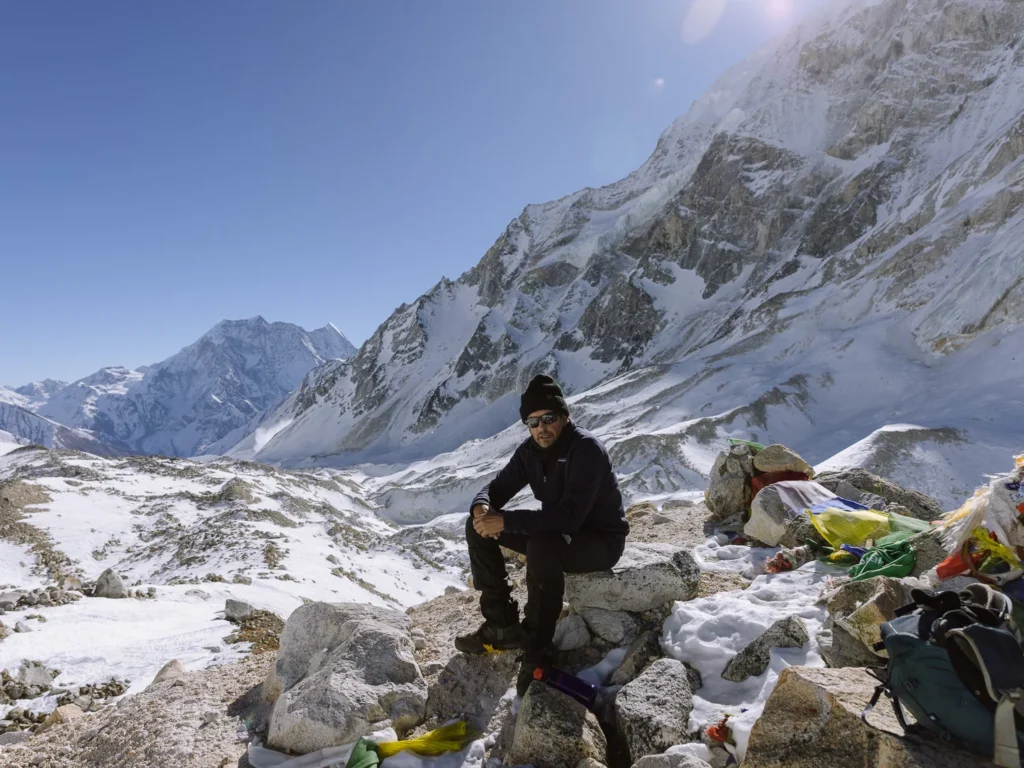
Usually, you can only spend a few minutes at the summit. The freezing temperatures and wind whipping over the pass make it uncomfortable.
Fortunately, we were blessed with clear skies and very little wind. A lot of effort and planning had gone into getting here, so we took our time, hung out for almost an hour, snapped plenty of photos, and let the achievement sink in.
Larkya la to Bimthang
The descent from the Larke Pass to lunch at the G6 Brothers teahouse (Gurungseni Hotel on Google Maps) is the most challenging part of the trek.
For the first 30 minutes after leaving the pass, we headed down quite gradually.
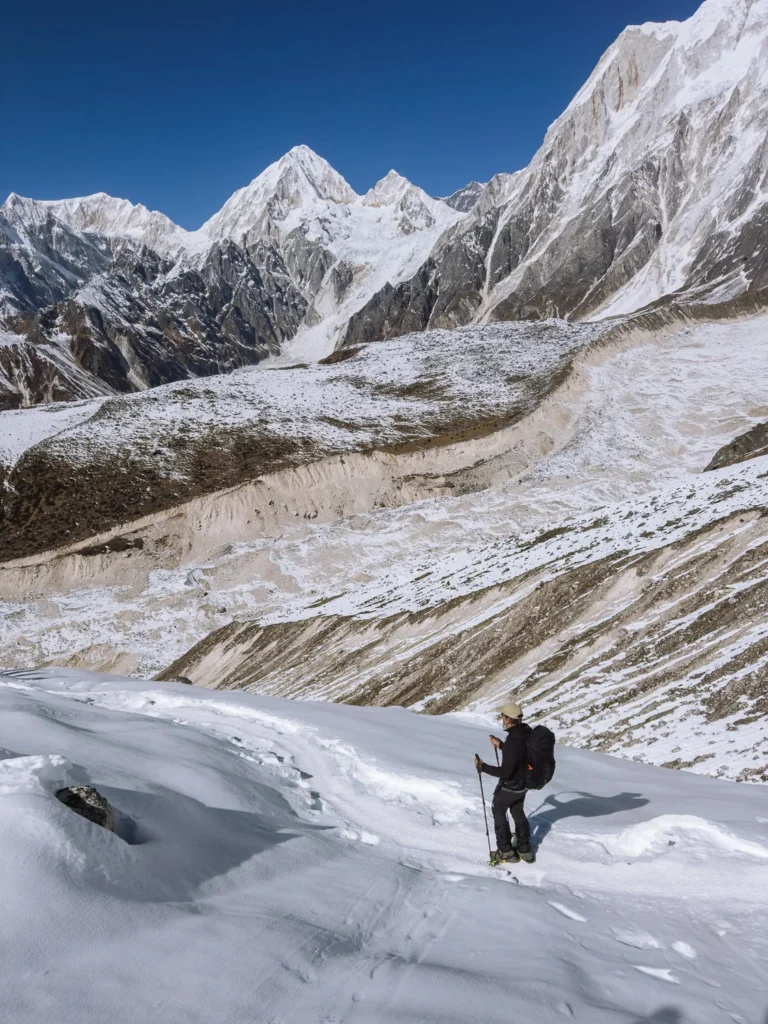
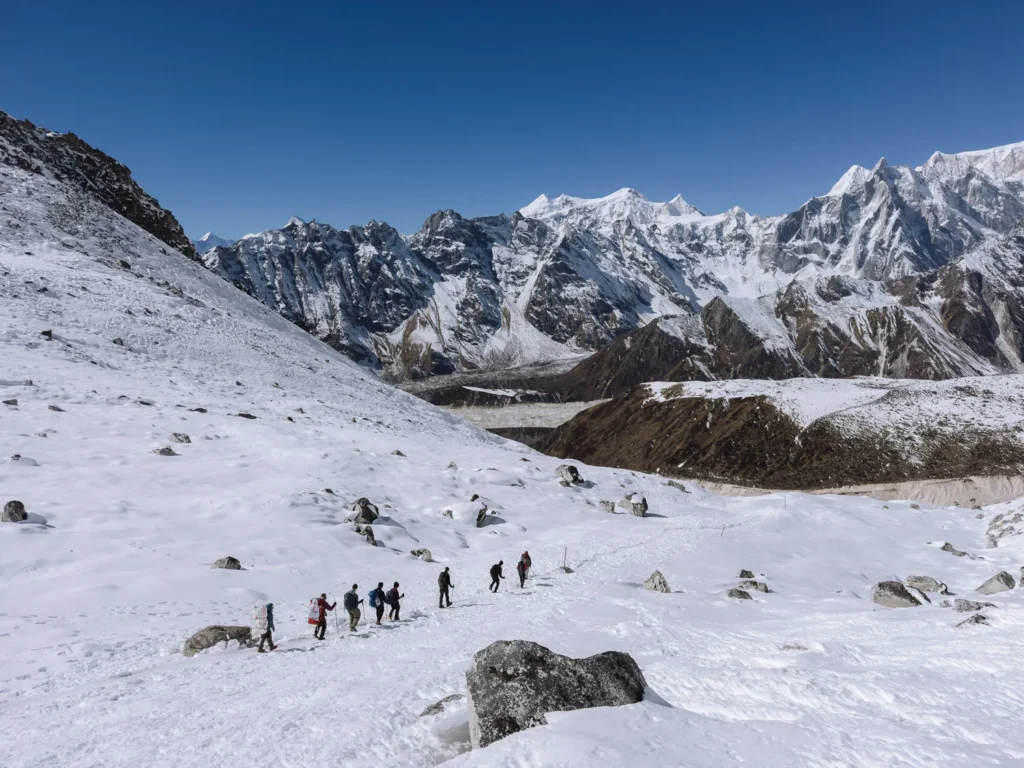
But the trail quickly steepened, and we had to take care descending through the snow.
At this point, microspikes are crucial. We also recommend using walking poles to help keep your balance and distribute your weight evenly.
The path zigzags through the snow, and a couple of people in our group slipped on small sections of ice (but quickly bounced back up). This section requires extra care.
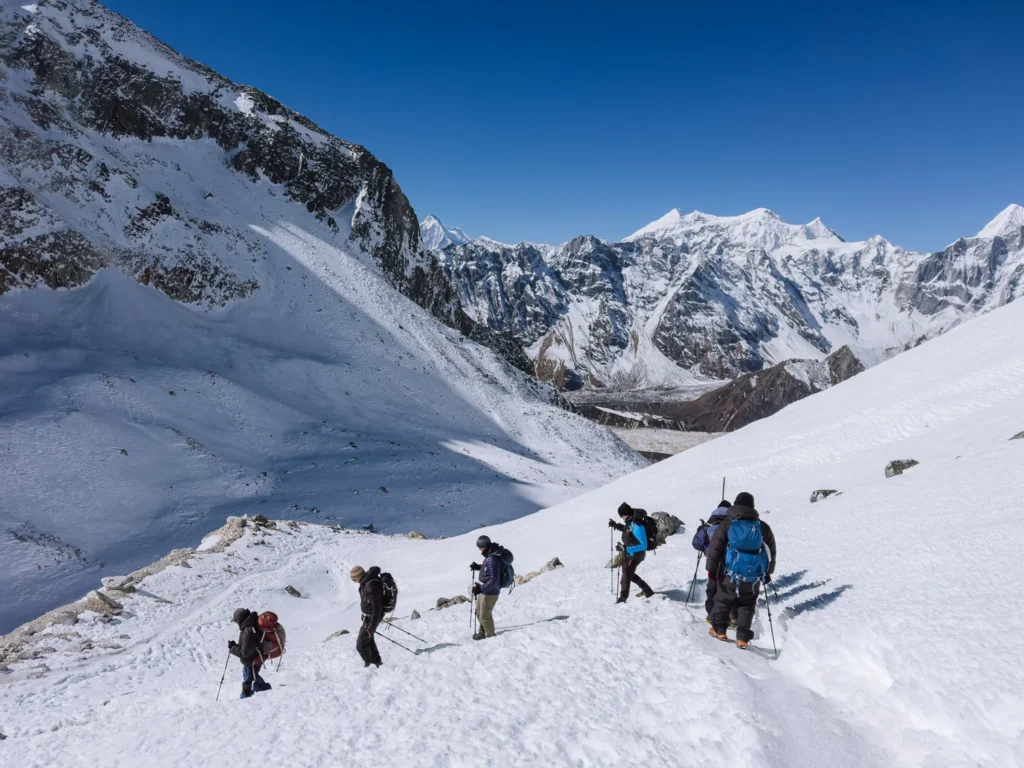
Another good reason to take your time is the views. In my opinion, they are the best of the trek.
The Annapurna massif rose to our left. The striking triangular peak of Nemjung was to our right, and three glaciers cut their way through the valleys in front of us.
About two hours after leaving the summit, we arrived at a tiny teahouse for lunch (G6 Brothers) perched on the edge of a glacial moraine and nestled amongst mighty mountains.
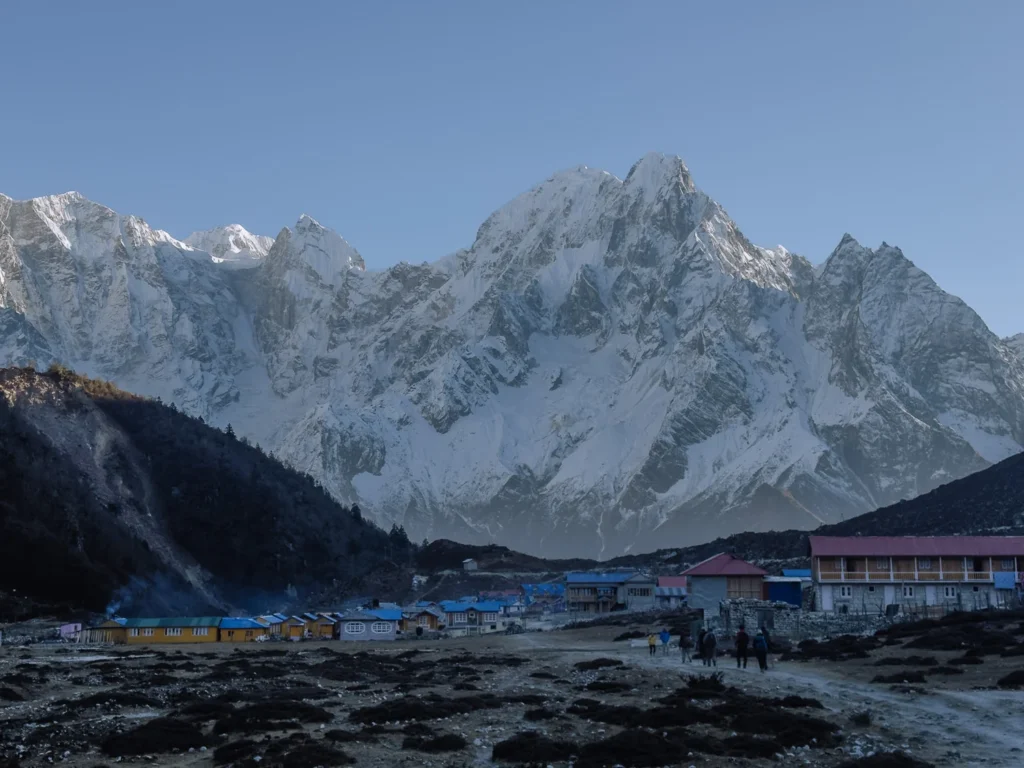
After lunch, the trail follows the edge of an old glacier before dropping down into a beautiful U-shaped valley. The snow had disappeared, the trail descended steadily without being hard, and we had excellent views of Bimthang backed by Phungi Himal and Thulagi Peak.
We made good progress, and at 4 pm, just 2 hours and 30 minutes after lunch, we reached Bimthang (3,720m), where we would spend the night.
We slumped into our bedroom, exhausted but elated.
The day’s hike over the pass had taken us 11 hours and 30 minutes.
Bimthang Village
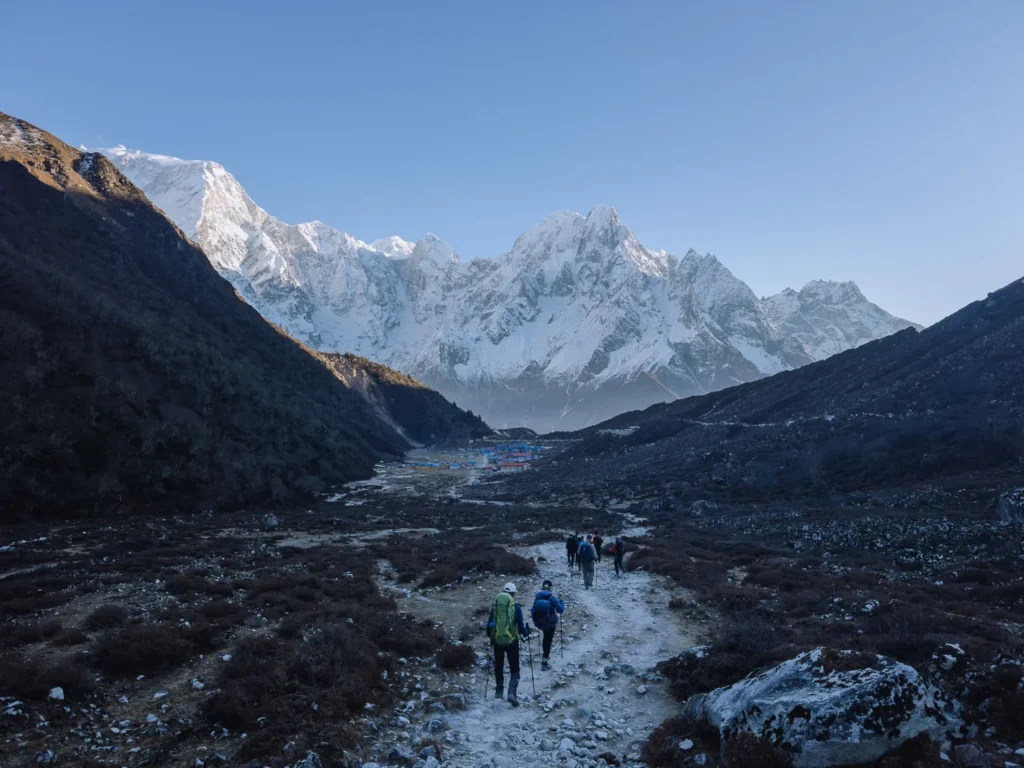
Bimthang was a small village that has grown as more hotels and guesthouses have been built. It’s a colourful place of blue roofs and yellow and red houses in a stunning setting.
The teahouses are a cut above Dharamshala. Most rooms have power sockets and a small table, and some have western toilets and en-suite bathrooms.
However, as a small purpose-built village, they had limited electricity. The lights in the dining hall came on just before dinner, but we had no electricity (including lights) in our room. This was the only teahouse on the Manaslu trek where we had no electricity in the room.
What’s It Like Hiking Over the Larke Pass?
Fitness Requirements
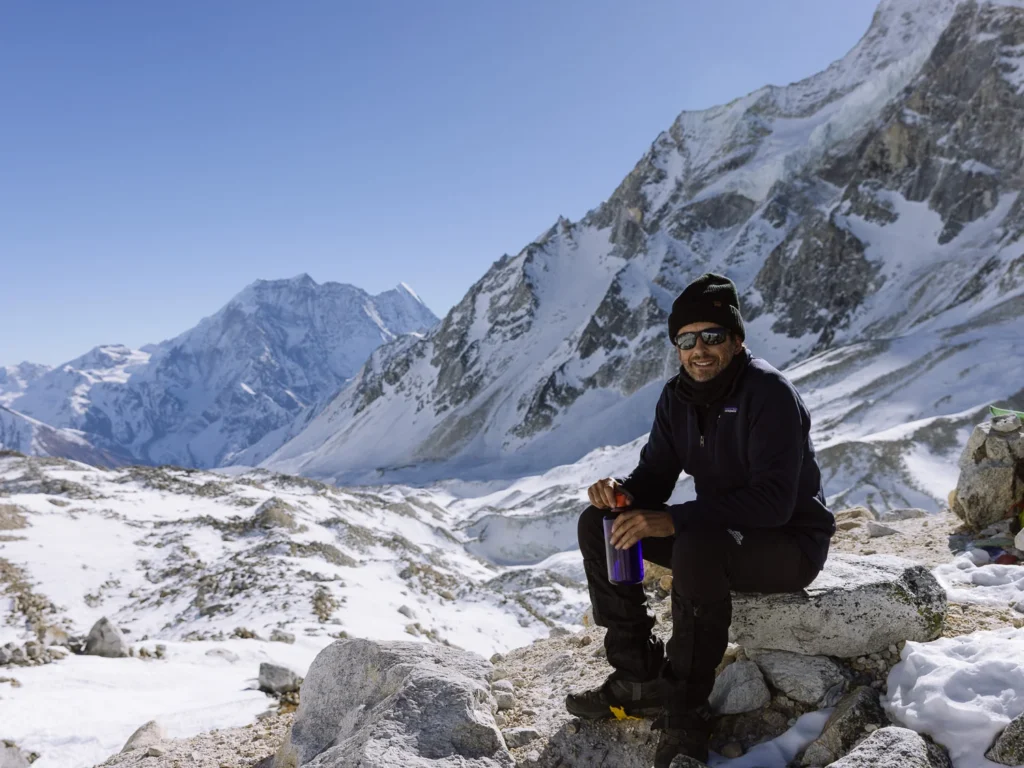
We found the hike tiring, but not as hard as the numbers would imply.
The day over the pass is 16 kilometres (10 miles) with 750 metres of ascent and 1,500 metres of descent.
Paul was struggling a bit with breathing at this altitude, but I was not having much trouble at all.
The pace was extremely slow, which helped us get used to the altitude.
We are both in our early 50s, and neither of us is super fit, but we both exercise daily and hike regularly. We had two people in our group who were 77 and 78, and both had no issues with the pass. However, they are obviously very fit for their age.
Trail Conditions
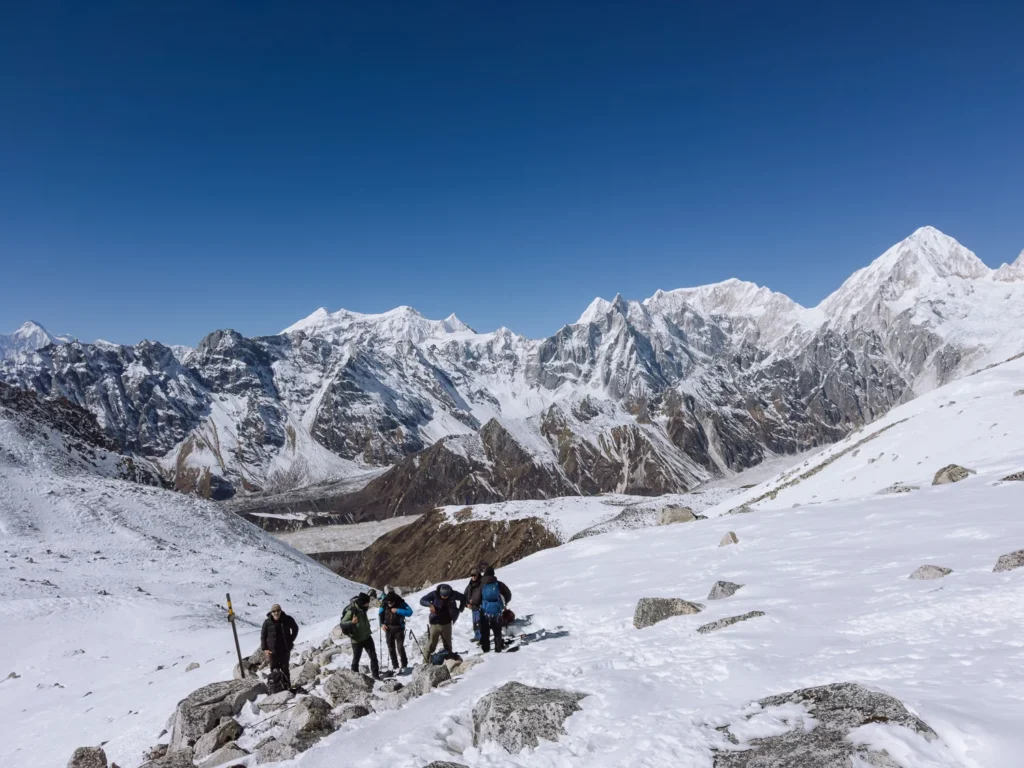
The descent is steep, and the right equipment (microspikes and poles) is essential. It’s a narrow trail, and you need to stick to it, so it’s single file the whole way.
There are no tricky parts of the ascent; no ropes or ladders, it’s a simple walk on a well-trodden path.
But the 1,500m descent is steep.
The first section goes through snow, and the second half on earth paths, both of which are fairly soft underfoot.
This was the trickiest part of the whole Manaslu circuit.
Microspikes are essential, and we highly recommend bringing your own. We used these crampons for hiking boots.
Weather Conditions
Obviously, the difficulty of the day depends on the weather. We were fortunate to have clear skies and very little wind, which made walking easier and sitting down to rest more enjoyable.
But just three weeks before, an unseasonal amount of snow fell. The Larke Pass was blocked, and guides and their trekkers were told to stay in their teahouses.
Hikers were stuck for about 3 to 4 days, after which the snow began to melt, and they were sent back down the way they had come (the top of the pass remaining closed).
These are the risks of hiking in the high Himalayas.
You can’t do much about the weather on the day, but you can pick the best times of year to go.
Peak season is October to November and March to April. These two periods avoid the extreme cold of winter and the heavy rainfall of summer.
How Cold Does It Get?
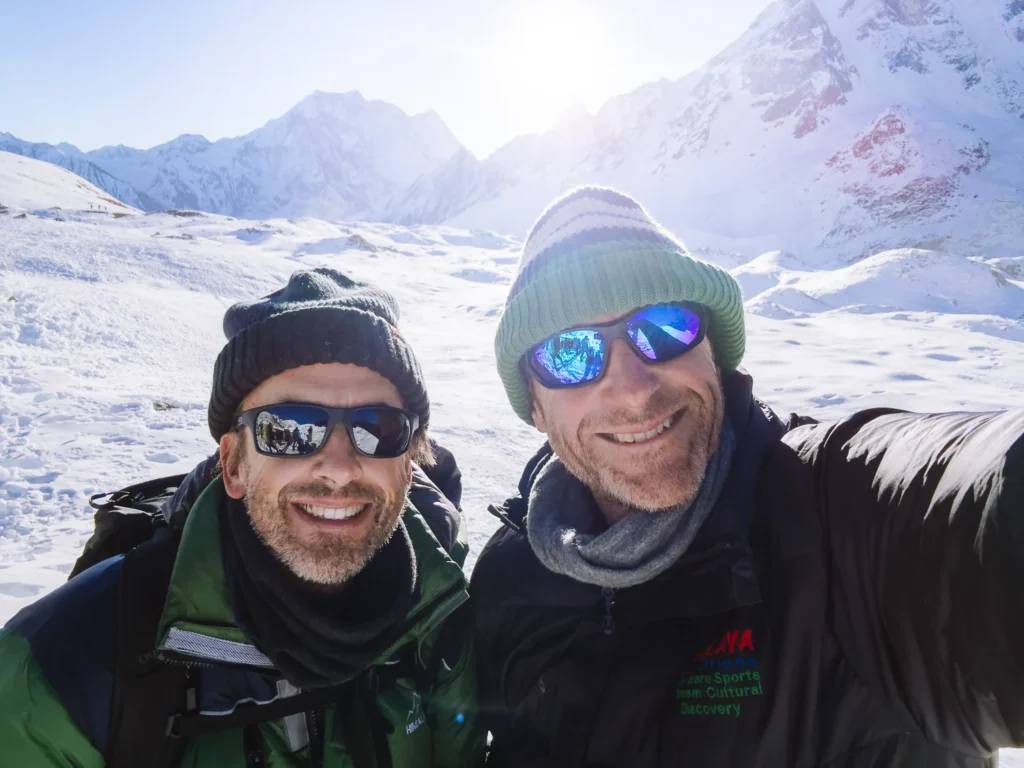
The average temperatures at the Larke Pass are −10°C to −20°C. We were well prepared with merino base layers, a snood, high-quality gloves with good waterproofing, a beanie and a very good down jacket.
Acclimatisation
Another issue when attempting to walk over the Larkya La pass is altitude sickness.
Taking your time to acclimatise to higher altitudes is an integral part of trekking. If done incorrectly, you can suffer Acute Mountain Sickness, requiring you to turn around and head back down.
Or more seriously, you might develop medical emergencies like HAPE (High-Altitude Pulmonary Oedema) and HACE (High-Altitude Cerebral Oedema). HAPE involves fluid in the lungs, making it difficult to breathe, whereas HACE involves fluid build-up in the brain, leading to neurological symptoms.
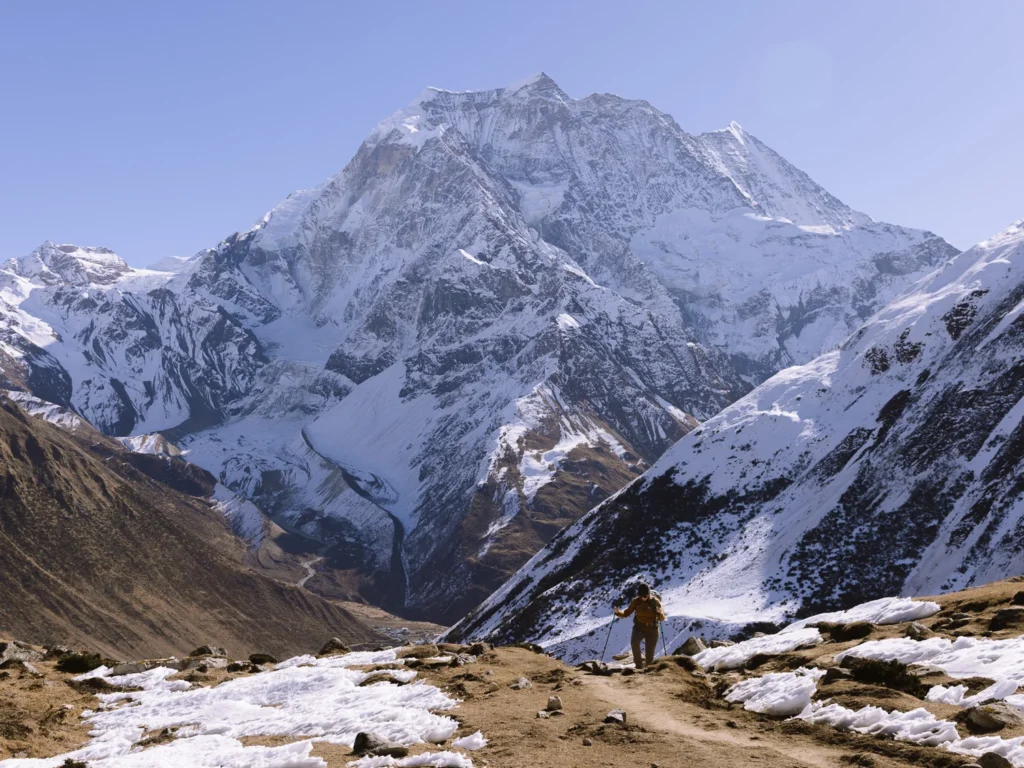
One of the great benefits of the Manaslu Circuit is that it starts at a low altitude (870m) and gains height gradually.
The high pass of Larkya La (5,160m) is only reached after 10 days of trekking, giving you plenty of time to get used to the lower oxygen levels at this higher altitude.
Whilst 10 to 20% of hikers on the Everest Base Camp Trek may suffer altitude sickness, the success rate of completing the Manaslu Trek is much higher.
The Manaslu Circuit is a good choice if you want to cross a high pass but are concerned about altitude sickness.
Staying Healthy
The day over the pass is tough enough without being ill. Unfortunately, I had a shocking cold almost all the way around the circuit.
Try to stay as healthy as you can.
The most important thing you can do is stay hydrated. It’s recommended to drink around 3 to 4 litres per day, which increases the ability of red blood cells to collect oxygen in the lungs.
We washed our hands with soap or used an antibacterial hand wash way more than usual.
We also stopped drinking alcohol above 3,000m, to make sure our bodies could focus on recovering and acclimatising.
Here are the supplies we took with us to deal with feeling unwell:
- Basic first aid kit
- Antibacterial hand sanitiser
- Compeed plasters for blisters
- Cold and flu tablets (this is essential; it’s one of the few things we couldn’t find along the trail)
- Throat lozenges
- Lip balm or Vaseline
- Imodium and rehydration salts
- Paracetamol
- SPF 50 sun lotion
- Biodegradable wet wipes
The Manaslu Circuit is guided, and your guide may well have many of these, but make sure you bring plenty of your own. They don’t weigh much and can help you feel a lot better.
Equipment
Finally, having the right gear is essential to having an enjoyable trek, especially on the day of the high pass.
You can find all the clothes and equipment we recommend on our Manaslu Circuit Packing List.
More Nepal Guides
- How difficult is the Manaslu Circuit trek in Nepal?
- What is it like hiking the Larke Pass on the Manaslu trek?
- Nepal Tea Houses – our experience staying in the Himalayas.
- Why the Manaslu trek is perfect for first-time hikers in the Himalayas.

reader-supported
When you buy through links on our site, we may earn a small affiliate commission at no extra cost to you.
Thanks for your support // Paul & Mark