

This 5-mile self-guided walk connects Kensington to Westminster through the heart of Royal London — passing four royal parks, four palaces, and more iconic landmarks than almost any other route in the city.
By: Mark Barnes // Last Updated:
Few walks in any city can match this one for sheer grandeur.
In the space of five miles, you move from the leafy avenues of Kensington through four royal parks, past four royal palaces, and into the political heart of the country — finishing at one of the most photographed buildings in the world.
Paul and I have lived in London for 30 years and have walked this route more times than we can count. It never gets old.
Whether it’s the pelicans in St James’s Park, the mounted cavalry at Horse Guards, or the moment Westminster Palace comes into view at the end of Whitehall, there’s always something that stops you in your tracks.
This self-guided walk takes around two and a half hours at a steady pace, but with Westminster Abbey, the Churchill War Rooms, and Buckingham Palace all worth going inside, a full day is easily spent.
Every stop is within easy walking distance of the next, and the route is almost entirely traffic-free through the parks, which, in central London, is no small thing.


London Royal Parks Walk Overview
- Start: Queensway Tube Station
- End: Westminster Tube Station
- Distance: 5.1 miles (8.25 kilometres)
- Walking Time: 2 to 3 hours (full day with stops)
- Best for: Exploring London’s royal and imperial grandeur
This self-guided walking tour takes you past the stunning imperial and political buildings in London. It passes four Royal Parks, four Royal Palaces, and explores Whitehall, Downing Street, and the political centre of the country.
The walk is 5 miles long and takes 2 to 3 hours. The walk is free to complete, but there are five sights you need to pay to enter that we think are worth considering:
- Kensington Palace
- Buckingham Palace (summer only)
- Churchill War Rooms
- Westminster Abbey
- Houses of Parliament
Pick any two of them, and the walk will last an entire day. Personally, we would not miss going into Westminster Abbey.
Once you reach Westminster Tube Station, you can extend the walk and continue along the River Thames. You can find details in our London South Bank Walk.
Map: London’s Royal Parks Walk
Below is a map of the walk. The main attractions are marked so you don’t miss any of the sights. If you have the map open on your phone as you walk around you can follow your progress.
When to Do the Walk
The walk is good year-round and entirely on paved, flat surfaces.
Ideally, start about 9 am. That way, you will pass the Changing of the Guard at Buckingham Palace at around 11 am. The Changing of the Guard ceremony is free to watch and occurs every Monday, Wednesday, Friday, and Sunday.
If you don’t want to begin that early, skip the first part of the walk through Kensington Gardens and Hyde Park, and start at Buckingham Palace at 10:45 am. It’s still a great walk with most of the best sights still to come.
Westminster Abbey gets extremely busy by mid-morning, so better to visit in the afternoon, which is when this walk should get there.
As for other sights along the route, Buckingham Palace State Rooms are open for only 10 weeks in summer from mid-July to end of September.

Where to Eat & Drink
There are a few good places to get lunch on the walk.
The Inn in the Park in St James’s Park is a beautifully positioned café roughly two-thirds of the way through the walk, with a terrace overlooking the park lake. The menu is simple — soups, sandwiches, hot dishes, and good coffee — and it makes a pleasant stopping point before the final stretch through Horse Guards and Whitehall.
The Two Chairmen on Dartmouth Street is a cosy backstreet pub rebuilt in 1756, with unusual bench seating and an 18th-century mural on the rear wall. It’s thought to be the oldest public house in Westminster and sits just off the tourist trail between St James’s Park and Parliament Square
The Red Lion on Parliament Street is one of the great political pubs in London. Situated between 10 Downing Street and the Houses of Parliament, it has served every British Prime Minister up until Edward Heath in the 1970s. Very atmospheric, but also very busy.

Our Self-Guided Royal Parks Walk
Kensington Palace
Start by getting the tube to Queensway Station (or nearby Bayswater Station). Exit the station and cross over Bayswater Road to enter Kensington Gardens. Using the map above, follow the main promenade down the hill towards Kensington Palace.
The first of four royal residences on this walk, Kensington Palace was the birthplace of Queen Victoria and has been home to young royals for over 300 years.
Today, the most famous residents are William and Kate. Inside there is an exhibition to Queen Victoria as well as the opulent King’s and Queen’s state apartments. Book skip-the-line tickets to Kensington Palace.
Outside the brown brick façade may be a bit underwhelming, but don’t miss the Diana Memorial Garden, one of our favourite little gardens in London.

Kensington Gardens
The walk now meanders through the Kensington Gardens (follow the route on the map above). This Royal Park was originally part of the palace grounds but is now open to the public.
Along the way you’ll pass the Round Pond, and Kensington Gardens Bandstand before reaching the Albert Memorial. This gilt bronze statue was commissioned by Queen Victoria to commemorate her late husband, Prince Albert.


Royal Albert Hall
Behind the statue is the Royal Albert Hall. The 150-year-old building features the largest unsupported glass dome in the world and the largest organ in England. Hear it put to good use at the annual carol concert, one of the best things to do in London at Christmas.
The walk now heads back into the park and up to the Serpentine Gallery. This free contemporary gallery has intriguing rotating exhibits. It’s small, free to enter and well worth popping into.

Hyde Park
Crossing West Carriage Drive, leave Kensington Gardens and enter Hyde Park, the second Royal Park on this walk. The path first passes the Diana Memorial Fountain then meets the lake in Hyde Park called the Serpentine.
Following the south bank of the Serpentine, the walk heads into the Hyde Park Rose Garden before exiting the park at Hyde Park Corner tube station.
Cross over the busy junction to the centre of a large roundabout containing a triumphal arch.

Wellington Arch
Wellington Arch is crowned by the largest bronze sculpture in Europe. Originally built as the entrance to Buckingham Palace it later became a victory arch celebrating Wellington’s defeat of Napoleon. The sculpture depicts the Angel of Peace descending on a four horsed chariot of war.
The area surrounding the arch has several statues and memorials, the Australian War Memorial being the most evocative.
Exit the roundabout (opposite the way you entered) and head down Constitution Hill passing the Commonwealth Memorial gates. You are now walking along the edge of Green Park, the third of the Royal Parks on this walking route.


Buckingham Palace
Constitution Hill ends at Buckingham Palace, the official residence of the monarch of the United Kingdom. Originally a large townhouse built for the Duke of Buckingham in 1703 it was purchased by King George III in 1761. However, Queen Victoria was the first sovereign to rule from Buckingham Palace in 1837.
The palace is surrounded by grand black metal railings with gold tips and guarded by the Foot Guards. Their famous bearskin hats and red tunics have defended the Sovereign and Royal Palaces since 1660.
Inside, the Buckingham Palace State Rooms are only open for 10 weeks each summer from mid-July to end of September. Book Buckingham Palace tickets well in advance.


Changing of the Guard
The Changing of the Guard is one of the most famous ceremonies in the world and one of the best free things to do in London.
The ceremony involves the Old Guard formally handing over responsibility for protecting Buckingham Palace to the New Guard.
It occurs every Monday, Wednesday, Friday, and Sunday, begins at 10:45 am and lasts 45 minutes.
The formal handover happens at 11 am on the forecourt of Buckingham Palace. To see it, position yourself along The Mall or at the palace railings before 11 am — the earlier the better on busy days, as the best spots fill up quickly.
To time the walk correctly, leave Queensway or Bayswater station about 9:00 am.

Clarence House
Following the walking map above, stroll passed the Victoria Memorial statue, cross over Constitution Hill to The Mall. Follow the Mall passing Clarence House on your left.
Clarence House is a genuine home, and the last remaining great London house to be maintained for the purpose for which it was built. It was the home of the Queen Mother for 50 years, and was where King Charles and Queen Camilla lived before moving to Buckingham Palace.
It’s not open to the public but you catch a glimpse of the building from the road.

St James’s Palace
It’s just a short detour off The Mall to the fourth Royal Palace on this walk. Once past Clarence House, turn left up Marlborough Road to reach St James’s Palace.
It was built between 1531 and 1536 by Henry VIII and the red brick façade with a gatehouse and turrets is a commanding scene. Inside, the state apartments include two surviving Tudor rooms, but it’s only open to the public for occasional events throughout the year.
There’s a small courtyard on Marlborough Road and the main entrance (which is closed) is on Cleveland Row.
Retrace your step back along Marlborough Road and cross over The Mall to enter St James’s Park.

The Mall & St James’s Park
The Mall is a ceremonial route that runs between Admiralty Arch at one end and Buckingham Palace at the other. It makes a great photo opportunity in London.
The most royal of London’s royal parks, St James’s Park is bordered by three Royal Palaces. It’s at its prettiest in spring when the flowers are out. The colony of pelicans that live here were donated by the Russian ambassador in 1664.
Grab a photo from the bridge over the lake, then head to the Churchill War Rooms.


Churchill War Rooms
The Churchill War Rooms were the underground nerve centre of the British government during the Second World War. This maze of corridors and rooms that held top secrets include the Cabinet War Room, the Chiefs of Staff Conference Room, and a fascinating Map Room.
It takes about two hours to explore, and it’s something we highly recommend doing if you have the time. Tickets must be booked in advance.
Whether you go in or not, it should be lunchtime about now. Check out the best places to eat section above, and plan where to stop as you continue.

Horse Guards Parade
Next, head to Horse Guards Parade. This gravel square is where Trooping the Colour is held, an annual pageantry to celebrate the official birthday of the sovereign.
Walk through the arches under the clock towers and you’ll find the building guarded by two mounted cavalry troopers of the King’s Life Guard. They are outside the building from 10 am to 4 pm every day for a nice photo opportunity.
Now turn right and head down Whitehall.

Whitehall
Whitehall is a road with numerous government departments and ministries. As such ‘Whitehall’ has become a metonym for the British civil service and government.
As you walk down the road you’ll pass grand buildings, the entrance to Downing Street (the home of the British Prime Minister) and the Cenotaph (a war memorial designed in 1919 to commemorate the lives lost during World War I).


Parliament Square
Whitehall ends at Parliament Square, which contains 12 sculptures of British, Commonwealth, and Anglosphere political figures including Winston Churchill, Mahatma Ghandi, Abraham Lincoln and Nelson Mandela.
The square is surrounded by Westminster Palace (the seat of the British Government), Big Ben (officially the Elizabeth Tower), and Westminster Abbey.


Westminster Abbey
Originally built in the 11th century, Westminster Abbey is a Gothic masterpiece. Soaring spires sit above a facade intricate in stone carvings and ornate stained-glass windows. If you only head into one building on this walk, make it this one.
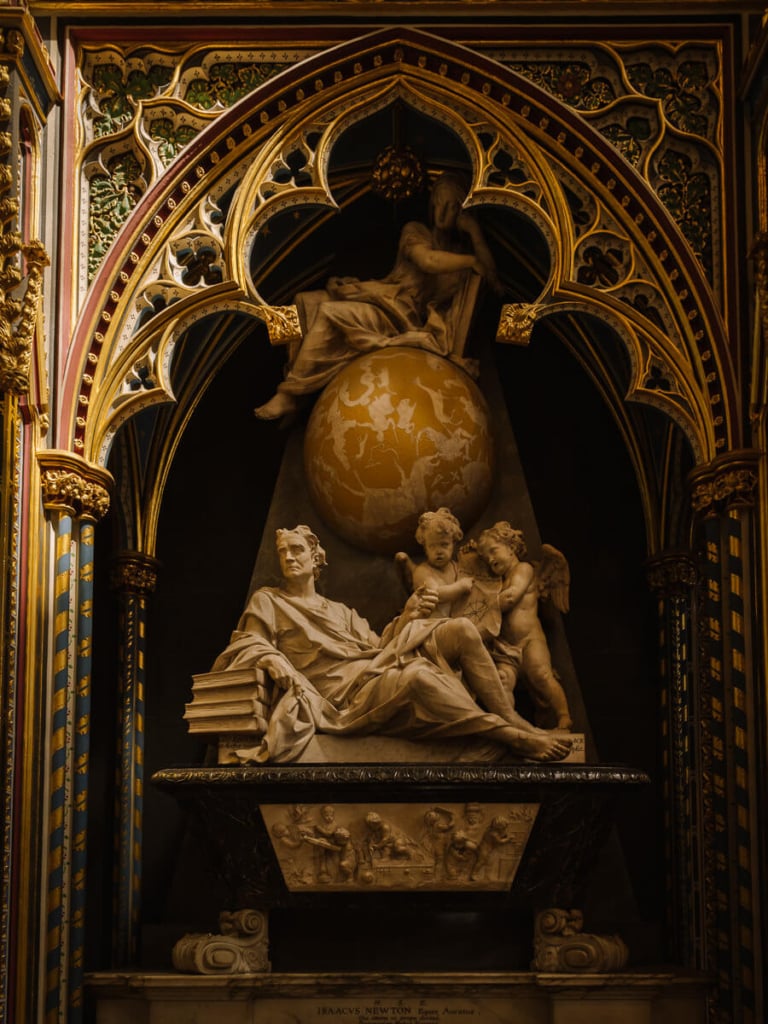
Inside the nave is grand, with high-vaulted ceilings and majestic columns. The abbey contains graves for scientists, poets, prime ministers and monarchs. The King Henry VII Lady Chapel with its fan vaulted ceiling has been described as one of the wonders of the world.
The abbey still plays an important role in British life, and you can visit the Coronation Chair, upon which King Charles III was crowned in 2023.
Book your Westminster Abbey timed entry ticket well in advance.


Westminster Palace
Head back past St Margaret’s Church to Westminster Palace.
Westminster Palace is one of the most important buildings in English history. Built in the 11th century, it was the primary home of kings of England until 1512. Inside the palace, Westminster Hall was where the predecessor to parliament (Curia Regis) met when the king was in residence.
It is a stunning building and the famous clocktower, the Elizabeth Tower, nicknamed ‘Big Ben’ after its largest bell, looks spectacular since its restoration was completed in 2022.
If you are interested in politics, we highly recommend taking a tour of Westminster Palace to see the inner workings of the British government. Tours run Tuesday to Saturday during the holidays, but only on Saturday when parliament is sitting. Book in advance.


Westminster Bridge & Tube Station
We always think it is worth heading halfway across Westminster Bridge to get wonderful views back towards the palace. Once you’ve got enough photos, retrace your steps to Westminster Tube Station, where this walk ends.
If you want to extend the walk, you can continue along the River Thames on either our Queen’s Walk (1 hour more) or our extended South Bank Walk (2 hours more).

More Guides for London
- Enjoy the regal side of the city with our self-guided Royal Parks & Palaces walk.
- Save some pennies with our guide to London’s free attractions.
- Find your perfect neighbourhood with our guide to the best areas in London to stay in.
- Enjoy the colourful side of the city with our top places to visit in Notting Hill, including the best film locations.
- Get in the festive mood with our best of London Christmas.
- Take our South Bank walk for an iconic stroll along the Thames.
- Hit the best of London’s Christmas markets with this guide, updated every year.
- Breakfast in Notting Hill is always a great way to start the weekend.
- Soak up the atmosphere with our London Christmas Lights walk – updated every year.

reader-supported
When you buy through links on our site, we may earn a small affiliate commission at no extra cost to you.
Thanks for your support // Paul & Mark
How do i get a detailed map with directions from Westminister to bayswater following the route above, I am taking 20 people around the parks walk and dont want to get lost
Hi Sundaya,
You can use the map we have included on this blog post, it has walking direction you can follow from Bayswater.
Paul.