

The Manaslu Circuit in Nepal is an excellent alternative to other, more popular routes in the area. This guide covers our personal experience of the Manaslu Circuit trek difficulty, and includes tips for first-time hikers in Nepal.
By: Mark Barnes | Last Updated:
The Manaslu Circuit completes a semi-circle around Mount Manaslu, the world’s 8th-highest peak. It’s a 12-day trek covering 100 miles (163 km) and reaching a maximum altitude of 5,160m.
By the stats alone, the Manaslu Circuit is considered a challenging trek.
But broad descriptions don’t tell you everything you need to know about how difficult the hike is. In this post, we cover all the challenging aspects of the hike, including how tough the trail is, what life is like in a teahouse, and the pace of acclimatisation.
There are many reasons to choose the Manaslu Circuit Trek for your first Himalayan adventure. It’s a beautiful hike, amongst grand scenery, passing through rural Tibetan villages and vibrant Buddhist culture.
But it is not easy, and knowing you are up for the challenge is important.
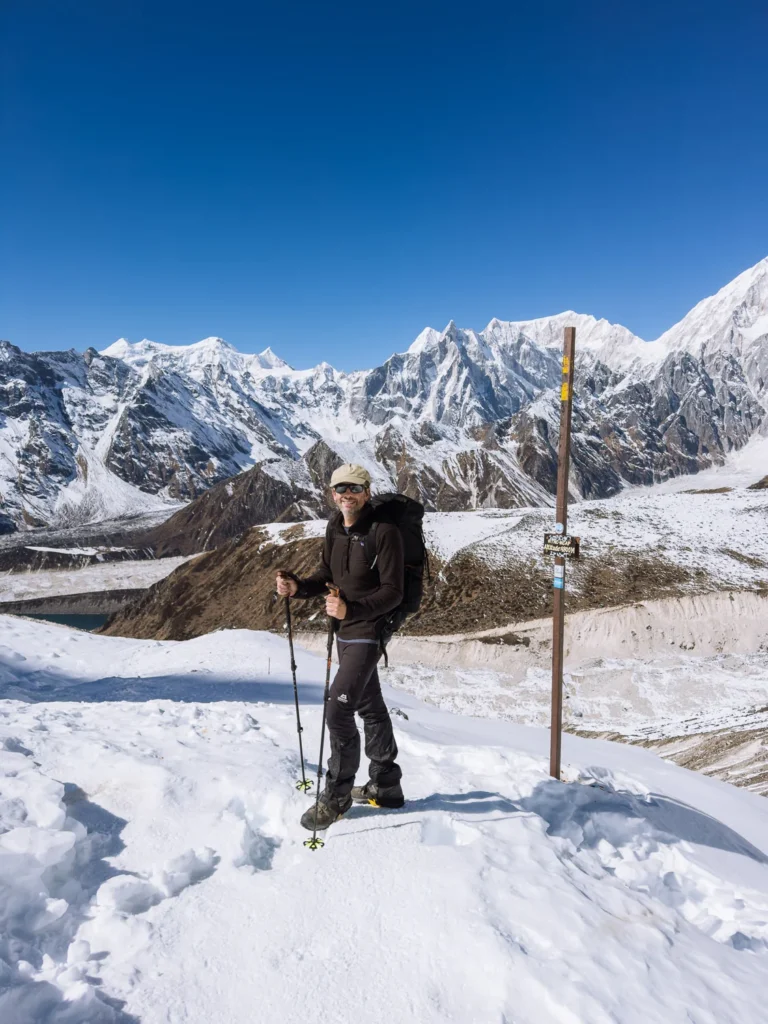
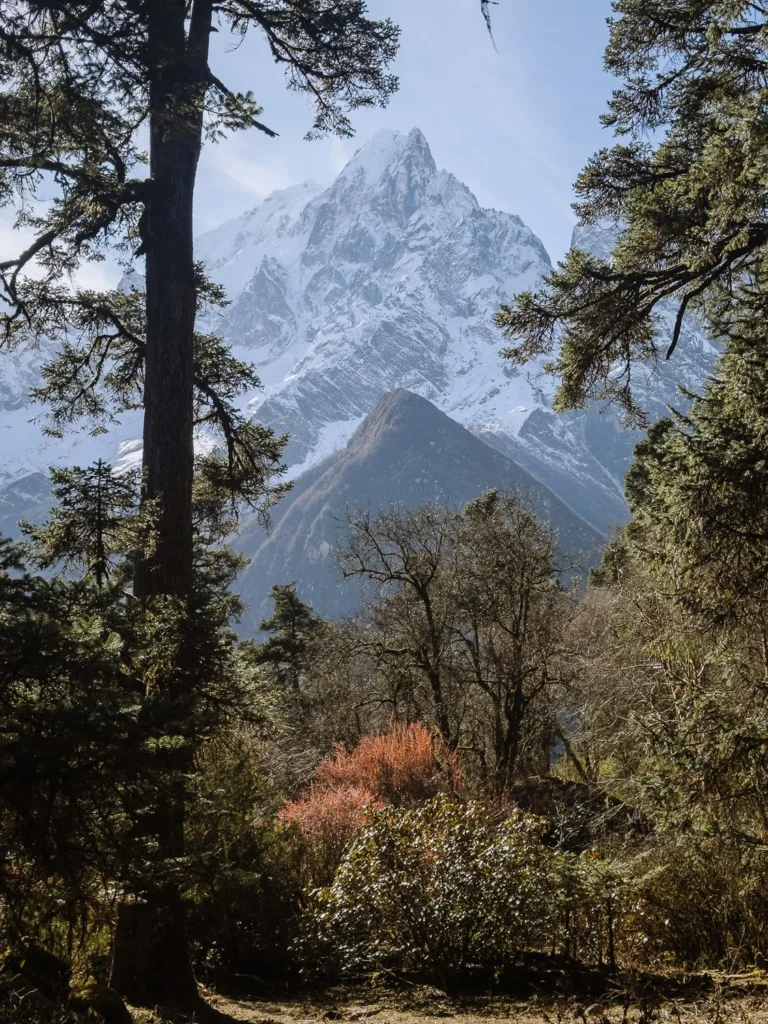
Himalayan Trek Difficulty Rankings
Different trekking companies categorise each trek by difficulty level. They are usually split between easy, moderate, challenging, and very challenging.
Easy
Beginners can do these treks with no hiking experience. They require walking about 3 to 5 hours daily, with no difficult sections of trail, and last only a few days.
They generally stay below 3,000m in altitude with minimal altitude risk. Examples include the Ghorepani Poon Hill Trek and the Lower Langtang Valley Trek.
Moderate
These treks can be done by people with some hiking experience and a decent level of fitness.
They require longer days on the trail with some steeper sections, and last 1 to 2 weeks. They climb up to 4,500m in altitude and require good acclimatisation.
Examples include the Annapurna Base Camp (ABC) Trek and the Mardi Himal Trek.
Challenging
These treks are for hikers with good experience on mountain trails and a good level of fitness.
They involve some days with 10 hours of hiking, trickier trails, and can last up to 3 weeks. They climb to altitudes of up to 5,500m and are at higher risk of altitude sickness.
Examples include the Annapurna Circuit and the Everest Base Camp (EBC) Trek.
Very Challenging
These treks are for expert trekkers only, with previous Himalayan experience. They often cross remote passes and glaciers and can take over 3 weeks.
They often climb above 5,500m and require excellent acclimatisation. Examples include Mera Peak and the Upper Dolpo Valley.
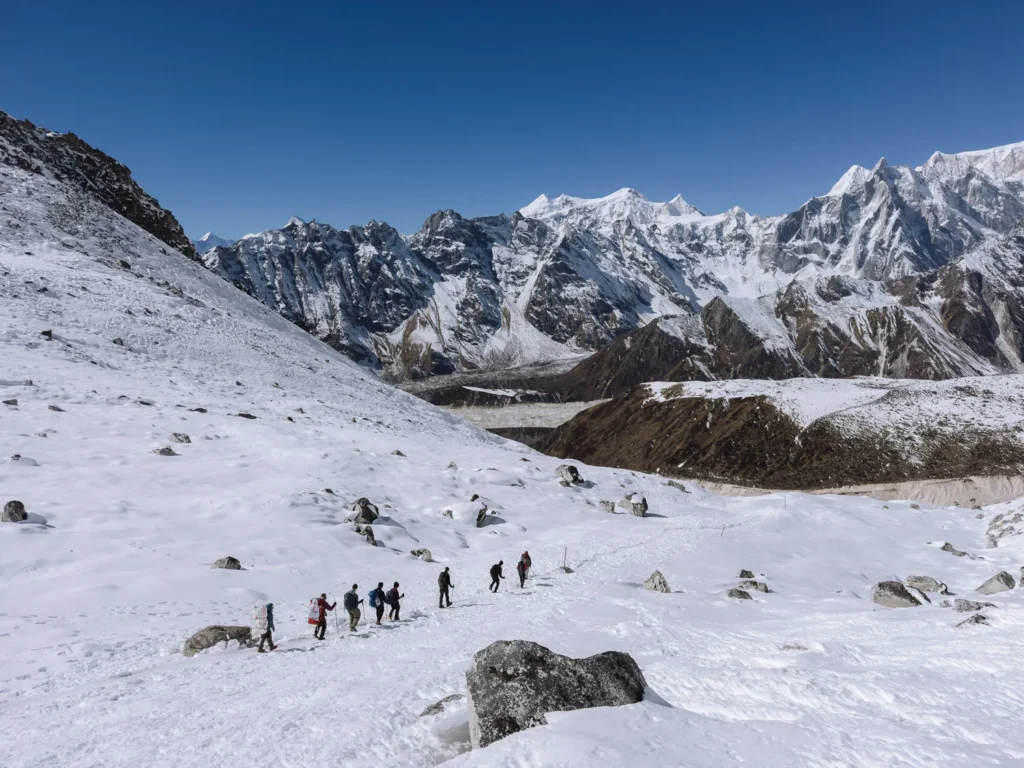
Manaslu Circuit Difficulty
The Manaslu Circuit is rated challenging.
It lasts 12 days and covers a total distance of about 100 miles (163 km). Over those days, it ascends and descends about 30,000 ft (9,150 m).
This averages about 8 miles per day, taking roughly 6.5 hours daily. However, averages can be misleading; several days require 7–9 hours of hiking, and the day over the high pass takes 10–12 hours.
The highest point is the 5,160m Larkya La (Larke Pass), so good acclimatisation is also required, and altitude sickness is a risk.
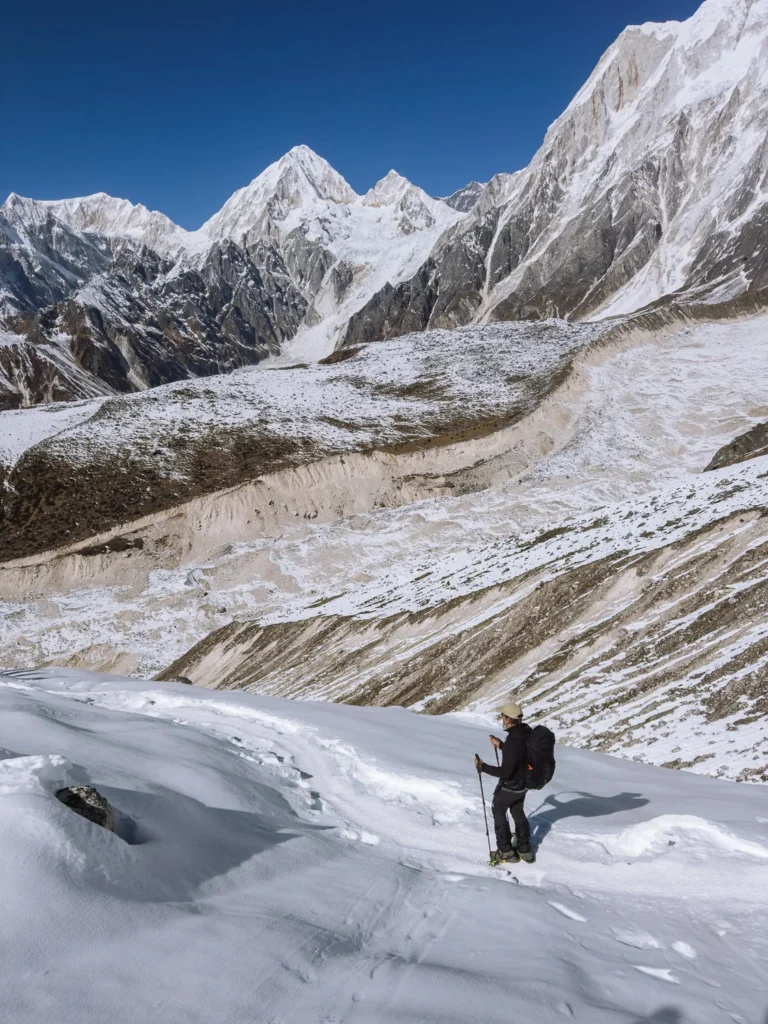
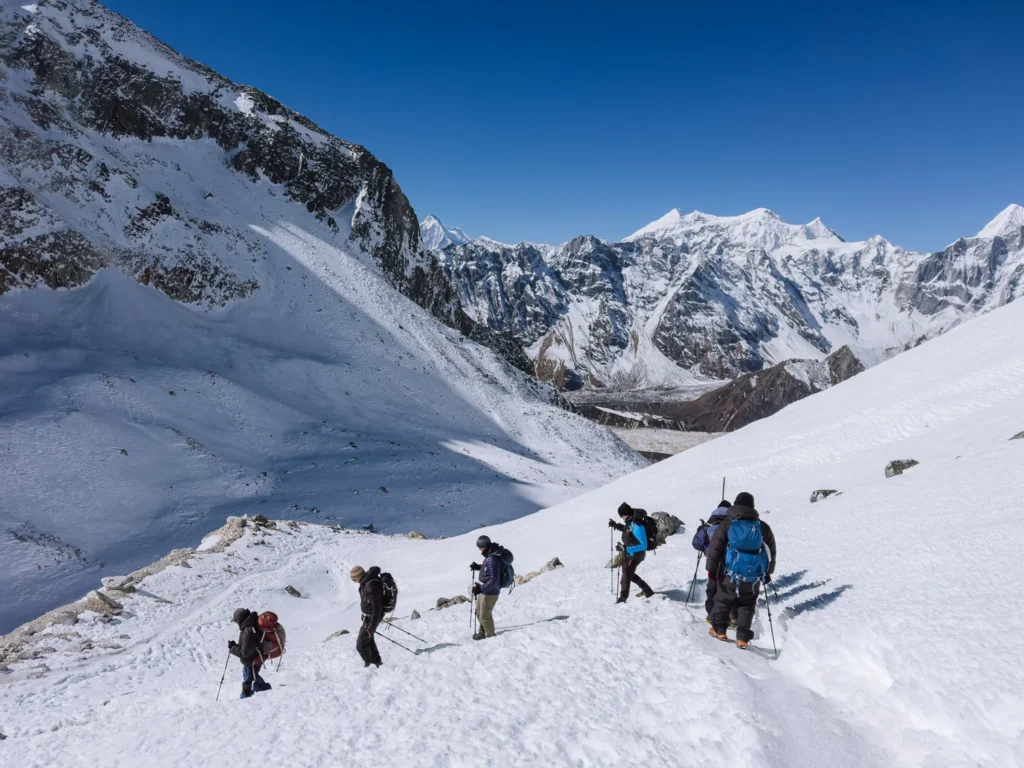
The trail is well-marked and never very steep. However, there are a few short sections across rock landslides, and the top of the pass is usually covered in snow (and patches of ice).
Nevertheless, don’t be put off. The Manaslu Circuit Trek is still within reach of first-timers in the Himalayas. It was Paul’s first trek in Nepal, and he did just fine.
To work out if this trek is for you, here are the challenges you’ll experience on the hike.
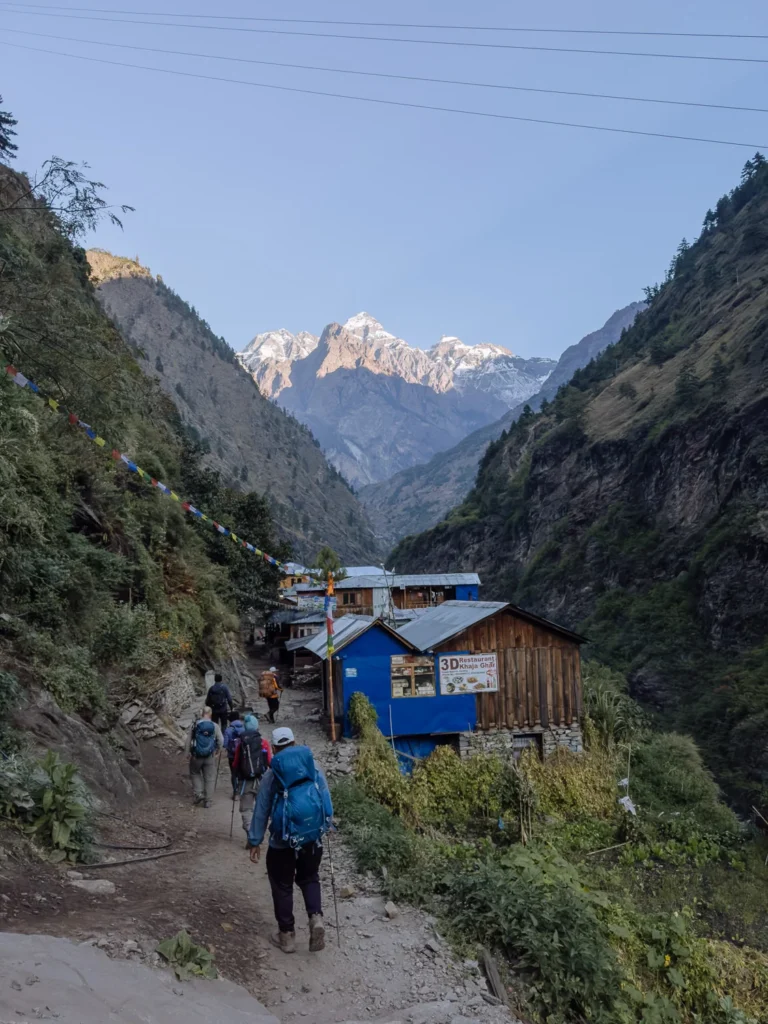
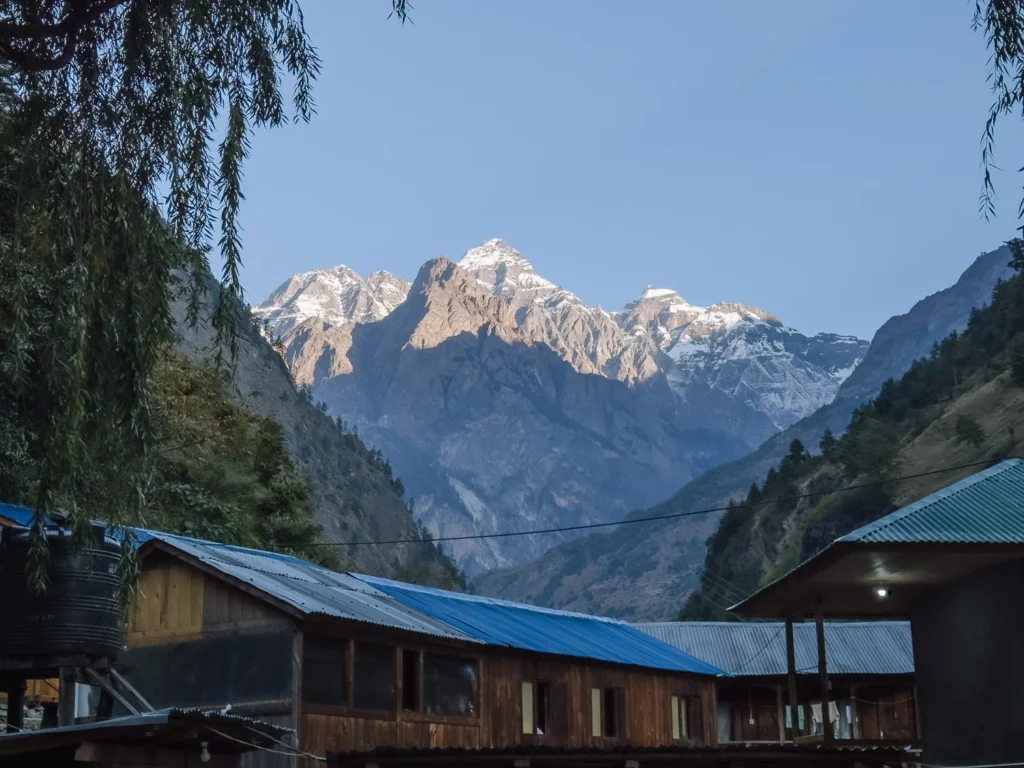
Trail Length Difficulty
The Manaslu Circuit is a guided trek, and different guides will start and stop in different villages. Our guide started in Machhakhola and ended in Chamje.
The hike took 12 days and covered 100 miles (163 km).
Manaslu Day-By-Day
Below is a table has a breakdown of the distance, ascent, descent, and duration for each day on the Manaslu trek. The figures in brackets on days 4, 5, 6 and 7 show the additional acclimatisation hikes that we did in the afternoon.
| Start / Finish | Distance | Ascent | Descent | Time |
|---|---|---|---|---|
| Day 1 Machhakhola to Jagat | 18 km | 1,030m | 520m | 8 hrs |
| Day 2 Jagat to Deng | 20 km | 1,230m | 740m | 9 hrs |
| Day 3 Deng to Namrung | 17 km | 1,250m | 520m | 8 hrs |
| Day 4 Namrung to Lho | 10 km (+2 km) | 850m (+150m) | 330m (+150m) | 5 hrs (+1 hr) |
| Day 5 Lho to Shyala | 4 km (+5 km) | 450m (+400m) | 100m (+400m) | 2 hrs (+3 hr) |
| Day 6 Shyala to Samagaun | 4 km (+ 6 km) | 170m (+270m) | 150m (+270m) | 2 hrs (+3 hr) |
| Day 7 Samagaun to Samdo | 9 km (+ 2 km) | 400m (+110m) | 50m (+110m) | 4 hrs (+1 hr) |
| Day 8 Samdo Acclimatisation | 7 km | 600m | 600m | 4 hrs |
| Day 9 Samdo to Dharamshala | 7 km | 700m | 120m | 4 hrs |
| Day 10 Dharamshala to Bimthang | 16 km | 750m | 1,500m | 11 hrs |
| Day 11 Bimthang to Gowa | 14 km | 240m | 1,420m | 6 hrs |
| Day 12 Gowa to Chamje | 22 km | 450m | 1,350m | 9 hrs |
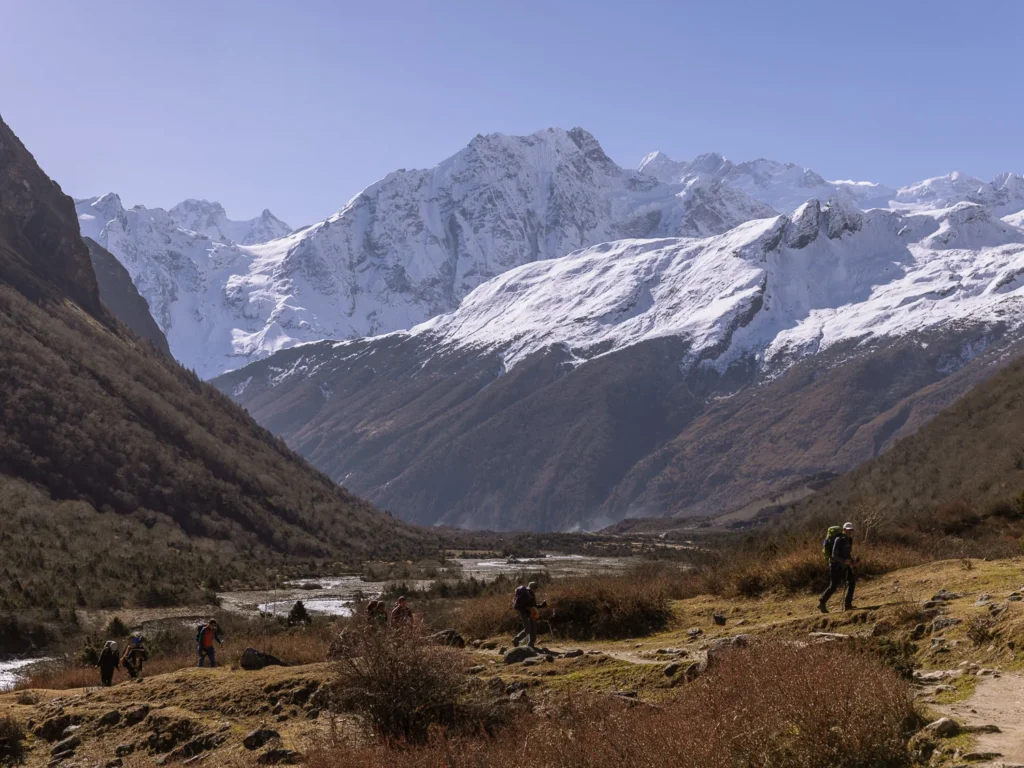
There are three sections of the hike where the days are quite long.
Day 1 to Day 3
Day 1 to Day 3 average over 11 miles (18 km) and ascend over 3,000 ft (1,000m) each day. String them together, and this is a tiring start to the walk.
The most exhausted I felt during the entire trek was the final push at the end of Day 3 as we approached Namrung. Thankfully, there was a teahouse selling apple pie and pastries at just the right moment.
Fortunately, Days 1 to 3 are at altitudes below 2,700m, so you can train for this.
If you feel comfortable covering around 30 miles in three days, you shouldn’t have an issue. Personally, we have been converted to using walking poles and found that they made these longer days much easier.
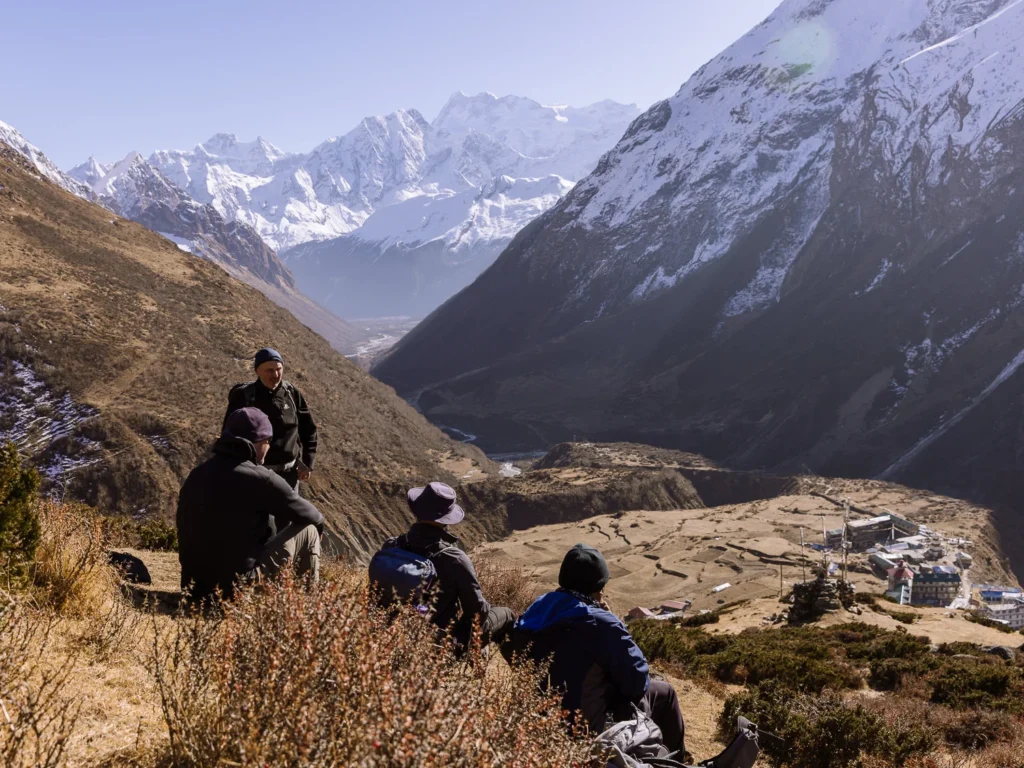
On Days 4 and 5, the trekking times and distances are much shorter, so you get a chance to rest and rebuild strength as you start to acclimatise.
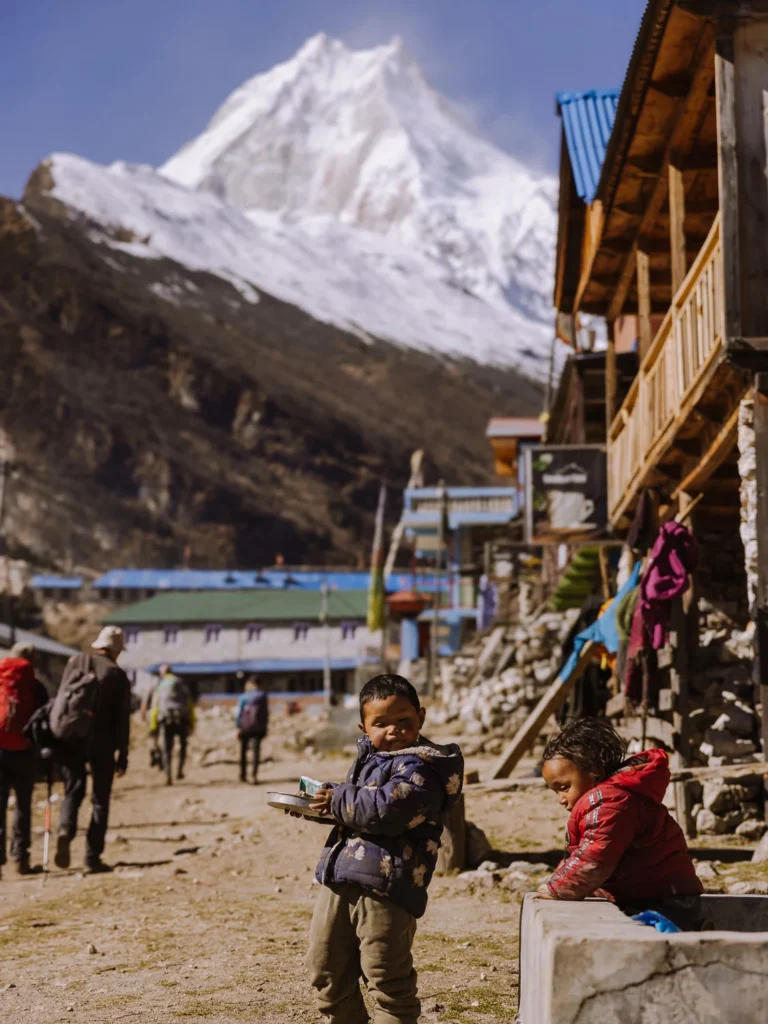
Larkya la Pass
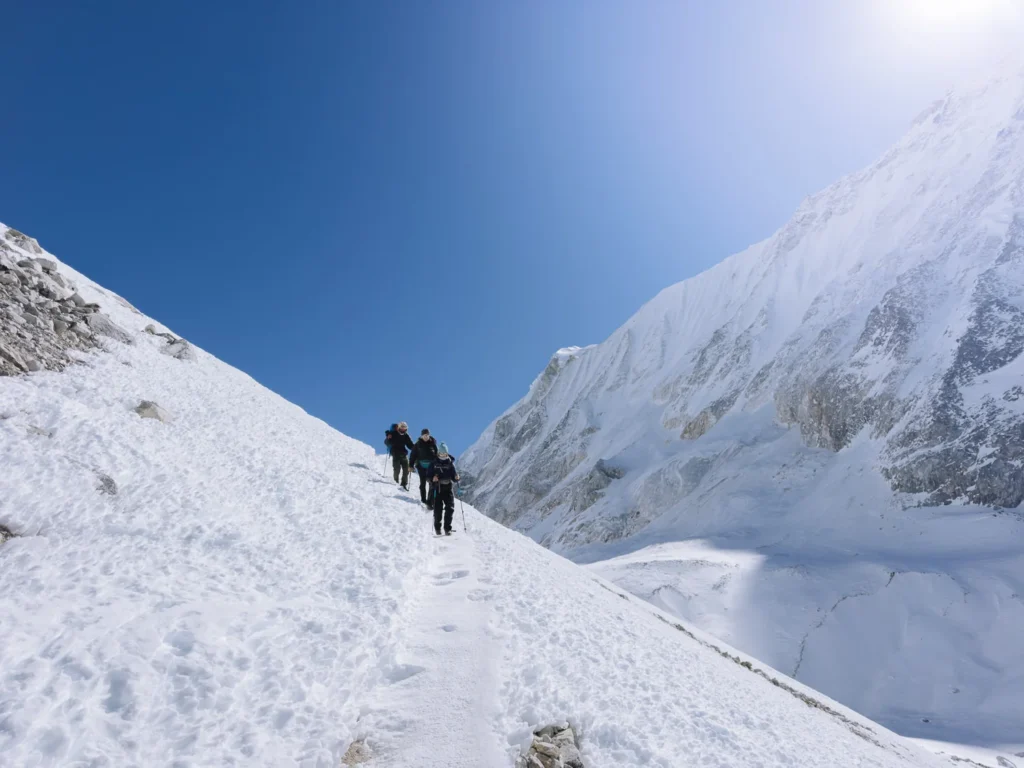
Day 10 heads over the 5,160m high Larkya La Pass. It is a tough 10-mile hike at high altitude, traversing snow and patches of ice.
We were nervous about this day and how hard it would be, but in the end, it was our favourite day of the trek.
We have written a complete description of the day on our hiking over the Larkya La blog post.
Final Descent
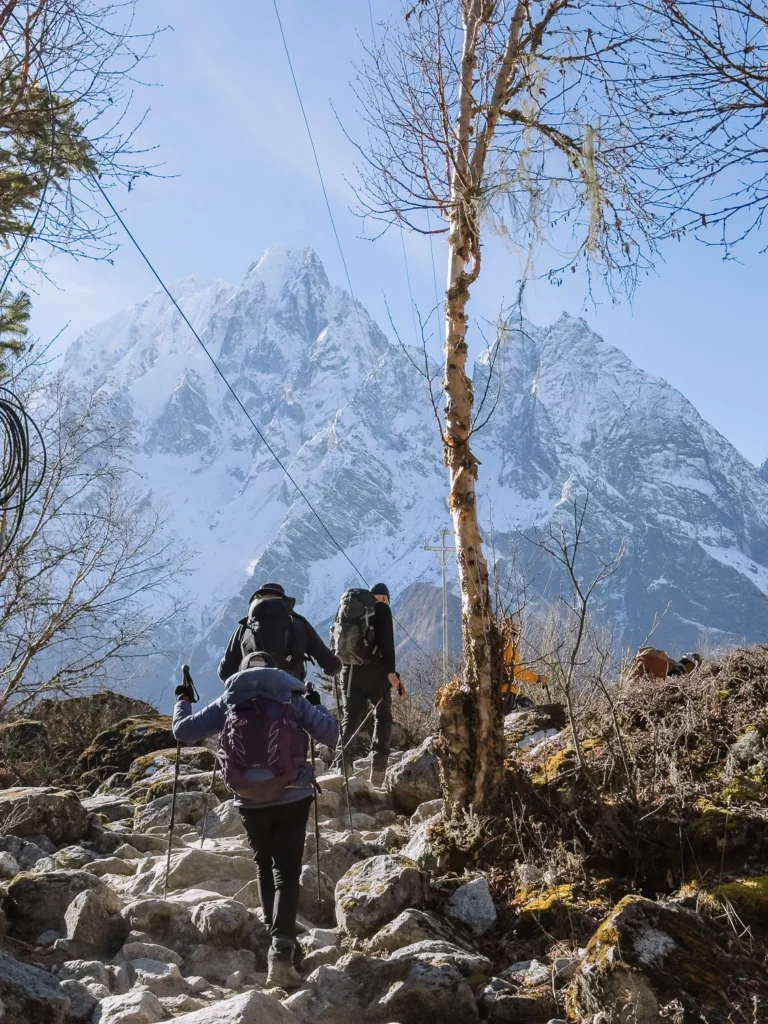
Days 11 and 12 cover 22 miles (36 km) and descend a total of 9,000 ft (2,770m).
Coming down is always tougher on the joints, causing sore knees and aching soles, and we thought this would be a tough end to a hard 12 days.
But the path was surprisingly soft underfoot and the trail relatively gradual.
Furthermore, the worry about crossing the high pass was over; we were getting towards the end of the hike, and we had much more oxygen! All in all, mind and body were feeling much better.
Yes, the last few hours on Day 12 dragged a bit, but generally it was much better than we expected.
Trail Conditions Difficulty
The total distance of a trek never tells the whole story.
A mile on a flat easy trail is a lot easier than carefully picking your way across a narrow arête, and climbing a thousand metres on a gradually ascending path is vastly different from scrambling up a vertical rocky face.
Fortunately, the Manaslu Circuit Trail is relatively straightforward.
There are no long steep sections, no scrambling, and technical expertise is not required. The path is easy to follow, not hard underfoot, and spends most of the time ascending or descending gradually.
There are just three challenges: landslides, suspension bridges, and the snow-covered Larkya La Pass.
Landslides
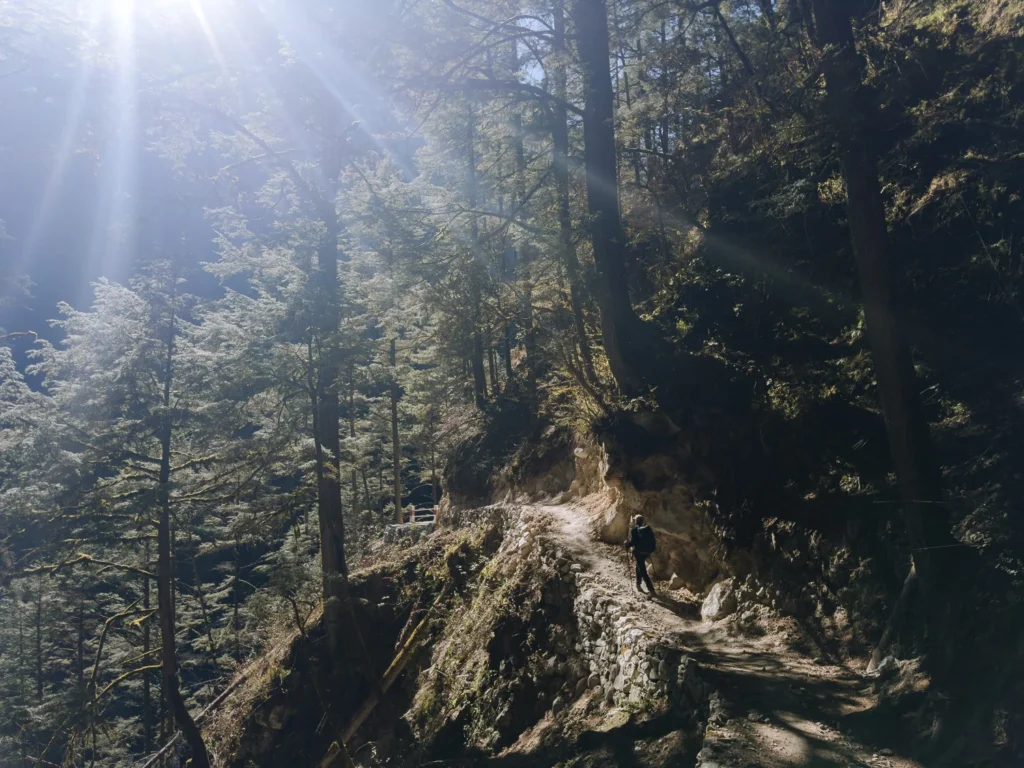
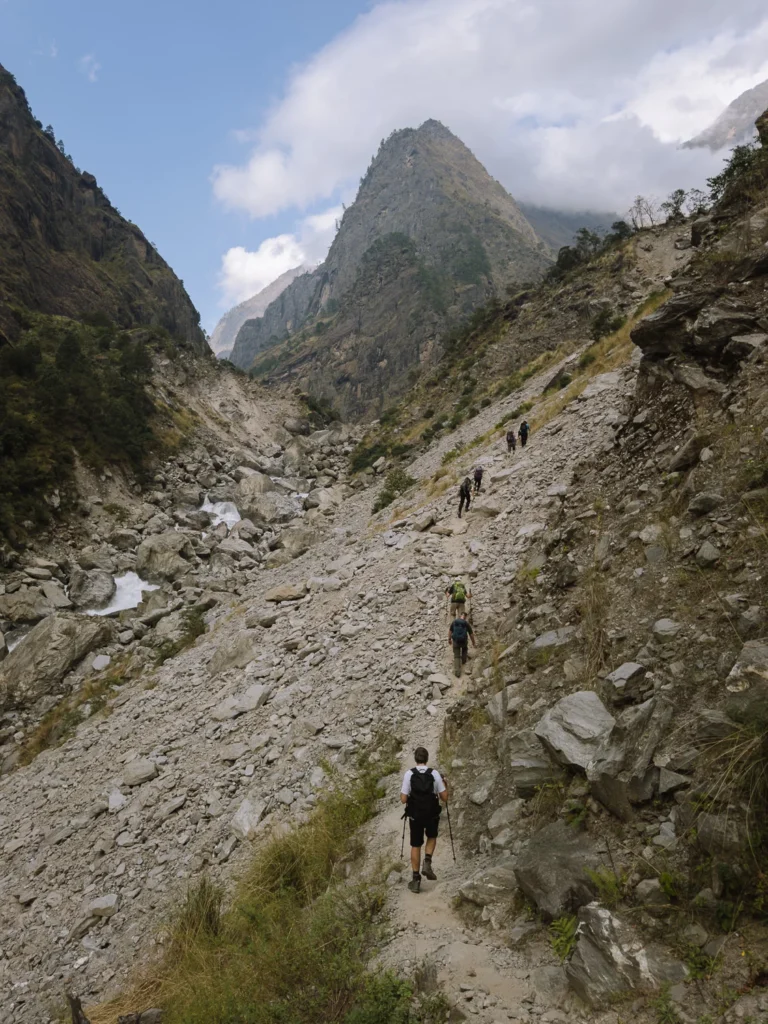
For the first three days of the trek, the hike follows the Budhi Gandaki River. The river has carved a deep valley, and at times it resembles a canyon. The valley walls are steep, and rock and earth landslides often fall into the river below.
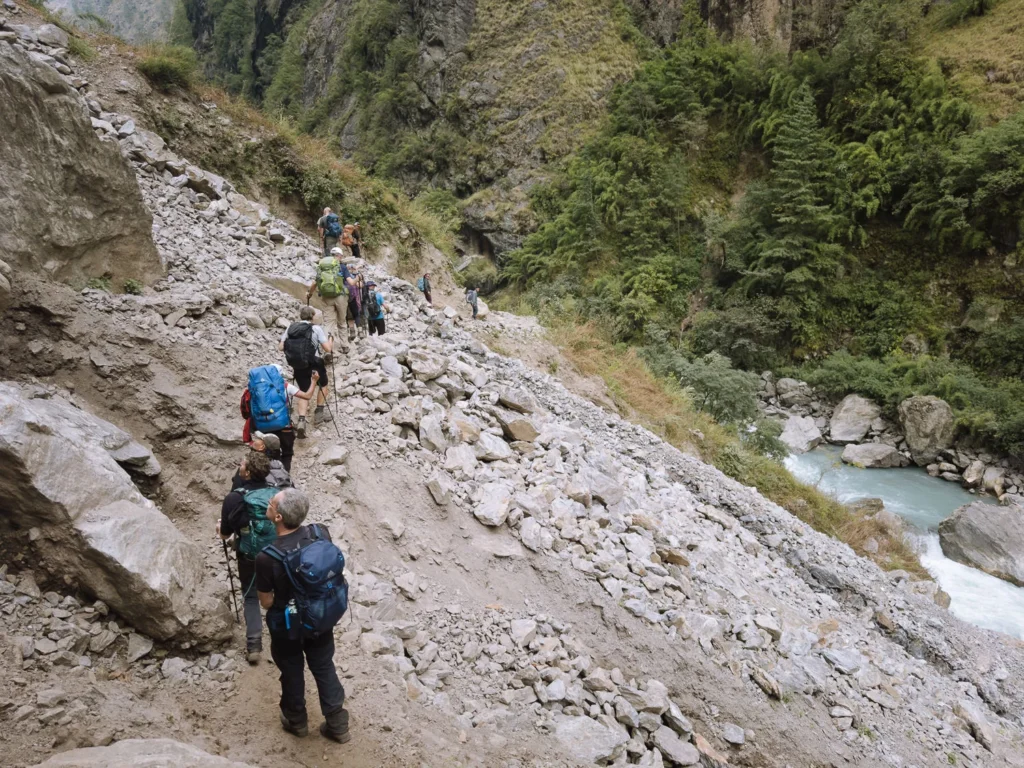
Narrow trails through areas of previous landslides need to be crossed, and there are about 10 to navigate.
Because Manaslu is a guided trek, your guide will always be there to assist and offer advice, and if the trail across the landslide is too dangerous, they will detour around.
Our guide told us not to rush across the loose rock—but not to dally either—and to keep our eyes out for rocks moving above.
In 2025 (the year we visited), the peak trekking season was affected by heavy rain. A trekker, determined to hike despite her guide’s advice, died when rocks swept her away. Always heed the advice you are given.
Having heard the story, we felt a bit nervous crossing the first couple of rockfalls, but after negotiating a few, we quickly relaxed.
Suspension Bridges
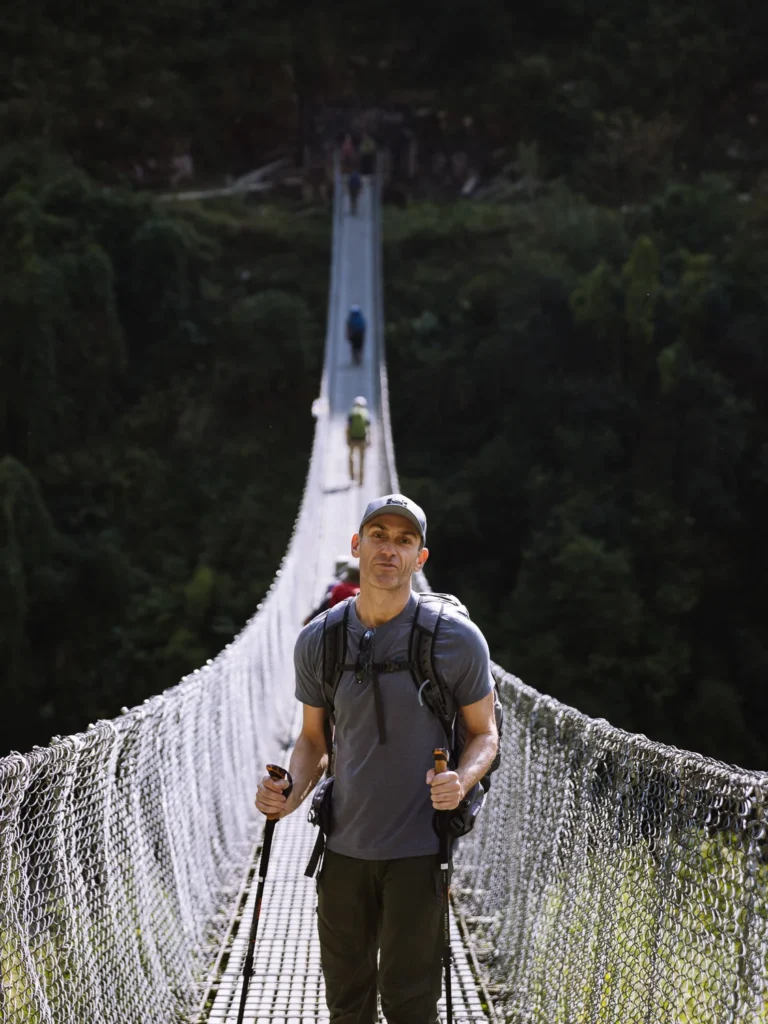
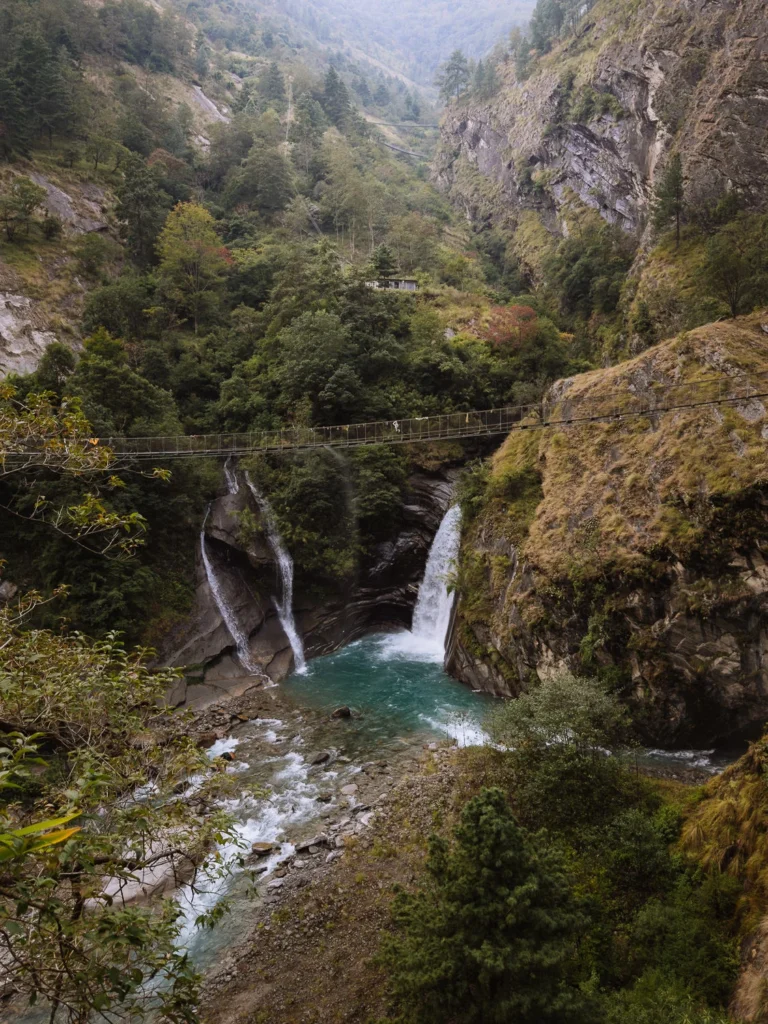
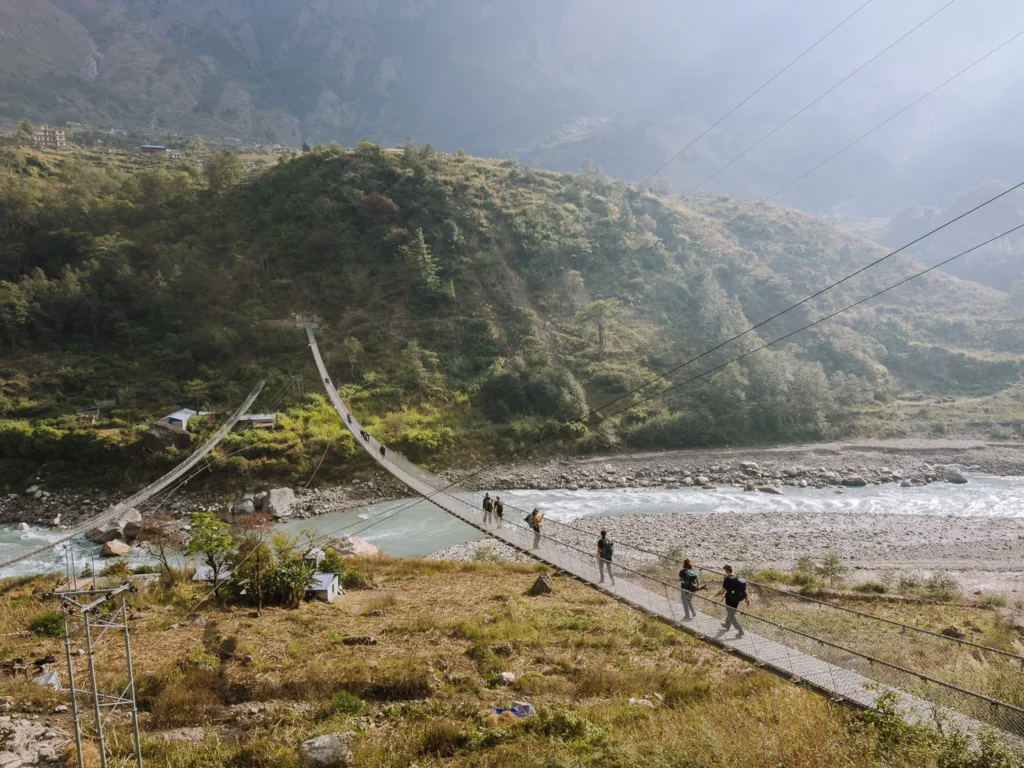
The Manaslu Circuit is known for its suspension bridges. I don’t love exposed heights, and before the trip, I was nervous about how I would feel bouncing across them. As it turned out, they were a highlight of the trip.
Some of the bridges on the trek are 200m long.
They consist of four high-tensile steel cables strung across the valley. The walking surface is made of a combination of wood or metal grates, and the sides are a metal mesh that comes above your waistline.
They can hold many people at once, and as you cross, they bounce up and down and sway from side to side—but not too much.
The thick steel cables and high sides make you feel very safe.
Larkya la Pass
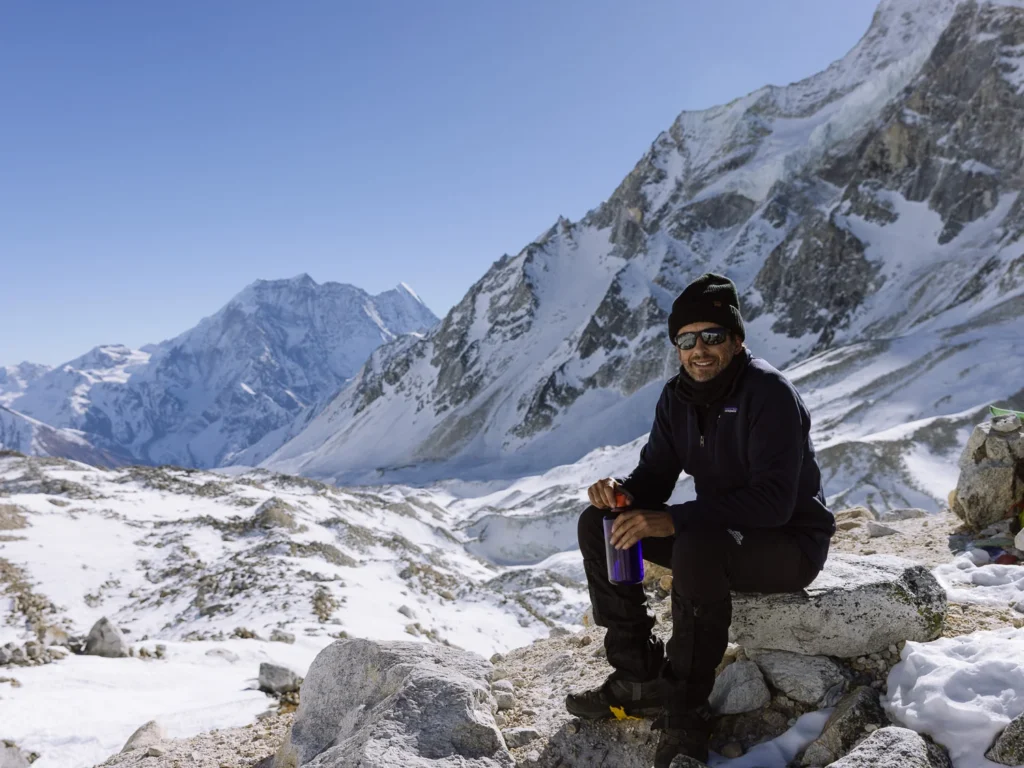
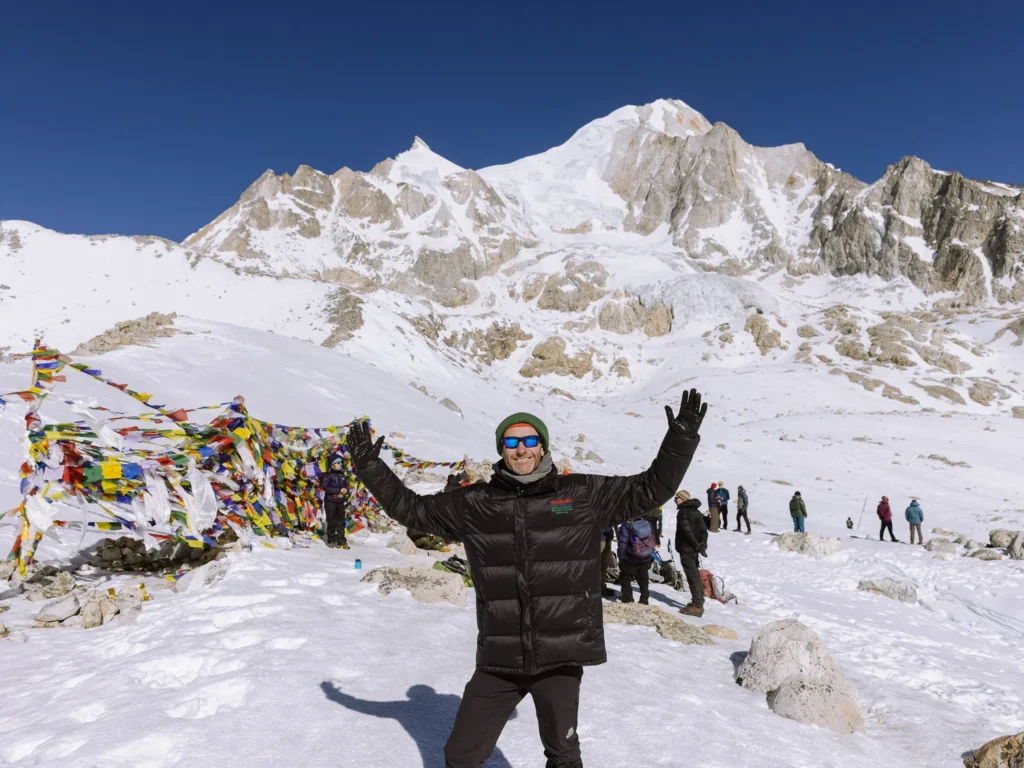
The Larkya La is the highest point of the trek, and at 5,160m it is almost always covered in snow. The days near the pass are the only days you’ll need hiking equipment other than boots.
You need microspikes (or crampons) on your hiking boots to prevent slipping. We also highly recommend walking poles to help keep your balance and distribute your weight evenly.
You don’t need any previous experience walking in the snow. It’s easy to pick up. Just follow your guide’s instructions. Read more on our guide to the Larke Pass.
Acclimatisation Difficulty
Crossing a five-thousand-metre pass always requires good acclimatisation. If done incorrectly, you can suffer Acute Mountain Sickness, requiring you to turn around and head back down.
Or more seriously, you might develop medical emergencies like HAPE (High-Altitude Pulmonary Oedema) and HACE (High-Altitude Cerebral Oedema). HAPE involves fluid in the lungs, making it difficult to breathe, whereas HACE involves fluid build-up in the brain, leading to neurological symptoms.
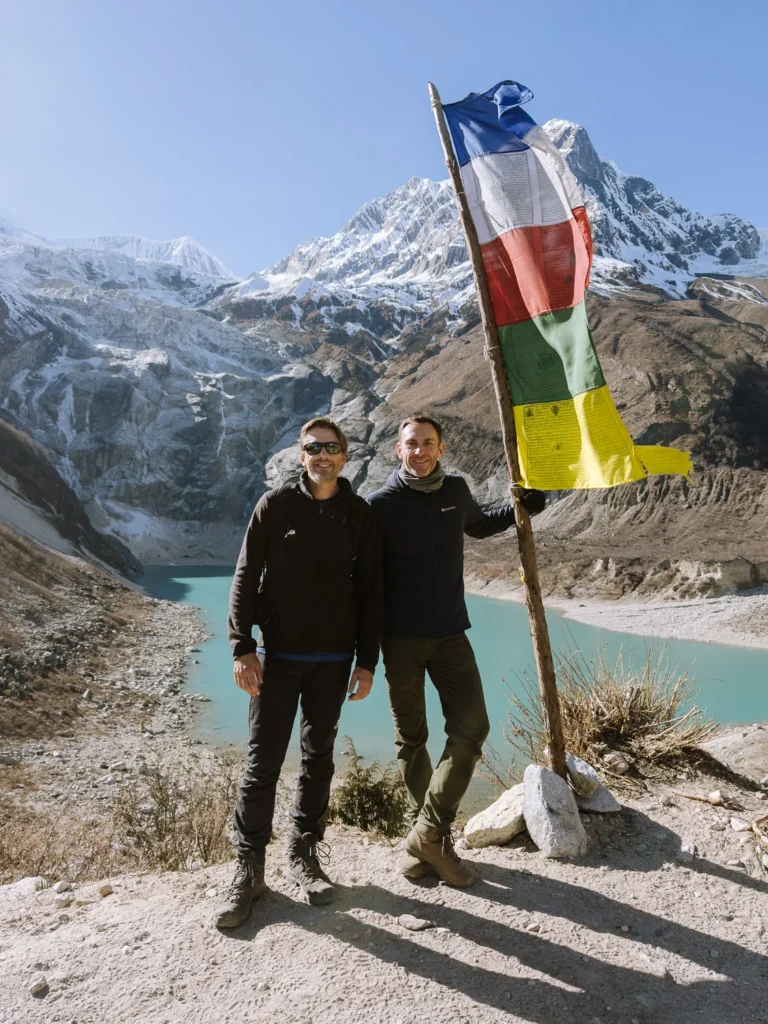
Fortunately, not all 5,000m passes are the same, and the Larkya La on the Manaslu Circuit has one of the best natural acclimatisation routes.
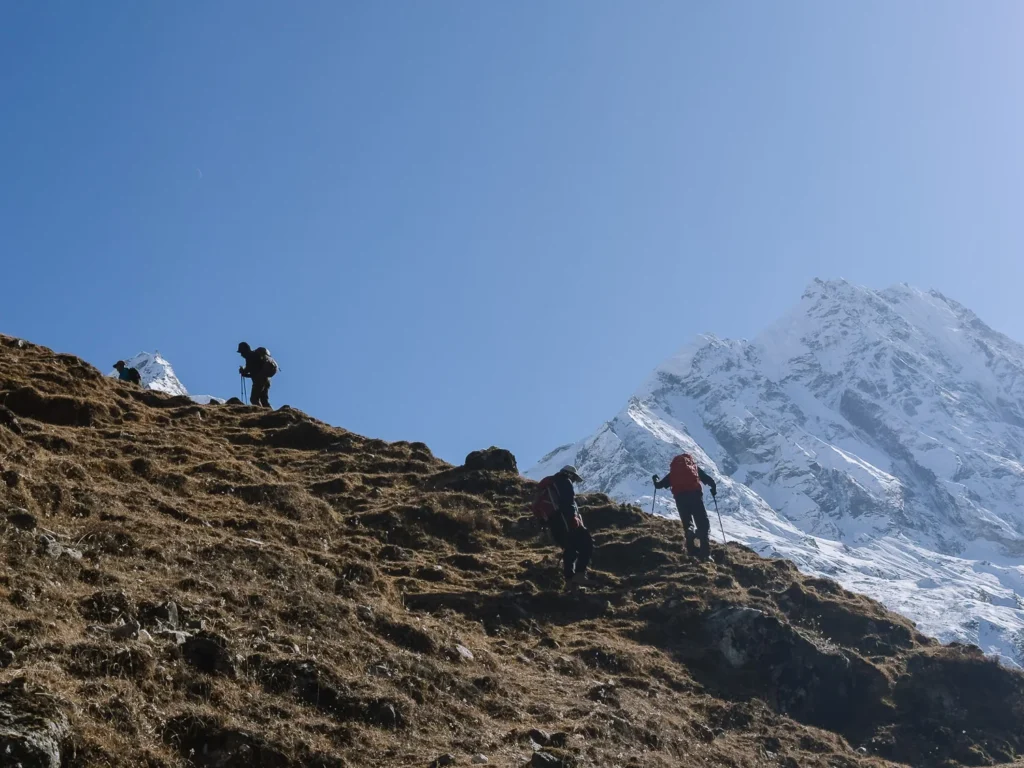
The circuit starts at a low altitude (870m) and only gradually ascends. The high pass of Larkya La is reached after 10 days of trekking, providing plenty of time to acclimatise to the reduced oxygen levels at this higher altitude.
Whilst 10 to 20% of hikers on the Everest Base Camp Trek may suffer altitude sickness, the success rate of completing the Manaslu Trek is much higher. In our group of 10 people, everyone made it over the pass.
It is quite simply one of the best high-pass treks for avoiding altitude sickness.
Accommodation Difficulty
There are two accommodation options when hiking in the high Himalayas of Nepal: teahouses or camping.
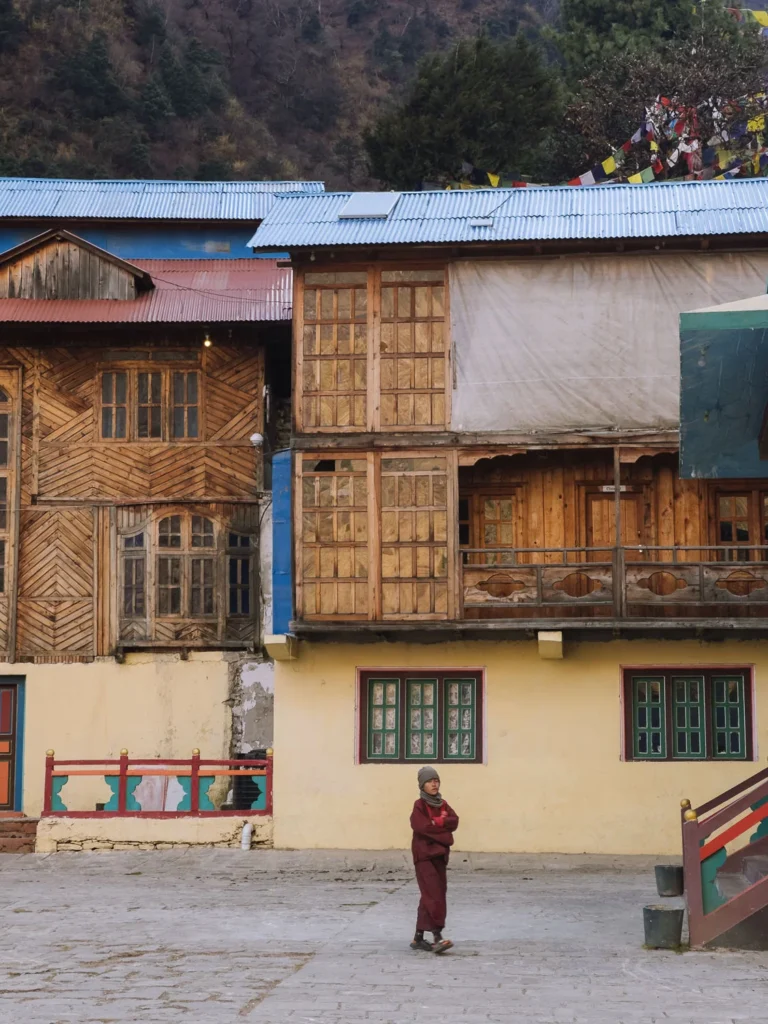
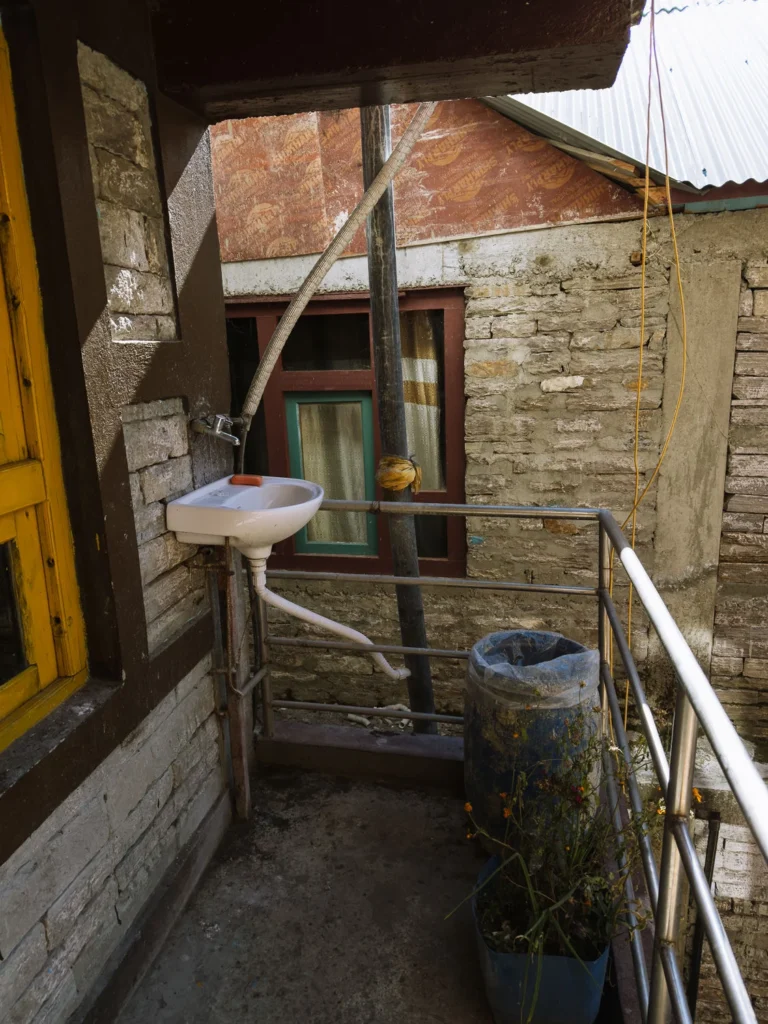
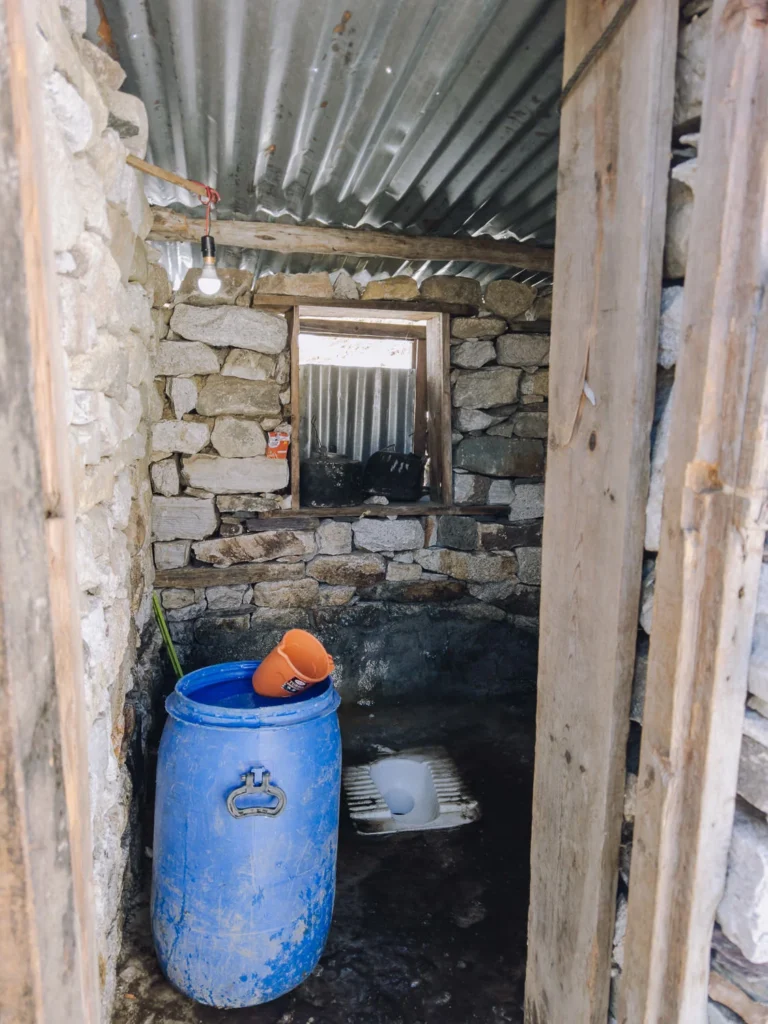
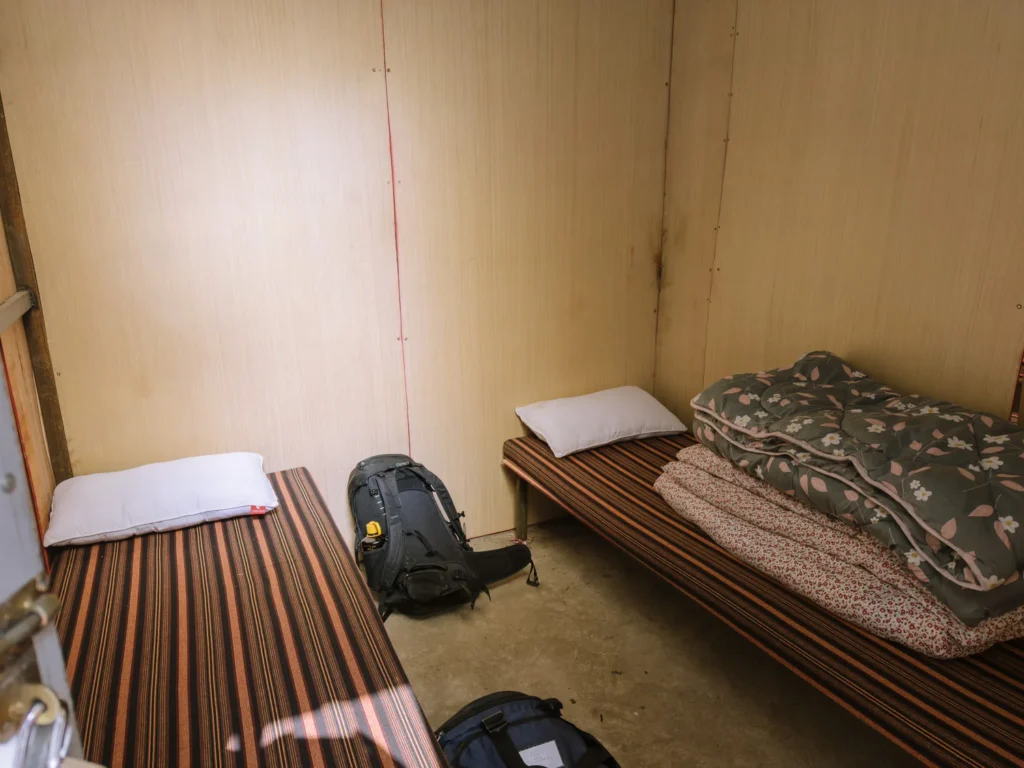
The Manaslu Circuit is a teahouse trek. A teahouse is a small hotel or guesthouse, and each night on the trek (with the possible exception of Day 9, when you might be in a tent) will be spent in a small room with a wooden bed, mattress, and pillow.
The teahouses are very basic, but they offer more comfortable accommodation and better food than you can expect when camping.
You can read full details about what life is like in staying in a Nepalese teahouse.
Mental Difficulty
One of the most underrated challenges of Himalayan trekking is the mental challenge.
Long, tiring days in harsh conditions. Unhygienic and basic bathroom facilities. The same food day after day. Adjusting to lower oxygen levels at high altitude. Nervousness about what you might face the next day.
They all take their toll, especially for first-time trekkers.
But the Manaslu Circuit is a guided trek with every night spent in a teahouse. Both these facts help.
Guiding—The Manaslu Circuit requires a guide. On our trip, our guide was a constant source of expertise and reassurance, relieving a lot of stress and responsibility. They are trained to strike a balance between keeping you safe and allowing you to enjoy the experience.
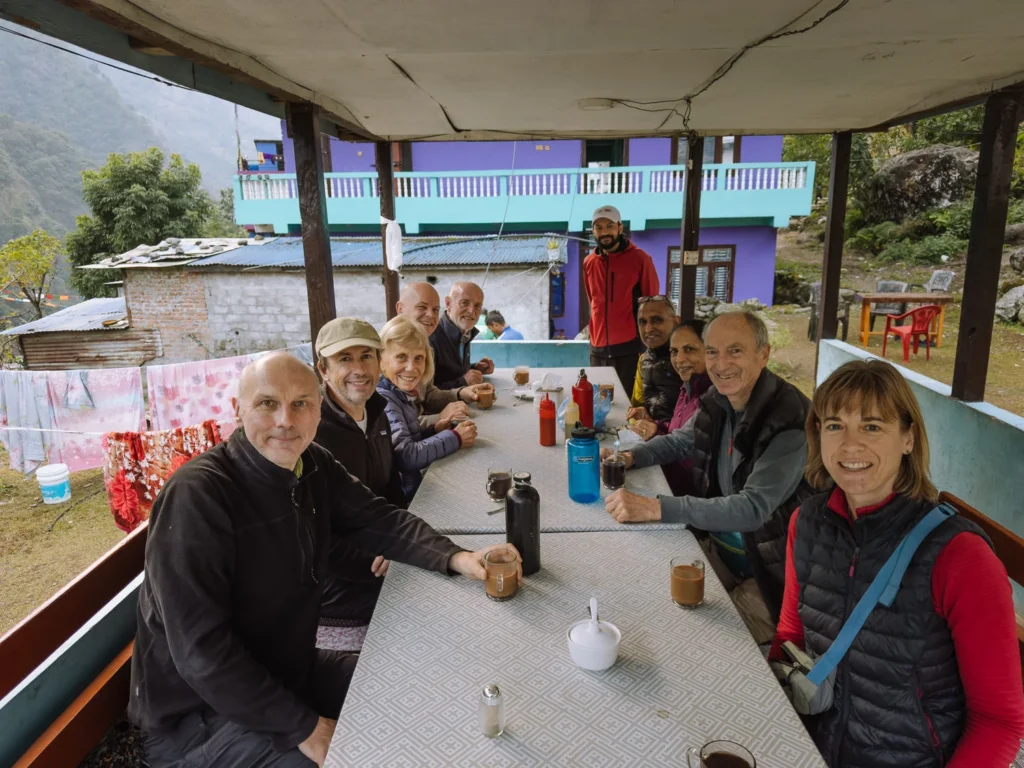
Go in a Group—Guides usually take a group of trekkers, and groups can help reduce isolation. Sharing doubts and fears is a great way to allay them, and we found the other hikers on our trip regularly helped lift our spirits and motivate us.
Socialising—During long evenings, it can be easy to read a book or scroll on your phone. Everyone needs their own downtime. But the dining halls at the teahouses offer a great opportunity to chat with others and play games. Bring some cards and learn how to play a couple of simple games that are easy for others to pick up.
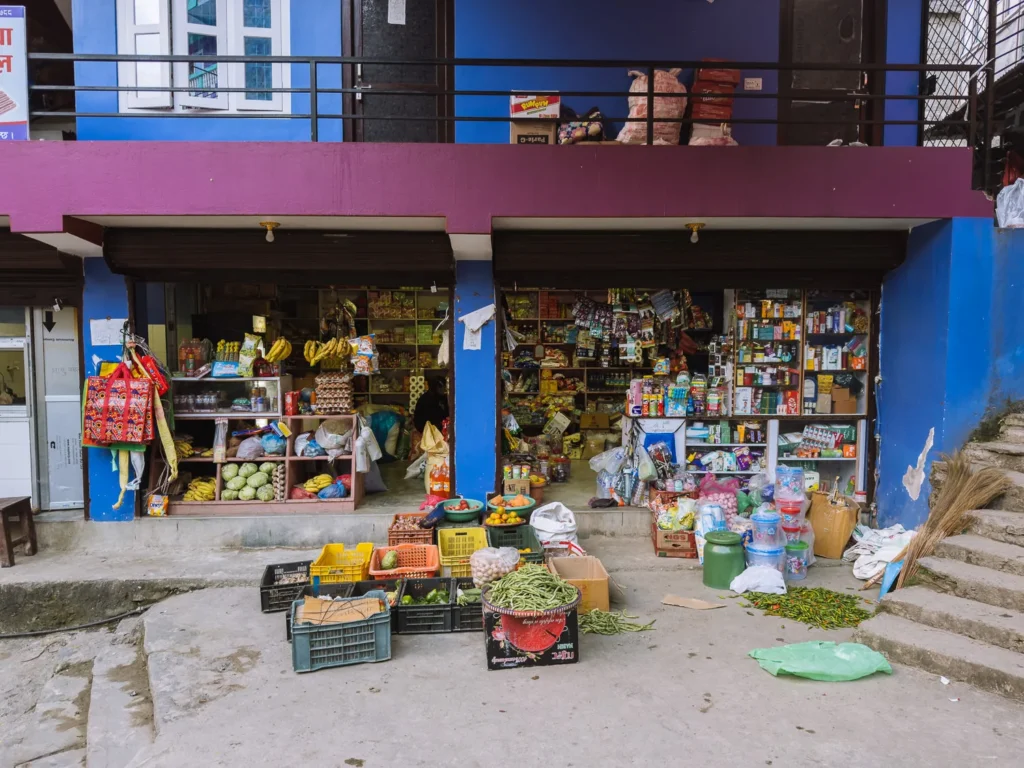
Treat Yourself—Nepal is one of the poorest countries on the planet, and there are very few luxuries to enjoy. You will be surprised how something so simple can feel so special. There are many teahouses and shops along the route. Whenever we treated ourselves to a Snickers, an apple pie, or a well-made coffee, it did wonders for our spirits.
Weather Conditions Difficulty
The weather can change quickly and dramatically in the high Himalayas. On our trip we were fortunate to have clear skies and very little wind, which made walking easier and sitting down to rest more enjoyable.
But just three weeks before, an unseasonal amount of rain fell. The deep snow and wind made walking hard and increased the risk of landslides. The Larke Pass was blocked, and guides and their trekkers were told to stay in their teahouses.
Hikers were stuck for about 3 to 4 days, after which the snow began to melt, and they were sent back down the way they had come (the top of the pass remaining closed).
These are the risks of hiking in the high Himalayas.
You can’t do much about the weather on any particular day, but you can pick the best times of year to go.
Peak season for the Manaslu Circuit is October to November and March to April. These two periods avoid the extreme cold of winter and the heavy rainfall of summer.
Conclusion
Whilst the Manaslu Circuit Trek is rated challenging, many factors make it more manageable than it might at first appear.
If you have experience hiking in mountainous conditions (such as the Lake District, the Alps, or the Rockies), have a good level of fitness, and feel you can handle the hardships of living in teahouses, then you should be fine completing the trek.
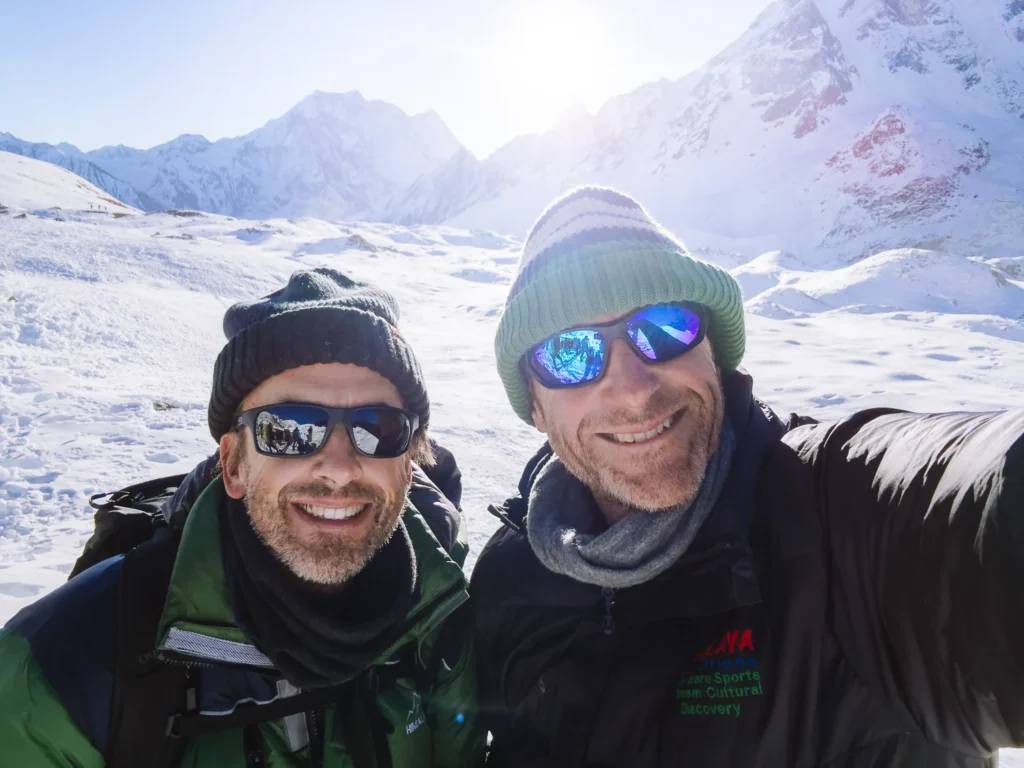
Don’t let age be a concern. In our group, we had a 78-year-old, a 77-year-old, a 72-year-old and a 71-year-old. They all completed the circuit and were not only amazing but utterly inspiring.
Finally, assessing the difficulty of a trek is important, but it is not the only factor. Here are the many other reasons to choose the Manaslu Circuit Trek.
More Nepal Guides
- How difficult is the Manaslu Circuit trek in Nepal?
- What is it like hiking the Larke Pass on the Manaslu trek?
- Nepal Tea Houses – our experience staying in the Himalayas.
- Why the Manaslu trek is perfect for first-time hikers in the Himalayas.

reader-supported
When you buy through links on our site, we may earn a small affiliate commission at no extra cost to you.
Thanks for your support // Paul & Mark