

Planning a hiking trip in Nepal and wondering what the teahouses are like? This is our personal experience staying in teahouses on the Manaslu Trek, to give you an idea of what to expect and how to prepare.
By: Mark Barnes | Last Updated:
Teahouses are mountain lodges dotted along the trekking routes of Nepal. They’re the standard accommodation for most treks in the Himalayas.
Originally, teahouses were very simple affairs, with locals welcoming trekkers into their homes and providing basic hospitality. Today, they’ve evolved into something more akin to small hotels or guesthouses, complete with private rooms, dining halls, electricity and running water.
However, teahouses remain decidedly basic, locally run businesses. Their simplicity may come as quite a shock to anyone expecting more conventional accommodation.
This guide covers some common questions we’ve received about staying in teahouses, with suggestions for what to take and how to prepare.
What Is a Nepalese Tea House?
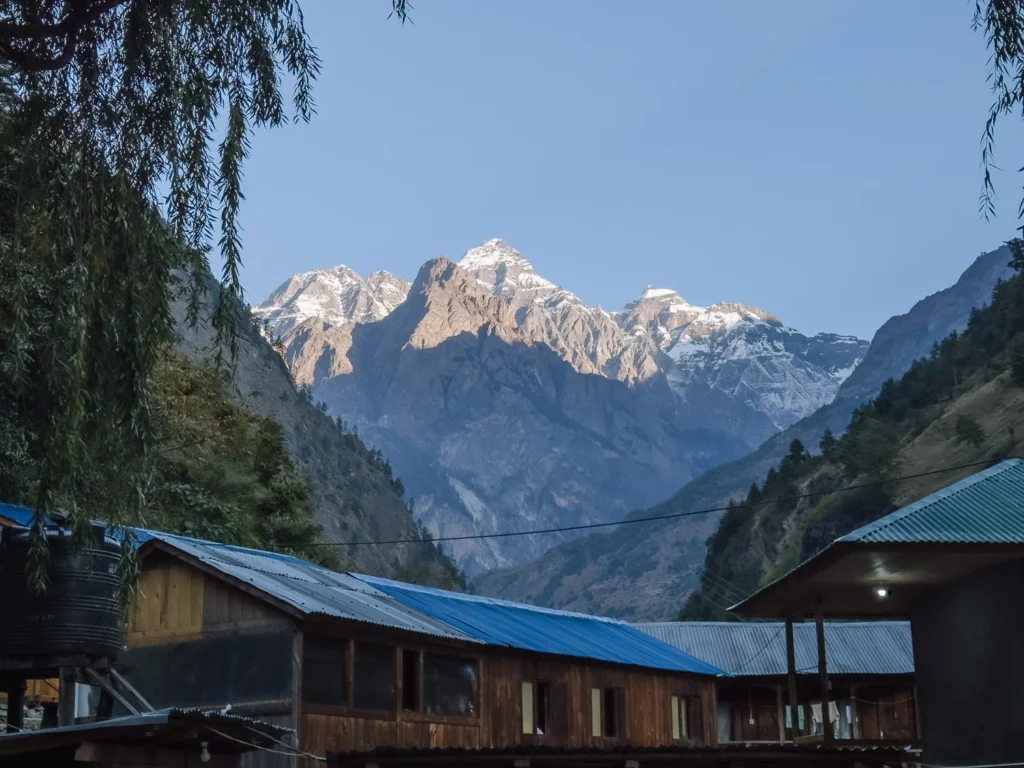
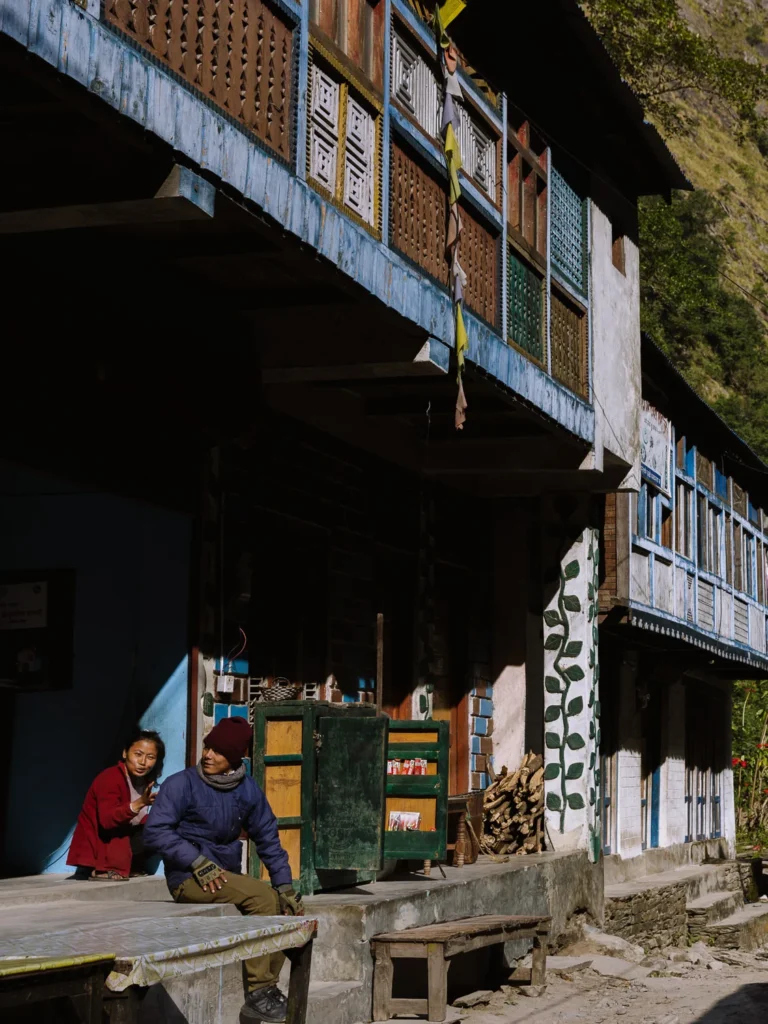
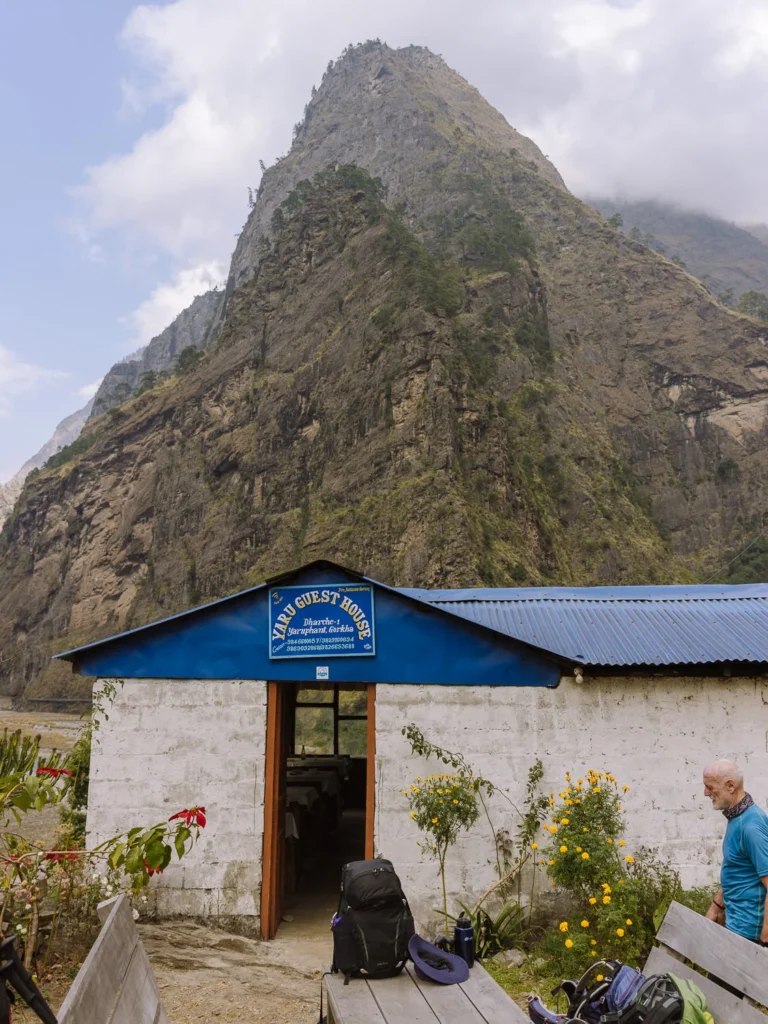
A teahouse is a small hotel or guesthouse. It usually consists of a central dining hall and kitchen, along with basic twin rooms or small dormitories for sleeping.
Most have an outdoor seating area, often with fantastic views.
They are found in the remote villages of Nepal and are a more comfortable alternative to camping when trekking in the Himalayas.
We found it very reassuring to know that after a day’s hiking, there was a comfortable bed and a hot meal to end the day. However, many of the facilities are still very basic and get more basic the higher in altitude you go.
What Is Sleeping at a Teahouse Like?
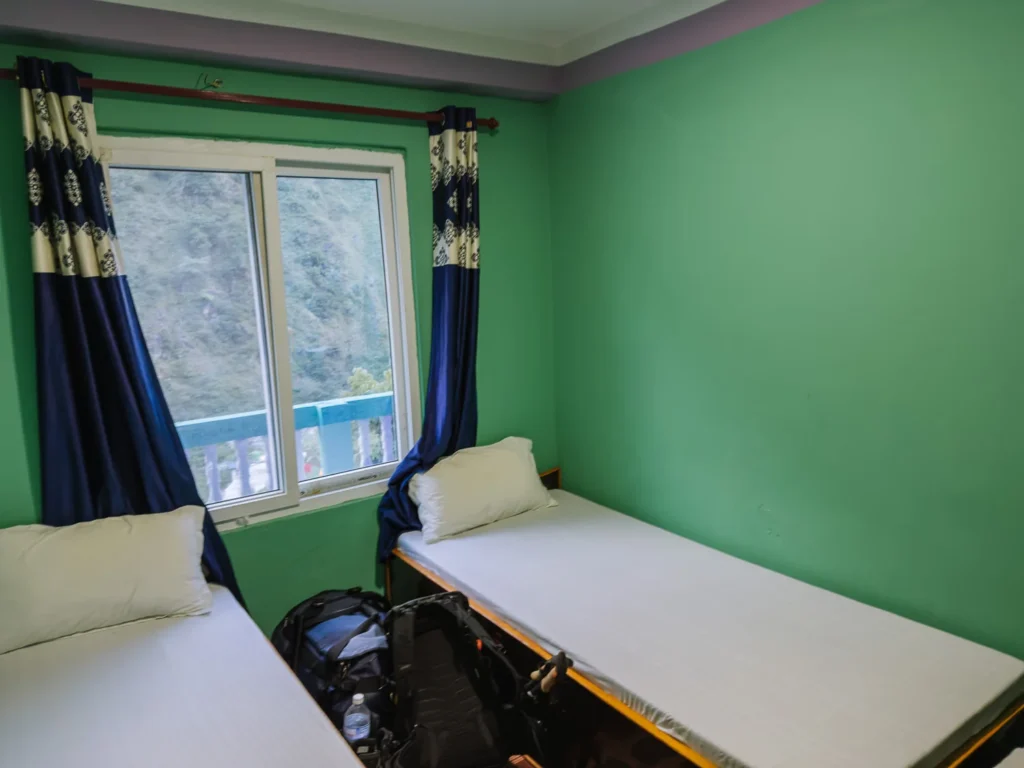
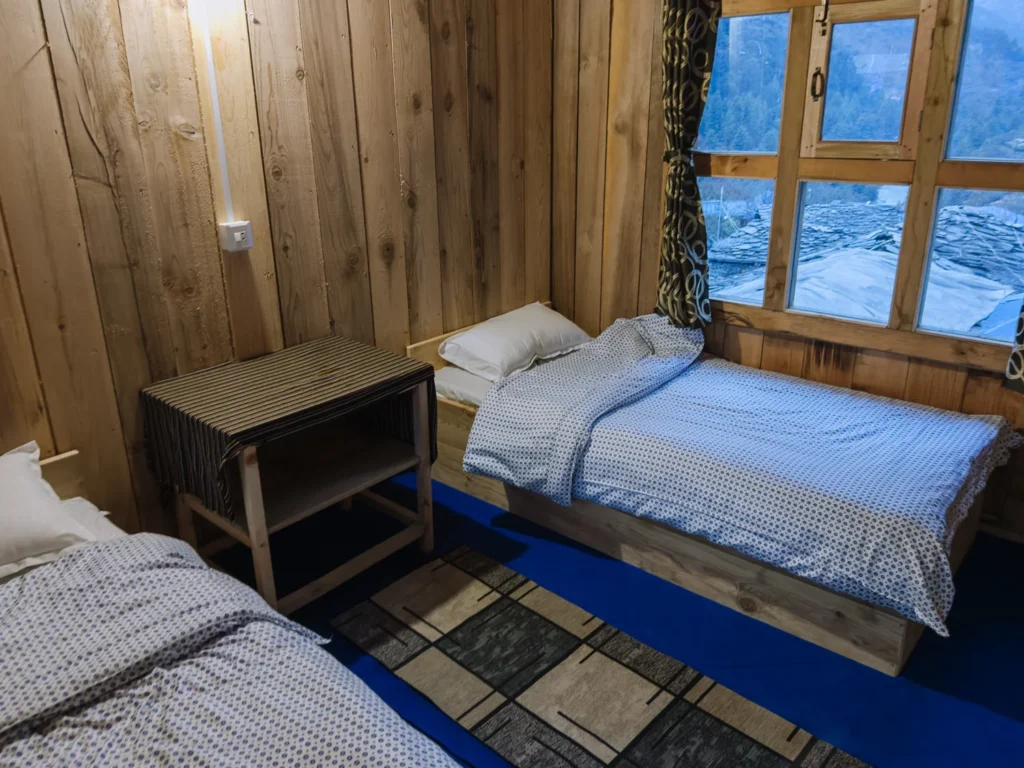
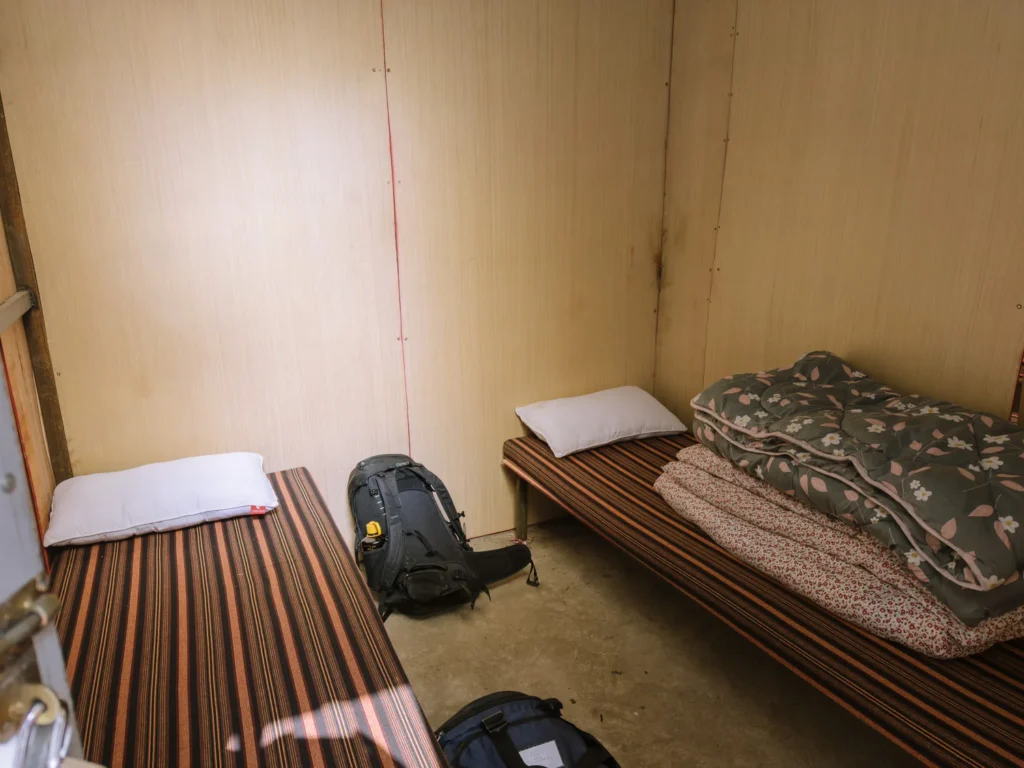
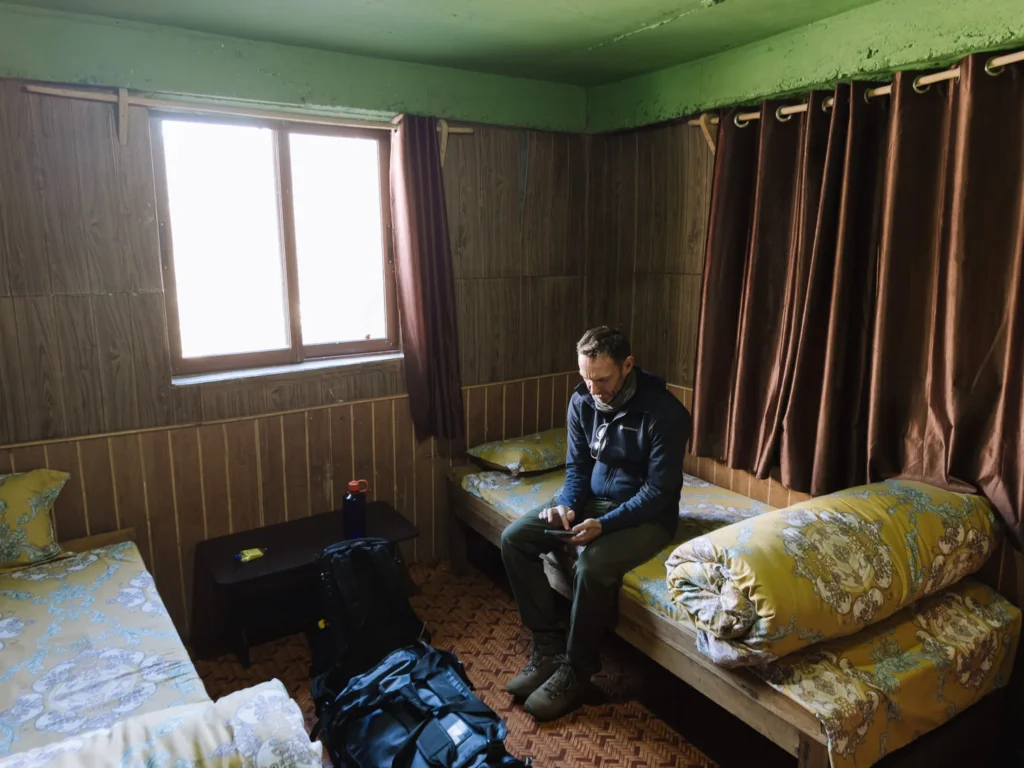
The standard room in a teahouse is a twin-share with two beds. They are wooden beds with a mattress and a pillow. Some, but not all, had duvets or blankets as well.
We found all the beds on our Manaslu Trek to be very comfortable.
Most also have a small table, a power socket for charging devices, and a light. A padlock and key are provided to secure the room.
The bedrooms are unheated and very cold at night. The blanket will not suffice to keep you warm, so you must have a high-quality sleeping bag.
We recommend bringing moisture-wicking base layers to wear inside the sleeping bag. These help trap the heat and keep you warm. Thermals are generally not a good idea in a sleeping bag because you may sweat in the middle of the night, which will make you much colder.
Another great tip is to bring a water bottle that can be filled with hot water. The teahouse or porters filled them up for us with boiling water before bed, and we could use them as hot water bottles.
We used Nalgene Water Bottles, which are lightweight, extremely tough and worked perfectly as hot water bottles.
We slept in merino base layers, socks and sometimes a beanie, with a hot water bottle, and we were very comfortable like this.
If you have the correct equipment, the challenge is not staying warm when sleeping; it’s staying warm in the early mornings and evenings when you are getting changed or cleaned up.
Rooms are often made of simple plywood, and noise carries through the walls. If you are a light sleeper, bring earplugs. We used something like this, and they worked a treat.
In the more remote guesthouses, you may be required to share rooms with more beds or sleep in small dormitories.
Make sure to bring a head torch in case there is no light in the room, and for moving about the teahouse at night.
How Much Do They Cost?
Rooms are cheap, costing between US$5 and US$10 in most areas – a little more in the Everest Region. The teahouses aim to make their money from selling food and drink.
What Are the Dining Halls Like?
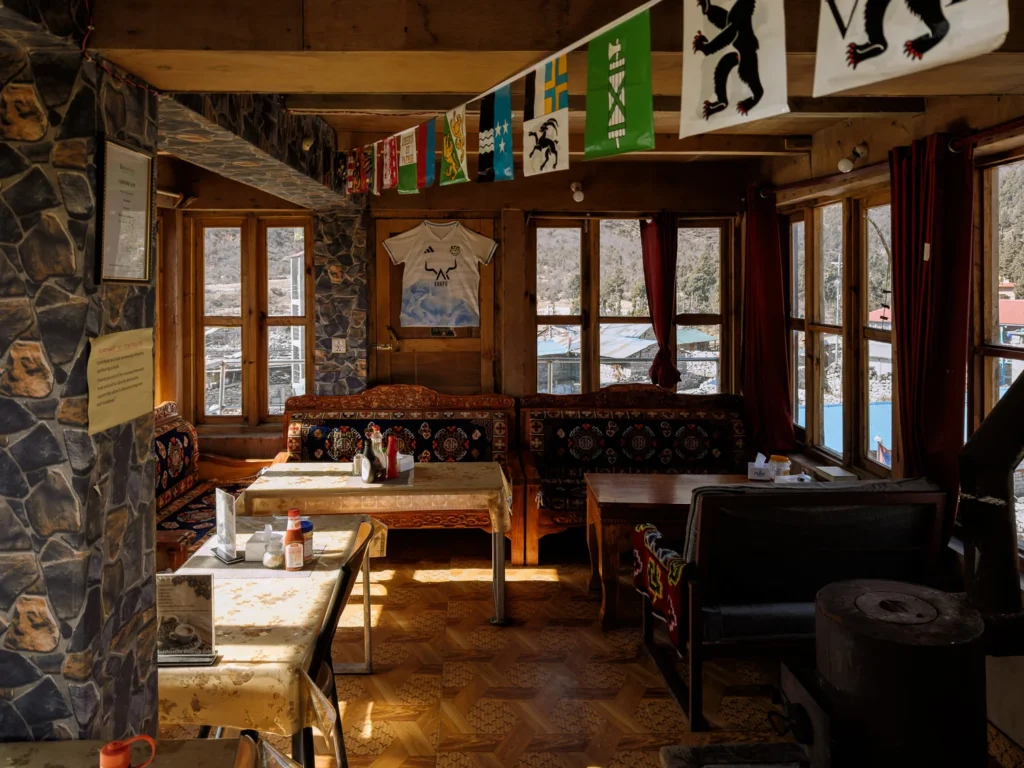
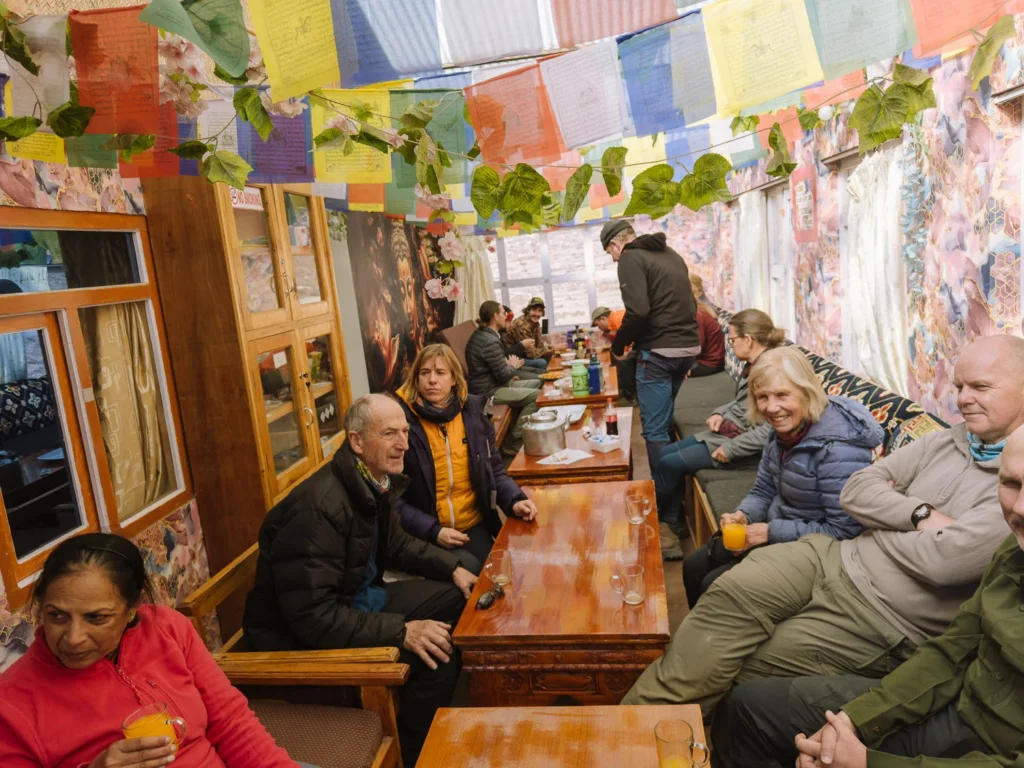
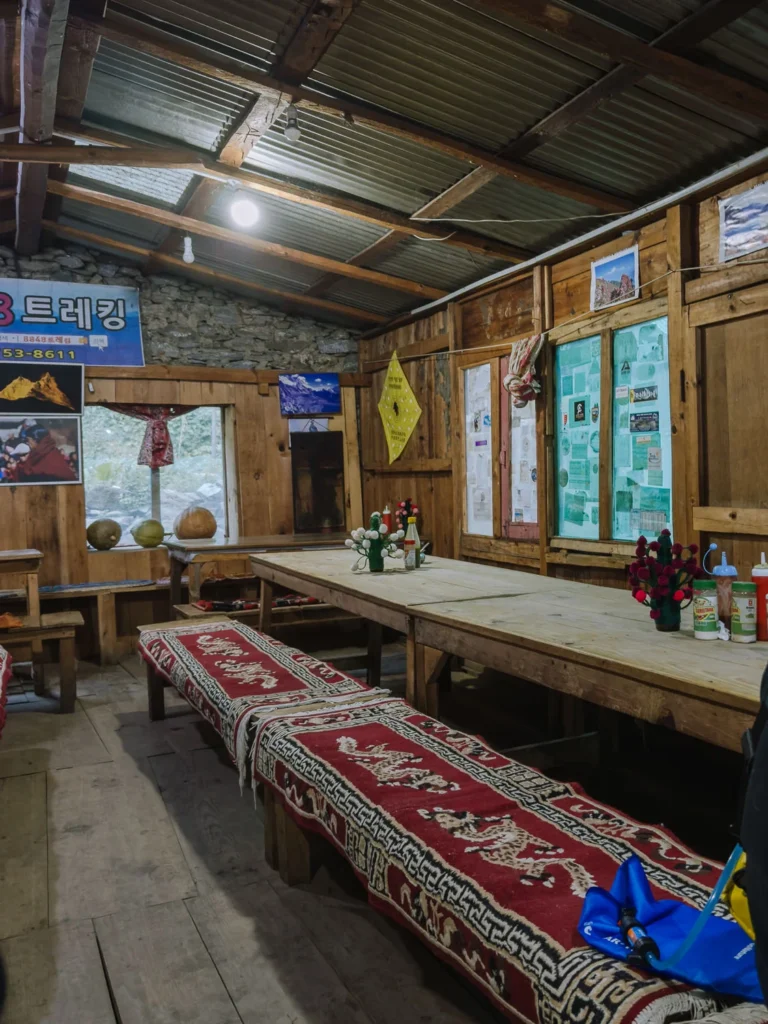
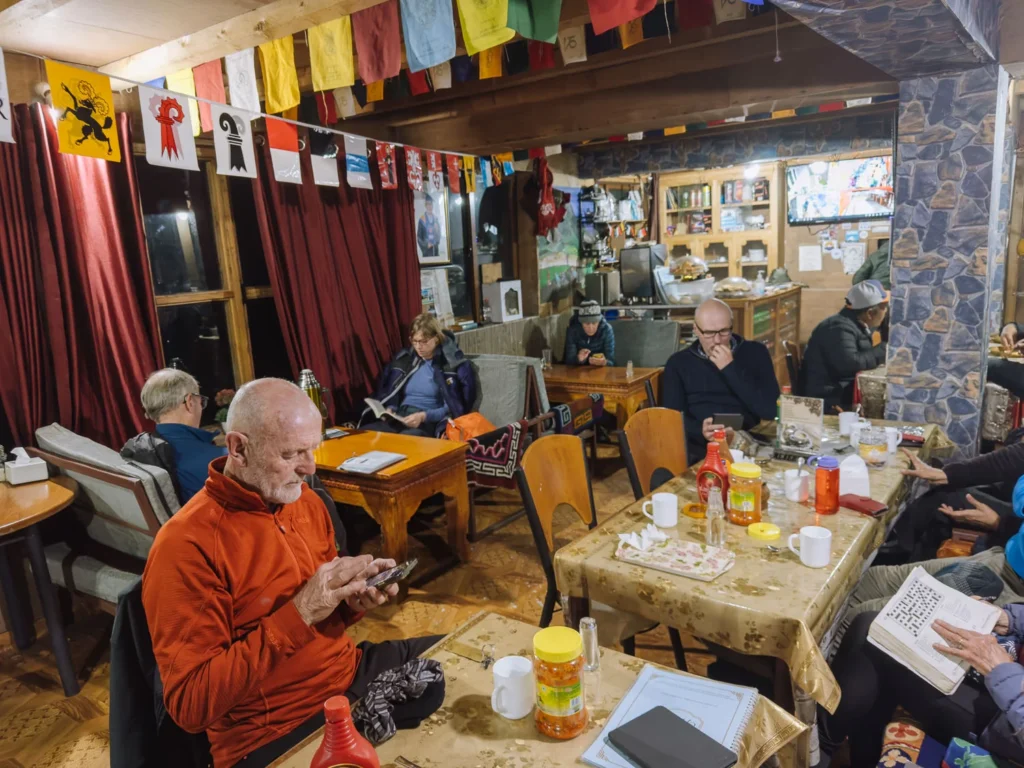
The Nepalese teahouses have a dining hall with tables and chairs; this is where you eat your meals, and it’s usually the only indoor communal place to hang out.
During the day, the room is heated by the sun and can be reasonably warm.
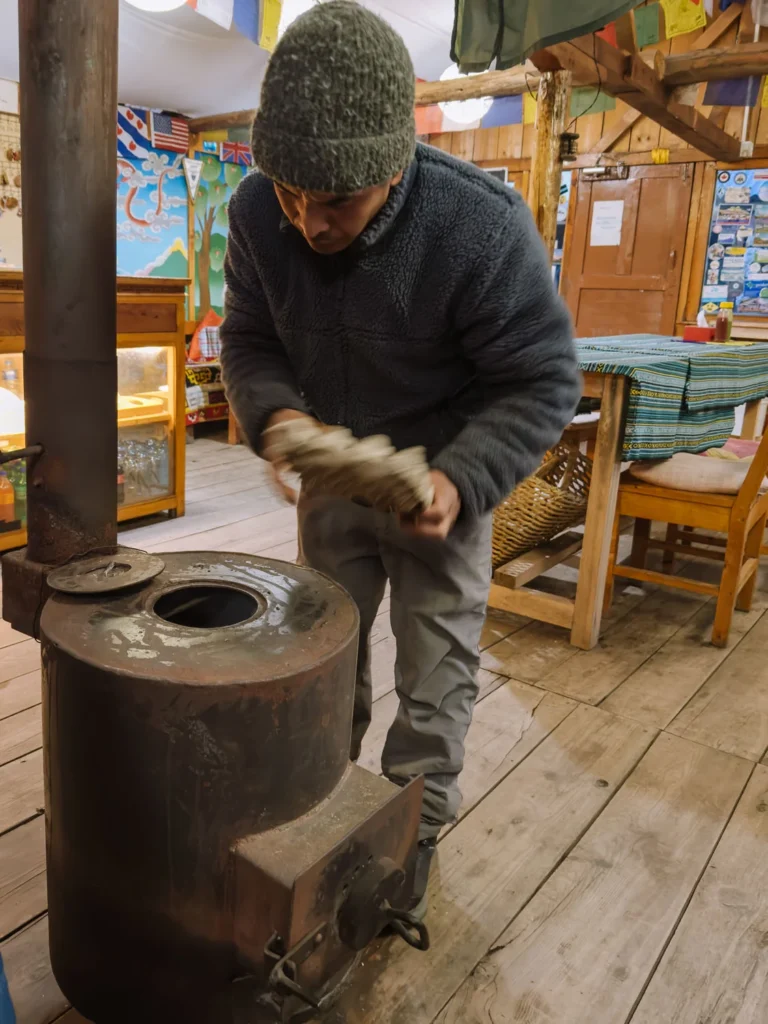
In the evening (from roughly 6 pm to 8 pm), an oil drum stove fuelled by wood or yak dung is lit. It provides a bit of nearby heat, and there is often a race to grab a chair and sit around it.
In the mornings and late afternoons, the dining hall (especially at higher altitudes) can be cold. We found we had to rug up quite a bit in the mornings and evenings.
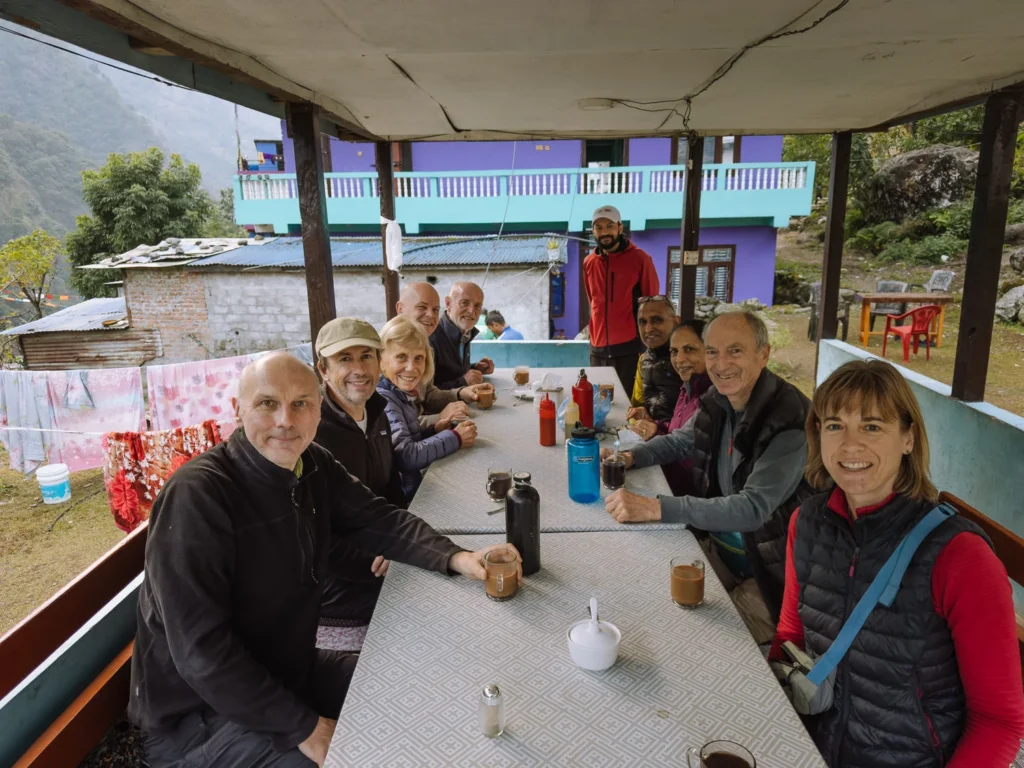
Nevertheless, they are a fun and social place to hang out. Bring a Kindle, some playing cards, and all your best stories. We had endless hours of fun chatting with other trekkers and learning more about Nepal.
What’s on the Menu?
Each teahouse provides its own menu, although most are very similar.
For breakfast options, you’ll be asked to pick two items from a list of things like:
- Porridge
- Tibetan bread or chapati
- Pancakes
- Eggs (cooked in different ways)
There is usually sugar, honey and jams as well.
I generally started the day with a bowl of porridge, which is a great way to warm up for the day ahead. It’s a great, long-lasting source of energy, and you can load it up with sugar or honey.
However, Paul tried it twice and couldn’t really do it much more than that. He usually had bread and eggs.
For lunch and dinner, there are generally two options: local cuisine or Western dishes. Most of the time on our last visit, the local dish was dal bhat.
Dal bhat is a traditional Nepali staple comprising lentil soup, rice, potato curry and some pickled vegetables. Even if they offer you something else, all guesthouses will always have dal bhat available.
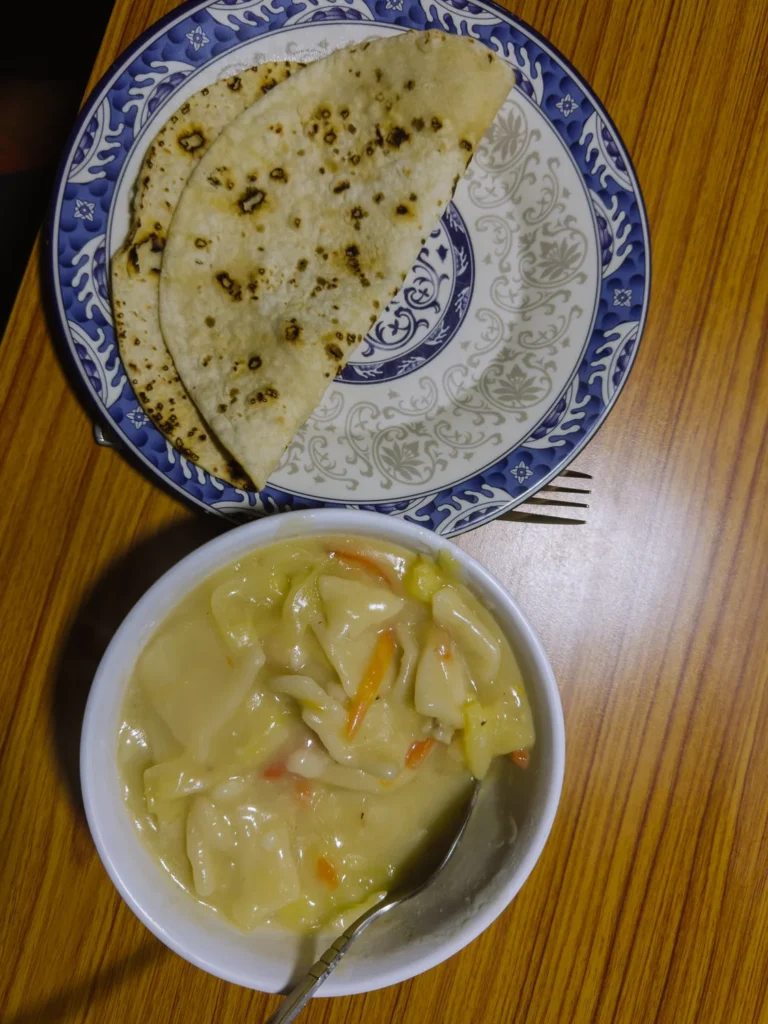
The other Nepali options were momos, which are steamed dumplings, and Sherpa stew, a soup with thick pasta sheets, like lasagne sheets.
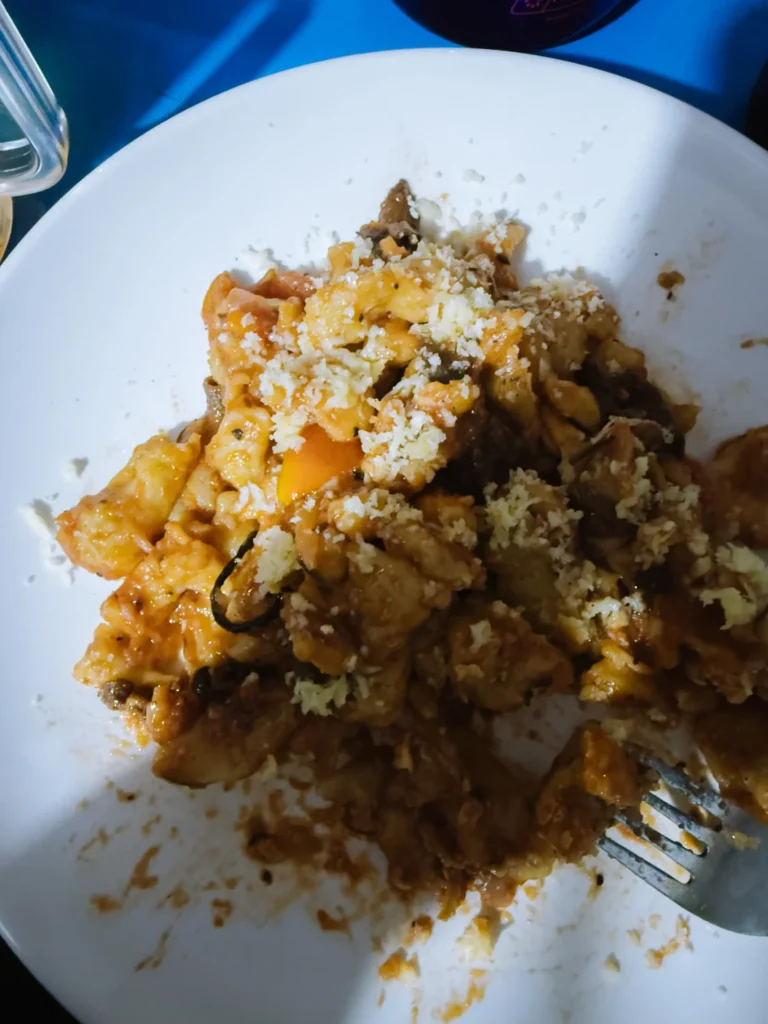
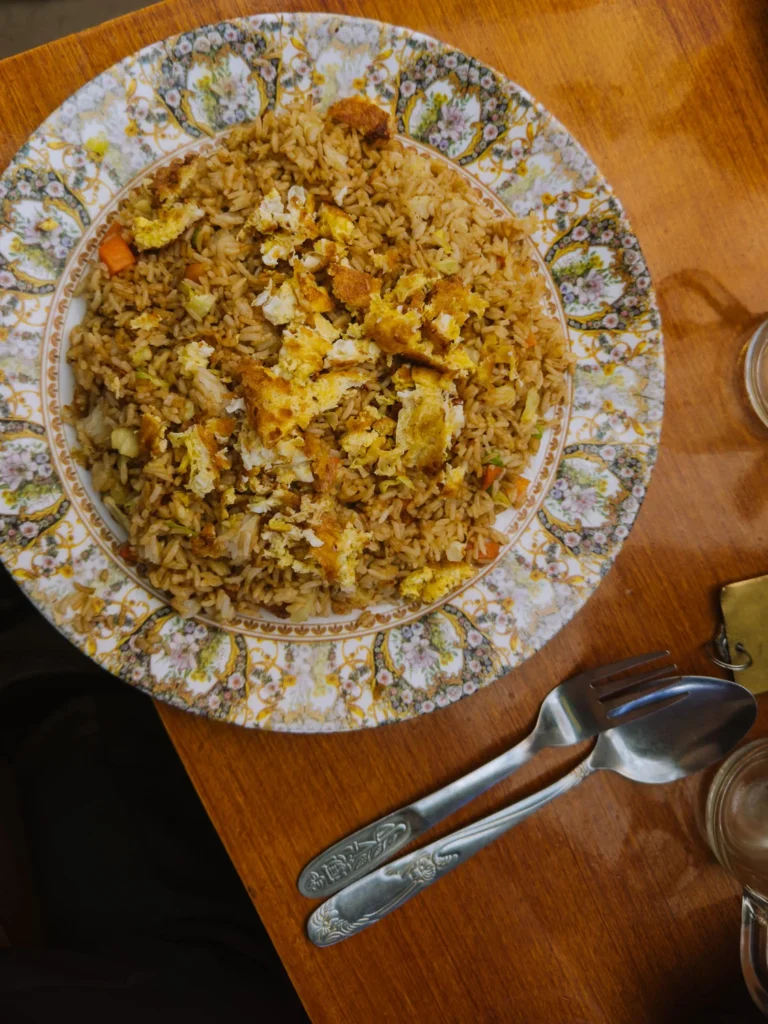
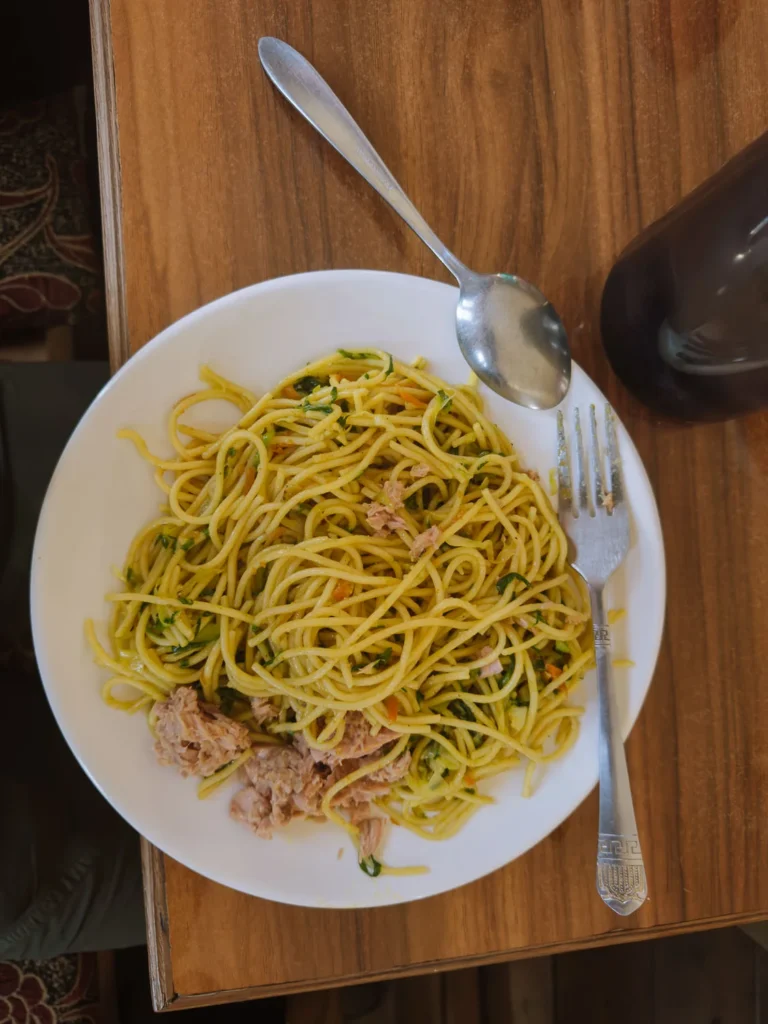
Western food would usually be pasta or pizza, but we also had fried rice, noodles and spring rolls occasionally.
Portions are usually very generous, and the porters would come around offering seconds at every meal. We were never hungry whilst trekking in Nepal.
We recommend avoiding meat during your trip as it can be risky from a food poisoning point of view. However, we rarely saw any meat on trek except for tinned tuna and the occasional salami.
If you get a choice, the local food is generally better than the Western alternatives.
We were offered tea every time we sat down, usually able to choose from black tea, lemon and ginger tea, and masala chai. Instant coffee was also available.
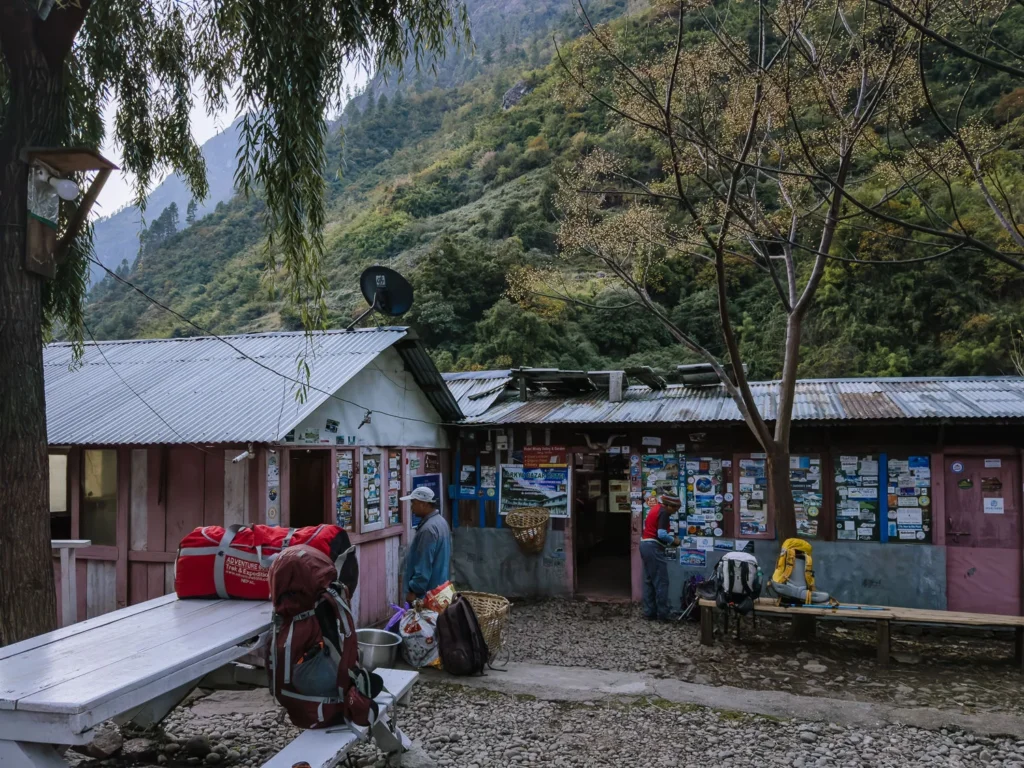
You could purchase beer from most teahouses, and the odd one has wine. At lower altitudes, there may be a much wider range of drinks on offer (see photo below).
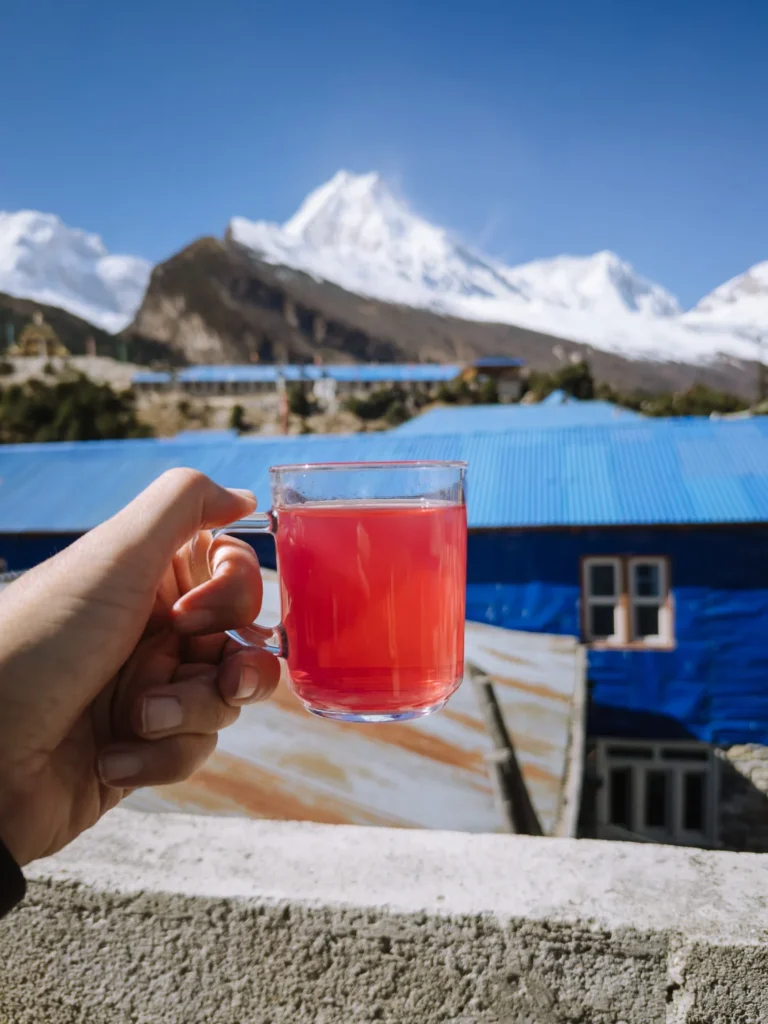
Each day when we arrived at the teahouse after the hike, we’d get a hot fruit squash drink.
Meals cost between US$3 and US$8, and teas or instant coffees between US$1 and US$2. Alcoholic drinks are more expensive, with 500ml beers about US$5 – the same price as a room!
All meals and hot drinks were included as part of our package, but we didn’t get to choose our meals.
What Are the Bathroom Facilities Like?
I’m not going to lie. Using the bathroom in a Nepalese teahouse is not one of my favourite experiences.
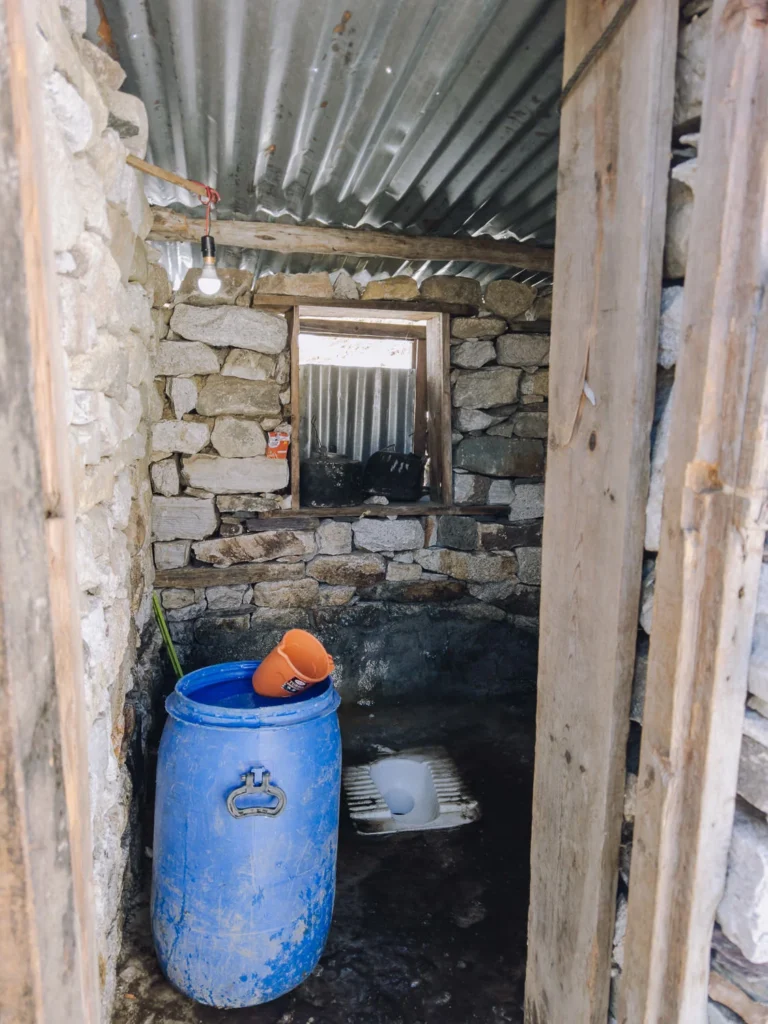
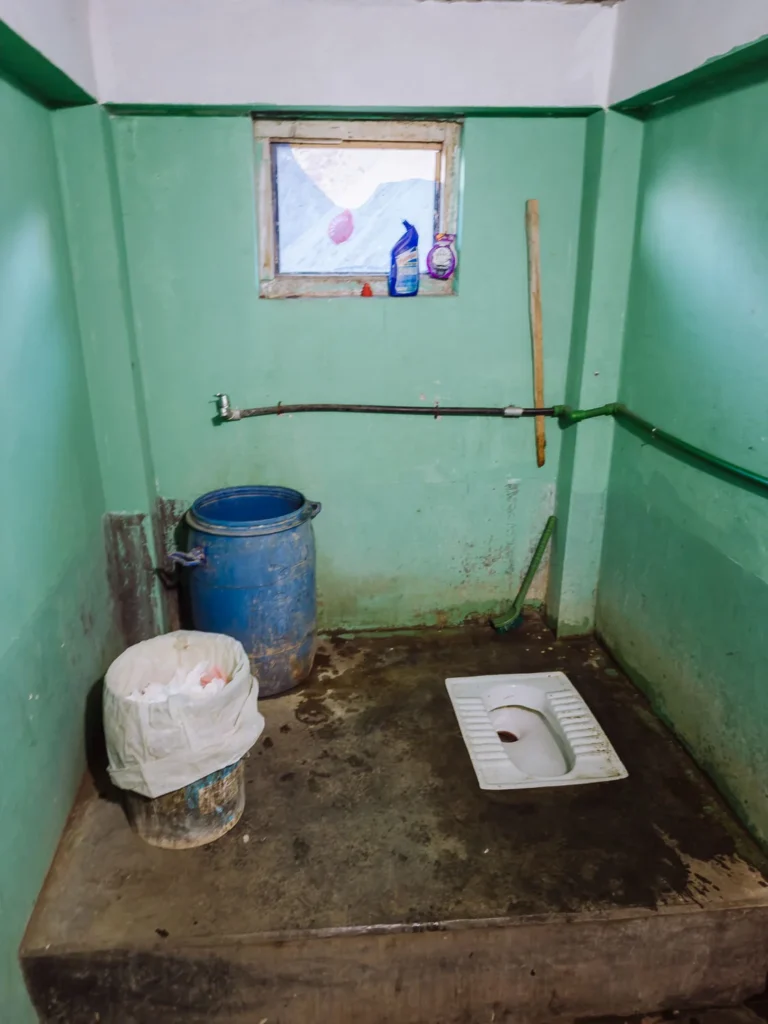
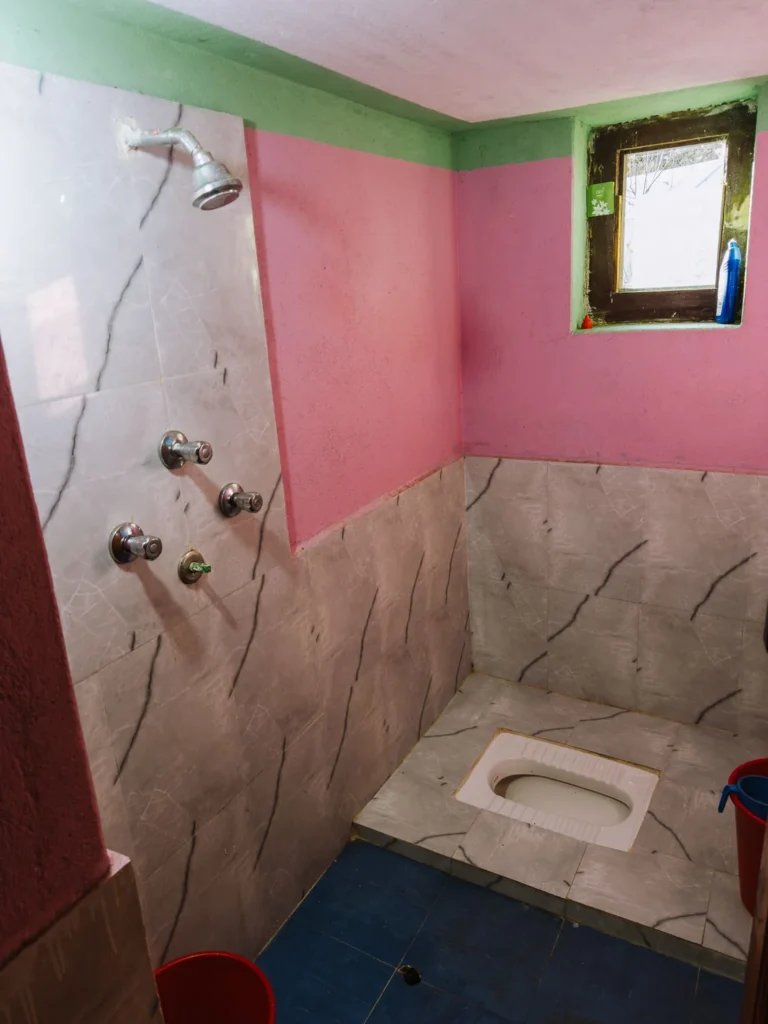
The toilets are usually squat toilets in a small, cold room. Used toilet paper is placed in a basket by the side of the toilet, and waste is washed down using a bucket of water floating in a bigger bucket of water. It usually takes a few attempts.
None of the toilets felt particularly clean or hygienic, although there was a variety. Even worse, at higher altitudes, the floor can ice over, making it slippery.
Make sure you bring your own toilet paper, as teahouses often don’t provide it. If you run out, almost all villages have a shop where you can buy some.
Around half of the guesthouses we stayed in had at least one Western-style toilet somewhere.
Only two of the teahouses we stayed in had en suite bathrooms (still squat toilets); the rest were communal bathrooms.
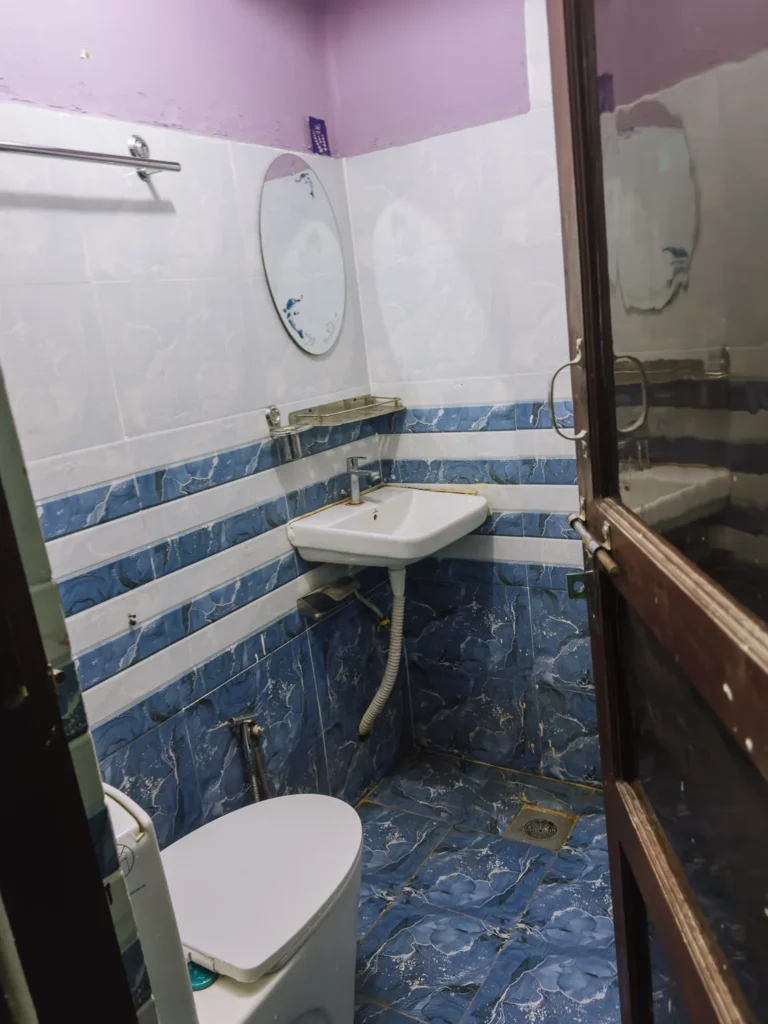
Most showers are in small, cold cement rooms. Almost all guesthouses offer a free cold shower; some also provide hot showers, costing about $3.
These hot showers were dribbly with very low pressure. By the time we got out, we were colder than when we started.
We suggest taking a shower during the hottest part of the day, so you can warm up in the heat of the sun. Alternatively, skip showers altogether and use biodegradable wet wipes.
I like being clean and freshening up after a day of hiking. By the end of day 2, it was pretty clear that a shower wasn’t going to do that. So, we stopped having them, as did most other people in our group.
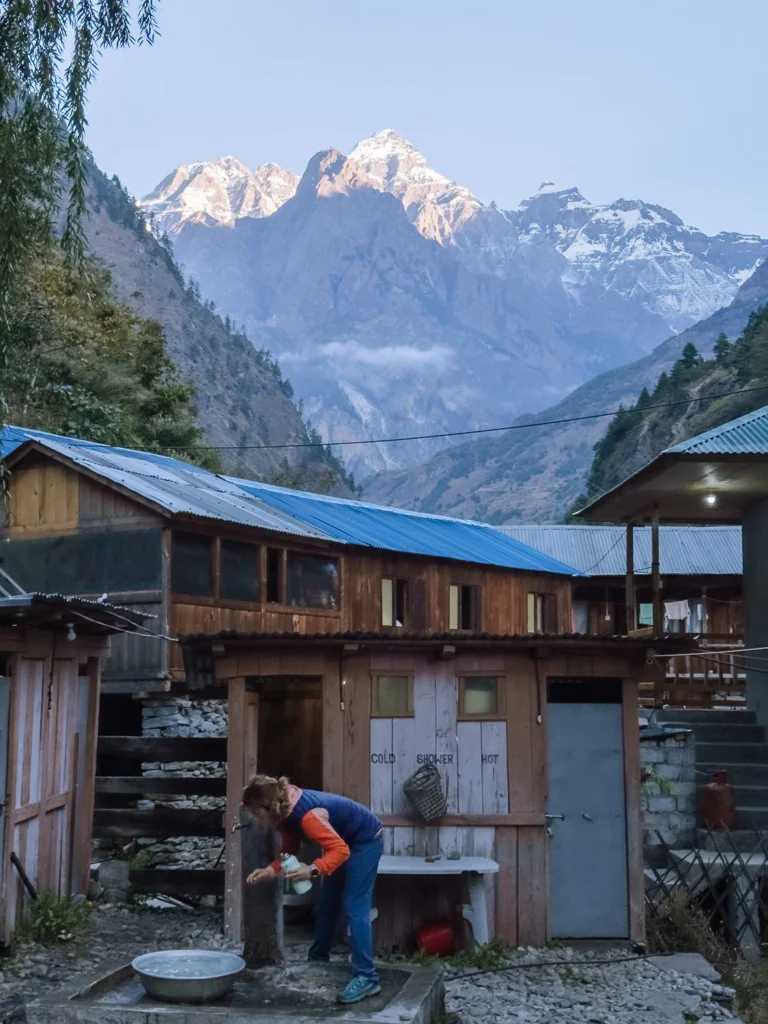
It is very important that you thoroughly wash your hands with soap and water or use an antibacterial hand sanitiser after each bathroom visit and before eating any food.
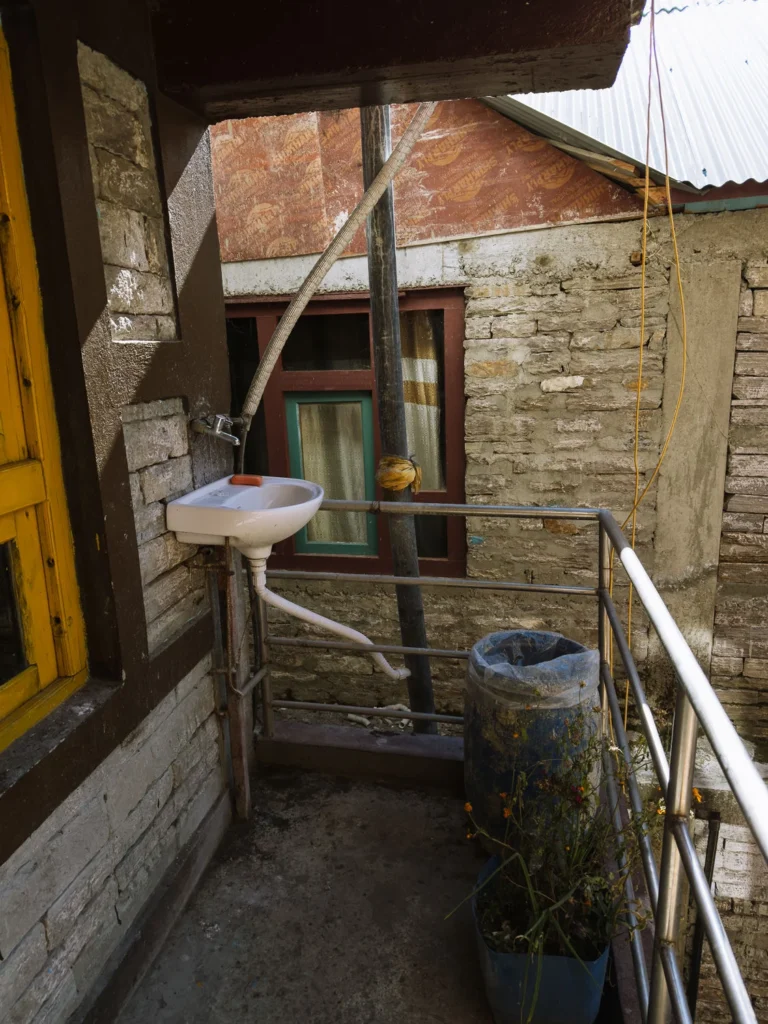
There is usually a sink in the central courtyard or on each floor of the larger teahouses, but not in all of them. Many of the sinks didn’t have soap, so you may want to consider bringing your own, although we just used hand sanitiser.
At high altitudes, some of the external sinks were frozen.
One final tip – It’s a bit awkward going to the toilet in the middle of the night, so stop drinking a couple of hours before you go to bed.
Can You Buy Snacks at Teahouses?
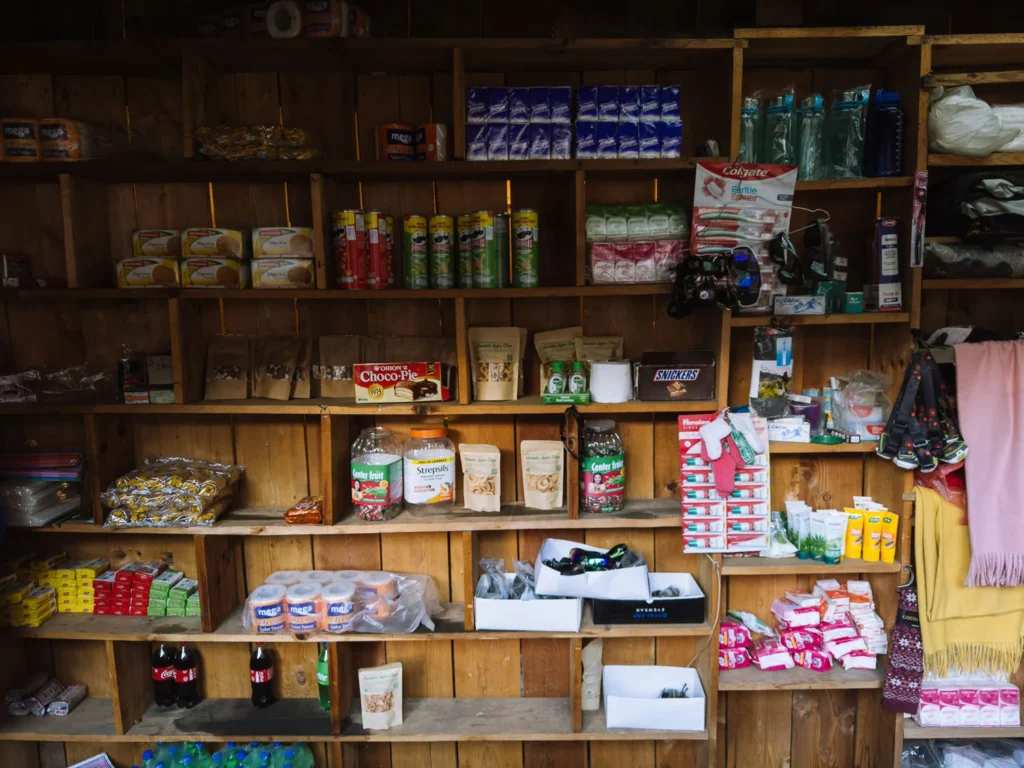
Snacks such as Mars, Snickers, Pringles, protein bars and soft drinks were available at most teahouses.
Some make their own apple pie, flapjacks or other cakes.
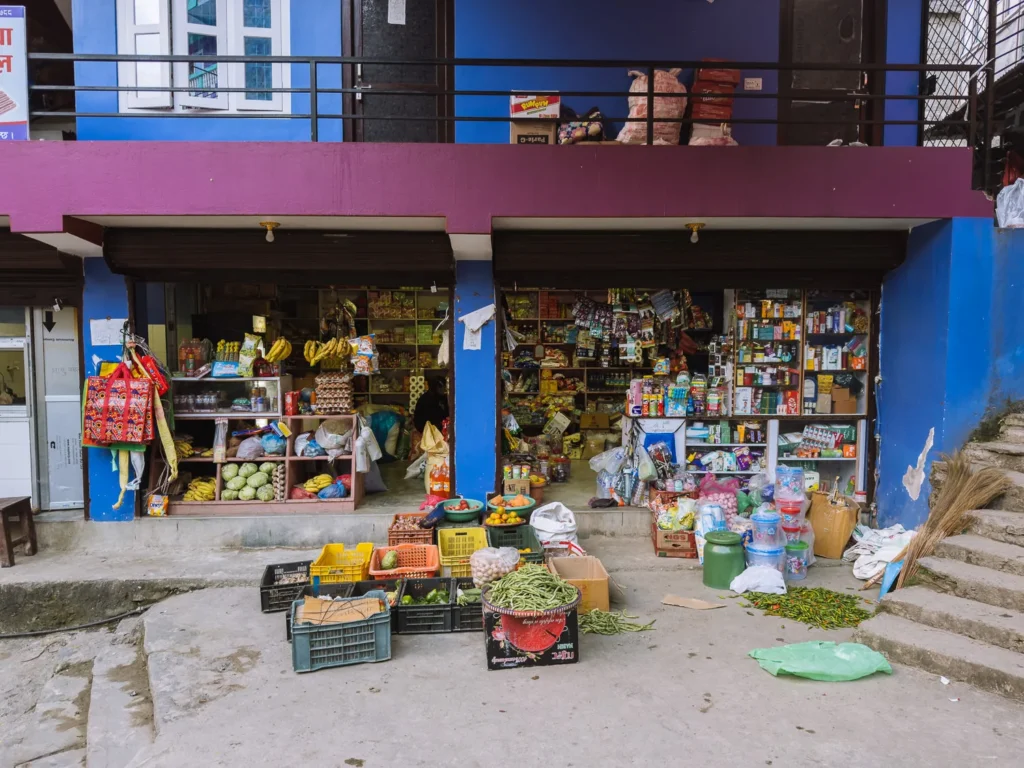
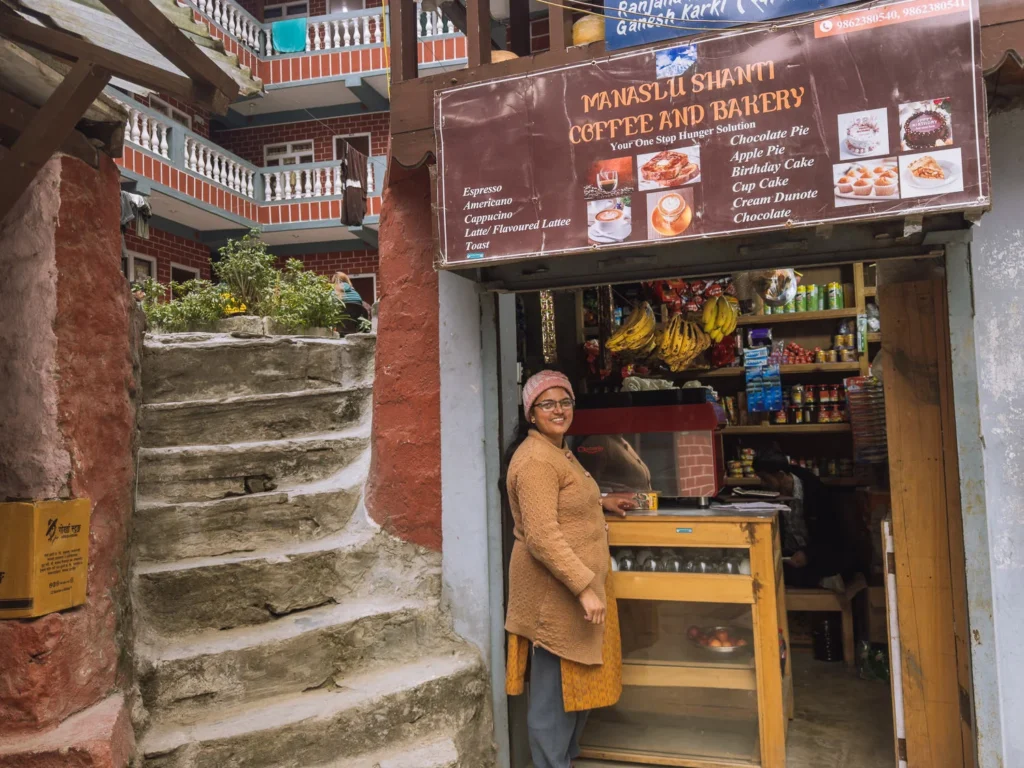
Even if the teahouse has limited supplies, there is often a shop in the village offering a wider array of food and drinks as well as useful supplies like lip balm, tissues, and toilet paper.
At lower altitudes and in larger villages, you can get antibacterial hand wash, sun lotion, toothpaste, toothbrush, and some basic medical supplies. The higher you go, the less the shops will sell.
Teahouses will also sell bottled water, but this creates significant plastic waste. It is much better to use the boiled water supplied by the porters.
Do Teahouses Have Wifi?
WiFi is increasingly common in teahouses. Some charge a couple of dollars, but at many it is now free. Quality varies significantly; on our last trip, we could stream videos at some locations but couldn’t get email to load at others.
Except at higher altitudes and in more remote locations, most rooms have a free power socket for charging devices.
Nevertheless, you should make sure you bring a power bank for the odd day when you don’t have electricity.
How Do You Pay?
You need to bring local cash on your Nepal trek; very few teahouses accept credit or debit cards.
If you are on an organised trip, rooms and meals are usually included.
You will only need to pay for alcoholic drinks, snacks, hot showers, and if you want to purchase anything additional from the menu at the teahouse. You may also want to buy souvenirs or extra supplies from the local shops.
We suggest you budget for roughly $8 to $12 per person per day. (1,000 – 1,700 Rupee)
If you are trekking unguided, expect to spend $30 to $50 per day (more in the Everest Region and at higher altitudes).
Try to keep hold of your small notes. The higher in altitude you go, the less likely they are to have change.
What Is Each Day Usually Like?
Each trek is a bit different, and each day has different timings, but here is a rough idea of what to expect.
6:00 AM – Your alarm goes off, and you get out of your toasty sleeping bag, step into your cold room and quickly get dressed. The following 15 minutes are spent stuffing the sleeping bag back in its cover and packing your kit bag and rucksack.
6:30 AM – Breakfast was usually at 6:30 AM. Small groups order from the menu. Large groups will get what they ordered the night before.
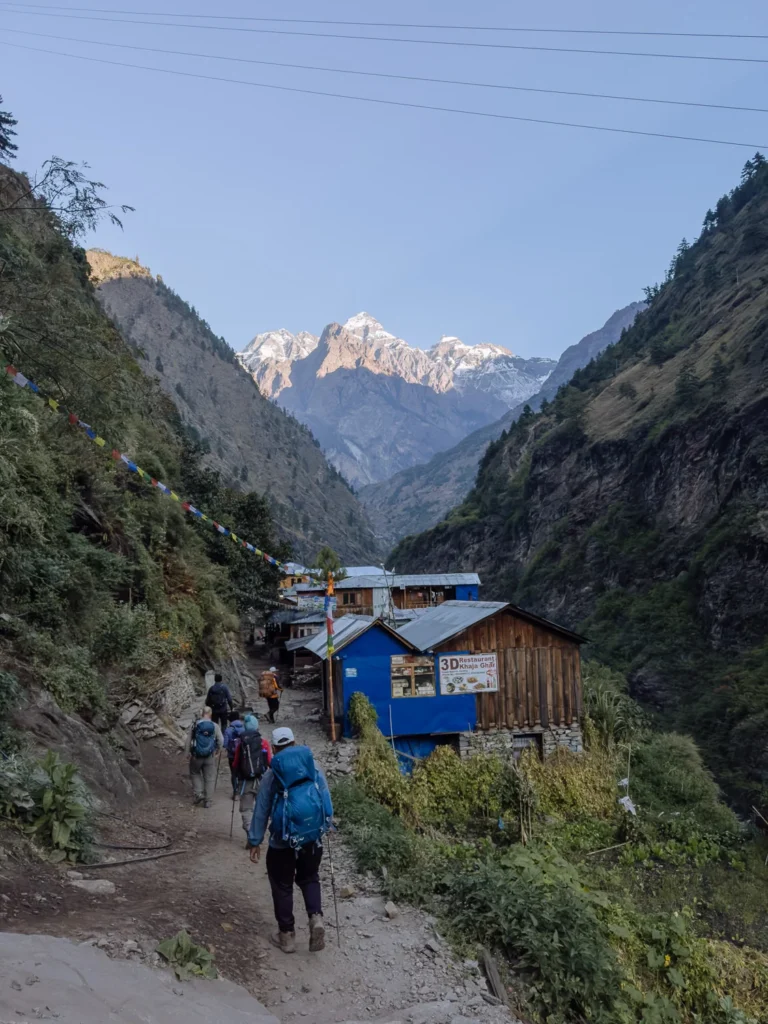
7:30 AM – Your trek for the day begins.
10:00 AM – At lower altitudes, where teahouses are more common, there is plenty of opportunity to stop for a mid-morning or mid-afternoon tea along with cake such as apple pie, apple fritters or carrot cake.
A word of caution: if you order something from a menu that you can see in front of you, ask how long it will take. We ordered apple pie, and they made the whole thing from scratch. We were waiting for almost an hour.
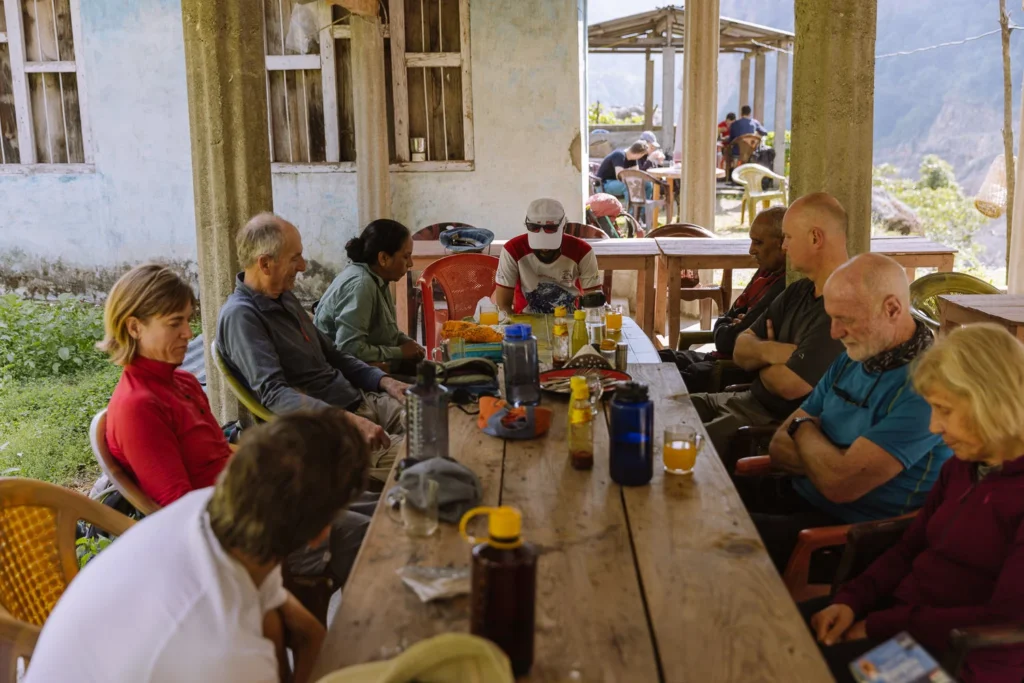
12:30 PM – Lunchtime varies depending on the trek and location of the teahouse. At lower altitudes, you will probably be hiking all day, stopping at a teahouse for lunch, before making your way to another teahouse to spend the night.
At higher altitudes, you will hike a shorter distance, probably have lunch, and spend the night at the same teahouse. In the afternoon, you will have a short acclimatisation walk in the mountains nearby.
4 PM – Most days, trekking finishes in the mid- to late afternoon. You check into your room, unpack your bags, roll out your sleeping bag and get cleaned up and changed (if you can be bothered). The early evening is spent in the dining hall chatting, reading and playing cards. The room is often cold, and they usually only fire up the wood burner for dinner at around 6 PM.
6:30 PM – Dinner is served.
8:30 PM – Everyone is often so tired and eager to get into their warm sleeping bags. We were generally heading to bed around 8:30 PM. The fire is usually out by this stage, which is incentive enough to head to bed.
Days trekking over the high passes are different, and you can find out what they are like on our going over the Larkya La post.
When Are the Teahouses Open?
Most Nepalese teahouses are open year-round, with peak season during the best trekking months (March to May & October to November).
Some of the teahouses at higher altitudes close during the cold months of winter (December to February) and the wet monsoon months of summer (June to August).
However, on the most popular routes, such as Everest Base Camp and the Annapurna Circuit, there is usually at least one teahouse open.
More Nepal Guides
- How difficult is the Manaslu Circuit trek in Nepal?
- What is it like hiking the Larke Pass on the Manaslu trek?
- Nepal Tea Houses – our experience staying in the Himalayas.
- Why the Manaslu trek is perfect for first-time hikers in the Himalayas.

reader-supported
When you buy through links on our site, we may earn a small affiliate commission at no extra cost to you.
Thanks for your support // Paul & Mark