

A cruise on the Nile is a bucket-list adventure, but there are two distinct ways to do it: a traditional wooden dahabiya or a larger cruise ship. This guide will help you choose which is right for you.
By: Paul Healy | Last Updated:
Sailing the Nile is one of the most memorable ways to experience Egypt. Not only do you enjoy the peaceful landscapes drifting slowly by, but you also get to visit some of Egypt’s most fascinating historical sites.
Most Nile cruises follow the same stretch of water between Luxor and Aswan, which has the highest concentration of temples and tombs in Egypt.
But there are two ways to do it: on a traditional dahabiya or on a larger cruise ship.
Both offer very different experiences in terms of pace, comfort, and crowds. Most importantly, some sites are inaccessible to certain boats.
We have cruised on the Nile both ways, and both were great experiences. But in our opinion, one is a cut above the other.
This is a completely independent review. We were not paid to do these cruises, and we are not writing this on behalf of a tour operator. This is just our take on a Nile cruise based on personal experience, to help you decide which one you want to do.
What Is a Dahabiya?
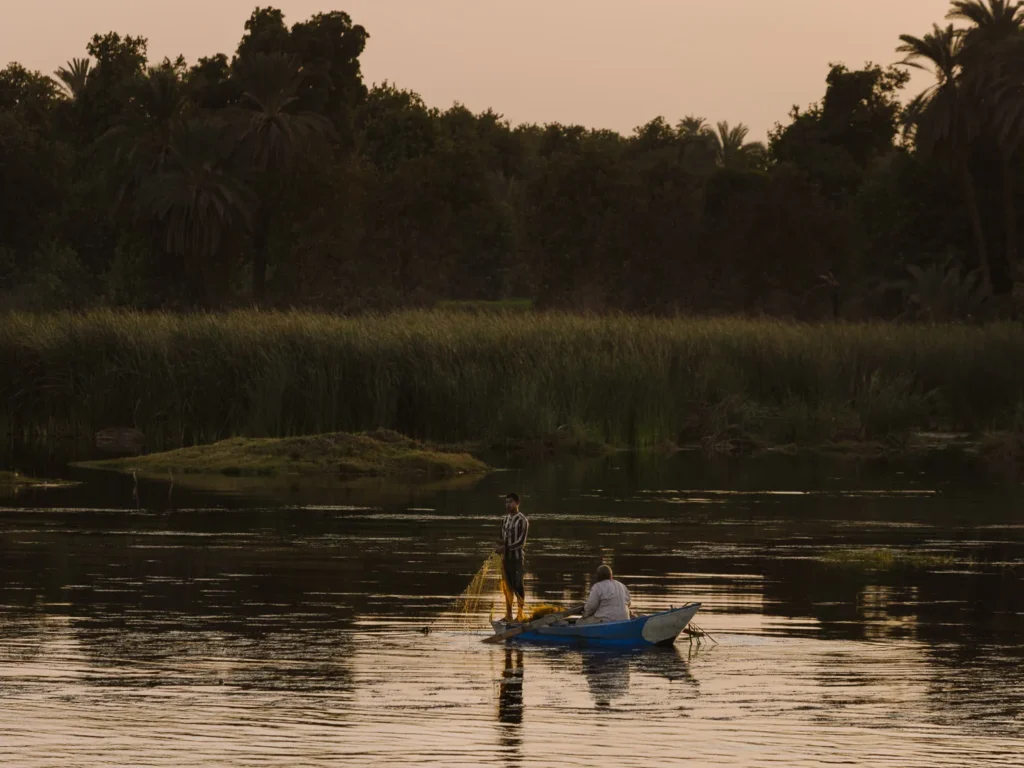
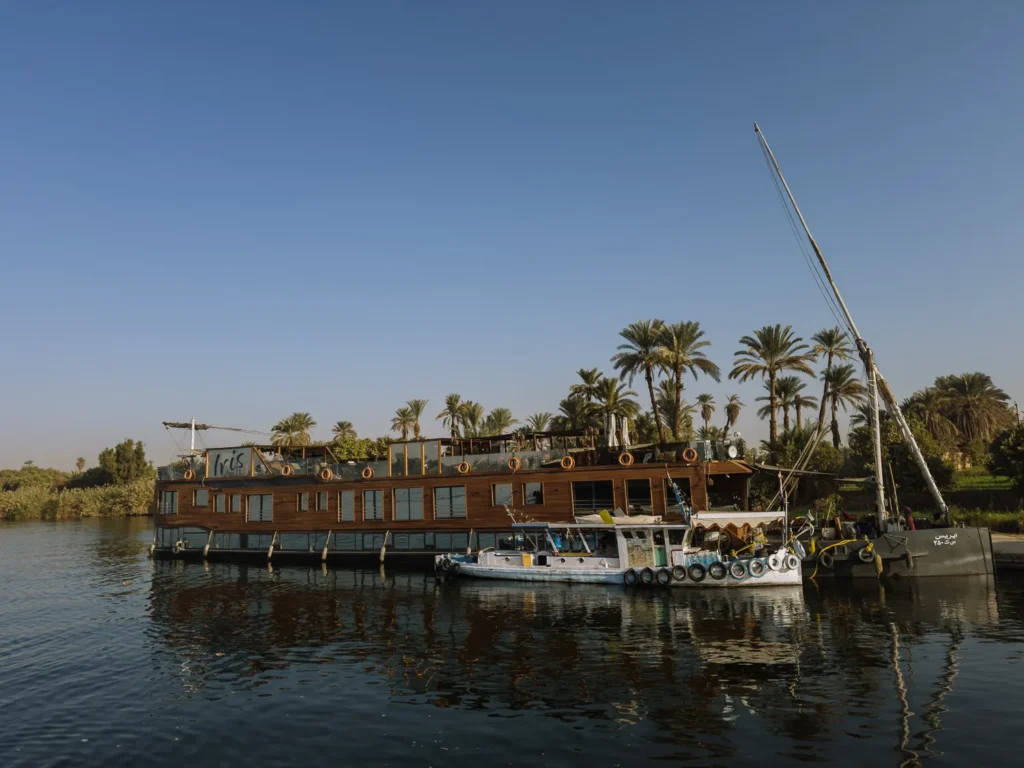
A dahabiya is a traditional wooden sailing boat with twin lateen sails. The name means “golden one” in Arabic, referring to the luxurious private yachts used by Egyptian royalty and wealthy 19th-century Egyptians.
Modern dahabiyas blend historical charm with contemporary comfort, with just a handful of cabins and relying primarily on wind power to glide along the river.
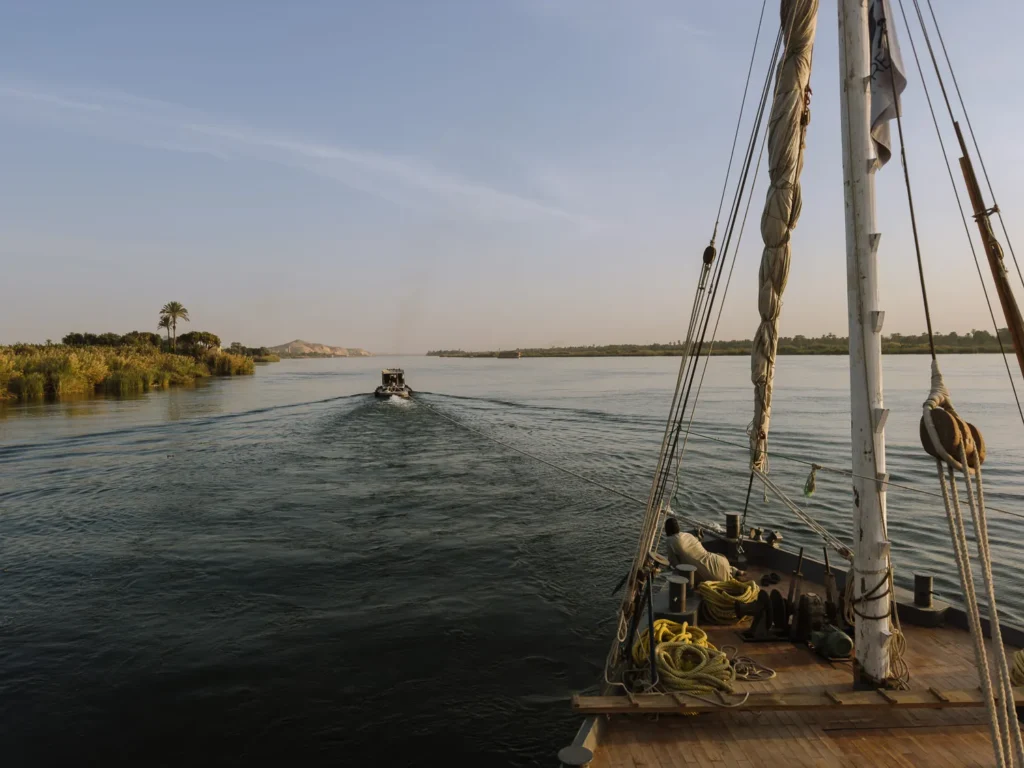
When there isn’t sufficient wind, a tugboat positioned about 50 metres ahead pulls the dahabiya, maintaining the quiet, engine-free experience.
What Is a Nile Cruise Ship?
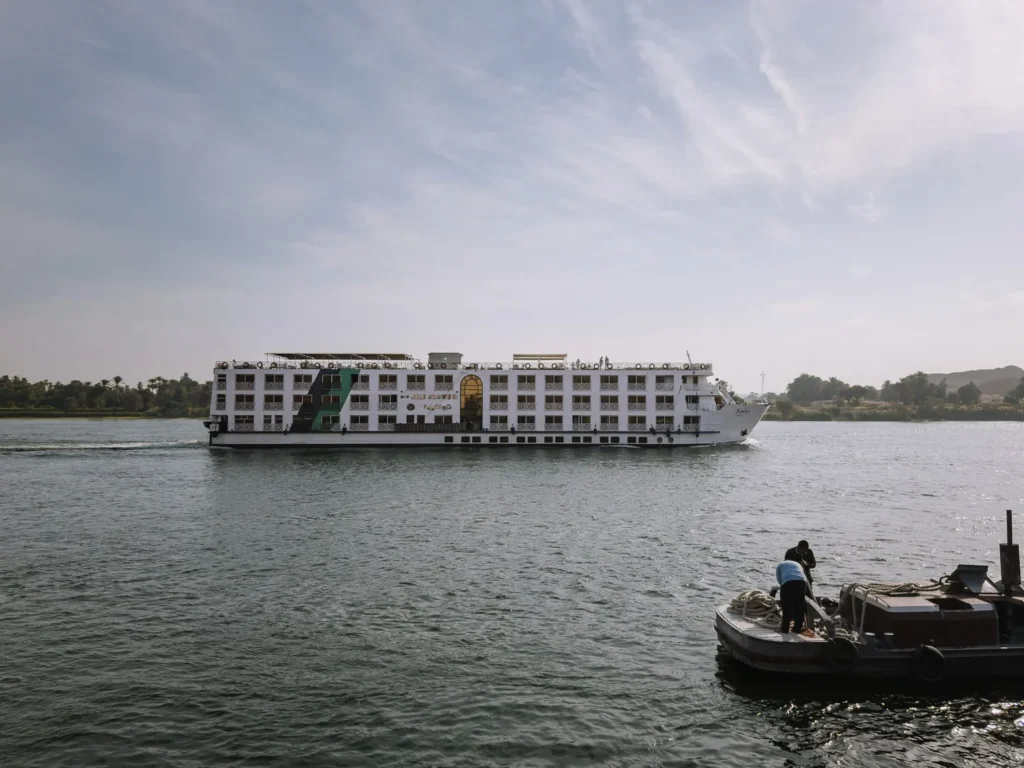
A Nile cruise ship is a multi-deck passenger vessel purpose-built for river tourism between Luxor and Aswan. These floating hotels range from three to five-star standards and offer a comprehensive, resort-style experience on the water.
Operating on fixed schedules with engine power, they provide a structured and social way to visit Egypt’s most famous ancient sites whilst enjoying modern amenities and organised entertainment on board.
Dahabiya Vs Cruise Ship Comparison
Number of Passengers
Dahabiya
A standard dahabiya has 4 to 10 cabins, accommodating 8 to 20 passengers. Private cabins are on the lower deck, while the top one or two decks usually have a lounge, sun deck, and restaurant.
Cruise Ship
A Nile cruise ship has 25 to 75 cabins, accommodating 50 to 150 passengers. These ‘floating hotels’ span 4 to 6 decks and are the fastest and most popular way to travel along the Nile.
Cabin Style
Dahabiya
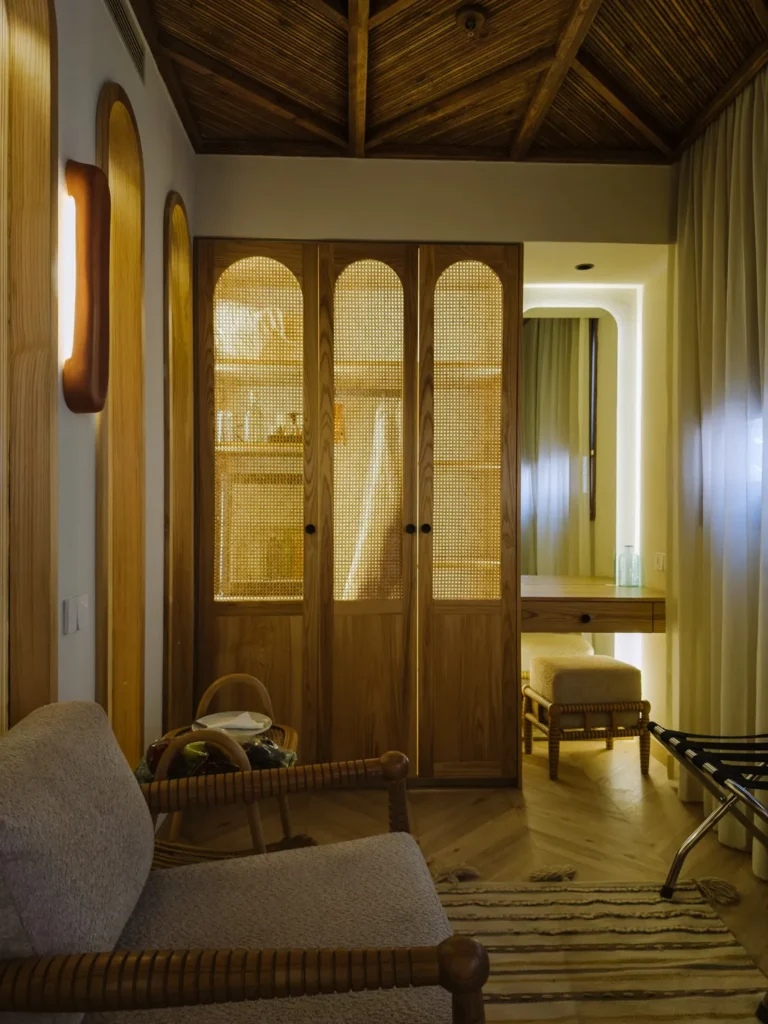
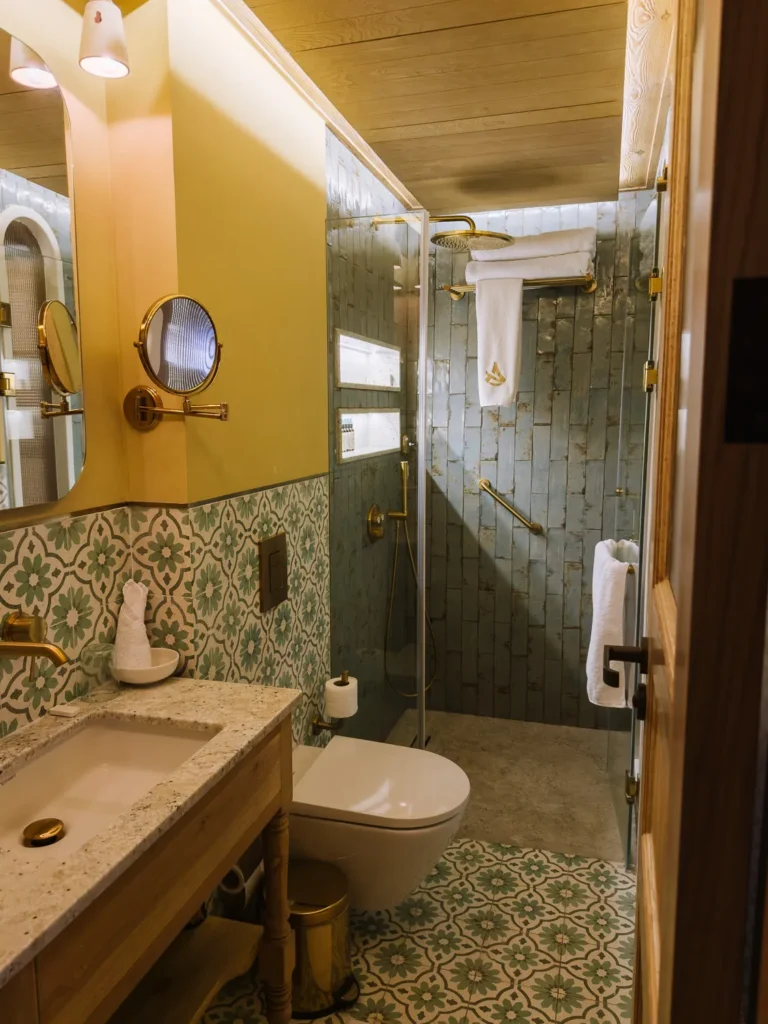
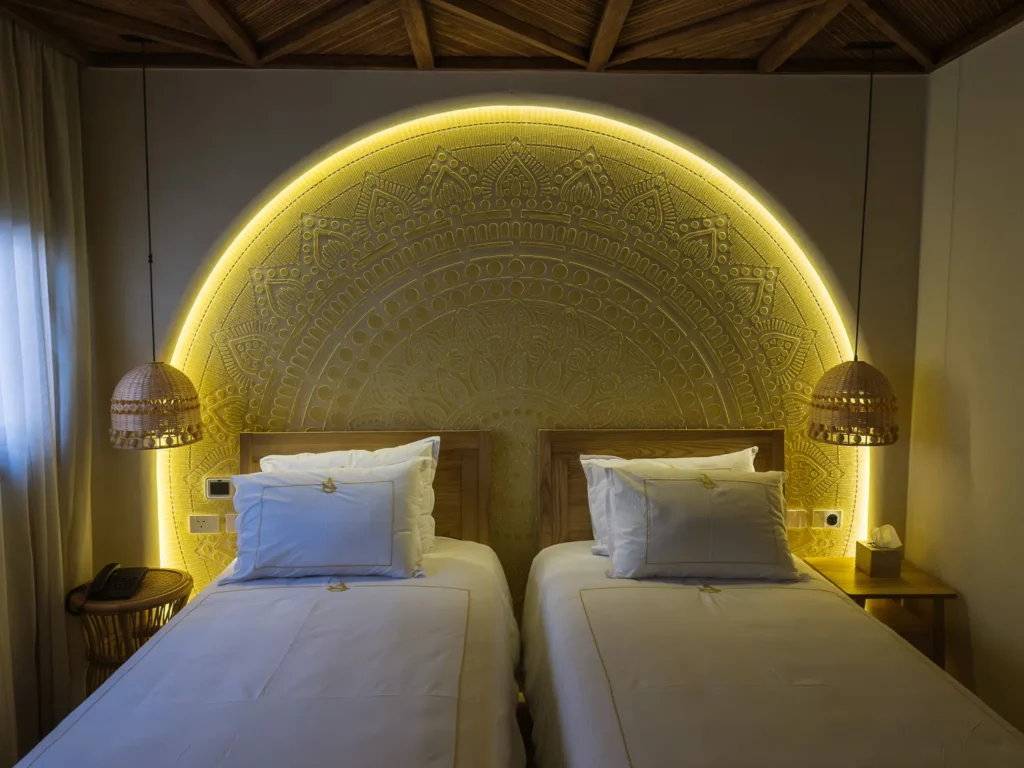
Dahabiyas feature spacious, luxury sleeping cabins and bathrooms equipped with higher-quality fixtures. They are typically located on the lower deck with larger windows overlooking the water.
It’s usually just a single flight of stairs between the cabins and the shared areas on the top deck.
Cruise Ship
Nile cruise ships have standardised, hotel-style air-conditioned cabins and bathrooms spread across 3 to 4 decks.
Cabin quality varies significantly by star rating, with three-star ships offering basic accommodation and five-star vessels providing more luxurious rooms. There can be several flights of stairs between the cabins and the communal areas.
Communal Areas and Facilities
Dahabiya
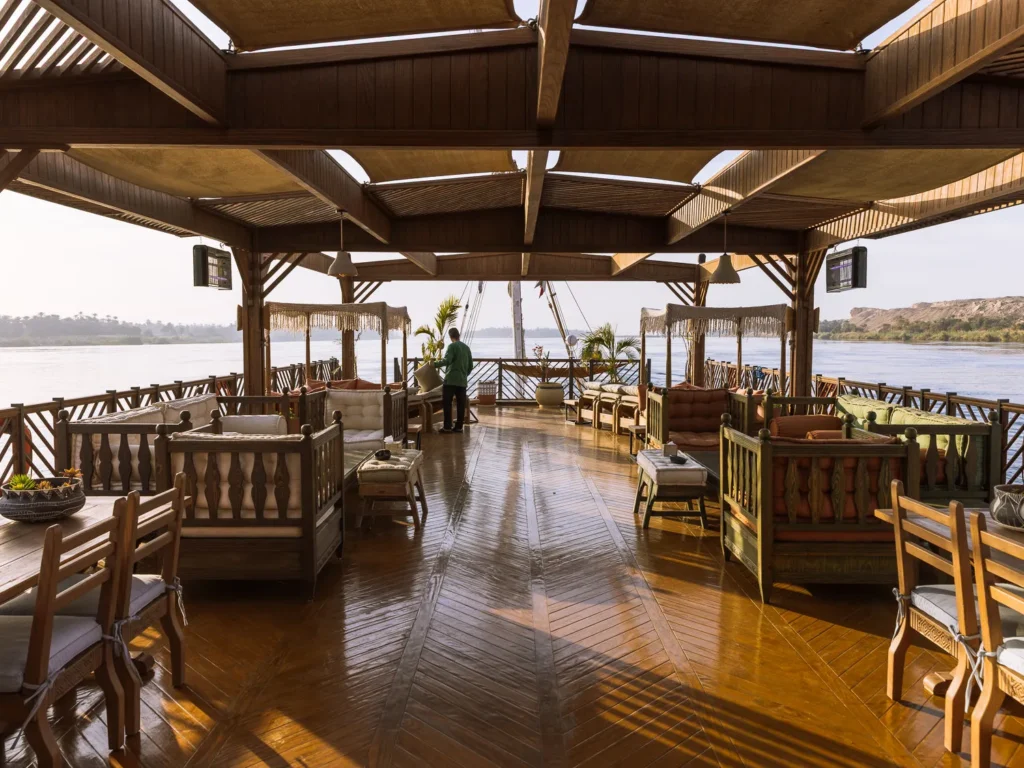
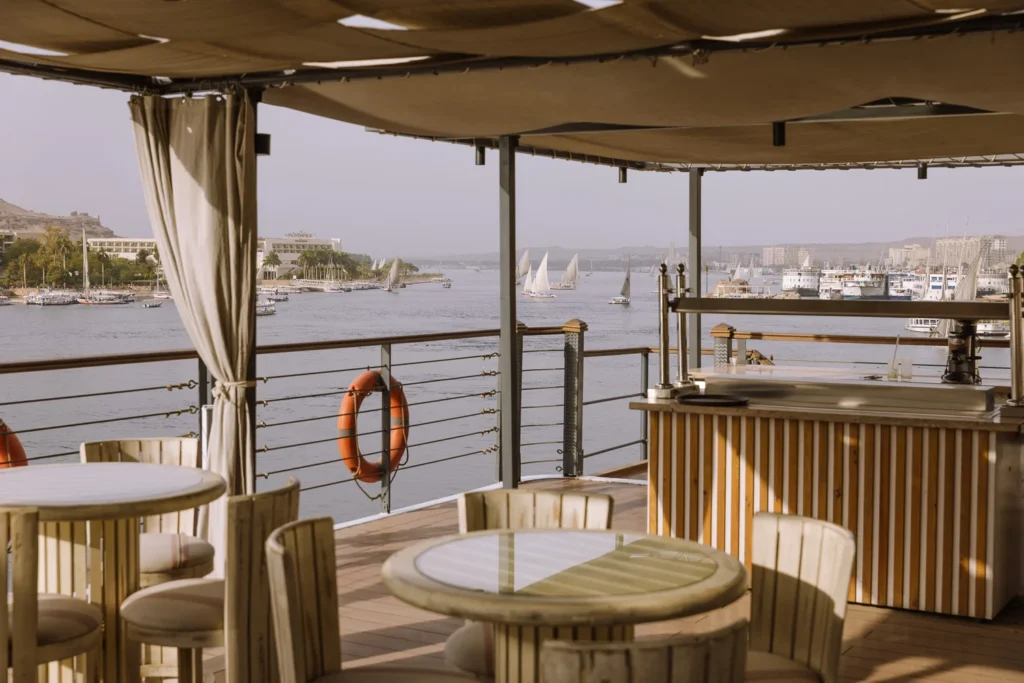
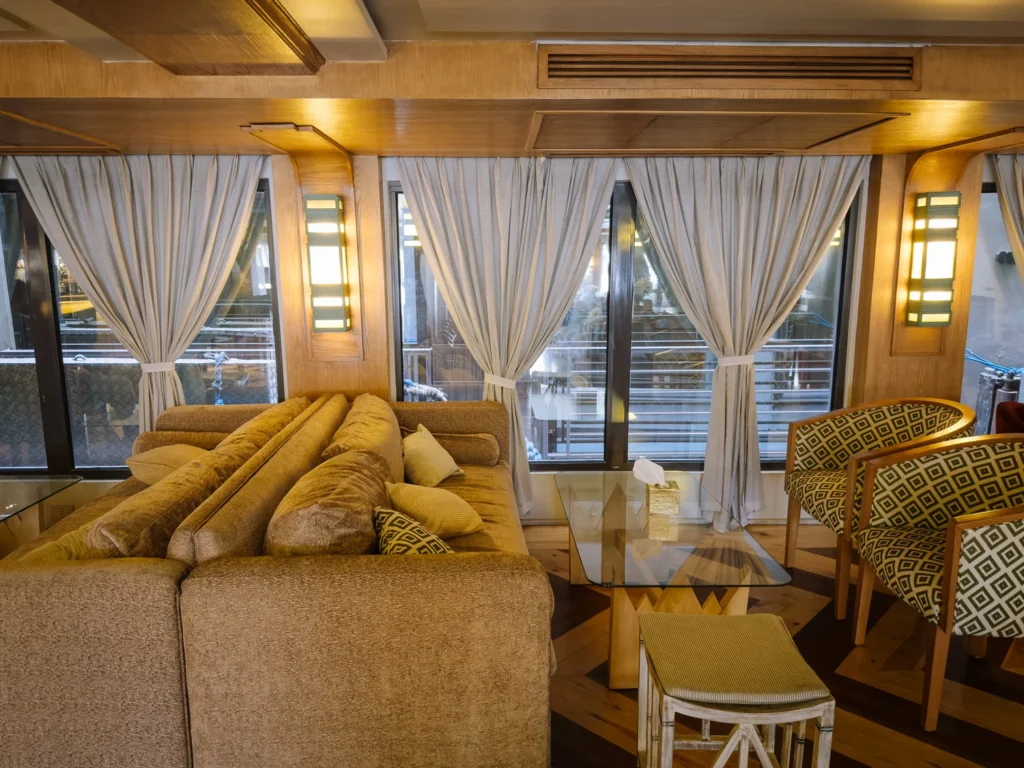
A dahabiya has an open deck area with a few sun loungers and a shaded seating area, as well as a covered area with a lounge and dining area.
With only 8 to 20 passengers, it is easy to find a spot on the top deck to call your own, and drinks will be served to your chair.
Most dahabiyas have Wi-Fi (though it can be patchy), and some offer a spa where you can get a massage.
Cruise Ship
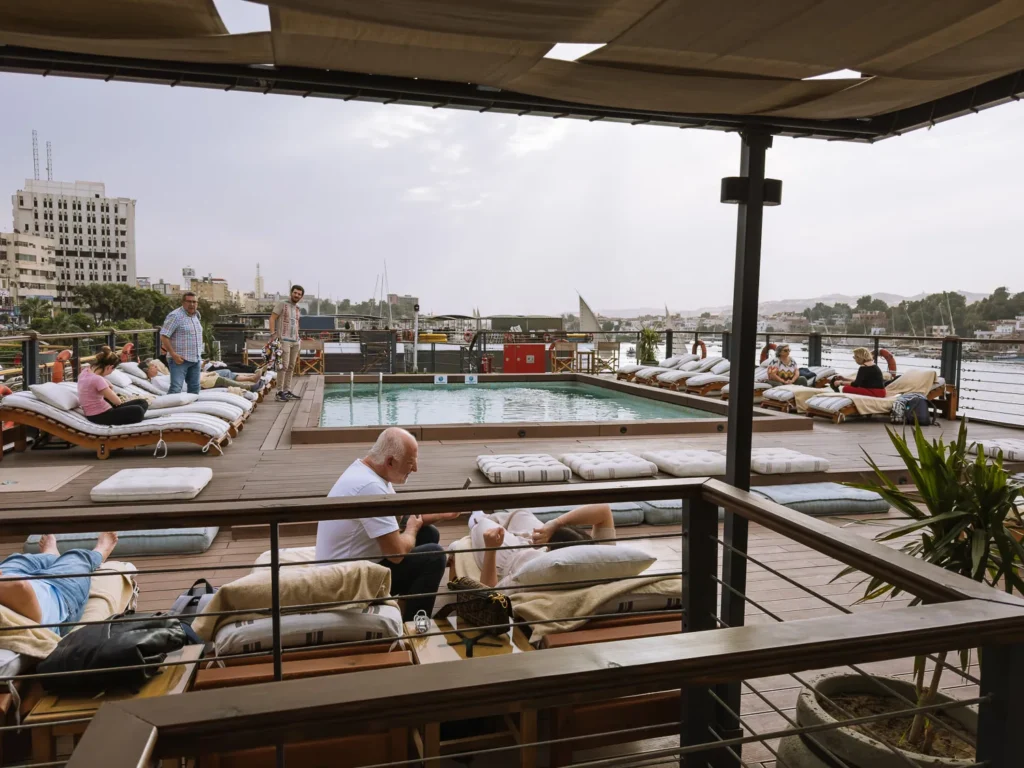
Nile cruise ships usually have many more facilities, often a pool and jacuzzi on the upper deck, as well as a gym and full-service spa.
There will be additional spaces for relaxation, including an upper deck, a lounge bar, and a restaurant.
However, you might have more trouble securing a prime spot on the top deck since there are around 100 other passengers competing for space.
Mooring and Views
Dahabiya
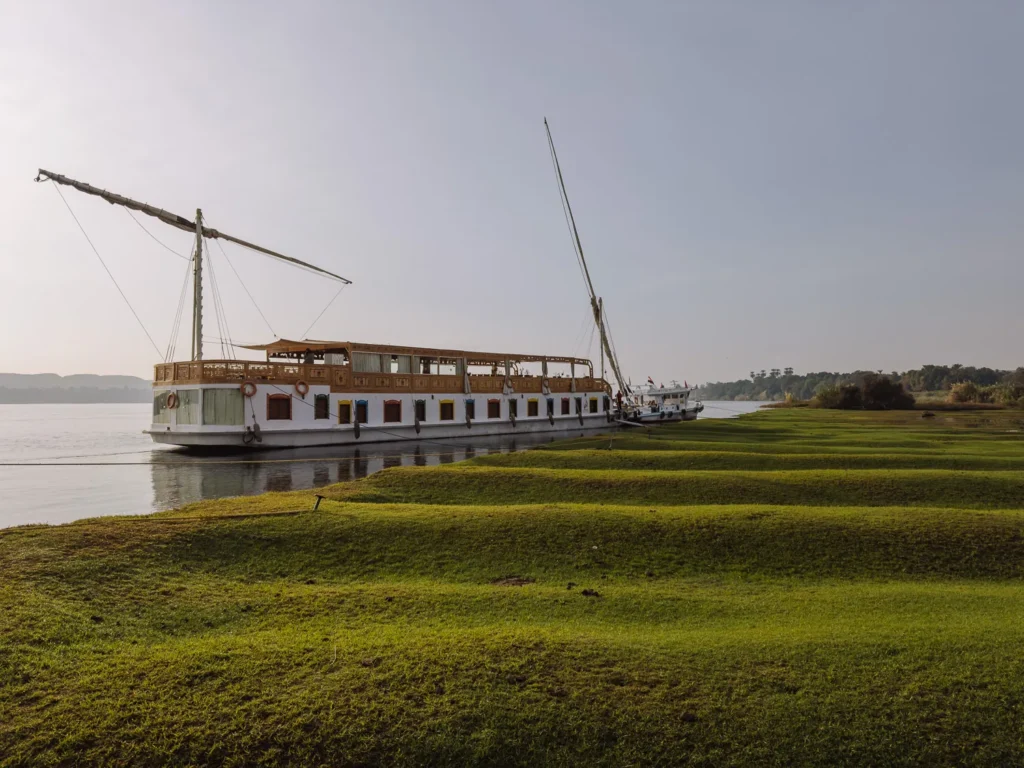
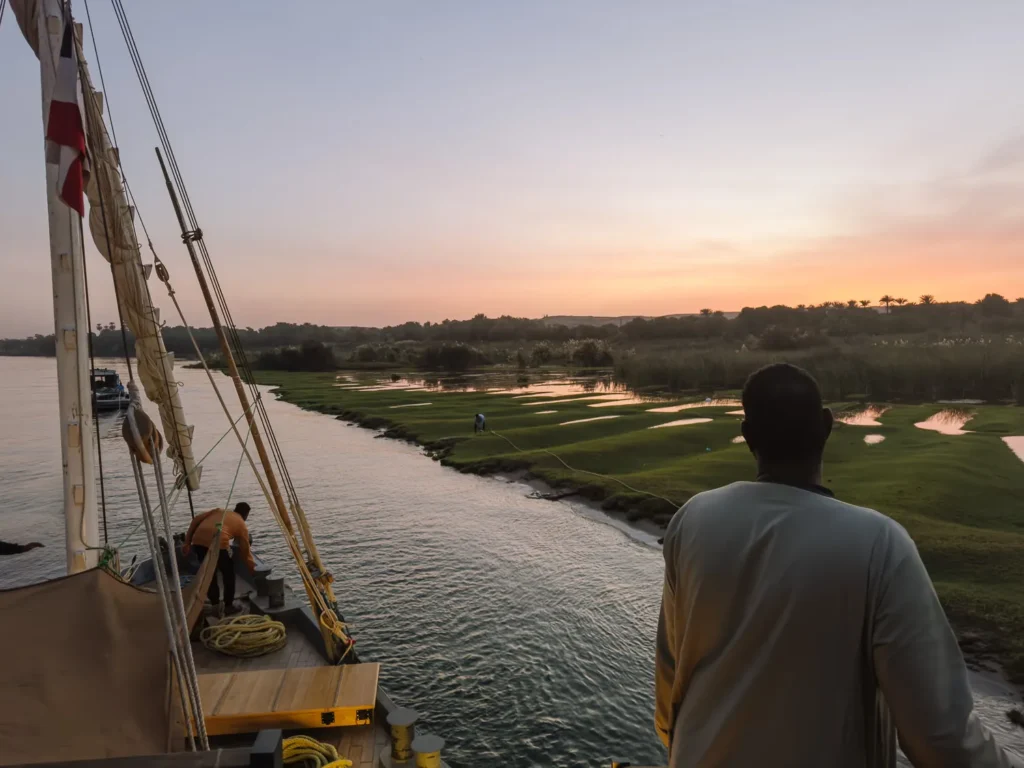
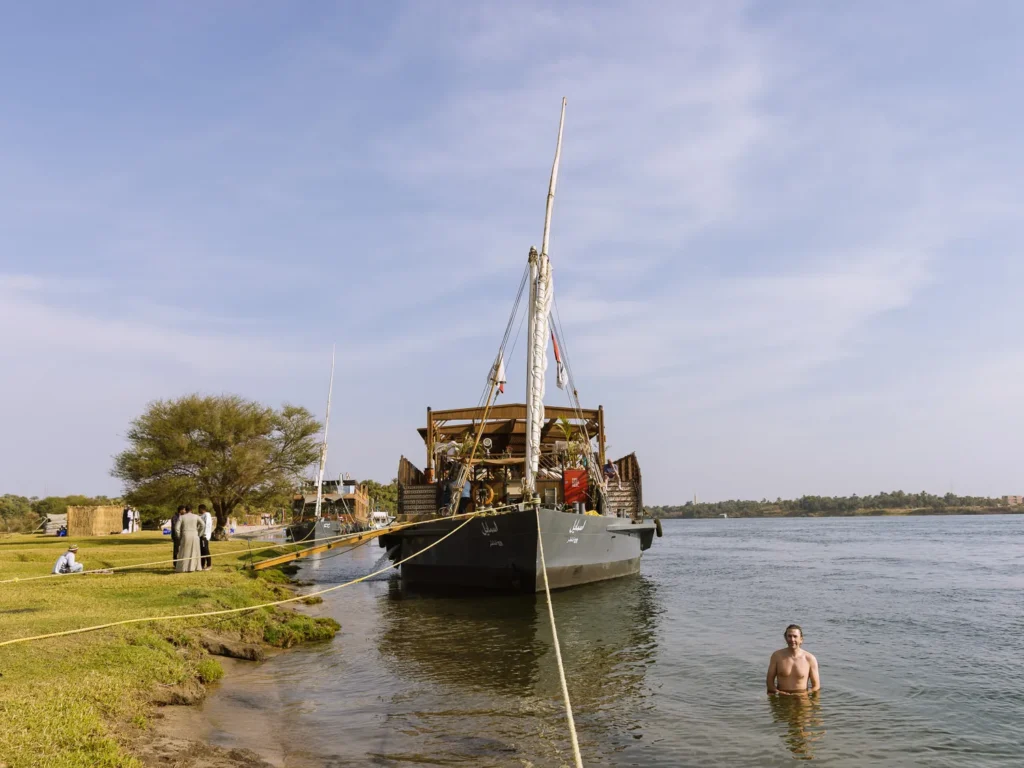
Dahabiyas can anchor in quieter spots, with morning views often across grassy, tree-lined banks. They are typically moored directly on the riverbank, and you can disembark using their own gangplank.
Cruise Ship
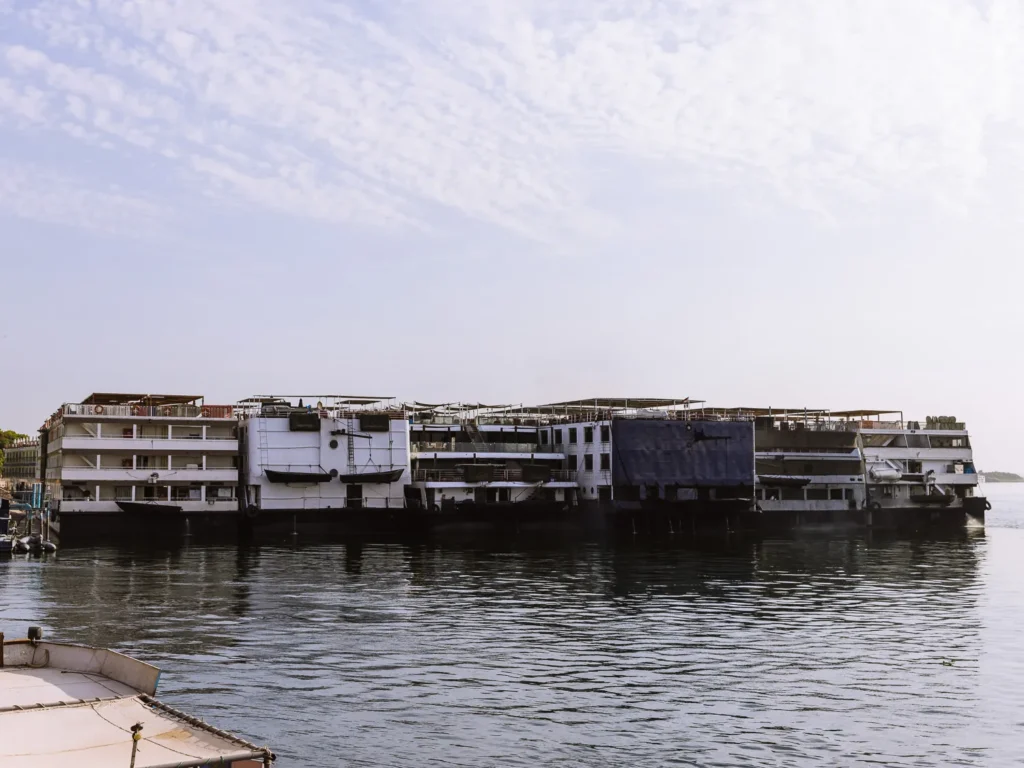
At night, cruise ships often moor in a line, frequently beside another ship. Open your curtains, and you might be looking at the side of another vessel. Exiting the cruise ship often means walking through one or more other cruise ships to reach the shore.
Noise and Atmosphere
Dahabiya
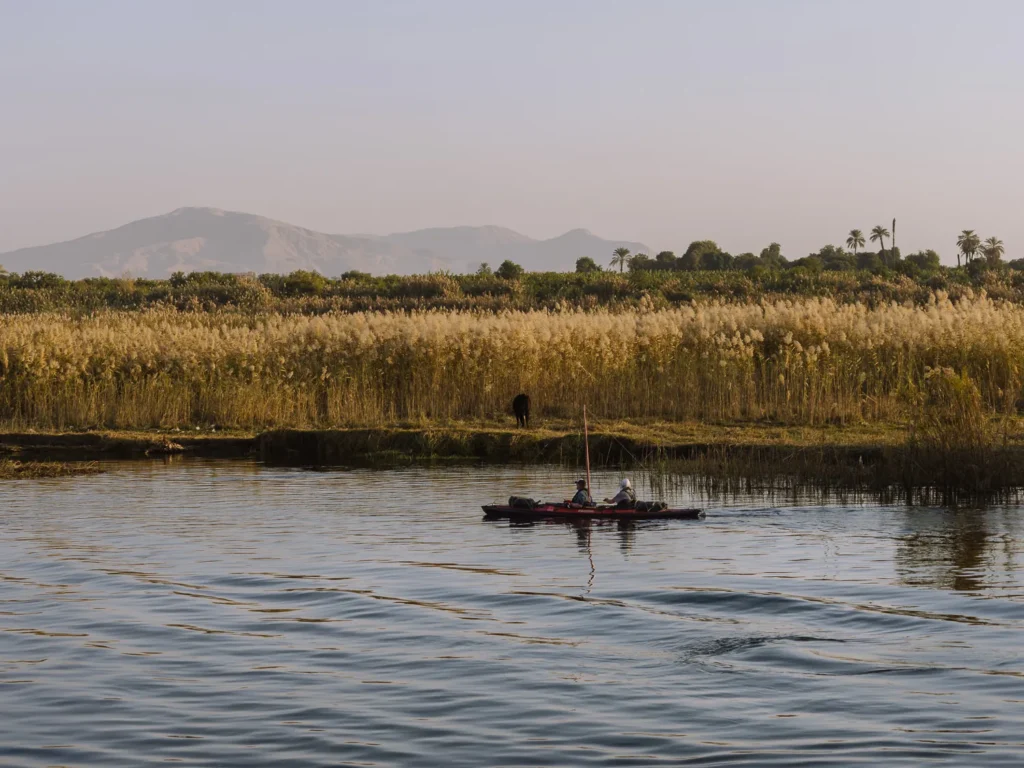
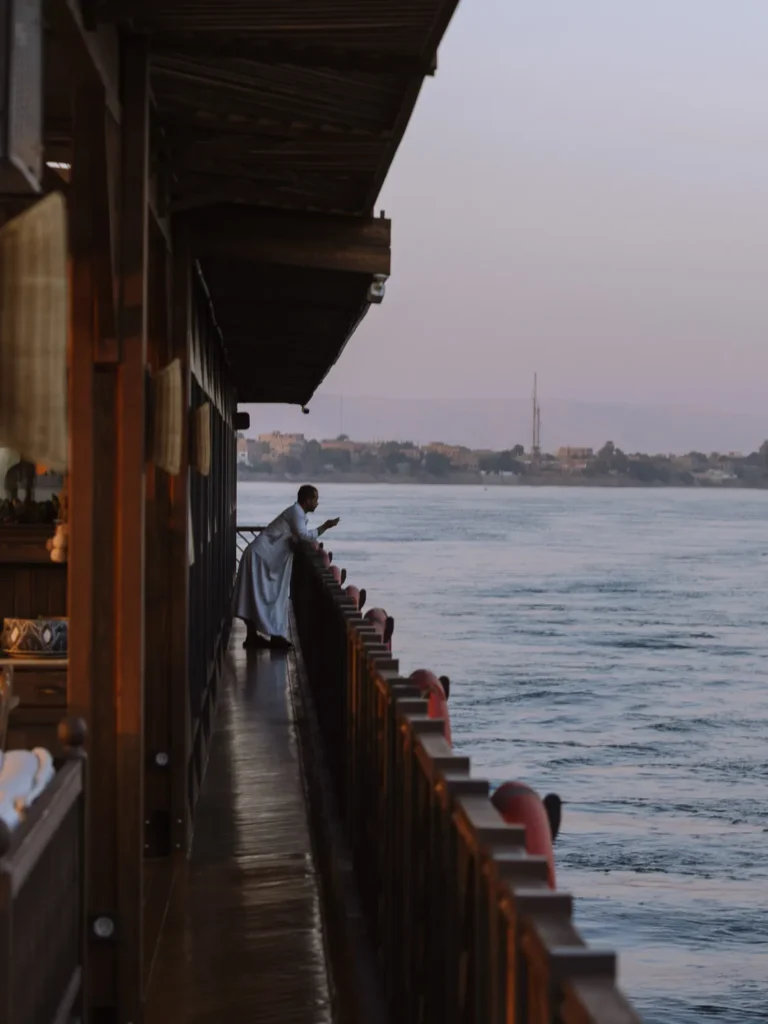
Dahabiyas offer a remarkably peaceful experience on the Nile. These vessels rely primarily on wind and sails, meaning you’ll often glide along in near silence.
Even when the tug boat’s motor is used to navigate locks or windless stretches, it’s relatively quiet.
With so few passengers aboard, there’s no crowd noise, no loud entertainment, and no announcements over PA systems.
Cruise Ship
Cruise ships operate with constant engine noise as they motor between destinations on tight schedules.
Whilst cabins are generally soundproofed, you’ll notice the persistent hum of machinery, air conditioning systems, and generators throughout the vessel, particularly if your cabin is close to the engines.
Public areas buzz with activity: entertainment with music, frequent PA announcements, and the general bustle of a large floating hotel.
Evening entertainment often features live music, shows, or disco nights.
Food and Drink
Dahabiya
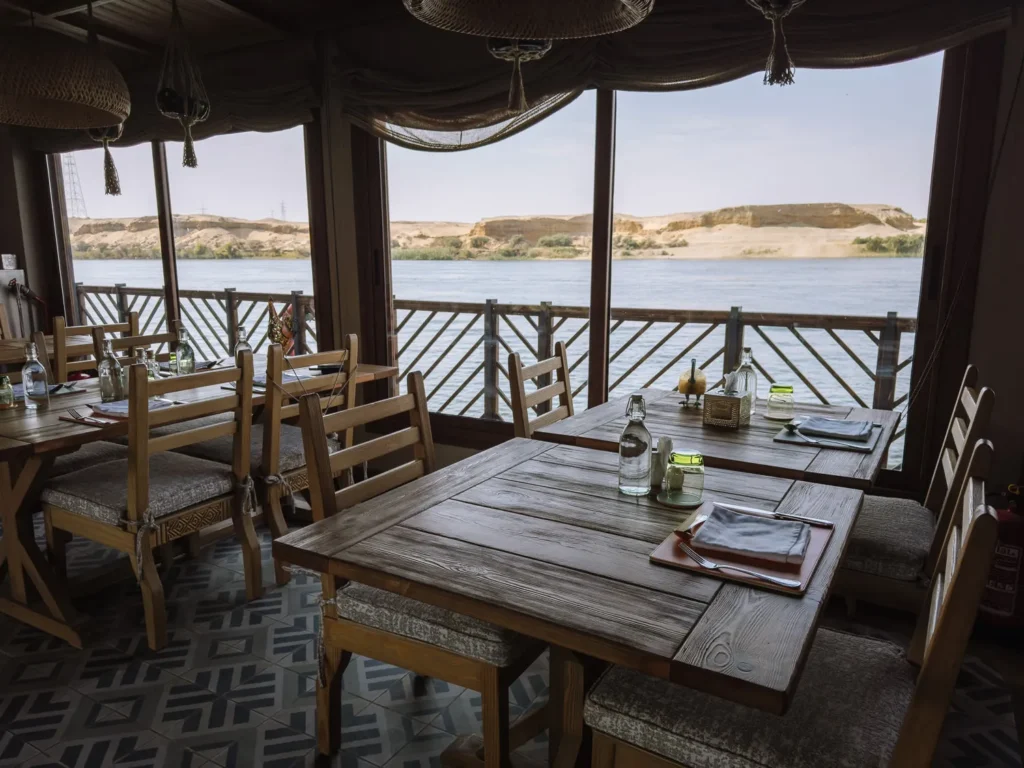
Eating on a dahabiya feels like eating at a boutique hotel or a friend’s home who happens to be a good cook.
With only 6–12 guests aboard, meals are freshly prepared by an onboard chef and tailored to passenger preferences.
Both lunch and dinner were substantial. Breakfast was a small buffet with breads, hard-boiled eggs, jams, a lentil stew, and an omelette you could order.
Coffee, tea, soft drinks, and juices are included; you need to pay extra for any alcohol. Our dahabiya had a good range of drinks, including Egyptian wines and whiskeys.
Cruise Ship
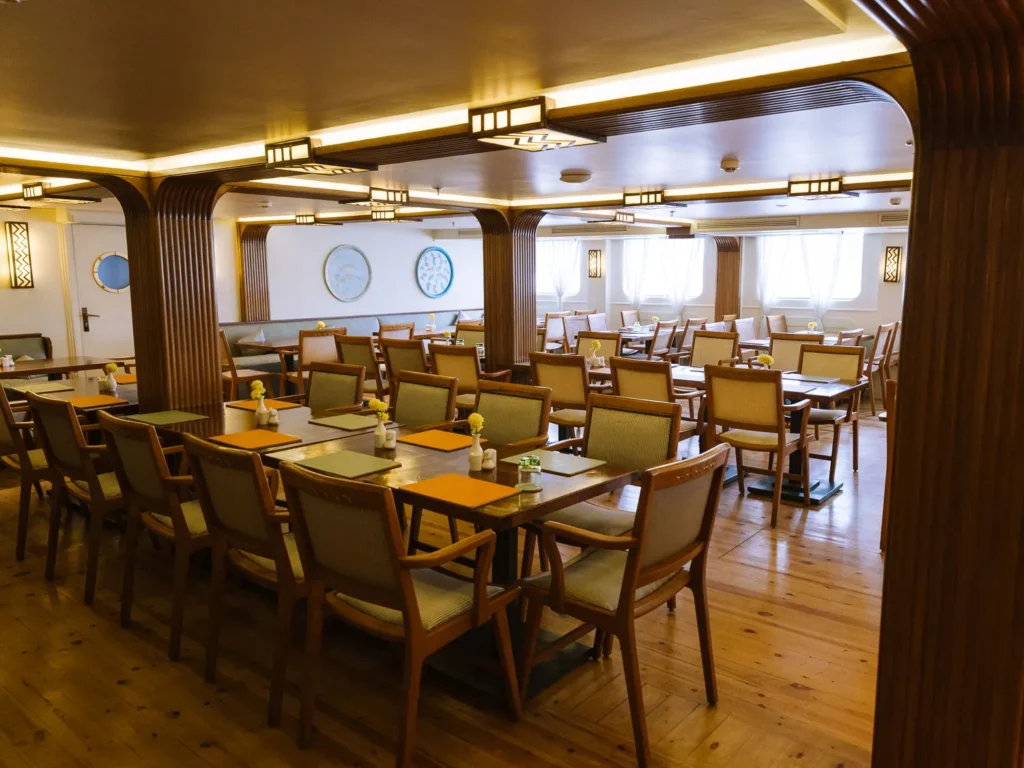
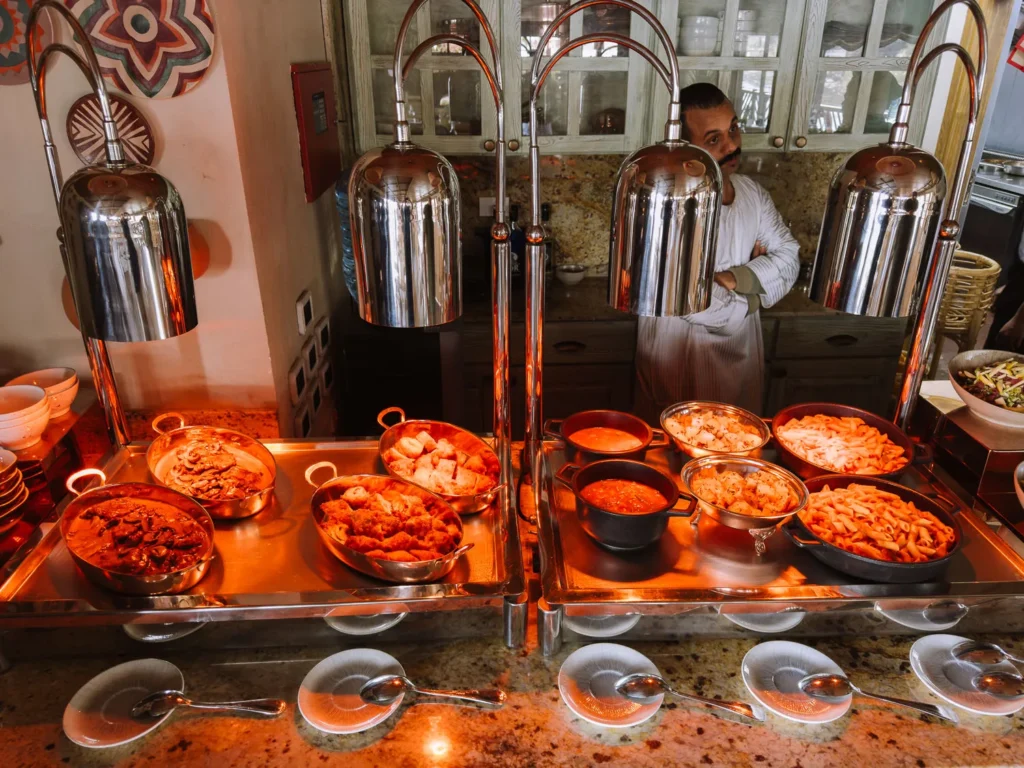
Cruise ships offer buffet-style dining for most meals, serving large groups of 100+ passengers simultaneously.
You’ll find extensive spreads with international options alongside Egyptian dishes, catering to diverse tastes but with less personalisation.
Food is prepared in industrial kitchens and kept warm on buffet lines, which can compromise freshness and quality.
However, larger ships often feature themed dinner nights, multiple dining venues, and sometimes à la carte restaurants for an upgrade.
Drinks are typically priced per item unless you purchase an all-inclusive package.

Entertainment
Dahabiya
Evenings are usually quiet and relaxing on the dahabiya, with dinner served on the upper deck, but there is no other organised entertainment.
Although on our last trip, we spent one evening dining on the banks of the Nile, and there was a local Egyptian group playing music for us.
Cruise Ship
You’ll have evening entertainment, including belly dancing, whirling dervishes, and themed parties, held in the lounge bar. Over the course of a 4-night cruise, you might experience all three (as we did on our first cruise).

Itineraries and Sites
Almost all Nile cruises operate between Luxor and Aswan (or vice versa), but dahabiyas and cruise ships have different itineraries and stops.
Nile cruise ships generally make the journey in 4 days / 3 nights, whereas dahabiyas usually take 5 days / 4 nights. This extra day allows for a more leisurely pace and additional stops.
Dahabiya
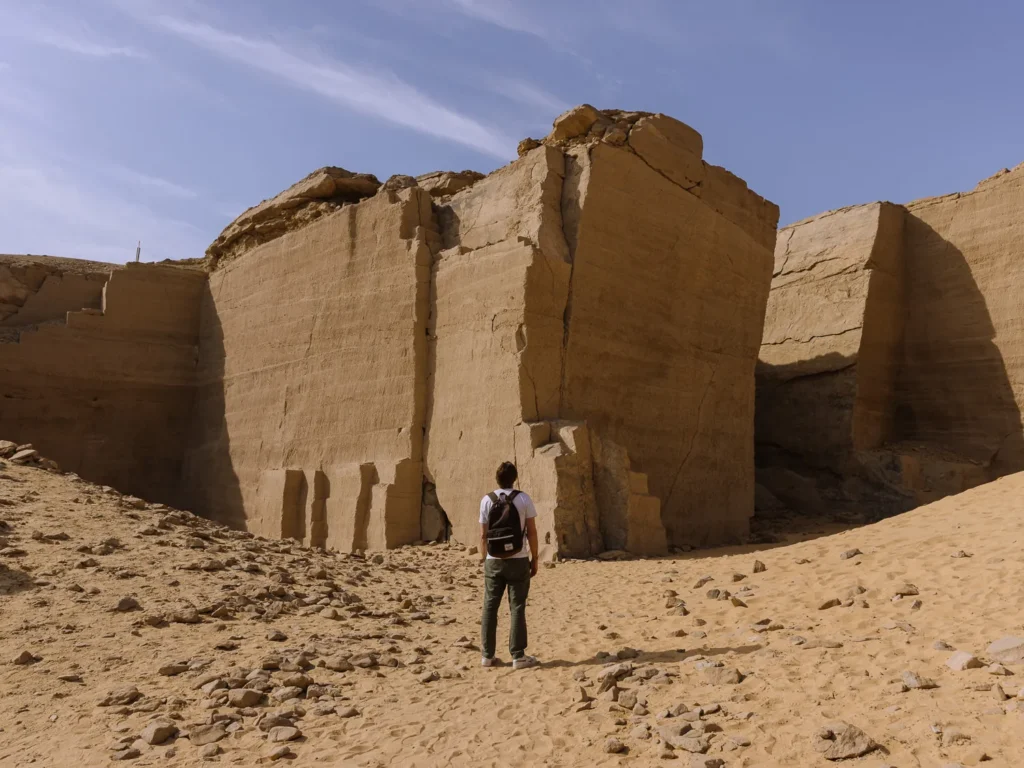
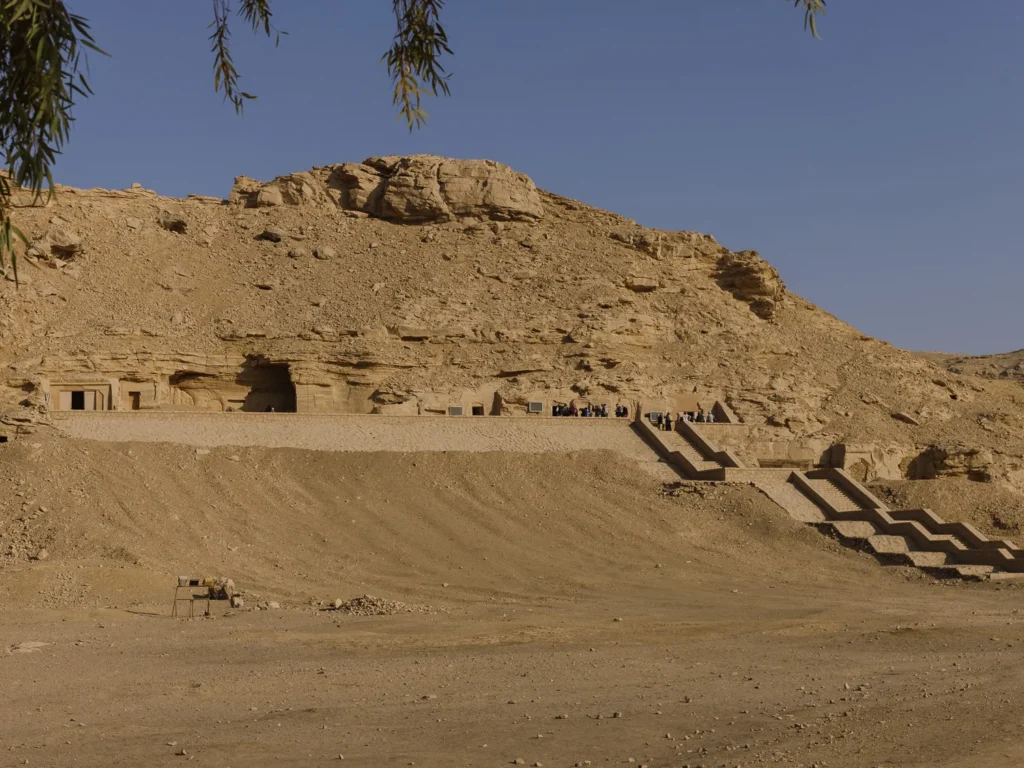
Dahabiyas, with their flat, shallow hulls, can stop at more locations, allowing you to visit additional sights like El Kab tombs and Gebel el Silsila quarry.
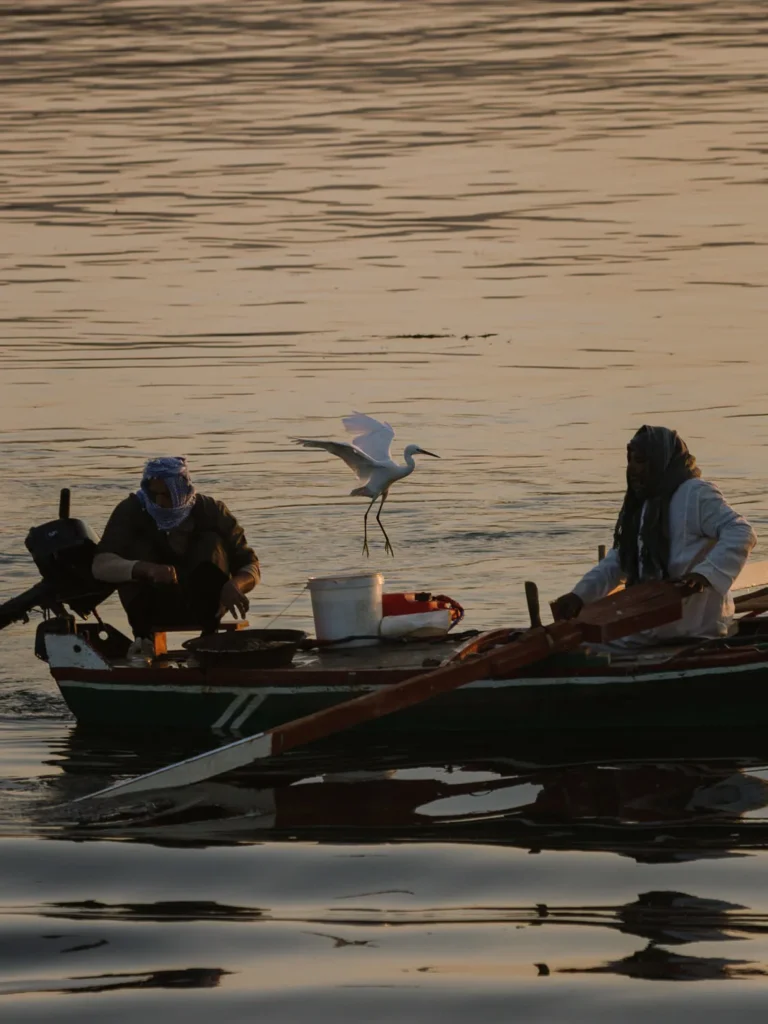
They can also moor at quieter locations outside the towns, so you can go for a swim in the Nile, which is something we did and loved.
The flexible schedule means you can adjust timing to avoid crowds at major sites.
Cruise Ship
Nile cruise ships are much larger than dahabiyas, so they can only dock at major ports.
They adhere to a strict timetable and can only stop at designated ports.
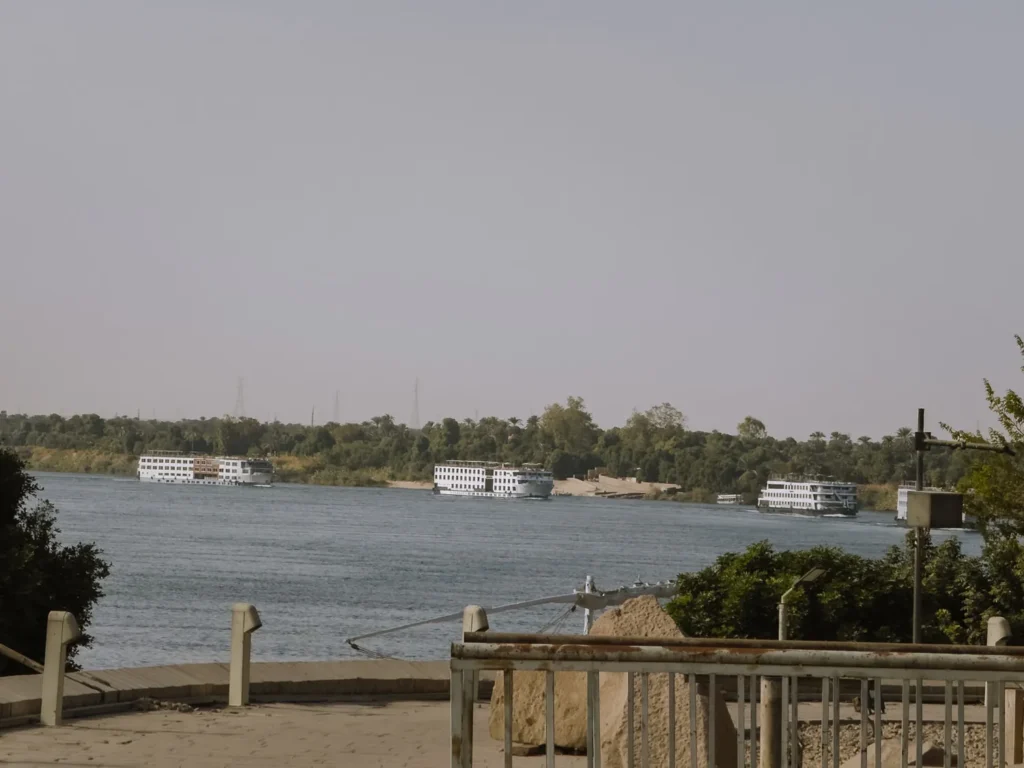
As a result, cruise ships often travel in convoy, stopping at the same sights at roughly the same time, which can lead to very crowded conditions at temples.
We cover all the best places to visit in Egypt, which might also help you decide on the type of Nile Cruise you want to do.
Tour Group Size and Guides
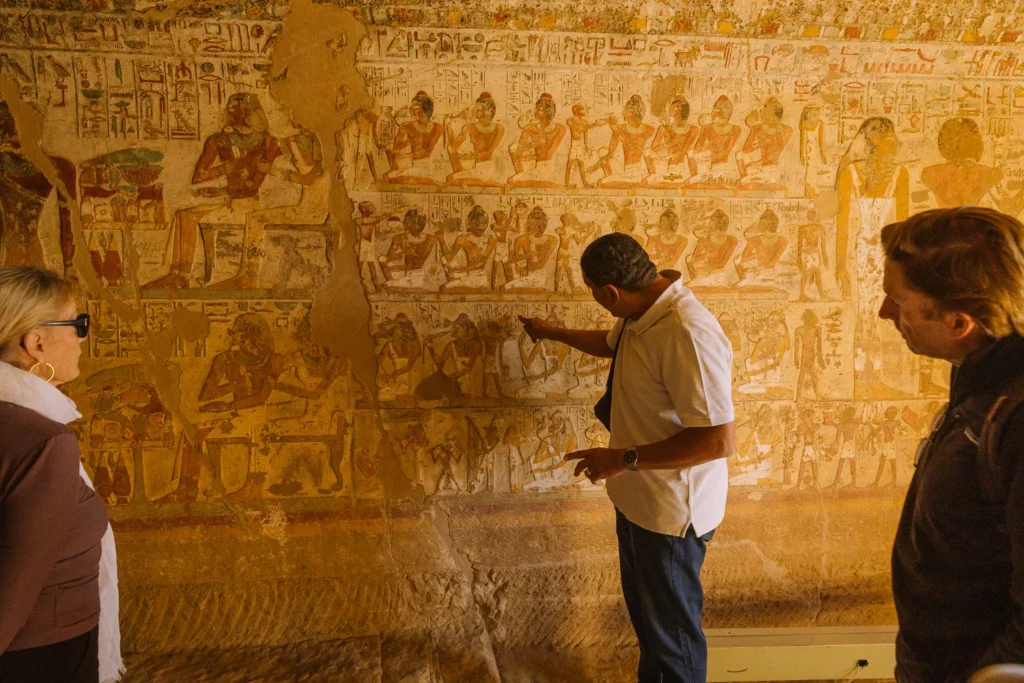
The dahabiyas and Nile cruise ships act as your accommodation and restaurant, but they do not usually provide the guides that take you ashore to explore the temples and tombs.
Instead, the tour company you booked through provides your guide (an Egyptologist), who will accompany you on the boat and organise all the onshore sights and activities.
Dahabiya
On a dahabiya, the largest tour group size is limited by passenger capacity, with a maximum of 20 passengers. However, more often than not, groups are much smaller because passengers speak different languages and have booked through various tour agents.
On our last trip, there were 12 passengers on the boat, covered by 3 tour guides.
Whenever we left the boat to explore the temples, we were in a group of 5.
This smaller group size gives you the flexibility to explore at your own pace and the ability to ask in-depth questions.
Cruise Ship
On a Nile cruise ship, tour groups typically range from 20 to 30 people per tour guide.
On our previous trip, we were in a group of 22, which made the experience much less personal.
Guides often use microphones and headsets to communicate with the large group, which limits opportunities for individual questions or for going at your own pace.
Itinerary Management
Dahabiya
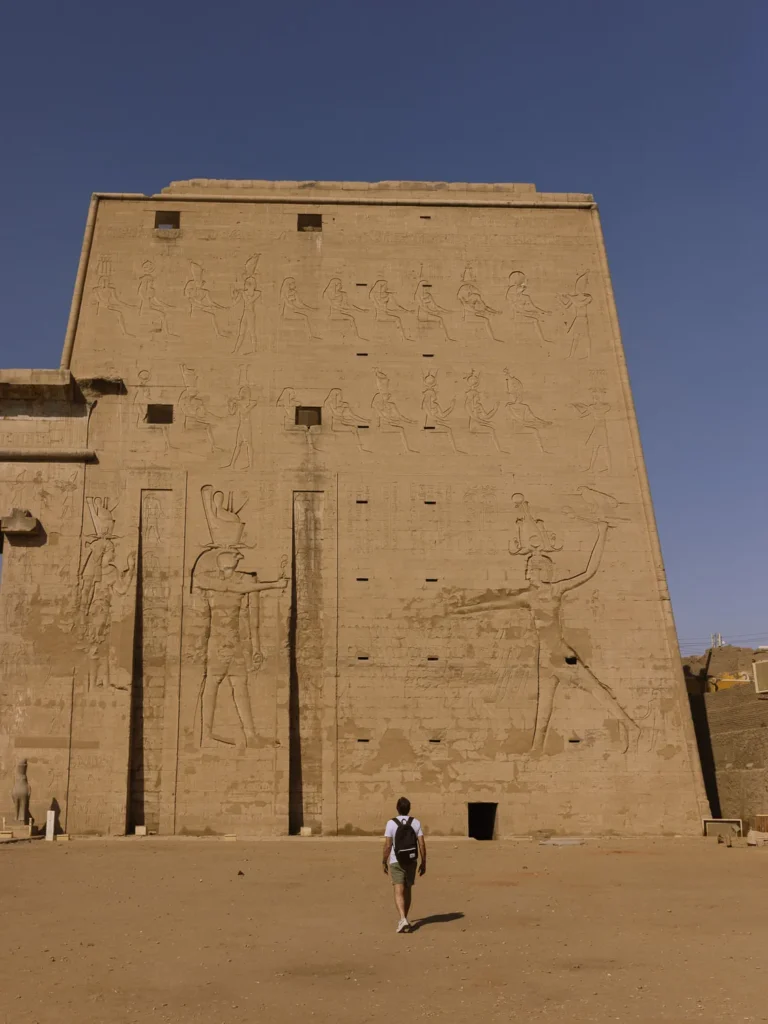
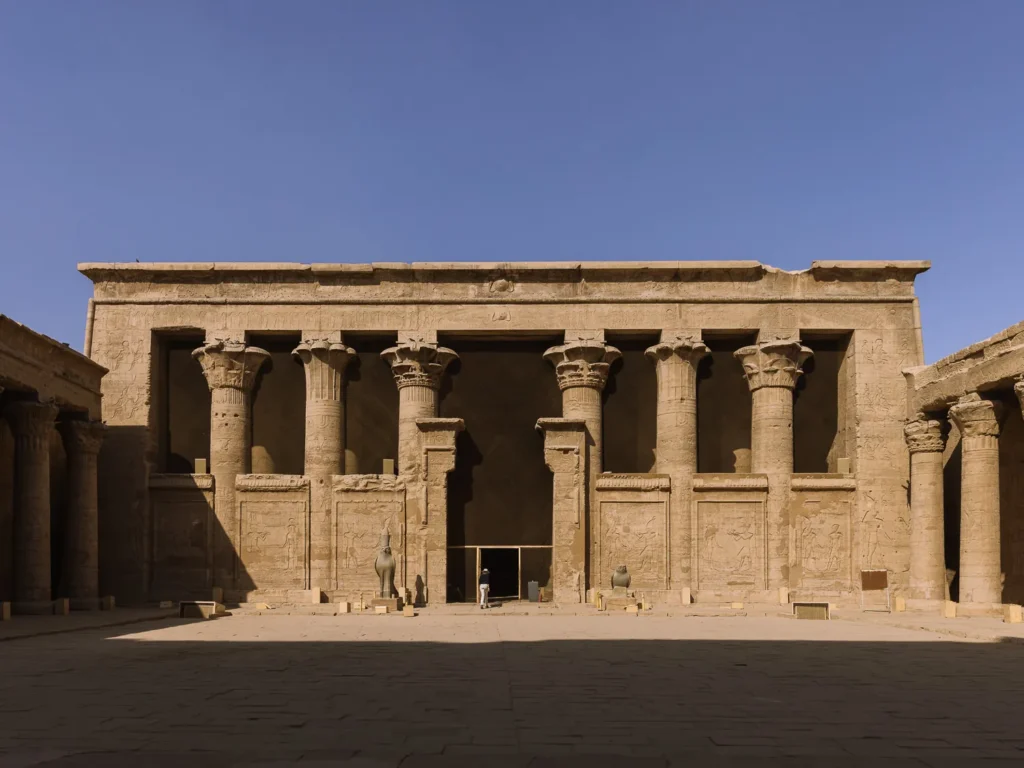
The dahabiyas can adjust their itinerary. They consider the temperature and season when planning temple visits and aim to avoid cruise ships.
We did our dahabiya cruise in January, and our captain chose Edfu during lunch, and we almost had the place to ourselves.
You can see the route we followed on our 10-day Egypt itinerary.
Cruise Ship
Nile cruise ships adhere to a strict timetable and can only stop at designated ports. In contrast, dahabiyas can stop at more locations and enjoy much greater flexibility regarding when they visit the main sights.
The result is that cruise ships often travel in convoy as they navigate down the river, stopping at the same sights at roughly the same time.
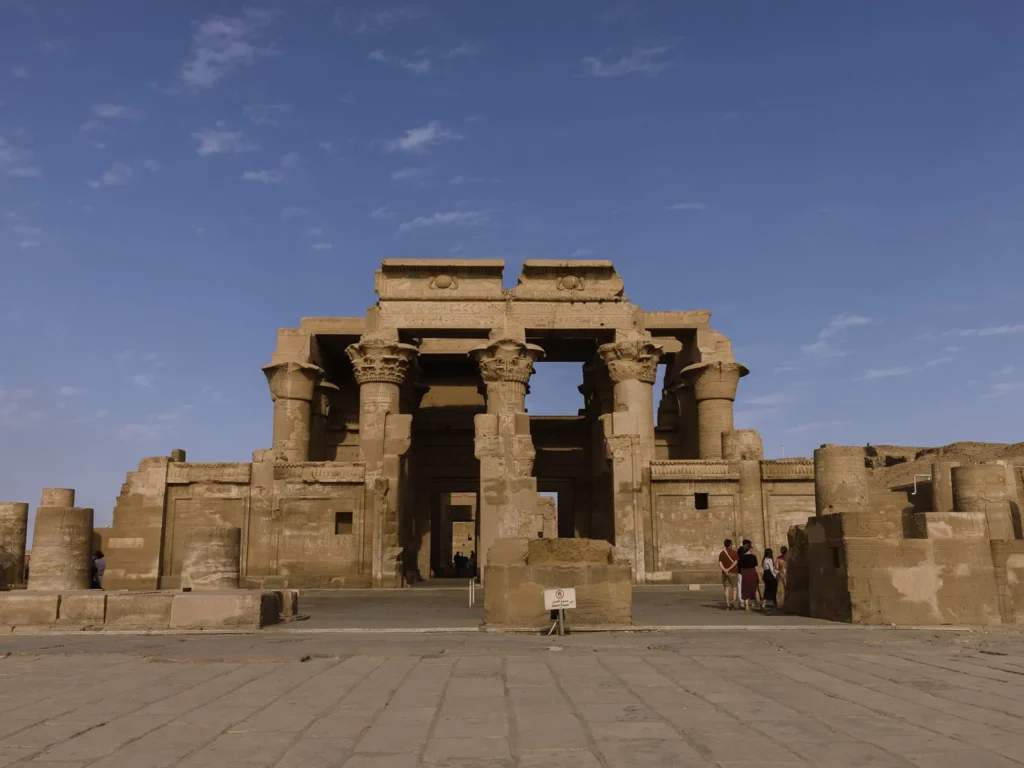
We saw around 20 cruise ships in the queue, waiting to dock at Kom Ombo. When they all disembarked, the temple was packed.
Price
Not all dahabiyas and cruise ships are the same, and even the same boat can cost a different amount when booked through different tour companies at different times.
However, Egypt is affordable, and we were pleasantly surprised by the price difference between a dahabiya and the more popular cruise options.
We can’t provide exact prices, but below is what you can expect to pay.
Dahabiya
Dahabiyas are more expensive, reflecting their boutique, exclusive nature.
Expect to pay $250–600 per person per night; luxury dahabiyas are priced at $800–1,000 per person per night.
However, these rates are usually all-inclusive, covering meals, guided excursions with your private Egyptologist, and site entrance fees.
Cruise Ship
Nile cruise ships are far more budget-friendly, with prices ranging from $50–200 per person per night, depending on the ship’s star rating and season.
However, a 3–4-night cruise might cost $200–800 per person, depending on the vessel’s star rating.
Three-star ships offer the most economical option, whilst five-star vessels with better facilities command higher rates.
Booking
We organised our trip through a well-reviewed Egyptian company called Egypt Tours Plus.
The boat they booked for us was arranged through another Egyptian company, Ashranda, which operates 6 dahabiyas. We sailed on their newest boat, Nofret, and you can see how swish it looks on their website.
They also offer larger cruise ships with more amenities if that’s what you prefer.
Our Recommendation
We have used both types of boat, and if you have the time and budget, we strongly recommend taking your Nile cruise on a dahabiya.
It is a fantastic, luxurious journey that lets you see more whilst avoiding the crowds at a slower pace.
We had a great experience with Ashranda and highly recommend them.
This is not a sponsored post, and we have not been paid to write this. We just believe the company provided an excellent trip at a very reasonable price.
They are also Egyptian-owned and operated, which means you’re not booking through Western tour companies, and your money goes directly to locals.

Luxor to Aswan Cruise Itinerary
Cruise Ship Itinerary
The standard Luxor to Aswan Nile cruise ship itinerary is:
- Day 1: Embark in the late afternoon and power through the Esna lock
- Day 2: Early morning visit to Edfu Temple
- Day 3: Late afternoon excursion to Kom Ombo Temple
- Day 4: Disembark at Aswan in the morning and then visit Philae Temple
Dahabiya Itinerary
Dahabiyas have a more adaptable itinerary, but it will resemble something like this:
- Day 1: Embark for lunch and set sail, getting through Esna lock in the evening
- Day 2: Visit El Kab tombs in the morning and Edfu Temple after lunch
- Day 3: Visit Gebel el Silsila quarry in the morning and Kom Ombo Temple after lunch
- Day 4: Riverbank walk and Nile swim in the morning and visit Philae Temple in the afternoon
- Day 5: Disembark at Aswan in the morning
Nile Cruise Map
Below is a map of our most recent cruise down the Nile, which we took aboard a dahabiya.
We have marked the boat’s route, the onshore stops at tombs, temples, and quarries, and the overnight docking locations.
Click on the top right corner to open our map in your Google Maps app. Click the star next to the title to save it to your Google account.
Additional Considerations
Best Time to Visit
The best time for a Nile cruise is from November to March, with peak season from mid-December to mid-January.
During these months, temperatures are pleasant for sightseeing (15–25°C), though this is also when cruise ships are most crowded.
If you’re on a dahabiya, you’ll benefit from the flexible schedule that allows you to avoid peak visiting times at temples. Summer months (May to September) are extremely hot, with temperatures often exceeding 40°C, making temple visits quite challenging.

What to Pack
Regardless of which boat you choose, here are some essentials:
- Sun protection (hat, sunglasses, high-SPF sunscreen)
- Comfortable walking shoes for temple visits
- Light, breathable clothing that covers shoulders and knees for temple visits
- A light jacket or jumper for cooler evenings (especially in winter)
- Swimwear (dahabiyas often offer opportunities for Nile swims; cruise ships have pools)
Summary: Which Is Right for You?
Choose a dahabiya if:
- You value peace, tranquillity, and an intimate atmosphere
- You prefer personalised service and small group tours
- You want to avoid crowds at major sites
- You’re interested in visiting lesser-known sites
- You have a higher budget and are looking for a luxury experience
Choose a cruise ship if:
- You’re on a tighter budget
- You enjoy a livelier, more social atmosphere
- You want more facilities like pools, gyms, and entertainment
- You prefer structured schedules and don’t mind crowds
- You have less time and want a quicker journey (3–4 nights vs 4–5 nights)
To work out how to fit a cruise into your trip, check out our 7 to 10-day Egypt Itinerary.
Some cruises include different activities in Luxor and Aswan, so to be sure you see everything you want, read our best places to visit in Luxor and our favourite things to do in Aswan.
More Egypt Guides
- How to plan a 7- or 10-day Egypt itinerary.
- The best places to visit in Egypt.
- Essential tips for visiting Egypt: what to know before you travel.
- The best ancient temples in Egypt.
- Nile Cruise ship vs Dahabiya: which is the best experience?
- The best things to do in Cairo (including the Pyramids).
- Plan your trip with our 2- or 3-day itinerary for Cairo.
- All you need to know about visiting the Valley of the Kings.
- What to do in Aswan, Egypt’s southern escape.
- See the best and other great things to do in Luxor.
- Your complete guide to visiting the Pyramids of Giza.

reader-supported
When you buy through links on our site, we may earn a small affiliate commission at no extra cost to you.
Thanks for your support // Paul & Mark