

Egypt’s ancient temples and tombs are portals into a civilisation that thrived for over 3,000 years. From colossal rock-cut monuments to intimate painted tombs, here are our favourite ancient sites in Egypt.
By: Paul Healy | Last Updated:
It’s fair to say that the ancient temples and tombs in Egypt left a lasting impression on us.
We’ve travelled extensively in Mexico and Turkey, where ancient sites are plentiful. We’ve explored many regions across the Mediterranean and Britain with remarkable Roman ruins.
But nothing prepared us for the grandeur, preservation, storytelling and engineering of the ancient Egyptian temples.
Each site tells a story of pharaonic power, divine worship and eternal life, expressed in striking reliefs, colossal scale and brilliant colour.
Egypt boasts hundreds of archaeological sites, but we’ve selected the ones we consider essential: the temples and tombs that offer remarkable preservation, historical importance and that unmistakable ‘wow’ factor.
Egypt’s temples and tombs represent humanity’s longest continuous architectural tradition. Here is a small snapshot.
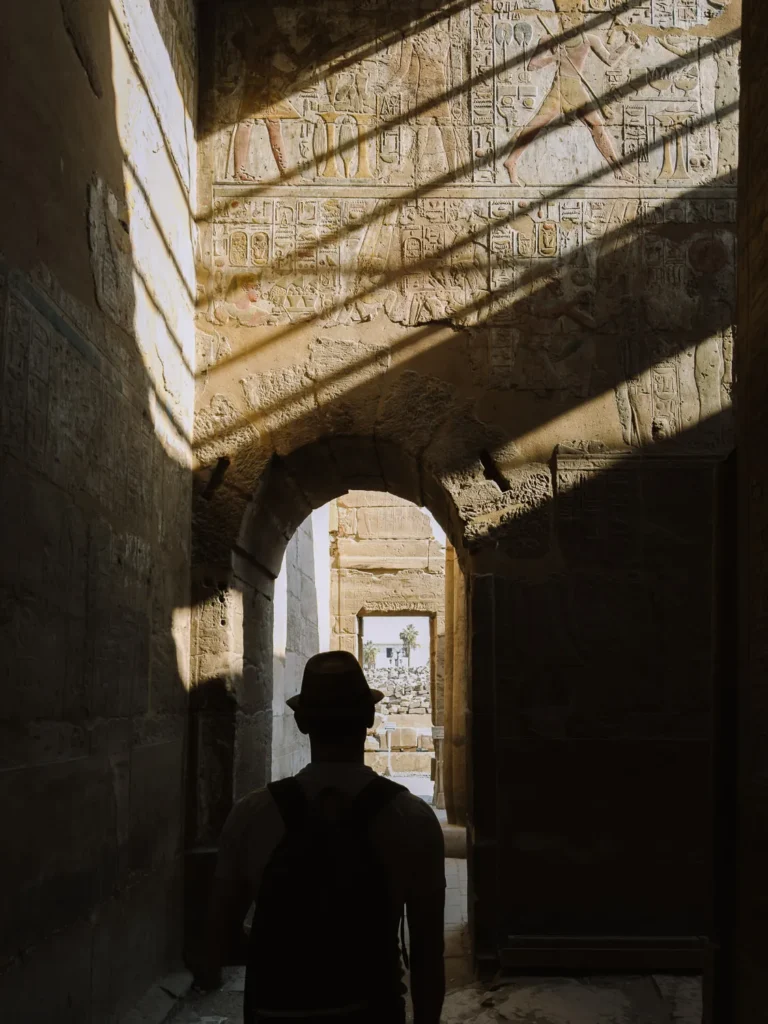
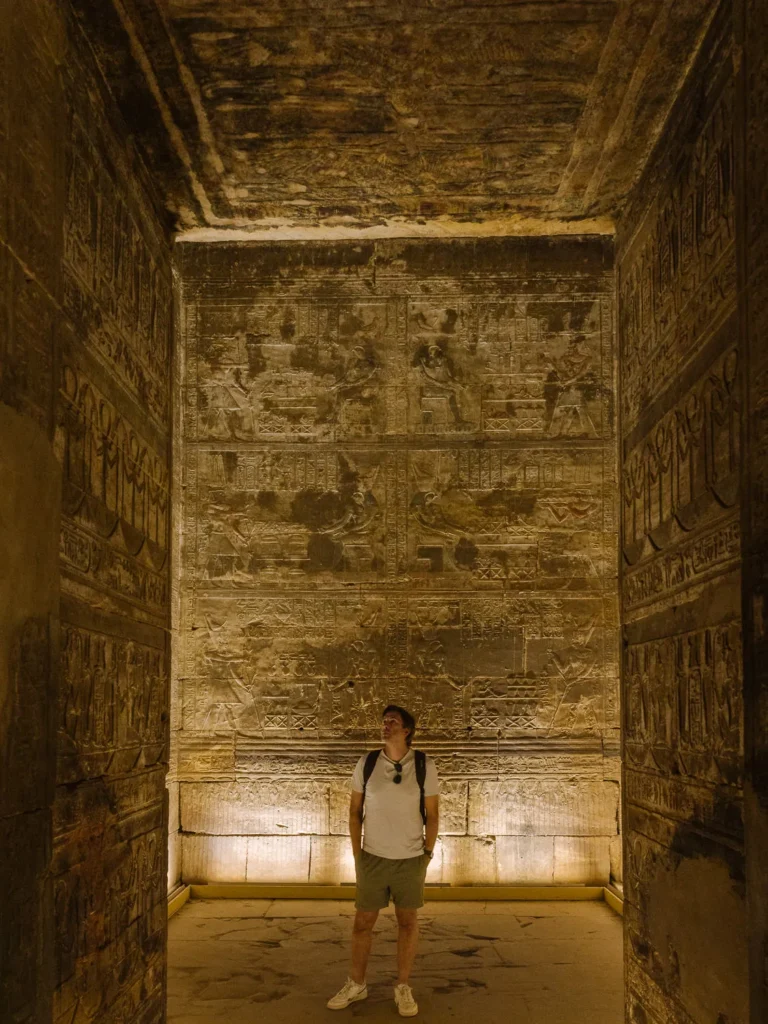
Best Temples in Egypt
1. Karnak Temple Complex
Karnak is a vast complex of temples, chapels, pylons and obelisks constructed over 1,500 years by more than 30 pharaohs. Dedicated primarily to Amun-Ra, the king of the gods, it served as ancient Egypt’s spiritual heart.
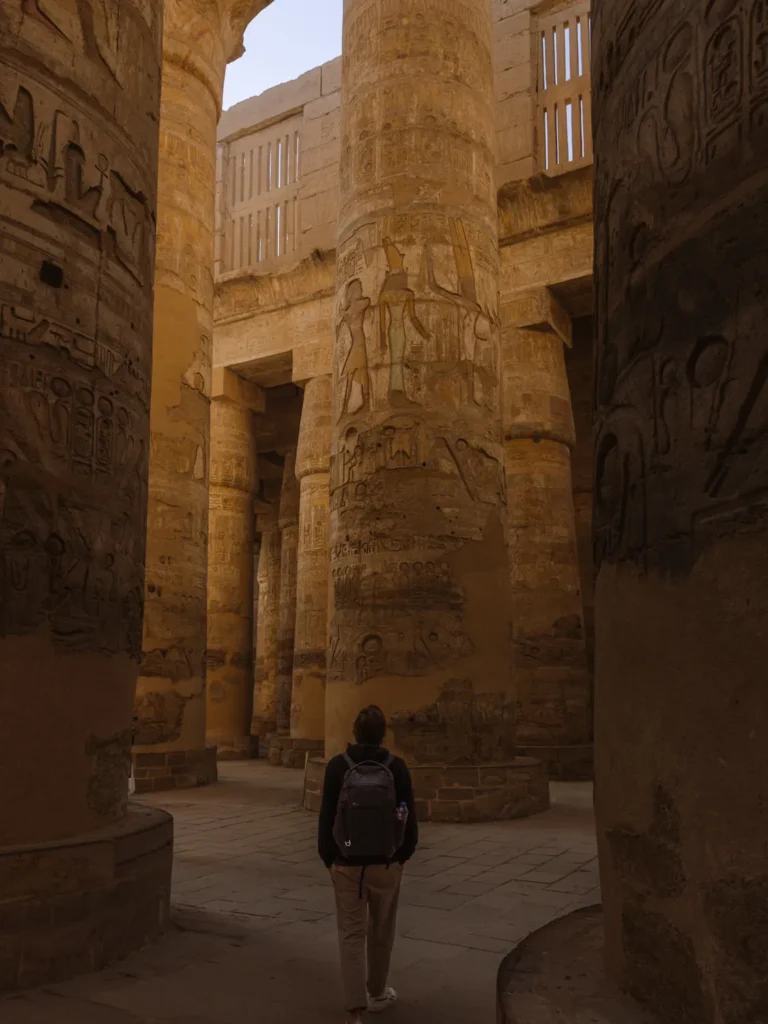
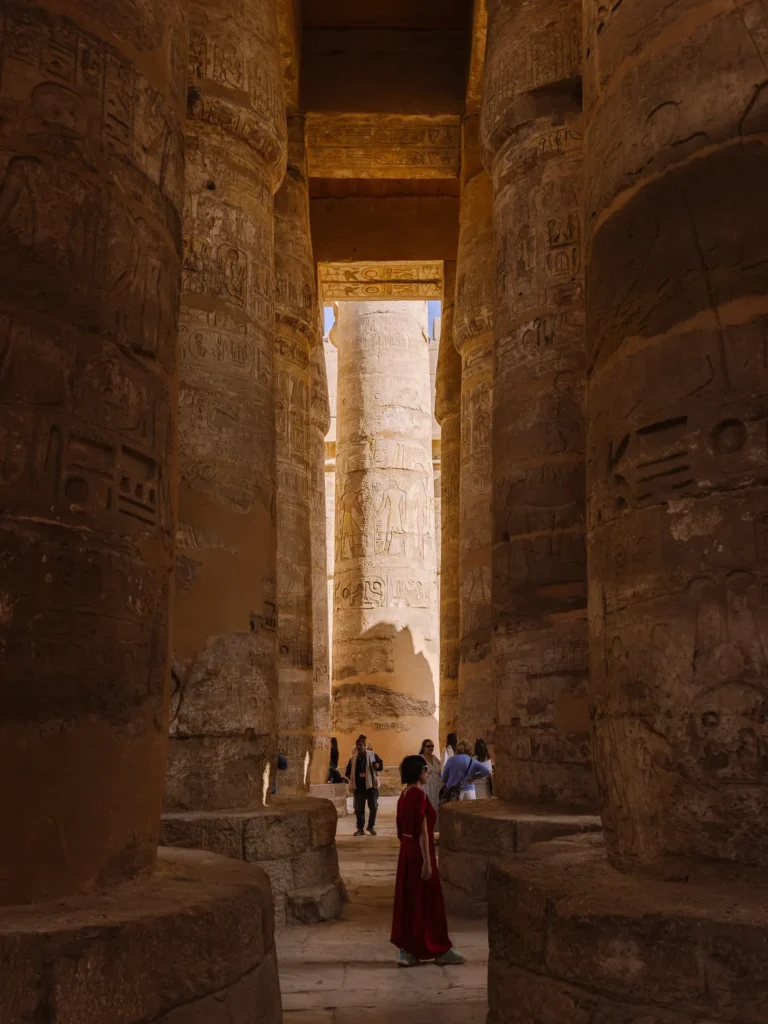
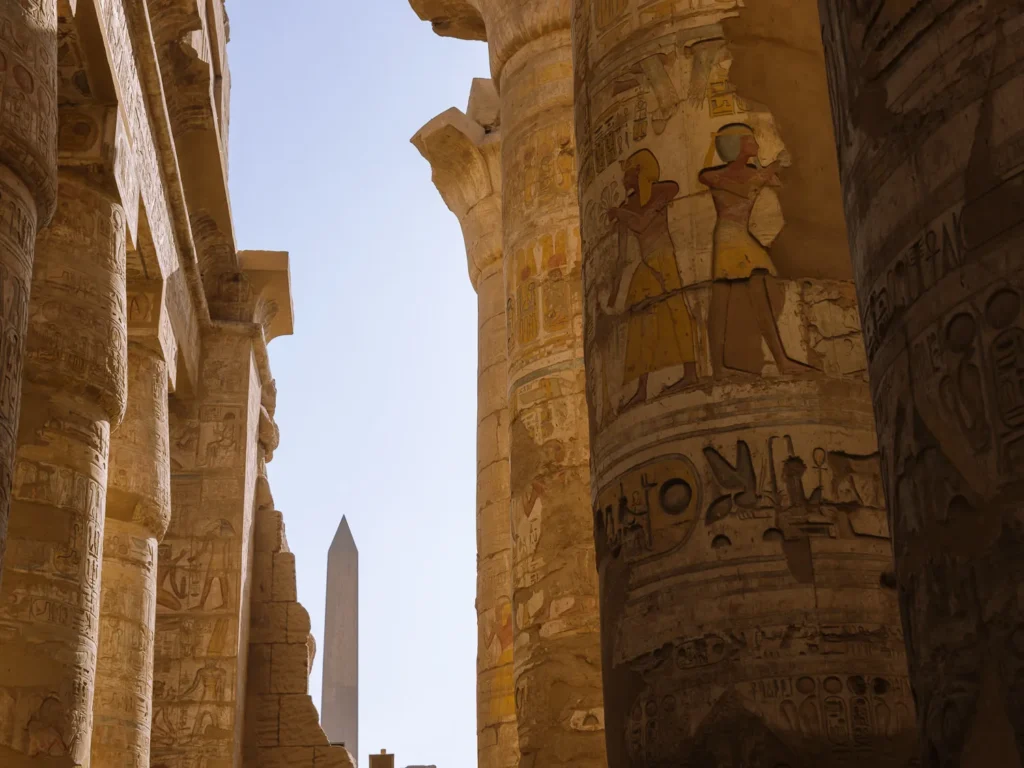
The main highlight is the Great Hypostyle Hall, a massive sanctuary supported by 134 enormous columns, many retaining traces of their original colours.
Walking amongst these 21-metre-high pillars is genuinely overwhelming.
We also loved the Obelisk of Queen Hatshepsut, the ram-headed sphinxes, the gigantic statues in the Great Court and the views across the Sacred Lake.
Karnak is special because each pharaoh tried to outdo their predecessors, creating an architectural timeline of ancient Egypt’s greatest dynasties.
The preservation of colours and carvings – despite millennia of exposure – is extraordinary.
Practical Information
- Hours: Daily 6:00 AM – 5:30 PM (summer hours may extend to 6:30 PM)
- Cost: EGP 600 (US$ 13) for adults and EGP 300 (US$ 6) for students.
- Time needed: 2–3 hours
- Best time: Early morning for golden light in the Hypostyle Hall and fewer crowds
2. Valley of the Kings
For nearly 500 years during the New Kingdom (1550–1069 BCE), pharaohs were buried in hidden rock-cut tombs carved deep into the Theban Hills.
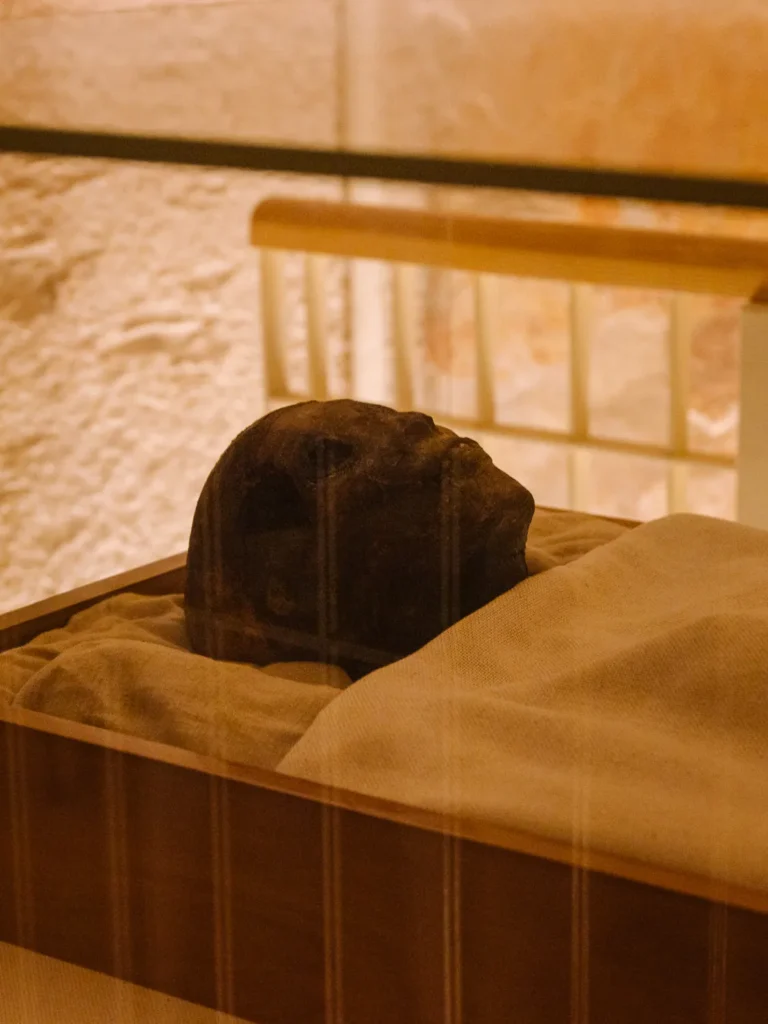
This royal burial site, the Valley of the Kings, contains 65 tombs, including the famous tomb of Tutankhamun.
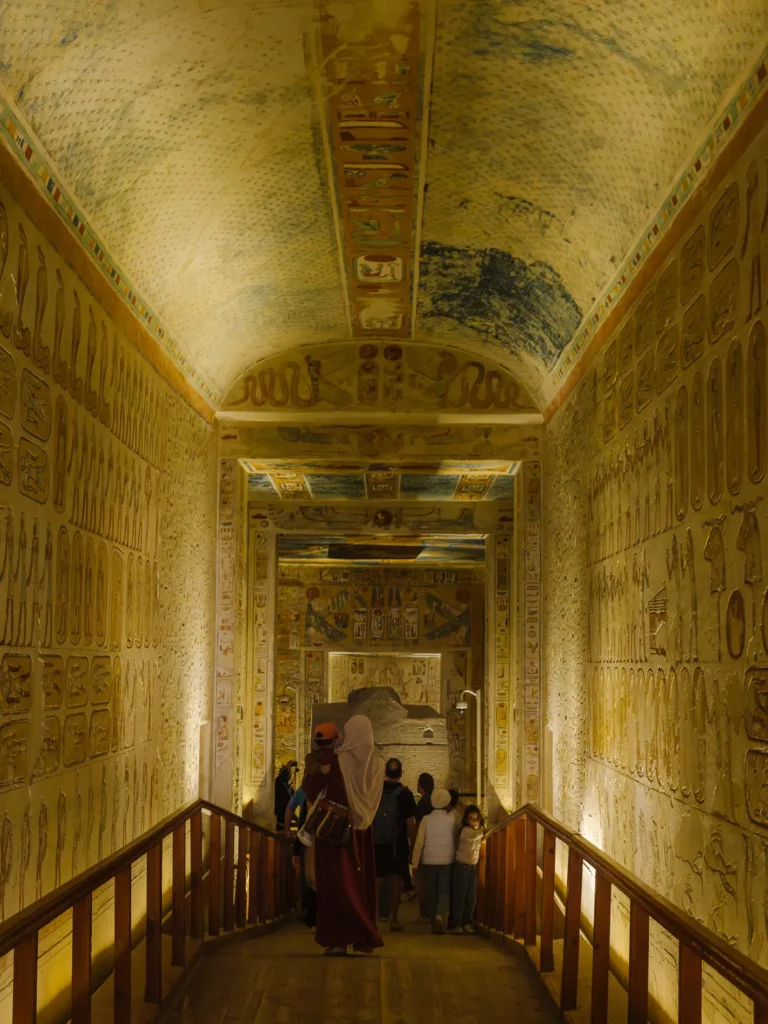
Your entry ticket allows you to visit three tombs from those currently open (around 8–10 rotate regularly).
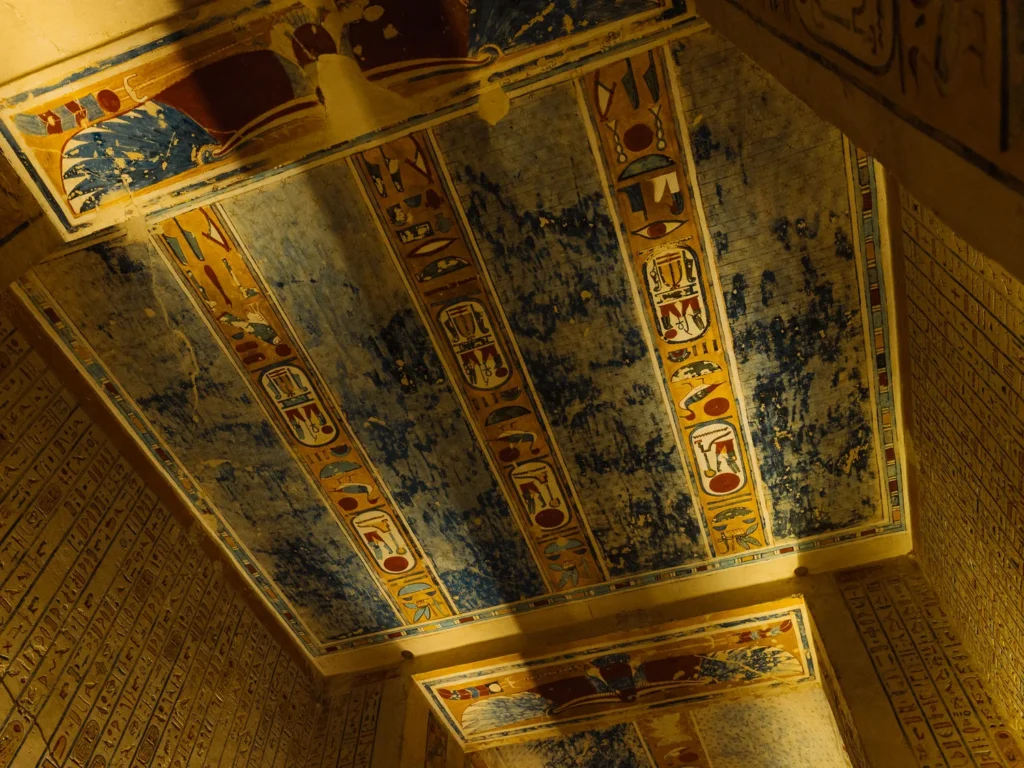
The walls are covered in vivid paintings depicting the pharaoh’s journey through the underworld, religious texts and scenes of daily life.
We recommend visiting the tombs of Ramesses III, Ramesses IV and Merenptah, and paying the additional fee for Seti I, Ramesses V and VI, and Tutankhamun.
The incredible thing about the Valley of the Kings is that you’re standing in the exact spot where ancient royalty was laid to rest over 3,000 years ago. The artistic quality and preservation are unmatched anywhere in Egypt.
We have much more information in our guide to visiting the Valley of the Kings.
Practical Information
- Hours: 6:00 AM – 5:00 PM daily
- Cost: EGP 750 (US$15) for adults and EGP 375 (US$8) for students
- Extra tickets: Tutankhamun EGP 700 (US$15); Seti I EGP 2000 (US$40); Ramesses V/VI EGP 220 (US$5)
- Time needed: 2–3 hours
- Best time: Early morning (7:00–9:00 AM) before tour buses arrive
- Note: Photography is not permitted inside the tombs
3. Abu Simbel
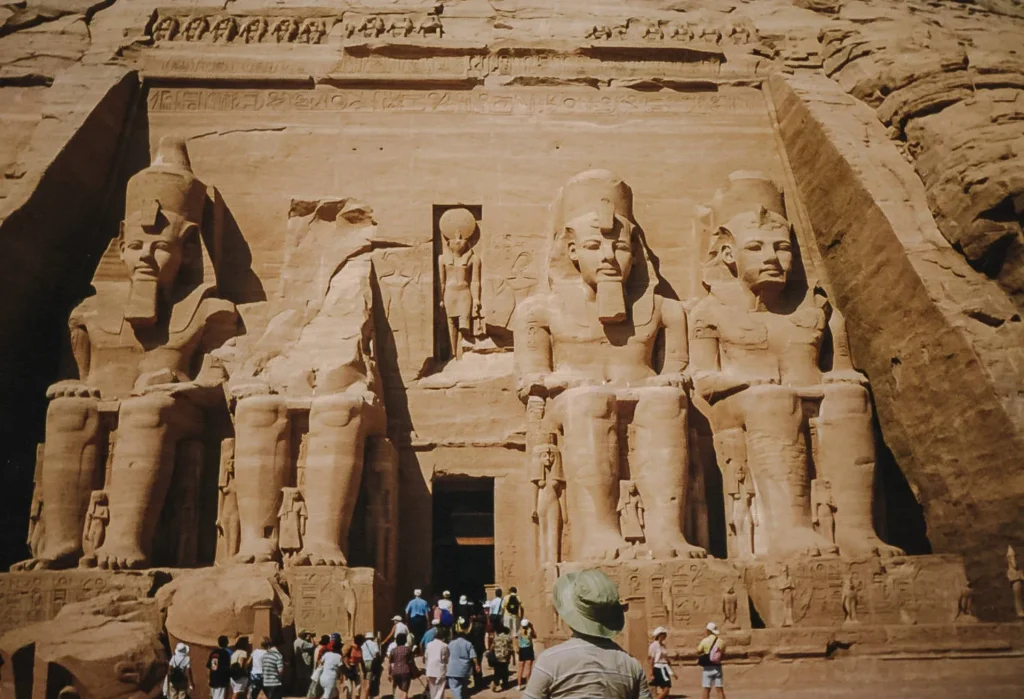
The most photographed and striking temple in Egypt is Abu Simbel – two massive rock-cut temples built by Ramesses II around 1264 BCE in Nubia (Egypt’s southern frontier).
The Great Temple honours Ramesses himself alongside the gods Ra-Horakhty, Ptah and Amun, whilst the smaller temple is dedicated to his beloved wife Nefertari and the goddess Hathor.
Four colossal 20-metre-high seated statues of Ramesses II flank the entrance – an unmistakable display of power.
Inside are pillared halls carved directly into the mountain, with painted reliefs showing Ramesses’ military victories.
Abu Simbel was carved entirely from a cliff face – it’s not a building but a hollowed-out mountain. In the 1960s, the entire complex was cut into blocks and relocated 60 metres higher to save it from Lake Nasser’s rising waters.
Practical Information
- Hours: 6:00 AM – 5:00 PM daily
- Cost: Approximately 400 EGP ($US9)
- Getting there: A 3-hour drive from Aswan, this day trip is highly rated.
- Time needed: 1–2 hours on site
- Best time: Early morning for the best light on the façade
4. Mortuary Temple of Queen Hatshepsut
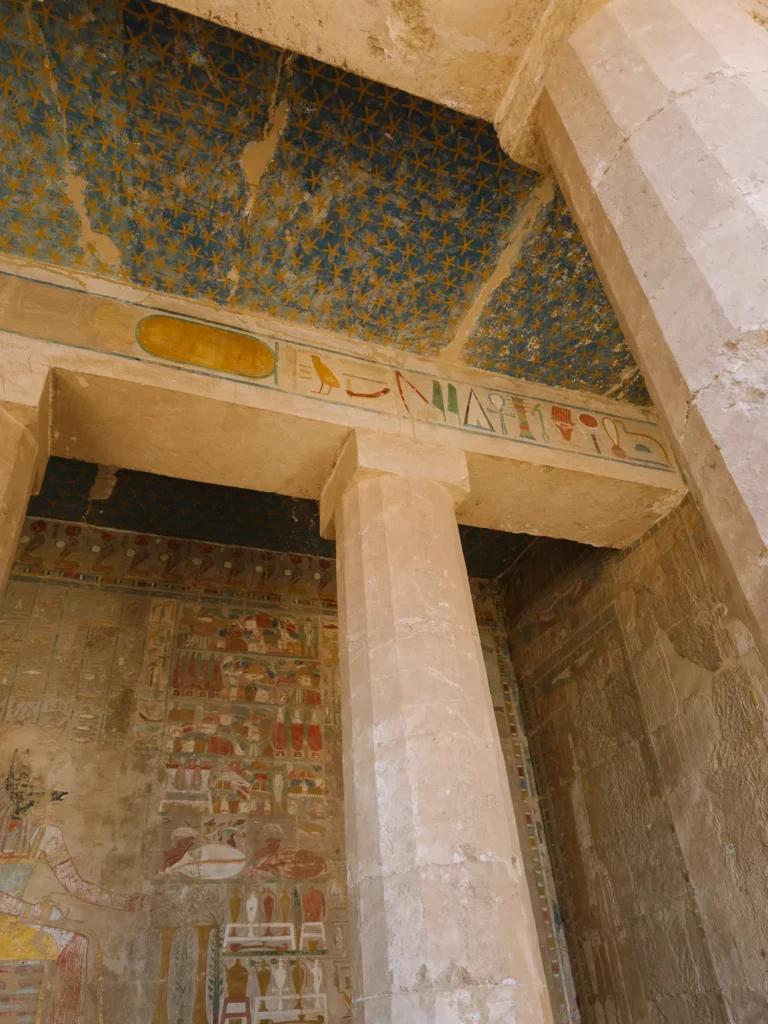
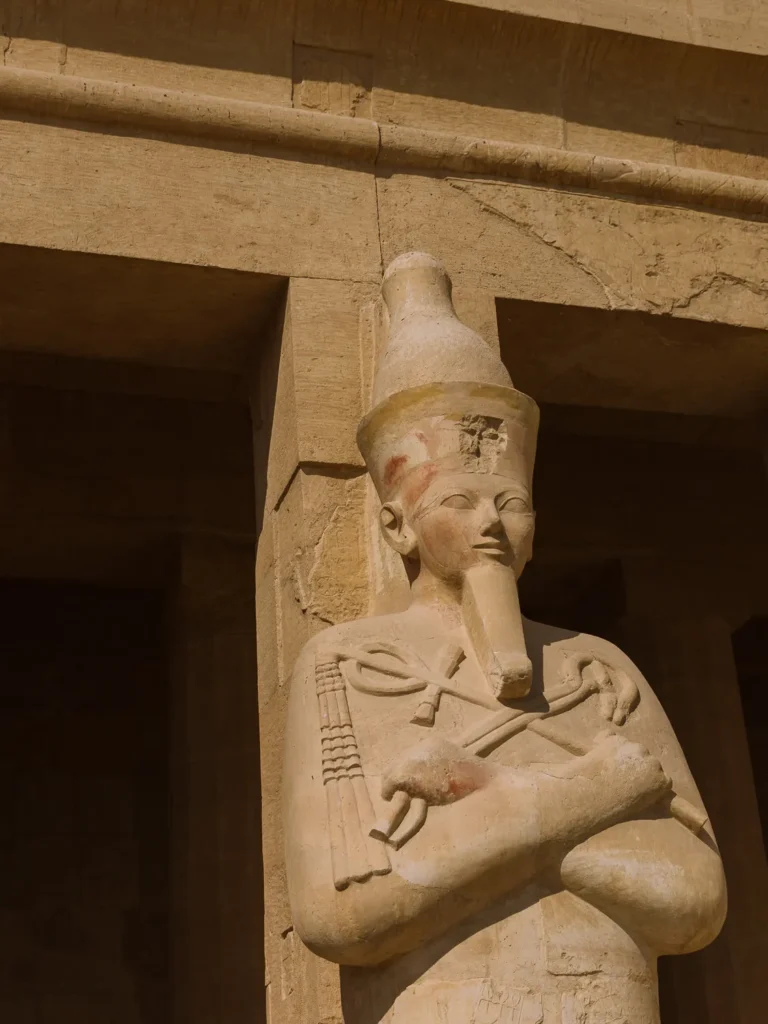
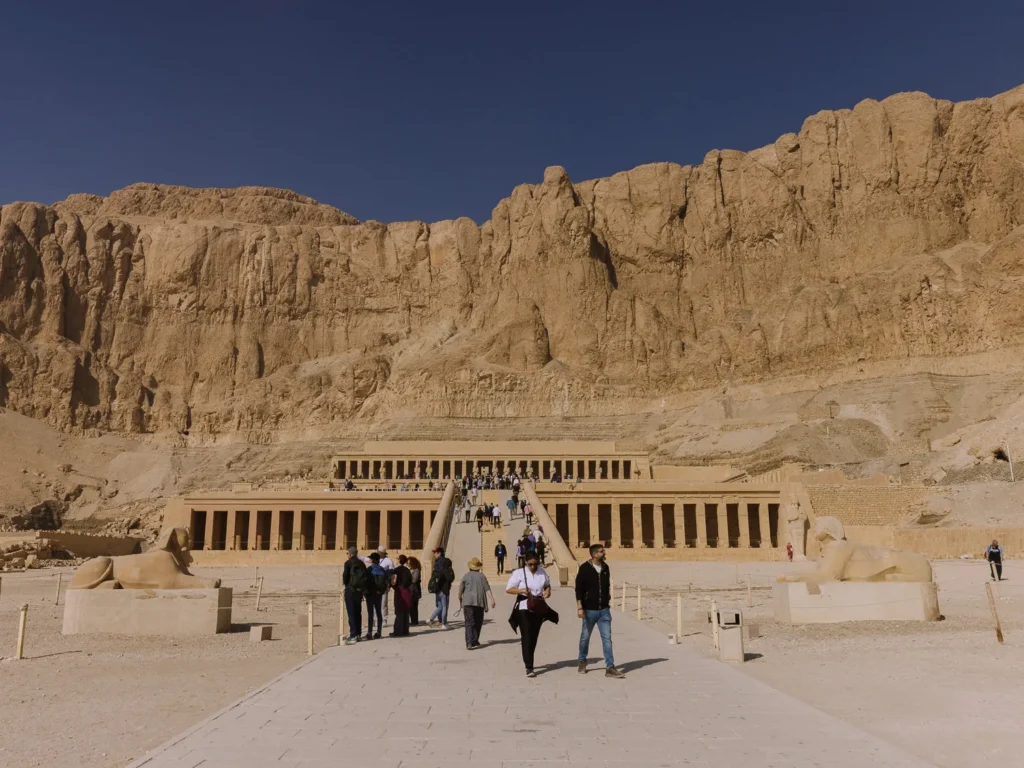
The Mortuary Temple of Queen Hatshepsut is a masterpiece of ancient architecture, dedicated to one of ancient Egypt’s most successful pharaohs and one of its few female rulers.
Three colonnaded terraces are built into the base of sheer limestone cliffs, with the architecture blending seamlessly with the dramatic natural backdrop.
Original carvings, statues and colourful hieroglyphs can still be found, depicting Hatshepsut’s divine birth, her successful trading expedition to the Land of Punt and scenes from her reign.
The Birth Colonnade and Punt Colonnade are exceptionally well preserved.
Apart from the dramatic location, the temple is special because it tells the story of a female pharaoh who ruled successfully for over 20 years.
Practical Information
- Hours: Daily 6 AM to 7 PM (summer); 6 AM to 6 PM (winter)
- Cost: EGP 440 (US$ 9) for adults and EGP 220 (US$ 5) for students.
- Time needed: 1–1.5 hours
- Best time: Early morning, before the heat becomes intense and crowds arrive
- Combine with: Valley of the Kings (same area)
5. Philae Temple
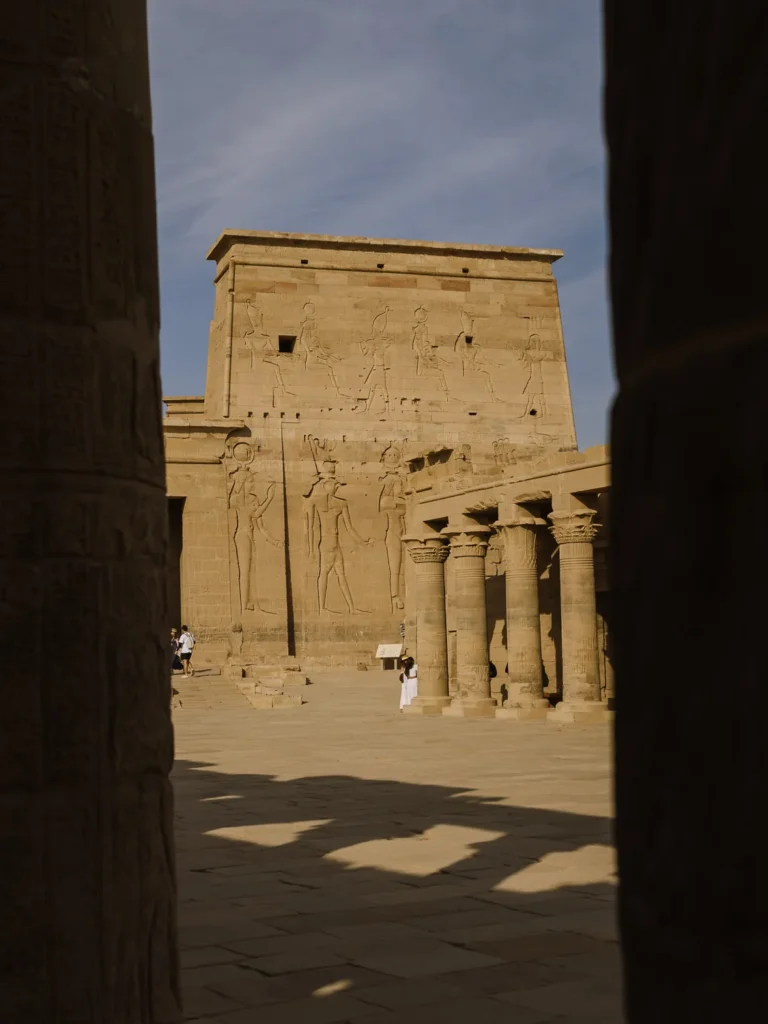
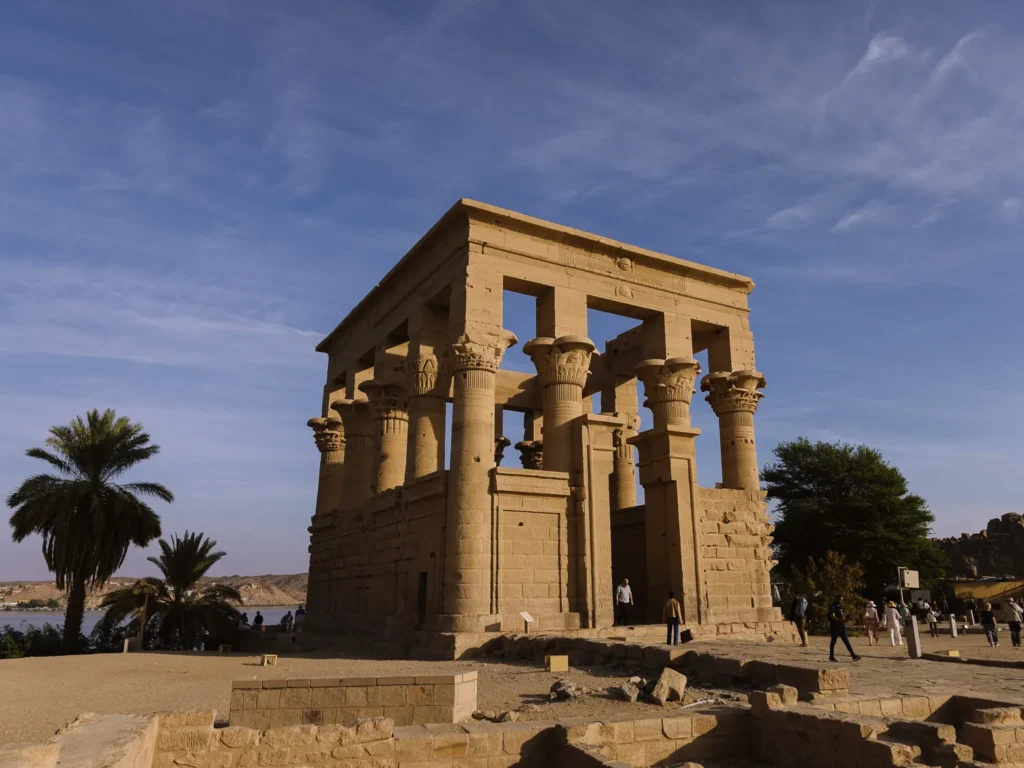
Philae Temple is a mix of Egyptian, Ptolemaic and Roman ruins spanning the 4th century BCE to the 2nd century CE.
The main temple, built around 280 BCE, is dedicated to Isis, goddess of magic, motherhood and healing.
Originally located on Philae Island, the entire complex was dismantled and relocated to nearby Agilkia Island in the 1970s to save it from annual flooding following the construction of the Aswan Low Dam.
The temple sits on its own island, accessible only by boat – arriving by water adds to its magical quality.
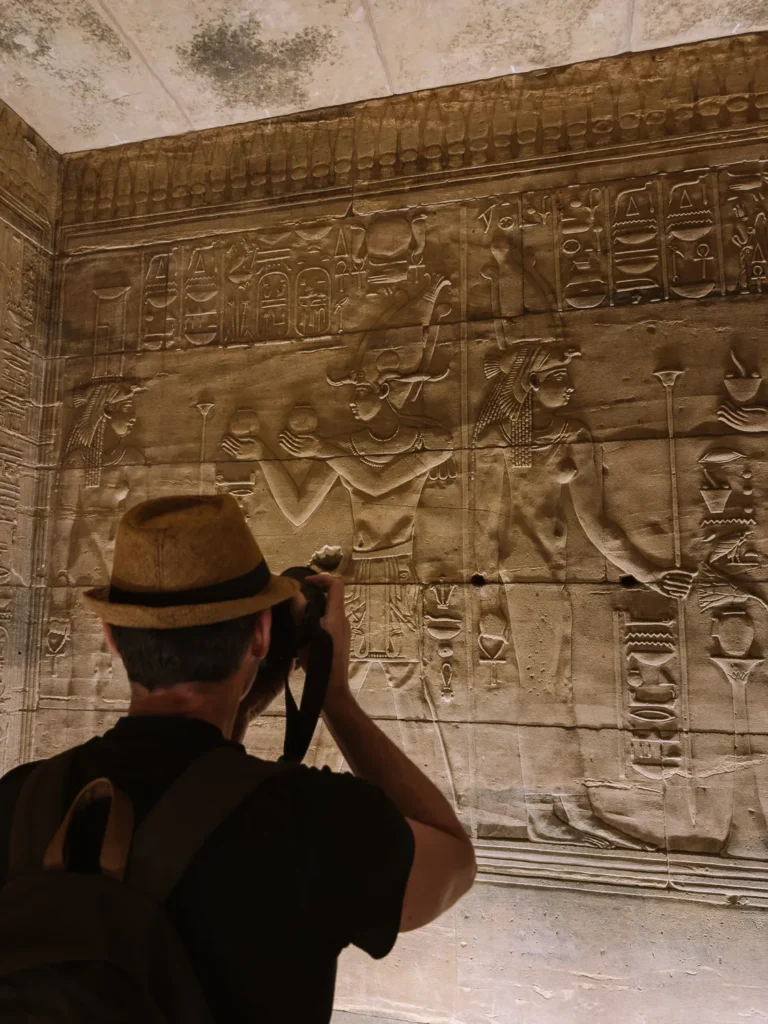
Graceful colonnades, beautifully preserved reliefs and a Greco-Roman architectural style give it a feel distinct from earlier Egyptian temples.
Philae was the last active temple in Egypt, with priests continuing to worship Isis here until the 6th century CE – long after Egypt became Christian.
Practical Information
- Hours: 7:00 AM – 5:00 PM daily
- Entry: Approximately 300 EGP (US$6) plus boat ride (~100 EGP return)
- Time needed: 1.5–2 hours
- Best time: Late afternoon for beautiful light and fewer crowds
- Note: The boat ride takes about 10 minutes each way and typically costs around EGP 400–600 for a private round trip
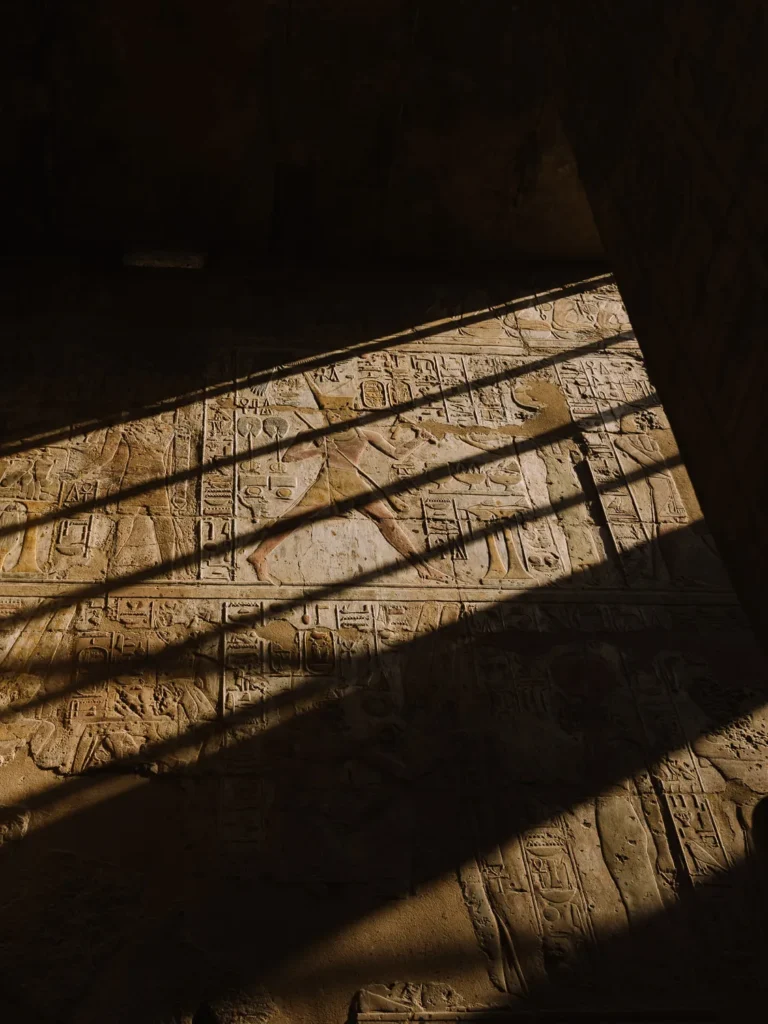
6. Luxor Temple
Built around 1400 BCE, Luxor Temple is unique in that it was dedicated to the concept of kingship itself, rather than to a particular god.
It was continuously used and modified by different civilisations, including the Greeks, Romans and early Christians, leaving layers of history within its walls.
The massive entrance pylons with seated colossi of Ramesses II (one of a pair of obelisks still stands; its twin is in Paris’s Place de la Concorde) set the scene for this dramatic Nile-side temple.
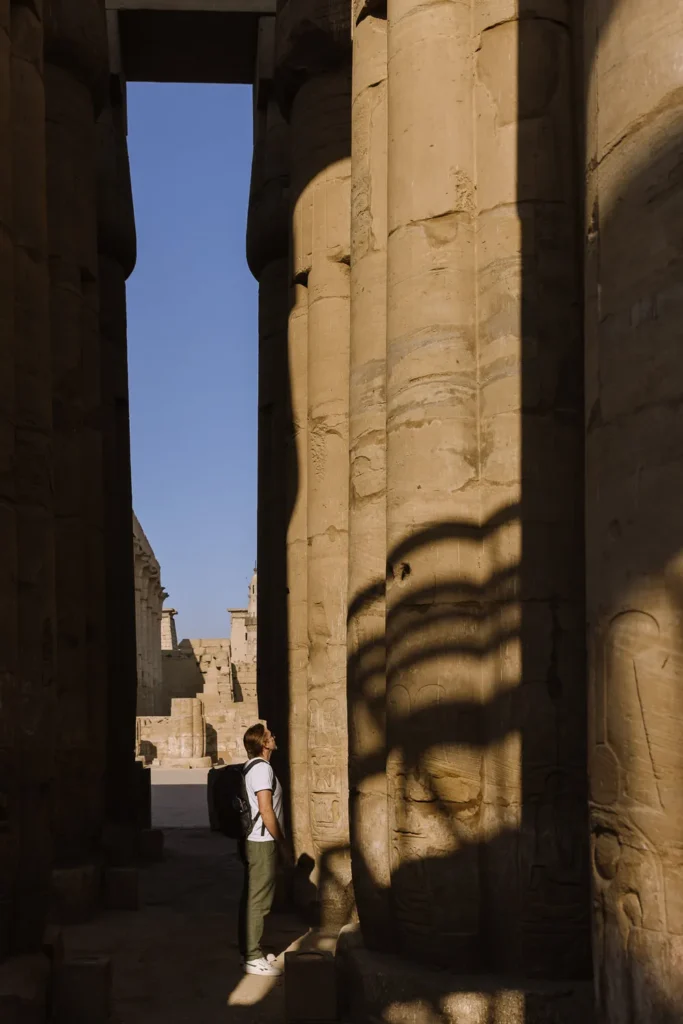
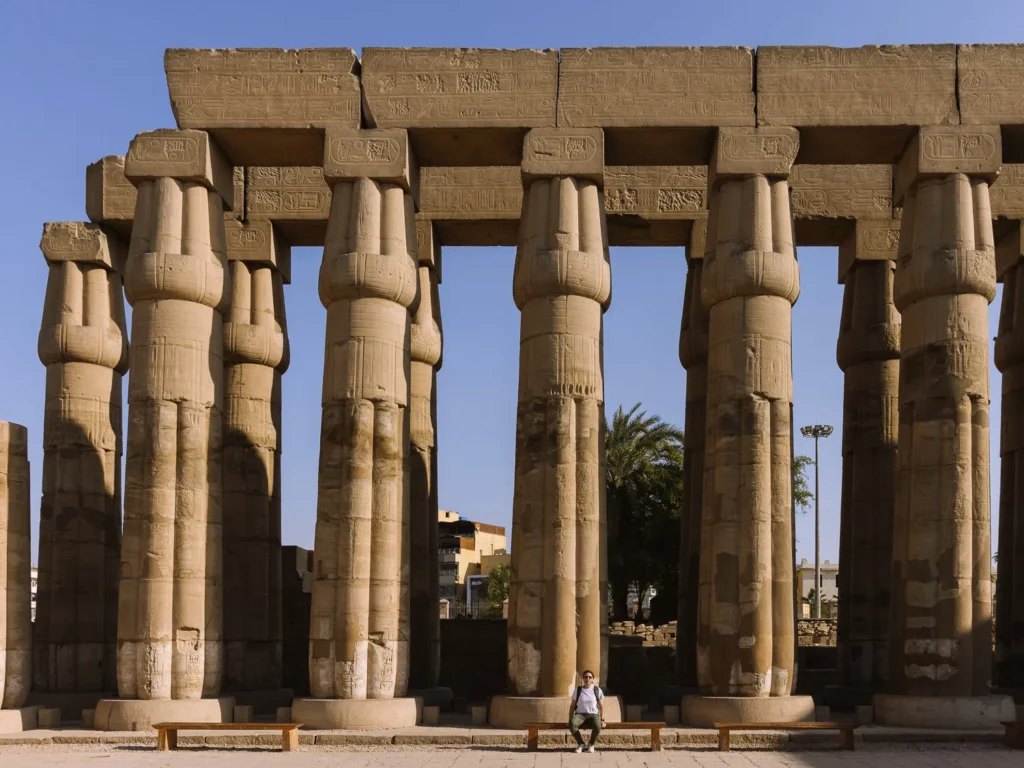
Inside, the Colonnade Hall features 14 towering papyrus-bud columns leading to the sun court and inner sanctuaries.
The 14th-century Abu Haggag Mosque, built within the temple complex, represents 4,000 years of continuous religious worship.
Practical Information
- Hours: 6:00 AM – 10:00 PM daily
- Cost: EGP 500 (US$ 10) for adults and EGP 250 (US$ 5) for students.
- Time needed: 1–2 hours
- Best time: Late afternoon through evening – visit at sunset and stay to see the temple illuminated at night
- Note: The temple is within walking distance of most Luxor hotels
7. Temple of Edfu (Temple of Horus)
Built between 237 and 57 BCE during the Ptolemaic period, Edfu is the best-preserved ancient temple in Egypt.
Dedicated to Horus, the falcon-headed sky god, it follows the traditional pharaonic temple design despite its relatively late construction.
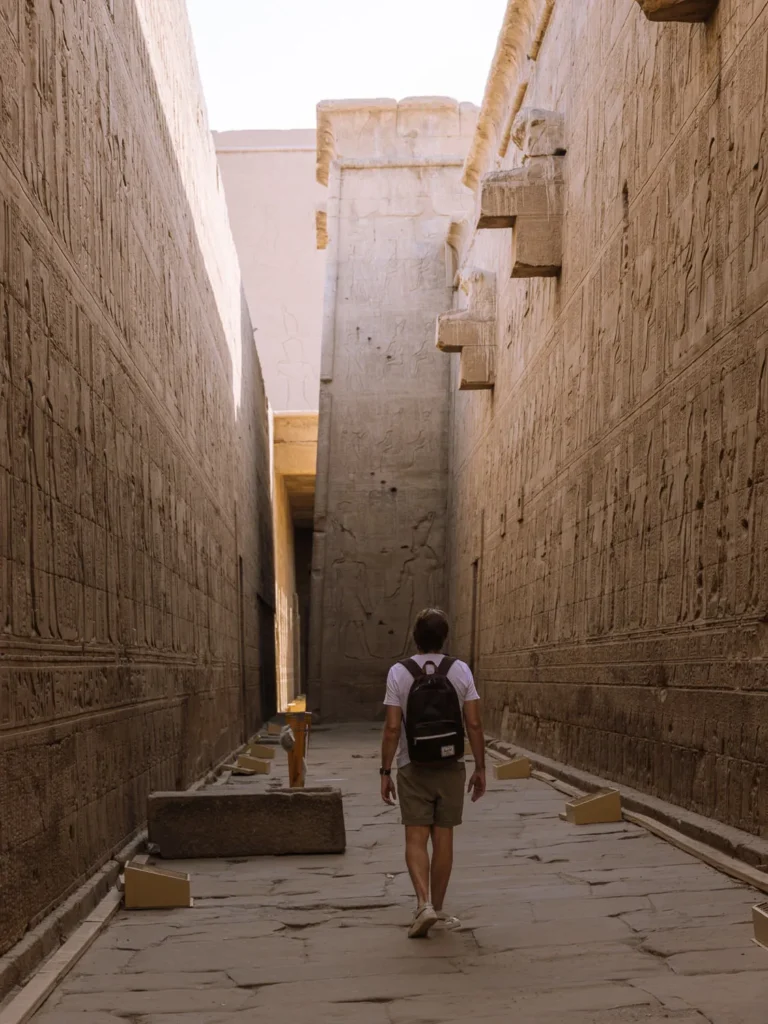
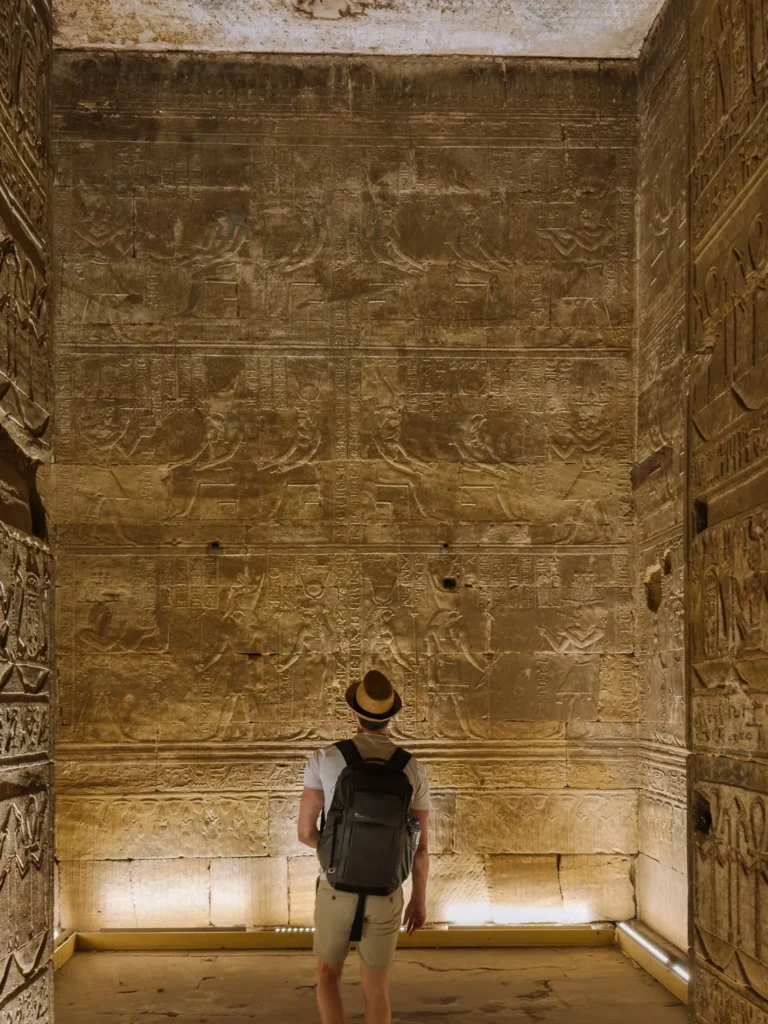
The towering main entrance conceals a large courtyard, huge columns and inner sanctuaries. The walls are covered with detailed reliefs and hieroglyphic inscriptions describing the famous conflict between Horus and Seth.
Detailed reliefs also depict the annual Festival of the Beautiful Meeting (when Hathor’s statue travelled from Dendera to ‘visit’ Horus).
The most remarkable thing about Edfu is its completeness.
The roof is intact, the walls are largely complete, and the hieroglyphs are extraordinarily clear. It’s one of the best examples of ancient Egyptian architecture you’ll find.
Practical Information
- Hours: 7:00 AM – 5:00 PM daily
- Cost: Approximately 300 EGP (US$6)
- Getting there: Most Nile cruises stop here; around 2 hours from Luxor or Aswan
- Time needed: 1.5–2 hours
- Best time: Morning before the heat and tour groups arrive
- Note: Horse-drawn carriages are a popular way to travel from cruise ships to the temple
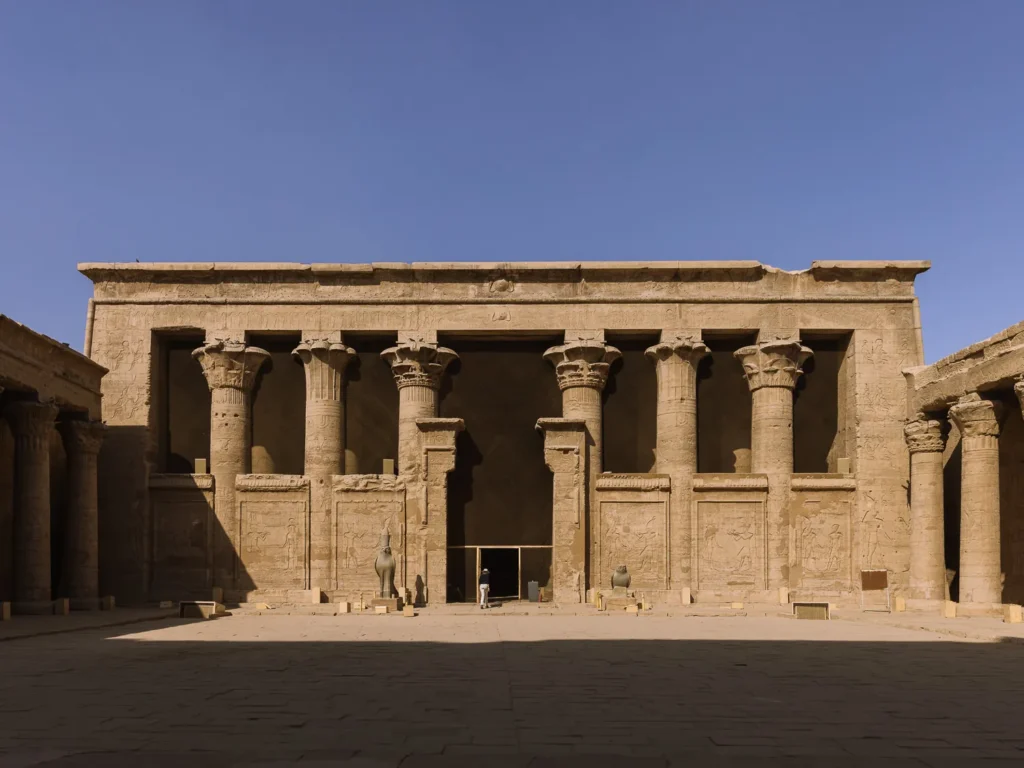
8. Medinet Habu
Medinet Habu is the mortuary temple of Ramesses III, built around 1186–1155 BCE during the 20th Dynasty.
Covering over 66,000 square metres, it is the second-largest ancient temple in Egypt. It served as both a religious complex and a fortified administrative centre.
If we had to choose one temple that made the greatest impression on us in Luxor, it would be Medinet Habu.
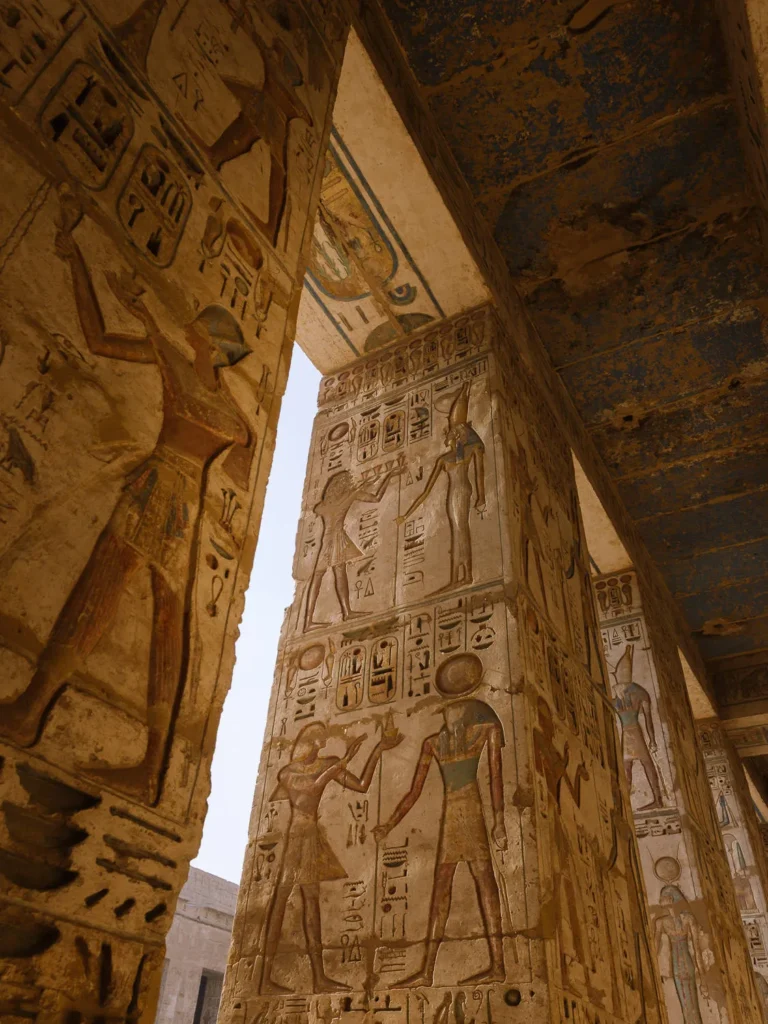
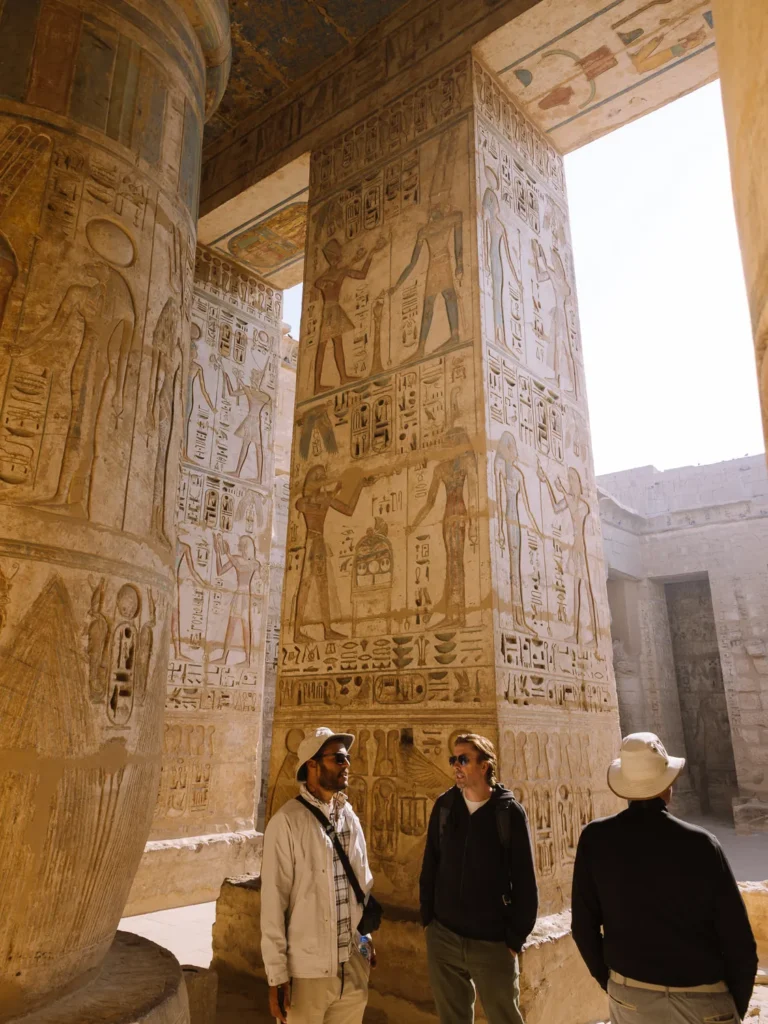
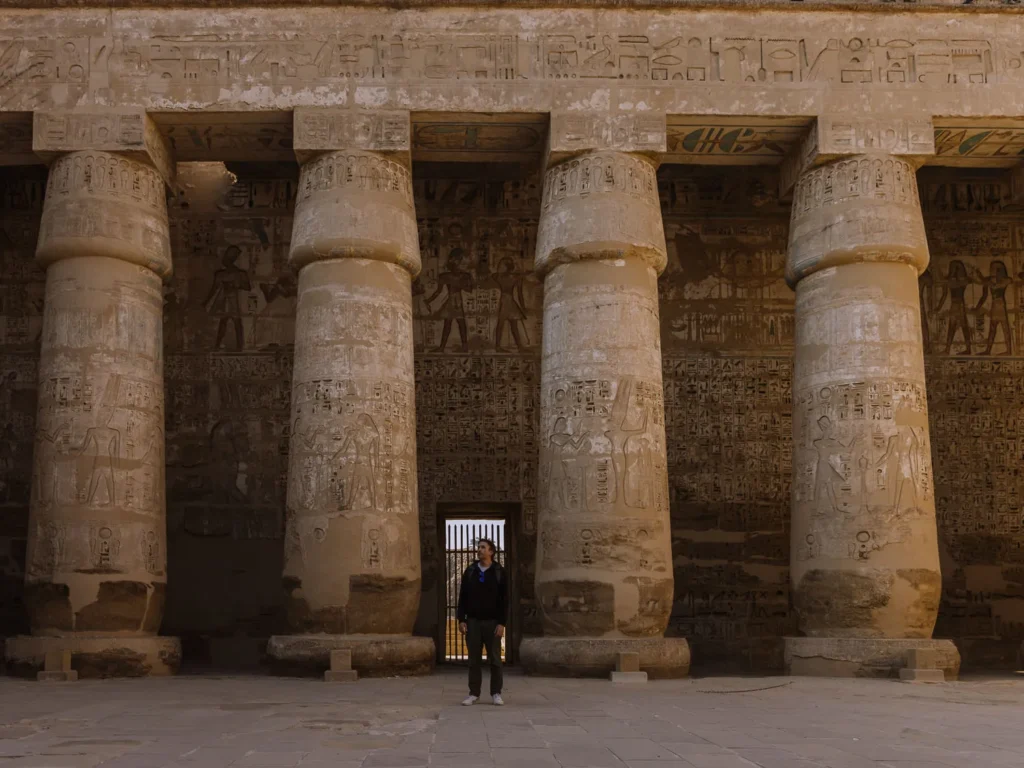
Inside, two massive courtyards feature colossal Osiride statues of Ramesses III and exceptionally well-preserved battle reliefs depicting the pharaoh’s victories over his enemies. They are among the most detailed military scenes in Egypt.
The painted columns in the second courtyard retain vibrant blues, reds and golds that look astonishingly fresh.
The hypostyle hall, inner sanctuaries and royal palace ruins showcase the temple’s dual function as both a religious and residential complex.
Practical Information
- Hours: Summer (April–September) 6:00 AM – 5:00 PM; Winter (October–March) 6:00 AM – 4:00 PM
- Cost: EGP 220 (US$5) for adults and EGP 110 (US$2) for students, making it a real bargain.
- Time needed: 1.5–2 hours
- Best time: Early morning for soft light on the reliefs and to avoid crowds
- Combine with: Valley of the Kings, Temple of Hatshepsut and Ramesseum (all on Luxor’s West Bank)
9. Kom Ombo
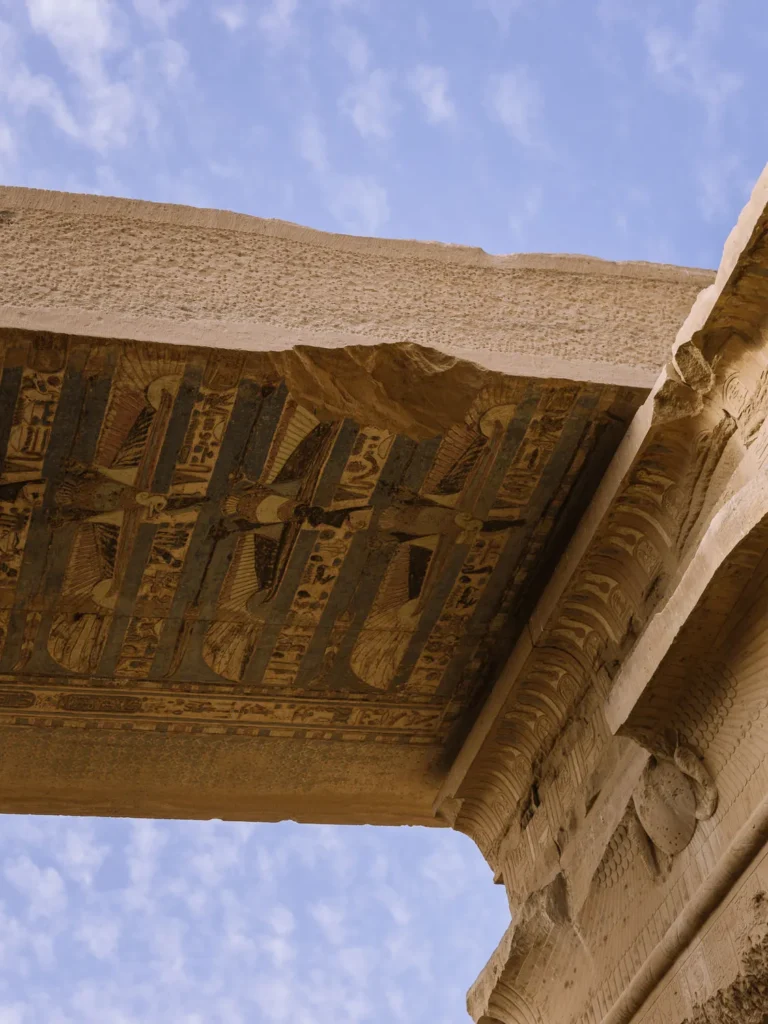
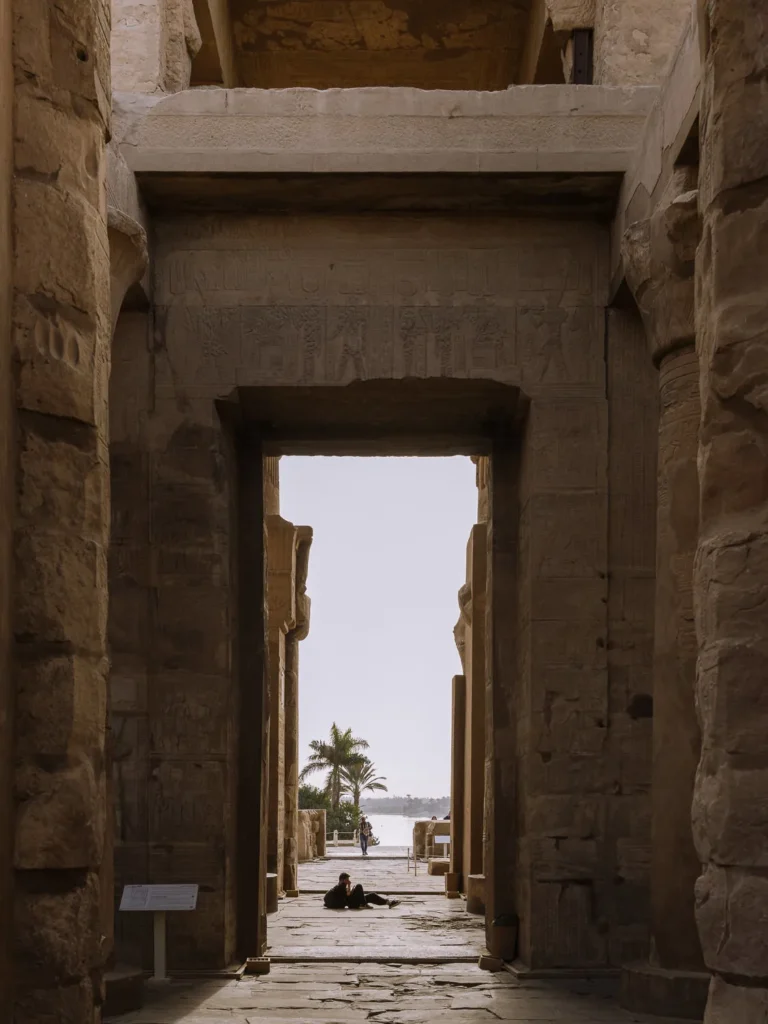
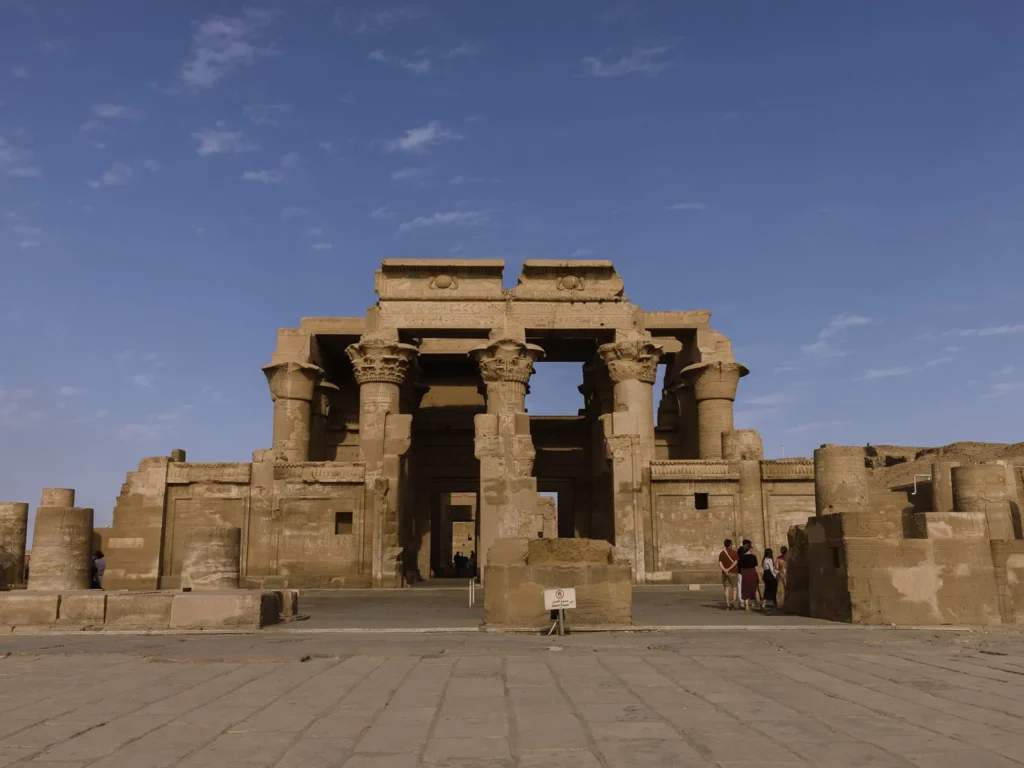
Built between 180 and 47 BCE during the Ptolemaic period, Kom Ombo is Egypt’s only double temple, dedicated to two gods: Sobek (the crocodile god of fertility) and Horus the Elder (Haroeris, the falcon-headed god of healing).
The remarkable feature of Kom Ombo is that it includes two of everything, arranged in perfectly symmetrical architecture: dual entrances, duplicate halls, twin sanctuaries and parallel courtyards.
The temple overlooks the Nile and features beautiful reliefs depicting medical instruments, calendars and religious scenes.
There is also a small crocodile museum nearby displaying mummified crocodiles that were sacred to Sobek.
It is not as well preserved as some other Egyptian temples, but the dual structure and riverside location make it well worth visiting.
Practical Information
- Hours: 7:00 AM – 8:00 PM daily (last entry 8:00 PM)
- Cost: Approximately 200–250 EGP (US$5), includes Crocodile Museum
- Time needed: 1–1.5 hours
- Best time: Late afternoon or sunset – many Nile cruises visit in the evening when the temple is beautifully illuminated
- Getting there: Most Nile cruises stop here between Luxor and Aswan; 47 km north of Aswan by taxi or tour
- Note: Bring cash – card payments may not be available
More Egypt Guides
- How to plan a 7- or 10-day Egypt itinerary.
- The best places to visit in Egypt.
- Essential tips for visiting Egypt: what to know before you travel.
- The best ancient temples in Egypt.
- Nile Cruise ship vs Dahabiya: which is the best experience?
- The best things to do in Cairo (including the Pyramids).
- Plan your trip with our 2- or 3-day itinerary for Cairo.
- All you need to know about visiting the Valley of the Kings.
- What to do in Aswan, Egypt’s southern escape.
- See the best and other great things to do in Luxor.
- Your complete guide to visiting the Pyramids of Giza.

reader-supported
When you buy through links on our site, we may earn a small affiliate commission at no extra cost to you.
Thanks for your support // Paul & Mark