

One of the world’s great cities, Bangkok delivers with ancient temples, buzzing neighbourhoods, and the best street food anywhere. Here’s our guide to the very best experiences and sights in Bangkok.
By: Paul Healy | Last Updated:
Bangkok is one of those cities that takes a little getting used to.
The first time I arrived, I wasn’t entirely sure what I’d let myself in for. The traffic, the pace, the noise, it’s all slightly disorienting.
But give Bangkok a day or two, and you start to understand its rhythm.
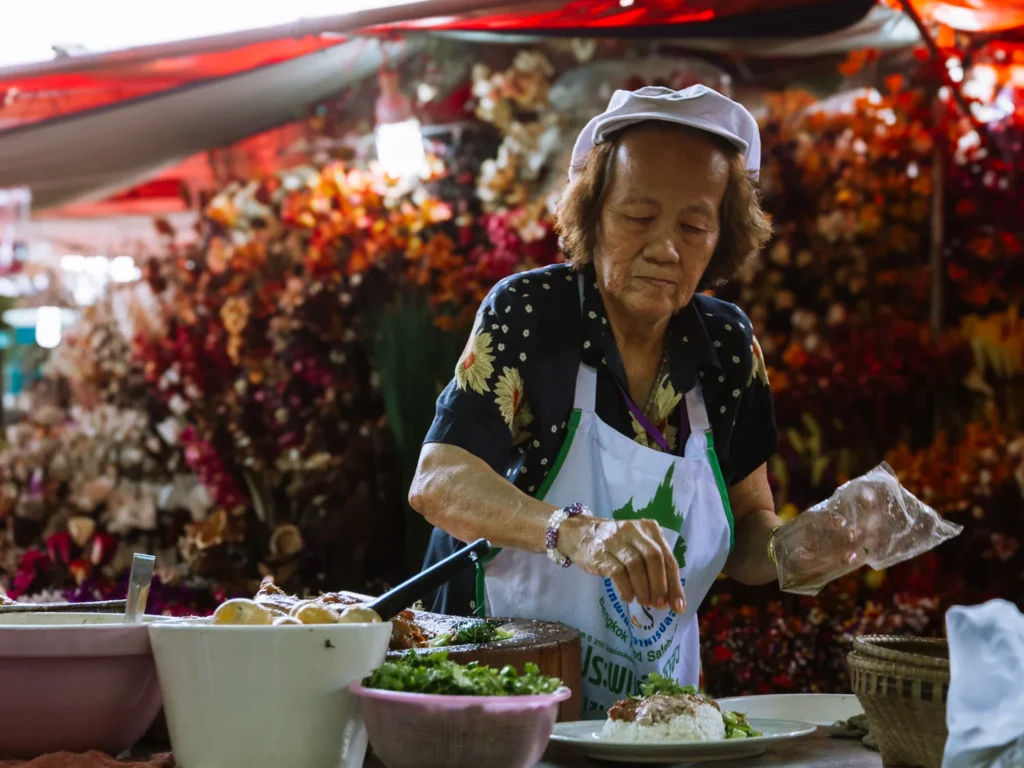
I found myself drawn to side streets following the smell of something incredible cooking on a grill. Stumbling across markets buzzing with life. Wandering into a temple I didn’t know existed, wedged between a 7-Eleven and a tuk-tuk repair shop.
Bangkok never stops surprising you.
It’s ancient and ultramodern, chaotic and serene, spiritual and hedonistic.
We’ve been to Bangkok several times now as a handy layover between London, where I live, and Melbourne, where I’m from.
This guide covers what we think are the best things to do, the best streets to explore, and the practical information you need to make the most of your visit.
Map: Things to Do in Bangkok
Bangkok’s major attractions are spread across a wider area than many cities, but the BTS Skytrain and the Chao Phraya River Express Boat make getting around easy. The map below contains all the Bangkok attractions listed in this guide.
To help you put the city together, you might find our Bangkok itinerary useful, which has a detailed plan for 3-5 days.
Top Things to Do in Bangkok
There’s no shortage of things to do in Bangkok. But if we had to pick, these are the attractions we think you really shouldn’t miss.
1. The Grand Palace & Wat Phra Kaew
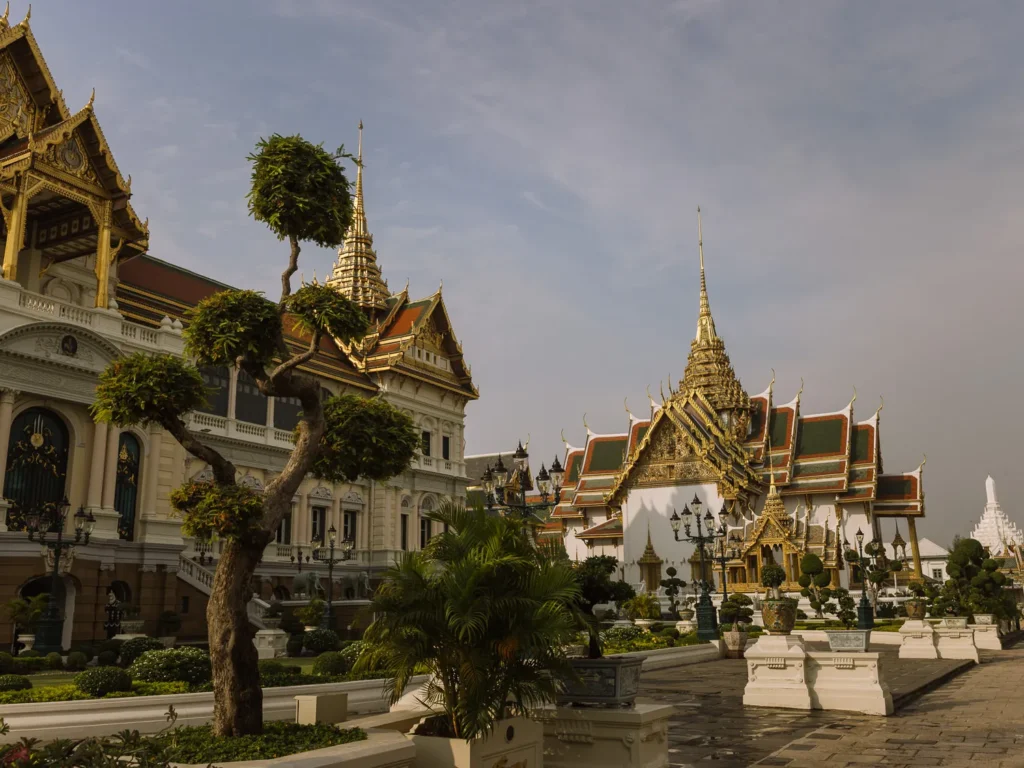
The Grand Palace is the undisputed centrepiece of Bangkok.
Built in 1782 as the official residence of the Thai King, it remains one of the most astonishing architectural complexes in Southeast Asia.
The grounds contain dozens of buildings, courtyards, and gardens. Even if you only scratch the surface, you’ll need at least two to three hours to take it all in.
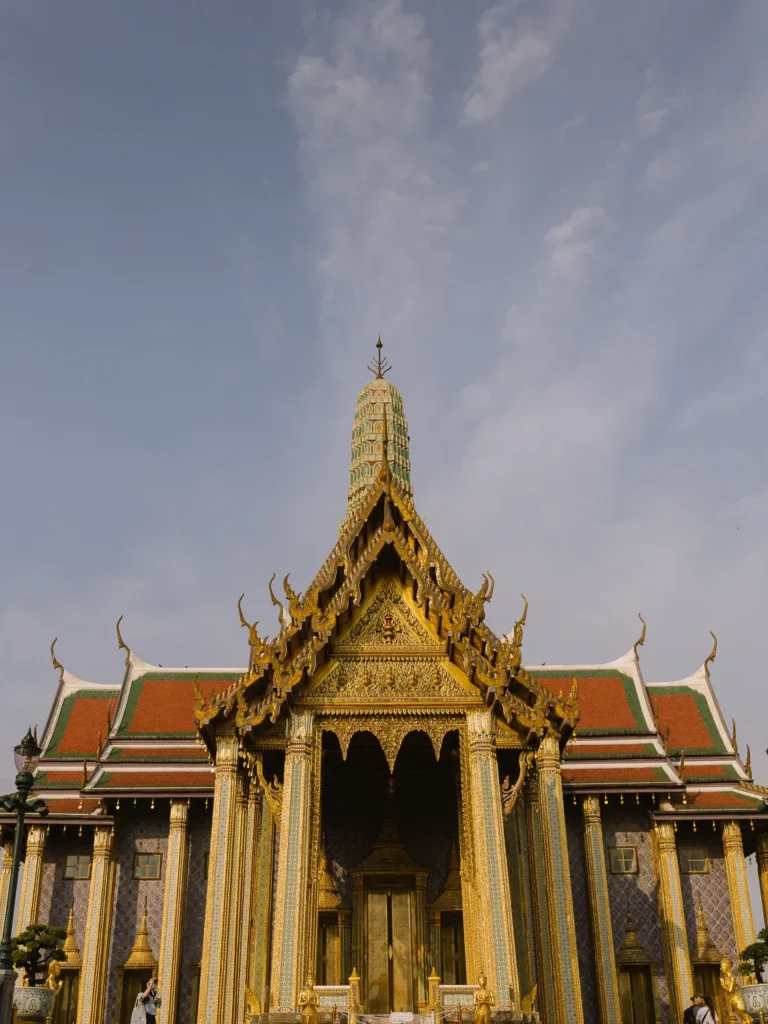
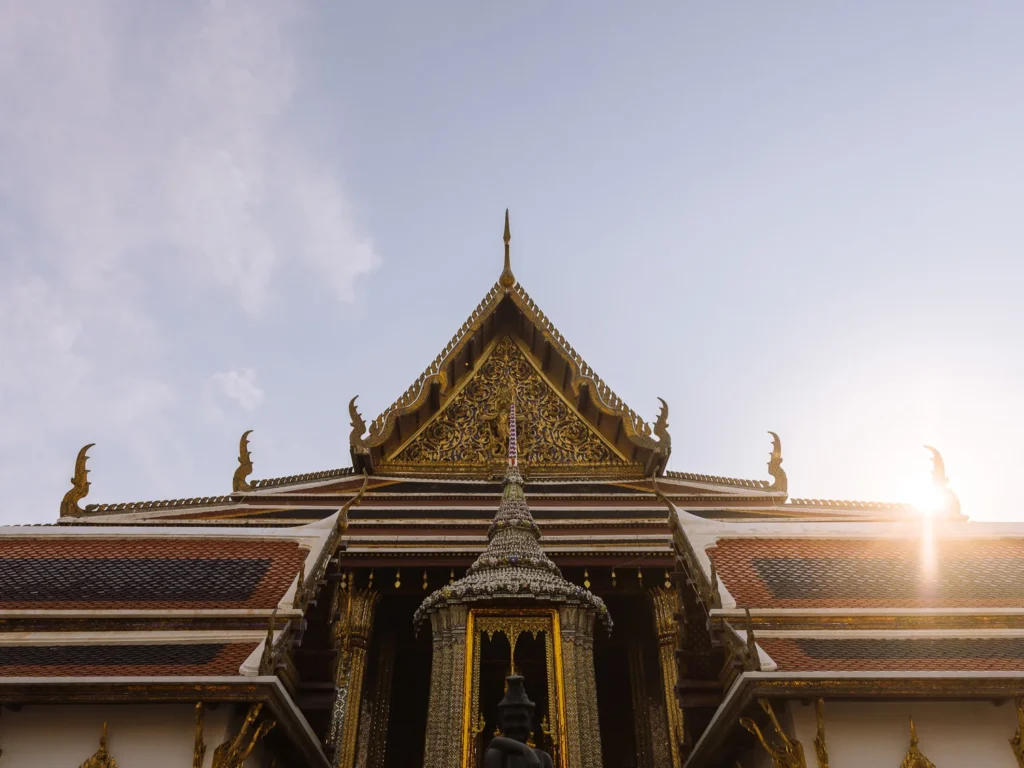
The highlight is Wat Phra Kaew, the Temple of the Emerald Buddha, which sits within the palace complex.
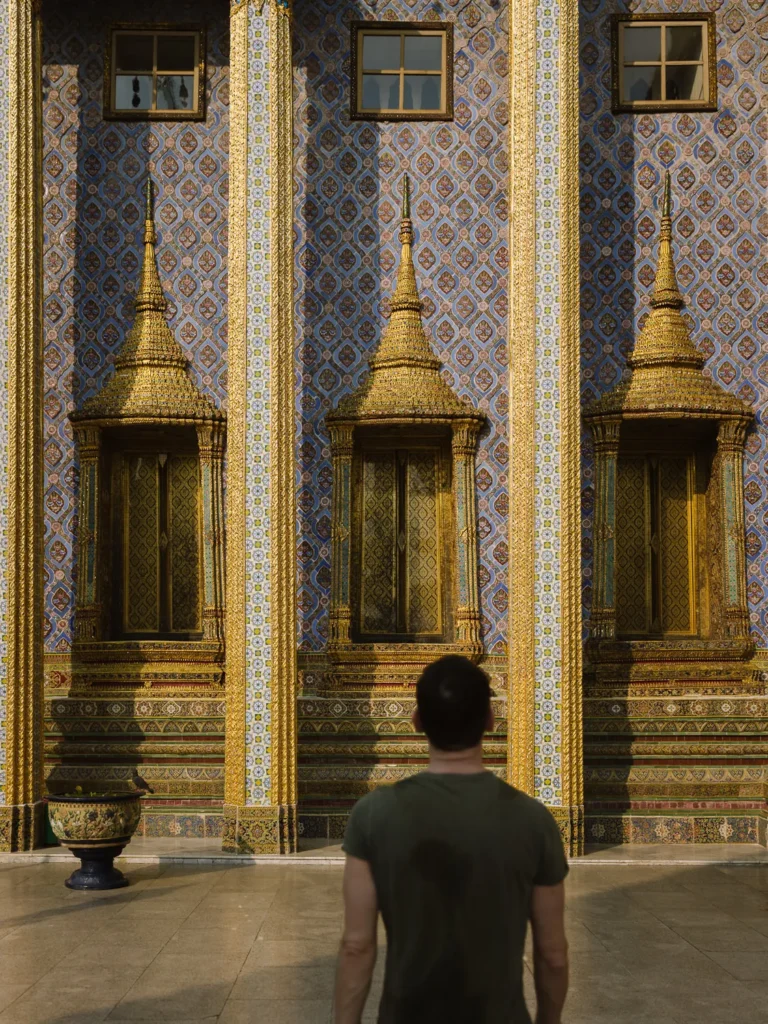
The Emerald Buddha itself is surprisingly small, but the surrounding buildings are what you’re here to see. Golden spires, intricate mosaic walls, mythological guardian statues, and murals of the Ramakien.
Some things to note before you go:
Dress code is strictly enforced. You need to cover your shoulders and knees. Sarongs and trousers are available to borrow at the entrance if you need them.
Arrive early. By mid-morning, it is seriously crowded, and the heat inside the complex is relentless. We suggest being at the entrance when it opens at 8:30 AM.
Tuk-tuk drivers near the palace may tell you it is closed for a special ceremony and offer to take you to a “better temple.” This is a well-known scam. The Grand Palace is very rarely closed.
Tickets: Entry is 500 THB (approximately €13) and includes access to the Vimanmek Mansion, the Dusit Palace, and other royal museums.
Guided Tour // This guided tour includes the Grand Palace, Wat Pho, and Wat Arun. It’s an excellent option to see many of Bangkok’s greatest sights.
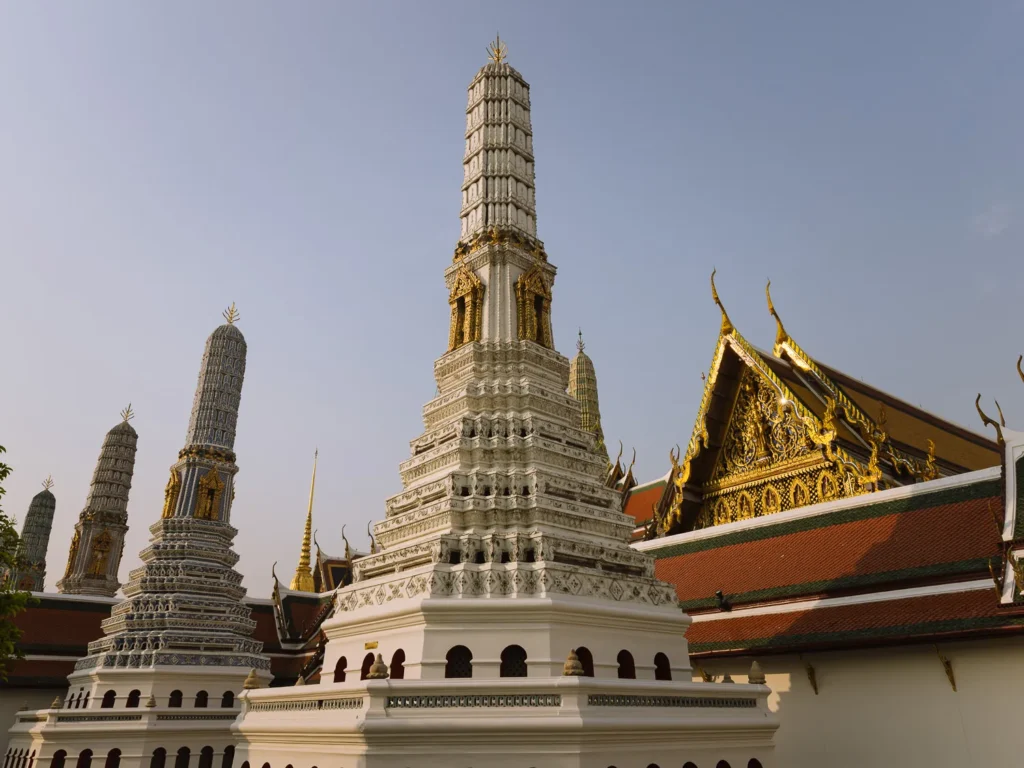
2. Wat Pho (Temple of the Reclining Buddha)
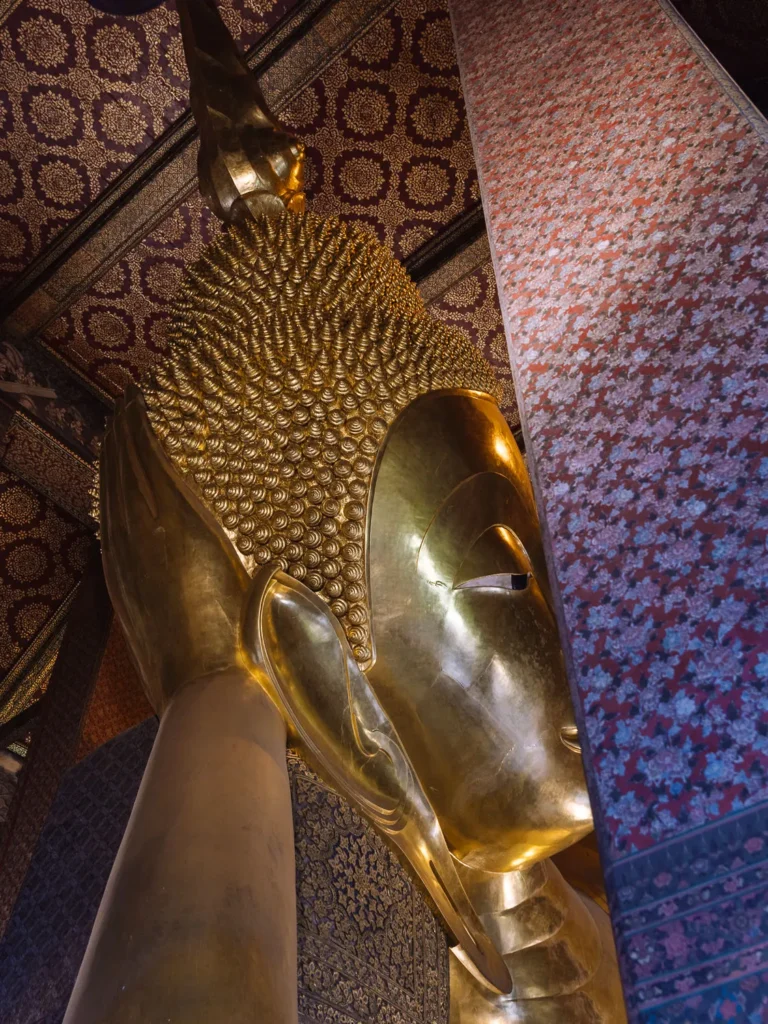
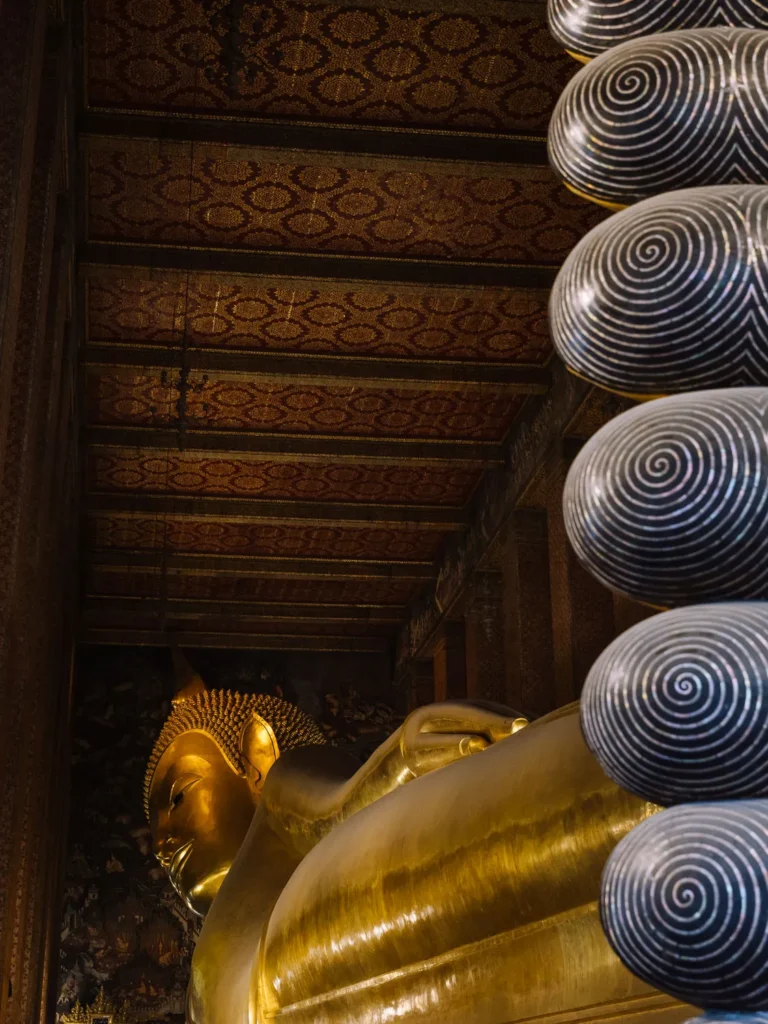
Just a short walk south of the Grand Palace, Wat Pho is Bangkok’s oldest and largest temple complex. It is most famous for its colossal Reclining Buddha: a 46-metre gilded figure that fills an entire building.
The statue is so large that you can’t take it all in at once. The soles of the feet alone are 5 metres tall.
Wat Pho is also the birthplace of traditional Thai massage, and there is an excellent school on-site.
A one-hour traditional massage here costs around 420 THB. It is not the cheapest option in the city, but the setting is hard to beat, and the quality is very good.
3. Wat Arun (Temple of Dawn)
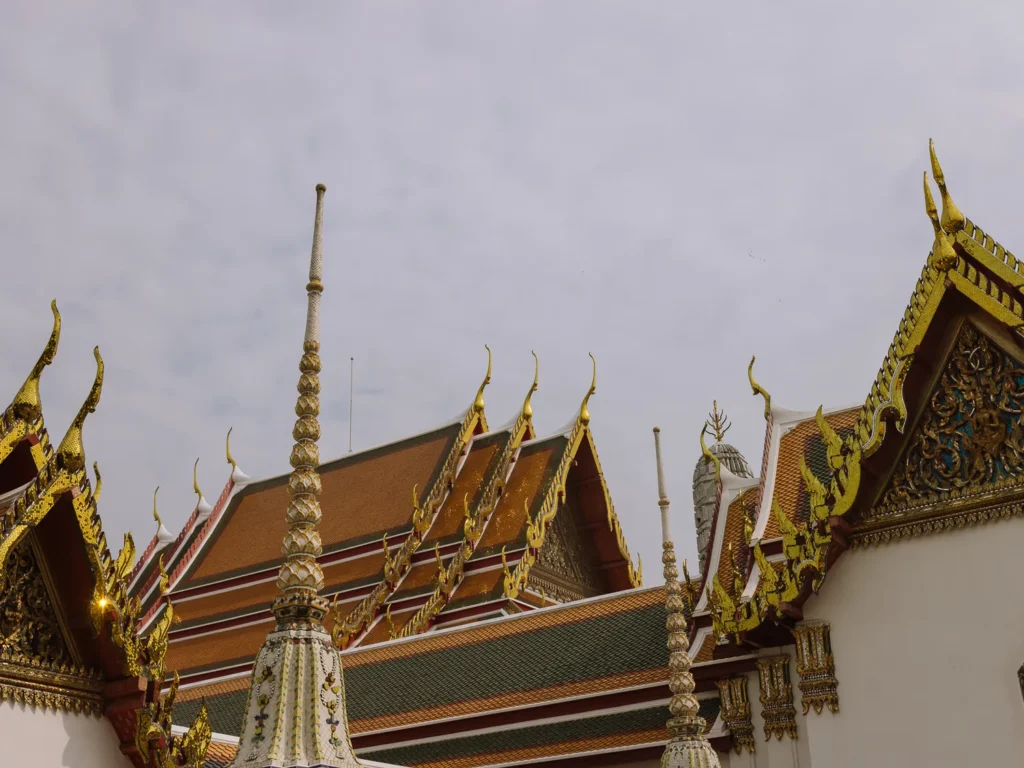
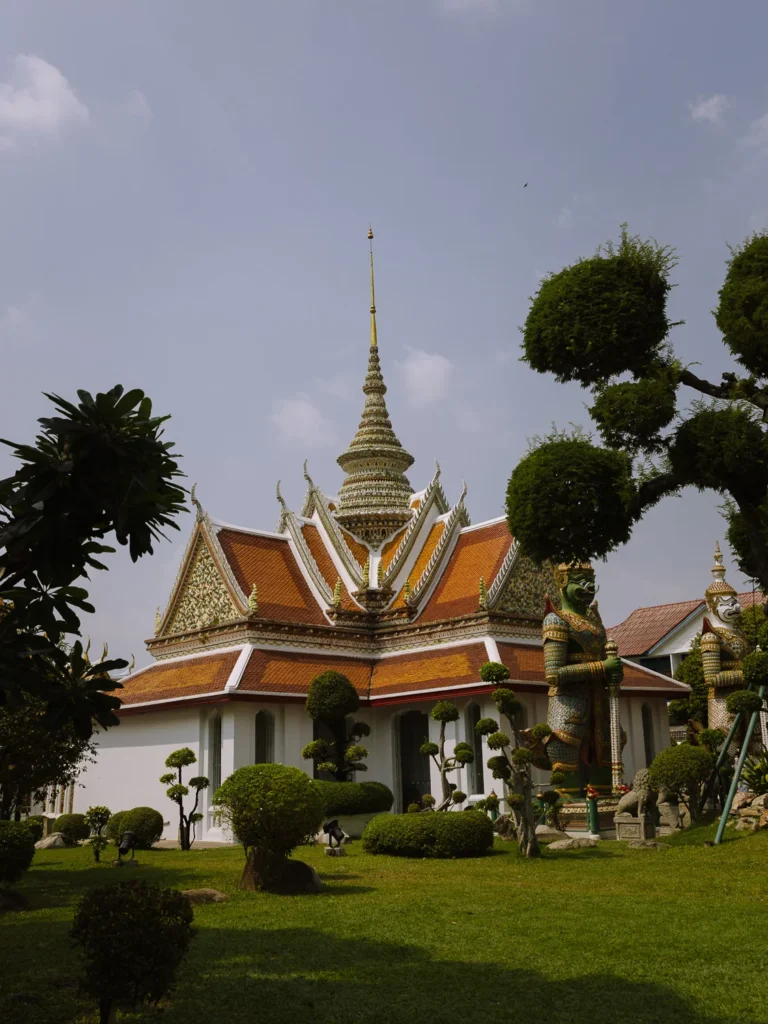
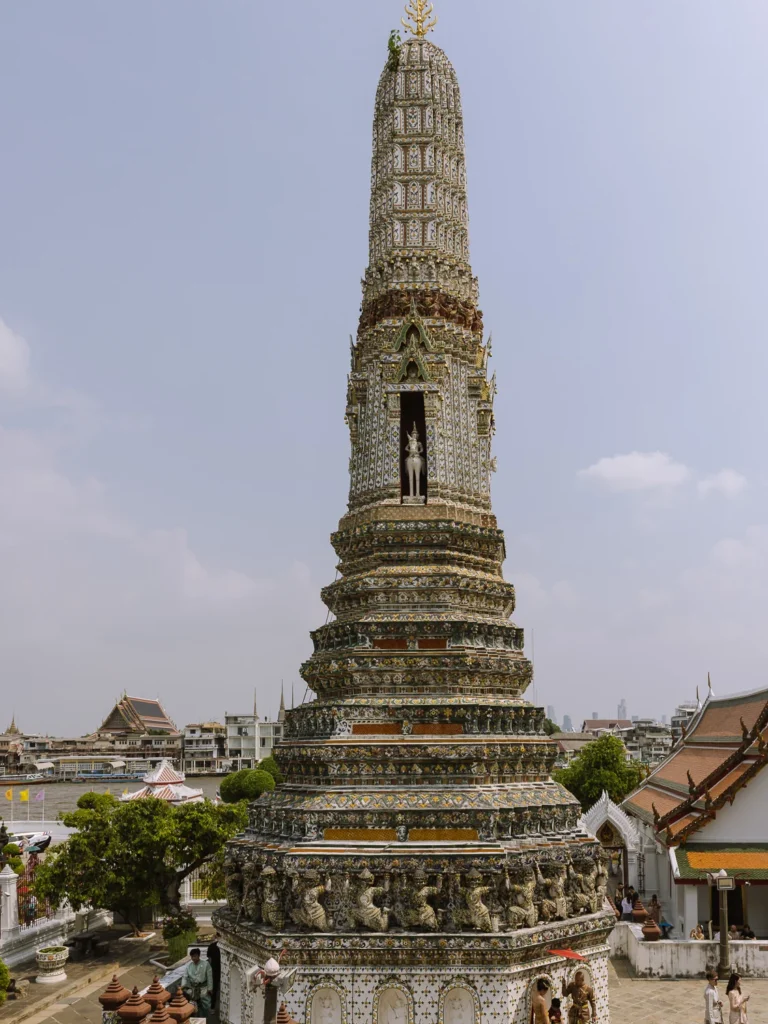
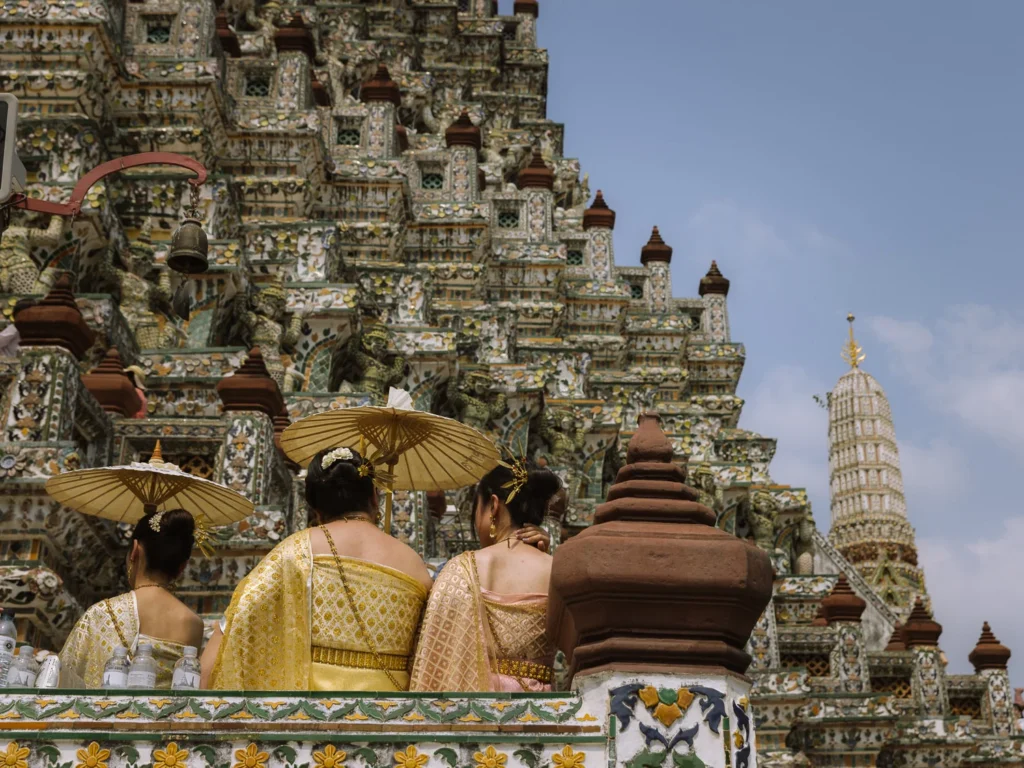
Wat Arun stands on the western bank of the Chao Phraya River, directly opposite Wat Pho, and it is one of Bangkok’s most photogenic landmarks.
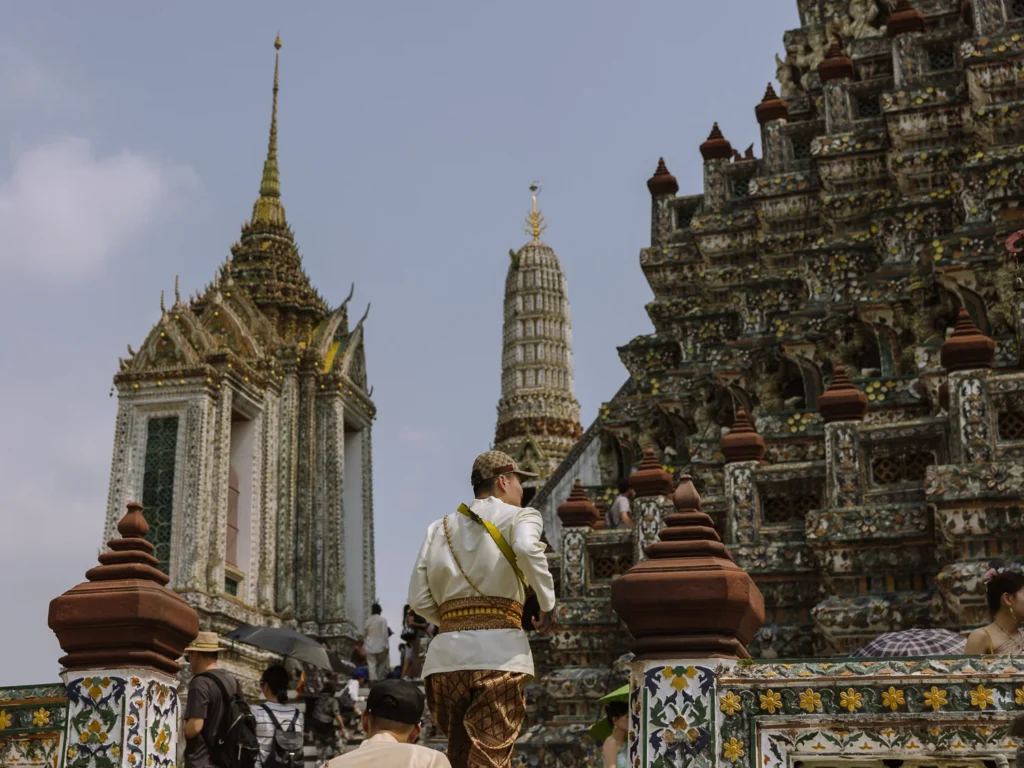
The central prang (tower) rises 86 metres and is entirely encrusted with colourful porcelain and seashells. The effect in morning or evening light is spectacular.
It looks extraordinary from the river, but it’s also very much worth crossing over to explore it up close.
You can climb the steep steps to the second tier of the central tower, which offers a good view across the river to the Bangkok skyline.
The best way to get here is by the cross-river ferry from the pier near Wat Pho. The crossing takes about two minutes and costs 5 THB.
4. The Chao Phraya River & the Klongs
One of the most interesting things to do in Bangkok is to spend time on its waterways.
The Chao Phraya River Express Boat is one of the most practical and enjoyable ways to move around the city.
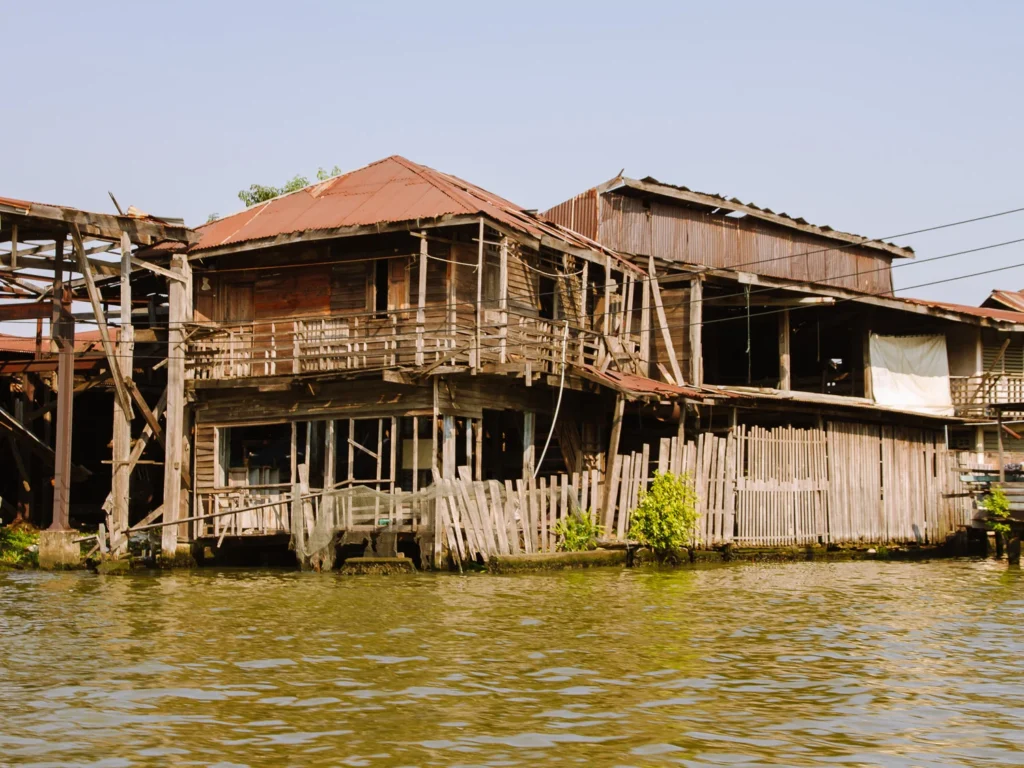
For around 15 THB per journey, you get a window seat on one of Bangkok’s great thoroughfares, passing temples, markets, luxury hotels, and wooden riverside houses.
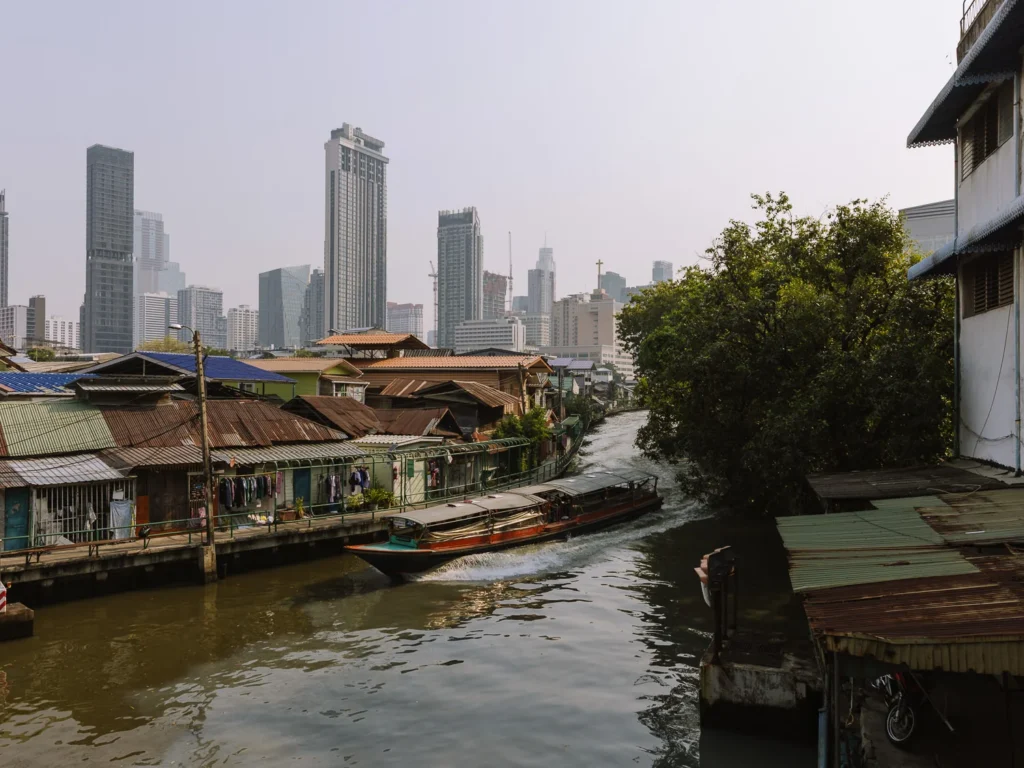
The network of canals (klongs) branching off the river gives you a deeper look at the city’s older, quieter side.
Many of Bangkok’s residents still live along these canals, and life here moves at a completely different pace from the main streets.
We took this longtail boat tour, which passes Wat Arun and then winds through the narrow canals past Bangkok’s wooden stilted homes.
We used the canals to get to Jim Thompson House, which is a great way to arrive. We cover the details in our 3-5 day Bangkok itinerary.
5. Street Food
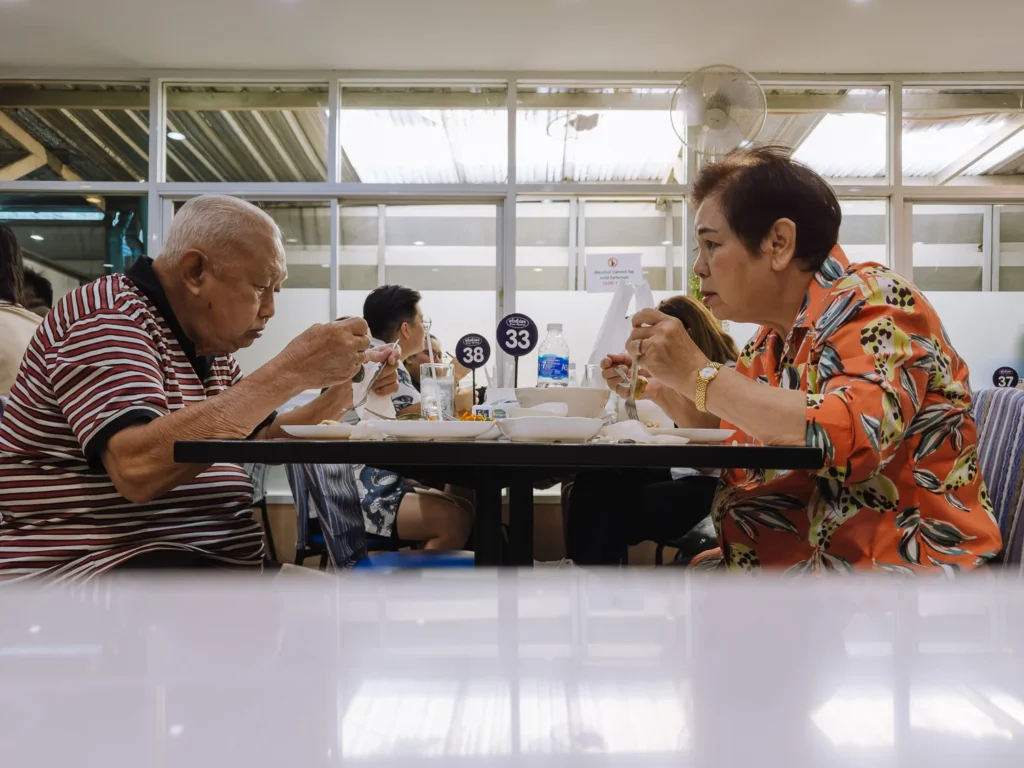
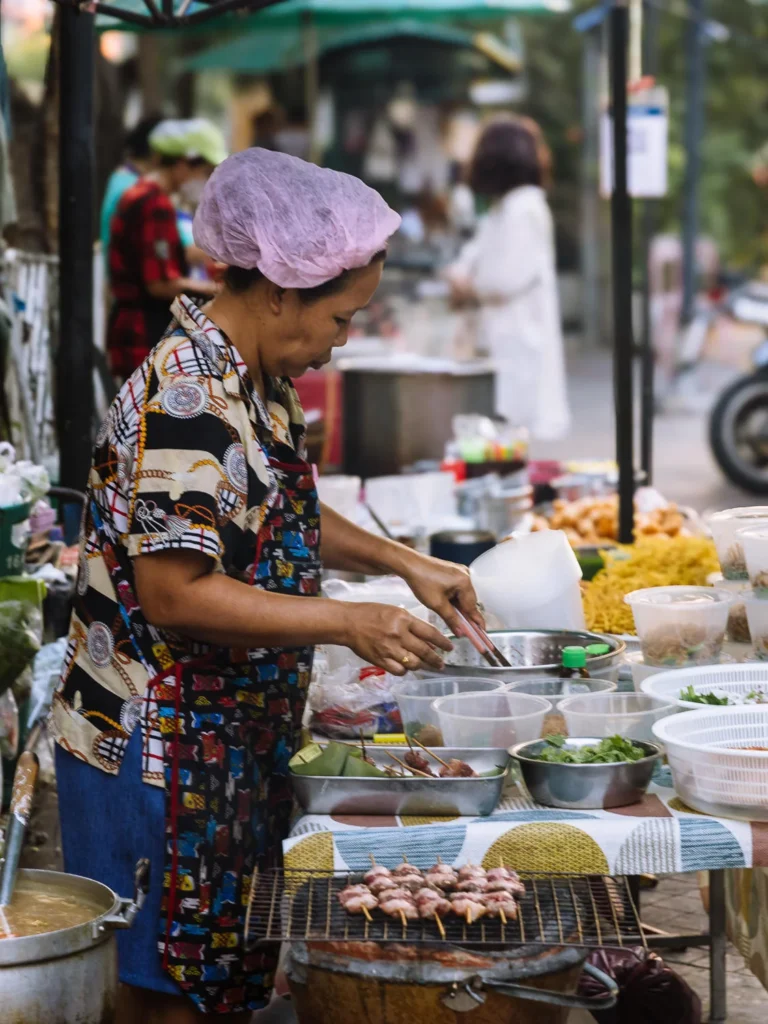
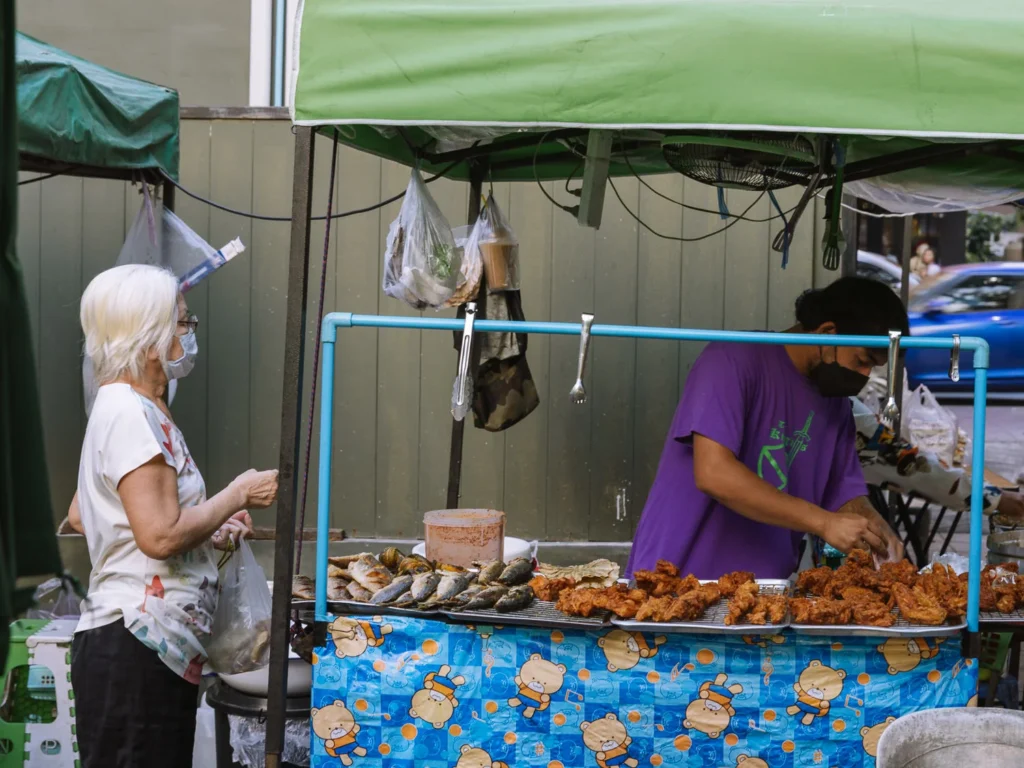
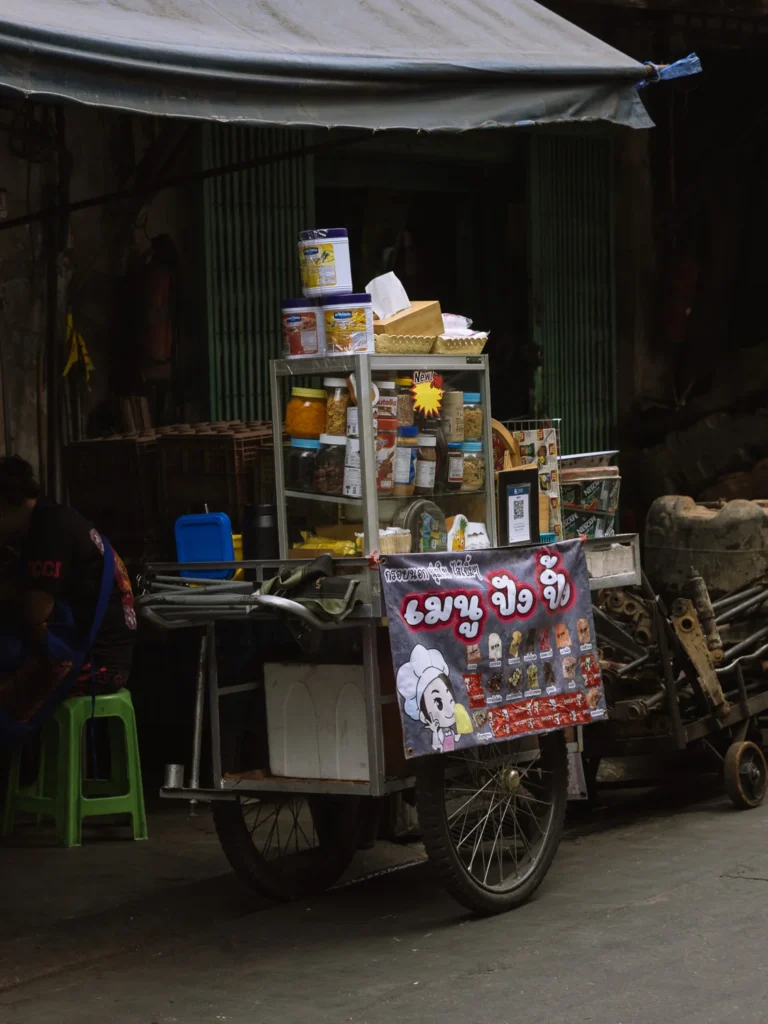
Bangkok’s street food scene is one of the best in the world. You could eat at a different stall every meal for a week and barely repeat yourself.
The quality is phenomenal, and it’s extremely cheap.
Here are some of our favourite spots:
Banthat Thong Road
Banthat Thong Road is one of Bangkok’s most exciting street food strips and is almost entirely off the tourist radar.
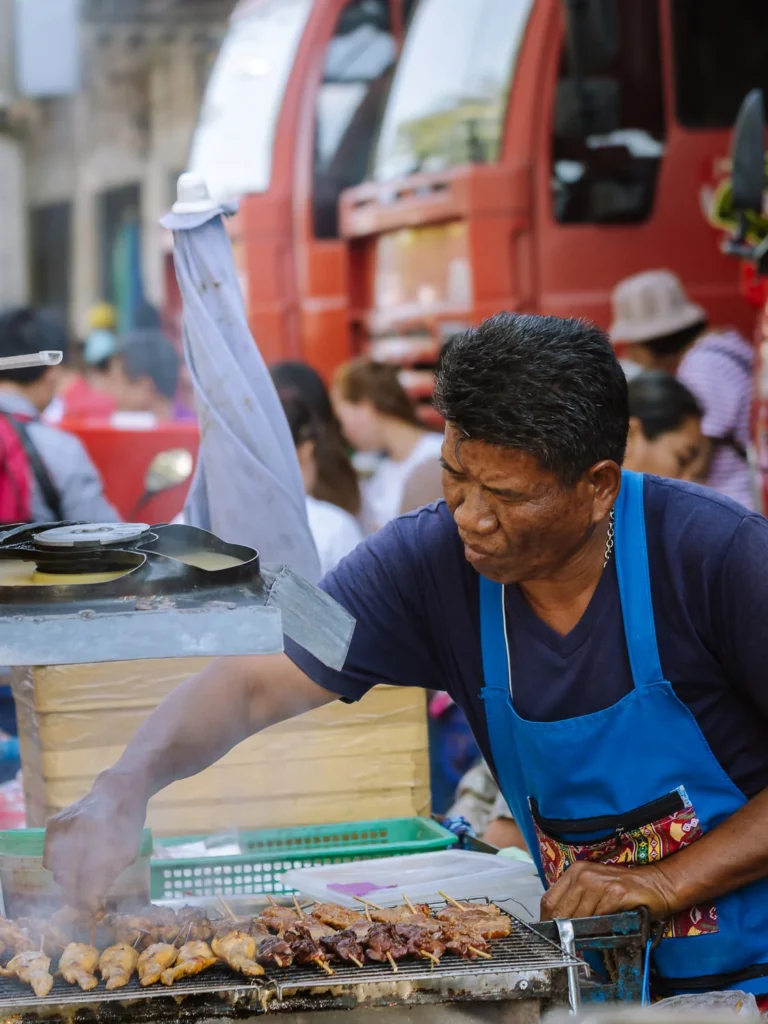
The road comes alive in the evenings with a dense run of stalls serving grilled meats, noodle soups, and Thai curries to an almost exclusively local crowd.
We also love places without English menus, and this is one of them. Point at what looks good on a neighbouring table, and you’re unlikely to be disappointed.
Yaowarat Road (Chinatown)
Bangkok’s Chinatown is one of the world’s great food streets. In the evenings, the pavements fill with grills, steamers, and woks producing some of the city’s best seafood, dim sum, and street snacks. Get there around 7 PM and eat your way along the strip.
Or Tor Kor Market
A clean, well-organised, fresh produce market near Chatuchak. The quality of fruit alone is worth a visit. The prepared food section upstairs has some of the best som tam (papaya salad) we’ve had in Bangkok.
Chatuchak Weekend Market
More on this below, but the food section here is excellent.
6. Chatuchak Weekend Market
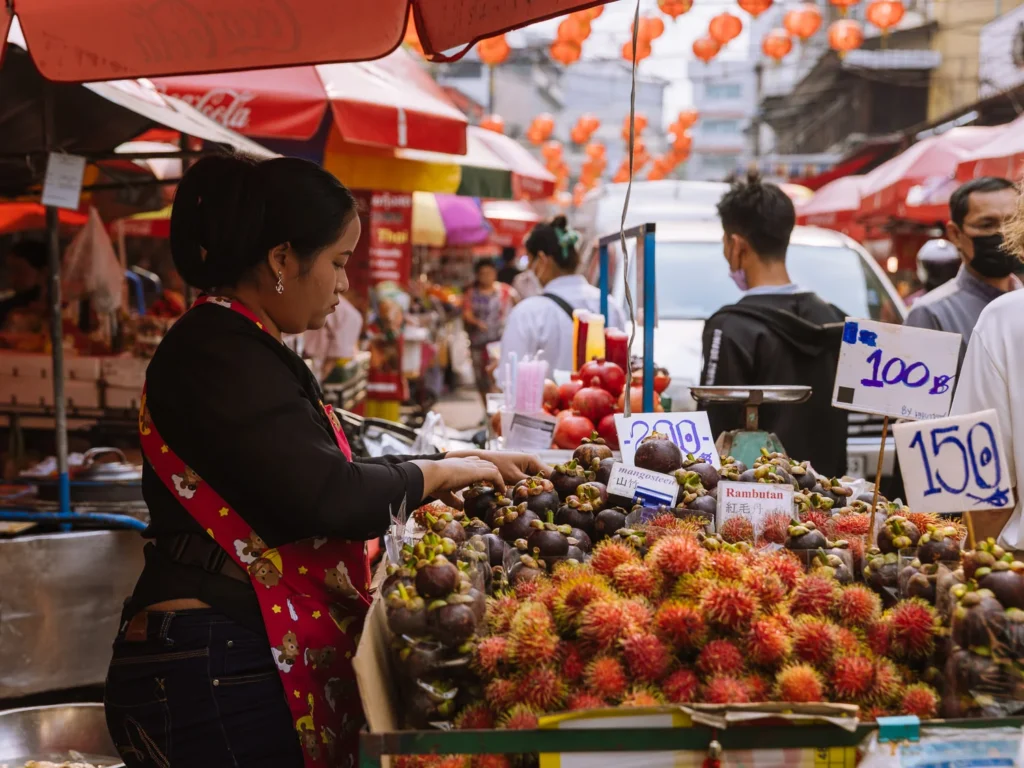
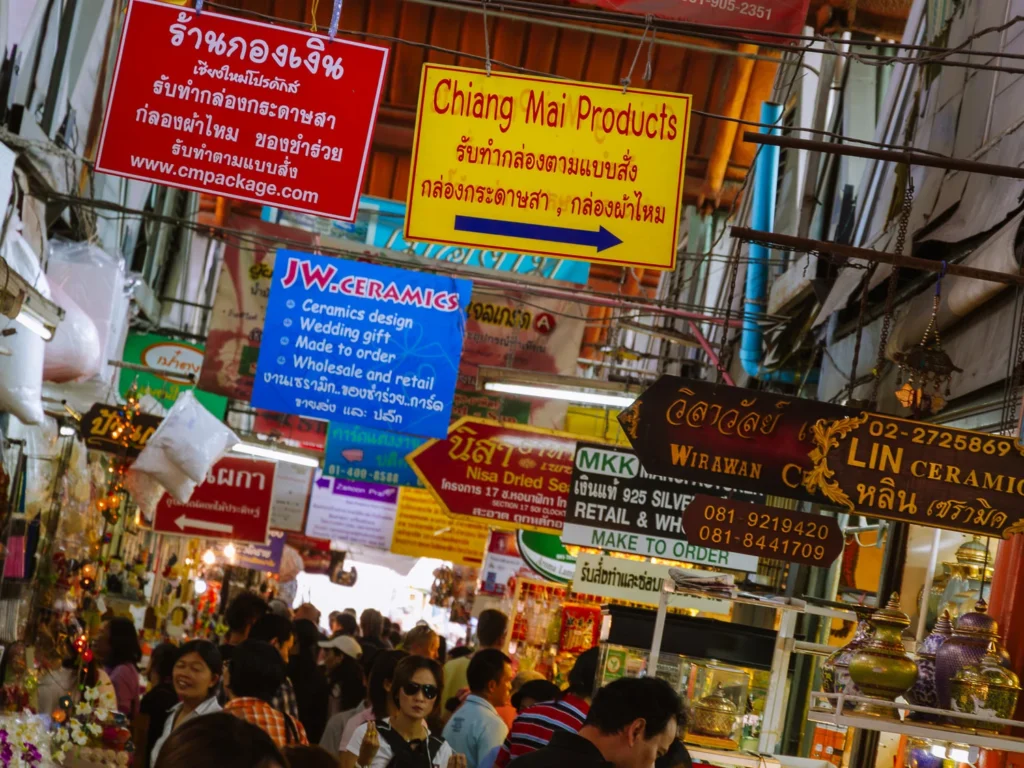
Chatuchak is one of the largest markets in the world. It operates on Saturdays and Sundays and contains over 8,000 stalls spread across 27 acres, divided into 27 sections.
You can find almost anything here: antique furniture, vintage clothing, handmade ceramics, local art, plants, street food, live animals, religious artefacts, you name it.
The layout is a labyrinth, and getting lost is part of the experience.
The market produces its own maps, and there are colour-coded signposts, but even with these, we found it more enjoyable to just wander and see what we discovered.
A few practical tips: go early (the market opens at 9 AM), bring cash, and wear light clothing.
There is a food section near Section 26/27 that is a good place to stop and regroup.
We combined Chatuchak with Lumpini Park in Siam, which is a good way to do it if you have the time. All the details are on our Bangkok itinerary.
7. Take a Food Tour
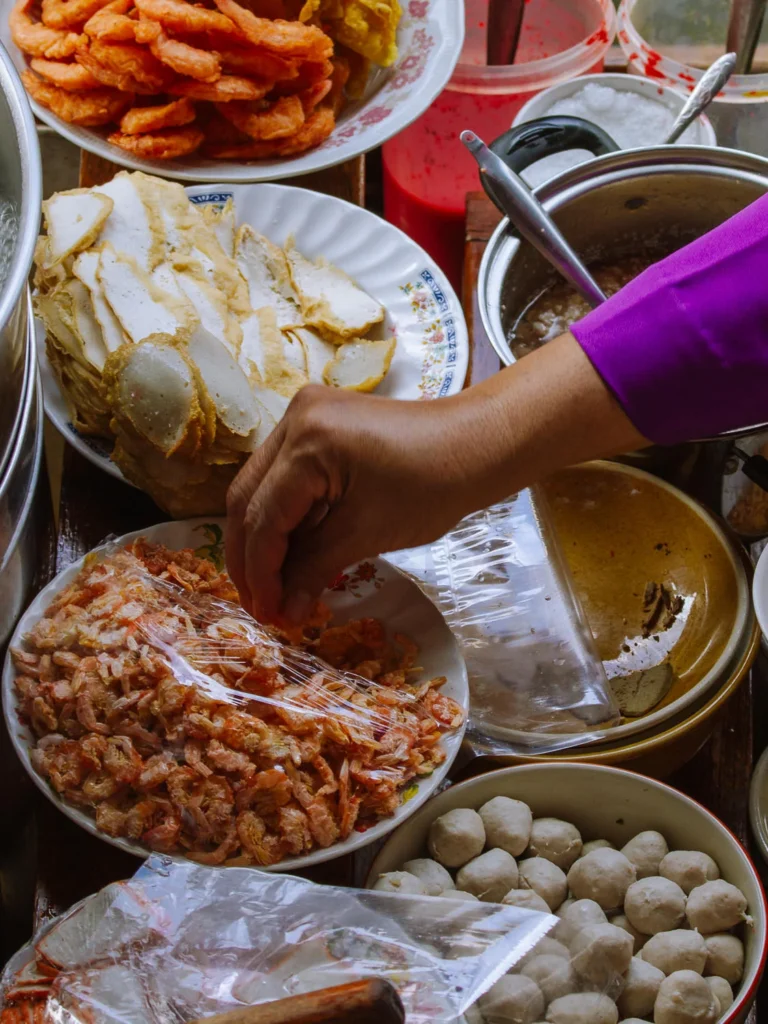
If there is one city we’d recommend a food tour in, it’s Bangkok.
Thailand has incredible food in general, but there are so many dishes we had never even heard of until we had someone explain them all to us.
For us, this is one of those unmissable Bangkok experiences. Here are a few to consider.
Bangkok Backstreets Food Tour with 15+ Tastings: Consistently one of the highest-rated food tours in Bangkok on both GetYourGuide and Viator. Groups are capped at 8 people, with 2 guides per group. You’ll try 15 tastings across markets, street stalls, and local spots in Chinatown.
Midnight Food Tour by Tuk-Tuk: A great option if you want to combine food with sightseeing. The tour covers the old city by tuk-tuk, stopping at local street food spots before finishing with drinks at a rooftop bar. Book via GetYourGuide.
Old Siam Food Tour with 15+ Tastings: This one stands out for its use of multiple modes of transport — a khlong boat, a tuk-tuk, and plenty of walking through Nang Loeng district. Small groups of up to 8 with stops at Shell Shuan Shim-recommended vendors, Thailand’s equivalent of the Michelin Guide. Book via GetYourGuide.
Michelin Guide Street Food Tour by Tuk-Tuk: A shorter, more focused option centred on Chinatown, visiting food stalls recommended in the Michelin Guide. This is a good choice if you want a taster rather than a full evening commitment. Book via GetYourGuide.
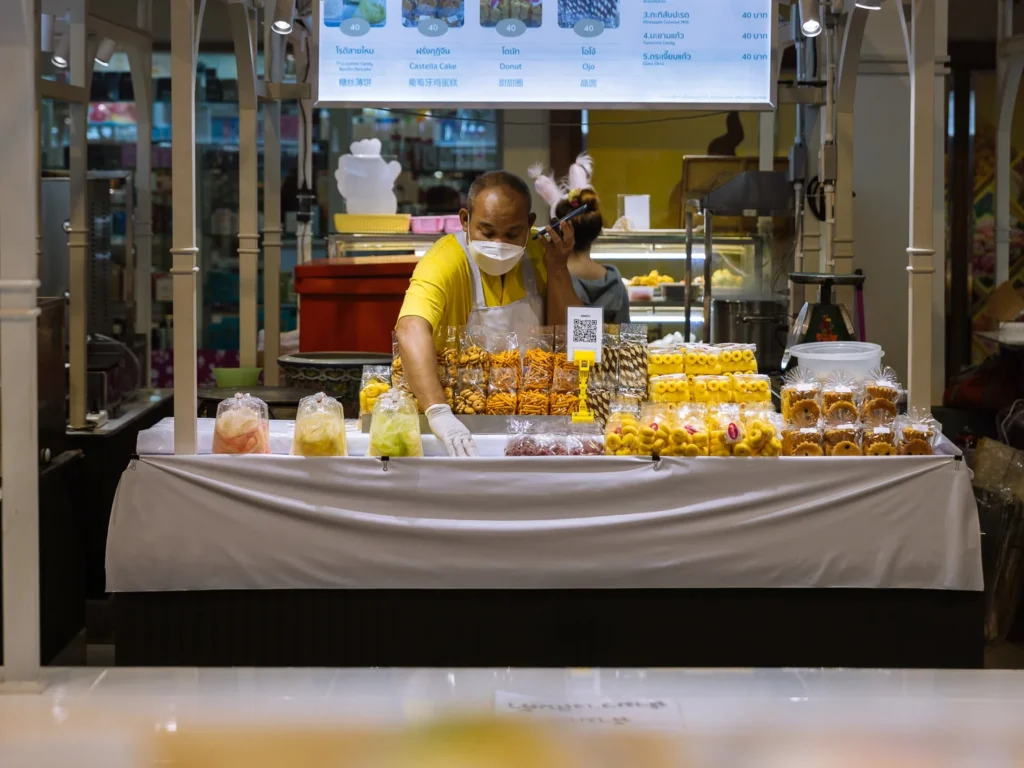
8. Bangkok’s Best Temples
Beyond the Grand Palace and Wat Pho, Bangkok has dozens of temples worth visiting. Here are three that we particularly loved and think are easy to add to your itinerary.
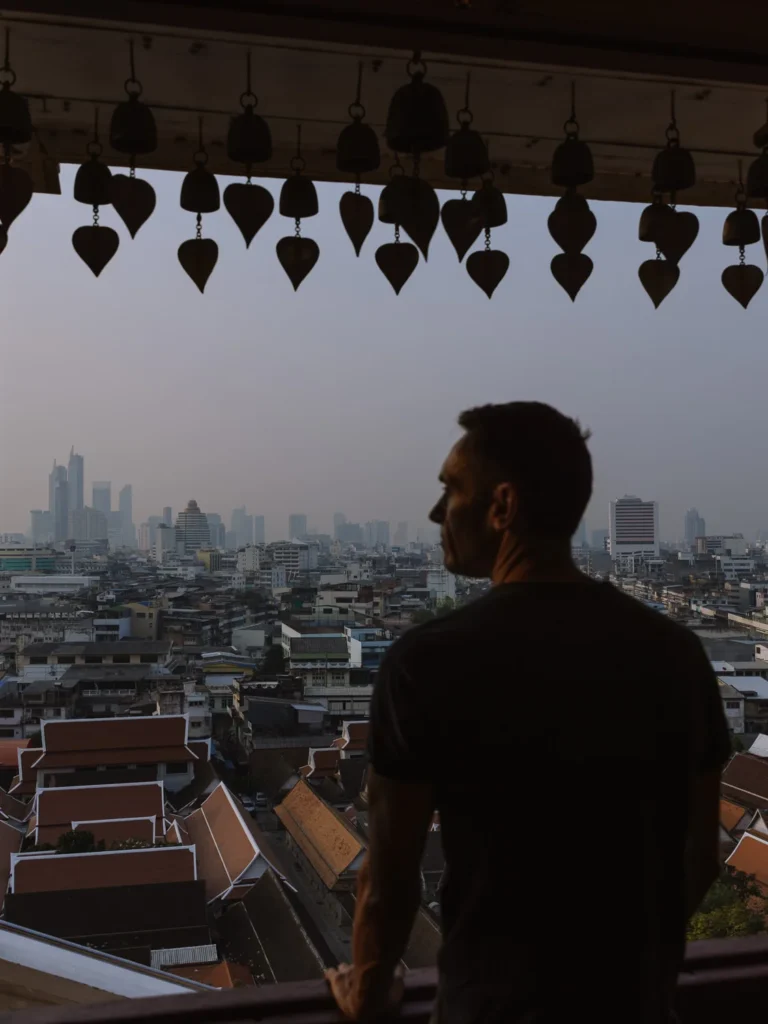
Wat Saket (the Golden Mount)
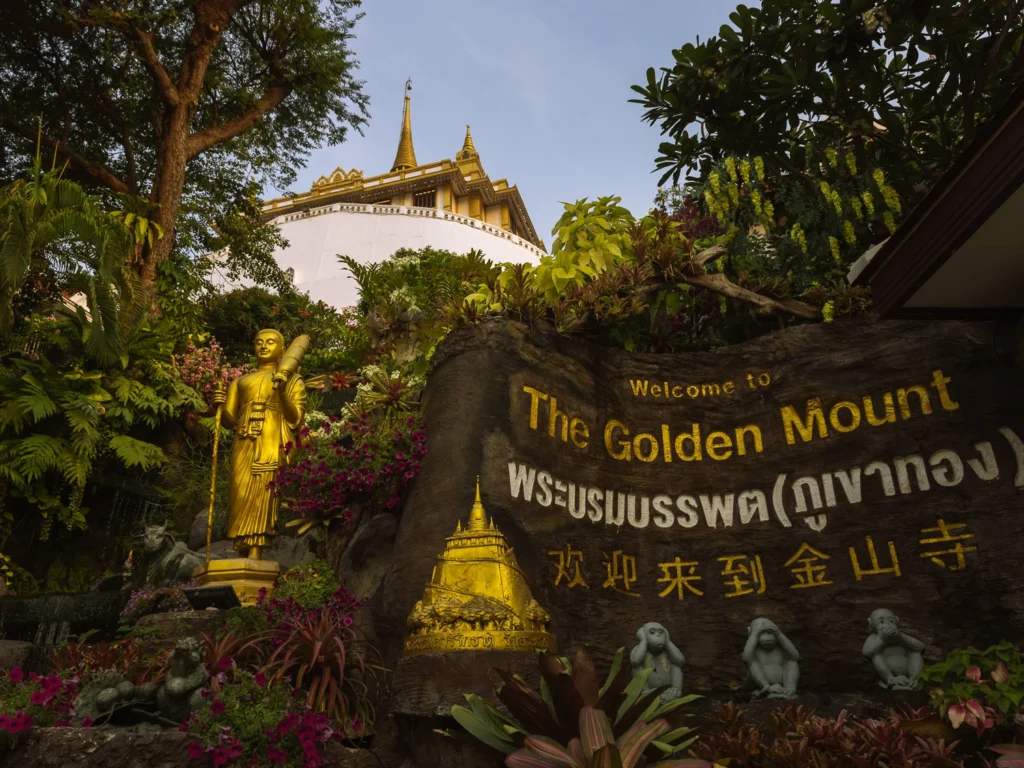
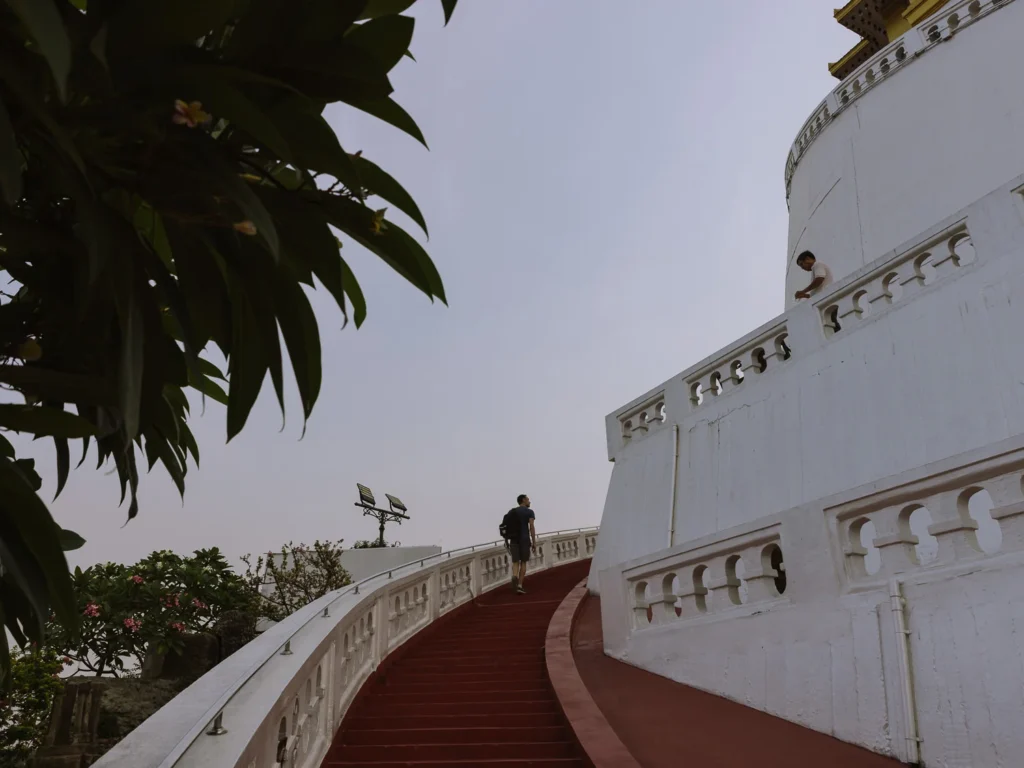
A 19th-century artificial hill topped with a golden chedi, reached by a spiral walkway that winds around the hill through gardens. The views from the top are excellent, and it is far less visited than the major temples. Entry is 20 THB.
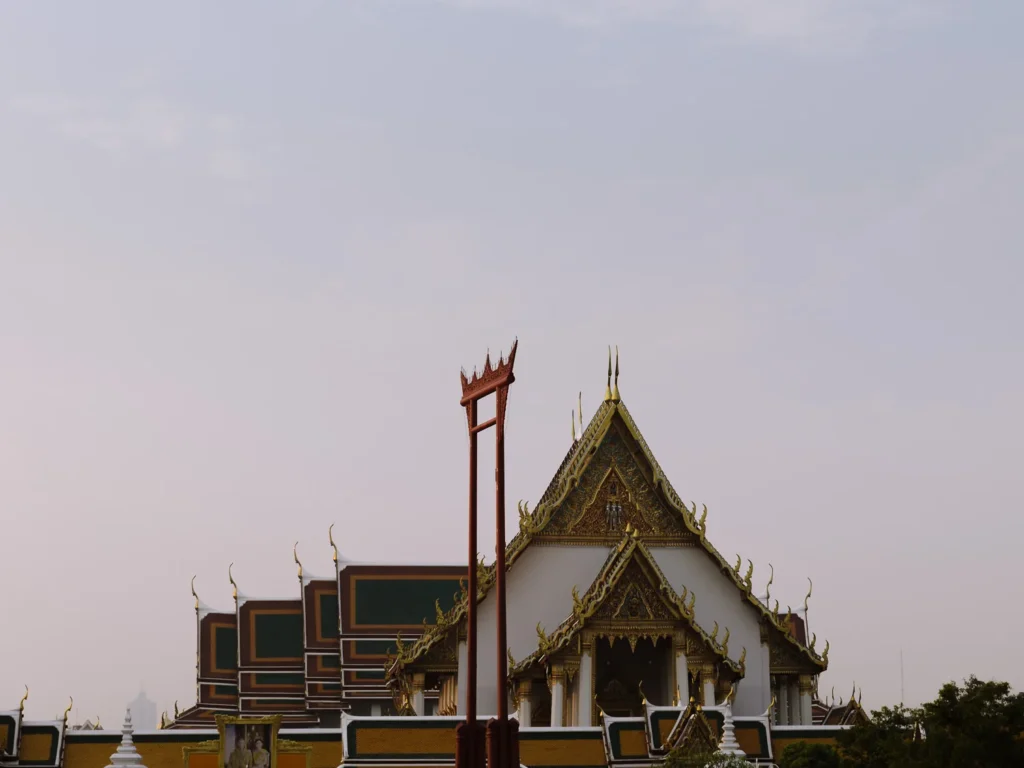
Wat Suthat & the Giant Swing
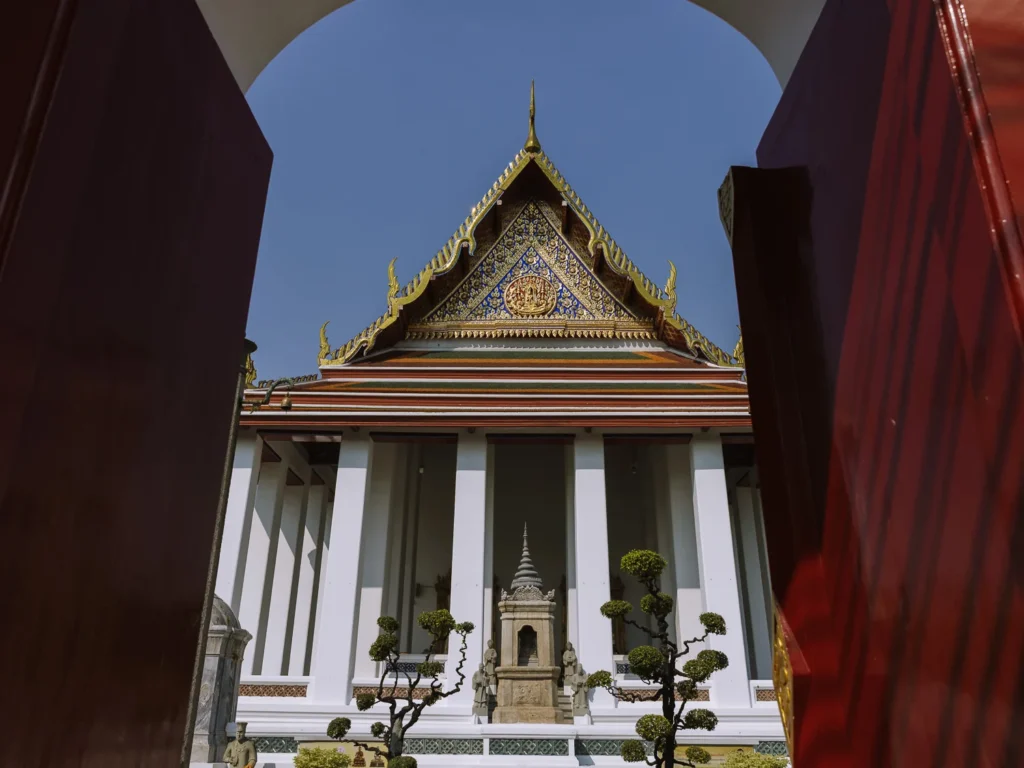
Wat Suthat is one of Bangkok’s most important temples, with some of the finest murals in the city.
The Giant Swing — a towering red teak structure — was once the site of a Brahmin ceremony in which participants would swing high enough to reach bags of gold coins hung from poles. The ceremony was discontinued in 1935. Entry is 20 THB.
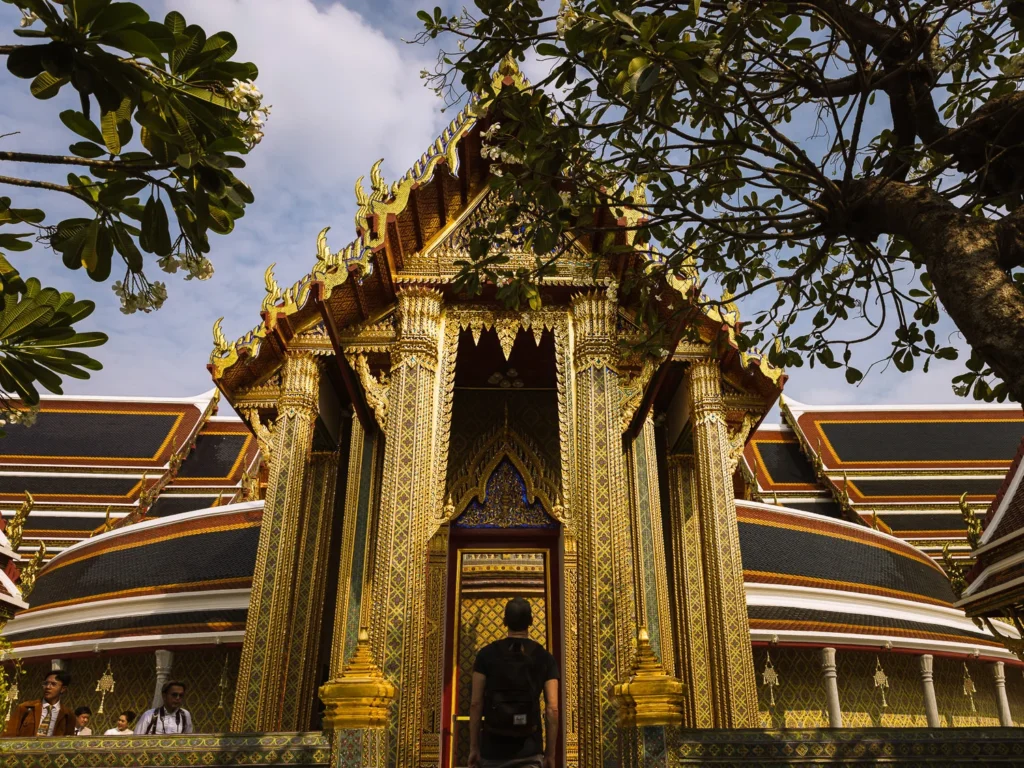
Wat Ratchabophit
Built in 1869 under King Rama V, Wat Ratchabophit is one of Bangkok’s hidden gems.
Its unusual circular cloister surrounds a tall golden chedi, and the ordination hall has an extraordinary interior that blends Thai architecture with Victorian Gothic detailing. It’s free to enter and unlike any other temple in Bangkok.
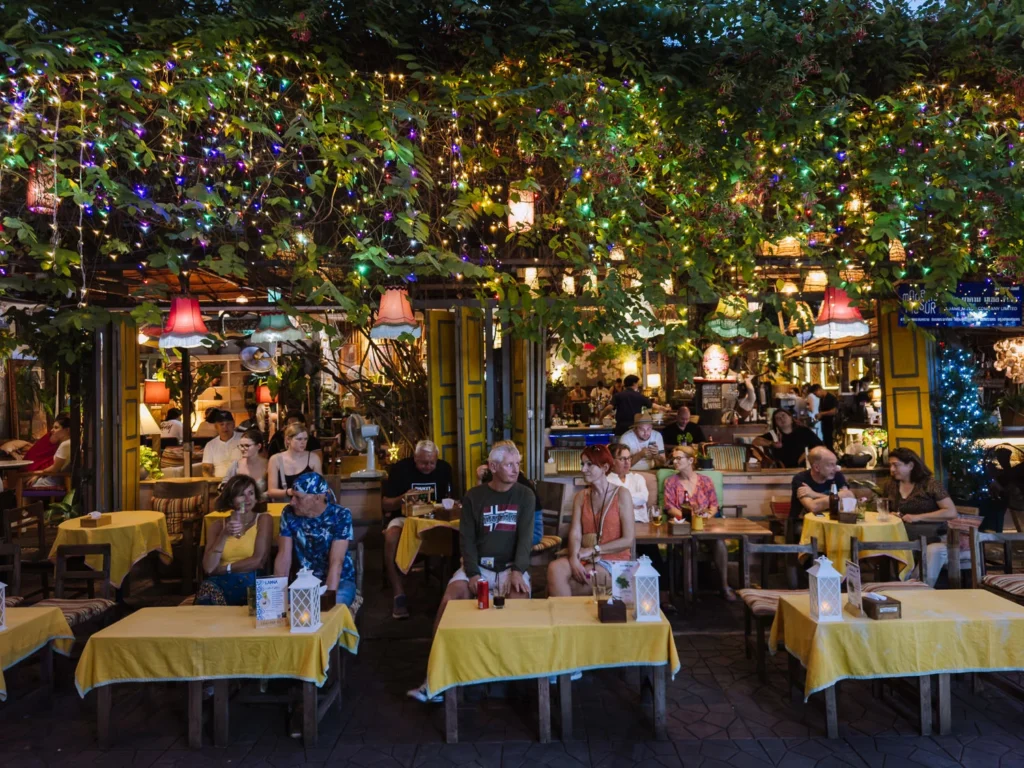
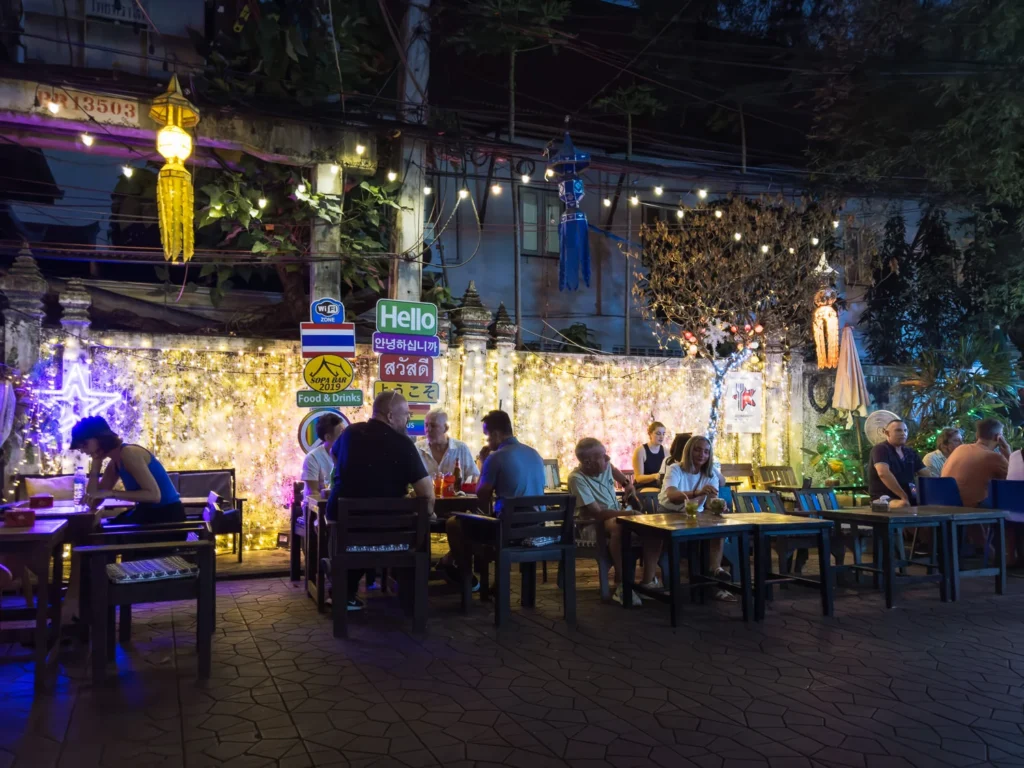
9. Khao San Road & Banglamphu
You may arrive in Bangkok with firm opinions about Khao San Road — that it is too touristy, too chaotic, too full of backpackers flogging braided hair and buckets of dubious spirits.
All correct.
But Khao San Road is also genuinely entertaining and fun.
The surrounding neighbourhood of Banglamphu is increasingly interesting in its own right, with good coffee shops, independent restaurants, and a slightly younger crowd.
Spend a morning strolling Phra Athit Road, which runs along the river a short walk from Khao San.
It is lined with old shophouses converted into cafes, bars, and small galleries.
For dinner in the area, try the restaurants along Soi Rambuttri, which runs parallel to Khao San Road and has a noticeably more relaxed atmosphere.
10. Silom, Sathorn & a Rooftop Bar
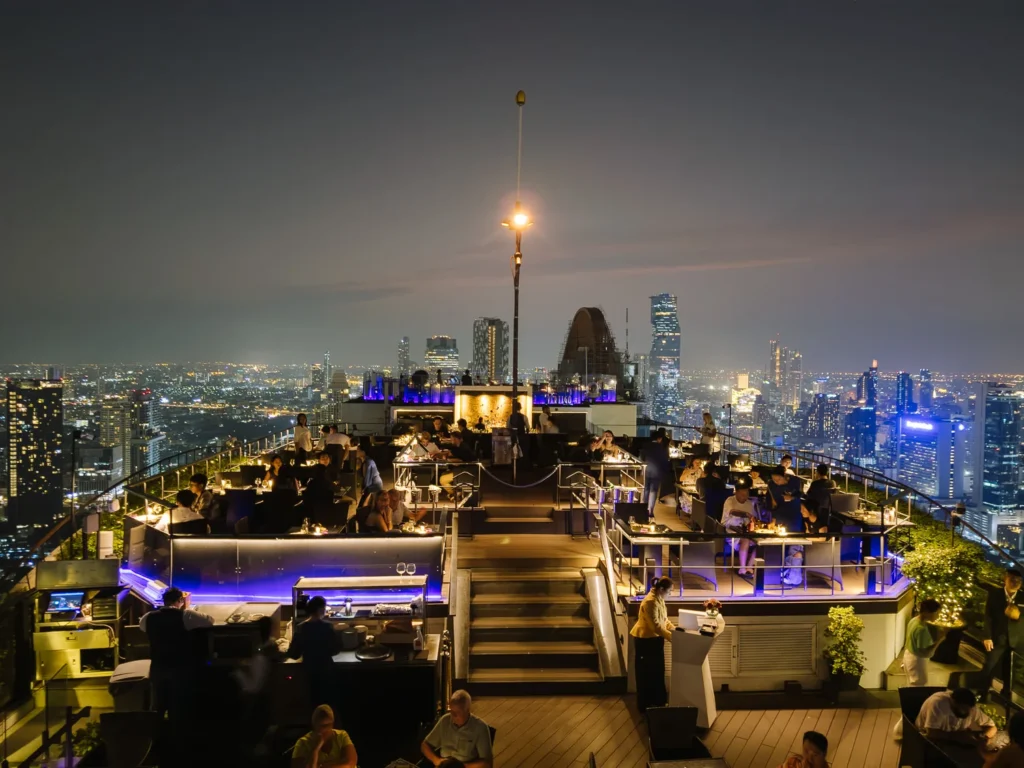
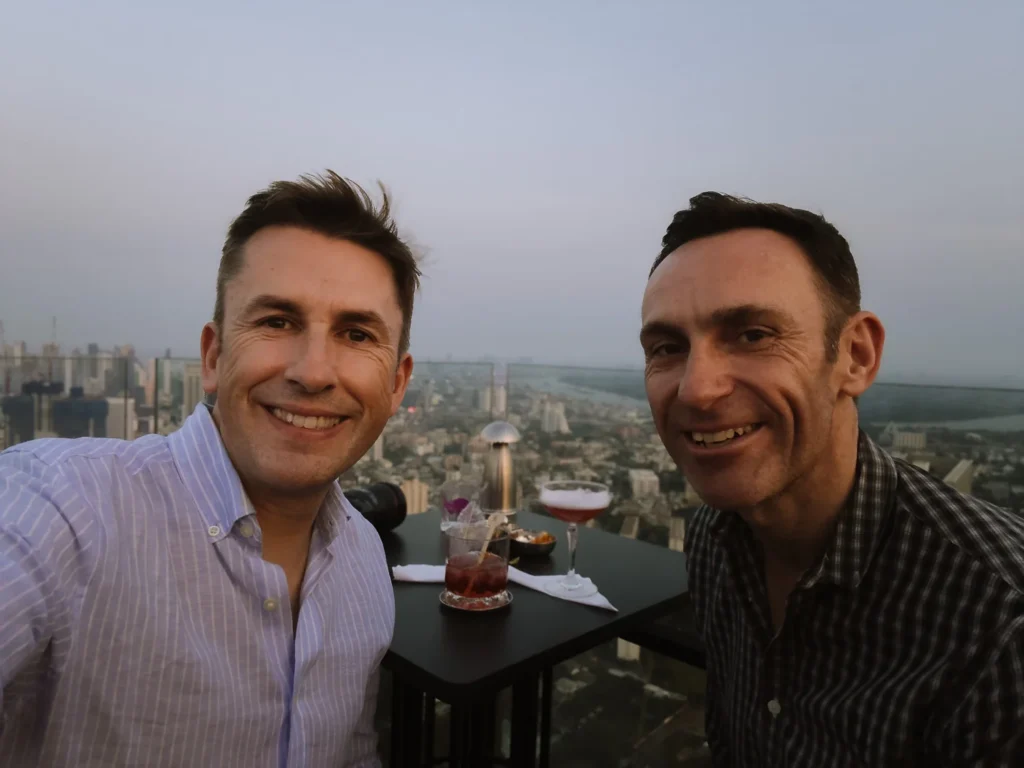
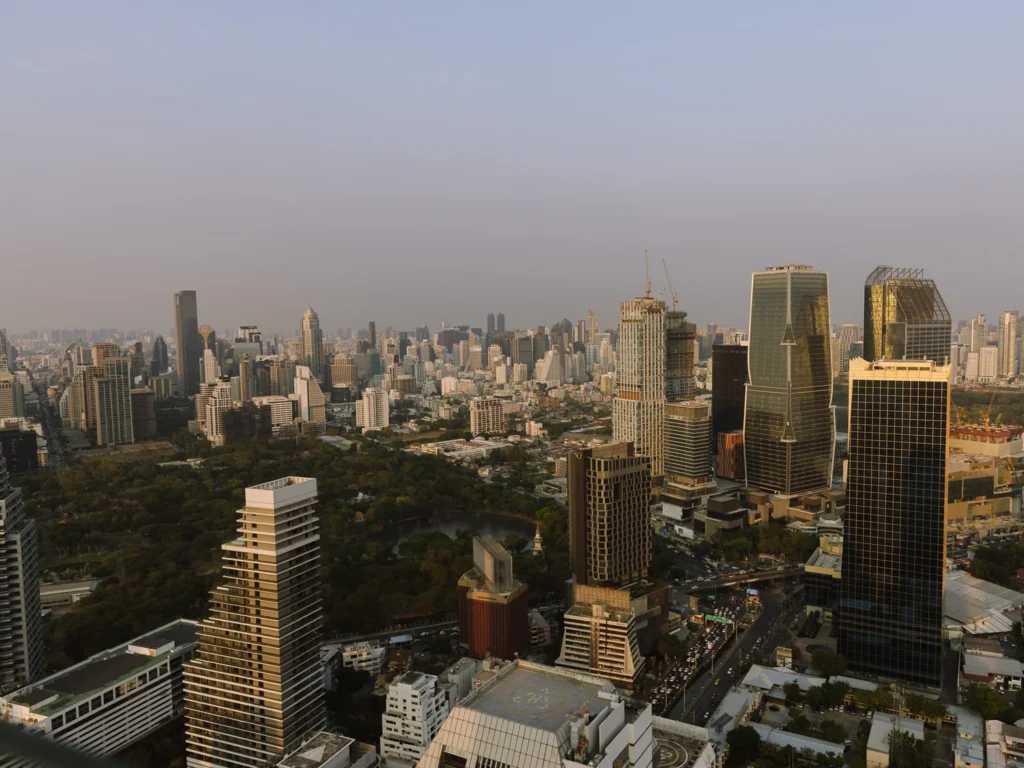
Bangkok has one of the world’s great skylines, and the best way to appreciate it is from above.
There are several excellent rooftop bars across the city, but our favourites are in the Silom and Sathorn area, which forms Bangkok’s central business district.
Vertigo & Moon Bar – An open-air rooftop on the 61st floor with panoramic views of Bangkok. There is a minimum spend, but the views alone are worth it.
Octave Rooftop Lounge & Bar – Three floors of outdoor space across the 45th to 49th floors with great views towards the Chao Phraya.
Sky Bar at Lebua – This is probably Bangkok’s most famous rooftop bar, partly due to its appearance in the film The Hangover Part II. It’s an open-air semicircular bar perched on the roof of a tower overlooking the river.
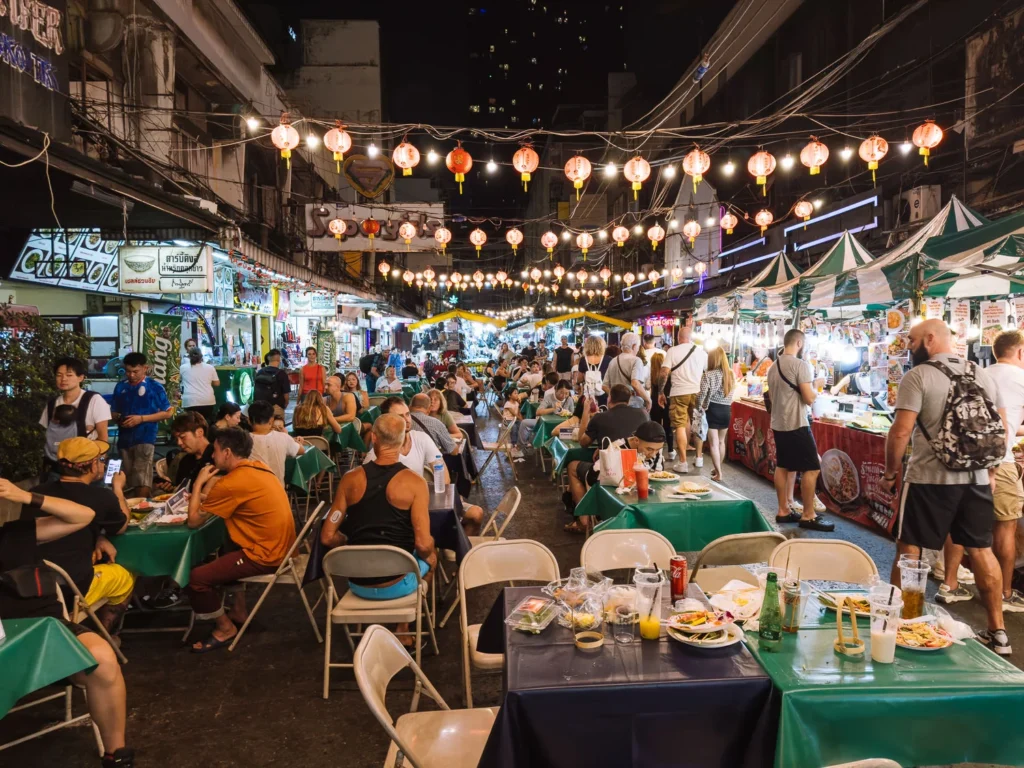
While in Silom, don’t miss the chaotic energy of Patpong — Bangkok’s infamous red-light area — where a night market now operates along the central strip.
11. Jim Thompson House
Jim Thompson was an American businessman who revived Thailand’s silk industry after World War II.
He disappeared mysteriously in Malaysia in 1967, and his story remains one of Bangkok’s enduring enigmas.
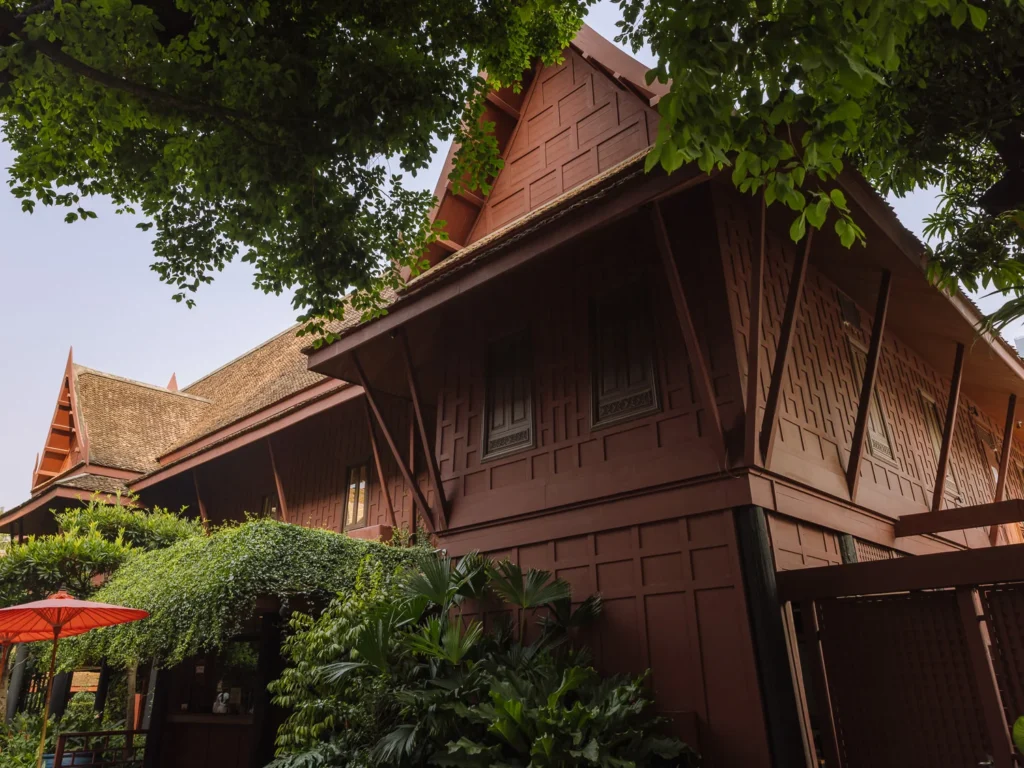
His home is six traditional Thai houses relocated and joined together on the bank of a klong in central Bangkok.
It’s now a museum filled with Thompson’s remarkable collection of Asian art and antiques: Chinese porcelain, Cambodian sculptures, Thai paintings, and European furniture.
The house itself, set in beautiful gardens, is a stunning example of traditional Thai architecture.
You can only visit on a guided tour, which takes place regularly throughout the day in English.
A great way to get to Jim Thompson’s house is by boat. Get on the boat at Phanfa Bridge Pier and exit at Sapan Hua Chang Pier. Tickets can be purchased on board.
12. Pak Khlong Talat (Flower Market)
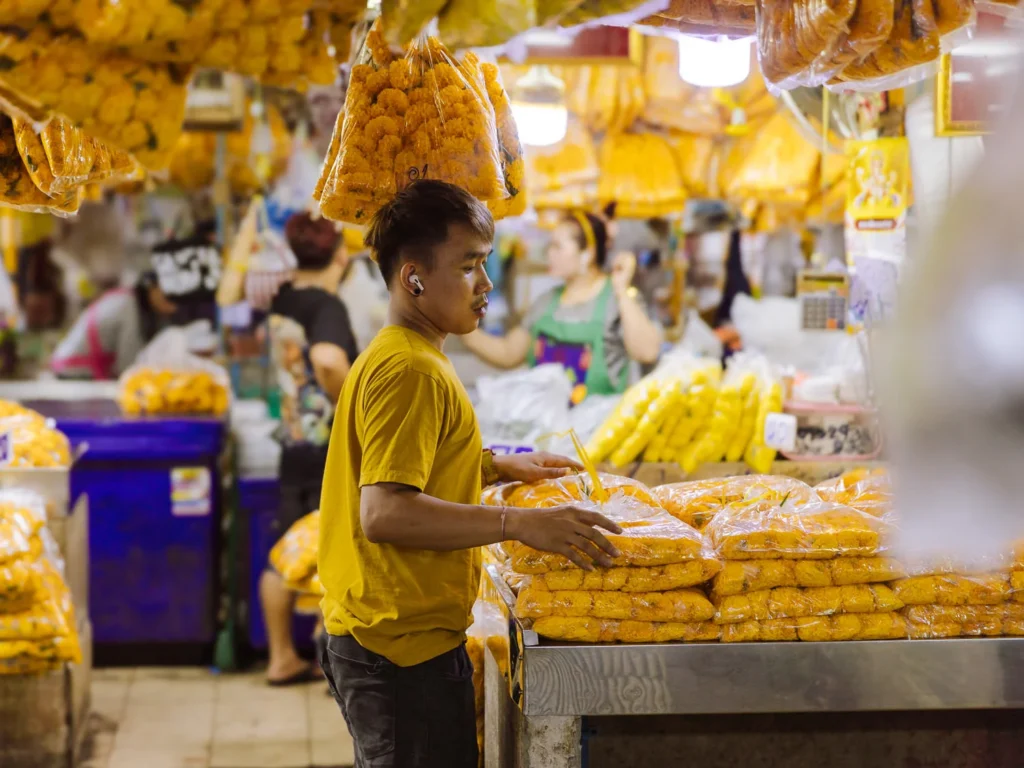
Pak Khlong Talat is Bangkok’s wholesale flower market, and it’s one of Bangkok’s excellent sensory experiences.
The market operates around the clock, but the best time to visit is between midnight and 6 AM, when the wholesale trade is in full swing.
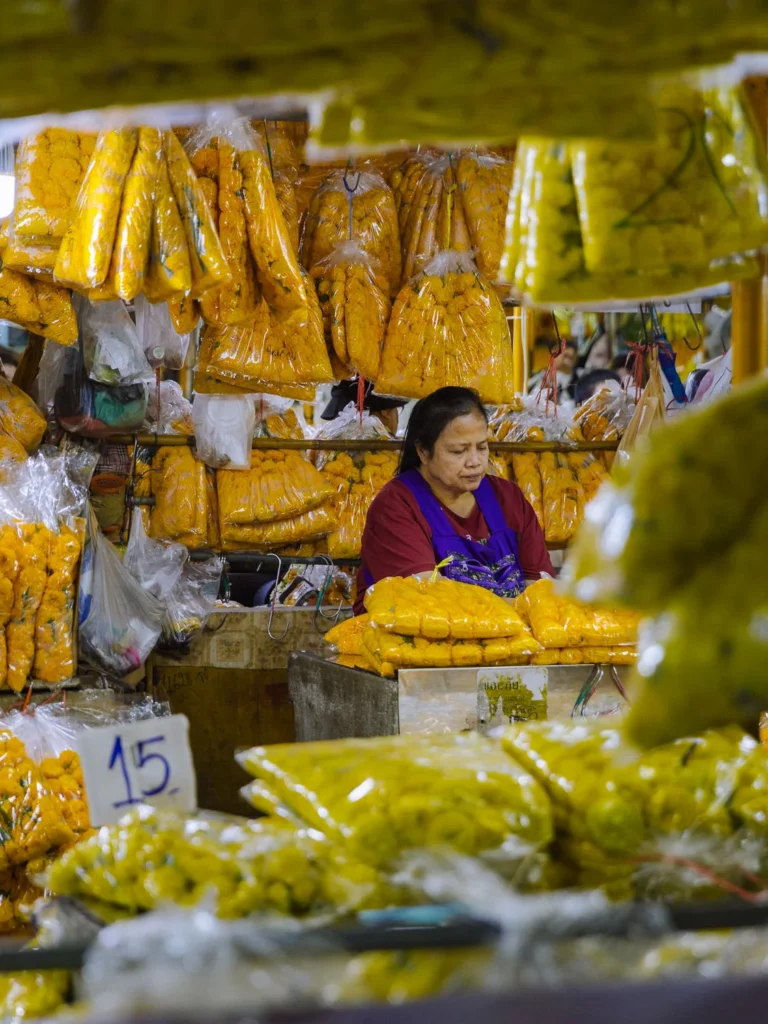
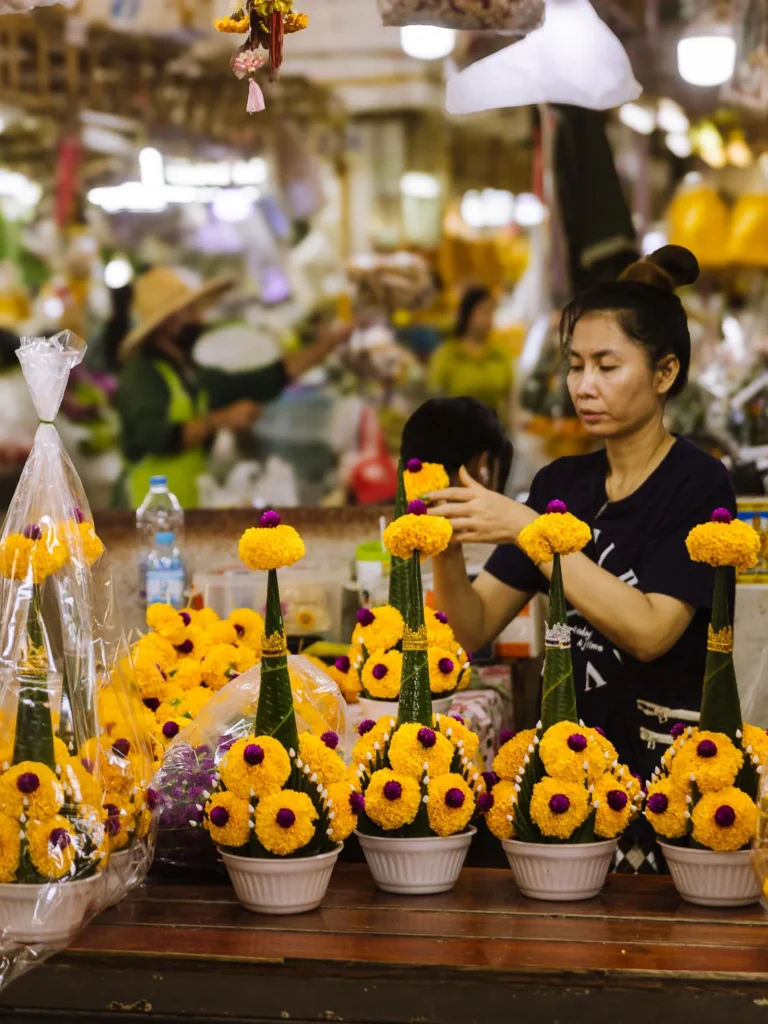
Vendors arrange enormous pyramids of blooms under fluorescent lights while buyers from florists, temples, and restaurants pick their way through the stalls.
If a pre-dawn visit doesn’t appeal, the market is still worth seeing during the day.
It’s quieter and more manageable, and you’ll find vendors selling garlands, flower crowns, and jasmine offerings alongside the wholesale trade.
It is a short walk from the Grand Palace and Wat Pho, so it’s easy to combine with a morning spent at the main temples.
Entry is free.
13. Trok Mor Morning Market
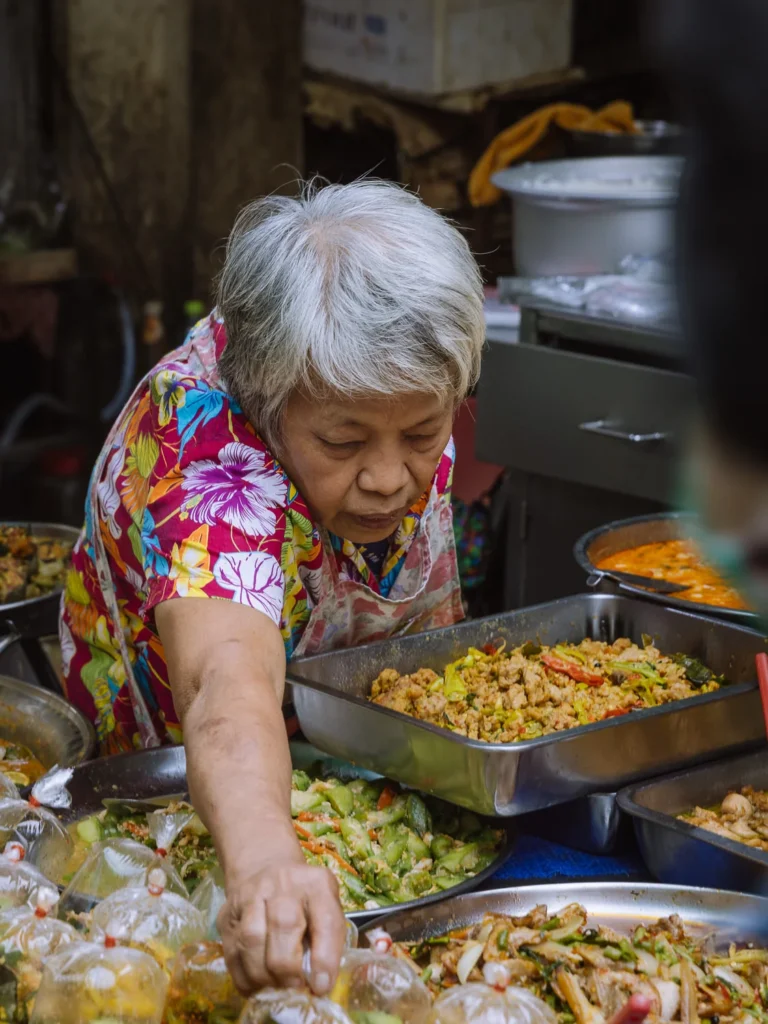
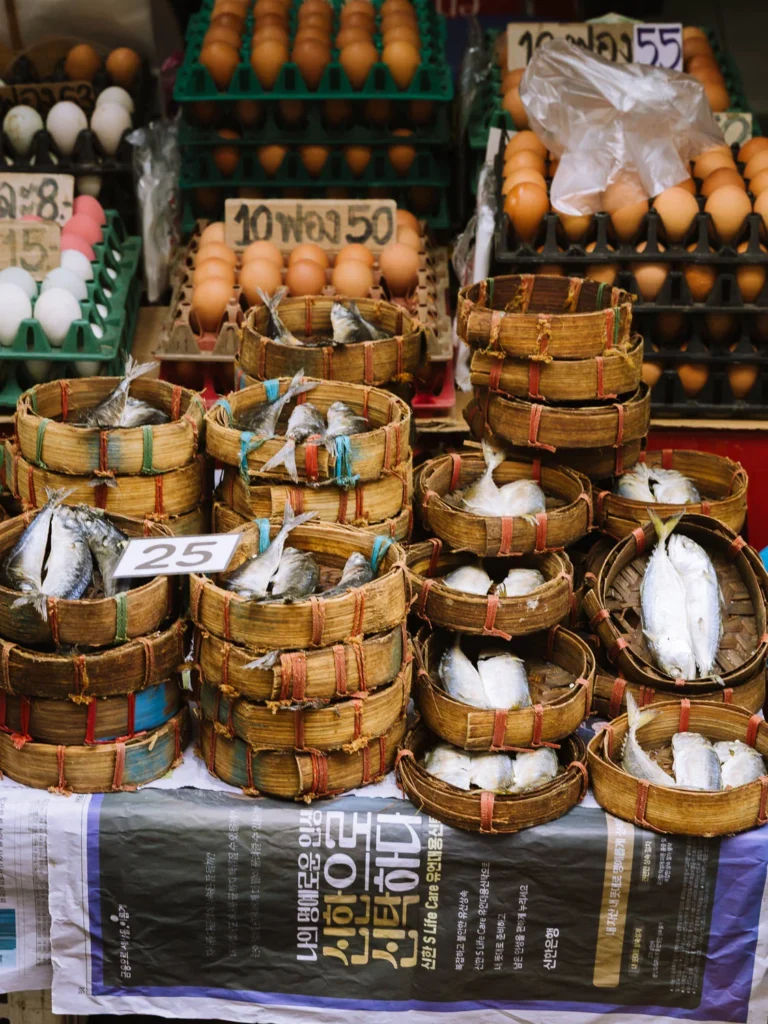
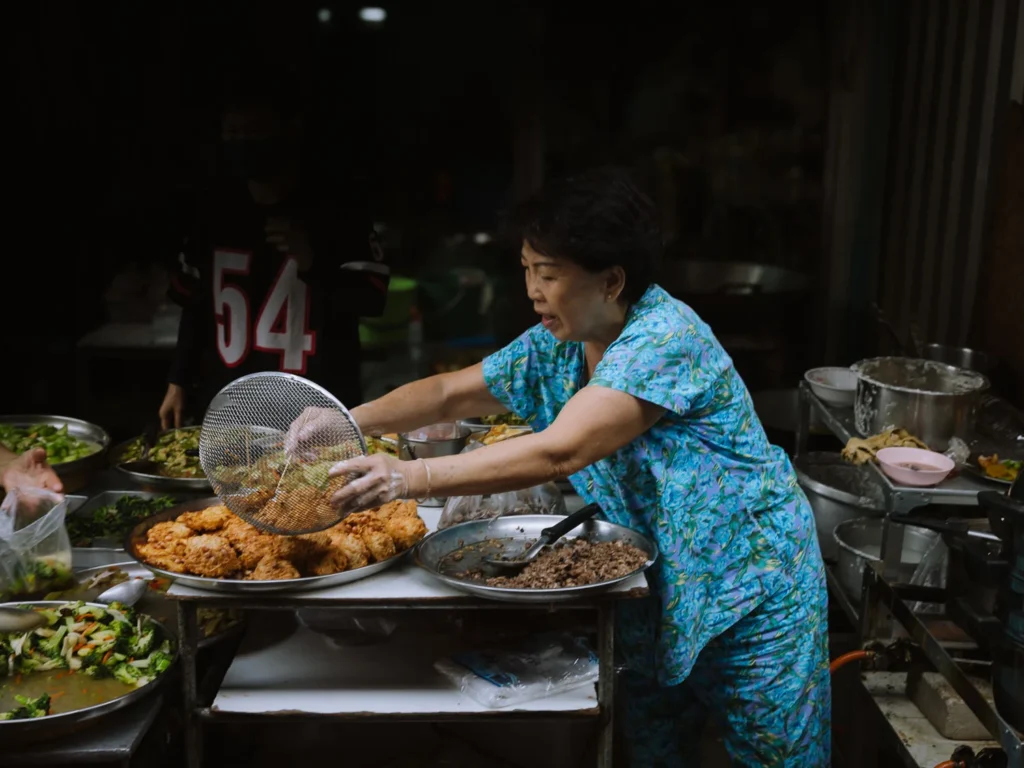
Trok Mor is a fantastic morning market in Bangkok, and it is almost entirely off the tourist trail. We didn’t list it in the best street food section above, because this is a bit of a different experience.
Set in a narrow alley in the old city near the Grand Palace, the market runs from around 6 AM to midday and caters almost entirely to the surrounding community.
Prices are extremely low, and the quality is excellent, but to be honest, we couldn’t recognise a thing they were selling.
We are relatively adventurous with food, so we were happy to point at things and hope for the best. In Bangkok, that strategy usually works for us.
If you’re a fussy eater, this one is probably not for you.
The market is at its busiest between 7 am and 9 am, which is when we’d suggest visiting.
14. Have a Thai Massage
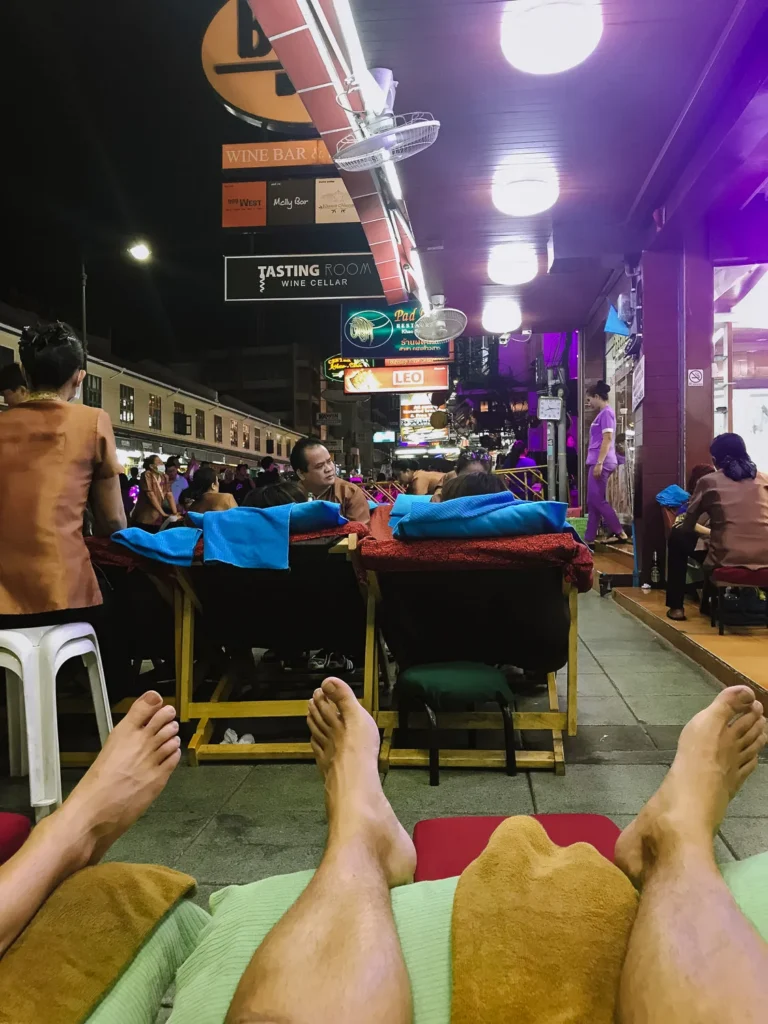
Traditional Thai massage is quite different from what you might expect if you’re used to Western spa treatments.
There are no oils, and it involves stretching, pressure, and manipulation of the whole body. It’s closer to assisted yoga than to a Swedish massage, but it’s extraordinarily effective.
You will find massage shops on almost every street in Bangkok, and price is not always a reliable indicator of quality. Going to an established, well-reviewed place is worth the small amount of extra effort.
Wat Pho is the most famous option, and the quality is consistently good. The school attached to the temple is considered one of the most respected training institutions for traditional Thai massage in the country.
A one-hour session costs around 420 THB.
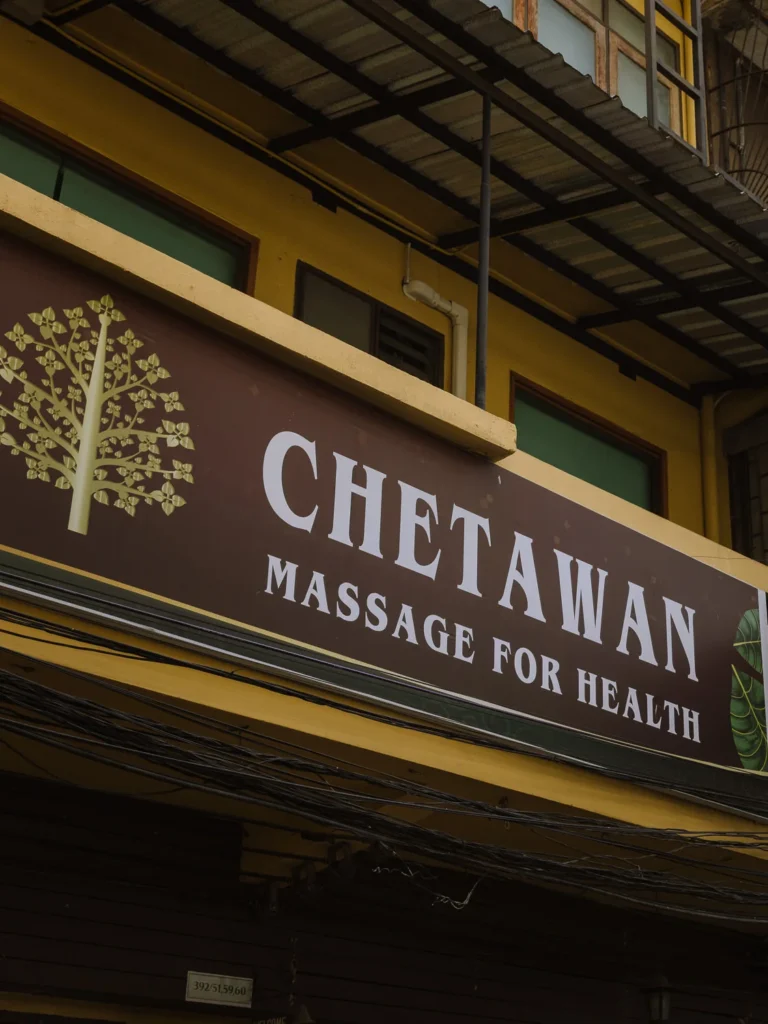
A good alternative in the same area is Chetawan, where we went. This is a health group directly affiliated with Wat Pho, in its own standalone clinic, a short walk from the temple.
The standards are the same, but it tends to be quieter, and it’s a good option if Wat Pho itself is fully booked.
15. Chinatown (Yaowarat)
Bangkok’s Chinatown is one of the oldest and largest in the world.
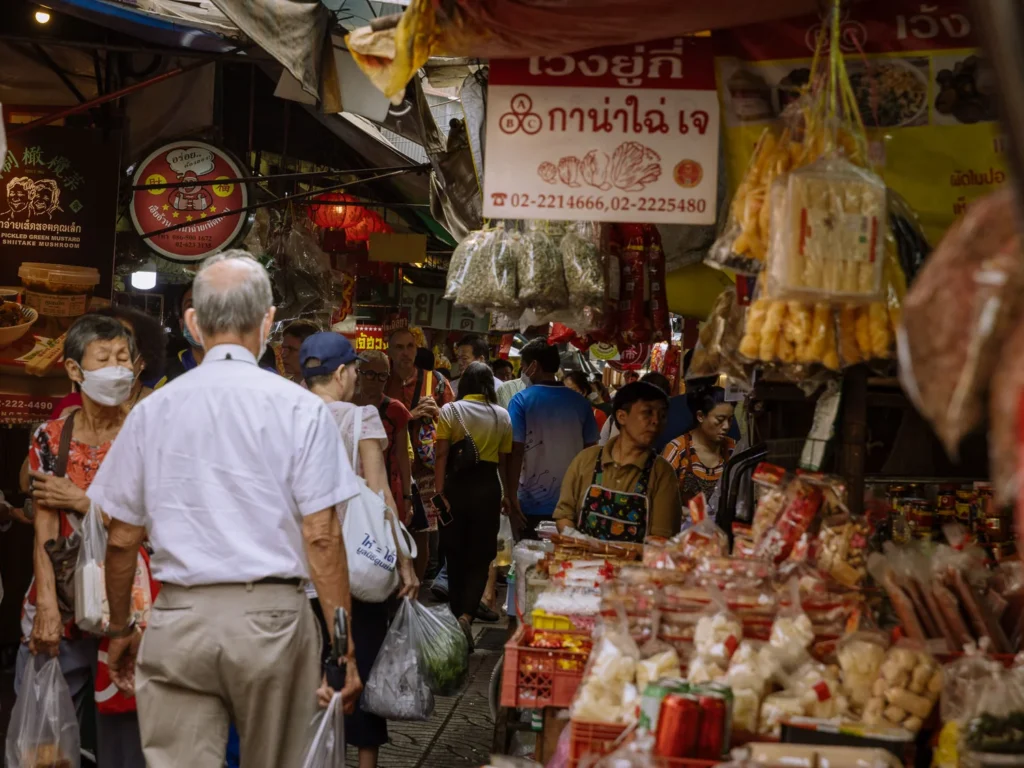
Yaowarat Road, the main artery, is a riot of gold shops, seafood restaurants, herbal medicine vendors, and neon signs.
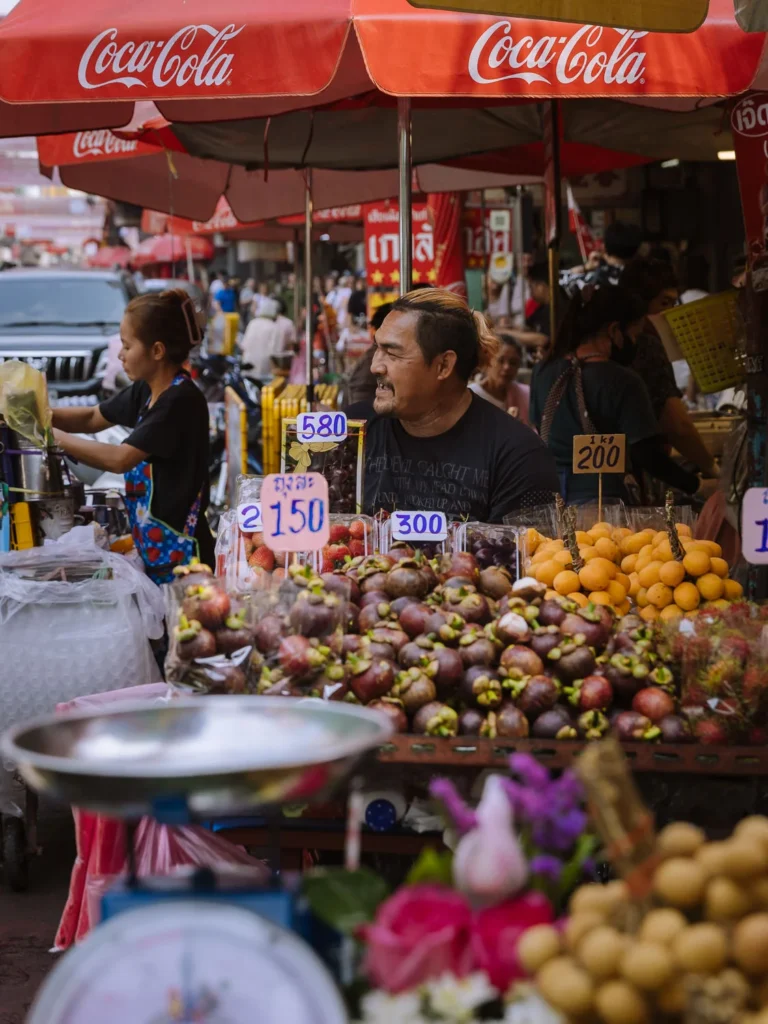
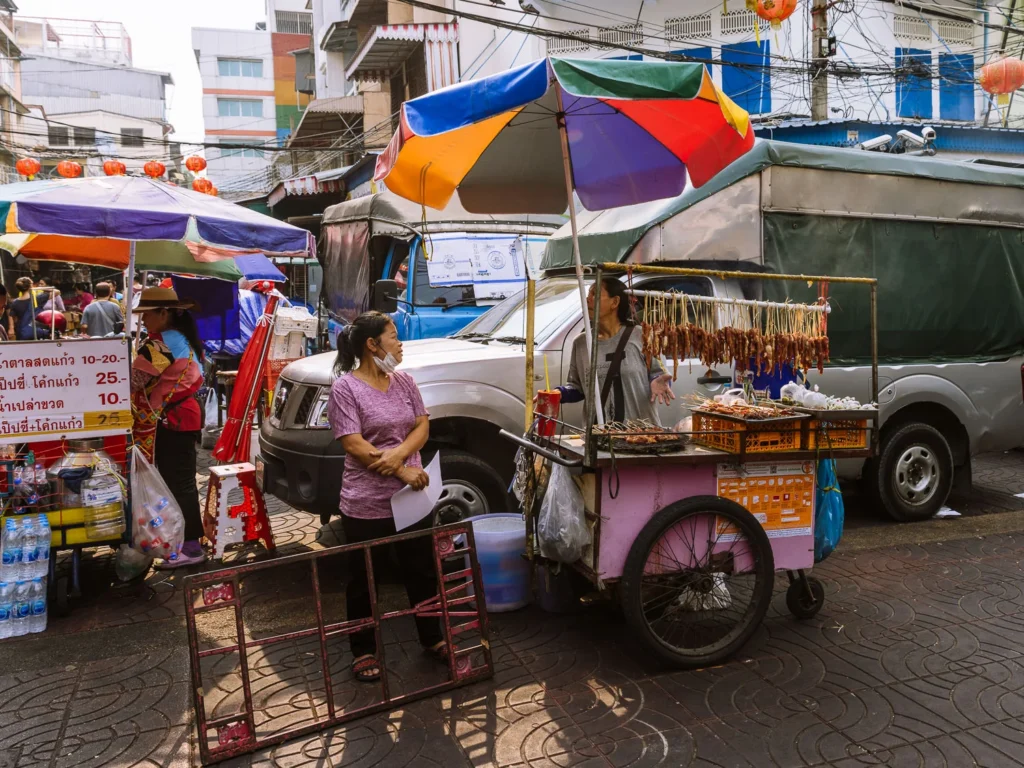
From around 6 pm, street food stalls take over the pavements, and the whole neighbourhood shifts into a higher gear.
The food here is the main event. You’ll find grilled seafood, roast duck, dim sum, oyster omelettes, and mango sticky rice.
Beyond eating and drinking, there are a few specific things worth seeking out.
Wat Traimit
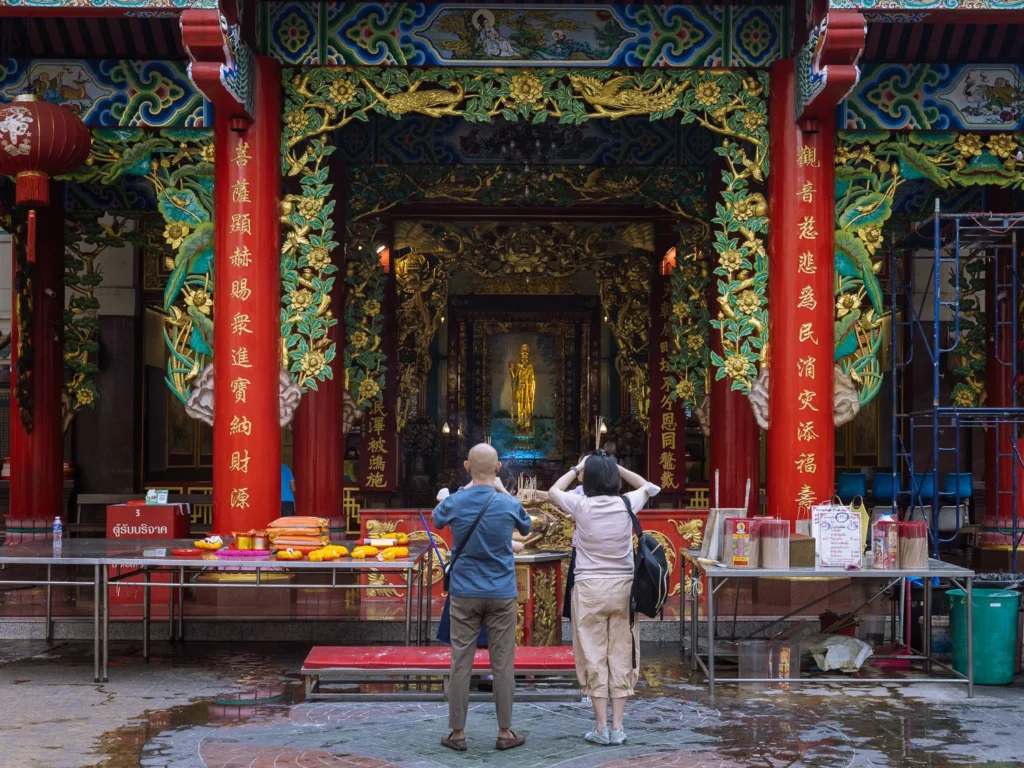
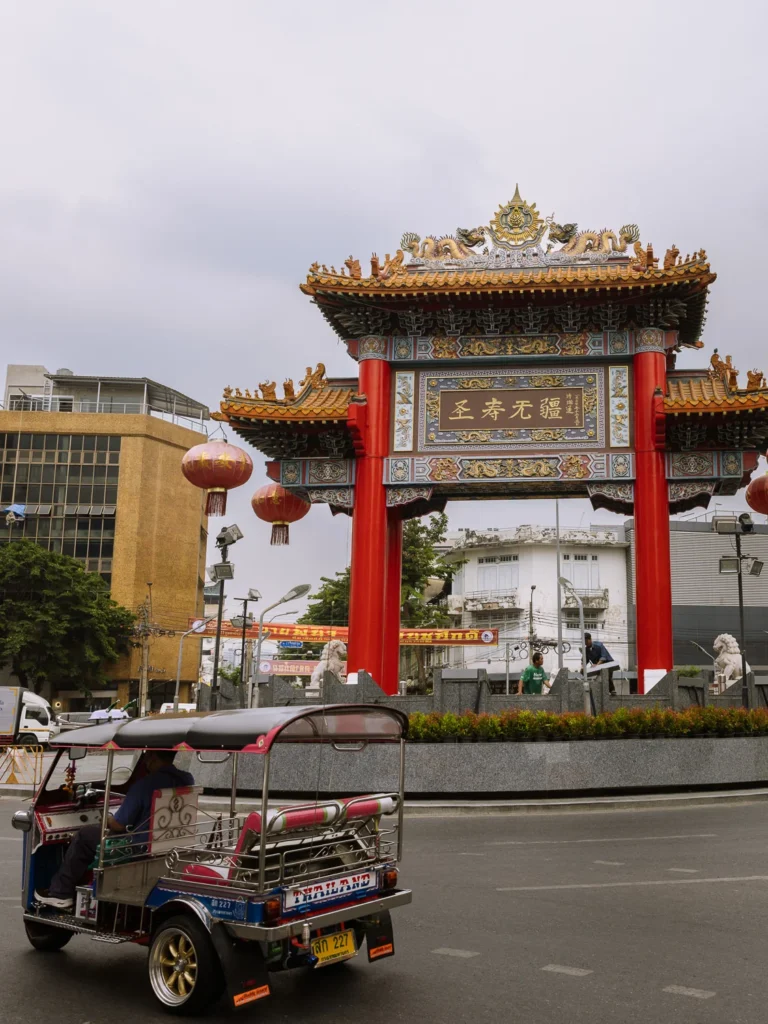
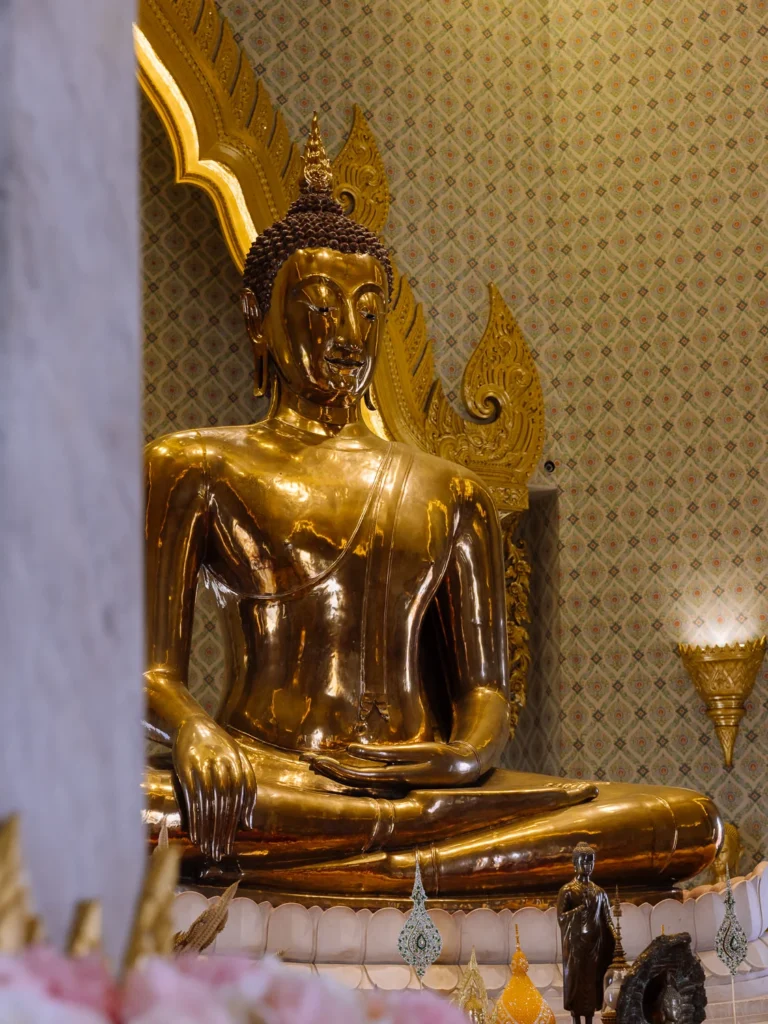
Wat Traimit, near the Chinatown Gate, houses a 5.5-tonne solid gold Buddha — the largest in the world — which is genuinely impressive. The network of smaller lanes branching off Yaowarat Road, particularly Soi Nana, has seen a wave of creative bars and coffee shops.
Walking Street
For a very different side of the neighbourhood, it’s worth seeking out Walking Street — a quieter route that runs between Yaowarat and the Chao Phraya River, threading through some of the oldest parts of the city.
Marked by red-tiled paving and Chinese-style lamp posts, it passes old Portuguese churches, century-old shophouses, the Sampheng market lane, and temples dating back to the founding of Bangkok.
It sees fewer crowds than the main strip, and it gives you a sense of what this part of the city looked like before the neon arrived.
Chinatown is also a natural gateway to Talat Noi (see below) and within easy walking distance of the river, making it a logical anchor for a full day in this part of the city.
16. Talat Noi
Talat Noi is one of Bangkok’s oldest communities, a compact neighbourhood tucked between Chinatown and the river that most visitors walk straight past on their way elsewhere. That’s a mistake.
The neighbourhood developed as a settlement for Chinese immigrants in the 18th century, and the layers of history are visible in every direction.
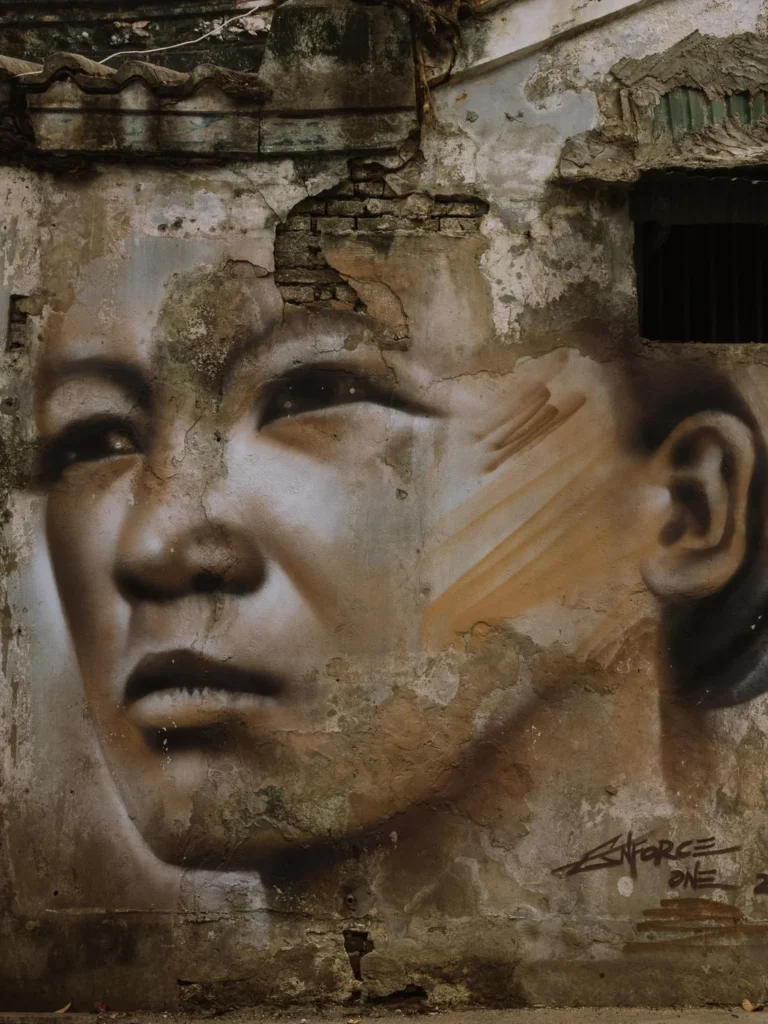
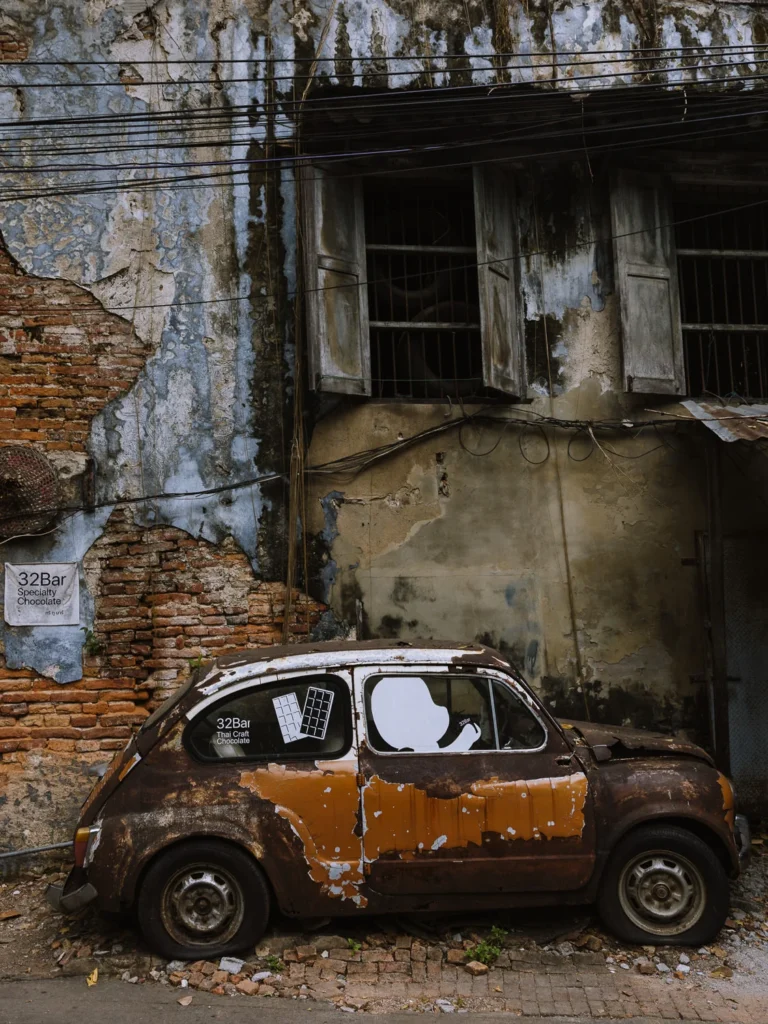
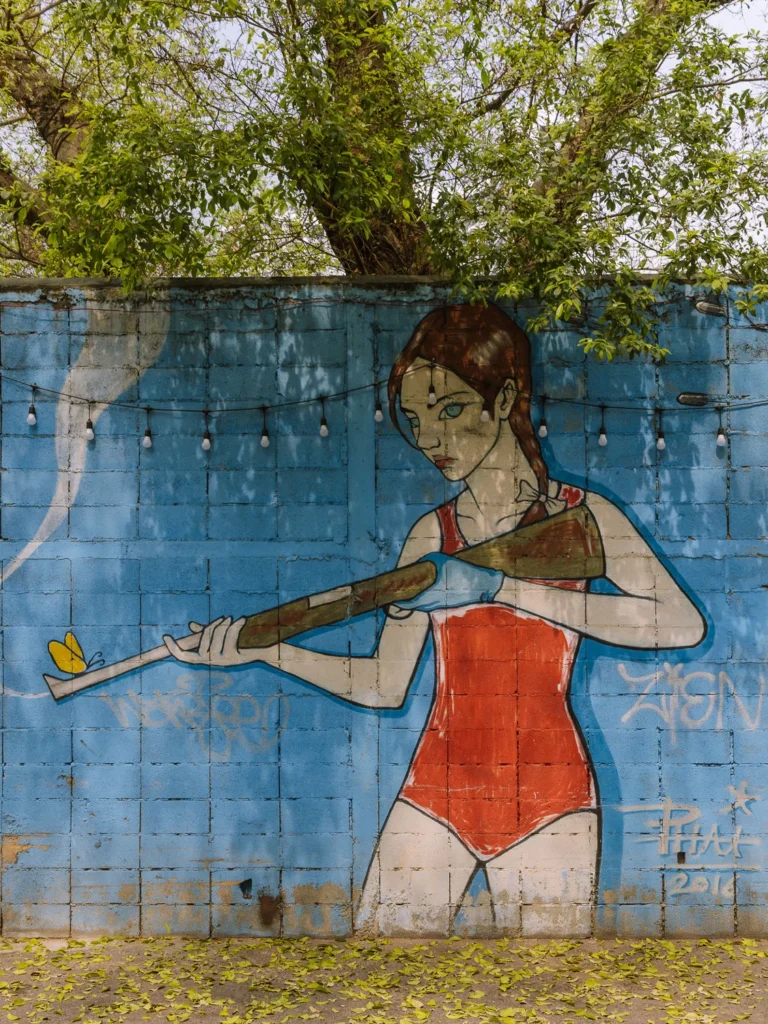
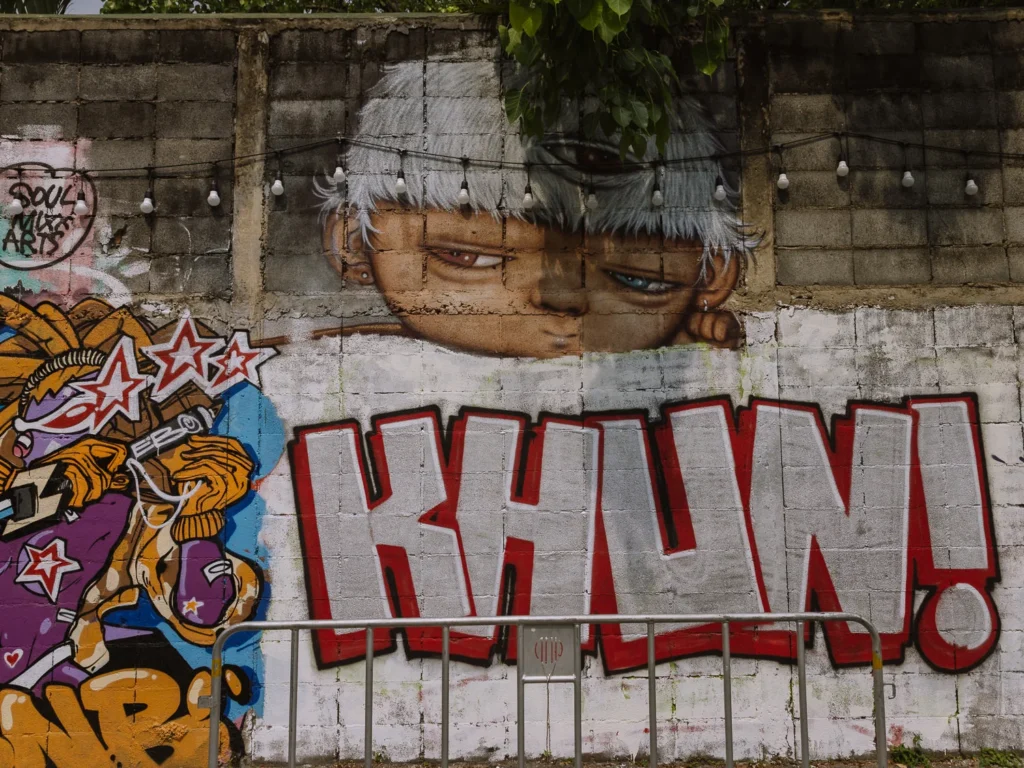
You’ll find crumbling shophouses, family-run metal workshops, old Chinese shrines wedged between modern buildings, and street art that feels genuinely embedded in the community.
The best way to experience Talat Noi is simply to wander, but two specific stops are worth building your visit around.
Charoen Krung 32 Alley
Charoen Krung Road is one of Bangkok’s oldest streets, and the alley running off it at number 32 was one of our highlights on our last.
A row of weathered shophouses lines the narrow lane, several of which have been quietly taken over by independent cafes, small galleries, and creative businesses.
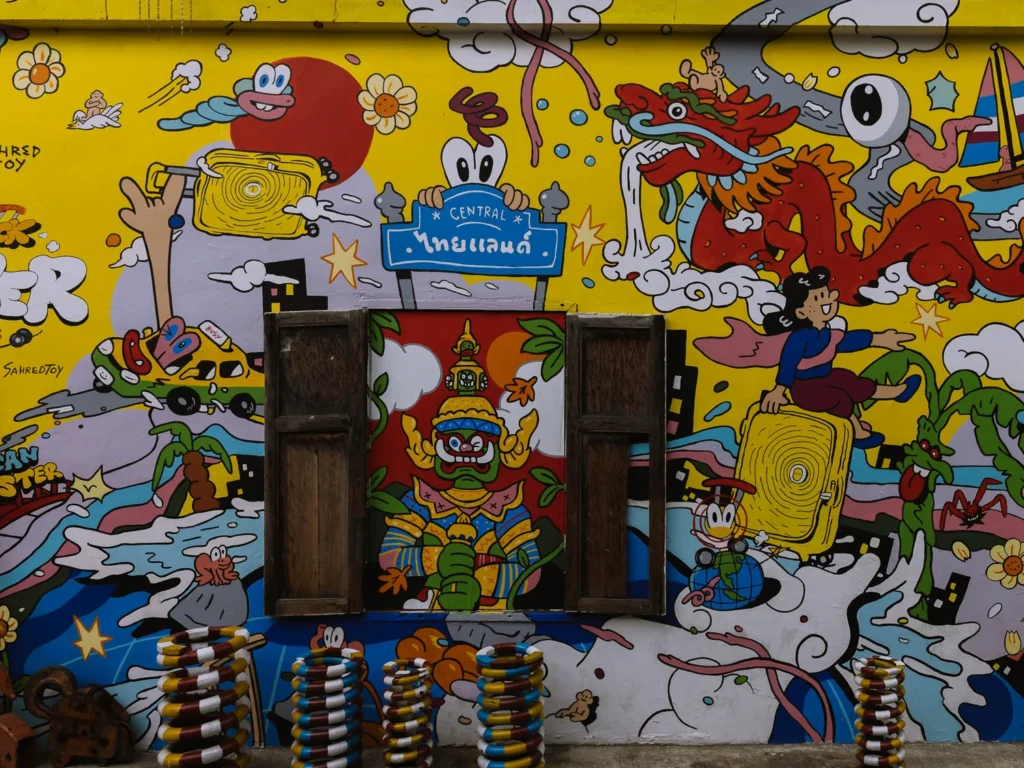
There’s some very cool street art in this little corner of Bangkok, as well as a great street food stall.
Warehouse 30
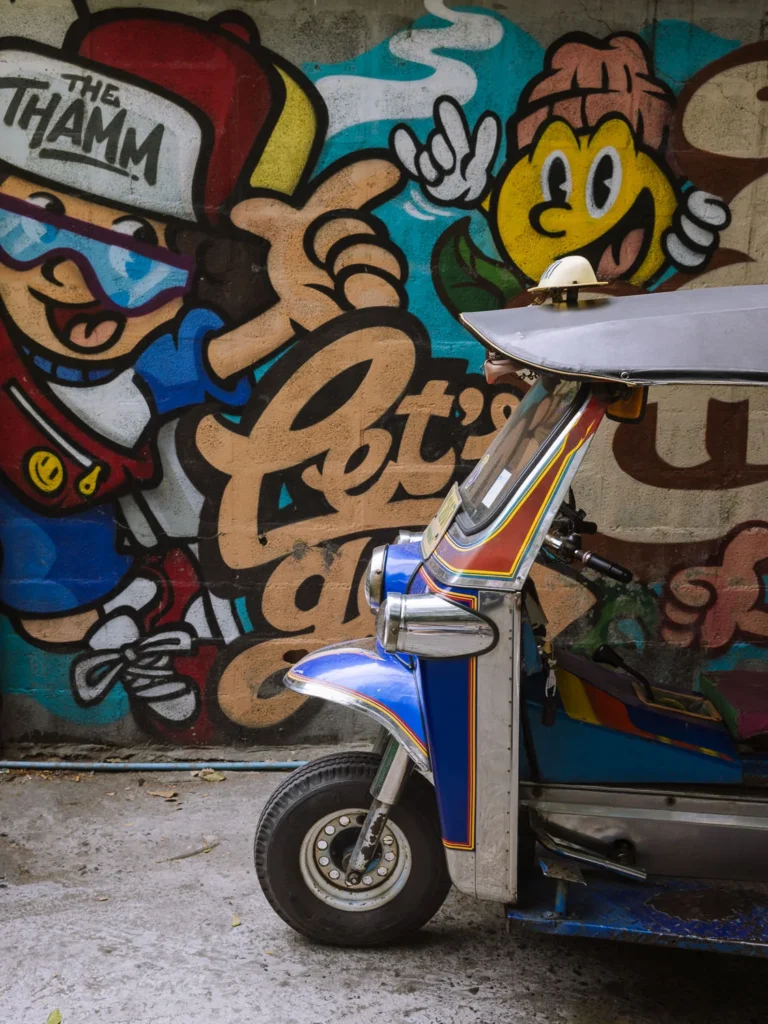
Warehouse 30 is a complex of converted Second World War-era warehouses on Charoenkrung Road that now house independent cafes, creative studios, and art and design markets.
The industrial architecture has been left largely intact, so it’s relaxed and a little rough around the edges. The weekend markets here are worth timing your visit around if you can.
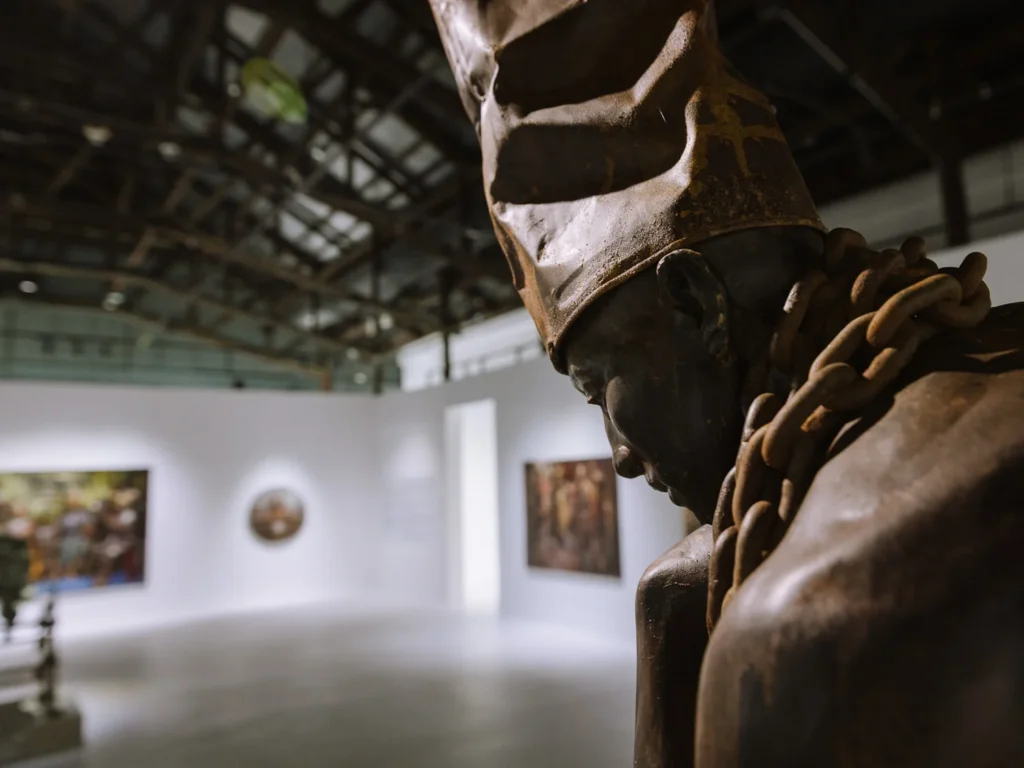
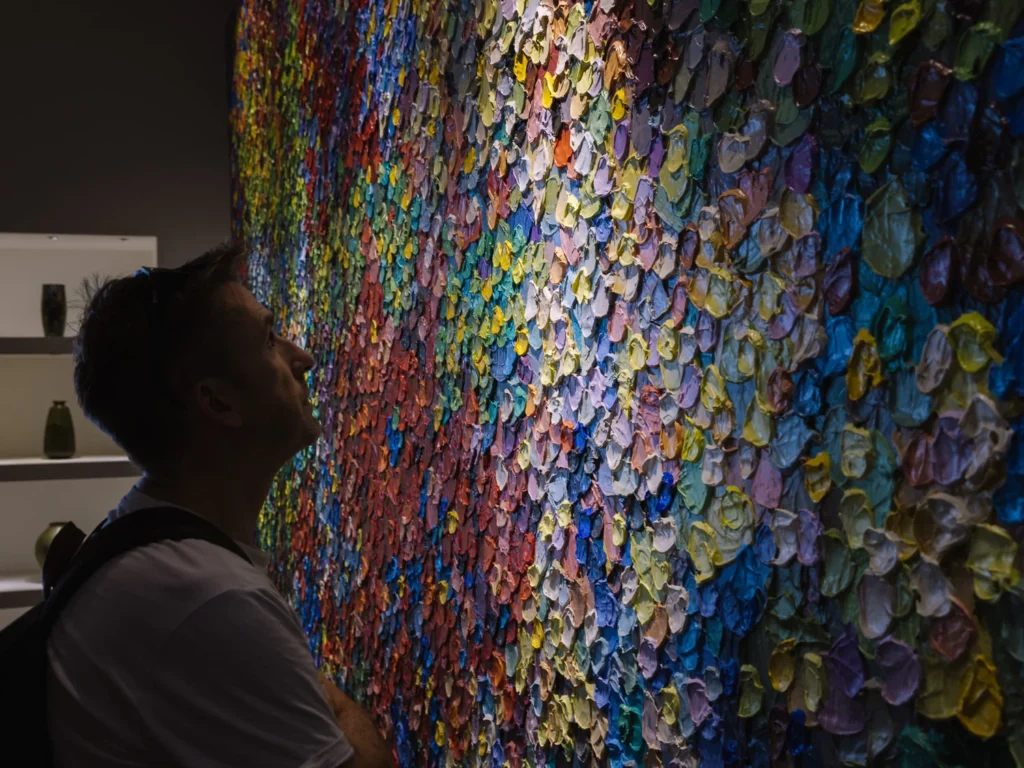
Att 19
ATT 19 is a smaller creative space a short walk away, set in a similarly repurposed building with a good café and regularly changing art installations and exhibitions.
Between ATT 19, Warehouse 30, and the alley at Charoen Krung 32, you could easily spend a full morning exploring a young, local and quirky side of Bangkok.
River City Bangkok
Right on the river at the southern edge of the Talat Noi, River City is a polished counterpoint to the grittier creative spaces nearby.
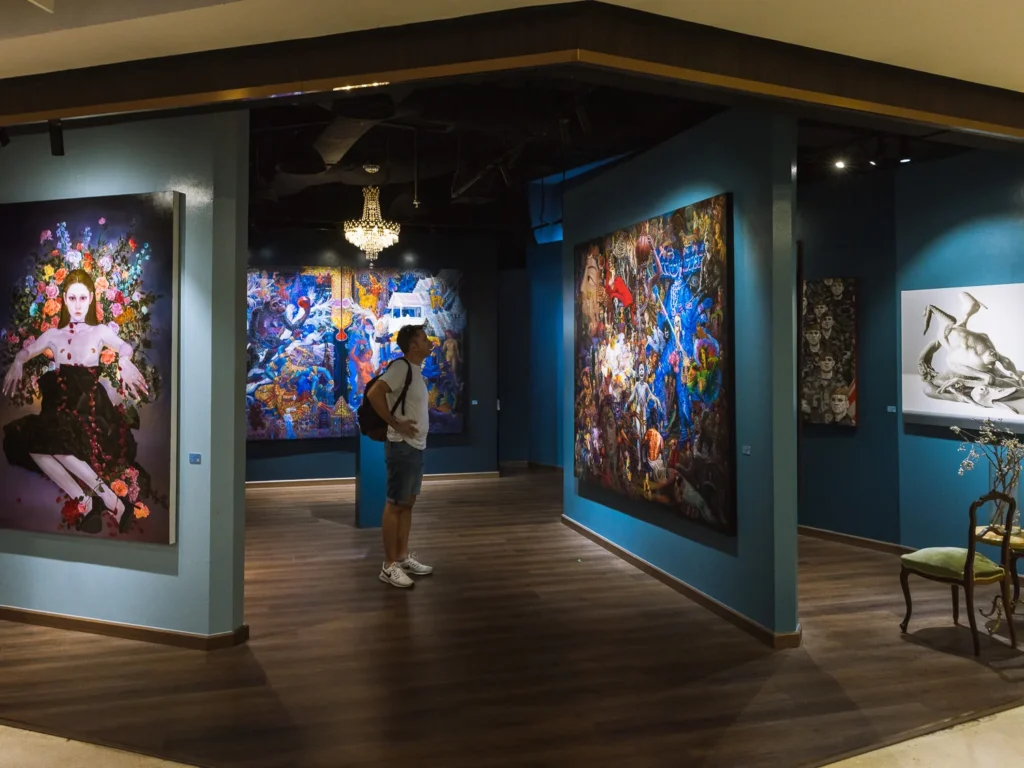
Spread across several floors, it focuses on art and antiques — galleries, auction houses, boutiques, and regularly changing exhibitions. The riverside terrace is a good spot to pause before or after wandering the lanes.
17. Khlong Toei Market
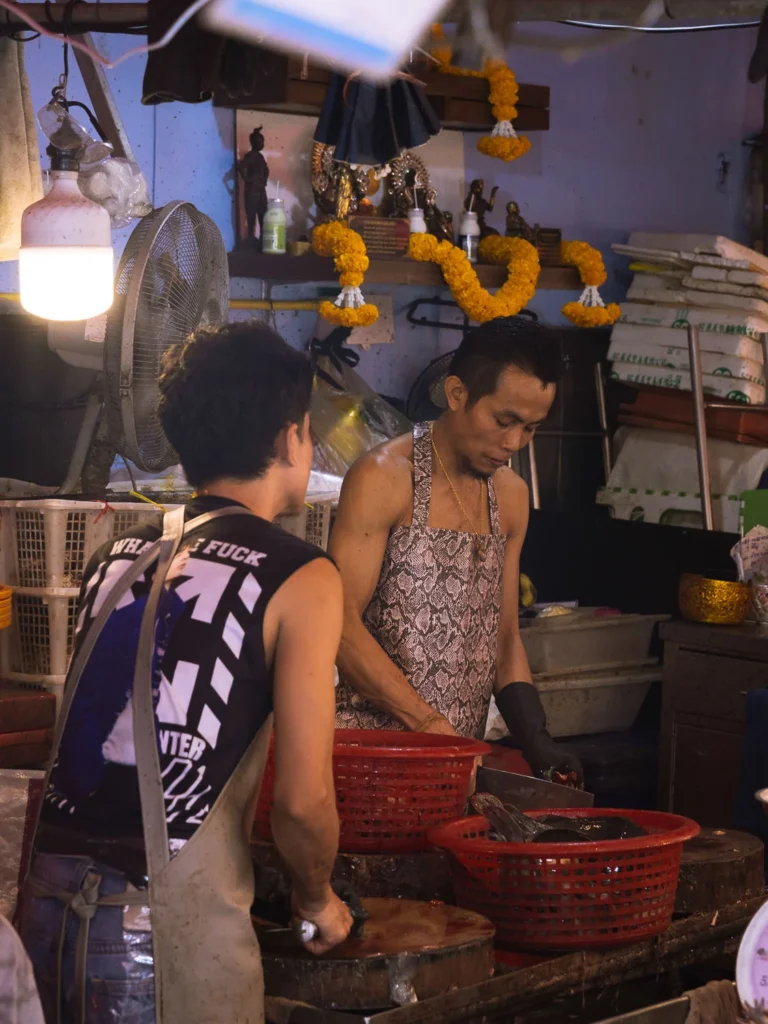
Khlong Toei is Bangkok’s largest fresh market and a slightly crazy experience.
This is not a tourist attraction.
It is a working wholesale and retail market that feeds a significant portion of the city. Visiting is a bit like peeking behind the scenes of Bangkok.
The market operates from the early hours of the morning, reaching its intensity peak before 8 AM, when wholesale trade is in full flow.
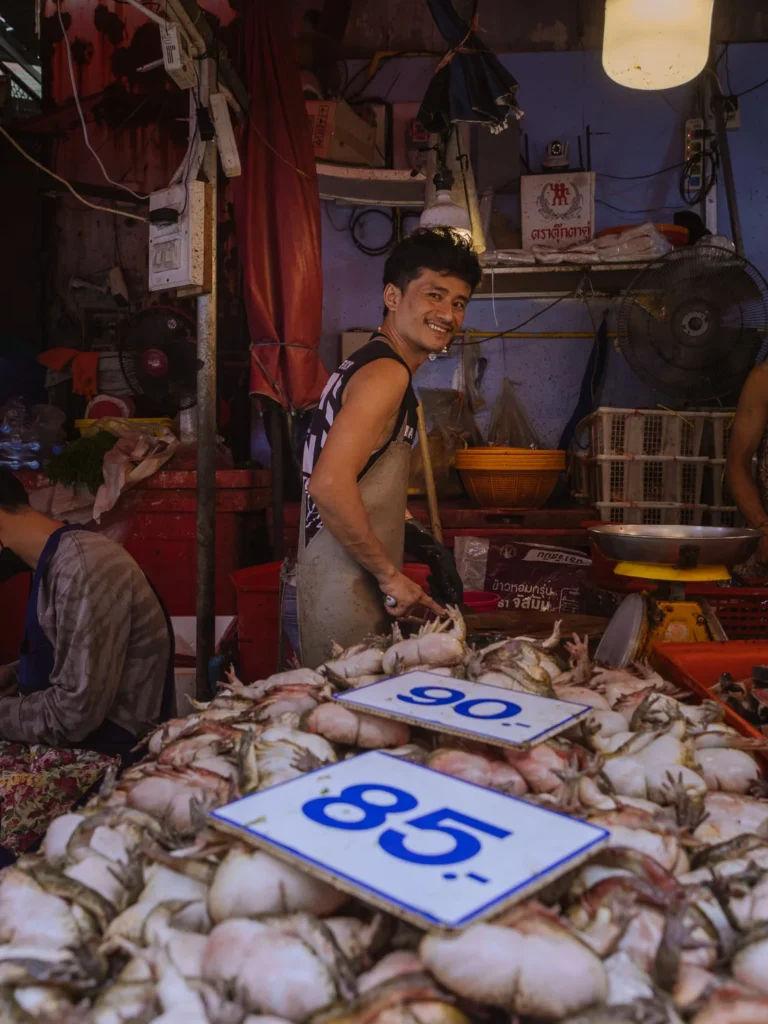
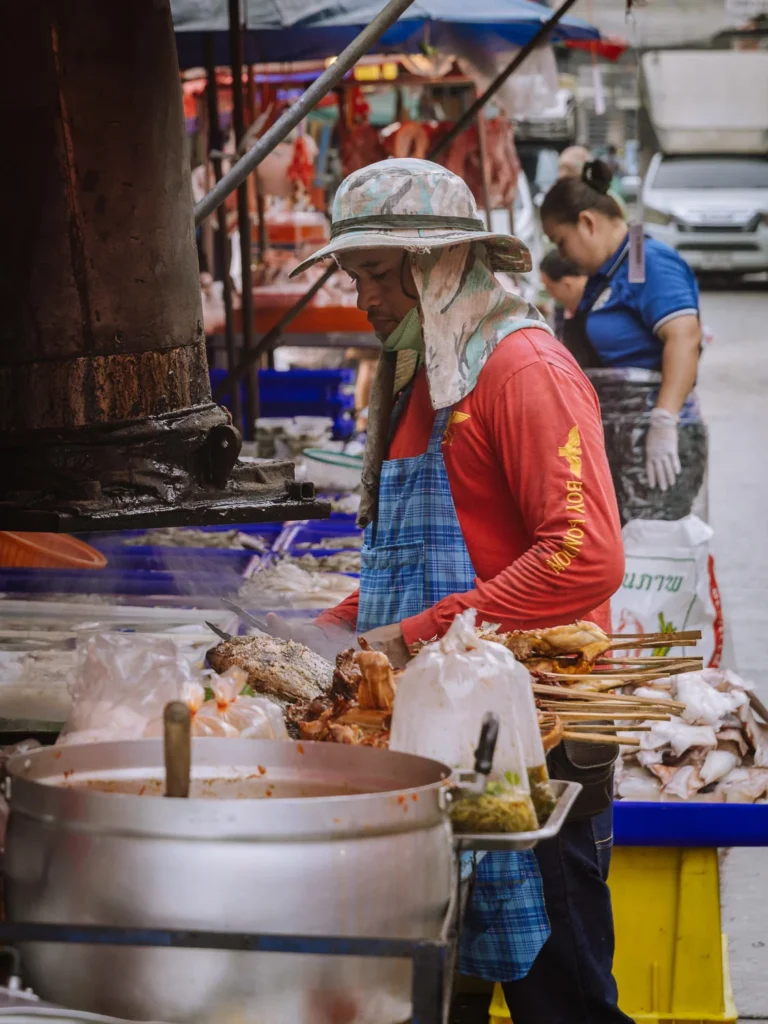
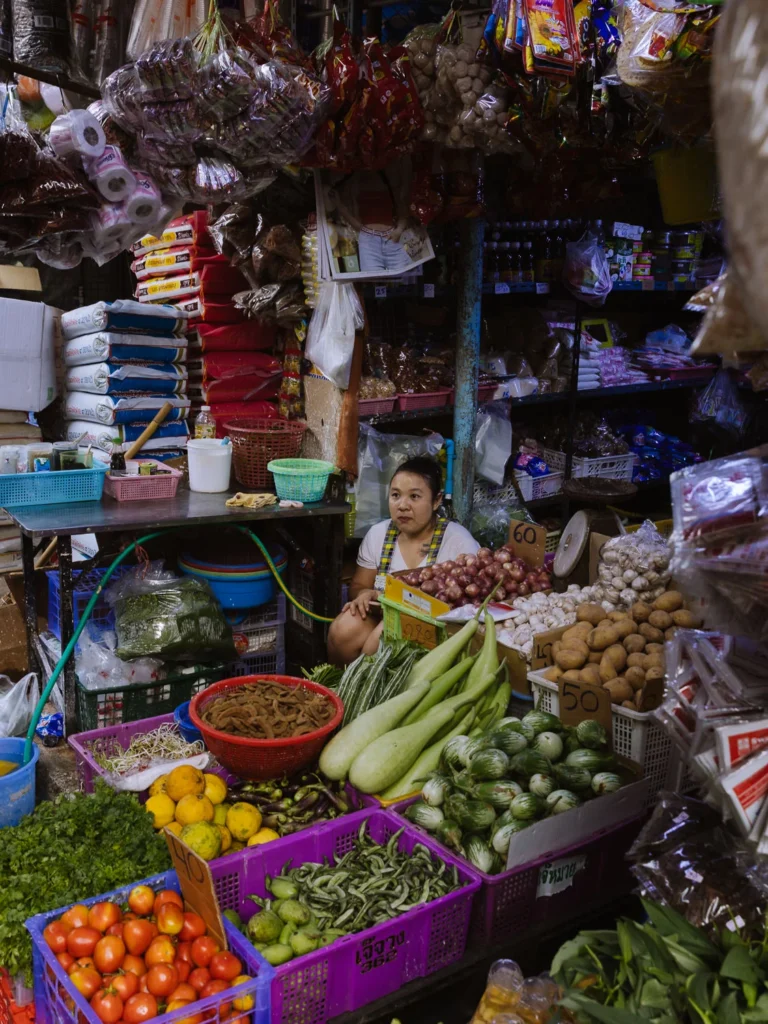
The sheer scale and variety of produce is staggering: whole pigs and entire fish, mountains of fresh chillies, live crabs packed into buckets, bags of dried spices, enormous bunches of Thai basil, and cuts of meat I’ve never seen anywhere.
It is loud, crowded, and not remotely sanitised.
Some sections may test your comfort zone, but it’s completely fascinating and gives you a genuine sense of the city’s food culture in a way that hawker centres or food tours can’t replicate.
Khlong Toei is in the Sukhumvit area and most easily reached by taxi. Allow an hour to an hour and a half, go early, and wear shoes you don’t mind getting dirty.
Entry is free.
18. Floating Markets
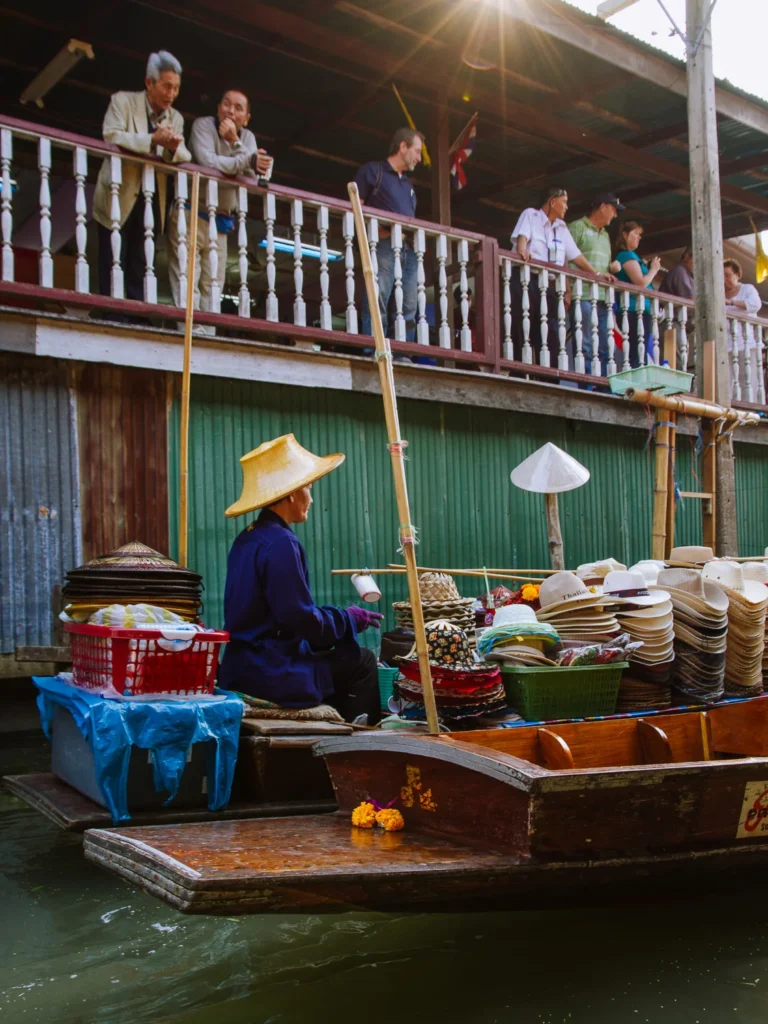
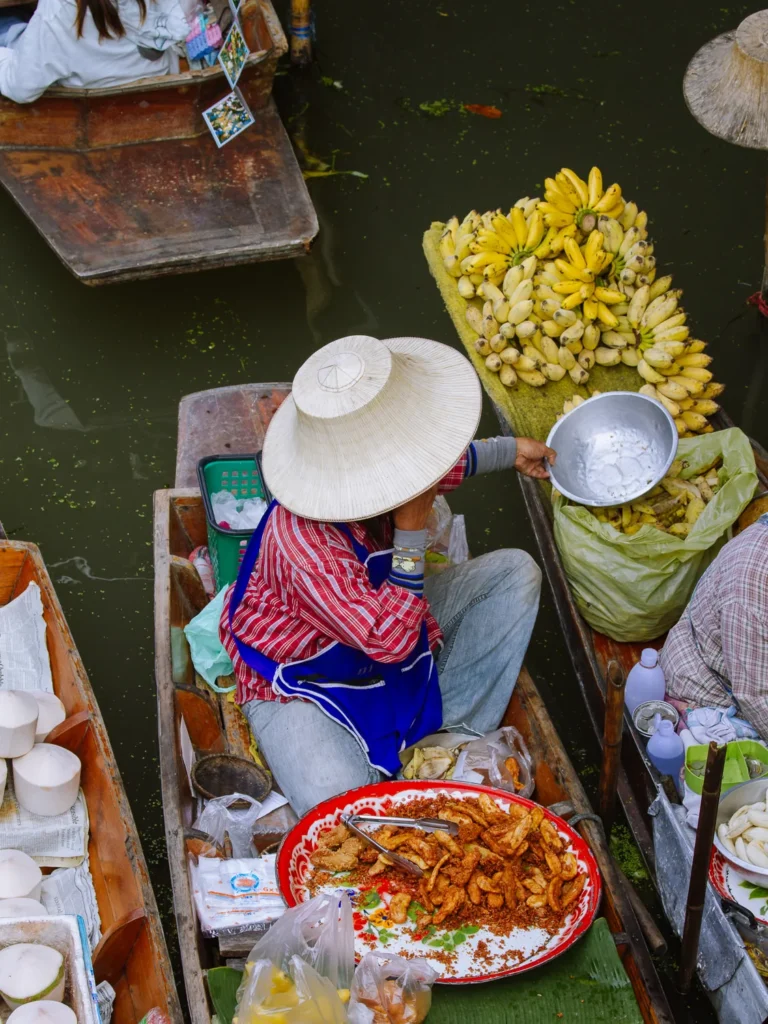
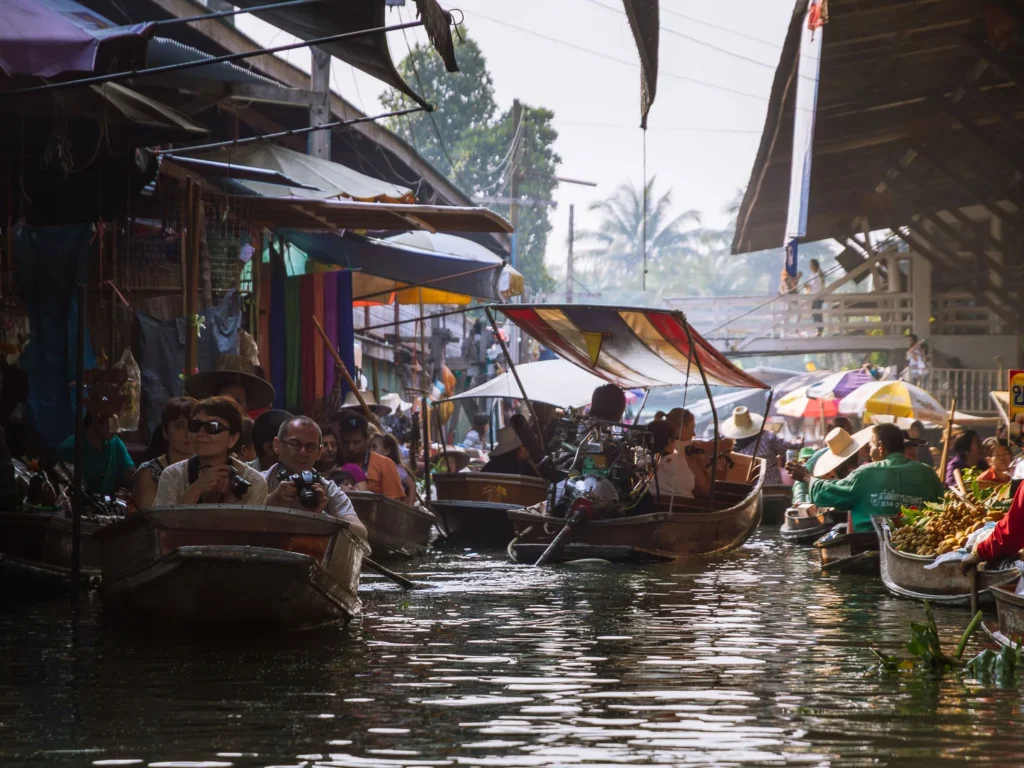
Bangkok has several floating markets, though it’s worth being honest that most of the central ones are heavily commercialised and primarily tourist-focused. With that in mind, they are still a lot of fun if you go in with the right expectations.
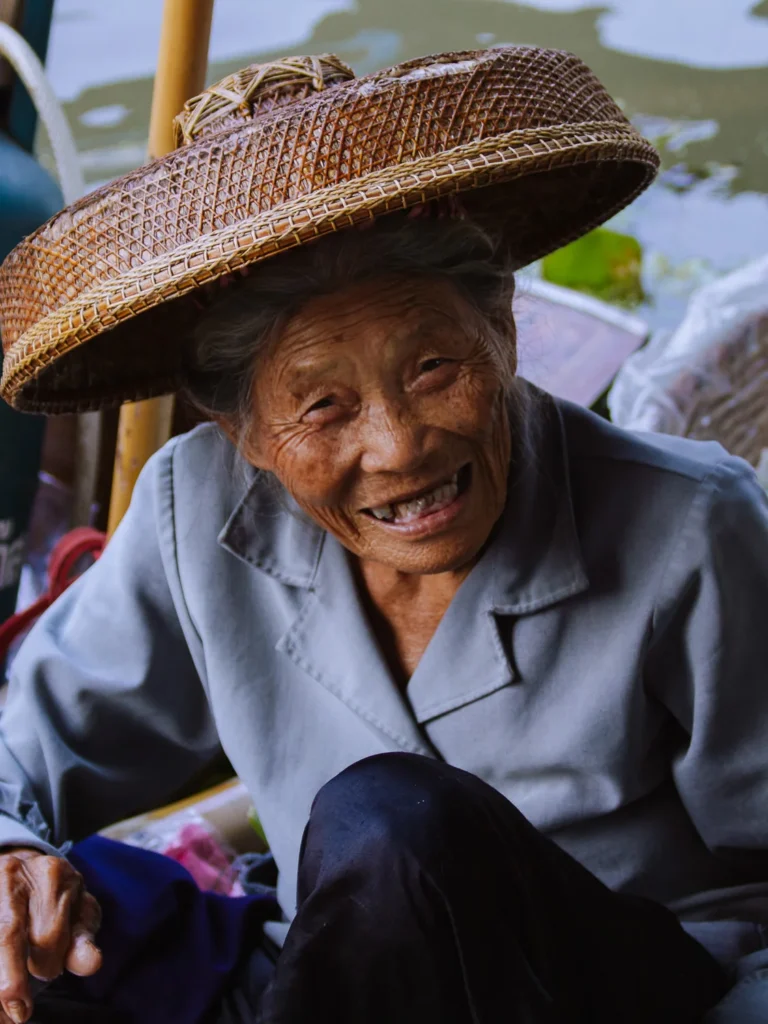
Damnoen Saduak is the most famous, about 90 minutes from central Bangkok. It gets very busy and is undeniably touristy, but the visual spectacle of boats piled high with tropical fruit and vendors in traditional dress is genuinely photogenic.
This guided tour of Damnoen Saduak has 27,000 positive reviews.
Amphawa is a smaller, more local market about two hours from the city, and significantly more atmospheric. It runs on Friday, Saturday, and Sunday evenings. Staying overnight and taking a firefly boat tour on the Mae Klong River is a wonderful experience.
Khlong Lat Mayom, in the western suburbs of Bangkok, is the most local of the three. It runs on weekends and is popular with Bangkok residents rather than tourists. The food is excellent, and the atmosphere is relaxed.
19. Lumpini Park
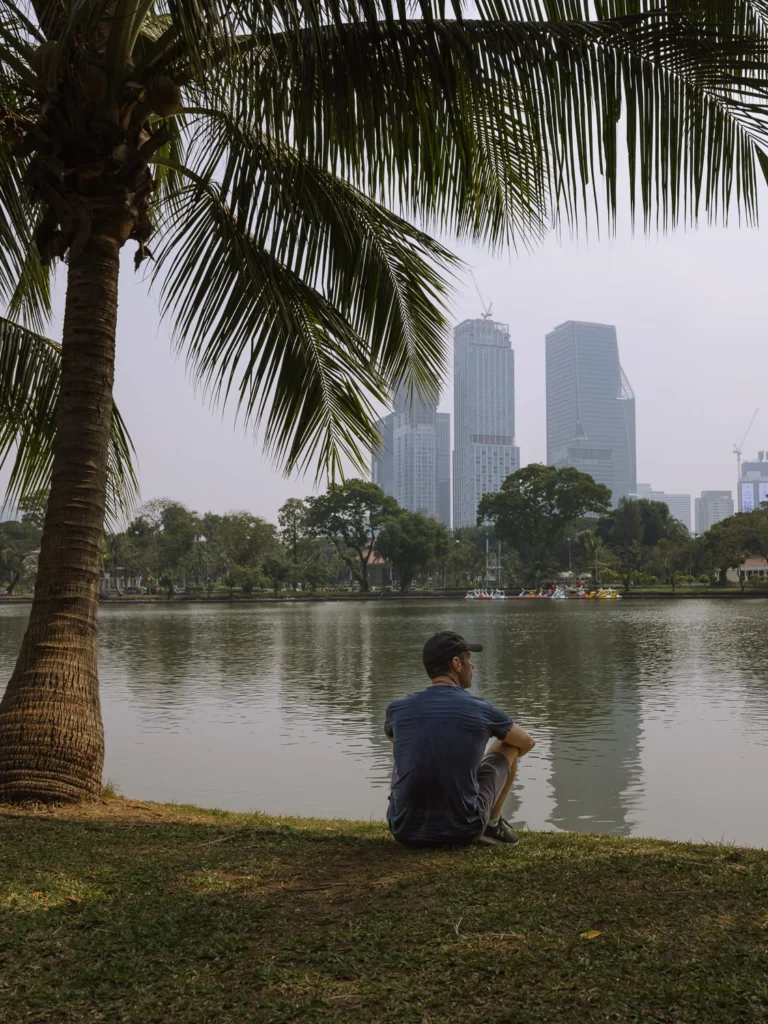
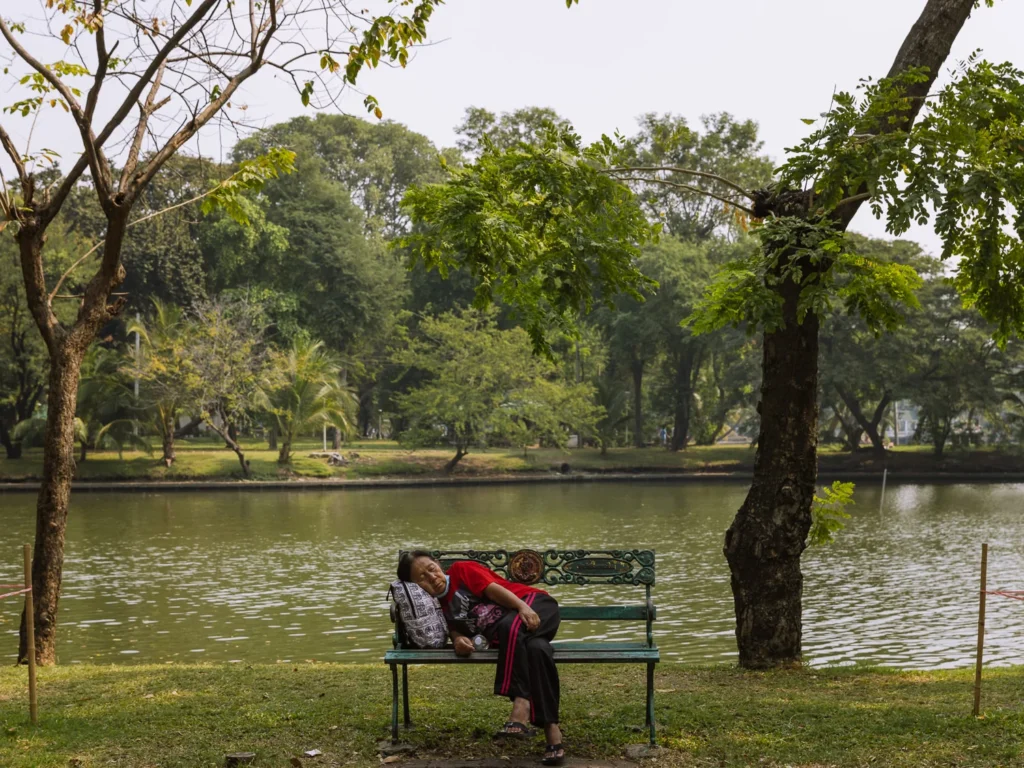
Bangkok is an intense city. Lumpini Park, in the heart of the business district, is where it catches its breath.
This large green space fills up from 5 AM with joggers, tai chi practitioners, outdoor aerobics classes, and retirees playing chess under the trees.
In the late afternoon, the park takes on a different character, with families, picnics, and pedal boats on the lake.
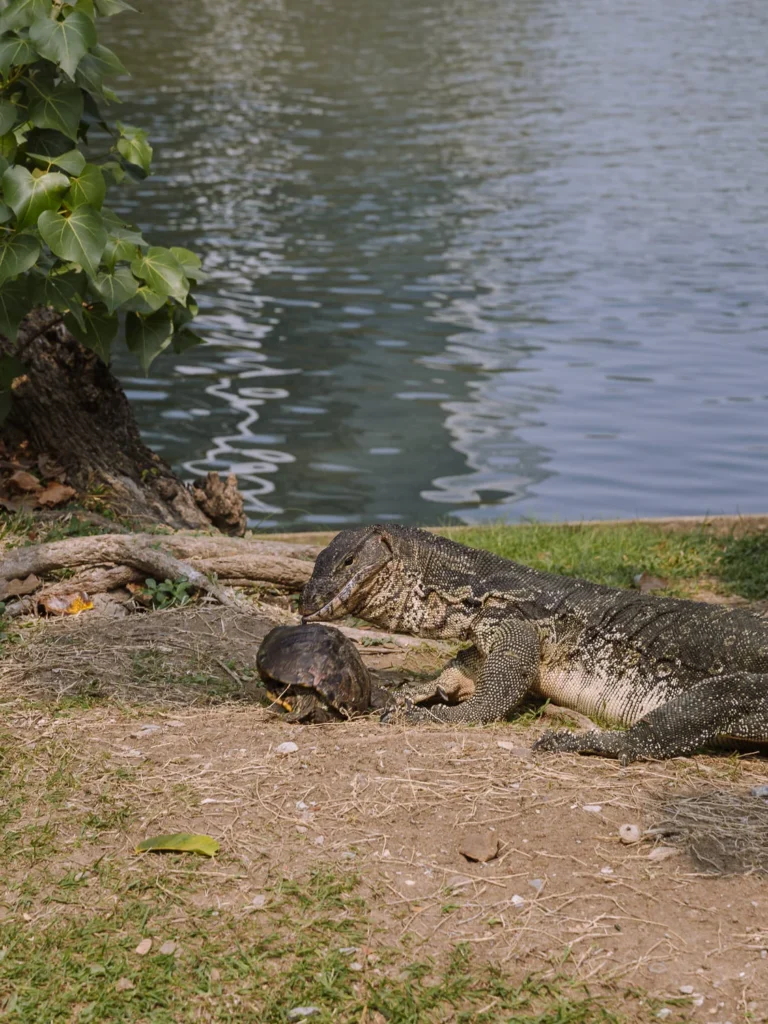
It is a great place to start the morning, especially if you are staying nearby. It is also one of the few places in Bangkok where you have a reasonable chance of spotting a monitor lizard — enormous reptiles that live in the park’s ponds and have become unlikely local celebrities.
Entry is free.
More Things to Do in Bangkok
Bangkok is endlessly generous with its attractions. If you have extra time, here are a few more things well worth considering.
Ancient City (Muang Boran)
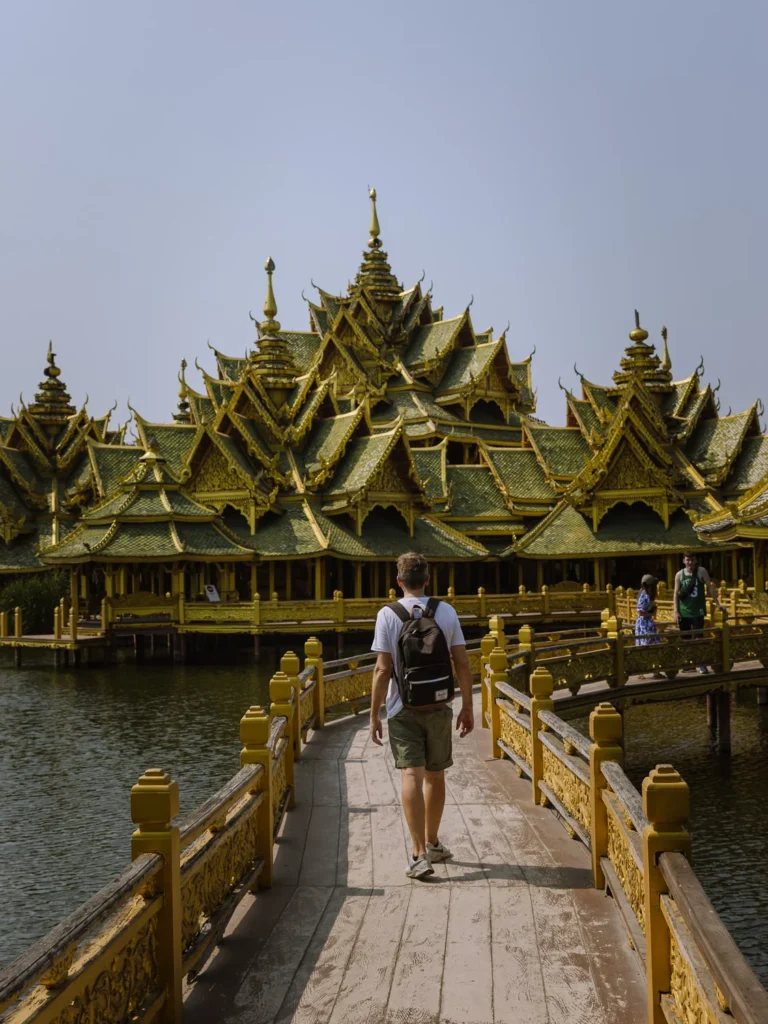
Located about 30km south of Bangkok in Samut Prakan, Ancient City is a vast open-air park that recreates Thailand’s most famous monuments, temples, and palaces.
Covering 300 hectares, it is one of the largest outdoor museums in the world.
We thought it was interesting, but this is one we’d probably save for your second trip to Bangkok.
Benchakatti Park
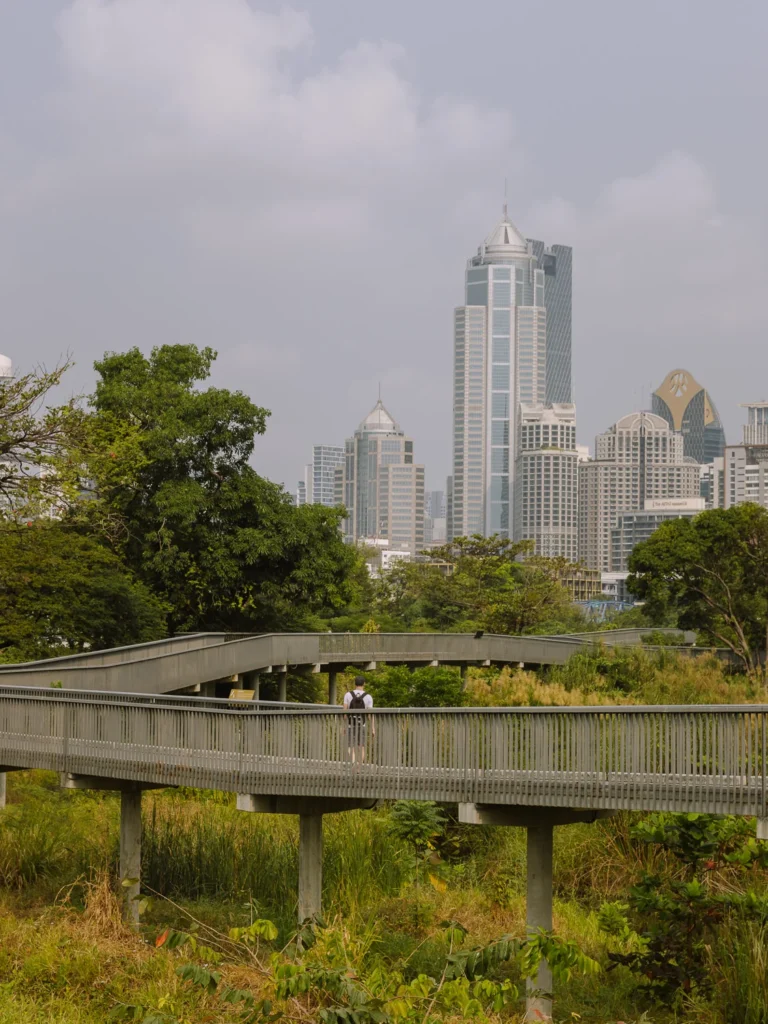
A 180-acre urban park in the Khlong Toei district, Benchakitti was created on the site of a former tobacco facility. It has been transformed into a green space, including wetlands, elevated walkways, and a sponge-city design for water management.
Free entry and it’s easily reached from Asoke BTS or Sukhumvit MRT.
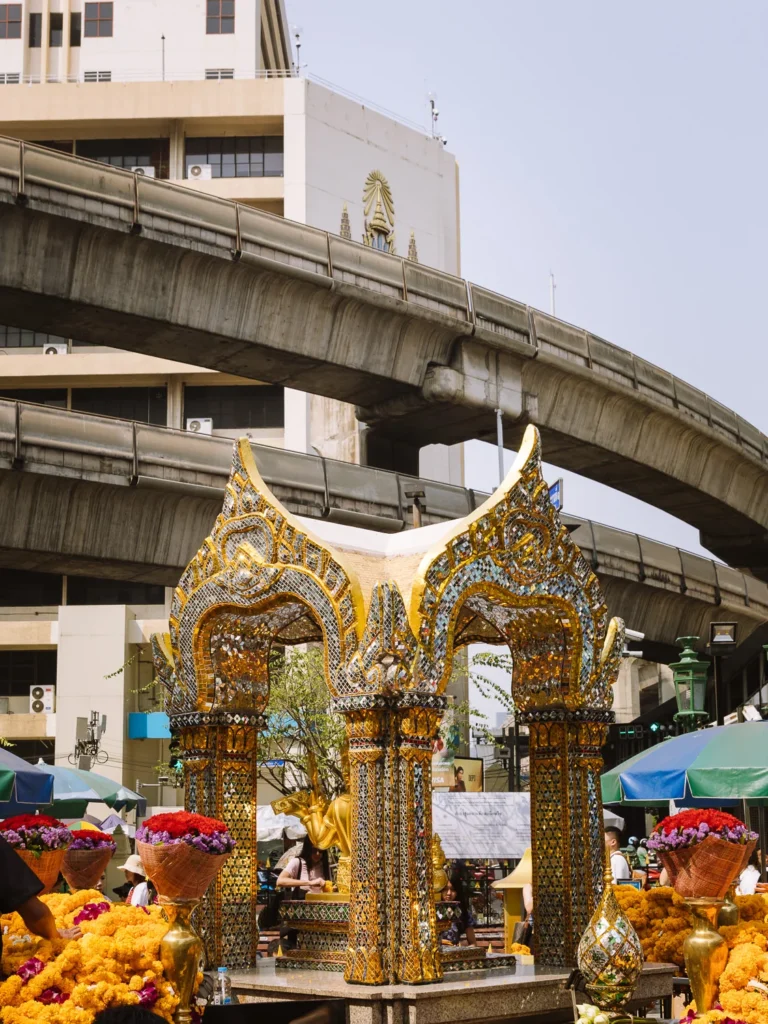
Erawan Shrine
This is a shrine dedicated to Phra Phrom, the Thai representation of the Hindu god Brahma. The strange location at one of Bangkok’s busiest intersections, surrounded by shopping malls with traditional dancers performing, is an interesting side to Bangkok.
You don’t need long to visit, but it’s worth popping in if you’re in the area.
Museum of Siam
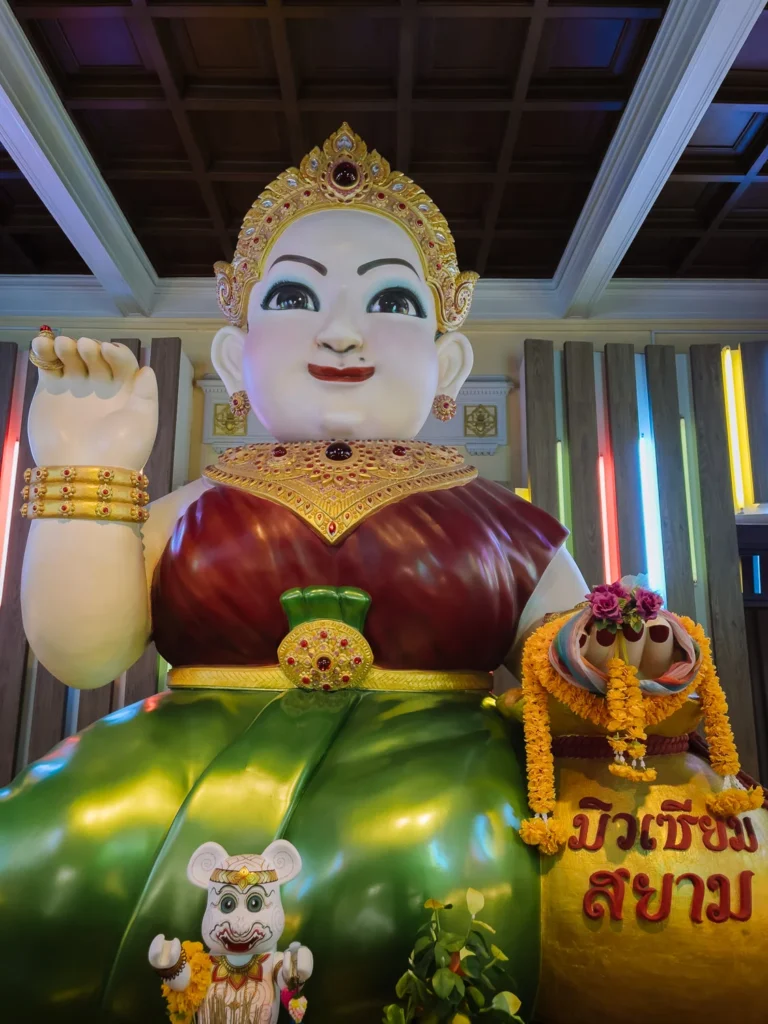
An interactive museum in the Phra Nakhon district exploring the origins and identity of the Thai people.
It’s engaging, modern, and not the kind of dusty historical museum you might expect. But it’s a little weird and not something we’d list as essential when you’re in Bangkok. Entry is 200 THB.
Bangkok Arts and Culture Centre (Bacc)
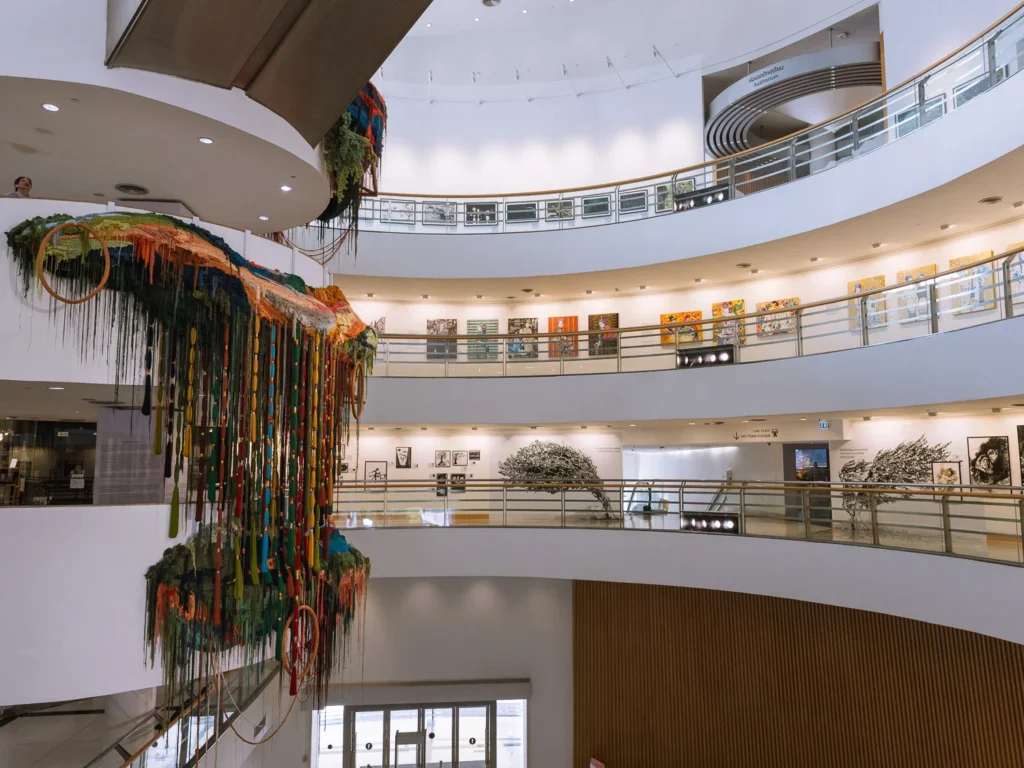
The Bangkok Arts and Culture Centre sits directly opposite MBK Centre at the Siam BTS stop and hosts a rotating programme of contemporary art, photography, and design from Thai and international artists.
It’s engaging and well put together, but the quality of exhibitions varies, so it’s worth checking what’s on before you go.
Logistics & Practicalities
Visas
People from the UK, USA, Australia, Canada, and most EU nations can enter Thailand visa-free for up to 60 days. This was extended from 30 days in 2024 and applies only to tourist visits.
You will need a passport valid for at least 6 months beyond your intended stay, a confirmed onward or return ticket. Proof of accommodation or sufficient funds may be requested at immigration, though this has never happened to us.
If you plan to stay longer than 60 days, you can extend your visa by a further 30 days at any immigration office in Thailand for a fee of 1,900 THB.
How to Get to Bangkok
Suvarnabhumi International Airport (BKK) is Bangkok’s main international gateway and one of the busiest airports in Asia. It is located approximately 30 kilometres east of central Bangkok.
A second airport, Don Mueang International Airport, handles mostly budget carriers within Asia and domestic flights.
Getting from Suvarnabhumi to the City Centre:
The Airport Rail Link connects Suvarnabhumi Airport directly to Phaya Thai station in central Bangkok. The journey takes about 30 minutes and costs 45 THB. This is the most efficient and reliable option.
Official metered taxis are available on Level 1 via a queue ticket system.
Taxis from the airport operate on the meter plus a 50 THB airport surcharge and any expressway tolls (usually around 60 THB). The total cost to central Bangkok is typically 300-400 THB.
Always take a metered taxi from the official queue on floor 1, not from touts.
Private transfers can be arranged in advance and typically cost around 700-900 THB to central Bangkok.
Getting Around Bangkok
Bangkok has an excellent and expanding public transport network.
The BTS Skytrain is the easiest way to move around the city, covering most of the major areas tourists visit.
Fares vary by distance and typically range from 16-59 THB.
Get a Rabbit Card if you are staying more than a day or two — sold at any BTS station.
The MRT (underground metro) connects Silom, Sukhumvit, and the older part of the city around Chinatown and Hua Lamphong. It interconnects with the BTS at several stations.
The Chao Phraya River Express Boat is ideal for getting to the old city temples and is one of the most enjoyable ways to move around. The orange-flag boats are the best value at around 15 THB per journey.
Grab (the regional equivalent of Uber) is reliable, affordable, and excellent for getting to places not on the rail network. Download the app before you arrive.
Tuk-tuks are available everywhere but should be used with caution. Always agree on a price before getting in, and never accept a journey offer from someone who approaches you unsolicited.
Where to Stay in Bangkok?
The best area to stay depends on what you want to do. For temples and markets, the Rattanakosin/Banglamphu area (near Khao San Road) is convenient. For shopping, nightlife, and easy transport, Sukhumvit is the best base.
We have a complete guide on Where to stay in Bangkok based on the type of trip you’re planning, but here are a few of our recommendations to get you started:
The Peninsula Bangkok (Riverside, $$$) — One of Bangkok’s finest hotels, with a legendary riverside position and pool complex. An indulgence worth considering for at least a night.
Capella Bangkok (Riverside, $$$$) — A contemporary luxury hotel opened in 2021, with spectacular river views and one of the best pools in the city.
Hotel Indigo Bangkok Wireless Road (Ploenchit, $$$) — A well-designed boutique hotel with easy BTS access and a rooftop pool.
How Many Days in Bangkok?
We recommend a minimum of 3 to 4 days in Bangkok to get a proper feel for the city.
Three days give you enough time to cover the main temples, spend a day in the markets and neighbourhoods, and have at least one great evening out.
Four days or more allows you to explore further afield — the klongs, a day trip to the floating markets, or simply more time wandering neighbourhoods without a fixed agenda.
Bangkok is also a natural base for side trips. Ayutthaya, the ancient former capital of Thailand, is an hour and a half north by train and is a genuinely moving and impressive place to visit.
Best Time to Visit Bangkok
The best time to visit Bangkok is during the cool, dry season from November to February. Temperatures are slightly lower (around 25-30°C), there is little rain, and the air quality is generally better.
March to May is the hottest period of the year, with temperatures regularly exceeding 35°C. It is manageable, but sightseeing can be physically demanding.
June to October is the wet season. Heavy afternoon downpours are common, though they rarely last more than an hour or two.
Hotels are cheaper, and the city is less crowded, which compensates for the inconvenience.
We have visited Bangkok in November and February. November was our favourite time. There was just enough heat, the skies were mostly clear, and we generally only got rain for a short period of time in the afternoons.
Tips for Visiting Bangkok
Dress respectfully when visiting temples. Cover shoulders and knees. Keep a light layer in your bag.
Always carry cash. Bangkok is rapidly going cashless in many areas, but many street food vendors, markets, and smaller establishments are still cash-only.
Bargaining is expected at markets but not at restaurants, department stores, or metered taxis.
Be cautious about accepting help or directions from strangers near major tourist sites. The tuk-tuk tour scam, where they tell you an attraction is closed but later take you to something nearby, is still active in Bangkok.
Book popular attractions in advance. The Grand Palace and some other major sites now offer or require online ticketing. Arriving without a booking, especially in peak season, can mean long queues.
Respect the monarchy. Thailand’s lèse-majesté laws are among the strictest in the world. Avoid any negative commentary about the royal family in public or in conversation with people you don’t know well.
Heat and humidity are serious. Bangkok is hot and humid year-round, and in the hotter months it can be genuinely punishing. Plan your outdoor sightseeing for early morning or late afternoon, drink more water than you think you need.
More Asia / South Pacific Guides
- Top things to do in Sydney
- Our 2-week Cambodia itinerary.
- The best things to do in and around Siem Reap.
- Where to stay in Bangkok – a guide for first-time visitors.
- Visit the beautiful Banaue Rice Terraces in the Philippines.
- The best things to do in Bangkok.
- Best areas to stay in Singapore.
- Our 3-day Bangkok itinerary.
- Our complete itinerary for Sri Lanka.

reader-supported
When you buy through links on our site, we may earn a small affiliate commission at no extra cost to you.
Thanks for your support // Paul & Mark