

From vintage tram rides to eerie mausoleums, historic flea markets, and buzzing nightlife, get the most out of the Portuguese capital with our guide to the best things to do in Lisbon.
By: Paul Healy | Last Updated:
My life of crime began in Lisbon.
One night in Bairro Alto, between bars, we heard rumours of a black market in pastel de nata. Apparently, the bakeries work through the night to get fresh tarts delivered to cafes by morning — and entrepreneurial bakers sell the surplus directly from a basement window to anyone who knows to ask.
We found the bakery. I was nominated to make the transaction. Four pastries at €1 each. Extortion, but this was the black market after all.
Someone yelled that the cops were coming. We ran. Adrenaline, then shame, then fear.
Then I bit into my pastel de nata — pastry crackling, custard still warm — and every other thought surrendered to pure bliss.
My life of crime ended that night. This guide covers everything else worth doing in Lisbon.


Lisbon Map
We collected all our must-see Lisbon attractions on a map to help you navigate your way around. For some suggestions on how to put it all together over a short trip, read our Lisbon itinerary for 3 days.
Click on the top right corner to open our map in your Google Maps app. Click the star next to the title to save it to your Google account.
Top Things to Do in Lisbon
1. Castelo São Jorge
Castelo de São Jorge was once a Moorish castle, but subsequent occupants have significantly altered the structure.
The most compelling reason to visit is for the 360-degree panorama over Lisbon’s rooftops. The terracotta patchwork of tiles, broken by the narrow lanes of Alfama, threading down to the Tagus, is beautiful.
The small museum in the castle has seen better days, so hurry through after your visit and spend some time exploring the São Jorge Hill neighbourhood down to the cathedral.
On our way out, we had quck stop at Chapitô à Mesa for a glass of Portuguese wine with a view to remember.
Tickets: Castelo São Jorge is included on the Lisbon Card (see below), or you can book skip-the-line tickets in advance, which include a quick audio guide.


2. Mosteiro de São Vicente de Fora
We’re always slightly baffled that São Vicente de Fora doesn’t feature more prominently on the standard Lisbon itinerary.
The church itself is decent, but the cloisters next door are thoroughly impressive.
The walls are covered floor to ceiling in azulejos — the intricate blue-and-white tiles that tell Portugal’s story — all set beneath beautiful white vaulted ceilings.
From the cloisters, make your way up to the Royal Pantheon, which contains the tombs of the Braganza royal dynasty — the family that ruled Portugal for over two centuries.
The cloaked weeping woman standing watch over one of the tombs, which you can see in our photo below, is an eerie presence.
The rooftop terraces provide one of the best 360° views of the Lisbon skyline.
Tickets: We loved it, but it’s not a popular attraction, so you don’t need to book tickets in advance. But if you like being organised, purchase tickets here. We paired the visit with the Feira da Ladra, which is next.


3. Feira da Ladra (Thieves’ Market)
The Feira Da Ladra (also known as the Thieves’ Market) sets up next door to São Vicente de Fora beside the National Pantheon on Tuesdays and Saturdays.
The treasure-hunt atmosphere of the market feels entirely appropriate to the name. You’ll find everything from old rotary phones to broken mannequins, pre-loved vinyl, handmade crafts, CDs, military objects, and vintage furniture.
Even if you’re not buying, it’s worth a slow wander just to soak up the atmosphere. This is very much a local market rather than a tourist one, and it shows in the best possible way.
For lunch afterwards, we’d recommend Tabernita, a cheery, unpretentious spot serving traditional Portuguese food. If you need a coffee fix, Copenhagen Coffee Lab is just a few minutes’ walk away.


4. Panteão Nacional
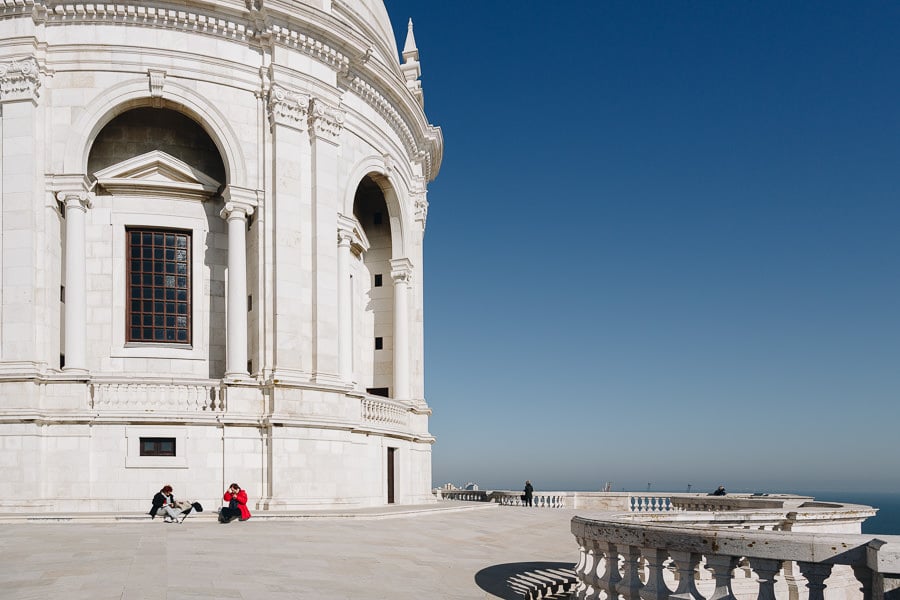
The National Pantheon is one of Lisbon’s most striking buildings — a great white Baroque dome that dominates the skyline of Alfama.
The building began as a church but became a monument to the great figures of Portuguese history.
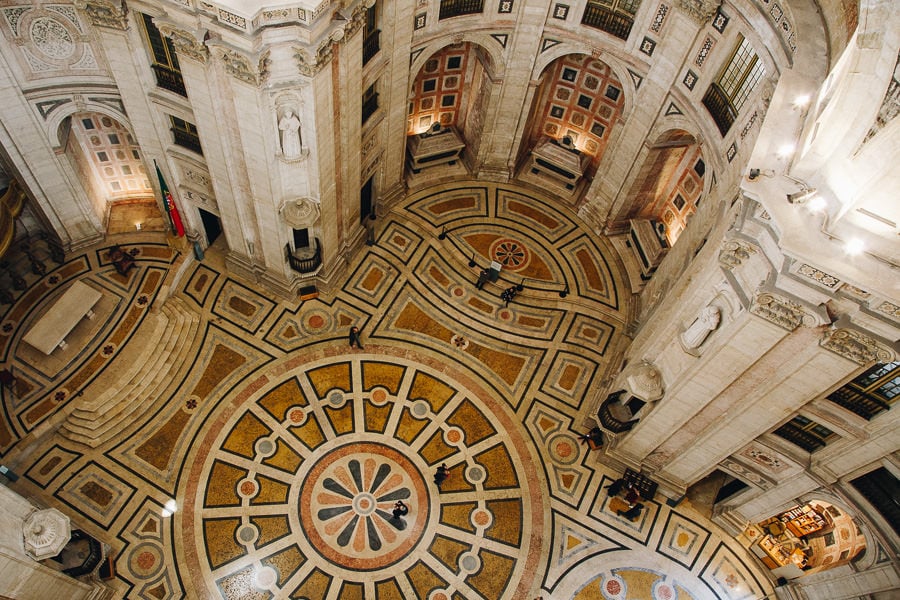
Inside, the scale of the place hits you immediately. The geometric marble flooring is stunning. The gold ornamentation and grand stone columns give it an imperious grandeur.
Climbing the stairs to walk the internal perimeter of the dome gives you a remarkable view, which you can see in our photo below.
Like many landmarks in Lisbon, there is a cenotaph to Vasco da Gama, the sea-faring hero who returned fabulous wealth to Portugal.
The Pantheon also houses the tomb of football legend Eusébio and Fado queen Amália Rodrigues.
Don’t miss the terrace beside the dome. The view over the Tagus and across the Alfama rooftops is among the best in Lisbon.

5. Jerónimo’s Church & Monastery
Jerónimos Monastery was built to commemorate Vasco da Gama’s voyage to India, and it’s one of the best examples of Manueline architecture in the world.
The church is free to enter and worth doing, even if you don’t go further.
It’s here that you’ll find the tombs of two of Portugal’s greatest figures — explorer Vasco da Gama and poet Luís de Camões — facing each other across the lower choir.
The scale of the nave is staggering, with six sculpted columns that are works of art in their own right.
The cloisters, however, are the real highlight and reason enough to buy a ticket.
Two storeys of intricately carved Manueline arcades surround a perfectly symmetrical courtyard, and the detail in the stonework is extraordinary up close.
Jerónimos Monastery is one of Lisbon’s most impressive UNESCO World Heritage Sites.
The church is free to enter, but you need to purchase tickets to visit the cloister, which we highly recommend. Entry is free on the first Sunday of every month.
Jerónimos Monastery // You need to book skip-the-line tickets for Jerónimos Monastery as the queue can be hours long.

LUÍS DE CAMÕES TOMB

LUÍS DE CAMÕES TOMB

6. Mac/Ccb Museum of Contemporary Art
Formerly known as the Berardo Collection Museum, the MAC/CCB is a contemporary art gallery in Belém.
It’s an excellent space — well laid out, well labelled, and genuinely engaging — and it doesn’t get the attention it deserves given the quality of what’s inside.
The permanent collection comprises close to 1,000 works, including pieces by Dalí, Duchamp, Miró, Warhol, Francis Bacon, and Paula Reg.
Alongside the permanent collection, there are rotating temporary exhibitions, so there’s almost always something new to see, even if you’ve been before.
The museum also runs an educational programme for children aged 2 and up, making it a surprisingly good option for families.
Tickets: You won’t have trouble getting tickets at the door, but you can book online in advance. The museum is within easy walking distance of the Jerónimos Monastery and the Tower of Belém.


7. Lx Factory
LX Factory is a textile manufacturing complex that has been transformed into a modern, creative space.
Located beneath the Ponte 25 de Abril bridge in the Alcântara neighbourhood, it feels like a hidden enclave within the city. There are graffiti-covered warehouse walls, cobbled lanes, and a constantly evolving mix of independent businesses.
There’s a collection of independent shops, including design outlets, vintage boutiques, art supply shops, a tattooist, a cooking school, an acting studio, and a pole dancing studio.
The one thing not to miss is Ler Devagar, a bookshop built around a vast old printing press with books stacked floor to ceiling across three storeys.
We also recommend Taberna 1300 for dinner and Landeau Chocolate for desserts.
We’ll be honest, LX Factory skews more towards tourists than locals these days, and you’ll feel that on a busy weekend afternoon.


8. Tram 28
If you were to design the perfect sightseeing route through Lisbon, you’d probably end up with something very close to the Number 28 tram.
The line was inaugurated in 1914 and has been rattling through the city’s narrowest streets ever since. It climbs through Alfama, winding through Baixa, and rising again to Chiado and Estrela.
The whole experience is like being in an old movie – the chrome details, the scent of polished wood, the hiss of brakes.
But the secret is very much out, and at the main departure point, Praça Martim Moniz, it can take an hour or more to get on board, particularly in cruise ship season.
Our tip: board at R. Palma, the second stop, where you’ll have a much better chance of getting on. Aim for early morning.
If the 28 is too crowded, line 12E is a great alternative. It covers some of the same scenic sections but is usually much quieter.
The Navegante Card can be used to pay for Tram 28.


9. Miradouro de São Pedro de Alcântara
Miradouro de São Pedro de Alcântara is one of our favourite viewpoints in Lisbon, one that feels a little more graceful than the others.
Set in a terraced garden high above the city, the miradouro has a regal atmosphere, with Greek busts, ornate fountains and manicured hedges.
The area around the approach to the viewpoint is also worth exploring slowly on foot.
The wall running up through Bairro Alto has become one of the most celebrated canvases in the city, with works by local and international artists covering almost every surface.


10. Igreja de São Domingos
The Igreja de São Domingos is an atmospheric church that has had its fair share of suffering.
It was severely damaged in the 1755 earthquake, then devastated by a fire in 1959.
The reconstruction that followed deliberately chose to preserve the scars rather than conceal them. The result is a building that feels less like a restored monument and more like a living wound.
The drama is visible when you enter the church. Huge gashed pillars, badly scorched walls, and an orange-tinged interior bathed in harsh, unfiltered light give the space a macabre yet somehow deeply moving atmosphere.
Most of the artwork damaged in the fire hasn’t been replaced, leaving the walls bare and exposed.
It’s one of those places that’s difficult to describe and best experienced. We’d recommend stepping in even if churches aren’t usually your thing.
Entry is free.


11. Convento Do Carmo
Now open to the sky, the remains of the Gothic Convento do Carmo are a reminder of the devastation of the 1755 earthquake.
The roof collapsed during the earthquake and was never rebuilt, leaving exposed arches and freestanding walls, scattered with statues, tombstones, and pillars.
The Carmo Archaeological Museum is located in the old nave of the church and houses a weird and wacky collection of artefacts donated in the 19th century.
Among the treasures are the Gothic tomb of King Ferdinand I, the Baroque tomb of Queen Maria Anna of Austria, a Roman sarcophagus known as the Sarcophagus of the Muses, and an Egyptian mummy.
The most obscure items are the Peruvian mummies — a young boy and girl, seated and encased in glass cabinets.
The 16th-century azulejo (hand-painted tile) collection is much less disturbing.
Tickets: You can purchase tickets at the entrance and receive a discount with a Lisbon Card.


12. A Cevicheria
As a break from the tourist attractions in Lisbon, we highly recommend booking lunch at A Cevicheria. The menu is based on Peruvian ceviche, served with Portuguese flavours and flair.
Try to score a seat at the counter to watch the chefs create dishes with precision.
It was one of our favourite meals in Lisbon.
They have an extensive wine list, but we would be negligent if we didn’t tell you about their pisco sours; the perfect accompaniment to their ceviche.


13. Fado
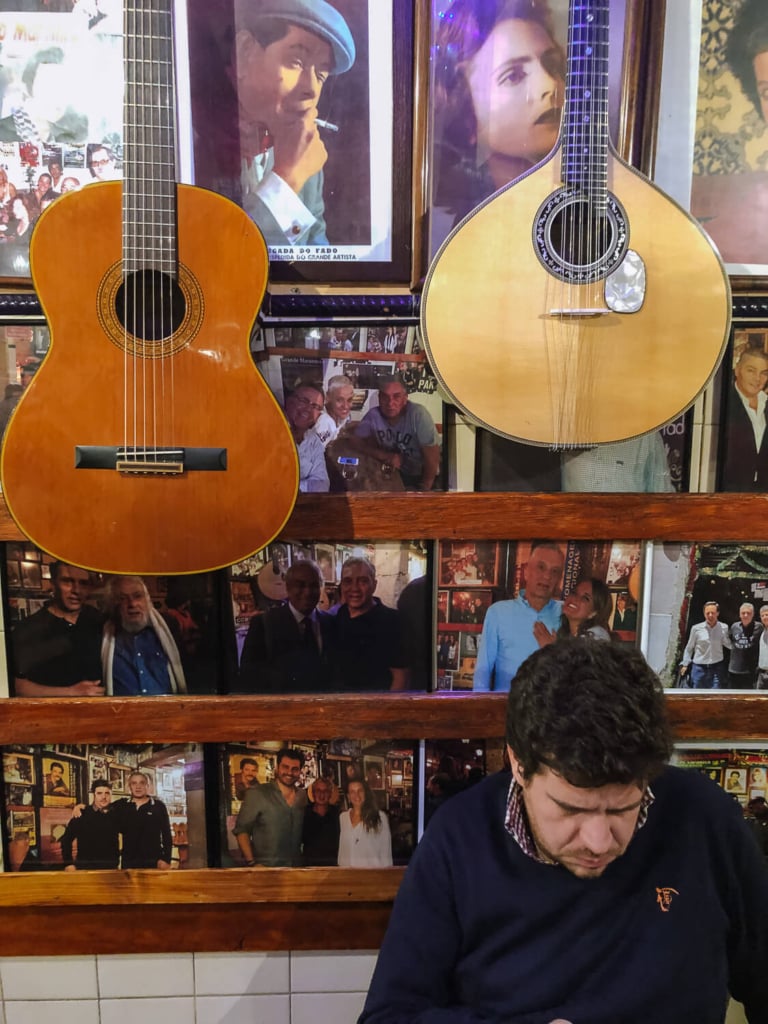
A night of Fado usually takes place in a small, intimate restaurant or bar where a solo voice is accompanied by Portuguese guitarra.
Online, you’ll hear a lot about authentic and not-so-authentic Fado, which no doubt has some merit. But as a tourist new to the experience, it’s probably best just to settle on a place you’re happy with.
The atmosphere of a good Fado house, however you find it, is an experience in itself.
A good approach is to stroll through Bairro Alto on an evening and follow the sound of singing drifting onto the street
Alternatively, we had a great time at A Tasca do Chico, which offers a great-value fado experience.

14. Praça Do Comércio
The harbour-facing plaza, Praça do Comércio, is one of the largest in Portugal and the most beautiful in Europe.
Framed on three sides by elegant lemon-yellow arcades and open on the fourth to the Tagus River, it feels less like a plaza and more like a stage — which, historically, is exactly what it was.
Before the 1755 earthquake, this was the site of the Paço da Ribeira, the royal palace that stood here from the 16th century until it was destroyed in the earthquake.
At the centre stands the colossal equestrian statue of King José I.
It’s a beautiful square, but you don’t need a long time to explore. We also recommend avoiding the very touristy restaurants directly on the square.


15. Day Trip to Sintra
Sintra is one of those places that genuinely lives up to the hype.
Just 40 minutes from Lisbon by train, this UNESCO World Heritage hilltop town is a flamboyant celebration of Romanticism — a mix of Gothic, Moorish, and Renaissance architecture.
It’s all spread across forested hills, with whimsical palaces, exotic gardens, and viewpoints that stretch all the way to the Atlantic coast.
The centre of the hilltop town is a maze of pedestrian laneways lined with cafes and pastry shops
Sintra gets extremely busy in summer, particularly on weekends. Going on a weekday and arriving early makes a significant difference.
The best way to get to Sintra is on the train from Rossio Station. All the details are in our guide to visiting Sintra on a day trip from Lisbon.


Other Attractions If You Have Time
Lisbon has so many world-class attractions, UNESCO World Heritage Sites and wonderful things to do that it’s impossible to fit them all in one trip.
Everything we mentioned above is what we would consider the top attractions, but there are a few more things to do if you have time.
The Romanesque Lisbon Cathedral has an imposing facade and two bell towers. Even if you don’t have time to go in, you’ll no doubt capture a shot as you explore Lisbon.
The Calouste Gulbenkian Museum is considered one of the most important private art collections in the world. Masterpieces from ancient Egypt sit alongside works by Rubens, Rembrandt and Turner.
Quake combines video mapping, interactive technology and state-of-the-art simulators to relive the events of the 1755 earthquake.

Best Neighbourhoods & Viewpoints
That completes the main attractions in Lisbon, which we think are worth exploring. One of the best ways to enjoy Lisbon is by strolling through its diverse neighbourhoods.
No city in Europe quite matches Lisbon for its hilltop viewpoints or miradouros, and wandering the neighbourhoods that connect them is honestly one of our favourite ways to spend a day here.
Alfama
Lisbon’s oldest and most atmospheric district, Alfama, is a labyrinth of narrow cobbled streets, colourful tiles, and laundry strung between balconies.
For views, head up to the Miradouro da Graça or the Miradouro de Santa Luzia — both are stunning, but Graça tends to be slightly less crowded.
São Jorge Castle is at the top of Alfama with 360-degree views across the city. It’s worth paying the entrance fee to explore the castle properly, as we mentioned above, but the viewpoint just outside the walls is free.

Baixa, Bairro Alto & Chiado
Three neighbourhoods that sit close together, but each has its own distinct character.
Baixa is the flat, grid-like downtown that was rebuilt from scratch after the 1755 earthquake.
It’s the practical heart of the city with grand plazas, wide pedestrian streets, and the elegant arcades of Praça do Comércio opening out onto the Tagus.
Baixa is a good place to base yourself, as we explain in our best neighbourhoods of Lisbon guide.
Bairro Alto climbs the hill to the west and feels like a different city entirely. By day, it’s quiet and almost village-like.
After dark, it becomes Lisbon’s nightlife hub with dozens of tiny bars spilling out onto the street. This is our favourite area to hang out in the evening – it’s full of buzz.
Chiado, sitting between the two, is the city’s most elegant quarter. Here you’ll find bookshops, literary cafés, designer boutiques, and beautifully restored architecture.
Príncipe Real
If Chiado is Lisbon’s elegant quarter, Príncipe Real is its cool, slightly bohemian older sibling.
Sitting just uphill from Bairro Alto, it’s one of our favourite neighbourhoods in the city — a lovely mix of antique shops, independent boutiques, wine bars, and some of the best restaurants in Lisbon.
The centrepiece is the Jardim do Príncipe Real, a shady square with a magnificent 150-year-old cedar tree that spreads its branches wide enough to shelter half the garden.

Belém
Belém is a few kilometres west of the centre and feels almost like a separate town, but it absolutely earns the trip.
It has some of Portugal’s most impressive monuments, including Jerónimos Monastery, Padrão dos Descobrimentos and the Tower of Belém.
The other unmissable stop is Pastéis de Belém, the original home of the pastel de nata. It has been serving custard tarts from the same bakery since 1837. The queue moves quickly, and it’s worth every minute of the wait.


Where to Eat & Drink in Lisbon
Restaurants
- A Cevicheria // Perfectly crafted seafood dishes are prepared at the bar of this special experience. Watch deft hands creating unusual ceviche dishes while you sip a sparkling.
- Taberna da Rua das Flores // This tiny but charming eatery has a small menu of traditional Portuguese offerings cooked with simple loving flair.
- Restaurante Pharmacia // A modern fine dining establishment that takes the pharmacy theme with commitment from decor to dish.
- Artis Wine Bar // The dark and intimate Artis Wine Bar was our favourite place to eat. Simpl,e well-cooked Portuguese classics with a small menu and local charm.
Wine & Cocktails
Portugal’s love affair with wine can be an all-consuming experience, and there’s nothing wrong with that. Here are some of our favourites.
- Antiga Wine Bar // This cosy little wine bar in Alfama has a curated list served with excellent tapas made from local ingredients.
- Cinco Lounge // A beautiful space with crafty and innovative cocktails, Cino Lounge is perfect for a quiet, sophisticated drink.


Coffee
Coffee is something we don’t skimp on when we travel, and the artisanal coffee scene has left its mark on Lisbon.
- Hello, Kristof // This is a training centre for speciality coffee, perfectly crafted. They also have a small selection of breakfast choices.
- Copenhagen Coffee Lab // There are a few in Lisbon now, but they are still an easy go-to choice for a consistently good coffee in a nice space.
- Heim Café // This is a bright, fun spot with decent coffee, but it is their excellent brunch offerings that really make it stand out from the rest.
- Fábrica Coffee Roaster // If you are looking for a broody, well-textured dark roast, this is the place for you.


Planning & Logistics
Where to Stay in Lisbon
Lisbon is a relatively compact city, but it’s still a good idea to stay as centrally as possible. We recommend staying in Baixa/Chiado, Bairro Alto or Alfama. All these areas ooze the charm you’re looking for in Lisbon, and they’re centrally located.
We have more neighbourhood suggestions in our guide about where to stay in Lisbon, which also has more hotel recommendations.
- Casa C’Alma – Casa C’Alma is a beautifully decorated B&B with a small, friendly vibe and a big continental breakfast. It’s located in a lovely neighbourhood about 1 mile from the city centre.
- Casa Balthazar – The modern, self-catering apartments of Casa Balthazar are bang in the centre of town, yet exude a relaxed, chilled-out calm. The views are superb, but upgrade to the Jacuzzi Terrace.
- Memmo Alfama – For an emphasis on design with all the latest gadgets, it’s hard to go past Memmo Alfama. It will be hard to leave the rooftop bar and pool with sweeping views over the Tagus River.


Getting There
Lisbon’s Humberto Delgado Airport is 7km from the city centre. Direct flights connect Lisbon to most major European cities.
From the airport, the Metro red line drops you into the city centre in around 20 minutes and is by far the easiest and cheapest option.
Taxis and Ubers are readily available if you have heavy luggage, and the journey shouldn’t cost more than €15–20.
Getting Around
Lisbon is a compact city, and the best way to see it is on foot, though the hills will test your legs more than you might expect.
It also has a comprehensive public transport network, including trams, funiculars, buses and a metro, which easily connects you to various parts of the city.
Navegante Card // Lisbon’s public transport card is Navegante, a quick and easy way to pay for all your travel. The card costs €.50 and can be charged with individual tickets or day passes. We walked everywhere in Lisbon, so the card wasn’t worth it for us.


Lisbon Card
The Lisbon Card provides access to 52 museums and discounts on shops and attractions. The main attractions are: Torre de Belém, Mosteiro dos Jerónimos, Castelo de São Jorge, and Panteão Nacional. The costs are:
- 24-hour pass: €30
- 24-hour pass: €50
- 72-hour pass: €60
It also includes free passes on the metro, trams, and cable railways for the duration of your pass.
Best Time to Go to Lisbon
Lisbon is a year-round destination, but the best time to visit is spring (March to May) and early autumn (September to October).
This is the best time to explore the city on foot, when temperatures are generally comfortable, and fewer visitors are around. Accommodation may be cheaper over this time.
June to August is peak season. It’s a wonderful time to visit, but you do need to be prepared for crowds, heat, and higher prices.
Winter (November to February) is Lisbon’s quietest season and is honestly underrated. The city is cooler and occasionally rainy, but rarely cold by northern European standards, and you’ll find the main sights refreshingly uncrowded.
How Long Do You Need in Lisbon?
Most of Lisbon’s main sights can be seen in 2 days. It’s a relatively compact city with good local transport, so getting between the main attractions is efficient.
However, we recommend spending 3 days in Lisbon. This allows you to see all the impressive historical sights and enjoy some local experiences. It also leaves a little time to wander the streets and soak up the atmosphere.
Add a fourth day and take a day trip to Sintra. It’s packed with fairy tale palaces and rambling hilltop castles, and it’s very easy to get to from Lisbon.

More Guides for Portugal
- Our curated list of the best things to do in Lisbon.
- The perfect 3-day itinerary for Lisbon.
- Book your accommodation with our guide to Lisbon’s neighbourhoods.
- Our top things to do in Funchal.
- An itinerary for a Lisbon to Sintra day trip.

reader-supported
When you buy through links on our site, we may earn a small affiliate commission at no extra cost to you.
Thanks for your support // Paul & Mark
Amazing article 😌👍 full of info and so much value thanks for sharing
very perfect article
i haev enjoyed bits of this , it pretty much summarizes lisbon as portugues capital.
the write up has made me feel like i have been there yet i have never stepped there. Great info thanks alot for putting this together, l iove it.
This blog paints a mouthwatering picture of indulging in iconic pastéis de nata, savoring traditional Portuguese dishes, and discovering hidden gems for seafood and local cuisine.
The thought of exploring Lisbon’s food scene through these delicious recommendations has me already planning my future visit.
Best article thank you for sharing 😊 ♥️
Thank you so much for this amazing information. I can’t wait to visit Lisbon on my next trip.
“Thank you for this fantastic guide! 🌟 Your ’17 ABSOLUTE BEST THINGS TO DO IN LISBON’ is a treasure trove of recommendations, and the added map and tips make it a comprehensive resource for anyone exploring this beautiful city. I can’t wait to tick off these experiences one by one, and your insights will undoubtedly make my Lisbon adventure even more memorable. Your dedication to sharing the best of travel is truly appreciated! 🏰🍷 #LisbonAdventures #TravelInspiration”
What an inspiring guide — I can practically hear the trams, taste the pastéis de nata, and feel Lisbon’s vibrant charm through your words!
Thanks a lot. Glad you liked it.