

Looking for the best things to do in Munich? This guide covers all the best things to do in one of Europe’s most charming cities – blending rich history with cool German culture.
By: Paul Healy | Last Updated:
Unlike some European capitals that can feel overwhelmingly touristy, Munich has a relaxed, welcoming culture.
One of the unmissable things to do in Munich is to go to a beer hall, and this convivial character spills over into everyday life in the city. Squares and gardens are generally packed with people socialising with a whopping beer in hand.
But, if you want to spend your weekend in Munich doing more than drinking beer, you’re well catered for.
The city has majestic architecture, fascinating museums and grand palaces well worth a stroll around.
Munich is a great place to hang out. We love coming here, and our aim with this guide is to inspire you to feel the same way.
What to Do in Munich?
1. Marienplatz & New Town Hall
Marienplatz has been the heart of Munich since the city was founded in 1158.
This grand central square is where mediaeval markets and jousting tournaments once took place. Today, it’s the perfect starting point to get your bearings in the city.
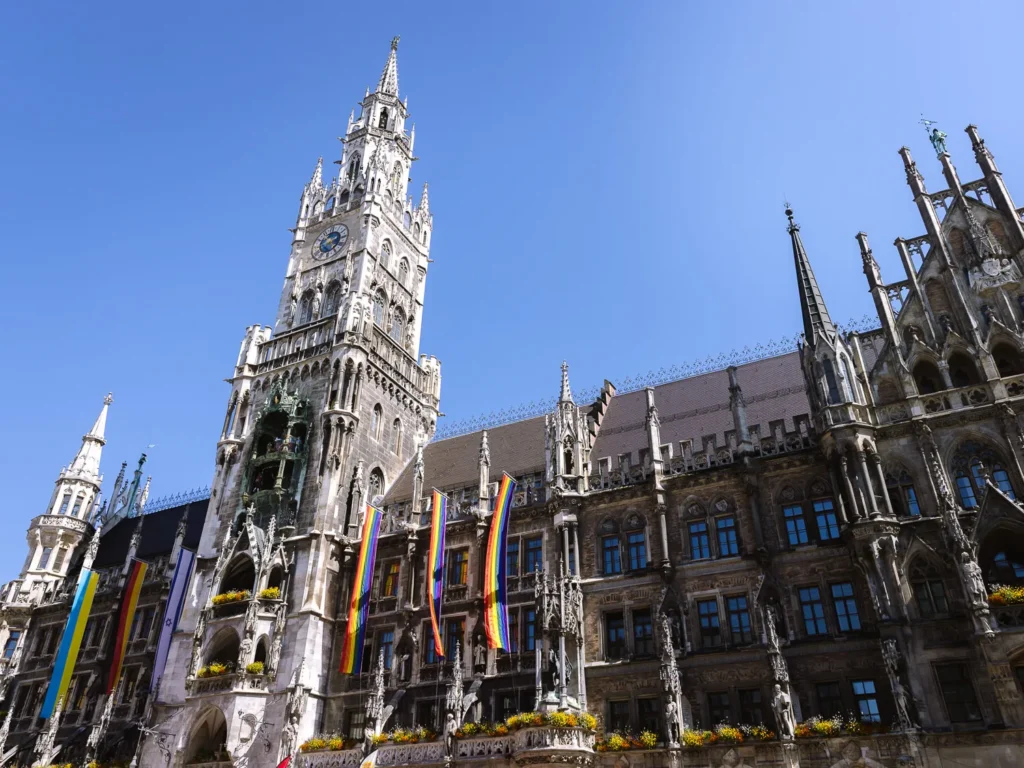
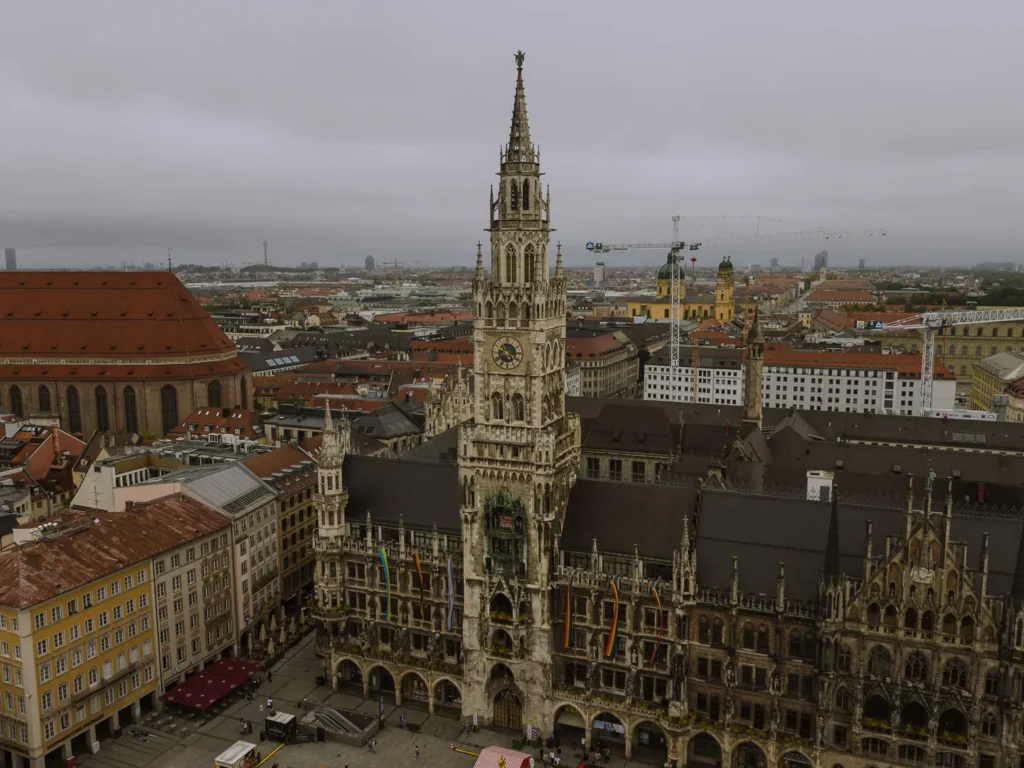
The square is dominated by the stunning New Town Hall (Neues Rathaus), a neo-Gothic masterpiece built between 1867 and 1909. The building’s ornate façade is a sheer marvel.
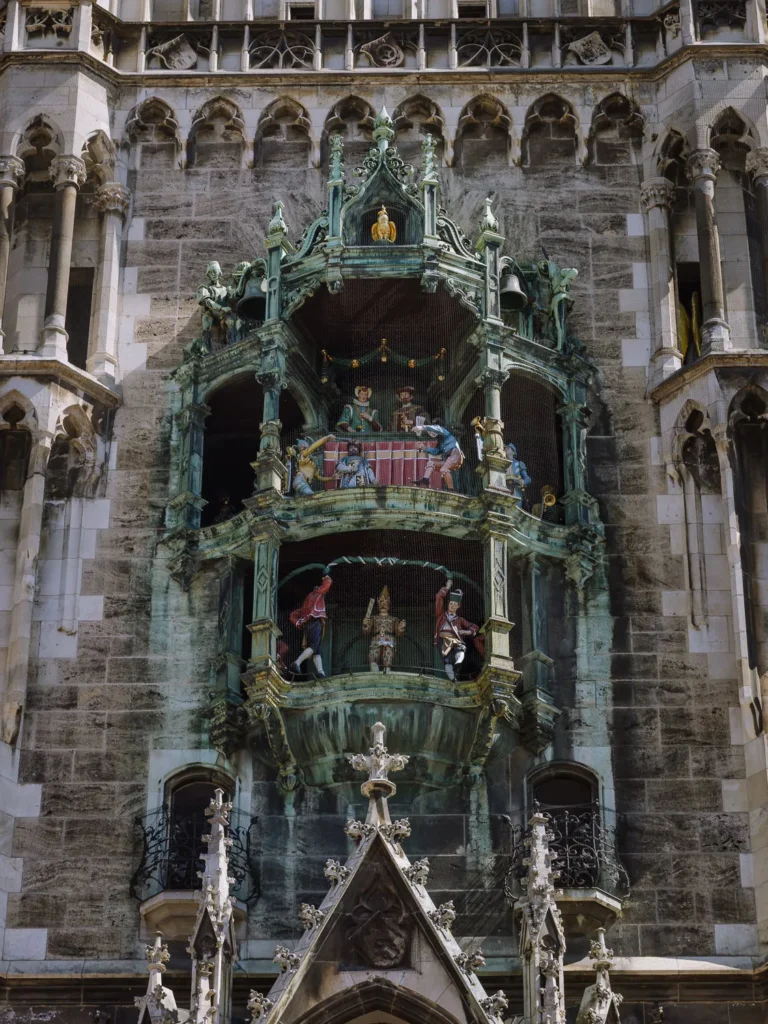
In the square, you can’t miss the famous Glockenspiel. At 11 AM and 12 PM daily (plus 5 PM from March to October), the 43 bells and 32 life-sized figures re-enact two stories from the 16th century.
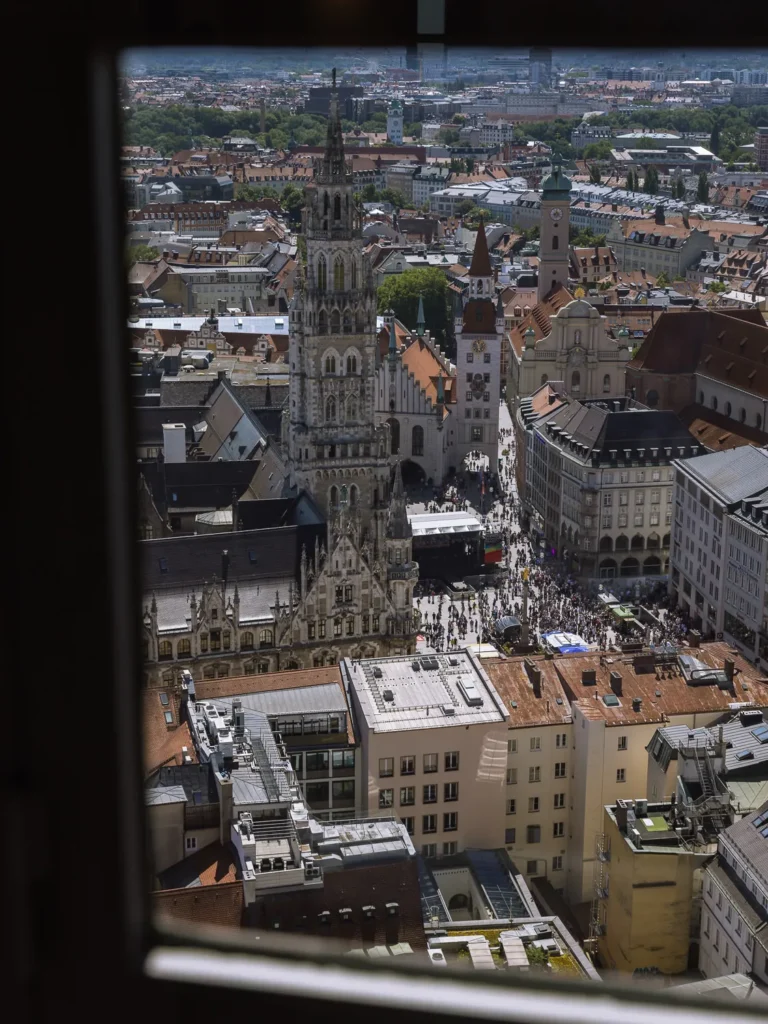
You can also climb the tower for panoramic views over Munich’s old town and, on clear days, the Alps in the distance.
2. Viktualienmarkt
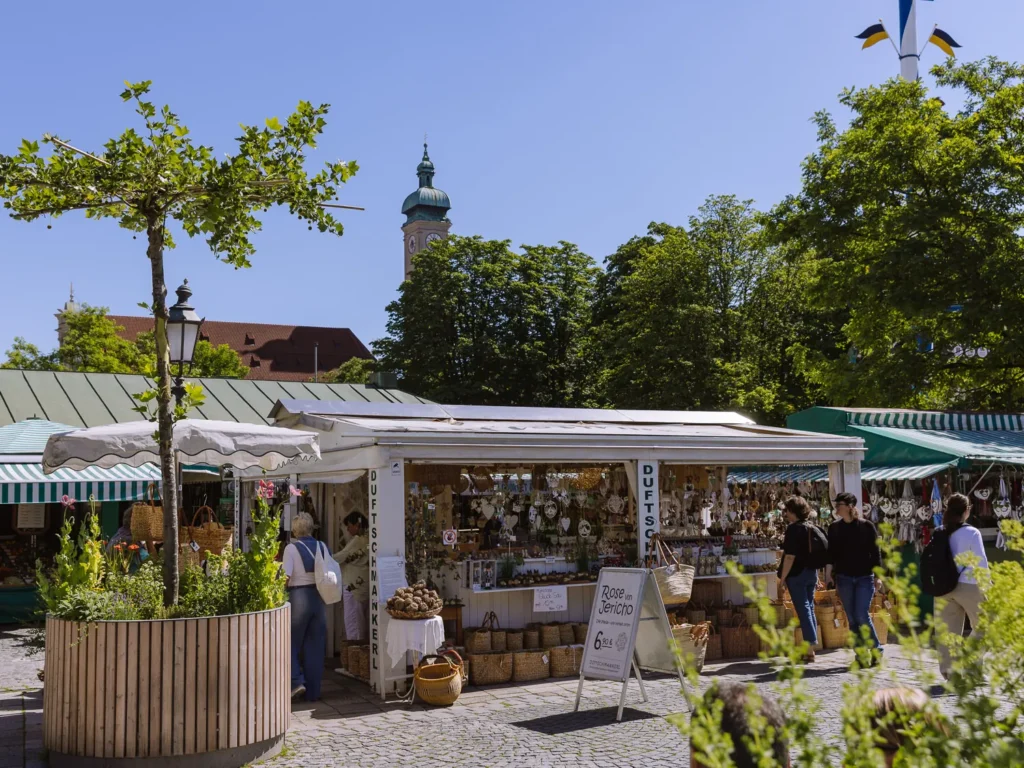
Just around the corner from Marienplatz, the Viktualienmarkt is Munich’s most famous food market. Established in 1807, this open-air market has been serving locals and visitors for over 200 years.
The market has over 140 stalls selling everything from artisan cheeses and cured meats to fresh produce, exotic spices, and flowers.
We had a great time just strolling around finding interesting bites to eat. But the highlight for us was the Beer Garden.
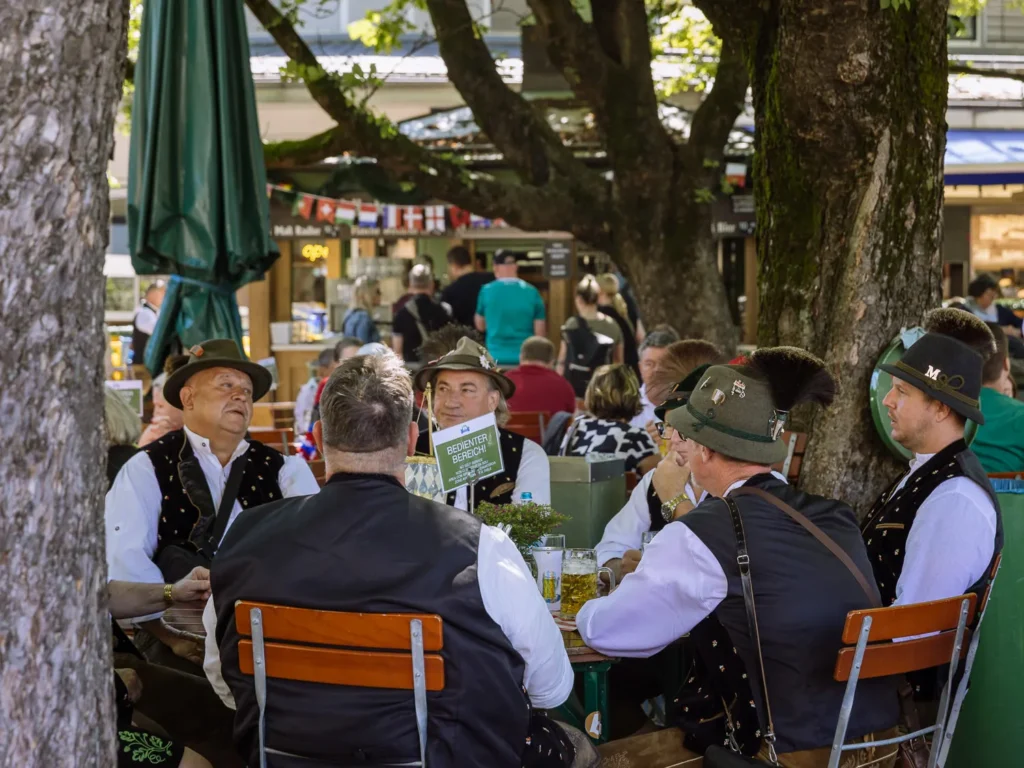
Biergarten in Viktualienmarkt is a little unique. Rather than sticking to one beer, it rotates amongst beers from all six major Munich breweries (Augustiner, Hacker-Pschorr, Löwenbräu, Hofbräu, Paulaner, and Spaten).
As is customary in German beer gardens, you can bring your own lunch from the market.
- Beer Garden Hours: The beer garden is open daily from 9 AM to 10 PM, even during winter when they serve hot Glühwein alongside the beer.
- Market Hours: Individual vendors set their own times, but most are open Monday to Saturday, 8 AM to 8 PM
3. English Garden (Englischer Garten)
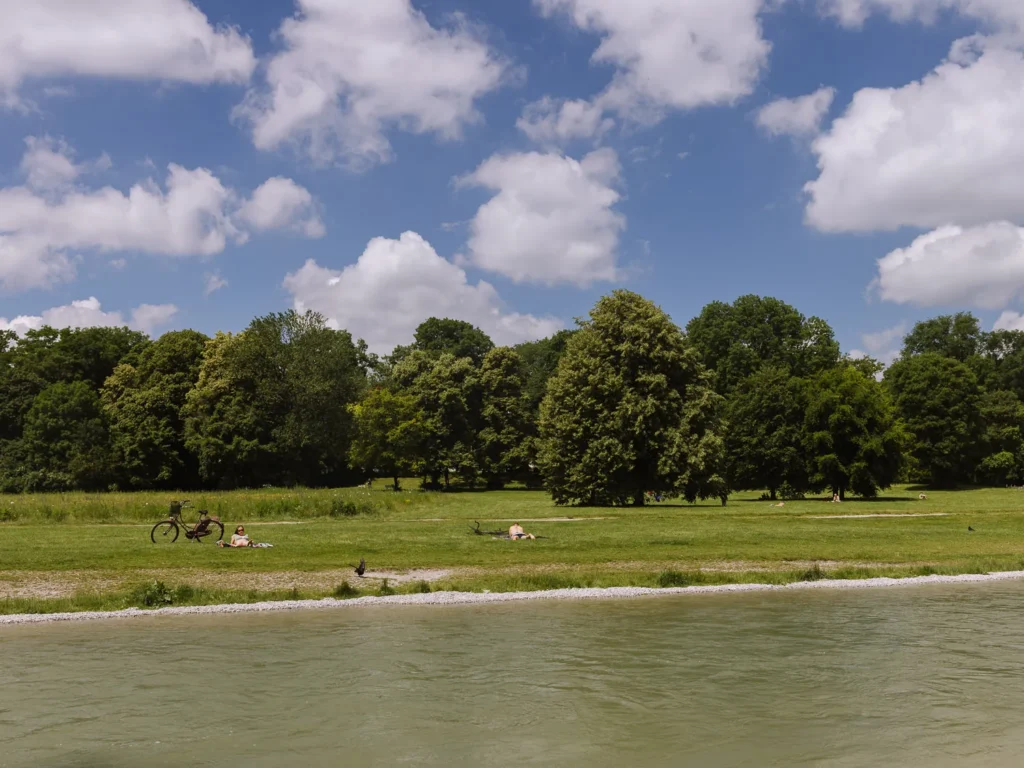
The English Garden is one of the largest urban parks in the world, spanning 920 acres.
The park takes its name from the English landscape garden style, natural and informal rather than the geometric French Baroque style.
You can easily spend hours wandering its tree-shaded paths, relaxing by the streams, or visiting its unique attractions.
Highlights include:
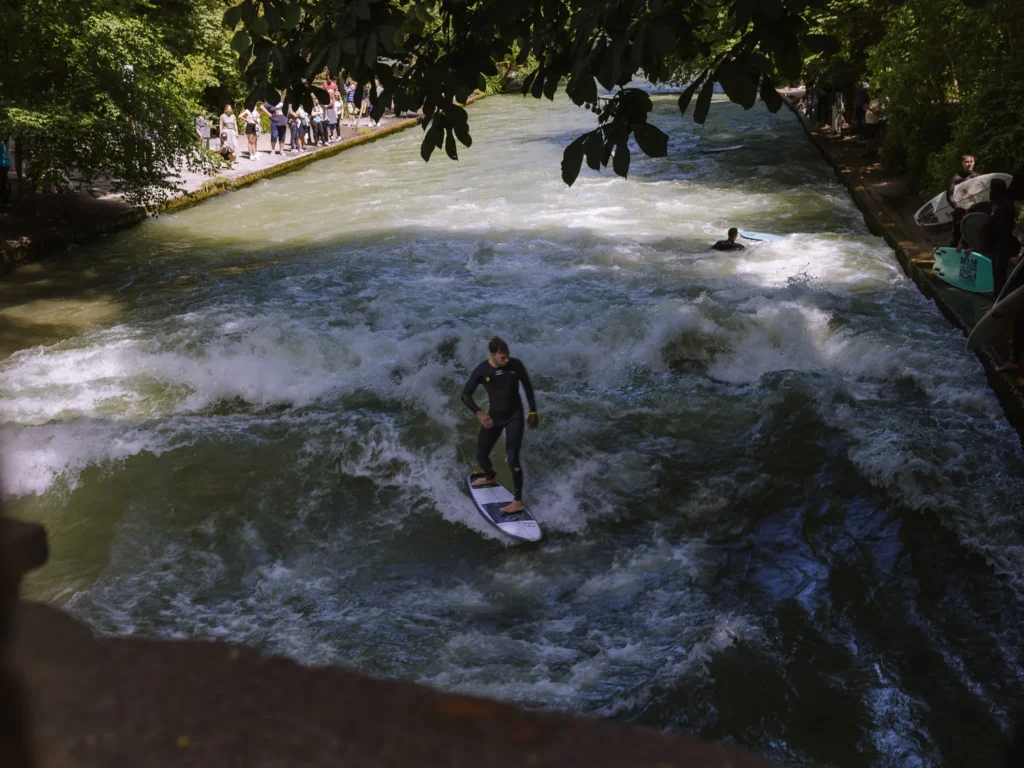
- Eisbachwelle – The famous river wave where surfers ride the waves year-round, despite being six hours from the nearest sea.
- Chinesischer Turm (Chinese Tower) – A 25-metre wooden pagoda surrounded by one of Munich’s largest beer gardens, with 7,000 seats under chestnut trees. We loved this beer garden.
- Monopteros – A Greek-style temple perched on a hill offering stunning views of the park and Munich’s skyline.
- Japanese Tea House – Built for the 1972 Summer Olympics, this serene spot hosts traditional tea ceremonies.
- Kleinhesseloher See – A lake where you can rent pedal boats in summer.
The park has a sophisticated canal system channelling pristine water from the Isar River, making it possible to swim on warm summer days.
How to get there? – Take the U3 or U6 to Giselastraße, Münchner Freiheit, or Universität stops. Admission is free.
4. Munich Residenz
The Munich Residenz served as the royal palace and seat of government for the Wittelsbach monarchs from 1508 to 1918.
Today, it’s the largest city palace in Germany and one of Europe’s most impressive palace museums.
The complex contains ten courtyards and 130 rooms filled with centuries of accumulated treasures.
You’ll find everything from paintings by Rubens and Titian to priceless tapestries, elaborate bronzes, and stunning porcelain collections.
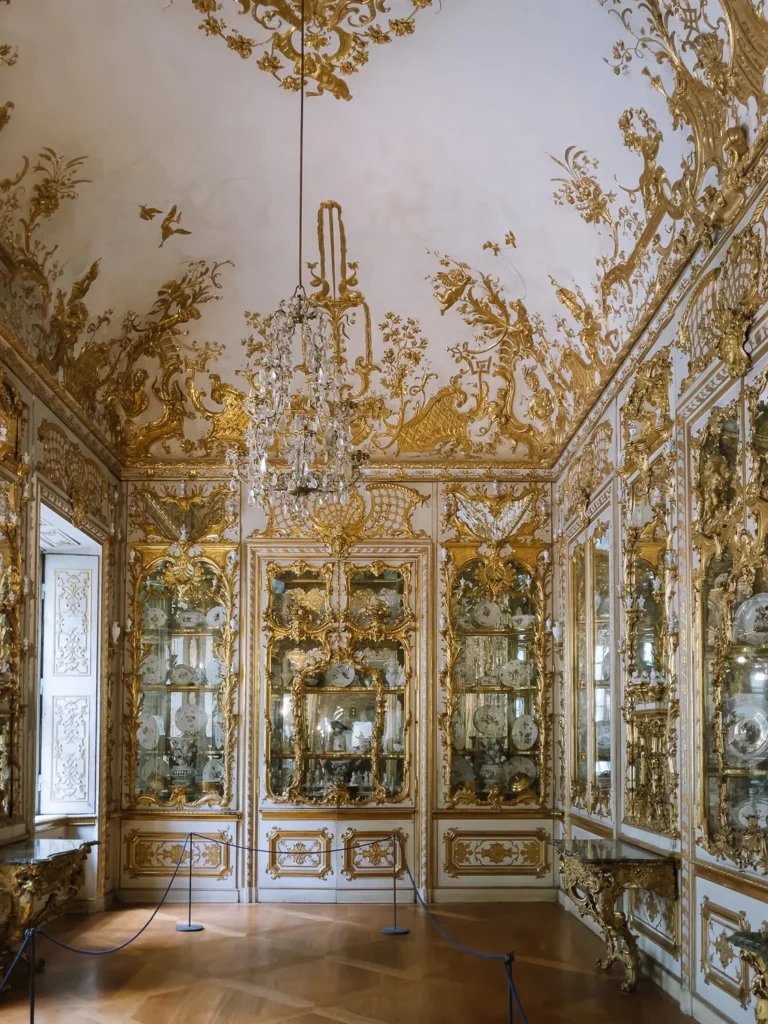
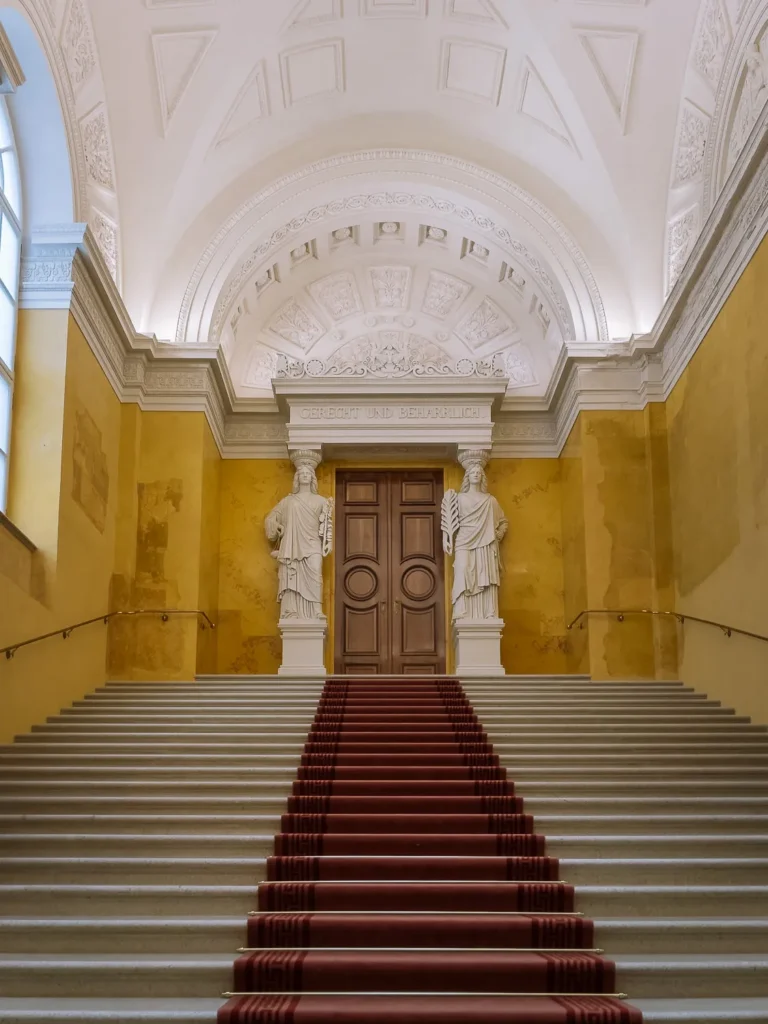
Here are some of the highlights we suggest you keep an eye out for:
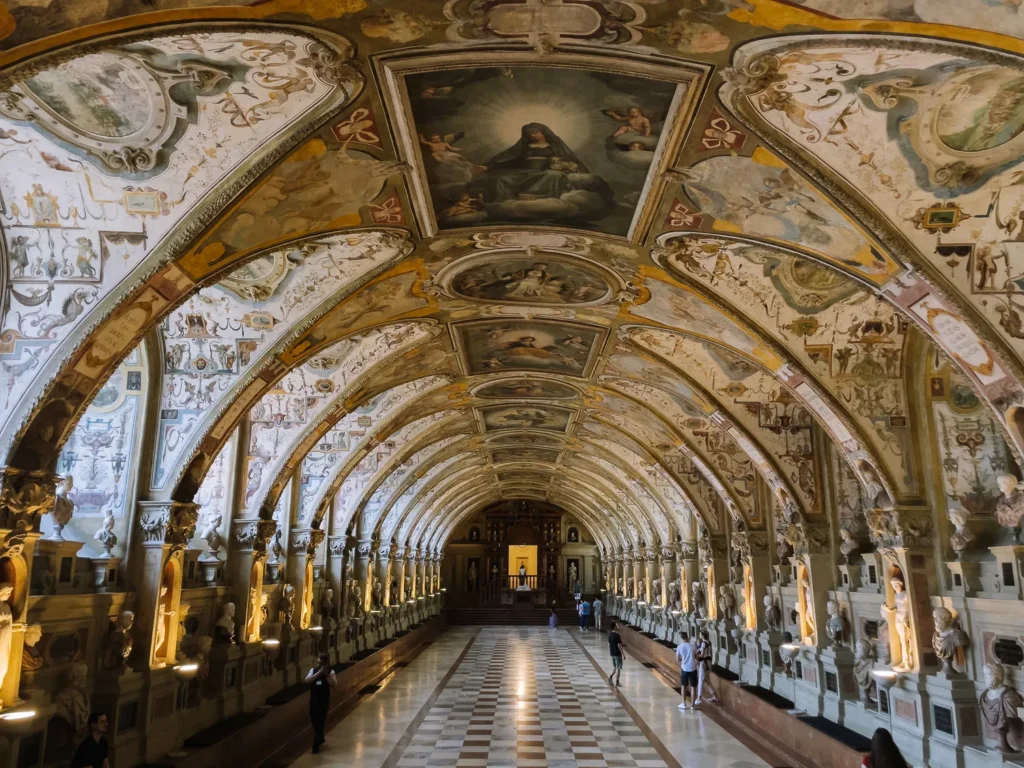
- Antiquarium – The largest Renaissance Hall north of the Alps, with a magnificent barrel-vaulted ceiling covered in frescoes.
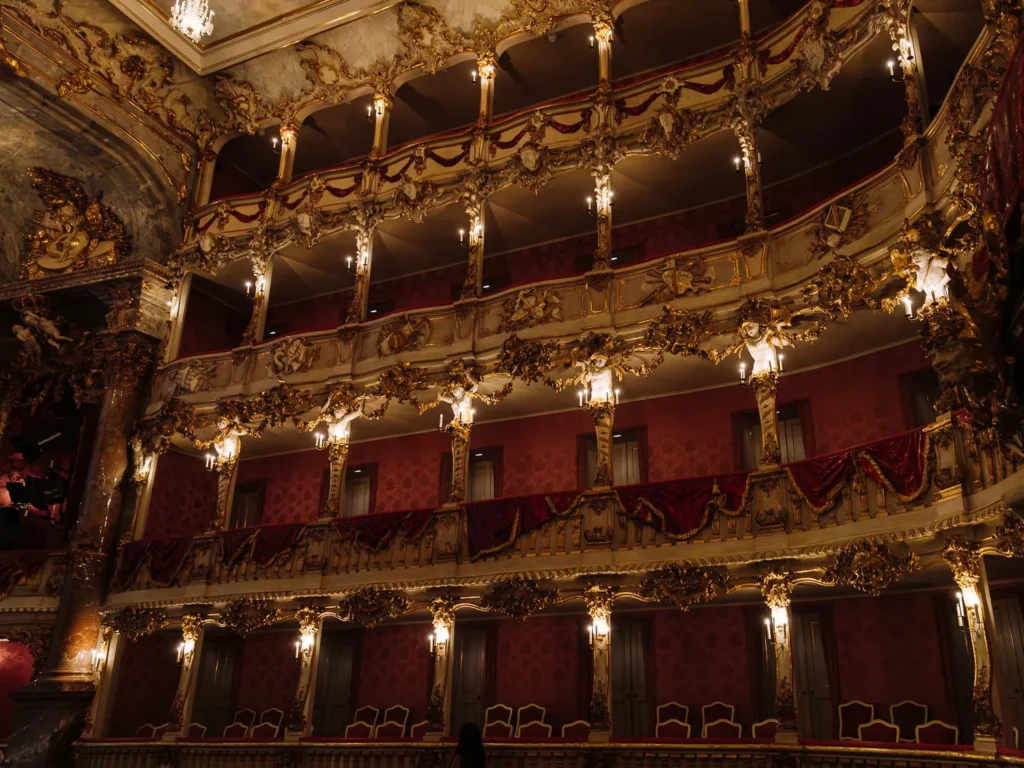
- Cuvilliés Theatre – An exquisite Rococo jewel box theatre, one of the finest in Europe.
- Treasury – Home to an extraordinary collection of crowns, jewels, gold, and crystal dating back over 1,000 years.
- Court Church of All Saints – A Byzantine-style church based on Palermo’s Cappella Palatina (though damaged in WWII, it’s still impressive).
The palace was heavily damaged during World War II but has been meticulously reconstructed.
- Opening Hours: The palace, treasure, and theatre have different opening hours; check the official website.
- Cost: Combined ticket for the Residenz Museum, Treasury and Cuvilliés Theatre costs €20 (adult); €16 (reduced).
- Tickets: These skip-the-line tickets online include a 2.5-hour guided tour in English.
5. Frauenkirche (Cathedral of Our Lady)
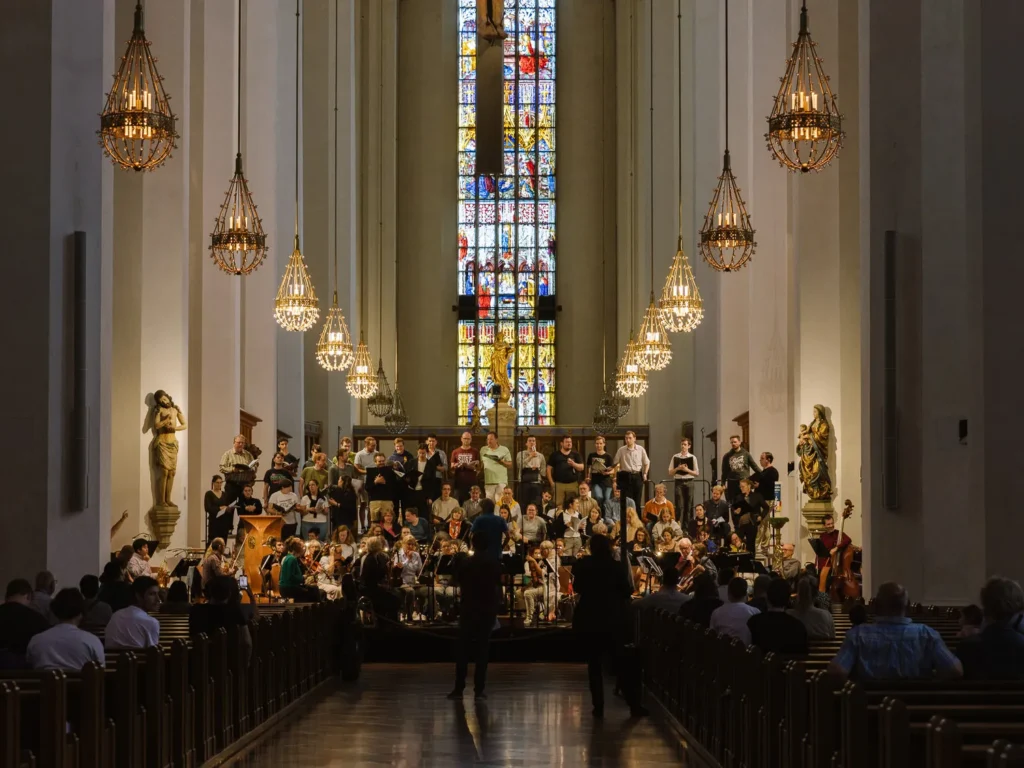
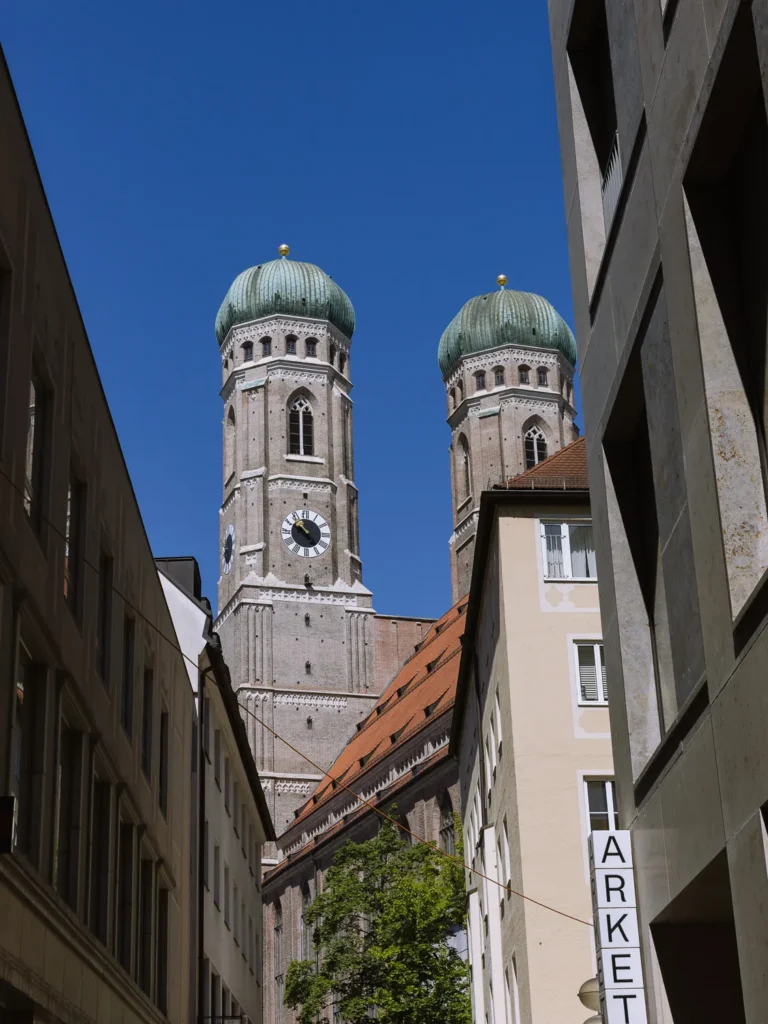
The Frauenkirche is Munich’s iconic cathedral. Its twin copper onion-domed towers rise 99 metres above the old town and can be seen from all across Munich.
Built between 1468 and 1488, the late-Gothic hall design creates a surprisingly bright, airy interior with soaring vaulted ceilings supported by 22 octagonal pillars.
Look for the famous ‘Devil’s Footprint’ — a black footprint-shaped mark in the floor near the entrance, tied to a local legend about the devil being tricked during the church’s construction.
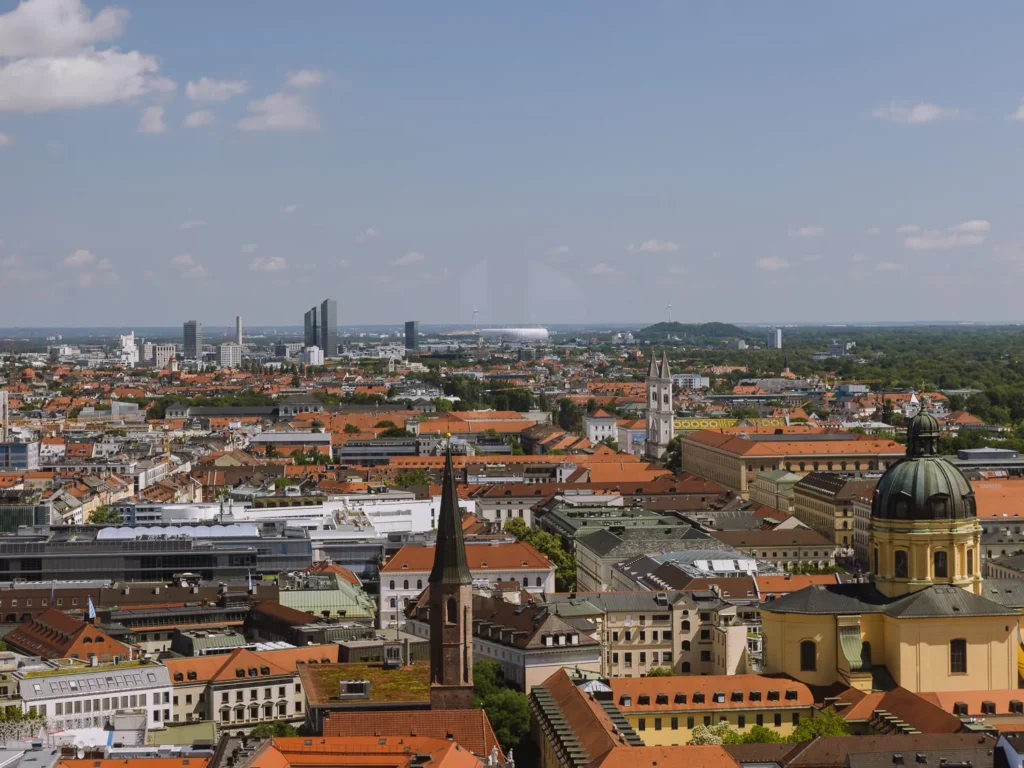
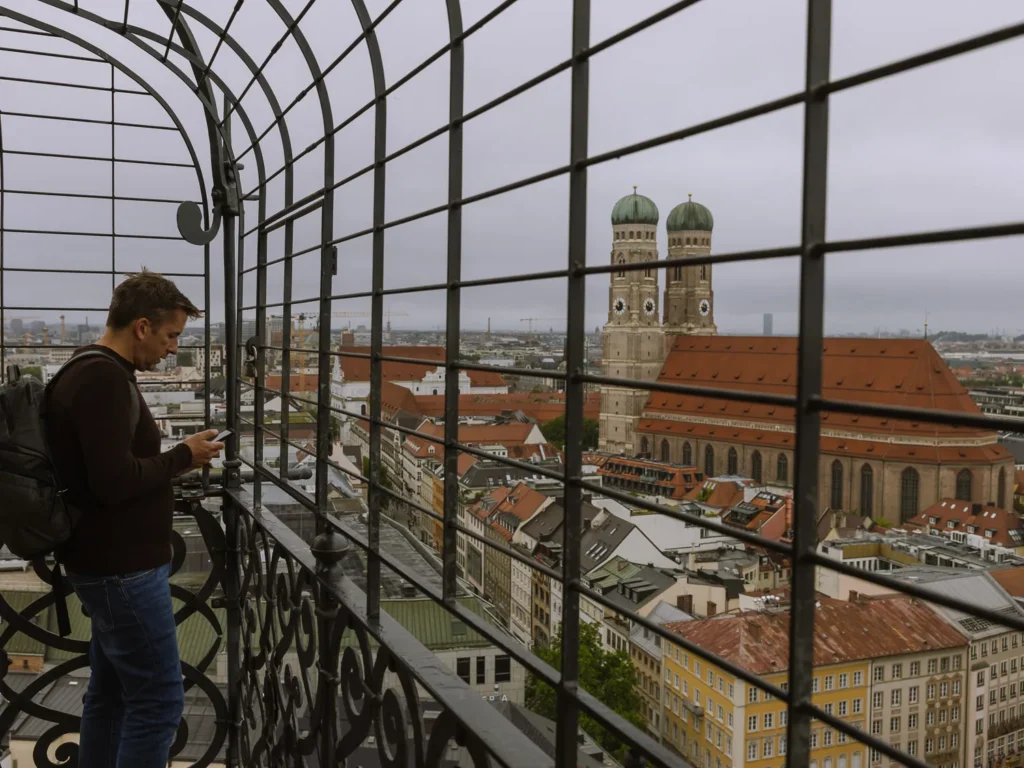
You can climb the south tower of the cathedral for 360-degree views over Munich and, on clear days, the Alps. This is something we really recommend doing.
- Opening Hours: The main cathedral is open daily from 8 AM to 8 PM. The tower is open from 10 AM to 5 PM (11:30 AM on Sunday and public holidays)
- Cost: The cathedral is free. The tower is €7.50 (€5.50 reduced)
- Tickets: Tickets can be purchased from the shop inside the cathedral.
6. Hofbräuhaus München
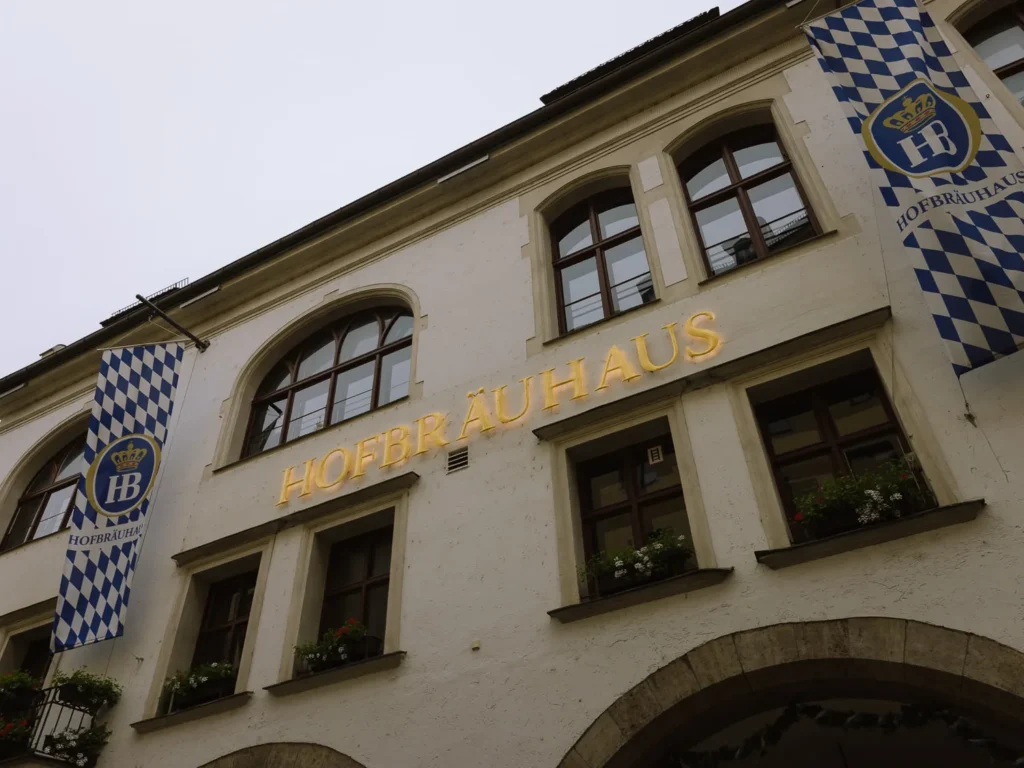
No visit to Munich is complete without experiencing the Hofbräuhaus, Germany’s most famous beer hall.
Founded in 1589 by Duke Wilhelm V as the royal brewery, it’s been a Munich institution for over 400 years.
Yes, it’s touristy, but it’s worth it. The atmosphere is electric, the beer flows freely (Hofbräu Original, of course), and the food is hearty Bavarian fare: roasted pork knuckle, bratwurst, pretzels the size of your head, and sauerkraut.
The Hofbräuhaus has had many famous patrons over the years, from Mozart (who allegedly composed parts of Idomeneo here) to Lenin (a regular before WWI).
7. Munich’s Legendary Beer Gardens
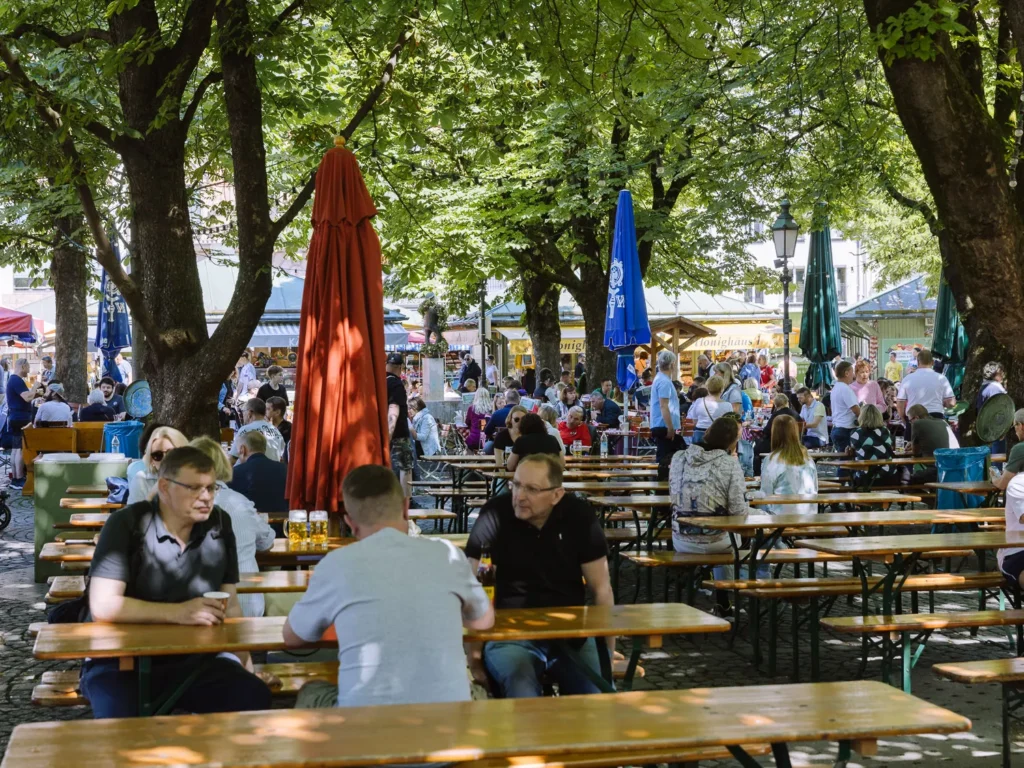
Munich is the spiritual home of the beer garden, and when the sun comes out, there’s no better way to experience Bavarian culture than sitting under chestnut trees with a Maß (litre) of beer.
Beer garden culture has its own traditions. You can bring your own food (just buy the beer), and the tables are communal. Many have a self-service area where you get your own beer and return the stein to get a deposit back.
We were lucky enough to visit Munich on a lovely weekend, so we can attest to the quality of the beer gardens, having spent a lot of time in them.
Here are some of our favourite beer gardens:
Augustiner-Keller
Munich’s oldest beer garden (near the Hauptbahnhof) has been serving since 1812. Over 100 chestnut trees provide shade for the massive outdoor space. Augustiner is many locals’ favourite Munich beer, and here it comes fresh from wooden barrels. The atmosphere is authentically Bavarian without being overly touristy.
Chinesischer Turm (English Garden)
Built around a 25-metre Chinese pagoda in the English Garden, this is one of Munich’s largest and most popular beer gardens with 7,000 seats. It’s touristy but beloved for good reason — the setting is magical, especially when the oompah band is playing.
Hirschgarten
The largest beer garden in the world, with 8,000 seats under ancient chestnut trees. Despite its size, it maintains a cosy neighbourhood feel. There’s a deer park adjacent (hence the name), and it’s a favourite with local families.
Seehaus (English Garden)
An upscale beer garden right on the lake (Kleinhesseloher See) in the English Garden. Perfect for a romantic evening with beautiful water views. It’s pricier than other beer gardens, but the setting is unbeatable.
8. Bmw Museum & Bmw Welt
Even if you’re not a car enthusiast, which we are not, the BMW complex in northern Munich is impressive.
BMW Welt (BMW World) is a futuristic building where new car owners pick up their vehicles. It’s free to enter and houses current BMW models, concept cars, and historic vehicles.
Next door, the BMW Museum chronicles 100 years of the company’s history. The striking bowl-shaped building displays over 120 vehicles and 200 exhibits, from vintage motorcycles to Formula 1 racing cars to cutting-edge electric vehicles.
Getting There: Take the U3 to Olympiazentrum. Both BMW Welt and the museum are right by the Olympic Park.
Opening Hours: BMW Welt is open from Monday to Saturday, 7:30 AM to Midnight. The Museum is open from Tuesday to Sunday, 10 AM to 6 PM.
Cost: BMW Welt is free. The museum is €17 adults, €9 for a reduced ticket. Children under 18 are free.
9. Deutsches Museum
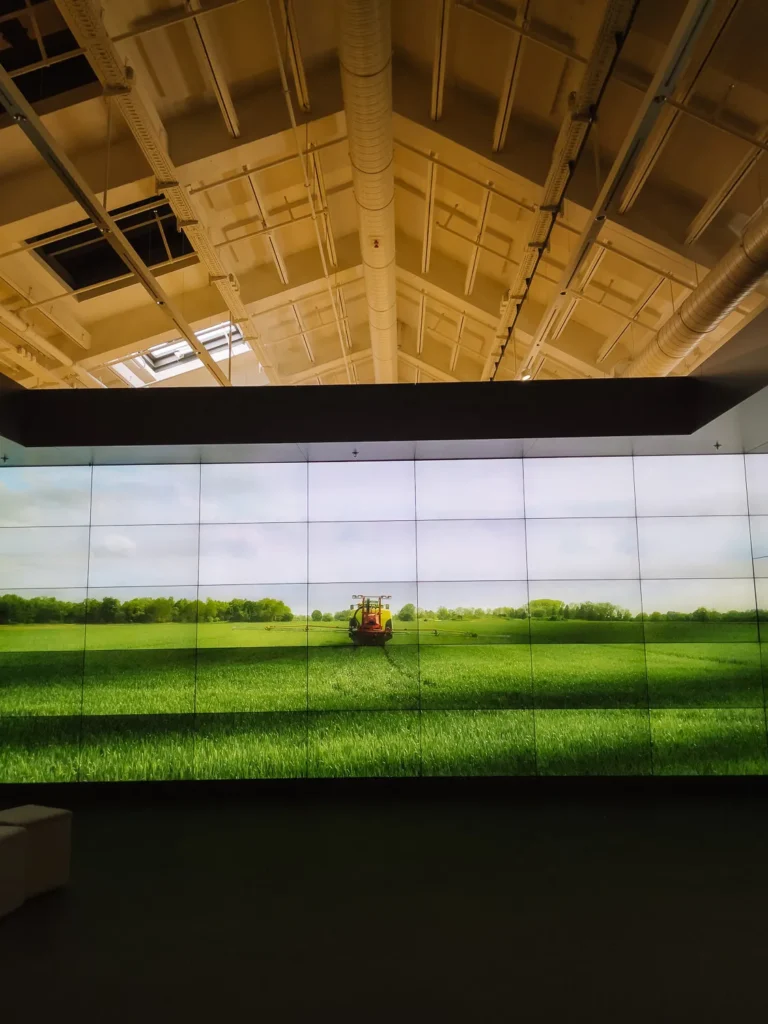
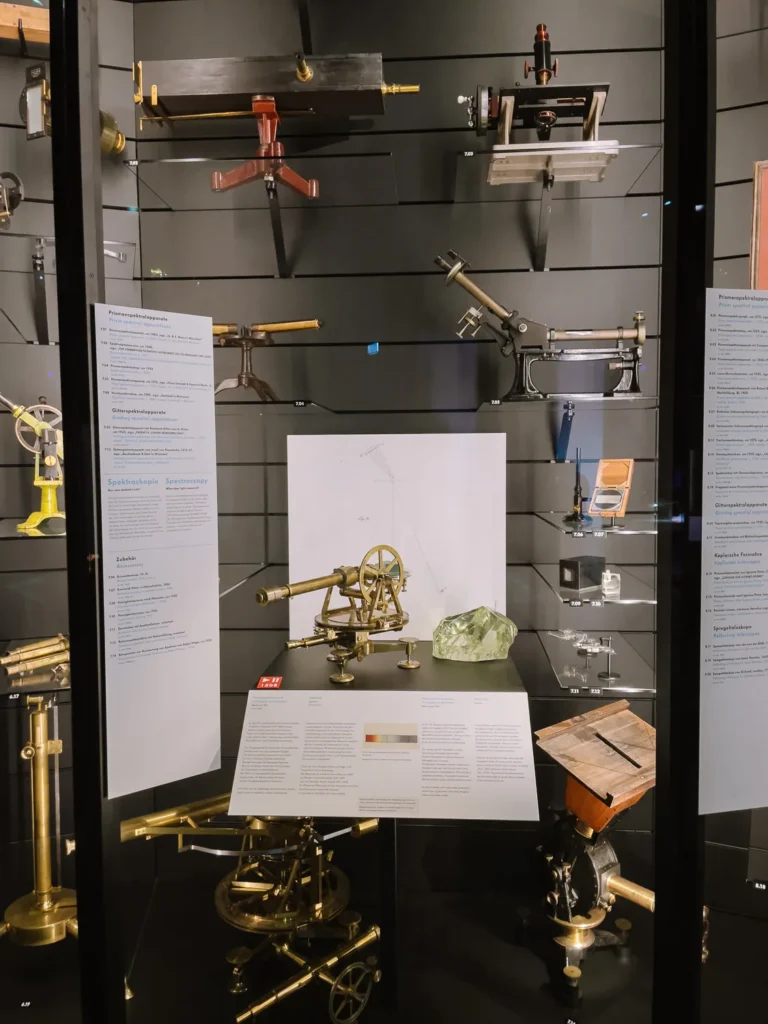
The Deutsches Museum is the world’s largest museum of science and technology. Located on an island in the Isar River, it houses over 28,000 exhibits spanning prehistoric tools to space exploration.
You could easily spend an entire day here, which we pretty much did.
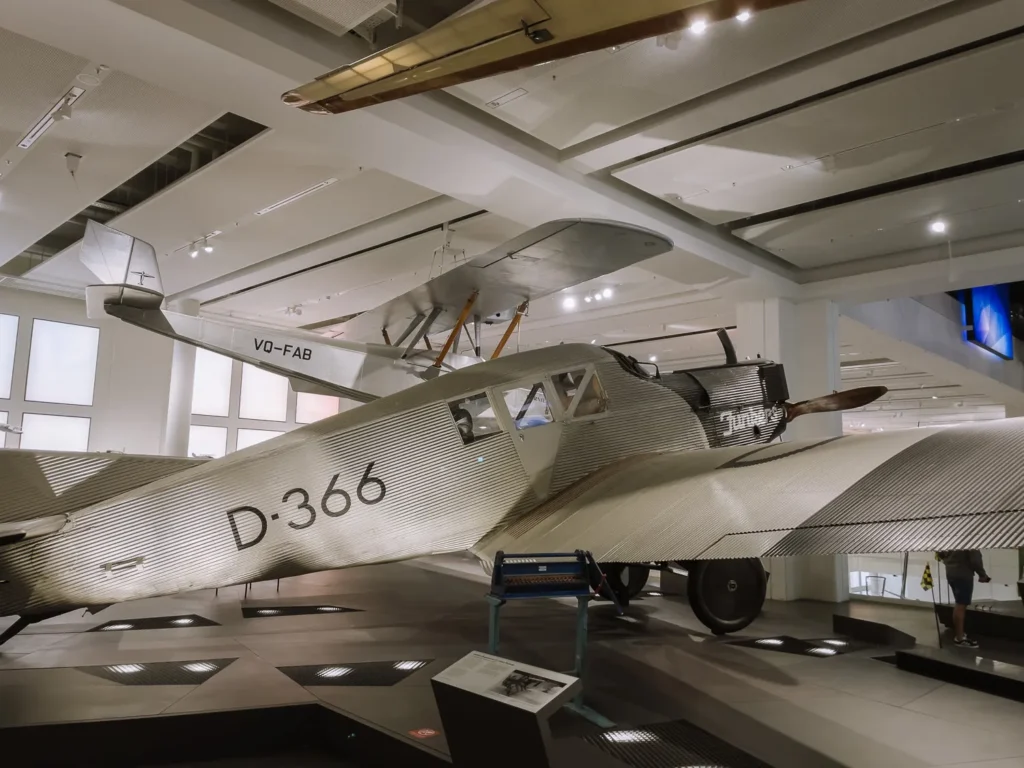
Highlights include a full-scale coal mine you can walk through, historic aircraft (including a WWII Messerschmitt and Fokker Triplane), antique automobiles, a planetarium, and interactive exhibits on physics, chemistry, and astronomy.
The aviation section is particularly impressive, and there are daily demonstrations of everything from glassblowing to high-voltage electricity experiments.
Note: Parts of the museum are undergoing renovation through 2028, but most major exhibits remain open.
- Opening Hours: 9 AM to 5 PM daily
- Cost: Adults €26, Discounted €9, Under 6 free.
10. Munich’s World-Class Art Museums
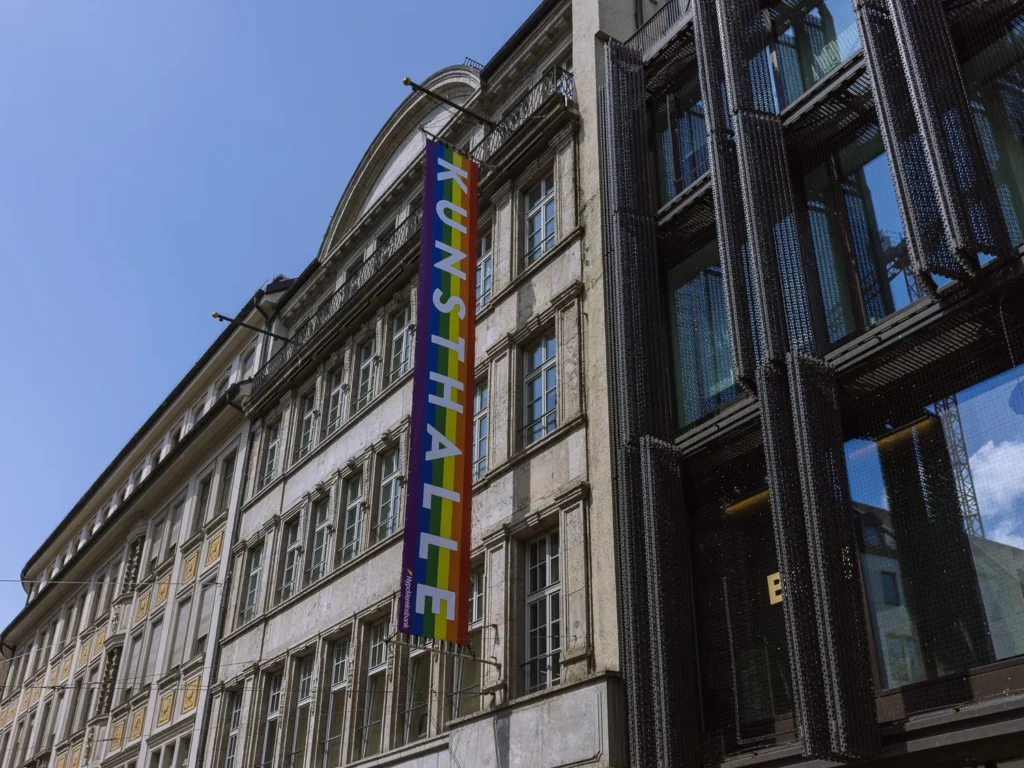
Munich’s art museums rival those of any European capital. The three Pinakothek museums in the Kunstareal (arts quarter) house extraordinary collections spanning eight centuries.
Alte Pinakothek
One of the world’s oldest and most important art galleries, housing European masterpieces from the 14th to the 18th centuries. You’ll find works by Dürer, da Vinci, Raphael, Rubens, Rembrandt, and Titian. The Rubens collection is one of the finest in the world.
Neue Pinakothek
Focuses on European art from the 18th to 20th centuries, including German Romantics, French Impressionists, and Art Nouveau. Works by Monet, van Gogh, Gauguin, Cézanne, and Klimt feature prominently.
Pinakothek Der Moderne
Modern and contemporary art, design, architecture, and works on paper. One of Europe’s largest museums for 20th and 21st-century art, with pieces by Picasso, Dalí, Warhol, and many others.
Tickets: €7-12 per museum. Combined day pass for all three Pinakotheks: €12. Sundays: €1 for all state museums.
More Things to Do in Munich
If you have extra time, here are some additional worthwhile attractions:
Allianz Arena – Home to FC Bayern Munich, one of the world’s most successful football clubs. The stadium’s illuminated exterior changes colours and is stunning at night. Take a stadium tour to see the locker rooms, walk through the players’ tunnel, and visit the FC Bayern Museum.
Asam Church – This tiny late-Baroque church is a jewel box of ornate decoration. Built by the Asam brothers for their own private use, every inch is covered with gilt, frescoes, and sculpture. It’s small but extraordinarily beautiful.
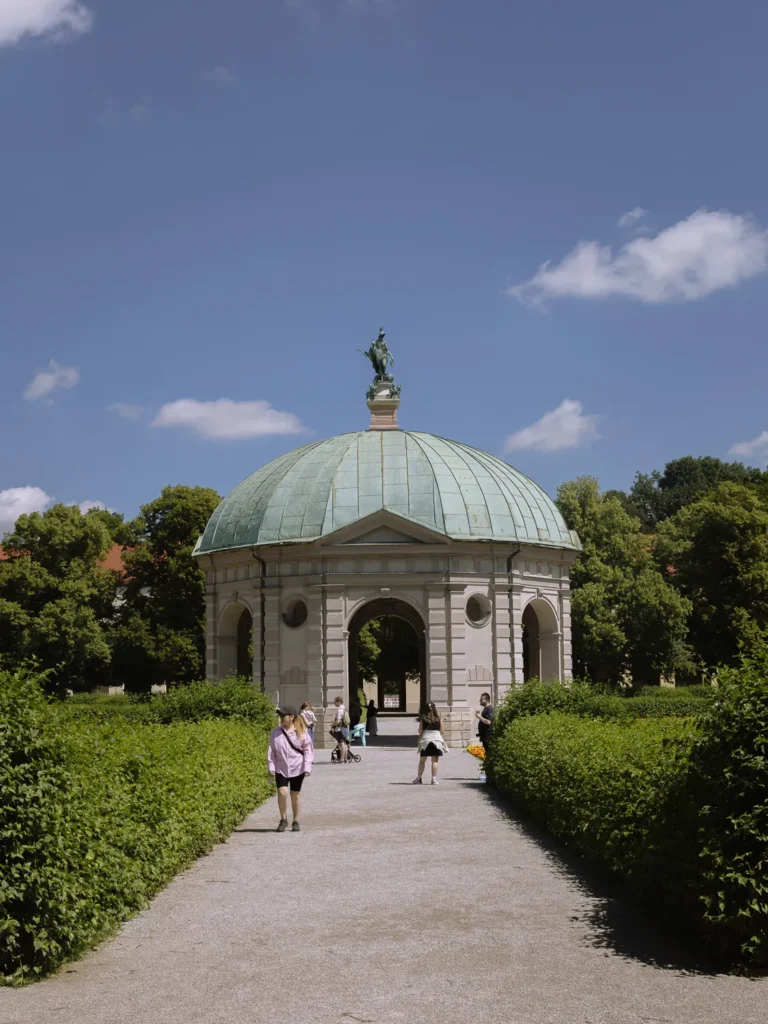
Hofgarten – A peaceful Renaissance garden next to the Residenz. The central Diana Temple hosts classical musicians during summer afternoons. It’s a lovely spot to relax after museum visits.
St. Peter’s Church – Munich’s oldest church (11th century) has a tower you can climb for excellent city views. Known locally as ‘Alter Peter.’ The 300-step climb is worth it for the panorama over Marienplatz and beyond.
Munich City Museum – Chronicles Munich’s history from medieval times to the present. Exhibits on daily life, famous locals, and the city’s development. The Nazi-era section is particularly well done.
Logistics & Practicalities
Where to Eat?
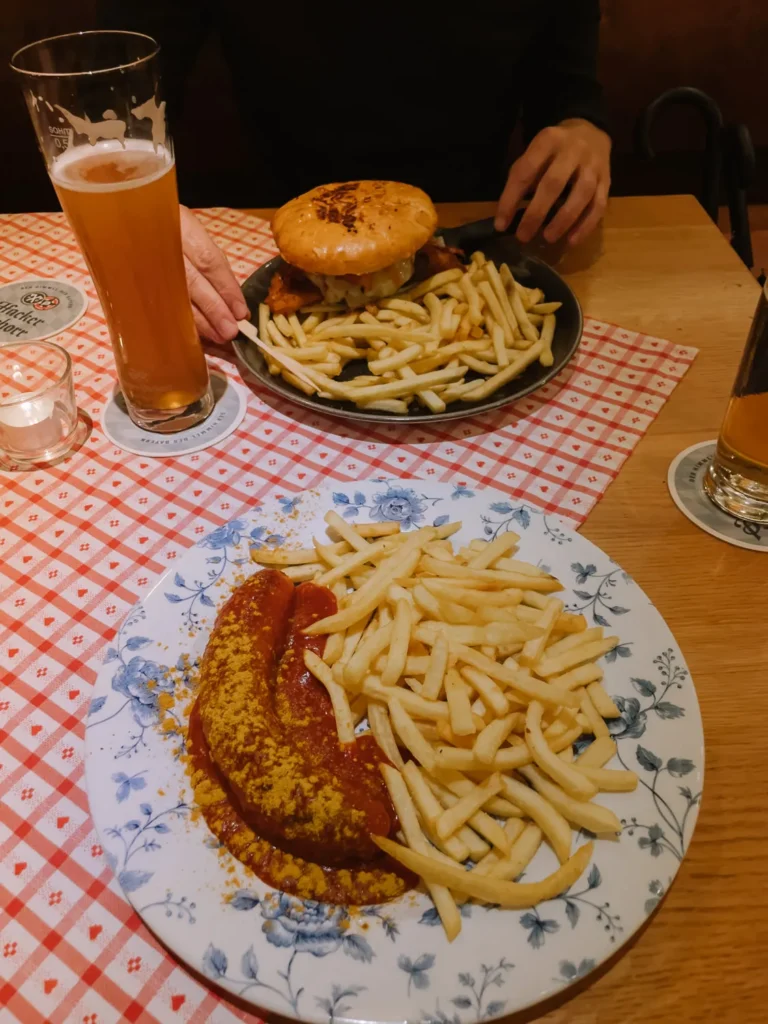
Munich is known for hearty Bavarian cuisine. It’s fairly meat-centric and designed to pair perfectly with beer. We loved eating in Munich, and here is a quick rundown.
Traditional Dishes to Try
- Weißwurst – Traditional Bavarian white sausage made from veal and pork, typically eaten before noon with sweet mustard and pretzels. A breakfast staple.
- Schweinshaxe – Roasted pork knuckle, crispy on the outside and tender inside. Enormous portions.
- Schnitzel – Breaded and fried cutlet (usually pork or veal), served with potato salad or fries.
- Obatzda – Creamy cheese spread made with Camembert, butter, paprika, and onions. Perfect with pretzels and beer.
- Leberkäse – Despite the name (liver cheese), it contains neither — it’s a meatloaf-like speciality served in thick slices.
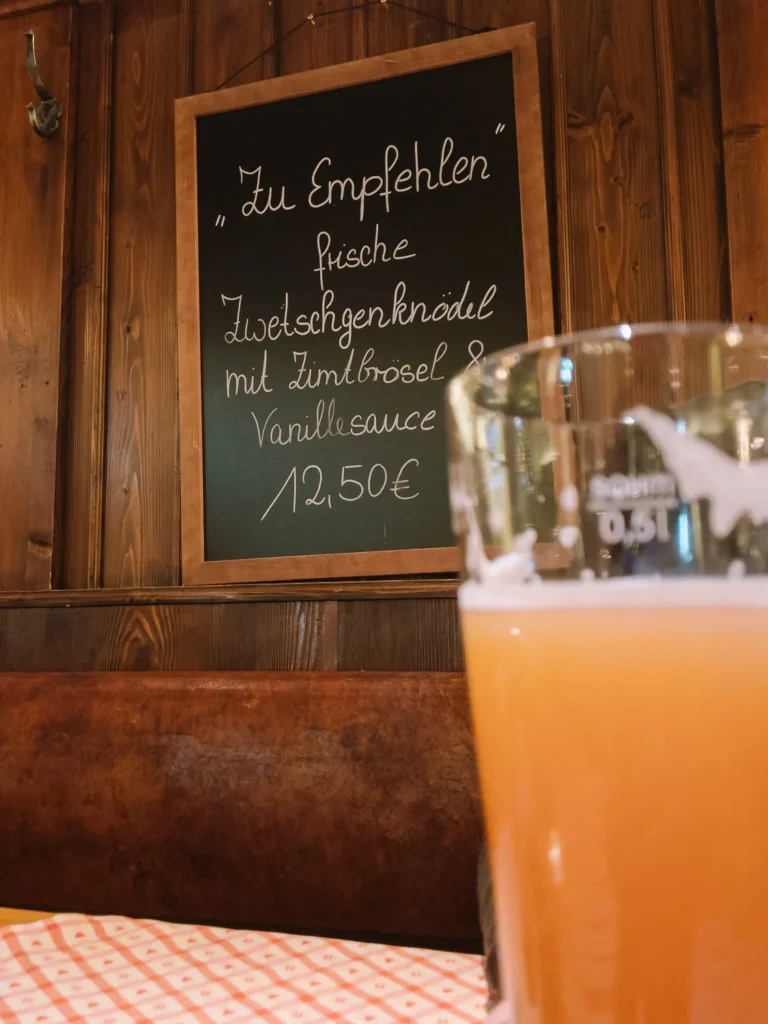
- Kaiserschmarrn – Shredded pancake served as a sweet main dish or dessert, dusted with powdered sugar and served with apple sauce or plum compote.
Where to Eat
- Wirtshaus in der Au – Authentic Bavarian restaurant with excellent traditional food and a cosy atmosphere. Locals swear by it.
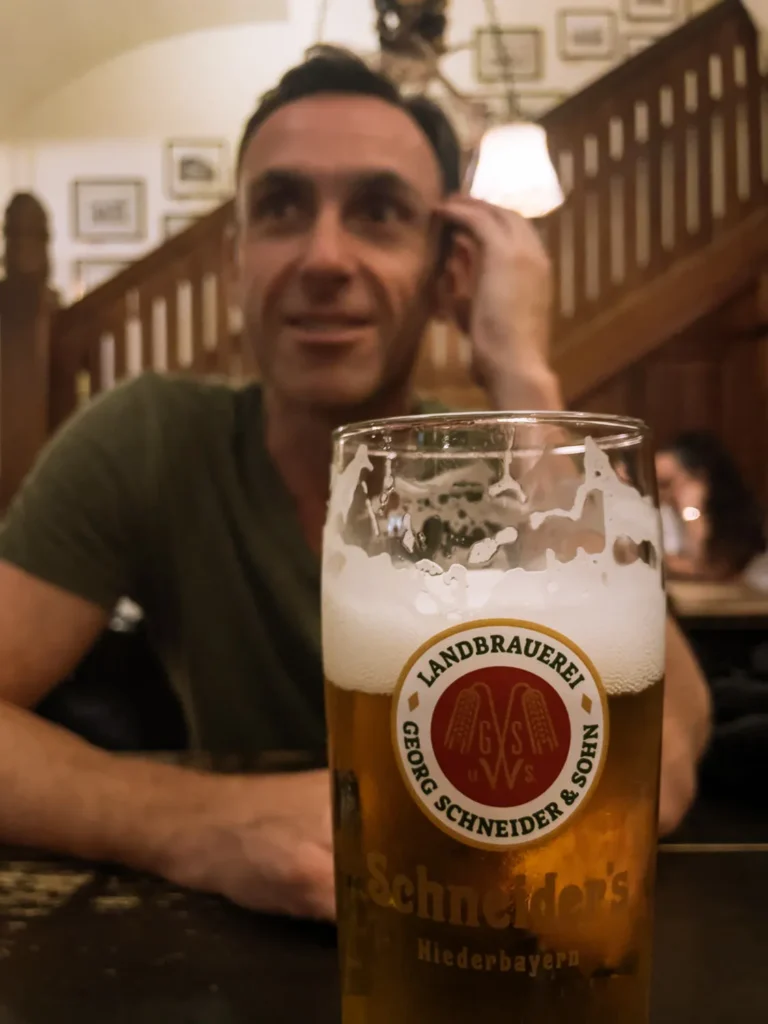
- Schneider Bräuhaus – Historic restaurant specialising in Weissbier (wheat beer) with traditional food.
- Augustiner Bräustuben – Near the brewery, serving fresh Augustiner beer and classic Bavarian dishes in a traditional setting.
How to Get to Munich
Munich Airport (MUC) is Germany’s second-busiest airport with excellent connections to cities worldwide. It’s located about 40km northeast of the city centre.
Getting from the Airport to the City Centre
- S-Bahn – S1 or S8 trains run every 10-20 minutes to Munich Hauptbahnhof (main station) and Marienplatz. Journey takes 40-45 minutes. €13.60 single ticket or use a day pass.
- Lufthansa Airport Bus – Direct to Hauptbahnhof, 45 minutes, €11.50.
- Taxi – Fixed rate to city centre around €70-80.
Arriving by Train
Munich Hauptbahnhof is one of Europe’s major rail hubs with high-speed connections to cities across Germany and Europe. Direct trains run from Berlin (4 hours), Frankfurt (3.5 hours), Vienna (4 hours), Zurich (4 hours), and many other cities.
Getting Around Munich
Munich’s public transportation system is excellent, efficient, and easy to use. The network includes U-Bahn (subway), S-Bahn (regional trains), trams, and buses.
The city centre is compact and very walkable — most major attractions are within 20-30 minutes of each other on foot.
For attractions further out (BMW Museum, Olympiapark), use public transport. A day pass (Single-Tageskarte) for the inner zones costs around €9 and covers unlimited travel.
Munich is also very bike-friendly. The MVG Rad bike-sharing system has stations throughout the city.
Where to Stay in Munich
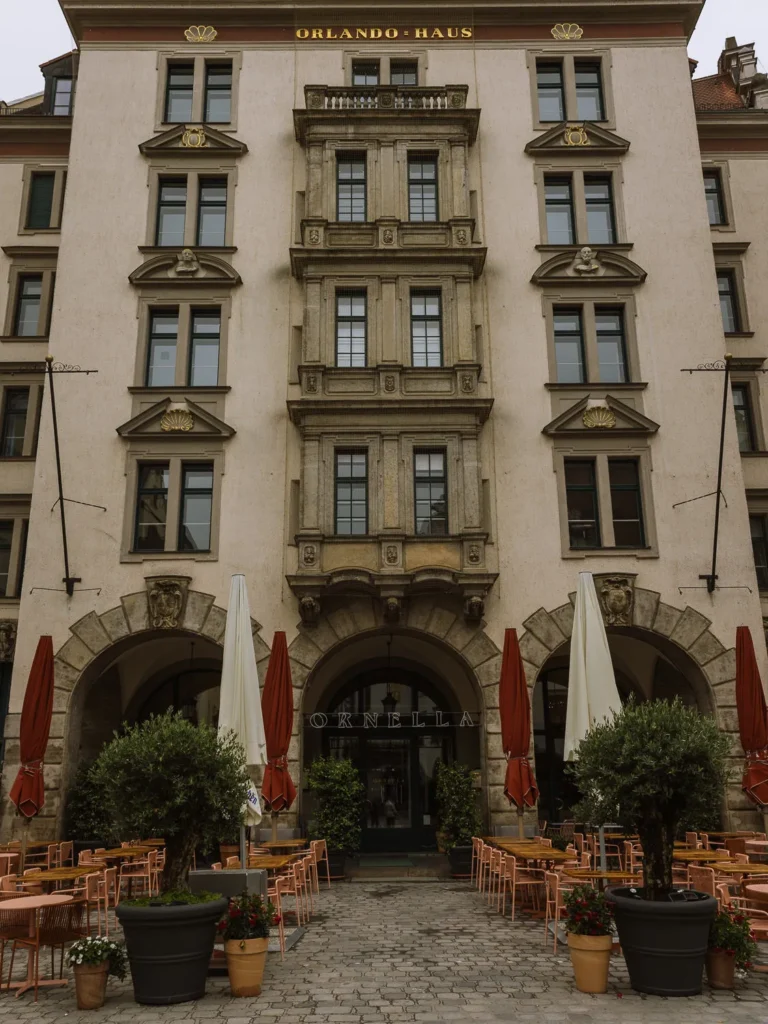
The best area for tourists is around Marienplatz and the Altstadt (Old Town), which puts you within walking distance of most major sights.
Munich can be expensive, especially during Oktoberfest (mid-September to early October) when prices skyrocket and everything books up months in advance.
- Mandarin Oriental Munich (Luxury) – The Mandarin Oriental Munich offers five-star elegance in the heart of the city, with impeccable service, a rooftop pool, and Michelin-starred dining.
- Hotel Deutsche Eiche (Mid-range) – Hotel Deutsche Eiche combines traditional Bavarian charm with modern design in the vibrant Gärtnerplatzviertel, featuring a rooftop sauna and excellent restaurant.
- Cocoon Stachus (Mid-range) – Cocoon Stachus delivers contemporary style and comfort near the main train station, with sleek rooms and a central location perfect for exploring Munich.
- Wombat’s City Hostel Munich (Budget) – Wombat’s City Hostel offers both private rooms and dorms in a social atmosphere, with a great location near the Hauptbahnhof and excellent value for money.
How Many Days in Munich?
We recommend spending 3-4 days in Munich to see the main attractions without rushing.
This allows time for the major sights (Marienplatz, Residenz, Nymphenburg), a museum or two, relaxing in the English Garden, and experiencing beer garden culture.
If you have 5-7 days, you can add day trips to Neuschwanstein Castle, the Bavarian Alps, or Salzburg.
Best Time to Visit Munich
The best times to visit Munich are late spring (May-June) and early autumn (September-October).
Late spring offers perfect weather for sitting in a beer garden, and the city is blooming. It’s busy but not crazy busy.
Early autumn can also be very good, with ideal weather for outdoor activities. The first half of Oktoberfest runs from mid-September, which is an incredible experience, but the city is packed and expensive.
Summer (July-August) is the peak tourist season with warm weather, but crowds and higher prices. December offers magical Christmas markets.
Winter (January-March) is cold but uncrowded. Many beer gardens close, but it’s a great time for museums, and you’ll feel more like a local. Plus, prices are lower.
More Guides for Europe
- Here are the top things to do in Vienna.
- Our guide to Lisbon will help you plan your first trip.
- On a budget? Read free things to do in Paris.
- What to do in Florence – art, food, experiences & more.
- Discover the orange city with our guide to Bologna.
- What to do in Rome for your first trip.
- The best things to do in Munich for a weekend break.
- Our guide to visiting Madrid.
- What to see and do in Antwerp – art, history & more.
- The surprisingly great things to do in Bern Switzerland.
- Combine mountains with a city break in Innsbruck.

reader-supported
When you buy through links on our site, we may earn a small affiliate commission at no extra cost to you.
Thanks for your support // Paul & Mark