

The Valley of the Kings is one of Egypt’s great ancient sights, but visiting all the tombs is expensive. This guide helps you pick the most evocative tombs for the best experience.
By: Mark Barnes | Last Updated:
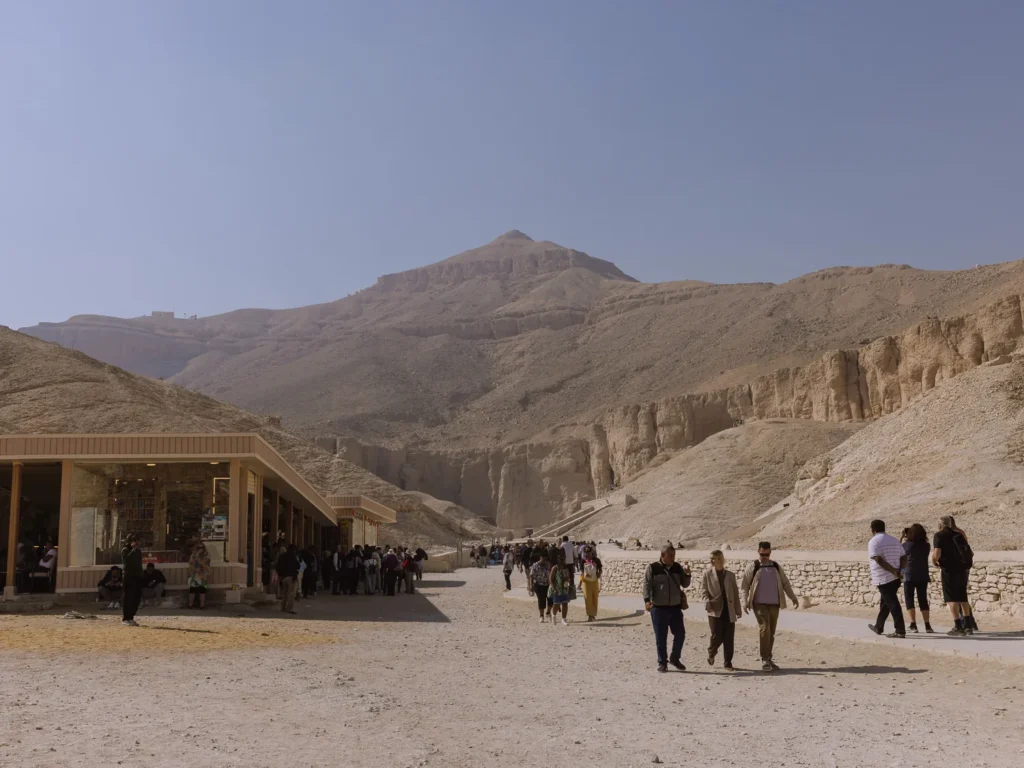
The Valley of the Kings is a remote rocky valley on the outskirts of Luxor.
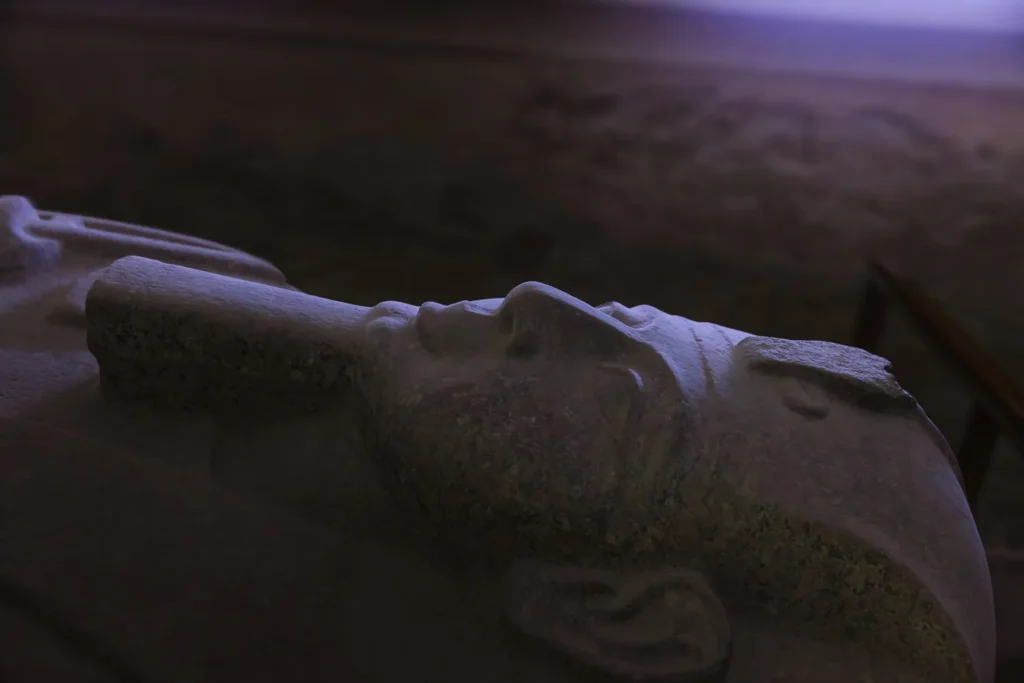
Buried here are the pharaohs of Egypt’s New Kingdom period, the rulers of the 18th through 20th dynasties who chose this desolate valley as their final resting place.
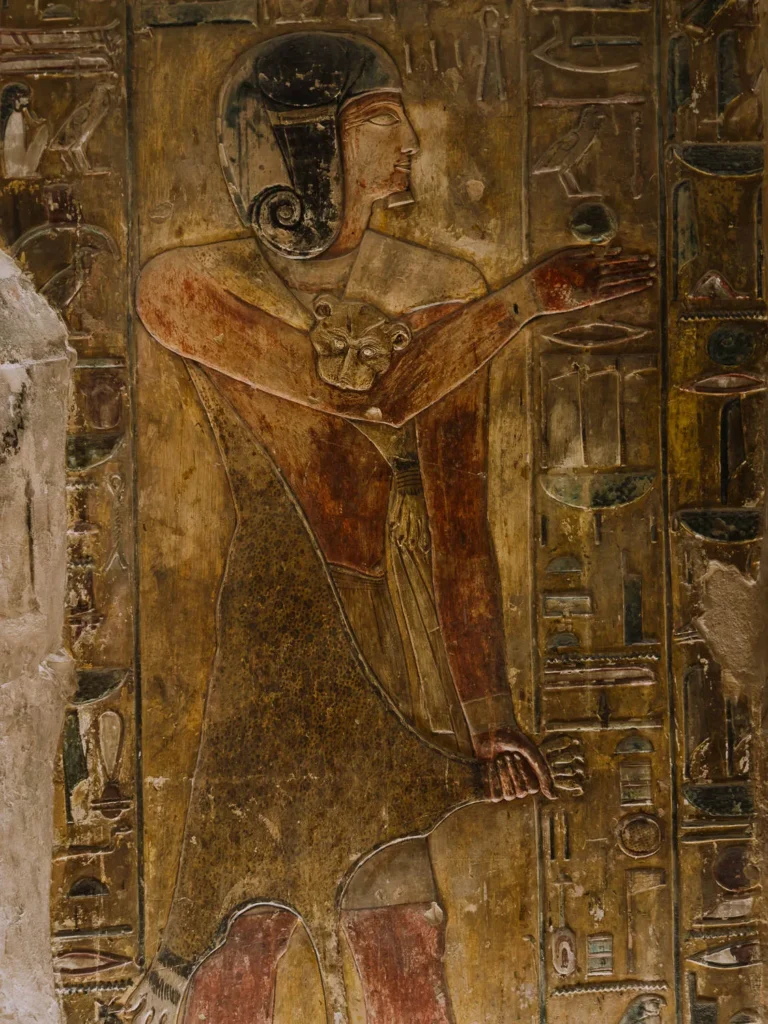
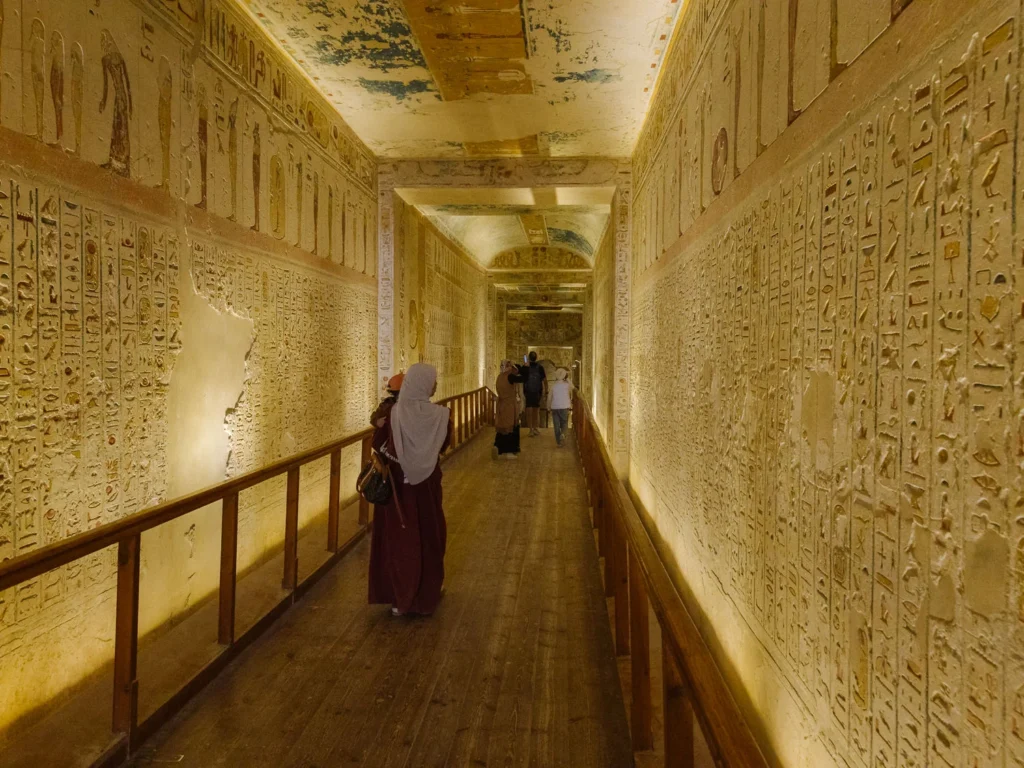
Their tombs are decorated with scenes from ancient religious texts, vibrant paintings that have survived millennia, and hieroglyphs that act as a historical record of ancient Egyptian life.
It’s a fascinating place to visit and one of the best things to do in Luxor.
In this guide, I’ll cover everything you need to know: how to get there, which tombs deserve your precious three-tomb ticket, how to purchase your tickets, and what to look for once you’re inside each tomb.
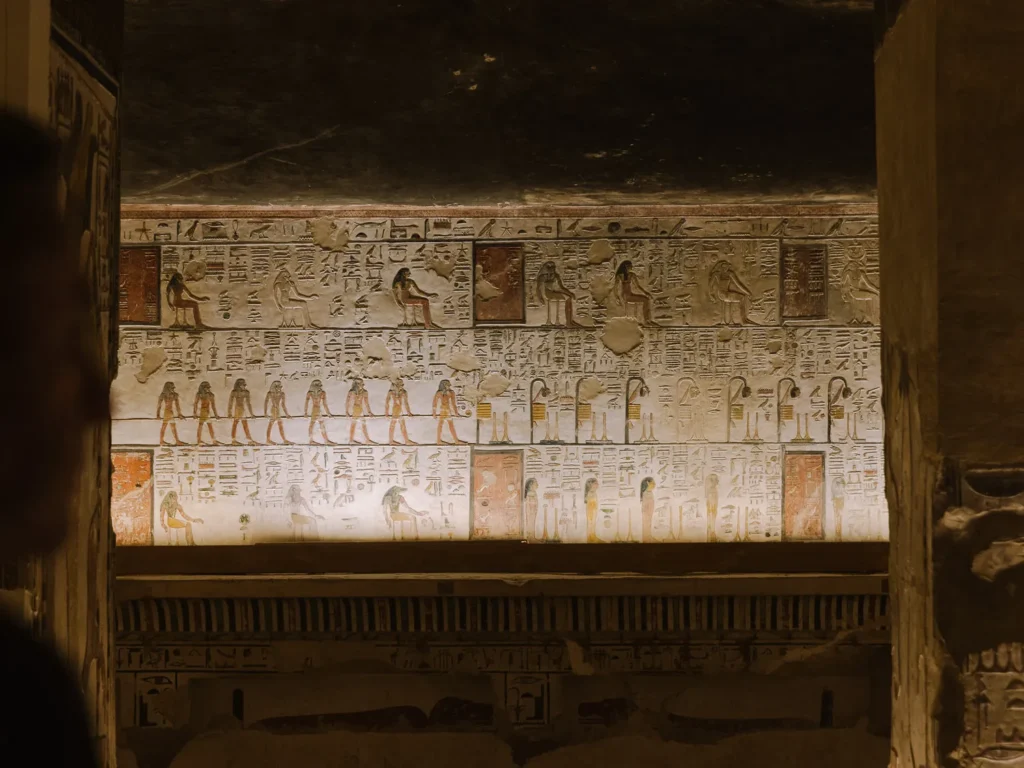
Brief History of the Valley of the Kings
The Valley of the Kings was the primary burial site for Egypt’s pharaohs during the New Kingdom (1539-1075 BCE). It is a remote, rocky area on the West Bank of the Nile, near Luxor.
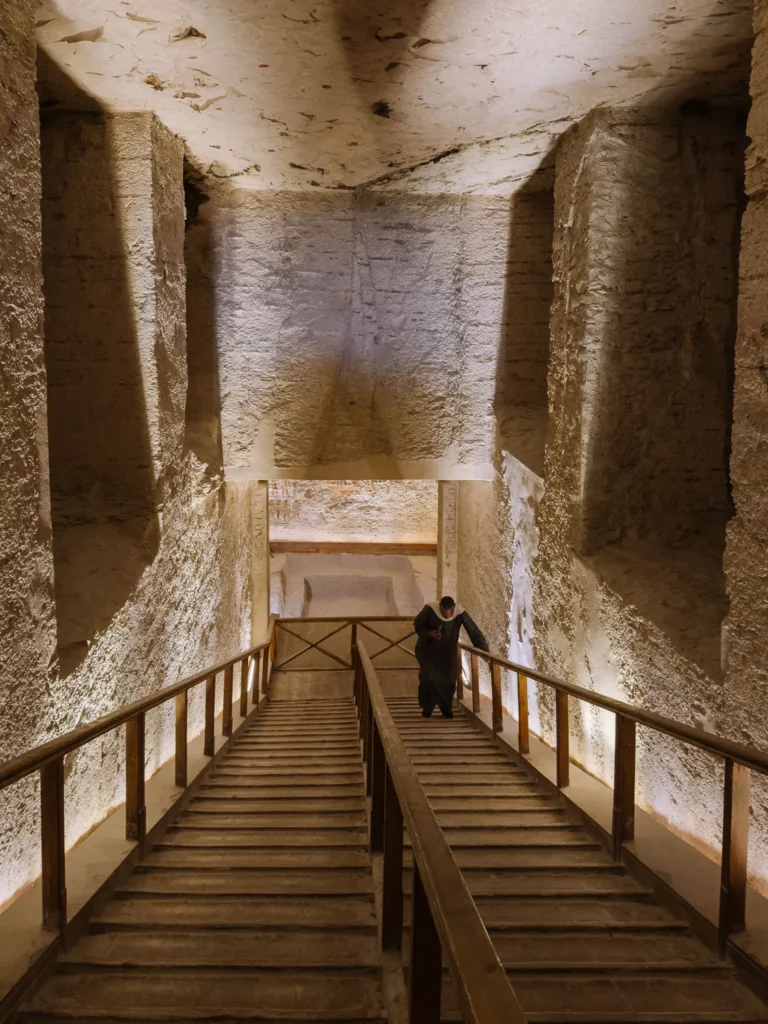
The tombs consist of tunnels dug deep into the rock, leading to a burial chamber. Inside the chamber, the mummified pharaoh was buried inside a sarcophagus and surrounded by his life’s belongings.
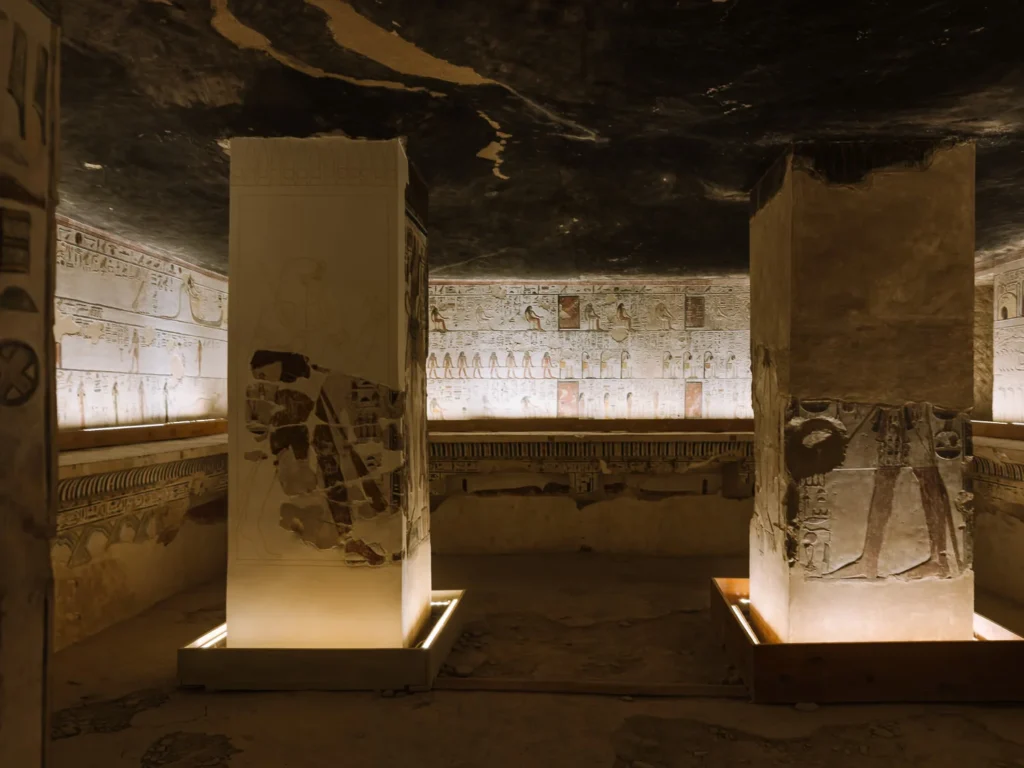
The walls of the tombs are intricately carved with funerary texts (Books of the Underworld) to aid the pharaoh in navigating the afterlife.
The most significant are the Amduat and the Book of Gates, which detail the 12 challenges that pharaohs must overcome to be reborn.
The earlier tombs (18th dynasty) had near-vertical entrances leading to a horizontal burial chamber – resembling an L-shape. Later tombs (19th and 20th dynasty) replaced the L-shape with a more linear design.
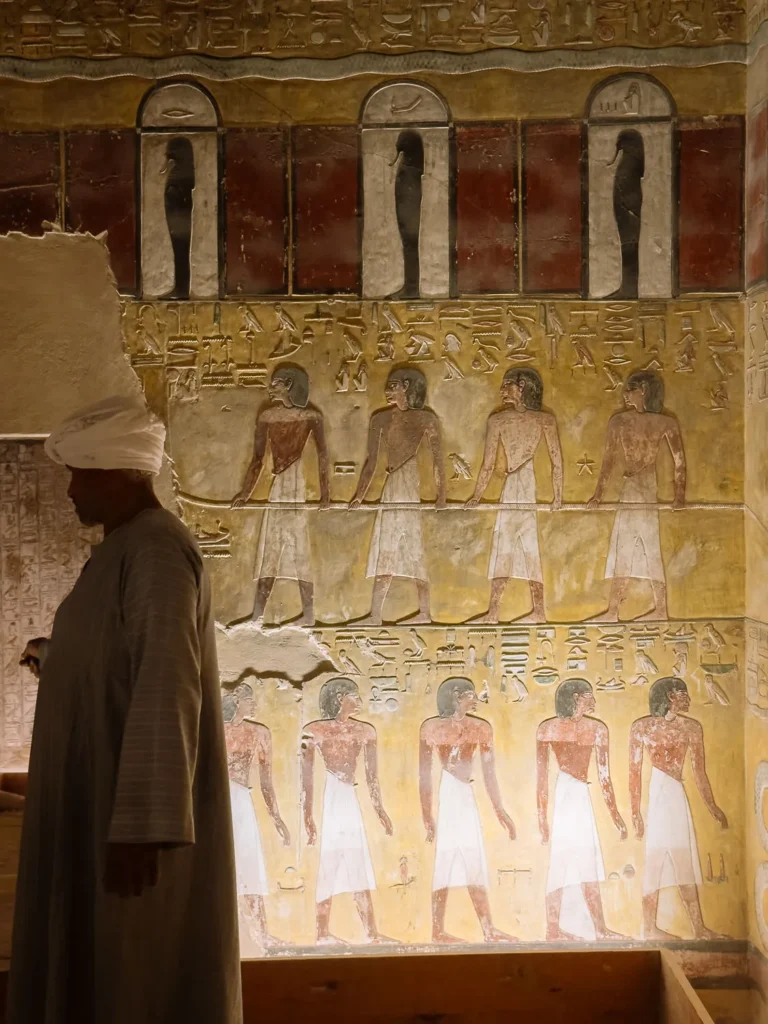
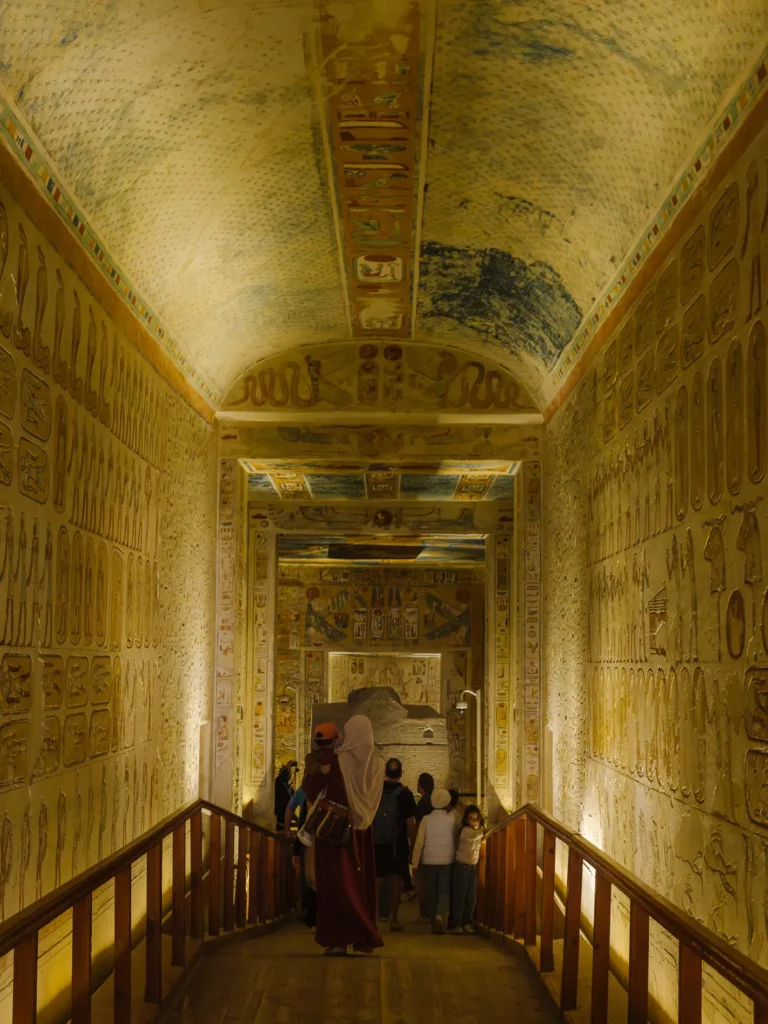
The tombs were built to safeguard the royal mummies and their treasures, enabling them to reanimate with their possessions in the afterlife.
Most of the tombs have been looted for their treasures, except for Tutankhamun’s, which was discovered untouched by Howard Carter in 1922. Most of its treasures now reside in the Grand Egyptian Museum.
Fortunately, around 1,000 BCE, priests moved many of the royal mummies from their original tombs to a hidden tomb near Deir el-Bahari. Discovered by Egyptologists in 1881, they now reside (with the exception of Tutankhamun) in the National Museum of Egyptian Civilisation in Cairo which is well worth a visit.
Finally, the tomb of Ramesses VIII (20th dynasty) has yet to be discovered. Egyptologists are still searching.
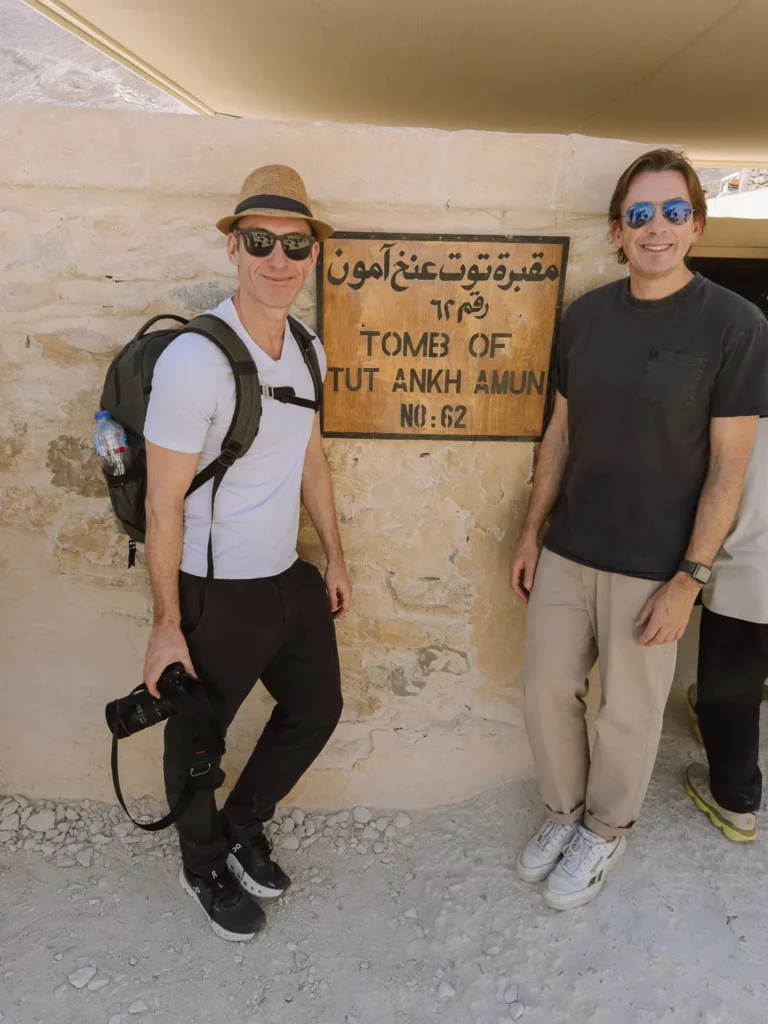
Do You Need a Guide to Visit the Valley of the Kings?
The key thing you need to know about visiting the Valley of the Kings is that guides are not allowed inside the tombs.
They provide information before you enter and offer suggestions on which ones to visit, but by the time you’re actually standing in front of those incredible painted walls, you’re on your own.
While most people arrive at the Valley of the Kings with a guide, it’s actually one of the few sights in Egypt you can visit independently.
It’s also easy to reach from Luxor, as we cover below.
However, the benefit of a guide is that most private tours also include other sights in the area, where their expertise is more valuable.
This full-day West Bank tour is highly rated and covers the Valley of the Kings, the Temple of Queen Hatshepsut, Medinet Habu and the Valley of the Artisans.
How to Get to the Valley of the Kings
The Valley of the Kings is on the West Bank of the Nile. Most hotels in Luxor are on the East Bank, so getting there requires crossing the Nile.
There are several other sights on the West Bank, such as Hatshepsut’s Temple, Medinat Habu, and the Colossi of Memnon, which you may be able to combine on a single trip.
The simplest way to organise everything is to hire a taxi for the day. You can use inDrive to suggest prices to drivers online or pick up one of the many taxis on the street.
Haggle for the price and make sure you agree on the itinerary and the price in advance. You should expect to pay something like the following:
- Half-day hire: EGP 450- 700 EGP (US$10-15)
- Full day hire: EGP 700-1000 (US$15-20)
You could also get the ferry across the Nile (EGP 20) and pick up a taxi on the West Bank, cutting the price a little.
You can also combine it with an afternoon on the East Bank, visiting Karnak and Luxor Temple. If you don’t want to plan it yourself, this well-rated full-day tour visits all the key sights around Luxor.
You can read about how we included the Valley of the Kings on our 10-day Egypt itinerary here.
Purchasing Entry Tickets
Entrance tickets to the Valley of the Kings cost EGP 750 (US$15) for adults and EGP 375 (US$8) for students. This ticket allows you to pick 3 tombs to visit.
The tombs available to visit on this ticket are:
- KV1: Ramesses VII
- KV2: Ramesses IV
- KV6: Ramesses IX
- KV8: Merenptah
- KV11: Ramesses III
- KV14: Tausert-Setnakht
- KV15: Seti II
- KV16: Ramesses I
- KV47: Siptah
There are also other tombs at the site that require additional tickets. They are:
- KV9: Ramesses V & VI – EGP 220 (US$5)
- KV17: Seti I – EGP 2000 (US$40)
- KV34: Tuthmosis III – Currently closed
- KV62: Tutankhamun – EGP 700 (US$15)
We will recommend which tombs to see and which tickets to purchase in the section below.
It is best to purchase tickets online in advance; however, you can also buy them at the visitor centre ticket windows, though queues can be long.
Which Tombs Should You See?
The general entrance ticket to the Valley of the Kings allows you to see 3 of the free-access tombs. There are 9 to choose from (listed above).
Free Access Tombs
We suggest you see Ramesses III, Ramesses IV and Merenptah. They offer a good cross-section of different dynastic designs, detailing both divine and human-inspired carvings.
The artwork is evocative in vibrant colours.
On top of that, you can buy additional tickets for some specific tombs. However, if you buy them all, the total price quickly skyrockets. Here’s what we suggest.
Pay Extra Tombs
Seti I
Seti I is the best tomb in the Valley of the Kings. It is the longest and deepest tomb containing the finest carved reliefs and most vivid colours.
It costs an eye-watering US$ 40 for the additional ticket, but if you have come to Egypt to see the best of the best, then it’s worth paying. We loved it.
Ramesses V & VI
Ramesses V & VI can be visited with a single extra ticket. The tombs are painted rather than carved, but they are in better condition than the tombs covered by the general ticket, although not as well-preserved as Seti I.
If the US$ 40 price for Seti I is too steep, then these offer a good compromise, with the US$ 5 ticket ensuring fewer crowds than the tombs included with the general ticket.
Tutankhamun
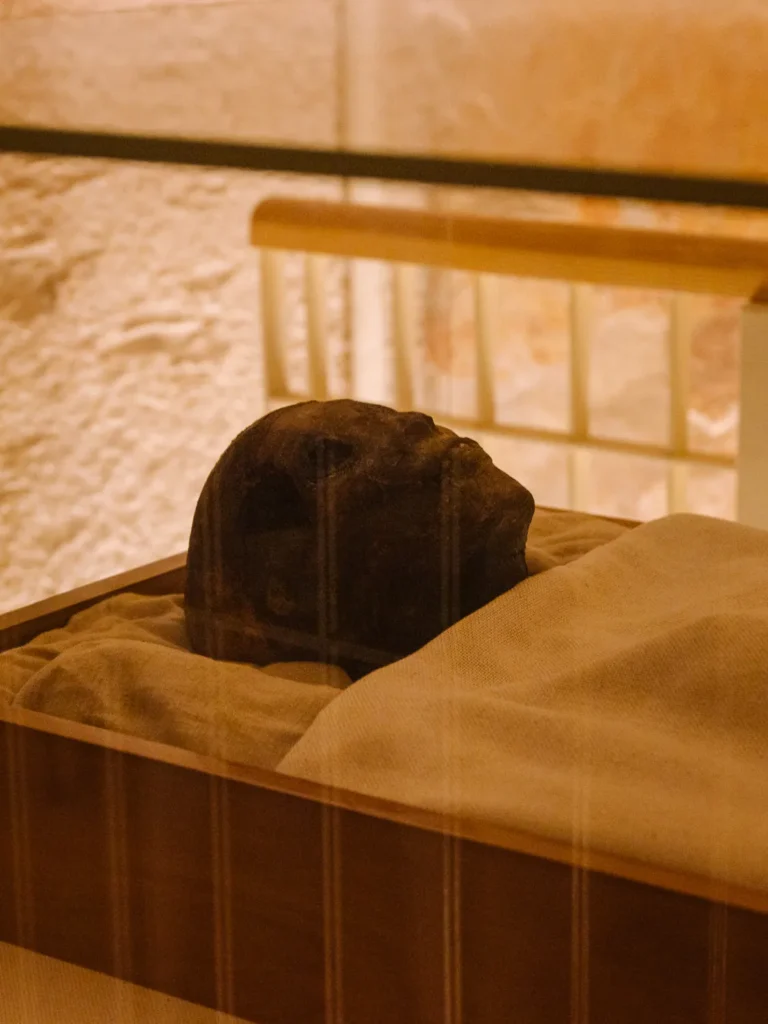
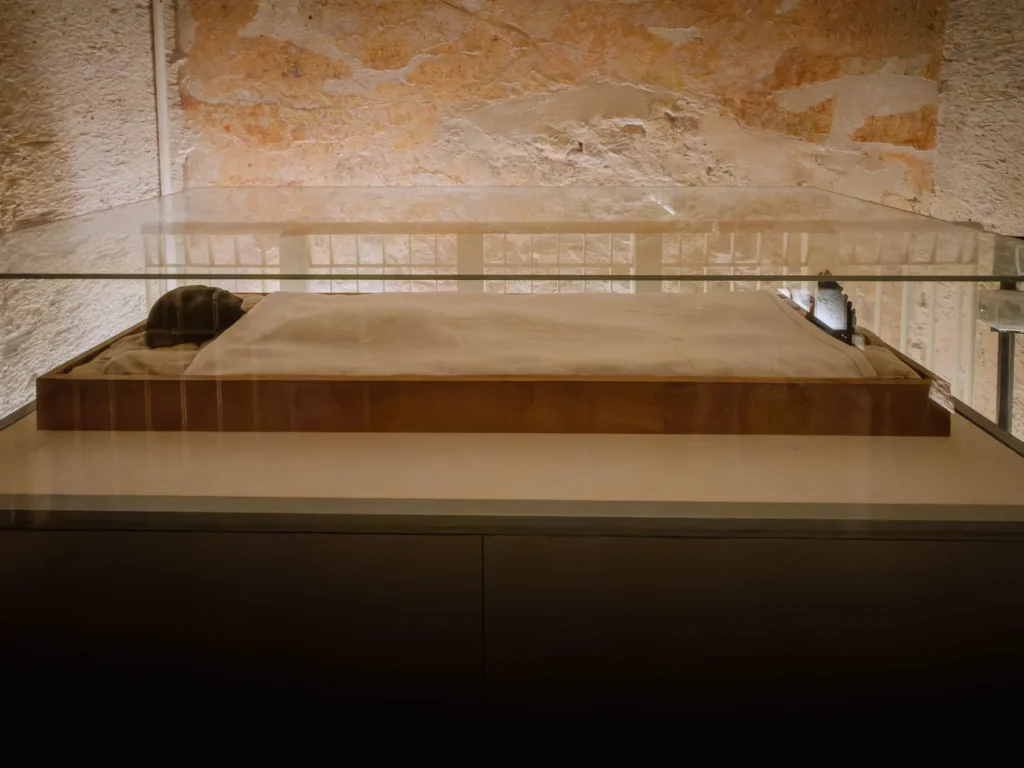
Tutankhamun has a relatively plain tomb. It is a small L-shaped tomb, and not particularly striking. What makes it unique is that it is the only tomb to still contain the mummified king’s body.
If you plan on visiting the other mummified kings’ and queens’ bodies in the National Museum of Egyptian Civilisation in Cairo, then this is not essential to visit this tomb.
Nevertheless, the name Tutankhamun has a certain cachet, and at US$15, we think it’s worth taking a peek at the most famous Pharaoh of Egypt.
Tuthmosis III
Tuthmosis III – By all reports, this is an exceptionally interesting tomb, but it has been closed for years. Keep an eye out in case it reopens.
Map of the Tombs
After arriving at the Visitors’ Centre, purchase any remaining tickets you need, then proceed through security.
It’s a 500m walk (5 minutes) or a quick ride in a golf cart (EGP 20) to the start of the valley that contains the tombs.
There are toilets and a café near the entrance, but otherwise very little shade.
The whole area is a heat bowl, with bright sun reflecting off the rock. Even in January, we were hot, so be sure to bring a hat, sunscreen, and plenty of water.
From the entrance, it’s a short walk between the different tombs. To help you find your way, there are information boards dotted around the valley.
Below is a map to help you find our recommended tombs. None are more than a few minutes’ walk apart.
Click on the top right corner to open our map in your Google Maps app. Click the star next to the title to save it to your Google account.
Visiting the Tombs
Here is a description of what you can see in each of the tombs we recommend visiting. They are all close to each other, so the best way is to start with whichever has the shortest queue and work your way around them from there.
Kv2: Ramesses IV
Ruled 1155-1149 BCE – 20th Dynasty
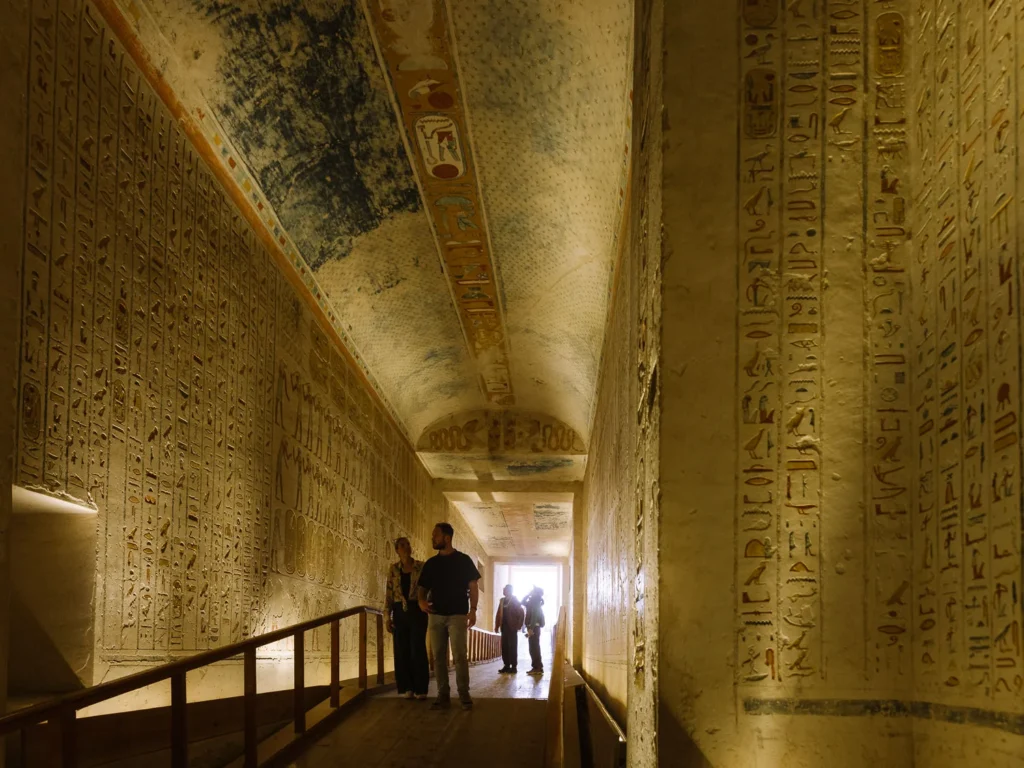
Right next to the entrance to the Valley of the Kings, Ramesses IV tomb was one of our highlights in Egypt.
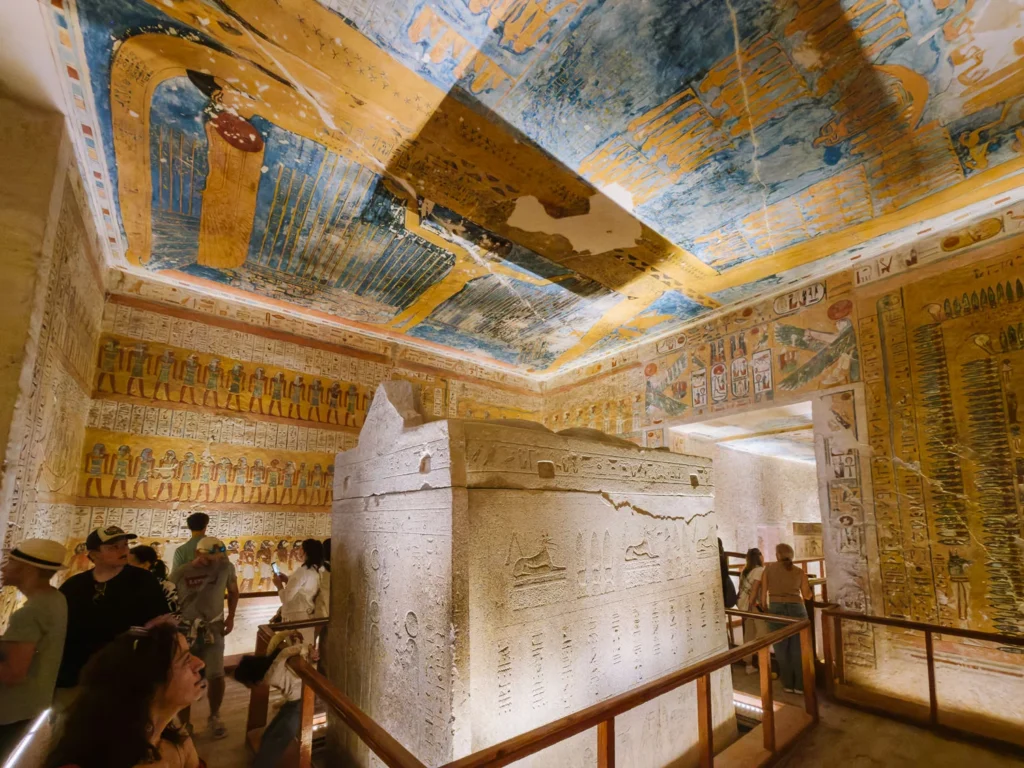
The tomb is a short, straight, downward-sloping corridor that ends at a striking burial chamber and a huge sarcophagus.
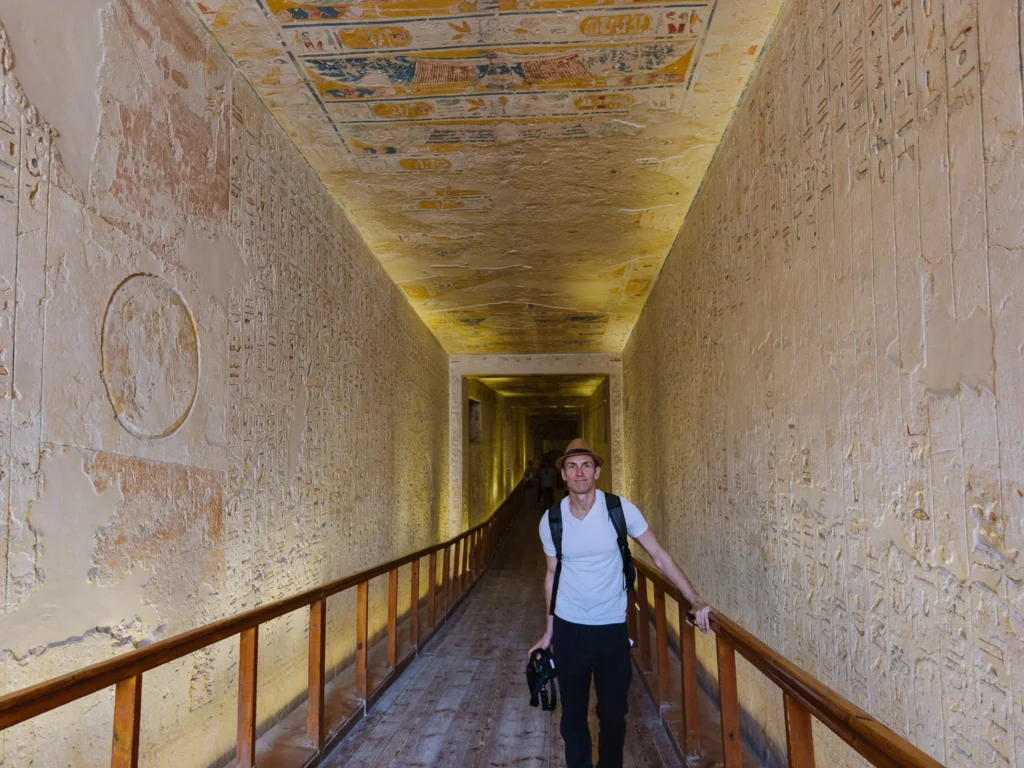
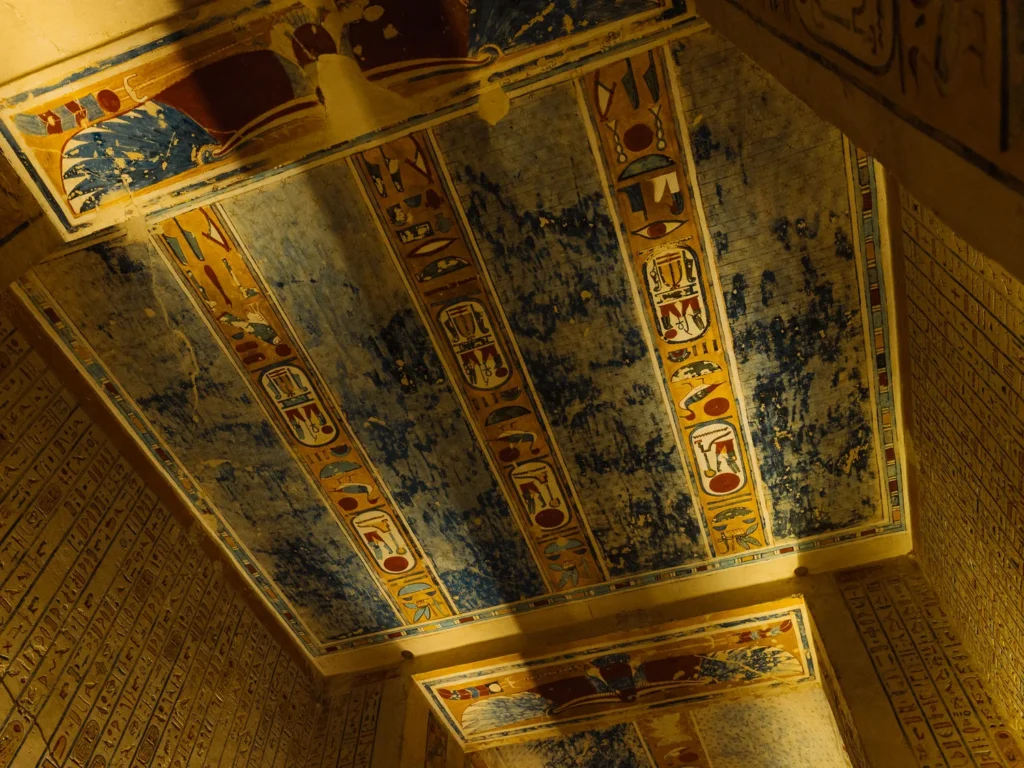
What makes it so good is the extremely clear and vivid artwork that tells the story like an illustrated book. It is one of the best places to see scenes from the Book of the Dead. It also gives you a sense of time passing with Roman and Greek graffiti on the walls.
Don’t forget to look up at the ceiling, where a night sky is dotted with stars and watched over by the goddess Nut.
Kv8: Merenptah
Ruled 1213-1203 BCE – 19th Dynasty
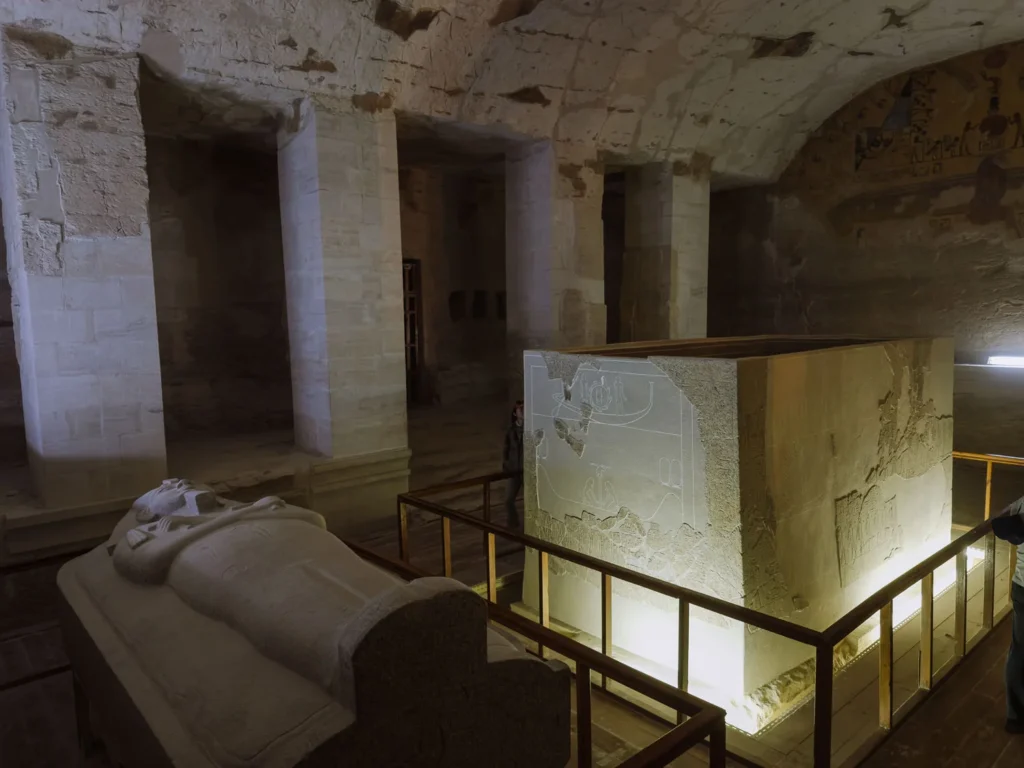
This tomb is less ornate than the others, but what makes it special is its sheer size. The tomb has large corridors and chambers that delve deep into the rock. It ends at a burial chamber containing one of the largest sarcophagi ever placed in the Valley of the Kings.
It’s so large that the tomb had to be widened during construction to fit it in. Damaged by floods, the colours have faded, but the scale of the funerary texts, such as the Book of the Gates, is impressive.
Kv11: Ramesses III
Ruled 1186-1155 BCE – 20th Dynasty
This tomb was originally meant for Setnakhte, but during excavation, the walls collapsed into a nearby tomb, leading to its abandonment, and Setnakhte was buried elsewhere. Ramesses III later modified the tomb for himself, resulting in its irregular layout.
The tomb is a lengthy corridor that passes through two pillared halls before reaching the burial chamber. The walls feature beautifully detailed scenes depicting gods, rituals, and the king’s journey into the afterlife.
However, it also includes scenes of daily life, a rarity in a king’s tomb. This human story contrasts sharply with the divine presence elsewhere. Take time to search for the depiction of musicians and food being prepared for offerings.
Kv17: Seti I
Ruled 1290-1279 BCE – 19th Dynasty
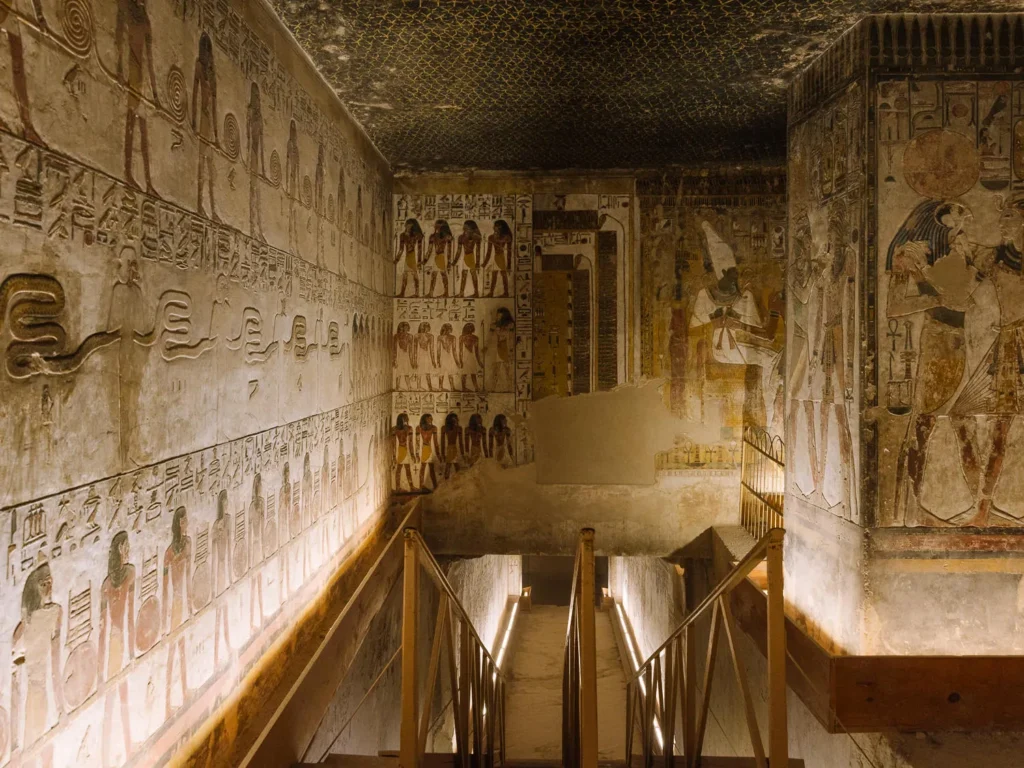
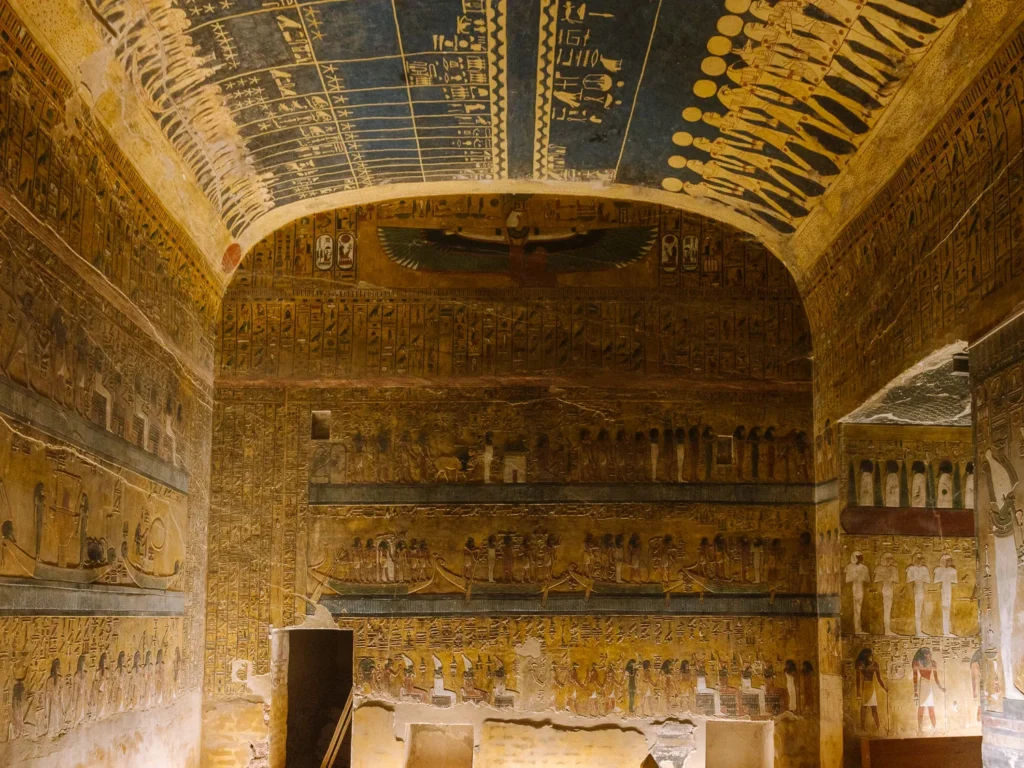
The tomb of Seti I is the finest in the Valley of the Kings. Intricately carved reliefs with remarkable detail are animated by vivid colours, especially yellow and blue.
It is the longest and deepest tomb, and it feels almost like a maze. There are numerous side rooms to explore, all exquisitely finished.
Along its walls are nearly all the funerary texts, making it the most historically significant temple in the complex. Due to its high cost, it is also much less busy than many of the other tombs, and it’s sometimes possible to enjoy one of the rooms entirely to yourself.
Kv9: Ramesses V & VI
Ruled 1149-1137 – 20th Dynasty
This shared burial site features paintings rather than carvings, but they are very vibrant and well-preserved. The decorations depict many funerary texts, including the Book of the Gate, which details the journey of the sun god through 12 gates guarded by demons and deities.
The tomb is a series of sloping corridors with a steep one at the end that is almost a staircase. It is over 100m long and ends at an amazing burial chamber with two large sarcophagi.
The ceiling is in excellent condition and depicts the details of the Book of Nut and stories about the stars, sun, and night sky. This is a great budget alternative to Seti I.
Kv62: Tutankhamun
Ruled 1332-1323 – 18th Dynasty
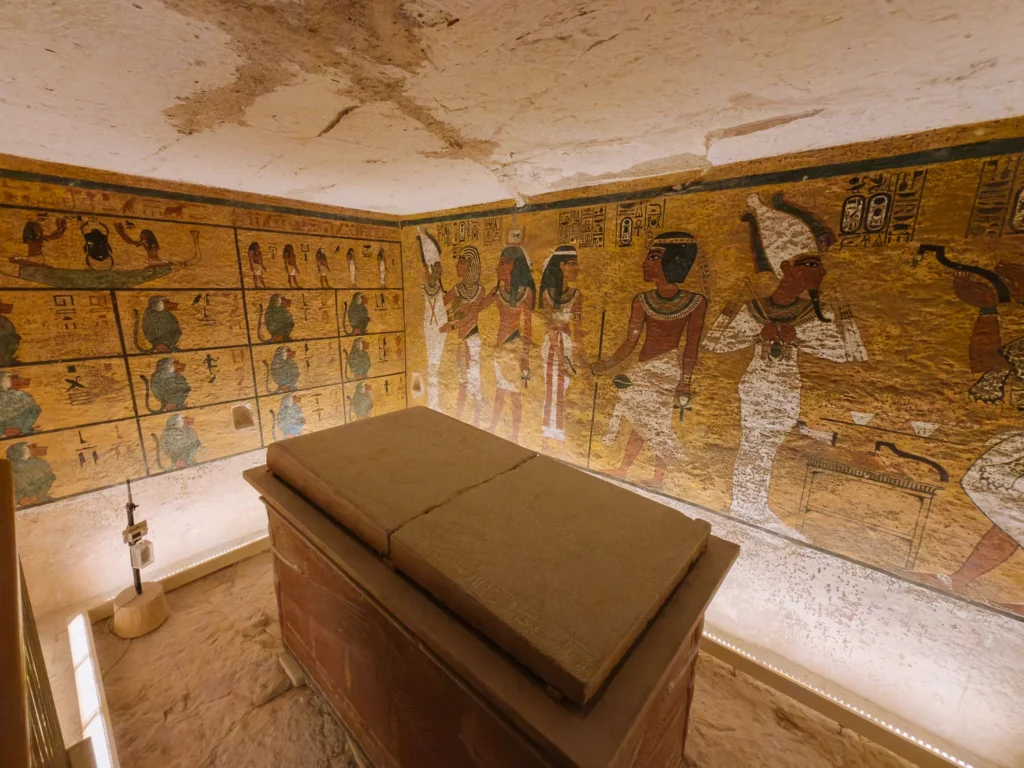
The tomb of Tutankhamun is relatively small and plain. However, there are three good reasons to pay for the US$15 ticket.
Firstly, it is one of the few tombs from the 18th dynasty. It has an L-shape, with an almost vertical entrance down a steep staircase leading into the burial chamber. Because of its L-shaped design, with the entrance hidden beneath the tombs of Ramses V & VI, it was never looted.
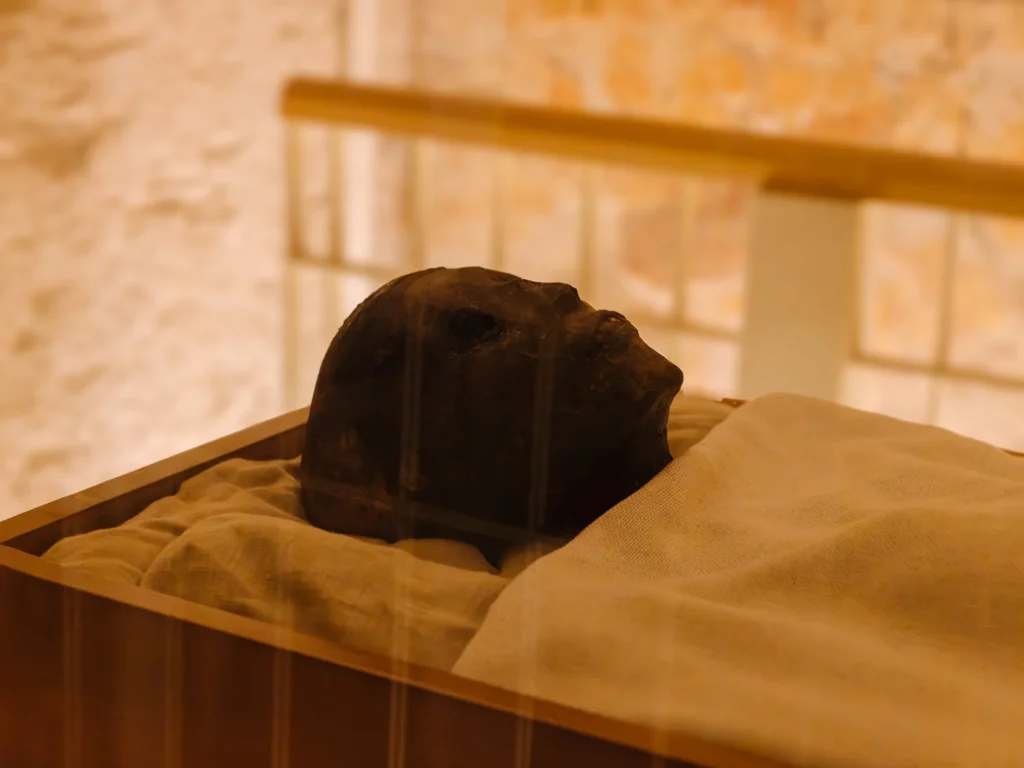
Secondly, it is the only tomb still holding the king’s mummified body, protected within a glass case. Thirdly, it is fascinating to imagine Howard Carter opening the tomb to discover 5,000 items packed into this tiny chamber.
What to Bring
Water: Bring at least one litre per person, and more in summer. There are vendors at the entrance, but prices are inflated.
Sun protection: Wide-brimmed hat, sunglasses, and high-SPF sunscreen are essential.
Comfortable walking shoes: The valley involves walking on uneven ground, and tomb entrances often require descending steep staircases.
Light, breathable clothing: Dress modestly (covering shoulders and knees is respectful), but choose lightweight fabrics. Many tombs are extremely hot inside.
Small backpack: For carrying your essentials; be prepared for security screening.
Cash: For tickets, tips, and purchases. Credit cards are not always accepted.
Important Tips
The main visitor centre at the entrance has clean bathrooms and a small café. Use these facilities before heading to the tombs, as there are no facilities once you’re in the valley proper.
Guards inside the tombs sometimes offer to show you details or take you to “secret” areas in exchange for tips. While this can be interesting, it’s not required, and you should participate only if you’re comfortable.
You might also have a few guides offering to take your phone off you to get photos in rooms that visitors can’t access. We did this a few times and got our phone back with some pretty blurry images on it.
Respect the tombs. Don’t touch the walls or paintings, as skin oils can damage the artwork.
For more tips about visiting Egypt in general, read our guide on what to know before your trip to Egypt.
More Egypt Guides
- How to plan a 7- or 10-day Egypt itinerary.
- The best places to visit in Egypt.
- Essential tips for visiting Egypt: what to know before you travel.
- The best ancient temples in Egypt.
- Nile Cruise ship vs Dahabiya: which is the best experience?
- The best things to do in Cairo (including the Pyramids).
- Plan your trip with our 2- or 3-day itinerary for Cairo.
- All you need to know about visiting the Valley of the Kings.
- What to do in Aswan, Egypt’s southern escape.
- See the best and other great things to do in Luxor.
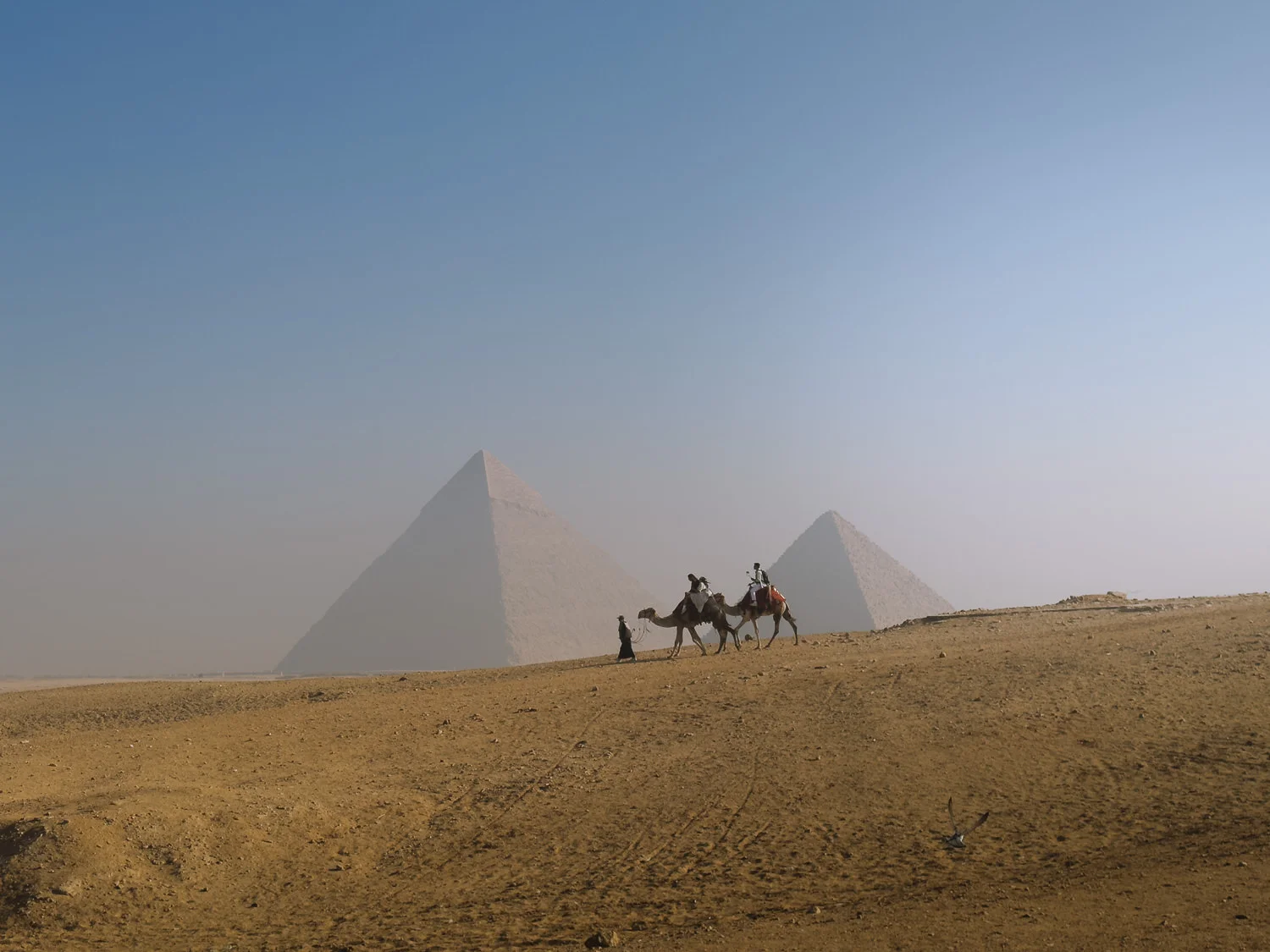
- Your complete guide to visiting the Pyramids of Giza.

reader-supported
When you buy through links on our site, we may earn a small affiliate commission at no extra cost to you.
Thanks for your support // Paul & Mark
Hi, thank you for this valuable information. I have prebooked a 1 hour guided tour of Tutankhamen’s tomb it cost me a LOT more than $15! I didn’t want to miss out on seeing it. But now I am thinking, I shouldn’t have got this. Guides aren’t even allowed inside the tombs. Do you think tickets will still be available on the day? I plan to get there for 6am. I couldn’t find anywhere online to prebook the tickets for the individual tombs, only the general entrance ticket. And I have also heard bad reviews of the Egymonuments website. I go to Cairo and Luxor in 1 week.
Hi Caroline,
Although the guides can’t go into the tombs themselves, they can give you plenty of information before you go in and tell you what to look out for. So it’s not all wasted.
Yes, you can get tickets for the individual tombs on the day. This is what we did and we had no trouble getting it to all the tombs we wanted to see. If you have a guide, they should be able to help you buy the other tickets as well. There was a bit of a queue when we were there, so our guide helped with that a little. However, we were much later than 6 AM so you should be fine.
Have a great trip!
Paul.
Amazing! Thankyou! and thank you for getting back to me so quickly. When I say a lot more than $15, I am talking £150 for two people! But I can cancel for a refund, so I think I will do that.
Good to know we should be ok to get tickets especially turning up early.
Thank you so much. Looking forward to reading your other tips and itineraries.