

Bangkok is one of our favourite hubs in Asia, and we’ve been back many times. But it’s a diverse, sprawling city with distinct neighbourhoods connected by a targeted transit system. Choosing where to stay matters, and this guide will help you do that.
By: Paul Healy | Last Updated:
Bangkok can be a disorienting place to look for accommodation.
The neighbourhoods feel nothing alike.
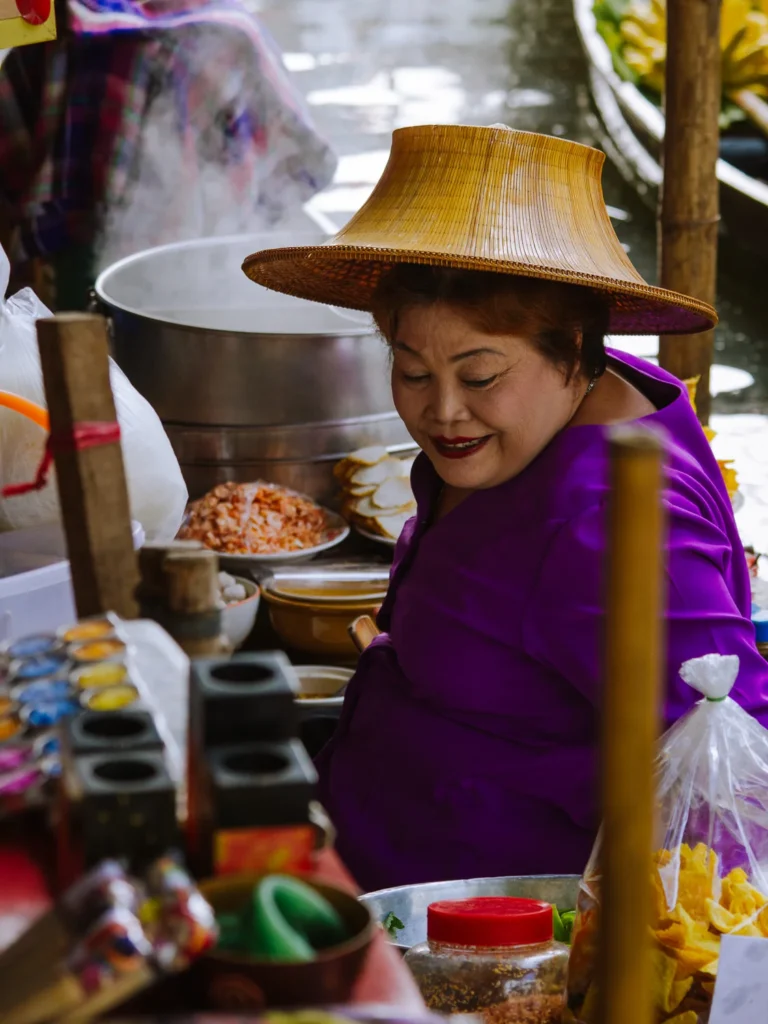
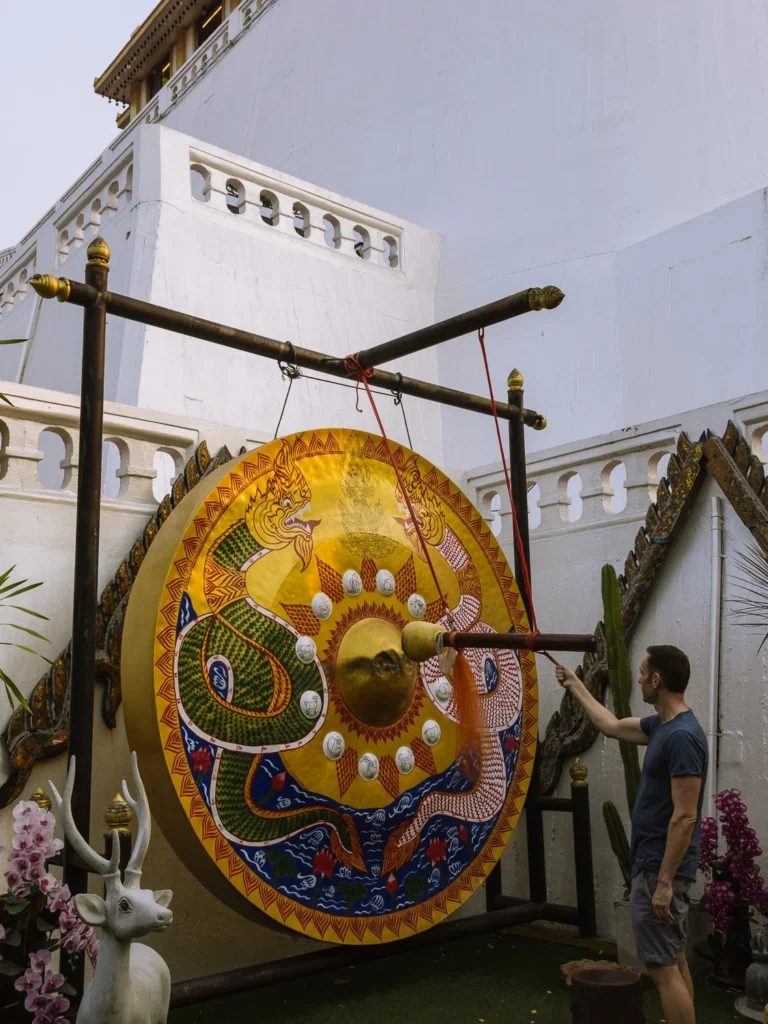
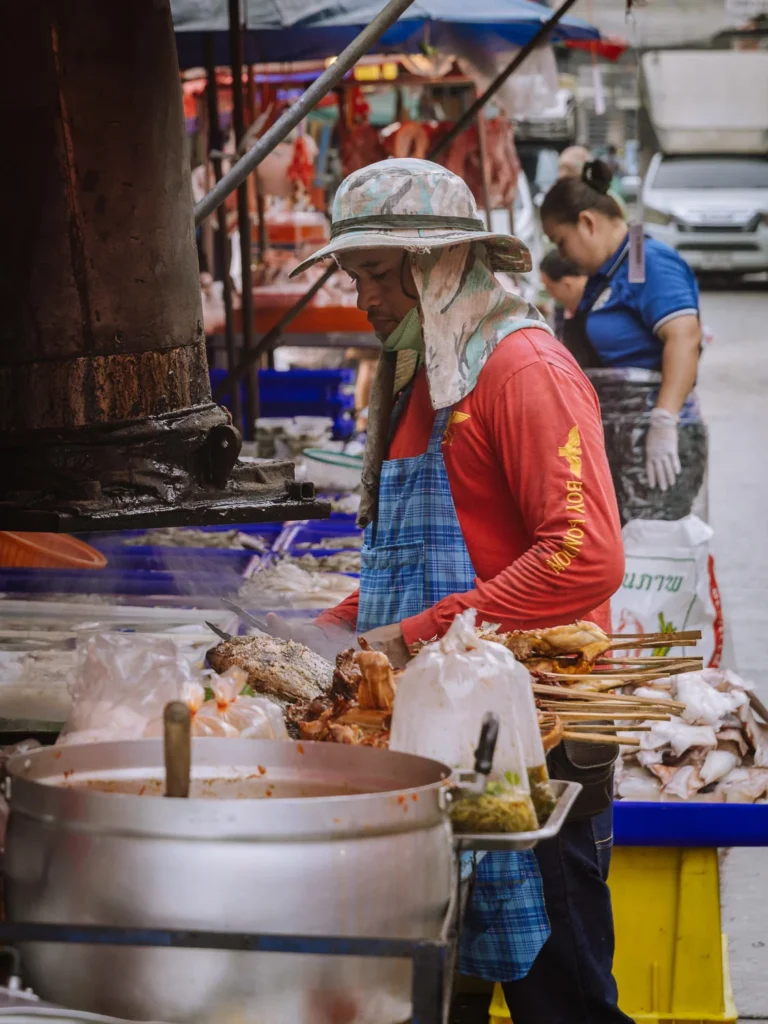
Some are packed with ancient temples, cheap bars, excellent street food and a culture that’s lived on the street.
Others are gleaming skyscrapers, designer shopping, rooftop cocktail bars, and Michelin-starred restaurants.
We’ve spent a lot of time in Bangkok, stayed in most of its main areas, and so we have a pretty good feel for the city.
What we’ve found is that people going to Bangkok for the first time don’t really need another hotel list – that’s easy to find.
You need help answering a more fundamental question: given the trip I’m taking, where should I be?
That’s what this guide is for.
Whether you want to tick off the main tourist attractions efficiently, soak up the atmosphere at a slower pace or unwind in a boutique property, we’ve covered the common trips below with suggestions for where to base yourself.
Before You Book: the One Thing You Need to Understand About Bangkok
The one thing you need to understand before booking your accommodation in Bangkok is that it’s not the easiest city to navigate on foot.
Bangkok is spread out and hot. Apart from the compact area around the Old City, it’s unlikely you’ll be walking as much as you might in other cities.
Also, getting anywhere by road can take a long time. A journey that looks like 20 minutes on Google Maps can easily become an hour in a taxi during rush hour.
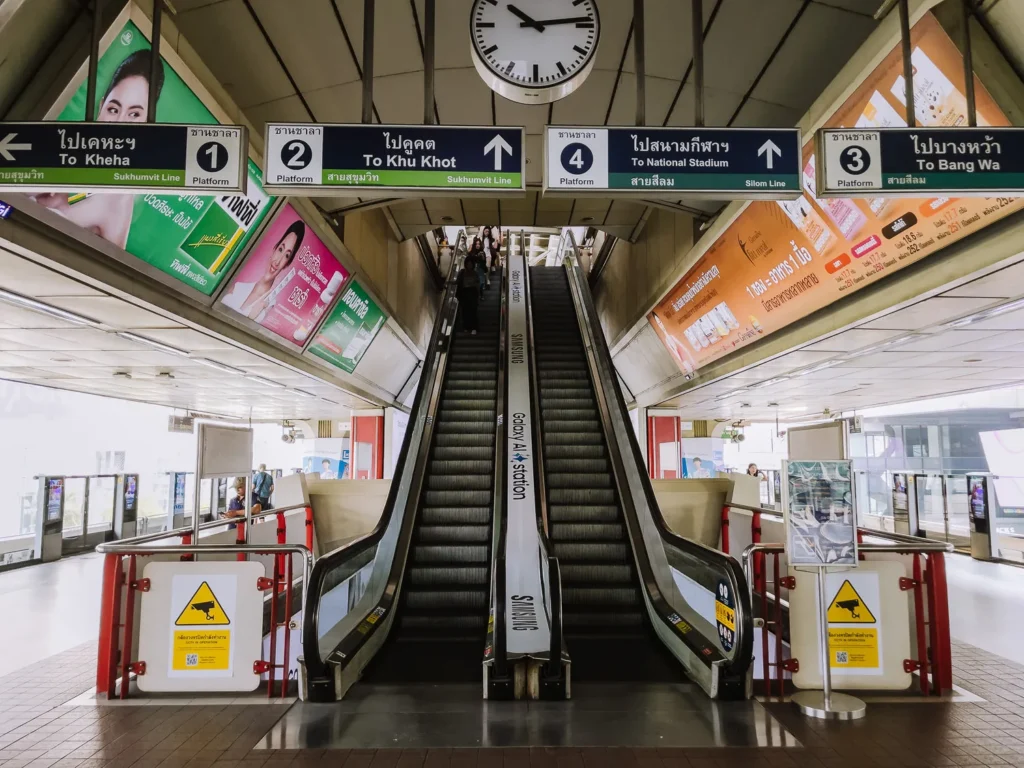
Fortunately, Bangkok has two excellent rail networks:
- BTS Skytrain – an elevated train covering the modern commercial areas, and
- MRT – an underground metro system covering the older parts of the city and connecting to the main train station.
If your hotel has easy access to either line, Bangkok becomes very manageable. If it doesn’t, and you want to explore further afield, you’ll spend a significant amount of your trip sitting in traffic.
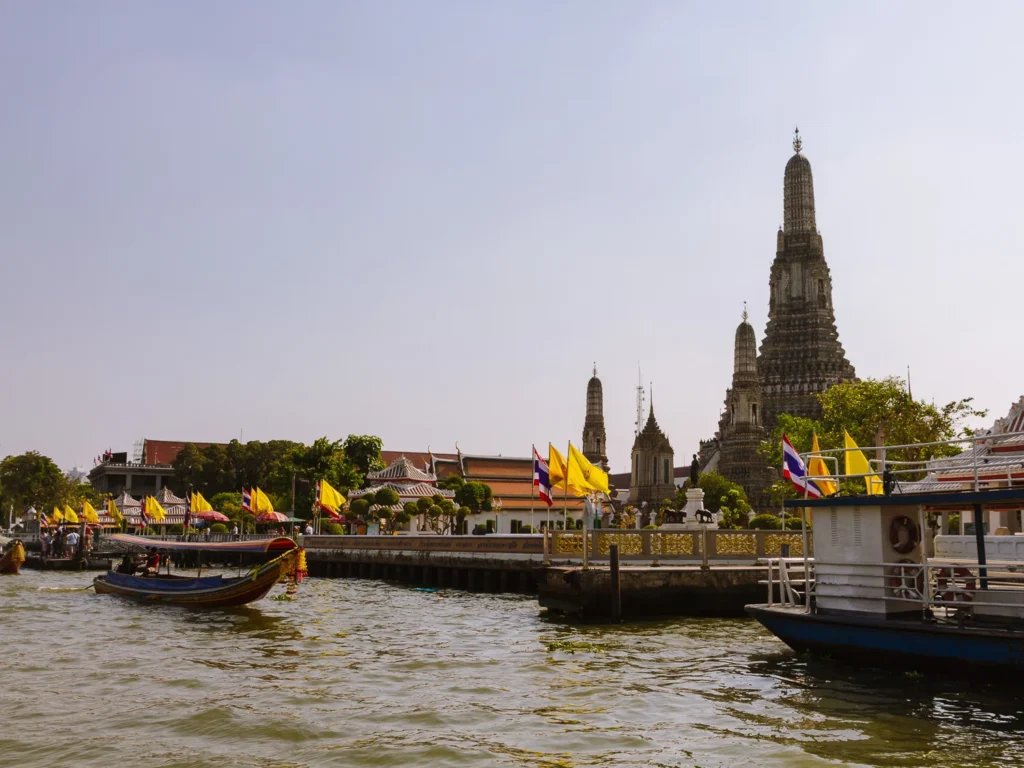
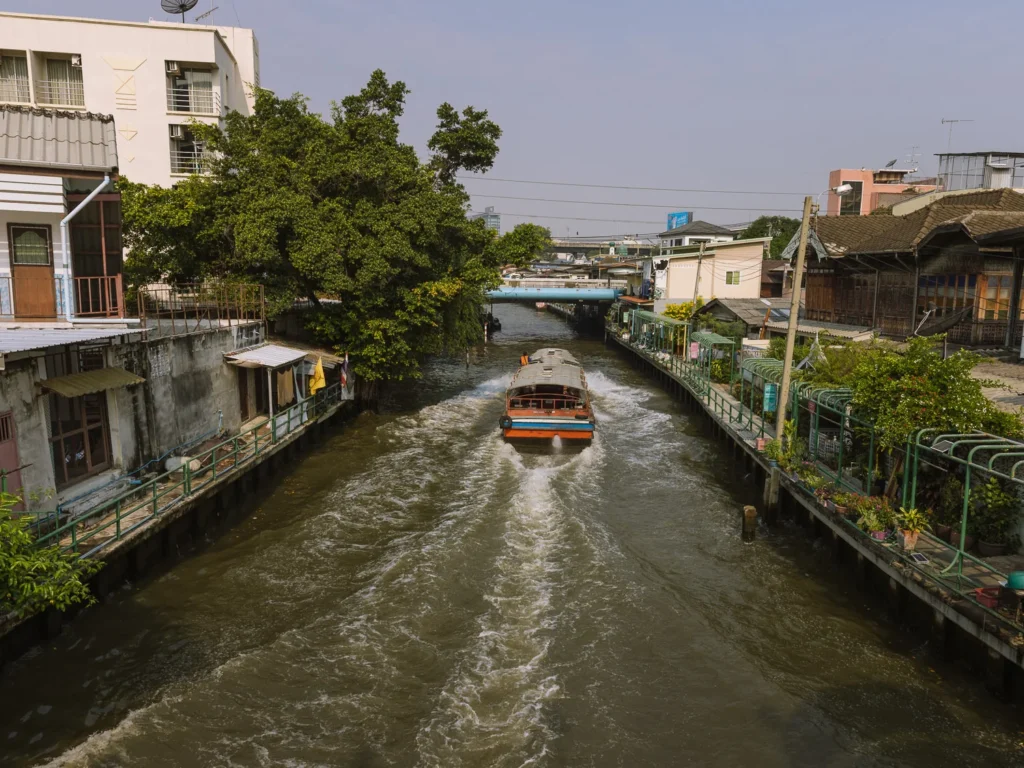
The Chao Phraya River also acts as a transit route. The public river ferries are fast, cheap, and cover a lot of ground between the historic areas and the riverside hotels further south.
Before you book anywhere outside the Old City or Chinatown, look up the nearest BTS or MRT station and check how far the hotel is on foot. That single step will save you more frustration than any other part of the planning process.
Find Your Trip
“It’s My First Time, and I Want to See the Temples and Main Sights”
Stay in Rattanakosin (the Old City).
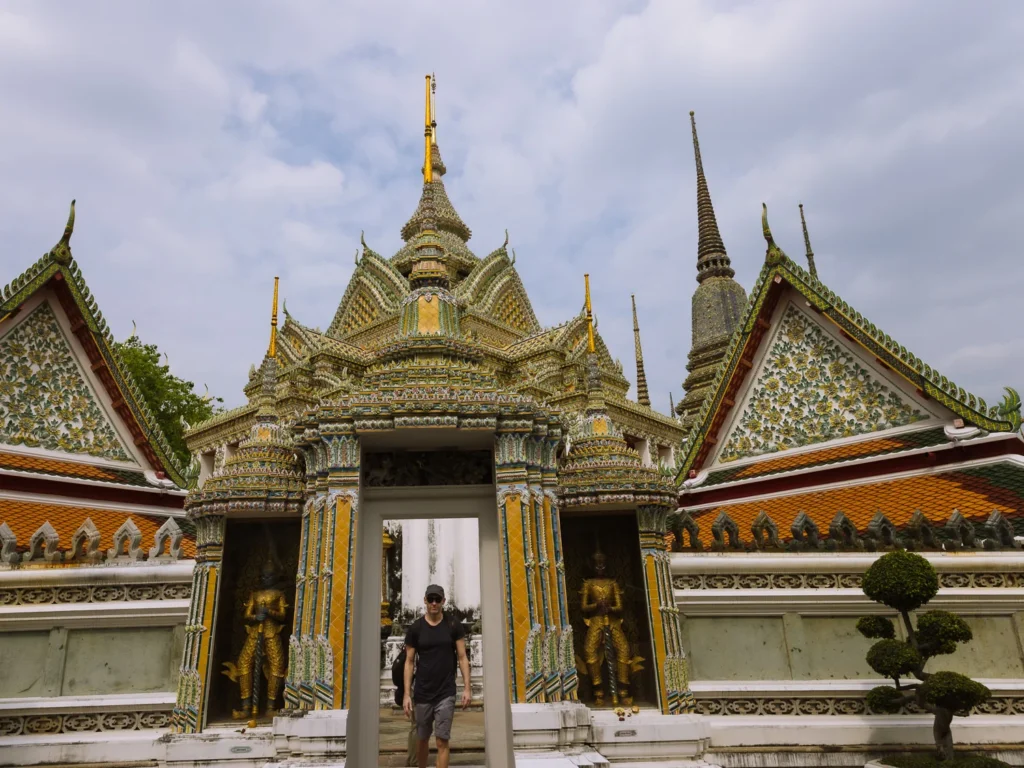
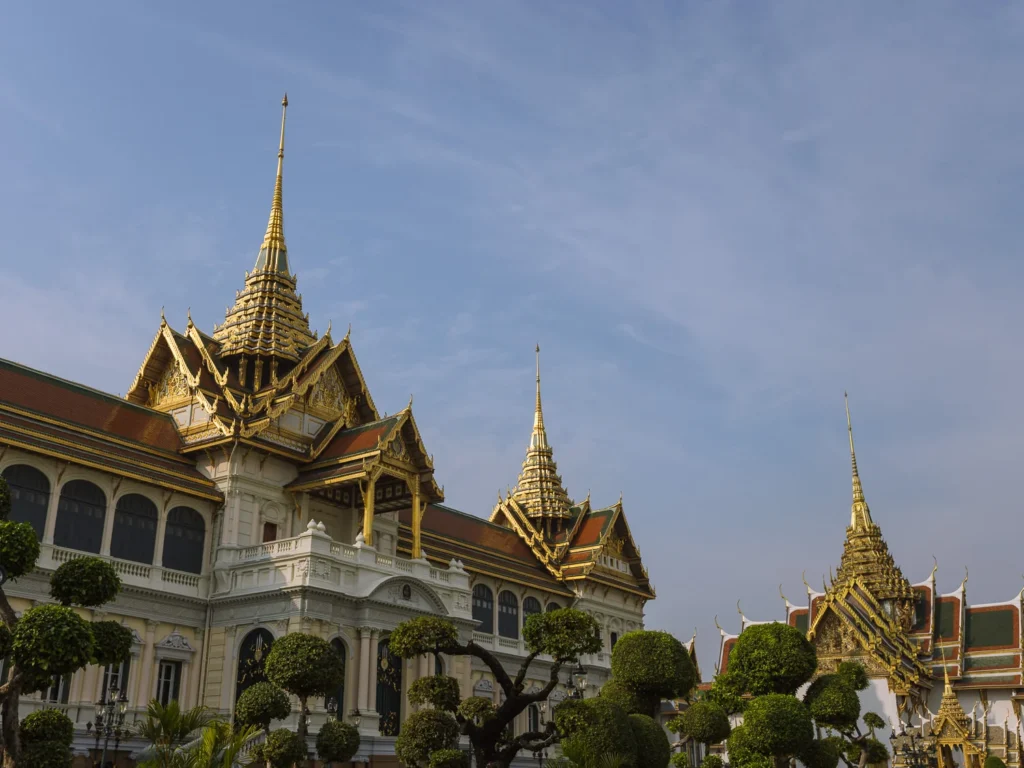
If ticking off the Grand Palace, Wat Pho, Wat Arun, and Wat Saket is the main point of your trip, the argument for staying in Rattanakosin is simple: you can walk to all of them.
You won’t need to use taxis, public transport or negotiate with tuk-tuk drivers. You just leave the hotel, and you’re there.
This matters more than it sounds.
Bangkok’s major temples open early, and the sensible strategy is to arrive at opening time, before the heat and the tour groups arrive together.
If you’re staying nearby, that’s easy. If you’re staying in Sukhumvit, it requires an early start and a much longer journey.
The trade-off is that Rattanakosin is primarily a daytime neighbourhood.
After the temples close, it gets quiet, dining options thin out, and you’ll find yourself heading elsewhere for dinner.
For a first trip where maximising time at the main sights is the priority, that’s a trade worth making. For longer stays, it might be a little bit limiting.
A few good options in Rattanakosin: Arun Residence is a beautiful boutique property right on the river with direct views across to Wat Arun.
Sala Rattanakosin is more polished, with a rooftop bar that overlooks the temples. If you’re on a budget, NapPark Hostel is well-run and well-located.
“I Only Have 2–3 Days and Want to Make Every Hour Count”
Stay in Rattanakosin or the Riverside — and don’t try to save money on location.
This is the scenario where a cheap hotel in the wrong area ends up costing you more than it saves.
If you have 48 hours in Bangkok, spending 90 minutes of each day sitting in traffic to reach the things you came to see is a bad trade.
The extra £20–30 a night you might spend staying centrally will cost less than the taxis and the time you’ll lose staying somewhere cheaper but further out.
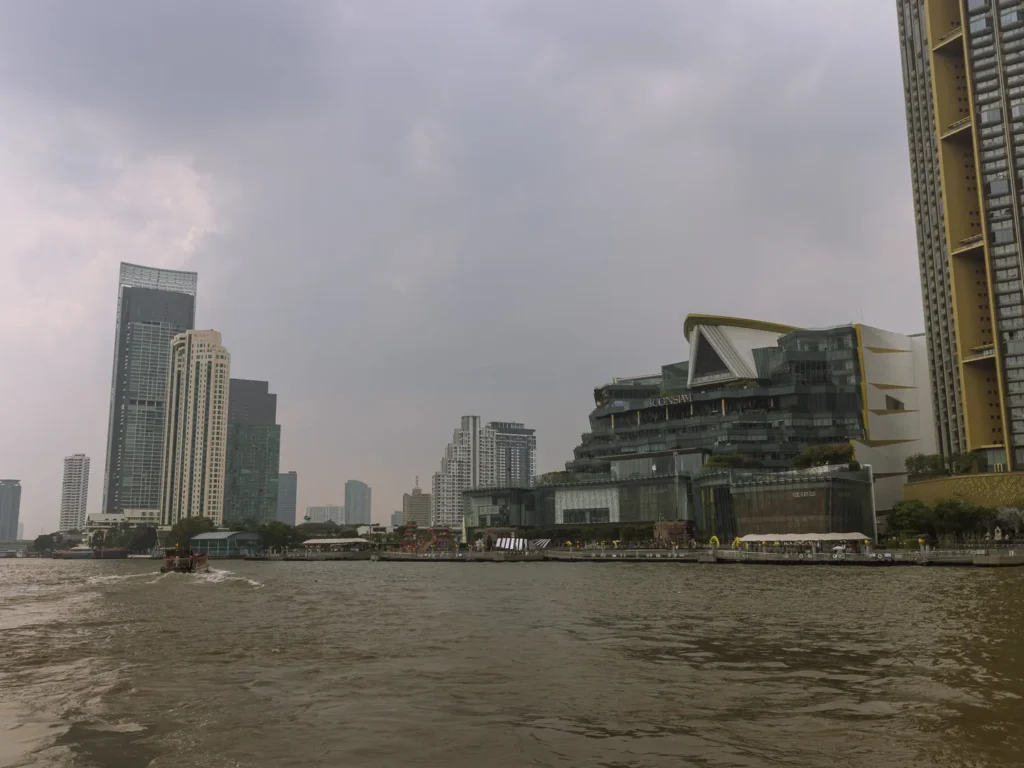
The Riverside area, just south of the Old City, is the other strong option for short trips.
It’s quieter and more refined than Rattanakosin; you’re still close to the main sights via river taxi, and the hotels are among the best in the city.
If the budget allows, a short stay at the Mandarin Oriental or Capella Bangkok is an experience rather than just a place to sleep.
“I’ve Been Before and Want to Feel Like I’M Actually in Bangkok”
Stay in Chinatown or Banglamphu.
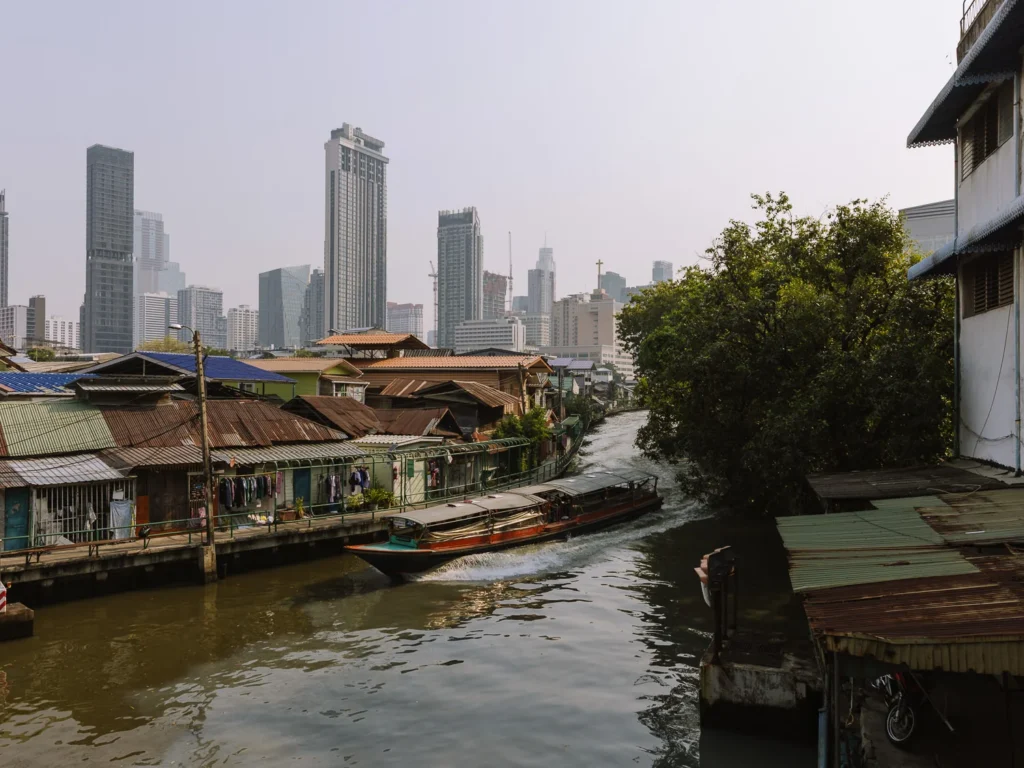
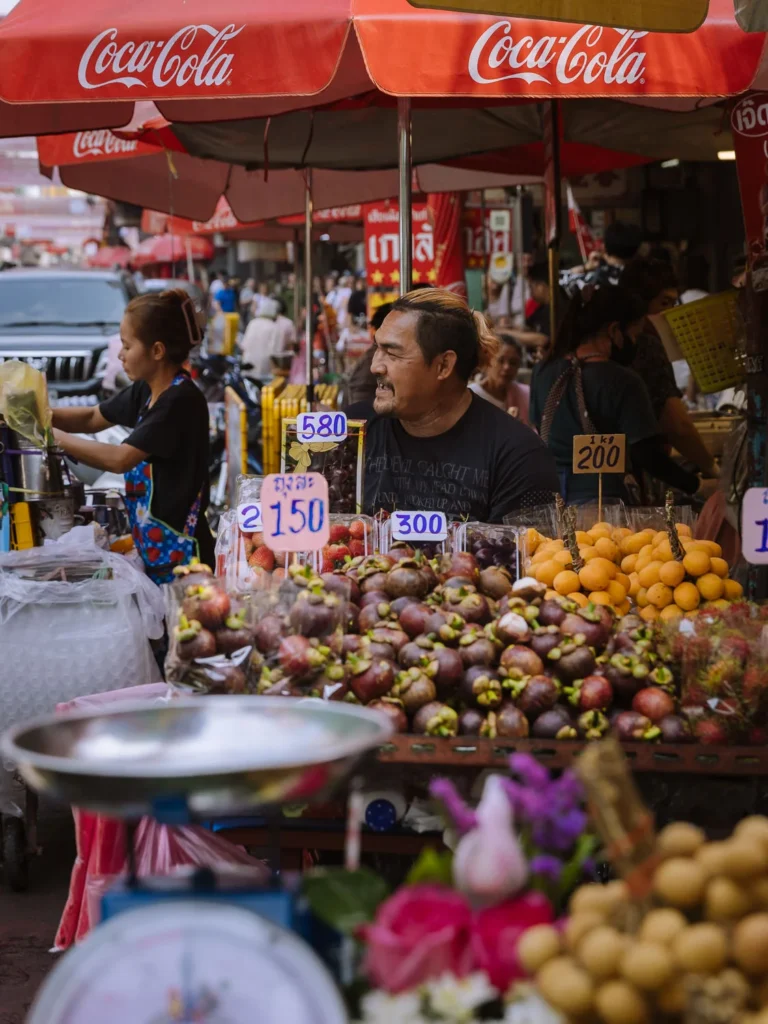
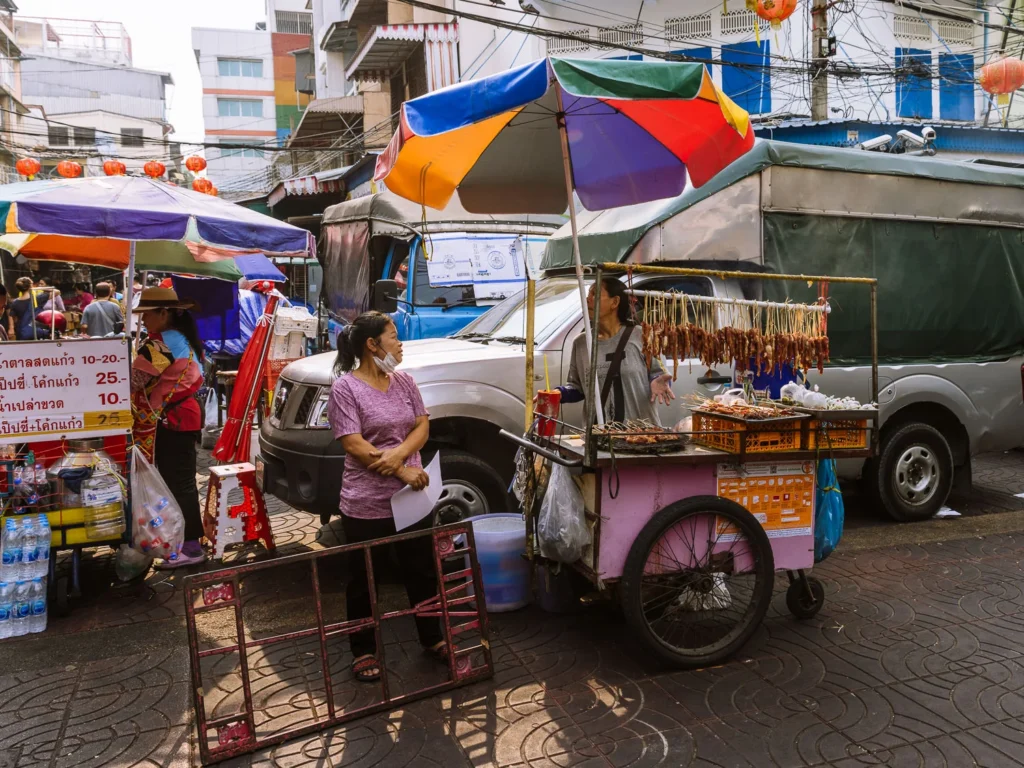
If you’ve already done the main sights and you want to experience local Bangkok: the street life, the noise, the food, these are your two options.
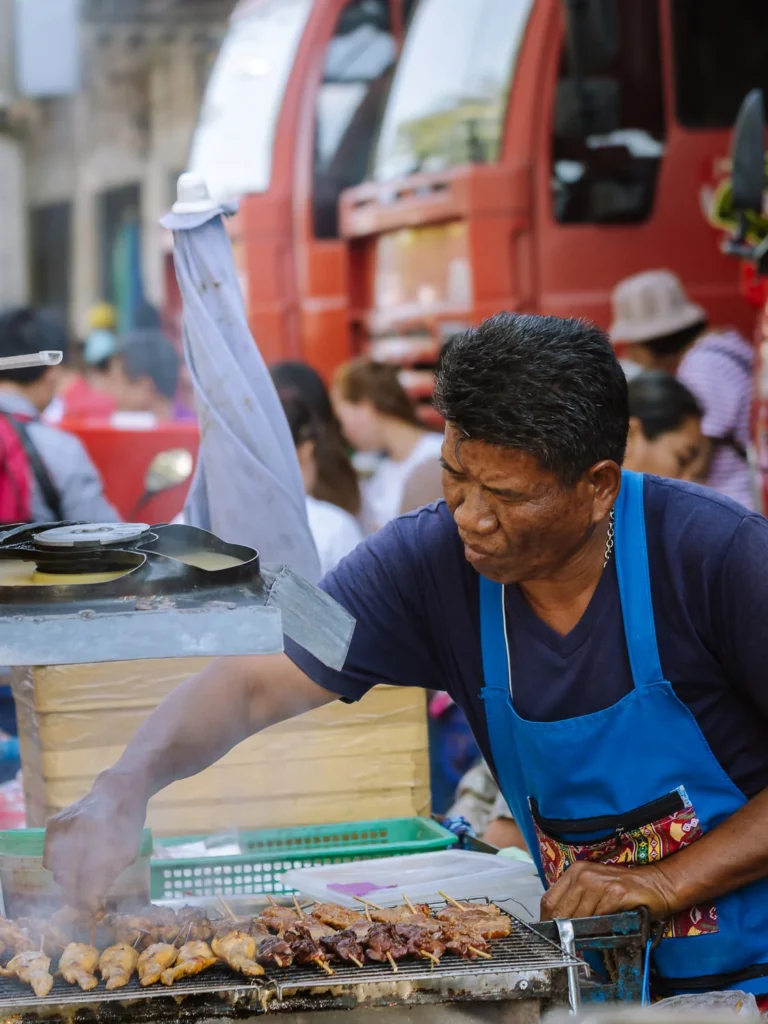
Chinatown is our preference. Yaowarat Road comes alive every evening with street food vendors, neon signs, seafood restaurants, and gold shops.
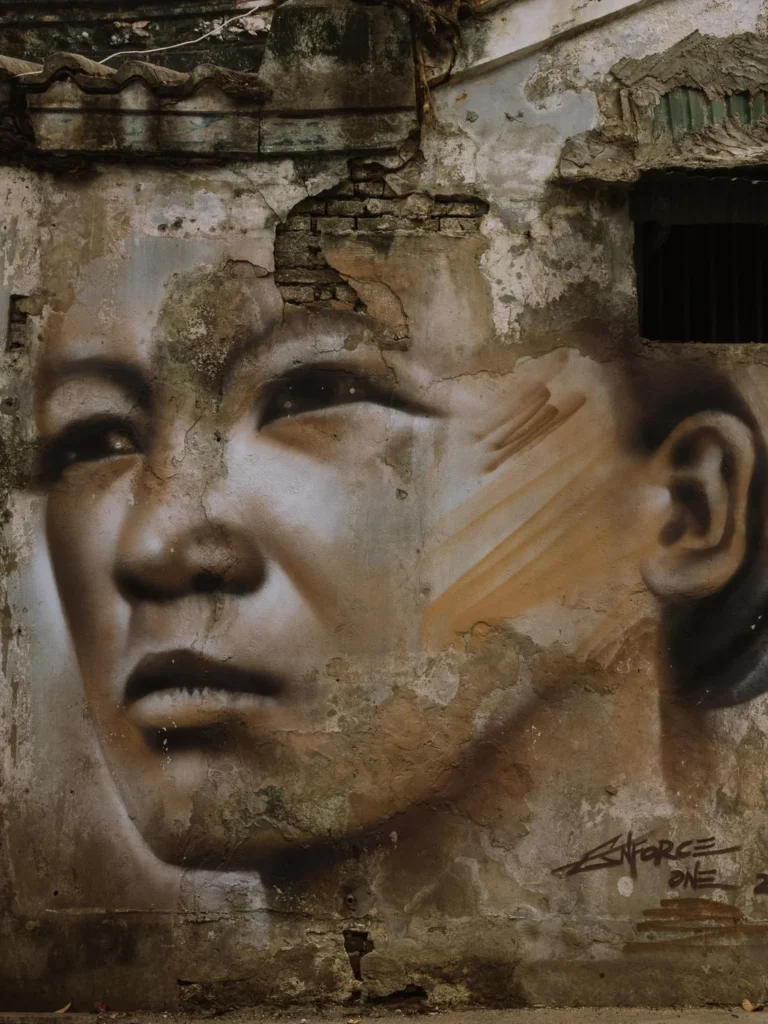
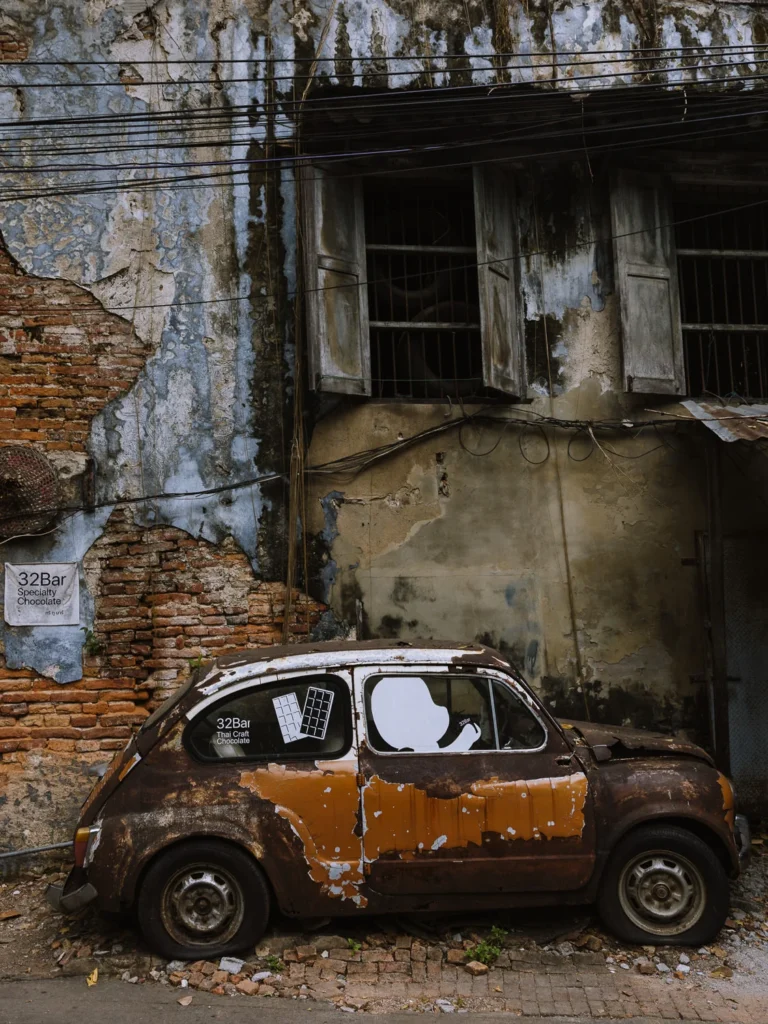
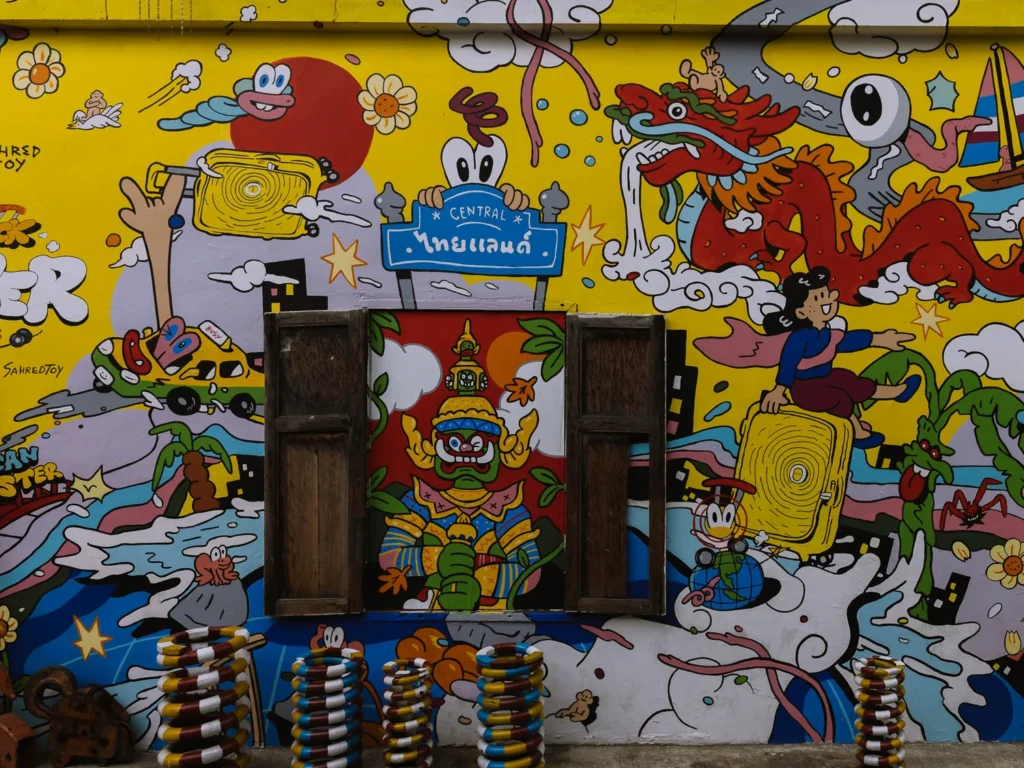
The area around Talat Noi, tucked between Chinatown and the river, has become one of Bangkok’s most interesting pockets. This neighbourhood is all about street art, independent coffee shops, and old shophouses converted into bars.
Banglamphu has a different kind of vibe. The backpacker reputation of Khao San Road puts some people off, but the streets around it, particularly Phra Athit Road along the river, are genuinely lovely.
This is where you’ll find converted shophouses, small galleries, and good cafés.
Both areas require accepting some trade-offs. Chinatown has limited BTS access (though the MRT helps). Banglamphu is noisy at night if you’re anywhere near the main strip.
Neither is as convenient as Sukhumvit, but they are great options if that’s not your main driver.
“Food Is the Main Reason I’M Going”
Stay in Chinatown.
We’re with you on this one, and this isn’t complicated.
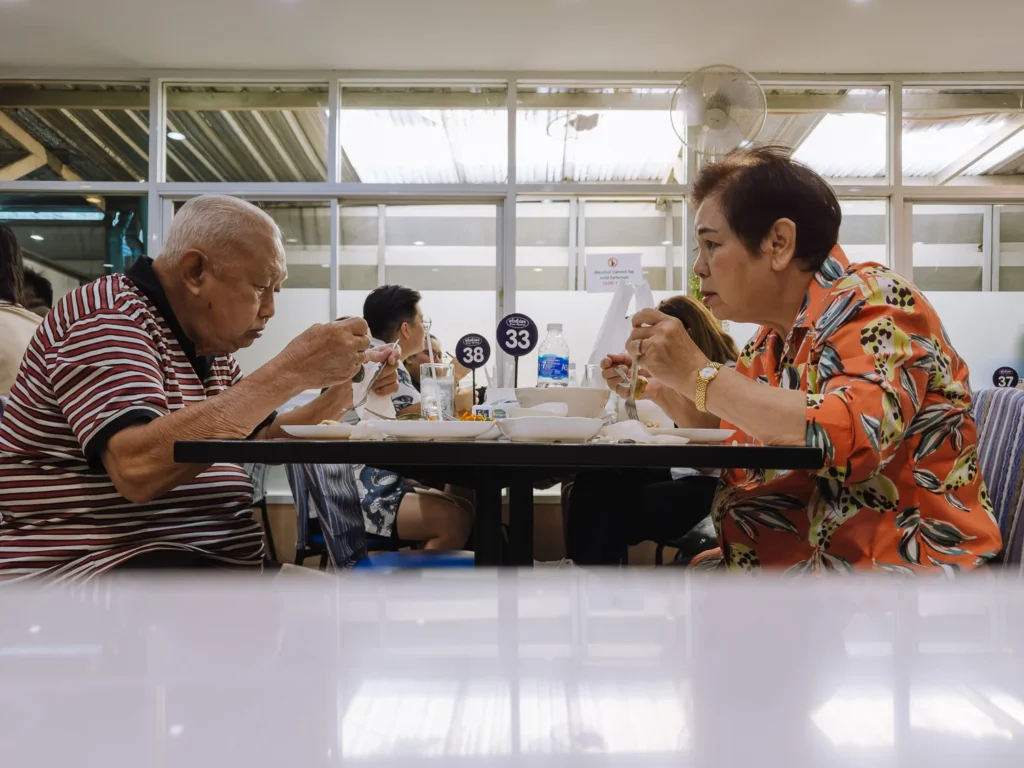
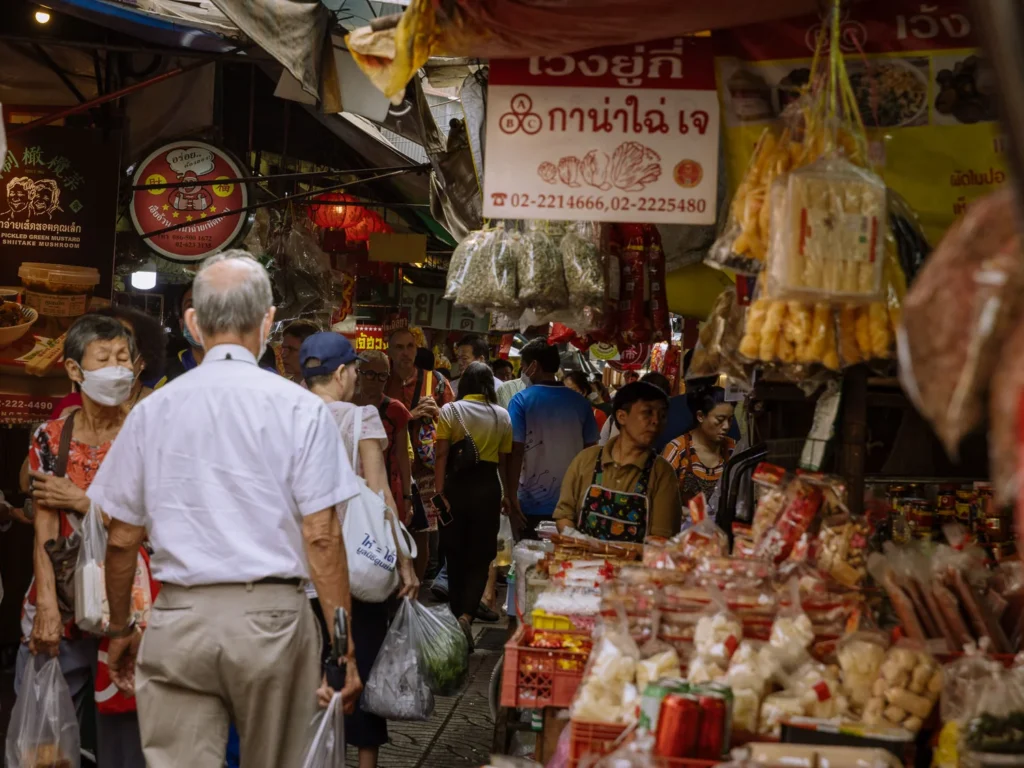
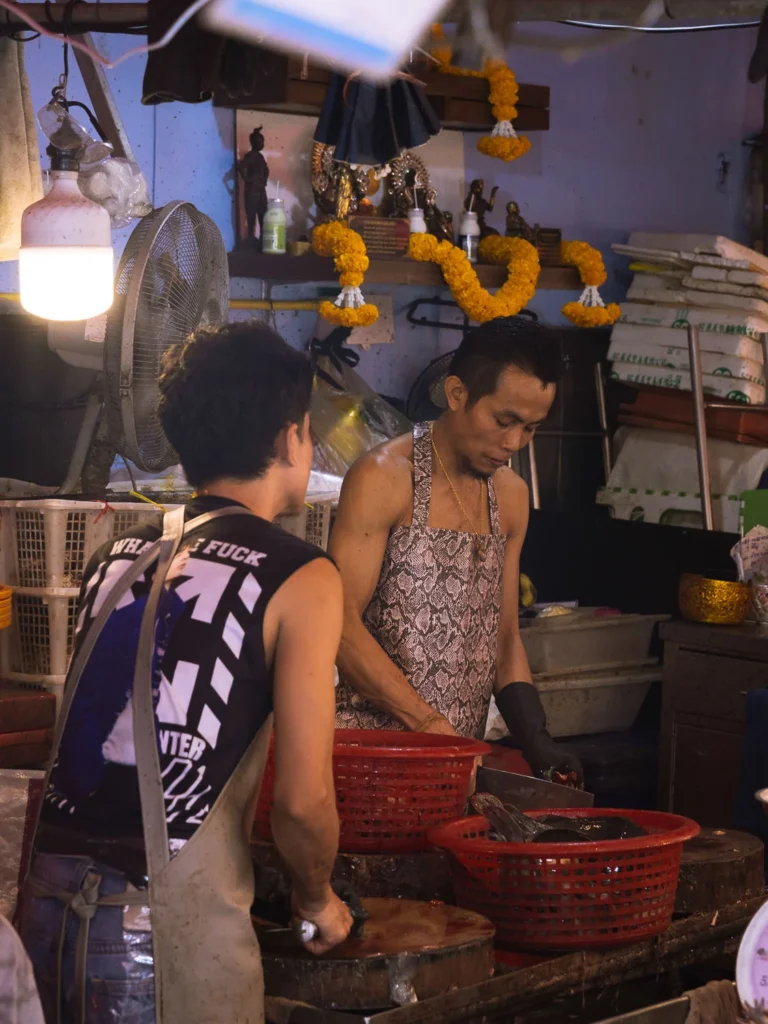
Bangkok’s Chinatown is one of the great street food destinations in the world, and staying here means it’s on your doorstep every evening.
Beyond Yaowarat, the surrounding streets have some of the city’s best dim sum, old-school noodle shops, and the kind of places that don’t appear on lists, but are full of locals at every meal.
There’s also easy access to the morning markets around the Old City and the Pak Khlong Talat flower market on the river, which is worth an early-morning visit if you’re already nearby.
Our food-focused picks for Chinatown: Shanghai Mansion puts you right on Yaowarat Road. ASAI Bangkok Chinatown is a newer, design-led option a short walk away with excellent MRT access.
“I Want Easy Transport and a Hassle-Free Base”
Stay in Sukhumvit.
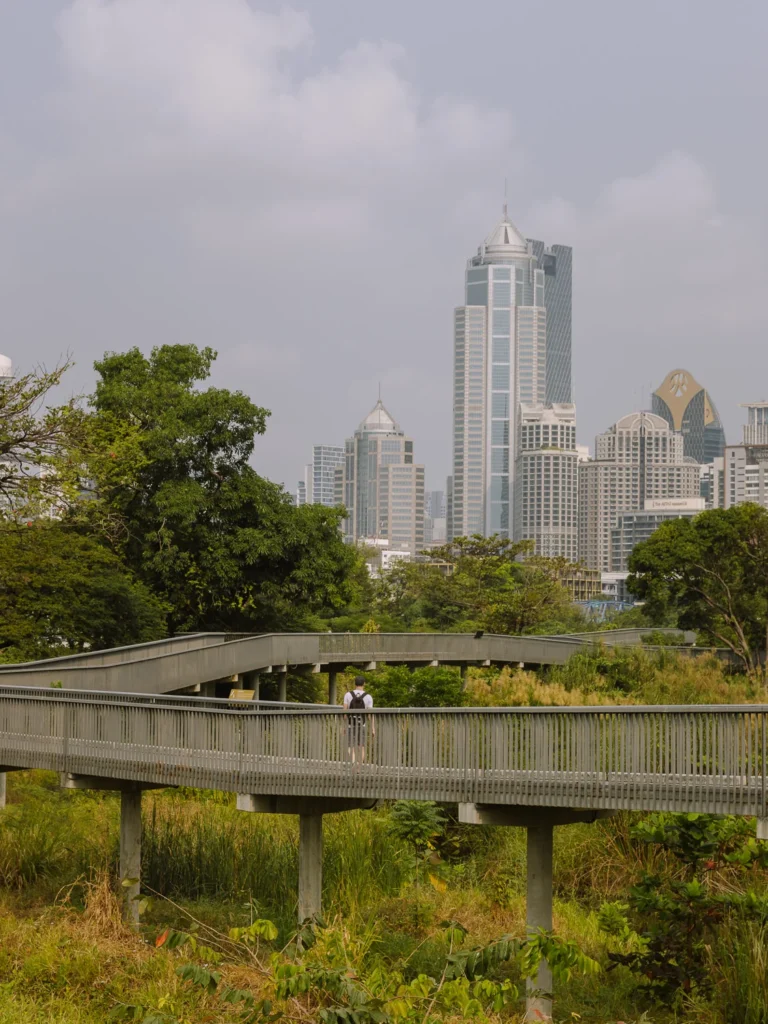
Sukhumvit is Bangkok’s modern commercial spine.
The BTS Skytrain runs directly above it, connecting you to the rest of the city quickly and reliably.
There are international restaurants, good shopping, and decent nightlife within easy walking distance. It’s the most straightforward version of Bangkok to navigate.
The area around Asoke and Phrom Phong is the best area of Sukhumvit. This is central without being chaotic, well-served by both the BTS and MRT, and close to some of the city’s better restaurants and food markets.
We’ll be honest about the trade-off: Sukhumvit can feel like you’re in any other international city.
If you want to soak up Bangkok’s unique culture, it’s probably not the right base for you.
But if you need efficiency or you’re just stopping off on a longer trip, this is probably a good call.
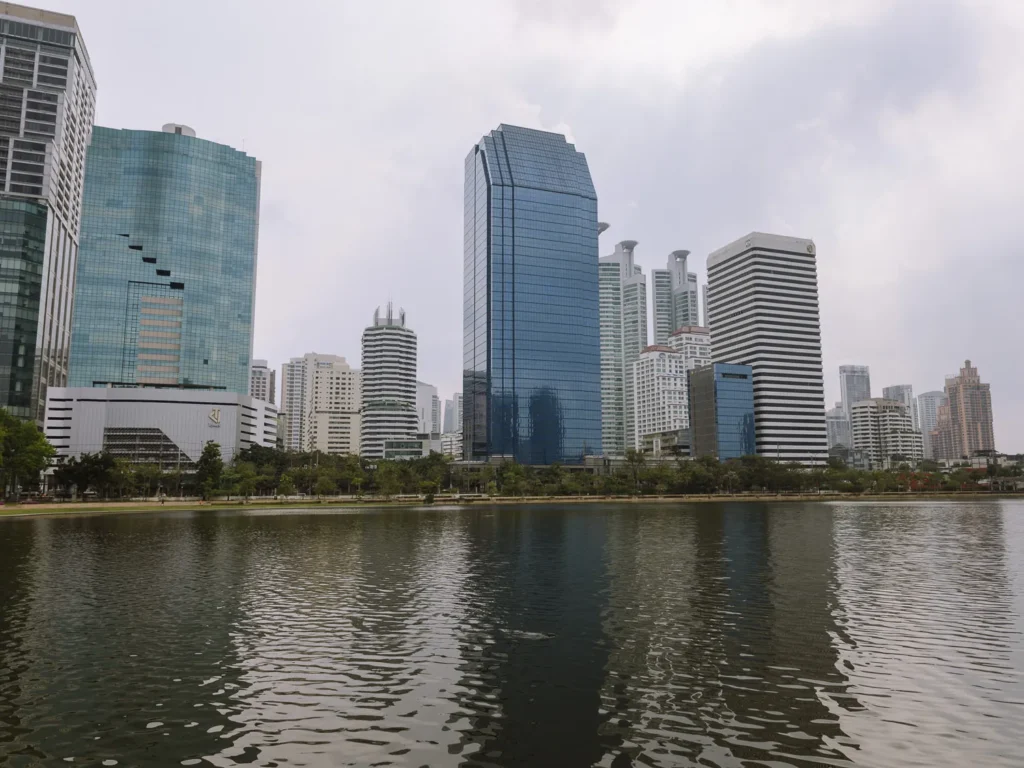
Good options at different price points: SO/ Bangkok is one of the city’s most design-forward hotels, on the edge of Lumpini Park. Bangkok Marriott Hotel Sukhumvit is polished and reliable, with an excellent rooftop bar. Ibis Bangkok Sukhumvit 4 is a sensible budget option with solid BTS access.
“I’M Travelling with Family or Young Kids”
Stay in Siam or Sukhumvit.
Bangkok with children is easier than it sounds, as long as you’re in the right area.
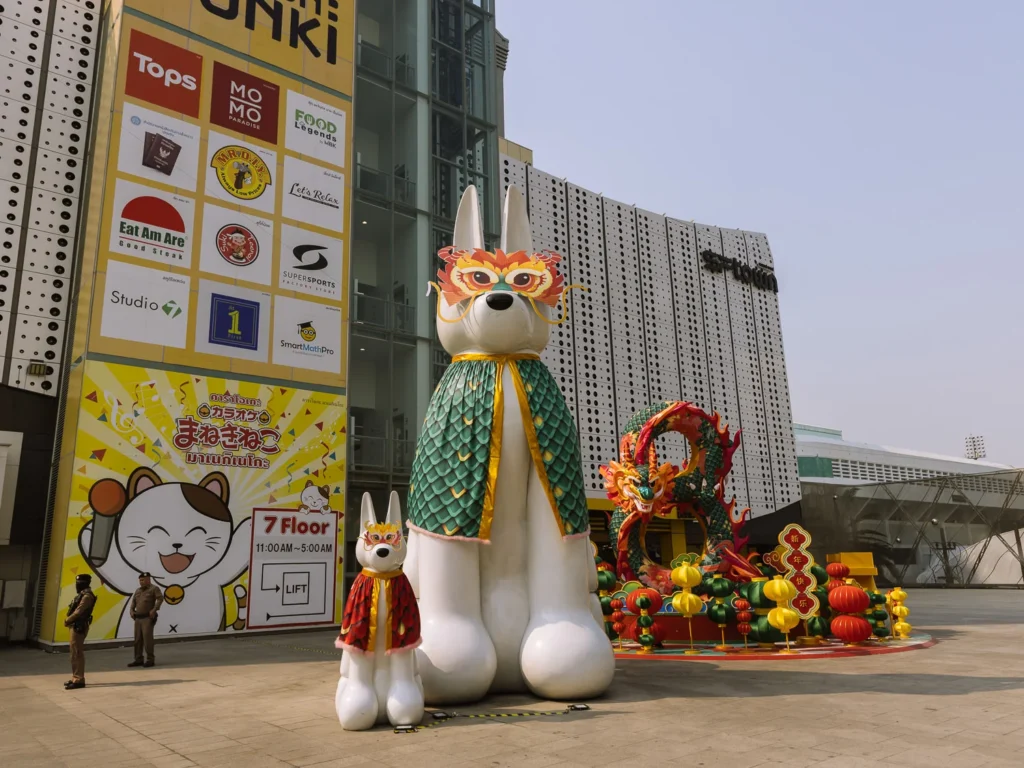
The big shopping malls in Siam — Siam Paragon, CentralWorld, MBK — aren’t just for shopping. They’re air-conditioned, easy to navigate, and have food courts that can handle those fussy little eaters.
SEA LIFE Bangkok and Lumpini Park are a short BTS ride away.
Speaking of BTS – this is the other thing that makes family travel in Bangkok manageable.
It’s clean, reliable, and avoids the traffic entirely. Staying anywhere within easy walking distance of a BTS station means you can move around the city with much less logistical strain.
Siam is probably the more family-focused base of the two; Sukhumvit gives you slightly more neighbourhood character while keeping the transport connections.
Novotel Bangkok on Siam Square is well-positioned and reliable for families. Pathumwan Princess Hotel connects directly to MBK via a covered walkway, which is particularly useful with kids in Bangkok’s heat.
“I Want Luxury — What’s Actually Worth the Money in Bangkok?”
Stay on the Riverside.
Bangkok is one of the best cities in the world for luxury travel, because the best hotels here are considered exceptional rather than just expensive.
We’re not luxury travellers, but we would navigate towards The Riverside properties if we were.
Three properties stand out.
The Mandarin Oriental Bangkok has been open since 1876, and it’s one of a handful of hotels in the world where the building itself is the experience.
The Peninsula Bangkok is more contemporary, with an exceptional riverside pool and a hotel ferry that connects you to the main sights.
Capella Bangkok is the newest of the three and arguably has the most stunning design. You could be forgiven for staying for the pool alone.
For luxury at slightly lower prices, Lebua at State Tower in Silom gives you one of the world’s most famous rooftop bars and excellent city views. Not quite the same as a river view, but a different kind of special.
“I’M on a Tight Budget but Don’t Want to Compromise on Location”
Stay in Banglamphu — but choose your street carefully.
The Khao San Road area has a reputation that undersells what’s actually around it.
Yes, the main strip is touristy and loud. But Banglamphu is also one of the best-located budget areas in any major Asian city.
You’re within walking distance of the Old City temples, close to the river ferry, and in a neighbourhood that blends real character with backpacker swag.
The key is to stay on a quieter side street rather than on Khao San Road or Soi Rambuttri. Both are very loud at night. A street or two back, and it’s a different experience entirely.
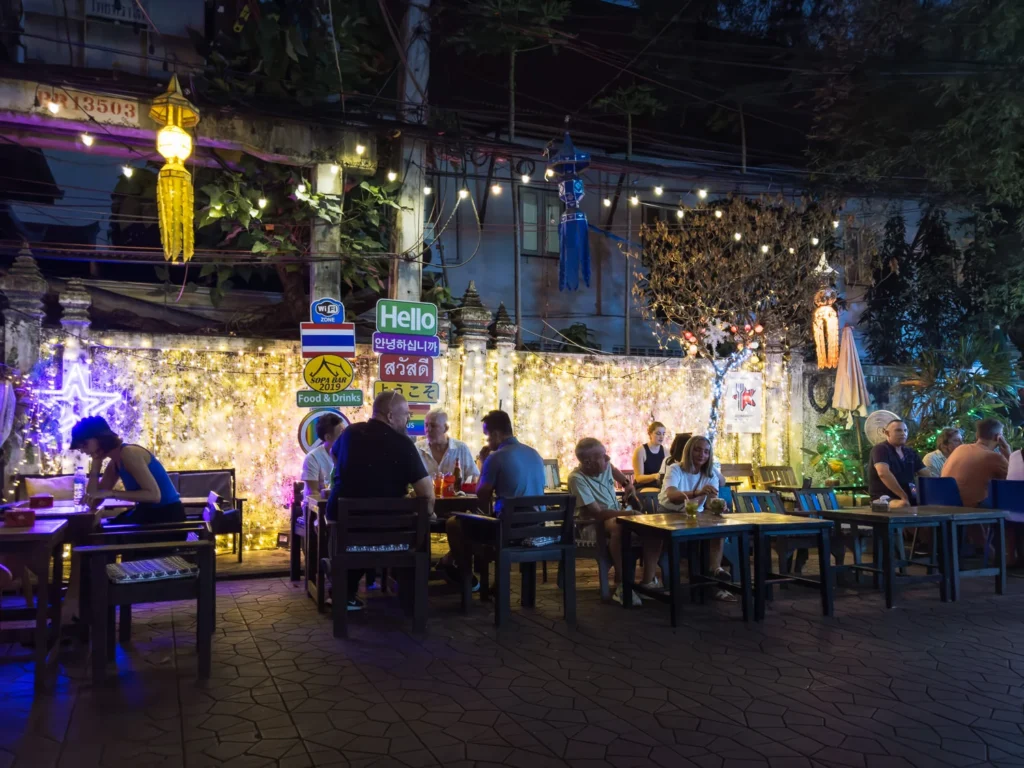
Phra Athit Road, which runs along the river a short walk from Khao San, is one of Bangkok’s nicest streets with converted shophouses, good coffee, and nice small bars
Staying anywhere near here gives you the budget price with a much better version of the neighbourhood.
Lamphu Treehouse sits in a quieter corner of Banglamphu, with a pleasant garden and rooftop terrace.
Old Capital Bike Inn is a step up in quality. This is a charming boutique hotel we’ve stayed in a few times and it really is good value for money.
“I’M Here for One Night Before or After a Flight”
Stay in Sukhumvit (near On Nut or Asoke BTS) or near the airport.
Bangkok has two airports. Suvarnabhumi (BVB) is the main international hub and is connected to the city by the Airport Rail Link. This runs to Phaya Thai and connects to the BTS.
On Nut station, at the eastern end of the Sukhumvit BTS line, is one of the most practical overnight spots. It’s close enough to the city to feel like you’re somewhere, but it’s easy to get to the airport for that morning departure.
If you’re purely transiting and have no interest in going into the city, the airport hotels at Suvarnabhumi are functional and well-run.
Ibis Bangkok Sukhumvit 4 is our practical pick for a straightforward night before a flight. It’s affordable, and within easy BTS reach of the Airport Rail Link.
“I Want Something Boutique and Full of Character — Not a Chain”
Don’t we all.
Bangkok has some exceptional small hotels that don’t fit neatly into any neighbourhood guide.
If character matters more to you than convenience, location or facilities, here are some hotels that are worth knowing about.
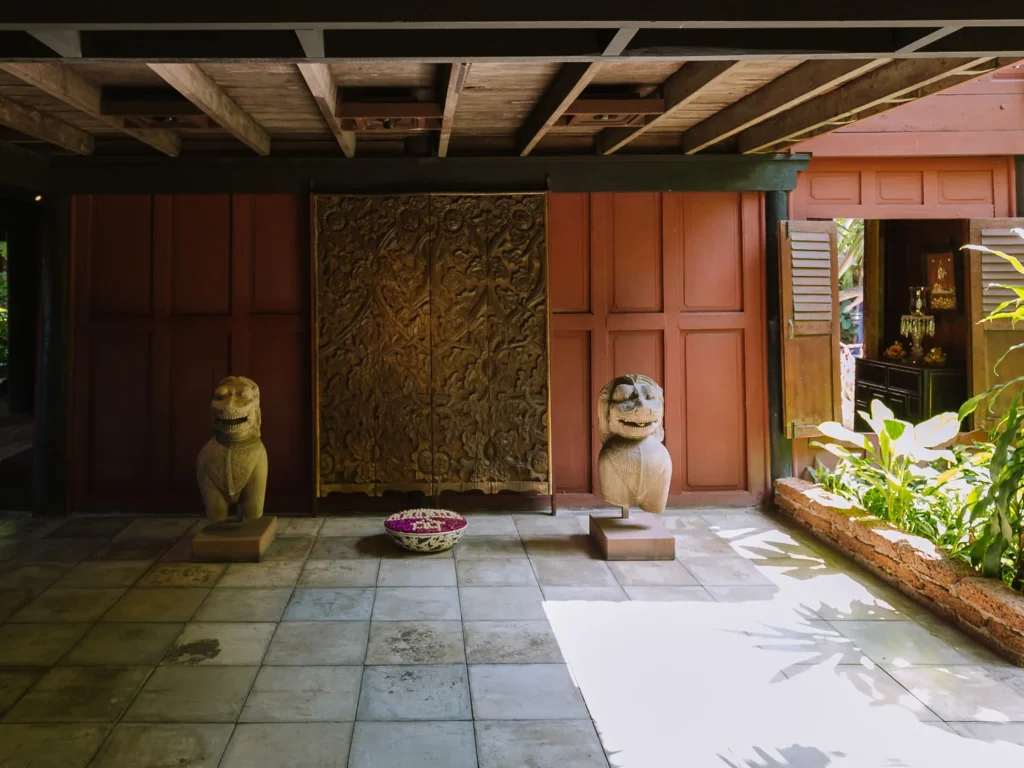
Arun Residence in Rattanakosin is a special kind of stay. They have 6 individually decorated rooms in a restored heritage building, with a direct view across the river to Wat Arun.
Praya Palazzo is a 100-year-old riverside mansion accessible only by hotel boat. Twenty rooms, a pool on the river, a different pace of life. It’s slightly further from the main sights than some options, but it doesn’t feel like anything else in Bangkok.
Loy La Long in Chinatown is a beautifully restored wooden shophouse right on the water. They have 12 rooms each with plenty of character.
Casa Vimaya Riverside Hotel offers a more affordable version of the riverside boutique experience, with direct river views and a small pool in a restored heritage building. Excellent value for what it is.
The Mistakes People Make When Booking in Bangkok
There are a few things that come up repeatedly from people who have stayed in Bangkok but not quite got it right.
Booking somewhere photogenic with no BTS access. Bangkok has a lot of beautiful hotels in areas that are a long taxi ride from everything. Check the nearest station before you fall in love on Instagram.
Underestimating traffic. Bangkok traffic is not like traffic anywhere else. During rush hour (roughly 7–9 am and 5–8 pm), the city can come to a halt. If you have a flight, a tour, or a reservation, build in far more time than you think you need.
Saving money on the hotel and spending it on taxis instead. We’ve all done this. A cheaper hotel 45 minutes from the main sights, taken twice a day for three days, quickly costs more in taxis than the difference in room rate.
Booking on Khao San Road itself without reading the noise reviews. The street is loud until late. A side street off it makes a huge difference. The reviews are usually clear about this so it’s worth reading them if you are looking in this area.
Assuming all riverside hotels face the river. Some “riverside” hotels face a canal, a car park, or another building. If the view matters, check the room photos carefully and look at where the hotel sits on the map.
Overlooking Chinatown because it looks chaotic on the map. It is a little chaotic. It’s also one of the most interesting places to be based in Bangkok. The MRT’s Wat Mangkon and Hua Lamphong stations have significantly improved access.
One Practical Step Before You Book
Pull up the BTS Skytrain map and find the nearest station to the hotel you’re considering.
Then check how far it is on foot. That single check will tell you more about how your trip will actually feel than any review.
If the hotel has no BTS or MRT connection, make sure you understand what that means in practice: you’ll be walking, or relying on taxis, tuk-tuks, or the river ferry to get anywhere.
That can be fine — some of the best places to stay in Bangkok have no rail connection — but if you’re looking outside the central areas, this could make getting to the major sites much slower.
Faq
What is the best area to stay in Bangkok for first-timers?
Rattanakosin (the Old City) puts you within walking distance of the Grand Palace, Wat Pho, and Wat Arun — the sights most first-timers come for. It’s quiet at night, which is the main trade-off.
Riverside is a strong alternative if the budget allows: you’re still close to the main sights via river taxi, and the hotels are exceptional.
Is Khao San Road a good place to stay?
Honest answer: the road itself, no. It’s loud, touristy, and there are better options nearby. The surrounding area — particularly Phra Athit Road and the quieter streets of Banglamphu — is genuinely good. Stay a street or two back, and it’s a very different experience.
Is Bangkok safe for solo travellers?
Yes, broadly. Bangkok is one of the best major Asian cities for solo travel. You should watch your belongings in crowded areas, be cautious of tuk-tuk drivers, but with a bit of common sense, it’s generally considered safe.
Solo female travellers generally find Bangkok manageable, though the areas around Khao San Road late at night can be rowdy.
How far is Sukhumvit from the Grand Palace?
About 7–8km as the crow flies. In a taxi during rush hour, it can take 45–60 minutes. By BTS to the National Stadium and then a taxi or tuk-tuk, it’s more like 30–40 minutes. If you’re planning to visit the temples every day from Sukhumvit, you need to factor that in.
What’s the difference between the BTS and MRT?
The BTS Skytrain is an elevated rail network covering the modern commercial areas of Sukhumvit, Silom, Siam, and the shopping districts.
The MRT is an underground line that covers some of the same territory but also extends into the older parts of the city, including Chinatown (Wat Mangkon and Hua Lamphong stations) and the main train station.
For most tourists, the BTS is the more useful of the two day-to-day, but the MRT significantly opens up Chinatown and the areas the BTS doesn’t reach. A map of both networks is worth keeping on your phone.
More Asia / South Pacific Guides
- Top things to do in Sydney
- Our 2-week Cambodia itinerary.
- The best things to do in and around Siem Reap.
- Where to stay in Bangkok – a guide for first-time visitors.
- Visit the beautiful Banaue Rice Terraces in the Philippines.
- The best things to do in Bangkok.
- Best areas to stay in Singapore.
- Our 3-day Bangkok itinerary.
- Our complete itinerary for Sri Lanka.

reader-supported
When you buy through links on our site, we may earn a small affiliate commission at no extra cost to you.
Thanks for your support // Paul & Mark