

Choosing the right neighbourhood in Buenos Aires will shape your entire stay. This guide explains the best areas for tourists, along with the pros and cons of each.
By: Paul Healy | Last Updated:
Buenos Aires is a collection of barrios — distinct neighbourhoods, each with its own architecture, facilities and atmosphere — that are loosely connected by wide avenues.
Palermo and San Telmo are both wonderful, but they feel nothing like each other. Recoleta is quiet and more European; the Microcentro is practical and central but not exactly romantic.
So where you stay in Buenos Aires can give your trip a very different feel. The important thing to know is that getting around the city, via Uber, is cost-effective and reliable. In that sense, it doesn’t matter too much where you decide to stay.
But some areas are better for different types of trips, which we explain below. The most important decision is probably atmosphere.
To help you decide, read this guide in conjunction with Things to do in Buenos Aires.
Quick Recommendations
Not sure where to start? Here’s a cheat sheet.
- Best for first-time visitors → Recoleta
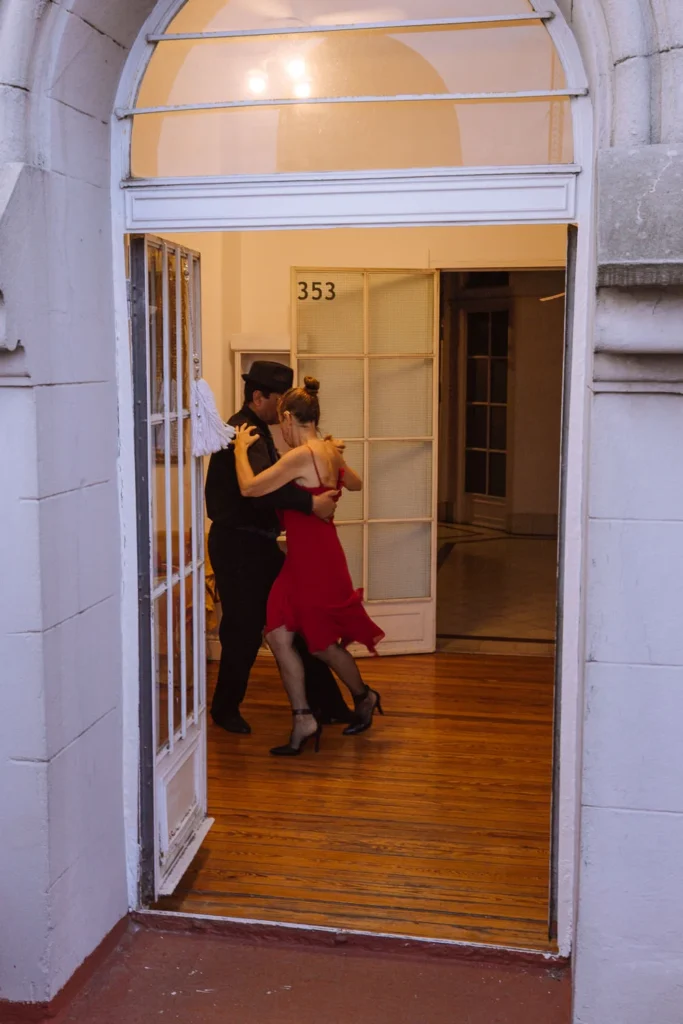
- Best for history, tango & local character → San Telmo
- Best for food, nightlife & longer stays → Palermo
- Best for modern luxury → Puerto Madero
- Best for convenience & sightseeing → Microcentro
- Best for off-the-beaten-path atmosphere → Villa Crespo
Before You Book: Getting Around Buenos Aires
Buenos Aires is big, but the tourist areas are clustered tightly enough that getting between them is quick and painless.
- Uber: We usually take public transport in cities, but Buenos Aires is an exception. Uber is by far the easiest, safest, most convenient and most reliable way to get around. It’s very cheap by North American and European standards.
- Subte (metro): Six lines covering the main areas. Useful for getting between Microcentro, Recoleta (Las Heras stop), and Palermo. San Telmo and Puerto Madero have limited metro access.
- Walking: Recoleta, Microcentro, San Telmo, and Puerto Madero are all within walking distance of each other. Palermo is about 15–20 minutes by Uber from Recoleta.
One practical note: La Boca is a famous, colourful neighbourhood worth visiting on a daytime guided tour — but it is not recommended as a base.
Where to Stay in Buenos Aires
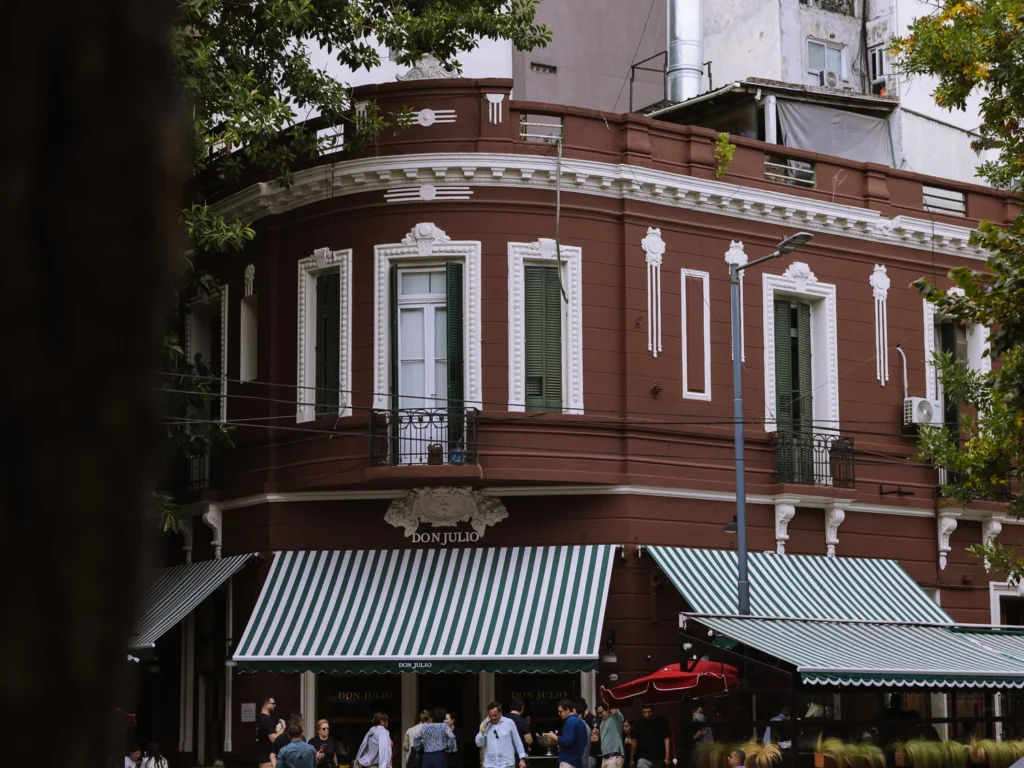
1. Recoleta
Best for: First-time visitors, families, couples, and luxury.
If this is your first time in Buenos Aires and you want to get a feel for the city quickly, Recoleta is a good place to start.
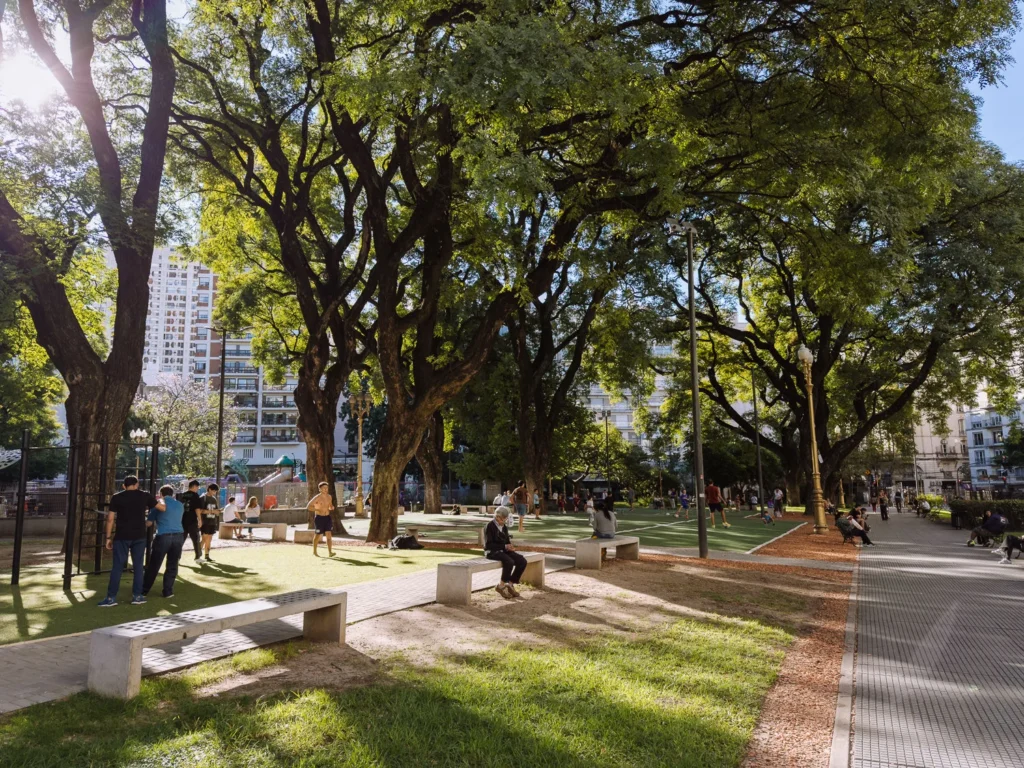
This is where the “Paris of South America” reputation comes from. Recoleta is the most elegant neighbourhood in Buenos Aires with wide, tree-lined boulevards, grand old mansions and leafy plazas.
Recoleta sits sandwiched between Microcentro and Palermo, putting you within 15 minutes’ walking distance of the downtown sights and a short taxi ride from San Telmo.
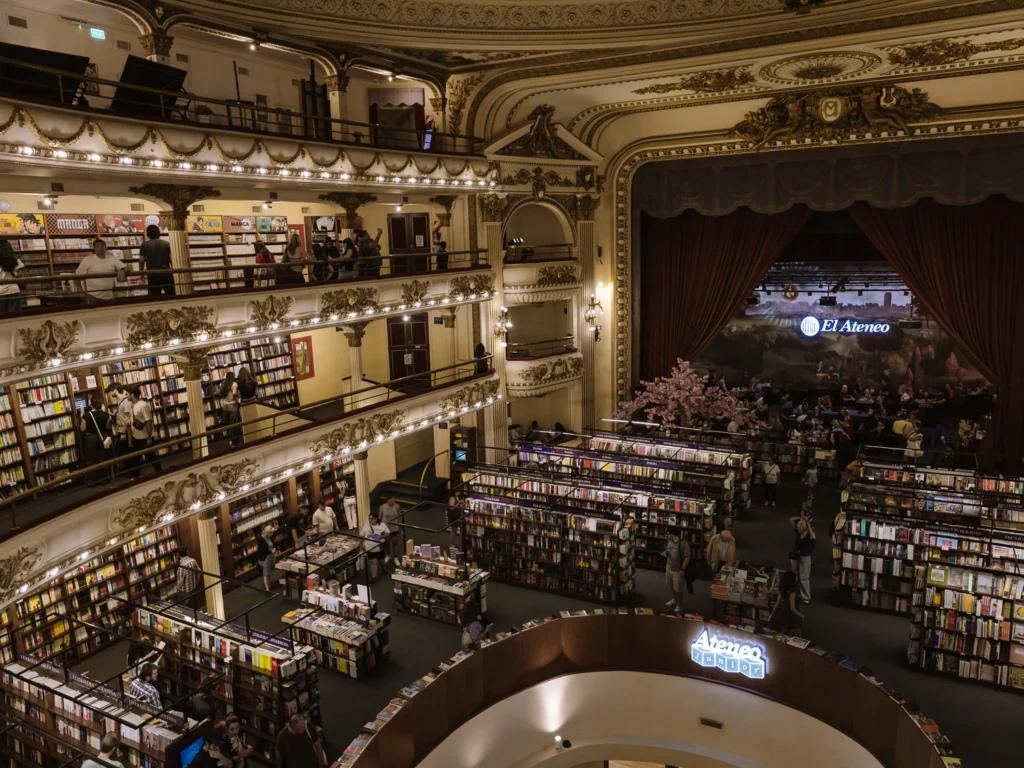
The most famous landmark in the area is Recoleta Cemetery, and there’s also the El Ateneo Grand Splendid and the Museo Nacional de Bellas Artes.
Recoleta also has the best concentration of quality hotels, but it’s the most expensive neighbourhood for accommodation.
What Recoleta is not: It’s not bohemian, it’s not a nightlife hotspot, and if you’re looking for energy and chaos, it may feel a little sedate.
Vilon Hotel (where we stayed) is a smart, cosy hotel with spacious rooms and balconies. The splurge option would be Alvear Palace Hotel, and Urban Suites Recoleta is a good mid-range option.
2. San Telmo
Best for: Younger travellers, history lovers, tango enthusiasts, and backpackers.
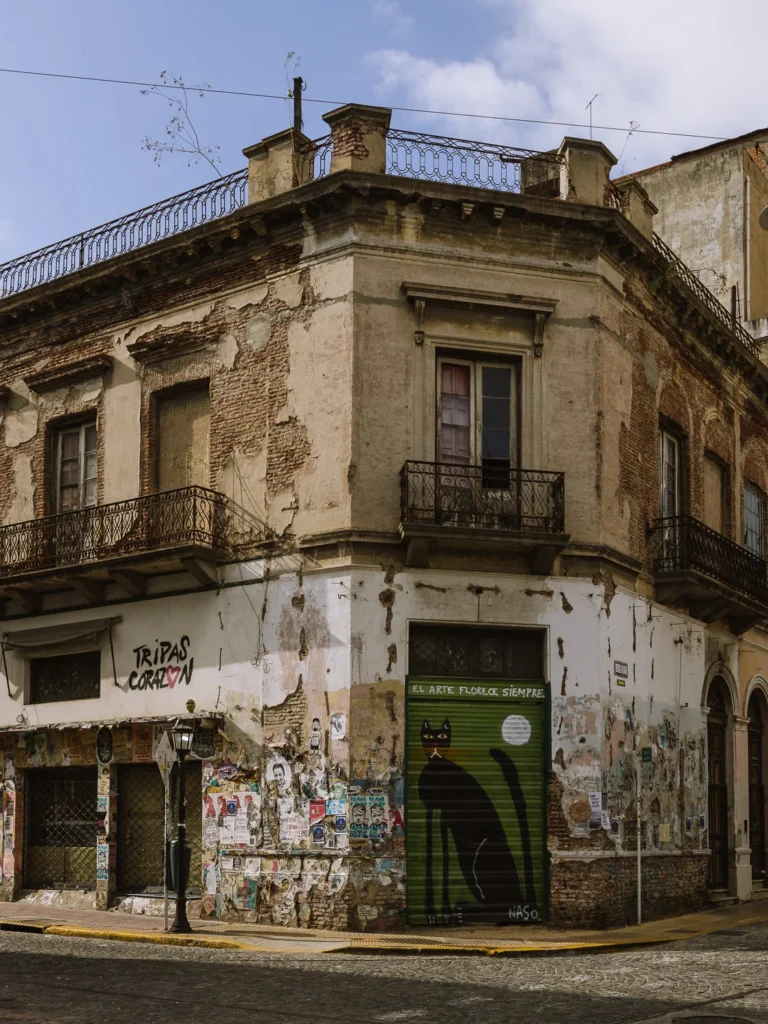
San Telmo is the oldest neighbourhood in Buenos Aires, and for us, the one that felt most like what we imagined.
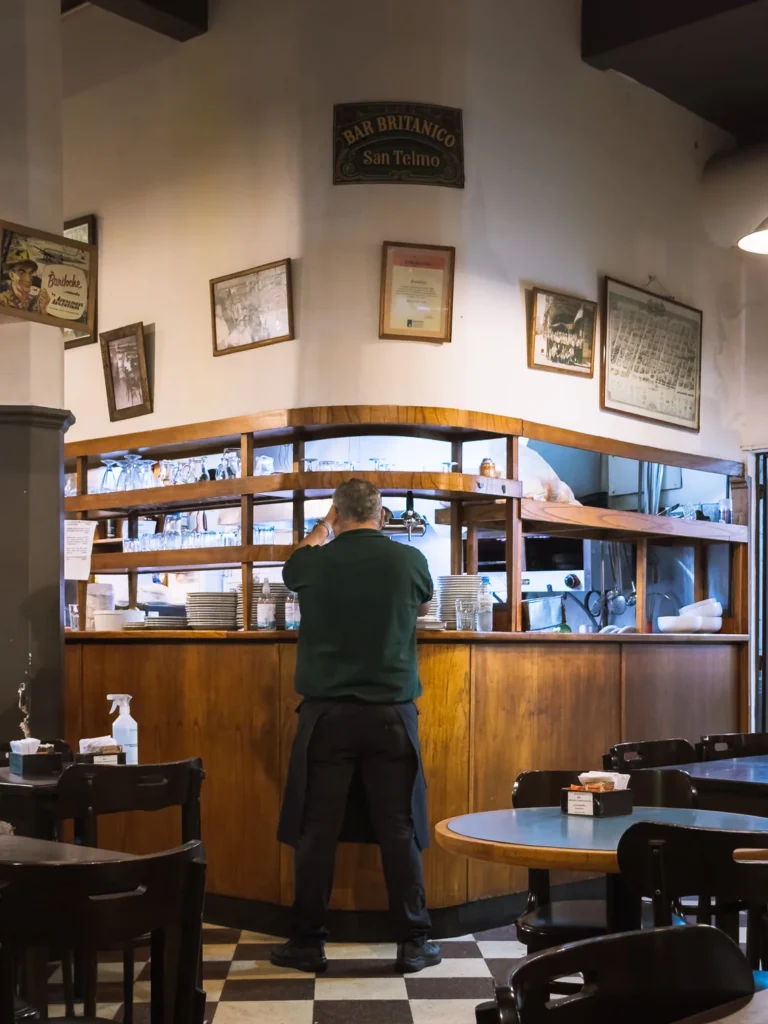
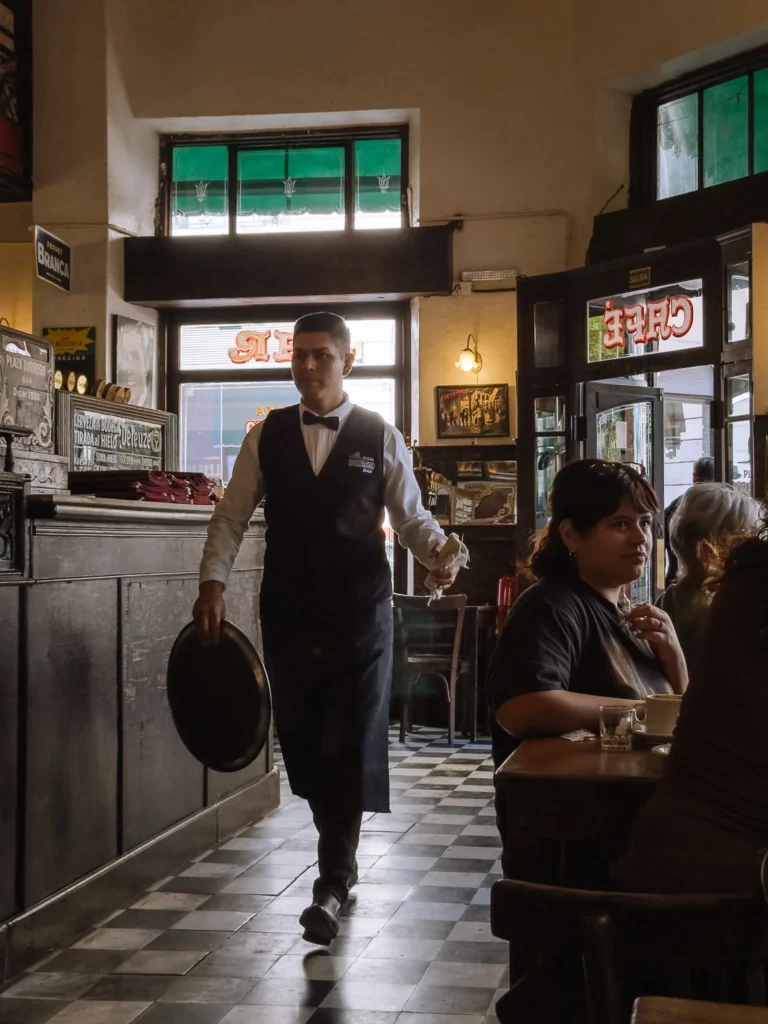
It’s all cobblestone streets, crumbling colonial buildings, antique dealers, and dusty wine bars.
The neighbourhood is centred around Mercado de San Telmo, a 19th-century market building full of interesting eateries.
On Sunday mornings, a regular market called Feria de San Telmo fills Calle Defensa with artisans, antiques dealers, and musicians. There are bohemian bars, tango, plenty of restaurants and great live music venues.
San Telmo is also the most convenient neighbourhood for sightseeing. You can walk to Plaza de Mayo, La Boca (daytime only), Microcentro, and Puerto Madero without needing any transport.
The trade-off: Some parts of San Telmo are gritty, and petty theft is something to be mindful of in touristy areas.
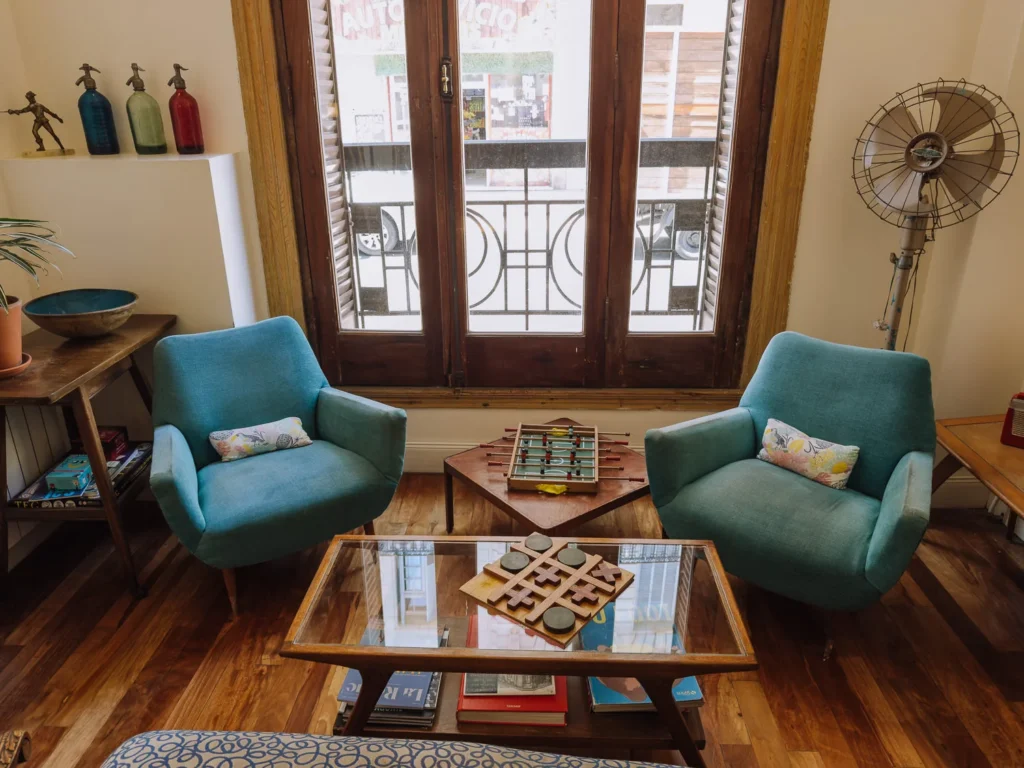
We stayed at L’Adresse Hôtel Boutique, which we really loved. Anselmo is a beautiful high-end option, and Scala Hotel is a solid 4-star choice with a wonderful rooftop terrace.
3. Palermo
Best for: Food lovers, night owls, longer stays, travellers in their 20s–40s.
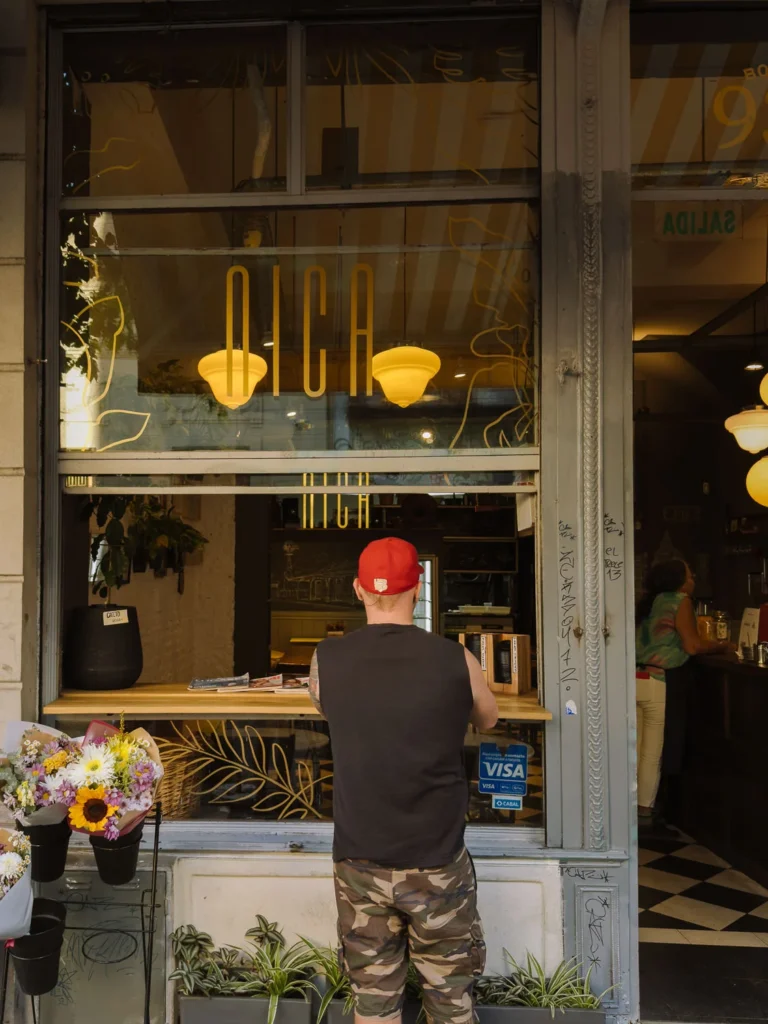
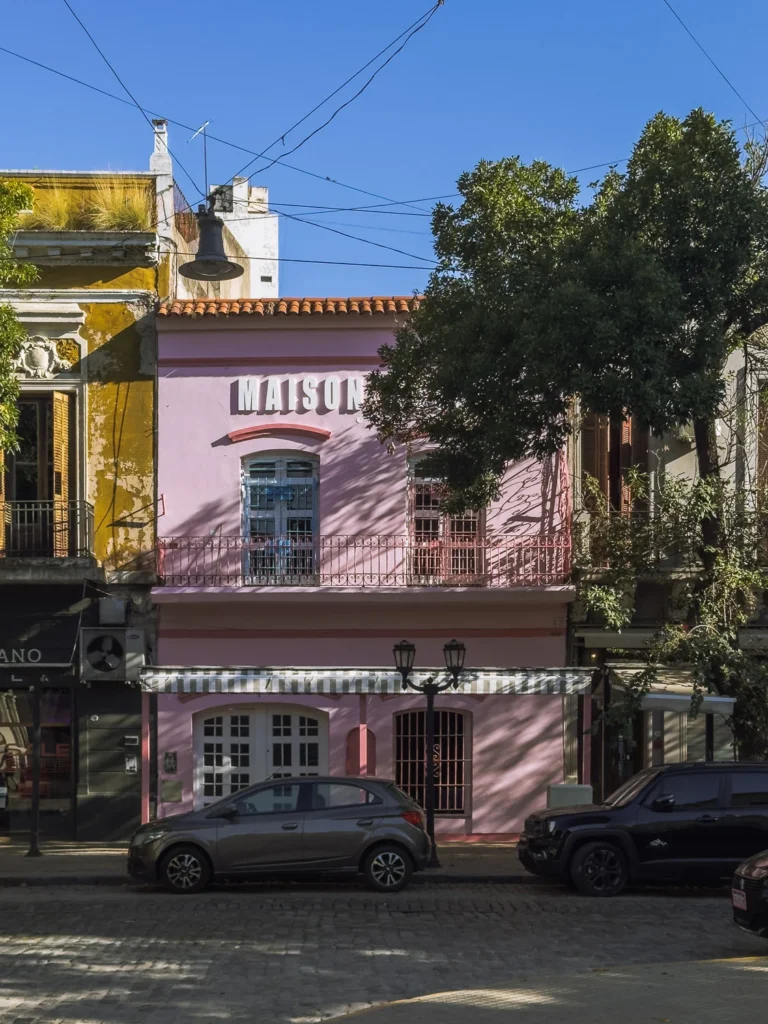
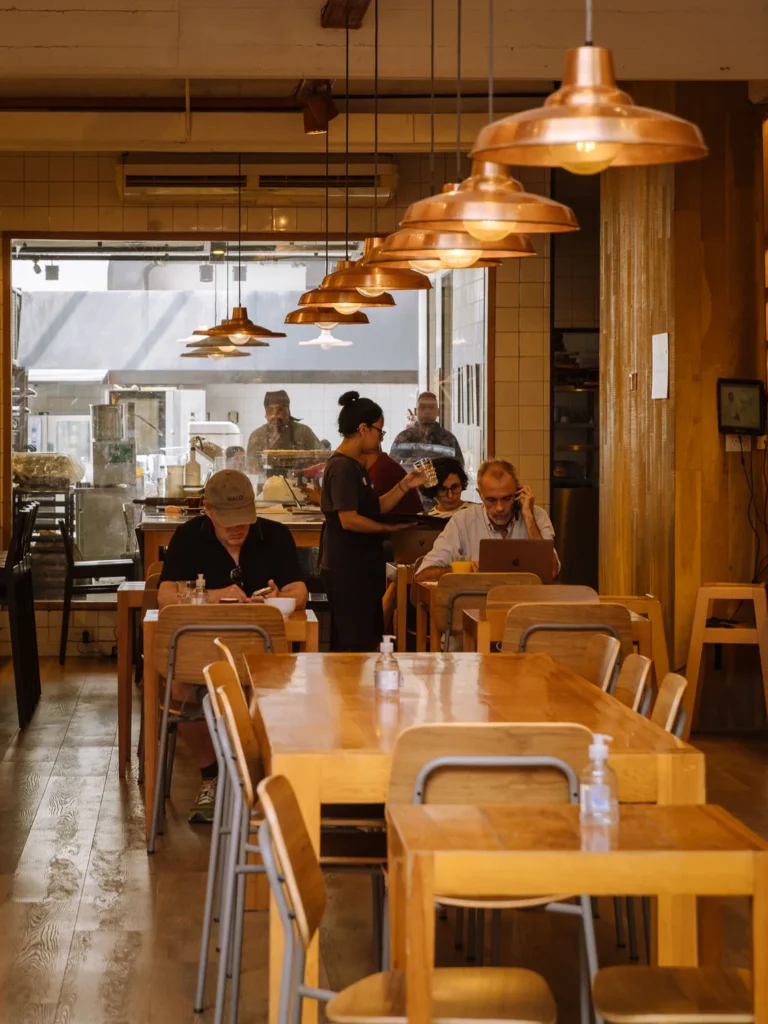
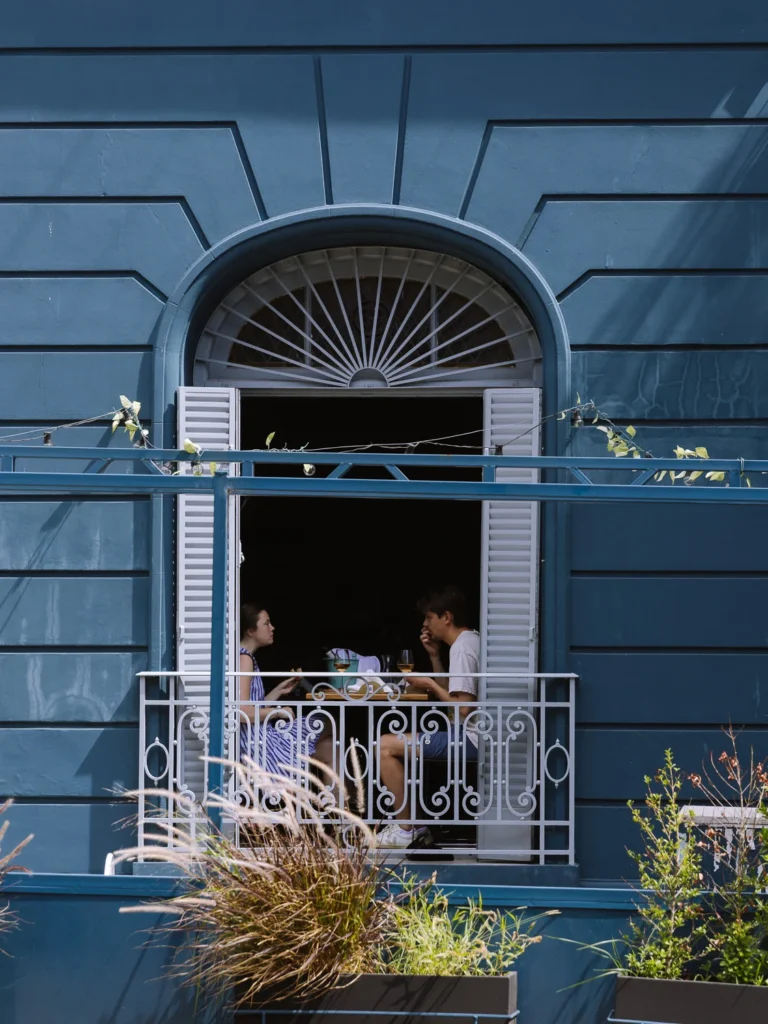
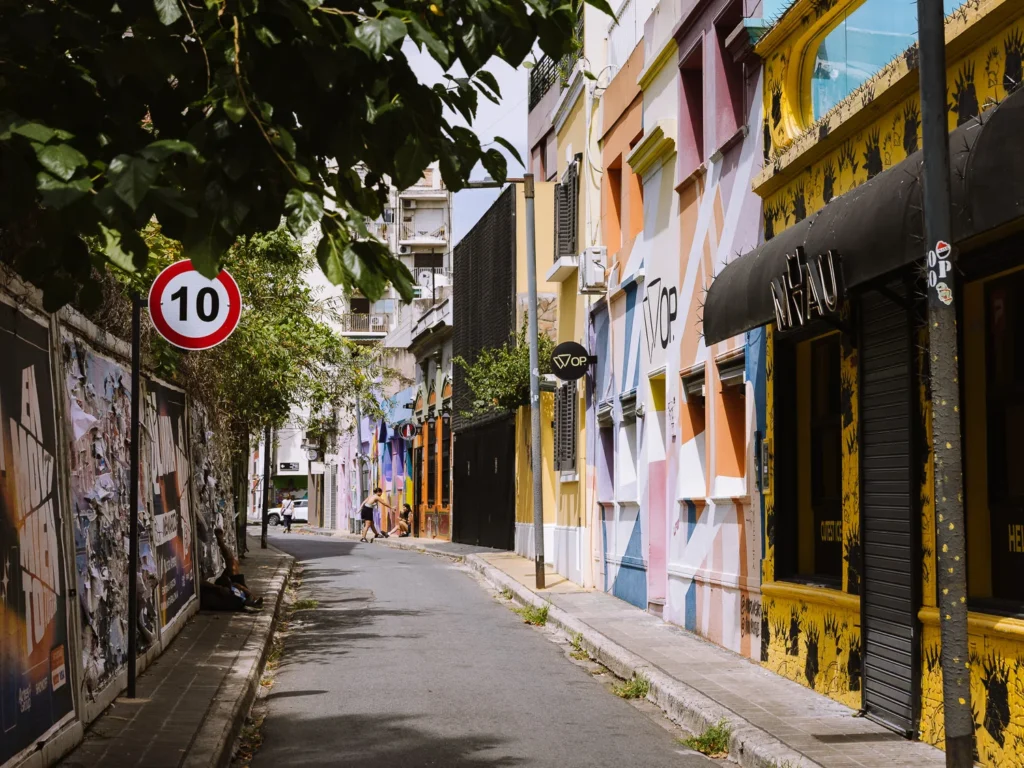
Palermo is the most contemporary side of Buenos Aires with leafy streets peppered with trendy cafes, art galleries, concept stores, boutiques and most of the city’s upscale restaurants.
The neighbourhood breaks into several sub-districts, which you need to know about:
- Palermo Soho – centred around Plaza Serrano, this is where you’ll find cocktail bars, restaurants, and nightlife.
- Palermo Hollywood – further north and more residential, with fewer crowds, a broader mix of restaurants and cafes.
- Palermo Chico – the quietest and most exclusive pocket, near the Palermo gardens and MALBA. This area is not as good as the other two for tourists, in our opinion.
The main caveat: Palermo is further from the city centre, and you’ll need an Uber to get to the main sights in Microcentro, San Telmo, and La Boca.
Legado Mítico has just 11 rooms themed around a figure from Argentine history. Miravida Soho Hotel & Wine Bar is a beautiful, converted 1920s mansion, and Shoshana Hotel Boutique is well-located between Soho and Hollywood.
4. Puerto Madero
Best for: Modern luxury hotels, and a polished, international atmosphere
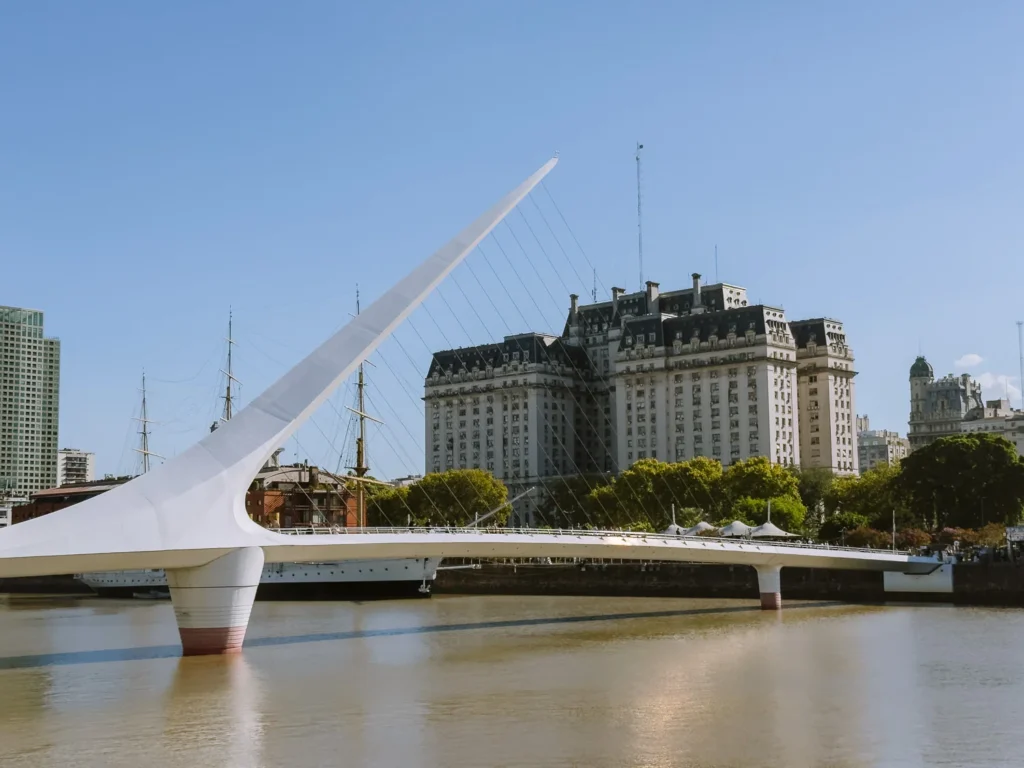
Puerto Madero was a derelict industrial dockland that has been restored into a gleaming waterfront district with glass skyscrapers, renovated brick warehouses, high-end restaurants, and the city’s most expensive hotels.
To be honest, we didn’t love the area, and there’s no real reason to spend much time there. It’s clean, organised, quiet, generic, and not really Buenos Aires.
But it’s not a bad option for a base.
Puerto Madero is close to Microcentro and easy to walk to from San Telmo, and it has a wide choice of modern luxury hotels. If you are travelling with kids, this would be our top recommendation.
What Puerto Madero is not: It’s polished and safe, but not authentic in any way. Public transport connections are also limited.
Faena Hotel is one of the most extraordinary hotels in South America with a spa, pool and the most acclaimed tango show in the city. Madero Hotel is beautifully designed with a rooftop pool, and SLS Buenos Aires is another wonderful modern splurge.
5. Microcentro (Downtown)
Best for: Short stays (1–2 nights), sightseeing convenience, budget options.
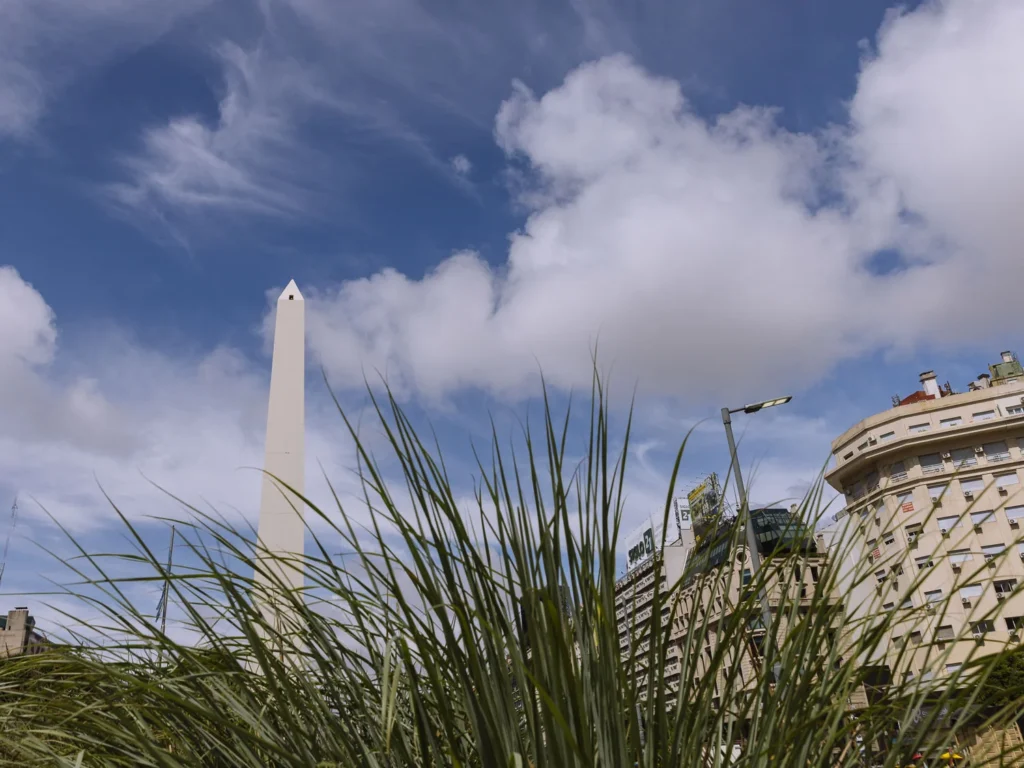
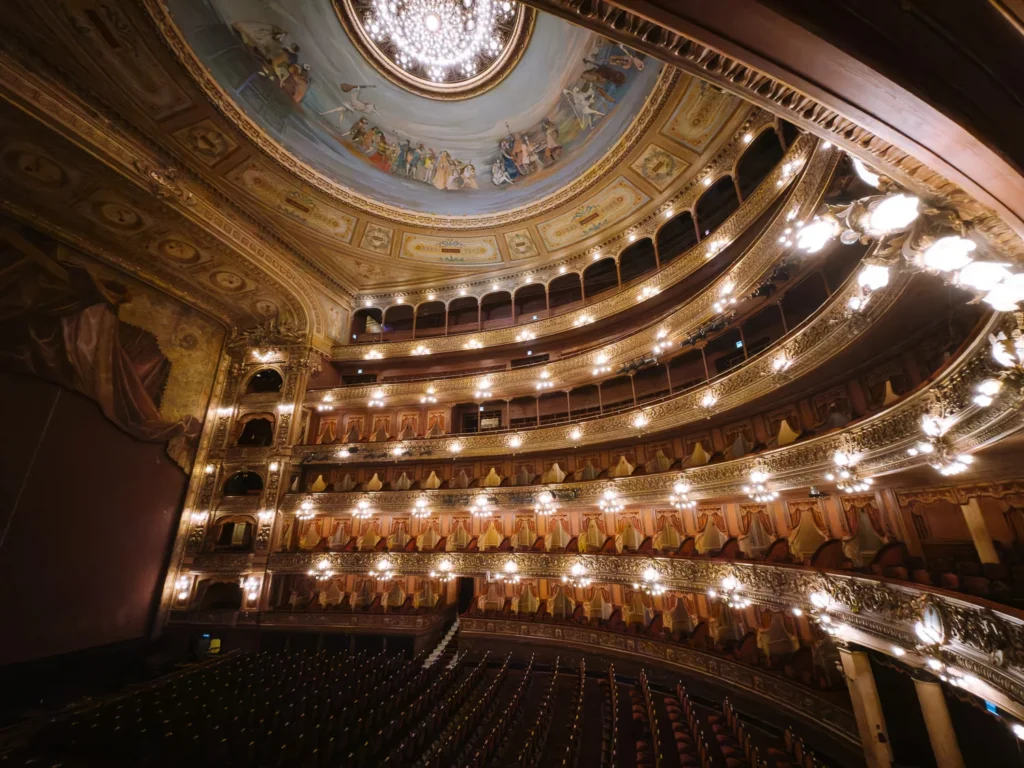
Microcentro is the commercial and financial heart of Buenos Aires, with many of the city’s historic sites, including the Obelisco, Plaza de Mayo, and Teatro Colón.
If you are short on time and want to see the main tourist attractions, this is the area for you. It is functional rather than romantic, though Avenida de Mayo is lined with Beaux-Arts architecture and is home to the historic Café Tortoni.
Hotels here are among the most affordable in the city, and you can walk to most major landmarks without needing transport at all.
The big downside: Microcentro is very quiet in the evenings when the workers go home, and there are very few restaurants or nightlife options. If you’re spending only one or two nights in Buenos Aires, Microcentro makes practical sense.
Tango de Mayo Hotel is a design-led boutique hotel all about tango, while Hotel Facón Grande is a straightforward, well-priced hotel. V&S Hostel Club is a well-regarded budget option.
Mistakes to Avoid
Basing yourself in La Boca. The neighbourhood’s colourful Caminito street is one of Buenos Aires’ most photographed spots and absolutely worth a daytime visit — but it’s not considered safe for tourists at night.
Choosing Microcentro purely for centrality. Recoleta is equally central, far more pleasant, and walkable to the same sights.
Underestimating petty theft. Buenos Aires is generally safe, but distraction scams and pickpocketing target tourists in all the main neighbourhoods. Use Uber rather than hailing random taxis, and don’t keep valuables visible.
Booking in Palermo for a short trip. Palermo is great, but for a short trip where you want to see the main sights, the location is a problem. You will spend more time and money getting around than you would expect. For three days or fewer, Centro or Recoleta make much more practical sense.
Assuming you can walk everywhere. You can walk within neighbourhoods, but you cannot easily walk between many of them. The distance from San Telmo to Palermo is over four kilometres.

reader-supported
When you buy through links on our site, we may earn a small affiliate commission at no extra cost to you.
Thanks for your support // Paul & Mark