

The picture-perfect Monument Valley is one of the most-filmed locations on Earth. But it’s also a land rich in Navajo culture and breathtaking scenery. Here is our complete guide to visiting Monument Valley
By: Mark Barnes // Last Updated:
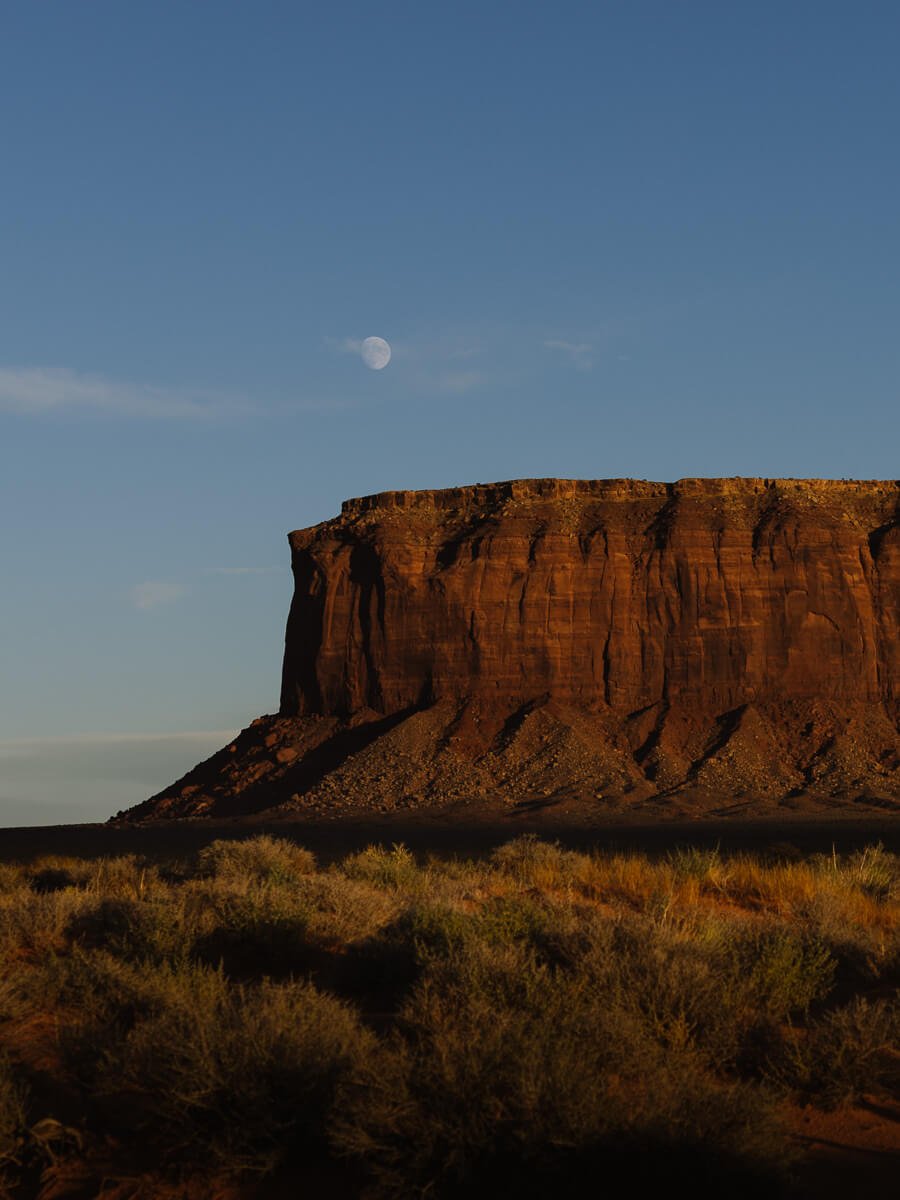
Monument Valley is a red-sand desert region on the Arizona-Utah border, famous for its towering sandstone formations. It’s an ancient and rugged land, formed into beautiful designs by the forces of erosion and uplift.
The Navajo Tribe were the first group of people to settle in Monument Valley. Today, they are custodians of the lands, providing a unique experience for visitors.
From the moment you first glimpse the iconic shapes of Monument Valley, it’s easy to see why film producers are seduced by it. This is a land of sandstone masterpieces Surging from a red horizon
But beyond the bewitching buttes and mesmerising mesas, there’s a host of rewarding things to do in Monument Valley.
Our guide to visiting Monument Valley includes the unmissable sights, the best tours plus what to see around this special place.

Know Before You Go
Here are some interesting facts about Monument Valley and important information to help you plan your trip.
What Is Monument Valley?
Monument Valley is a beautiful place on the Arizona-Utah border. It has striking red sandstone formations that stand tall in the flat, dry desert.
The area is deeply significant to the Navajo people, who have inhabited these lands for centuries.
Its breathtaking landscapes have captured the imagination of artists, photographers, and filmmakers.
Some of the movies shot here include Forrest Gump, Mission: Impossible II, Back to the Future, and Thelma & Louise.


Geology of Monument Valley
Monument Valley’s distinctive landscape is the result of millions of years of erosion of an iron-rich sedimentary rock layer. Water and wind have chiselled away at softer rock layers, leaving the buttes, mesas, and spires you see today.
- Mesas – The first stage of erosion is a mesa, which is a rock formation that looks like a table.
- Butte – The second level of erosion, a butte, is an isolated hill, smaller than a mesa, often with vertical sides and a flat top.
- Spire – The final stage of erosion, a spire is a thin, free-standing column of rock.
Monument Valley (sometimes referred to as Oljato-Monument Valley) is situated within the Navajo Nation Reservation (also known as Navajoland).
In 1939, as its fame began to grow, the Navajo people set aside 92,000 acres of land to create the Monument Valley Navajo Tribal Park.
The park is the heart of Monument Valley and contains most of the distinctive mesas, buttes, and spires.


Map: Monument Valley Attractions
The Monument Valley Tribal Park is shaded in green on the map below, with each of the main attractions in a different colour.
- Brown – Monument Valley Tribal Park Entrance Gate and The View Hotel
- Blue – 17-mile Scenic Drive
- Red – Wildcat Hiking Trail
- Purple – Backcountry guided tour destinations
Click on the top right corner to open our map in your Google Maps app. Click the star next to the title to save it to your Google account.
What to Do in Monument Valley
Blessed with amazing scenery and rich in Navajo culture, Monument Valley has plenty of great things to do. Here are some things we think you shouldn’t miss while in the area.
1. Take a Sunrise or Sunset Tour
We highly recommend joining a sunrise or sunset tour at Monument Valley, as there are several experiences you can’t get without a guide. There are 3 great reasons to take a tour:
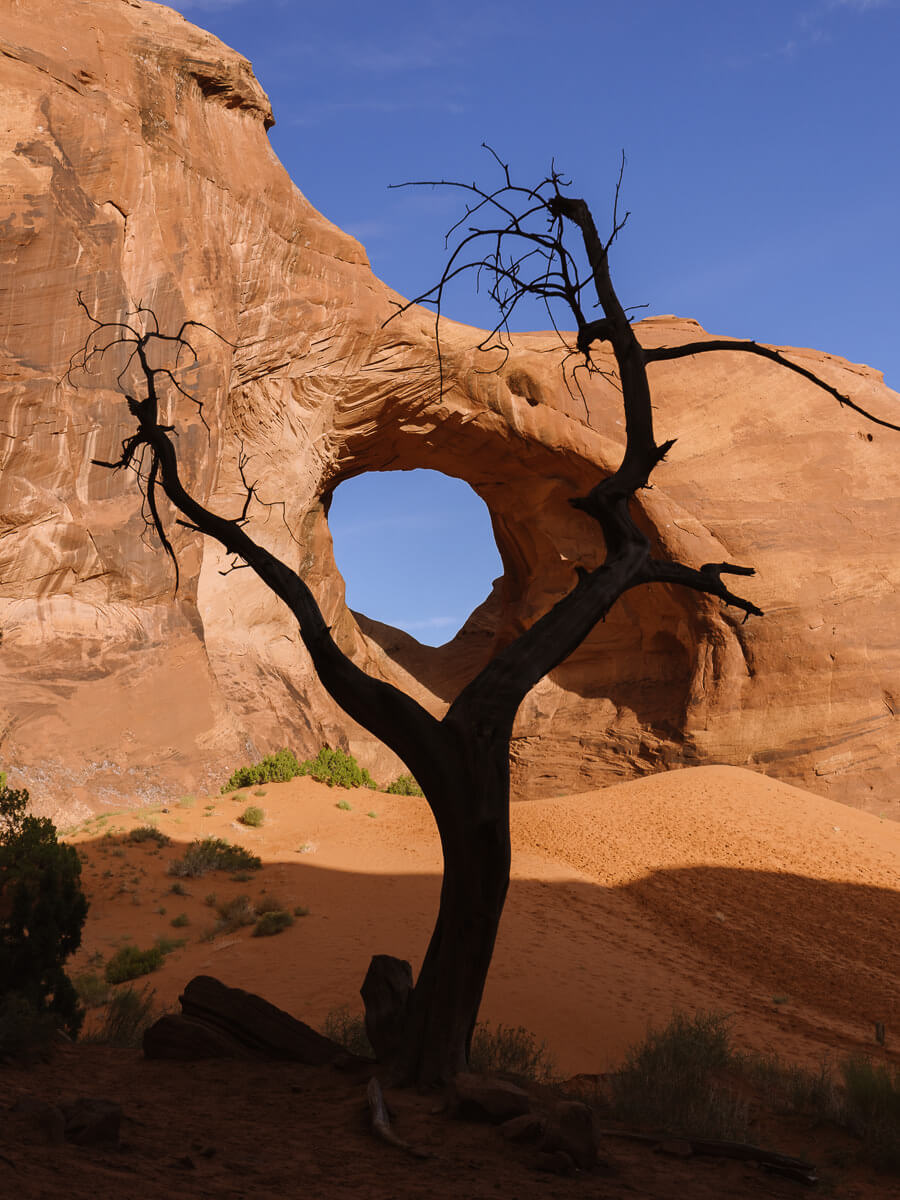
- Some sights are inaccessible without a guide. Back Country tours visit sights you cannot reach on your own, including the Ear of the Wind and the smooth, sweeping rock of Moccasin Arch and Sun’s Eye.
- The best views are not open for sunrise and sunset. While you can take in sunrise and sunset views from the View Hotel, accessing the best locations for sunrise or sunset is only possible with a guide.
- You’ll learn from the Navajo Guides. All tours are led by Navajo Guides, a great way to learn about their culture, history, and deep connection to the land.

Here are some very well-rated tours we recommend:
Sunrise Tour – This 3-hour tour includes the best sites at Monument Valley and heads into the backcountry to see Big Hogan, the Sun’s Eye, and a Navajo Hogan.
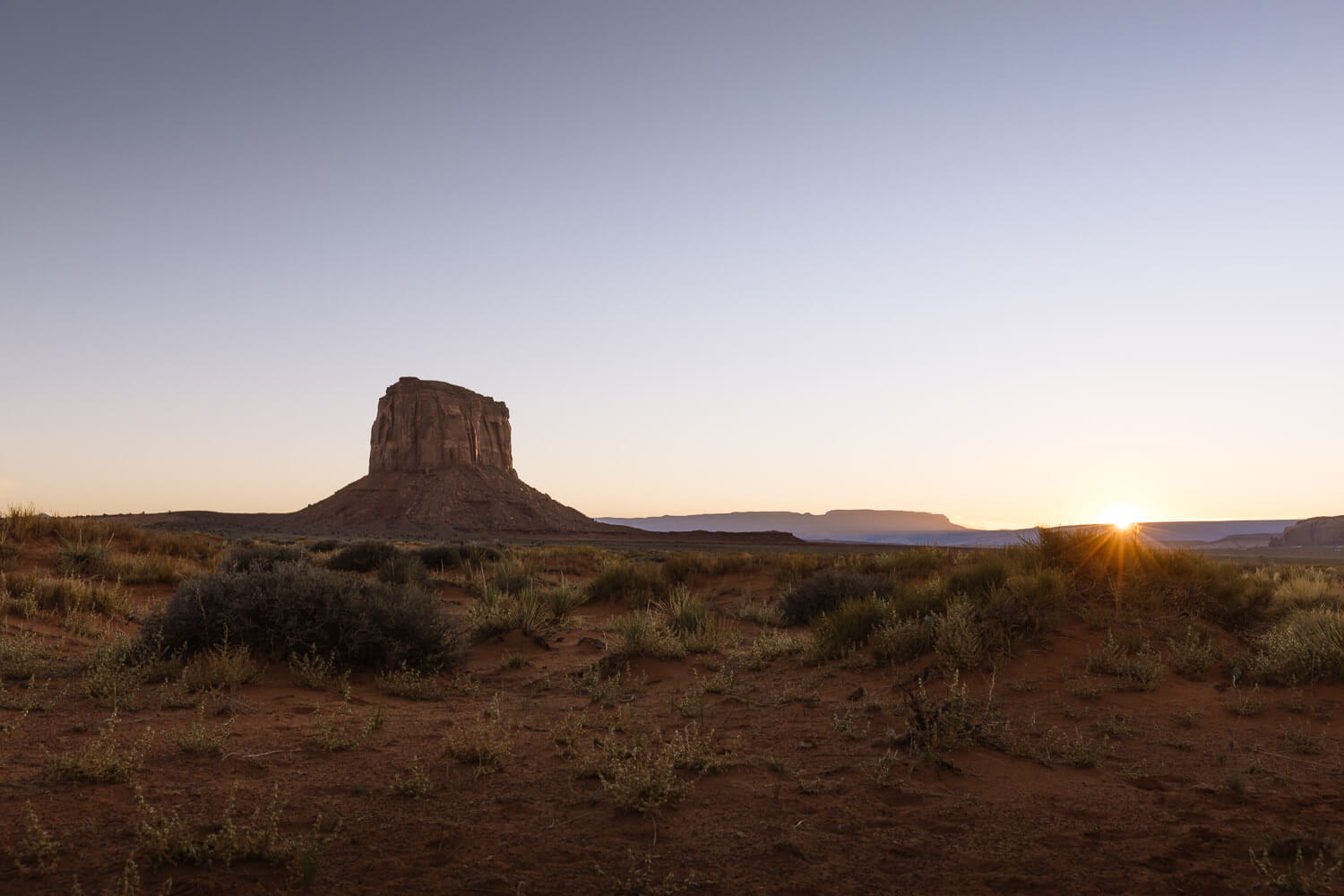
Sunrise Photography Tour – Sunrise tours start by watching the sunrise over the Totem Pole before visiting other backcountry sights. There’s plenty of time for photos and some handy tips from the guide.
Sunset Tour – This 3-hour sunset tour includes Moccasin Arch, Sun’s Eye, Totem Pole, and a visit to a traditional Navajo home.
All-day Tour – 6-hour tour covering much of the above as well as exploring nearby Mystery Valley and Anasazi ruins and petroglyphs.


2. Take in the Views from the View Hotel
Just after passing through the entrance gate to Monument Valley Tribal Park, there is a large parking lot in front of The View Hotel.
The view from the terrace (accessible to everyone, including non-guests) over the valley’s mesas, buttes, and spires is remarkable.
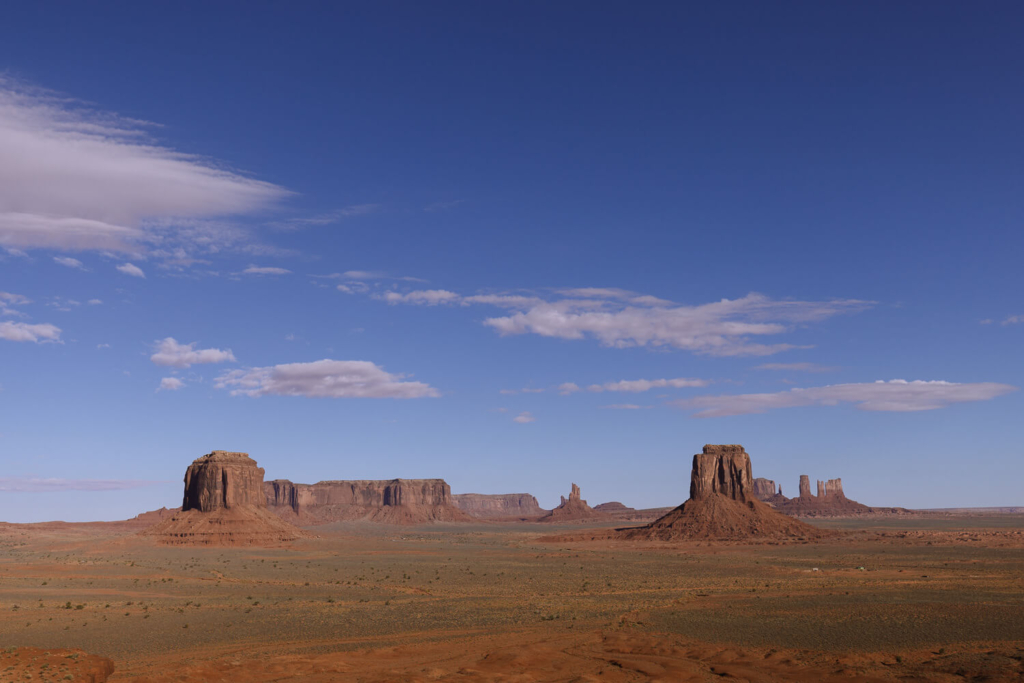
The East and West Mittens and Merrick Butte are the three most striking features. Together, they create one of the iconic images of Monument Valley.
Getting to The View Hotel, Monument Valley – Although the tribal park is only open from 7 am to 6 pm in summer and 8 am to 4 pm in winter, you can drive to the hotel at any time. It’s well worth making the effort to be there for sunrise or sunset.


3. Do the 17-Mile Scenic Drive
The best way to explore Monument Valley is to take the 17-mile Scenic Drive. This self-drive dirt trail passes through some of the most dramatic sections of the park and can be driven in a 4×4 or a 2WD car.
The loop leaves from next to The View Hotel. The speed limit is 15 miles per hour, and it should take 2 to 3 hours to complete.
Entrance is between 7 am and 5 pm in summer (exit by 7 pm) and between 8 am and 3 pm in winter (exit by 5 pm).
The circular section of the loop must be completed clockwise. The route can sometimes be impassable after heavy rain.


Here are some of the main attractions to see on the Scenic Drive:
Mittens and Merrick Butte // The East and West Mittens look like hands rising out of the ground, whereas Merrick Butte was named after a prospector searching for silver in the valley.
Elephant Butte // Elephant Butte resembles a gigantic elephant facing westwards over the desert.
The Three Sisters // Three spires of rock resembling a catholic nun facing her two pupils.
John Ford’s Point // Named after the director of some of John Wayne’s most famous films – The Searchers, Cheyenne Autumn & Stagecoach. It’s a great spot for some selfies.


The Hub Overlook // A good viewpoint over the southwestern section of the park, where Wagon Wheel Butte rises above the desert and shrubs.
Sand Springs // At the furthest part of the loop, the thin spire of Totem Pole can be seen in the distance. To get closer, you need to join a tour.
Navajo Code Talkers Outpost // Sometimes known as Artists’ Viewpoint overlook, this is a wonderful viewpoint over the Mittens, Merrick Butte, and the northern part of the park.
The Thumb & North Window Overlook // Park next to a large thumb-shaped spire and (if the path is not closed) take a short walk to the North Window Overlook for good views over the Mittens and Merrick Butte.

4. Hike the Wildcat Trail
The only unguided hike you can do in Monument Valley Tribal Park is the Wildcat Trail. This 3.3-mile hike leaves from near the View Hotel and makes a circular loop around West Mitten. It’s a wonderful way to absorb the desert scenery and get up close to one of the most stunning buttes.
The trail is easy to follow, heading through a mix of sandy washes and shrubs, and the views from the far side of the West Mitten are wonderful.
- Distance – The 3.3 miles
- Duration – about 2 hours
- Entrance – Entrance is between 7:00 AM and 5:00 PM in summer (finishing by 7:00 PM) and 8:00 AM and 3:00 PM in winter (finishing by 5:00 PM).
- Facilities – There are no facilities on the route, except for a few canopies with seats offering shade from the sun.
- What to take – Take at least 1 litre of water and some snacks.


5. Stay in the View Hotel
The View Hotel is the only hotel in the Monument Valley Tribal Park.
Opening in 2008, it was designed to blend into the landscape, with its pink and red walls appearing to form another layer of rock.
It is not essential to stay in The View Hotel to see the park. There are other accommodation options just a short drive away.
However, each room has a balcony with wonderful views over the Mittens and Merrick Butte.
Booking Tip – The hotel can book up months in advance, so it’s a good idea to book early. If you miss out, it’s worth checking back; the hotel has lots of rooms and cancellations do crop up.


What to Do Near Monument Valley
The incredible scenery isn’t confined to the Monument Valley Tribal Park. We highly recommend taking a 3 to 4-hour road trip north on Route 163 and visiting all the sights listed below.
6. Goulding’s Trading Post
In 1920, Harry Goulding and his wife bought a plot of land in Oljato-Monument Valley and started trading food and handicraft items with the Navajo people out of tents.
Within several years, they had constructed a Trading Post. Then, in the 1930s, they enticed Hollywood director John Ford to film Stagecoach in the area, making Monument Valley an icon of the West.
Facilities at Goulding’s Trading Post – Today, Goulding’s Resort has a restaurant, gas and convenience store, grocery store, laundromat, and museum. It’s a convenient place to stay, and the onsite museum and trading post help visitors understand the Navajo way of life.

7. Forrest Gump Highway Viewpoint
The views of Monument Valley from Route 163 are sensational. Drive along this road anytime, and the dramatic mesas, buttes, and spires fly past your window.
The most iconic spot on the road was made famous when Tom Hanks ran along it in the film Forrest Gump.
The pull-out for the view is 13 miles north of the entrance to Monument Valley on Route 163.
Forrest Gump Highway Photo Tip – Get your camera low to the yellow lines on the road and capture Monument Valley behind – although make sure you have someone watching for traffic. Avoid coming here in the mid-afternoon when you’ll be shooting into the sun. Morning or just after sunset are ideal.

8. Mexican Hat & Valley of the Gods
Mexican Hat is a 30-minute drive north of Monument Valley.
This strange-shaped rock that looks like a sombrero peers over a tiny settlement of the same name.
Just north of Mexican Hat is the Valley of the Gods. It’s not as grand as Monument Valley but not as busy.
You can make a loop around the buttes and mesas using a rather bumpy dirt track. However, it’s not in the best condition.
We did this drive in a Sports SUV without issues, but a 4×4 may be required in wetter conditions.
9. Moki Dugway
The Moki Dugway is a dramatic series of switchbacks carved into the cliffs. It’s only 3 miles long, but the views over the Valley of the Gods are stunning.
The road is a gravel track and should not be attempted after heavy rain, but in most other conditions, it’s perfectly manageable in a 2WD.
The speed limit is only 5mph, but there is no need to go any faster as the views out the window are breathtaking.


10. Muley Point
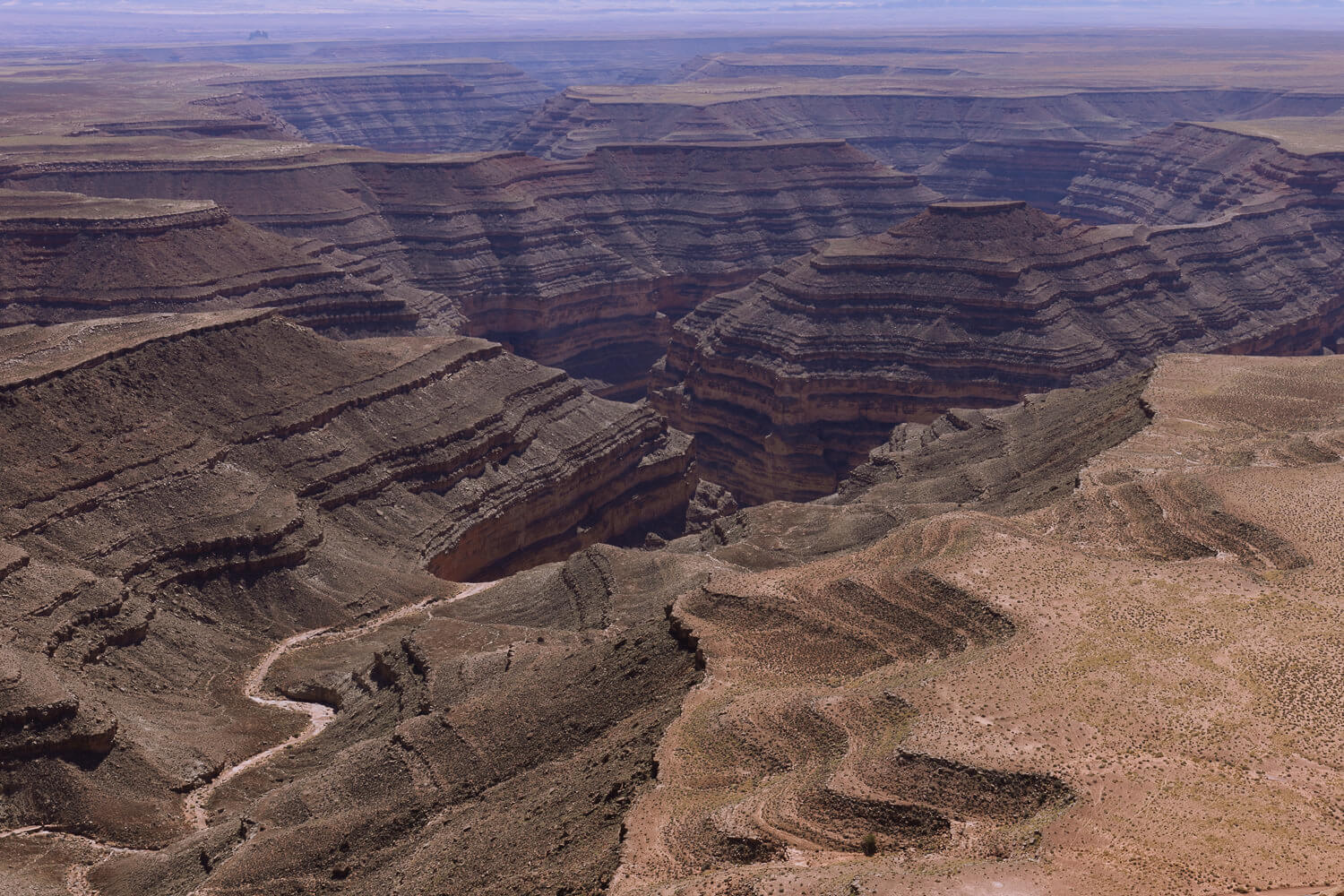
Muley Point is 5 miles from the Moki Dugway along another dirt track. This viewpoint should be more famous than it is.
There is a deep-cut valley resembling a small Grand Canyon, with Monument Valley visible in the distance.
The sandy gravel track is 5 miles long and takes about 15 minutes to drive. In most conditions, it is easily navigable in a 2WD but should be avoided when wet.

Planning & Logistics
How to Get There
Monument Valley Navajo Tribal Park straddles the border between Utah and Arizona and runs along US Highway 163. The park is remote by nature, so driving is by far the most practical way to arrive.
By Car
The most popular approach is along US-163 from the north, passing through the small town of Mexican Hat, Utah.
From the south, you can approach via Kayenta, Arizona, which also has gas stations, grocery stores, and hotels — making it a useful last stop before entering the park.
- From Phoenix, AZ: Approximately 5 hours (300 miles) via US-160 and US-163
- From Las Vegas, NV: Approximately 5.5 hours (330 miles) via US-89 and US-163
- From Salt Lake City, UT: Approximately 5 hours (350 miles) via US-191 and US-163
- From Flagstaff, AZ: Approximately 2.5 hours (180 miles) via US-160
Nearest Airports
The closest major airports are Page Municipal Airport (PGA) in Arizona, around 90 miles away, and Flagstaff Pulliam Airport (FLG), roughly 180 miles to the south.
For more flight options, Phoenix Sky Harbor International Airport (PHX) is the most practical hub, with car rental facilities making the onward drive straightforward.

Where to Stay
Oljato-Monument Valley is one of the must-see places in the United States. Accommodation is limited, so book well in advance.
- The View Hotel ($$$) – The only hotel in the tribal park, and designed to blend into the landscape. The views from the balconies are excellent.
- Goulding’s Lodge ($$$) – Goulding’s Lodge is a 3-star property just a few minutes’ drive from the Monument Valley Tribal Park. It has an indoor pool and a sun terrace.
- Hampton Inn ($$) – Located in Kayenta, a 30-minute drive from Monument Valley, the Hampton Inn is less convenient but a much cheaper option. The rooms are comfortable, clean, and spacious.
- Desert Rose Resort & Cabins ($$) – In the town of Bluff, a 50-minute drive northeast of Monument Valley, they have modern and traditional rooms, a terrace, an indoor pool, and a fitness centre.

Attractions Near Monument Valley
We visited Monument Valley as part of our Southwest USA road trip around the sights of Utah and Arizona. There are plenty of great attractions nearby that you can easily see while in the area.
Page, AZ: Approx 1.5 hours (120 miles). Page is home to two of the Southwest’s most photographed landmarks — the slot canyon of Antelope Canyon and Horseshoe Bend.
Canyon de Chelly, AZ: Approx 1.5 hours (90 miles). Canyon de Chelly National Monument is one of the longest continuously inhabited landscapes in North America.
Grand Canyon South Rim, AZ: Approx 2 hours 45 minutes (160 miles). The South Rim is the most visited section of the Grand Canyon and offers some of the most breathtaking viewpoints on earth. Read our guide to the best viewpoints on the Grand Canyon.
Moab, UT: Approx 2 hours 45 minutes (150 miles). From Moab, you can explore the sandstone arches of Arches National Park and the vast canyon wilderness of Canyonlands.
Route 66, AZ: Approx 3 hours (170 miles). The legendary Mother Road passes through a string of classic American towns and roadside attractions, making it a perfect add-on for anyone looking to extend their Southwest road trip with a slice of Americana.


Opening Times
Monument Valley Tribal Park has different summer and winter opening times, which you should be aware of before your visit
The Administration Office is open from 8 am to 5 pm Monday to Friday; closed for lunch between 12 pm and 1 pm.
Winter Hours: The Scenic Drive is open from 8 am to 5 pm, with the last entry at 2:30 pm. The Tour booth is open from 8 am to 6 pm each day.
Summer Hours: The Scenic Drive is open from 7 am to 7 pm with the last entry at 4:30 pm. The tour operator booth is open from 8 am to 5 pm.
Monument Valley Costs
Entrance to Monument Valley costs $10 per person, per day. The fee is paid at the entrance gate marked on the map below. Keep the receipt safe, as you will need it to enter both the 17-mile Scenic Drive and Wildcat Trail.
Monument Valley Tribal Park is NOT a US National Park, so US National Park passes, such as America the Beautiful, are not valid.

Monument Valley Rules
The Monument Valley Tribal Park is on the Navajo Nation Reservation and follows Navajo laws, some of which differ from those of the rest of the US.
Time Zone: Monument Valley runs on Mountain Time and observes daylight saving time (even though Arizona, where most of the park is located, does not). In winter months, Monument Valley is in the same time zone as both Utah and Arizona, but in summer months, it’s the same as Utah, but one hour ahead of Arizona.
Hiking: You can hike only on designated trails to reduce the risk of erosion.
Trash: Everything you take into Monument Valley must come out with you, including all rubbish and food scraps.
Alcohol: The Navajo Nation does not allow alcohol on the reservation. It is not served in restaurants or available to buy in shops.

Best Time to Visit
Monument Valley is an amazing place to visit any time of year, but the shoulder seasons are the best.
Summer (June – August) – Summer is the busiest time of year, even though average temperatures are around 90°F (32°C) and the afternoons bring occasional thunderstorms.
Autumn (September – October) – Temperatures drop to around 70°F (21°C), the crowds thin out, and the weather is at its best. Both are great months to visit, but September is slightly better because the park is open later in the day.
Winter (November – March) – Daily temperatures are 30°F to 40°F (-1°C to 4°C), with the odd dusting of snow, but crowds are fewer, and accommodation is cheaper.
Spring (April – May) – With average temperatures around 65°F (18°C) and crowds lower than in summer, Spring is a good time to visit, but periodic gusty winds mean Autumn is usually better.
Monument Valley FAQS
How Many Days Do I Need in Monument Valley?
In half a day, you can walk the Wildcat Trail, self-drive the 17-mile Scenic Drive, and take in the views at The View Hotel and Forrest Gump Point.
However, we highly recommend staying at least one night so you can enjoy the scenery at dusk or dawn, preferably on a guided tour. Photographers may want to spend two nights to catch the light at multiple times of day.
Can I Drive in Monument Valley?
The only section of Monument Valley Tribal Park you can self-drive is the 17-mile Scenic Loop, which is an unpaved dirt road — a standard car is fine in dry conditions, but a high-clearance vehicle is recommended.
Many of the mesas, buttes, and spires can also be seen from US Route 163, including Forrest Gump Point.
Do You Need a Guide in Monument Valley?
There are three areas you can explore without a guide: the 17-mile Scenic Drive, the Wildcat Trail, and the viewpoints at The View Hotel. You can also enjoy great scenery from US Route 163.
However, a guide is required to visit the backcountry areas. We highly recommend booking a guided sunrise or sunset tour for the best experience.
How Much Does It Cost to Enter Monument Valley?
Monument Valley Navajo Tribal Park charges an entry fee per person to access the Scenic Drive and Wildcat Trail. It is worth checking the current fee on the official park website before your visit, as prices are subject to change.
Yes, Monument Valley Navajo Tribal Park is located on the Navajo Nation, straddling the Utah–Arizona border.
It is managed by the Navajo Nation Parks and Recreation department, not the National Park Service, which is why a separate entry fee applies and different rules govern access to the backcountry.
When Is the Best Time to Visit Monument Valley?
Spring (April–May) and autumn (September–October) offer the most comfortable temperatures for exploring.
Summer can be extremely hot, with temperatures regularly exceeding 100°F (38°C), while winter brings cooler temperatures and the possibility of snow, which can create dramatic photographic opportunities.
What Should I Wear and Bring?
Sun protection is essential year-round — bring sunscreen, a hat, and plenty of water. The Scenic Drive is a dirt road that can be dusty, so keep car windows closed. If you plan to hike the Wildcat Trail, wear sturdy shoes and bring at least two litres of water per person.

More USA Guides
- Our 2-week Arizona & Utah road trip itinerary covers 6 National Parks.
- See the best viewpoints at the Grand Canyon and try our favourite South Rim hikes.
- See the buttes and mesas captured in so many films with our guide to Monument Valley.
- Enjoy the under-visited Canyonlands National Park and spend a day in Arches National Park.
- Experience the amazing slot canyons in Grand Staircase Escalante National Monument.
- See all the beautiful hoodoos of Bryce Canyon National Park.
- Try our favourite things to do in Las Vegas, including a few less-visited attractions.
- Book your stay with our guide to the best places to stay in Las Vegas.

reader-supported
When you buy through links on our site, we may earn a small affiliate commission at no extra cost to you.
Thanks for your support // Paul & Mark
“I recently came across your blog post and found it to be incredibly insightful and helpful. But……
Being a travel or adventure enthusiast and never want to run out of power while your travel then do include this indestructible outdoor gadget in your list http://www.rugdlife.com“
Hi Paul & Mark,
thank you for such a very detailed collection of information!
I will visit Monument Valley in the beginning of October this year (2023, if you read this in 2024, lol…).
I find it very important to know that:
“The best views are not open for sunrise and sunset”
You are the first I could find who really say it CLEARLY like it is:
The Navajo Tribal Park is not open for sunrise or sunset.
In my case (Oct 9th 2023) sunrise is 7:23am, park opens 8am. And sunset 6:52pm, park closes 3:30pm.
The opening times are chosen very “wisely”, as they even work in winter with later sunrises.
The “latest” sunrise is on Nov 4th at 7:48. Next day the daylight saving time ends and sunrise is a 6:49am..
Well, I can 100% understand that they don’t want cars/people there in the dawn/dusk/dark/night.
Too dangerous maybe.
Of course it also means that noone can be in the park at night for milkyway photography.
Unless you book a tour, same than for sunrise/sunset.
I can 100% understand that too.
Noone would be able to control the access at night and people would walk all over the place, including “sacred” places.
At the moment I don’t know yet where I will photograph the sunrise.
Next to the “View Hotel” or at the “Visitor Center” is my choice at the moment.
I will “scout” the places the day before and see what works best.
I have 2 questions, If you find some time:
1. Did you need a “Commercial Film & Photography Permit”?
It seems to me (or “I have heard/read”) that photography with tripod or filming with a Gopro camera CAN fall under “commercial”.
Depending how the company/guide “interprets” it.
I couldn’t find any “official” rule for this.
So I emailed the Navajo Nation but no response so far.
I also emailed 2 tour operators for “Antelope Canyon” (also Navajo Nation).
One said “no problem with your gopro” and the other said “you need a permit for your gopro”….
2. How much time did you have at the locations during a photography tour?
I am “specialised” in timelapse photography.
So I usually need 15-30minutes at a location to setup my gear and wait for the timelapse to finish.
Without your answer I already predict: NOT possible! 😉
I don’t ask the same question for night/milkyway photography, because my timelapse would need minimum 1 hour lol…
Thank you and all the best,
Matthias
Hi Matthias,
Monument Valley is an amazing place and I’m sure you’ll have a great time. In answer to your questions:
1. We did not have and were not asked for any Commercial Film or Photography Permit in Monument Valley. A Navajo Guide simply picked us up outside the View Hotel (about 1 hour before dawn), and after paying the park entrance fee, drove us into the park and then into the restricted access area.
In Antelope Canyon tripods were not permitted on tours, but (I think) Gopros were allowed. There used to be a specific photography tour that permitted tripods, but I believe this was discontinued. You can take tours at both the upper and lower Antelope canyon. The Upper is a bit more organised and the guides move people in tight groups enabling better photography. There’s enough light not to to need a tripod (although obviously it would be better if you could). The lower canyon has brighter light, but is a bit more of a rushed experience more suited for iPhone photography. If money and time are not a restriction- do both – otherwise stick to the upper canyon and book in advance.
2. For Monument Valley sunrise tour. We were in a group of just 4 people and although the guide had a rough itinerary he was very relaxed about how long we spent at each location (catering to the people on the tour). The tour totalled 3 hours, but at the Totem Pole and dunes area we spent about 45 minutes (roughly 20 minutes either side of dawn), so this would give you plenty of time. After that the stops at Ear of the Wind, Moccasin Arch and Hogan were more like 10 to 15 minutes. I suggest you try and join a small tour and get your request in up front.
Hope that helps and let us know how it goes.
Thanks
Mark
So glad you included the formation of Monument Valley. What’s what, why things are like that, now, names of structures, etc. I’m in U.K. so for me, how it formed was crucial, vital info. Thank you.
Hi Michael,
Glad to hear it. We’re from the UK as well so it was all a fantastic discovery for us.
Paul.