

By: Mark Barnes // Last Updated:
The Grand Teton National Park is a beautiful wilderness area in Wyoming with jagged mountain ranges, lush meadows and interesting hiking trails. Here’s what to do in the Grand Tetons – the understated star of the US parks.
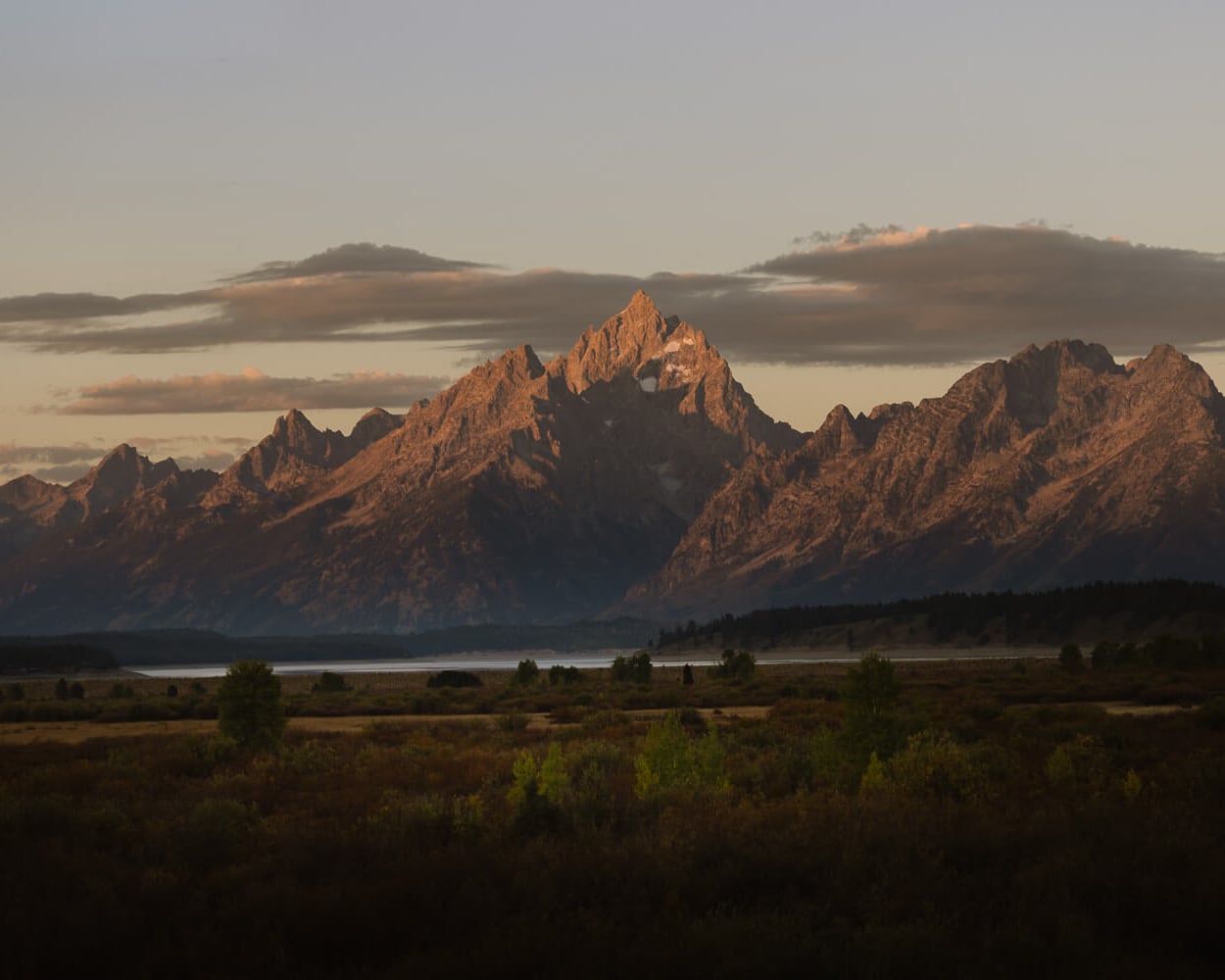
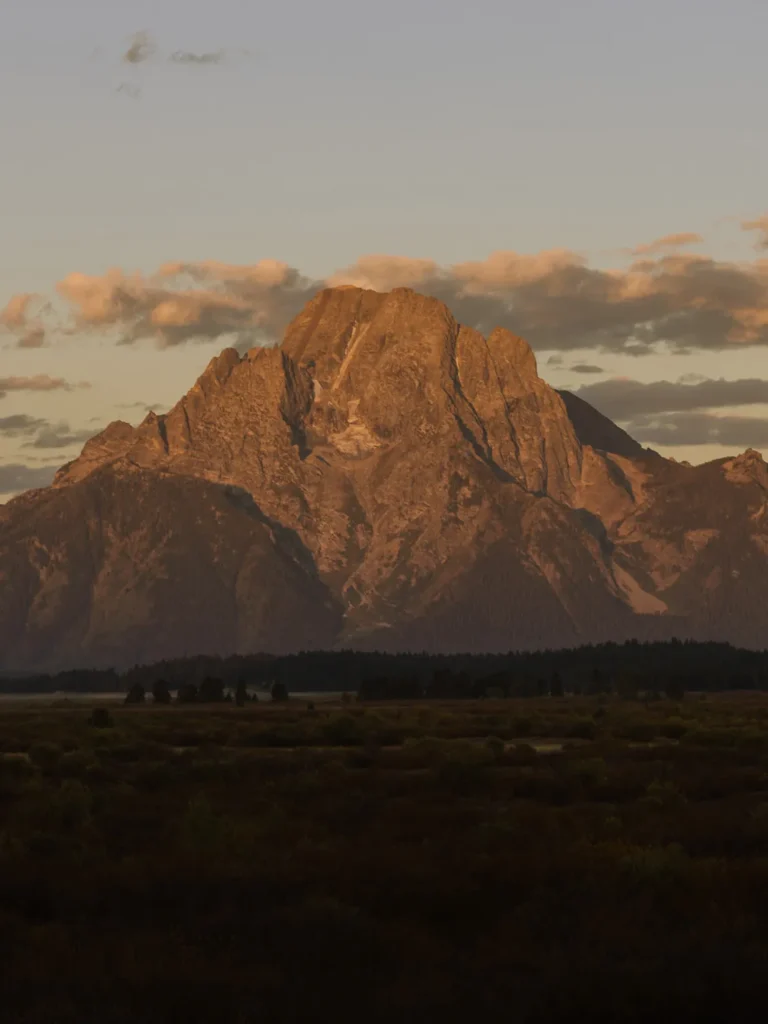
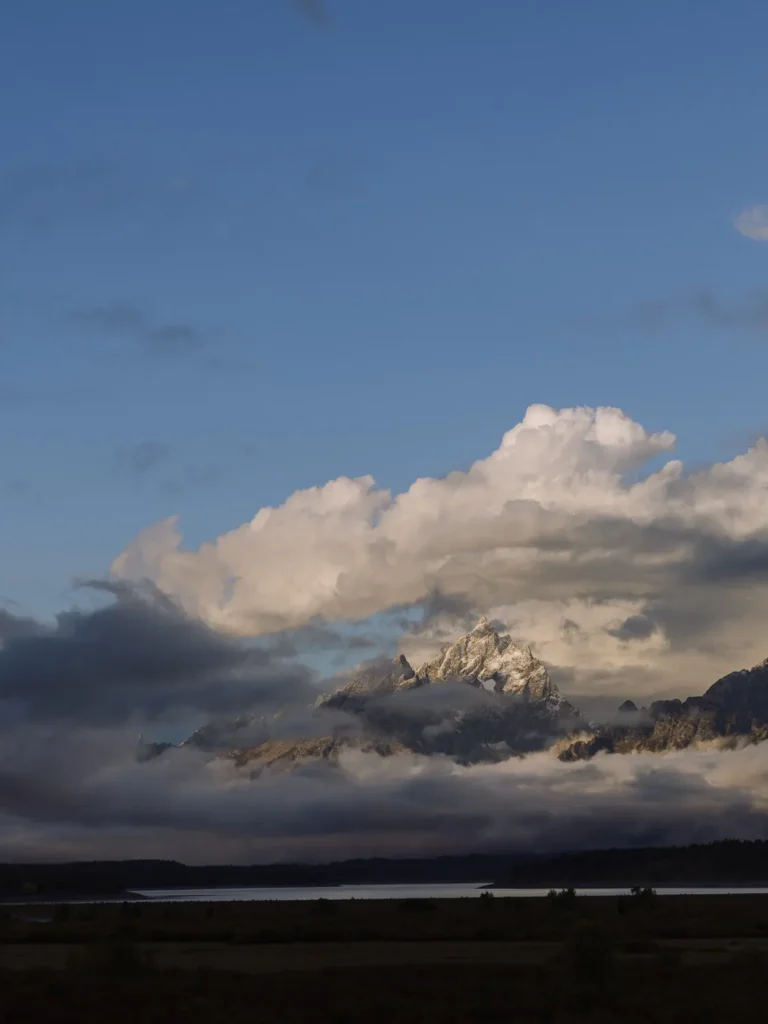
The summits of the Grand Teton mountains are a row of jagged pinnacles soaring towards the sky. Beneath them, canyons drop to emerald-green lakes surrounded by wildflowers, sagebrush meadows and swathes of forest.
We had a great time visiting Grand Teton National Park on our US Road Trip, and it was one of our favourite National Parks.
There’s great hiking, beautiful scenery, outdoor activities, and it’s one of the best places in the US to see wildlife.
Bears and moose are far denser than they are in nearby Yellowstone, and bison, elk, and pronghorn deer are regular grazers on the park’s open plains.
We think the whole area deserves at least two to three days, but if you are an avid hiker, you could easily spend longer.
Here are all the best things to do in Grand Teton National Park, including when to visit and where to stay.

Grand Teton National Park Map
Grand Teton National Park is located in the northwest of Wyoming. The park includes most of the Teton Mountains and the Jackson Hole valley. It’s 10 miles south of Yellowstone National Park.
There are three entrances: Granite Canyon, Moose and Moran Junction. We have more details about the entrances and costs in the Planning & Practical Details Section below.
Click on the top right corner to open our map in your Google Maps app. Click the star next to the title to save it to your Google account.
What to Do in Grand Teton National Park
1. Visit the Grand Teton Viewpoints & Scenic Drives
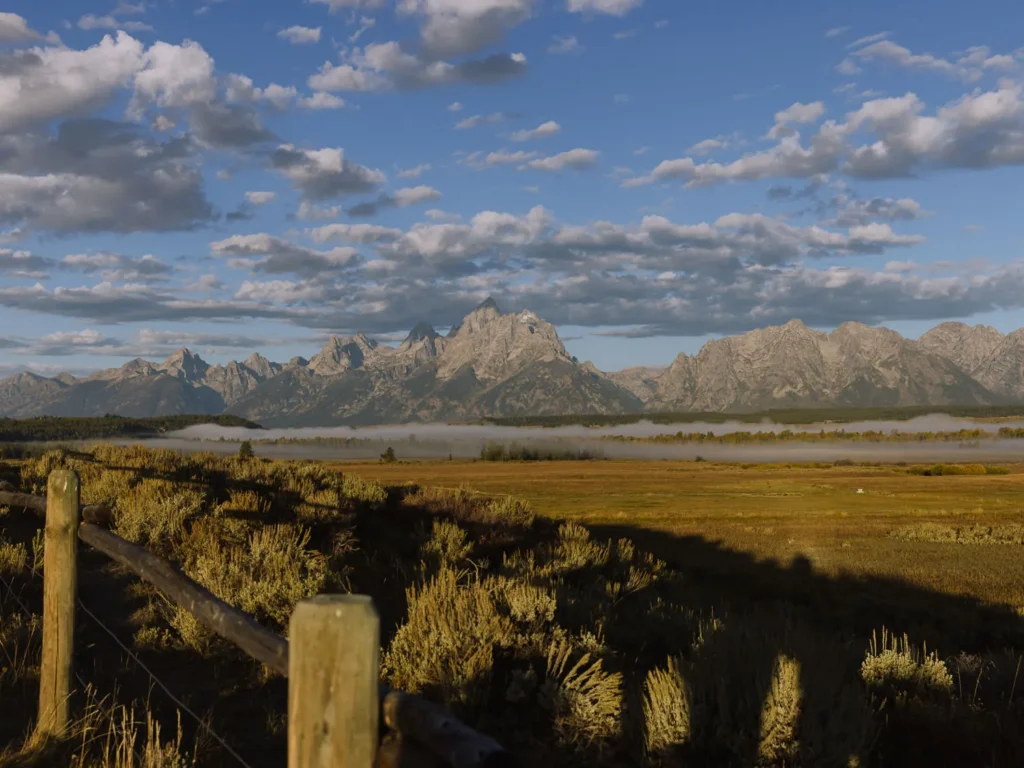
The mountains of the Grand Tetons are a line of jagged peaks rising from a flat plain, with flower-strewn meadows in the foreground and several lakes enhancing the scene.
We drove the 42-mile loop between the town of Moose and Willow Flats using a combination of HWY 89 and the Teton Park Road that passes Jenny Lake. This is where you’ll see the best viewpoints in the Grand Tetons.
Here are our favourites, which are all marked on the map at the top of this guide.
Willow Flats – A large grazing area with the best view of the Grand Teton mountains rising above it. Elk and moose can often be spotted here, especially at dawn, and the golden colours throughout the fall are wonderful.
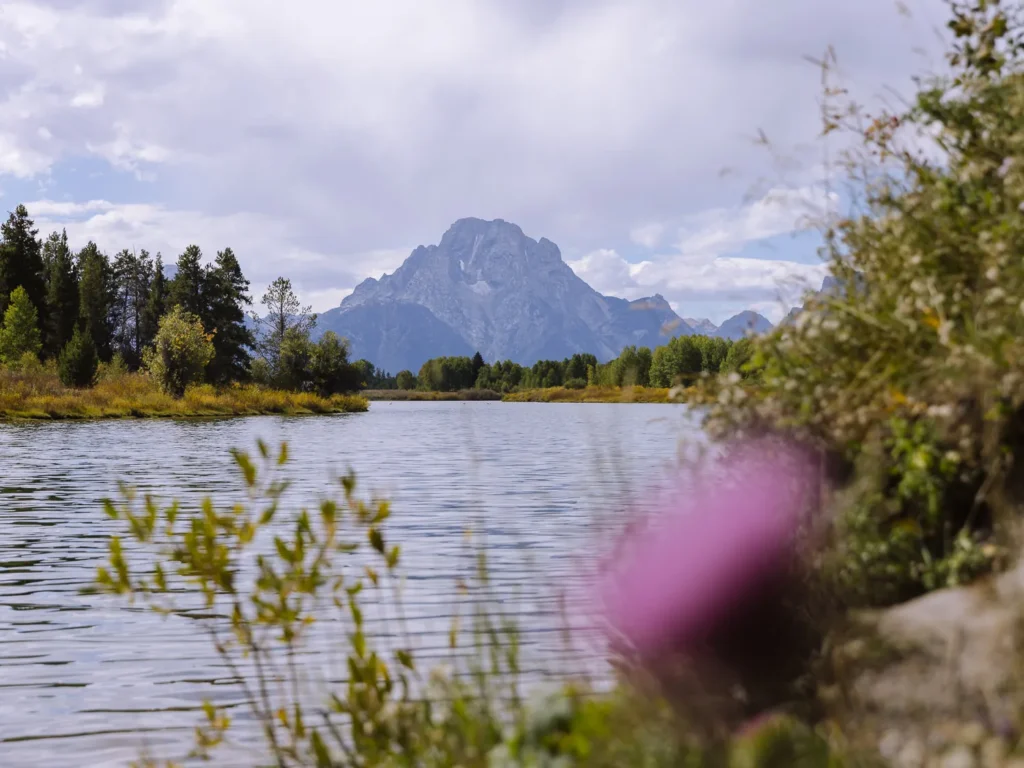
Oxbow Bend – A sweeping bend in the Snake River offers great reflections of Mount Moran. On cold mornings, the mist lingers in the valley, giving it a magical feel. Keep an eye out for river otters, bald eagles, and ospreys.
Signal Mountain Summit – A ten-minute detour from the 42-mile loop, the road climbs to the summit of Signal Mountain, where a 200-meter walk to a viewpoint allows you to look straight across at the Grand Teton mountains and the national park.


Mountain View Turnout – This lookout has a wild and rugged feel with the peaks of the Grand Tetons at their sharpest. The flats are abundant with sagebrush, which contrasts with the jagged peaks.
Snake River Overlook – This viewpoint was made famous by the photographer Ansel Adams. A sweep of the Snake River cuts through sagebrush flats as the Grand Tetons rise behind. Today, however, some trees obscure part of the view.
Schwabacher Landing – Another short detour off the 42-mile loop, this viewpoint sits right next to the river as it meanders through woods and willows. The mountains which rise in the background are beautifully reflected in the water on a still day.


2. Take the Jenny Lake Scenic Drive
The Jenny Lake Scenic Drive skirts the eastern edge of Jenny Lake and offers scenic views across the water to the mountains.
Don’t miss the Jenny Lake Overlook for an easy but scenic view. Nearby, the Jenny Lake Lodge is a full-service resort with natural wood cabins that bring a taste of luxury to the idyllic setting.
The scenic drive is only 3 miles long and runs one way (from north to south). There are wide cycle lanes, making it perfect for exploring the area on a bike.

3. Book a Jenny Lake Boat Trip
One of the most popular things to do in Grand Teton National Park is to take a boat trip on Jenny Lake. The Visitor Centre offers both tours and equipment hire if you want to head out on your own.
Here are some of the options available.
Scenic Cruise – 2- or 3-hour scenic cruises of Jenny Lake run each day from mid-May to the end of September. It’s a good idea to reserve this one in advance.
Canoe & Kayaks – Canoes (up to 3 adults or 2 adults and 2 children) or kayaks (up to 2 people) can be rented from the dock where the scenic cruise departs between mid-June and mid-September.


4. Take the Hidden Falls & Inspiration Point Hike
A great way to combine a boat trip on Jenny Lake and a short hike in the Grand Tetons is to hike up to Hidden Falls and Inspiration Point.
Start at the Jenny Lake Visitors Centre and get the shuttle boat across Jenny Lake to the West Shore Boat Dock, which sits at the bottom of Cascade Canyon.
From the dock, a hiking trail slowly winds back and forth across Cascade Creek as it steadily climbs to Hidden Falls – a small cascade set in the woods.
The path steepens and crosses a rocky ledge to reach Inspiration Point, where views stretch across the lake.
The hike is 1 mile each way and took us around 1 hour and thirty minutes to complete. The path climbs steadily, so it takes a bit of puff, but it’s a great way to get into the mountains.
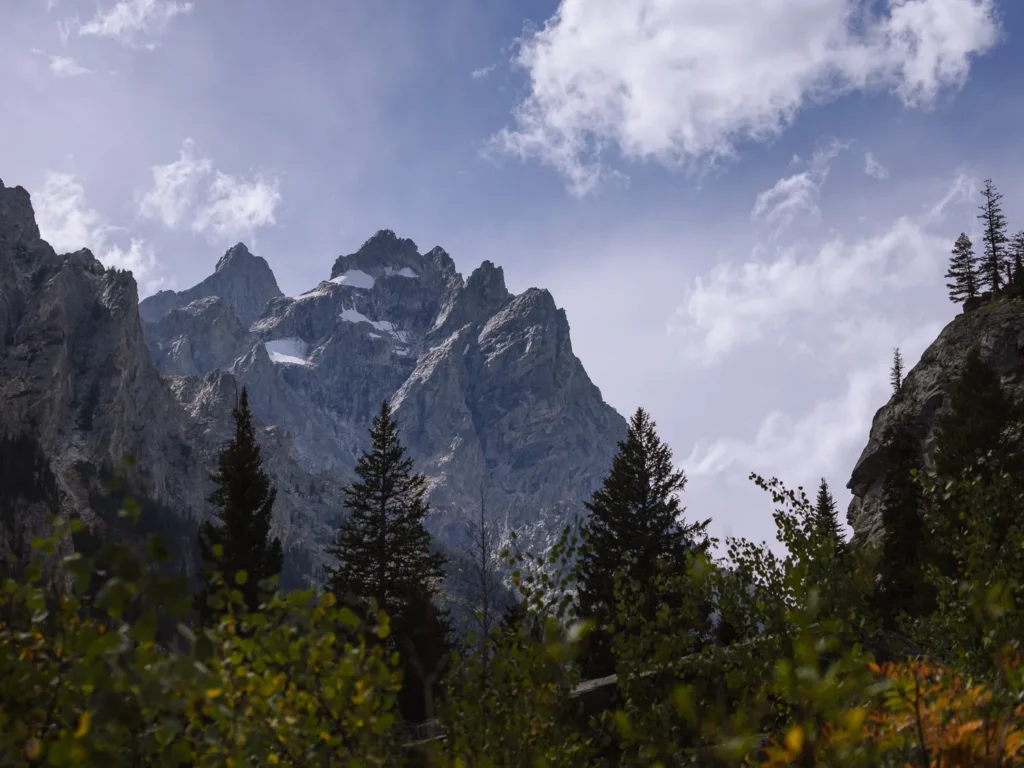
If you have a bit more experience (and energy), you can continue on the Cascade Canyon Trail, which continues to rise beyond Inspiration Point. The entire hike is 13.6 miles, but as a point-to-point, you can head up as far as you want before turning around. We really liked this section of the hike, so we do recommend it.
Once back at the West Shore Boat Dock, either take the shuttle boat back across Jenny Lake or walk back on the southern end of the lake to the Visitor Centre via Moose Ponds. This section of the walk took us around 1.5 hours.
The Jenny Lake Boat Shuttle runs every 10 to 15 minutes from the East Boat Dock next to the Jenny Lake Visitors Centre.


5. Spot Moose at Moose Ponds
Moose Ponds are two small lakes tucked into a dell, south of Jenny Lake. These two beautiful ponds are excellent for spotting moose. On our trip, we saw a bull and three cows soaking themselves in the ponds and wandering through the reeds.
The trail to the ponds is beautiful with wildflowers and aspen marking the route as it clings to the edge of Jenny Lake.
From the Jenny Lake Visitors Centre, Moose Ponds is a 1-mile hike each way with very little elevation. It took us about 1 hour 15 minutes for the entire return walk. Alternatively, you could include it on your way back from Inspiration Point as we mentioned above.
Moose Ponds Loop – Once at the ponds, there is an optional 1.7-mile loop around them which should took us around 1 hour.


6. Relax at String Lake
Of all the lakes that sit under the Grand Tetons, String Lake is our favourite. Often sheltered and still, it shimmers a translucent green as the mighty Teton peaks rise above it.
After tiring yourself out exploring the national park, ending the day here is one of the best things to do in the Grand Tetons. Find a quiet stretch of beach, go for a swim in the (slightly chilly) waters and enjoy a picnic under the trees.
String Lake is right next to both the Leigh Lake Trailhead car park and the String Lake Trailhead car park. Be aware that there are often bears in the area, so follow all the rules on the signs. In particular, don’t leave food lying about.


7. Soak up the Views from Blue Heron Lounge
Another great way to end the day is at the Blue Heron Lounge. Tucked in a corner of the classy old-school Jackson Lake Lodge, this cool bar has massive windows that offer fantastic views of the mountains.
They have both indoor and outdoor tables, or you can pull up a stool around the circular bar.
We thought the cocktails were very good, and they have several excellent local craft ales which we also really liked.
The Blue Heron Lounge is a great place to watch the sun slowly drop behind the Tetons as the skies turn a burnt orange.

8. See the Wildlife on Moose-Wilson Road
The Grand Tetons are one of the best places in the USA to spot bears, with a greater density than Yellowstone. While meeting bears on a hike in the mountains can be nerve-wracking, seeing them from the safety of your own car is downright exciting.
One of the best places to spot bears is along the Moose-Wilson Road.
Connecting the town of Moose with Teton Village, the Moose-Wilson Road heads through forest and marshland, home to a wide array of wildlife. Moose are often spotted feeding on the willows, and you’ll also see beavers, herons and cranes.
Great Detours Off Moose-Wilson Road
There are a couple of detours off the Moose-Wilson Road that we think you will love.
Snake River Overlook – Pull off at the turnout near the northern end of the road and look over the Snake River, keeping an eye out for moose.
Death Canyon Trailhead – A bumpy, rocky track heads up to the Death Canyon Trailhead car park from where a 1-mile trail leads to the pretty Phelps Lake Overlook (30 minutes each way). The drive is usually doable in a 2WD, but we did the last 500 metres on foot just to be safe. Please note: the trailhead is currently closed for the entire 2026 season.
Laurance S. Rockefeller Preserve – A modern conservation centre at the end of Moose-Wilson Road (see next section).
The Moose-Wilson Road is usually open from May to November.


9. Visit the Laurance S. Rockefeller Preserve
In 1927, John D Rockefeller purchased much of the land that surrounds Jackson Hole. He gave the bulk of it to the Grand Teton National Park, allowing the boundaries to expand, but kept 3,100 acres as a family retreat and guest ranch.
Over the years, more land was donated to the National Park on the proviso that the preserve remains a place where visitors can experience the area.
The Laurance S. Rockefeller Preserve Centre is a beautifully designed modern structure set in a sagebrush meadow. Inside there are visual and sound displays of the local wildlife and a cool library packed with a wonderful selection of nature books.
A series of trails leave from the centre to picturesque Phelps Lake (1.5 miles each way – 1 hour 30 minutes in total). From the lake, even more trails head off in different directions, going around the lake or up to Granite Canyon, Open Canyon, or Death Canyon.
If you are worried about bears on the hikes, there are ranger-led hikes which typically run from mid-June to late September. Details are available at the Rockefeller Preserve.


10. Ride the Jackson Hole Aerial Tram
The Jackson Hole Aerial Tram, which runs from Teton Village, offers incredible views of the Grand Tetons.
In 12 minutes, the tram glides skyward, rising 4,139 feet to a 360-degree viewing platform overlooking the Tetons, Jackson Hole and the surrounding mountain ranges.
From the summit, a series of hiking trails crisscross the mountains with various levels of difficulty for everyone to enjoy. The Top of the World is an easy half-mile round trip; the Rock Springs Loop is a more strenuous 3.5-mile hike, while the Cirque Trail traverses the summit of Rendezvous Mountain.
Read all our USA guides and plan your southwest road trip in style.
USA
11. Spot Bison & Elk on the Plains
While moose and bear are often hidden in the trees, bison, elk, and pronghorn deer can often be spotted feeding on the grasses that line the road.
While they can be viewed anywhere in the park, there are a few places that increase your chances.
Elk Ranch Turnout is good for elk and bison, and the meadows either side of the road from Jackson Dam South to Moose are good for bison and pronghorn.
Blacktail Ponds and Antelope Flats on the other side of the road are a popular spot for elk and bison who come during the cooler parts of the day.

12. Photograph the Mormon Row Historic District
Arriving in the 1890s, Mormons built a cluster of 27 homesteads on a gentle sloping cove between Blacktail Butte and the Gros Ventre Mountains. Today only six homesteads survive, but together they form the Mormon Row Historic District, also known as Antelope Flats Road.
There are two particularly picturesque and historic barns. The Moulton Barns, which took 30 years to build, are an iconic image of the Teton Range. The Chambers Homestead harnessed electricity from the windmill in 1946.
The old wooden structures set under a mountainous backdrop, in fields where bison often roam, are a great location for photography in the Tetons.
This is a great spot to be for sunrise.

13. Join a Ranger-Led Program
Grand Teton National Park has an excellent ranger-led program where you can learn more about how the area was formed and the ecosystems contained within it.
Each year a different set of ranger programs are run, offering a variety of experiences.
- Oxbow Bend Wildlife Watch – Spend an evening learning about wildlife in one of the most beautiful places in the park.
- Hike to Moose Ponds – 2-hour 30-minute guided hike to Moose Pond.
- An Evening at Jenny Lake – Engaging evening chat about the natural and cultural history of the park.
- Hike to Phelps Lake – 2-hour 30-minute guided hike from the Laurance S. Rockefeller Centre to one of the prettiest lakes in the National Park.

14. Visit Charming Jackson
A 20-minute drive to the south of the Grand Teton National Park, the town of Jackson is a must-visit destination in the Tetons.
Situated in the valley called Jackson Hole, the area was originally inhabited by Native American tribes such as the Shoshoni, Crow, and Blackfeet. In the early 1800s, trappers and mountain men came to the area, and over the next century, news of its beauty spread across the country.
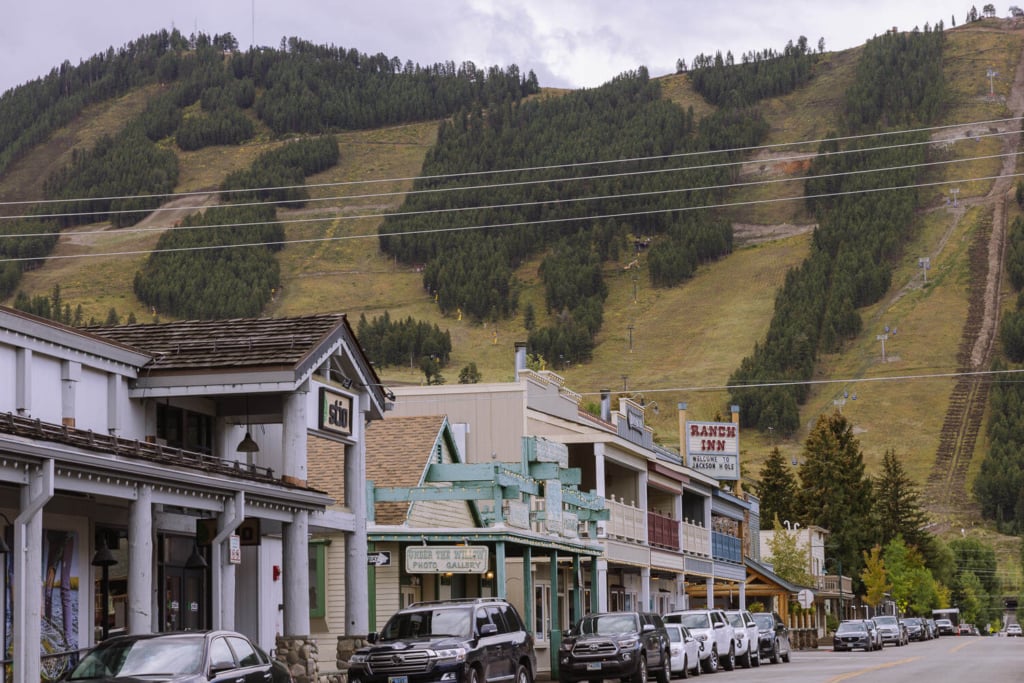
Today, Jackson is a charming town that lovingly combines old and new. Traditional western architecture sits side by side with modern boutiques and art galleries. Don’t miss the town square with its arch of elk antlers or the landscape photography in the Thomas Mangelsen gallery.
Planning, Practical Details & FAQS
How to Get There
Grand Teton National Park is in northwestern Wyoming, just south of Yellowstone. It’s easy to reach, crossing popular road trip routes across the Rocky Mountain West.
By Air
The nearest airport is Jackson Hole Airport, which is located inside the park and around 15 to 20 minutes from the town of Jackson. It’s also around a 20-minute drive to the Moose entrance.
The other good options are Salt Lake City International Airport, about 4-5 hours south of Grand Teton, and Idaho Falls Regional Airport, about 2 hours to the west.
By Car
The most flexible way to explore Grand Teton is in your own car. Jackson is 12 miles south of teh Moose entrance, and Yellowstone National Park is around 20 minutes away.
Park Entrances
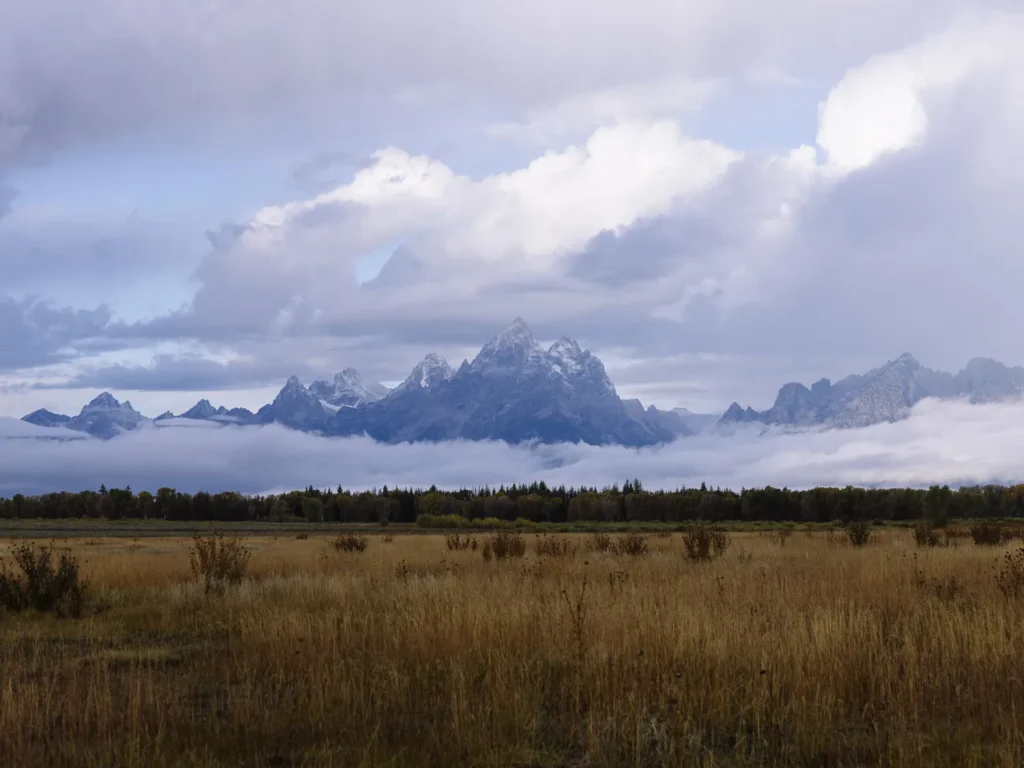
Grand Teton has multiple entrances, and some have limited vehicle access or seasonal closures between November and May. Check the Road Information section on nps.gov to plan your trip.
- Moose Entrance – 20 miles north of Jackson. Best for: Jenny Lake, Taggart, Cascade Canyon, Mormon Row, Snake River Overlook.
- Moran Entrance – 30 miles north of Jackson on the US-226/89/191. Best for: Jackson Lake Lodge, Colter Bay Village, Jackson Lake Cruises, Signal Mountains, Oxbow Bend.
- Granite Canyon – Between Wilson and Teton Village. Best for: Moose-Wilson Road, Granite Canyon, Rockefeller Preserve.
- Rockerfeller Parkway – Southern end of Yellowstone National Park. Best for: Jackson Lake and Colter without detouring to Moran first.
US‑26/89/191 forms the “outer road” along the eastern edge of the park; you can drive this highway and stop at signed turnouts and overlooks without passing a fee booth.
Entrance Fees & Passes
There is an entrance fee for Grand Teton. There is no longer a combined Yellowstone National Park / Grand Teton Pass.
The standard entrance fee is $35, which covers one car for 7 consecutive days. Non-US residents must pay an additional $100 per person on top of teh standard entrance fee.
Alternatively, Grand Teton is included on the America the Beautiful Pass.
Where to Stay in Grand Teton National Park
You can find more details on our where to stay in Grand Teton guide, but here are a few of our recommendations.
Jackson Lodge – A grand old lodge in the heart of the national park; the views are superb, and the Blue Heron bar is a great place to end the day.
Jenny Lake Lodge – Quaint freestanding rustic wooden cabins nestled in a forest on the edge of the Jenny Lake Scenic Drive. Couldn’t be any more central or atmospheric.
Colter Bay Village – A sort of summer camp for the whole family, there are a mix of cabins and tented cabins, a couple of restaurants, a general store, and loads of national park activities right on your doorstep.
Huff House Inn – A stylish B&B in the heart of Jackson, choose between traditional cabins or chic contemporary rooms. Outside there’s a hot tub, barbecue, fire pit, and lovely garden patio.
Bentwood Inn – Wood-clad cabins, each individually styled, offer a touch of indulgence in this scenic part of the world. The inviting lounge has a warming fireplace, board games and a grand piano for those rainy days.
Elk Country Inn – Four blocks from the centre of Jackson, the Elk Inn is built in wood and stone and makes a friendly retreat at the end of the day. There’s a pool and hot tub, and in winter shuttles run to the ski slopes.

When to Visit Grand Teton National Park
The best time to visit Grand Teton National Park is from mid-May to late September when all the scenic roads, visitor centres and walking trails are open. The weather is excellent during the summer months, but the area is busy during the school holidays, making June and September ideal.
For Spotting Wildlife
Wildlife watchers may want to aim for mid-August to late September when the bears feed on the berries around the Moose-Wilson Road, and elk begin to rut while the leaves are turning a wonderful golden yellow.
For Hiking
Hikers planning on hitting the high trails should aim for summer, as snow takes a while to clear from the higher passes in spring and can arrive surprisingly early in fall.
In Winter
Finally, although much of the park is closed in winter, wildlife is still plentiful. Moose, coyotes, and wolves are often easier to spot and a steady trail of migrating elk heads to the National Elk Refuge from late October to December. Skiers flock to the slopes above Teton Village from January to March.
How Many Days in Grand Teton National Park?
We recommend two to three days in Grand Teton National Park. This is enough time to visit all the viewpoints, drive the most scenic roads, do a bit of wildlife spotting, and complete a couple of short hikes.
Wildlife fanatics and avid hikers could stay longer. The animal density in Grand Teton is excellent, and there are loads of trails heading past magnificent canyons, lakes and mountain peaks.
Grand Teton Opening Hours
Grand Teton National Park is open 24 hours a day, all year. However, some of the facilities and services are closed over the off-season. Additionally, the lodges have a relatively short season.
All the opening times for the park are on nps.gov


More USA Guides
- Our 2-week Arizona & Utah road trip itinerary covers 6 National Parks.
- See the best viewpoints at the Grand Canyon and try our favourite South Rim hikes.
- See the buttes and mesas captured in so many films with our guide to Monument Valley.
- Enjoy the under-visited Canyonlands National Park and spend a day in Arches National Park.
- Experience the amazing slot canyons in Grand Staircase Escalante National Monument.
- See all the beautiful hoodoos of Bryce Canyon National Park.
- Try our favourite things to do in Las Vegas, including a few less-visited attractions.
- Book your stay with our guide to the best places to stay in Las Vegas.

reader-supported
When you buy through links on our site, we may earn a small affiliate commission at no extra cost to you.
Thanks for your support // Paul & Mark