

By: Paul Healy // Last Updated:
With a relaxed charm and an engaging spirit, Cádiz is one of Andalucía’s most atmospheric cities — and one of its best-kept secrets.
Cádiz is an island city in the truest sense — a former medieval fortress on a narrow Atlantic peninsula, its ancient stone quarters bleached white by centuries of ocean light.
Now heading into its fourth millennium, it is one of the oldest continuously inhabited cities in Western Europe. An influx of wealth from the Americas in the 18th century gave Cádiz the grand, gleaming character it carries today — tall civic buildings, wide plazas, and marble streets.
It was once one of Spain’s most powerful ports, and you can still feel that quiet sense of self-importance here. This is a city that knows its own worth without needing to advertise it. Cádiz is proud and unhurried.
At its heart, Cádiz is a place to come to feel genuinely part of Spanish life. A muted hum radiates from tiny bars where locals linger, and tourists are welcome, but rarely catered to.
Cádiz is for people who know a good thing when they find it.

Is Cádiz Right for You?
Cádiz is not a destination you’ll pass through on a regular itinerary of Spain. Sitting at the far southwestern tip of the country, on a narrow peninsula, Cádiz requires a deliberate detour.
It doesn’t have the imperial swagger of Madrid, the baroque drama of Seville, or the hillside romance of Granada.
But Cádiz is worth the detour if…
- You love history — Cádiz is one of the oldest continuously inhabited cities in Western Europe, with Phoenician, Roman, and Moorish influences.
- You love a long lunch – Fresh Atlantic seafood, sherry culture, and local tapas bars that are some of the most authentic you’ll find in Spain.
- You want a cultural break – Cádiz feels genuinely Spanish, and the carnival, flamenco and art scene is excellent.
- You want beach + city – Cádiz has a wonderful city beach, La Caleta, right beside the historic old town.
- You have already done Seville – Cádiz makes a brilliant, easy day trip or overnight extension just 90 minutes by train from Seville.

Top Things to Do in Cádiz
Mark and I have spent a lot of time in this part of Spain, and you can read more in our guide to the best places to visit in Andalucía.
Cádiz benefits from having fewer visitors than other destinations, but there are still plenty of great things to do. Here are our favourites.
1. Catedral de Cádiz
Built with American cash, which eventually ran out in 1792, the huge cathedral dominates the city. It’s not quite finished and a little patchy in places, which only adds to its colossal charm.
The Cádiz Cathedral began life as a baroque aspiration, but various delays led to the incorporation of neoclassical elements, resulting in the mix of architectural styles you see today.
The various chapels inside the building have stirring works of art. The free audio guide was long and difficult to follow; we eventually abandoned it and just strolled around at our leisure.
- Hours: 10 am – 8 pm (Mon to Sat); 1:30 pm – 8 pm (Sun)
- Cost: €12.


2. Cádiz Cathedral Bell Tower (Torre de Poniente)
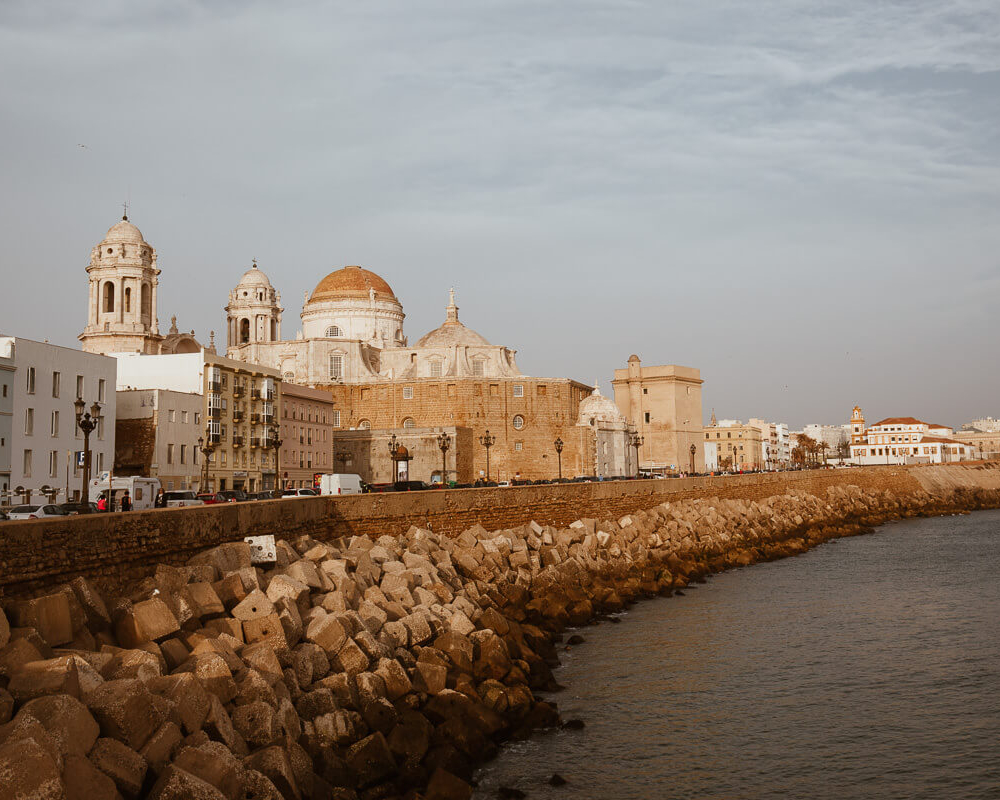
The Cádiz Cathedral is best viewed from the seafront, where the twin 131-foot bell towers preside over the old walled city. The walk up the ramp of the west bell tower (Torre de Poniente) is one of the best things to do in Cádiz.
Built after the church was completed during the city’s golden age, the tower offers impressive views over the old town. The golden tiles of the dome that crowns the cathedral are beautifully set off by the blue sea behind it.
It’s well worth taking the climb up to check it out. The Bell Tower is included in the Cathedral ticket price.


3. Oratoria de la Santa Cueva
Situated behind a very unassuming façade, the Oratoria de la Santa Cueva belonged to the mysterious Spiritual Withdrawal Congregation, who were leading figures of Cádiz in the 18th century.
After descending a beautiful marble staircase, a very austere chapel with bare pillars and washed-out stone walls feels dank and ominous.
In contrast, the upstairs chapel, or the High Sacramental Chapel, is remarkably ornate.
Deliberately designed to contrast the penitential space downstairs, the upper chapel of Oratoria de la Santa Cueva is ostentatious and uplifting.
The high chapel also contains a secret stash of works by Goya painted into the arches above the alcoves.
This was one of those surprise finds in Cádiz that we really loved.
- Hours: 10:30 am – 4 pm (Mon-Fri); 10 am – 2 pm (Sat); Sun & holidays closed
- Cost: €5 general; €4 reduced.


4. Museo de Cádiz – Museum of Fine Arts & Archaeology Museum
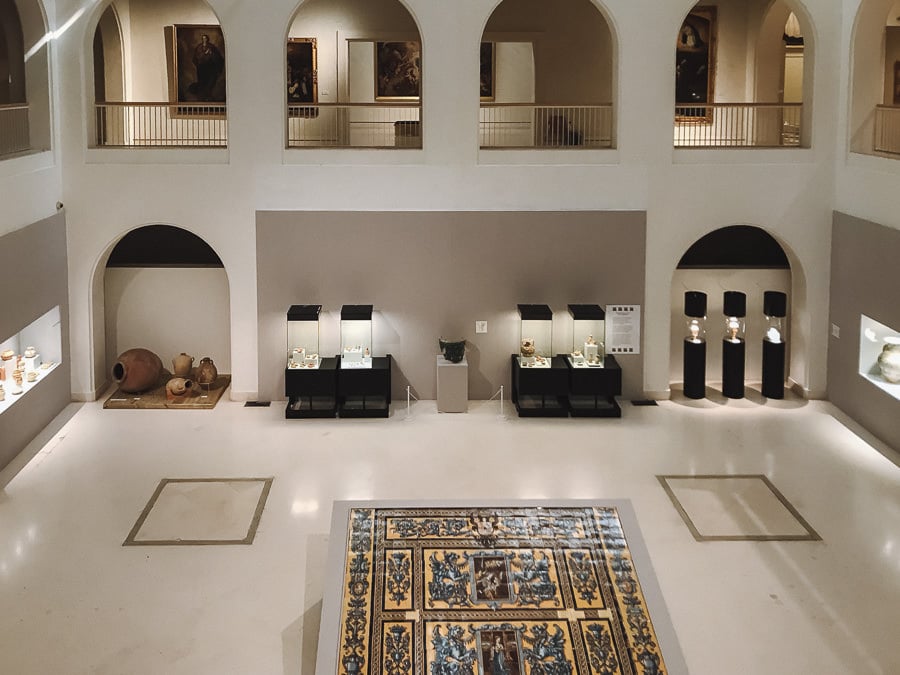
The Museum of Cádiz combines the Museum of Fine Arts and the Archaeological Museum in one building.
The downstairs archaeology collection contains Phoenician and Roman artefacts discovered in Andalucía, dating back to the 5th century BCE.
The collection was built upon the chance finding of a male anthropoid sarcophagus in a nearby wharf. This now dominates the display downstairs, along with several other important archaeological finds.
Upstairs contains a collection of Spanish artworks from the 18th to the early 20th centuries.
If you are into art, you’ll love this collection. There are works by Murillo, Rubens and Miró. The highlight for us was the 18 canvases of angels and monks by Francisco de Zurbarán.
- Hours: 10 am – 8:30 pm (Tue-Sat); 10 am – 5 pm (Sat); Closed Monday.
- Cost: €1.50; free to EU citizens.
5. Plaza de San Juan de Dios
Plaza de San Juan de Dios is the city’s main commercial centre, buzzing with local tapas bars and cafes.
Backing onto the harbour, the plaza is a great meeting point in the city. There is usually a craft market set up in the square, especially if cruise ships are in town.
The standout feature is the beautiful Cádiz City Hall. Framed by palm trees lining the square, huge Ionic columns, rising over a series of arches, support a clock tower overlooking Cádiz.
This is just a nice part of Cádiz to stroll around.


6. Roman Theatre
The Roman Theatre of Cádiz was built by Lucius Cornelius Balbus, a personal friend of Julius Caesar in an attempt to expand the city.
Throughout the centuries it was built over, but remarkably, it was only uncovered in 1890.
In its day, the theatre held 10,000 spectators in a horseshoe auditorium. The stage and portico have not been excavated and remain under the modern city.
A museum explaining the history of the ruin and other Roman influences in Cádiz is partially built over the excavated area.
Glass walkways and panels provide better visibility of the theatre and how it has been consumed by city growth over the centuries.
It doesn’t take long to see, but it’s a great addition to your Cádiz itinerary.
- Hours: 11 am – 5 pm (Mon-Sat); 10 am – 2 pm (Sun)
- Cost: Free.

7. Mercado Central de Abastos
The Mercado Central de Abastos is considered Spain’s oldest covered market.
Built in 1839, several refurbishments have given the original neoclassical building a split personality. But it’s still doing what it’s been doing for centuries, housing a lively local market.
Outer stalls are accessed through arches in the stone walls. Here, Rincón Gastromómico or Gourmet Corner takes place every day of the week.
It’s very local, with a great selection of grilled seafood, tortillas, and olives on display, ready to eat. Other stalls provide the necessary accompaniments: cerveza (beer), vino (wine) and of course, Jerez (sherry). You could also pick up a local Spanish Rum.
Don’t miss the churros stand on the way out.
- Hours: 9 am – 2 pm (Mon); 9 am – 3:30 pm & 6 pm – 11 pm (Tue-Thu); 9 am – 3:30 pm & 6 pm – midnight (Fri); 9 am – 4 pm & 6 pm – midnight (Sat); 12 pm – 5 pm (Sun).

8. Castillo de Santa Catalina
Castillo de Santa Catalina is a fortress on a rocky outcrop on the Cádiz harbour.
It was built in the 17th century to defend the city from one of its most vulnerable fronts, so it’s in a prime position overlooking the sea.
The star-shaped floor plan has survived to this day, practically intact. For a time it served as a military prison; some of the remnants of which are still visible today.
The very picturesque Chapel of Santa Catalina adds to the charm with excellent views over the Cádiz Bay.
Today, the fortress is a multi-purpose recreational and cultural venue. It includes temporary exhibition rooms, educational spaces, and artistic workshops.
On our visit, there was an excellent photography exhibition upstairs and an Impressionism display in the cavernous warren downstairs.
- Hours: 10 am – 6 pm (Mon-Sat); 10 am – 3 pm (Sun).
- Cost: €3.50 general; €1.50 seniors.


9. Parque Genovés
Parque Genovés is a small peaceful park on the northwest edge of the city. Entering through the decorative gates, the park is a green sanctuary within the confines of the ancient stone walls of the old town.
With little stone bridges and antique benches, Parque Genovés has a romantic element, and it’s perfect for a break from sightseeing.
You can catch glimpses of the sea and the fortified Castillo de Santa Catalina through the immaculately shaped trees and symmetrical flower beds.
10. Barrio del Pópulo
Barrio del Pópulo is the oldest neighbourhood in Cádiz.
It’s just over one square kilometre and located between the Town Hall and the Cathedral.
Connected to the original walled perimeter of Cádiz, entry is via one of the three remaining arches.
Inside, a maze of narrow stone streets contains a host of churches, squares and interesting façades.
Don’t miss the elaborate baroque palace of Casa del Almirante which dominates the tiny, secluded San Martin Square, surrounded by humble homes.
Plaza de Fray Félix has an unusual drinking fountain dating back to Roman times which is also worth a look.
However, the best way to see Barrio del Pópulo is to stroll around and inspect the tiny shops and inviting tapas bars.


11. Peña Flamenca la Perla de Cádiz
Cádiz, along with Jerez and Seville, is an important centre for Flamenco in Spain.
Peña Folklorica at Perla de Cádiz is where locals go to enjoy this expressive art form.
Set next to the Atlantic Ocean, the dramatic mood outside is matched by the stomping, clapping and singing inside.
With a regular calendar of events that includes both the established stars of flamenco and a new generation of young rising talent, Peña Folklorica is one of the best places to witness flamenco in Spain.
This is the real deal – there’s no English on the menu and it can be difficult to get in. So, book in advance before you go to Cádiz.
Late nights, loud markets and the best jamón of our lives. Dive into all our Spain posts.
Spain
12. La Caleta Beach
There are several great beaches south of Cádiz, stretching along the coast. La Caleta is a lovely beach right in the heart of the city.
Located beside the historical old town, it is popular for both locals and tourists. As a result, it can get busy. But it’s well-maintained, and the sunset views of the castles are some of the best in the city.
After soaking up the sun, take a walk along the Fernando Quiñones Promenade to the gate of San Sebastián, the 18th-century castle built to protect the city from the north.
Barrio La Viña is very nearby, where you’ll find plenty of great local bars.


13. Barrio la VIña
Barrio la Viña is the old fisherman’s quarter of Cádiz, where the sherry flows freely from buzzing taverns and Andalusian tapas bars. Located on the western edge of the city, La Viña is filled with energy, local chatter and some of the best seafood in the city.
Stroll from one bar to the next, catching glimpses of the seafront between the old stone laneways.
Taberna Casa Manteca is a thoroughly authentic, traditional tapas bar where rustic dishes and great wines are served in a delightfully chaotic atmosphere. Taberna el Tio de La Tiza, deep in the backstreets of La Viña, has excellent seafood at great value prices.
After getting your fill, take in the views of the beautiful church Parroquia de Nuestra Señora de la Palma.


14. Flower Market at Plaza Topete
Plaza Topete, also known as Plaza de las Flores, is a lively plaza with a bustling flower market.
There are plenty of tapas bars lining the square, but most of these are quite touristy, so we’d give them a miss.
What we would suggest here is just to grab a coffee from one of the cafes in the square and watch the world go by.

Cádiz Tours
Cádiz is an easy place to explore, and most of the main sights we have covered in this guide can be easily reached on foot.
But if you want to get more out of the city, there are a few tours we could recommend:
Bike Tour – Baja Bikes offers a 4-hour sightseeing tour that includes the main attractions, plus Playa Santa María and La Caleta.
Sunset Catamaran Tour – Take in the beautiful old town from the Bay of Cádiz on this sunset catamaran tour, which includes a glass of cava.


Where to Eat in Cádiz?
You’ll have no trouble finding great places to eat in Cádiz.
From cheap hole-in-the-wall tapas bars with their signature tuna almadrabas, to top-end dining on white tablecloths, Cádiz has something for foodies of all tastes.
But here are two particular places we recommend.
Casa Lazo – Ideal for a local tapas lunch, Casa Lazo is Cádiz relaxed eating at its best. Small, friendly and full of authentic charm, Café Lazo serves up excellent dishes at very affordable prices. Their croquetas and gambas pil pil were top-notch.
Taberna El Tio De La Tiza – One of the best things to do in Cádiz is to dine outside in a square. Taberna El Tio de la Tiza is an ideal place to do this. They serve up a great selection of Andalusian specialities with a high focus on fresh local fish.

Practical Information & Logistics
Where to Stay in Cádiz
Cádiz is a very affordable city to explore. So when it comes to picking accommodation, it’s possible to stay very centrally at competitive rates or find a beautiful seaside location for a splurge.
The white hilltop village of Vejer de la Frontera is also a great base for visiting Cádiz. It’s only 45 minutes away, and it has a great range of boutique hotels.
€€ | Hotel Argantonio – Exposed beams and carved arches give Hotel Argantonio a rustic Andalusian feel with a Moroccan edge. The traditional buffet breakfast is excellent, and the location close to La Caleta beach couldn’t be better.
€€€ | Hotel Casa de las Cuatro Torres – This beautifully renovated hotel in the heart of the old town retains the character of its 17th-century building while offering all the modern conveniences of a top hotel. It’s a design-focused space with friendly hosts in a great location.
€€€ | Hotel OLOM – Sitting directly on Plaza de la Catedral in the heart of the old town, this stylish adults-only boutique hotel has sleek and contemporary rooms with an incredible rooftop terrace

How to Get to Cádiz
Cádiz is located on the coast in southwest Spain, 121 kilometres from Seville. With Spain’s excellent high-speed train network and several airports nearby, getting to Cádiz is very easy.
By Plane
Cádiz is within easy proximity of 3 international airports.
Málaga is 230 kilometres from Cádiz, but if you’re seeing more of Andalucía, it’s a good starting point. Málaga has a large airport with several daily flights from many international locations. The best way to get to Cádiz from Málaga is by car, which takes about 2 hours and 15 minutes.
Seville is 130 kilometres away from Cádiz. There are regular flights from several European cities; therefore, this is probably the most convenient airport for arriving in Cádiz. The easiest way to get to Cádiz from Seville is via a 90-minute direct train from Sevilla Santa Justa station. Read more in our guide to visiting Seville, Spain.
Jerez is 43 kilometres away from Cádiz and a good option if you’re travelling to Cádiz from another Spanish city. A few budget airlines also fly to Jerez from international destinations, including Ryanair from the UK. There is a direct train service from the airport to Cádiz which takes about 50 minutes, but it is rather infrequent.
By Train
Cádiz is on one of Spain’s high-speed trains, the Alvia, which connects the major cities in Andalucía with Madrid.
The average journey time from Madrid to Cádiz is 4 hours and 30 minutes (the fastest journey is 3 hours 55 minutes). There are 3-5 services daily.
The mainline from Madrid to Cádiz also stops in other popular Andalusian destinations including Córdoba, Seville and Jerez.


When to Visit Cádiz?
As a city completely surrounded by sea, the temperatures in Cádiz are more moderate than inland. In winter, the average is around 13°C (55°F) while summer highs average about 28°C (82°F).
Cadiz is a good destination all year round, but is best from April, after the winter rains have eased, to October.
If you don’t like it too warm, try to avoid July and August when the city’s temperatures can reach above 30 degrees on the odd day, and it is a little busier with summer tourists.
The Carnival of Cádiz begins the weekend before Ash Wednesday, and lasts for 10 days. There are street processions, impromptu concerts, comedians, and puppet shows that fill Cádiz with a carnival air. The Carnival brings hordes of visitors to Cádiz, so book well in advance if you’re travelling over this time.

What to Do Near Cádiz?
It’s unlikely you’ll be making a special trip to this part of Spain just to see Cádiz. But if this guide has caught your interest, here are some nearby places that make great additions to your itinerary. We’ve been to all these places, and we highly recommend them.
Tarifa
Tarifa is a popular surfing destination on the southern tip of Spain where the Atlantic meets the Mediterranean.
The town has a North African feel with small, whitewashed laneways hiding some excellent restaurants. It is a 1-hour, 15-minute drive from Cádiz.
There are some excellent beaches near Tarifa that are much more natural than the more built-up beach bars on the Costa del Sol.
For more information on what to do there, read our guide to the best things to do in Tarifa.
Vejer de la Frontera
A classic white village perched high on a hilltop overlooking a gorge. Tiny laneways lead from the small main square, which has a beautifully ornate central fountain.
Vejer is a hotspot for luxury boutique hotels, and it’s a 45-minute drive from Cádiz.
Seville
Seville is the capital of the Andalusian region and an excellent day trip from Cádiz.
With world-class art, iconic attractions and some of the best food in the region, it’s the perfect way to fully embrace southern Spanish culture.
Read more in our guide to the best things to do in Seville and our 3-day Itinerary for Seville.
Jerez de la Frontera
Jerez is part of the sherry triangle in southwest Spain.
The small lanes of the old centre are packed with Moorish history, flamenco music and of course, cosy tapas bars. But the highlight is a tour and sherry tasting at one of its many bodegas.
Jerez is just a 30-minute drive from Cádiz or 40 minutes on the train.
Córdoba
Córdoba is famous for its imposing mosque/cathedral, flower-filled patios, and intriguing Moorish history. It’s about a 2-hour, 30-minute drive or direct train ride.
All the information is in our guide to Córdoba.

More Andalucía Guides
- Spend a glorious 3 days in Seville, the capital of Andalucia.
- How to plan a day trip from Seville to Córdoba.
- Our guide to Málaga includes the best things to do, top beaches and great day trips.
- See the Alhambra with our guide to visiting Granada.
- Take a road trip through these beautiful white villages in Andalucía.
- How to visit Ronda on a day trip from Seville or Málaga.
- Read up on the best things to do in Cádiz.
- See the incredible history of the region in our 2-day itinerary for Córdoba.
- Hike the stunning Garganta Verde.
- Find secluded beaches near Tarifa ideal for kite-surfing or bum-sitting.
- Visit more interesting places in Andalucía.
- Read about all the best things to do on the Costa del Sol.

reader-supported
When you buy through links on our site, we may earn a small affiliate commission at no extra cost to you.
Thanks for your support // Paul & Mark
Is there a hop on hop off bus in Cadiz?
Hi Diane – Yes there is. You can purchase a 2-day ticket for the sighseeing bus which stops near all the major sights and includes a free walking tour.
Cádiz is such a beautiful city!! Love it!! Loved your pictures too!
Thanks so much! It really is a beautiful city.