

Looking for the best things to do in Marrakech? This guide covers the must-visit attractions, plus local experiences we loved in this unique, vibrant city.
By: Paul Healy // Last Updated:
Separated from the Sahara Desert by the Atlas Mountains, Marrakech was built in 1070 as the capital of the Almoravid Empire.
Formed from the earth, red mud buildings have given it the nickname The Red City.
But 500 years after its inception, wealthy Sultans added to the architecture with sumptuous palaces and ornate tombs.
These exotic additions provide a myriad of captivating things to do in Marrakech, a city made unique by the colourful mix of Arab and Berber cultures.
Mark and I have visited Marrakech several times, often using it as a base to explore the rest of the country, which you can read more about in our Morocco Itinerary.
Although it has its craziness, the beguiling architecture, sprawling palaces, and traditions of the city make it one of our favourite places to visit.
This guide highlights the best of Marrakech, with tips to help you stay safe and make the most of your trip.

Marrakech Map
We’ve mapped out all the best things to do in Marrakech below to help you plan your trip.
Marrakech can be a chaotic city, so we suggest you head over to our 3-day Marrakech itinerary, which will help you organise all these attractions and experiences in the right order, ensuring you don’t miss anything.
Click on the top right corner to open our map in your Google Maps app. Click the star next to the title to save it to your Google account.
What to Do in Marrakech
There’s a lot to see in Marrakech, and while the big sights can get very busy, these are the ones we recommend you visit.
1. Ali Ben Youssef Madrasa (Medersa Ben Youssef)
The local mosques in Marrakech contain some of the city’s most impressive artistry. Unfortunately, they are closed to non-Muslims, but you can experience the splendour of Islamic design at Ali Ben Youssef Madrasa.
The madrasa, once the largest Qurʾānic school in North Africa, features Moroccan and Andalusian architecture, characterised by a large central courtyard surrounded by ornate walls adorned with zellij (mosaic tilework) and calligraphic friezes.
The student rooms surrounding the courtyard are completely devoid of decoration, adding a fascinating contrast.
As both a historic theological college and an architectural masterpiece, the Madrasa is highly recommended.
Tickets – Tickets are not required in advance, but this very popular walking tour includes the Madrasa, the Secret Garden, and the Souks.


2. Yves Saint Laurent’s House
The former home of Yves Saint Laurent is now one of Marrakech’s most popular tourist attractions.
The complex includes his house, Villa Oasis, a museum of his life’s work, a Berber Museum, and the beautiful Majorelle Garden.
The garden was originally designed by Jacques Majorelle, a French artist who fell in love with the rich blue used in Berber houses and incorporated it into his own home and garden.
It’s a wonderful complex to stroll around, even for non-fashionistas like us. The permanent exhibition contains over 7,000 garments and 30,000 accessories. There is also a 5,000‑book research library and a temporary exhibition space.
Tickets – The queues can be long, so we recommend buying skip-the-line tickets in advance.
Tip // The queues for the Garden Majorelle can be very long, but if you start at the museum first, you can purchase tickets for both without waiting in line.


3. Bahia Palace
The Bahia Palace was originally built in the 1860s and later expanded and renovated in the early 1900s.
Although only a few of the 150 rooms are open to the public, it’s enough to get a feel for the magnificent decorations.
It features some of Morocco’s finest Moorish and Andalusian architecture. (Read our guide on Seville for more exquisite Moorish architecture.)
The grandeur of the palace is best demonstrated in the courtyards. Lush plants fill white-washed gardens with central fountains typical of Moorish design.
The showpiece is the large Grand Courtyard, with geometric patterns stretching across an expansive marble floor, surrounded by wooden galleries.
Tickets – You can buy tickets in advance or book a combined skip-the-line ticket for the Bahia Palace and the El Badi Palace with a local guide.


4. Saadian Tombs
The Chamber of the Twelve Columns in the Saadian Tombs is widely regarded as the pinnacle of Moroccan architecture.
The intricately designed space houses the tombs of three of the most important Sultans of the Saadian dynasty.
Their elaborate final resting places – a series of beautiful burial rooms decorated with Italian marble, arches lined with gold, richly carved oak and extensive tiling – signify their importance to society.
The extravagance continues in the mausoleum for Sultan Ahmed al-Mansour’s mother; however, his wives and advisers were buried in tombs in the garden.
In total, there are about 170 tombs in the complex, set around a beautiful garden.
Tip // The tombs get very busy with tour groups between 9:30 AM and 1 PM, so it’s best to avoid these times if possible. Book skip-the-line tickets for the Saadian Tombs and the Bahia Palaces.


5. Central Souks
The central souks of Marrakech are open-air markets tucked into a labyrinth of laneways. Packed with numerous stalls, they give the medieval medina its distinctive energy.
Some of the stalls are very tourist-focused, and you can expect to get hassled. But there are also many traditional artisans who show little interest in tourists. We suggest seeking those out for a better experience.
The souks are organised (roughly) by their crafts. We have put a mini-walking tour through the best of them on our 3-day Marrakech itinerary. Here are the best ones to visit:
- Souk Haddadine – The metalwork section where pots, trinkets and jewellery are produced to the rhythmic sound of beating tin.
- Souk Cherratine – The leather goods souk, where you can stroll the packed arcades with the aroma of leather wafting in the air.
- Souk des Babouche – Row upon row of colourful slippers (interesting photo opportunity).
- Souk des Teinturiers – The wool-dying souk with curtains of brightly coloured wood hanging over the walls.
- La Criée Berbère – The proud home of beautiful Berber carpets.


6. Jemaa-El Fna
Jemaa el-Fna is the central square of Marrakech and, along with the central souks, it’s the life and soul of the city.
It’s at its best at sunset when the light fades, the food stalls swing into action, and an exotic magic descends on the square.
The best way to experience the drama is to grab a spot on the terrace at Le Grand Balcon du Café Glace. Three floors up on the edge of the square, the balcony is perfectly positioned to witness the sunset on Koutoubia Mosque as the full scale of activity on Jemaa el-Fna gets underway.
Eating at one of the stalls in Jemaa el-Fna is an experience we highly recommend. Not because the food is great, but because the vendors will charm even the most jaded of travellers with their witty banter. It’s also packed with atmosphere.
Read more in our guide to visiting Jemaa-el-Fna.


7. Rahba Kedima Square
Mint tea is often prepared by the men of the house via a tradition passed down through the centuries. Watching the long pour from an ornate teapot held high above a tiny glass is one of our fondest memories of travelling in Morocco.
One of our favourite places to soak up this tradition in Marrakech is at Café des Épices.
Perched on the edge of bustling Rahba Kedima Square, this lively café is surrounded by stalls and offers a perfect vantage point to watch life unfold in the medina.
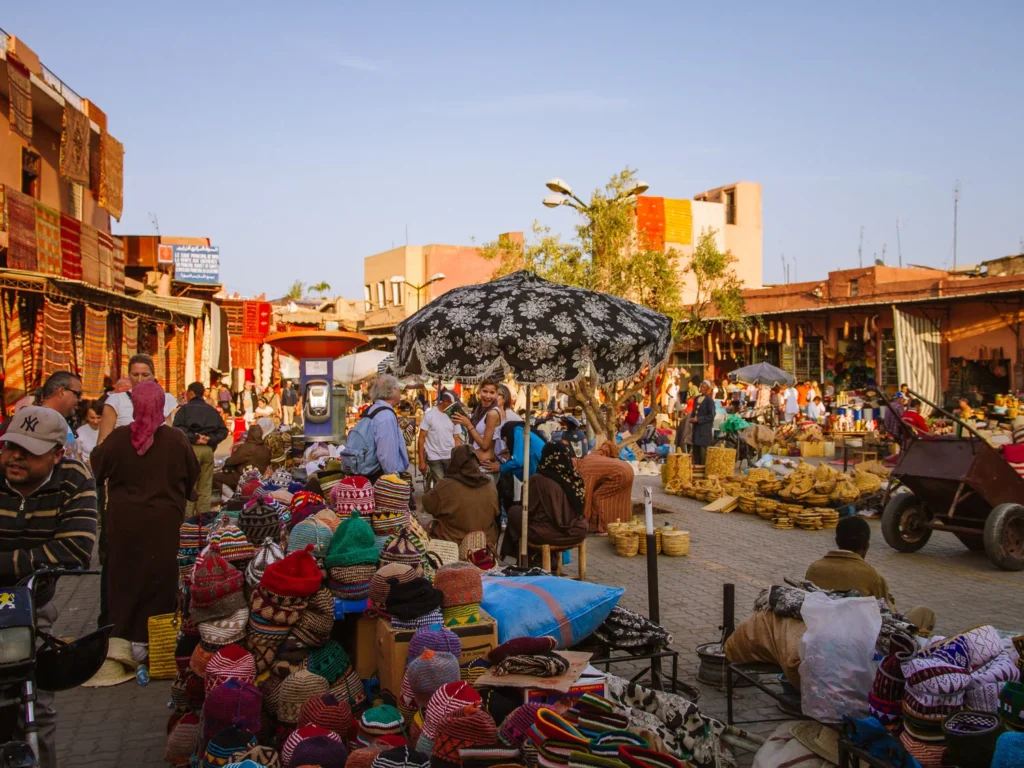
The square is famous for apothecaries selling mysterious supplies to locals, plus spice mixtures and traditional cosmetics to tourists.
The middle of the square is packed with stalls selling Amazigh hats and woven baskets.

8. The Mellah
The Mellah is the old Jewish Quarter of Marrakech. It was created by Sultan Abdallah al-Ghalib of the Saadian dynasty in 1558. The purpose was to protect Jews fleeing persecution in the Iberian Peninsula, as required by Sharia law at the time.
Restored several times over the years, the maze of tight laneways has less of the craziness of the medina and feels more like an interesting local neighbourhood.
Here are some of the highlights:
- The Grand Bijouterie is an ornate jewellery arcade that still sells gold by the ounce.
- Place des Ferblantiers is a scenic meeting point with small souks selling spices, tin lamps and homewares.
- Slat Al Azama is a synagogue with a beautiful blue courtyard.
- The Jewish Cemetery is a poignant reminder of how many Jews once called Marrakech home.


9. Flea Markets
Another great way to get off the main tourist trail in Marrakech is by strolling around the flea markets on the outskirts of the medina.
With regular day-to-day items on sale and few tourists to be seen, it’s a much more Moroccan shopping experience.
Souk El-Khemis
The best local market is Souk el-Khemis, which is located just outside the northern gate (Bab El Khemis). It would be hard to think of any day-to-day items that you couldn’t pick up at this raw and sprawling market – they sell everything from dishcloths to donkeys.
Souk el Khemi
Nearby, on the edge of Jardin de Bab el-Khemis, Souk El Khemis is a traditional flea market selling bric-a-brac, vintage mobile phones, well-worn clothes, and architectural salvage. It’s a wonderful photo spot in Marrakech.
Joutiya Markets
Outside the city gates, Joutiya Markets is an informal flea market selling secondhand clothing, tools, bike parts, and old appliances.

10. The Fondouks
A fondouk is a medieval hotel that was used by travelling traders (and their camels) as they worked the prosperous caravan route from the Sahara.
Ground-floor stables were set around a small courtyard with lockable chambers on the first floor for storage and sleeping.
In their time, fondouks were beautifully decorated, each one designed to attract specific merchants based on their cultural heritage.
After falling into disuse, many of them were converted into workshops where artisans could operate. Some, however, have been sympathetically restored, while others have been converted into charming restaurants such as the very popular Le Fondouk.
Most of the foundouks in Marrakech are spread around the El Baroudiyine area on Route Sidi Abdelaziz, where the traders had easy access to the souks north of Jemaa el-Fna.

11. Maison de la Photography
The Maison de la Photographie is one of Marrakech’s most charming and under-visited attractions.
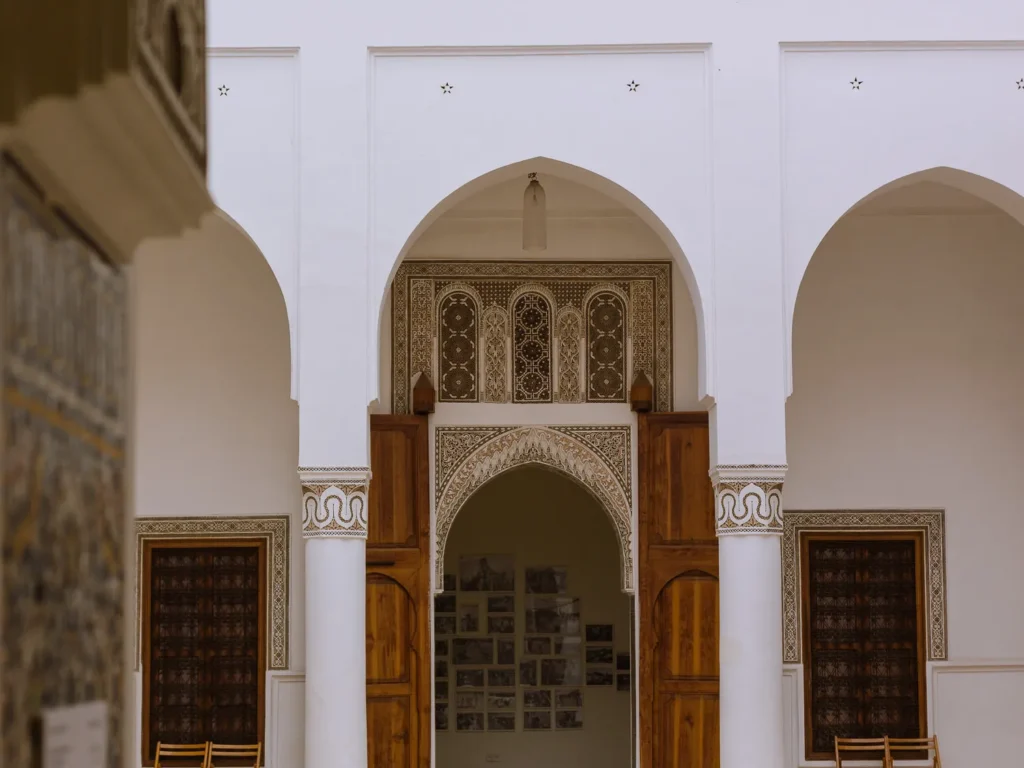
Housed in a beautifully restored riad, the museum winds up through a series of internal staircases packed with over 10,000 photographs documenting life in Morocco between 1870 and 1950.
The images — portraits, street scenes, and landscapes — offer a fascinating window into a country that has changed enormously over the past century, and a useful addition to the more ancient history on display elsewhere in the medina.
The rooftop terrace is one of the best views in Marrakech and is well worth the climb.
12. Secret Garden
The Secret Garden dates back to the 16th century. It was passed down among sultans and political figures before ultimately falling into ruin.
It was eventually restored and opened to the public in 2016.
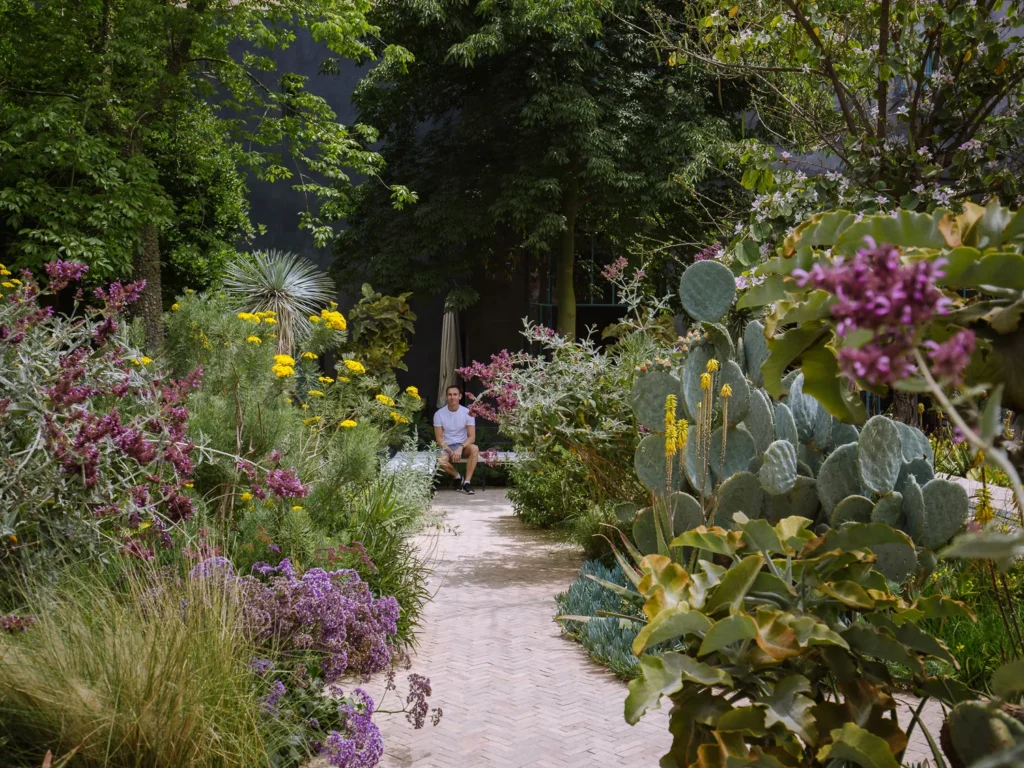
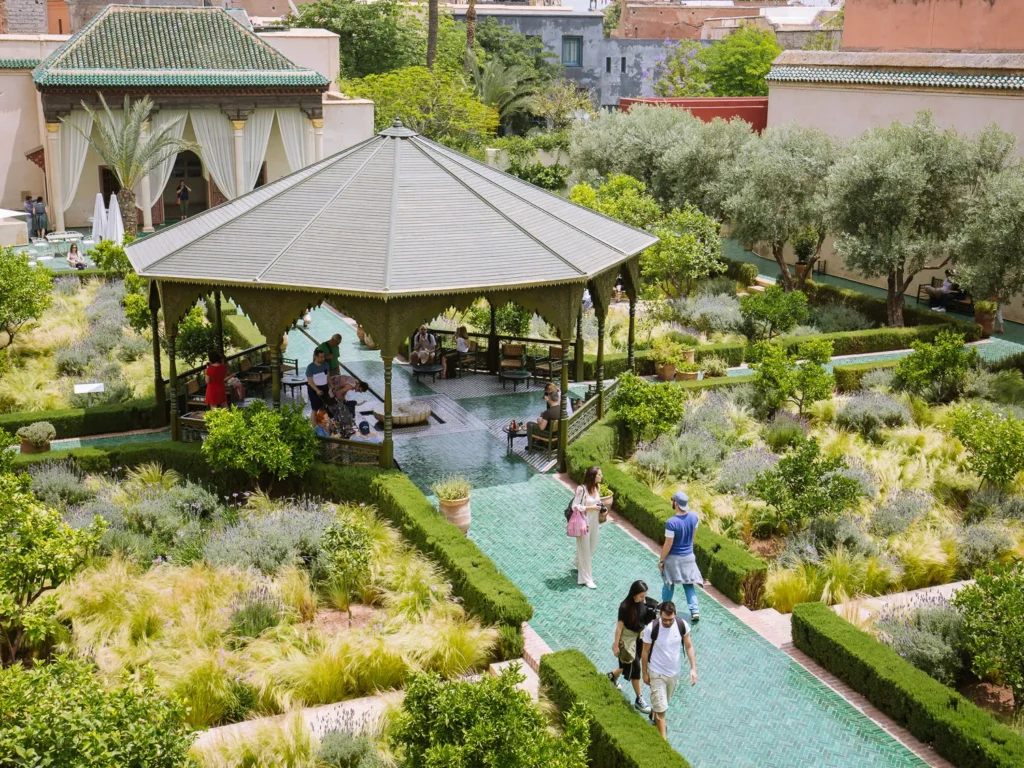
Today, it’s an oasis of calm amid the medina’s clamour, with elegant pavilions, pools, and lush vegetation.
There are two distinct gardens. The Islamic Garden is designed in traditional principles, emphasising symmetry and incorporating water channels.
The Exotic Garden has a diverse collection of plants from around the world.
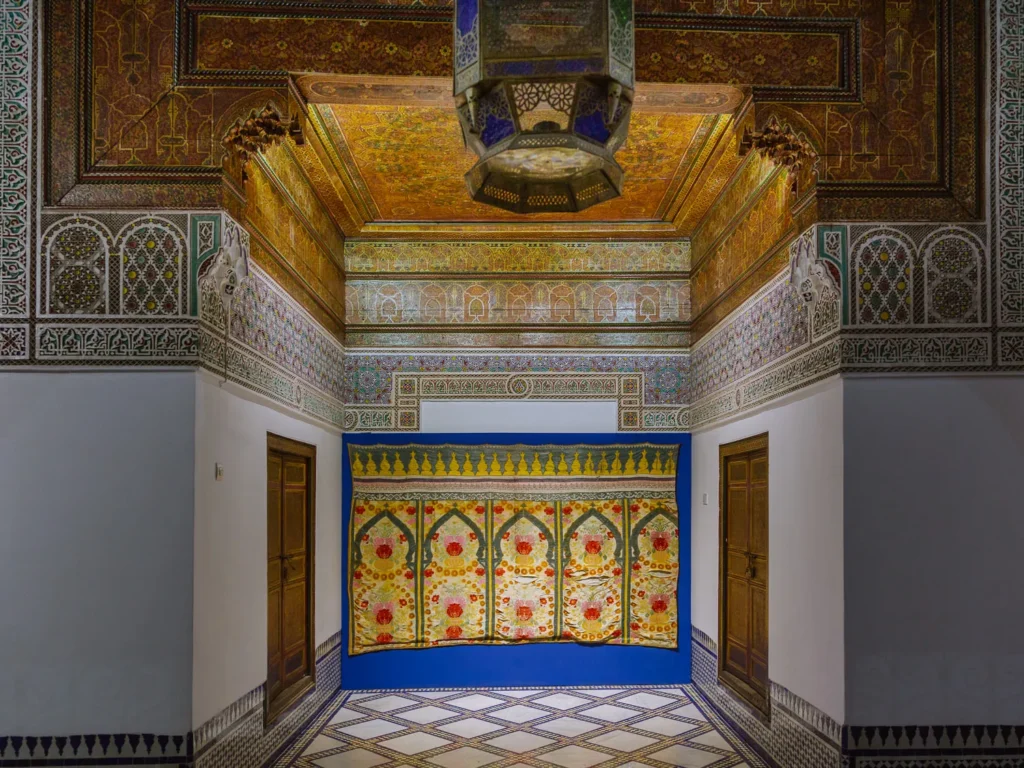
13. Dar Si Said Museum
Dar Si Said is a miniature version of the Bahia Palace, with far fewer visitors.
It’s a beautifully restored 19th-century palace in the medina, which was the residence of Si Sa’id, a court official. It was converted into the museum you see today in the 1930s.
The building houses the Museum of Moroccan Arts. Packed with carpets, jewellery, textiles and musical instruments, the highlight is the stunning marble basin donated from the caliphate of Córdoba.
14. Maison Tiskiwin
Maison Tiskiwin houses the collection of Bert Flint, a Dutch eccentric fascinated by Andalusian and Berber influences in Morocco.
The museum features a collection of memorabilia centred on the Saharan trade routes between Marrakech and Timbuktu.
The exhibit traces an imaging journey along ancient Saharan trade routes from Mararkech to Timbuktu.
You’ll find art, jewellery, textiles, carpets, musical instruments, carved woodwork, and decorative tiles.

15. Musée de Marrakech
The Marrakech Museum is housed in the Dar Mnebhi Palace and features a diverse collection of weapons, carpets, and pottery from across Morocco.
Inside, there are artefacts of traditional Moroccan heritage, including ceramics, textiles, weapons, carpets and other cultural objects.
The main reason to pop your head in, however, is to see the impressive central courtyard, which has been embellished with fountains decorated in colourful tiles and topped off with cedarwood panels.

16. Stay in a Traditional Riad
Built around a central courtyard with lush gardens and water features, and surrounded by opulent tilework, staying in a riad in Marrakech is a wonderful experience.
The best riads offer a genuine sense of Moroccan culture, often lacking in hotels. You can find everything from traditional homes to luxury accommodation.
We have a detailed guide on where to stay in Marrakech, but here are some Riads worth checking out.
- Riad Jardin Secret ($$) – A charming guesthouse in an excellent location with a focus on making guests feel as welcome as possible.
- Riad Adore ($$) – A more contemporary riad with a chic design and sparkling style, this is the place to book if you want the luxury and service of a quality hotel.
- Le Riad Berbere ($$) – Charming, cosy place to stay with shady whitewashed courtyard and excellent home cooking.
- Riad de Tarabel ($$$) – Beautifully appointed rooms and top-quality service make staying here an elegant experience. The traditional breakfast in the lush courtyard is excellent.
- Riad Farnatchi ($$$$) – More grandeur of yesterday than modern style, this traditional and elegant riad has spacious, beautifully designed rooms.


17. Enjoy a Rooftop Restaurant
Marrakech has numerous cocktail bars with roof terraces offering magnificent views of the medieval medina.
But you can also find yourself sitting beside a collection of satellite dishes or ducking under laundry to get to your table. So you need to pick wisely.
Here are some of the best rooftop bars and restaurants we found in Marrakech.
- Nomad – Beautifully prepared dishes inspired by local produce. There’s an excellent selection for vegetarians, and the setting spread across two levels of terraces is just perfect.
- Un Déjeuner à Marrakech – The French-inspired menu and non-alcoholic cocktails hit the spot. Their selection of innovative salads makes it an excellent choice for lunch.
- Le Fondouk – The menu leans heavily on traditional Moroccan dishes with an international flavour, and they sell alcohol.

18. Visit a Hammam
Most Moroccans visit a hammam (public steam bath) at least once a week to cleanse their skin and purify their mind before prayer.
As one of the five traditional elements in every neighbourhood, alongside the mosque, school, bakery, and fountain, the hammam is central to cultural and religious life in Morocco.
Visiting a hammam is a great way to immerse yourself in Moroccan culture.
Experiences can differ significantly depending on the type of hammam you visit. Here is a quick rundown:
A local hammam is very cheap and can be a great way to immerse yourself in the culture. However, they aren’t specifically set up for tourists, so you’ll need to purchase soap, a mitt, and a bucket. Language can also be a challenge.
These hammams offer a more pampering experience, similar to a Western spa.
- Hammam Mouassine (Local) – This is a great tourist-friendly yet local hammam. It’s clean and comfortable, but housed in a traditional building that locals also use. An English-speaking host will explain the services on offer to you.
- Hammam de la Rose (Western) – A great range of services in a calm, relaxing space with a focus on health and wellbeing. Prices are pretty good for a high-end experience.
- La Mamounia (Western) – For total indulgence, this gloriously decorated spa is one of the most luxurious hammams in Marrakech. Booking ahead is essential.


Logistics & Practicalities
Where to Stay in Marrakech
Most of the sights, restaurants, and bars in this guide are centrally located in the medina. Everything is easy to see on foot (though there’s a lot of walking), so it’s a good idea to stay as centrally located as possible.
We mentioned some of the best Riads above, and we also have a guide on where to stay in Marrakech with a breakdown of each area.
Getting to Marrakech
A wide range of international flights arrive at Marrakech Menara International Airport.
The airport is only a short taxi ride from town and costs around $10 (£7.50/€9). Most riads will arrange a taxi for you, and given that they can be challenging to find, this is a good option for first-time visitors to Marrakech.
If you don’t pre-book a taxi, exit the airport, pass the touts on the ground floor, and head upstairs to the official taxi rank.
As cars can’t enter the medina’s centre, you’ll likely be dropped off a few hundred meters from your riad and handed over to a porter. He will put your bags in a trolley and show you the rest of the way.
How to Get Around
The best way to get around Marrakech is to walk. Most of the main attractions or experiences on our list are in the central medina, which is car-free.
The lanes are tiny, many are unmarked, and the labyrinth of streets can get very confusing, so it is very easy to get lost – all part of the fun of visiting Marrakech.
Our Marrakech itinerary has more information on getting around Marrakech, including a detailed map listing all the main attractions.


Safety in Marrakech
As you walk around the medina, you will occasionally be hassled by locals telling you that a certain street or attraction is closed and that, for a fee, they can show you the way.
No doubt there are a number of scams they are trying to execute, but we have never had any trouble. If you are unsure, though, read our guide to safety in Marrakech.
Another option is to let someone else take the strain and join a guided tour. This well-rated walking tour of Marrakech includes many of the highlights in the medina.
Best Time to Go to Marrakech
In summer, the temperature in the tightly packed medina can reach up to 40 degrees, making exploring the streets hard work.
In winter, it can drop to near-freezing at night, making it uncomfortable to sit on roof terraces or in open courtyards for breakfast or dinner.
In our opinion, the best time to visit Marrakech is from March to May and from late September to November. The weather is warm with daily highs averaging 23 to 30 degrees, and it’s not too wet.


How Long Do You Need in Marrakech?
We recommend spending 3 days in Marrakech to see all the main attractions and enjoy some local experiences.
However, it is a great city for simply strolling around, so if you are the kind of traveller who likes to take your time, you could easily spend longer.
Our detailed 3-day itinerary for Marrakech covers all the best sights, our favourite places to eat and some local experiences.
Additionally, there are numerous great day trips from Marrakech. Either heading into the Atlas Mountains or out to the Atlantic Coast at Essaouira.
Day Trips from Marrakech
If you have some more time, we would recommend exploring further afield.
- Essaouira is a seaside town with a more relaxed vibe than Marrakech. It’s a 2-hour bus ride away. Read more in our guide to the best things to do in Essaouira.
- A great way to explore some of the stunning scenery near Marrakech is to head into the Atlas Mountains.
- For more ideas about what to do, read our guide to the best places to visit in Morocco.
- To read what we did, head over to our 10-day Moroccan Itinerary.

More Morocco Guides
- Experience Jemaa El Fna on your next trip to Marrakech.
- Here are the 20 most interesting places to visit in Morocco.
- Explore the best things to do around Ouarzazate.
- Go off the tourist trail in the Valley of the Roses.
- Read about all the best things to do in Marrakech.
- Take a great road trip with our Morocco Itinerary.
- The best things to do in Fez, Morocco’s medieval gem.
- All you need to know about driving in Morocco.
- Try this beautiful hike around the Todra Gorge.
- Enjoy the most beautiful valley in Morocco, the remote Ouirgane Valley.

reader-supported
When you buy through links on our site, we may earn a small affiliate commission at no extra cost to you.
Thanks for your support // Paul & Mark
I am planning a few days in Marrakesh with my husband and will definitely use some tips. I was there alone and I feel that I didn’t see enough.
I love your article thann you so much for sharing that with us.
Amazing article with useful information for any newcomers, thank you so much for sharing with us
Such an amazing travel blog
I can’t wait to make my trip to Marrakech
Amazing travel tips Highly Reccomend the city of Marrakech
very historical and nice
best tips ever theybwere very helpful
Best article thank you for sharing 😊
Thank you for sharing 😊
thank you for the information
Thanks Mark & Paul-this would have to be one of the best and complete travel blog articles i have come across-Thankyou. We are travelling Morocco for 6 weeks in Feb/March 2024
Hi Grant, Thanks a lot and I hope you have a great trip. Cheers, Mark