

Few cities have as many ancient historical sights as Luxor. But there are more than just tombs and temples to see. Here are all the best things to do in Luxor, including where to eat and stay.
By: Mark Barnes | Last Updated:
Luxor is the modern name for the ancient city of Thebes.
Thebes was the capital of Ancient Egypt during the New Kingdom (1570-1069 BCE). It was during this period that the empire reached its peak of power and extravagance.
Magnificent tombs were constructed for their kings and queens, and towering temples were erected to honour their gods.
Few cities can rival Luxor in architectural heritage or importance.
But what struck us most about the temples around Luxor was their incredible state of preservation. Thanks to very limited rainfall in Egypt, intricate carvings and vibrant colours continue to narrate the stories of the pharaohs and their gods today.
We loved our time in Luxor. It feels a million miles away from the chaos of Cairo, and it’s easy to relax, and the sights are truly world-class.
This post covers our pick of the best things to do in Luxor, along with suggestions for where to eat, where to stay, and how to fit it all into a 2-day itinerary.
Map: Luxor Attractions
The Nile cuts Luxor in two. On the West Bank, you’ll find most of the tombs, while the largest temples, the modern city and most of the hotels are on the East Bank.
The map includes the main sights around Luxor, along with our recommendations for where to eat and stay.
You can read about how we put our trip together on our Egypt itinerary, which has more planning information.
Click on the top right corner to open our map in your Google Maps app. Click the star next to the title to save it to your Google account.
What to Do in Luxor
Luxor is where Nile cruises start or finish. We spent an extra day before our cruise, allowing us to see everything listed below.
Choosing the right cruise is important because the experience can vary significantly. Read our review of the best Nile cruises to help you decide.
1. Valley of the Kings
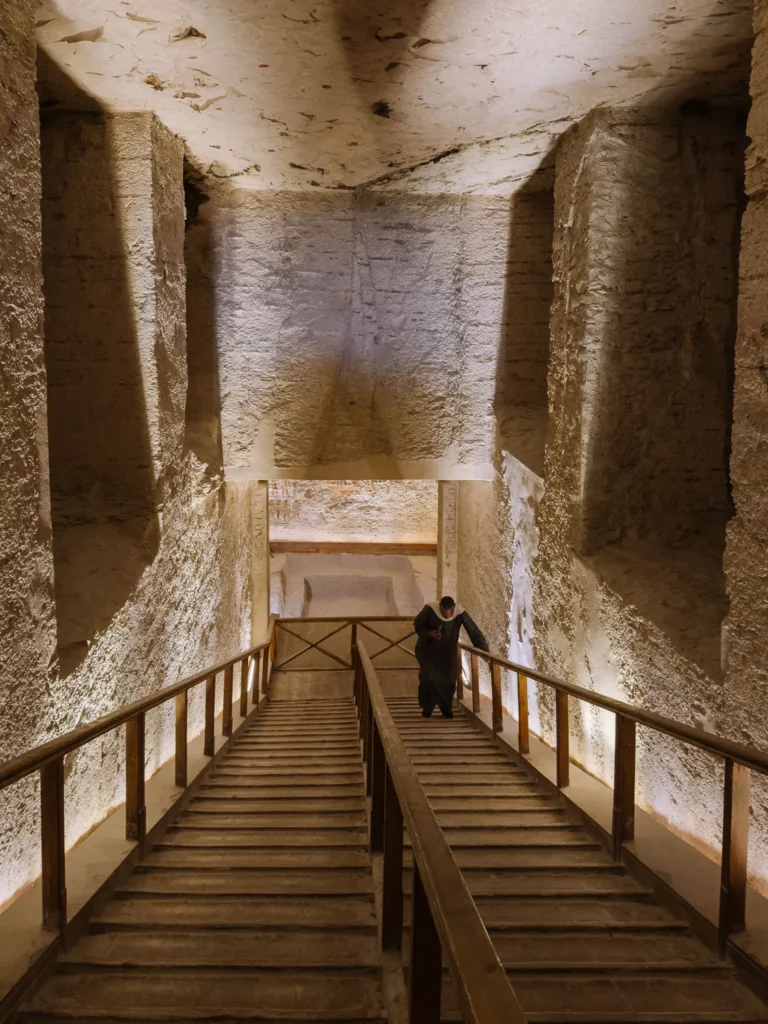
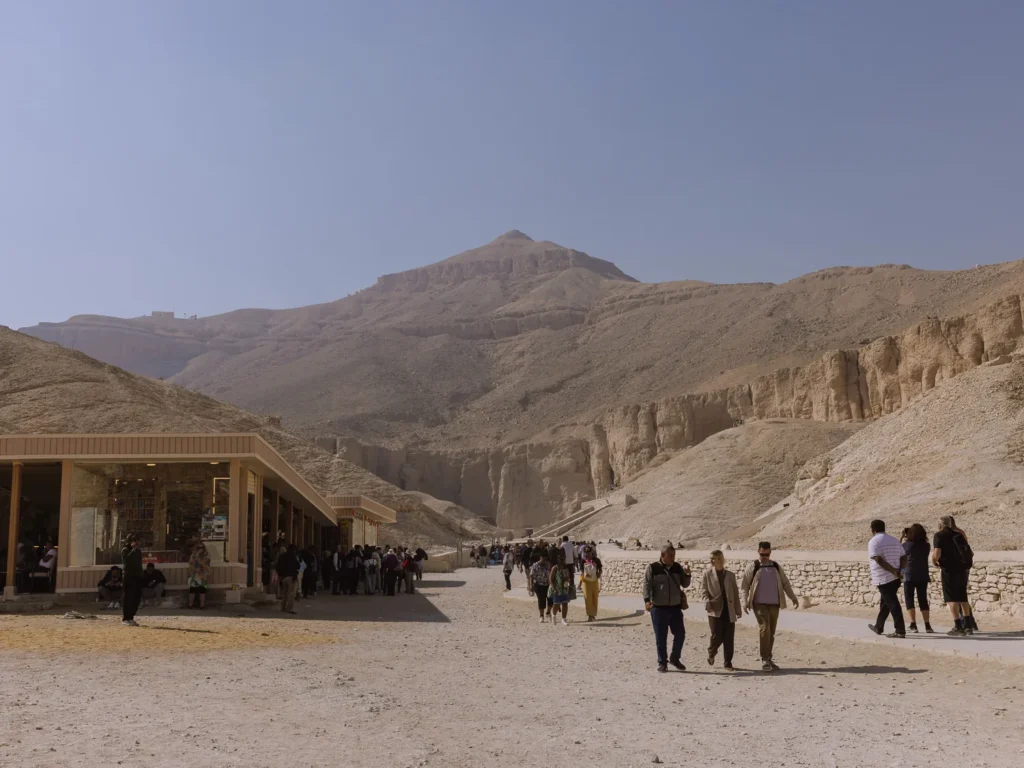
The Valley of the Kings is a remote rocky valley on the outskirts of Luxor where the pharaohs of Egypt’s New Kingdom period were buried.
Unlike the Pyramids of Giza, the tombs in the Valley of the Kings were underground, designed to safeguard the king’s treasures and take them into the afterlife.
Most of the treasures have been looted (except for Tutankhamun’s, which reside in the Grand Egyptian Museum in Cairo).
But the tombs are decorated with scenes from ancient religious texts in vibrant paintings and hieroglyphs that have survived for millennia.
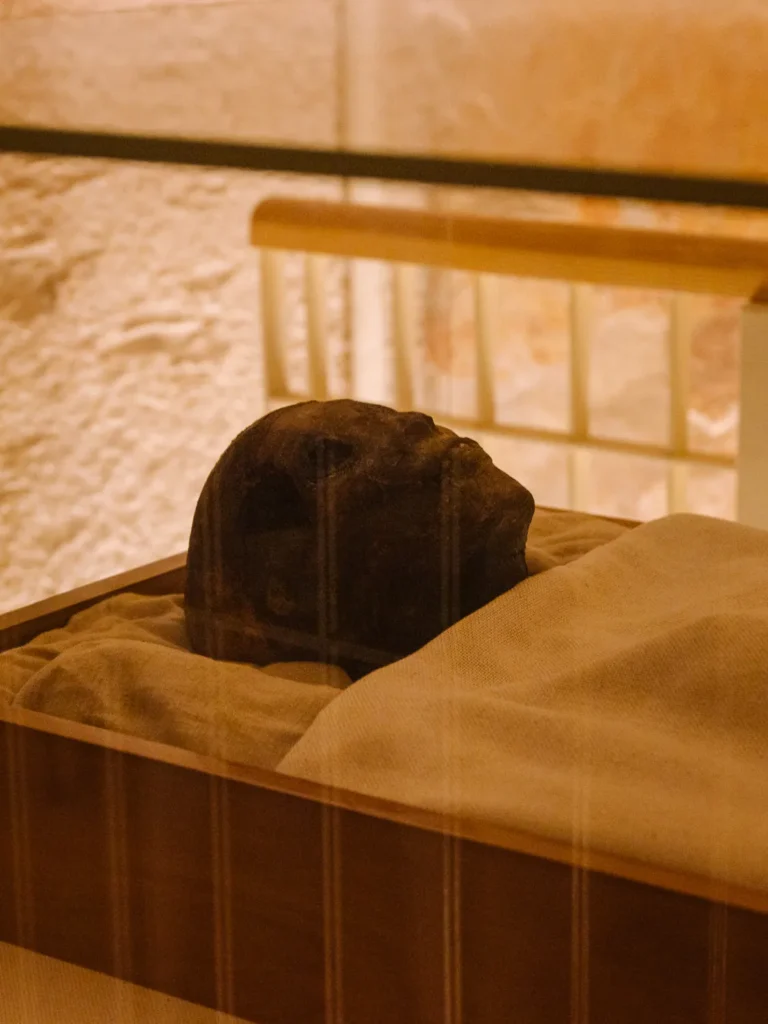
Many still contain the enormous sarcophagus in which the pharaohs were buried.
You need to choose which tombs to visit at the Valley of the Kings, otherwise it can get very expensive. We recommend the following tombs, which are included on the standard ticket:
- Ramesses III
- Ramesses IV
- Merenptah
And buying the additional tickets for:
- Seti I
- Ramesses V & VI
- Tutankhamun
We have all the details on our separate guide to visiting the Valley of the Kings.
2. Mortuary Temple of Queen Hatshepsut
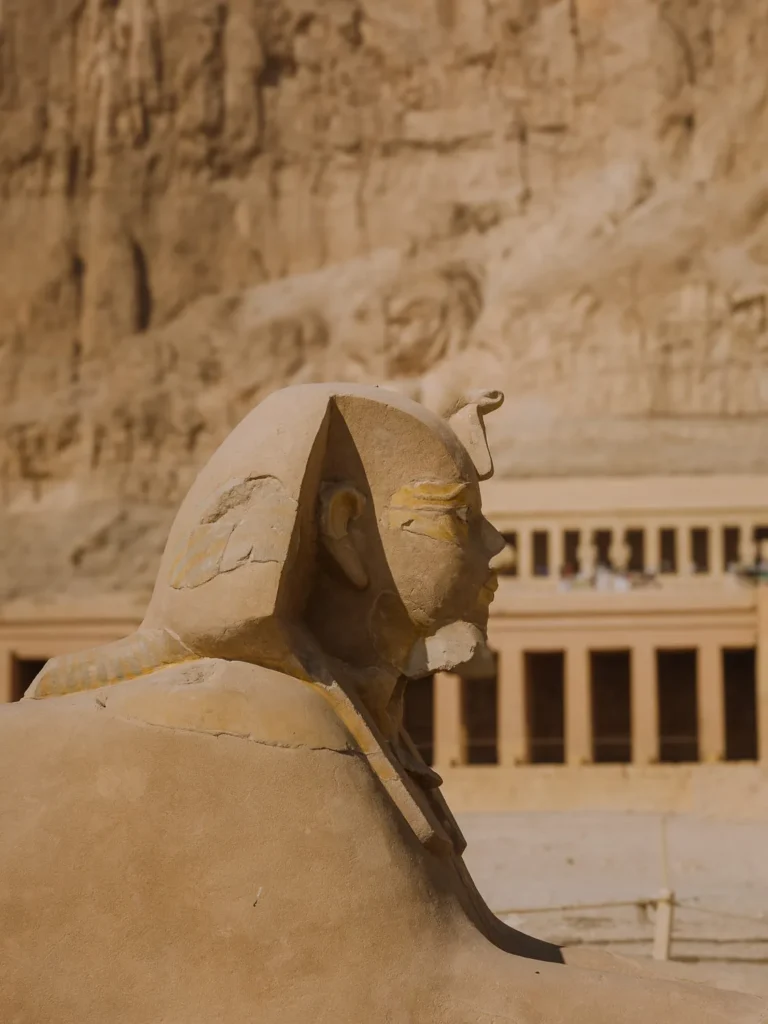
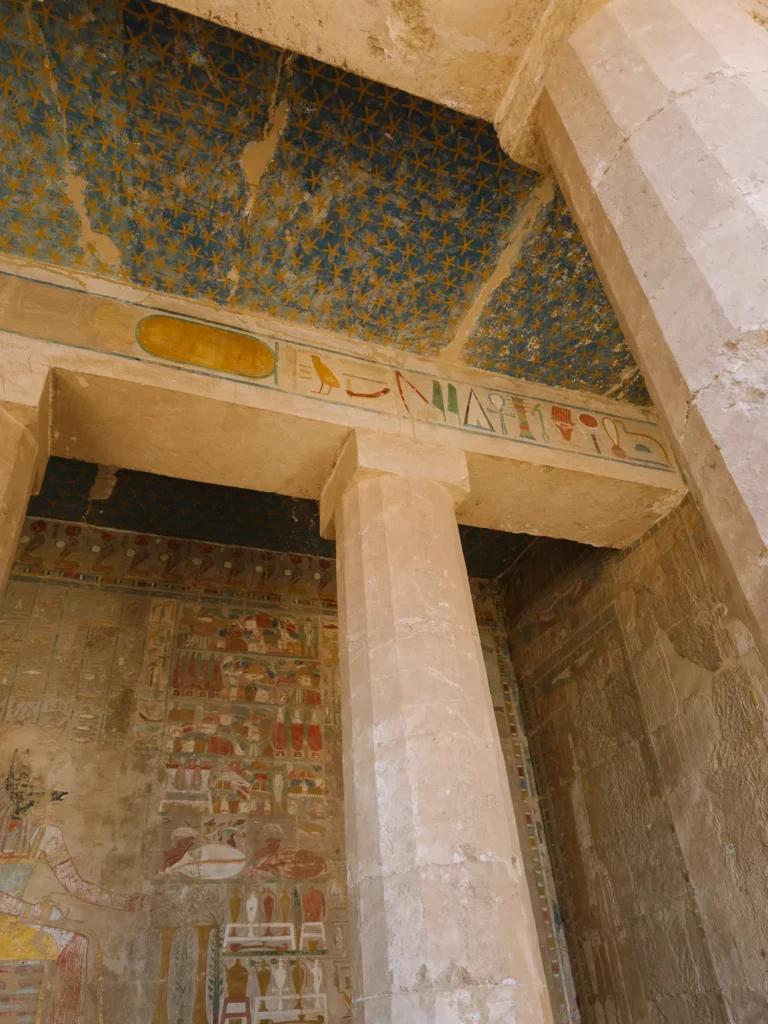
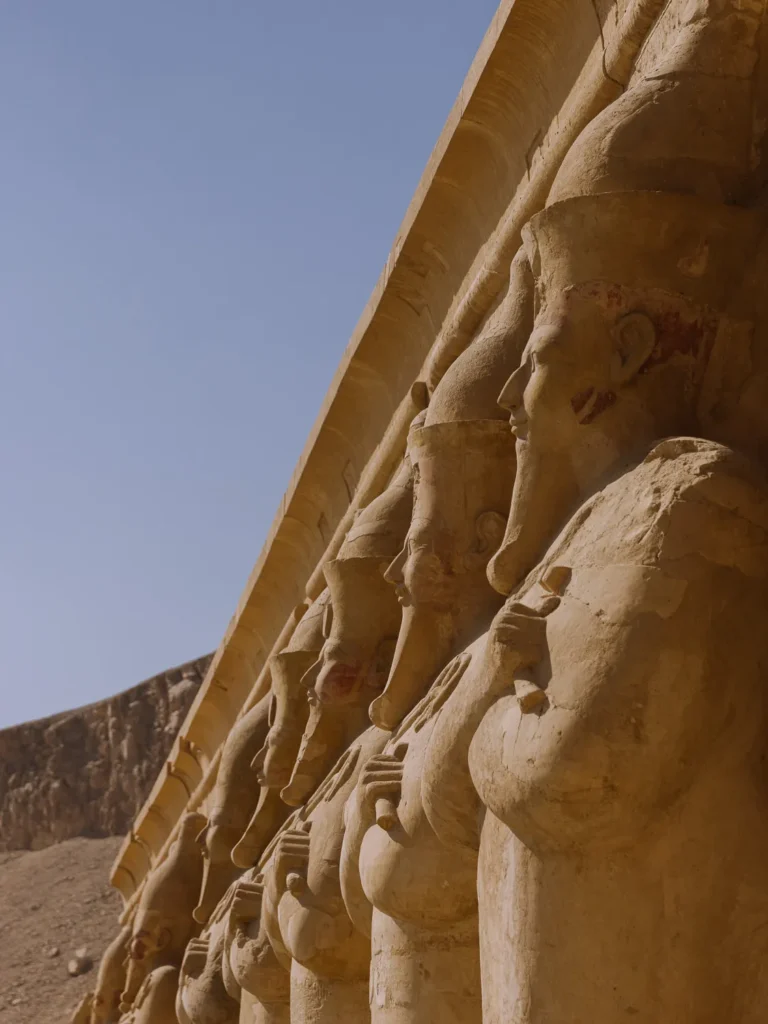
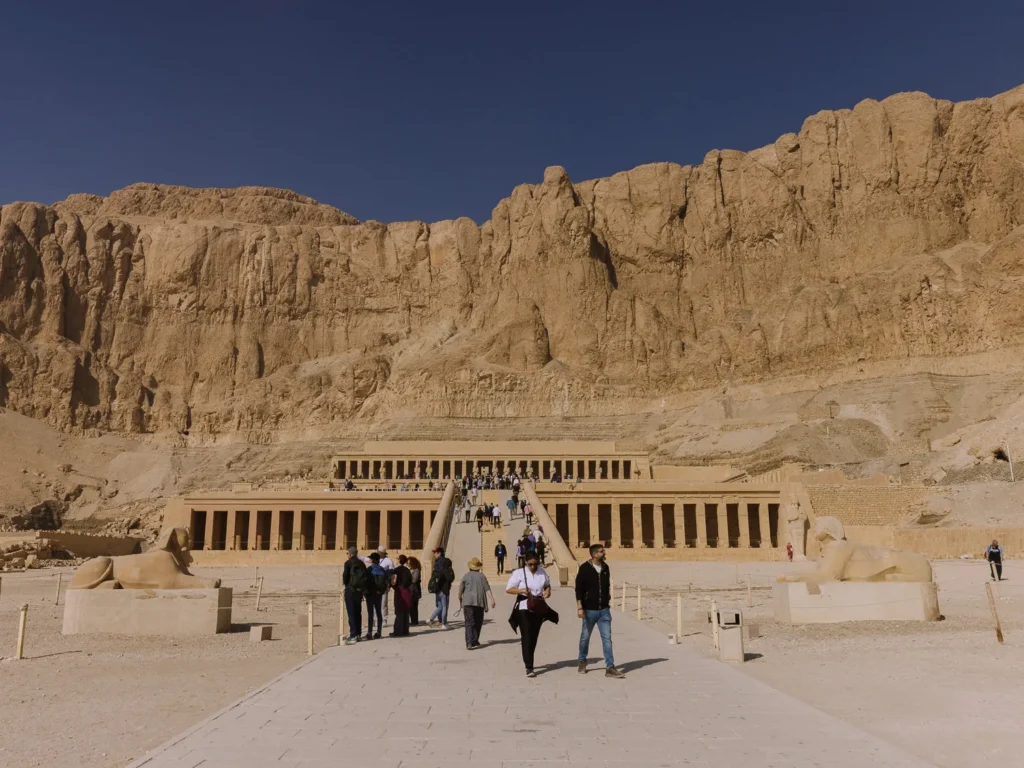
The Mortuary Temple of Queen Hatshepsut is a masterpiece of ancient architecture. Its three collonaded terraces are built into a massive cliff face in a rocky wilderness on the West Bank of the Nile.
Carved into the rock, the temple has, over the years, suffered landslides that have required extensive rebuilding. Nevertheless, it remains one of Egypt’s most dramatic sights, and original carvings, statues, and colourful hieroglyphics can still be found.
The uppermost level has 26 statues of Queen Hatshepsut, each 5.2m high. Behind which lies a portico showing the coronation of Hatshepsut as king of Upper and Lower Egypt, leading to the inner shrines.
Don’t miss exploring the well-preserved Ptolemaic temple (on the far right as you enter). This is where you’ll find the finest, original images.
The Temple of Queen Hatshepsut is very busy throughout much of the day, so we’d suggest trying to get here early in the morning. This is also when the light is best for photography.
- Cost: EGP 440 (US$ 9) for adults and EGP 220 (US$ 5) for students.
- Tickets: Book online or purchase at the visitors’ centre.
- Opening Hours: Daily 6 AM to 7 PM (summer); 6 AM to 6 PM (winter)
3. Tomb of Nefertari
Nefertari was the Great Wife of Pharaoh Ramesses II, who is widely regarded as the greatest and most powerful pharaoh of the New Kingdom.
She is buried in the Valley of the Queens along with other queens, princes, princesses and high-ranking officials.
Celebrated as the “Sistine Chapel of Ancient Egypt”, her tomb has the best-preserved and most moving wall paintings of any ancient Egyptian burial site.
The 3,000-year-old murals focus on the Queen’s life and death, depicting her journey through the afterlife.
Her tomb was closed to the public in 1950 due to damage. In 2023, it reopened, but only to a very few visitors, at a cost of EGP 2,000 (US$ 40). It has now closed again, and there is no official confirmed date for its reopening.
Read all our Egypt guides to plan your bucket list trip to the Land of the Pharaohs.
Egypt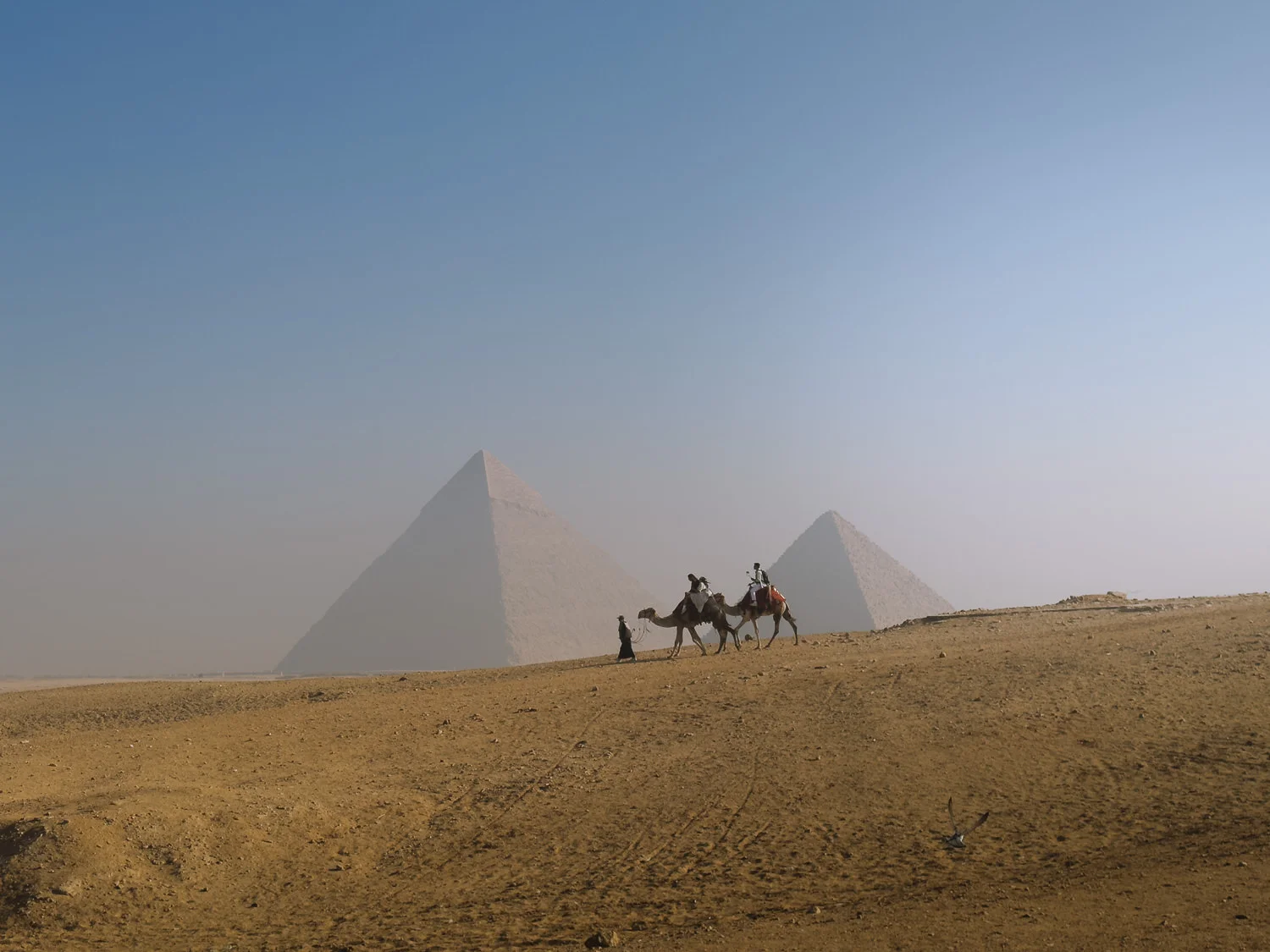
4. Medinet Habu
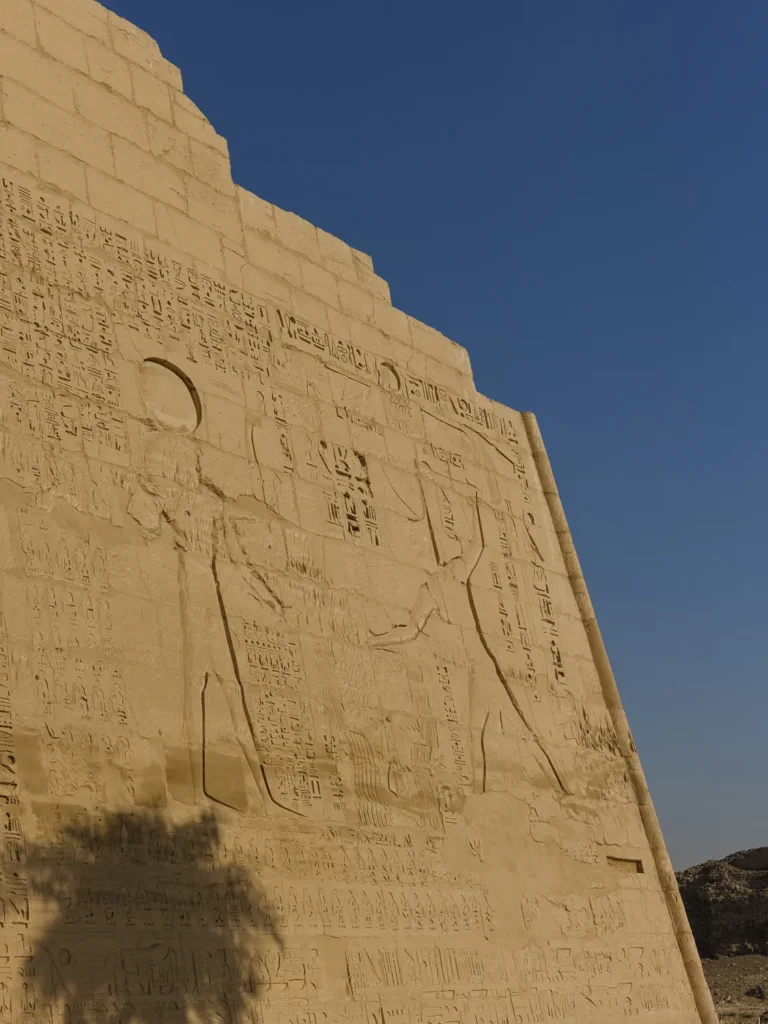
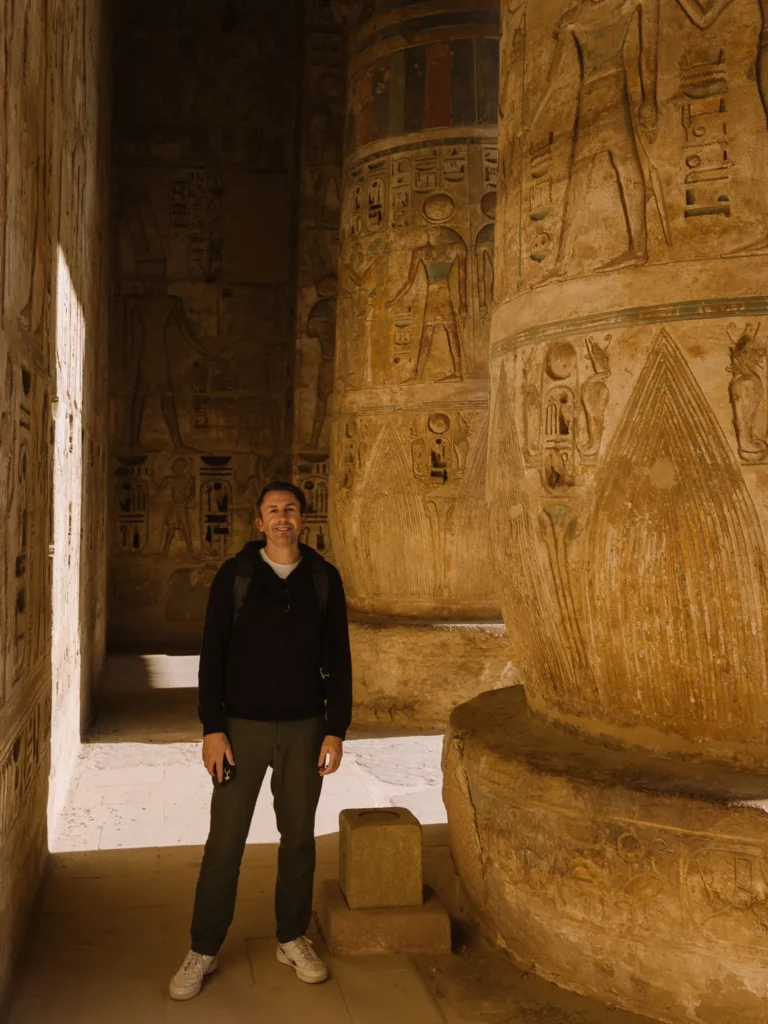
If we had to pick one temple that left the biggest impression on us in Luxor, it would be Medinet Habu – easily one of our top things to do in Egypt.
There are two reasons for this.
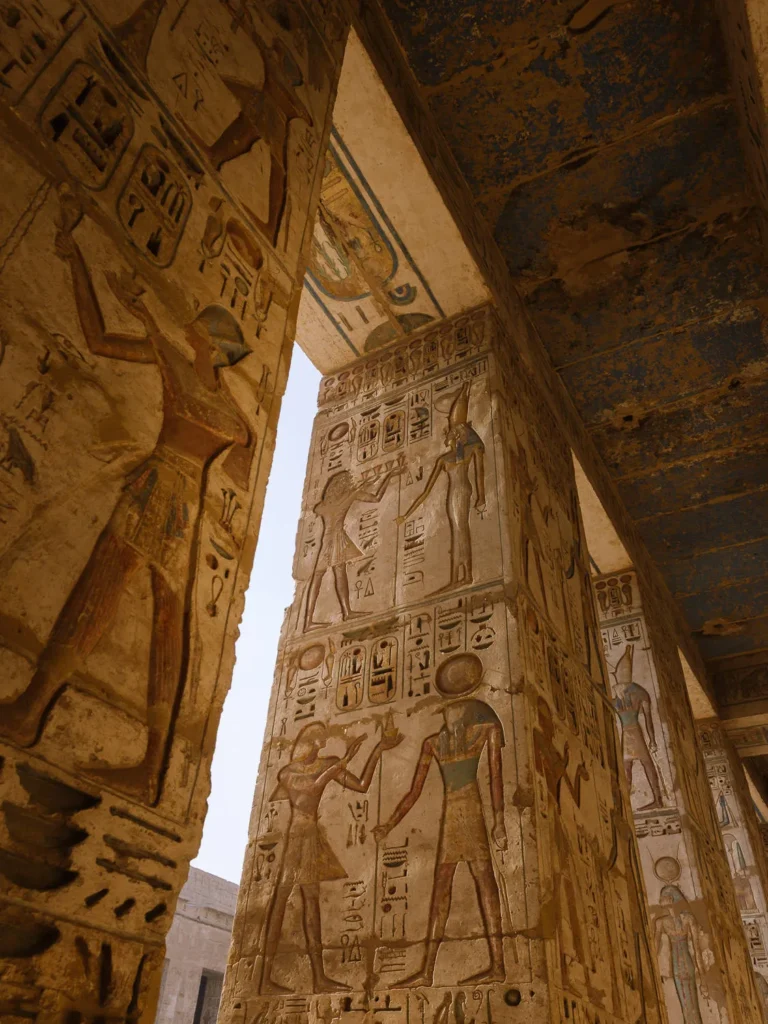
Firstly, it’s in excellent condition, with some of the paintings still in their original colours. Secondly, it’s weirdly omitted from most tours of Luxor, so there was hardly anyone else there.
Medinet Habu is the mortuary temple of Ramesses III.
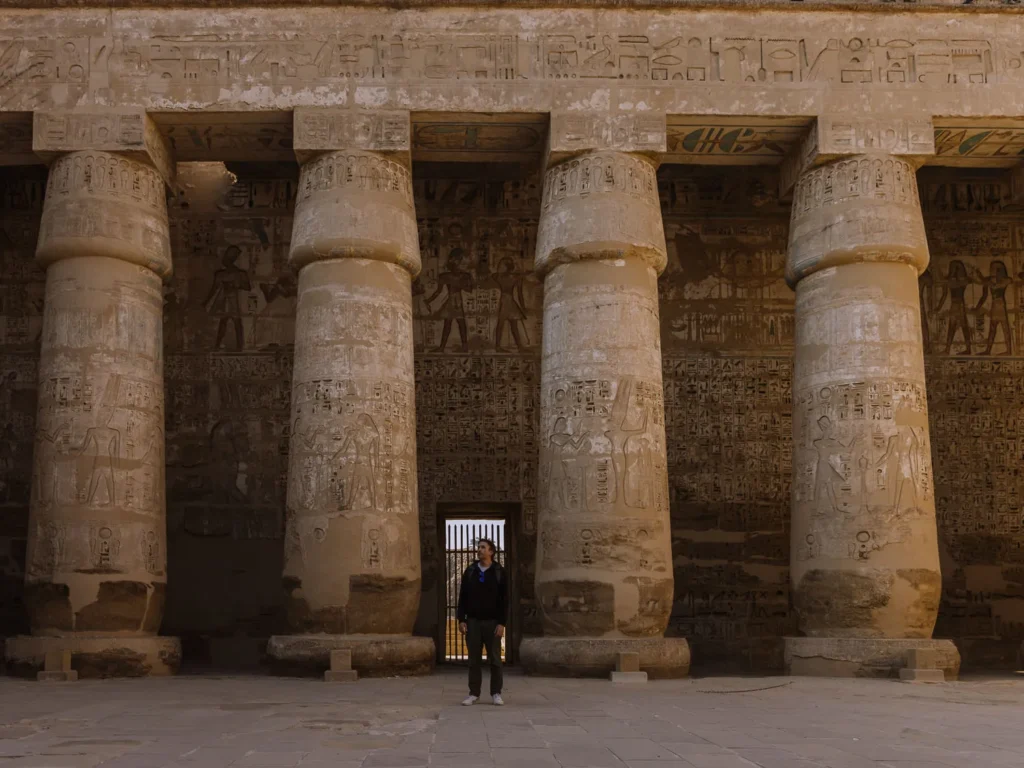
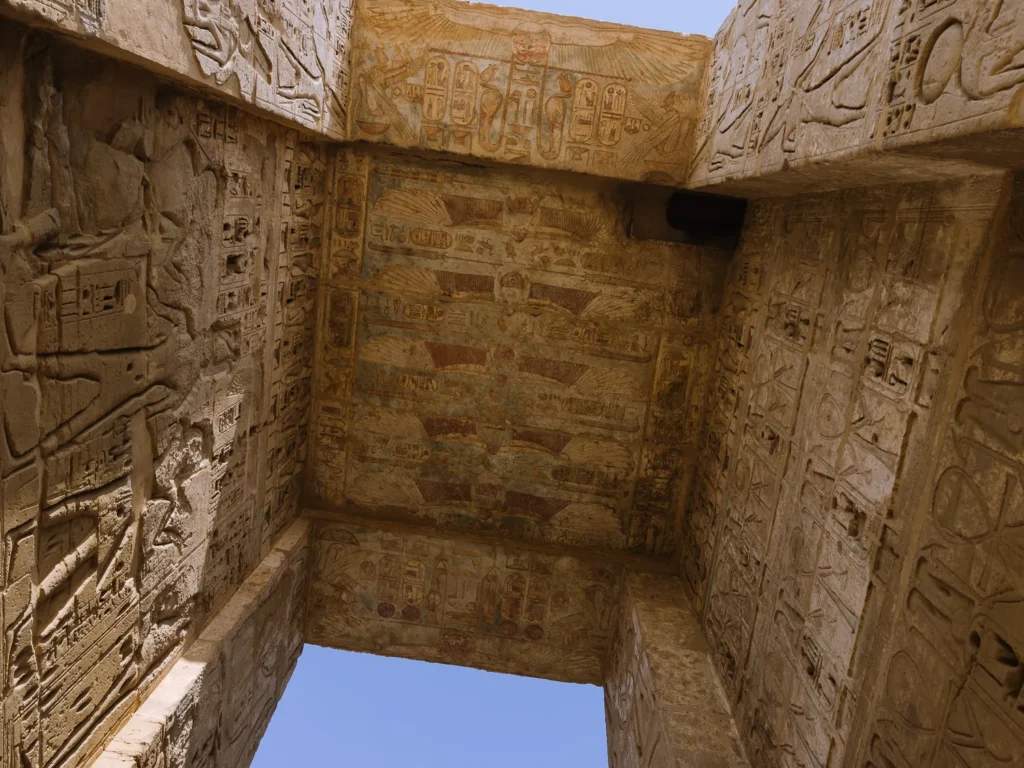
At first sight, imposing columns with deep-carved reliefs depict Ramesses III defeating his enemies. You enter the complex through a gigantic doorway leading to the first court, where walls depict battles against the “Sea Peoples” and Libyans.
The second court is even more dramatic. At the back, the double-columned portico is beautifully decorated and still in vibrant colour.
- Cost: EGP 220 (US$ 5) for adults and EGP 110 (US$ 2) for students, making it a real bargain.
- Tickets: Book online or purchase tickets from the Antiquities Inspectorate ticket office, located at the main intersection near the Valley of the Queens (see map).
- Opening Hours: Daily from 6 AM to 5 PM
GUIDED TOUR // It’s helpful to have a guide to bring the whole place to life. This private tour of Medinet Habu also includes the Valley of the Artisans and hotel pick up.
5. Deir El-Medina (Valley of the Artisans)
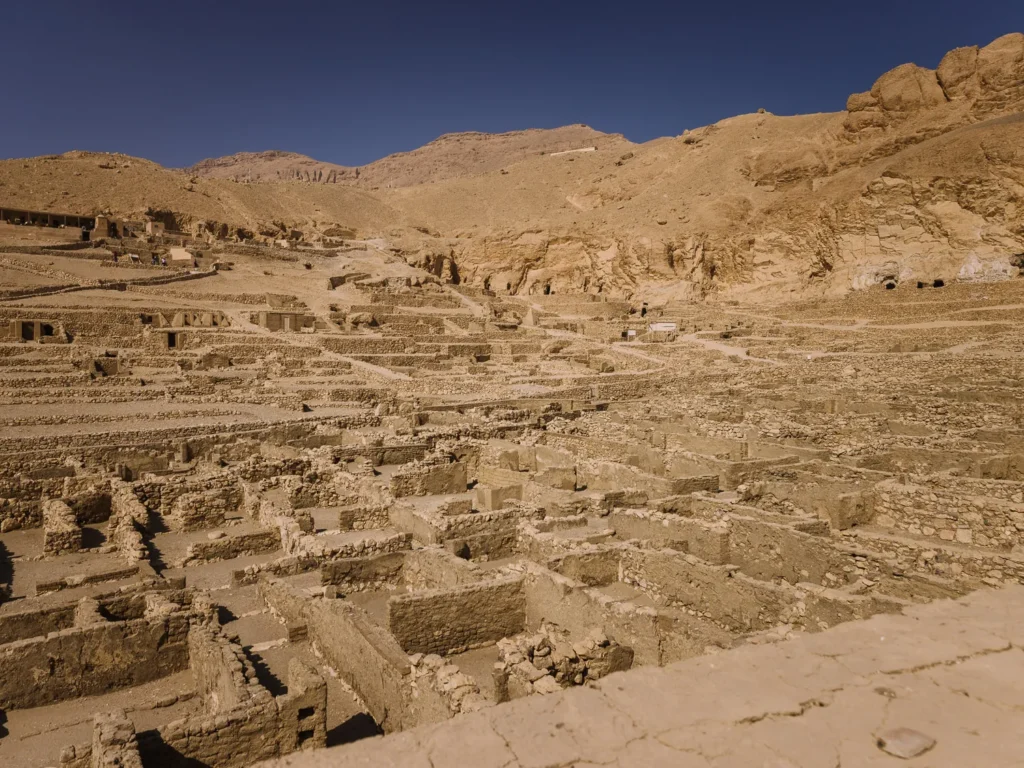
Deir El-Medina is often referred to as the Valley of the Artisans. It’s where the skilled architects, painters, draftsmen, and carvers who worked on ancient tombs lived.
The best artisans were in high demand and heavily controlled by the kings and nobility. In fact, the earliest recorded strike occurred when the artisans downed tools to demand better rations.
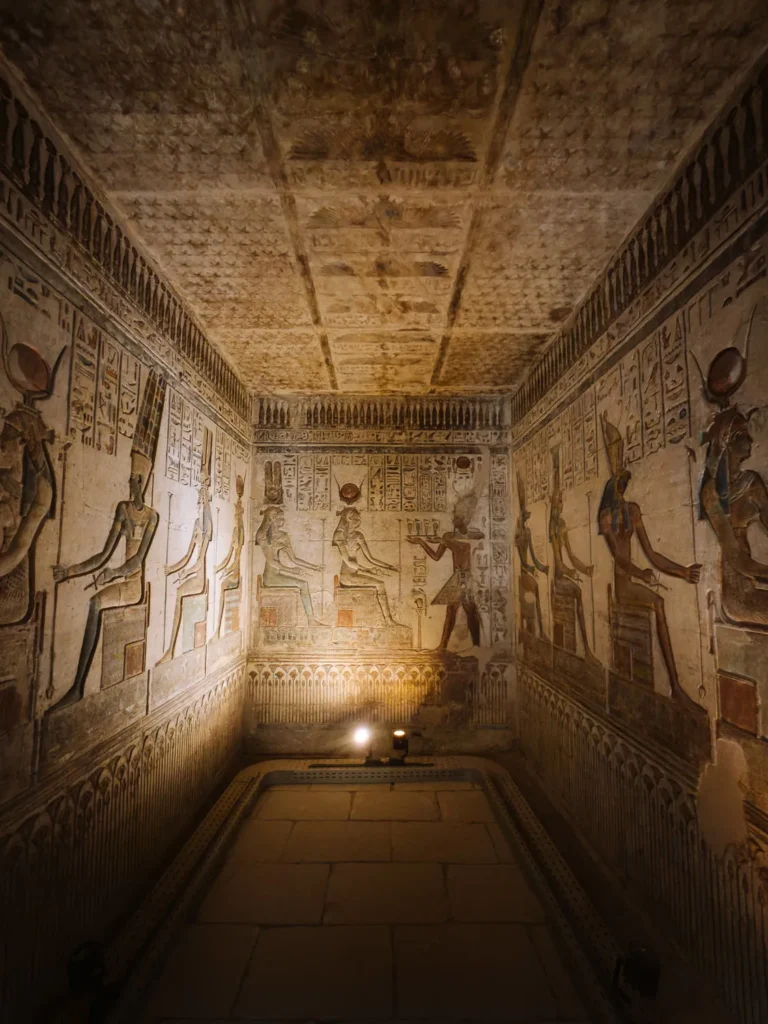
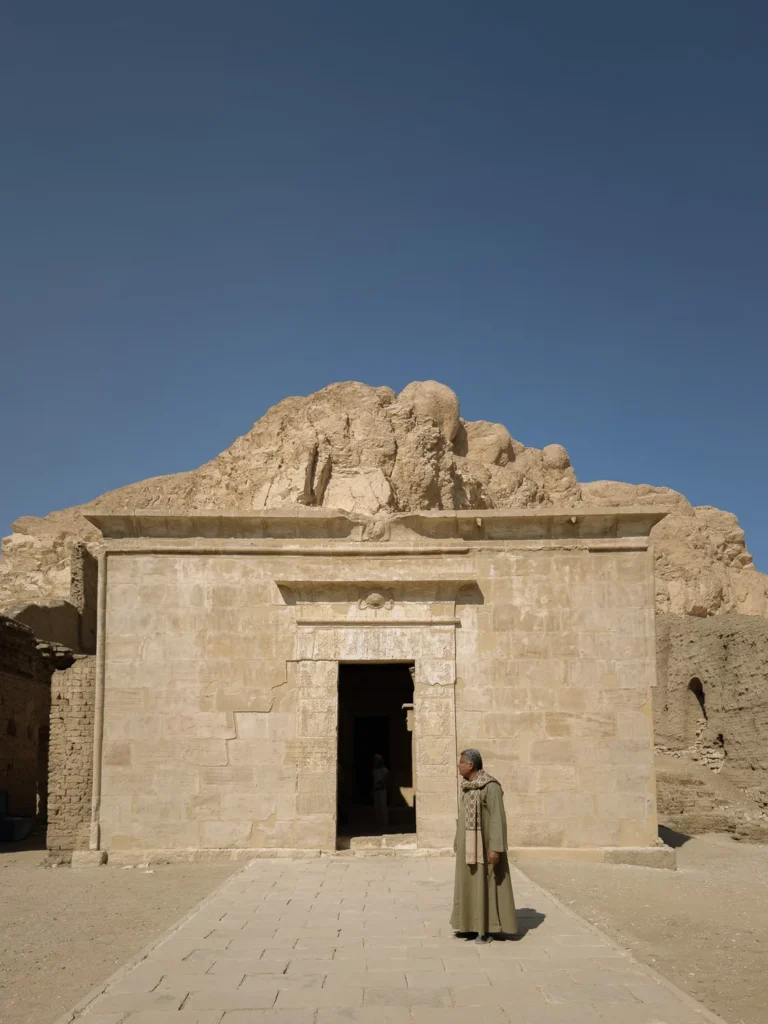
The ticket to Deir el-Medina gives you access to three sites:
The village ruins – walk around the site where the artisans lived 3,500 years ago. A guide can point out the rooms, giving you an idea of how they lived.
Ptolemaic Temple – Behind the village, there’s a small temple built during the Ptolemaic Dynasty that features beautiful paintings and hieroglyphics.
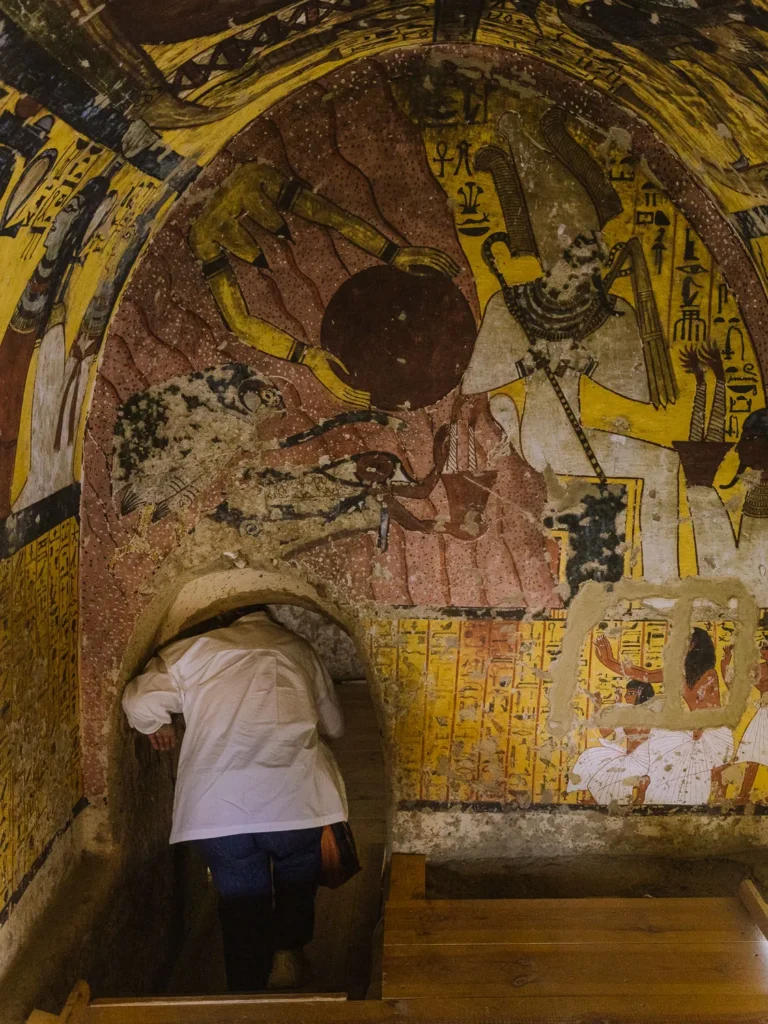
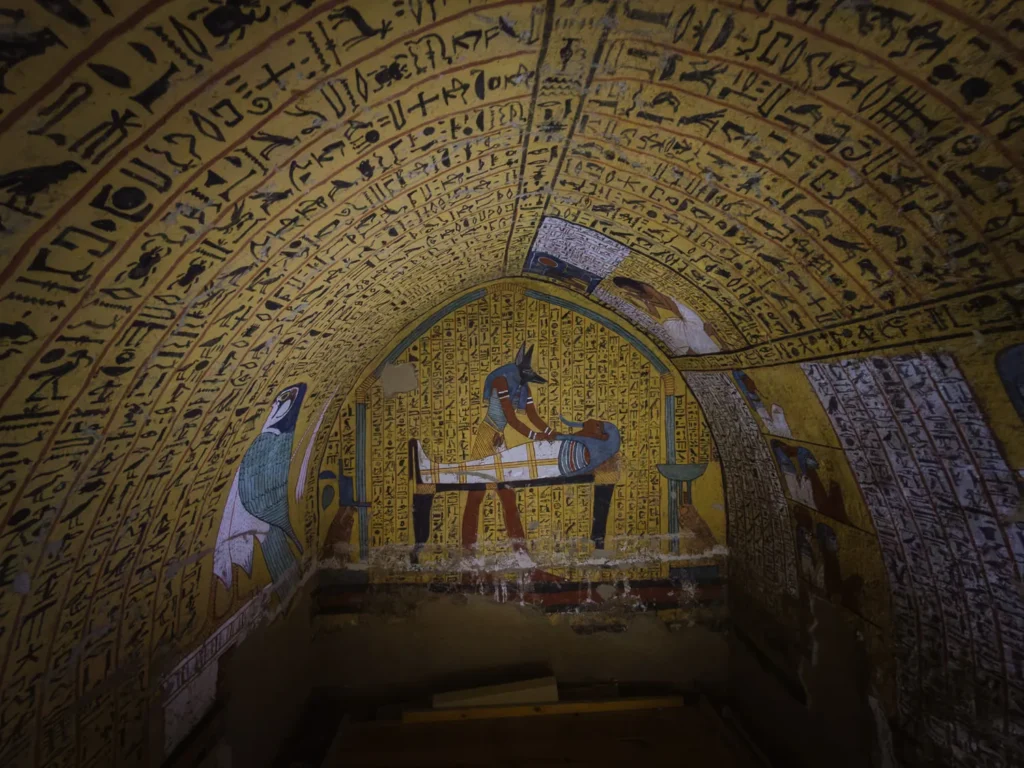
Artisan Tombs – While working on the kings’ tombs, the artisans also built tombs for themselves.
The main attraction at Deir el Medina is the Artisan’s Tombs. They are much smaller than the Valley of the Kings, but more personal. The artwork features images of their daily life and celebrations for the gods.
There are three tombs to explore, and the steps down are very steep and narrow. A couple have low entrance doors (about 1 metre high), so they’re not ideal if you’re not good with confined spaces.
- Cost: EGP 200 (US$ 4) for adults and EGP 100 (US$ 2) for students.
- Tickets:Book online or purchase tickets at the Antiquities Inspectorate ticket office, located at the main intersection near the Valley of the Queens (see map).
- Opening Hours: Daily 6:00 AM – 5:00 PM
6. Tomb of the Nobles
As well as the tombs of the Valley of the Kings, Valley of the Queens, and Deir el-Medina, there are over 400 catalogued tombs referred to as the Tombs of the Nobles.
These tombs are the burial sites of non-royal high-ranking officials and priests.
It’s easy to get tombed out in Luxor, but what sets these tombs apart is the human nature of the carvings.
While pharaohs’ tombs depict stories to guide their journey to the afterlife, the Nobles’ Tombs feature images of daily life.
Each is like a CV for the individual buried there.
There are 9 tombs you can visit. Entrance tickets are per person per tomb (or two tombs).
We recommend visiting the Tomb of Ramose (TT55), the Tomb of Rekhmire (TT100), and the Tomb of Sennefer (TT96).
Two tombs that are too small for tour groups are the Tomb of Menna and the Tomb of Nakht.
- Cost: The Tombs of the Nobles are sold as separate tickets for different groups of tombs. Prices range from EGP 120-200 (US$ 2.50-4.50) for adults and EGP 60-100 (US$ 1.25-2.25) for students, depending on which tomb group you visit.
- Tickets: Book online or purchase tickets at the Antiquities Inspectorate ticket office, located at the main intersection near the Valley of the Queens (see map).
- Opening Hours: Daily 6:00 AM – 5:00 PM
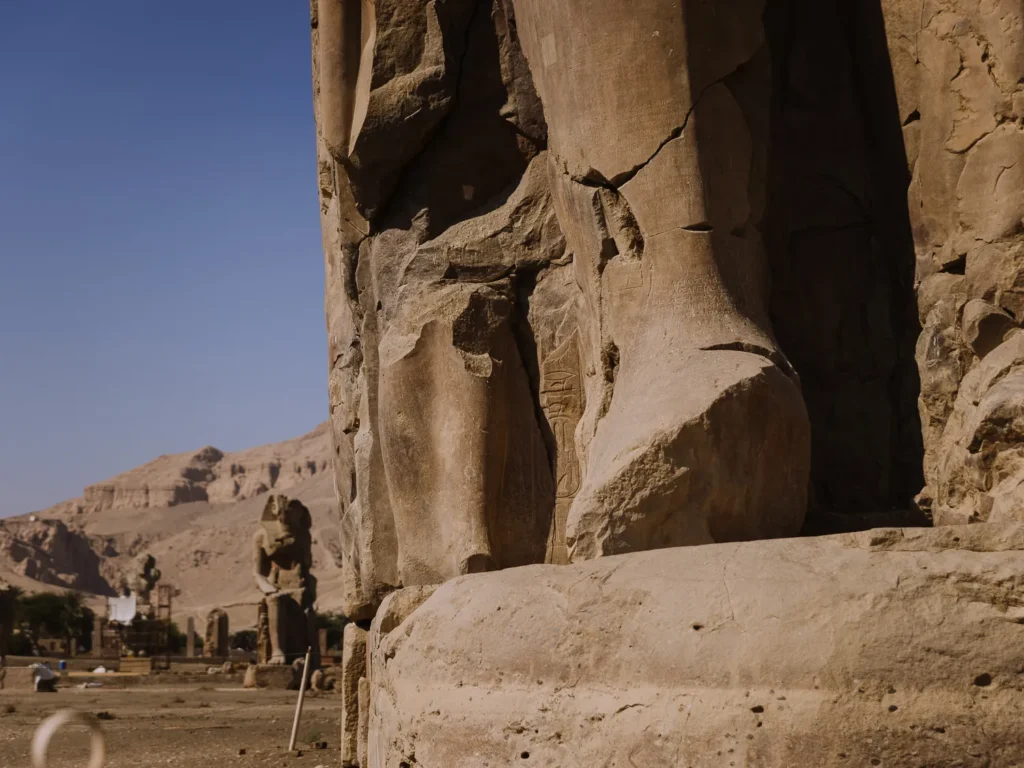
TIP // The Colossi of Memnon is a free sight next to the Antiquities Inspectorate ticket office. It’s worth stopping to snap a photo.
7. Karnak Temple
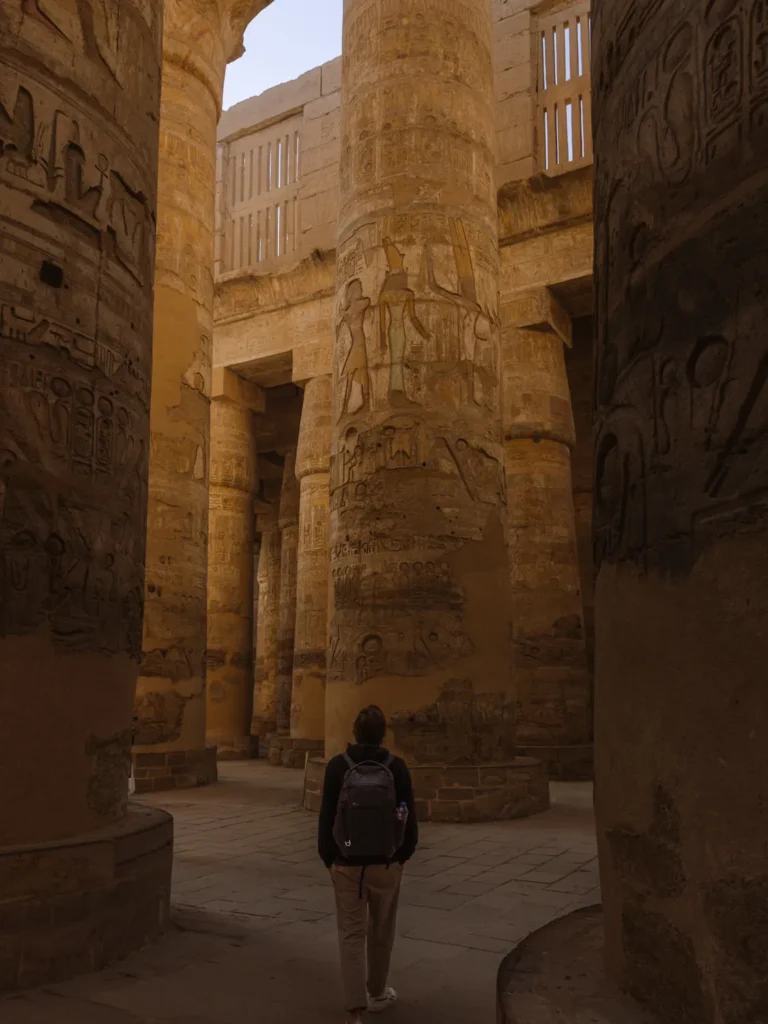
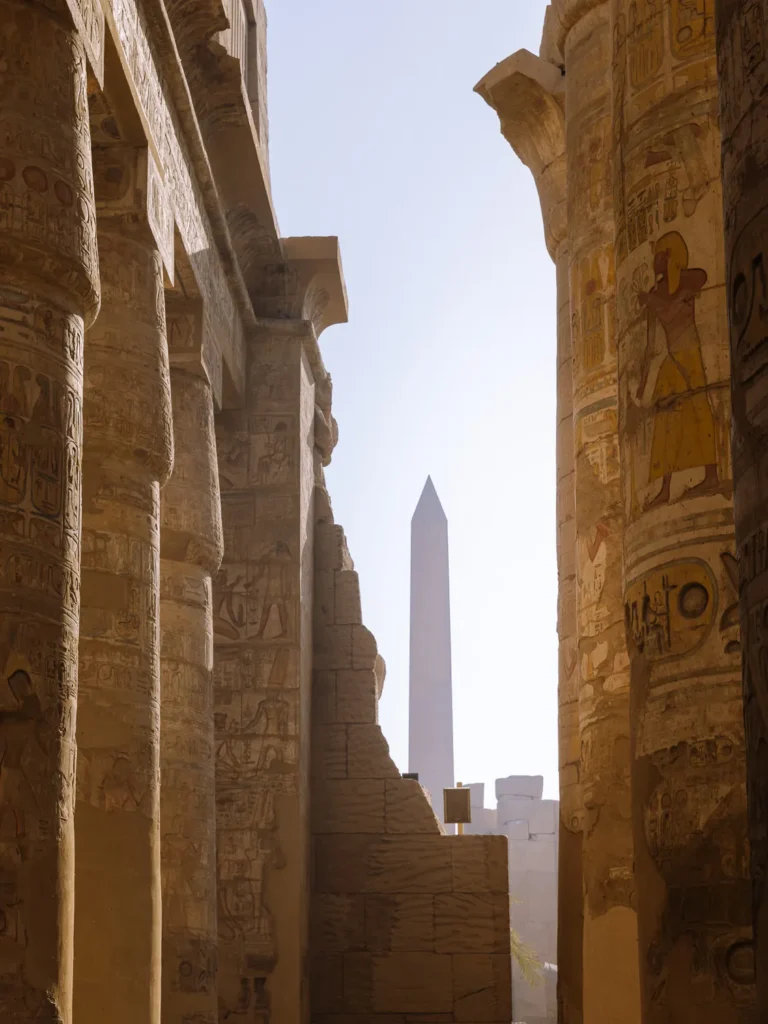
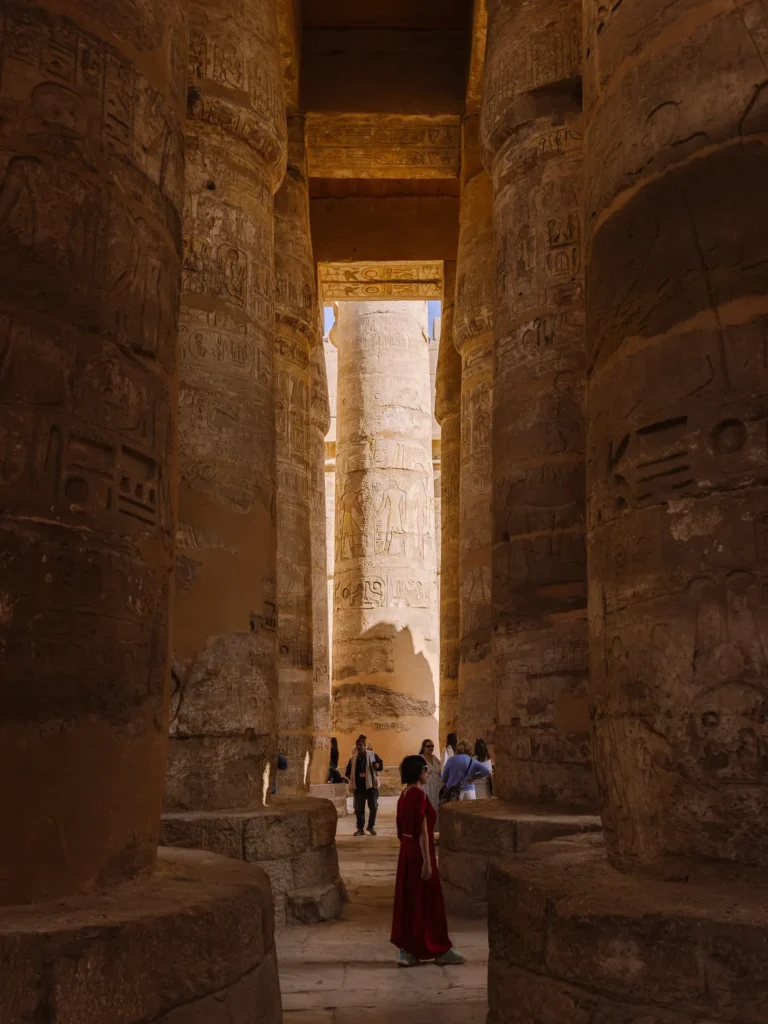
What impresses at Karnak is its immense scale. Successive kings have added their own temples, forming one of the largest religious complexes on Earth.
Inside, it features the world’s largest load-bearing columns and Egypt’s tallest obelisk.
The highlight is the Temple of Amun-Ra with its Hypostyle Hall – a massive sanctuary supported by 134 enormous columns. The 12 columns at the centre stand 69 feet high, and we felt tiny peering up at the beautifully carved and painted images.
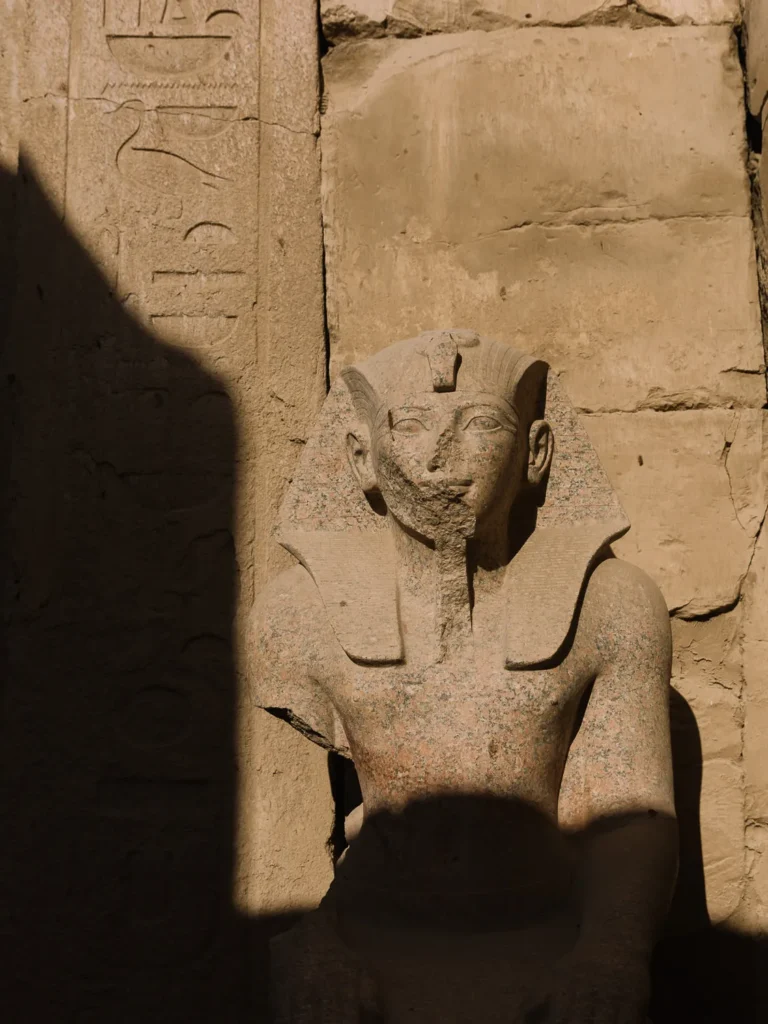
We also loved the Obelisk of Queen Hatshepsut, the Rams Heads, and the gigantic statues in the Great Court, as well as the views across the Sacred Lake.
Karnak Temple is an essential stop on your Luxor itinerary. It takes about 2- 3 hours to explore every corner.
- Cost: EGP 600 (US$ 13) for adults and EGP 300 (US$ 6) for students.
- Tickets: can be purchased online or at the ticket office.
- Opening Hours: Daily 6:00 AM – 5:30 PM (summer hours may extend to 6:30 PM)
KARNAK TOUR // It is helpful to have a guide or join a tour here, as there is limited information and many temples and stories to explore. This well-rated private tour is run by an Egyptologist and includes hotel pickup.
8. Luxor Temple
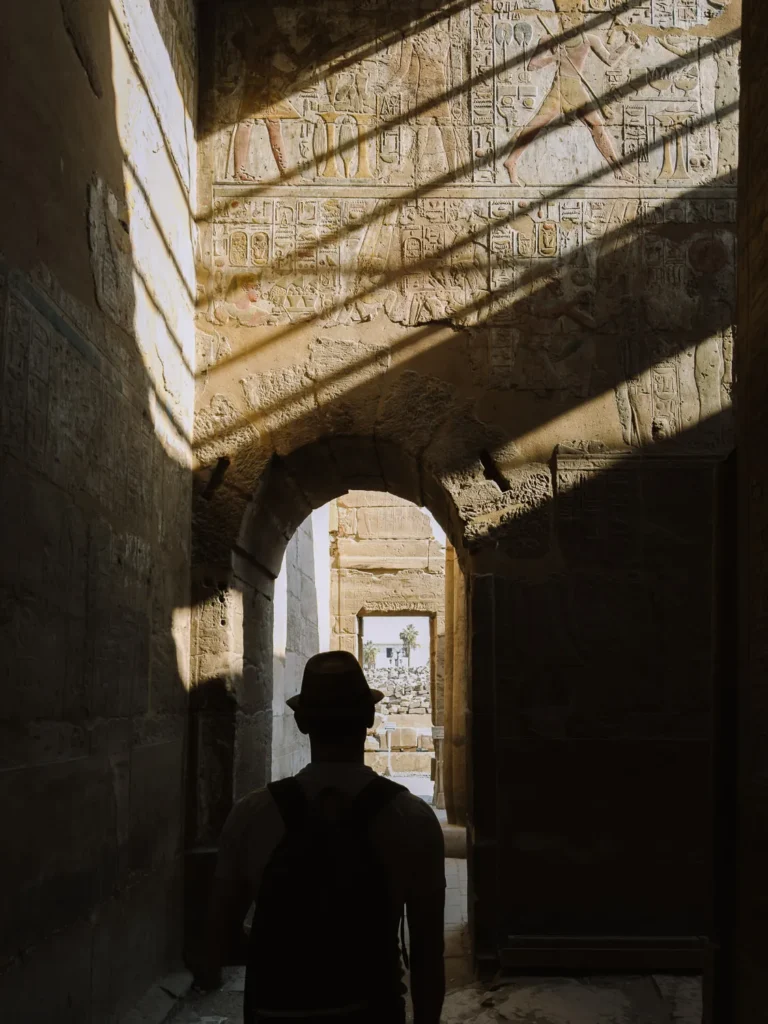
Luxor Temple stands majestically on the East Bank of the Nile near the centre of Luxor.
The temple is unique because it was continuously used and modified by different civilisations, including the Greeks, Romans, and early Christians, leaving layers of history within its walls.
Due to flooding, the temple was partially submerged in mud and silt. In early Arabic times, only the top half of the temple was visible. You can still see the mosque entrance, built halfway up one of the walls.
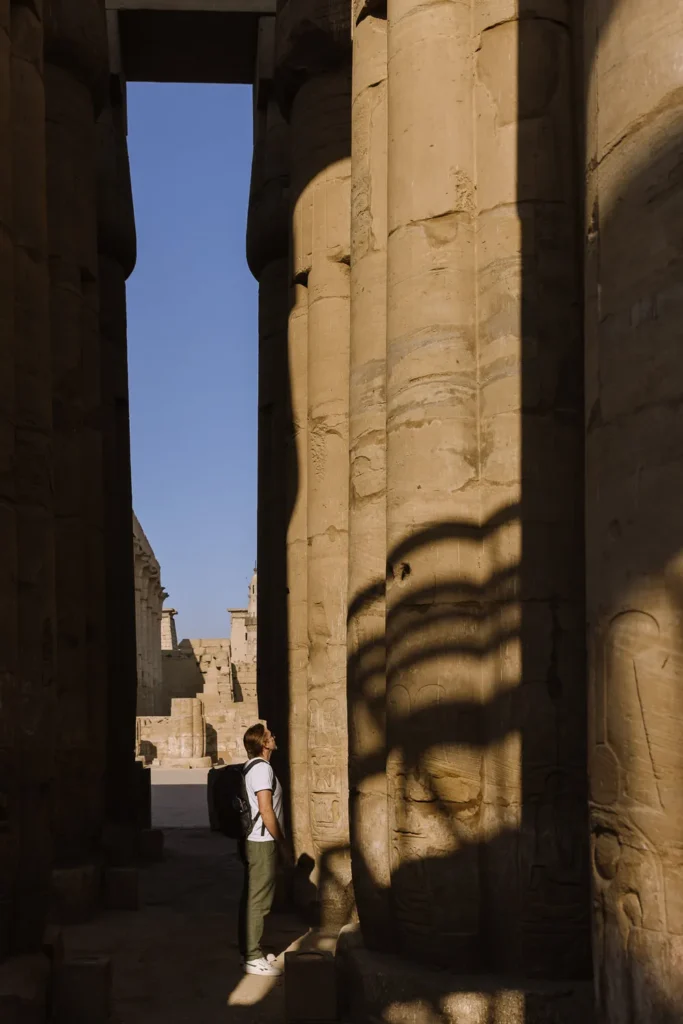
The highlight is the massive First Pylon gateway flanked by seated colossi of Ramesses II and a single remaining obelisk, whose twin is now in Paris.
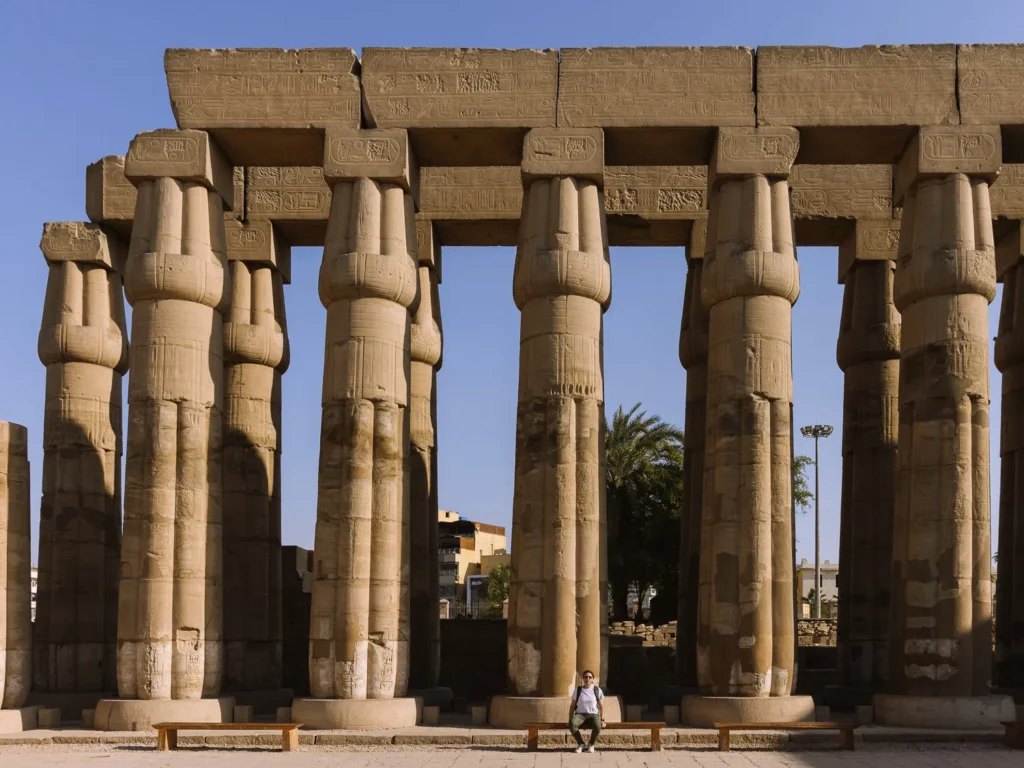
Inside, the Colonnade Hall features 14 towering papyrus-bud columns leading to the sun court and inner sanctuaries.
It’s a wonderful sight, and we spent around 90 minutes admiring the scale and the stories and history engraved on the walls.
- Cost: EGP 500 (US$ 10) for adults and EGP 250 (US$ 5) for students.
- Tickets: Book online or purchase tickets at the entrance.
- Opening Hours: Daily from 6 AM to 7 PM.
9. Mummification Museum
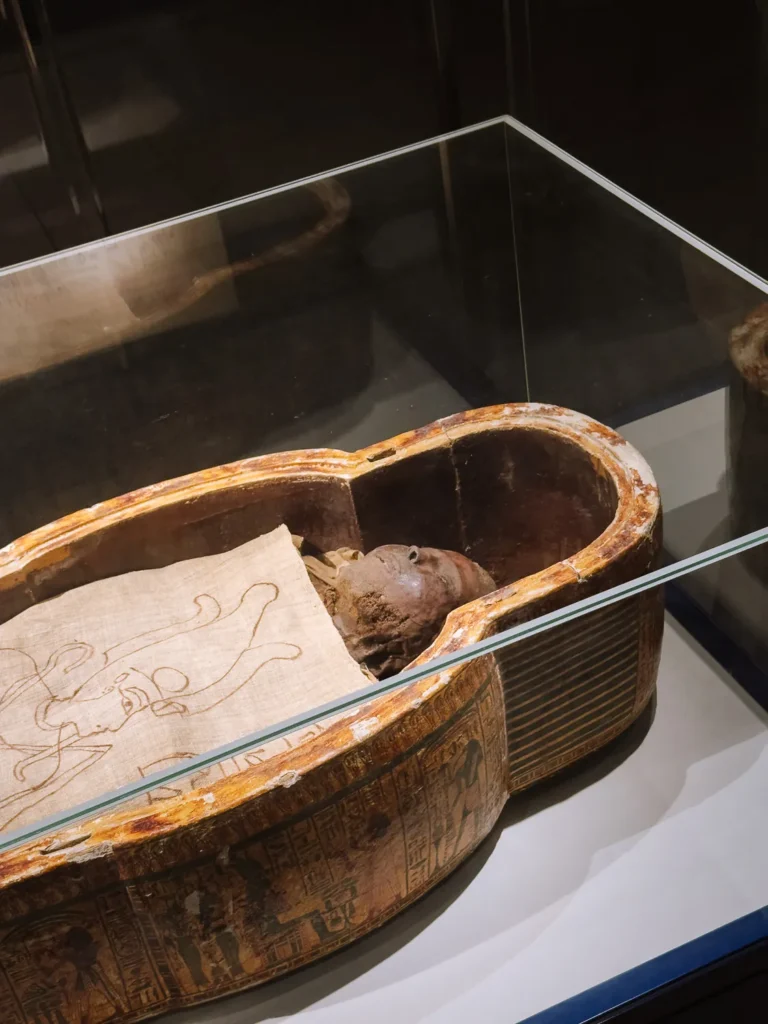
The Mummification Museum is a small but interesting look at Egypt’s most intriguing practise.
The exhibit has actual tools used by embalmers, including hooks for removing organs, linen wrapping materials, and the jars that held the internal organs.
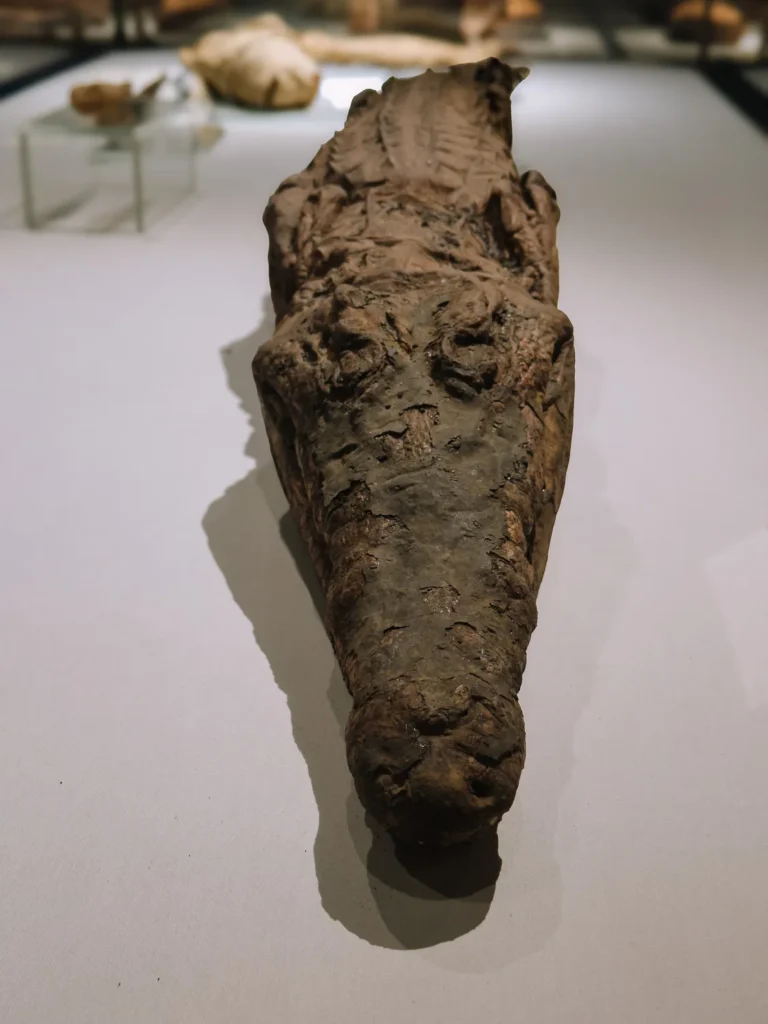
You can also see a few actual mummies, including one human and several crocodiles, cats, and fish.
It doesn’t take long to look around, but it’s just across the road from the Luxor Temple so if you have a bit of spare time, it’s worth having a quick look.
To see some truly impressive mummies, don’t miss the Mummy Gallery at the Egyptian Civilization Museum in Cairo.
- Cost: EGP 200 (US$ 4.50) for adults and EGP 100 (US$ 2).
- Tickets: There’s no need to book tickets in advance, you can buy them from the entrance.
- Opening Hours: Daily 9:00 AM – 2:00 PM and 5:00 PM – 9:00 PM (ticket windows close at 1:00 PM and 8:00 PM)
10. Luxor Museum
The Luxor Museum has a carefully curated collection of artefacts discovered in and around Luxor.
Highlights include treasures from the Theban temples and necropolis, such as the Cachette of Luxor Temple and the mummy of Ahmose I.
The museum is well organised with clearly displayed information panels in both English and Arabic, so there is no need for a guide.
It’s more important to make time to see the sites themselves, but this is a good way to delve deeper into the history of Luxor (Thebes). If you are travelling independently, it is a helpful stop.
- Cost: EGP 400 (US$ 8) for adults and EGP 200 (US$ 4) for students.
- Tickets: Book online or purchase tickets at the entrance.
- Opening Hours: Last entry is 9 AM to 12 PM in the morning and 5 PM to 7 PM in the afternoon.
11. Hot Air Balloon Ride
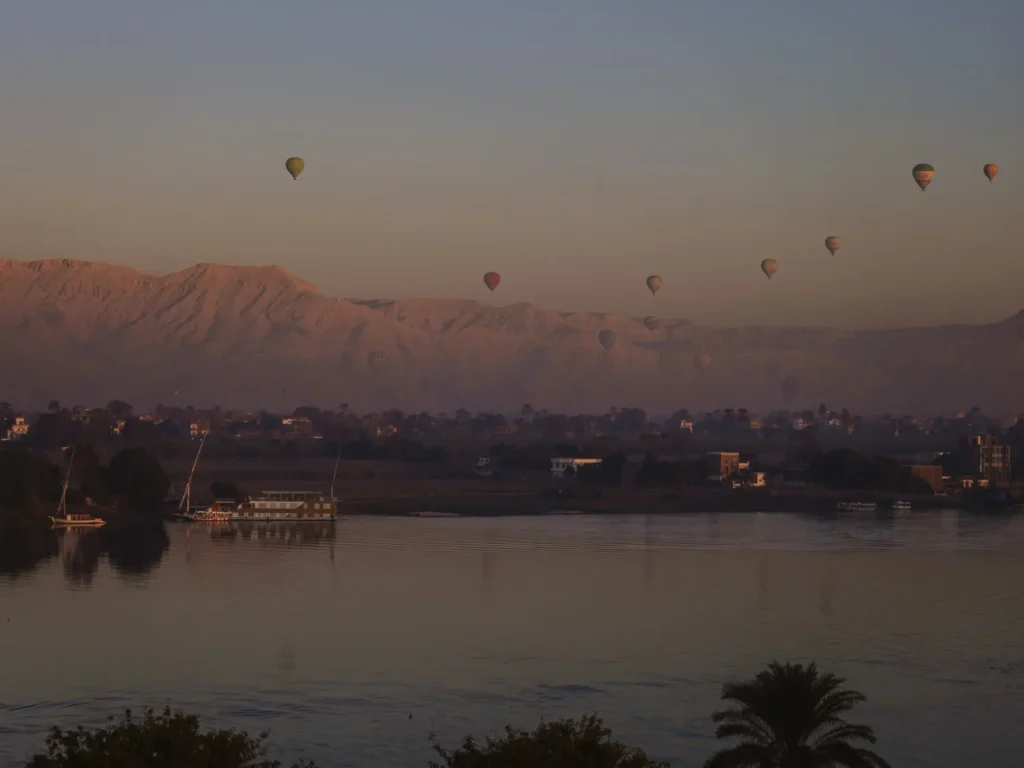
Luxor is one of the best places in the world to take a Hot Air Balloon Ride. It has reliable flying conditions, excellent views, and is relatively inexpensive.
The full experience lasts 2 to 3 hours, including hotel pickup, driving to the take-off point, watching the balloon inflate, going for a ride, and then returning to the hotel.
The ride itself lasts 30 minutes, as you drift over the Valley of the Queens and Kings, with views stretching down the Nile and across to the temples in Luxor.
It’s all done at sunrise, so you can watch the sun’s rays gently light the scene. By the time you land, it’s a rich contrast of the blue Nile, green valley, golden rocky cliffs and sandy desert.
You have to set your alarm early, as pickup is about 90 minutes before dawn. But it’s worth it.
Book here: This very well-rated Hot Air Balloon Tour includes hotel pick-up and a 30-minute balloon ride.
12. Sunset Felucca Ride
After days exploring temples and tombs, a felucca ride offers a relaxing way to experience Luxor from the water.
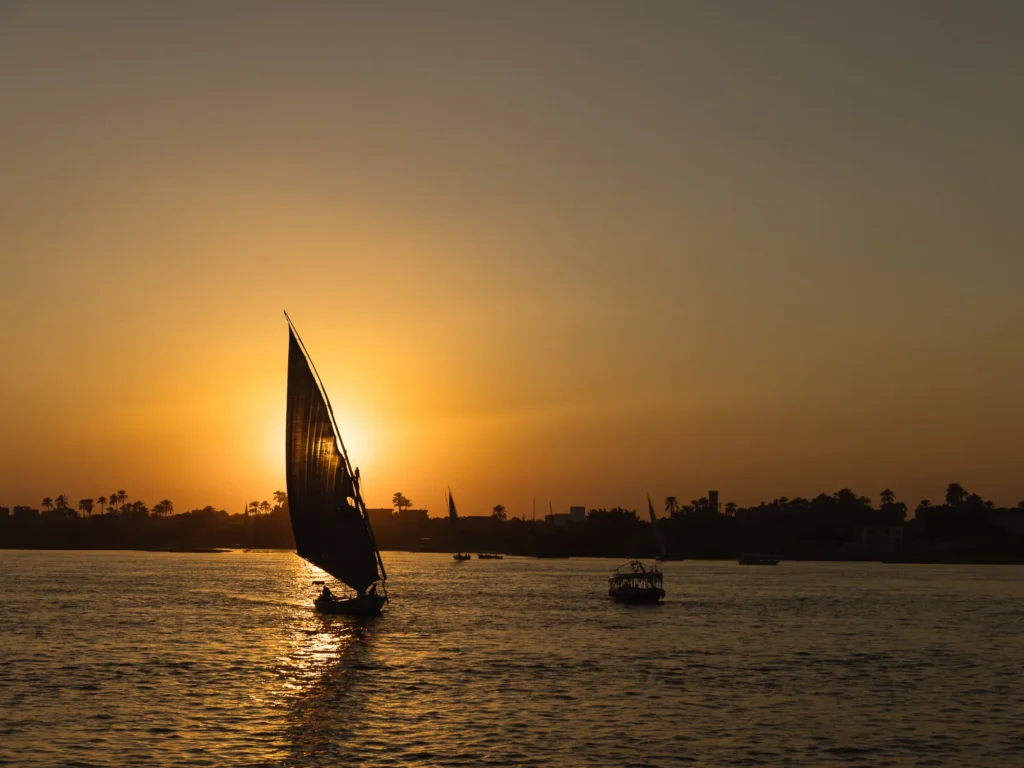
These traditional wooden sailboats have carried passengers along the Nile for centuries, and they’re still one of the best ways to unwind.
Most rides last 1-2 hours, gliding peacefully along the river with views of the West Bank mountains, Luxor Temple, and local villages.
Late afternoon is the perfect time for a Felucca Ride as you’ll catch the sunset painting the sky orange and pink as the heat starts to leave the day.
Book here: This Felucca Sunset Sail Private Tour includes a 2-hour sail, a tea, and pickup from East Bank Luxor hotels. You could also join a small group.
Planning & Logistics
How to Get Around Luxor
If you plan to explore on your own, having mobile data is essential. We always use an Airalo SIM, which we purchase before we leave.
The simplest way to get around Luxor is to hire a taxi. You can use InDrive to suggest prices to taxi drivers online or hail one of the many taxis on the street.
Taxis can be hired for a single trip, a there-and-back, or for a full or half day. Be sure to haggle over the price and agree on the itinerary in advance. Roughly:
- Half-day hire: EGP 450-700 EGP (US$10-15)
- Full day hire: EGP 700-1000 (US$15-20)
If you are simply heading between the West and East Banks of the Nile, you can also get the ferry (EGP 20).
While driving in Cairo can be challenging, traffic is much calmer in Luxor, and you could hire a car. But to be honest, it’s more cost-effective and less hassle to use taxis.
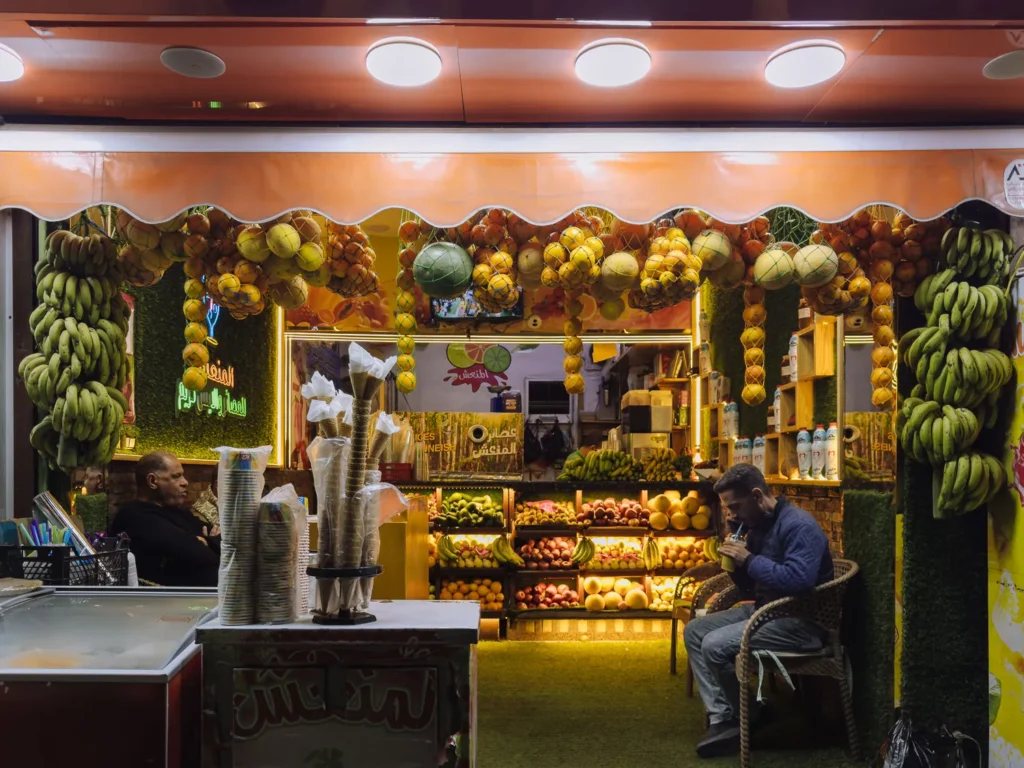
2-Day Luxor Itinerary
Two days is the perfect amount of time to explore the sights of Luxor. We recommend spending one day exploring the West Bank and one day exploring the East Bank.
This is how we suggest you put it all together.
Day 1: Luxor West Bank
- Morning – Early start at Queen Hatshepsut Mortuary Temple to beat the crowds. Then dip into the Tombs of the Artisans at Deir el-Medina. End the morning at stunning Medinat Habu.
- Lunch – Have a relaxing break at the Habu Hotel restaurant or try the local Nubian food at Nubian House.
- Afternoon – Explore the Valley of the Kings and end the day sailing down the Nile on a Felucca as the sun sets.
Day 2: Luxor East Bank
- Morning – Enjoy a hot air balloon ride over the Valley of the Queens, then, after breakfast, explore the magnificent Temple of Karnak.
- Lunch – Enjoy lunch by the river at El Kababgy Restaurant or on the raised terrace at Al Sahaby Lane.
- Afternoon – End the day exploring the Luxor Temple and the Avenue of Sphinxes. If it’s after 5 pm when you come out, pop into the Mummification Museum right next door.
Take a Tour
If you don’t want to organise things yourself, there are a couple of good tours that cover each day.
West Bank: This well-rated full-day tour visits all the highlights of the West Bank, including Valley of the Kings, Queen Hatshepsut Temple, Medinet Habu, Deir El-Medina and Valley of the Queens. It includes a guide and hotel pickup and drop-off.
East Bank: This well-rated private half-day tour visits the two key temples on the East Bank – Karnak and Luxor Temple. It includes a guide, lunch, pickup and drop-off.
Where to Eat in Luxor
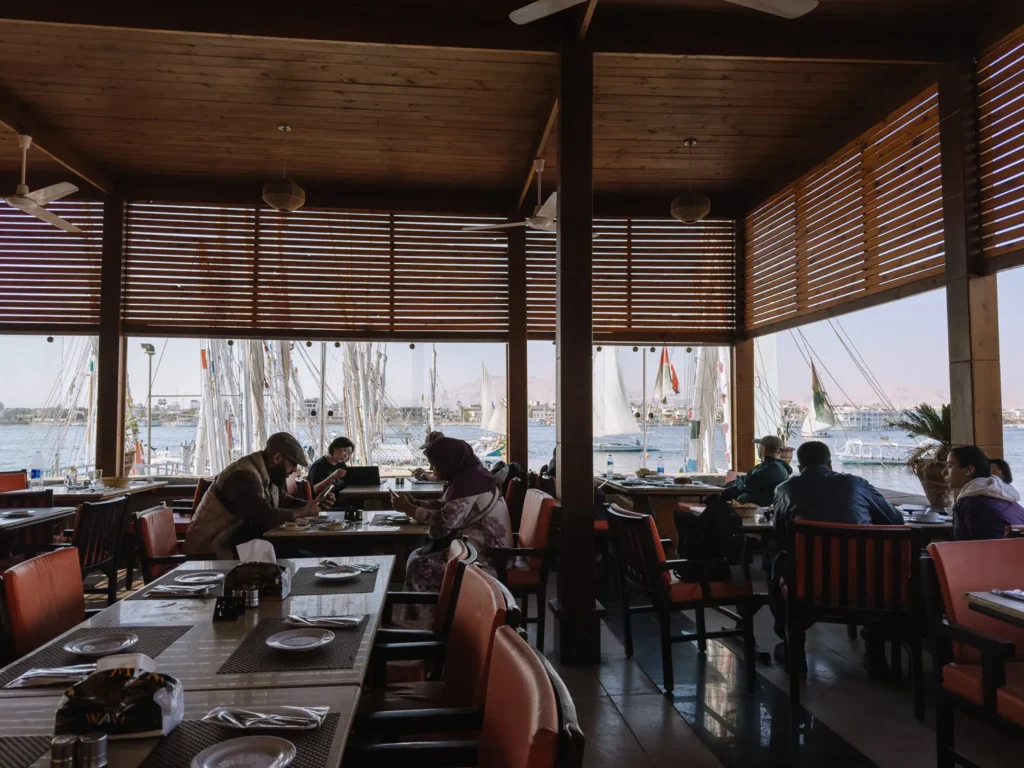
El Kababgy Restaurant (East Bank) – Good quality Egyptian cuisine served on the East Bank of the Nile. Stunning views extend over the river in one direction, with the Luxor temple visible in the other.
Sofra Restaurant (East Bank) – Hidden away in the back streets of Luxor, this restaurant lets its food speak for itself. They also offer cooking lessons.
Al-Sahaby Lane Restaurant (East Bank) – This restaurant, located on the top floor of the Nefertiti Hotel (see below), offers a mix of local and Western cuisine. The main attraction, however, is the stunning views over the Nile and Luxor Temple.
Nubian House (West Bank) – Colourful, family-run eatery on the West Bank of the Nile. It may not look like much at first, but the welcoming host and Nubian cuisine quickly win you over.
Habu Hotel Restaurant (West Bank) – Head up the stairs in the Habu Hotel and you’ll find a terrace with this lovely restaurant overlooking Medinat Habu Temple. It is pricier than other places, but its wonderfully relaxed atmosphere offers a welcome escape from the heat and the crowds.
Where to Stay in Luxor
Luxor is cut in half by the Nile, and the two banks have a very different ambience. To choose which is right for you, read our favourite places to stay in Luxor. Below is a smaller selection:
Nefertiti Hotel ($$) – A good value hotel in a prime location. The upstairs terrace has great views of the Luxor Temple and the Nile. Rooms are comfortable and tidy, and there are plenty of taxis outside to organise trips. It’s also within walking distance of the train station.
Sonesta St. George ($$$) – A fantastic mid-range choice right on the East Bank of the Nile. It features a lovely pool surrounded by loungers and a terrace that extends into the Nile. An ideal spot for sunset drinks as the feluccas sail past.
Malkata House Boutique ($$$$) – A beautiful and peaceful boutique hotel located in a quiet area on the West Bank side of the Nile. Designed in terracotta tones and featuring a large outdoor pool, it offers a very relaxing stay. The morning views over the Valley of the Queens, with hot air balloons floating overhead, are truly exceptional.
Hilton Luxor Resort & Spa ($$$$) – A luxurious stay at the northern end of Luxor, away from the crowds. Opulently decorated, with spacious areas, a stylish spa, and an infinity pool beside the Nile.
Sofitel Winter Palace ($$$$$) – The historic grand dame of Luxor, where the rich and famous have been staying for years. Situated centrally on the East Bank, it feels more like a palace than a hotel. There are expansive grounds at the rear, and the furnishings are traditionally European.

More Egypt Guides
- How to plan a 7- or 10-day Egypt itinerary.
- The best places to visit in Egypt.
- Essential tips for visiting Egypt: what to know before you travel.
- The best ancient temples in Egypt.
- Nile Cruise ship vs Dahabiya: which is the best experience?
- The best things to do in Cairo (including the Pyramids).
- Plan your trip with our 2- or 3-day itinerary for Cairo.
- All you need to know about visiting the Valley of the Kings.
- What to do in Aswan, Egypt’s southern escape.
- See the best and other great things to do in Luxor.
- Your complete guide to visiting the Pyramids of Giza.

reader-supported
When you buy through links on our site, we may earn a small affiliate commission at no extra cost to you.
Thanks for your support // Paul & Mark