

The Alhambra is one of the world’s most spectacular monuments, but visiting takes some planning. Here is all you need to know about visiting the Alhambra, including how to get tickets, when to go and what to see.
By: Paul Healy | Last Updated:
The Alhambra in Granada, Spain, is a hilltop palace complex with some of the finest Islamic architecture and art in the world.
In our opinion, it’s one of those world-class sites that everyone should visit at least once.
Visiting this UNESCO World Heritage Site requires careful planning. Tickets sell out months in advance, entry to the Nasrid Palaces is strictly timed, and navigating the sprawling complex can be overwhelming without the right information.
We have been to the Alhambra three times, so we have put together this comprehensive guide to share everything you need to know to make the most of your visit.


What Is the Alhambra?
The Alhambra is a hilltop fortress and palace complex in Granada, Spain, that was designated a UNESCO World Heritage Site in 1984 for its well-preserved religious, political, and cultural and artistic qualities.
Most of the complex was built in the 13th and 14th centuries by the Nasrid dynasty, the last Muslim rulers in Spain. It was a fortified palace and a small city housing the sultan’s family and official buildings.
In 1492, Catholic Monarchs Ferdinand and Isabella conquered Granada, ending 800 years of Muslim rule. Fortunately, they preserved the palace, so what remains today is a fascinating blend of Islamic and Christian Architecture.
The Nasrid Palaces, in particular, showcase some of the best Islamic architecture in the world.


Getting Your Tickets (Do This First)
Tickets for the Alhambra sell out well in advance. If you plan to visit during peak season (April to October), you should book at least 2 months in advance. Basically, as soon as you know your plans, book your Alhambra tickets.
What Ticket Do You Need?
You need the Alhambra General ticket, which includes the Nasrid Palaces – the main thing you want to see at the Alhambra.
In addition to the Nasrid Palaces, the general ticket also includes the Alcazaba fortress, the Generalife gardens, and the Palace of Charles V.
The other ticket options are gardens only, which we do not recommend, or night visits. The night visits are atmospheric, but you don’t see the whole complex, so we’d only suggest this ticket type if you have been before.
Where to Buy a Ticket?
First, check the official Alhambra website to see if they have availability for the date you are looking for.
Alternatively, checkGetYourGuide, which sells individual tickets, including the Nasrid Palaces, at around the same prices as the official website.
Lastly, if you have not been able to get tickets on the first two options, check Viator, which also sells individual tickets but usually at a slightly higher price than GetYourGuide.

What Time to Book?
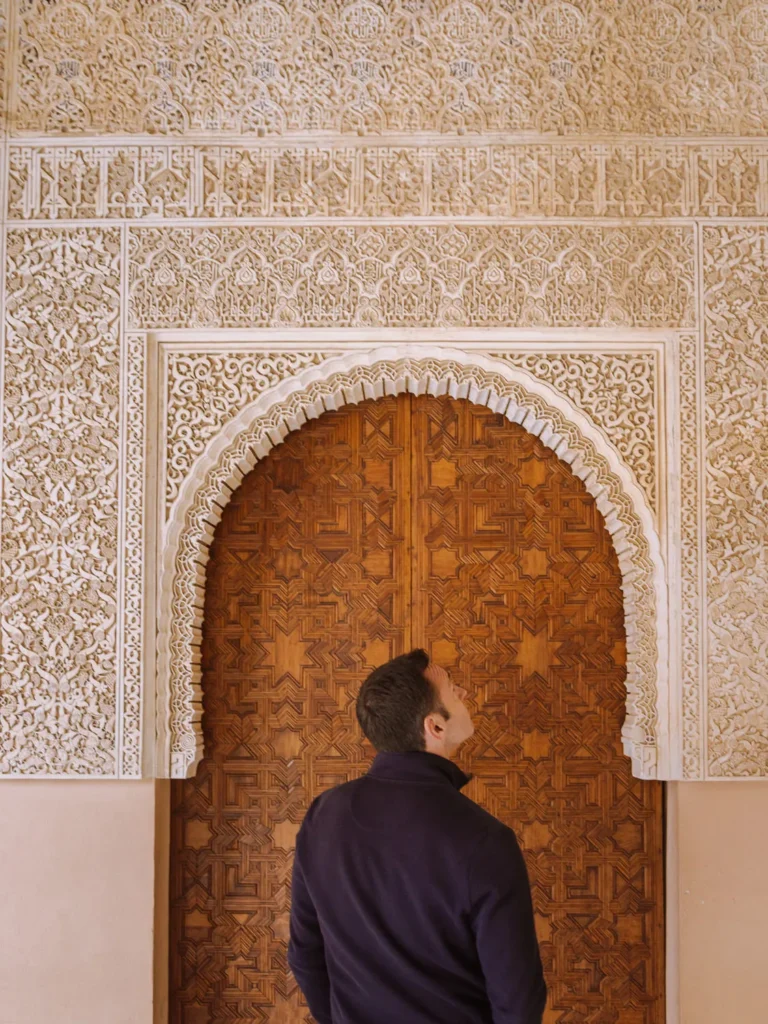
You need to book a timed entry for the Nasrid palaces. The timeslot is managed strictly. If you are late, you won’t be allowed in. You also won’t be allowed in until your timeslot commences.
On the official website, they suggest arriving 1 hour before your scheduled timeslot. However, we booked the 8:30 AM slot, arrived around 8 AM, and had no problems getting in.
Because the Nasrid palaces have a timed entry, the crowds are generally the same throughout the day.
But there can be a queue at the entrance to the complex, which you can avoid somewhat by arriving earlier.
Day or Night Visit?
The Alhambra offers night visits on selected evenings. While there is something undeniably atmospheric about visiting at night, you see much less of the overall complex.
Individual tickets are required for the Nasrid Palaces and the gardens, so you can’t see both on the same visit.
It’s also much more challenging to photograph at night, so we don’t recommend it. You’ll experience the full scope of the site if you plan a daytime visit.
How Long Do You Need?
We spent half a day exploring the Alhambra.
This was around 90 minutes in the Nasrid Palaces, 45 minutes in the Alcazaba, 30 minutes in the Palace of Charles V, and around 90 minutes wandering through the gardens.
With walking time and stops factored in, allow around 4 to 5 hours.

What to See at the Alhambra?
The Alhambra is a fascinating complex, with plenty to see. If you start from the Puerta de la Justicia, this is the order we suggest you see things in.
1. The Alcazaba
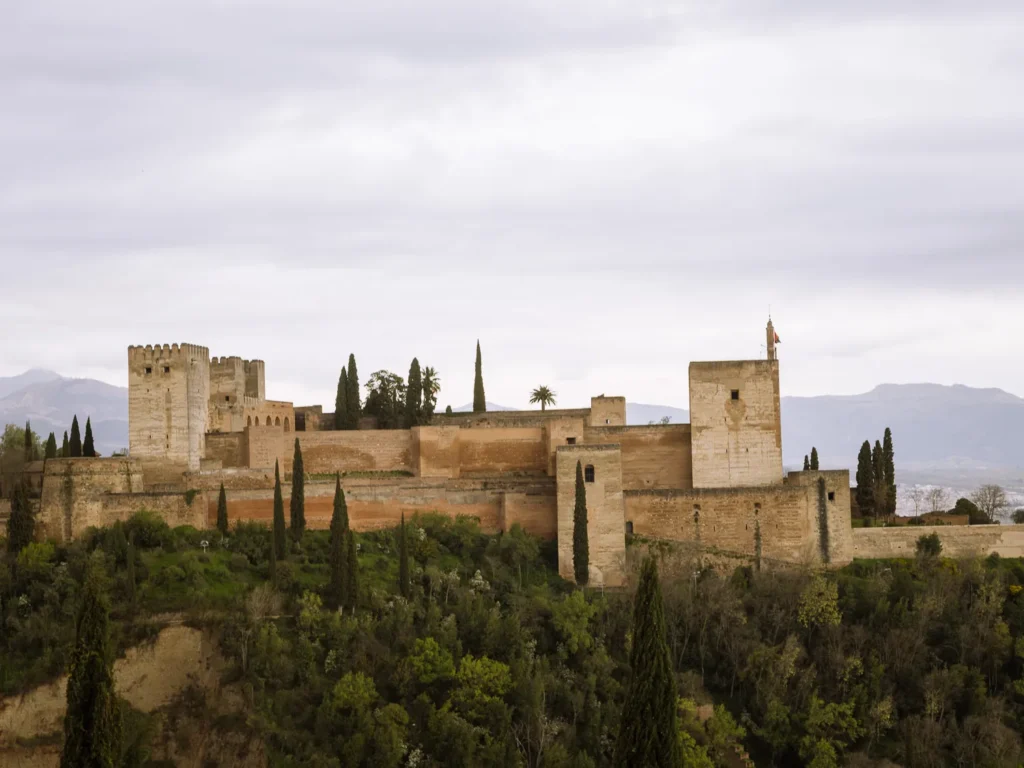
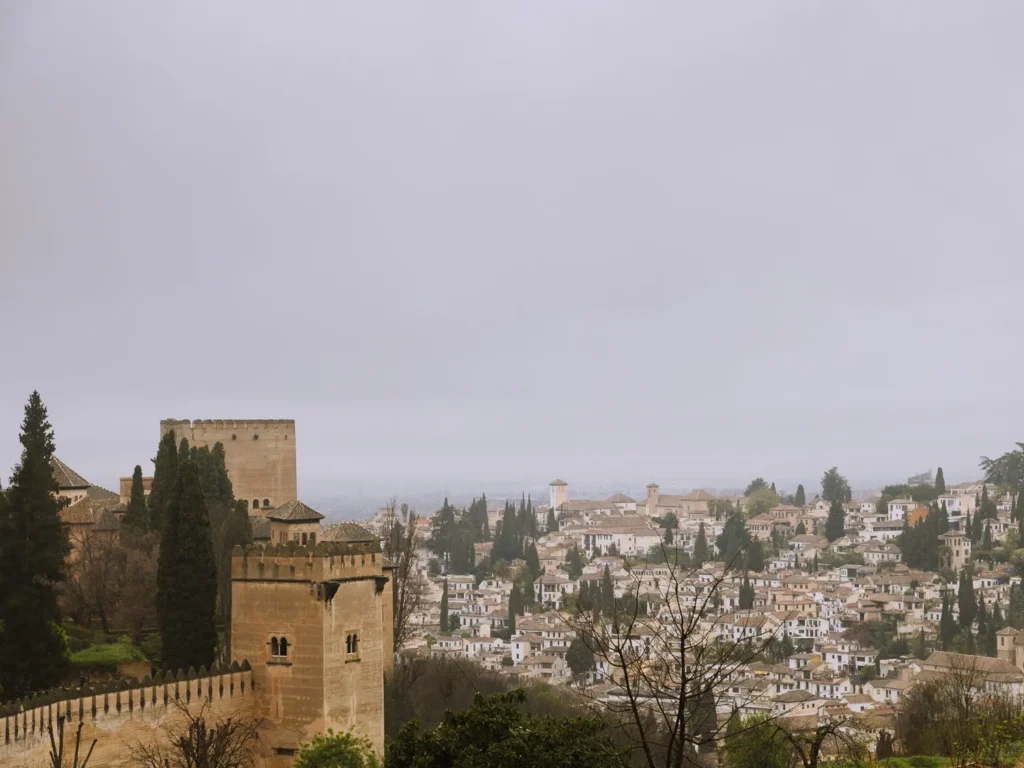
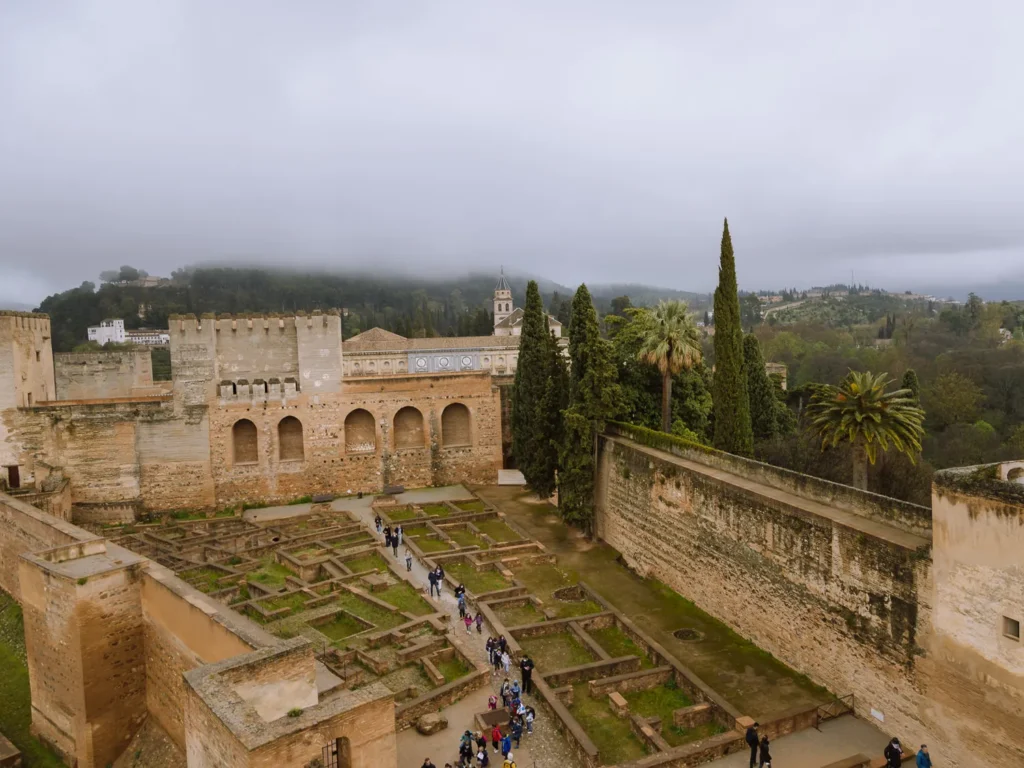
The Alcazaba is the oldest part of the Alhambra, dating back to the 9th century. The current complex was constructed as a defensive fortress with ramparts, a keep, and a watch tower.
You can walk the ramparts and explore what remains of the military quarters. The Torre de la Vela (Watchtower) on the western edge has spectacular 360-degree views.
2. Palace of Charles V
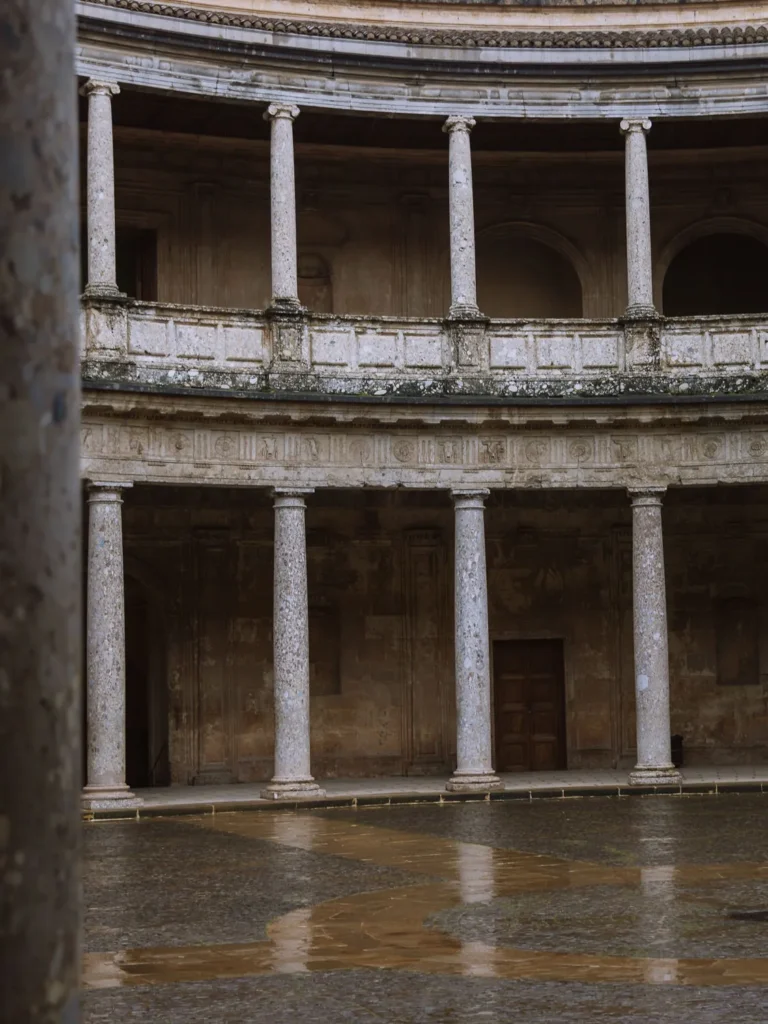
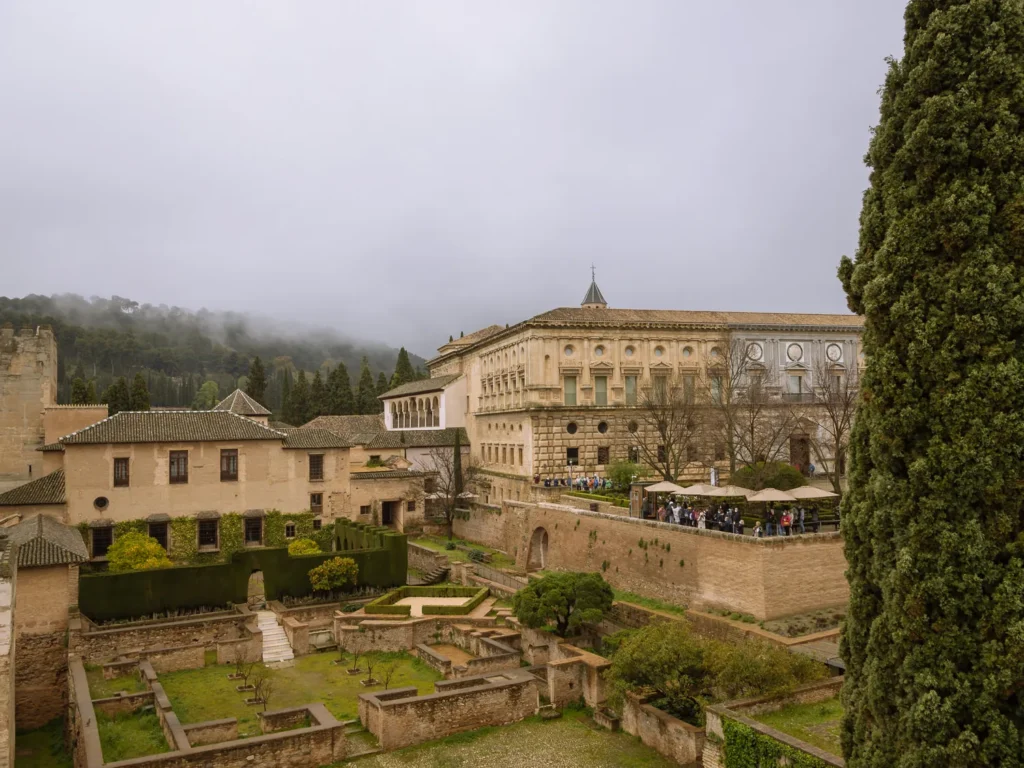
Once the Catholic Monarchs took over, the Holy Roman Emperor Charles V commissioned his new palace to be built beside the Alhambra. The resulting Renaissance palace was constructed in the centre of the complex, demolishing part of the Nasrid palaces in the process.
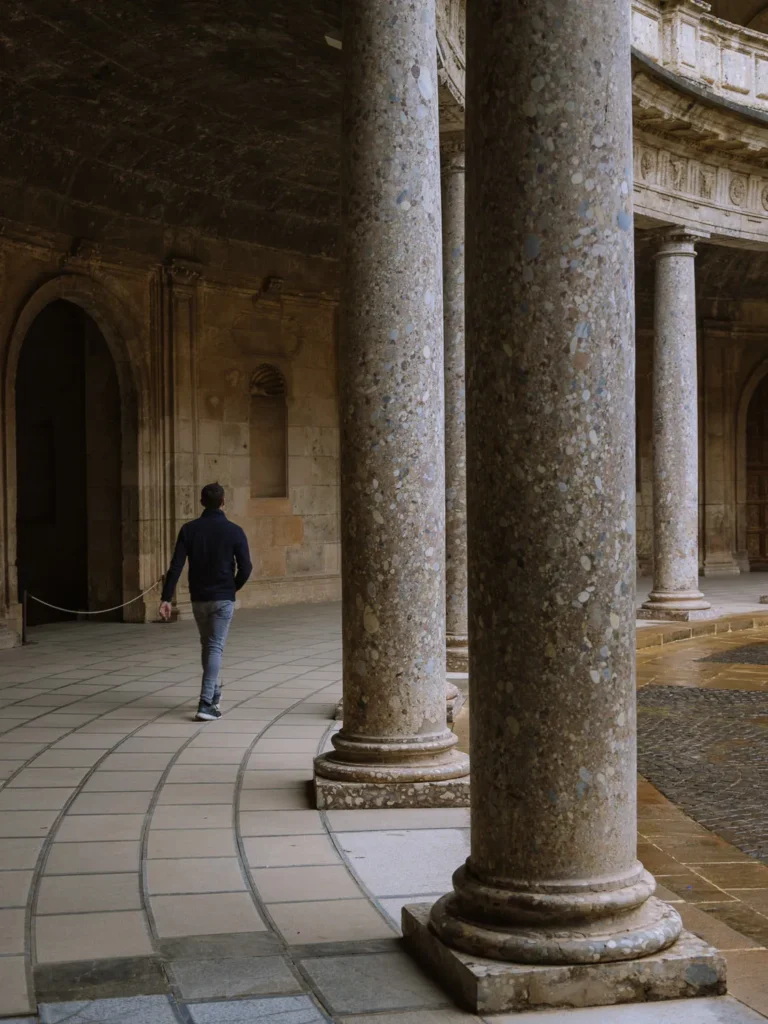
The exterior is a massive square structure, while the interior has a circular courtyard with two levels of columns creating a collonaded gallery.
The heavy style clashes with the delicate Islamic architecture surrounding it, making the Alhambra even more appealing.
3. Nasrid Palaces
The Nasrid Palaces are the main reason you want to book your Alhambra tickets so far in advance.
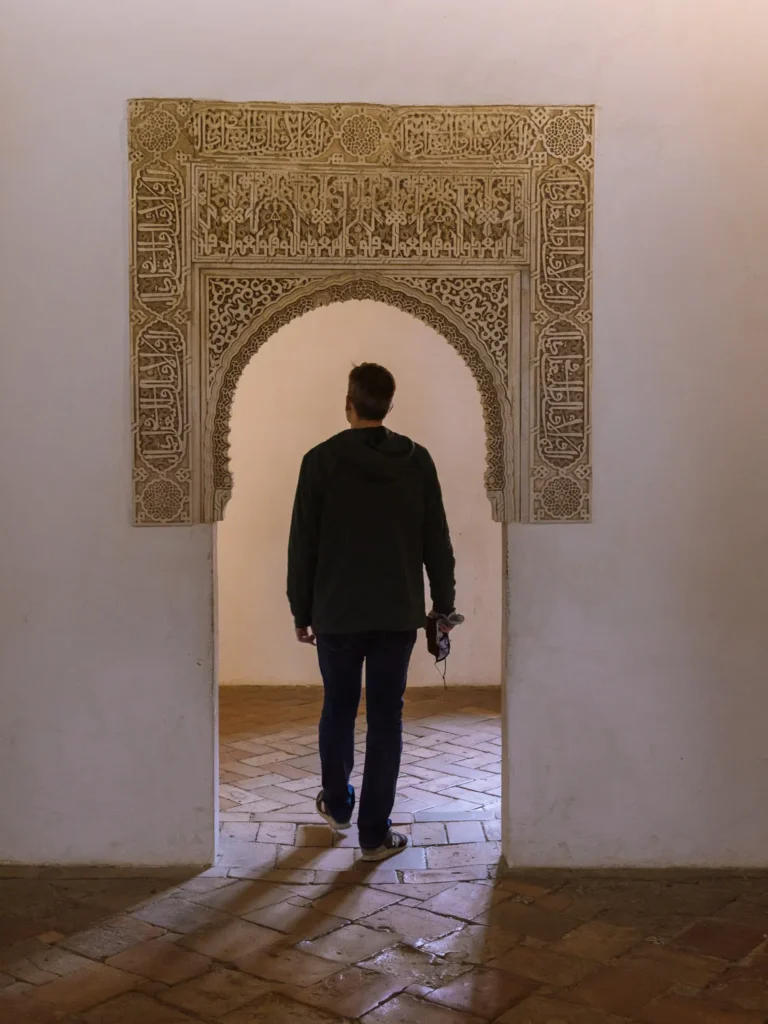
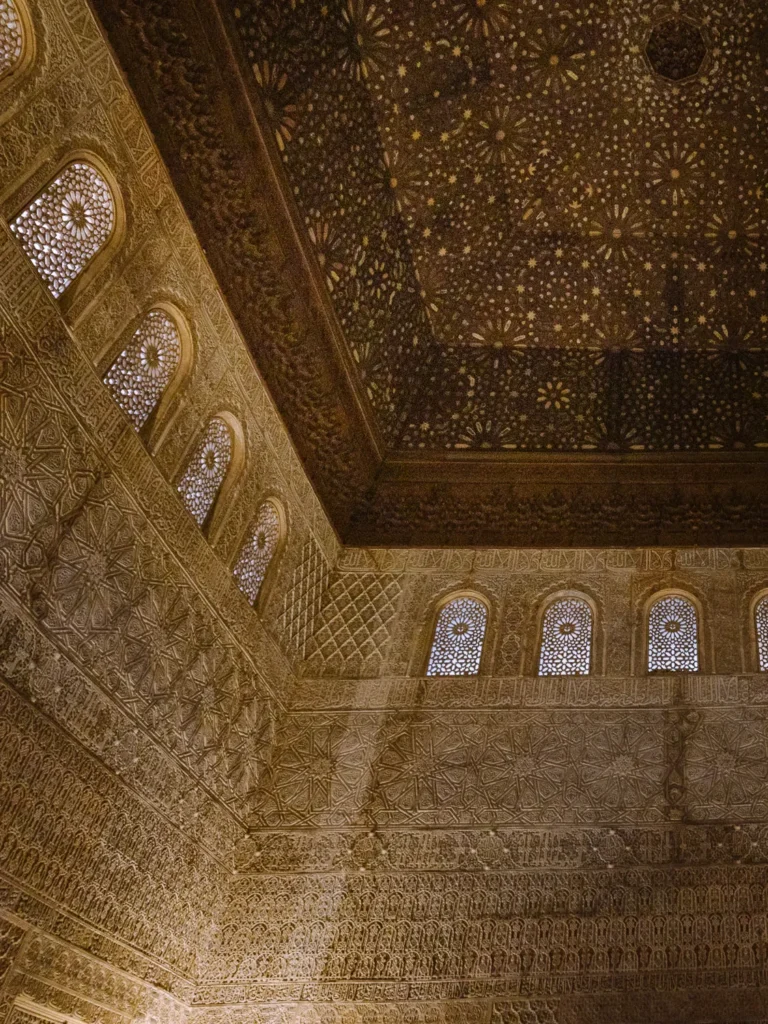
It contains the most breathtaking architecture in the Alhambra with reflecting pools, intricate geometric tilework, Arabic calligraphy, slender marble columns and a forest of arches.
There are 3 main palaces within the Nasrid palaces, all built by a different sultan.
The Mexuar
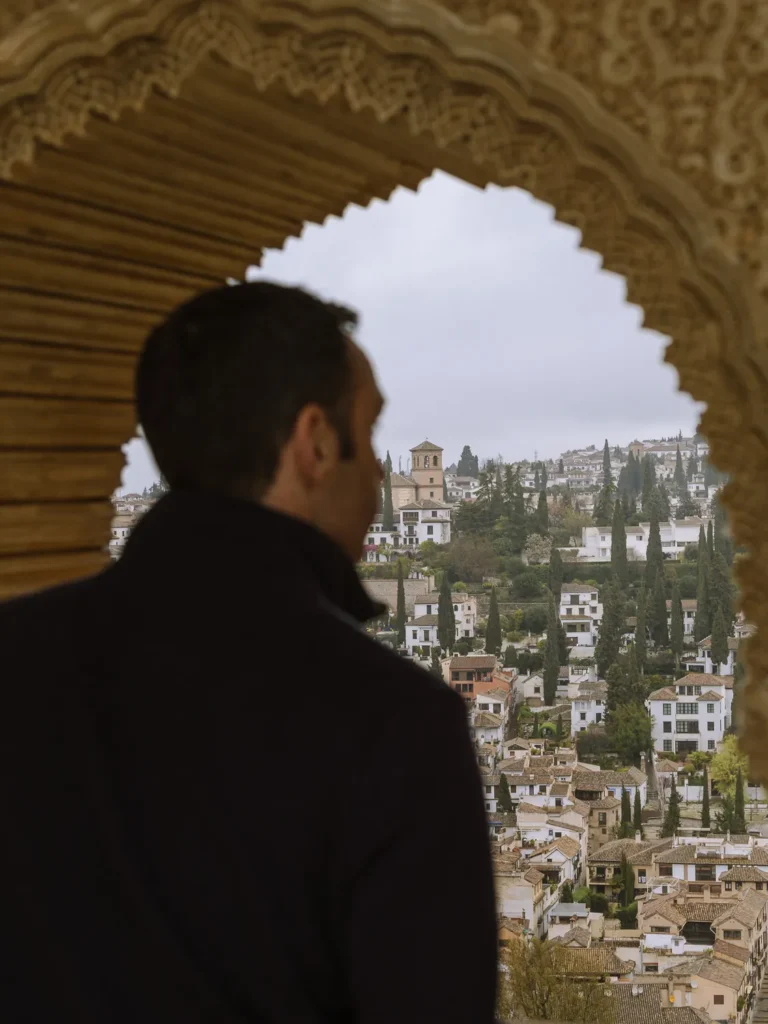
This is the oldest section, originally used for administrative and judicial functions. It’s a great teaser for the intricate tile work you’ll see as you progress further in. There’s a small oratory with beautiful views toward the Albaicín quarter.
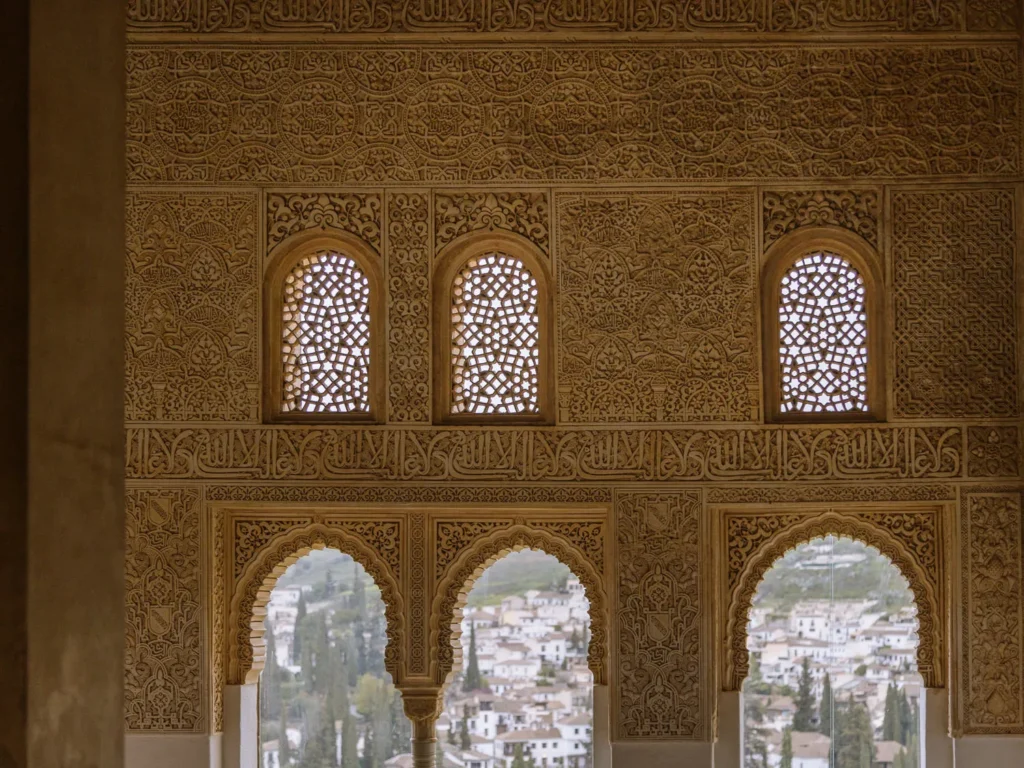
Comares Palaces
- Court of the Myrtles (Patio de los Arrayanes) – A serene rectangular courtyard with a long reflecting pool flanked by myrtle hedges, with the massive Comares Tower rising at the north end.
- Hall of the Ambassadors (Salón de Embajadores) – Inside the tower, this was the throne room, with a breathtaking cedar-wood dome ceiling containing over 8,000 pieces representing the seven heavens of the Islamic paradise.
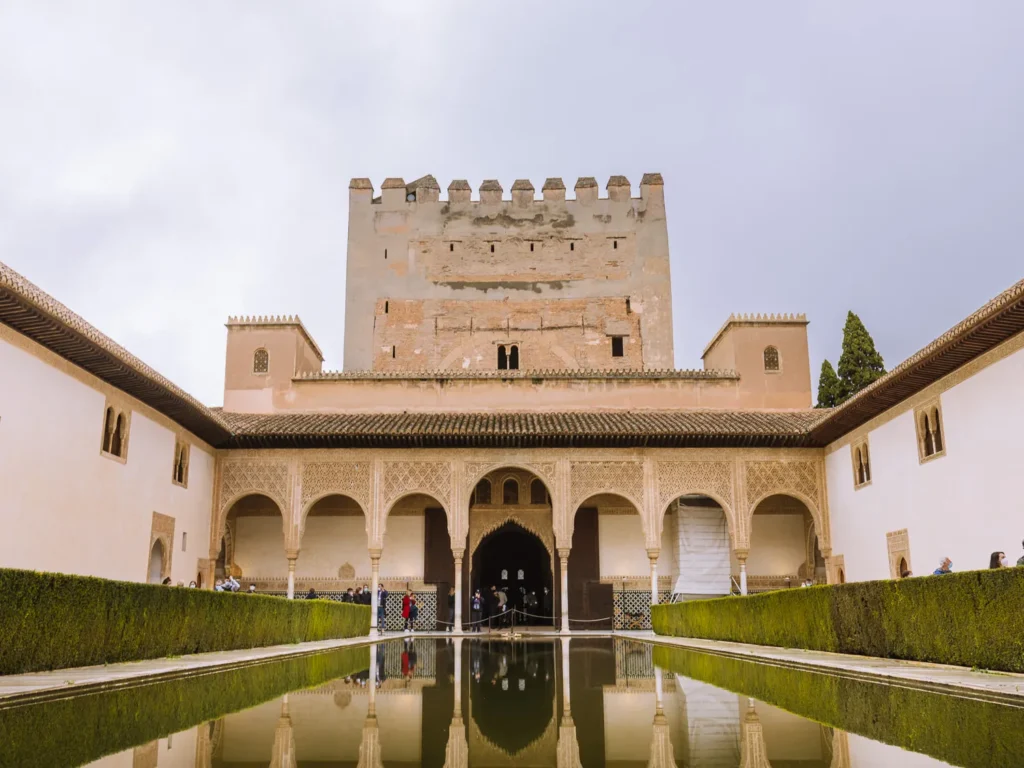
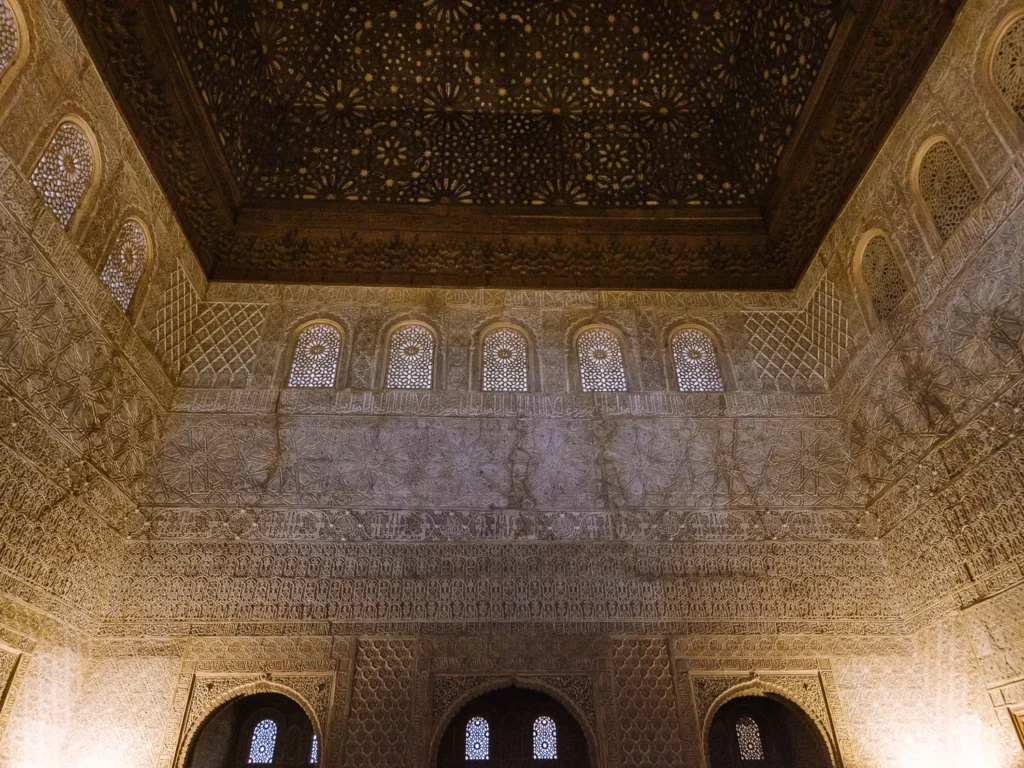
Palace of the Lions
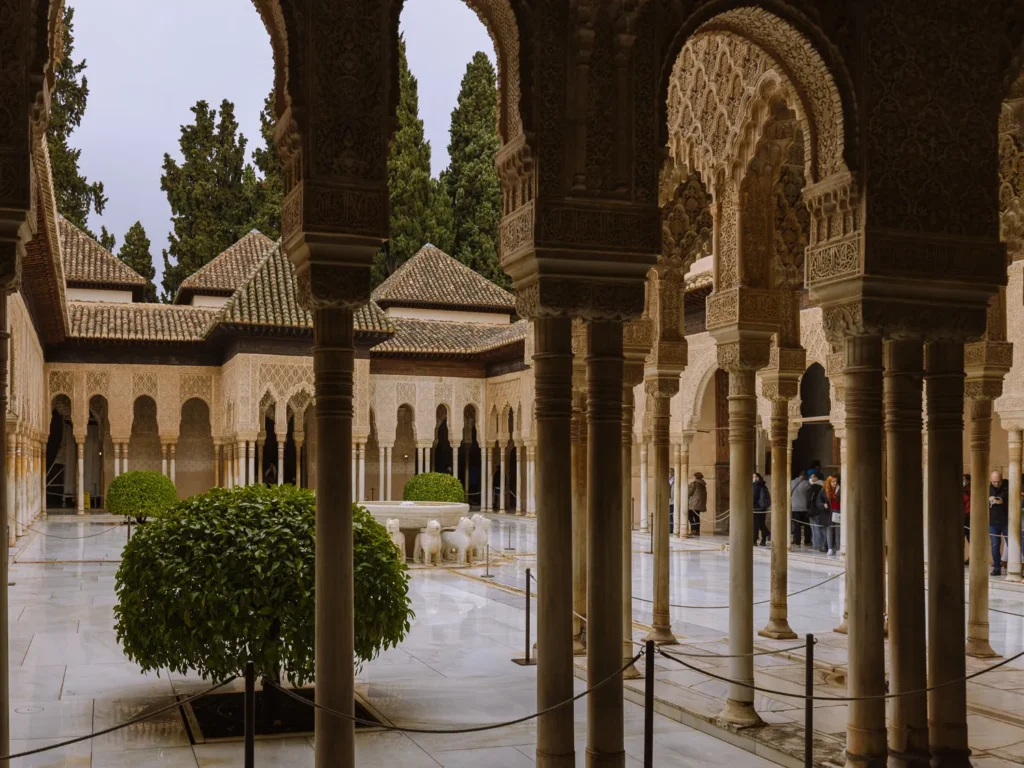
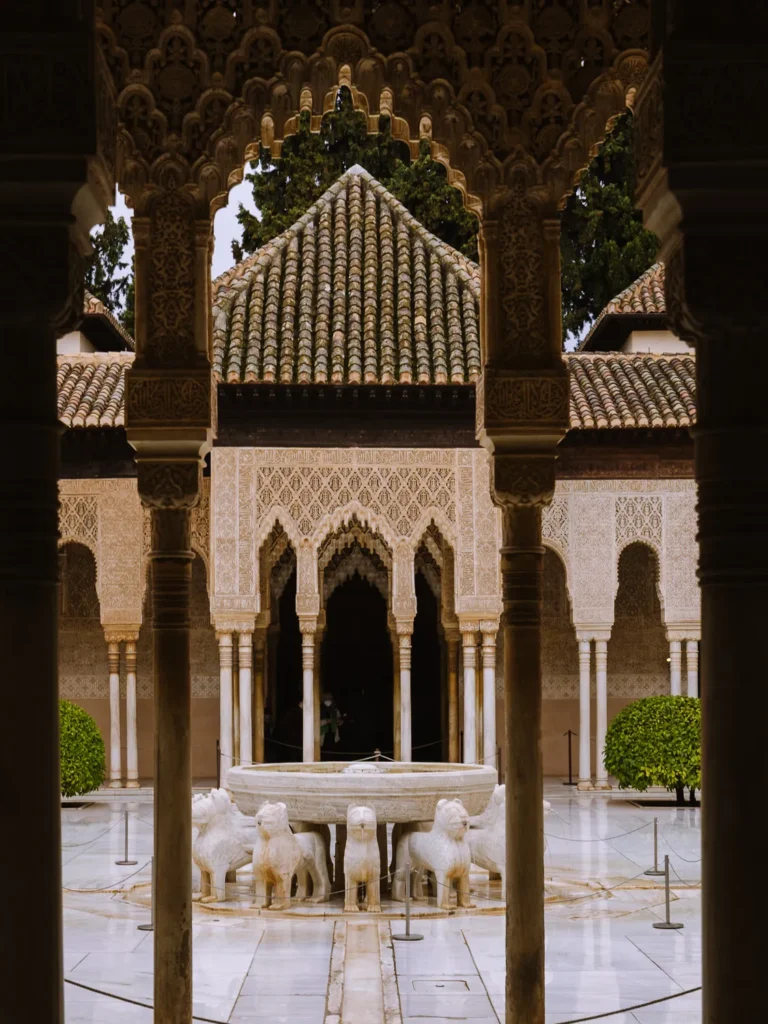
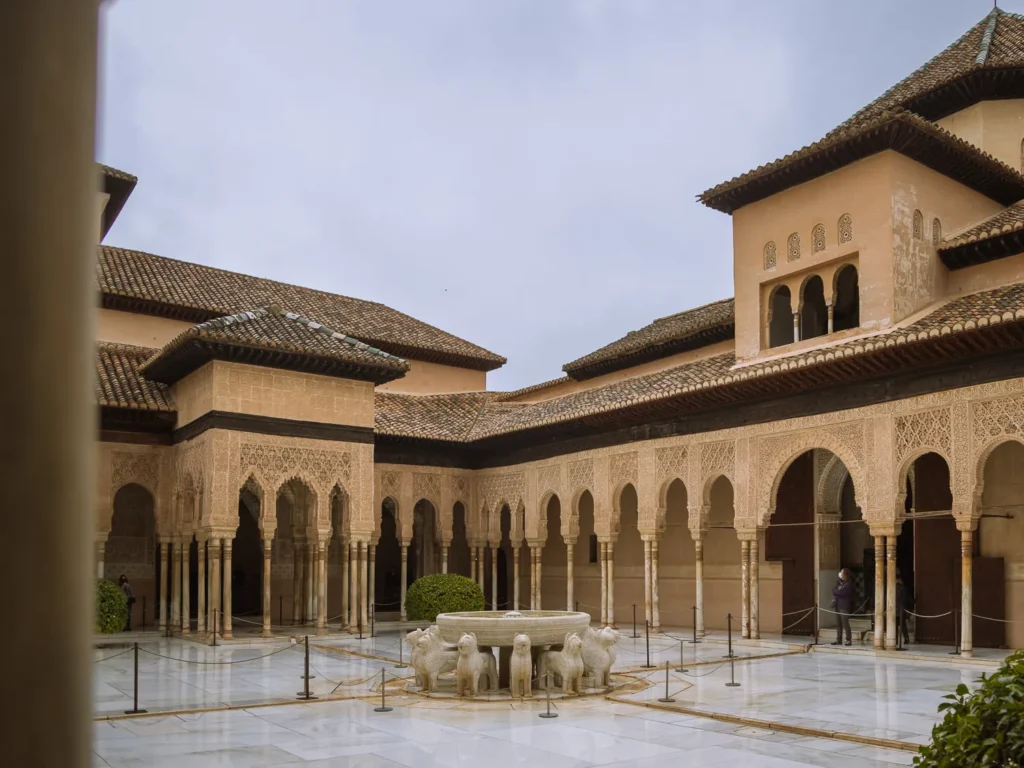
- Court of the Lions (Patio de los Leones) – The iconic central courtyard with 12 marble lions supporting a fountain, surrounded by 124 slender marble columns and elaborate stucco work.
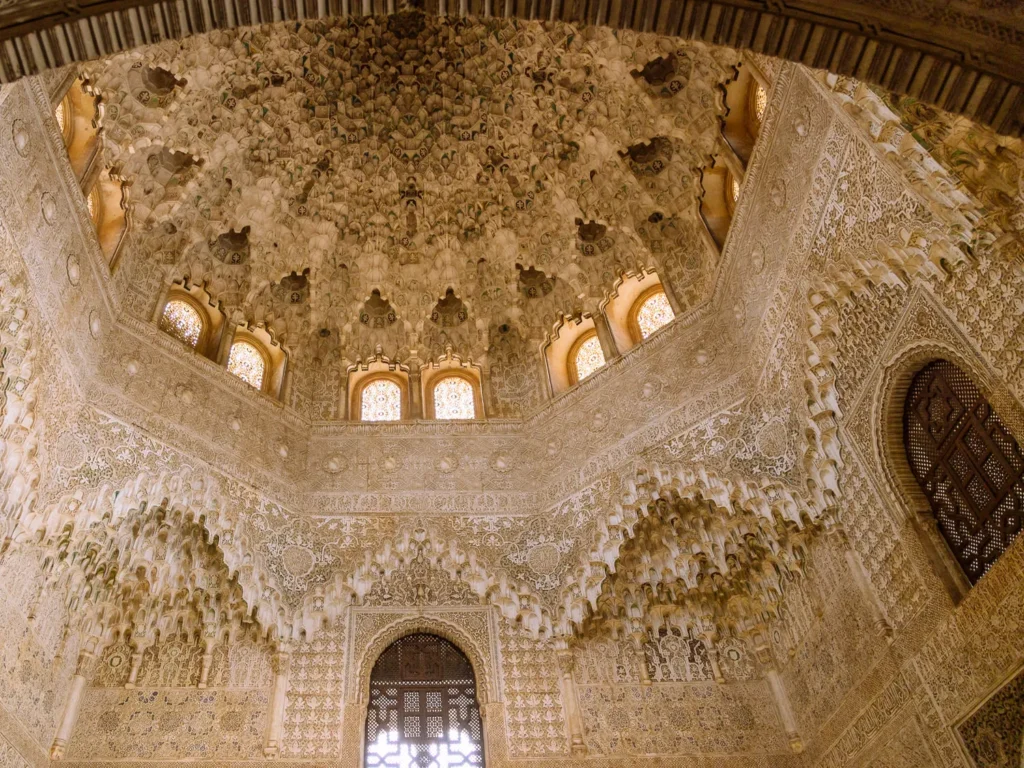
- Hall of the Abencerrajes – Features a stunning star-shaped muqarnas (honeycomb) dome.
- Hall of the Two Sisters (Sala de las Dos Hermanas) – Contains one of the most spectacular muqarnas domes in the Alhambra with over 5,000 individual cells.
- Hall of the Kings (Sala de los Reyes) – This room has unique ceiling paintings on leather depicting court scenes.
- Mirador de Daraxa – An intimate viewing pavilion overlooking the Lindaraja Garden with exquisite tile work and stucco decorations

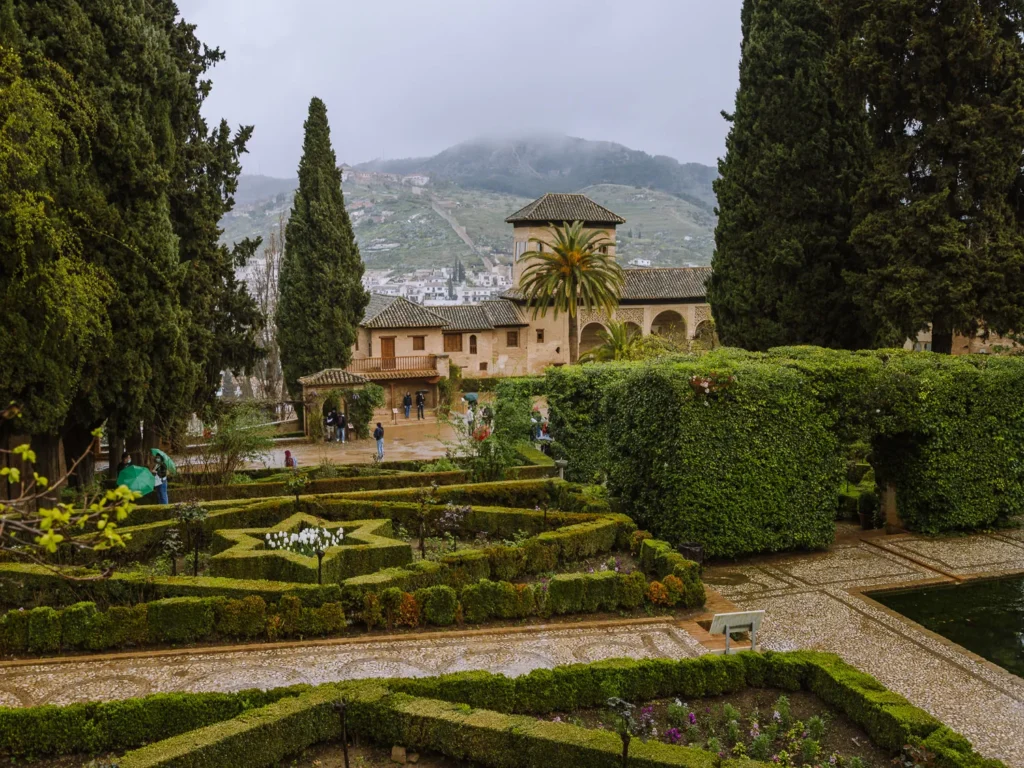
4. El Partal Gardens
El Partal is one of the oldest surviving structures in the Alhambra and now forms part of a beautiful terraced garden.
The Partal Palace or Portico Palace is an elegant building with a five-arched portico reflected in a large rectangular pool. Behind the portico, the Tower of the Ladies is one of the oldest towers in the Alhambra.
The surrounding gardens are arranged in descending terraces with cypress trees, flower beds, fountains and pavilions.
5. Generalife
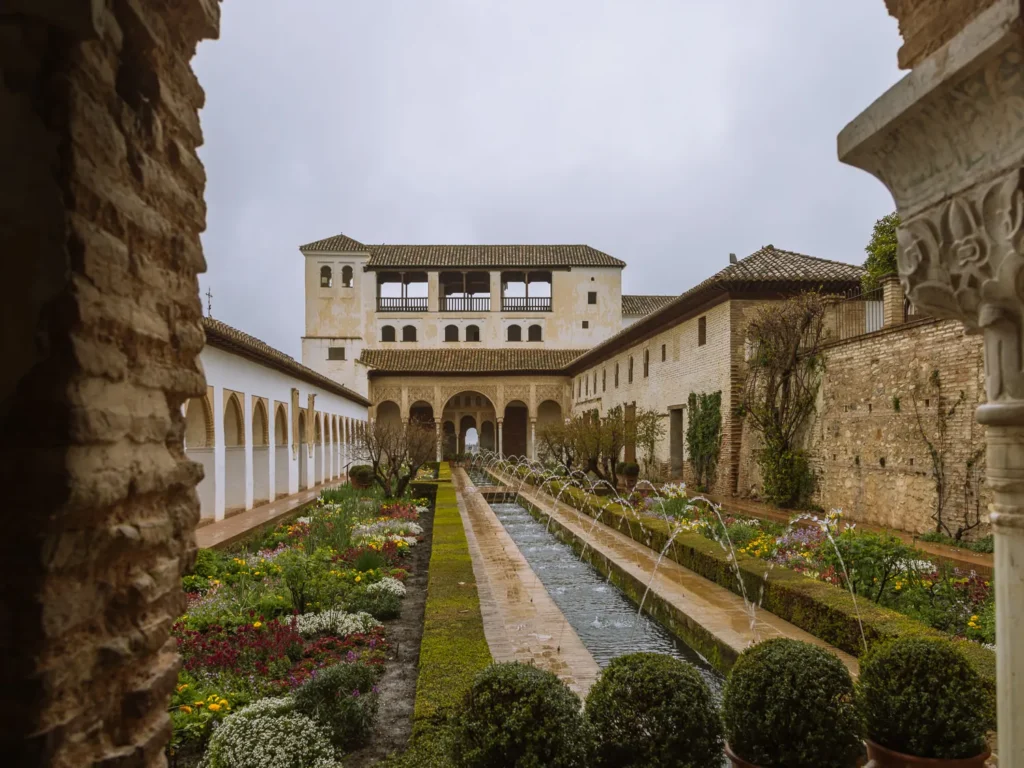
Generalife is a garden complex built in the 13th century as a relaxing space for the Kings of Granada.
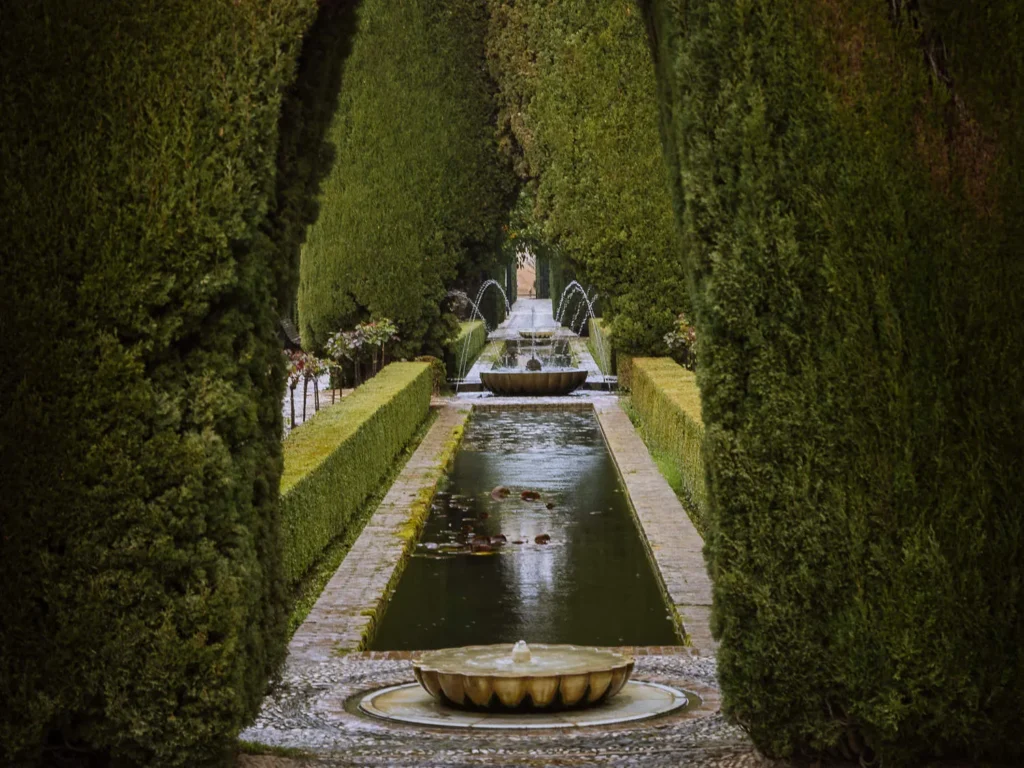
The highlight is the Patio of the Irrigation Ditch – a 50-metre-long water feature lined with flowers and greenery, with water jets arcing gracefully from fountains on either side.
The garden design reflects the Islamic concept of paradise on earth, with water as the central element bringing life to the landscape.
Beyond this famous courtyard, you’ll find terraced gardens connected by shaded pathways, with roses, cypress trees, and oleanders creating a verdant oasis.
Alhambra Map
Use the map below, which you can download to your device, to help you navigate around the Alhambra. We have included all the main sights, the entrances and the nearest bus stops.
Click on the top right corner to open our map in your Google Maps app. Click the star next to the title to save it to your Google account.
A Practical Alhambra Itinerary
There are two entrances to the Alhambra, which will determine the order in which you see things. We cover this in more detail below.
If you start at The Puerta de la Justicia, a good natural flow is the order we listed things above, so: The Alcazaba → Palace of Charles V → Nasrid Palaces → El Partal Gardens → Generalife.
This order works well because the entrance is between the Alcazaba and the Palace of Charles V. You can loop back to either of them depending on your entry time for the Nasrid Palaces.
If you are starting at the other entrance, Pavilion Main Entrance, it would probably make more sense to reverse this order and exit via the Puerta de la Justicia.
How to Get to the Alhambra
The Alhambra is on a hill overlooking Granada, and there are several ways to get there. But, as mentioned above, there are two main entrances.
Alhambra Entrances
Puerta de la Justicia is the closest to the Nasrid Palaces. If you are walking up from town, this is the best entrance. There is no ticket office or vending machine at this entrance, so you need to have the QR code on your phone for access or have printed out your tickets.
The Puerta de la Justicia is not the main entrance, so it’s generally a little quieter.
Main Entrance/Pavilion Area – The main entrance has ticket collection facilities, restrooms, a cafe, a gift shop, and luggage storage. This is where the carpark is, so this is the entrance you’ll use if you drive to Alhambra.
The Main Entrance is generally busier than the Puerta de la Justicia.
By Bus
Bus C30 or C32 depart from the Plaza de Isabel la Católica (100 metres from Plaza Nueva) every 8-12 minutes.
For the quieter entrance with the QR code, the stop is Puerta de la Justicia. For the main entrance, you want the final stop: Alhambra – Generalife 2.
By Foot
If you would like to walk, which is what we did on our last visit, start at Plaza Nueva, then walk up Cuesta de Gómerez through the Puerta de las Granadas.
Either follow the main road to the Main Gate for access to Generalife or the path on the left for access to the Gate of Justice (closer to the Nasrid Palaces).
Allow about 20 minutes to walk from the centre of town.
By Taxi
Official taxis are permitted to drive through the Alhambra complex, so you can also collect a taxi from the centre of Granada. It takes around 5-10 minutes.
Alhambra Guided Tours
There isn’t a lot of printed information in the Alhambra, and there is more history than you can absorb from the audio guide while trying to navigate on your own.
So a guided tour is a great way to see the Alhambra. This guided tour is very well rated and also reasonably priced.
This guided tour from Viator is similar and also comes highly rated.
Important Tips for Visiting Alhambra
Tickets sell out months ahead: We cannot stress this enough. For peak season (April-October), check availability before booking your Granada accommodation. Two to three months’ advance booking is not excessive.
Timed entry is strict: You must be standing at the Nasrid Palaces entrance at your specified time. Enter the Alhambra complex at least 30 minutes before your timeslot to account for queues, security, and walking distance.
Bring your passport: You must show your passport or national ID card to gain entry, even with valid tickets. Names on tickets must match your ID exactly. This is checked both at the complex entrance and again at the Nasrid Palaces entrance.
Mobile tickets work: QR codes on mobile devices are accepted, so you don’t need to print your tickets, though having a screenshot or PDF backup might be a good idea.
Get the audio guide: There is minimal printed information throughout the complex, and the audio guide provides essential context that makes everything more meaningful. It costs around €6-8 and is worth every cent.
Bring a small backpack: Only backpacks up to 40 cm x 40 cm are allowed in the Alhambra. Anything larger will need to be stored in the lockers at the two entrances.
Wear comfortable shoes: You’ll walk several kilometres on uneven stone paths, stairs, cobblestones, and gravel. This is not the place for flip-flops.
Bring water and snacks: There are a couple of small cafés and vending machines, but they’re overpriced and sometimes have long queues. You’re allowed to bring food and water.
Facilities are limited: Toilets are available at the entrance, near the Palace of Charles V, and in the Generalife, but not elsewhere.
Shade is scarce: Much of the site is exposed, particularly the Alcazaba and parts of the gardens. Bring a hat and sunscreen in summer.
Photography rules: Photography is allowed and encouraged, but no flash and no tripods. The interiors can be dim, so be prepared for challenging lighting conditions.
Watch for pickpockets: Like any major tourist site, opportunistic theft happens. Keep valuables secure, especially in crowded areas like the Nasrid Palaces.
Accessibility: The site involves significant walking, stairs, and uneven surfaces. While some areas are accessible, the Alhambra is challenging for wheelchair users or those with significant mobility issues. Contact the site in advance to discuss accessibility options.
More Andalucía Guides
- Spend a glorious 3 days in Seville, the capital of Andalucia.
- How to plan a day trip from Seville to Córdoba.
- Our guide to Málaga includes the best things to do, top beaches and great day trips.
- See the Alhambra with our guide to visiting Granada.
- Take a road trip through these beautiful white villages in Andalucía.
- How to visit Ronda on a day trip from Seville or Málaga.
- Read up on the best things to do in Cádiz.
- See the incredible history of the region in our 2-day itinerary for Córdoba.
- Hike the stunning Garganta Verde.
- Find secluded beaches near Tarifa ideal for kite-surfing or bum-sitting.
- Visit more interesting places in Andalucía.
- Read about all the best things to do on the Costa del Sol.

reader-supported
When you buy through links on our site, we may earn a small affiliate commission at no extra cost to you.
Thanks for your support // Paul & Mark