

From Cornwall’s pretty fishing villages to Scotland’s wild highlands, the UK’s best destinations are steeped in history, dramatically beautiful, and bursting with local experiences.
By: Paul Healy | Last Updated:
We’ve spent a lot of time exploring the UK over the years, and it’s a country that still surprises us.
Mark has lived here his whole life, and I moved here about 18 years ago, so between us, we’ve seen a fair bit of it.
What we love most about Britain is the mix. You can go from Cornwall’s fishing villages to the wild highlands of Scotland, from proper countryside walks to lively cities, historic castles and some genuinely beautiful coastlines.
It’s a country with plenty to offer, but we’ve always been drawn more to the outdoors and the smaller places than the big-name hits.
This guide leans that way too. It’s a little different from some of the other UK roundups online, with more of a focus on scenery, walks and places that feel worth the detour. We hope it gives you a few new ideas for where to go next.
We also have a guide on the best places to visit in England, which includes many of the destinations covered below, plus a few more, less-visited options.


Best Places to Visit in the UK
1. London
London is one of the great cities of the world and the obvious starting point for any UK trip. The British Museum, the National Gallery, Tate Modern, the Tower of London, Westminster Abbey, Buckingham Palace — the list of world-class attractions is almost absurd.
But London’s best quality isn’t its landmarks. It’s also in the neighbourhoods: Soho, Notting Hill, Shoreditch, Borough Market, and Marylebone.
What to do: There’s too much to list here, but our 4-day London itinerary is a good place to start.
How to get there: International flights into Heathrow, Gatwick, or Stansted. Eurostar from Paris or Brussels to St Pancras.


2. The Cotswolds
The Cotswolds is the England that people imagine before they arrive — honey-stone villages, rolling hills, country pubs with low ceilings and open fires.
Arlington Row in Bibury is one of the most photographed streets in England. Bourton-on-the-Water, Burford, and Chipping Campden are each worth half a day.
It’s best explored by car. The villages are spread across a wide area, and the countryside between them is as beautiful as the destinations themselves.
What to do: Walk the Cotswold Way, visit Bourton-on-the-Water, explore Burford’s high street, and have lunch in a proper country pub. Start with our days-out-in-the-Cotswolds guide for ideas.
How to get there: Train to Moreton-in-Marsh or Kingham from London Paddington (90 minutes). Car hire is recommended for exploring.


3. Bath
Bath is one of the most beautiful cities in England. The Roman Baths are extraordinary, and the Royal Crescent is one of the finest examples of Georgian architecture anywhere.
It also has one of the best independent food and café scenes outside London, and the new Gainsborough Bath Spa hotel has made it a serious destination for a luxury weekend break.
What to do: Roman Baths, Royal Crescent, Pulteney Bridge, Thermae Bath Spa. Read our Bath one-day itinerary for more.
How to get there: 90 minutes by train from London Paddington. Easy day trip, but worth staying overnight.


4. The Lake District
The Lake District is England’s largest national park and one of the most beautiful corners of the UK.
With stunning locations such as Windermere, Coniston Water, Scafell Pike and Helvellyn, the Lake District has been inspiring writers, artists, and walkers for centuries.
It was awarded UNESCO World Heritage status in 2017.
It can get busy in summer, particularly around Windermere and Bowness. But we love Ullswater or Buttermere for quieter alternatives that are even more spectacular.
What to do: Walk a Wainwright, take a steamer on Windermere, visit Dove Cottage, and explore Keswick. We have plenty of guides about the Lake District, start with our top things to do in the Lakes.
How to get there: Train to Windermere from Manchester (1.5 hours) or Penrith from London Euston (2.5 hours). Car recommended once you arrive.


5. Yorkshire
Yorkshire is England’s largest county and one of its wildest.
The North York Moors and Yorkshire Dales are both National Parks, each with its own drama and beauty.
Whitby, on the North Yorkshire coast, is one of the most atmospheric towns in England, with dramatic clifftop abbey ruins, a fishing harbour, and the best fish and chips you’ll eat anywhere.
What to do: Walk the Yorkshire Dales, drive the North York Moors, visit Whitby. Read our guide to the Yorkshire Dales to get started.
How to get there: Train to York from London King’s Cross (2 hours). Car recommended for the moors and dales.


6. Brighton
Brighton is irreverent, colourful, creative, and perpetually fun.
The Lanes are a maze of independent shops, vintage stores, and restaurants. The seafront is brilliant on a summer afternoon.
The Royal Pavilion — a Regency-era palace designed to resemble a Mughal-era Indian monument — is one of the strangest and most wonderful buildings in the country.
What to do: The Lanes, Royal Pavilion, seafront, Seven Sisters walk. Read our Brighton day trip guide with tips and a 1-day itinerary.
How to get there: 50 minutes by train from London Victoria. Easy day trip, better as an overnight.


7. The Seven Sisters & South Downs
The Seven Sisters are one of England’s great natural spectacles. It’s a series of eight dramatic chalk cliffs (despite the name) rising from the English Channel along the Sussex coast.
The walk from Cuckmere Haven to Birling Gap is one of the finest coastal walks in the country, with a carpet of green covering the chalk white cliffs.
What to do: Walk the cliff tops, photograph the cliffs from the beach at Cuckmere Haven. Read our Seven Sisters walk – honestly, one of our favourite walks in the UK.
How to get there: Train to Seaford or Eastbourne, then bus or taxi to Cuckmere Haven.


8. Oxford
Oxford is one of the most beautiful and intellectually charged cities in the world. The university has been here since the 12th century, and the buildings — the Bodleian Library, the Radcliffe Camera, Magdalen College, Christ Church — are extraordinary.
Punting on the Cherwell on a summer afternoon is one of the great English experiences, but there are plenty of wonderful things to do in Oxford.
What to do: Ashmolean Museum, Bodleian Library, Christ Church, punting, walk in Port Meadow. Read our Oxford 1-day itinerary to plan your trip.
How to get there: 1 hour by train from London Paddington or Marylebone.


9. Cambridge
Cambridge rivals Oxford in beauty, and in some respects, it’s even prettier. The Backs, the stretch of lawns and gardens behind the colleges running down to the River Cam, are among the finest views in England.
King’s College Chapel is one of the great Gothic buildings in Europe, and visiting is always awe-inspiring, no matter how many times we’ve been.
What to do: Punt on the River Cam, King’s College Chapel, Fitzwilliam Museum, walk the Backs. Read our Cambridge day trip guide for tips on how to put a great day together.
How to get there: 50 minutes by train from London King’s Cross.


10. Cornwall
Cornwall has some of the most dramatic coastlines in England, with sweeping Atlantic views, clifftop paths, tucked-away coves, and fishing villages that still feel a world away from everyday life.
St Ives is home to one of the best Tate galleries outside London. The Lizard Peninsula is the southernmost point on mainland Britain and one of the most beautiful stretches of coast in the country.
Near St Austell, the Eden Project is one of Cornwall’s most impressive attractions, with huge glass biomes and an ambitious design that makes it unlike anywhere else.
What to do: St Ives, Padstow, the Eden Project, the South West Coast Path, Porthcurno beach. Start with our top things to do in Cornwall for ideas and planning tips.
How to get there: Train to St Ives or Newquay from London Paddington (4.5–5 hours). Car recommended once you arrive.


11. Stonehenge & Salisbury
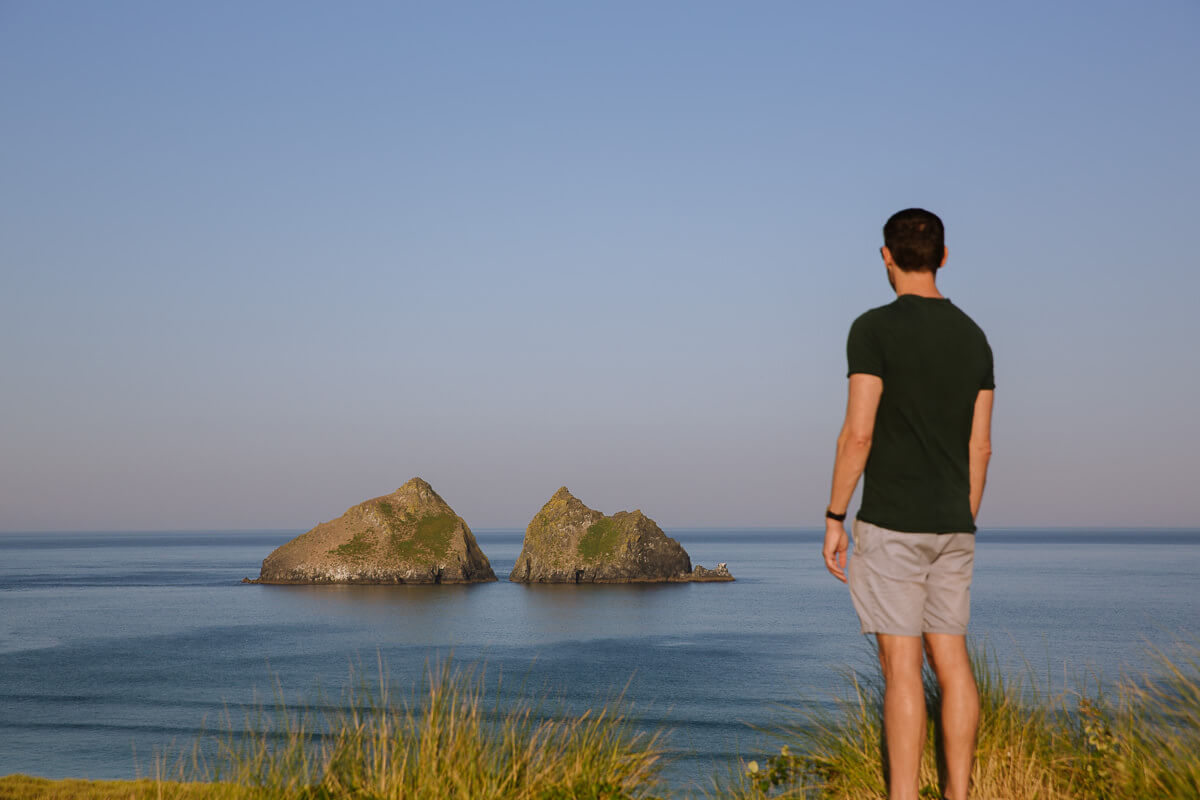
Stonehenge needs no introduction — it is one of the most famous ancient sites in the world, and it remains genuinely awe-inspiring in person despite the crowds.
Salisbury, 9 miles away, is a perfect companion visit: a magnificent cathedral and one of the four surviving original copies of the Magna Carta.
What to do: Stonehenge, Salisbury Cathedral, Magna Carta.
How to get there: Train to Salisbury from London Waterloo (90 minutes), then bus to Stonehenge.


12. The Peak District
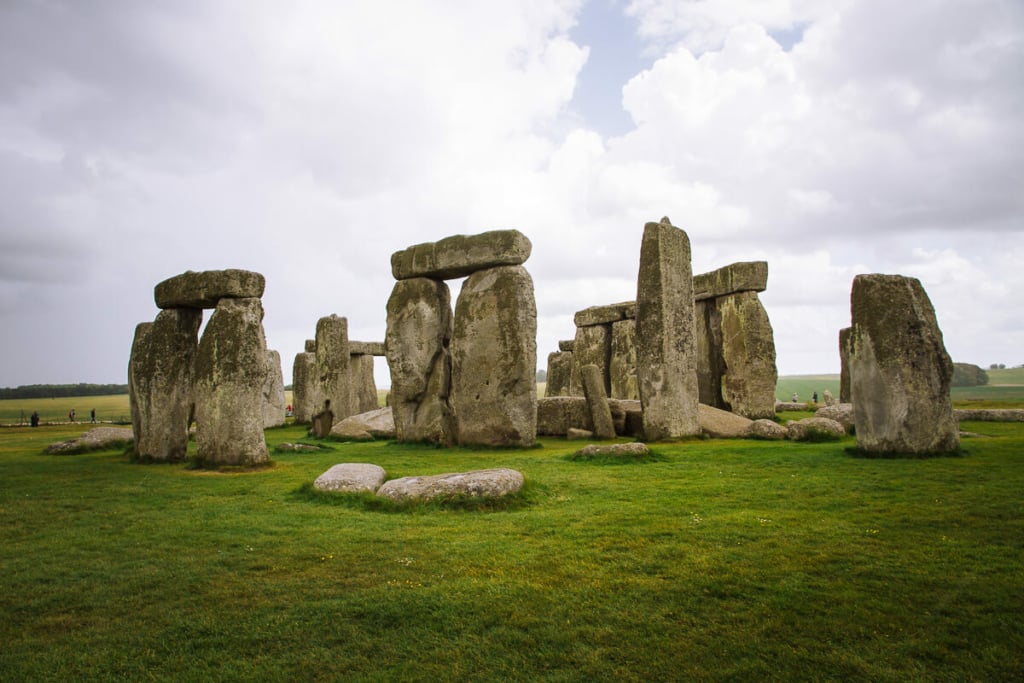
The Peak District was England’s first National Park and is split into two distinct landscapes.
The White Peak in the south is all limestone dales, dry-stone walls, and pretty villages — Dovedale and the Monsal Trail are the highlights. The Dark Peak in the north is wilder moorland, with Kinder Scout offering some of the finest walking in northern England.
Chatsworth House, sitting in the Derwent Valley between the two, is one of the great stately homes of England and is worth half a day on its own. Bakewell is the best base.
What to do: Walk Dovedale, cycle the Monsal Trail, visit Chatsworth House, explore Bakewell, and walk Kinder Scout. Read our Peak District guide for more.
How to get there: Train to Sheffield from London St Pancras (2 hours) or Derby (1.5 hours). A car is strongly recommended once you arrive.


13. Windsor
Windsor Castle is the oldest and largest occupied castle in the world and has been a royal residence for nearly 1,000 years.
The State Apartments are magnificent, and St George’s Chapel is where ten monarchs are buried, including Henry VIII and the late Queen Elizabeth II. It’s also one of the finest examples of Gothic architecture in England.
Windsor Great Park stretches for 5,000 acres behind the castle, with a three-mile Long Walk running arrow-straight from the castle gates to a statue of George III on the horizon.
What to do: Windsor Castle, St George’s Chapel, Windsor Great Park, the Long Walk, and Eton College just across the bridge. Read our best country walks near London, which cover Windsor Great Park.
How to get there: 35 minutes from London Waterloo or London Paddington by train.


14. Canterbury
Canterbury Cathedral is one of the great religious buildings of Europe. It’s a UNESCO World Heritage Site and the seat of the Archbishop of Canterbury, the most senior figure in the Church of England.
It was the destination of the pilgrimage at the heart of Chaucer’s Canterbury Tales, and as you walk through the medieval city gates towards it, this notion comes to life.
The city itself is compact and beautiful. You’ll see Roman walls, medieval lanes, the ruins of St Augustine’s Abbey. Our favourite bit is the excellent independent food and café scene centred around the old city.
What to do: Canterbury Cathedral, St Augustine’s Abbey, Roman Museum, walk the city walls. Read our Canterbury day trip guide for tips and a 1-day itinerary.
How to get there: 1 hour from London St Pancras by train.


15. The Jurassic Coast
The Jurassic Coast, England’s only natural UNESCO World Heritage Site, stretches 95 miles from Exmouth in Devon to Old Harry Rocks in Dorset.
The landscape changes character every few miles, from the red sandstone cliffs of Devon to the white chalk stacks at Studland.
Durdle Door — a natural limestone arch jutting into the sea — is the Jurassic Coast’s most iconic image and one of the most photographed spots in England.
Lulworth Cove, just along the coast, is an almost perfectly circular bay formed by millions of years of erosion.
What to do: Walk to Durdle Door, explore Lulworth Cove, fossil hunt at Lyme Regis, and walk to Old Harry Rocks at Studland. Read our Jurassic Coast guide for much more information about putting it all together.
How to get there: Train to Weymouth or Dorchester from London Waterloo (2.5 hours). Car essential for exploring the coast.


16. York
York is one of the best-preserved medieval cities in Europe. The highlight is the Shambles — a narrow medieval street of overhanging timber-framed buildings.
York Minster is one of the great Gothic cathedrals in the world. And the city walls are walkable in their entirety, giving a perspective on the place that no other English city can match.
It’s compact, beautiful, and endlessly walkable. Two days is ideal, but it’s entirely doable as a day trip from London.
What to do: York Minster, walk the city walls, the Shambles, the Yorkshire Museum, the National Railway Museum, Clifford’s Tower. Read our York Day trip itinerary for details.
How to get there: Train from London King’s Cross (2 hours).


17. Northumberland
Northumberland is England’s least visited and most quietly spectacular county.
The coastline between Bamburgh and Holy Island is extraordinary. Bamburgh Castle rises straight from the dunes, and Dunstanburgh Castle crumbles dramatically into the sea.
Inland, the Northumberland Dark Sky Park is the largest in England. On a clear night, away from any light pollution, the stargazing here is among the best in Europe.
What to do: Bamburgh Castle, Holy Island, Alnwick Castle and Gardens, walk Sycamore Gap, stargaze in the Dark Sky Park. Read our guide to Northumberland for more ideas and tips.
How to get there: Train to Alnmouth or Berwick-upon-Tweed from London King’s Cross (3–3.5 hours). A car is essential once you arrive.


18. Hadrian’s Wall
Hadrian’s Wall was built in 122AD on the orders of Emperor Hadrian to mark the northern frontier of the Roman Empire.
It stretches 73 miles from the Solway Firth to the River Tyne and remains one of the most impressive Roman monuments in the world. T
A lone tree at Sycamore Gap became one of the most recognisable images in England. Sadly, the tree was felled by vandals in 2023, but the surrounding landscape remains extraordinary.
What to do: Walk the central section between Housesteads and Steel Rigg. Our guide to the highlights of Hadrian’s Wall has all the details.
How to get there: Train to Hexham from Newcastle (30 minutes), then bus along the wall. Car recommended for flexibility.


19. Dartmoor
Dartmoor is one of the last genuinely wild landscapes in southern England — a high, windswept plateau of granite tors, blanket bog, and ancient stone circles.
It’s the only place in England with a statutory right to wild camp, which tells you something about the character of the place.
Hay Tor is the most accessible of the tors and offers sweeping views across Devon on a clear day. We had one of the most beautiful sunsets we’ve seen in a while here.
What to do: Walk to Hay Tor, visit Grimspound Bronze Age settlement, explore Widecombe-in-the-Moor, and wild camp on the open moor. Our guide to Dartmoor has more details.
How to get there: Train to Exeter from London Paddington (2 hours), then car or bus onto the moor. A car is strongly recommended.


20. Edinburgh
Edinburgh offers a mix of historic sites and outdoor spaces in a compact, walkable layout. Edinburgh Castle overlooks the Old Town from its volcanic rock perch, connected by the Royal Mile to Holyrood Palace at the other end.
Arthur’s Seat is an old volcano right in Holyrood Park. You can climb it in under an hour for one of the best views in the UK.
In August, the Edinburgh Festival takes over the city. It’s chaotic, brilliant and unlike anywhere else.
What to do: Edinburgh Castle, Royal Mile, Arthur’s Seat, Scottish National Gallery, Dean Village.
How to get there: Train from London King’s Cross (4.5 hours). Direct flights from most UK airports.


21. The Scottish Highlands
The Scottish Highlands are a vast mountain region covering much of northern Scotland. They stretch from just north of Glasgow up to the coast, with rugged peaks, deep glens, lochs and moorland.
The North Coast 500 is a 500-mile driving route around the top of Scotland that takes in coastal roads, beaches and small villages. Glen Coe has steep mountains and waterfalls, especially striking with late spring snow.
Eilean Donan Castle sits on a small island where three sea lochs meet. It’s one of Scotland’s most photographed castles.
What to do: Drive the North Coast 500, walk Glen Coe, visit Eilean Donan Castle, and climb Ben Nevis from Fort William. Read our guide to the top places to visit in the Scottish Highlands to get started.
How to get there: Train to Inverness from London King’s Cross (8 hours) or fly direct. A car is essential once you arrive.


22. Isle of Skye
The Isle of Skye lies off Scotland’s northwest coast and is known for its rugged landscapes. The island has dramatic rock formations like the Quiraing and the Old Man of Storr, plus waterfalls at the Fairy Pools and the Black Cuillin ridge for hiking.
Popular spots get busy in summer, but early mornings work well. Portree has a growing range of restaurants and cafes. Plan for at least two nights to explore properly.
What to do: Old Man of Storr, Quiraing, Fairy Pools, Dunvegan Castle, Talisker Distillery. Read our Isle of Skye guide for more places to go and practical planning tips.
How to get there: Train to Kyle of Lochalsh, then drive across the bridge. Or drive from Inverness (2.5 hours).


23. Assynt
Assynt is as remote and as beautiful as the UK gets. In the far northwest of Scotland, it’s a landscape of ancient Lewisian gneiss, scattered with lochs, and punctuated by mountains that rise alone from the moorland.
Suilven, rising to 731m in an improbable ridge from the flat peatland around it, is one of the most distinctive mountains in Scotland.
The village of Lochinver has a surprisingly good food scene for somewhere this remote.
What to do: Walk Suilven, explore the coastline around Achmelvich and Clachtoll, visit Ardvreck Castle ruins on Loch Assynt, drive the coastal road north to Kylesku. Our guide to Assynt has a fantastic driving route.
How to get there: Drive from Inverness (2.5 hours) or from the NC500 route. There is no practical public transport — a car is essential.


24. Glasgow
Glasgow gets overlooked by visitors who go straight to Edinburgh, understandable, but it’s a shame.
It’s a bigger, rougher, more unpredictable city — and often a more rewarding one. The Kelvingrove Art Gallery is free, vast, and genuinely world-class.
The West End has one of the best independent food and café scenes in Scotland. And Charles Rennie Mackintosh’s buildings, scattered throughout the city, are unlike anything else you’ll see in the UK.
What to do: Kelvingrove Art Gallery, Mackintosh at the Willow, West End food scene, Glasgow Cathedral, Riverside Museum.
How to get there: Train from London Euston (4.5 hours) or from Edinburgh (50 minutes).
Get off the beaten track with our guides to visiting Scotland.
Scotland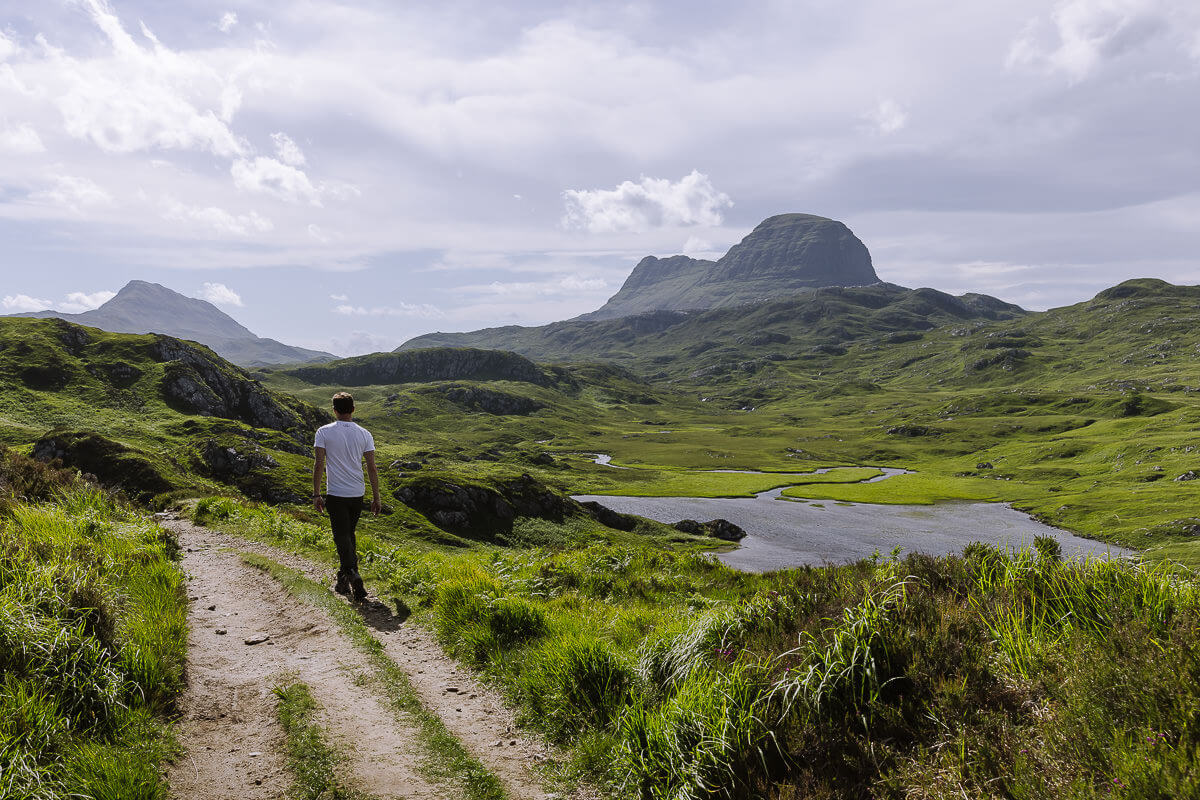
25. Snowdonia
Snowdonia is a national park in North Wales centred around Snowdon, the highest mountain in Wales. The park covers rugged peaks, valleys and lakes across around 800 square miles.
Snowdon has several walking routes up it. The Pyg Track is our favourite way up, but Crib Goch is a steep ridge, ideal for people more adventurous than us.
The Ogwen Valley and Glyderau ridge offer quieter hikes with good views. Betws-y-Coed, a small town with cafes, pubs and trail access, is a good base.
What to do: Climb Snowdon via the Pyg Track, walk the Ogwen Valley, visit Harlech Castle, and explore Betws-y-Coed. Read our guide to Snowdonia National Park to get started.
How to get there: Train to Bangor from London Euston (3 hours), then bus to Llanberis. A car gives you much more flexibility once you arrive.


26. Pembrokeshire Coast
Pembrokeshire Coast National Park covers 240 miles of shoreline in West Wales, with cliffs, coves and sandy beaches.
Barafundle Bay is a wide, empty beach backed by dunes, reached by a short coastal walk.
St David’s is Britain’s smallest city, based around its cathedral. The building dates back 1,000 years and sits in a river valley, hidden until you reach it. The area has quiet paths, and Iron Age remains nearby.
What to do: Walk sections of the Coast Path, Barafundle Bay, St David’s Cathedral, boat trip to Ramsey Island. Read our guide to Pembrokeshire for some great ideas of what to do.
How to get there: Train to Tenby from London Paddington (3.5–4 hours). A car is strongly recommended.


27. The Brecon Beacons
The Brecon Beacons — officially renamed Bannau Brycheiniog — is one of the UK’s finest national parks for walking and one of the best places in Europe for stargazing. On a clear night, away from any light pollution, the skies here are extraordinary.
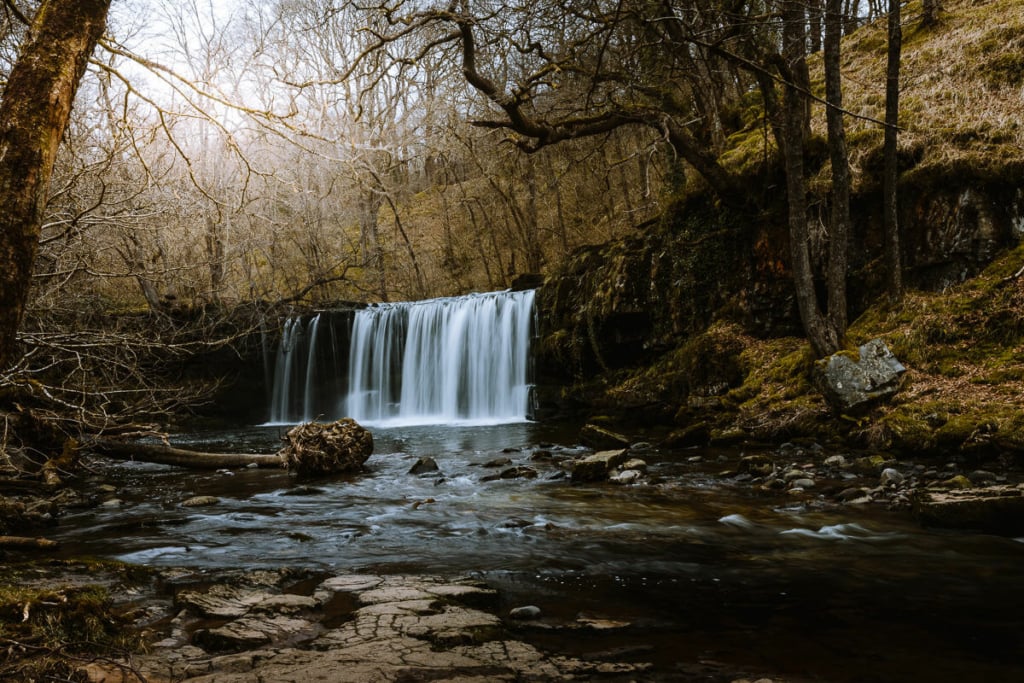
The waterfalls around Pontneddfechan are among the most beautiful in the UK. A series of falls accessible on a single circular walk through ancient oak woodland that feels more like somewhere in New Zealand than south Wales.
Pen y Fan, the highest peak in southern Britain, is a straightforward climb with views that stretch on a clear day all the way to the Bristol Channel.
What to do: Walk Pen y Fan, visit the Waterfall Country near Pontneddfechan, stargaze at night, and explore Brecon town. Read our Brecon Beacons Waterfall Walk for a great day out in the area.
How to get there: Train to Abergavenny from London Paddington (2.5 hours). Car recommended.


28. Gower Peninsula
The Gower was the UK’s first Area of Outstanding Natural Beauty.
Rhossili Bay is a three-mile sweep of sand beneath a dramatic headland, and it’s one of the finest beaches in Europe.
The rest of the peninsula is just as good. Oxwich Bay is quieter and sheltered. Llangennith at the northern end of Rhossili is one of the best surf beaches in Wales. The coastal walking between the two is excellent throughout.
What to do: Rhossili Bay, walk out to Worm’s Head at low tide, Oxwich Bay, surf at Llangennith. Read our guide to visiting the Gower Peninsula.
How to get there: Train to Swansea from London Paddington (3 hours), then car or bus to Rhossili.


29. Wye Valley
The Wye Valley sits on the border between England and Wales and contains one of the finest viewpoints in the UK — Symonds Yat Rock.
Tintern Abbey, roofless and magnificent on the valley floor, has been inspiring painters and poets since the 18th century. Turner painted it, and Wordsworth wrote about it.
The Wye Valley Walk runs 136 miles from Chepstow to Plynlimon, but even a single day walking between Tintern and Monmouth gives you a proper sense of why this valley has captivated people for centuries.
What to do: Tintern Abbey, Symonds Yat Rock, walk the Wye Valley Walk, explore the town of Monmouth. Read our Wye Valley guide for more great things to do.
How to get there: Train to Chepstow from London Paddington (2 hours via Bristol). Car recommended for exploring the valley.


30. Cardiff
Cardiff is one of Europe’s youngest capital cities and one of its most underrated.
The Victorian and Edwardian arcades — Morgan Arcade, Royal Arcade, Castle Arcade — are some of the finest in Europe and full of independent shops and cafés that make them worth an afternoon on their own.
Cardiff Bay, transformed over the past 30 years, is a genuinely impressive waterfront with the striking Wales Millennium Centre as its centrepiece. It’s a city that keeps surprising you.
What to do: Cardiff Castle, Cardiff Bay, the Arcades, National Museum Cardiff, Wales Millennium Centre.
How to get there: Train from London Paddington (2 hours).
Read all our Wales guides to plan your epic trip around this pint-sized treasure.
Wales
More UK Reading
- Read our Where To Stay in London guide which has a neighbourhood breakdown and hotel recommendations.
- For all the best attractions and hidden gems, read our guide to the best things to do in London.
- Put your trip together with our 2-week UK itinerary.
- See some of the charming English countryside with our guide to the best places to visit in the Cotswolds.
- Book a Lake District break around Keswick for great walks and stunning scenery.
- Hit some of the best trails in the country with our guide to the Pembrokeshire Coastal Path.
- Enjoy some of the best coastlines in the country with our Cornwall guide.

reader-supported
When you buy through links on our site, we may earn a small affiliate commission at no extra cost to you.
Thanks for your support // Paul & Mark
UK has always been a place I would like to visit soon. Would want to spend an extended period of time sight seeing and soaking in the culture there. Thank you for the writeup and photos. Love your site!
Hello!
Excellent blog post and website. Keep up the great work.
Glad to check out other travel blogs as someone who loves to travel.
I love to read your blog and I definitely visit these places when I come to UK
Hi Sarah, Hope you get to visit soon. Thanks for your comment and keep reading.
I really appreciate how this captures the essence of the UK’s most stunning destinations! From Cornwall’s rugged coastlines to the charming villages of the Cotswolds, it’s clear that the UK offers a rich blend of history, natural beauty, and authentic local experiences. It’s amazing how each destination tells its own unique story, making every visit so memorable. This makes me even more excited to explore the hidden gems the UK has to offer—thank you for sharing such a vivid and inspiring glimpse into these beautiful places!
Thanks so much, glad you enjoyed reading it.
This is a great article that showcases some of the best places to visit in the UK. I enjoyed reading about the diverse landscapes, cultures, and attractions that the UK has to offer. You have captured the essence of each destination with your beautiful photos and informative descriptions. I especially liked your recommendations for hiking trails, scenic drives, and historical sites. Some of the places that caught my eye were the Isle of Skye, the Cotswolds, and Bath.
Thank you for sharing your insights and tips on how to make the most of a UK trip.
Loved your post. I spent my teenage years in England. My plan is to return in the next couple of years. I really enjoyed reading about some of the places I went to when I lived there, and now have new places to add to my list. I like your, “What to Do”, and “Where to Stay” lists at the end of each category.
I enjoyed reading your article, thank you. We were planning a stop at PORTMEIRION, SNOWDONIA until I read dogs weren’t allowed. We are traveling with our little dog. That’s too bad as we have found many places in Europe, UK and Ireland very pet friendly. You may want to mention this.
Thanks a lot for your comment Amy. We have updated the post to include the information. Hope you had a good trip.
Birmingham has 4 Michelin started restaurants, alexander stadium, the NEC and resorts world, the bullring, the jewellery quarter, and many other attractions including Chinatown and the Birmingham botanical gardens and the mailbox and Edgbaston village. Local castles one of the many 4000 in England alone not to mention Broad street for its clubs but not to mention I think now what it needs is a theme park like the VTP 2000 that was planned needs building that and a zoo which would add to it comfortably.
There’s definitely a lot going on in Birmingham. We’ll have to get back soon so we can update this guide.