

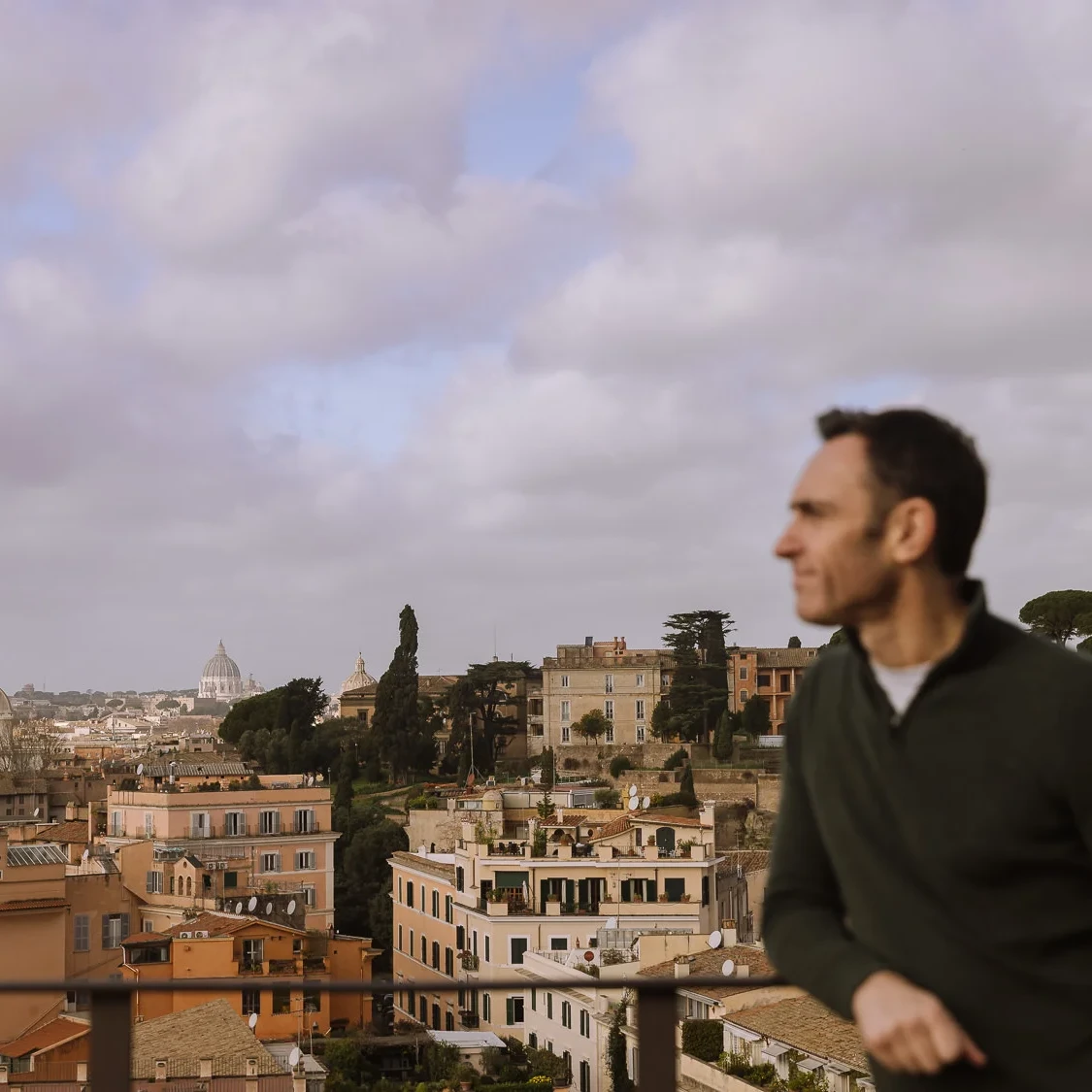
Italy’s hot-headed capital is a mix of evocative ancient sites, bustling street life and some of the finest art anywhere in the world. We’ve been many times and keep coming back for more. Here is our guide to the best things to do in Rome.
By: Paul Healy // Last Updated:
Rome has an unmistakable, somewhat chaotic vibe.
There are monuments that have been standing for millennia, museums so vast you don’t know where to start, and quiet churches hiding masterpieces that most visitors walk straight past.
And yes, there will be queues.
But it would be crazy to come to Rome and miss the Colosseum, skip the Vatican Museums, or bypass the colossal dome of St. Peter’s.
The same realisation washes over every first-time visitor: how am I going to fit everything in?
That’s where this guide comes in.
We’ve put it together to give you our honest take on the most important things to do in Rome — all the main attractions, plus a few of our favourite experiences.
Throughout, you’ll find personal tips and useful information to make your visit to Rome as smooth as possible.
Read this alongside our 3-day Rome itinerary, and you’re in for a great trip.

Map: Rome Attractions
All the attractions we cover in this guide are plotted on the map below. Use it to plan your days and work out which sights are closest to each other.
You’ll notice that many of Rome’s highlights cluster together, making it easy to combine visits without too much backtracking.
Click on the top right corner to open our map in your Google Maps app. Click the star next to the title to save it to your Google account.
Top Things to Do in Rome
1. Colosseum
The Colosseum is one of the most recognisable buildings on earth. We’ve been 4 times, and we’d still put it near the top of our Rome itinerary.
Standing inside this 2,000-year-old amphitheatre that once held up to 70,000 spectators is genuinely humbling.
The arena hosted gladiator combat, animal hunts, public executions, and novelty acts. Some of it was brutal – as depicted by Hollywood – but most of it was closer to a variety show.
There are two ticket options for the Colosseum:
- The standard 24-hour ticket covers the Colosseum, the Roman Forum, and Palatine Hill, next door.
- The Full Experience ticket adds access to the underground and arena floor, and extends your Forum and Palatine Hill access to 48 hours.
Tickets: Buy your tickets in advance on the official Colosseum website to avoid queues. You need to show your passport on arrival and arrive no earlier than 15 minutes before your timeslot.


2. Roman Forum & Palatine Hill
The Roman Forum and Palatine Hill are right beside the Colosseum, and included on the same ticket.
So it’s a natural continuation of the same visit.
The Forum was the historical centre of ancient Rome. From here, the senators governed, merchants traded, and emperors held power over much of the known world.
It’s mostly ruins now, which means it takes some imagination to read the landscape, but we’ve been here multiple times now, and it still stops us in our tracks.
In our opinion, this is where a guided tour is genuinely worth it. The Colosseum largely speaks for itself, but the Forum needs a bit more explanation.
Above the Forum, Palatine Hill offers views across Rome among the best in the city — St. Peter’s dome visible in the distance, the Forum spread below you, and the ruins of the imperial palaces all around.
Guided Tour: These Get Your Guide or Viator tours are highly rated and will really help bring the pace to life for you.


3. Vatican Museums & Sistine Chapel
The Vatican Museums are among the greatest collections of art and history in the world.
There are more than 8 kilometres of connected galleries housing tapestries, sculptures, maps, and artworks accumulated over centuries by some of the most powerful patrons in history.
We’ve been through it, I think, five times now and still find something new on each visit.
Some of our highlights are:
- Gallery of Maps – 40 enormous, beautifully detailed maps of Italy’s regions in one of the most stunning rooms in the gallery.
- Laocoön and His Sons – the Vatican’s equivalent of the Mona Lisa and one of the most important works of art in existence.
- Raphael Rooms – four chambers covered in frescoes by Raphael and his students. Many tours skip these rooms, so we strongly recommend choosing one that includes them.
- Sistine Chapel – one of the most awe-inspiring spaces on earth, and a testament to Michelangelo’s brilliance.
We’ve put together a full guide to visiting the Vatican, with detailed tips on tickets, tours, and visiting independently.
Guided Tours: We recommend this Vatican Museums & St Peter’s Basilica Tour, which includes the Raphael Rooms.


4. St Peter’s Basilica
St. Peter’s Basilica was designed by Donato Bramante, Michelangelo, and Carlo Maderno, while Bernini designed the sweeping piazza outside.
It remains one of the greatest achievements of Renaissance architecture and the holiest shrine in the Catholic world.
It’s free to enter, which makes it one of the most extraordinary free things to do in Rome.
Inside, the scale is immediately overwhelming. There are two things not to miss: the bronze statue of St. Peter, whose right foot has been worn smooth by centuries of pilgrims, and the Pietà, one of Michelangelo’s most famous sculptures in the world.
Visiting: Read our guide to St Peter’s and the Vatican for important tips on avoiding the worst of the crowds.


5. St Peter’s Dome and Terraces
Climbing the dome of St Peter’s is one of our strongest recommendations in Rome. The terrace inside the dome’s base was our single favourite moment of our last trip to the city.
From the entrance to the right of the main door, you can buy tickets to climb all 500+ stairs for €17, or pay an extra €5 for the lift to reduce the climb to around 200 steps.
We picked up tickets when we arrived, but if you are visiting during a busy period, it’s probably a good idea to book a ticket online in advance.
The route takes you through a terrace at the base of the dome, then up to the roof, which has a café and souvenir shop, and finally to the viewing platform overlooking Rome.
Tickets: Book a ticket online in advance for the Terraces, but even during busy periods, you may still need to queue for security.


6. Pantheon
The Pantheon is one of the greatest monuments of the ancient world.
Built by Hadrian in 126 CE as a Roman temple, the Pantheon was converted to a Catholic church in 609 CE. Almost 2,000 years later, it remains the largest unreinforced concrete dome in the world.
It doesn’t take long to look around, but it’s absolutely worth it.
There are self-service ticket machines at the entrance, though queues can be slow as each transaction requires you to enter your name and email address.
The faster option is to scan the QR code at the entrance and buy on your phone.
You’ll need to register for an account and verify via email. This is a bit tedious, but I started the process while waiting for the ticket machine, and it was still quicker.
Tickets can also be booked in advance on the official Pantheon website, which we’d recommend in peak season.
Lunch tip: The square outside, Piazza della Rotonda, is lined with cafes that are predictably overpriced. Walk one block in any direction for better value.


7. Borghese Gallery & Gardens
The Borghese Gallery is one of our strongest recommendations in Rome.
The collection was developed by Cardinal Scipione Caffarelli, nephew of Pope Paul V, who used his considerable influence to cultivate the arts.
His most significant discovery was a young Gian Lorenzo Bernini, whose work dominates the gallery today.
Four things make it unmissable.
Firstly, the Bernini sculptures are extraordinary. The Rape of Proserpina shows his talent for manipulating marble. Apollo and Daphne, probably his most famous work, is incredible.
Secondly, the Caravaggio collection is exceptional, including Boy with a Basket of Fruit, painted when he was just 22, and St Jerome, a masterclass in light and shadow.
The third reason is just how beautiful the setting is. The marble floors and Mariano Rossi’s ceiling fresco of Romulus being welcomed by Jupiter are stunning.
Finally, with just 20 rooms across two floors, it’s one of the most manageable major galleries in Europe.


Tickets & Tours
Entry is strictly limited to 360 visitors per two-hour timeslot, and you need a pre-booked ticket.
The cheapest tickets are on the official Rome Museums website, which we found the easiest platform for finding available timeslots. Contrary to what the website says, you can show your ticket on your phone — no need to print.
If you want to organise a private tour, which is not a bad idea given the amazing collection of art, this guided tour includes priority entry and is very well rated.
Don’t miss the gardens before or after your visit. The highlight for us is the viewpoints: Terrazza del Pincio overlooks St Peter’s, while Terrazza Viale del Belvedere points towards the Vittoriano.


8. Trevi Fountain
The Trevi Fountain is a Baroque masterpiece. At 26 metres high and 49 metres wide, it’s beautiful, colossal, and the most famous fountain in the world.
Visiting the fountain during the day will show you exactly what over-tourism in Rome looks like. It’s crazy. But recent improvements have helped the situation.
As of February 2026, a €2 entry fee is now required to access the basin area — the steps right in front of the fountain where you throw your coin. Tickets can be purchased by card only at the entrance or booked in advance on the official website.
We have put the paid access times in the table below.
| Day | Opening Hours |
|---|---|
| Monday | 11:30 AM – 10 PM |
| Tuesday | 9 AM – 10 PM |
| Wednesday | 9 AM – 10 PM |
| Thursday | 9 AM – 10 PM |
| Friday | 2 PM – 10 PM |
| Saturday | 9 AM – 10 PM |
| Sunday | 9 AM – 10 PM |
However, this is just the timeframe over which they start monitoring numbers; if you arrive before the paid access time, you can avoid queuing entirely.
We arrived at 7:50 in the morning, it was pretty quiet, and we didn’t have to queue to get in at all.
If you get there just before they start the ticketing period, you get a brief, clear view of the lower level, with no one in it.

9. Find the Churches with Renaissance Art
One of the things we love most about Rome is the small, unassuming churches, which are completely free to enter and house some of the masterpieces of Renaissance art.
Each of the churches listed below is in the Centro Storico within easy walking distance of the others.
We suggest visiting between 4 PM and 7 PM, when it’s a nice time to stroll the streets of Centro and all the churches are open.


Basilica of Sant’Agostino – This handsome church is covered with frescoes and dripping with a moody atmosphere. Raphael decorated one pillar, and Bernini designed the main altar. The highlight is Caravaggio’s Madonna of the Pilgrims.
San Luigi Dei Francesi – This one is best known for housing three Caravaggios, collectively known as the St Matthew Cycle. The Vocation of Matthew was our favourite, thanks to his signature mastery of light and shade.
Basilica Di Santa Maria Sopra Minerva – The glorious blue vaulted ceiling is stunning. The most famous piece is Michelangelo’s Statue of the Redeemer, but there’s a map to show you where everything is.
Sant’Ignazio di Loyola – Andrea Pozzo’s fake dome is a cool optical illusion, but his fresco on the central ceiling vault is incredible. You can pay €1 to look in the mirror to see the ceiling at Sant’Ignazio di Loyola; however, it has recently gone viral on TikTok, and the wait can be up to 1 hour.


10. Capitoline Museums
If you have the time for one more museum, the Capitoline Museum is a great option.
Michelangelo designed the complex, comprising two buildings: the Palazzo dei Conservatori and Palazzo Nuovo.
The Capitoline Museum may lack the wow factor of the Borghese and the Vatican, but it offers deeper insight into Roman history and features several standout highlights.
Room 16 has four remarkable bronze statues, which Pope Sixtus IV donated to the citizens of Rome in 1471. This was the gift that started the collection and made Capitoline the oldest public museum in the world.
In addition to the 4 statues, Room 16 also has the imposing statue of Marcus Aurelius on his horse, believed to be the only intact bronze equestrian statue to survive from antiquity.
The Pinacoteca on the upper floor has works by Titian, Rubens, and Caravaggio.
Palazzo Nuovo, accessed via an underground walkway, contains some truly remarkable sculptures, including the Dying Gaul, Bernini’s Medusa, and the colossal Marforio.
The rooftop terrace is also worth a stop for views over the Roman Forum and the city.
Tickets: Buy tickets in advance on the official Capitoline Museums website to skip the ticket queue.


11. Colonna Palace & Gardens
The Palazzo Colonna is a sumptuous private palace and one of the surprise highlights of our last trip to Rome.
The palace contains the Galleria Colonna, an extraordinary Baroque gallery with one of the most impressive halls we’ve seen anywhere.
There are several beautiful rooms to stroll through, each featuring an impressive art collection, including works by Rubens and Tintoretto.
One of the coolest things about the gallery is the cannonball, which is still on the stairs where it landed in 1849 after the French Army fired it from Janiculum Hill.

There is also an interesting garden on top of the buildings across the road from the gallery. A whimsical staircase leads to a waterfall adorned with mosaics. At the top of the garden, you’ll be rewarded with another great view of Rome.
The Palace is only open to the public on Saturday mornings from 9:30 am to 1:15 pm (last admission).
You can purchase two different tickets. The standard ticket covers the gallery, Pio Apartment, and gardens — including the most spectacular hall and the best of the art — and is what we’d recommend. The complete ticket includes the Princess Isabelle Apartments, which is not worth it in our opinion.
Book tickets online in advance on the Palazzo Colonna website.


12. Palazzo Massimo
The Palazzo Massimo is a museum dedicated to ancient Rome, telling the stories of the different Caesars through art and offering an engaging, educational look at Roman history.
Spread across four floors, the gallery features a few select items to explore rather than a massive collection to pick through.
We really like the Greek and Roman sculptures on the ground and first floors. The information boards explain the influence of Greek culture on Rome, which we hadn’t understood much about previously.
The standout piece is the Boxer at Rest, one of the finest bronze sculptures to survive from antiquity. Also on the ground floor is a striking statue of Augustus as Pontifex Maximus and the remarkable Discobolus (Discus Thrower), one of the best-preserved copies of the famous Greek original.
The highlight is the second floor of the whole collection. It has the world’s best-preserved Roman frescoes and mosaics, a fascinating insight into domestic Roman life.
Although there are 4 National Roman Museum sites, we recommend buying the single-venue ticket for the Palazzo Massimo site. The address is Largo di Villa Peretti, 2.


13. Trastevere Food Tour
Trastevere is a bohemian neighbourhood in Rome that could trick you into thinking you are somewhere else. Grand boulevards and Roman monuments give way to rustic laneways made for a hipster-friendly day out in Rome.
We could almost hear the vintage Italian playlist reverberating off the graffiti walls as we strolled around.
Walking the streets is the best way to see Trastevere, but we also loved the Basilica di Santa Maria. It’s thought this could be the oldest church in Rome. The ceiling is covered in gold mosaics, similar to those of the Byzantine churches of Istanbul.


Trastevere is older than Rome, having been founded by the Etruscans, who were conquered by the Romans in the late 6th century BCE. Even today, many locals will tell you they’re not from Rome.
The unique character, tradition and independence of Trastevere have been retained in the food, and a great way to experience it properly is on a food tour.
We did the Twilight Food Tour by Eating Europe (gifted), which took us on an edible voyage through the area.
Over the course of four hours, we tried the pork stew in a cellar older than the Colosseum, sampled the real spritz (it’s not Aperol) and learnt that biscotti is a generic term for twice-baked biscuits, not what we thought it was.
It’s a fun, engaging tour backed by plenty of wine.
Although the food is great throughout Rome, the tour is a great way to experience traditional dishes that are often missing from central Rome’s tourist menus.


14. Victor Emmanuel Monument (Vittoriano)
Romans have a love/hate relationship with Vittoriano, the huge slab of marble dominating the skyline from most vantage points.
Some think it’s a fitting masterpiece to Italy’s first king; others find the stark contrast between it and the Roman monuments nearby too much to handle.
We think it’s an impressive-looking monument worth exploring, but it shouldn’t be your top priority in Rome.
You can go inside the monument for free and walk up to the café on the First Level Terrace. The café is aimed at tourists and is overpriced, but the free terrace is a good place to take in the views over the Colosseum and Forum.
Most people who visit Vittoriano take the elevator to the Panorama Terrace at the top. The views are very good, but it’s €18 just to get up to the roof.
So, if you are pressed for time, there are better and cheaper views to be had.

15. Giardino degli Aranci
The Orange Garden is a little out of the way, but it’s well worth the trip if you have the time.
Sitting on Aventine Hill — one of Rome’s seven hills — it’s a peaceful escape from the city with sweeping views across Rome
A row of trees pointing towards the terrace creates an interesting optical illusion: the dome of St Peter’s appears larger as you move away from it.
We walked up from the Colosseum in around 20 minutes. It’s also about 15 minutes from Capitoline Hill or Trastevere. The closest Metro stop is Circo Massimo on Line B, from where it’s a short climb up the hill.
This is another one of the fantastic free things to do in Rome.

16. Castel Sant’angelo
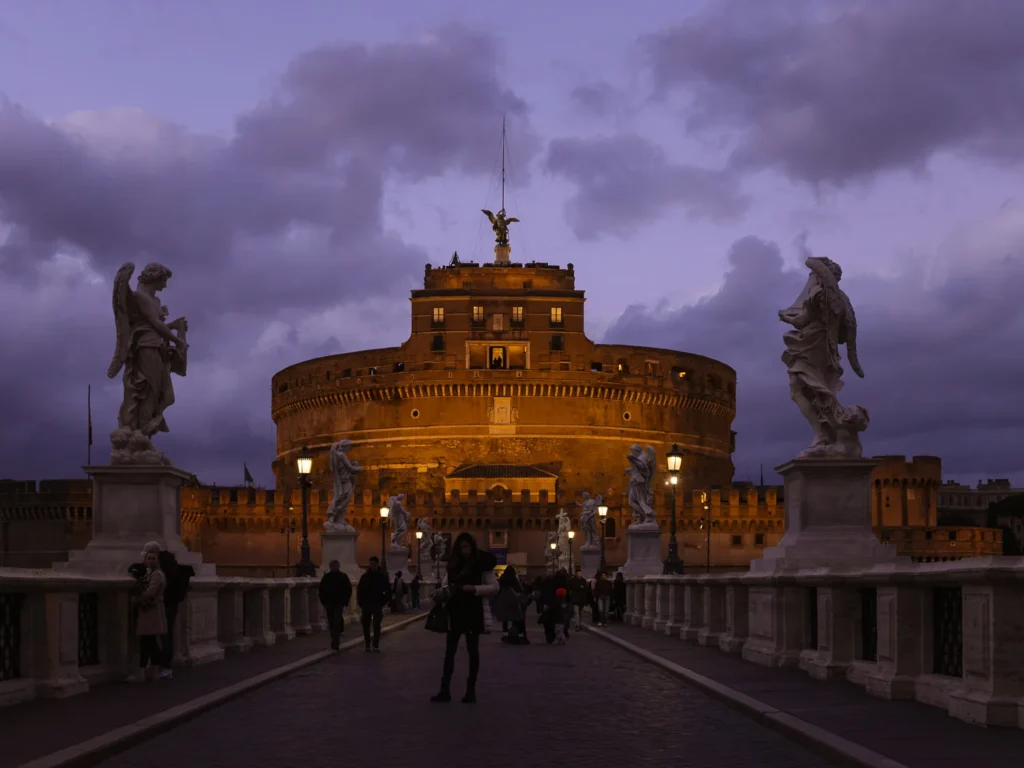
Standing on the banks of the Tiber, Castel Sant’Angelo is one of Rome’s most striking landmarks.
Originally built in 123 AD as a mausoleum for Emperor Hadrian and his family, this vast cylindrical fortress has had many lives over the centuries. It was a medieval papal residence, a military prison, and a place of refuge for popes fleeing danger via a secret passageway directly from the Vatican.
Today it’s a museum, and the climb to the top is well worth it.
The views over the Tiber, St Peter’s Basilica, and the Roman rooftops from the upper terrace are among the best in the city — and far less crowded than the queue at the Victor Emmanuel Monument.
Tickets: Pre-booking is recommended in peak season.
17. Campo De’ Fiori
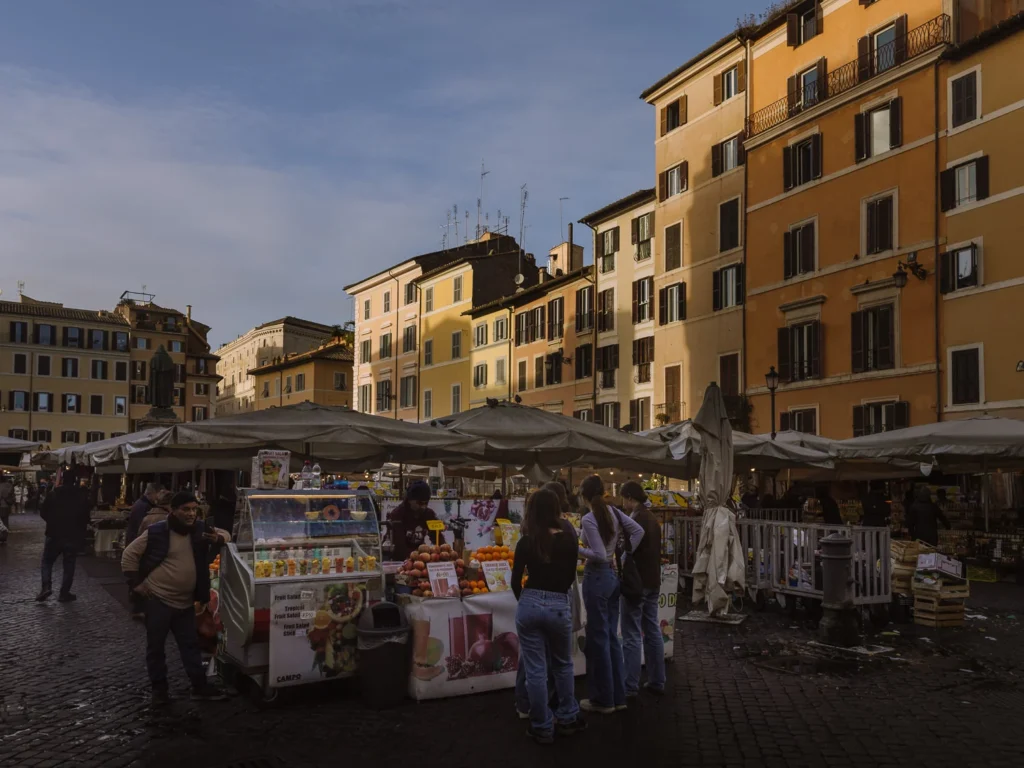
If Piazza Navona feels like Rome dressed up for tourists, Campo de’ Fiori feels like Rome getting on with its day.
This bustling square in the heart of the centro storico is home to one of the city’s best morning markets, where locals and visitors browse stalls piled high with fresh produce, flowers, herbs, and street food.
Get there before 1 pm to see it at its liveliest. By early afternoon, the square transforms into one of Rome’s most popular spots for an aperitivo.
It’s a five-minute walk from Piazza Navona and close to several excellent restaurants.
The market runs Monday to Saturday, roughly 8 am–2 pm. Avoid the restaurants directly on the square; you’ll find much better value and quality on the surrounding side streets.
Sites to Swing by
The first section of this guide was devoted to the unmissable big attractions in Rome, and the second was to other great things to try and squeeze into your trip.
Finally, we have some sights that don’t require planning or scheduling and can be picked off as you stroll around.
18. Spanish Steps
The Spanish Steps are in one of Rome’s most elegant neighbourhoods, surrounded by designer boutiques, high-end restaurants, and one of the city’s best people-watching piazzas.
We walked past it on our Rome itinerary, so you don’t need to make a special visit. The steps themselves and the view back down towards the city are worth a quick look.
Eating and drinking on the steps is prohibited and carries an on-the-spot fine.

A beautiful elongated square built on the site of an ancient Roman stadium, Piazza Navona is worth a quick look as you pass through the centro storico.
The main reason to stop is Bernini’s Fontana dei Quattro Fiumi — the Fountain of the Four Rivers — one of his best works.
Four giant figures represent the Nile, Ganges, Danube and Río de la Plata, each carved with extraordinary detail, and the whole thing is topped by an Egyptian obelisk.
The surrounding cafes are predictably overpriced; enjoy the square, take your photos, and move on.
It’s at its best early in the morning before the crowds arrive, or in the evening when the fountains are lit up, and the artists packing away their stalls give it a slightly more local feel.
Campo de’ Fiori is a ten-minute walk away and makes a natural pairing.

20. Tiber River
The walk along the south bank of the Tiber between Ponte Umberto I and Ponte Sant’Angelo is one of our favourite little strolls in Rome.
The views across to Castel Sant’Angelo and St Peter’s dome in the distance are fantastic — this is one of those stretches where you’re reminded just how extraordinary Rome’s skyline is.
Come around sunset for the best light and, on a calm evening, excellent reflection shots in the water.
Cross over Ponte Sant’Angelo itself if you haven’t already — it’s one of the most beautiful bridges in the city, lined with ten angel statues designed by Bernini, each holding an instrument of Christ’s Passion.
The bridge leads directly to Castel Sant’Angelo, making this an easy walk to combine with a visit to the fortress.

Where to Eat & Drink in Rome
Rome is regularly crowned the best city in the world for food, and it’s easy to see why. It’s not just that the food is consistently great; it’s also very good value compared to other European capitals.
On our last trip, we learnt all about the four classic Roman pastas, which are:
- Alla Gricia – The foundation of many of Rome’s pasta dishes: Pecorino Romana and guanciale (cured pork cheek).
- Cacio e pepe – A staple pasta sauce in Rome made from Pecorino Romano and black pepper.
- Carbonara – A traditional Roman Carbonara has four ingredients: guanciale, eggs, Pecorino Romano and black pepper.
- Amatriciana – Guanciale and tomatoes with a little Pecorino Romano.

You’ll find these pastas in restaurants all over Rome, and there’s no reason why you shouldn’t try them all.
However, our favourite way to eat, especially at lunch, was to have a small bite at 2 or 3 places.
Grabbing a focaccia, panini, or a slice of pizza on the go, followed by gelato or a cannoli, was a great way to try lots of different things without getting stuffed.
Restaurants
Here are some of the restaurants we loved.
- Amando al Pantheon – The reception was a bit icy, and apparently, we ordered the wrong colour wine, but the carbonara was the best we had in Rome.
- Pizza Florida – This tiny, unassuming bar served the best pizza we had. The crema di zucca, pancetta and provola was absolutely delicious.
- I dolci di Nonna Vincenza – This old-school café is famous for the cannoli and other vintage sweets from Sicily.
- Spirito di Vino – A historic restaurant in Trastevere with a fantastic traditional pork stew recipe.
- Rione XIV – Our top pick! This little restaurant just around the corner from the Vatican had the best Alla Gricia in Rome.


Coffee in Rome
As an Australian, I take coffee research very seriously. I always spend a good deal of time looking for the best coffee in a new city.
While traditional coffee is great, I like to supplement that with a top-quality, artisanal brew and find out what the city is up to when it comes to the latest and greatest in coffee production.
In my honest opinion, Rome just isn’t about that.
The best way to have a coffee in Rome is to knock back an espresso standing at a bar. Otherwise, you’ll get a fairly lazy cappuccino, often with UHT milk.
There are a few “third-wave” coffee houses that do OK coffee, but nothing I was terribly excited about.
Most Rome guides list the same ones; they are:
- Faro
- Barnum (in centro)
- LOVE
- Fax Factory
- Trecaffé
- Pergamino Caffe (near the Vatican)
The main issue is that most are not central, so you need to make a special trip to get to them (except for Barnum and Pergamino, as indicated above).
Given how much there is to see and do in Rome, I don’t think getting to these places should be much of a priority.
Personally, I think it’s better to embrace the traditional coffee scene in Rome.

Planning & Logistics
Where to Stay
Rome doesn’t have the best public transport system, but it does have excellent streets for strolling around.
We highly recommend staying somewhere central so you can walk to many of the best sights. Here are the main areas we suggest, but we also have a detailed guide breaking down the best places to stay in Rome.
Centro Storico
The historic centre of Rome is by far the best area to stay in for first-time visitors.
It has many big monuments you’ll want to see, including the Trevi Fountain, the Pantheon, Piazza Navona and the Spanish Steps. Walking to most attractions in Rome is easy from centro.
Vatican and Prati
This is a more residential area in Rome, with elegant streets and local shops.
It’s not as busy, but also not as atmospheric or convenient as the other areas. The Vatican and St Peter’s are close, but a lot of the historic centre is a 30-45 minute walk away; the ancient sites are even further. It does, however, have some great restaurants.
Trastevere
Trastevere is a cool bohemian neighbourhood that feels removed from Rome’s tourist side.
It has a buzzing nightlife, and its tight cobbled lanes are pedestrianised and a joy to explore. The Centro Storico is just over the river, and the Vatican and St Peter’s are not too far away. However, it is a bit of a trek to the Colosseum.

Getting There
By Plane
Rome has two main airports.
Fiumicino (FCO) — officially Leonardo da Vinci International Airport — is the main hub, handling the vast majority of international and long-haul flights. If you’re coming from the US, this is likely where you’ll be arriving.
Fiumicino is 30km southwest of the city centre.
Ciampino (CIA) is smaller, closer to the city, and dominated by low-cost carriers including Ryanair.

Getting to Rome from the Airport
From Fiumicino, the easiest option is the Leonardo Express — a direct train to Roma Termini. It runs every 15 minutes, takes around 32 minutes, and costs €14 one-way.
If you’re staying near Trastevere or Ostiense, the cheaper FL1 regional train is a better option at €8, stopping at Roma Trastevere, Roma Ostiense, and Roma Tiburtina.
Taxis from Fiumicino charge a fixed fare of €55 to any destination within the Aurelian Walls, but it’s a good idea to confirm this with your driver before you leave.
From Ciampino, shuttle buses to Termini are the easiest option, costing around €6 and taking 35–45 minutes. Taxis operate on a fixed fare of €40.
One important warning for both airports: never accept rides from drivers offering cheap rates at arrivals. They are unlicensed and overcharge tourists. The official white taxis are located within the marked taxi ranks.
By Train
Rome is well connected by rail, and if you’re coming from elsewhere in Italy or Europe, it’s definitely our favourite way to get there.
Roma Termini is the city’s main station, with frequent high-speed services to most major Italian cities.
- Milan to Rome: 3 hours
- Florence to Rome: 1.5 hours (Here’s our Florence guide)
- Naples to Rome: 1 hour
RailEurope.com is the best platform to book European train travel. It finds the best rates across all the major European rail operators.
You can get anywhere in Rome effectively from Roma Termini via the Metro lines A and B.

Getting Around
Rome’s historic centre is very walkable, with many of the major sites in a relatively compact area. Comfortable shoes are non-negotiable in Rome.
For longer distances, Rome has a Metro system with two main lines.
Line A is more useful for tourists, connecting Termini to the Spanish Steps, the Vatican, and Trastevere. Line B serves the Colosseum.
The metro is limited compared to other European cities. Buses fill in the gaps, but they can be slow in heavy traffic.
Walking is the best way to get around. Our Rome Itinerary has an easy-to-follow walking route to see all the sites.
Taxis in Rome are notorious for trying to rip off tourists. Make sure the meter reads Tariffa 1 for daytime journeys within the city. Avoid unlicensed drivers, and tell the driver if you want to pay by card before you set off.

Best Time to Visit
Rome is a year-round destination, but with such a popular tourist destination, timing is everything.
The best time to visit Rome is Spring (April to June). The weather is warm and sunny without being too hot. It’s busy but manageable.
Summer (July and August) is peak season in every sense: crowds, prices, and heat. Temperatures regularly exceed 35°C, and the city can feel overwhelming at the height of July, and it’s very busy.
Autumn (September to October) is a good time to visit when the summer crowds begin to thin, and it’s less hot.
As you can probably tell from some of our photos in this guide, we visited Rome in Winter on our last trip. This is the quietest period for Rome (we were there in January). Most sites were uncrowded, and we got a great deal on our hotel.
Rome in winter is genuinely underrated.
How Long Do You Need?
If you have just 3 days, you’ll see the main highlights pretty comfortably. This will include the Colosseum and Forum, the Vatican, with enough time to wander through Trastevere and the centro storico to get a genuine feel for the city.
In 4 or 5 days, you’ll be able to add some lesser-known churches and museums, and eat your way through more of the city without rushing.
If you only have two days, focus on one side of the city per day — the ancient sites on one, the Vatican and centro storico on the other.
You’ll miss things, but you’ll have a good excuse to come back.


Visas & Entry
Rome is part of the Schengen Area, whereby EU and EEA citizens can enter freely with a valid passport or national ID card.
Most other nationalities, including UK, US, Canadian, and Australian passport holders, can visit for up to 90 days within a 180-day period without a visa.
From late 2026, non-EU visitors will require an ETIAS (European Travel Information and Authorisation System) — a pre-travel authorisation similar to the US ESTA.
The exact date and details of the new system have not yet been released, but check the official European Union website for details.
Money & Tipping
Italy uses the Euro.
Cards are widely accepted in Rome, though it’s worth carrying some cash for smaller trattorias, markets, and tipping.
ATMs (cash machines) are available throughout the city, but use bank machines and avoid the independent ATMs that charge high fees.
When paying with a card or getting cash from an ATM, always select the local currency (Euro).
Tipping is not obligatory in Italy the way it is in the US. Rounding up the bill or leaving a few euros for good service is appreciated.
Many restaurants add a coperto (cover charge) of €1–3 per person. This is normal and not a scam.


More Italy Guides
- Here are the best things to do in Siena.
- Book your trip with our guide to where to stay in the Dolomites.
- Read our top things to do in Florence.
- Decide where to stay in Rome with our neighbourhood guide.
- Our guide to the best things to do in Rome is perfect for first-timers.
- Complete guide to visiting the Dolomites.
- Here are the best places to visit in the Dolomites.
- How to spend a day in San Gimignano.
- How to avoid the queues at the Vatican & St. Peter’s.
- See Lake Como via boat (rental tips & routes).
- See Tuscany on these great day trips from Florence.

reader-supported
When you buy through links on our site, we may earn a small affiliate commission at no extra cost to you.
Thanks for your support // Paul & Mark