

By: Paul Healy // Last Updated:
Rome is a city with as much passion as the people who call it home. Our Rome itinerary covers all the best attractions you can see in 3 days, with important information for avoiding the crowds.
Rome is one of the great cities of the world.
Ancient monuments stand alongside ornate palaces and towering churches. World-class art is lavishly exhibited in grand museums and gracefully nestled within small churches.
The old town centre features a maze of cobbled lanes and magnificent piazzas.
Paul and I just returned from our fifth trip to Rome, and what a great trip it was.
The city has been cleaned up for the Catholic Jubilee, leaving ancient monuments sparkling clean like the day they were built.
We’ve compiled this itinerary from our many trips, covering everything we think you can see in 3 days.
It includes all the classic sights and a few local experiences that make Rome the fascinating city it is. You can see a complete list on our favourite things to do in Rome.
We have designed the itinerary so there isn’t too much travelling between places. You’ll find our lunch and dinner suggestions throughout, along with all the information you need to see as much as possible while minimising time spent standing in queues.


About This Itinerary
We’ve put this itinerary together as a first-time visitors’ guide to seeing most of the city in 3 days.
We cover all the main attractions, our favourite food places, great areas to stroll around, and some less-visited but thoroughly interesting places.
We do a lot of walking in cities, and this itinerary is no exception. The benefit of all this effort is that you won’t need to rely on public transport much, and you’ll see a lot of Rome along the way.
The attractions are included in the right order to minimise time getting between places.
Most importantly, we’ve included all our tips to help you avoid the crowds and the queues as much as possible.

Map: Rome Itinerary
We’ve listed all the attractions and restaurants mentioned in this guide on the map below. It’s colour-coded for each day of the itinerary, with a walking route to get from one sight to the next.
Click on the top right corner to open our map in your Google Maps app. Click the star next to the title to save it to your Google account.
Our Rome Itinerary
When You Arrive
You’ll probably arrive in Rome with an afternoon to get acclimatised. Here are a few things we love to do when we first arrive:
- Stroll around Centro Storico – The historic centre of Rome is compact and a great way to immerse yourself in Roman culture.
- Head over to Trastevere – On the other side of the river, Trastevere is a lively bohemian neighbourhood packed with bars and cafes.
- Stroll along the river – Take a stroll along the south bank between Ponte Umberto I bridge and Ponte Sant’Angelo for your first view of St Peter’s Basilica.

Day 1: Ancient Rome & Centro Storico
We spent the morning of Day 1 at the Colosseum and the Roman Forum. It makes sense to visit them together, as they are right next to each other and included on the same ticket.
Colosseum
The Colosseum is the best-known Roman amphitheatre in the world. It’s also one of the most-visited attractions in Rome.
Vespasian commissioned the building in 72 CE, and his son Titus completed it in 80 CE. Walking around this immense structure, it’s hard to believe it took only 8 years to build. Despite being over 2,000 years old, it is still in excellent condition.
The nearest metro station is Colosseo. Before you go exploring, take the stairs up to the terrace above the station for wonderful views over the Colosseum.
You can buy tickets at the door, but queues can be long, so we highly recommend purchasing a timed-entrance ticket online in advance.
Tickets must be purchased in each individual’s name, and you must present your passport upon arrival.


Roman Forum & Palatine Hill
The Roman Forum and Palatine Hill are two parts of the same site. They encompass a large area with numerous entrances around the periphery.
There is an entrance to the Forum right next to the Colosseum. But if it is busy, head to the Palatine Hill entrance and follow the route on our map above.
All Colosseum tickets include access to the Roman Forum and Palatine Hill.
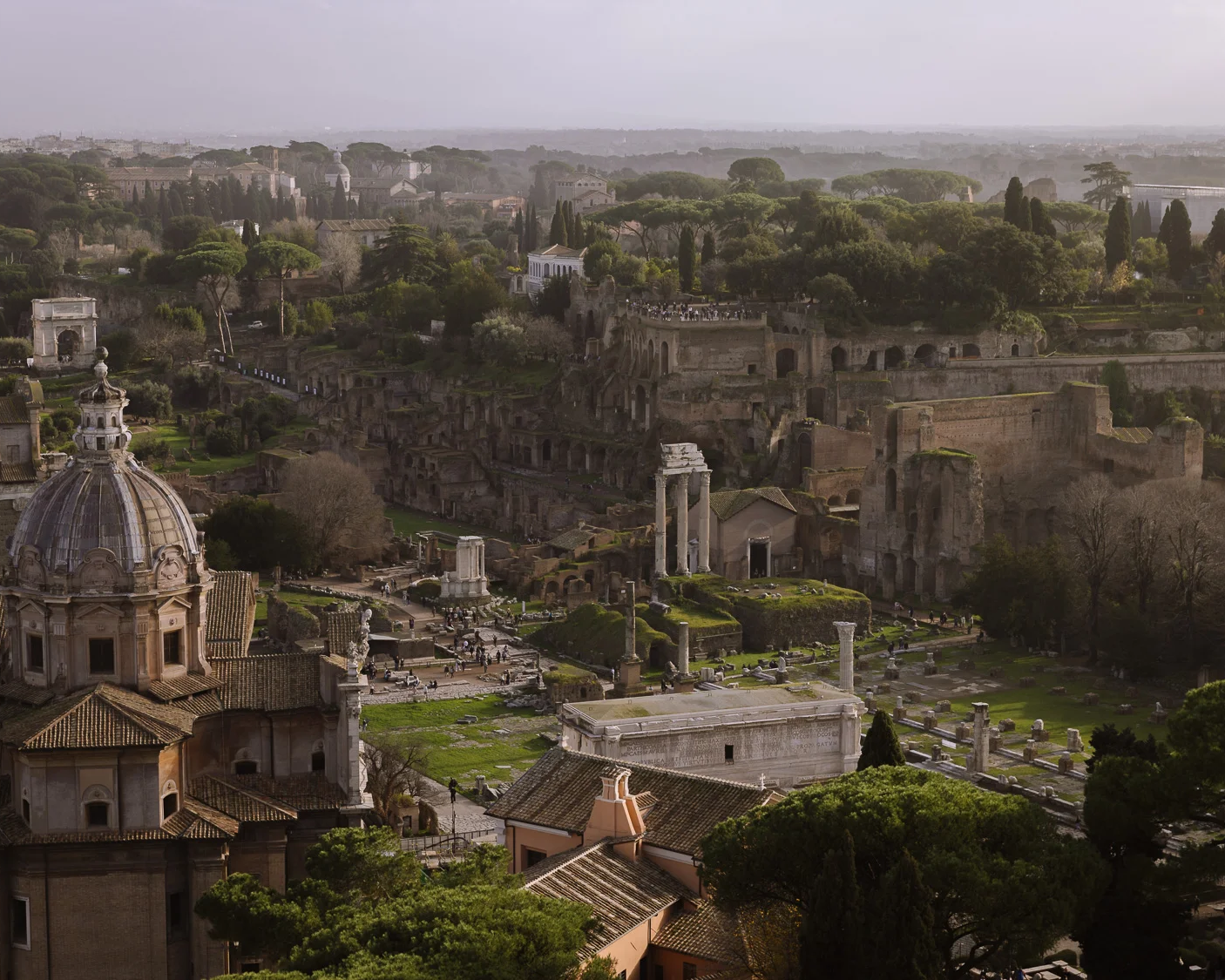
The Palatine Hill, one of Rome’s seven hills, rises above the Roman Forum. On top of the hill are the ruins of grand palaces where the Caesars once lived.
But the real highlight is the view over the Forum and the rest of Rome, with St. Peter’s visible in the distance. We spent a good hour up here exploring and taking photos.
The Roman Forum is the historical centre of ancient Rome. From here, the Senators of the Republic and the Caesars governed much of the world.
It is a remarkable experience to walk through the crumbling government buildings, temples and marketplaces and think back 2,000 years.
Guided Tour: A guided tour via Get Your Guide or Viator is a good idea for visiting the Forum; they really bring it to life.


Vittoriano
After leaving the Forum, make your way into the Centro Storico. On the way, you have the option to stop off at the Vittoriano Building.
Some think it’s a fitting masterpiece to Italy’s first king; others find the stark contrast between it and the Roman monuments nearby too much to handle.
You can go inside the monument for free and walk up to the café on the First Level Terrace. The café is aimed at tourists and is overpriced, but the free terrace is a good place to take in the views over the Colosseum and Forum you’ve just come from.
Most people who visit Vittoriano take the elevator to the Panorama Terrace at the top. The views are very good (see below), but it’s €17 just to get up to the roof. So, if you are pressed for time, Rome has other (and cheaper) views.


Centro Storico
Centro Storico is the tightly packed area of laneways that makes up Rome’s historic centre.
This is the Rome you have probably envisaged if this is your first trip. Market traders, bustling cafes, ageing wine bars and hidden laneways give it a vibrancy we love.
Centro Storico is home to some of Rome’s biggest attractions, including the Trevi Fountain, the Pantheon, Piazza Navona, and the Spanish Steps.
But first, you’ll probably be ready for lunch by now.
Lunch Day 1
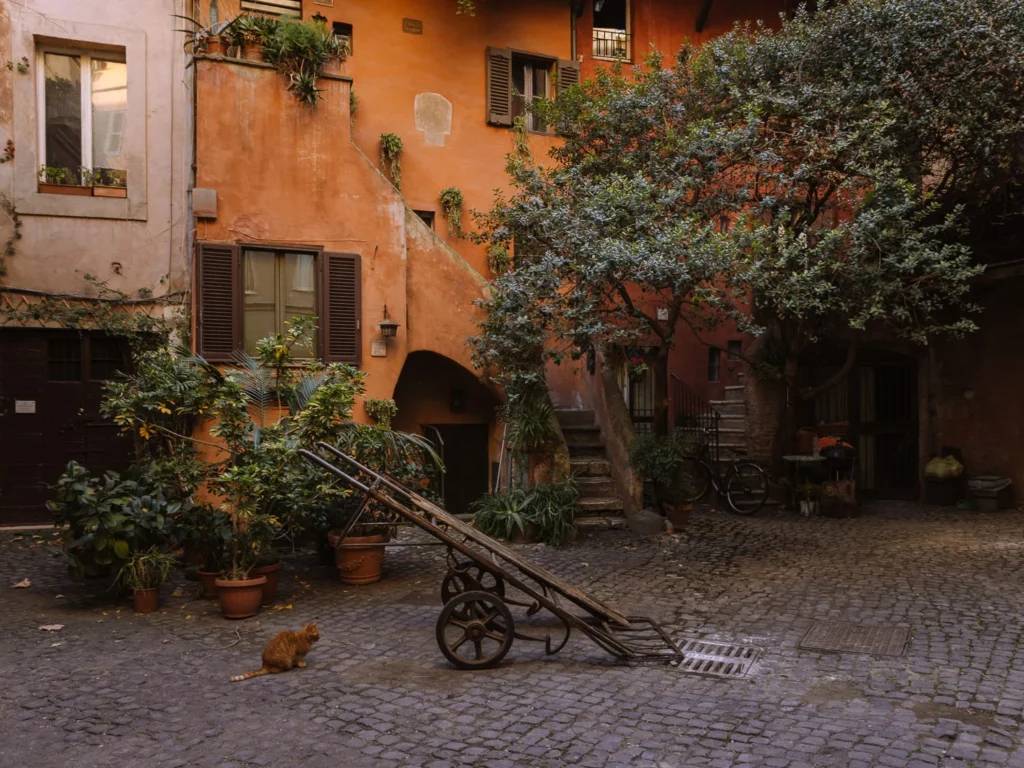
Our favourite way to eat in Rome, especially at lunch, was to wander around and grab a bite from several different places. Here are some suggestions for you:
- Pizza Florida – We loved this tiny pizza bar. Pick from a selection of around 7 or 8 different types, and the friendly guy behind the bar will heat it up for you. It was seriously the best pizza we had in Rome.
- Roscioli Salumeria con Cucina – This family-run restaurant is also a store packed with wines, cheeses, and other Italian treats. The restaurant is on Via dei Giubbonari, and they have a deli just around the corner on Via dei Chiavari.
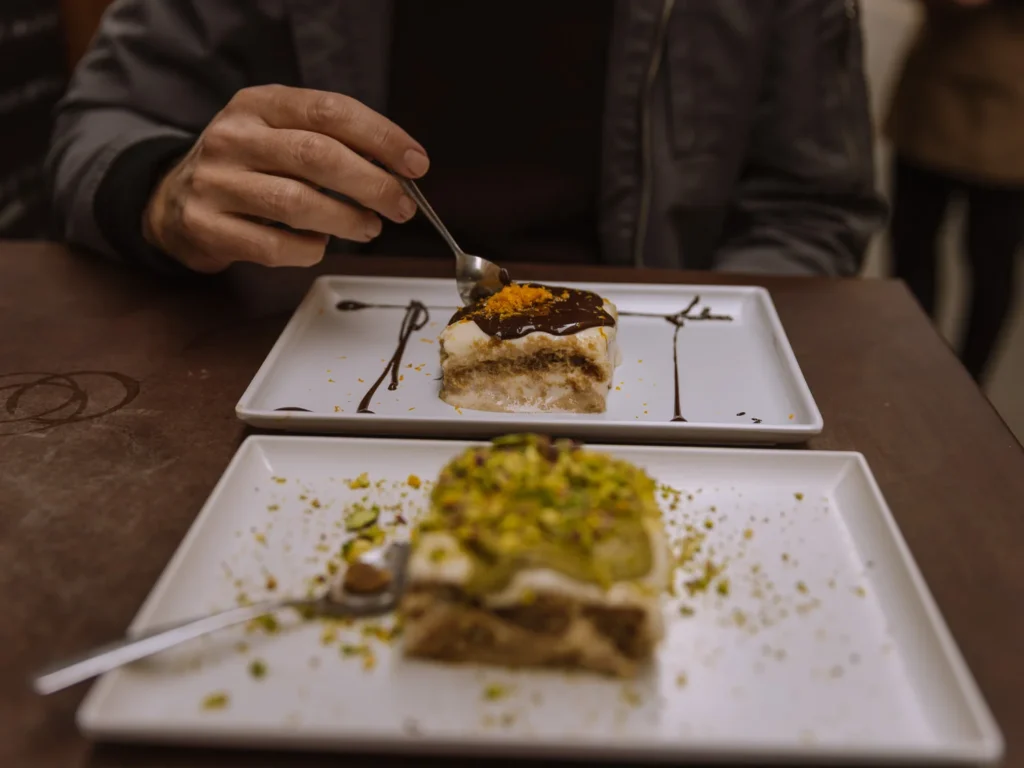
- I dolci di Nonna Vincenza – After you’ve had lunch, we highly recommend the cannoli here. It is about as old-school as it gets, and the pastries are delicious.
- Barnum – This is the place to go for coffee in the centro. If you’re looking for an Australian-quality coffee, this is the only place you’ll find it.
If you plan on visiting the Pantheon in the afternoon, consider booking your tickets online while sitting down.
After lunch, we suggest strolling around Centro, picking out the streets that interest you, and making sure to take in the main attractions.


You can’t come to Rome without at least popping into Piazza Navona.
The square was paved in the 15th century and contains a beautiful fountain by Bernini, the Fontana dei Quattro Fiumi. There are two other fountains in the square, which were in pristine condition on our last visit, having been cleaned up for the 2025 Jubilee.
The square was built on a 30,000-seat stadium, Stadio di Domiziano, which explains the unusual oblong shape.

Pantheon
The Pantheon is one of the greatest monuments of the ancient world.
Hadrian built the building in 126 CE as a Roman temple, and it was converted to a Catholic Church in 609 CE.
Almost 2,000 years after it was built, the Pantheon is still the largest unreinforced dome in the world.
It doesn’t take long to look around, but it’s well worth it.
The Pantheon contains the tombs of Vittorio Emanuele, the first King of Italy to unify the country, and the painter Raphael.
There are two self-serve ticket machines at the entrance, which had quite a long queue on our visit because you have to input your full name and email address before you can pay.
Alternatively, you can scan the QR code at the entrance to purchase your tickets online. This process is somewhat tedious since you must register for an account and verify it through an email they send you. Nevertheless, it gave me something to do while I was waiting in the queue for the ticket machine, and it turned out to be quicker.
Once you have a ticket, you can present it to the staff on your phone.


Rome’s Hidden Churches
In the late afternoon of our first day in Rome, we explored the amazing small churches in the Centro that contain renowned art pieces.
It can be tricky to find the opening times for these churches, but we can confirm from our last visit that they are all open between 4 pm and 7 pm.
They are all dotted around the Pantheon, so you don’t necessarily need to see them in this order. Use the map above to help plot your course.
- Basilica of Sant’Agostino – This handsome church is covered with frescoes and dripping with a moody atmosphere. Raphael decorated one pillar, and Bernini designed the main altar. The highlight is Madonna of the Pilgrims by Caravaggio.
- San Luigi dei Francesi – This opulent Baroque church is dressed in gold from top to tail. It is best known for housing three Caravaggios, collectively known as the St Matthew Cycle.
- Basilica di Santa Maria Sopra Minerva – The glorious blue vaulted ceiling is the first indication of how much wealth Rome’s only Gothic church once had. There’s plenty of art to see, so make sure you stop at the map on the way in, which explains where everything is.
- Sant’Ignazio di Loyola – The magic happens in this church’s ceiling. Andrea Pozzo’s fake dome is a cool optical illusion, but his fresco on the centre ceiling vault is incredible.


Dinner
We had dinner in the Centro Storico on our first evening in Rome. There are plenty of places to choose from, but we loved Amando al Pantheon. The reception we got was a bit icy because we ordered the wrong wine colour!
But the carbonara was probably the best we had in Rome.
The other place we liked was Achille Al Pantheon di Haban. This is more targeted at tourists, but we loved eating outside, and the food was delicious. We’re also not denying that the complimentary limoncello boosted our impression.

Trevi Fountain
After dinner, we took a detour to the Trevi Fountain on the way back to our hotel.
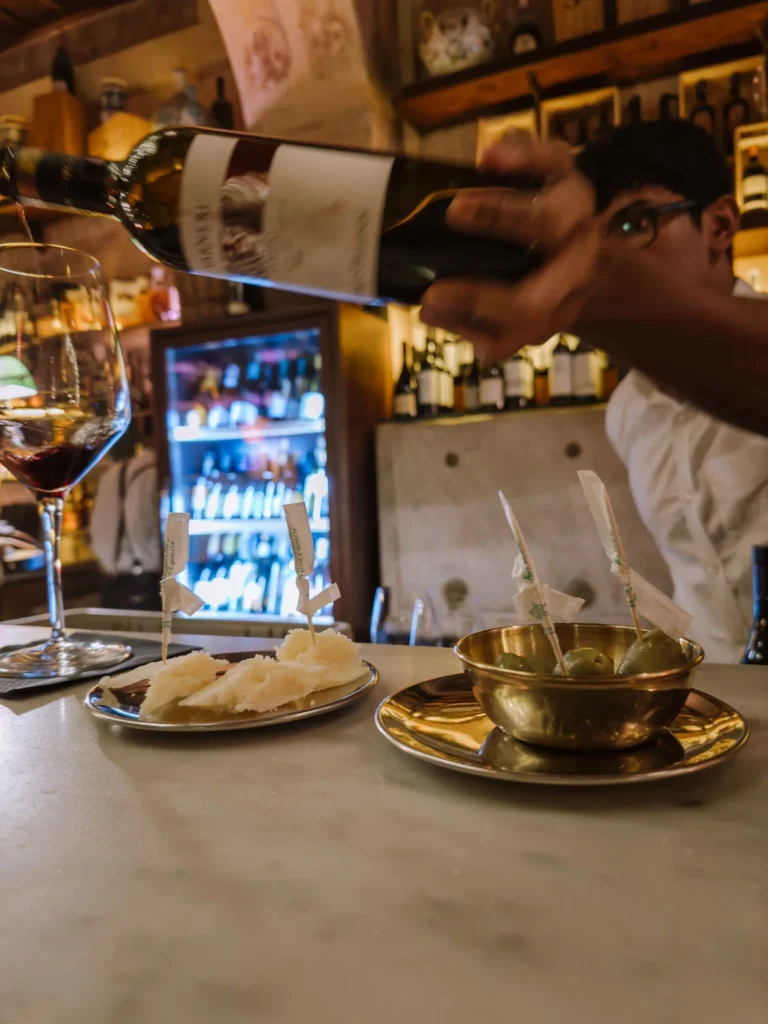
This baroque masterpiece is an imperious 26 metres high and 49 metres wide. It’s beautiful, colossal, and the most famous fountain in the world.
Visiting the fountain during the day will show you exactly what over-tourism in Rome looks like. It’s crazy.
So we suggest coming later in the evening when the crowds will be thinning out. Celebrate your first day in Rome by tossing a coin in the fountain.

Day 2: Vatican Museums, St Peter’s & Trastevere
On the morning of our 2nd day in Rome, we visited the Vatican Museums and St Peter’s Basilica. The queues to enter the Vatican Museums and St Peter’s can be horrendously long, often 2 hours, so here are some important tips to help avoid that.
Whilst you can buy skip-the-line tickets for the Vatican Museums, you cannot purchase skip-the-line tickets for St Peters.
Even with a timed entry ticket from the official website (which is not required), you still need to queue for security at St Peter’s, where queues are longest.
There are three ways you can avoid the security queue:
- Arrive early (before 8:30 am) when the queues are shorter.
- Arrive late (around 5 pm) after the tour groups have finished.
- Pick a guided tour of the Vatican Museums, which includes St Peter’s. These tours exit the Vatican via a special tour exit, bypassing St Peter’s security.
For this itinerary, we recommend taking the guided tour of the Vatican Museums at one of the earliest time slots.
At the end of the tour, you’ll leave the Vatican Museums via a special exit that bypasses the security line at St. Peter’s.
After visiting the museums, you can explore St Peter’s Basilica at your leisure.
We have much more information about how to visit the Vatican, including tips for avoiding queues and our recommended tours to buy.

Vatican Museums
The Vatican Museums display an astounding art collection over more than 8 kilometres of connected galleries.
The huge collection includes tapestries, artworks, sculptures and historical relics that were either commissioned by various popes or donated by world leaders.
Inside, you’ll find the Gallery of Maps, which showcases 40 huge and beautifully decorated maps of Italy’s different regions.
Another highlight for us is the Raphael Rooms, four stunning rooms adorned with frescoes painted by Raphael and his students. Some tours skip these rooms, but we strongly suggest picking a tour that includes them.
At the end of your Vatican Tour, either guided or self-guided, you’ll reach the Sistine Chapel. This awe-inspiring place is where you can witness Michelangelo’s brilliance (no photos allowed).


St Peter’s Dome & Terraces
After the Vatican Museums, if you took the guided tour, you’ll be escorted out of the Vatican and into St Peter’s Square, where you will have skipped the line for security.
There are 3 main things to visit at St Peter’s:
- The Dome & Terraces (ticket required)
- The Grotto (free)
- The Basilica (free)
The entrance to the Dome is to the right of the main basilica entrance, and we’d suggest doing this before going into the basilica.
There are 551 steps to the top (320 if you take the lift).
While the basilica and grotto are free, you need a ticket for the dome. We picked ours up at the ticket office on the day, but we were there in winter, and it was very quiet.
If you are going to Rome during a busier period, buy a timed ticket slot in advance for when your Vatican is due to end.


Vatican Grotto
The Vatican Grotto is free to enter and contains the tombs of popes and St Peter’s relics, making the complex significant for Catholics.
The grotto operates on a one-way system. You enter opposite the Dome lift and exit directly into the basilica.
So, if you plan to visit the grotto, do it first rather than the main basilica; otherwise, you’ll need to exit and go back to the grotto entrance.
St Peter’s Basilica
St. Peter’s Basilica was designed by Donato Bramante, Michelangelo, and Carlo Maderno, while Bernini designed the piazza. You would be hard-pressed to find an example of Renaissance architecture as celebrated as St. Peter’s.
Don’t miss the bronze statue of St Peter, whose right foot is worn down from pilgrims kissing and touching it. (Something you can no longer do.)
Another very important piece is The Pietà, one of Michelangelo’s most famous sculptures in the world.


Lunch
There are a few great restaurants for lunch just a short stroll from St Peter’s Square.
We ate at Rione XVI Bistrot, which was excellent. This tiny little bistro is probably our top pick for restaurants in Rome.
You’ll need to knock on the door, and they’ll come out and tell you how long you need to wait for a table. It only seats 20 people, but turnover is quite fast. We waited for around 10 minutes, and it was worth it.
If the wait is too long, another restaurant, Borghiciana Pastificio Artigianale, is just across the road. We didn’t go, but the reviews are really good, and we hope to try it next time we’re in Rome.
Stroll Along the Tiber
After lunch, we took a short detour to Ponte Sant’Angelo for great photos of Castel Sant’Angelo across the river and back to St. Peter’s.
We then headed to Trastevere. It’s about a 20-minute walk, so if your legs are tired, you might want to hop on a bus or take a quick taxi ride.

Trastevere
Trastevere is a bohemian neighbourhood where we could almost hear the vintage Italian playlist reverberating off the graffiti walls.
It’s a very different side of Rome, with rustic laneways and a unique independent streak evident in restaurants, cafes, bars and markets. The owners will probably tell you they’re from Trastevere, not Rome.
If you prefer a cheap lunch rather than sitting in a bistro near the Vatican, we recommend Trapizzino in Trastevere. It serves triangular-shaped pizza pockets that make a great snack.
We spent the rest of the day ambling around Trastevere, which we also recommend.
Don’t miss the Basilica di Santa Maria. It’s thought this could be the oldest church in Rome. The ceiling is covered in gold mosaics, similar to those of the Byzantine churches of Istanbul.
In the evening, pick one of the many local restaurants. Tonarello’s is where the crowds gather. Located on a pretty square, it has become very popular. For a little out-of-the-way place, try Spirito di Vino. It serves a great pork stew and has a very historic wine cellar.
End your day by joining the locals for a drink at Bar San Calisto. Sitting on a buzzing square is a fun way to wind down.


Day 3: Borghese Gallery & Spanish Steps
For the final day, we started at Villa Borghese and then explored the area around the Spanish Steps. We have a few different options to finish the day.
Borghese Gallery
This exceptional art collection was developed by Cardinal Scipione Caffarelli, a member of the wealthy Borghese family and the nephew of Pope Paul V.
In particular, he recognised the talents of a young Gian Lorenzo Bernini, whose sculptures are absolutely incredible. They alone would make the trip here worthwhile.
There are also several exceptional Caravaggios (Mark’s favourite artist), including Boy with a Basket of Fruit, which he painted at the age of 22, and St Jerome, which really shows his play of light and shadow.
The rooms themselves are lavishly decorated, with breathtaking frescoes spanning the ceilings.
There are only 360 visitors per 2-hour timeslot, so buying tickets in advance is absolutely necessary. The cheapest tickets are on the official Rome Museums website. This is the easiest platform we found for finding a good time slot.


Borghese Gardens
After visiting the gallery, stroll through the Borghese Gardens down to the Popolo neighbourhood.
The 80-hectare gardens were developed in 1606 as formal Italian gardens, and were later redesigned into their current natural English style in the early 20th century.
There are a few interesting architectural features, but the highlight for us is the viewpoints over the city.
Terrazza del Pincio offers great views of St. Peter’s. Terrazza Viale del Belvedere points in a slightly different direction towards the Vittoriano building.

Piazza del Popolo
From the viewpoints in the Borghese Gardens, follow the route on our map down to Piazza del Popolo.
If it’s open, pop into Santa Maria del Popolo. There are several interesting chapels inside, one of which was designed by Raphael. There are also two masterpieces by Caravaggio, the Crucifixion of St Peter and the Conversion of St Paul.
Via Margutta
Next, head down towards the Spanish Steps, taking a quick detour along via Margutta. This lovely little street with art galleries and boutiques was made famous in the movie Roman Holiday, starring Audrey Hepburn and Gregory Peck.
Spanish Steps
The Spanish Steps are in a trendy part of Rome where you’ll find designer stores, some high-end restaurants and people hanging out in the main square.
The surrounding neighbourhood is Rome’s most upmarket. Via Condotti, which runs off the piazza, is home to Gucci, Prada, Valentino and most of the other major Italian fashion houses.
Even if shopping isn’t your thing, it’s worth a stroll. There are some excellent cocktail bars and restaurants tucked into the surrounding streets.

Lunch
There are plenty of great restaurants in this part of town. Here are a few suggestions from us:
- Il Margutta – Something a little unusual in Rome, this place does innovative vegetarian takes on Roman classics.
- Pastificio Guerra – This institution is one of the best cheap eats in Rome. They do 2 pastas a day and for around €4. The only problem is you’ll probably need to stand to eat it.
- Ciampini – This is quality Roman cooking in a classy atmosphere. You’ll need to make a reservation if you want to sit outside.
Capitoline Museums
Walking to the Capitoline Museums takes around 30 minutes from the Spanish Steps. If your legs have given up for the day, a taxi should take only about 10 minutes.
Michelangelo designed the gallery, which comprises two buildings, the Palazzo dei Conservatori and Palazzo Nuovo, facing each other across a central piazza.
The Capitoline Museum may lack the wow factor of the Borghese and the Vatican, but it offers a deeper insight into Roman history with some remarkable pieces.


Giardino degli Aranci
The Orange Garden (Giardino degli Aranci) is around a 15-minute walk from the Capitoline Museum.
It’s located on Aventine Hill, one of Rome’s four hills, and from its terrace, you can see wonderful views of St Peter’s.
A row of trees pointing towards the terrace creates an interesting optical illusion: the dome of St Peter’s appears larger as you move away from it.
The views are wonderful, and it’s a good spot to be for sunset.

Planning & Logistics
Getting There
By Plane
Rome has two main airports.
Fiumicino (FCO) — officially Leonardo da Vinci International Airport — is the main hub, handling the vast majority of international and long-haul flights. If you’re coming from the US, this is likely where you’ll be arriving.
Fiumicino is 30km southwest of the city centre.
Ciampino (CIA) is smaller, closer to the city, and dominated by low-cost carriers including Ryanair.
Getting to Rome from the Airport
From Fiumicino, the easiest option is the Leonardo Express — a direct train to Roma Termini. It runs every 15 minutes, takes around 32 minutes, and costs €14 one-way.
If you’re staying near Trastevere or Ostiense, the cheaper FL1 regional train is a better option at €8, stopping at Roma Trastevere, Roma Ostiense, and Roma Tiburtina.
Taxis from Fiumicino charge a fixed fare of €55 to any destination within the Aurelian Walls, but it’s a good idea to confirm this with your driver before you leave.
From Ciampino, shuttle buses to Termini are the easiest option, costing around €6 and taking 35–45 minutes. Taxis operate on a fixed fare of €40.
One important warning for both airports: never accept rides from drivers offering cheap rates at arrivals. They are unlicensed and overcharge tourists. The official white taxis are located within the marked taxi ranks.

By Train
Rome is well connected by rail, and if you’re coming from elsewhere in Italy or Europe, it’s definitely our favourite way to get there.
Roma Termini is the city’s main station, with frequent high-speed services to most major Italian cities.
- Milan to Rome: 3 hours
- Florence to Rome: 1.5 hours (Here’s our Florence guide)
- Naples to Rome: 1 hour
RailEurope.com is the best platform to book European train travel. It finds the best rates across all the major European rail operators.
You can get anywhere in Rome effectively from Roma Termini via the Metro lines A and B.
Getting Around Rome
The main sights in Rome are in a relatively compact area, making it a great city to see on foot. If you stay in Centro Storico, most of the major sights are less than 30 minutes away.
Rome has three metro lines, but the network is not very comprehensive.
The Colosseo Metro station is next to the Colosseum, and the Vatican is just a short walk from the Ottaviano station.
However, Centro Storico does not have a lot of coverage on the metro system; Piazza Navona, for example, is over a 20-minute walk from the nearest stop.
We have never used the metro on any of our trips to Rome. This is important to know if you are considering the Roma Pass, which includes free access to public transport.
Taxis have a €9 minimum fee for each journey, but they are easy to flag, and they can be a convenient way to cut down on some of the walking.
Museum Hours
We suggest doing this itinerary in day order. But, depending on your travel plans, you may need to adjust this itinerary slightly.
The main things to keep in mind are:
- The Vatican Museums are closed on Sundays.
- The Borghese Gallery is closed on Mondays.
- St Peter’s Basilica is closed on Wednesday Mornings.
Where to Stay?
Rome doesn’t have the best public transport system, but it does have excellent streets for strolling around. We highly recommend staying somewhere central so you can walk to many of the best sights. Here are the main areas we suggest.
Centro Storico
The historic centre of Rome is by far the best area to stay in for first-time visitors. It contains many big monuments you’ll want to see, including the Trevi Fountain, the Pantheon, Piazza Navona and the Spanish Steps.
Vatican and Prati
This is a more residential area in Rome, with elegant streets and local shops. It’s not as busy, but also not as atmospheric or convenient as the other areas.
The Vatican and St. Peter’s are close, but much of the historic centre is a 30-45 minute walk, and the ancient sites are even further. It does, however, have some great restaurants.
Trastevere
Trastevere is a cool, bohemian neighbourhood that feels removed from Rome’s tourist side. It has a buzzing nightlife, and its tight cobbled lanes are pedestrianised and a joy to explore.
The Centro Storico is just over the river, and the Vatican and St. Peter’s are not too far away. However, it is a bit of a trek to the Colosseum.

Visas & Entry
Rome is part of the Schengen Area, whereby EU and EEA citizens can enter freely with a valid passport or national ID card.
Most other nationalities, including UK, US, Canadian, and Australian passport holders, can visit for up to 90 days within a 180-day period without a visa.
From late 2026, non-EU visitors will require an ETIAS (European Travel Information and Authorisation System) — a pre-travel authorisation similar to the US ESTA.
Tips for Visiting Rome
- Wear comfortable shoes. You’ll be doing a lot of walking, and there are lots of cobbled stones and uneven surfaces
- City tax is €7.50 per person per night on top of your accommodation costs and other taxes already charged at the time of booking.
- The Roma Pass is most probably not worth it. If you stay centrally, you’ll hardly need to use public transport, and you couldn’t get around to enough museums in 3 days to make it worth it.
- The dress code for St Peters is strictly enforced. Knees and shoulders must be covered.
- The tip is included in the bill.
- When ordering at a bar or bakery, you pay the cashier first and then take the docket to pick up your food or coffee
- Take a water bottle with you to fill up in the free drinking fountains throughout the city.


What to Book in Advance
The main attractions in Rome are very busy, so pre-trip planning is required. Here’s a list of things to book before travelling.
Day 1
Colosseum Official Website — Tickets go on sale 30 days in advance. For this itinerary, purchase the 24–hour Colosseum, Roman Forum, and Palatine Hill ticket for around 9 am.
Colosseum Guided Tours – Most guided tours cover the Colosseum, Roman Forum and Palatine Hill. A guide can be particularly useful in the Forum.
Pantheon – You can queue to buy tickets for the Pantheon, but it might save a bit of time if you book in advance.
Armando al Pantheon – Make a reservation at this stalwart of Roman cooking, with the best carbonara in town.


Day 2
Vatican Museums Official Website—Tickets can sell out months in advance, so book as early as possible to get a skip-the-line ticket.
Get Your Guide Vatican Museum Tickets — Tour operators often offer skip-the-line tickets even when the official website has sold out. A tour guide will take you through security and leave you on the other side.
Vatican Museums Guided Tour — Early slots of this tour of the Vatican Museums include the Raphael Room and take around 3 hours. They get you past the security queue at St Peter’s and then leave you to explore independently.
St Peter’s Dome – If you want to see St. Peter’s Dome but don’t want to risk not being able to get a ticket on the day.
Day 3
Borghese Gallery Official Website—Tickets go on sale 60 days in advance. Off-peak, you can usually pick up a ticket with one or two weeks to go, but at peak times, try to book as far in advance as possible.
Borghese Gallery Tour – We did not do a tour of the Borghese, but this one is well-rated and can sometimes have tickets when the official website has sold out.

More Italy Guides
- Here are the best things to do in Siena.
- Discover the orange city with our guide to Bologna.
- Visit the beautiful Val di Funes in the Dolomites
- Read our top things to do in Florence.
- Decide where to stay in Rome with our neighbourhood guide.
- Our guide to the best things to do in Rome is perfect for first-timers.
- Plan your trip with our 3-day Rome itinerary.
- Here are the best places to visit in the Dolomites.
- How to spend a day in San Gimignano.
- Read our guide to the Italian Dolomites.

reader-supported
When you buy through links on our site, we may earn a small affiliate commission at no extra cost to you.
Thanks for your support // Paul & Mark