

By: Paul Healy // Last Updated:
Looking for the best things to do in Amsterdam? Our guide highlights the city’s top sights, the canal-side neighbourhoods worth exploring, and the lesser-known spots beyond the big-ticket attractions.
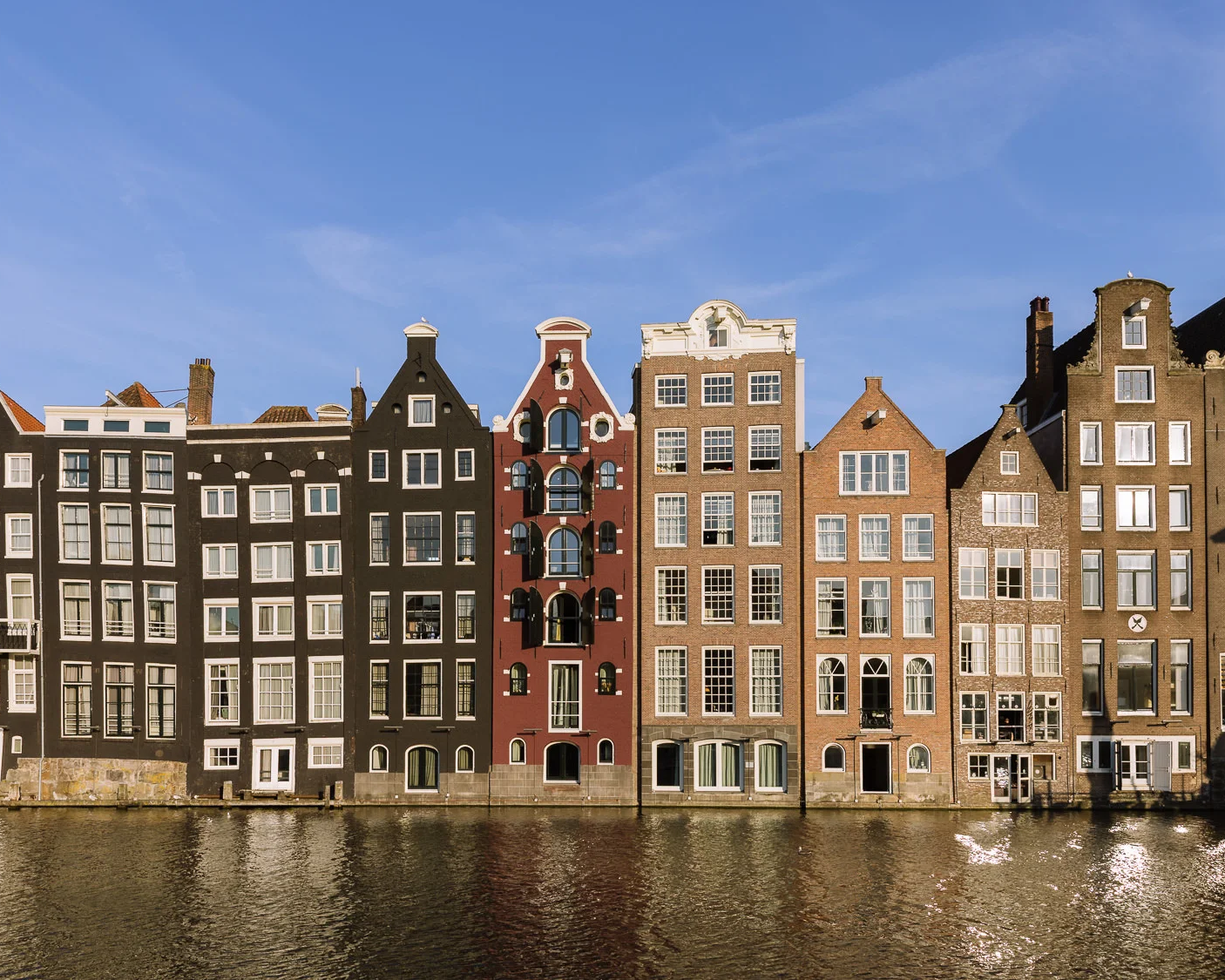
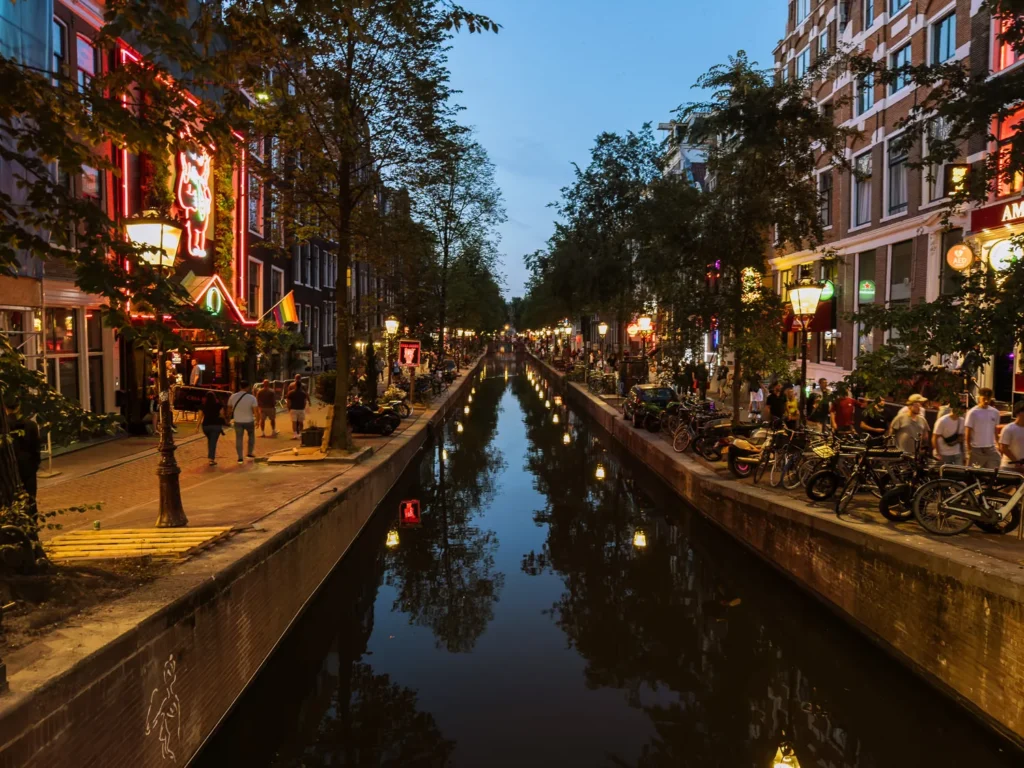
There is a lovely contrast in Amsterdam between the Red-Light District and the charming, relaxed neighbourhoods lining the canals.
Although both are known for their window displays, their coexistence speaks to the easygoing nature of the Dutch.
But Amsterdam punches above its reputation, and we’d be hard-pressed to think of a European city that’s quite so relaxed while still being packed with world-class sights.
This guide is not a massive list of everything you could get up to in Amsterdam. Instead, we’ve put together the type of things that we enjoy: a little bit of art but not too much; a focus on the history of the city; and the things you can only do in Amsterdam.
Mostly, though, it’s about enjoying Amsterdam the way it should be enjoyed: ambling around, stopping for coffee, ducking into bakeries and finding the best streets and canals to wander.
Map: Amsterdam Guide
Use our map to navigate Amsterdam, a very walkable city. We haven’t included the day trip to Zaanse Schans on this map because it’s a bit too far out to make the map usable, but it’s only around 20 minutes on the train.
Click on the top right corner to open our map in your Google Maps app. Click the star next to the title to save it to your Google account.
Where to Stay
We have a detailed guide on where to stay in Amsterdam, but here are some of our top picks.
Hotel CC | €
Hotel D’Amsterdam | €€
Mr Jordaan Hotel | €€€
The Hoxton | €€€€
Things to Do in Amsterdam
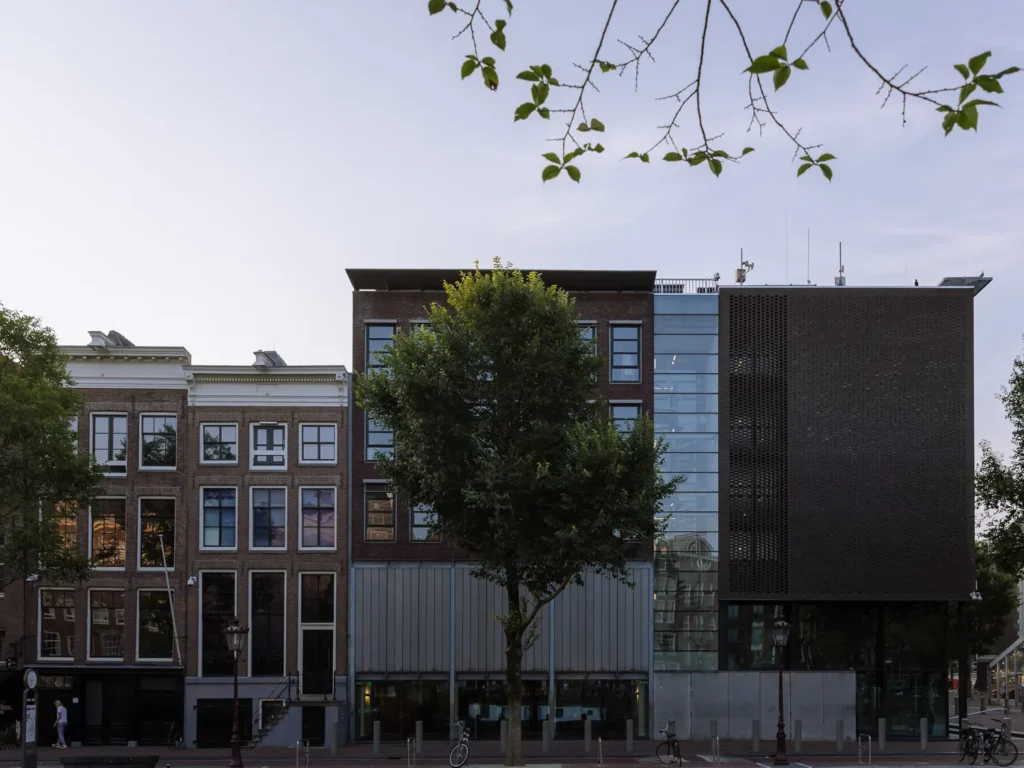
1. Visit the Anne Frank House
During the Second World War, Anne Frank and her family hid for more than two years in a concealed annex behind her father’s business.
You can walk through the original rooms, including the secret annex hidden behind a revolving bookcase. The rooms have been deliberately kept unfurnished following Otto Frank’s wishes.
It’s from this small, claustrophobic space that Anne wrote the diary that would become one of the best-known accounts of the Holocaust. Visiting is a profound way to get a brief glimpse of what life would have been like during those years.
Most importantly, tickets go on sale every Tuesday at 10 am via the Anne Frank House website for visits within the next 6 weeks and regularly sell out. So book as soon as you can within the 6-week window.
We spent just under an hour in the house. Photography is not permitted.
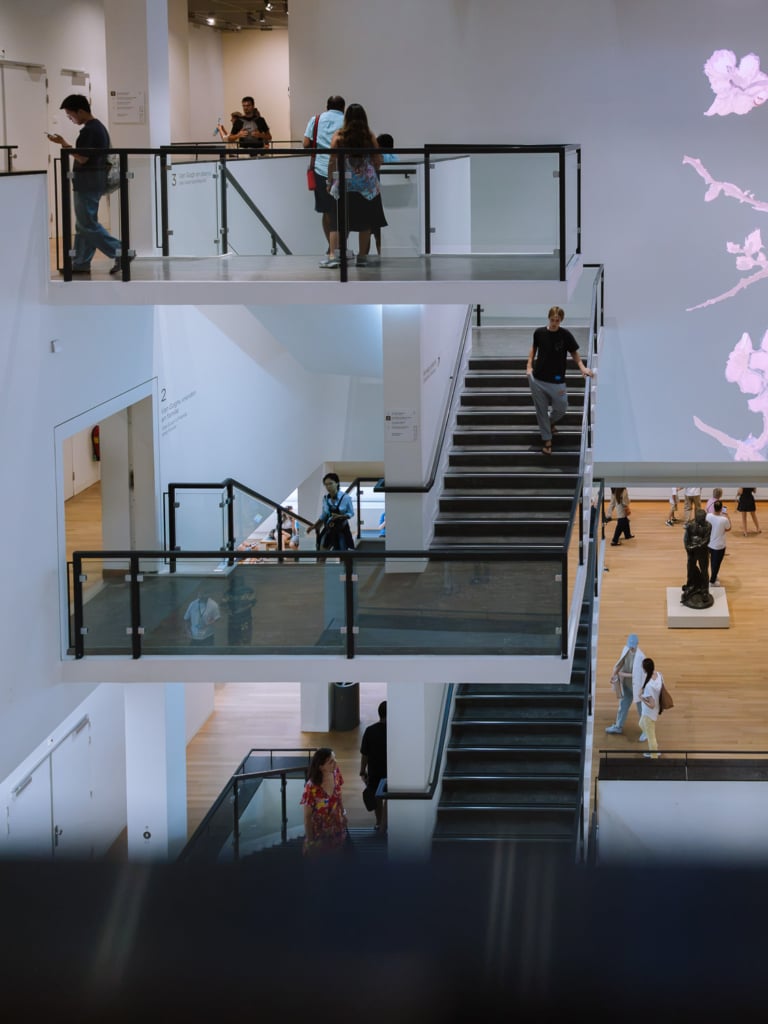
2. Explore the Van Gogh Museum
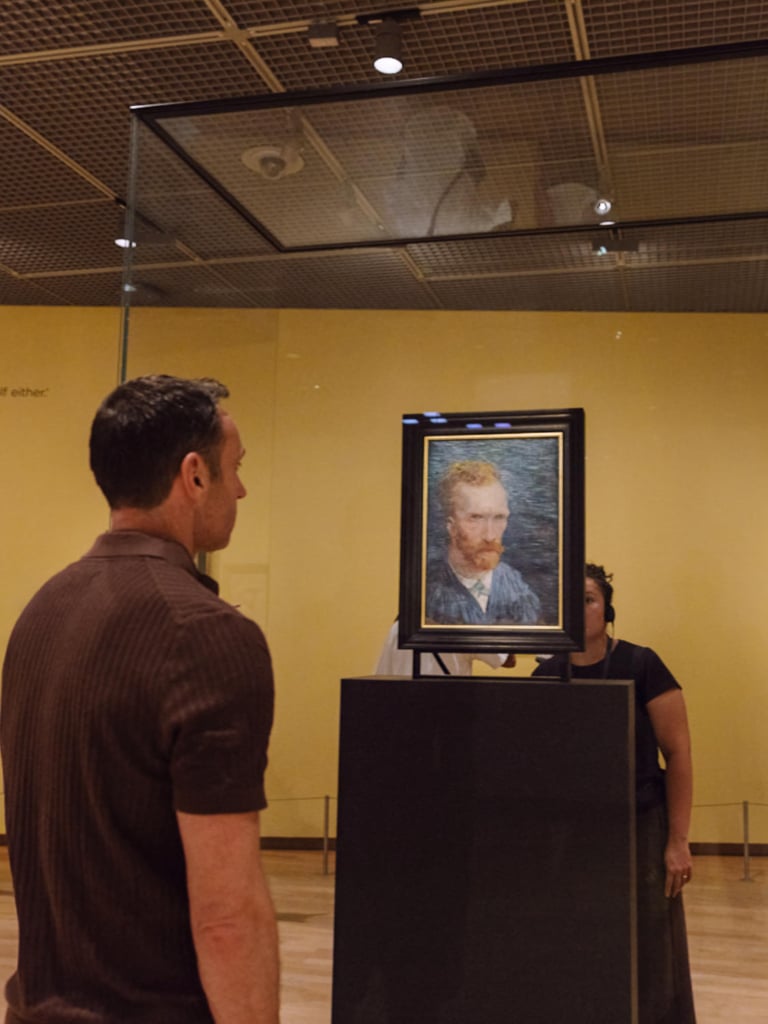
The Van Gogh Museum houses the largest collection of Van Gogh’s art in the world.
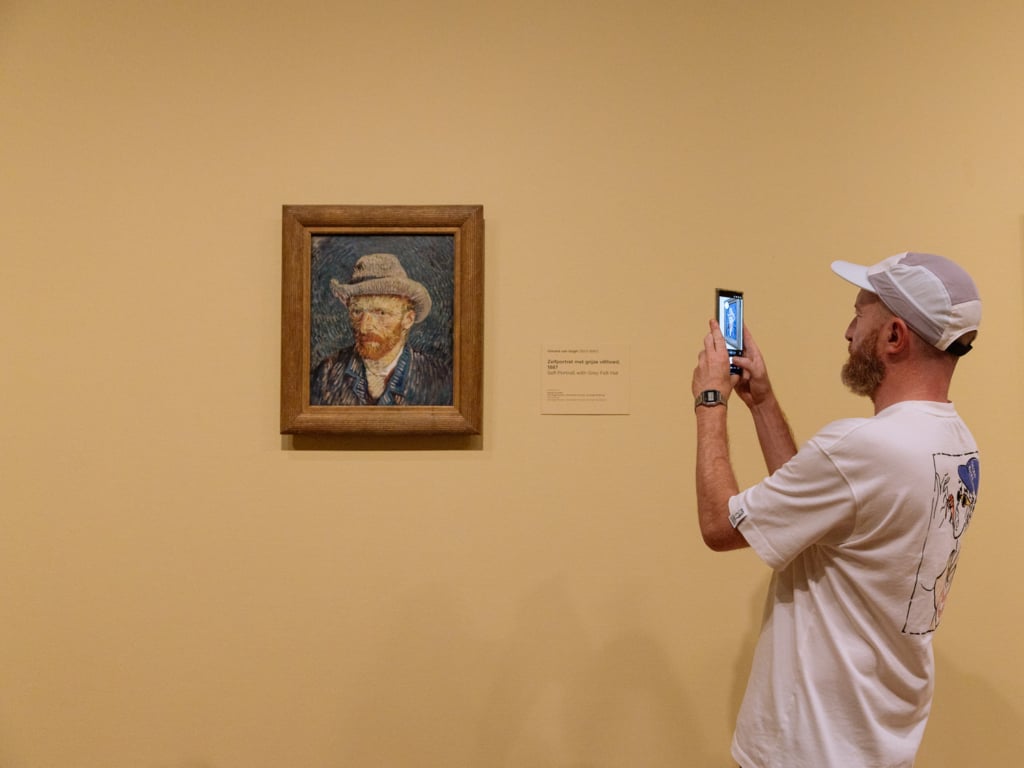
Many of his most famous works, including Sunflowers, The Bedroom and his important self-portraits, are there, so if you are even the slightest bit interested in Van Gogh, this could be for you.
It’s all arranged more or less chronologically, so you can see his development through the years.
One of the highlights of the whole exhibition for us was the commentary on the information boards, which includes a lot of personal letters to his brother Vincent, tracking the decay of his mental health.
Despite having so much of his art, the gallery is actually quite manageable in terms of size. We spent around 1.5 to 2 hours there, which was more than enough.
We booked tickets online in advance because walk-in entry isn’t guaranteed and queues can be very long, especially in summer.
3. Discover the Rijksmuseum
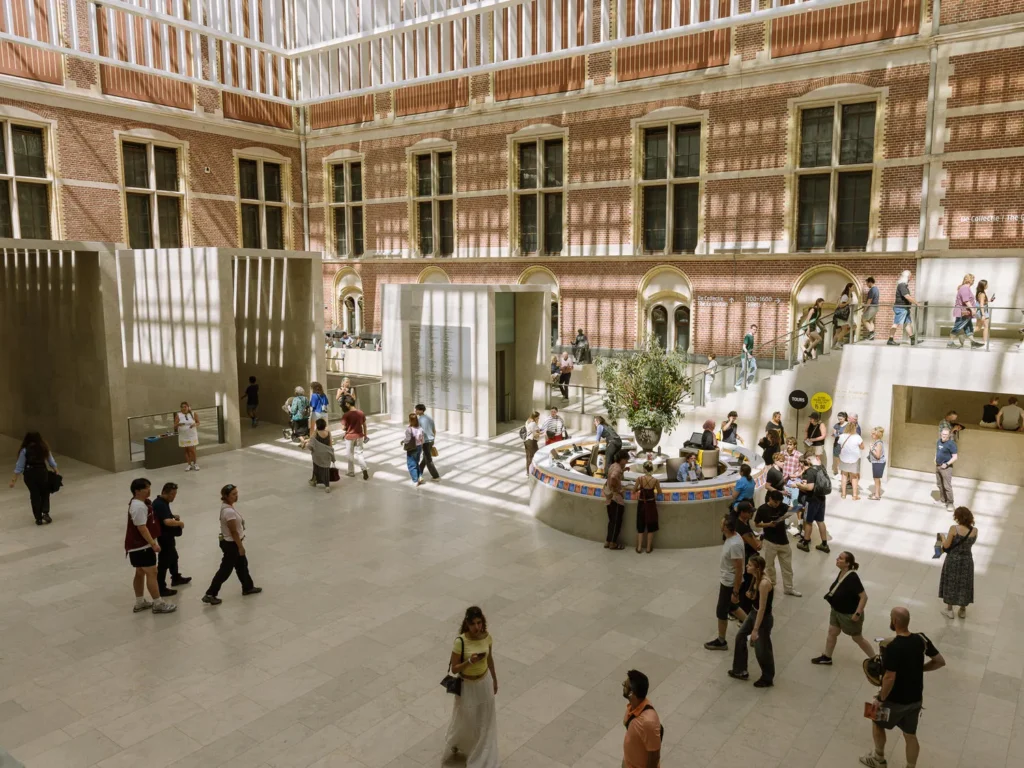
It’s easy to get overwhelmed with art in a city like Amsterdam, but we also recommend the Rijksmuseum if you are interested in art.
This is the national museum of the Netherlands and one of Europe’s best art collections, so it’s worth making the time to fit into your Amsterdam trip.
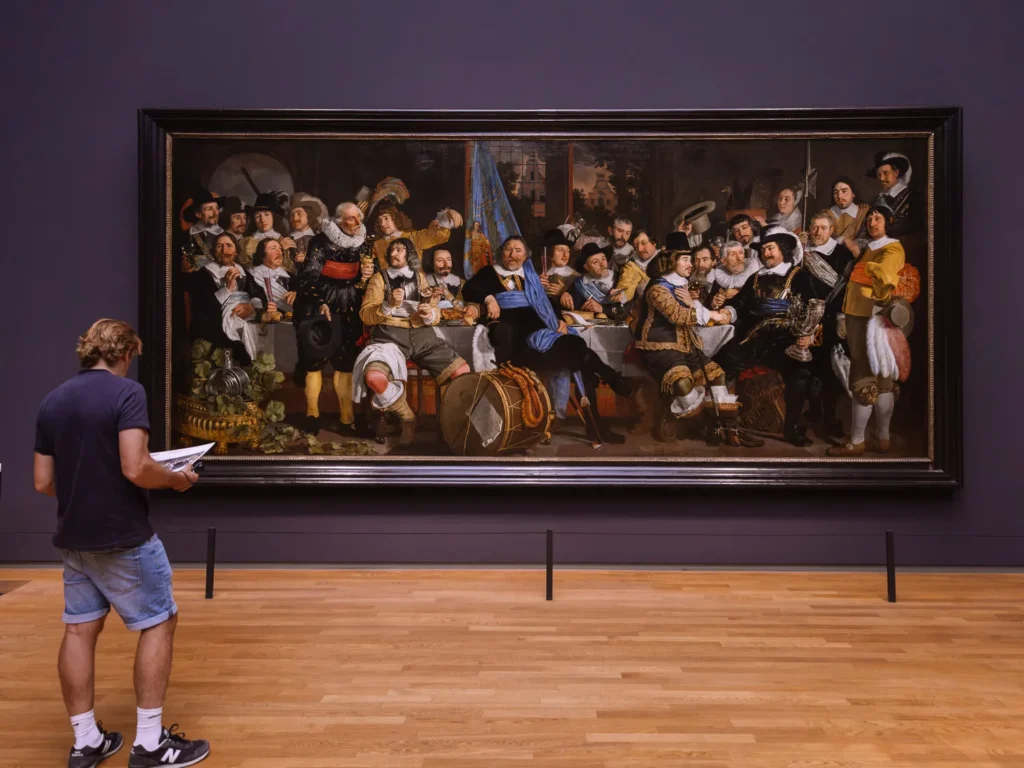
It has a huge collection of masterpieces of the Dutch Golden Age, including paintings, sculpture, decorative arts and historical artefacts.
Given the size of the collection, we were fairly selective in terms of what we wanted to see; otherwise, we could have been there all day.
We honed in on the Rembrandt self-portraits and some of the more famous works, such as the Johannes Vermeer pieces.
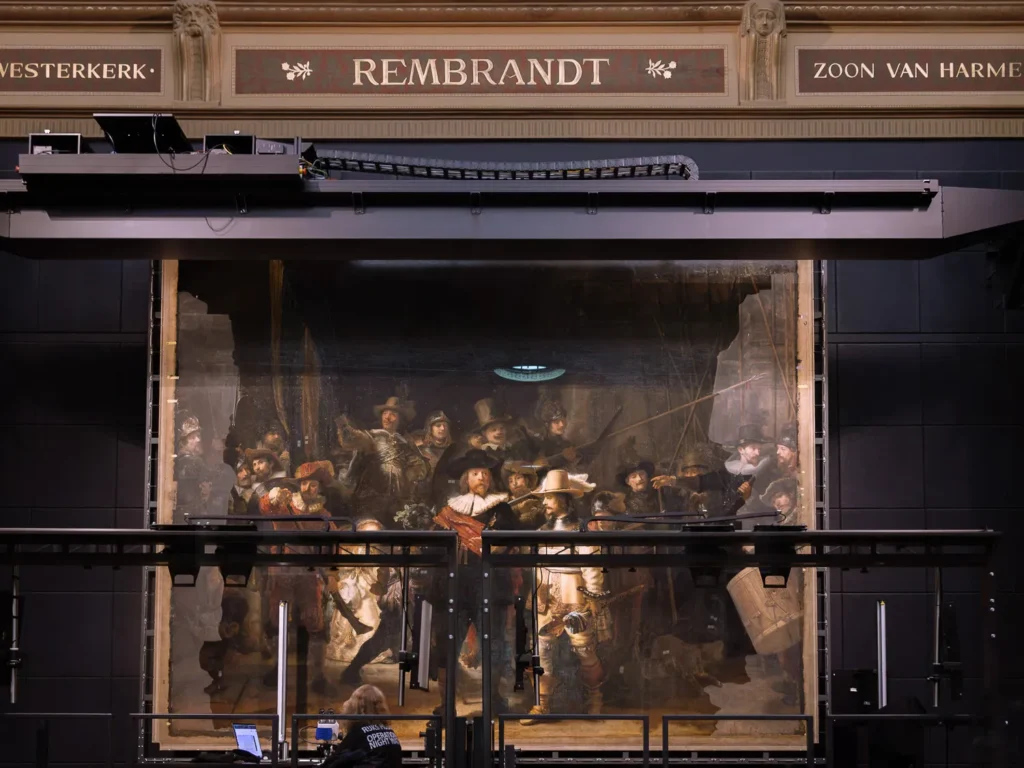
The one thing you can’t miss, however, is Rembrandt’s The Night Watch. You can’t get very close because it’s in a sealed-off section while restoration works are underway, but it’s interesting to see nonetheless.
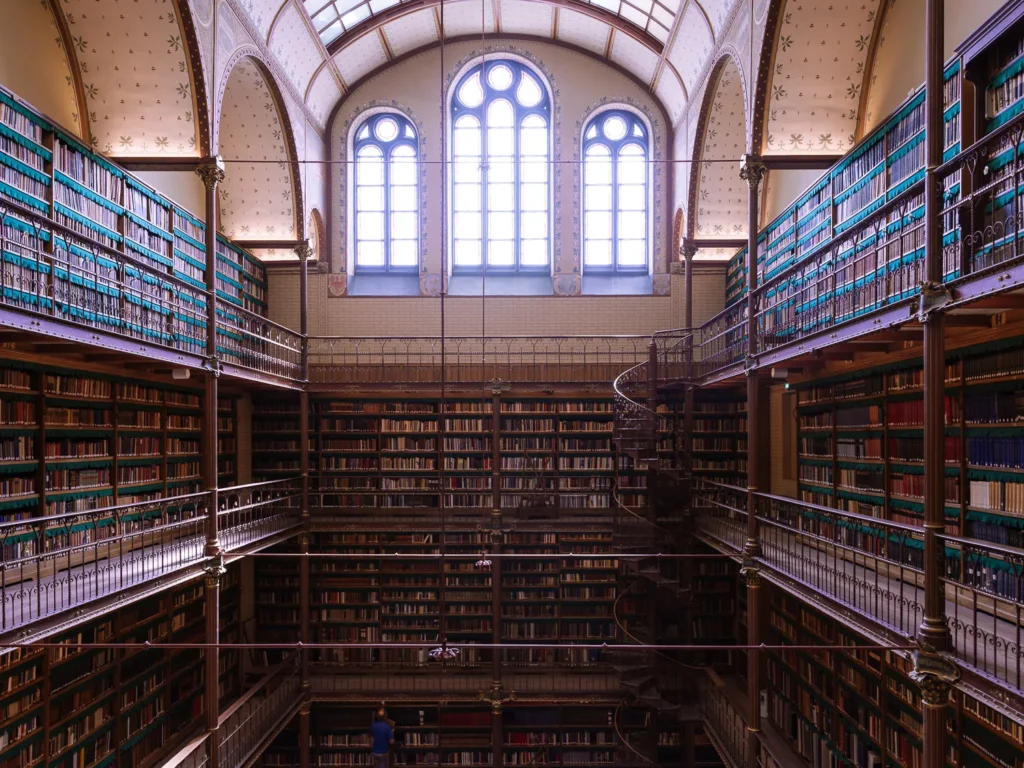
The building itself is also a highlight, reopening in 2013 after a 10-year renovation. Don’t miss the beautiful Cuypers Library.
We spent at least 2 hours looking around. In terms of planning, we’d recommend not doing the Rijksmuseum on the same day as the Van Gogh Museum, even though they’re close by – it’s just a bit too much art in one day.
We booked a timed entry ticket for 3 pm, so we had enough time to see everything but avoided the busiest times.
4. Wander the Nine Streets (de Negen Straatjes)
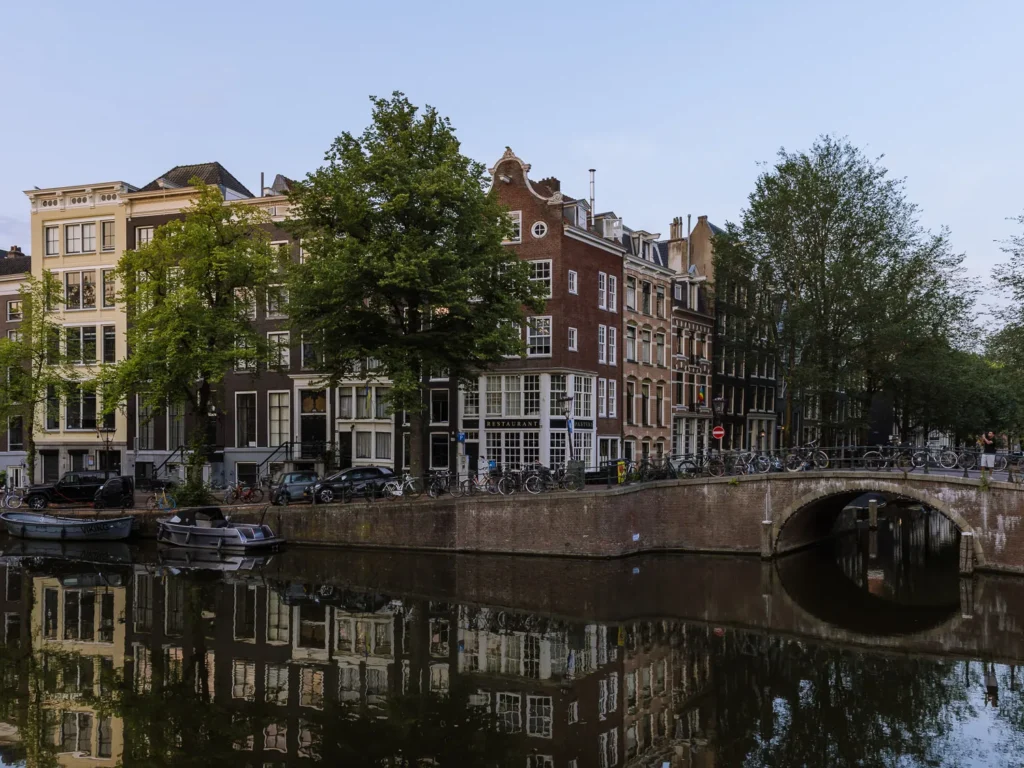
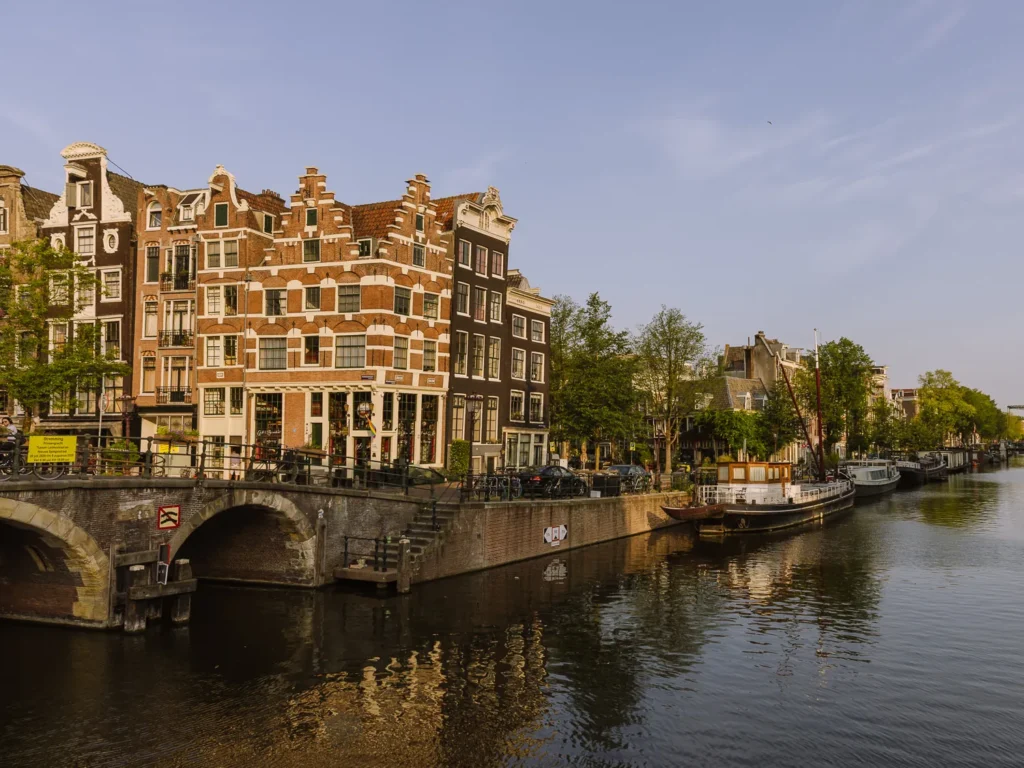
The thing we love most about Amsterdam is just strolling around the beautiful streets and canals. The Nine Streets is one of the best areas to do this.
This is a grid of narrow streets that link the four main canals in the UNESCO-listed Canal Ring (Singel, Herengracht, Keizersgracht and Prinsengracht canals). Each one is full of independent boutiques, vintage shops, galleries, coffee spots and bars.
This is where you’ll find the elegant canal houses, arched bridges and charming tree-lined streets that are quite a contrast from the Red-Light district, as we mentioned in the introduction.
The Nine Streets are: Reestraat, Hartenstraat, Gasthuismolensteeg, Berenstraat, Wolvenstraat, Oude Spiegelstraat, Runstraat, Wijde Heisteeg, Huidenstraat.
5. Visit the Straat Museum
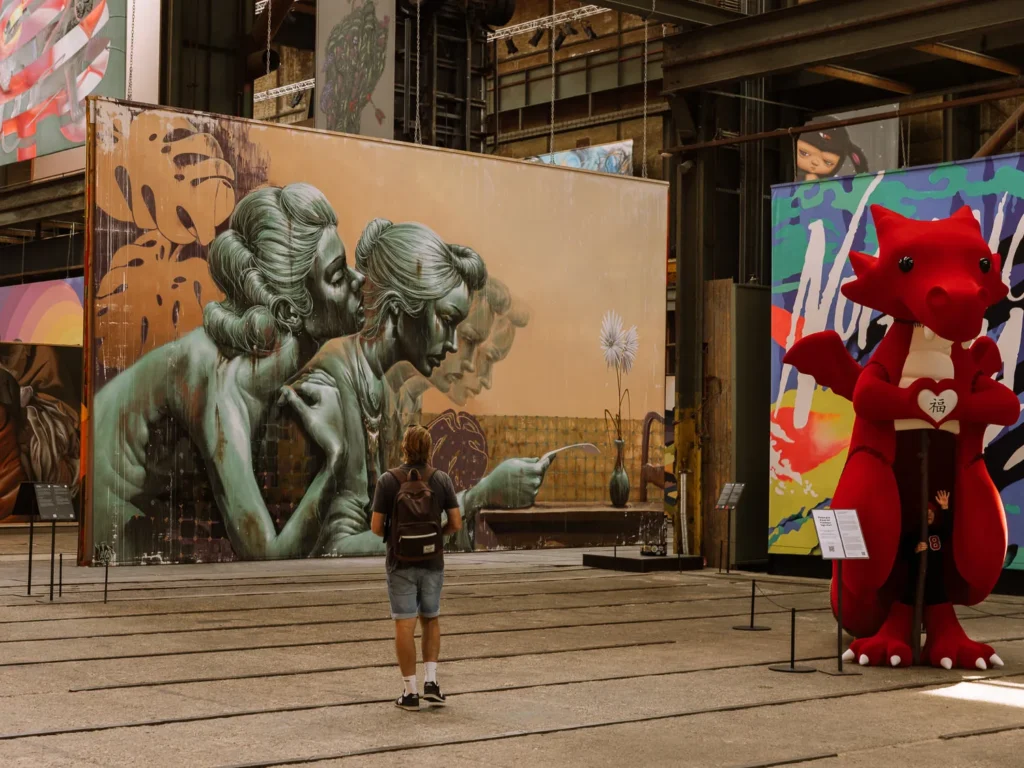
This was easily the biggest highlight of our last trip to Amsterdam. Located across the IJ River at the NDSM Wharf, STRAAT is one of Europe’s largest museums dedicated to street art and graffiti.
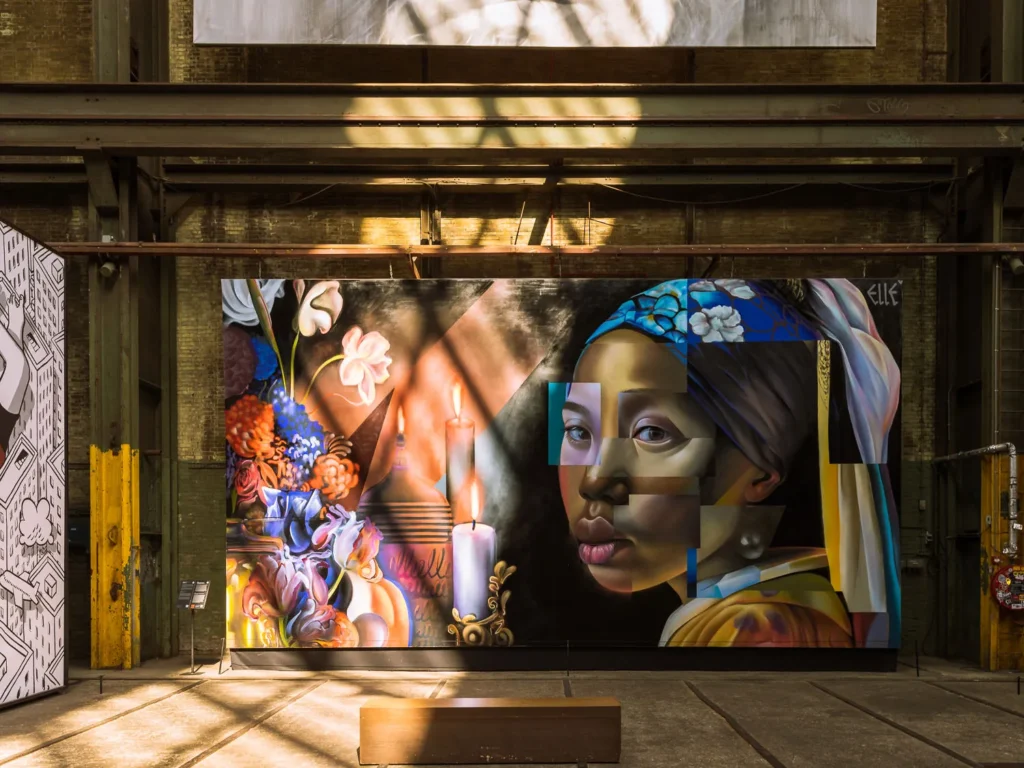
The enormous industrial space has allowed artists to create murals on a monumental scale. There are works by internationally renowned artists and local emerging talent.
Most of the art was created on-site, and the quality of the works is outstanding. It’s some of the best street art we’ve seen anywhere, including in London, which we have written about in our Shoreditch street art guide.
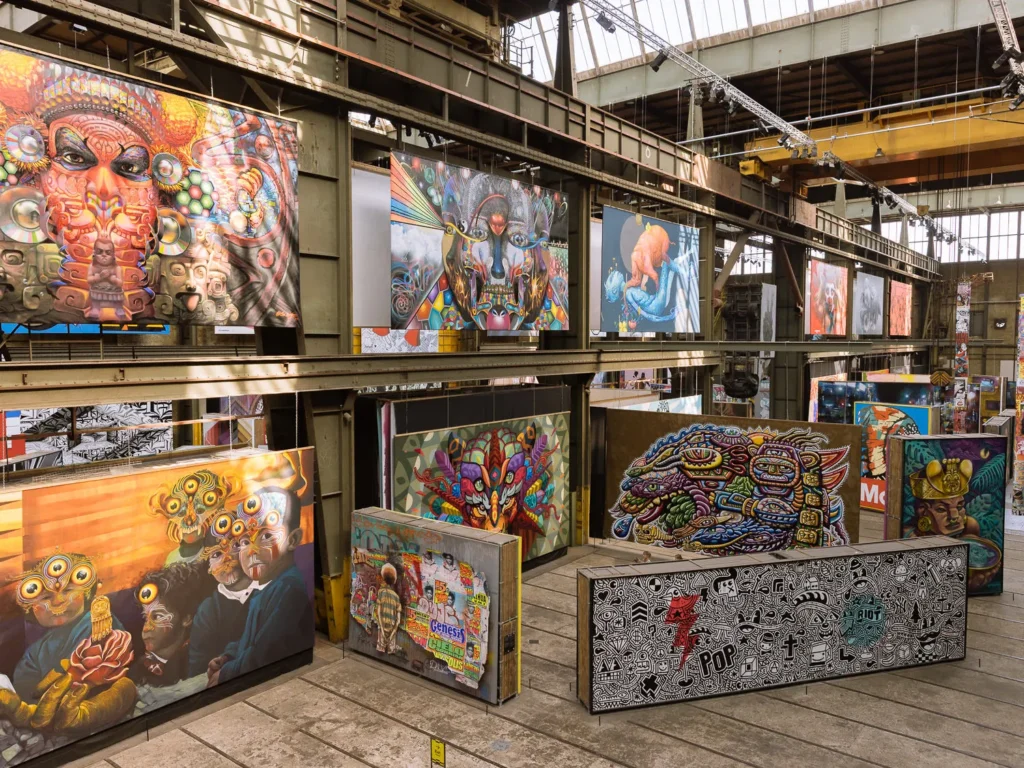

There are over 180 pieces of art hanging in this huge space, and we spent about 1.5 hours looking at them.
If you can make the time to go see it, we highly recommend it.
There is some street art outside the gallery in the NDSM Wharf but nothing quite as good as what you’ll find inside.
To get there, catch the free F4 ferry from Amsterdam Centraal Station to NDSM-werf, which takes around 15 minutes.
We just picked up tickets at the door, but you can book online in advance just in case.

6. Visit the Oude Kerk
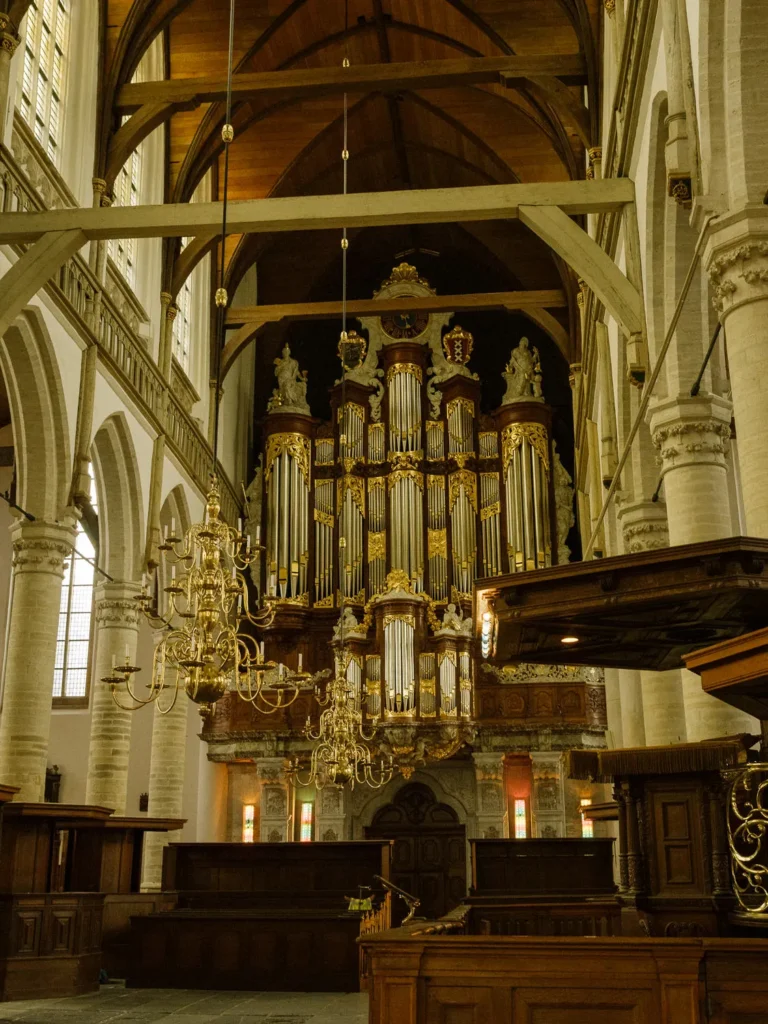
The Oude Kerk is Amsterdam’s oldest building, and it’s well worth popping in for a look.
Smack in the middle of the Red-Light District, Oude Kerk is a Gothic church with centuries-old stained glass, a carved wooden ceiling and over 2,500 graves in the floor. The most famous is that of Rembrandt’s wife Saskia van Uylenburgh.
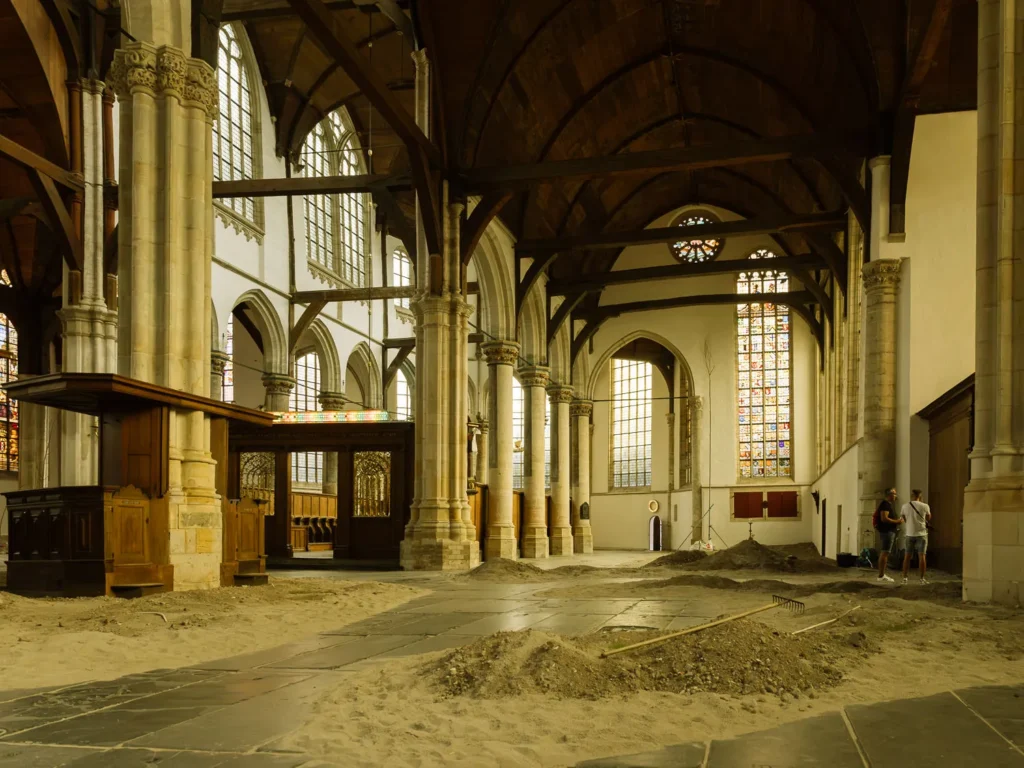
It’s a beautiful church to visit because of its soaring scale, but another great reason to go is the contemporary art exhibitions they showcase there.
During our visit, we saw an exhibition by British artist Jesse Darling, who transformed the space with loads of construction debris, making the whole space look incredibly atmospheric.
We just picked up tickets at the door and spent around 30 minutes inside, but mainly because we were taking lots of photos.
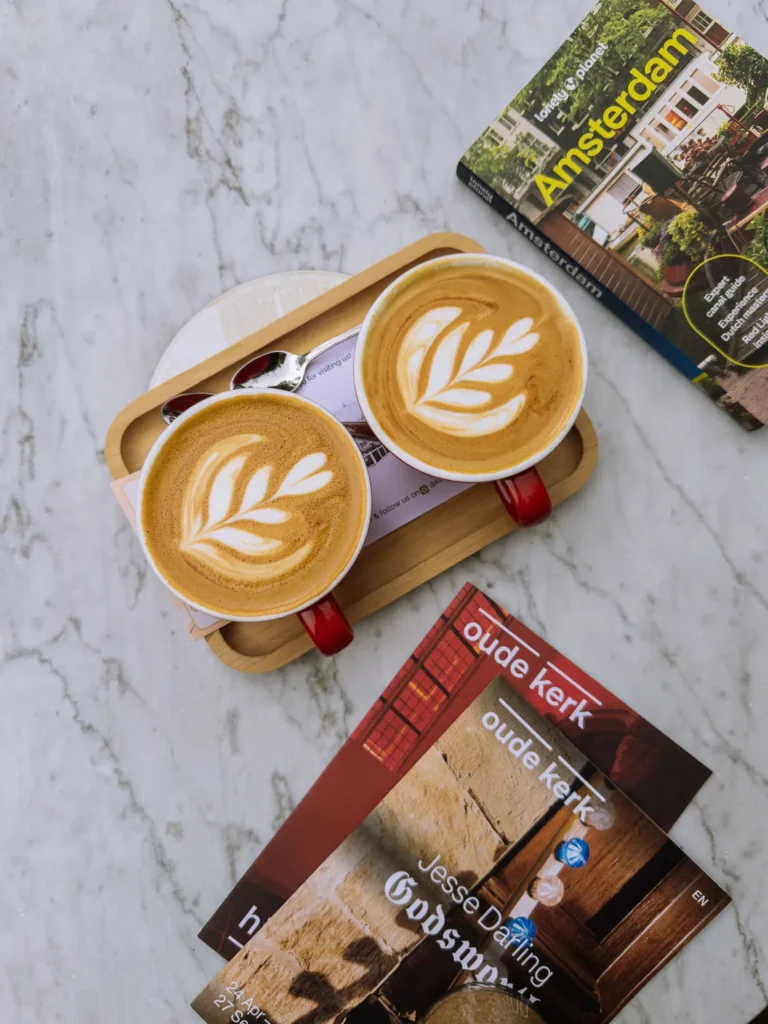
There’s also a very good café just outside the entrance (De Koffieschenkerij), which may have had the best coffee we had in Amsterdam.
7. Explore the Red-Light District & Old Town
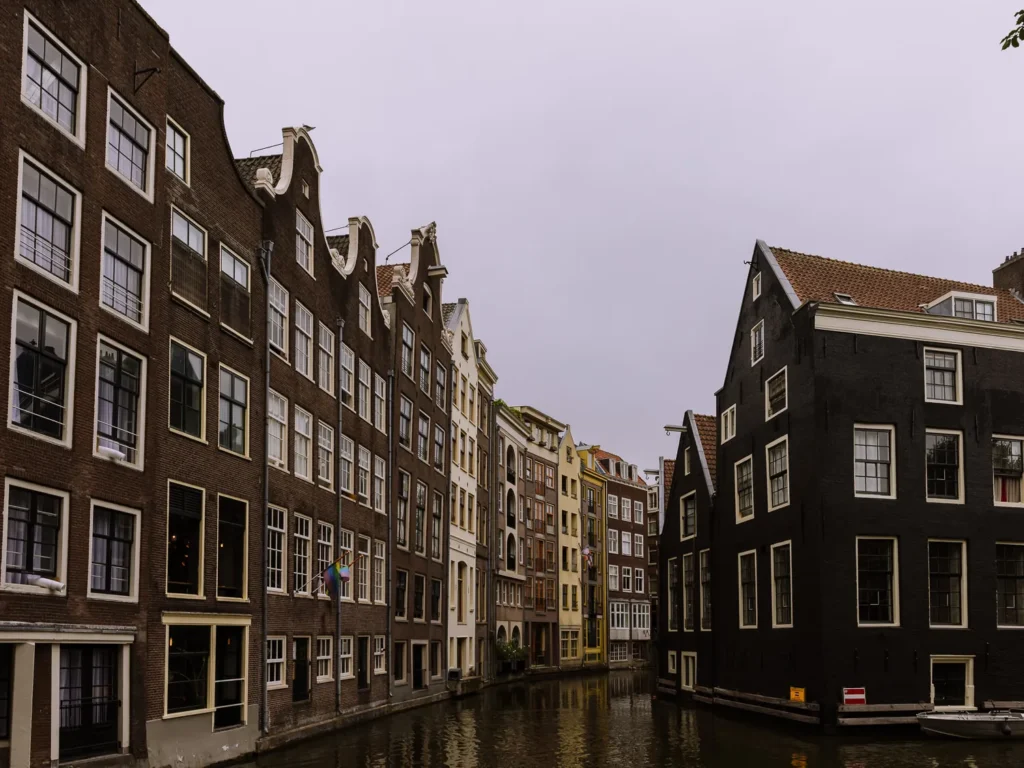
If the canals are our favourite area to stroll around, the Old Town (Oude Zijde) is a close second.
This section of the city contains some of the oldest buildings, including Oude Kerk, which we mentioned above, so it works well to stroll around the Old Town after visiting the church.
The area is made up of narrow medieval streets, canal houses, hidden courtyards and charming bridges. We basically just strolled around without a plan, which is probably the best way to do it.
To see the Red-Light district (De Wallen) in full swing, we had a quick stroll around Oudezijds Achterburgwal, which is the main section, followed by Oudezijds Voorburgwal, another major canal-street running parallel to Achterburgwal.
For us, the best way to experience the Old Town is by visiting Amsterdam’s famous Brown Bars, traditional Dutch pubs with dark, cosy interiors, which we cover next.
8. Have a Drink in a Traditional Brown Bar
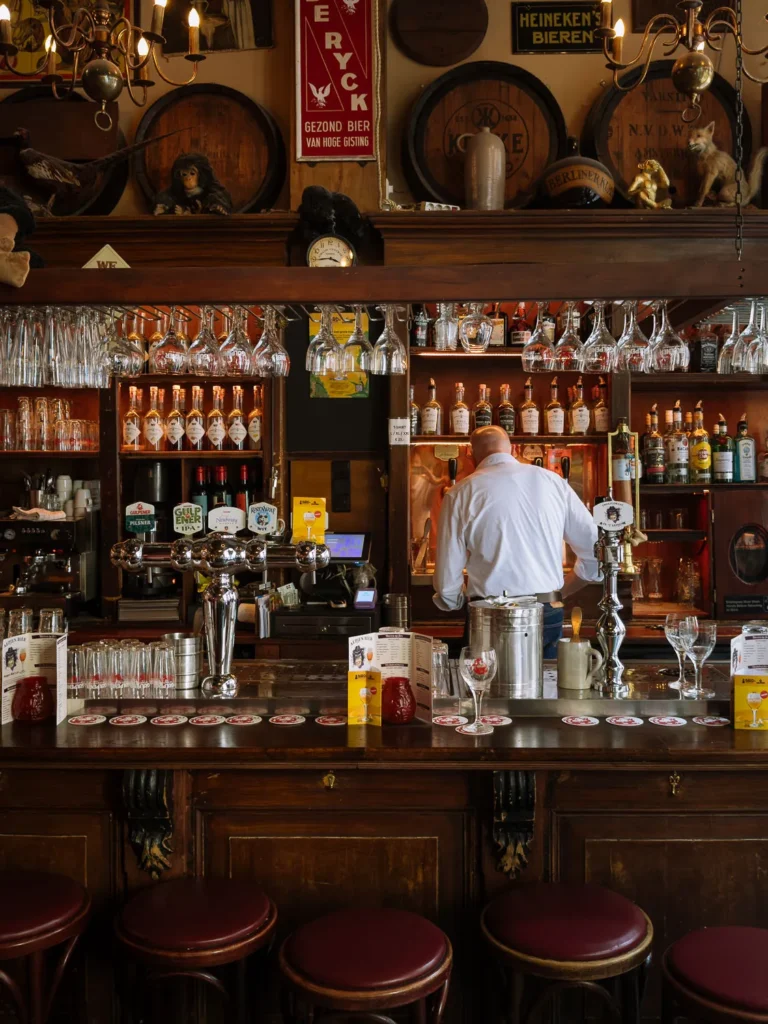
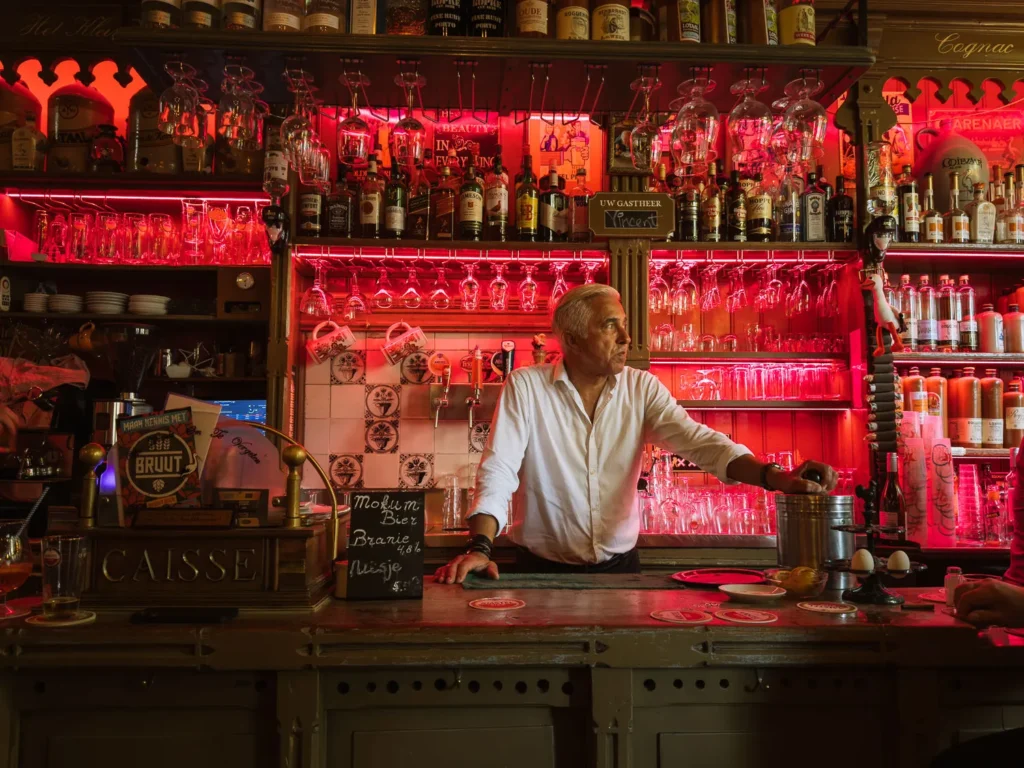
Brown Bars (Bruine Kroegen) are traditional Dutch pubs with dark wood-panelled interiors stained with years of tobacco smoke, low lighting, old furniture and a cosy atmosphere.
Much like a British pub, Brown Bars have a friendly social atmosphere with locals who are always up for a chat.
The most popular beers are Heineken and Amstel, which are both local, but we really liked Brouwerij ’t IJ. They do a tasty wheat beer and La Trappe, a Belgian-style beer made in the Netherlands, which really packs a punch.
Most serve bar snacks as well; our favourite was the bitterballen, which you’ll find on most brown bar menus. It’s a meat-based stew rolled into balls, then breaded and deep-fried. Delicious.
Here are some of the brown bars we loved:
- In ‘t Aepjen – One of Amsterdam’s oldest brown bars tucked inside a historic wooden building. We loved this place; the locals/staff were friendly, and the beer was very good.
- Café Gollem – Cosy, beer-focused bar with a huge selection of Belgian and Dutch beers. Be careful of those Belgian beers; the alcohol content can knock your socks off.
- Café ‘t Mandje – Tiny colourful pub with a wonderful old-fashioned atmosphere and a massive collection of eclectic stuff on the walls.
- Café ’t Smalle – Classic canal-side brown bar with a lovely waterside terrace. We had a great time sitting outside watching the world go by from here.

9. Wander Around Jordaan
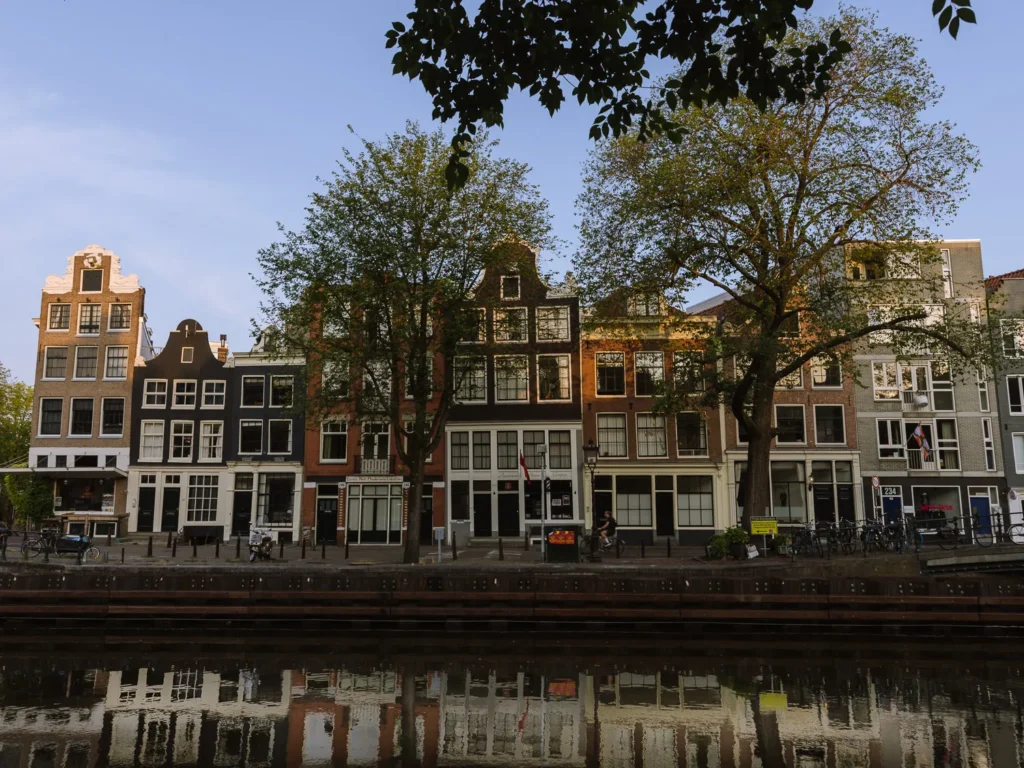
Jordaan was the working-class district of Amsterdam in the 17th century, populated by weavers and craftsmen. Today, it’s one of the most sought-after neighbourhoods and a great place to stroll around.
It’s primarily the area west of Prinsengracht towards Lijnbaansgracht, and it makes a great extension to the Nine Streets area, which is just east of Jordaan.
This is where you’ll find beautiful canal streets, narrow terrace houses and plenty of independent cafés, galleries and shops. It’s also one of the best areas to stay in Amsterdam.
Prinsengracht is one of the prettiest canals – this is also where you’ll find Anne Frank House.
Our vote for the single most attractive section of Amsterdam would be Brouwersgracht, and the junction with Prinsengracht.
10. Enjoy Amsterdam’s Brunch & Bakeries
Speaking of Jordaan, one of the best things to do in the area is brunch.
You can tell a lot about a city by the quality of the brunch scene, and it’s something we always spend a bit of time researching before we go anywhere.
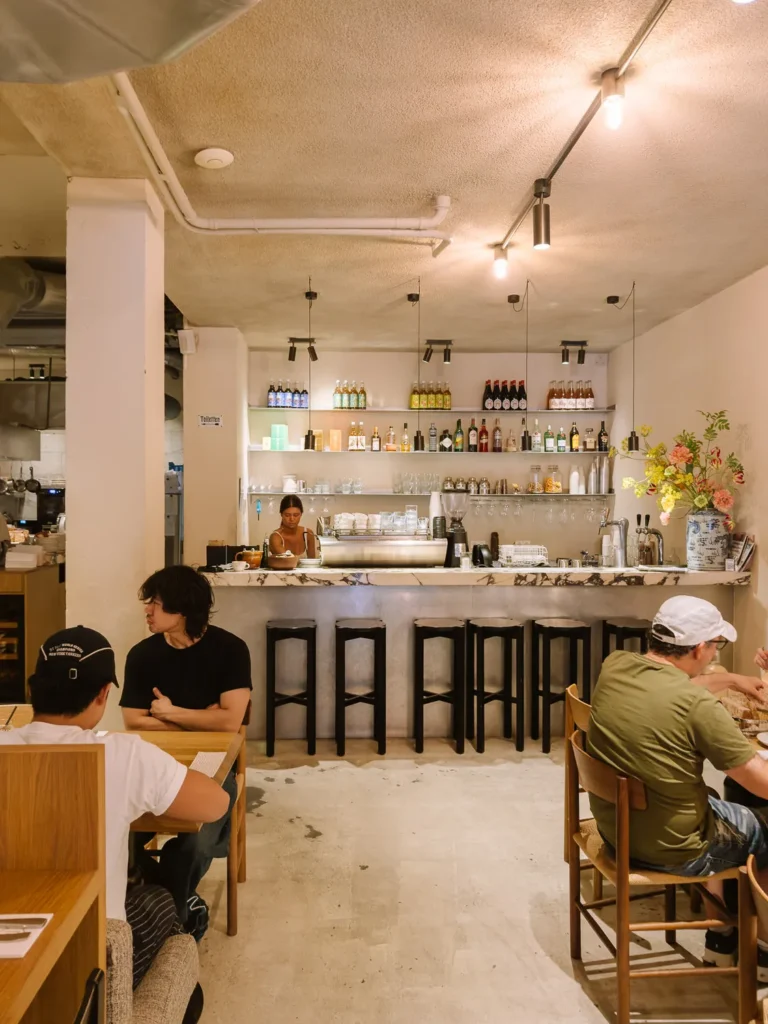
We’re pleased to report that Amsterdam has a fantastic brunch culture. There’s a good mix of innovative brunch spots, excellent bakeries and relaxed cafés. Many have outdoor seating, often spilling onto the pavement or beside the canals
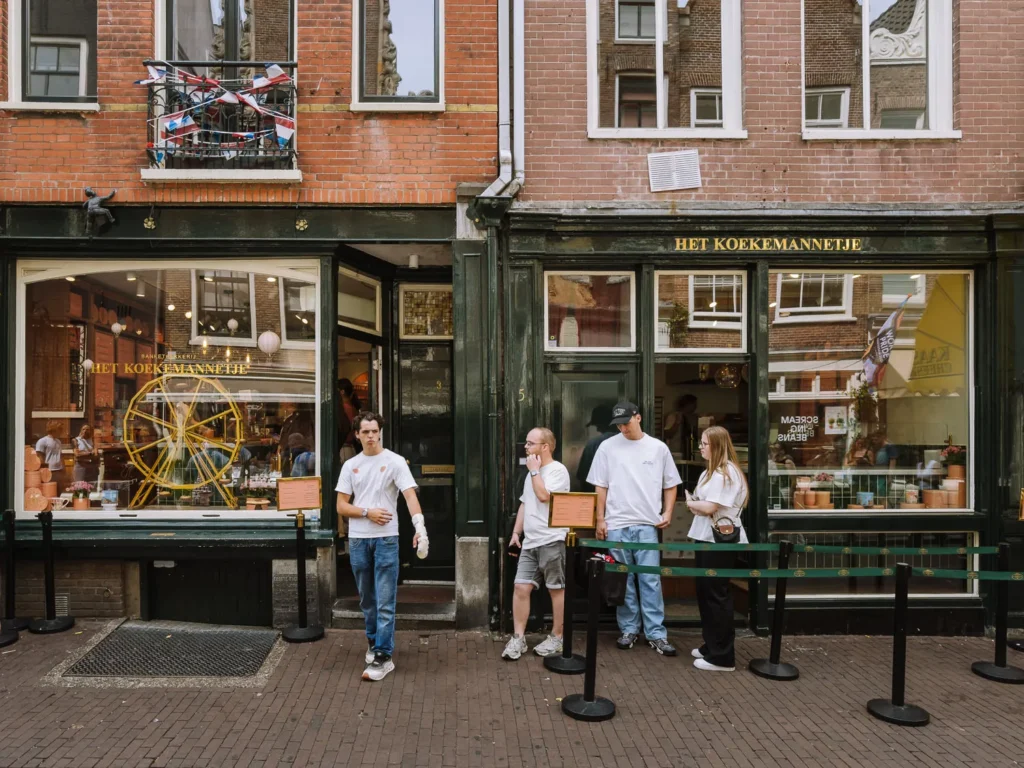
Amsterdam has also embraced the current trend for niche bakeries. Many of them have become a thing on social media, so you need to be there early or you’ll be queuing up.
This is obviously personal taste, but here are a few of the brunch places and bakeries we like:
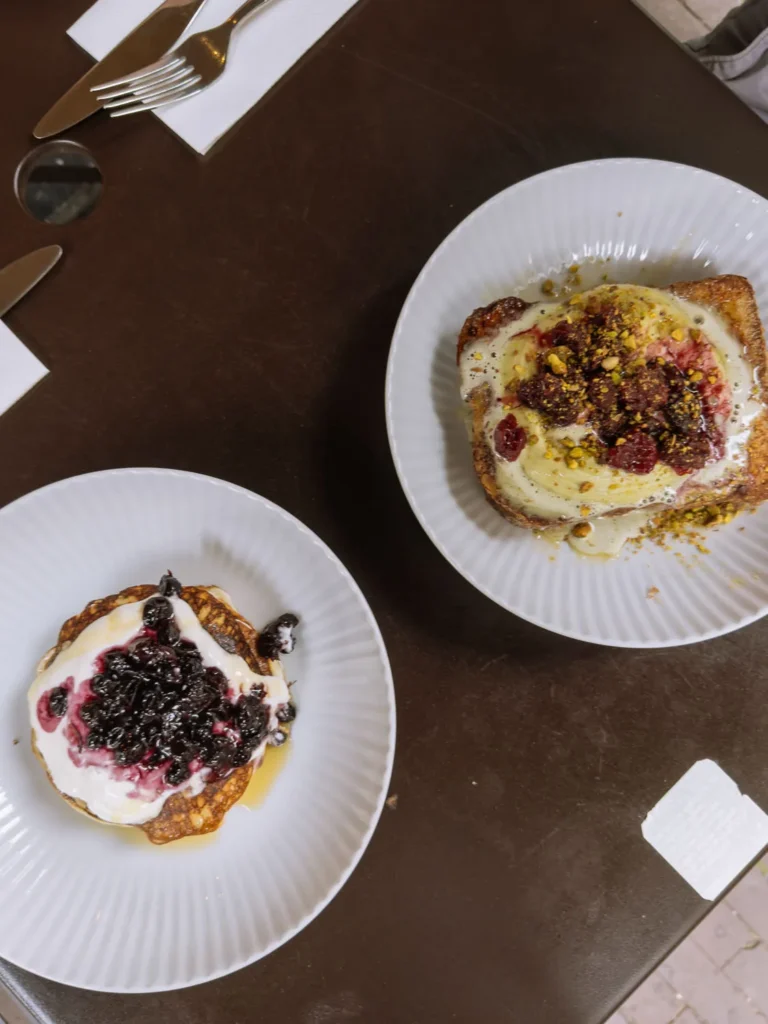
Bakkerij Wolf – This was probably our favourite brunch in Amsterdam. We went to the one Wolvenstraat and sat at the tables outside facing the street. Mark said the French toast was the best he ever had. I thought the coffee was pretty standout as well.
Box Sociaal Jordaan – A relaxed neighbourhood café in Jordaan with seating outside by the canal. It’s Aussie-inspired, so I felt right at home. The sausage sandwich was excellent, although they could have tripled the homemade ketchup. Mark liked the banana pancakes, but they weren’t quite up to the standard of the Bakkerij Wolf French toast.
Bakers & Roasters – There are Kiwi influences in the brunch with hearty breakfasts and excellent pancakes. The coffee was up there as one of the best, and if you’re Aussie or Kiwi, you won’t be disappointed.
Canela – A cosy bakery that is particularly known for their cinnamon rolls. They are very good, but they’ve gone a tiny bit over the top on the icing front for me.
Layers Bakery & Deli – Modern bakery with some very beautiful-looking (and tasting) pastries. They do exotic croissants and sandwiches, but we’d just had brunch, so we settled for a simple chocolate croissant which was flaky and fresh.
Saint-Jean Bakery – This is a vegan bakery, but the chocolate and hazelnut croissant was really good. I can’t do coffee with plant-based milk, so I didn’t try one, but there was a very long queue, so that’s saying something.

11. Take a Trip Out to Amsterdam’s Historic Windmills
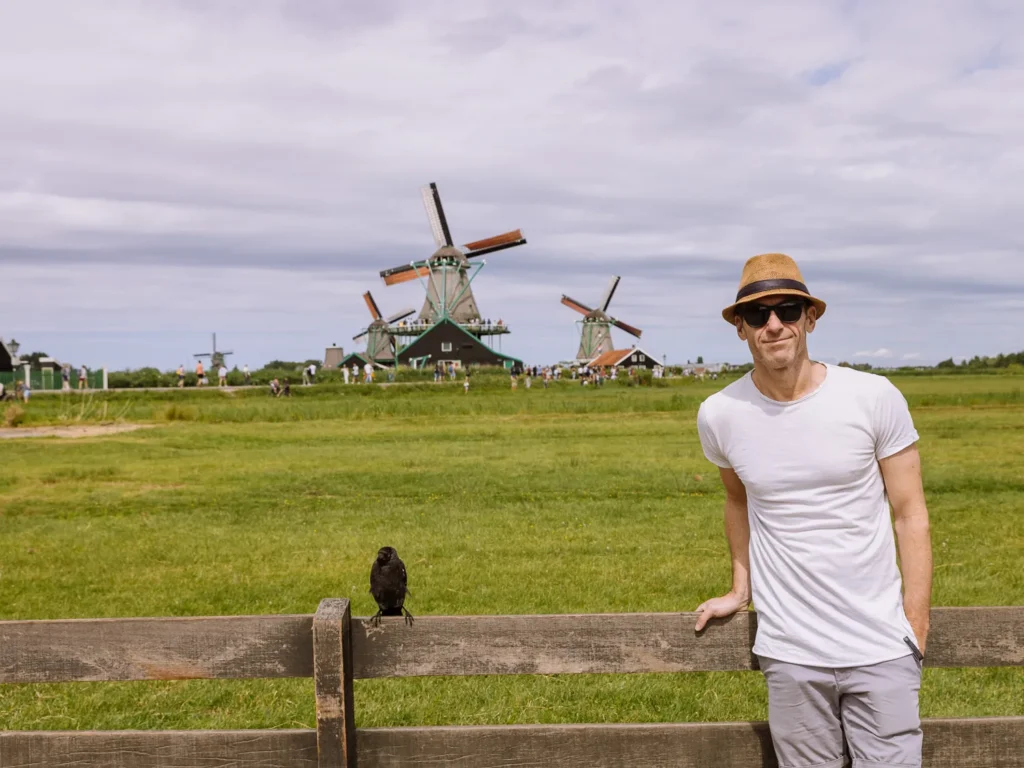
This is a bit of a mini-day trip now, but if you want to see the classic Dutch windmills, this is the best place to go.
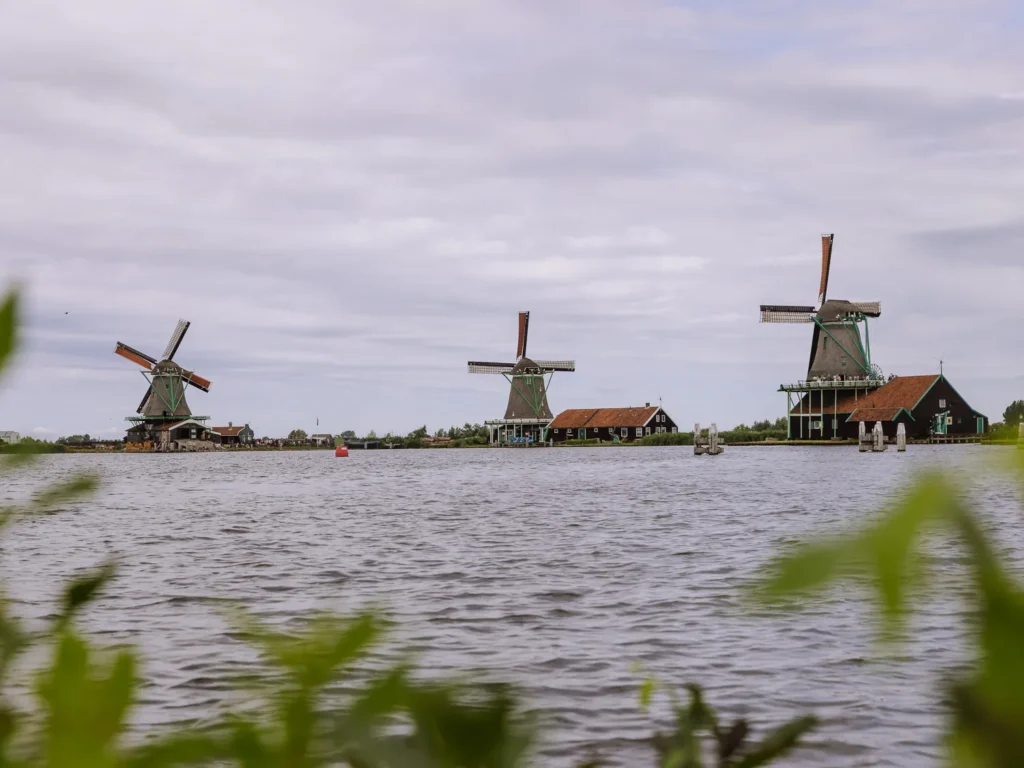
Zaanse Schans is a bit like an open-air museum on the banks of the River Zaan with a collection of traditional wooden houses, workshops and working windmills.
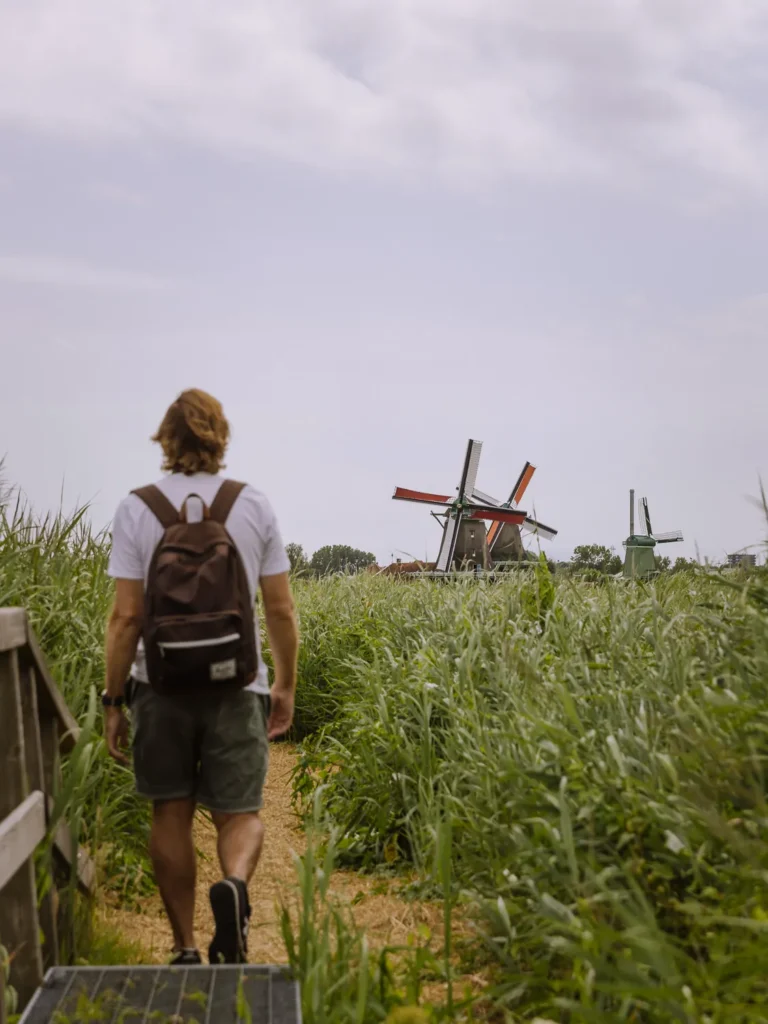
It’s very photogenic, particularly early in the morning when the light is better, and the area is quieter. Which brings me to the main point I wanted to make about the Zaanse Schans; it’s a working tourist attraction, not a traditional Dutch village.
There are lots of tourist-focused shops and cafés, and it was moderately busy when we were there.
But I wouldn’t let that put you off. We don’t normally do overly touristy things, but we thought it was well worth doing.
To get there, we took the train from Amsterdam Centraal to Zaandijk Zaanse Schans, which takes around 17 minutes. It’s very easy to get the train in Holland; you don’t need to prebook tickets, and you can just tap with your contactless card. Note: Apple Pay didn’t work for me at the train stations in Holland, and I had to use a physical card.
From the train station, it’s a 15-minute walk to Zaanse Schans. We did a circular route through the village, along the river, then back through the fields.
If you would prefer an organised tour, this day trip to Zaanse Schans includes pick up from Amsterdam Centraal, private coach transport, a visit to the windmills, plus a stop at a cheese shop, a fishing village and a shoe factory. We didn’t take this option, but it’s extremely well rated.
12. Admire Amsterdam’s Canal Houses
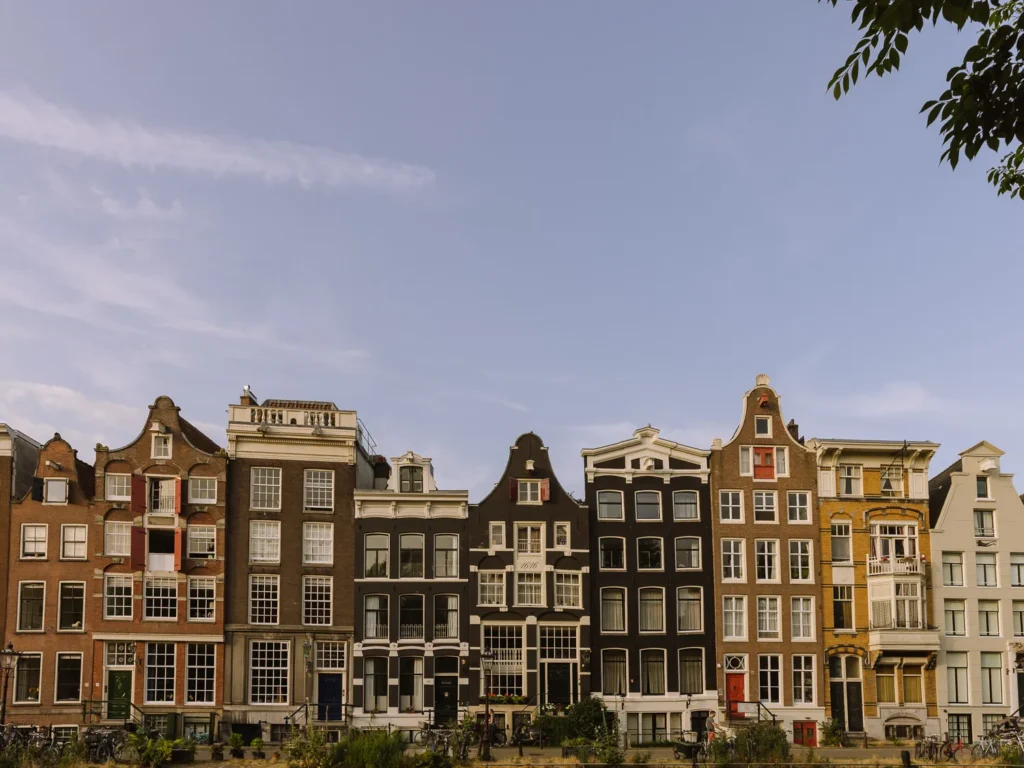
It’s always good to do something you can only do in the city you’re in, and the Canal houses of Amsterdam are one of those things.
Built during the Dutch Golden Age, the tall, narrow houses that line the UNESCO-listed canals have these distinct proportions due to the property tax, which was calculated based on the width of the building.
Inside the staircases are often so steep it’s downright awkward, which we can attest to after a perilous journey lugging out suitcases up a flight of stairs that was more like a ladder in our hotel.
To just admire them on a stroll; Herengracht, Keizersgracht and Prinsengracht are the main canals of the Canal Ring, with some of the most attractive stretches around the Nine Streets and Jordaan.
A great way to get inside one for a poke around is by going to a museum or restaurant in a canal house. Here are a few ways to do that:
Museum Van Loon on Keizersgracht has beautifully preserved the period interiors and gives an idea of how Amsterdam’s wealthy merchants lived.
The Ons’ Lieve Heer op Solder is a 17th-century canal house with a hidden Catholic church on the upper floor.
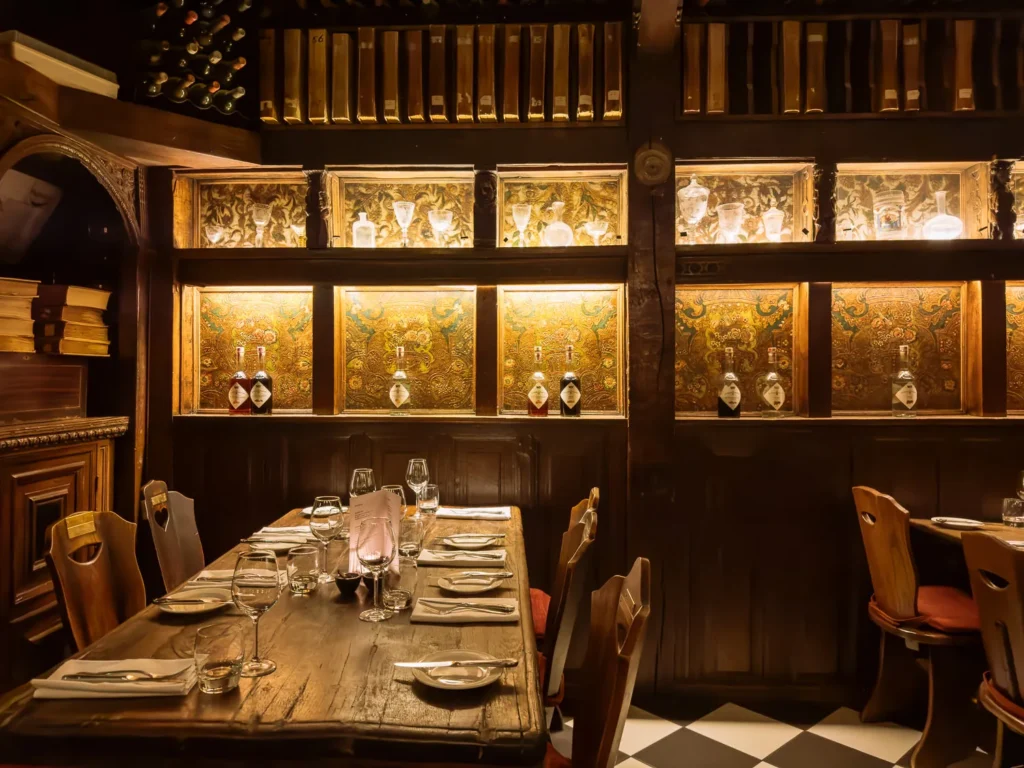
We also went to Restaurant D’Vijff Vlieghen, a beautiful, atmospheric canal house with timber panelling, small rooms, and low ceilings. The food was well-prepared but a little pricey – so to be clear, we’re mostly recommending this for the space, not so much the food.
More Belgium & Netherlands Guides
- Our top things to do in Amsterdam.
- The best things to do in Brussels.
- Our Ghent guide and itinerary.
- The best things to do in Bruges: 1- or 2-day itinerary.
- Our guide to visiting Antwerp.
- Where to stay in Amsterdam.
- The best things to do in Mechelen.
- What to do in Leuven, Belgium.

reader-supported
When you buy through links on our site, we may earn a small affiliate commission at no extra cost to you.
Thanks for your support // Paul & Mark