

By: Paul Healy // Last Updated:
Bruges is compact enough to explore entirely on foot. I’ve organised the best things to do into a practical 2-day itinerary, with the essential sights prioritised for a 1-day visit.
The first time I visited Bruges was in 2011. I had only recently moved from Australia to London, and my mum, brother and sister had come over to visit. We decided to drive to France and stopped in Bruges for a day along the way.
Having recently moved to Europe, I was still enamoured with all things European, and Bruges was no exception. The narrow alleyways, medieval bridges, Gothic churches, canal-side mansions and obsession with chocolate conjured up exactly the sort of Europe Australians imagine.
And my mum loved it.
I returned to Bruges in September 2025 on a solo trip, spending three nights here, taking a day trip to Ghent, then finishing with two nights in Brussels.
Staying three nights gave me enough time to explore Bruges properly and be a little more selective about what I’d actually recommend.
So I’ve put this guide together as my favourite things to do in Bruges, organised into a practical 2-day itinerary. I’ve ordered everything around opening times and location, so you can start at the top and work your way down.
If you only have 1 day, focus on numbers 1–8. These cover the main attractions I think you should prioritise on a first visit.
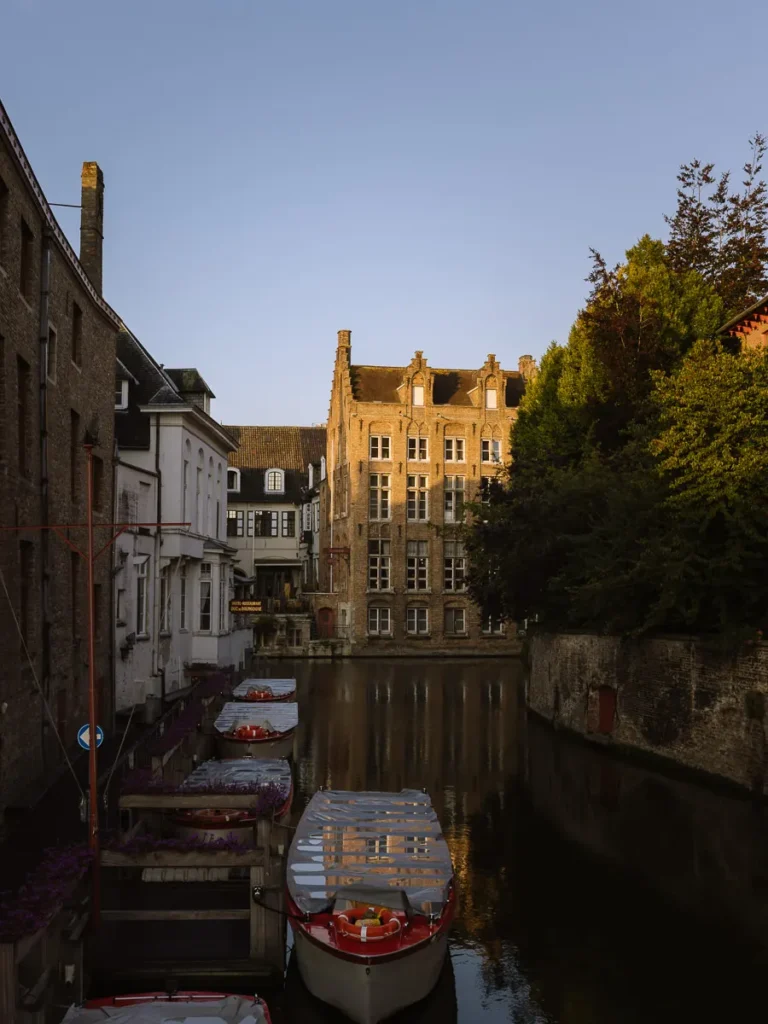
Bruges is very walkable, and I didn’t need to use public transport at all while following this itinerary.
Bruges Walking Map
I’ve marked all the stops from this itinerary on the map below, in the same order they appear in the guide.
Everything is within walking distance, and I didn’t need to use public transport during my stay. Following the route will take you past the main museums, historic sights and some of the most photogenic parts of Bruges.
Click on the top right corner to open our map in your Google Maps app. Click the star next to the title to save it to your Google account.
Day 1 in Bruges
Day 1 covers the essential Bruges sights I’d prioritise on a first visit, arranged into an easy walking route through the historic centre.
1. Grote Markt
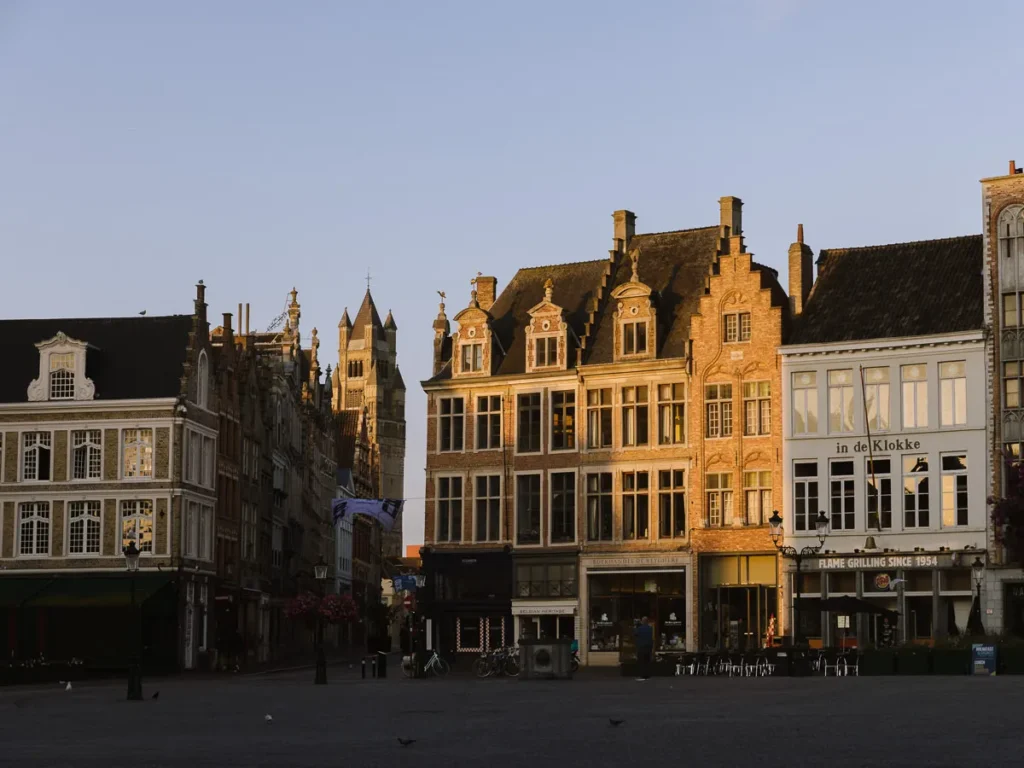
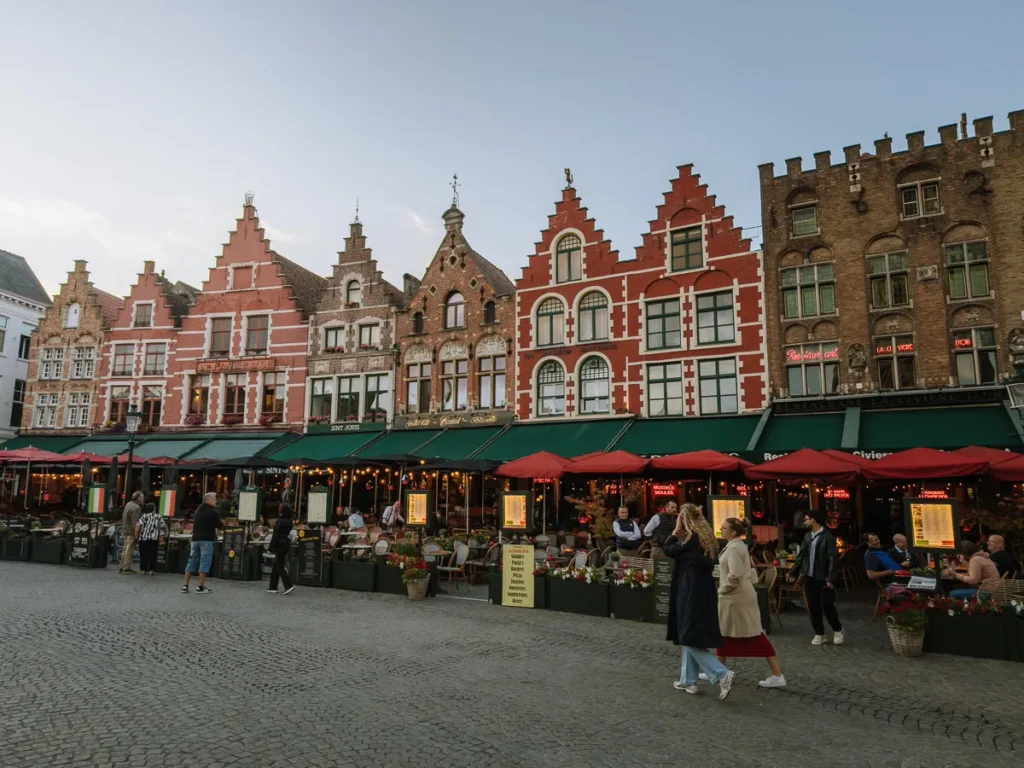
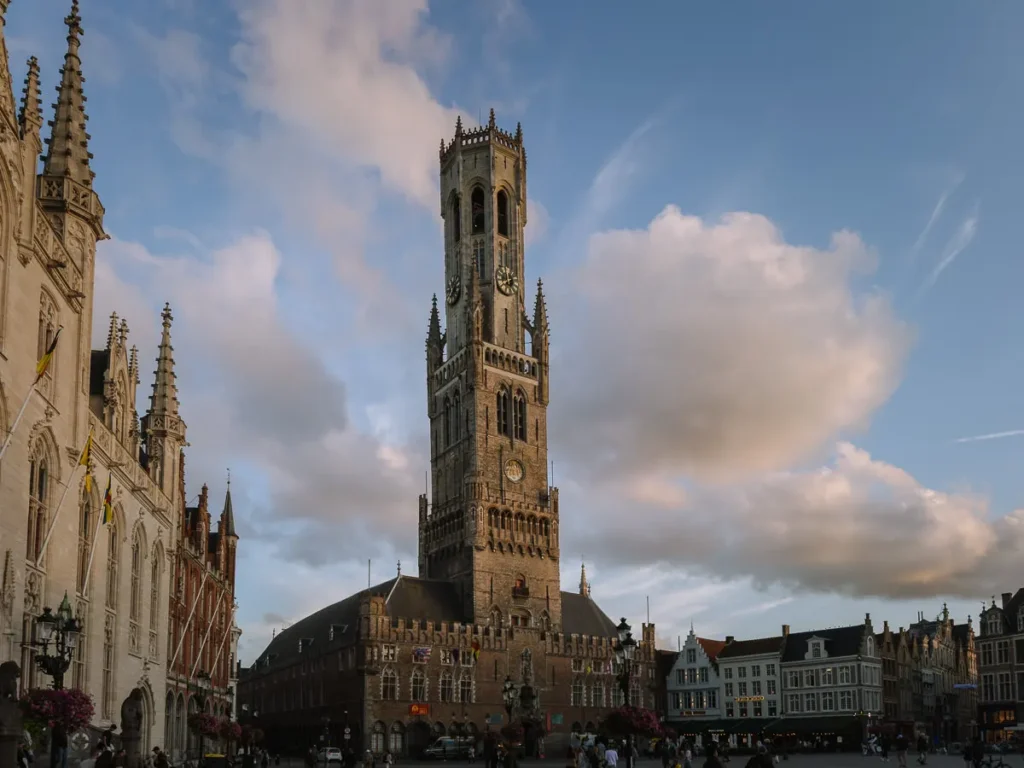
Grote Markt (Market Square) is the historic heart of Bruges and where I started my visit.
The square sits within Bruges’ UNESCO-listed historic centre and is surrounded by some of the city’s most recognisable Flemish architecture, including the colourful medieval guild houses and the Belfry.
I only spent a few minutes here initially to get my bearings before heading up the Belfry, which is next on this itinerary. But because Grote Markt is so central, I found myself passing through it repeatedly over the next couple of days.
There are plenty of restaurants around the square, and they are undeniably tourist-focused. Normally, I’d avoid eating on the main square of a European city, but Bruges was an exception for me.
The atmosphere is excellent, particularly later in the day, and many of the traditional restaurants around Bruges serve fairly similar menus anyway. In this case, I thought paying a little extra for the setting was worth it.
2. Belfort (Belfry)
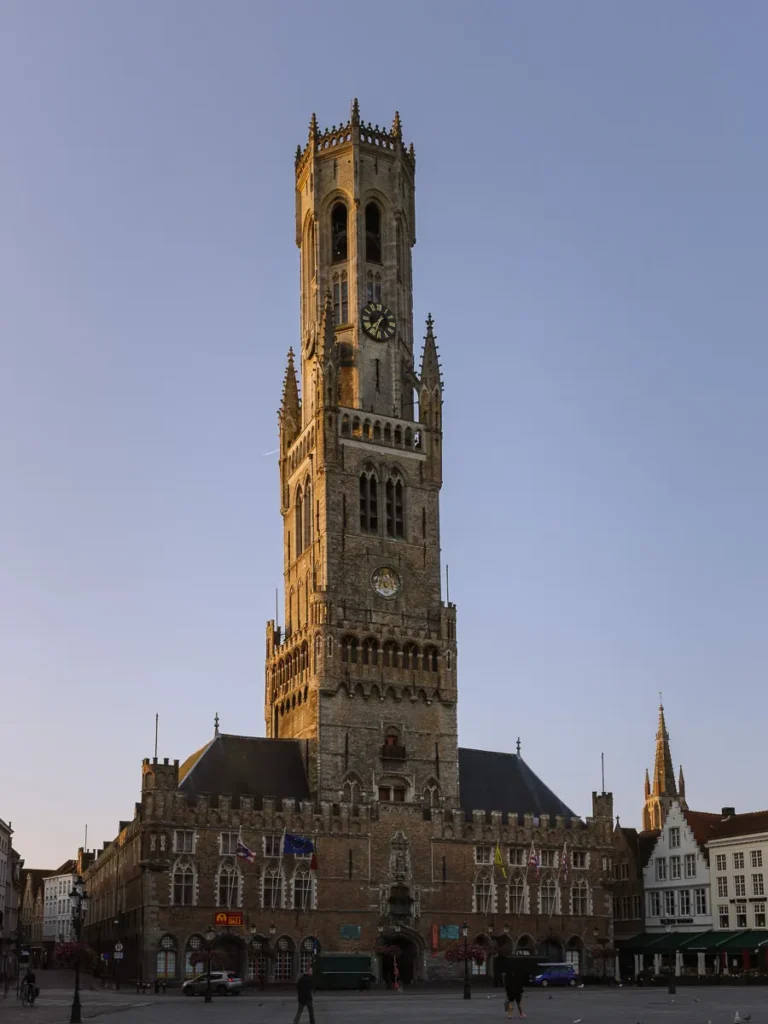
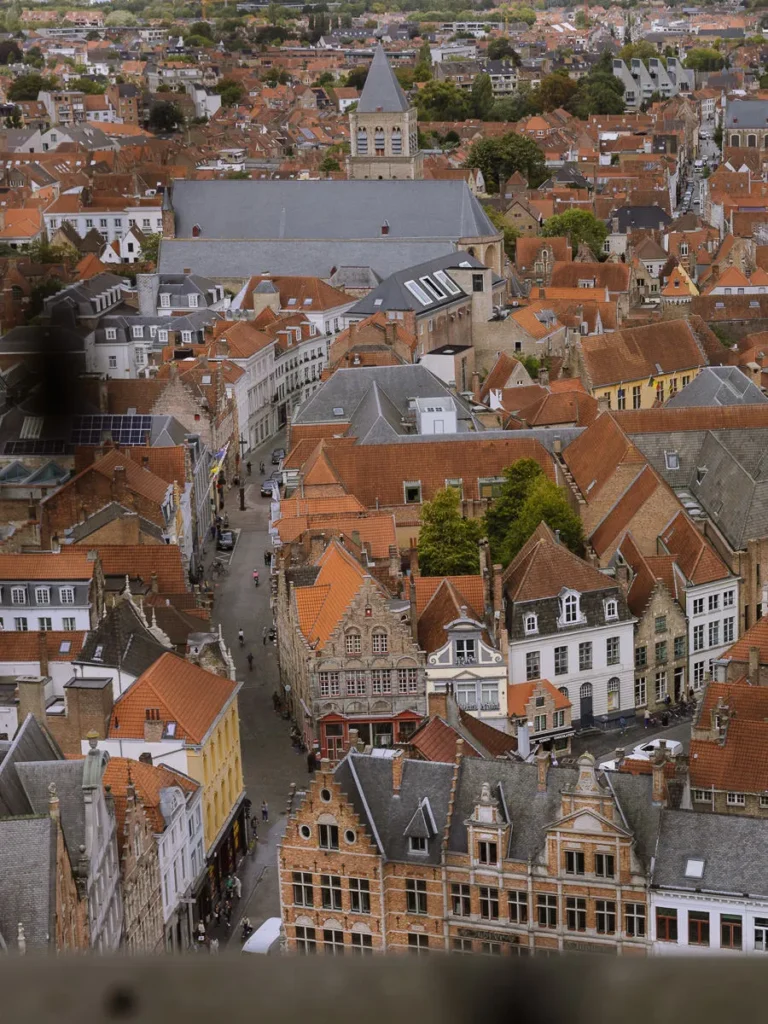
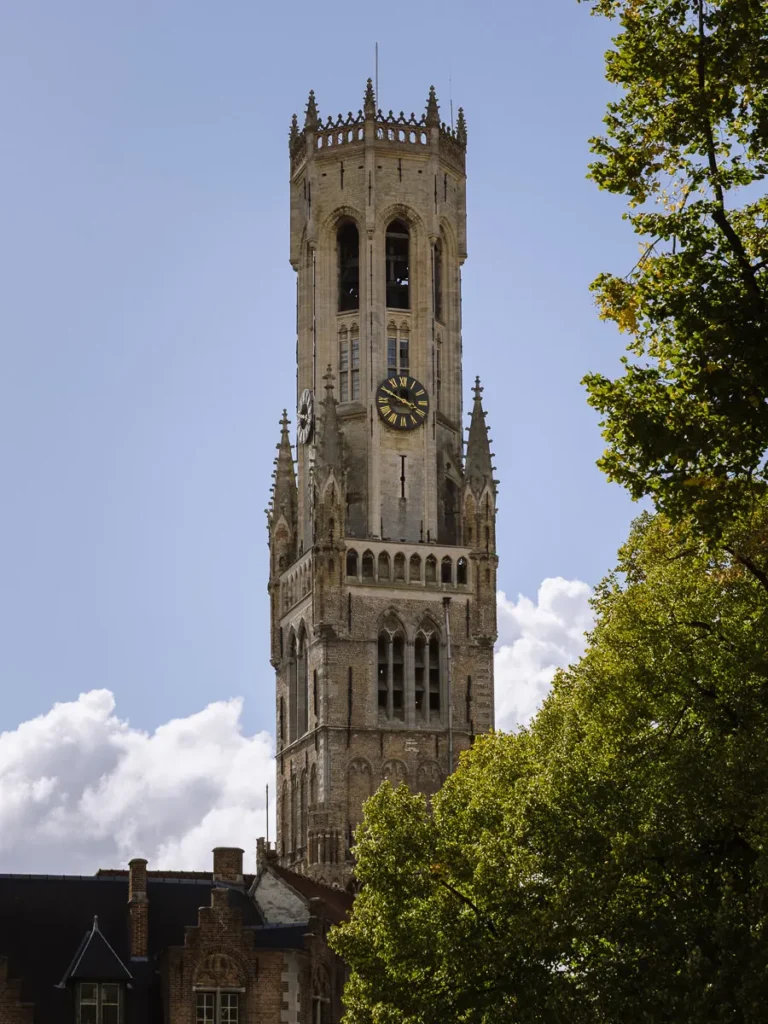
I was unreasonably excited to climb the Belfry, mainly because it features in In Bruges, one of my favourite films. But even without the movie connection, I think it’s one of the essential things to do in Bruges.
The 13th-century tower is 83 metres high and has a carillon of 47 bells. If you want to hear it in action, the carillonneur plays on Wednesday, Saturday and Sunday at 11 AM.
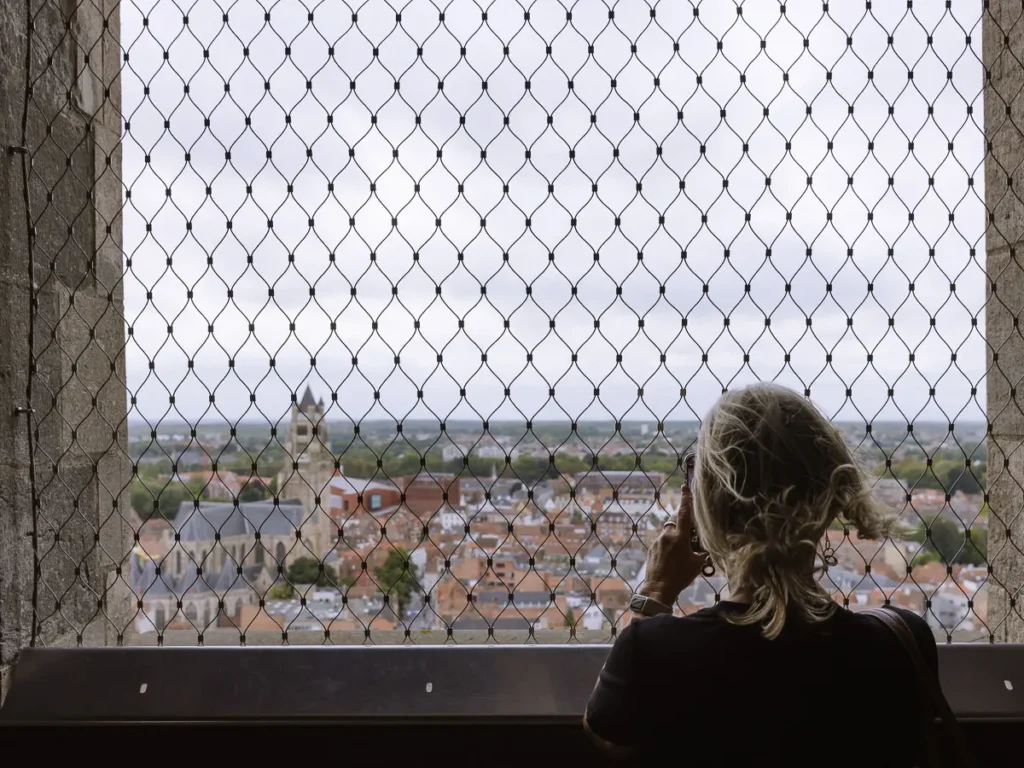
There are 366 steps to the top, and the staircase becomes extremely narrow towards the top, so it may not be suitable if you have mobility issues or don’t particularly like confined spaces.
The Belfry is included on the Bruges Card, which I recommend getting if you are following this itinerary. I have more details about the card below.
I’d also recommend booking a time slot in advance as visitor numbers are limited. I didn’t realise this, so I had to reserve a slot at the entrance and come back 30 minutes later.
Fortunately, you’re right on Grote Markt, so I just used the time to wander around the square and take a few more photos.
3. Salvador Dalí Exhibition
Before my last trip to Bruges, I had no idea the city had a permanent Salvador Dalí exhibition. So, I was very keen to see it. It didn’t disappoint.
It’s located in the Belfry building, so it’s convenient to visit after you come down from the Belfry tower.
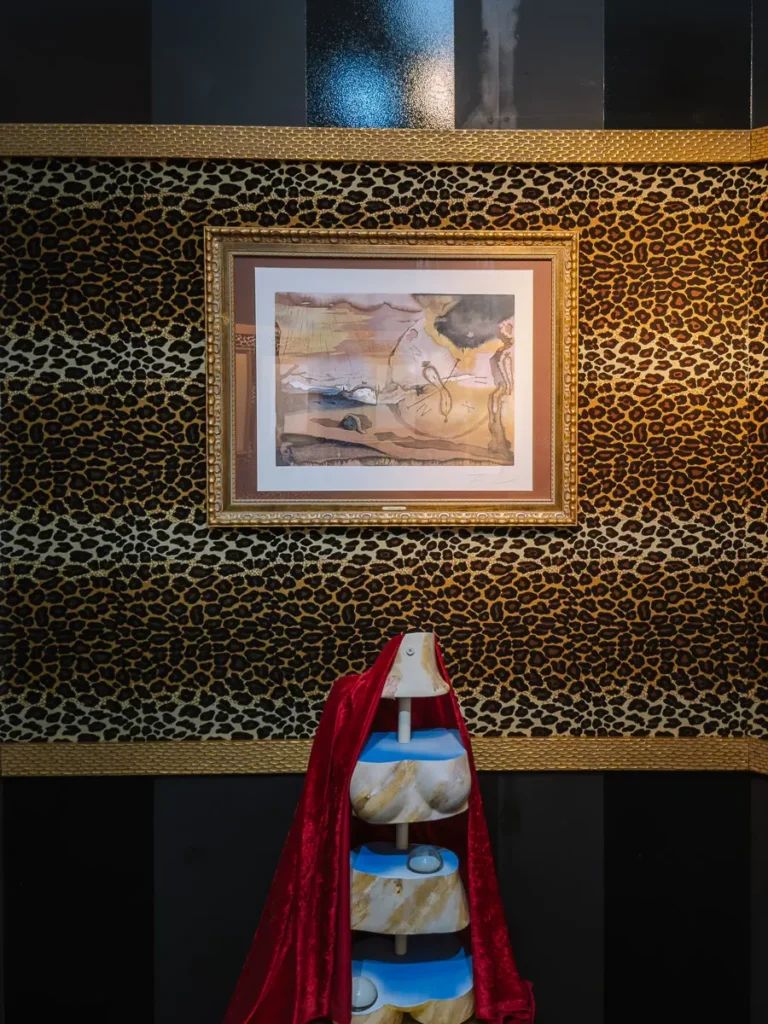
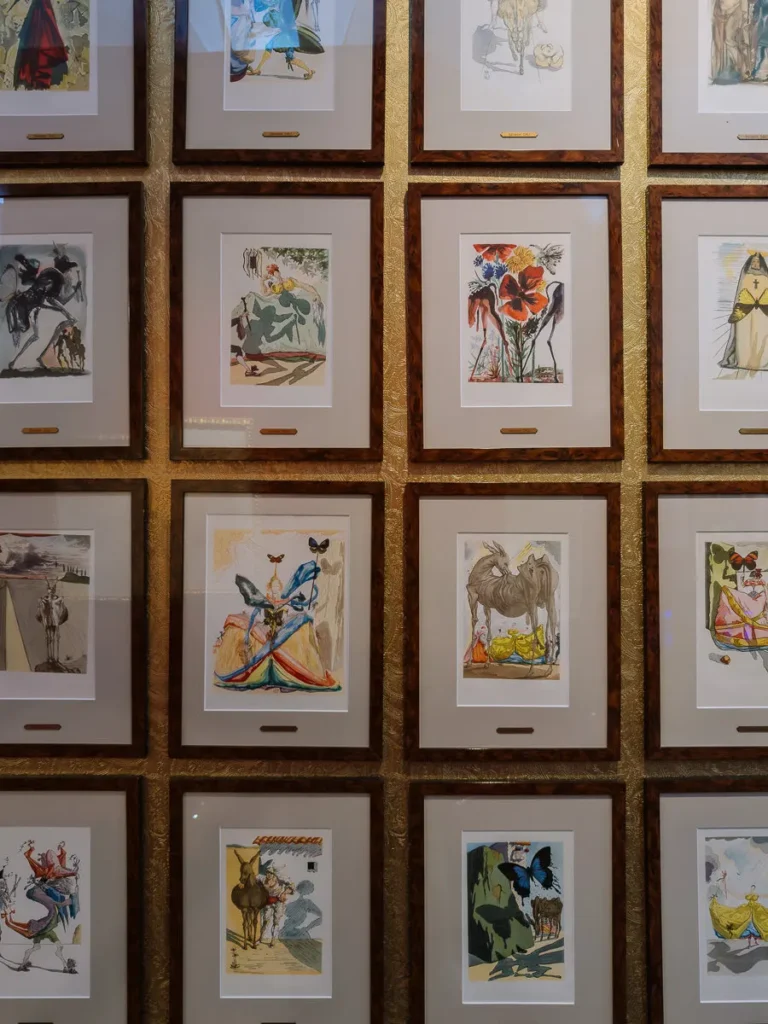
The exhibition has more than 300 works by Salvador Dalí, mostly paintings and sketches, alongside sculptures, engravings, and a few quirky pieces of furniture.
The exhibition space is almost as eccentric as the art, with faux columns, brilliant blue backgrounds, shocking pink details, leopard print, and plenty of gold. If I were being harsh, I would say it looks a little out of date, but somehow it works perfectly well with Dalí’s style.
One thing I didn’t rate was the audio guide. There wasn’t enough useful information about the individual works, so I ended up looking up a few of the pieces that interested me online, which was much more helpful.
Book your Salvador Dalí Bruges tickets here.
4. Stadhuis (City Hall)
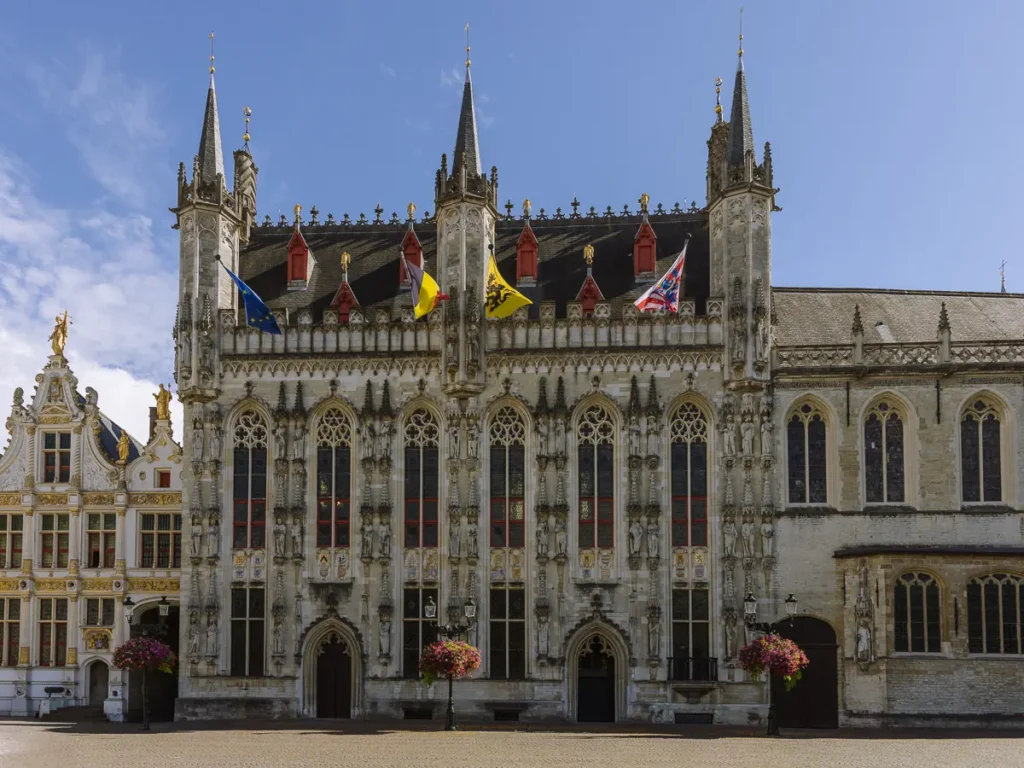
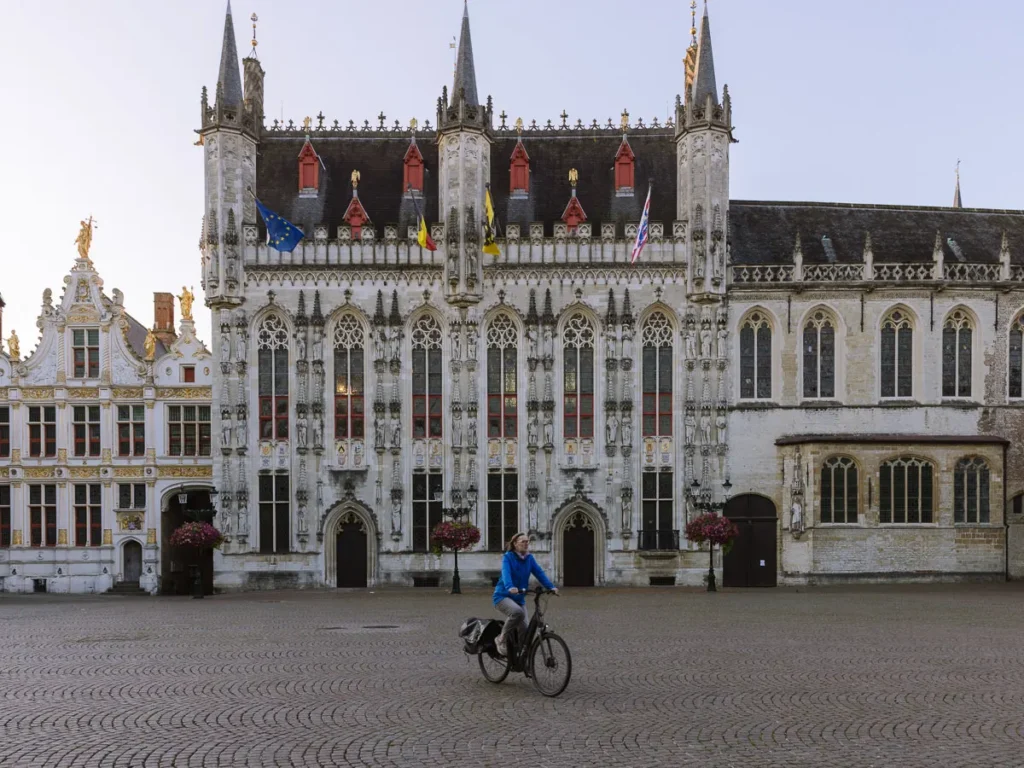
After the Dalí Museum, I went straight to Stadhuis, Bruges’ City Hall.
It’s one of the oldest and most beautiful town halls in Belgium and a monumental example of the wealth and prestige Bruges enjoyed during the Middle Ages.
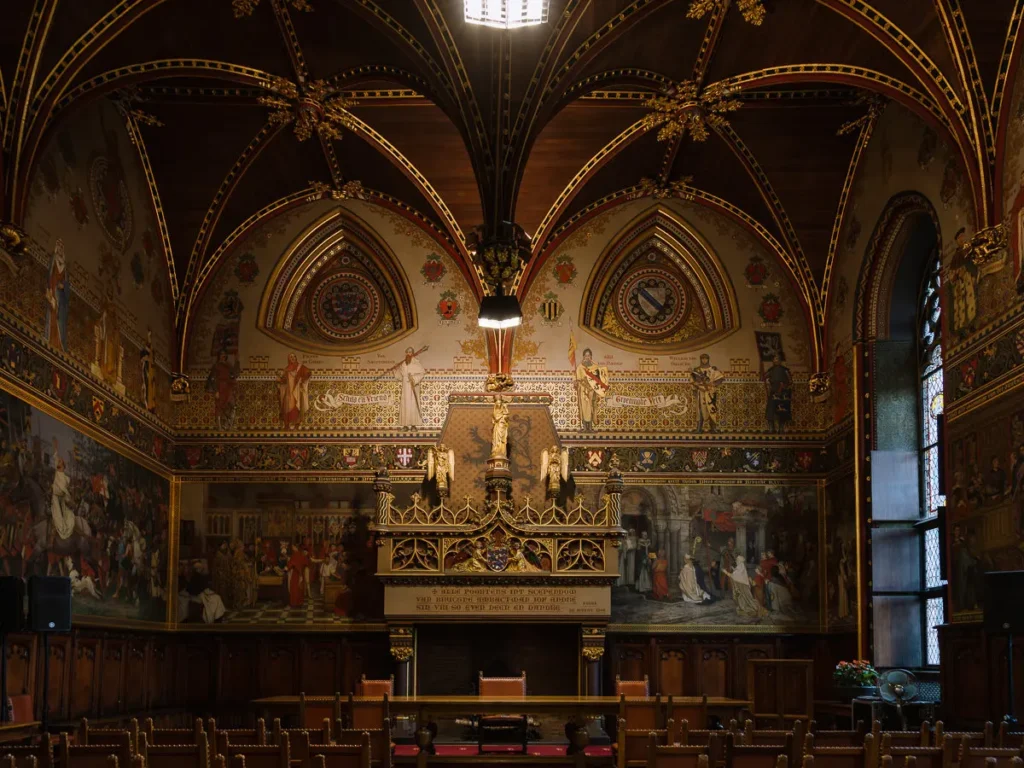
I didn’t spend long here because the main attraction is really just one room: the beautiful Gothic Hall. But it’s stunning, and I’d recommend it to anyone visiting Bruges.
The hall has an incredible timber-vaulted ceiling and huge 19th-century murals illustrating Bruges’ history. There are information cards in various languages to explain the artwork.
I also really liked the free interactive display about how Bruges has changed several times over the centuries, particularly how shifting tides affected the landscape, access to the city and its main industries.
Stadhuis is included on the Bruges Museum Card.
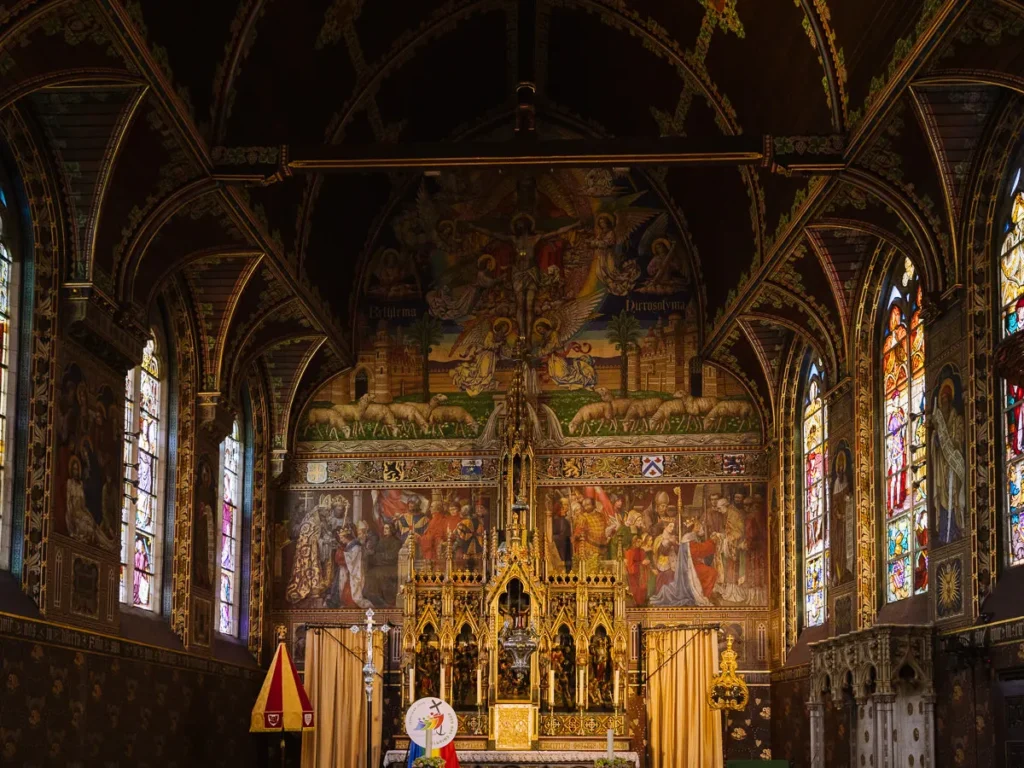
5. Basilica of the Holy Blood
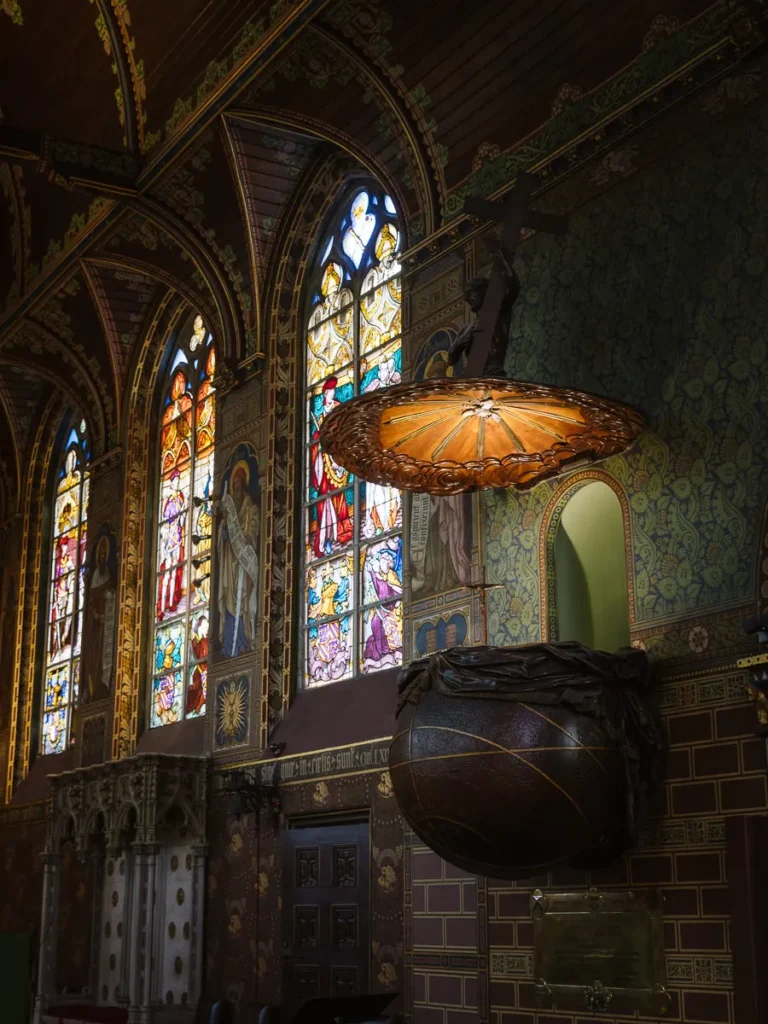
The Basilica of the Holy Blood is right next door to Stadhuis in Burg Square, so I popped in for a quick look.
It’s an ornately decorated Gothic chapel, rebuilt in the 16th century and restored in the 19th century, featuring vivid murals, beautiful stained-glass windows, and gilded details.
The basilica is best known for a cloth said to contain the blood of Jesus, displayed in an ornate crystal case on a raised platform.
It’s free to enter and doesn’t take long to visit, so I think it’s well worth popping in while you’re already in Burg Square.
The basilica is open from 10 AM to 5:15 PM; however, the relic is only accessible between 12 PM and 4 PM.
6. Rozenhoedkaai
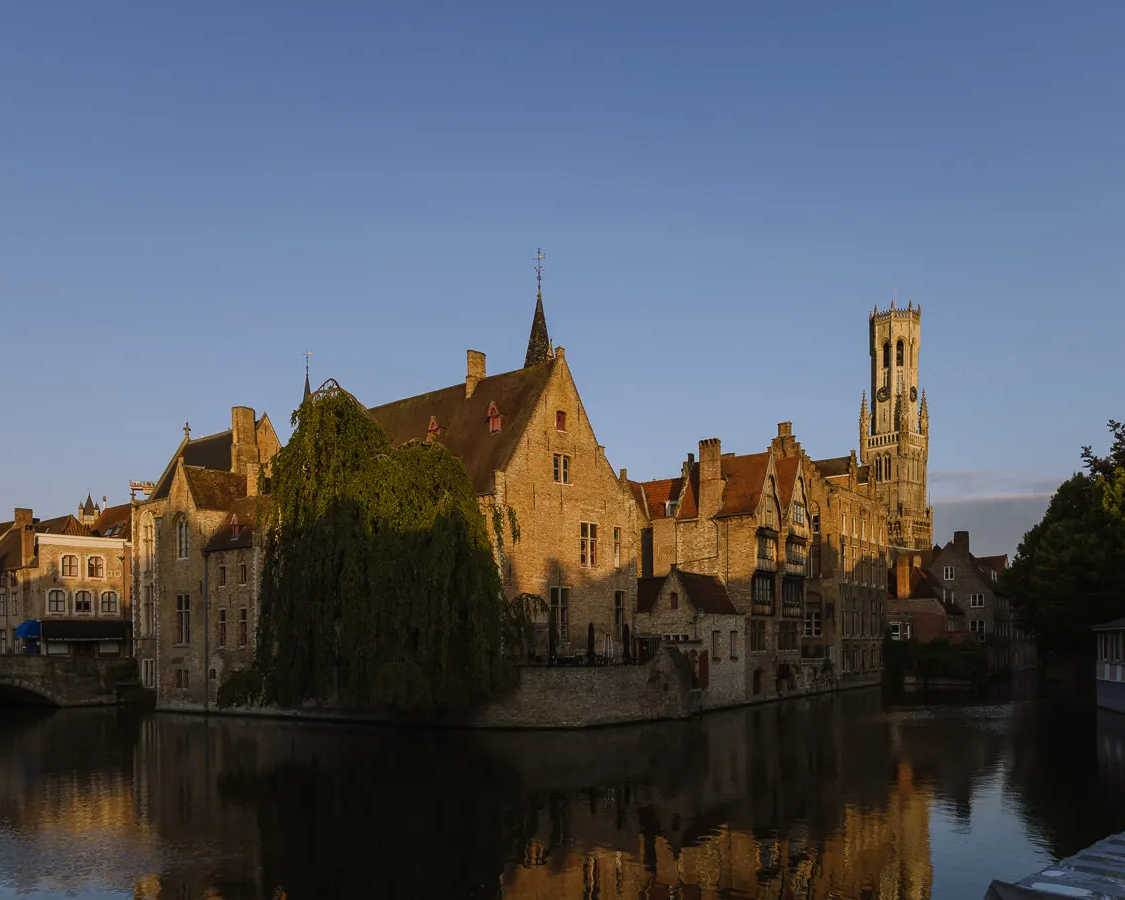
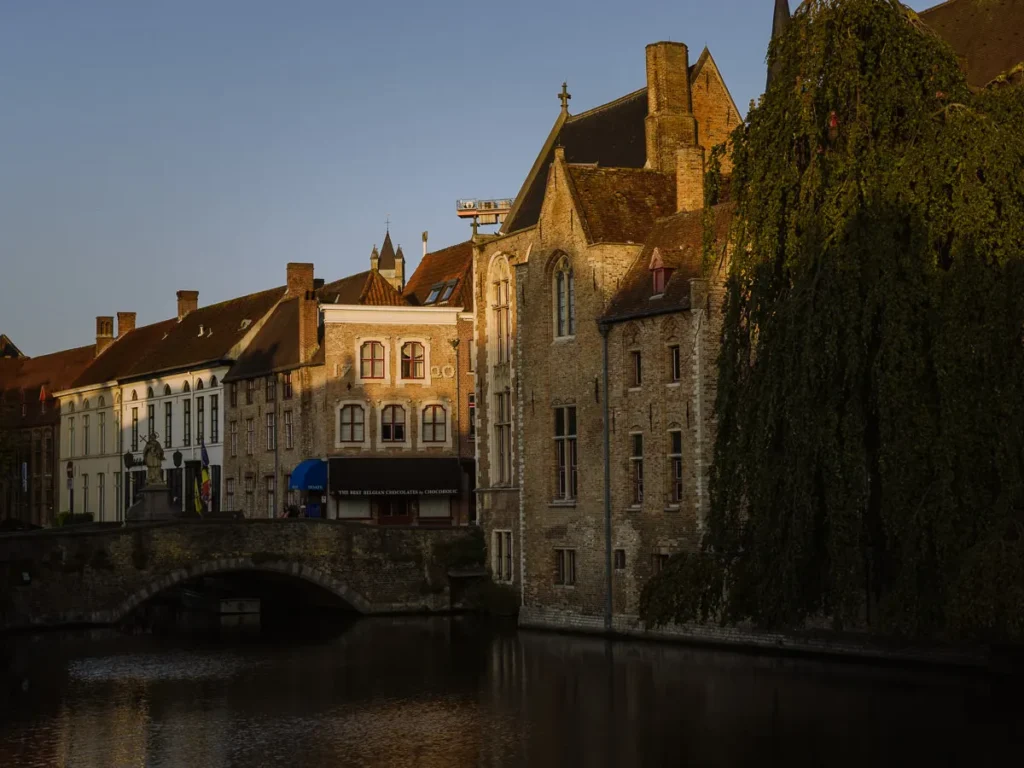
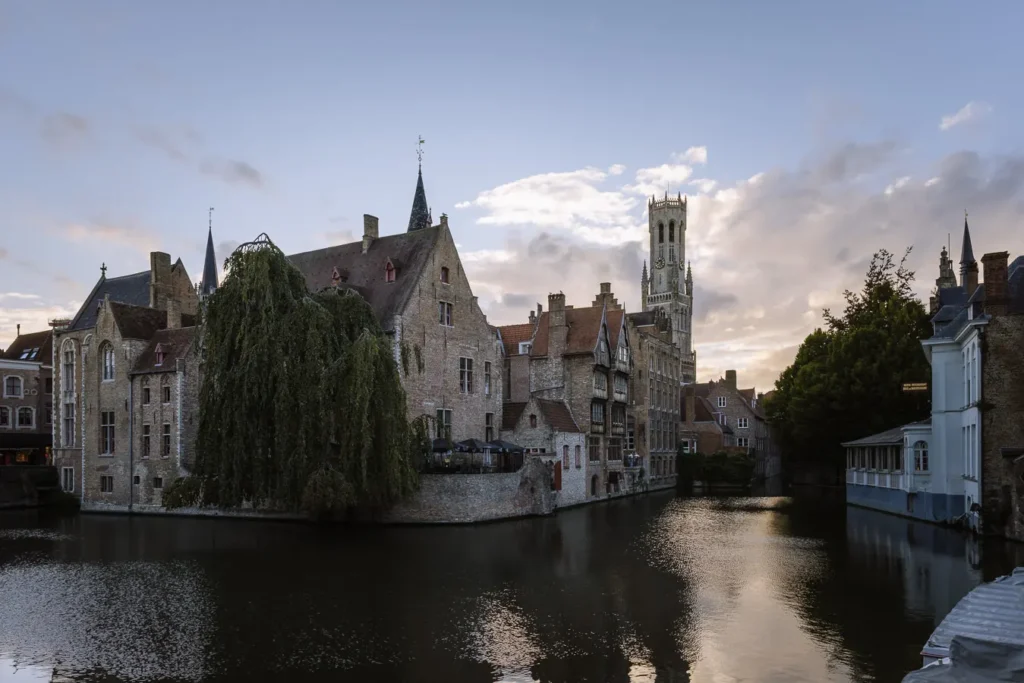
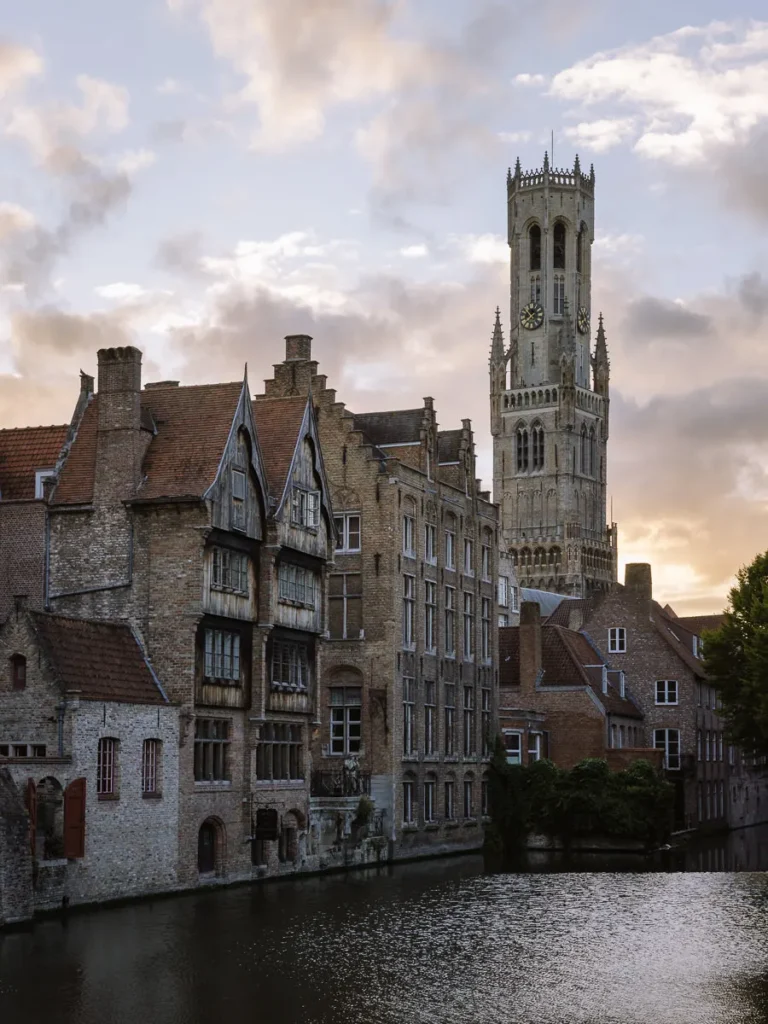
Rozenhoedkaai (Quay of the Rosary) is one of the most photogenic spots in Bruges, and it’s only a short walk from the Basilica of the Holy Blood, making it a natural next stop.
A bend in the canal creates beautiful reflections of the medieval architecture lining the banks, with the Belfry tower in the background.
There are a few very busy cafés overlooking the canal, plus more restaurants tucked into the lanes between Burg Square and the viewpoint.
For photography, the best time to see Rozenhoedkaai is in the morning when the sun lights up the buildings across the canal. I actually came back at sunrise for the photo below, but if you’re short on time, it fits easily into the itinerary here.
Rozenhoedkaai is also a popular departure point for canal cruises, although I didn’t take one myself. Whenever I saw the boats going past, they looked fairly crammed, and I wasn’t convinced the experience would add enough to what I was already seeing on foot.
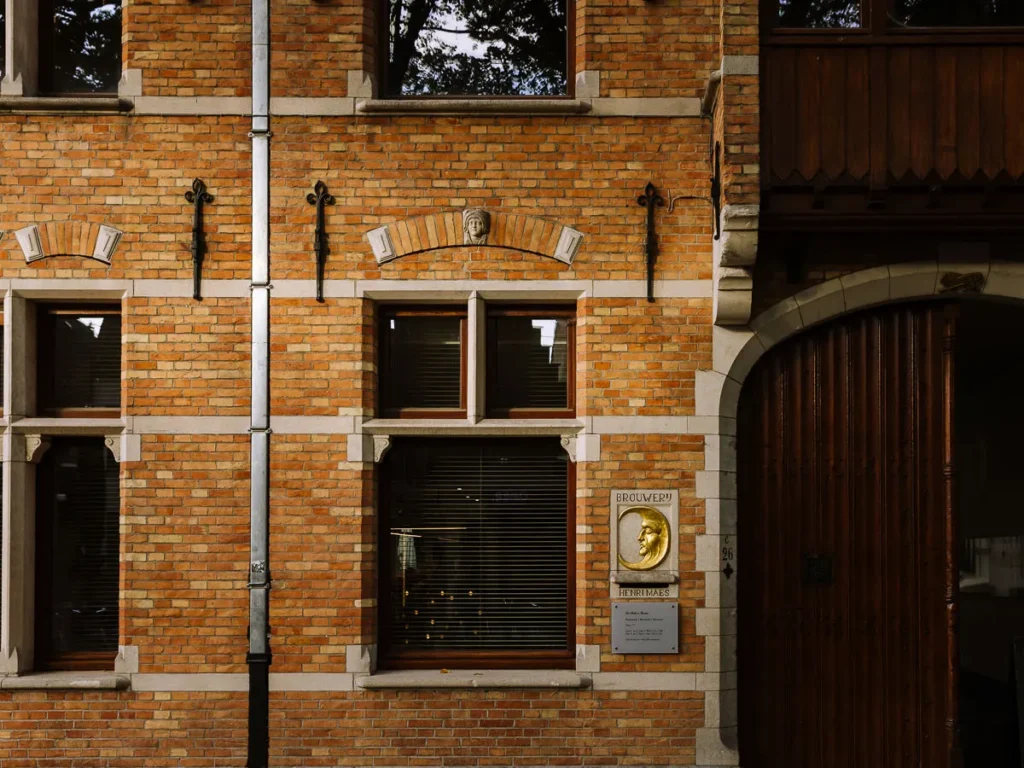
7. De Halve Maan Brewery Tour
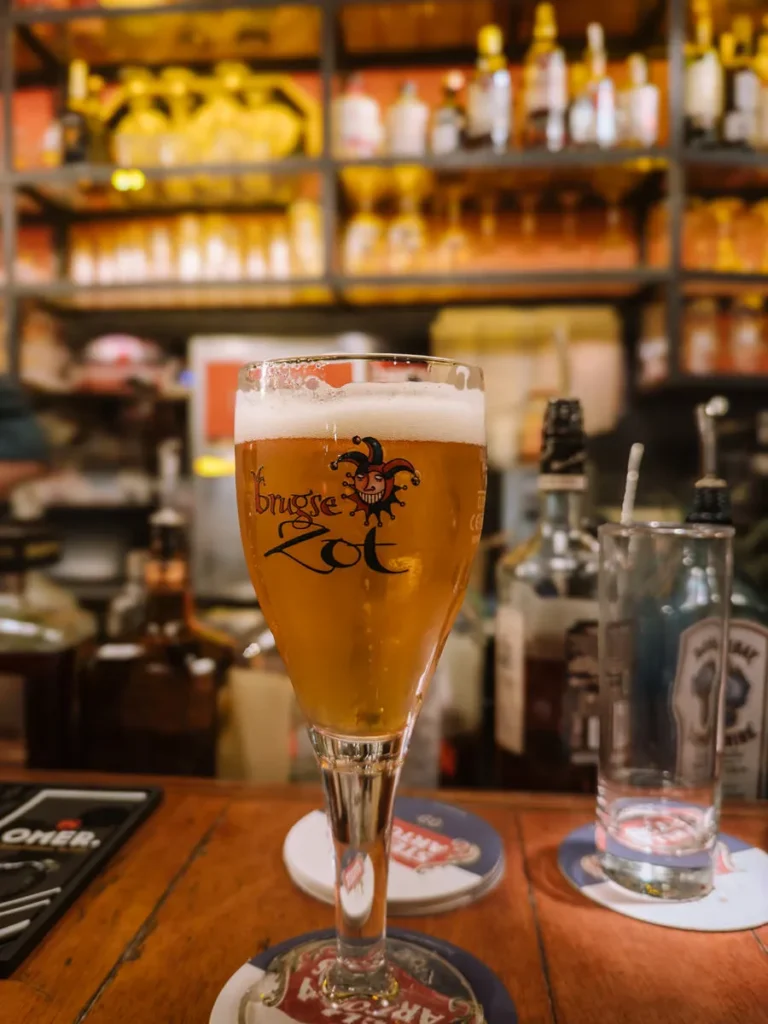
There are plenty of opportunities to drink Belgian beer in Bruges, but if you want to learn more about how it’s made, De Halve Maan is the city’s best-known working brewery.
I didn’t take the brewery tour myself because I’d already done several brewery visits in Leuven and Mechelen, and I was also going to Belgian Beer World in Brussels. But I’ve included it here because it fits naturally into this walking route and is a good option if you’re particularly interested in Belgian beer.
Tours run from around 12 PM to 4 PM, last approximately 45 minutes and include an introduction to the brewing process followed by a tasting.
If you do decide to go, tours need to be booked in advance.
8. Groeninge Museum
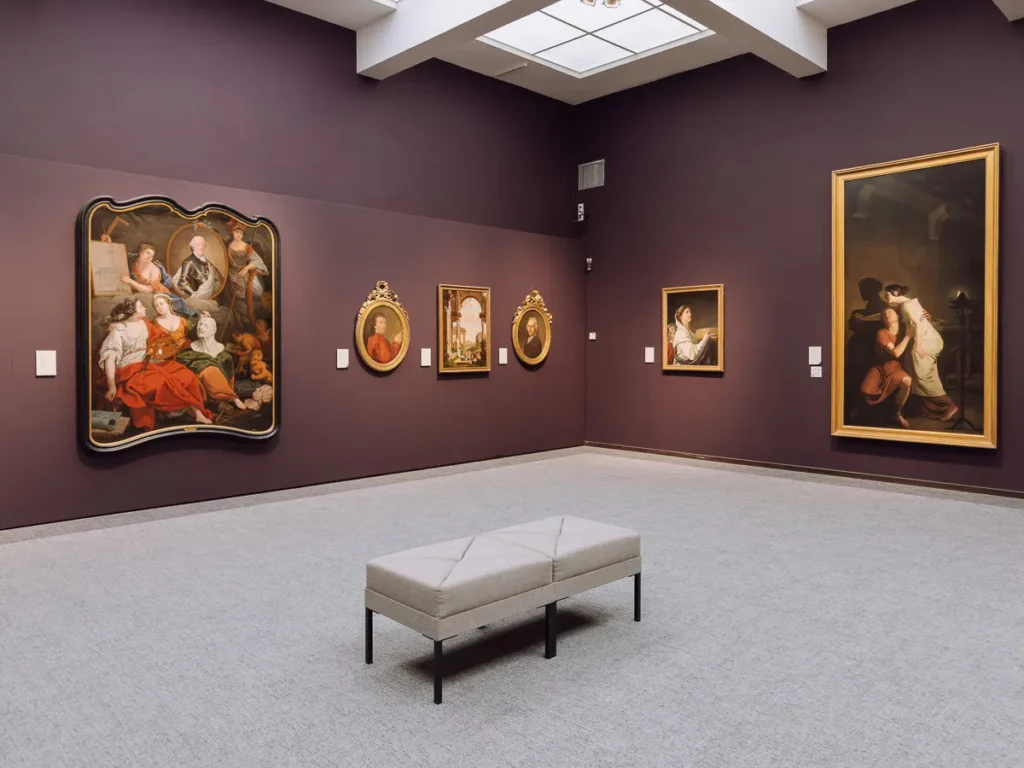
The final attraction I visited on day 1 was the Groeninge Museum, Bruges’ fine art museum. It stays open until 6 PM in summer, so it works well as a late-afternoon stop.
The collection focuses on Flemish and Belgian artists, including Jan van Eyck, Hans Memling, Gerard David and Hugo van der Goes, with works ranging from the 15th century through to modern Belgian art, including René Magritte.
I really liked the scale of the museum. The collection is substantial enough to be interesting, but not so large that it becomes overwhelming after a full day of sightseeing.
If you’re interested in Flemish art, I think this is one of the best museums in Bruges.
The Groeninge Museum is included on the Bruges Museum Card.
Important: the Groeninge Museum is due to close on 11 January 2027 for a four-year renovation. From 12 March 2027, the core collection will be displayed at the nearby BRUSK gallery.
Day 2 in Bruges
Day 2 adds the museums, churches and quieter corners I’d recommend once you’ve covered the main sights.
9. Sint-Janshospitaal (St John’s Hospital)
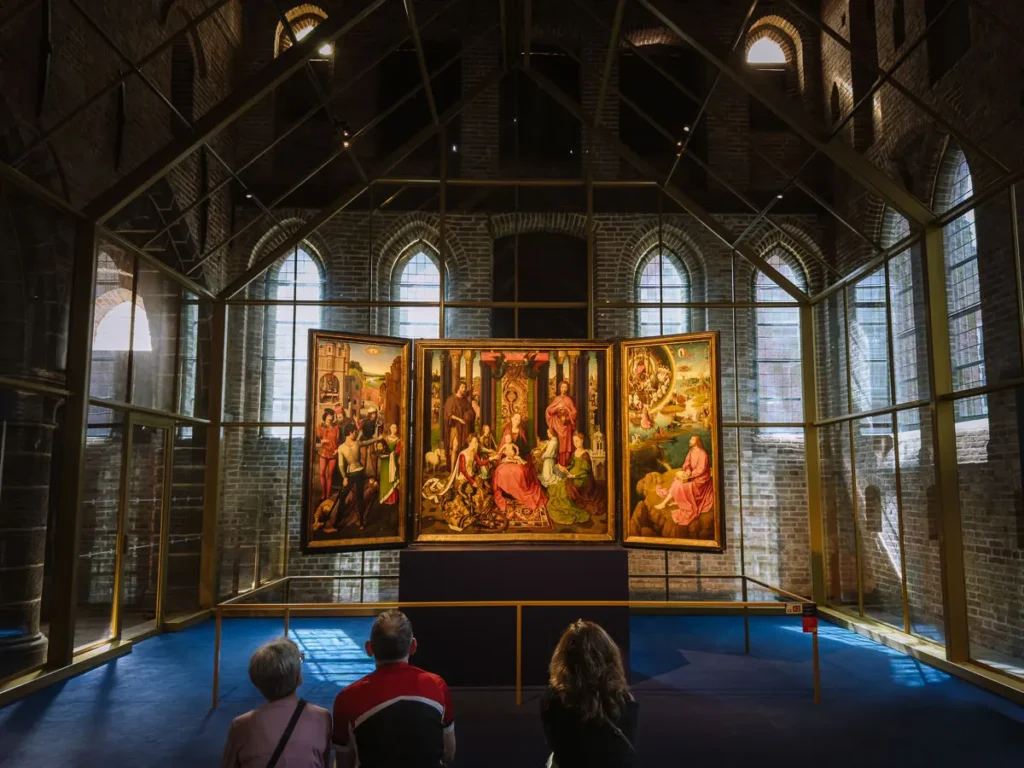
St John’s Hospital is one of the oldest preserved hospital buildings in Europe. Today, it operates as a museum with a strong collection of works by the Flemish artist Hans Memling.
It opens at 9:30 AM, so it works well as the first stop on Day 2 after breakfast.
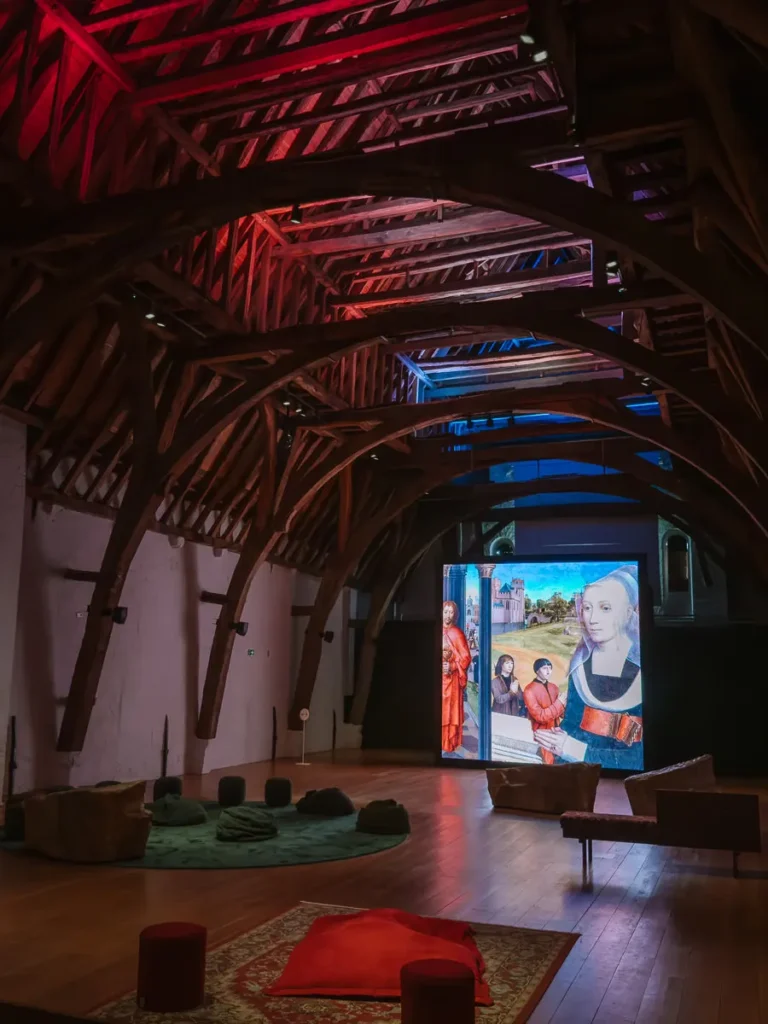
The building itself is fascinating, with soaring timber ceilings, stone arches and some striking displays.
I found the section on the history of disease particularly interesting, while the stories about the care provided to patients gave the museum a much more human side.
The highlight for me was the Hans Memling collection, especially the works created for the hospital. Don’t miss the magnificent altarpiece, which is beautifully presented in a dramatic glass case.
St John’s Hospital is included on the Bruges Museum Card.
10. Church of Our Lady
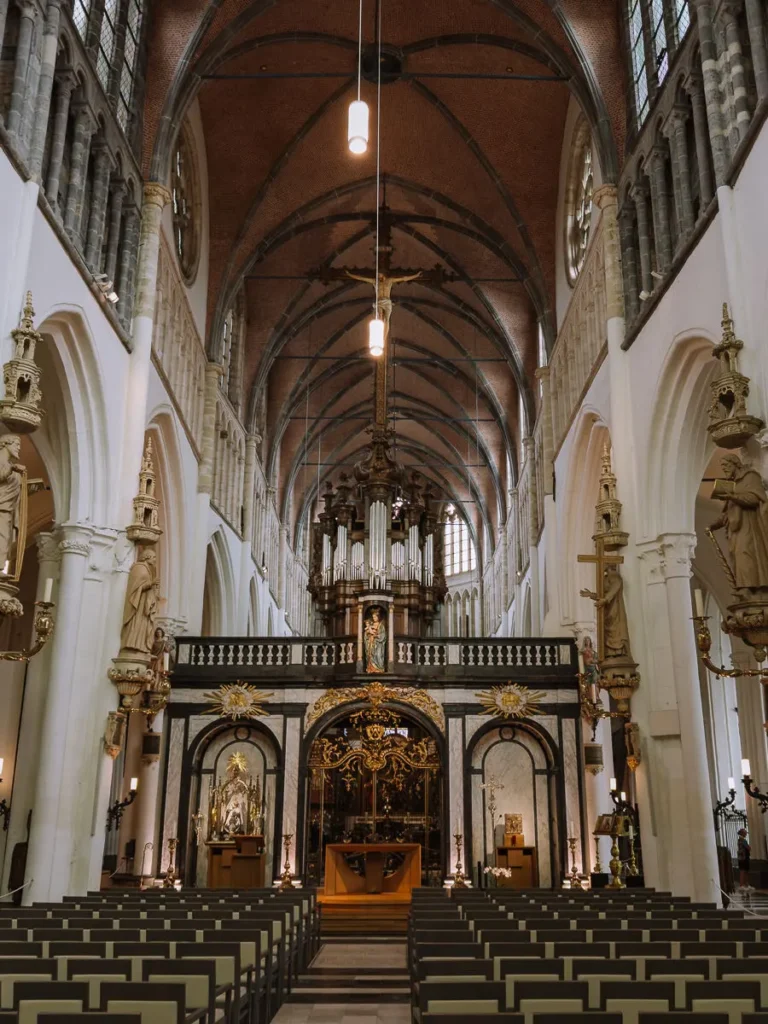
The Church of Our Lady is a beautiful Gothic church that is free to enter if you just want to take a quick look around. It’s not particularly beautiful, and I wouldn’t normally recommend it; however, there is a very good reason to go if you’re into art.
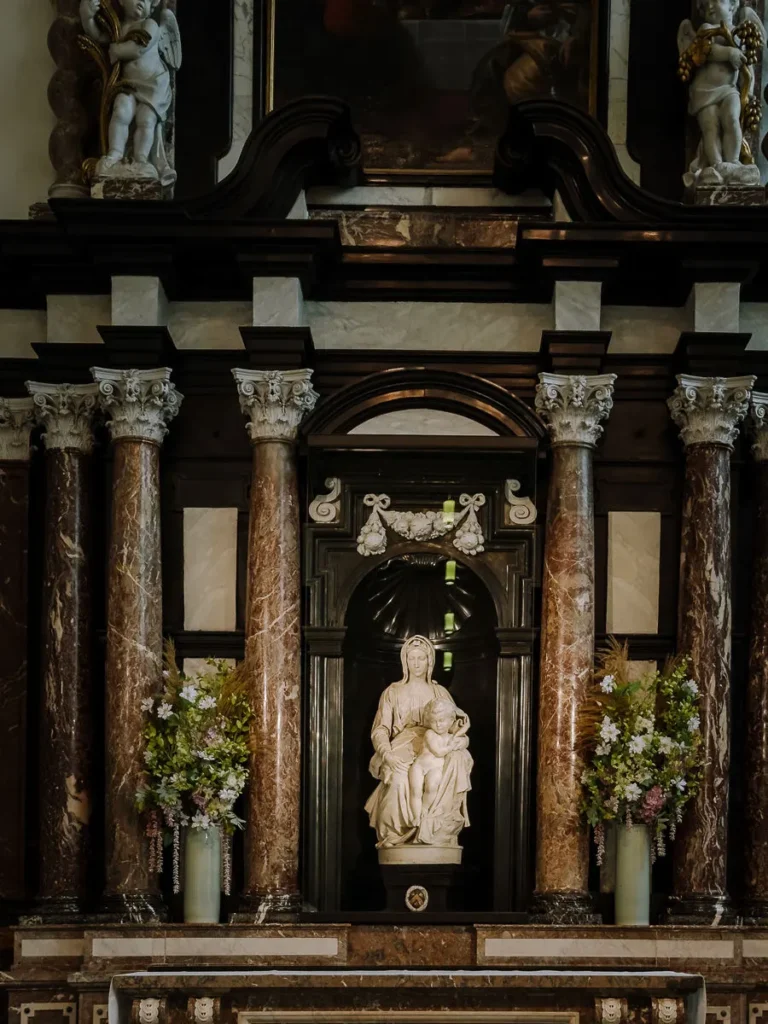
There is a paid museum in the church (included on the Bruges Museum Card) which contains a host of interesting artwork, the most important of which is Michelangelo’s marble statue of Madonna and Child.
It was initially created for the Siena Cathedral. However, it was purchased by a wealthy family who shipped it out to Bruges. It’s one of the few Michelangelo sculptures to leave Italy.
11. Gruuthusemuseum
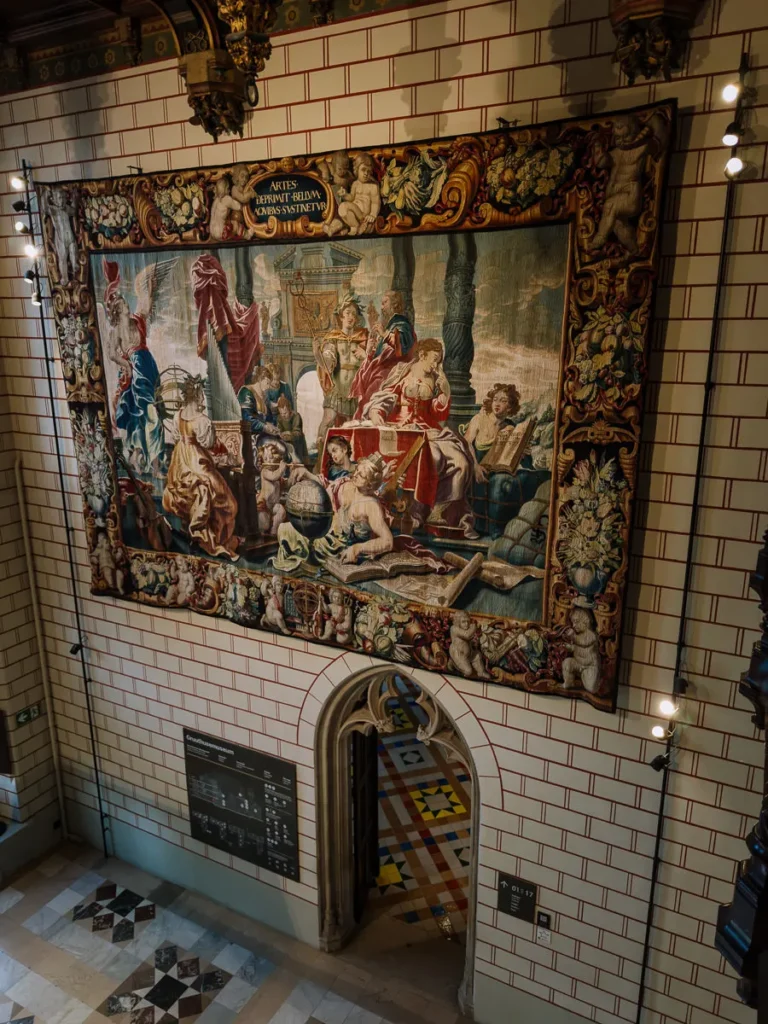
Gruuthusemuseum is housed in the former palace of a wealthy Bruges family that made its fortune from the trade in gruut, a mixture of herbs once used to flavour beer.
The museum explores industries and crafts that shaped Bruges, including tapestries, lace, ceramics, furniture and other objects from everyday life.
The building itself is beautiful, but to be honest, I didn’t find the exhibitions particularly interesting. If you’re short on time, this is the one museum I’d consider skipping, unless you have a particular interest in Bruges’ history and decorative arts.
There is, however, one very good reason to go: the first-floor balcony has a fantastic view over one of the prettiest bridges in Bruges.
Gruuthusemuseum is included on the Bruges Museum Card.
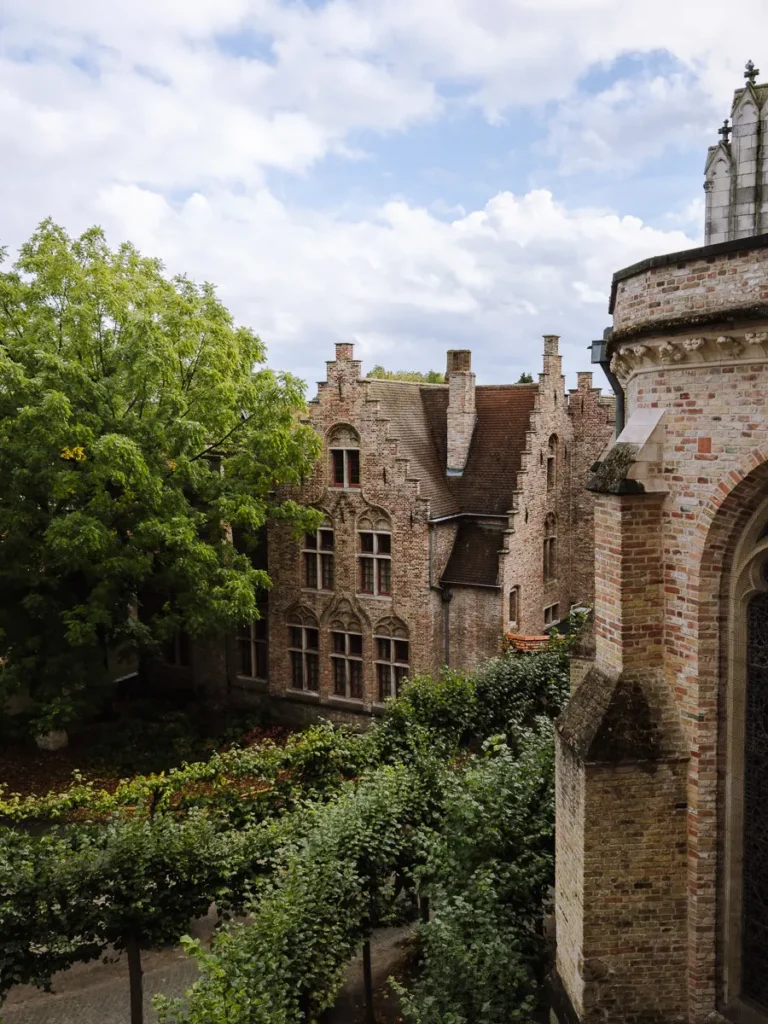
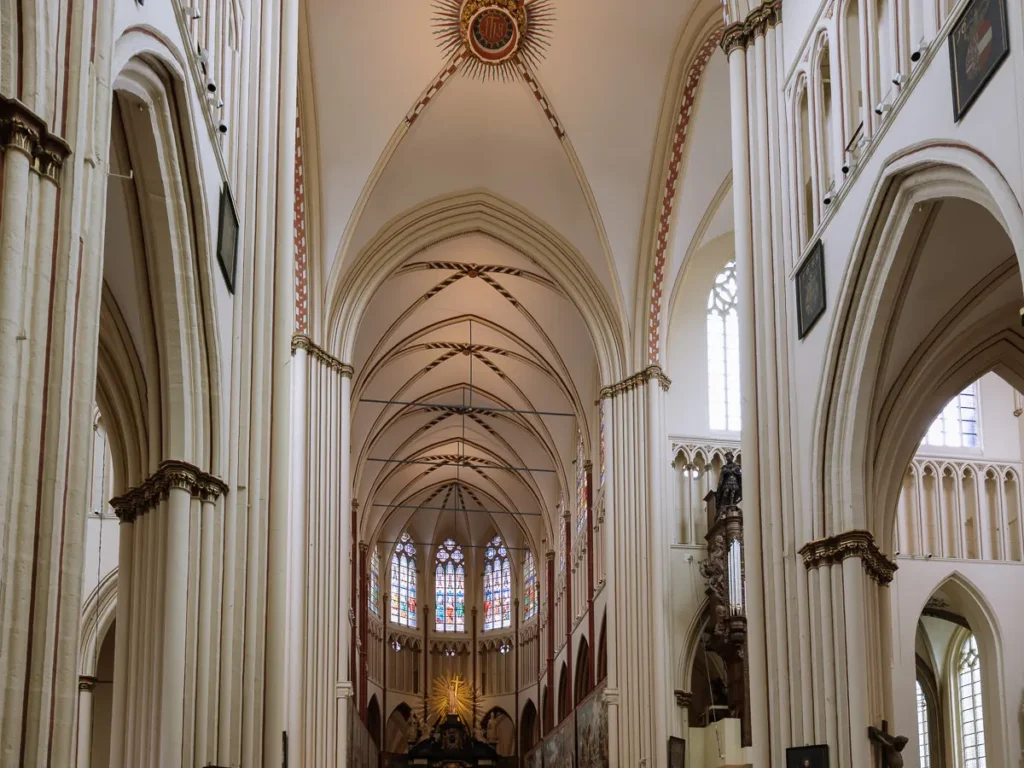
12. St Salvator’s Cathedral
St Salvator’s Cathedral is the oldest parish church in Bruges, with a mix of architectural styles, including a Romanesque base, a Gothic nave, and a fortress-like tower.
Inside, there are several impressive paintings and tapestries, but the highlight for me was the ornately carved choir stalls.
It’s free to enter and was noticeably quieter than the Church of Our Lady or the Basilica of the Holy Blood.
I wouldn’t make a special trip for it, but if you have some extra time on Day 2, it’s a peaceful and worthwhile stop.
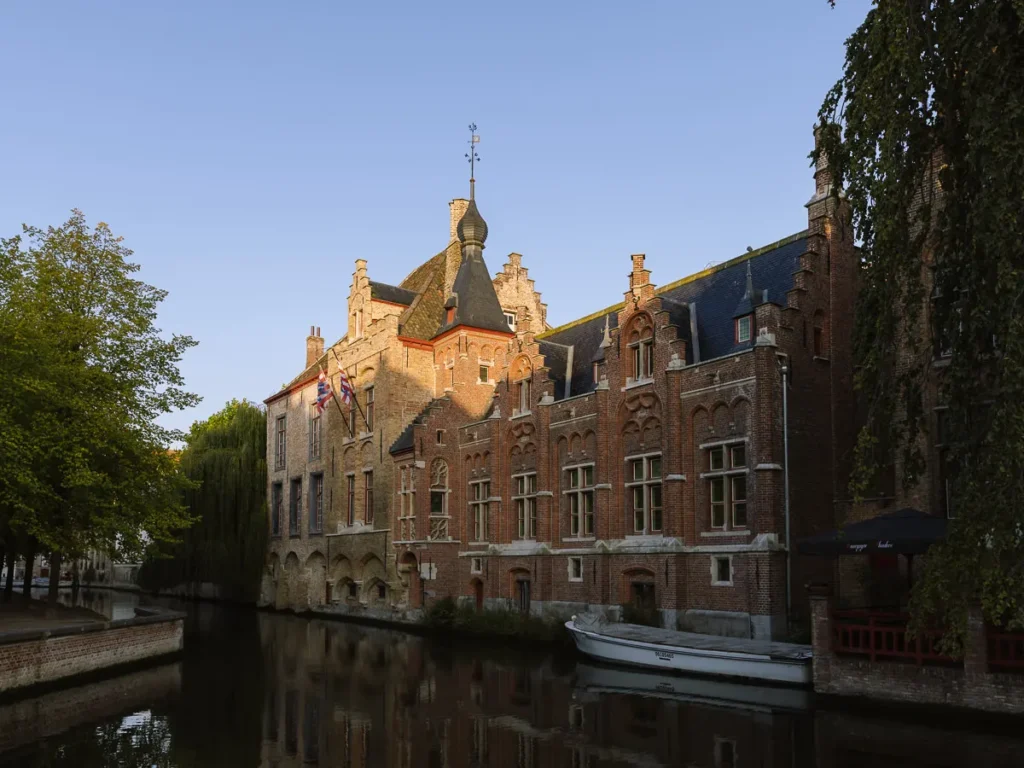
13. Jerusalem Church
The wealthy Adornes family built the Jerusalem Church to resemble the Church of the Holy Sepulchre in Jerusalem.
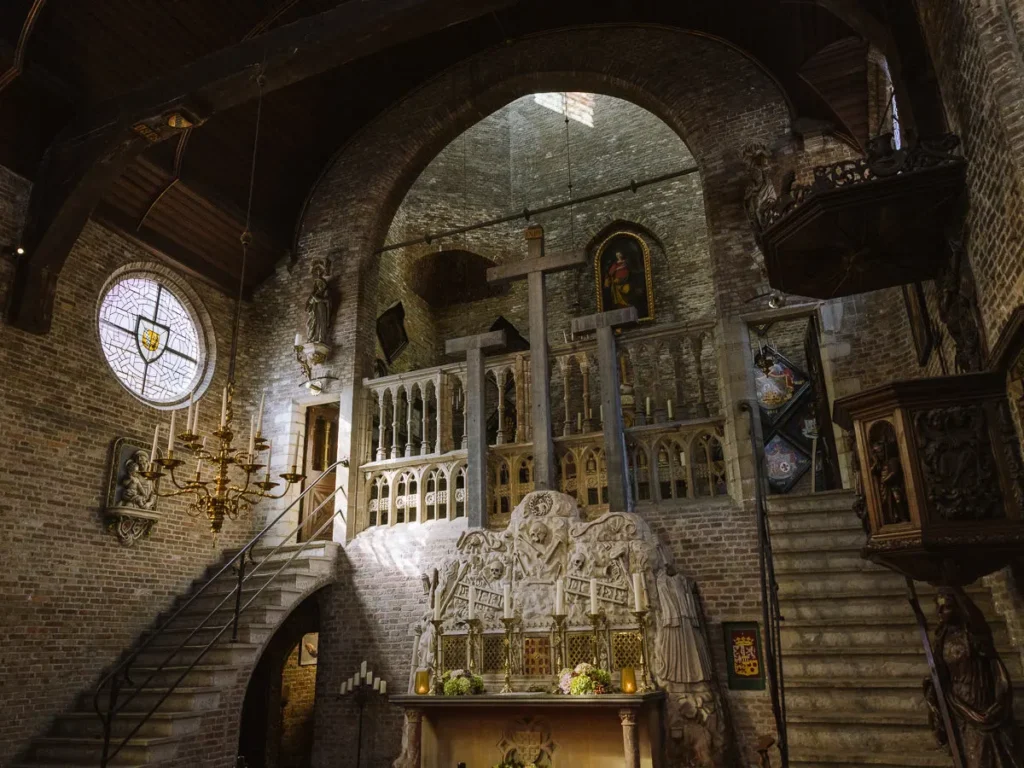
Unlike many of Bruges’ more ornate churches, this is a much more austere and solemn space. There are some unusual details too, including an altarpiece decorated with skull motifs. The complex also includes a small museum about the Adornes family.
I didn’t spend long here, but I found it surprisingly interesting. It’s also on the way to the windmills, which was my next stop, so it fitted naturally into the route.
It’s not included on the Bruges Museum Card and costs €10 to enter, so I wouldn’t consider it essential. But if you’re already walking out towards the windmills and unusual historic buildings appeal to you, it’s worth considering.
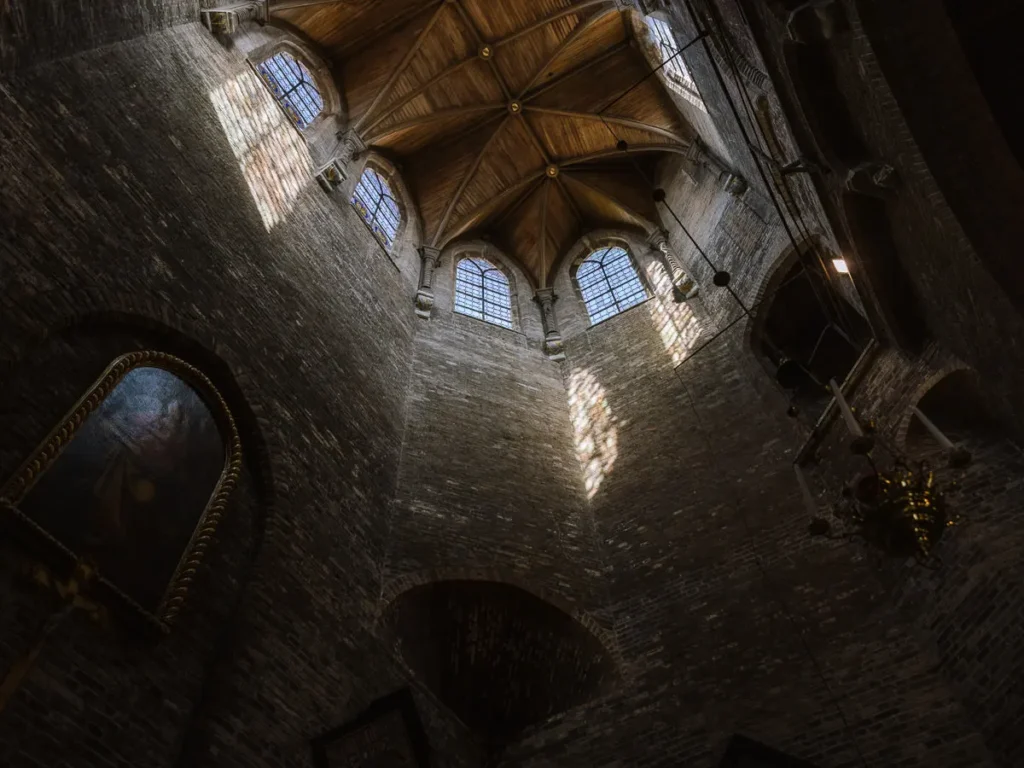
The highlight for me was the chapel shown in the photos below.
14. Windmills on the Ramparts
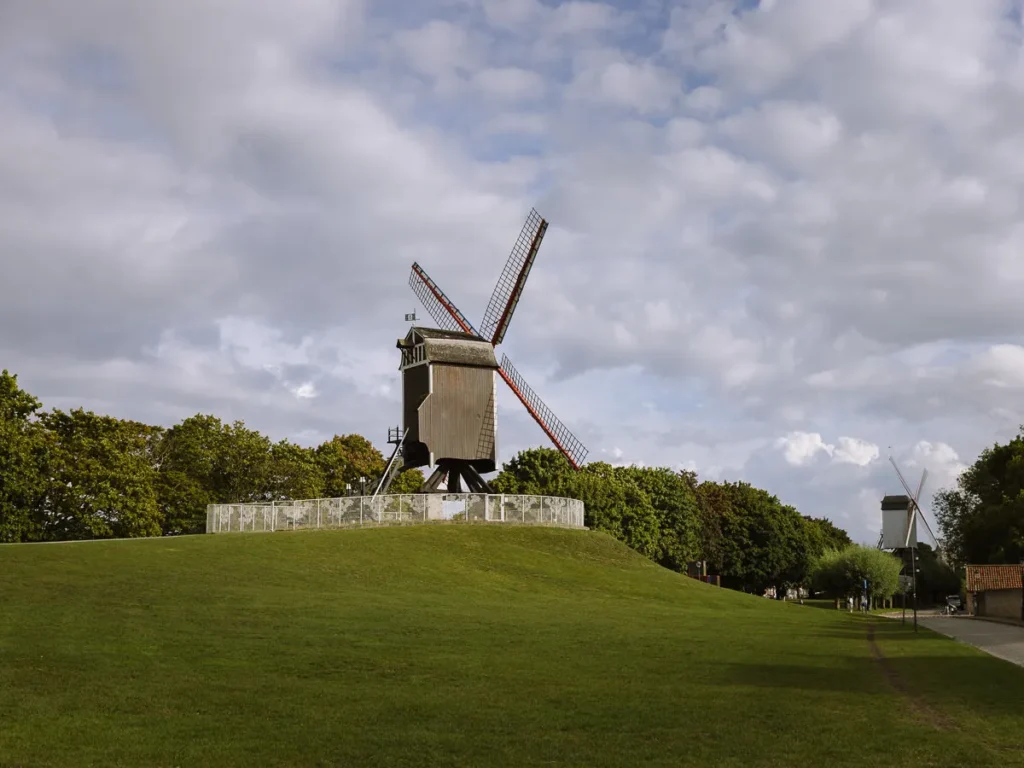
I finished my Bruges itinerary with a walk out to the windmills on the Kruisvest ramparts, part of the city’s old defensive walls.
There are four windmills along this stretch, connected by a leafy path that follows the edge of the historic centre. After two days of museums, churches and busy cobbled streets, I really enjoyed getting outside and having a quieter walk.
What surprised me most was how empty it was. I was there in the late afternoon and saw very few other people, despite being only a short walk from the centre.
It’s completely free, gives you a different view of Bruges, and made a really nice way to finish the day.
Chocolate & Restaurants to Try in Bruges
That covers the main attractions I visited in Bruges and how I’d put together a 1- or 2-day itinerary. But along the way, there was plenty of chocolate and good food to try.
I haven’t worked these into the itinerary because Bruges is one of those places where it’s often better to stop somewhere that takes your fancy as you wander around.
But, for what it’s worth, these were some of my favourites.
My Chocolate Picks in Bruges
Chocolate is a big part of Belgian food culture, and Bruges has dozens of chocolate shops, so you’re never far from one while exploring the city.
Belgian chocolate has a reputation for using high-quality cocoa, relatively high cocoa content and pure cocoa butter, particularly among traditional chocolatiers.
I tried quite a few while I was in Bruges. These were my favourites, in order:
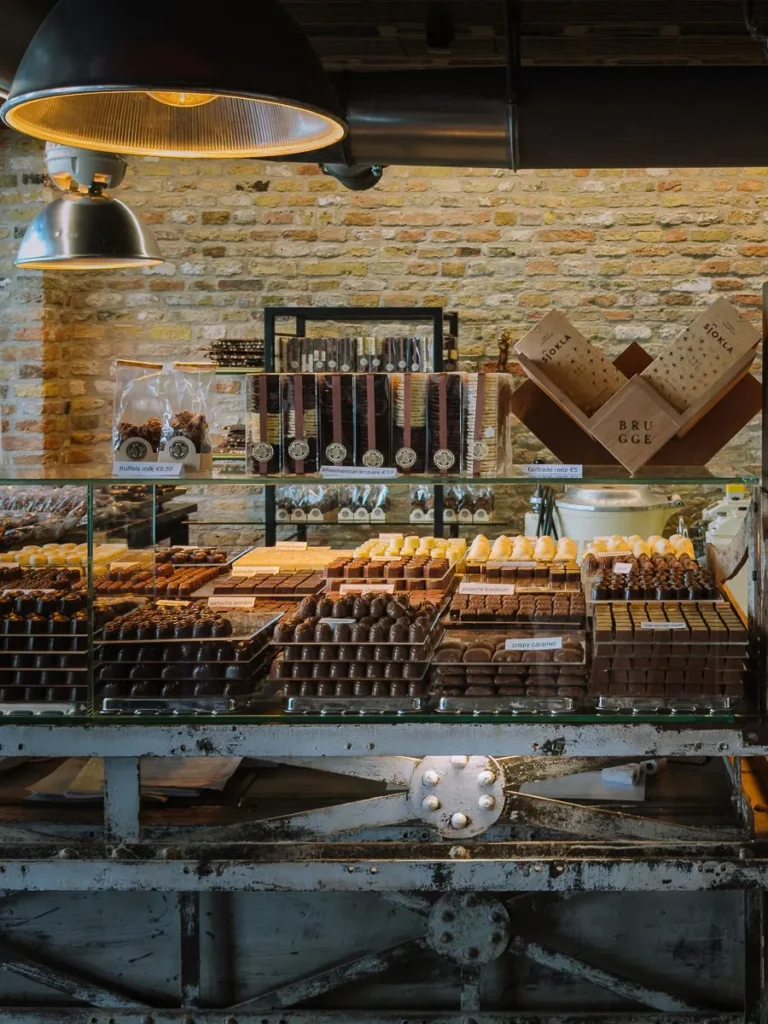
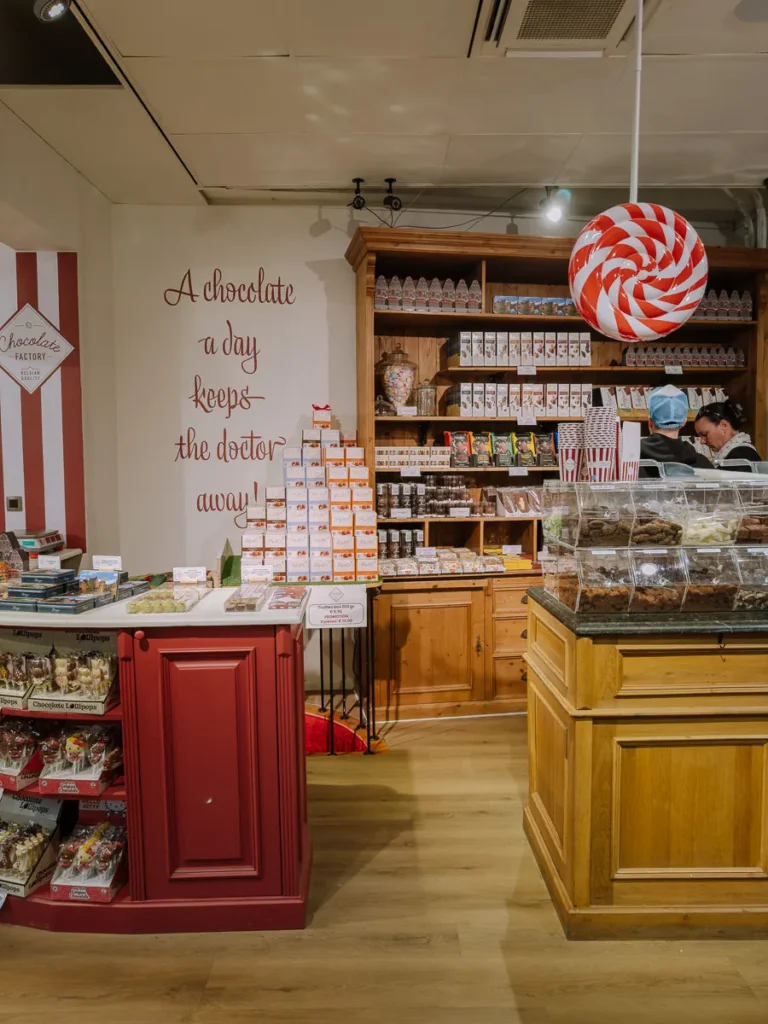
Chocolate Factory De Burgh – With Willy Wonka posters and shelves full of machine-produced chocolates, all the signifiers were off. But one side of the store is dedicated to handmade chocolate, and it was by far the best I tried in Bruges. It’s located off the Burg beside the Church of the Holy Blood.
The Chocolate Brothers – This modern, uncluttered shop feels much more focused on the quality of the chocolate. Everything I tried was smooth and excellent. It’s just across the road from the Church of Our Lady.
Elisabeth Chocolatier – Elisabeth is a Belgian chain with several shops in Bruges, including one on Grote Markt. It feels more geared towards tourists, but it’s a good option for gifts, with beautifully presented boxes of truffles, pralines and nougat.
My Restaurants, Bars and Coffee Picks in Bruges
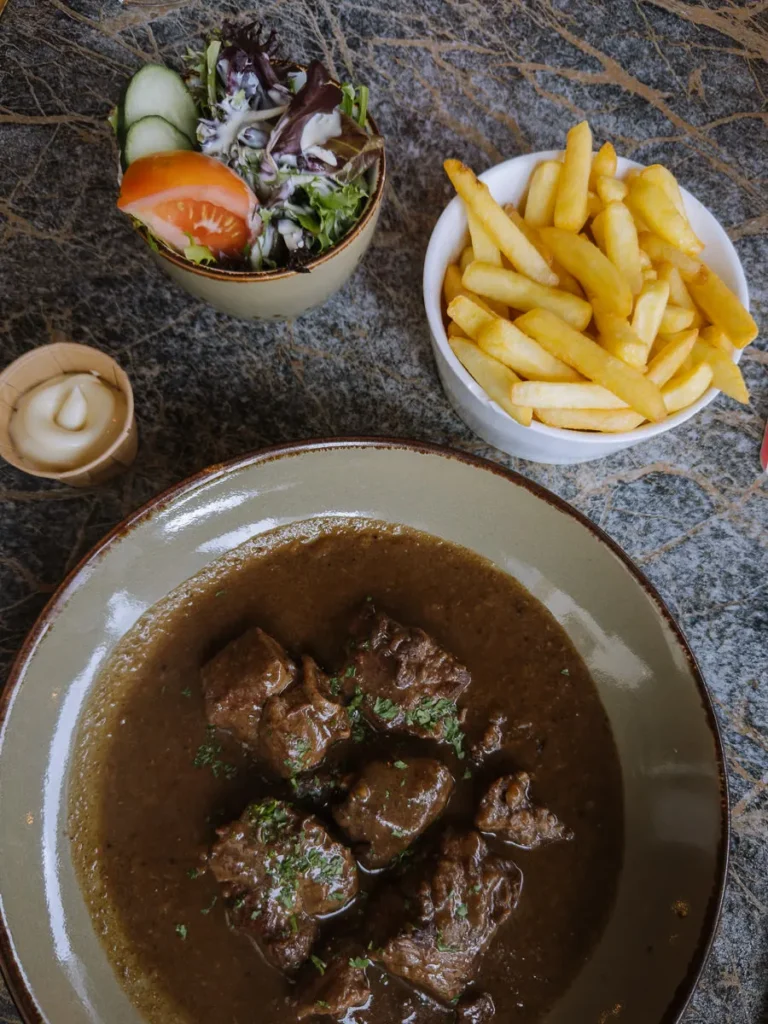
Food in Bruges is generally quite traditional, with Flemish stew, mussels and chicken vol-au-vent appearing on menus all over the city.
My general rule would be to choose somewhere you like the look of rather than overthinking it. Many traditional restaurants serve very similar dishes, so atmosphere, location, and price are often the biggest differences.
That said, a few places stood out to me:
Cafedraal Restaurant – A smart restaurant with beautiful interiors, and the place where Ray and Chloe have their first date in In Bruges. I’d save this one for a nicer dinner or special occasion. Reservations are recommended.
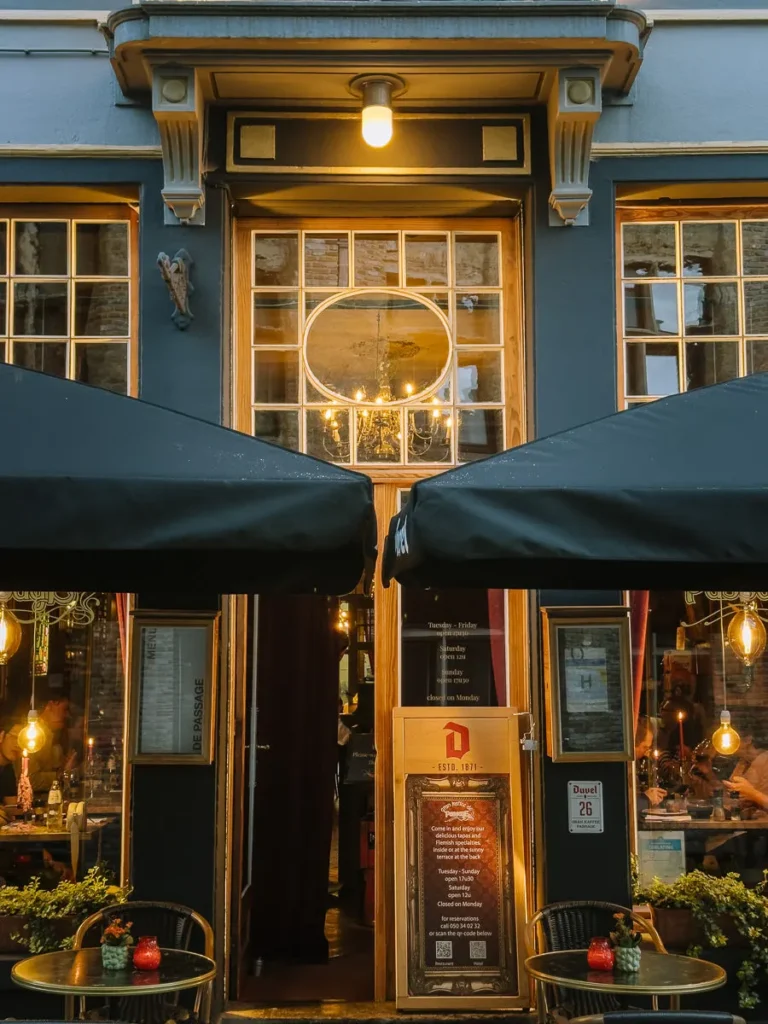
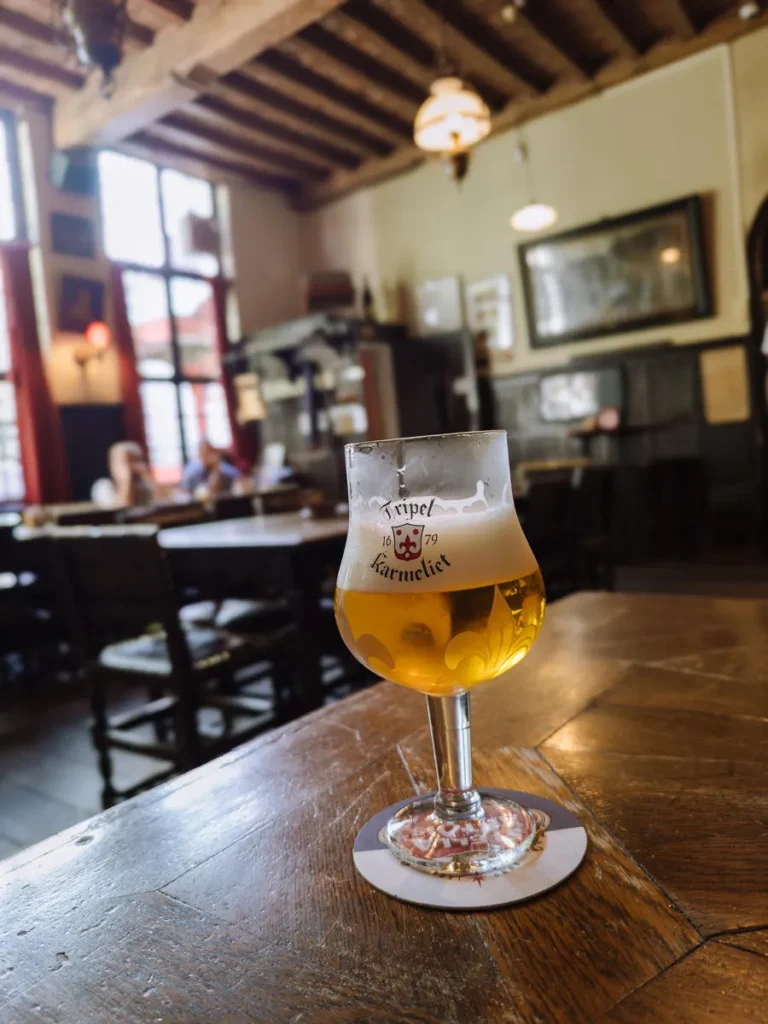
Cafe Vlissinghe – My favourite brown bar in Bruges. It has a sunny courtyard, an atmospheric beer hall and a huge beer list, along with more interesting bar snacks and desserts than you’ll find in many traditional pubs. I asked for a recommendation that wasn’t too high in alcohol, and they suggested Westmalle Extra, which I really liked.
Dee’s Speciality Coffee – I always need at least one really good coffee when I travel, and this was mine in Bruges. The flat white was excellent, and the cinnamon bun alongside it was exactly what I wanted.
Planning & Logistics
When to Go
I visited Bruges in September, which I thought was a good time to go. It was still busy, but not unbearably so, and the weather was mild enough for walking around all day.
That said, the weather was extremely changeable. I managed to get sunburnt and rained on on the same day, so I’d pack for a bit of everything whenever you visit.
Spring is also a popular time to visit, with flowers appearing around the city from late March and April. Summer is the warmest and busiest period, while autumn and winter tend to be quieter and suit Bruges particularly well if you’re more interested in museums, cosy bars and wandering the historic centre.
Bruges is also very atmospheric around Christmas, although expect colder weather and more visitors around the festive period.
How Long Do You Need?
I think 2 full days is ideal for Bruges. That gives you enough time to follow this itinerary at a comfortable pace, see the main museums and historic sights, and still leave plenty of time for beer, chocolate and long lunches.
I stayed for 3 nights, but used one day for a trip to Ghent, so I effectively had around two days in Bruges itself. That felt about right.
If you only have 1 day, stick to the Day 1 section above, and you’ll still cover the main highlights.
With 3 or 4 days, I’d start looking beyond the historic centre, perhaps with a bike ride into the countryside or a day trip to the Belgian coast.
How to Get There?
The best way to get to Bruges is by train. Belgium has an excellent rail network that is fast, efficient, and generally good value.
Here are the most common train routes to Bruges:
- From Brussels: Direct trains every hour, journey time 1 hour
- From London: Eurostar to Brussels (2 hours), then connecting train (total 4-5 hours)
- From Amsterdam: 3-4 hours with one connection in Brussels or Antwerp
- From Paris: Thalys to Brussels, then connecting train (total 4 hours)
All your train journeys can be booked via thetrainline.com or omio.com. Both platforms accept international cards.
Getting Around
Bruges train station is about 1.5 kilometres south of the historic centre, roughly a 20-minute walk.
The bus station is directly outside the train station, which is handy if you’re arriving with luggage. A single bus journey costs €3, and you can pay by tapping a contactless card on the white machines on board.
Once you’re in the historic centre, Bruges is very easy to explore on foot. I didn’t use public transport at all during my stay, and most of the places in this itinerary are within a 20-minute walk of each other.
Where to Stay
Bruges is compact, so it’s easy to stay within walking distance of the historic centre. I wouldn’t worry too much about choosing the “right” neighbourhood — anywhere central works well for this itinerary.
A few good options:
- The Pand – Cosy boutique hotel in an 18th-century carriage house.
- Hotel de Orangerie – Romantic canal-side hotel with elegant interiors.
- Bariseele B&B – Adults-only B&B in a historic building.
- Charming Apartment – Architect-designed apartment opposite the cathedral.
- Canal Guesthouse – Guesthouse in an 18th-century merchant’s house beside the canal.
- Snuffel Hostel – Modern hostel with a lively bar close to the centre.
Musea Brugge Card
The Musea Brugge Card gives you access to all museums and monuments run by Musea Brugge for 72 hours, starting when you visit your first attraction.
Current prices are:
- Adults: €49.
- Youth (18-25): €37
- Children (13-17): €25
I visited a lot of museums during my stay, so the card was well worth it for me. If you’re following this 2-day itinerary and plan to visit several of the museums I’ve listed, I’d recommend getting one.
You can book the Musea Brugge Card online before your trip, then scan the voucher at your first participating museum to activate it.
Opening Days & Cost for the Main Attractions
The table below covers the main museums and attractions in this itinerary, with current opening times and adult ticket prices. It should also help you decide whether the Musea Brugge Card is worth it.
There are several other attractions included on the card that I didn’t visit. You can see the full list here.
| ATTRACTION | HOURS | DAYS | ADULT PRICE |
|---|---|---|---|
| Belfort (Belfry) | Summer: 9 AM–8 PM. Winter: usually 10 AM–6 PM, with longer Saturday hours | Every day | €16 summer / €15 winter |
| Stadhuis (City Hall) | 9:30 AM–5 PM | Every day* | €8 |
| Salvador Dalí Exhibition | 10 AM–6 PM | Every day | €10 (not included on Musea Brugge Card) |
| Groeninge Museum | Summer: 10 AM–6 PM; winter: 9:30 AM–5 PM | Closed Monday | €15 |
| Basilica of the Holy Blood | 10 AM–5:15 PM | Every day | Free; museum/treasury €5 |
| St Salvator’s Cathedral | Mon–Fri: 10 AM–1 PM & 2–5:30 PM; Sat closes 3:30 PM; Sun 2–5 PM | Every day | Free |
| Sint-Janshospitaal | 9:30 AM–5 PM | Closed Monday | €15 |
| Church of Our Lady Museum | 9:30 AM–5 PM; Sun 1:30–5 PM | Every day* | €10; church itself is free |
Practical Tips
- Dutch / Flemish is the official language, but English and French are widely spoken. Every waiter/waitress I met spoke at least 3 languages.
- It’s a compact city, and you’ll do a lot of walking so wear comfortable shoes.
- We got soaking wet and sunburnt all on the same day, so be prepared for all types of weather.
- Contactless payment was accepted everywhere. We literally didn’t even have any euros with us, and it was never a problem.
More Belgium & Netherlands Guides
- Our top things to do in Amsterdam.
- The best things to do in Brussels.
- Our Ghent guide and itinerary.
- The best things to do in Bruges: 1- or 2-day itinerary.
- Our guide to visiting Antwerp.
- Where to stay in Amsterdam.
- The best things to do in Mechelen.
- What to do in Leuven, Belgium.

reader-supported
When you buy through links on our site, we may earn a small affiliate commission at no extra cost to you.
Thanks for your support // Paul & Mark