

By: Paul Healy // Last Updated:
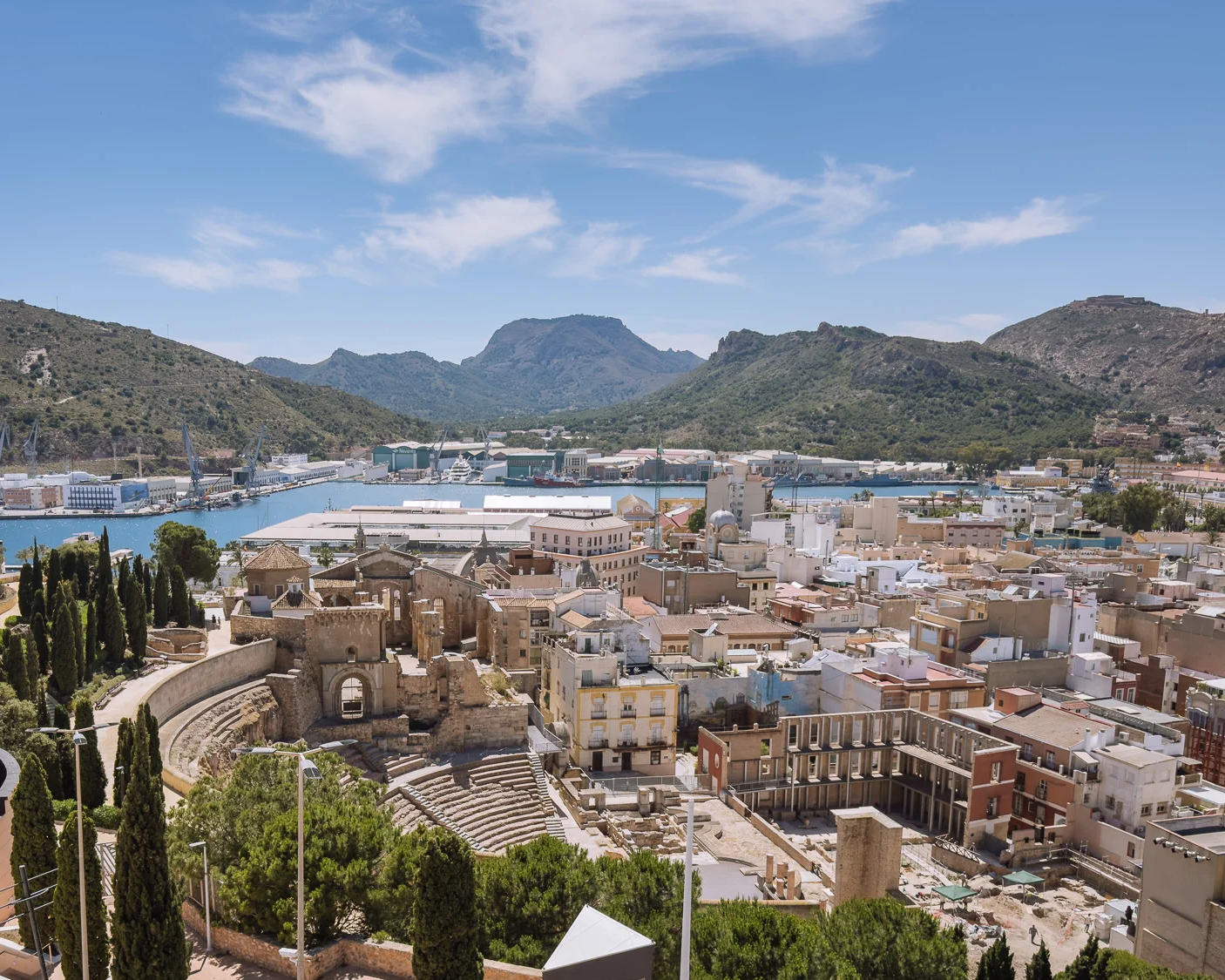
With more than 2,000 years of layered history packed into a remarkably walkable port city, Cartagena is one of Spain’s most fascinating and under-visited destinations.
If Seville is the flirty neighbour and Granada is the hopeless romantic, Cartagena is that old friend with a complicated past — a city fought over, occupied, and reinvented so many times it wears its history like armour rather than ornament.
And what a past it is. Founded by the Carthaginians, seized by Rome, coveted by the Moors, and later one of Spain’s most strategically vital naval bases, Cartagena has spent two millennia at the centre of Mediterranean power struggles. The Spanish Navy still calls it home today.
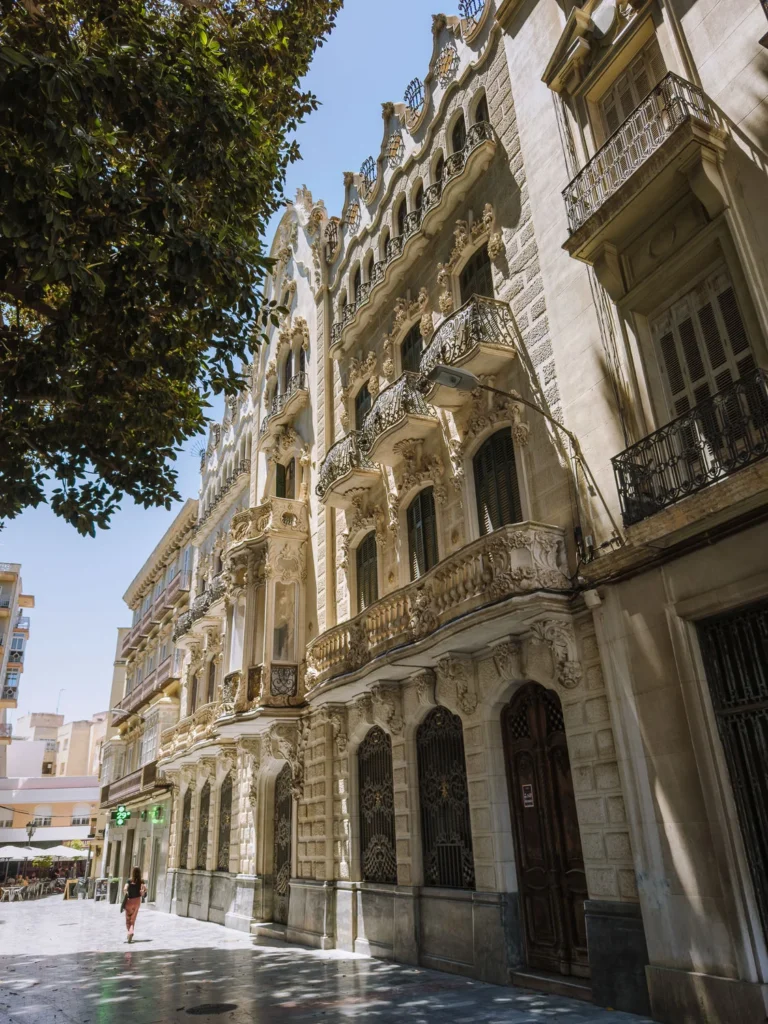
But that’s not to say it isn’t beautiful. Framed by low hills and a natural deep-water harbour, marble-paved streets are lined with impressive Art Nouveau and Modernista buildings — a legacy of the late 19th-century mining boom that briefly made this one of the wealthiest cities in Spain.
What we loved most, however, was the sheer density of it all. Carthaginian walls, Roman ruins, Moorish fortresses, medieval towers, and Civil War shelters — all tucked into one compact city centre you can cross on foot in twenty minutes.
Few cities in Europe pack this much history into this little space. Fewer still do it with so little fuss.
Is Cartagena Right for You?
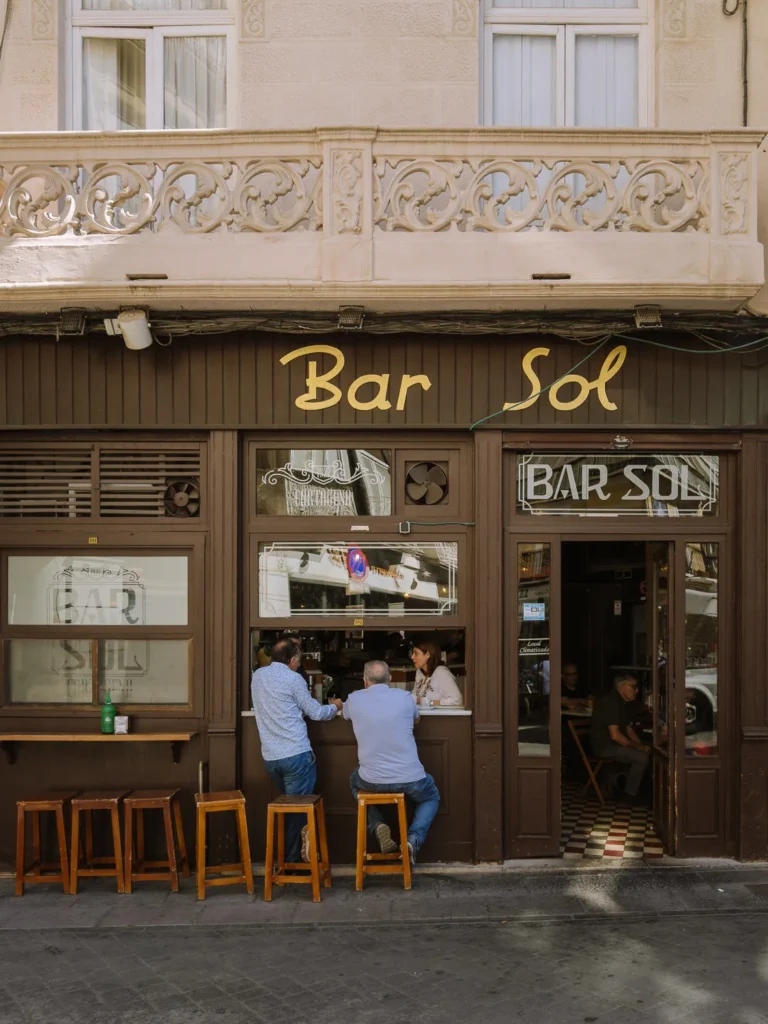
Cartagena is not a destination you’ll stumble into. It doesn’t appear on the classic Spain itinerary, and it doesn’t have the big tourist attractions like many other places.
But if you like going to slightly under-the-radar destinations and you have an interest in history and local culture, Cartagena is a good option.
Cartagena is a great fit if you:
- Love history with real layers — Carthaginian walls, Roman theatres, a Moorish legacy, Art Nouveau architecture, and Civil War shelters. Cartagena covers more than 2,000 years in a single afternoon.
- Appreciate cities that haven’t been polished for tourists — Cartagena is still very much a working port city and a place where locals live. You won’t find souvenir shops on every corner.
- Want to combine coast with culture — Cartagena is within easy reach of the Mar Menor, Calblanque Regional Park, and some of the best beaches on the Costa Cálida.
- Are already visiting Murcia or Alicante — Cartagena is less than an hour’s drive from both cities and makes an outstanding overnight or two-night extension that most visitors to the region completely overlook
What to Do in Cartagena?
Cartagena is compact enough to explore entirely on foot, with almost every highlight within a short walk of the centre. All the best things to do which follow in this guide are included on the map below.
Click on the top right corner to open our map in your Google Maps app. Click the star next to the title to save it to your Google account.
1. Modernista Architecture
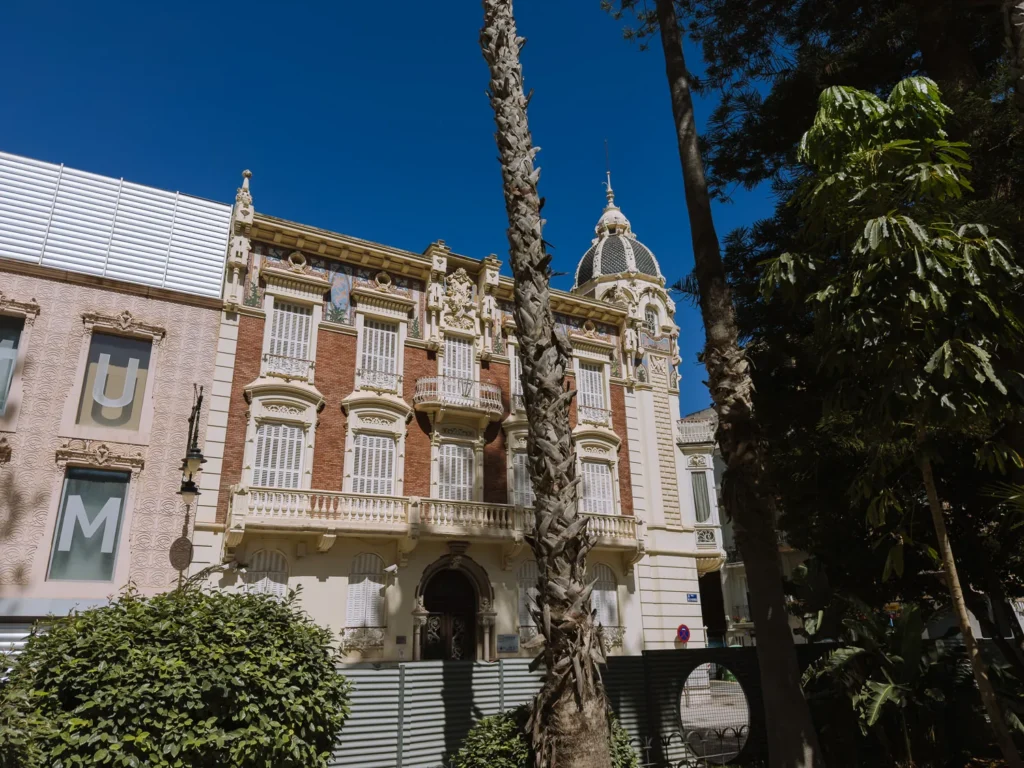
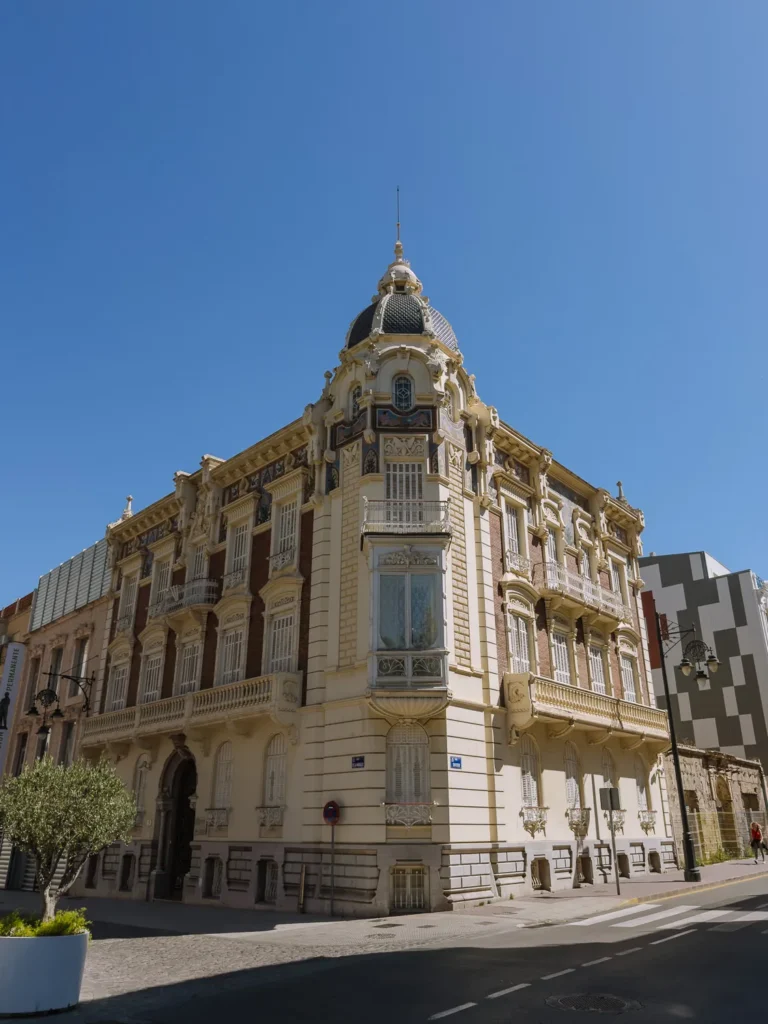
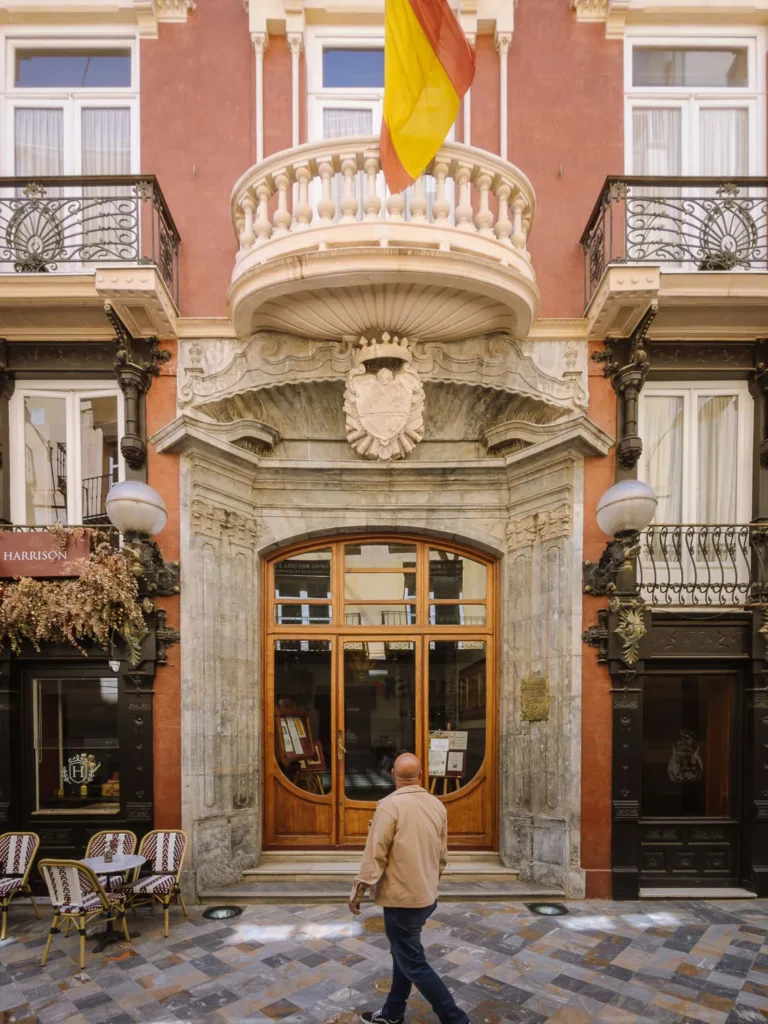
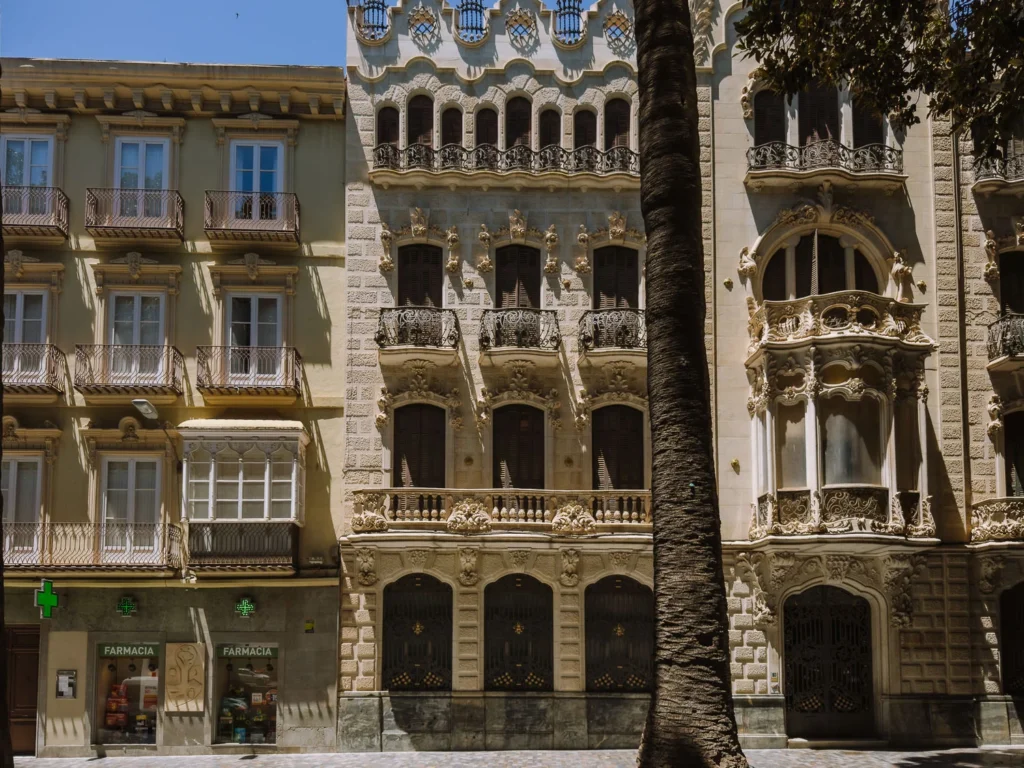
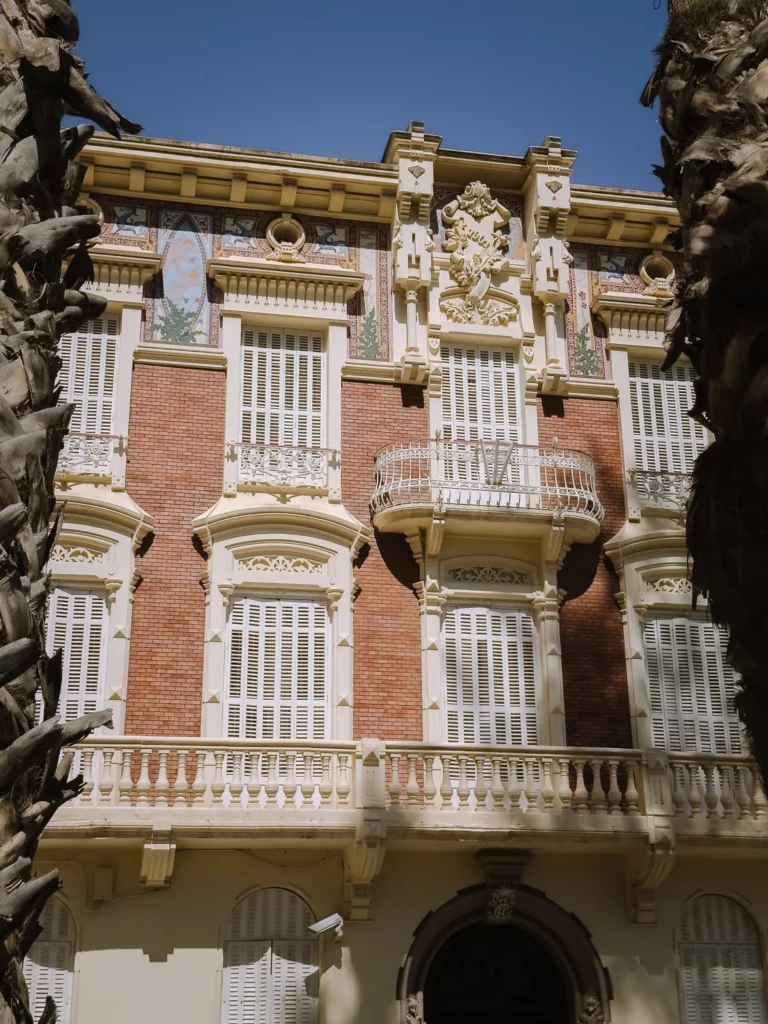
The first thing we noticed about Cartagena was the surprising number of ornate buildings decorated with ceramic tiles, wrought-iron balconies, elaborate facades, and intricate stone carvings.
These are the remnants of the most dramatic economic boom in Spanish history.
Between the 1870s and the 1920s, mining generated enormous wealth in the hills surrounding Cartagena. Families who controlled the vast amounts of silver, lead, zinc and iron hired the best architects money could buy and produced the impressive collection of Art Nouveau and Modernista buildings you’ll find in Cartagena today.
Most of the best buildings are concentrated around Calle Mayor and Plaza del Ayuntamiento. Here are a few we liked:
- Town Hall – The Palacio Consistorial is the grandest example of Cartagena’s Modernista architecture and well worth a closer look – see section 7 for more detail.
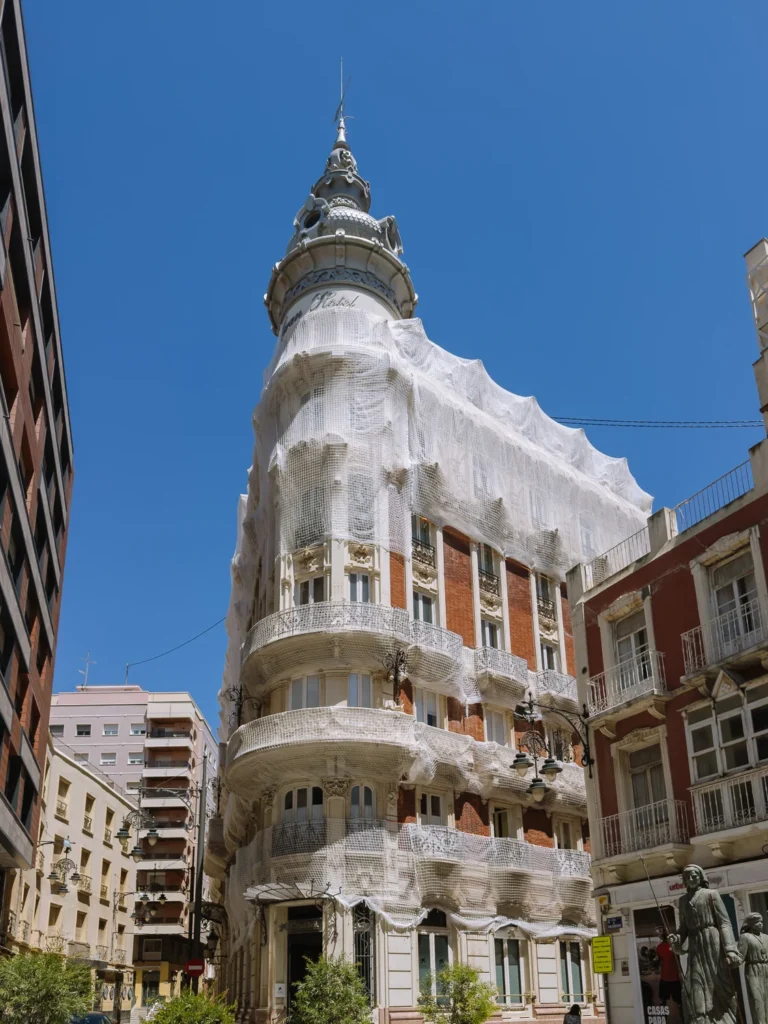
- The Grand Hotel – The grandest of the boom-era buildings, this stunning building has twin ornate towers, but unfortunately it was under restoration during our visit.
- Casa Maestre – Beautifully detailed Modernista townhouse on Calle Mayor with elaborate ironwork balconies and decorative stone carving.
- Casino de Cartagena – The iron-framework façade is well worth checking out, and on a Saturday guided tour you can also admire the interior, which has a wonderful central patio of white marble columns.
- Casa Cervantes – This one has a distinctive Art Nouveau façade with floral motifs and ceramic tile work.
- Palacio Aguirre – One of the most photographed buildings in Cartagena, which is now the Museum of Contemporary Art.
2. Street Art & the Barrio del Foro Romano
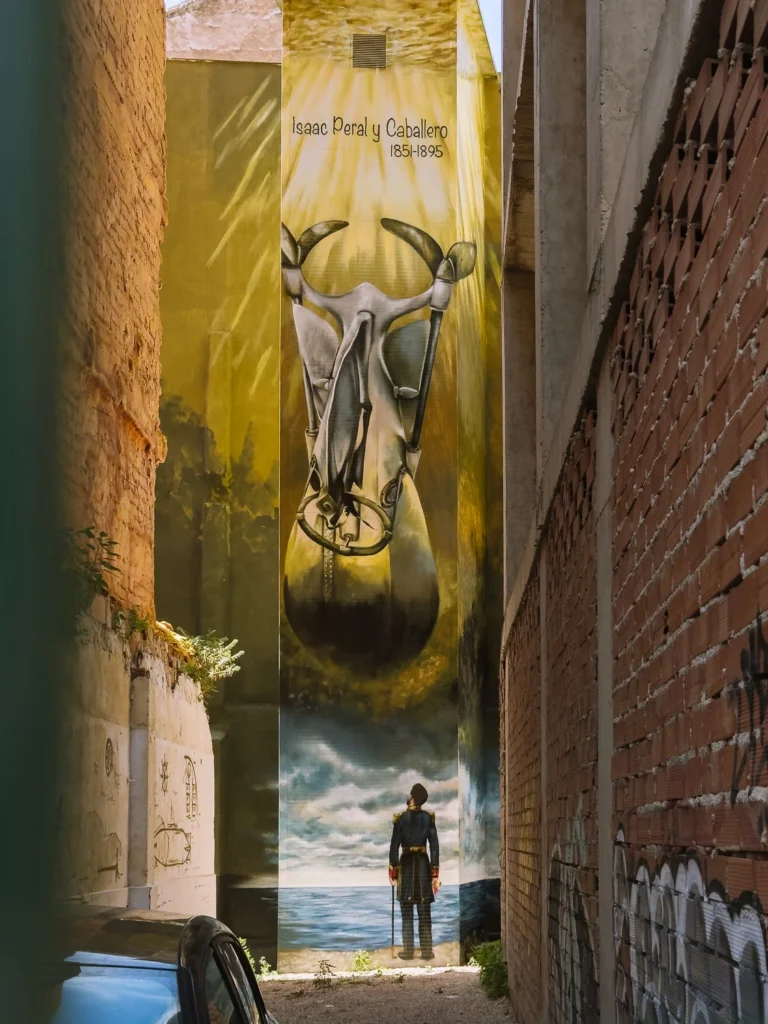
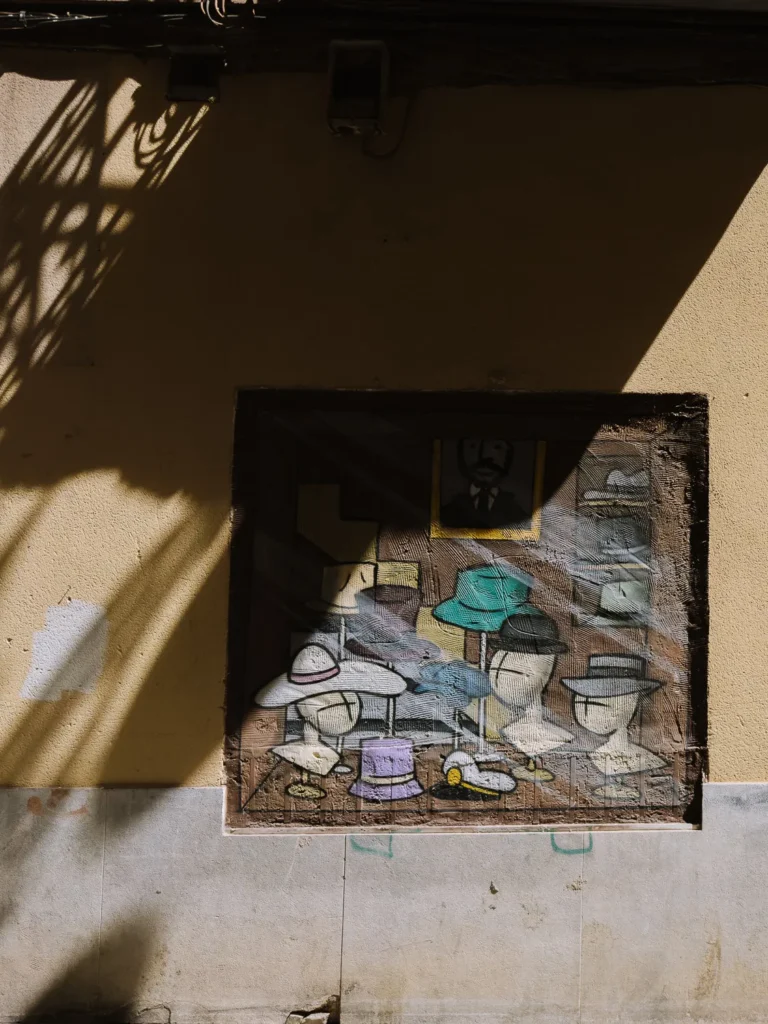
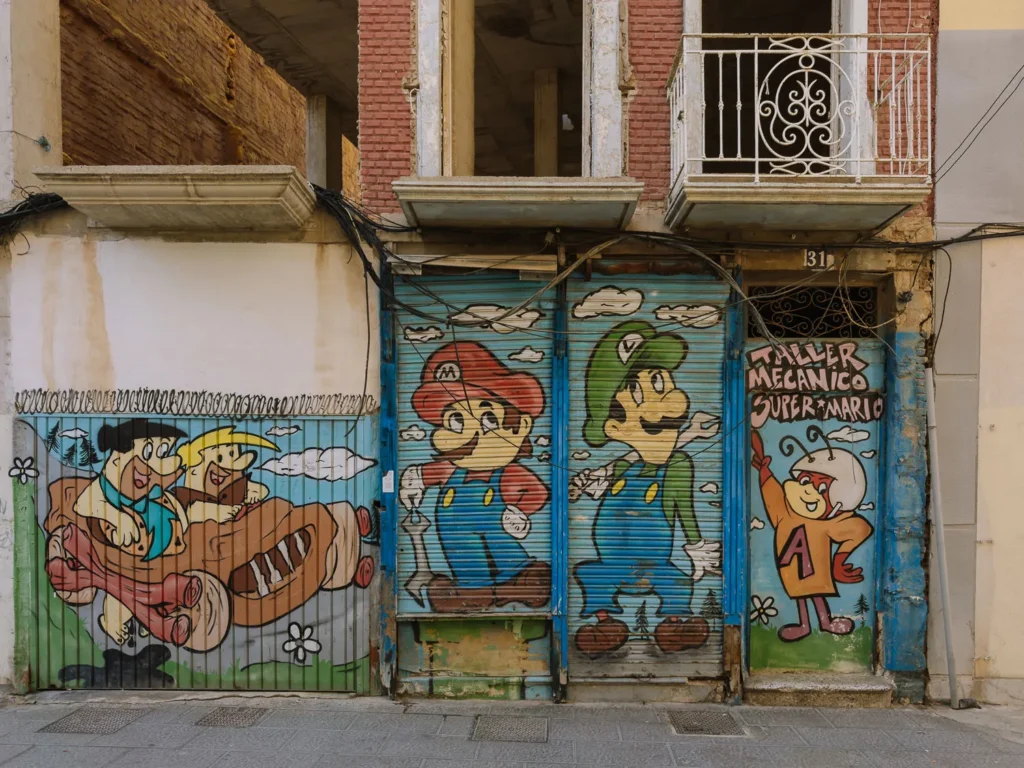
Cartagena has a fantastic street art scene which blends perfectly with the classical Modernista Architecture mentioned above.
The slightly decaying buildings, sitting beside interesting street art, really give Cartagena its unique personality.
The best sections are on the streets around the Barrio del Foro Romano. This is the neighbourhood that grew up around Molinete Hill, where years of urban neglect left walls that artists have steadily claimed.
The murals here are large-scale and well-executed, with many drawing directly on the city’s history: Carthaginian and Roman imagery, mining-era workers, Civil War references.
The area around Calle Jara and the back streets behind the Gran Hotel are also worth exploring. Amble off the main streets and you’ll find pieces tucked into stairwells, gateways, and the sides of residential buildings.

3. Roman Theatre of Cartagena
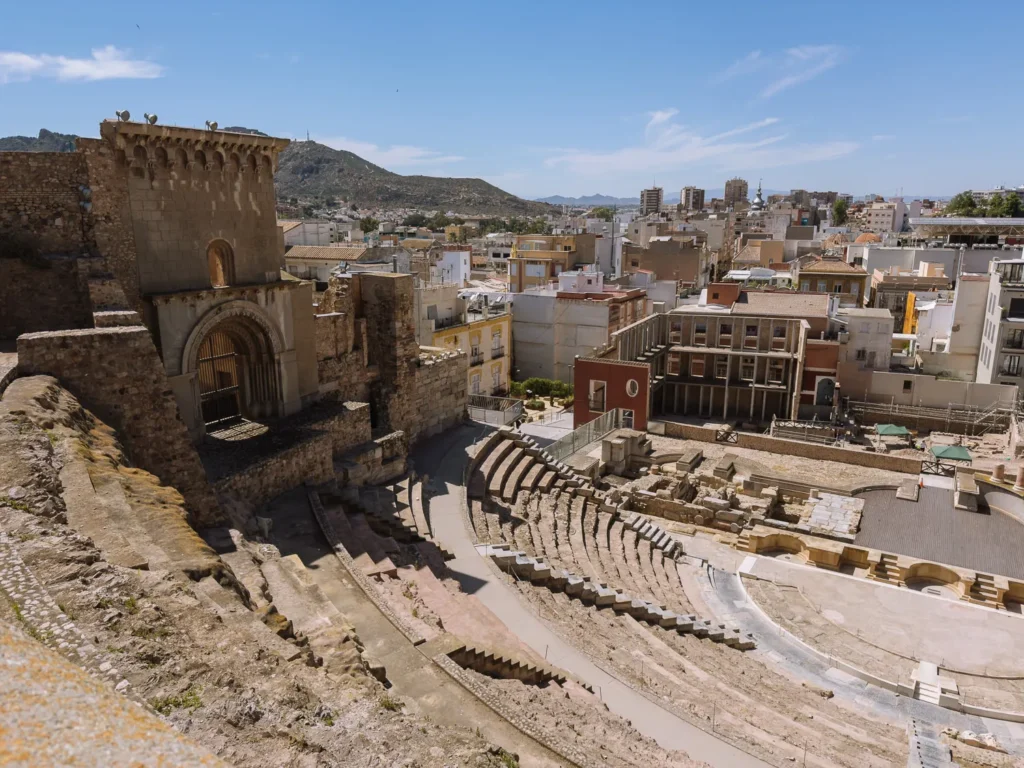
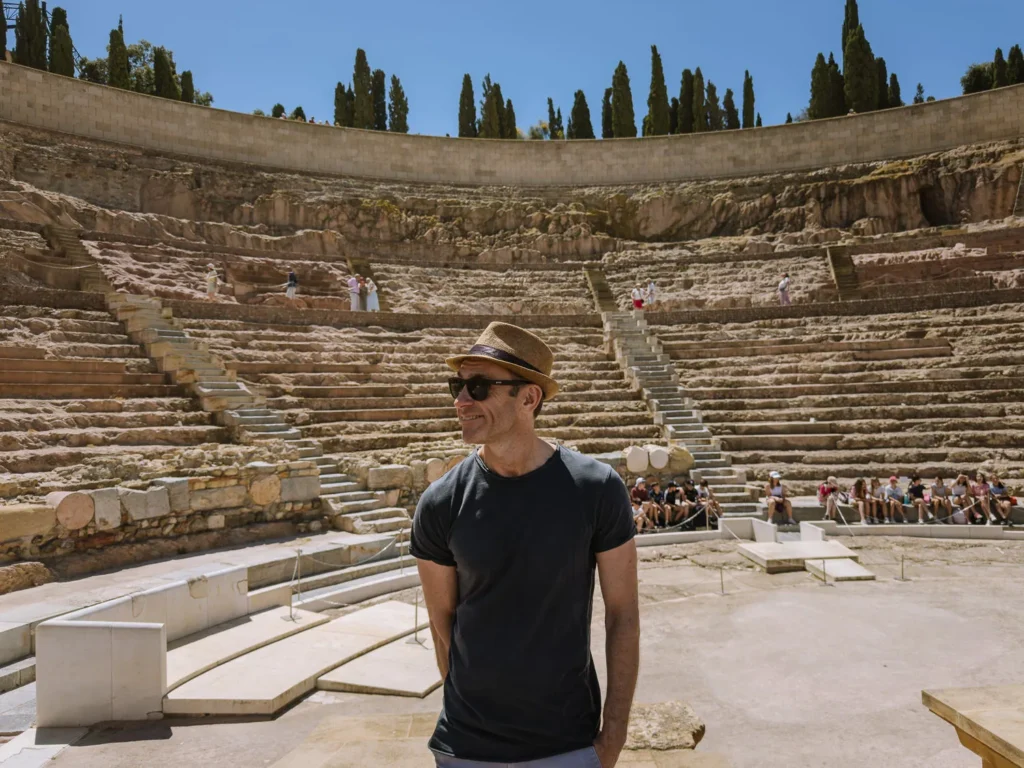
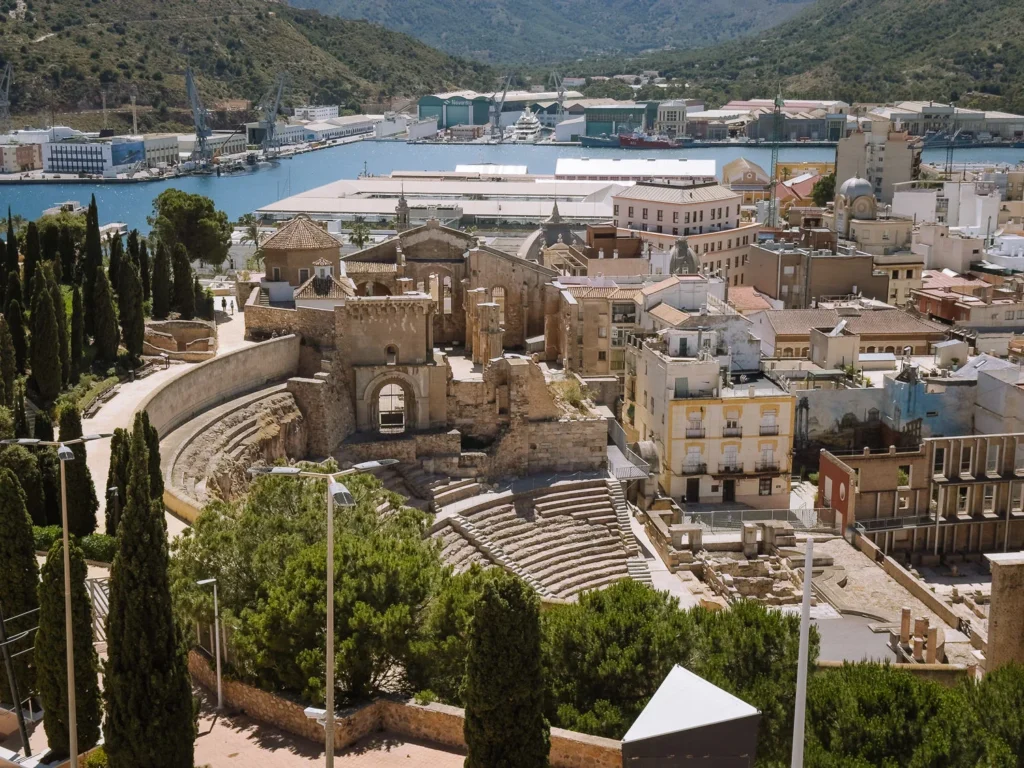
The highlight of a visit to Cartagena is most definitely the Roman Theatre; it is also one of the most remarkable archaeological stories in Spain.
The Roman Theatre of Cartagena was built in the 1st century BC and, at its peak, seated up to 6,000 spectators.
Under centuries of new construction, the theatre disappeared beneath a neighbourhood and eventually a grand aristocratic palace.
It was only rediscovered in 1988, when excavation work for a craft centre at the old palace began.
The current restoration was completed in 2003, and it gives you a wonderful sense of what the structure would have felt like in its day.
You enter the theatre through the Museo del Teatro Romano, which has a few archaeological finds from the city, plus an interesting look through the history of Cartagena.
The entrance to the museum is on Plaza del Ayuntamiento directly opposite the Town Hall.
- Hours: 10 am to 8 pm (Tue–Sat); 10 am to 2 pm (Sun); Closed Monday.
- Cost: €7 adult / €6 reduced.
4. Old Cathedral of Cartagena (Santa María la Vieja)
Few sites in Cartagena carry as much quiet power as the ruins of its original cathedral. Santa María la Vieja sits in the old town directly alongside the Roman Theatre — a proximity that is no coincidence.
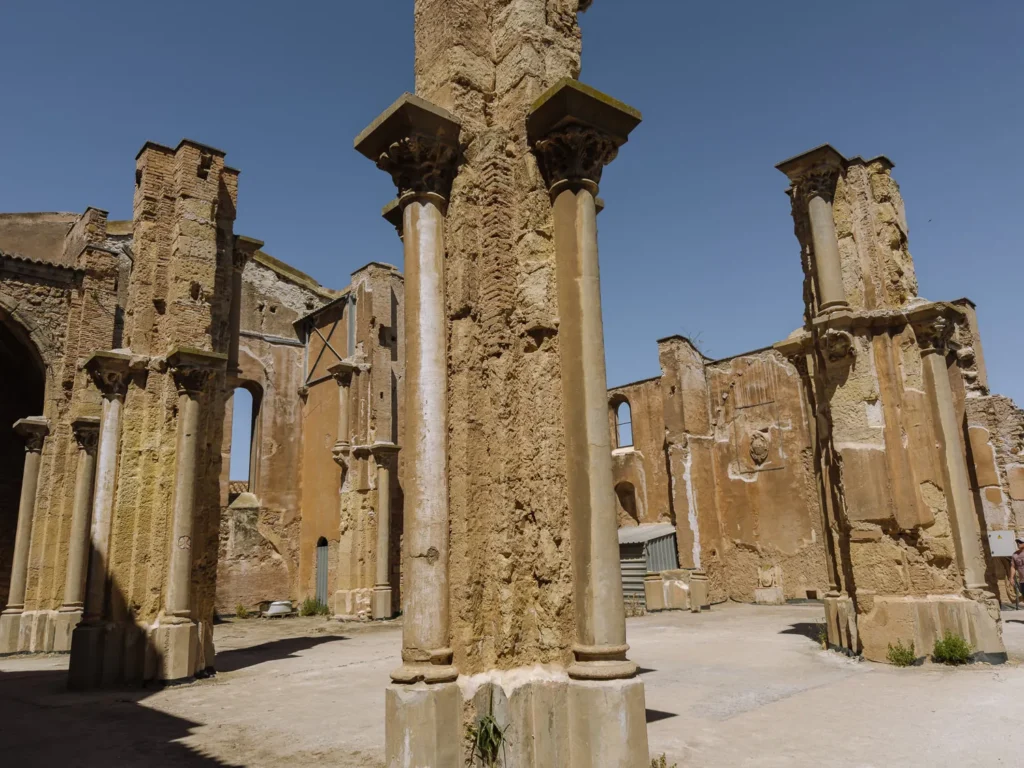
The Old Cathedral of Cartagena was built in the 13th century, partly using stone taken from the Roman Theatre by medieval Christians.
The cathedral served as the seat of the Diocese of Cartagena for several decades before the bishopric was transferred to Murcia in the late 13th century. From this point, the building began a slow decline, a process accelerated by the Spanish Civil War, when the remains of the cathedral were destroyed by Nationalist forces.
Today it’s a rather beautiful open-air museum with just a few columns still standing.
It’s free to enter, and only takes a couple of minutes to see, so we suggest popping in after visiting the Roman Theatre, which is right next door.
- Hours: Unfortunately, the old cathedral has very random hours, usually only 4 days a month. Check the Diocesis de Cartagena for updated opening hours.
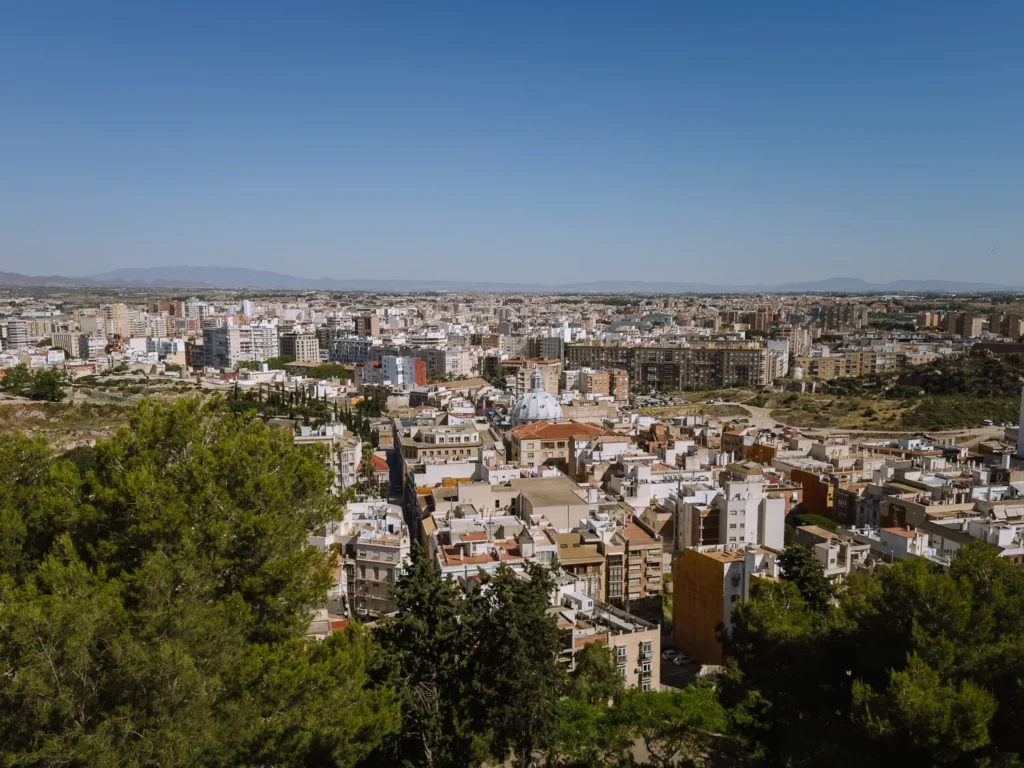
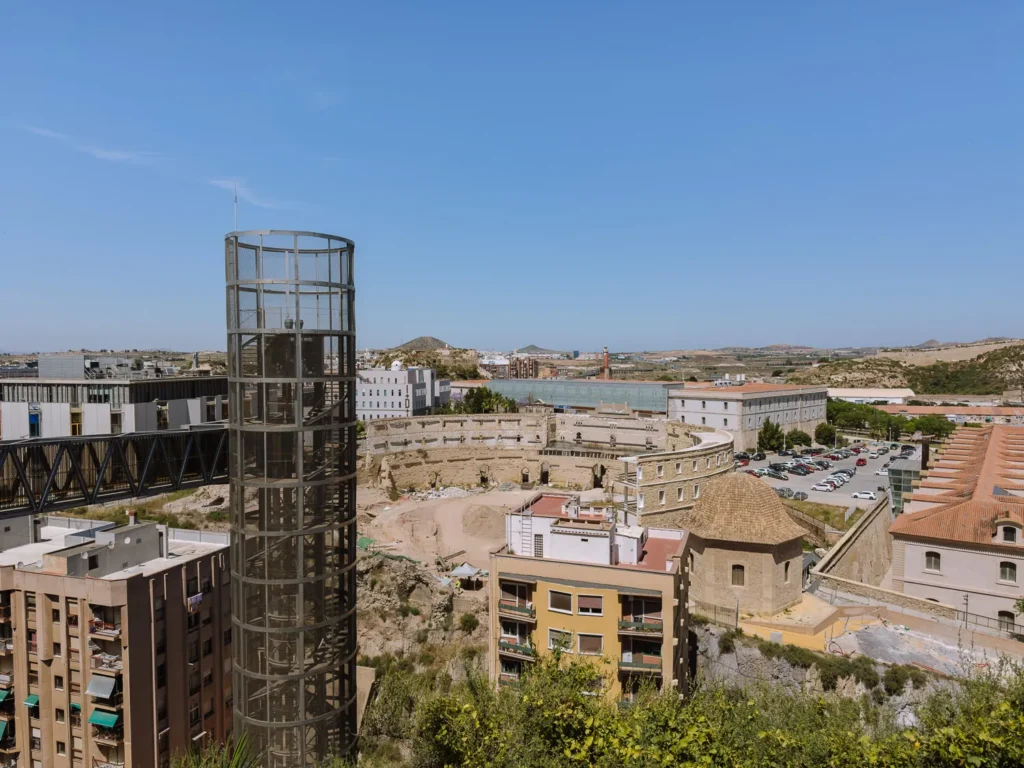
5. Castillo de la Concepción & Panoramic Views
Castillo de la Concepción is a hilltop fortress complex right in the centre of Cartagena. It has served as a Roman temple, a Moorish fortress, a medieval stronghold, and a Civil War siren tower.
There is a small museum at the top, but to be honest, we would give it a skip and just come up for the panoramic views.
Cartagena’s strategic logic becomes immediately obvious from the top of the fortress. You can see exactly why civilisations fought over this harbour for two thousand years.
To get here, you can either take the Panoramic Lift (Ascensor Panorámico) or walk up through Parque Torres. The walk is steep, but it’s short, and you’ll get to see the peacocks in the gardens on your way up.
- Museum Hours: 10 am to 7 pm (Tue-Sun); Closed Mondays.
- Cost: €5, reduced €4.
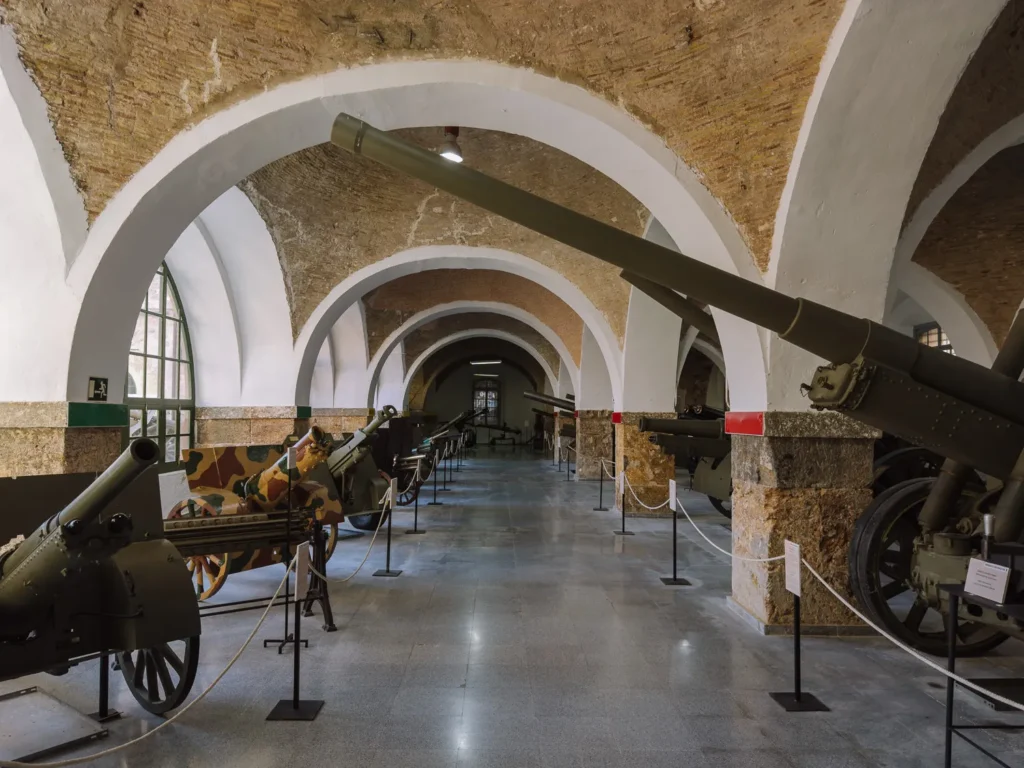
6. Museo Histórico Militar de Cartagena
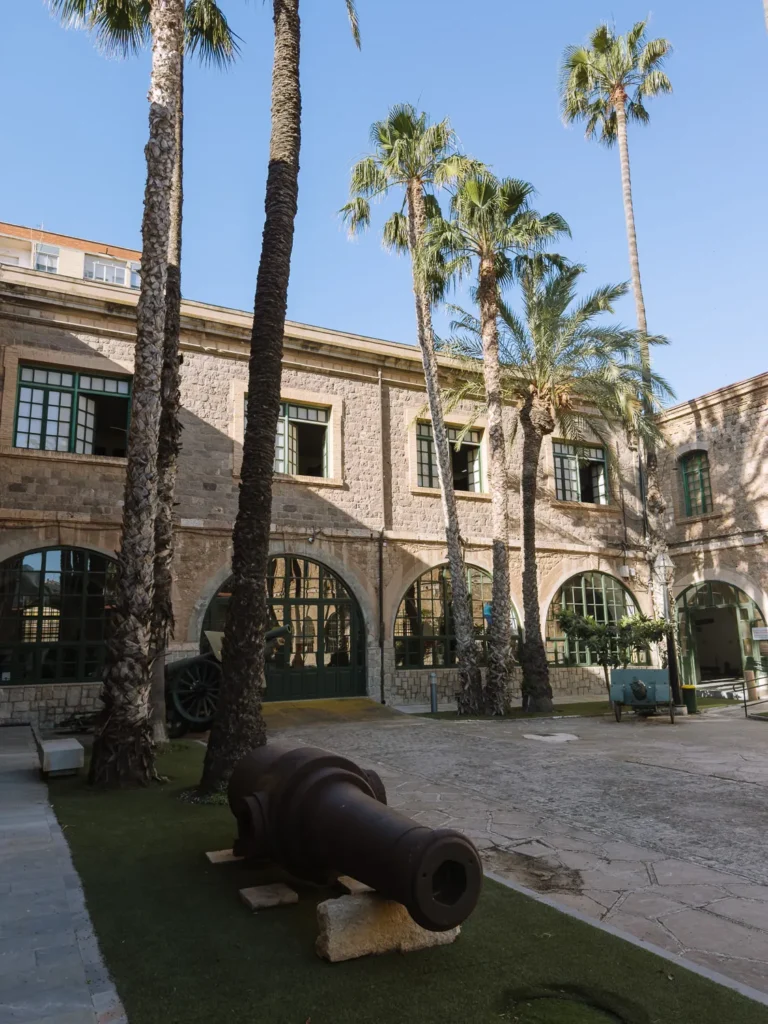
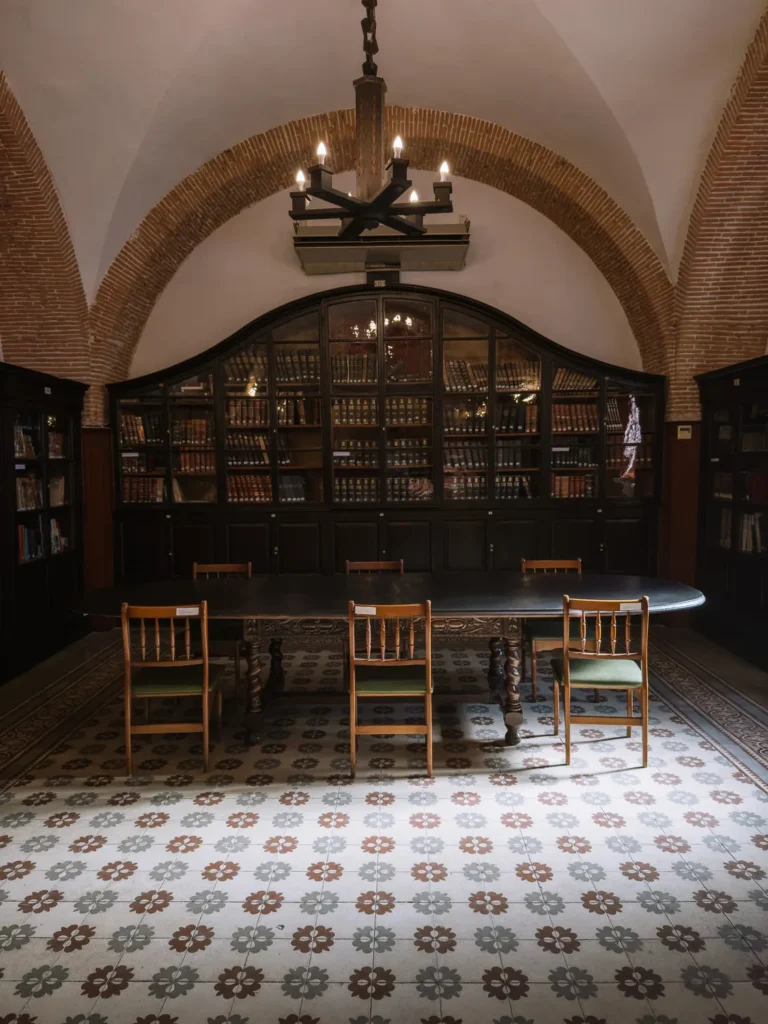
The Museo Histórico Militar de Cartagena is a Spanish Army museum housed in the historic 18th-century Royal Artillery Maestranza.
The collection is extensive and probably impressive if you are into military machinery: anti-tank guns, mountain artillery, anti-aircraft weapons, and a broad range of military artefacts.
But we actually found the most interesting thing was the story of how Cartagena played an important role in defending Spain from the 18th century onwards. Various display boards and 3d models walk through the history of the port and the conflicts that were staged here.
We also appreciated how the Spanish Civil War is addressed here with more candour than you’ll find in many museums.
- Hours: 9 am to 1:30 pm (Mon-Sat); Closed Sunday.
- Cost: Entry is free.
7. The Palacio Consistorial
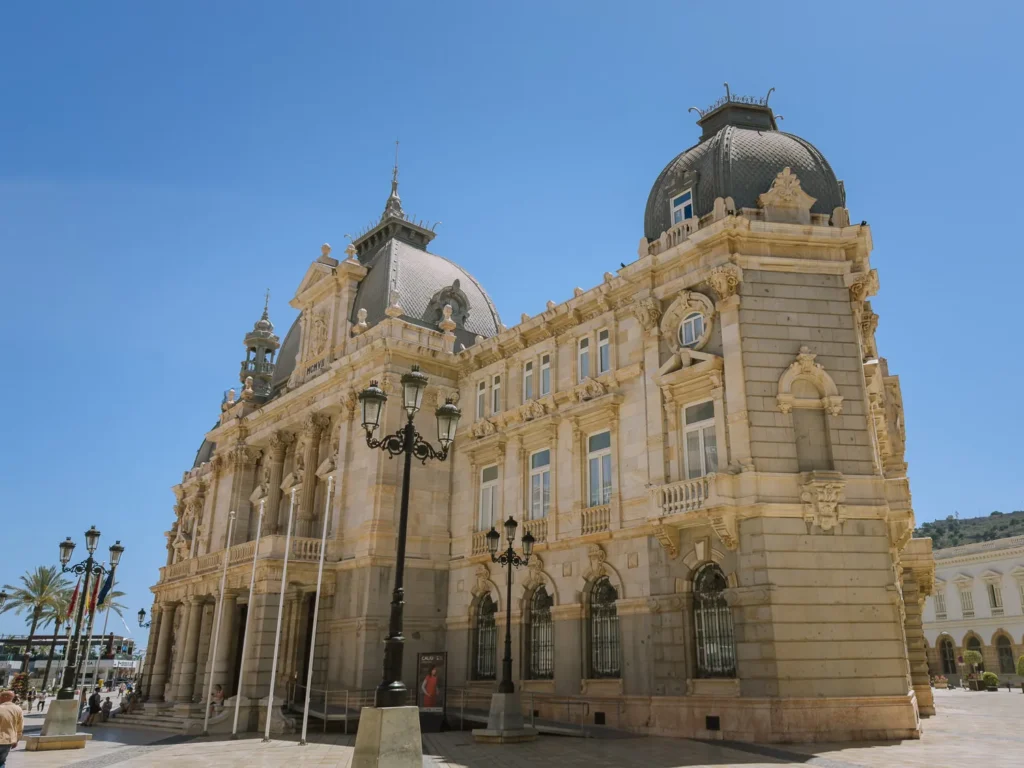
As mentioned above, the Palacio Consistorial, the Town Hall, is the best example of Cartagena’s beautiful Modernista architecture.
Cartagena’s City Hall was constructed during the city’s wealthy industrial boom of the early 20th century and is unapologetically grand.
The floor plan is triangular, and each face looks very different. The main façade facing Plaza del Ayuntamiento is the most formal; the second, facing a narrow street, is much more restrained. The third connects with the adjacent buildings.
Look closely at the stonework nearby, and you’ll find Civil War bullet holes, deliberately left unrepaired.
You can walk in the lobby and admire the beautiful staircase or pay €1 for a guided tour.
- Hours: 10:30 am – 1 pm and 5 pm – 7 pm (Tue-Fri); 10:30 am – 1:30 pm and 5 pm – 8 pm (Sat); 10 am – 1:30 pm (Sun)
- Price: €1.
8. Roman Forum at Molinete Hill
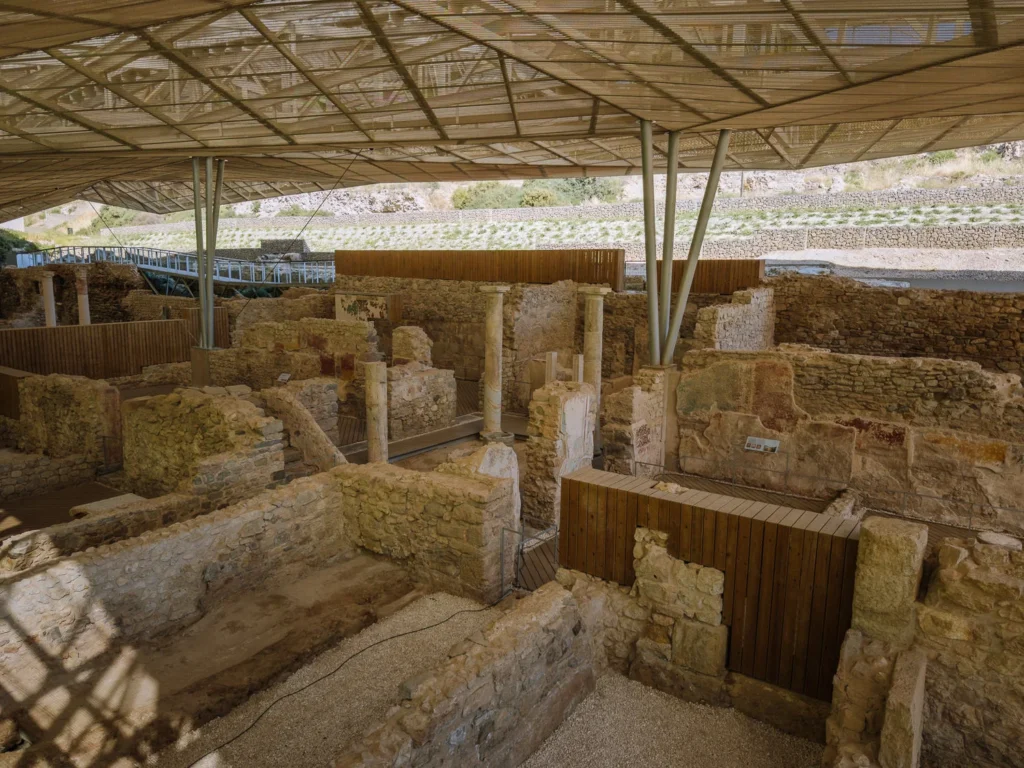
The Roman Forum at Molinete Hill preserves an entire city block from the Roman period with baths, temples, and government buildings.
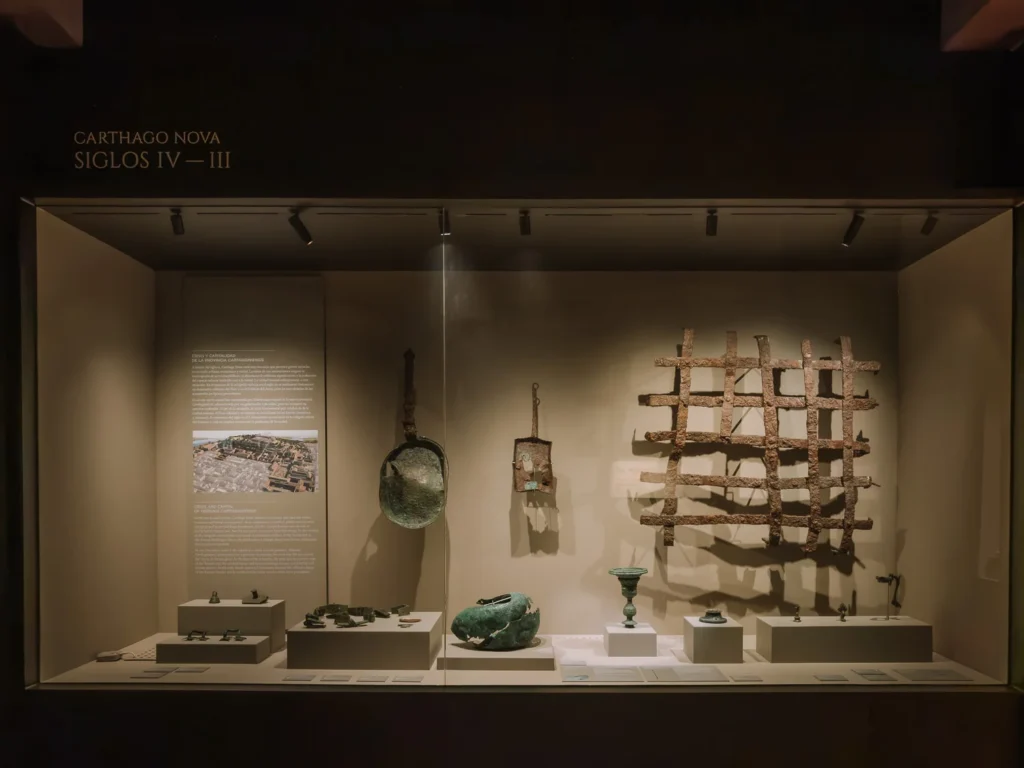
The visit starts in the small but well-laid-out museum, where you can see various archaeological finds from nearby excavations across 3 floors.
From the museum, you head out to the open-air ruins, where you can walk through the remains of the buildings. Some of the highlights are the Curia, which had a marble floor, the Colonial Forum, the Sanctuary of Isis and the bath.
We recommend visiting the Forum along with the Roman Theatre and Casa de la Fortuna. These three attractions will give you a good picture of just how significant Roman Cartagena was at its height.
- Hours: 10 am to 8 pm (Jul-Sep); 10 am – 7 pm (Sep to Nov. Tue-Sun); 10 am – 5:30 pm (Nov-Mar, Tue-Sun)
- Price: €7 general; €6 reduced.
9. Casa de la Fortuna
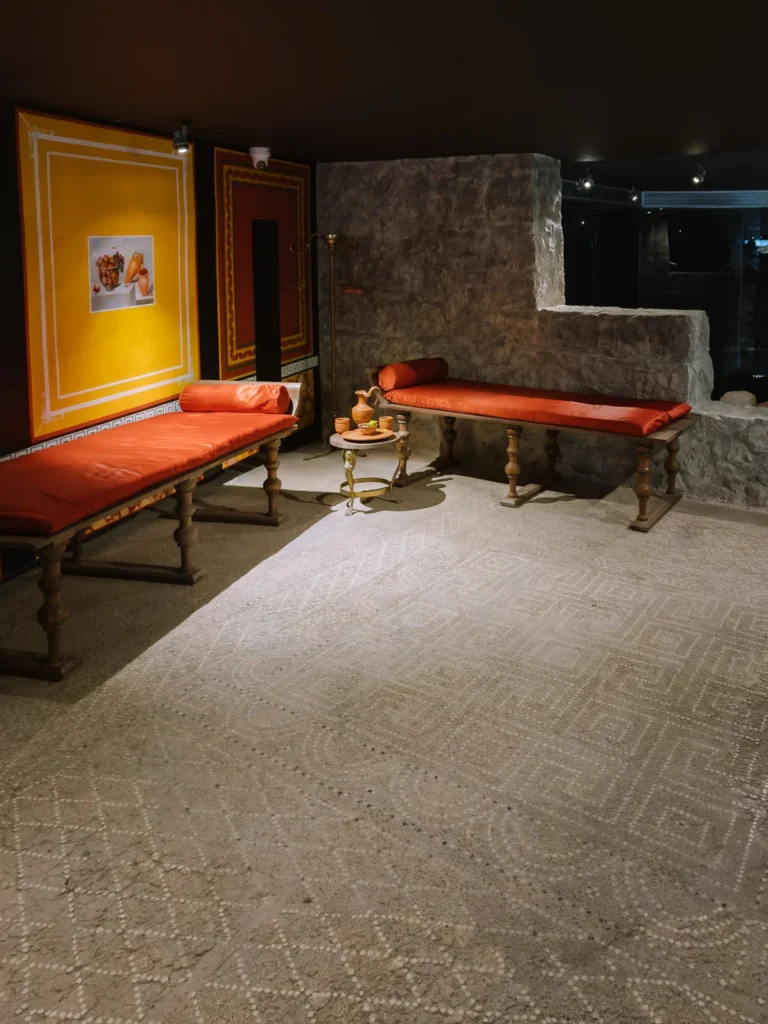
Casa de la Fortuna is an actual Roman house from the 1st century BC. It was discovered beneath the modern city and preserved almost in its original footprint.
Where the Roman Forum gives you the public face of ancient Cartagena, Casa de la Fortuna gives you its domestic one.
The tour starts from the Roman street, where the original cobblestones are still visible. It then guides you through the small space, where you can see the living room where guests were received, the owner’s office, and the formal dining rooms.
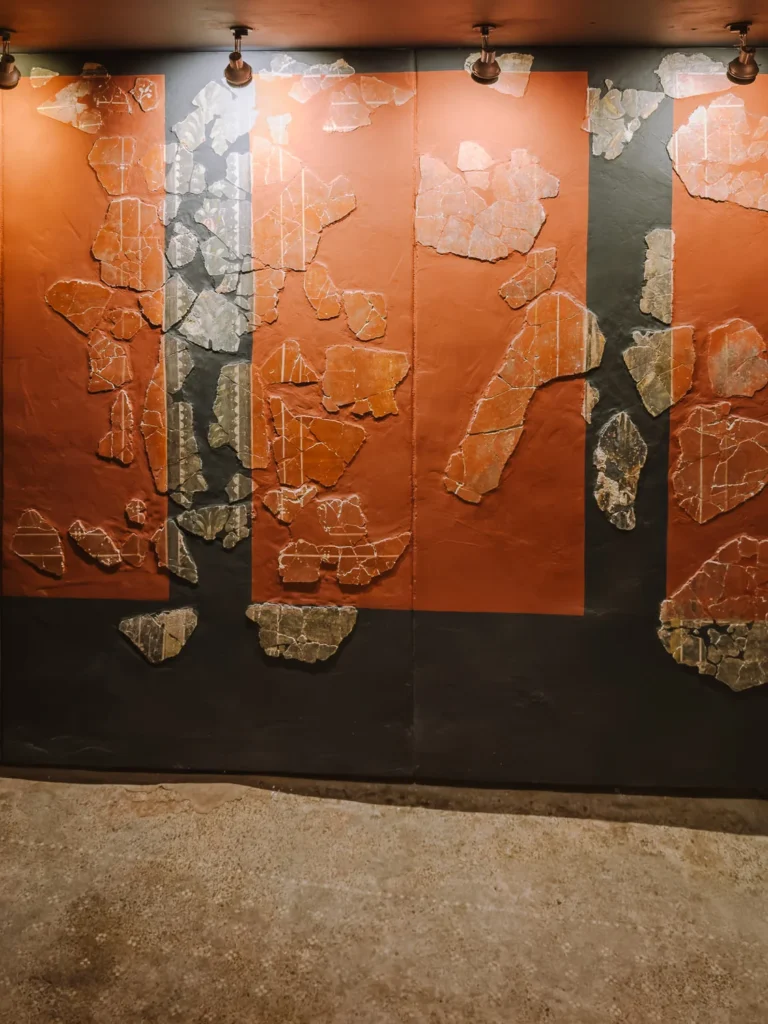
The highlight is definitely the frescoes and mosaics, wall paintings that are still in place to this day. There are decorative motifs such as swans, flowers, and geometric symbols. It’s incredible that these artworks have been preserved for so long.
You don’t need a lot of time to visit the Roman House, but it’s well worth it.
- Hours: 10 am – 3 pm (Tue-Sun); closed Monday.
- Price: €4, €3 reduced.
10. The Punic Wall
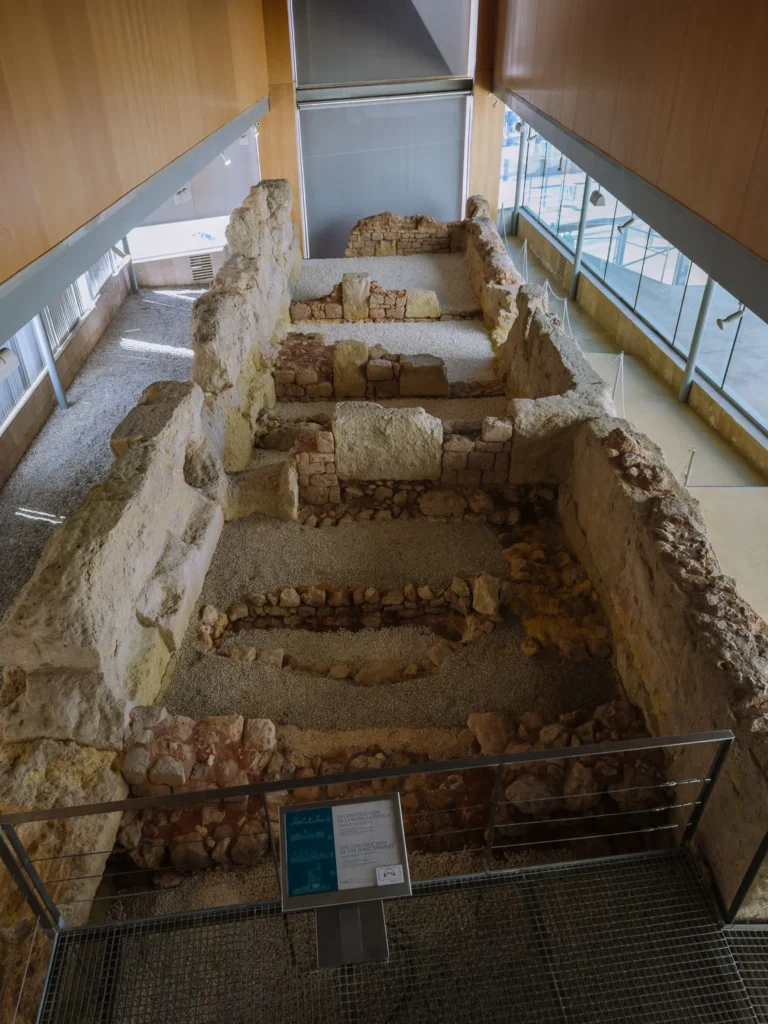
The Punic Wall is one of Cartagena’s most important and oldest surviving monuments.
Long before the Romans arrived, Cartagena was founded by General Hasdrubal the Fair in 227 BC as Qart Hadasht (“New City”).
During their brief rule, the Punic Wall was built to defend the settlement.
The remains of the wall are housed in the Punic Wall Interpretation Centre, with elevated walkways over the excavation site. There is also information explaining the Carthaginian civilisation.
It’s only a small site so it doesn’t take long to look around. But if you are interested in local history, it’s a must-visit.
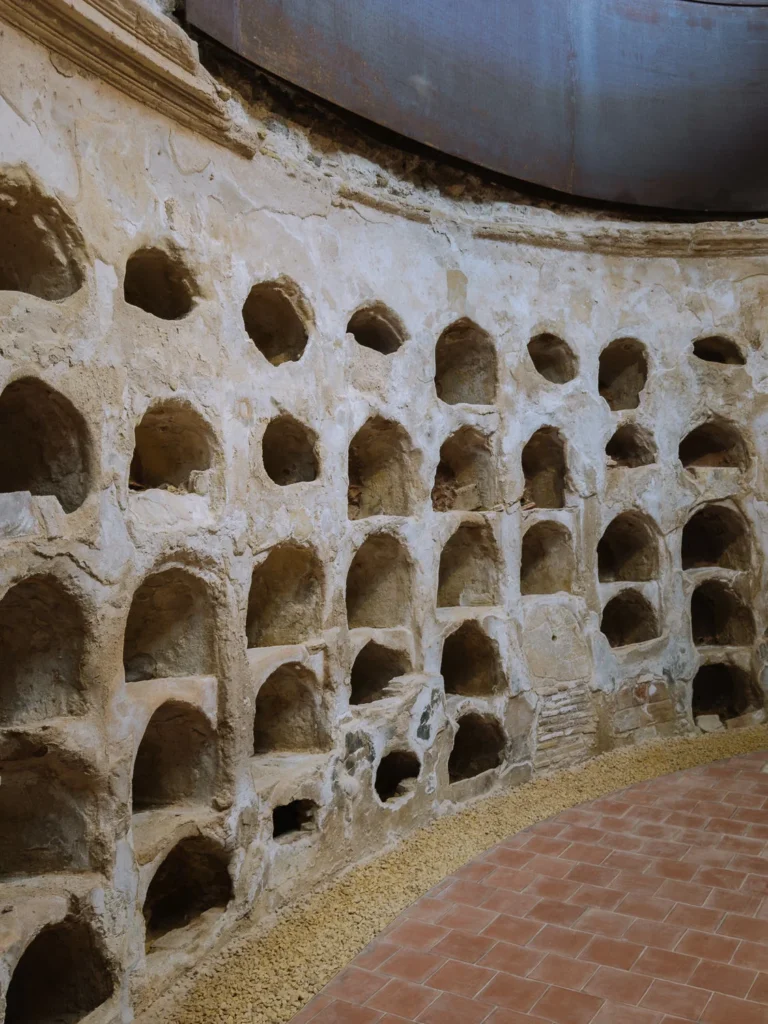
On the same visit, you can go down to the funerary crypt of the Hermitage of San José, a burial site from the 16th and 17th centuries. Although not as historically significant as the Punic Wall, it’s a little more interesting to see with human bones in place and the striking Dances of Death paintings on the walls.
Cartagena Ancient History Loop // To see all the historic sites in the right order: start at the Punic Wall, the earliest layer of history, then walk 5 minutes to Casa de la Fortuna for a glimpse into Roman domestic life; then 5 minutes downhill to the Roman Theatre. Walk 12 minutes back up to the Molinete Roman Forum, then another 10 minutes to the Castillo de la Concepción for medieval history and later military use.
11. Stroll Calle Mayor & the Old Town
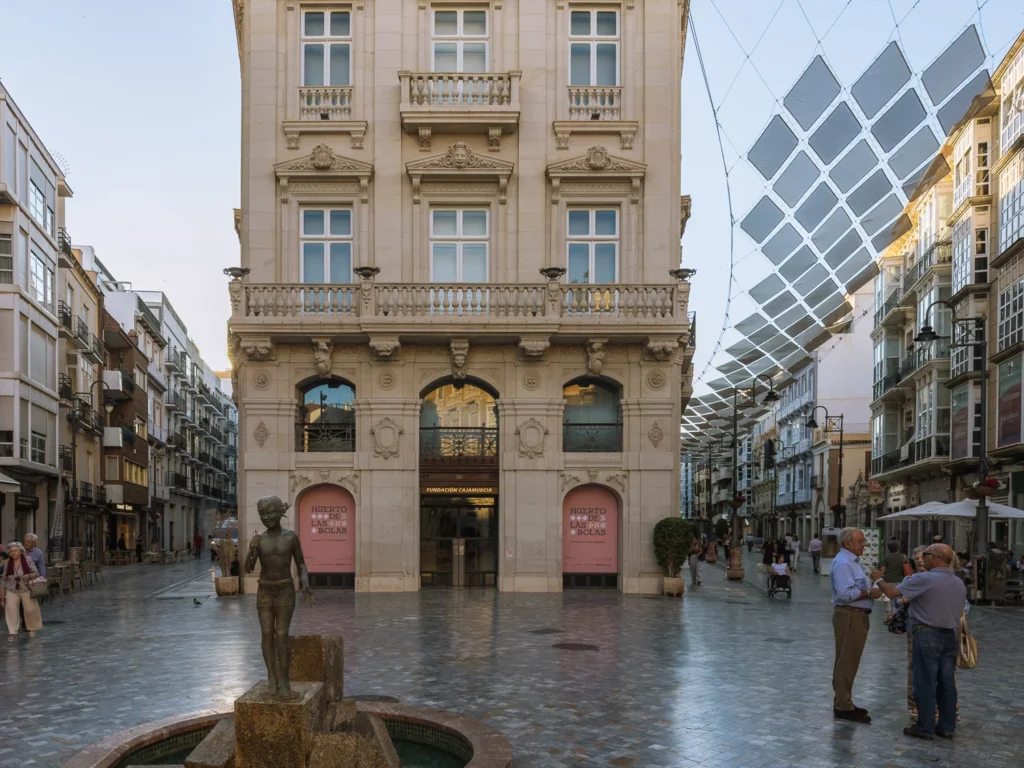
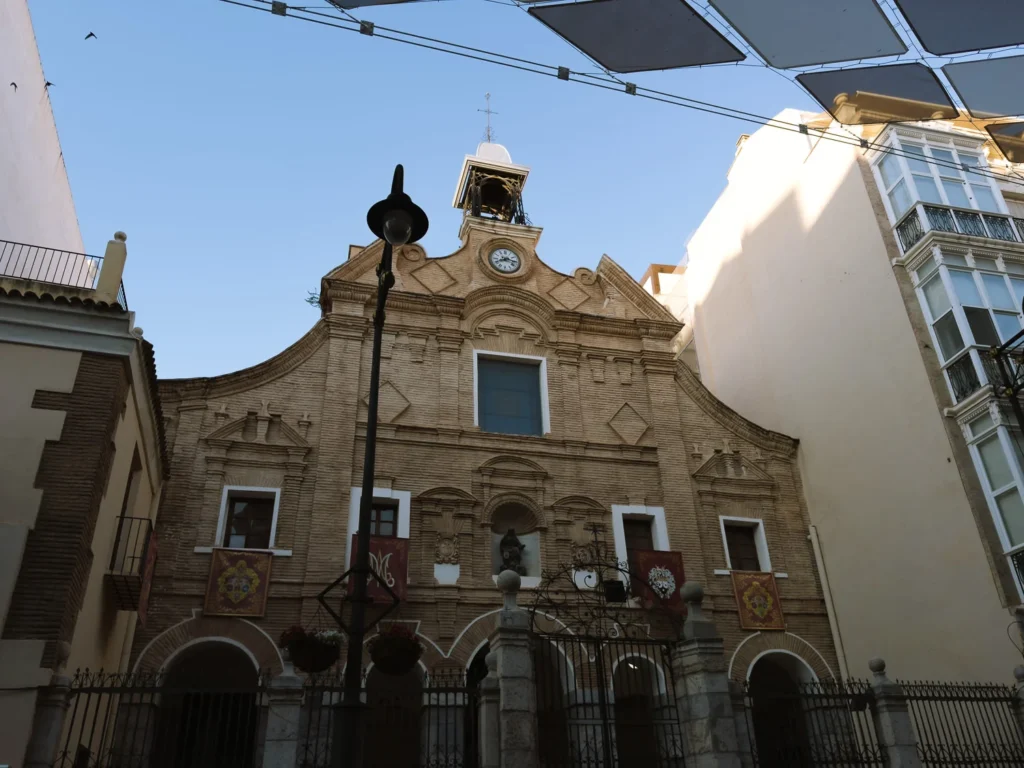
Calle Mayor has been the commercial spine of Cartagena for centuries. It runs between Plaza del Ayuntamiento and Plaza de San Sebastián, connecting the port with the old town.
This elegant thoroughfare has been a pedestrian street since at least 1590.
It’s here where you’ll find some of the grandest Modernista architecture in Cartagena, including Palacio Aguirre, the casino and the Town Hall (all mentioned above).
There’s also plenty of independent shops, boutiques, restaurants and cafes. The entrance to the Roman Theatre is also on Calle Mayor.
12. Paseo de Alfonso XIII
The Port of Cartagena is deep, sheltered, and protected from all winds, giving it a strategic advantage that attracted the early Carthaginians. Every civilisation since has exploited it, as you learn in more detail at the Spanish Military Museum.
It’s also one of the largest freight ports in Spain, and it’s a very popular cruise port.
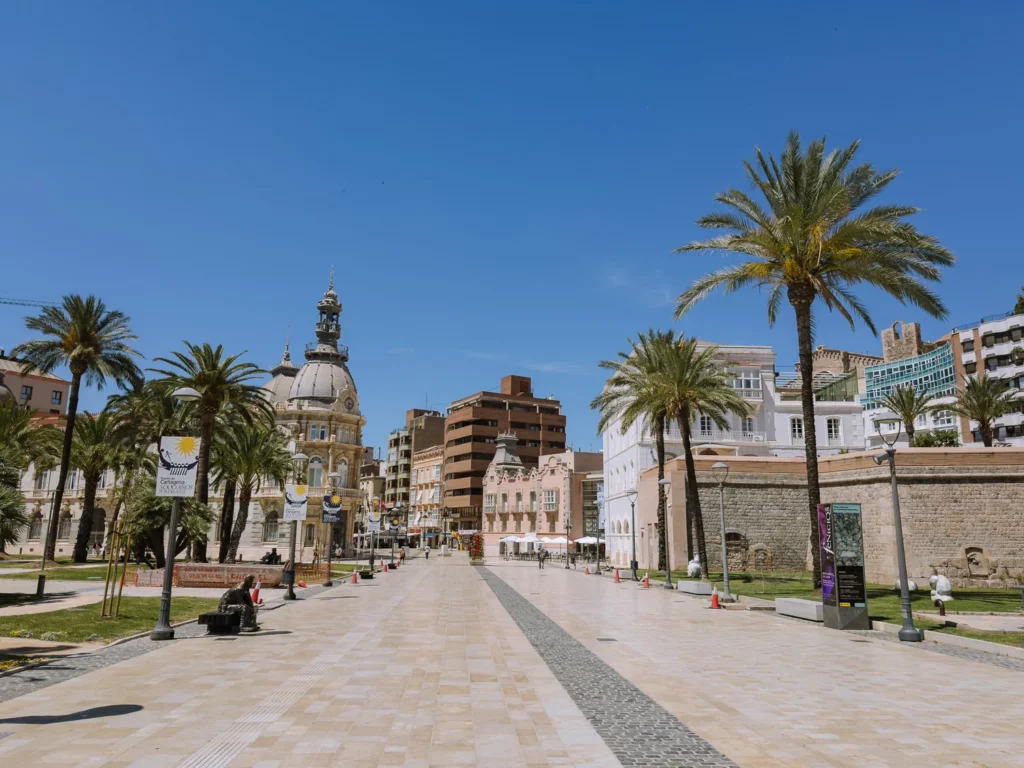
The main harbour promenade, Paseo de Alfonso XIII, is where you’ll most likely want to gravitate towards. It’s a wide waterfront walk where you can watch fishing boats, navy vessels, container ships, and luxury yachts all sharing the same bay.
There are a few cafés and terraces along the front, but as there was no cruise ship docked when we were there, they are all completely empty.
It’s just a short stroll from Plaza del Ayuntamiento, and it’s worth a quick look, but we wouldn’t say you need very long.
13. Take a Boat Tour
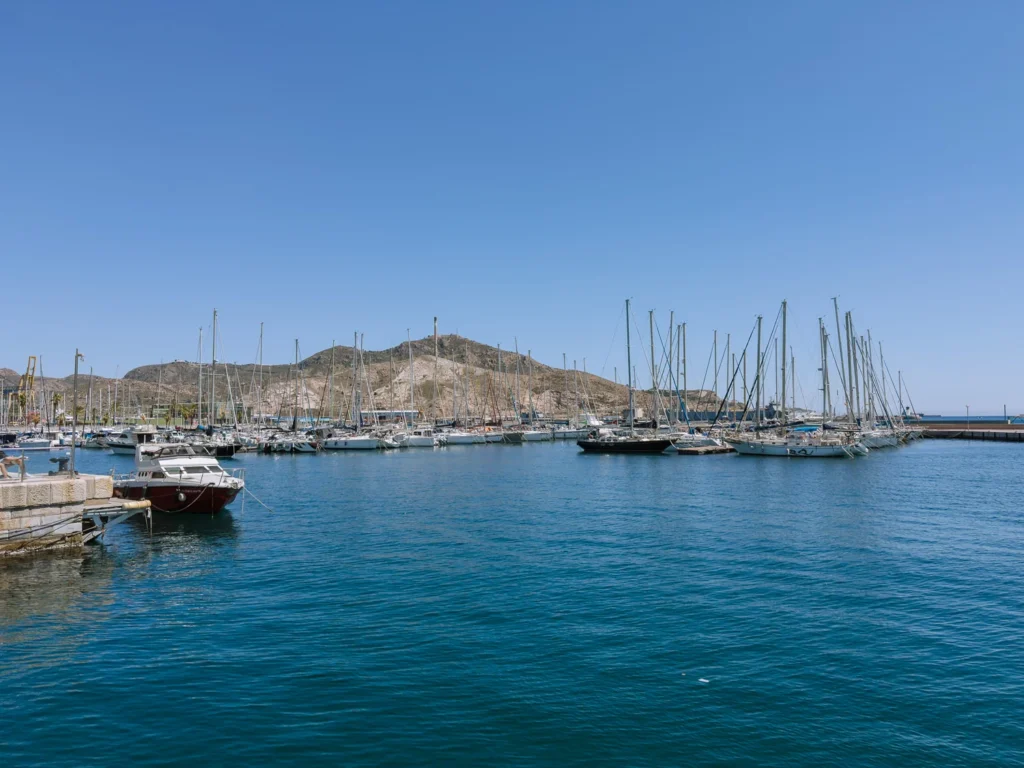
Getting out on the bay puts Cartagena into perspective. The natural shape of the bay, the protective ring of hills, the positioning of hilltop batteries- you can easily see why it was such a prized location on the Mediterranean.
The Official Tourist Boat (Barco Turístico) runs a 40-minute cruise around the harbour visiting the coastal gun batteries, historic lighthouses, and fortifications that ring the bay.
The short excursion out to Isla de las Palomas, the small rocky island at the mouth of the bay, is a very popular boat trip from Cartagena. It’s a scenic trip with great views back over the city and the surrounding cliff-lined coast.
14. Mercado Santa Florentina
The Mercado Santa Florentina is a classic Spanish market built in the 20th-century iron-and-glass style, with decorative tiling, modernist details, and high, vaulted ceilings.
We loved it because it’s a small, very local market that had a charming, friendly atmosphere. There are 25 stalls, but when we visited, only around 5 were operating, so we think the opening hours are somewhat relaxed. You shouldn’t expect a really vibrant, bustling market – just a relaxed local shopping experience.
Fish is by far the most popular draw card, but you’ll also find local cheeses, olives, produce, and pastries.
There are a few cafes that are good for people watching, and we’d say just before lunch is the best time to visit.
- Hours: 8 am – 3 pm (Mon–Sat); Closed Sundays.

15. Plaza de San Francisco
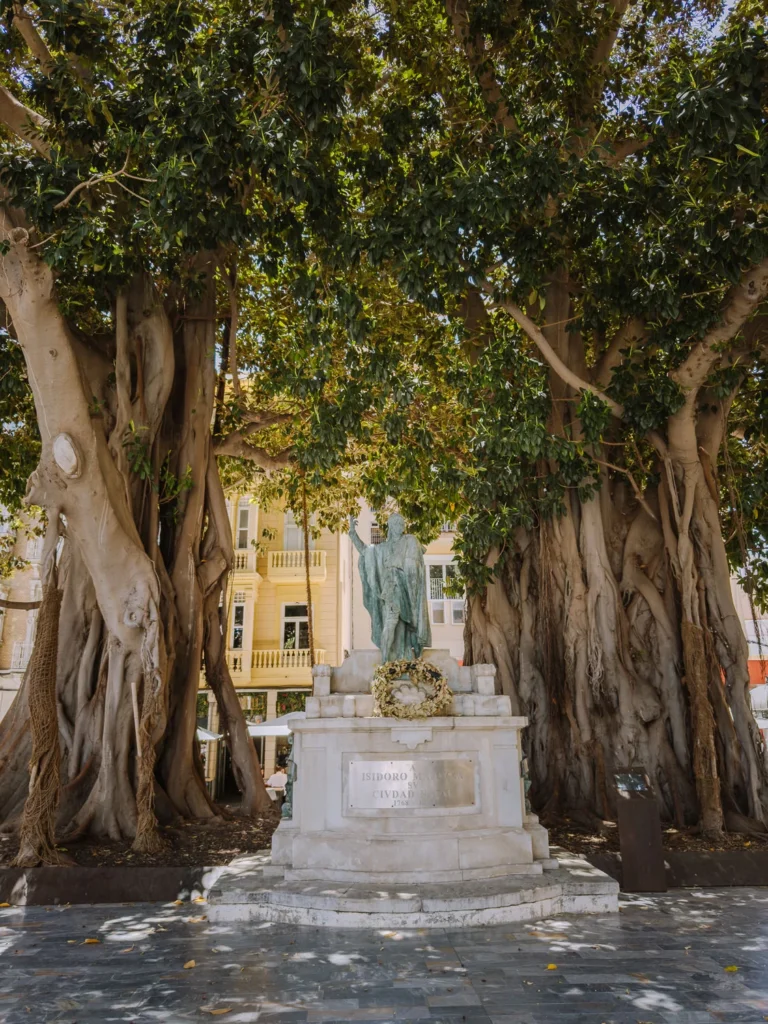
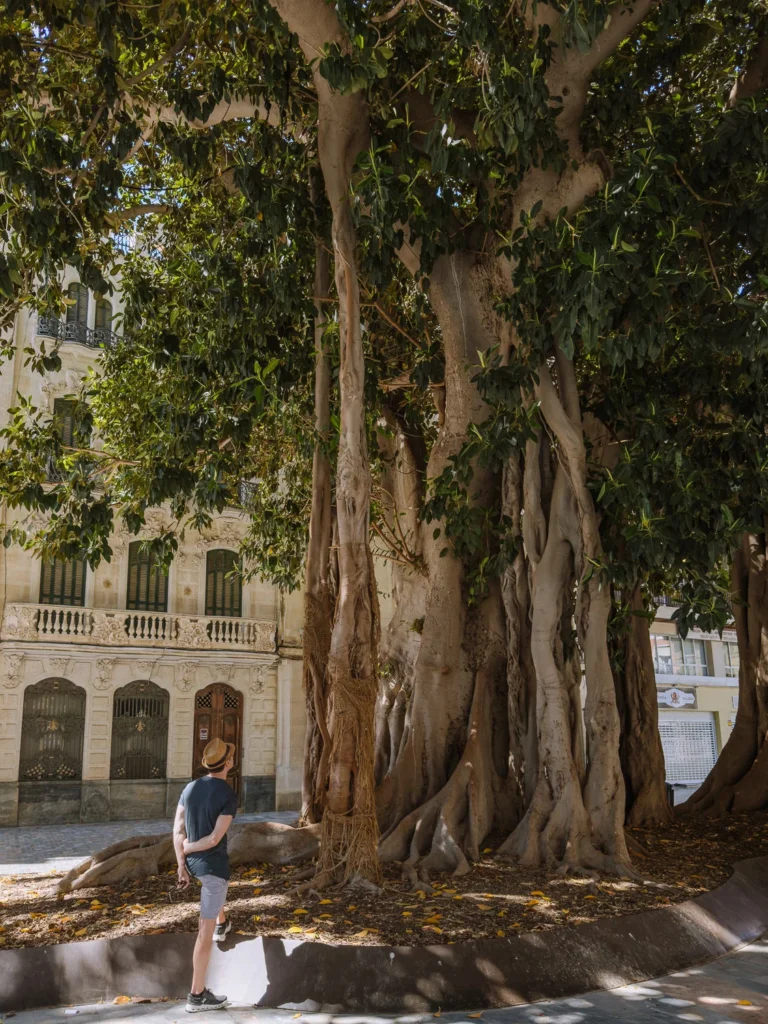
It’s not a big tourist attraction, but we loved hanging out in Plaza de San Francisco. It was built in 1844 on the site of a former Franciscan convent, and today it has a lovely calm, residential character.
The standout feature is the four enormous Moreton Bay figs, planted in the late 1920s, which now entirely dominate the square. Huge twisty trunks and a near-complete canopy of green give the square a tropical, exotic feel.
Now approaching 100 years old, the trees have been declared protected natural monuments.
There are a few cafes in the square and some interesting architecture on the periphery, which makes it a great photo spot.
Practical Information
Getting There
The closest international airport is Alicante (ALC), approximately one hour by car.
By Train: You can also reach Cartagena from Murcia in 45 minutes. From Madrid, the total journey time is around 4 hours, 20 minutes with a change in Murcia.
By Car: Driving is by far the most practical option for getting to Cartagena. We drove from the Costa del Sol and used the large underground car park, which we have marked on the map above.
Getting Around
The historic old town is entirely walkable, with the Roman Theatre, Calle Mayor, Punic Wall, harbour, and Castillo de la Concepción within a 15–20-minute walk of each other. The Panoramic Lift saves the climb up to the Castillo de la Concepción.
When to Visit
The best time to visit Cartagena is spring (March–May) and autumn (September–November), when the weather is warm and sunny without the very high temperatures of summer.
Cartagena’s famous Carthaginians and Romans Festival (late September) is one of Spain’s most spectacular historic reenactments and worth timing a trip around.
How Long to Visit
One full day is enough to cover the highlights, but we spent the night in Cartagena because we had a long drive back the next day. It was good to be there for the evening because the city has a nice relaxed feel after dark, but it’s not necessary to see the main attractions.
Cartagena Puerto de Culturas
The Puerto de Culturas pass covers the city’s main heritage sites with a single ticket, including the Roman Theatre, Castillo de la Concepción, Punic Wall, and several other museums, for around €14-€16. When purchasing, you choose either a 4-site or 5-site combination.
A word of warning from experience: when you buy the pass, the attendant selects specific attractions and marks them on a map — they are not just giving you an example. The ticket lists all sites, but only the ones chosen at purchase will be valid for entry.
Choose carefully, because if you inadvertently include a site you don’t use (such as the Panoramic Lift), you’ll end up paying more than if you’d bought individual tickets. Which is exactly what we did.
Bottom line: Before you pay, confirm exactly which sites are being added to your pass — or simply buy individual tickets for the attractions you know you want to visit.
Where to Stay in Cartagena
€€ | NH Cartagena Hotel — This is a reliable mid-range option with comfortable contemporary rooms and easy access to the old town and harbour.
€€ | Sercotel Carlos III — This is where we stayed. It’s a modern, recently renovated hotel a short walk from the historic centre. It’s well located near the train and bus station and a large underground car park.
€€€ | Sercotel Alfonso XIII — A characterful hotel in a handsome historic building close to the main attractions, with well-appointed rooms and a strong sense of place. One of the most recommended properties in the city centre.
More Spain Guides
- Find all our Spain travel guides.
- Enjoy the best of the Andalusía capital with our guide to must-see attractions in Seville.
- Our guide to Malagá covers your sun-drenched Mediterranean vacation.
- Discover the remarkable Moorish history of the best things to do in Córdoba.
- See northern Spain with our Picos de Europa road trip itinerary.
- Our guide to the best places to visit in Andalucía includes charming villages, great beaches and historic cities.
- See one of the most iconic buildings in the world in our guide to Granada.
- How to hike the Ruta del Cares trail.
- Enjoy the quirky island city relaxed charms of Cádiz, Spain.
- Take a road trip with our White Villages Andalucía driving route.

reader-supported
When you buy through links on our site, we may earn a small affiliate commission at no extra cost to you.
Thanks for your support // Paul & Mark