

By: Mark Barnes // Last Updated:
From the granite Towers of Paine to hidden miradors, glacier boat trips and luxury all-inclusives — our first-hand guide to the best things to do in Torres del Paine, Chile.
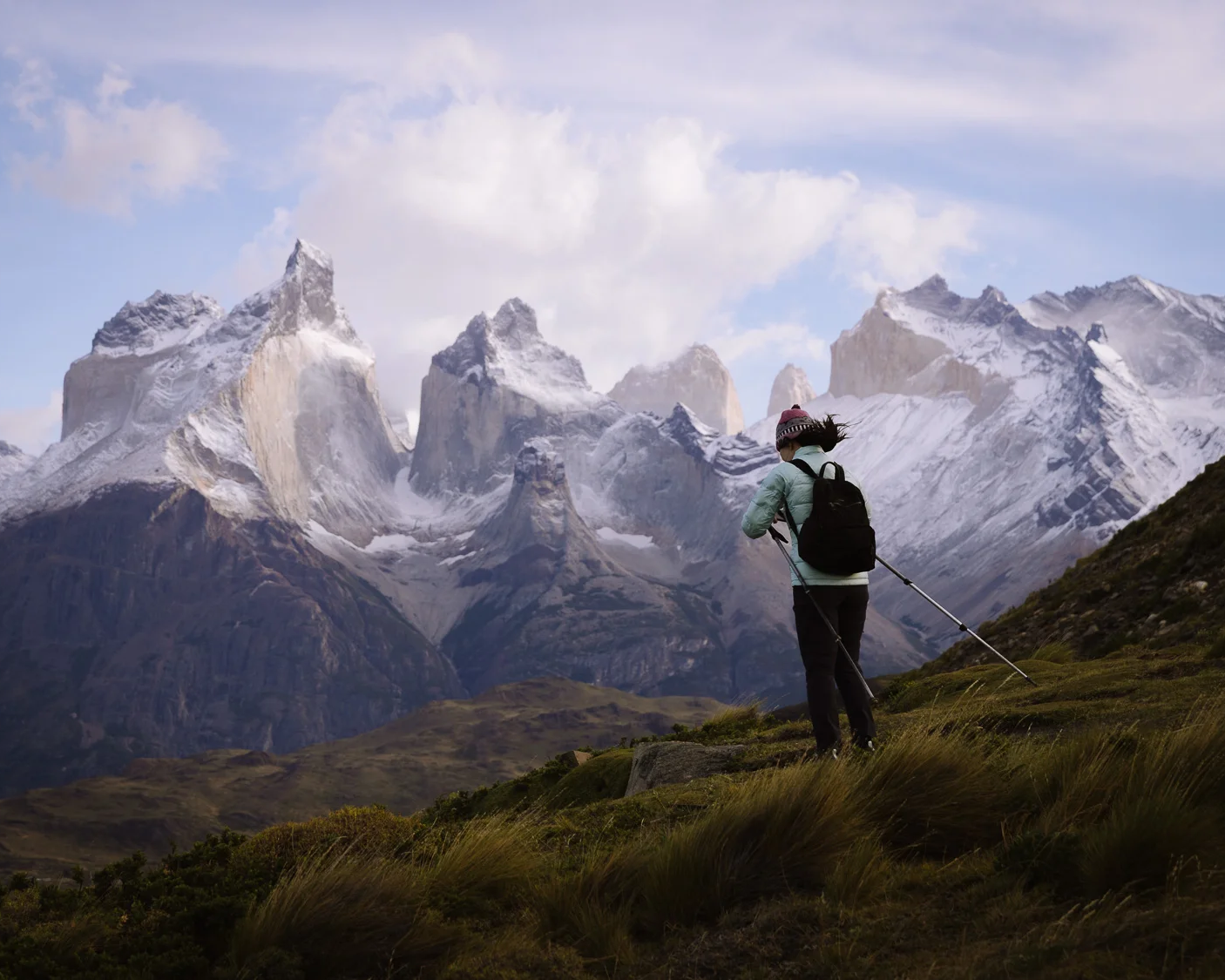
Torres del Paine is, without much competition, the wildest and most beautiful national park we’ve ever visited. Granite towers erupt straight out of turquoise lakes, glaciers grind down from a vast icefield, and guanacos graze wherever the wind lets them stand still.
We’ve been twice now, once on a luxury all-inclusive, and once independently visiting viewpoints and hiking most of the W-Trek. Between the two trips, we think we’ve covered most of what the park has to offer.
This guide covers our pick of the best things to do, whether you’ve got ten days to hike the O-Trek or just one to hit the highlights by car.
Map: Things to Do Torres del Paine
Below is a map of all our favourite things to do in Torres del Paine. Save it to your Google Maps and check off the sights as you travel around.
We have marked all the best viewpoints, hikes, and wildlife-spotting areas. We have also pinned our favourite lunch and dinner spots, as well as our pick of the best all-inclusives.
Click on the top right corner to open our map in your Google Maps app. Click the star next to the title to save it to your Google account.
Things to Do in Torres del Paine
1. Multi-Day Treks
Two of the best multi-day treks in the world are in Torres del Paine National Park. What makes them special is the sheer diversity of landscapes.
W-Trek – A 60- 75 km hike that forms a W on the south side of the Paine Massif. It takes 4-5 days / 3-4-nights and most hikers head east to west to have the wind behind their backs.
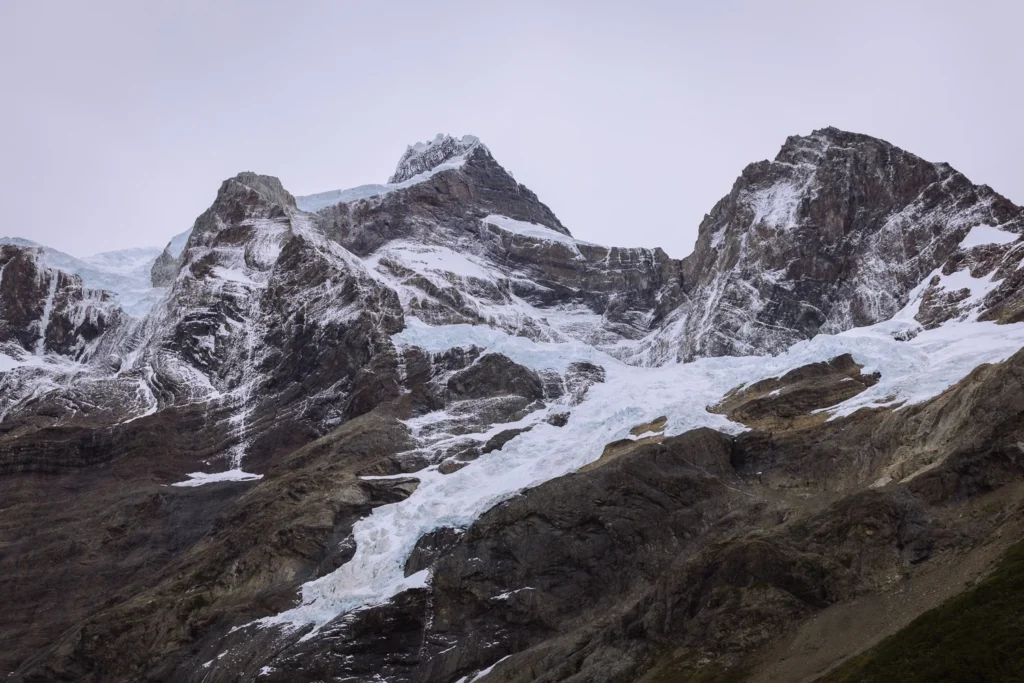
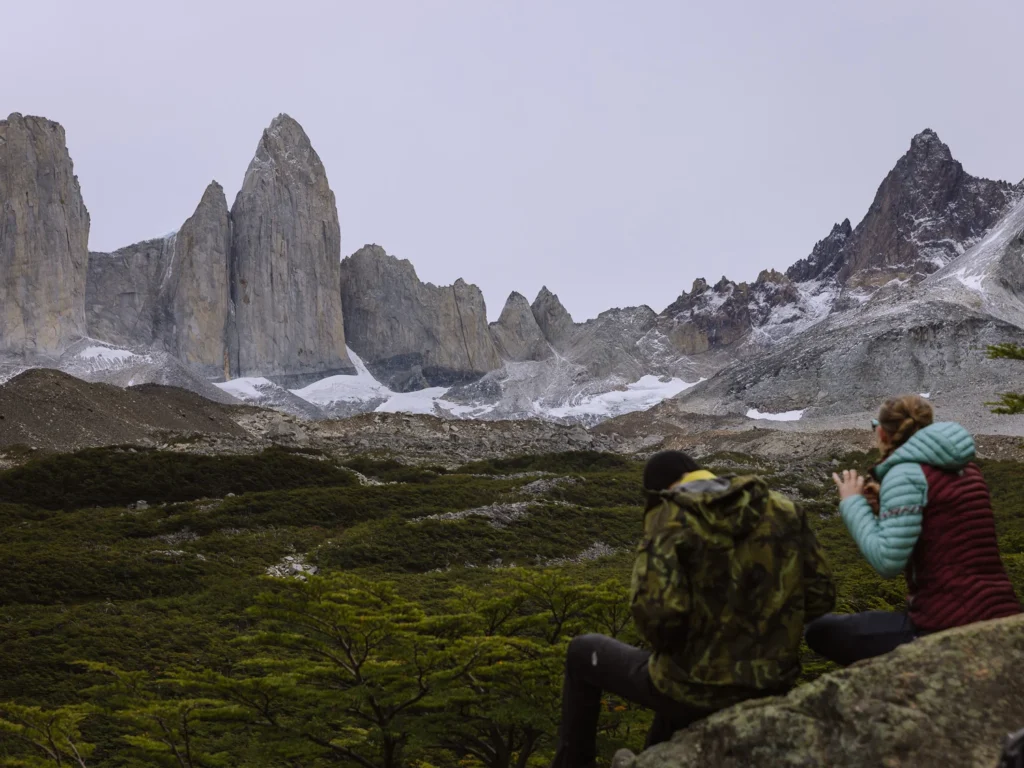
The four best views on the trek are the Three Towers from Mirador Los Torres, the hanging glacier in French Valley, the spiky peaks around Mirador Británico, and Glacier Grey.
The trek is supported by an excellent network of refugios offering everything from camping to dorm rooms, self-cook kitchens to restaurants, and sleeping-bag and sheet rentals. We covered most of the W-trek doing day hikes and loved it.
O-Trek – A 115 – 130 km hike that forms a circle around the Paine Massif (of which the W-Trek is the southern section). It takes 7-9 days and is walked anti-clockwise.
The O-Trek is much more remote than the W-Trek, with tougher terrain, including the high-altitude John Gardner Pass. It has more of a wilderness feel, with basic facilities and campsites rather than refugios.
A number of people died on this trail in 2025, so regulations for guides have been in flux. Check the latest CONAF rules before booking.
2. Lake Pehoé Viewpoints
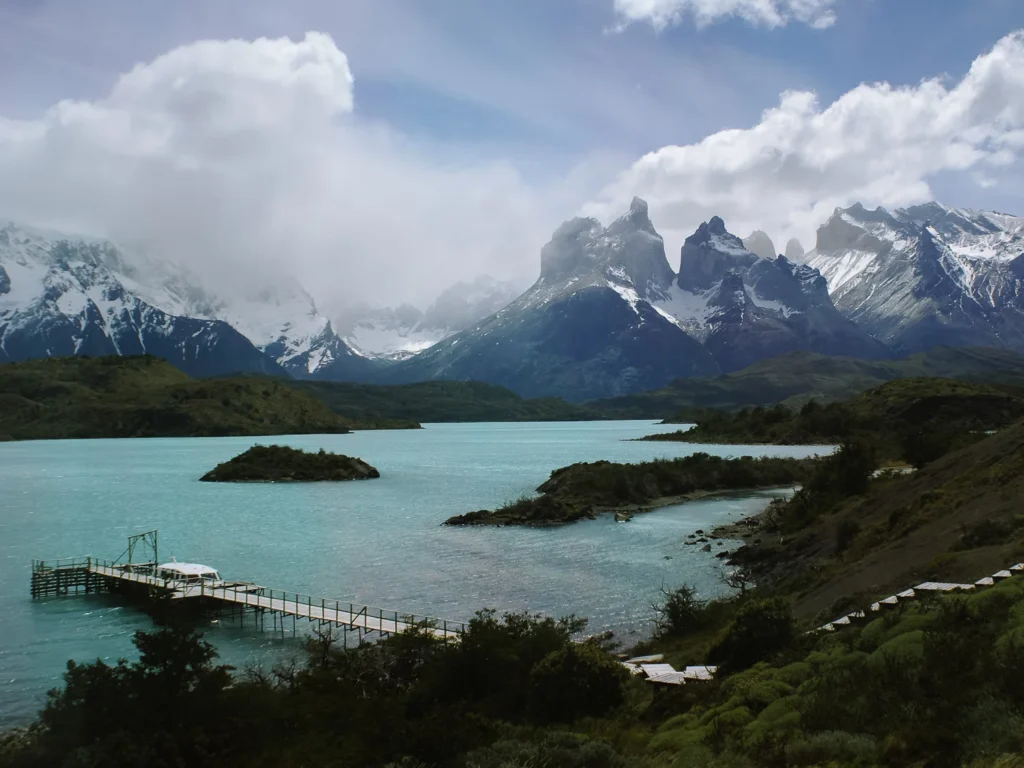
The area around Lake Pehoé is the most beautiful in the park.
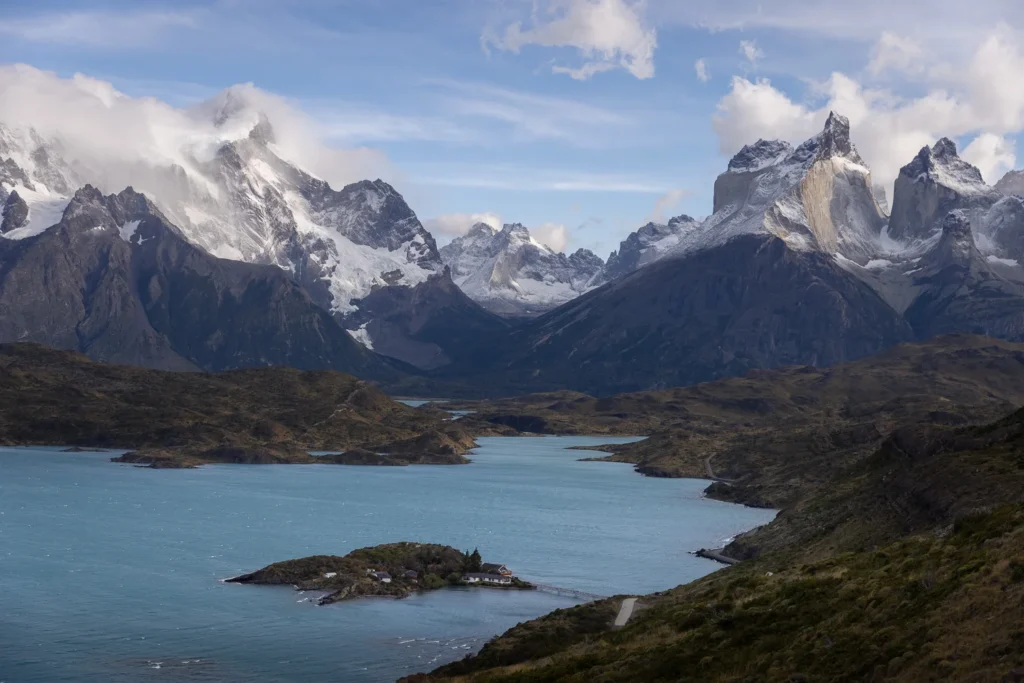
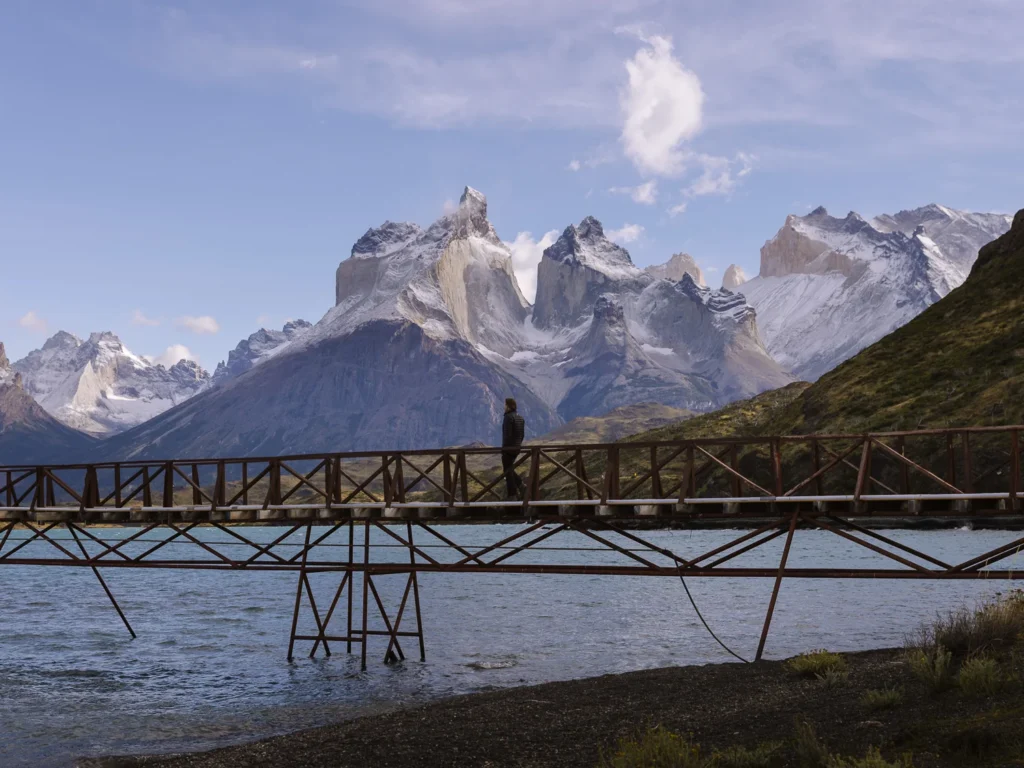
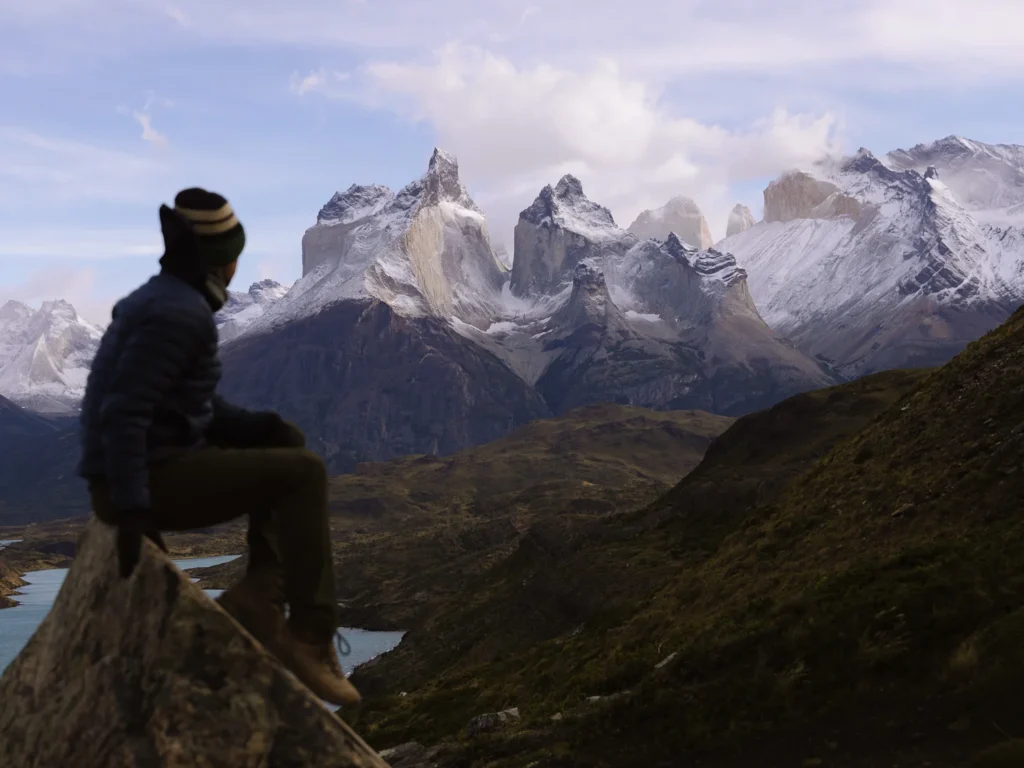
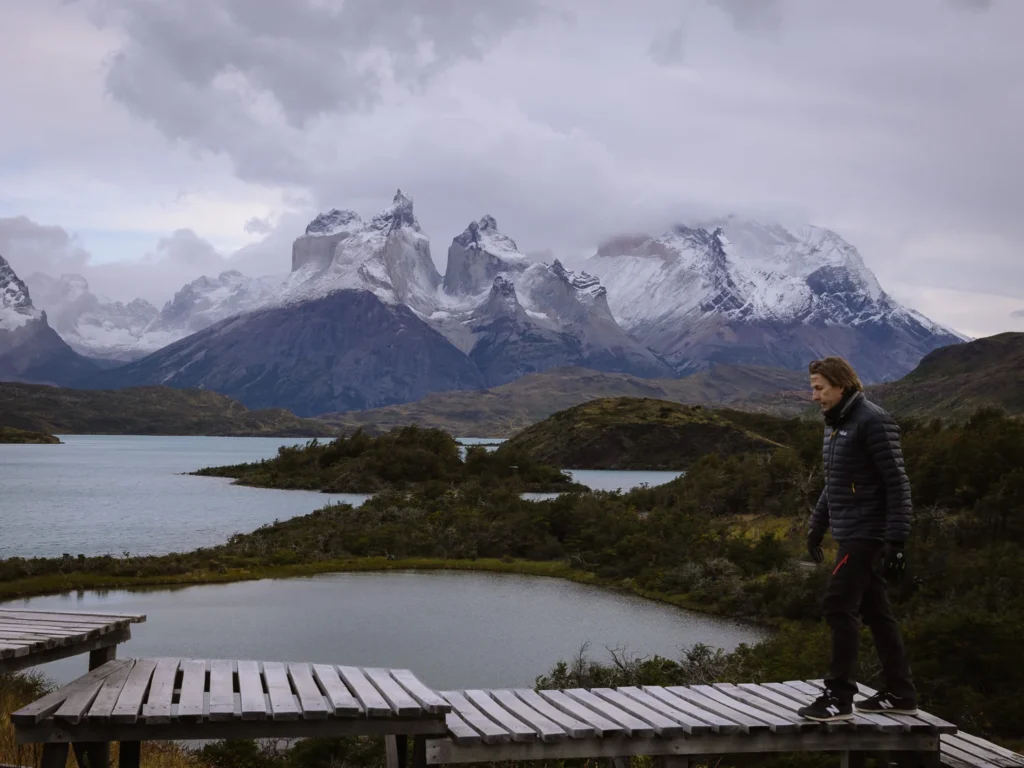
This is where you find the iconic images of the Horns (Los Cuernos) of Paine rising above turquoise lakes. We explored the area extensively during our visit, and these are our three favourite viewpoints.
Explora Hotel Broadwalks – The Explora Hotel is an all-inclusive lodge in a wonderful location. But what makes the views so special are the wooden boardwalks that surround the hotel. They make a great foreground to the remarkable landscapes behind.
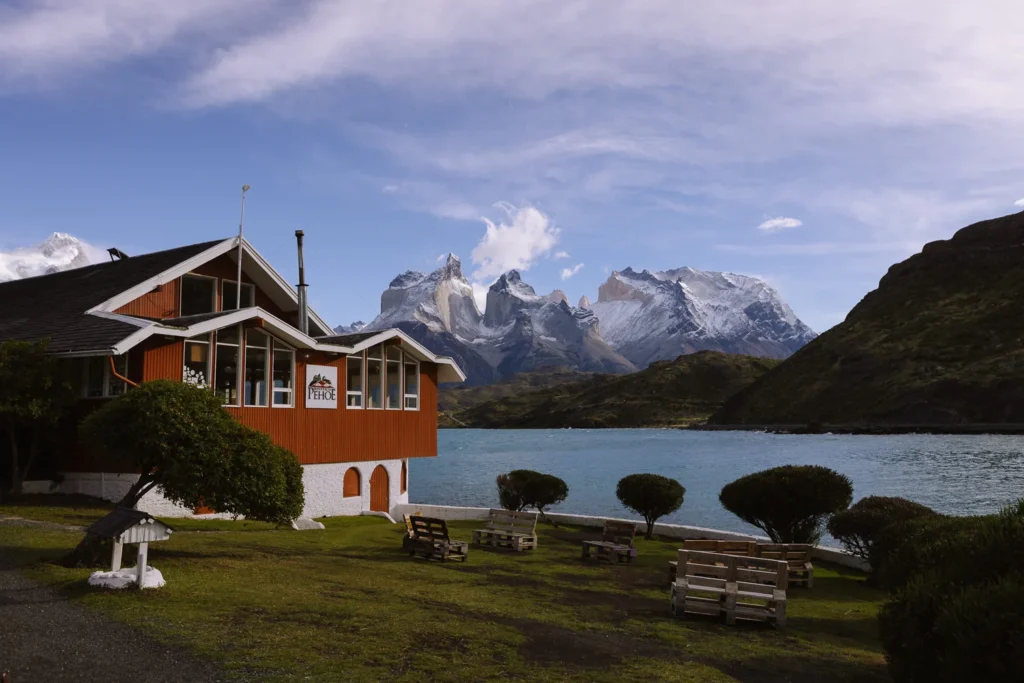
Hostería Pehoé – This red hotel sits on its own tiny island in Lake Pehoé. It is connected to the mainland by a narrow wooden walkway.
There are three views to checkout. The wooden walkway to the hotel, the views from the hotel itself, and from the black beach (on the island behind the hotel).
Mirador Cóndor – Our favourite viewpoint in Torres del Paine National Park, it sits atop a small rocky hillock at only 253m in altitude. Yet it has 360-degree views stretching over the Pehoé area and beyond.
The hike to the summit is 0.7 miles and takes about 40 minutes to climb the 650ft of ascent. Allow about 1 hour and 10 minutes for the 1.4-mile round trip. We had heard it could be blustery up there, and we tried to pick a still day, but nevertheless the wind near the summit was fierce.
For more details on each viewpoint, read our best views in Torres del Paine.
3. Mirador los Torres Hike
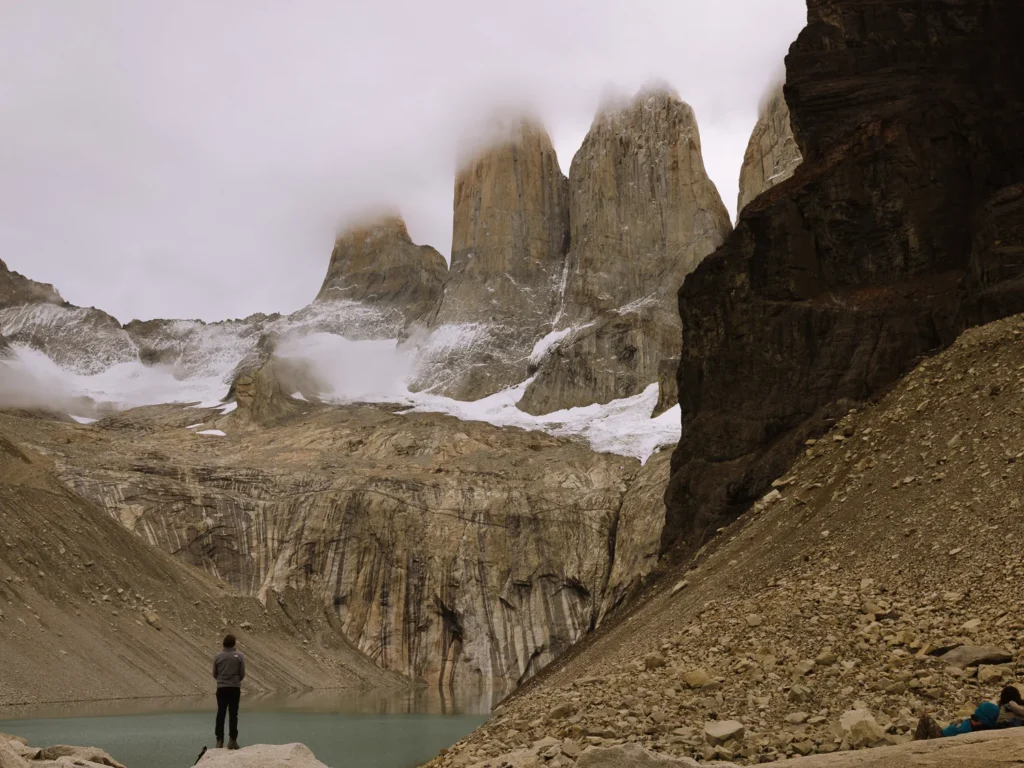
The three Towers of Paine; Torre d’Agostini (South Tower), Torre Central (Central Tower), and Torre Monzino (North Tower); are about 2,500 metres high. They are one of the most distinctive features of the Paine Massif.
The best view of the Towers (Las Torres) is from Mirador Los Torres, which sits on the edge of a lake high up in the Paine Massif.
It is a remarkable sight; however, you have to earn it.
You can join a hiking tour, but it is also perfectly possible to walk there independently.
Park (free) at Las Torres Visitor Centre and follow the very well-signed trail to Mirador Las Torres. The hike to the viewpoint is 6.35 miles and ascends 3,150 feet. There is nothing technically challenging, but it’s a long, tiring walk.
The hike itself is attractive, but what makes it special is the final section. A steep ascent through boulders ends with the dramatic reveal of the three granite towers (Torres), rising almost 3,000 ft straight out of a turquoise glacial lake at their base.
We have been up here twice, and sadly, the tops have been covered in cloud both times.
The return journey is on the same route. Allow about 7 to 8 hours for the round-trip hike.
A popular thing to do is to hike up here for sunrise when the towers turn pink (alpenglow) in the early morning light. You’ll need to start hiking about 4 hours before sunrise and stay near the trailhead in the Towers section of the park. See our “Where to stay in Torres del Paine”.
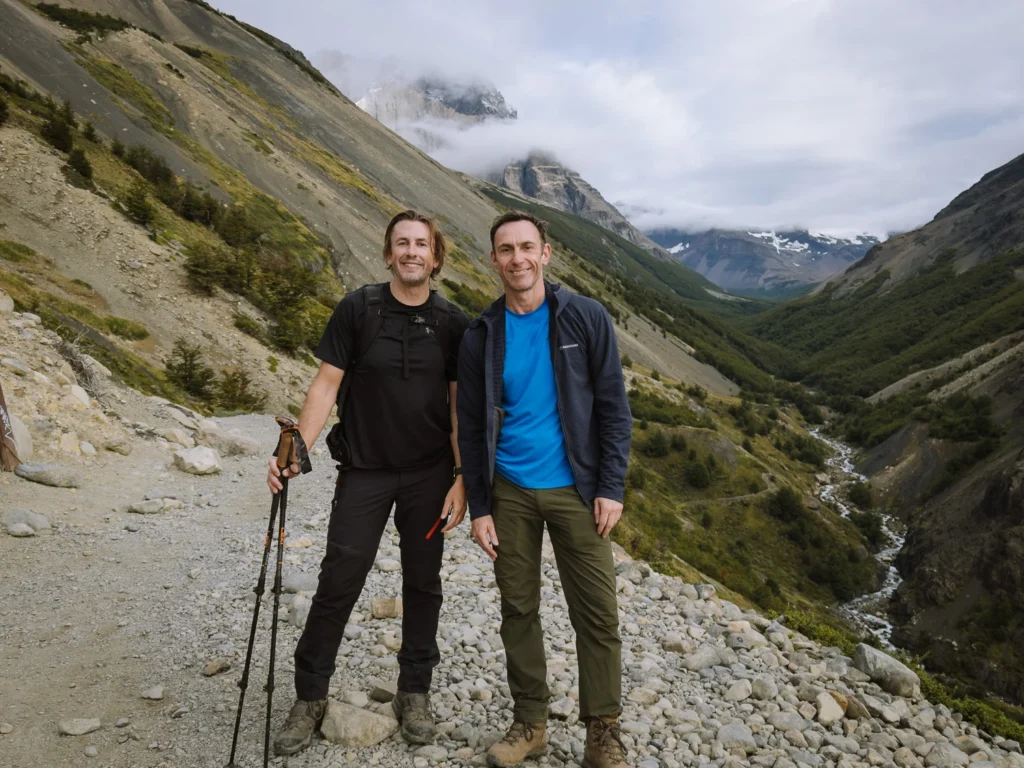
4. Towers (Eastern) Section Viewpoints
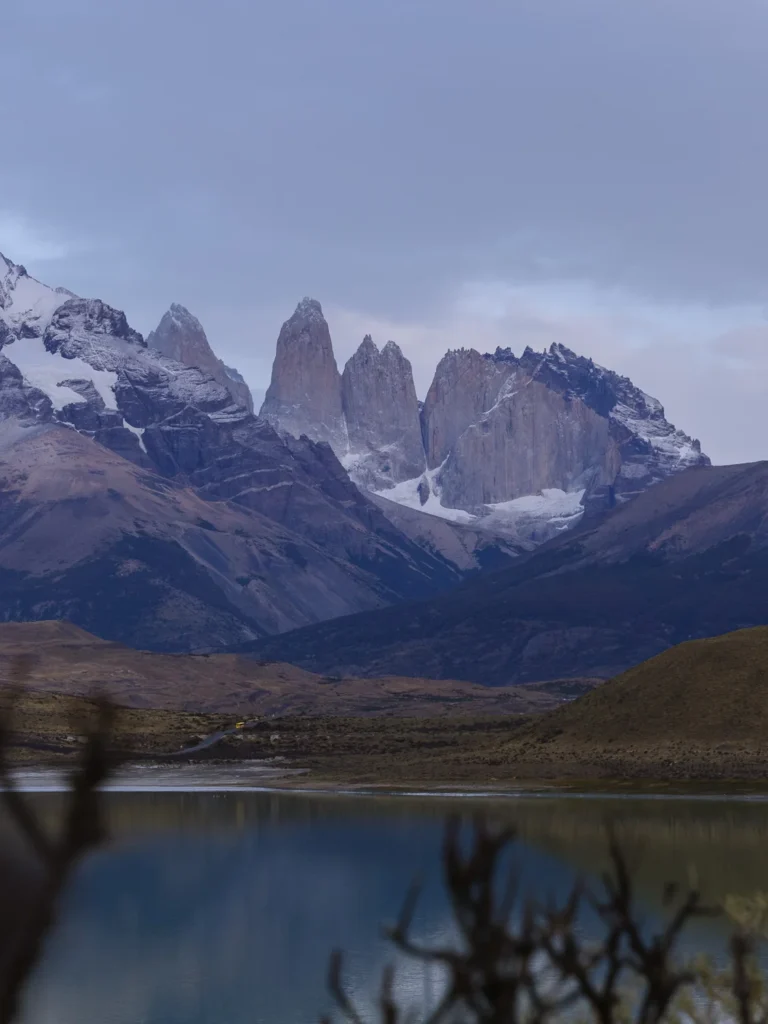
You do not have to hike to Mirador Las Torres to get great views of the Towers of Paine. There are plenty of good miradors along the roads in the Eastern (Towers) section of the National Park.
Here are our favourites.
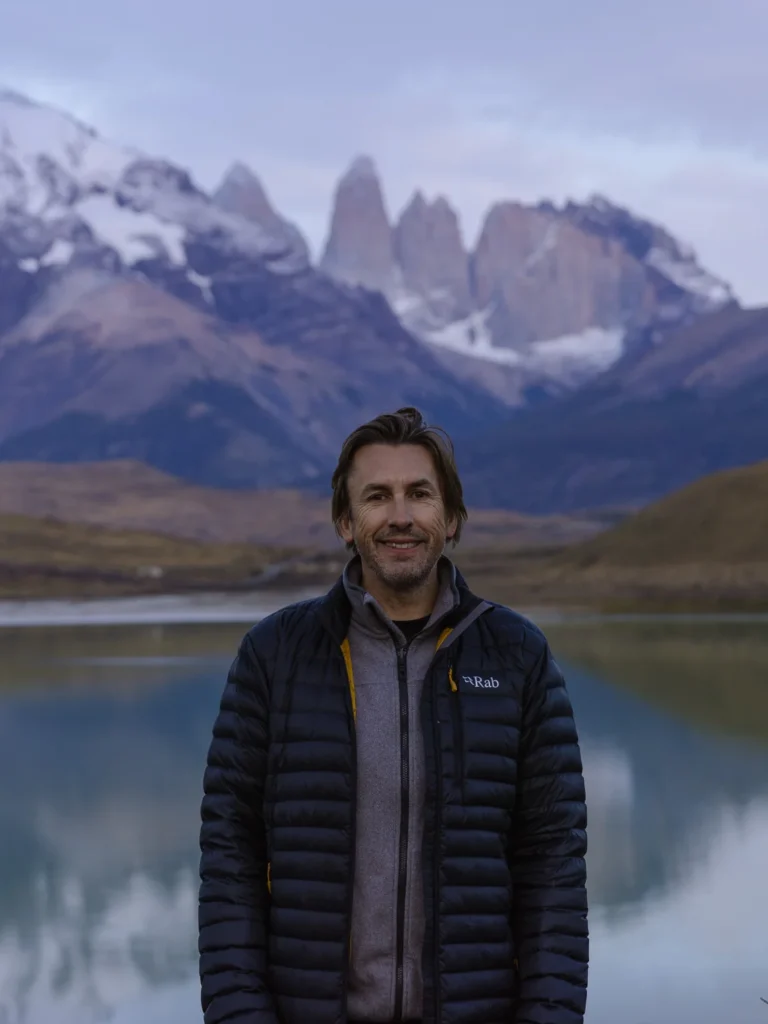
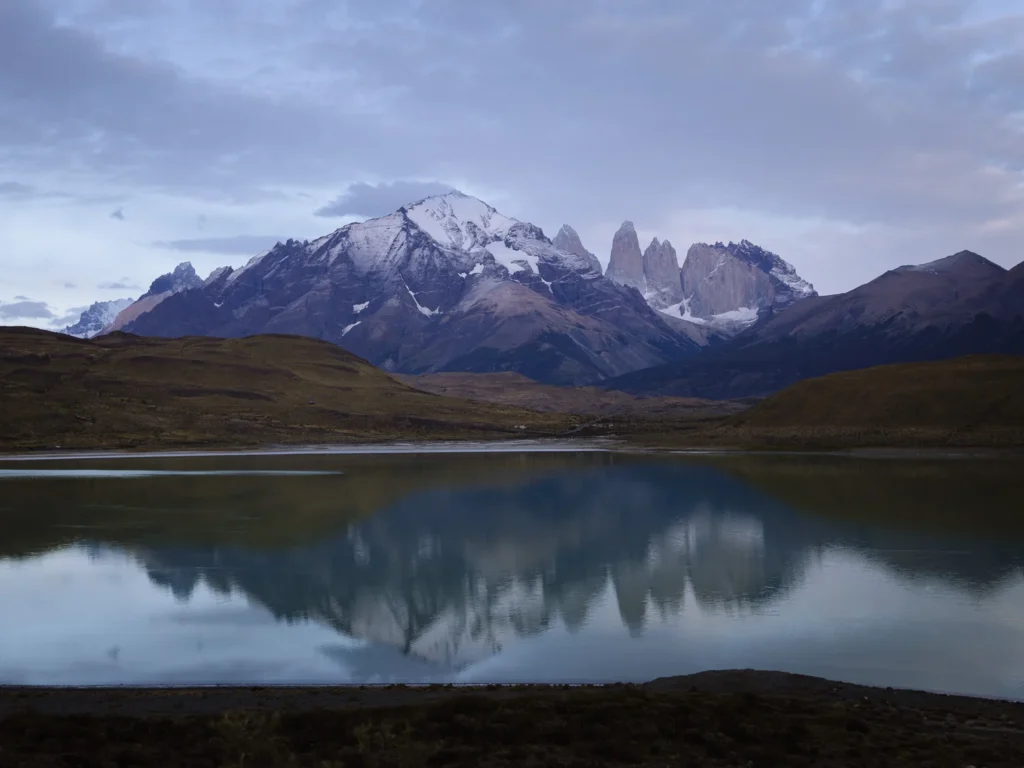
Laguna Amarga – We got lucky here. A beautifully still day, cloudless peaks and soft early morning light meant we could see the three towers and their reflections in the lake. early. If you stop at only one viewpoint in this section of the park, make it this one.
Lago Sarmiento – Further away from the massif than Laguna Amarga, but at the same angle, it offers fine views over the lake. However, the lake is much bigger and less sheltered, so reflections are less likely. There’s a shelter by the side of the road with a square cut out, which we used as a nice frame for a photo.
Nordenskjöld – On a windy day, this is a wild and remote place, but it offers good views over both the Towers (Eastern) section of the park and Pehoé (Southern) section of the park. The highlight is Glacier Grey shimmering in the distance with the Patagonian Icefield behind.
5. Wildlife Watching
Torres del Paine is one of the best wildlife-watching destinations in South America. Its open Patagonian steppe terrain makes animals easy to spot.
The park is one of the only places on Earth where you have a realistic chance of seeing wild pumas. Sadly, despite two visits to the park and a decent amount of time spent looking, we have still come up blank.
The best time of day is around dawn and dusk, when the animals are most active. Here’s what to keep an eye out for.
Pumas – Sightings usually require tracking with a specialised guide away from the main trekking routes. Nevertheless, it’s still possible to get lucky if you’re travelling independently. We were told to focus on the area around Laguna Amarga and the roads down to Lago Sarmiento Gate and Lago Azul (see brown markers on map above).
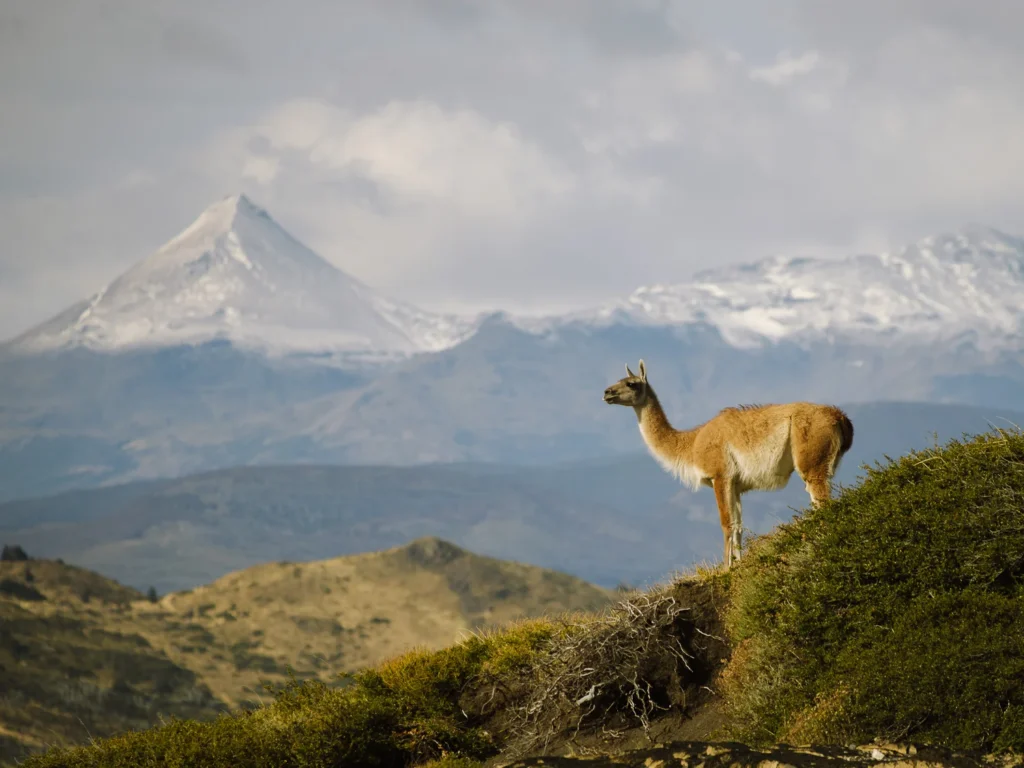
Guanacos – The park’s signature animal, a wild camelid related to llamas, and you’ll see them constantly, often in large herds grazing right along the trails and roadsides.
Birdlife – Laguna de los Cisnes viewpoint (and the lakes around it) is known for its waterbirds. In spring and summer, black-necked swans, coscoroba swans, upland geese, and various local ducks feed at the lake. We have seen Chilean flamingos here, and they look great against the Paine Massif in the background.
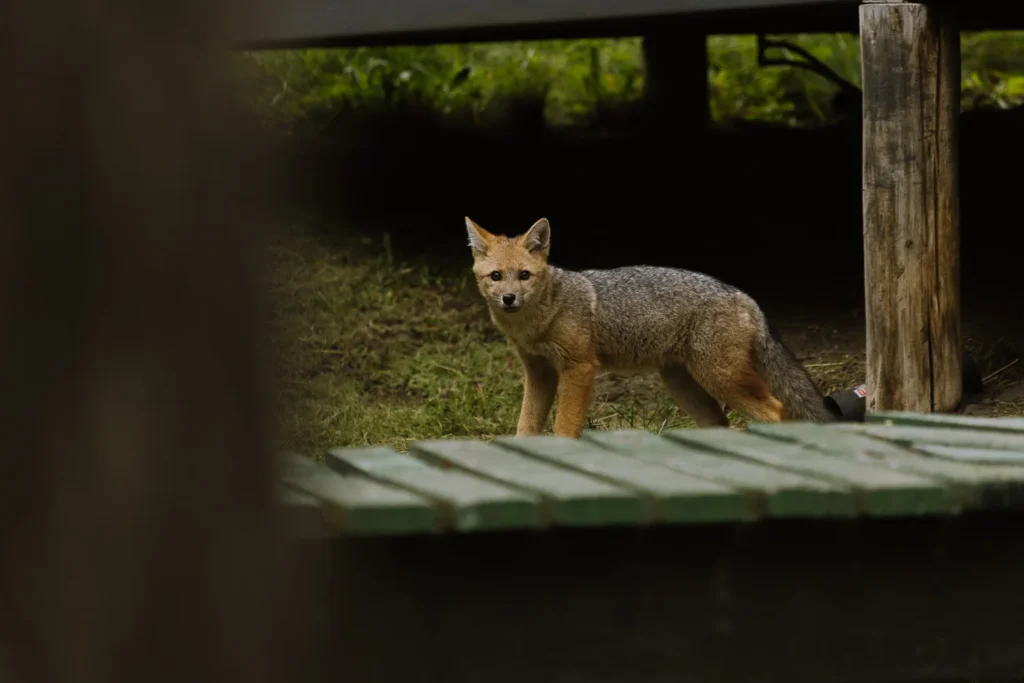
Foxes – Both the South American grey fox and the culpeo (Andean) fox are commonly spotted, sometimes quite close to trails or campsites. We saw quite a few over the few days we were there and got really close to one at Hotel Lago Grey.
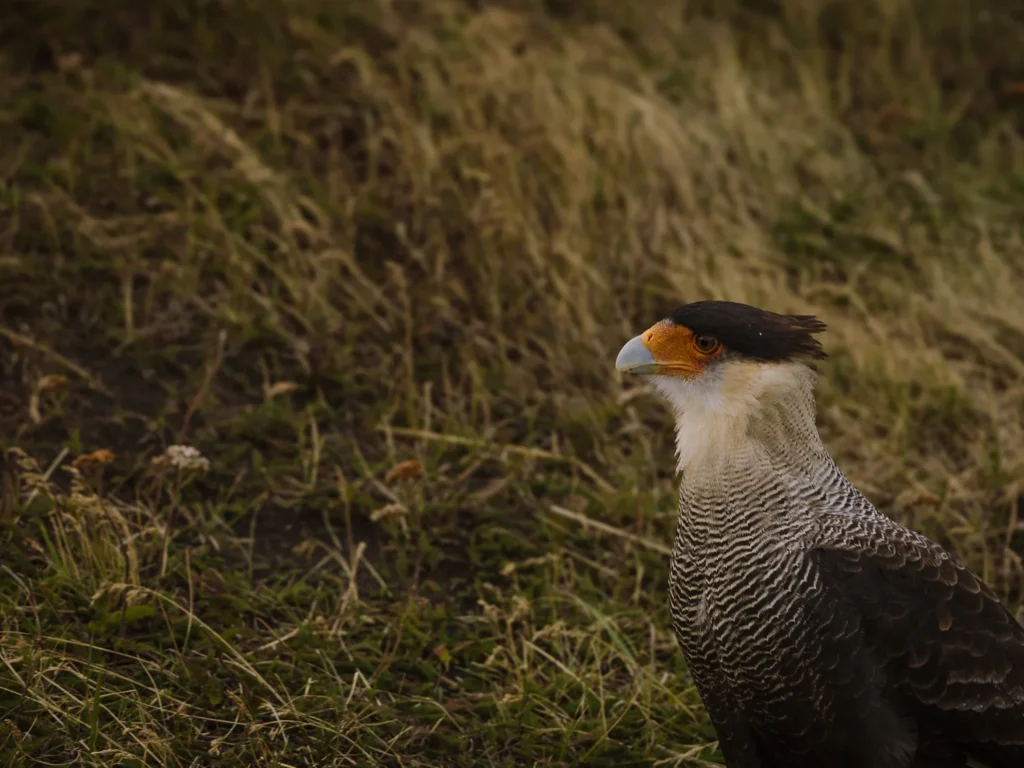
Andean Condors – The largest wingspan of any land bird in the world (about 3.2 meters (10.5 ft) tip to tip) and weighing up to 15 kg (33 lbs), it can frequently be seen soaring over ridgelines and passes. Make sure to keep looking up, especially at the Towers and the aptly named Mirador Cóndor.
6. Boat to Glacier Grey
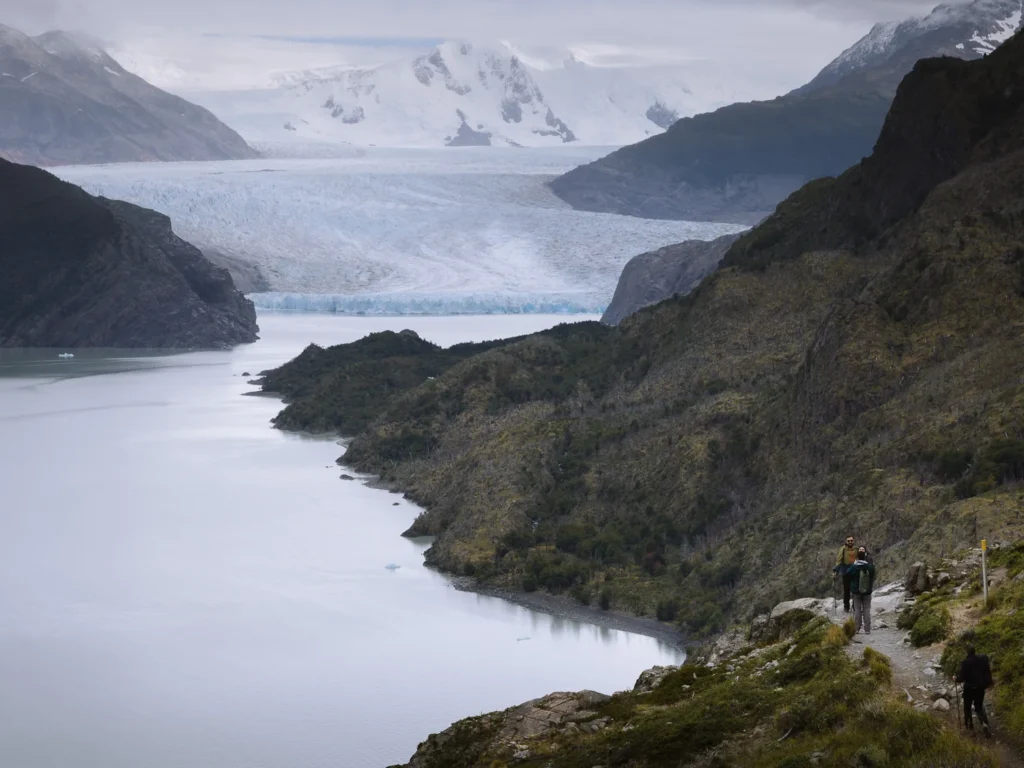
The Southern Patagonian Icefield stretches over 200 miles long and covers almost 5,000 sq miles. Grey Glacier is just one of roughly 50 major outlet glaciers draining the icefield.
It is not even one of the biggest glaciers, yet it looks enormous as its snout sweeps down the valley before ending in a wall of ice above Lake Grey.
Peering at this amazing natural spectacle was one of our favourite experiences in the park.
Hikers can see the Glacier on the W-Trek or on a day hike from Paine Grande (see below), but the easiest way is to get a boat.
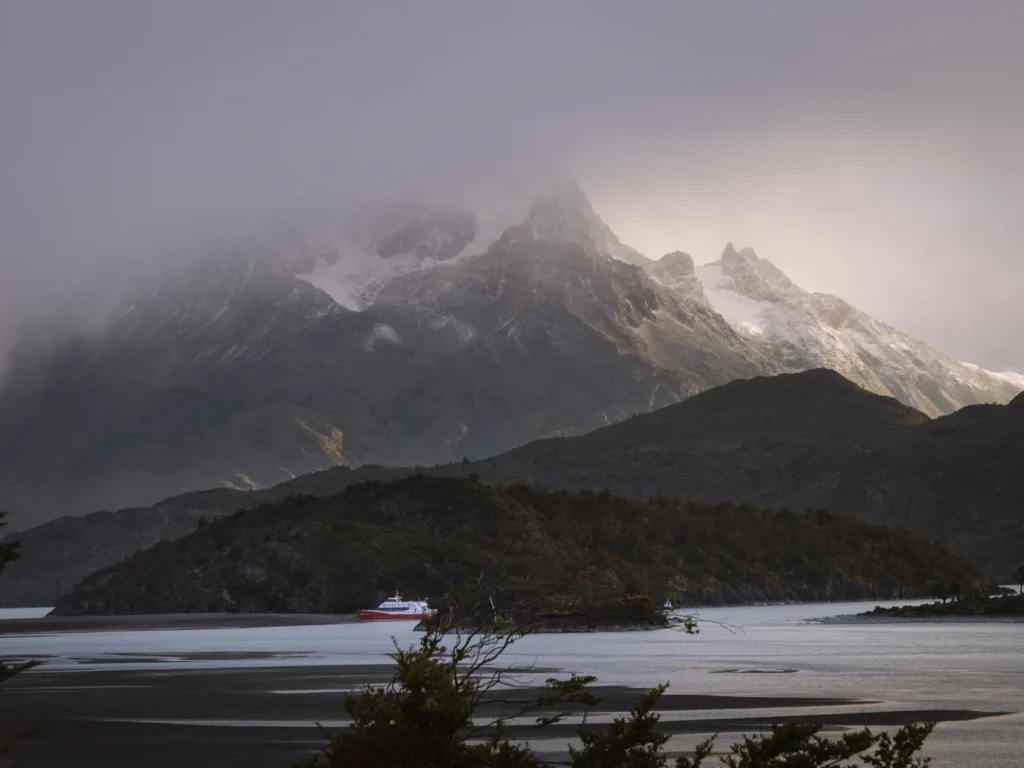
The Grey Lake boat tour leaves from Puente Pingo near the Rio Pingo parking lot. After check-in, you need to walk for 30-45 minutes across the sands of Grey Beach to reach the Grey III catamaran.
The cruise lasts about 2 hours. It makes a brief stop at Refugio Grey before sailing past floating icebergs to the wall of ice. With some luck, you’ll witness chunks of ice calving from the glacier.
At the end of the cruise, you’ll need to walk the 30-45 minutes back to the pier.
The whole experience lasts about 3-hours and costs $110-$120 per person. There are three sailings a day (9 am, 12 pm, 3 pm). Be sure to book in advance. There’s a cafe and snack bar at Puente Pingo.
7. Salto Grande & Mirador Cuernos
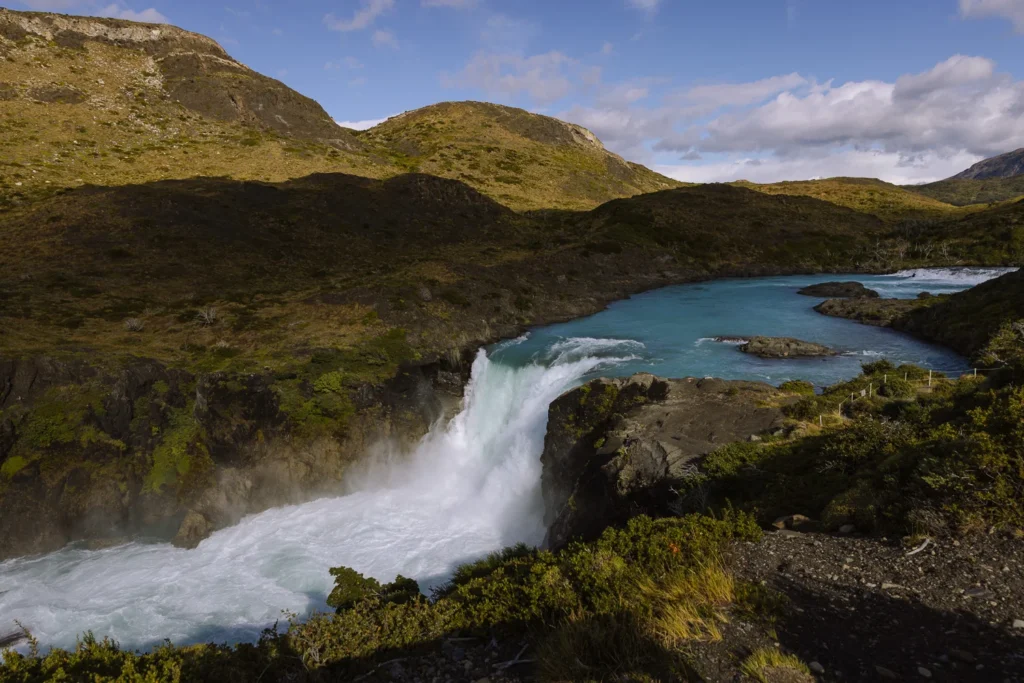
This is a pleasant short stroll to two decent viewpoints. The first is Mirador Salto Grande, which offers views of the highest (15 metres) and most powerful waterfall in the park.
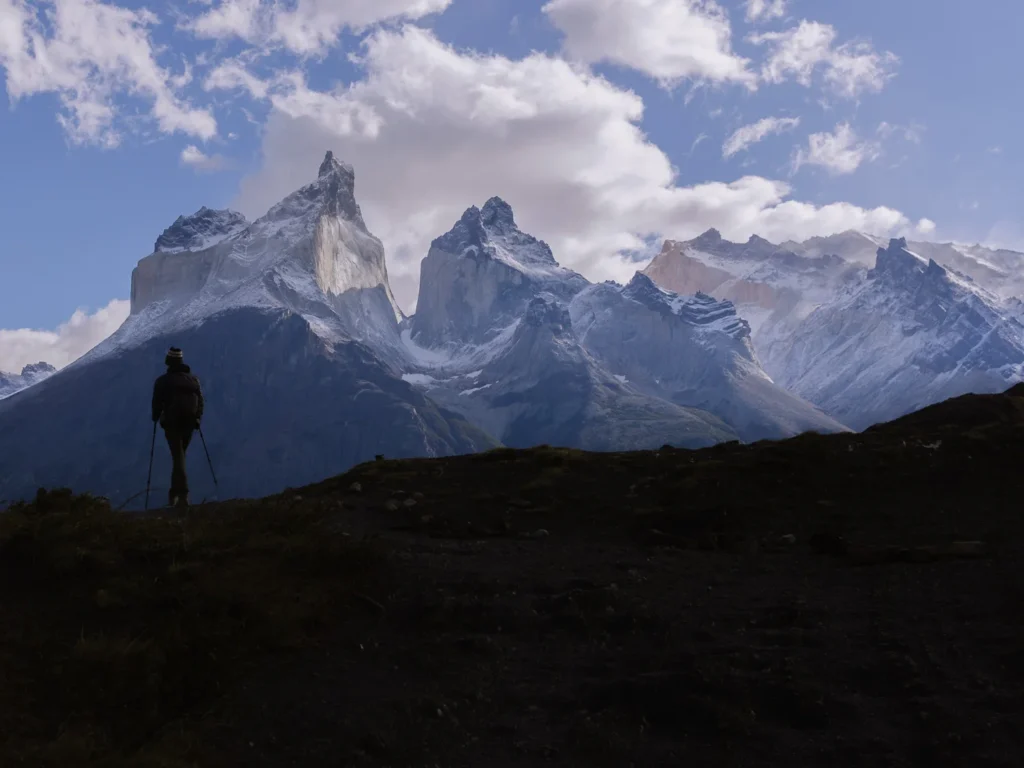
The second is Mirador Cuernos, which offers up close views of the Horn of Paine across Lago Nordenskjöld.
Neither make our list of best viewpoints in the park, but it’s a pretty, easy walk with a good chance of seeing guanacos.
The free car park is a short drive past Refugio Pudeto. It can get busy, but turns over fairly quickly. It’s a 15-minute walk from the car park to Mirador Salto Chico and then another 45 minutes to Mirador Cuernos.
Allow a 2-hour return trip to walk to both. There’s a cafe and toilets at the nearby Refugio Pudeto.
8. Day Hikes from Refugio Paine Grande
The W-Trek skirts under the Paine Massif, well away from the nearest road. You might think its four best views are inaccessible to day hikers, but with a bit of effort, you can see them all. Which is exactly when we did.
Los Torres can be reached on a day hike from Los Torres Welcome Centre (see number 3 above). French Valley, Mirador Británico and Glacier Grey can all be reached on day hikes from Refugio Paine Grande.
To get to Refugio Paine Grande, you need to take the Pehoé Catamaran from Pudeto Pier. The journey lasts 30 minutes and drops you right outside the refugio. It gets very busy, so be sure to book in advance.
There are two great day hikes you can choose from. If you want to do both, consider spending a night at Refugio Paine Grande, rather than taking the catamaran twice.
Mirador Lago Grey Hike
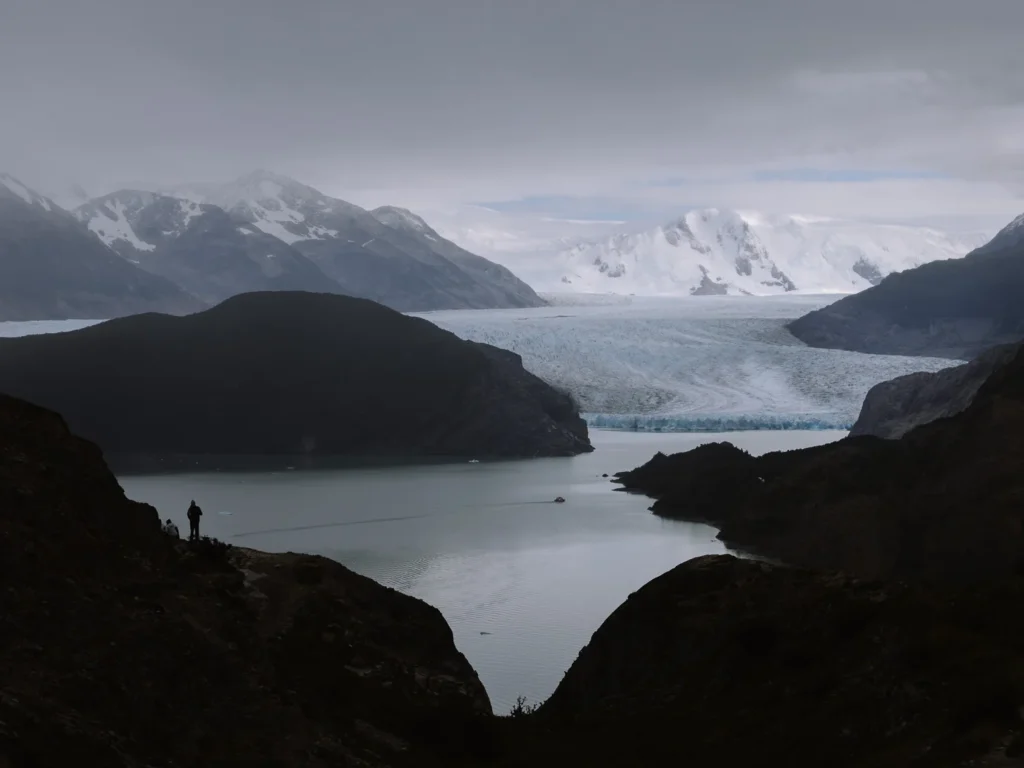
Mirador Lago Grey is a 3.7-mile hike from Refugio Paine Grande. The trail ascends about 1,000 feet and takes about 2 hours. Return the same way you came, making it a 4-hour round trip. The views over the glacier from the Mirador are excellent.
Optionally, you could continue onto Refugio Lago Grey for closer views of the glacier, but in our opinion, the views don’t get much better, and the refugio is quite a bit further.
French Valley and Mirador Británico Hike
This is the more interesting hike, but also longer and has more ascent, making it more challenging. The walk to the view over the hanging glacier in French Valley is 7.25 miles from the refugio, with 2,400ft of ascent. It takes just over 4 hours one way (7-8 hours round trip).
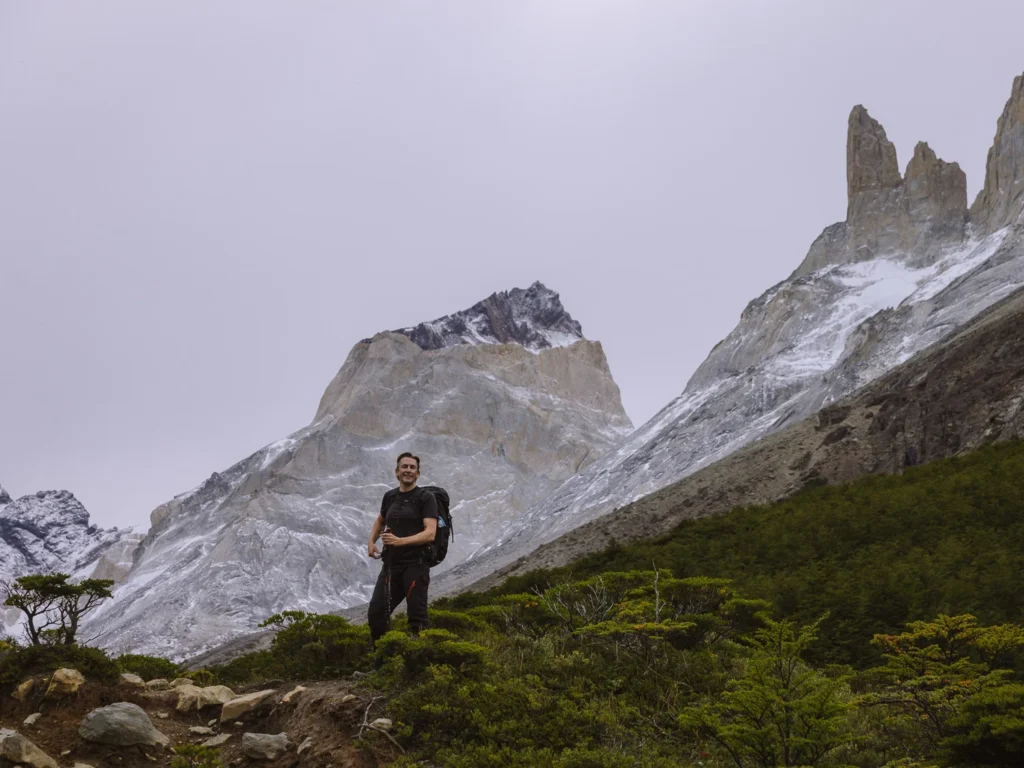
Mirador Británico is a mile farther along the trail and takes another 45 minutes, resulting in a 9-10 hour round trip. It’s long and tiring, and I can safely say I have rarely felt more tired after a day hike.
If you opt for the French Valley / Mirador Británico hike, make sure you book the first and last catamaran. There is a bar at Refugio Paine if you have enough time to celebrate.
9. Mirador Ferrier
We’ll be honest, this is not our favourite hike. It’s steep, the path is narrow and (if you wear shorts) plants can scratch your legs. But the views are very different from anywhere else in the park.
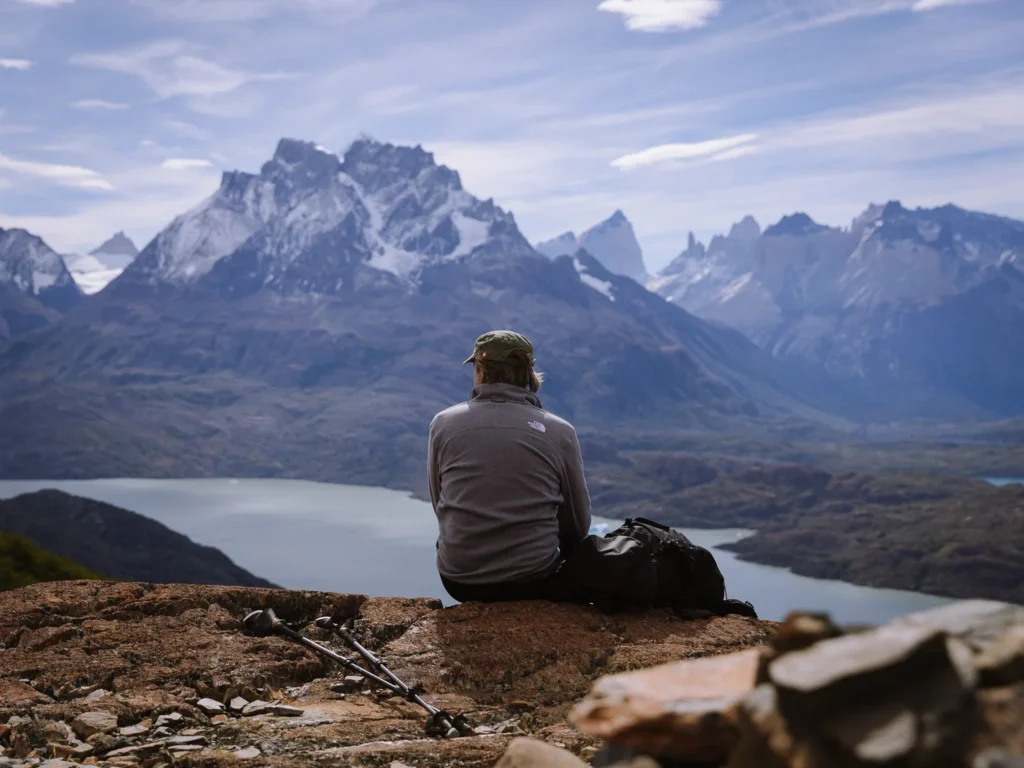
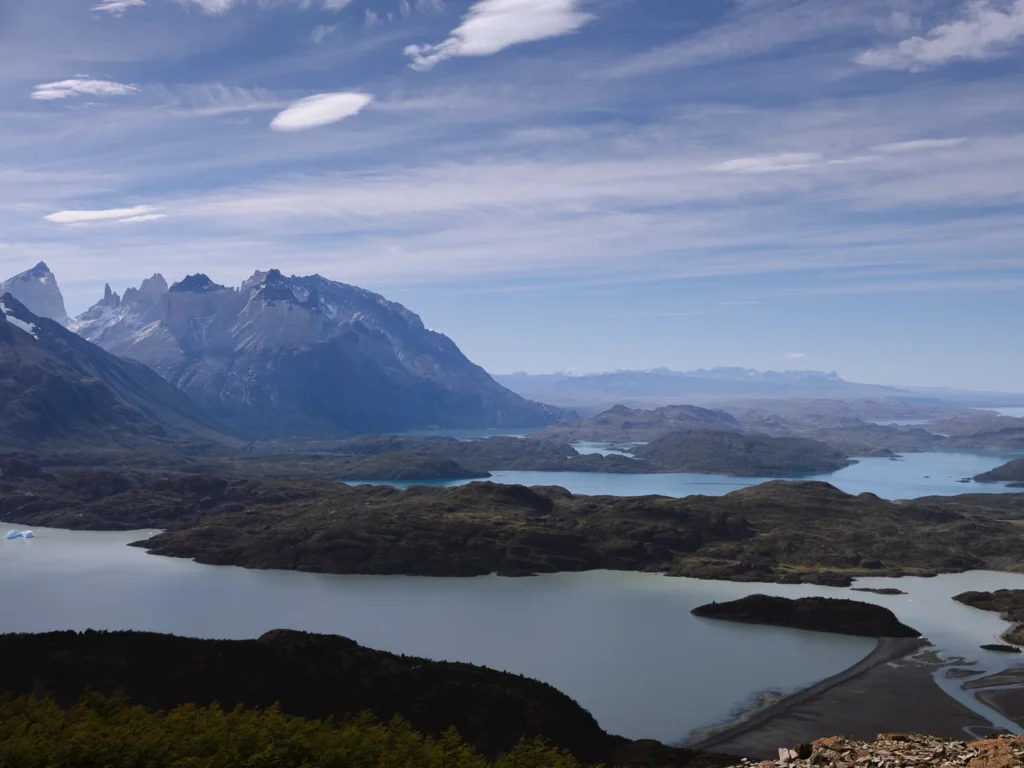
Perched on a rocky outcrop in the western part of the park, what makes it special is not the mountains, but instead the maze of rivers and lakes below.
Glacier Grey shimmers at one end of Grey Lake while at the other Rio Pingo and Rio Grey carve through black sand. Lake Pehoé glimmers a beautiful blue-green, while Lago Nordenskjöld laps the rocky flanks of the Horns of Paine.
The hike is 1.8 miles to the viewpoint, during which you ascend 2,000 ft. It took us about 90 minutes to hike up, and another hour to get back down. Wear boots or shoes with a good grip and long trousers.
We had a packed lunch at the top, and the whole excursion took about 3 hours. A good option for combining with the Glacier Grey boat tour which leaves from the same Rio Pingo parking lot.
10. Rio Serrano Viewpoints
These two stunning viewpoints are both alongside the Rio Serrano and are right next to the road. No walking required.
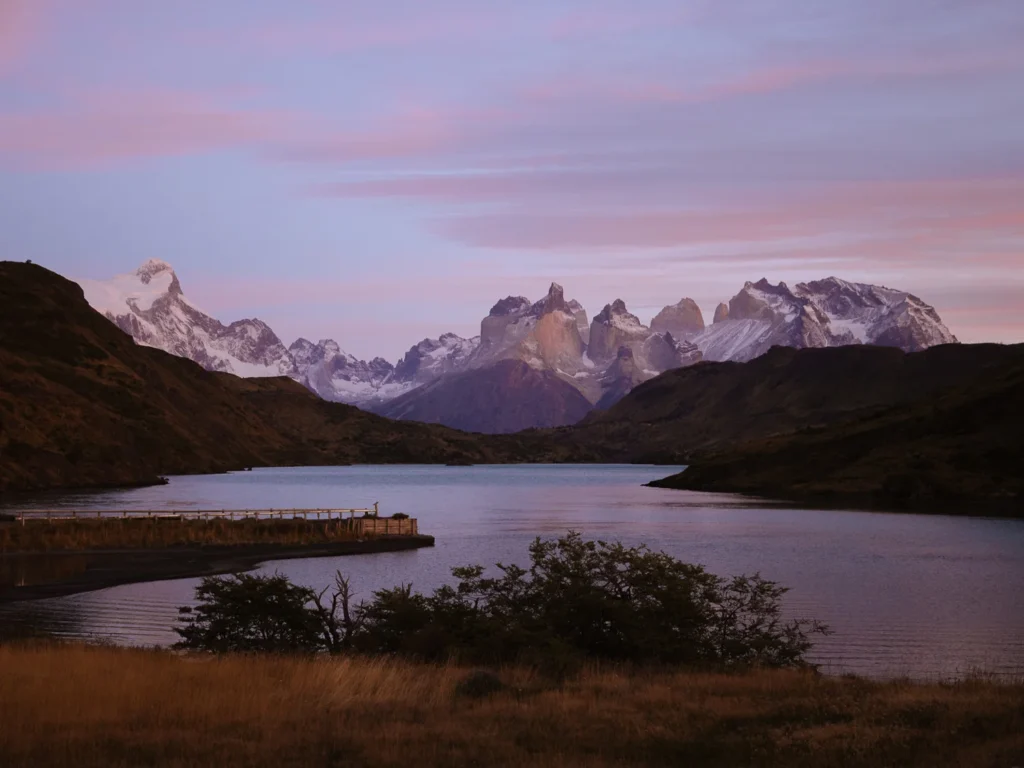
Puente Weber – Just inside the southern entrance to the National Park. A short pier stretches into Lago Pehoé with the Horns of Paine Massif behind. We got here in the early morning and were treated to beautiful pink sky.
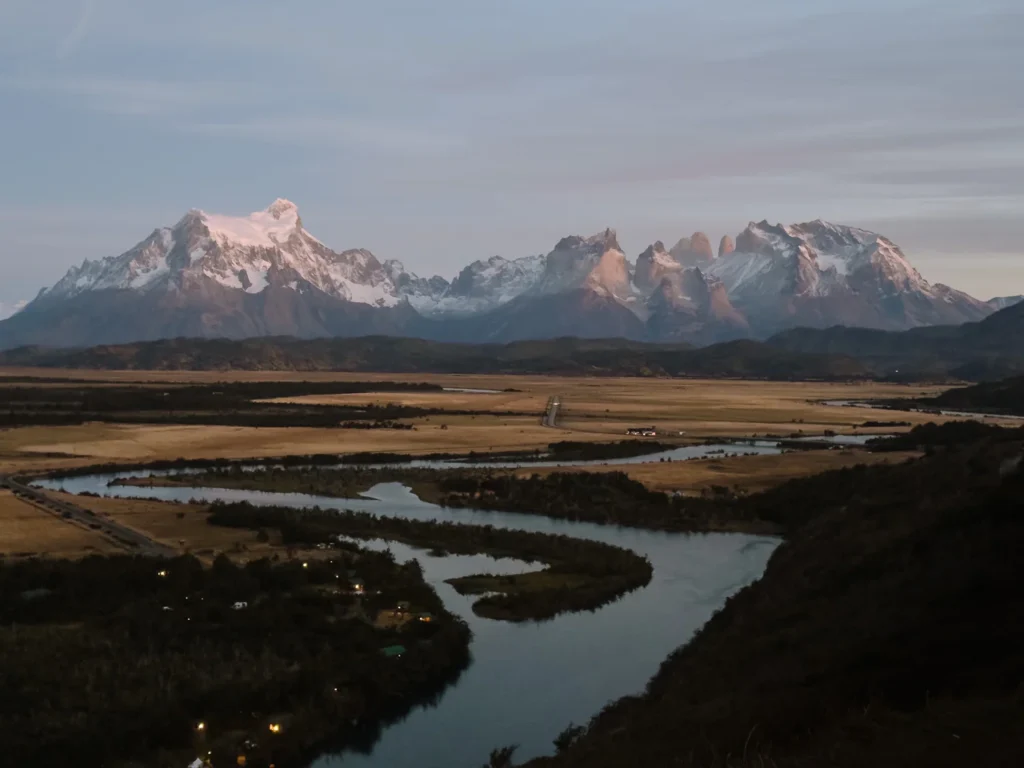
Rio Serrano Viewpoint – Just outside the southern entrance to the National Park, what makes it special is the way the Rio Grey twists and turns its way through a flat basin of fields before the mountains suddenly rise behind.
It’s a striking contrast, and because we spent a few nights in nearby Rio Serrano, we came here a few times at sunrise and sunset to soak it in.
11. Lunch or Dinner with a View
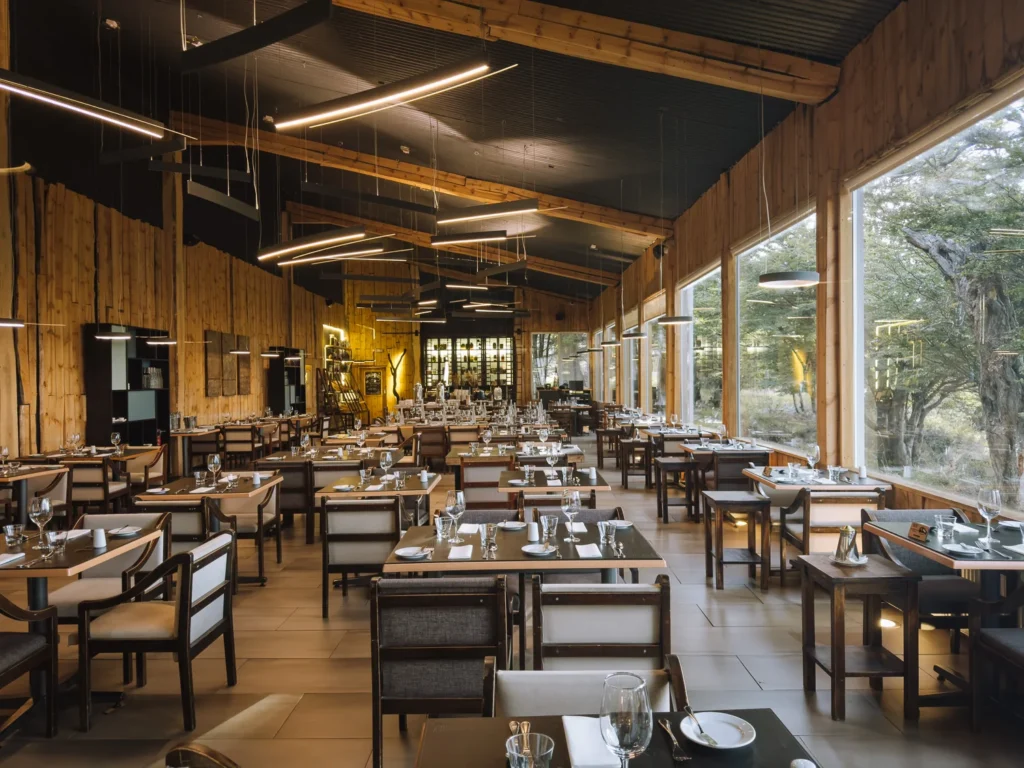
Torres del Paine is blessed with some excellent places to eat. Good food, not crazily priced, with stunning views through massive windows.
These are the ones we would go back to.
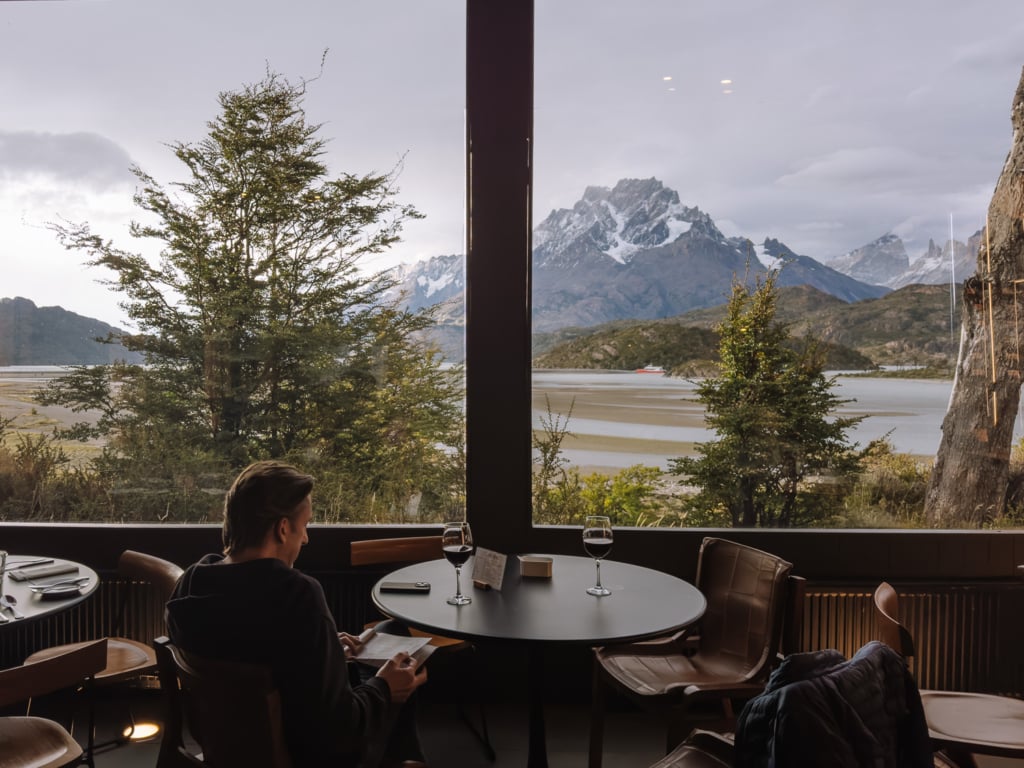
Hotel Lago Grey – Beautiful Nordic-style dining room and bar, with tables facing windows overlooking Lago Grey and Paine Grande. Come here at dusk, and there is a good chance of seeing foxes and woodpeckers. A good menu and a great place for a smarter evening.
Rio Serrano Hotel & Spa – The De Agostini Restobar is a fun, lively bar with huge windows overlooking the Horns of Paine (skip the smarter, slightly sterile restaurant upstairs). It’s relaxed, with a good wine list and tasty pub food. We loved its laid-back and chill feel. Paul never has the same thing twice, but he couldn’t resist lamb pasta a second time, which tells you how good it was.
Hostería Pehoé – A decent lunch option in the centre of the Pehoé section. The food is a bit pricey, but it’s got a lovely cosy feel, and the tables next to small windows have what are possibly the best views in the park.
12. All-Inclusive Stay
Exploring Torres del Paine under your own steam can be challenging. You can spend days hiking and sleeping in tents or dorms. Or you can book your own hotels, hire a car, drive on rutted roads between sights, and plan your own hikes.
If neither is your thing, don’t worry. Torres del Paine is one of the best places in the world to stay in all-inclusive hotels. So sit back, relax and let someone else take the planning strain.
Packages usually include:
- Full board lodging, usually in high-end or boutique-style rooms/domes/cabins, often with panoramic views of the massif, lakes, or Cuernos.
- Breakfast, lunch, and multi-course dinner, plus house wine, pisco sours, and other beverages at meals. Boxed lunches are provided on excursion days.
- A menu of guided hikes, viewpoint visits, horseback riding, wildlife watching and other activities each day. They are graded by difficulty, so guests can choose based on fitness level.
- Transfers to/from trailheads and catamaran crossings.
We treated ourselves to an all-inclusive on our first visit in 2009. It was a magical experience that involved hikes to French Valley and Mirador Cóndor, horseback riding across the Patagonian Steppes, and hot tub soaks looking up at the Horns of Paine.
You can read all our recommendations in our Where to Stay in Torres del Paine. Of the all-inclusives, we have only stayed at Explora, but after checking the others out, here are the ones we would choose between.
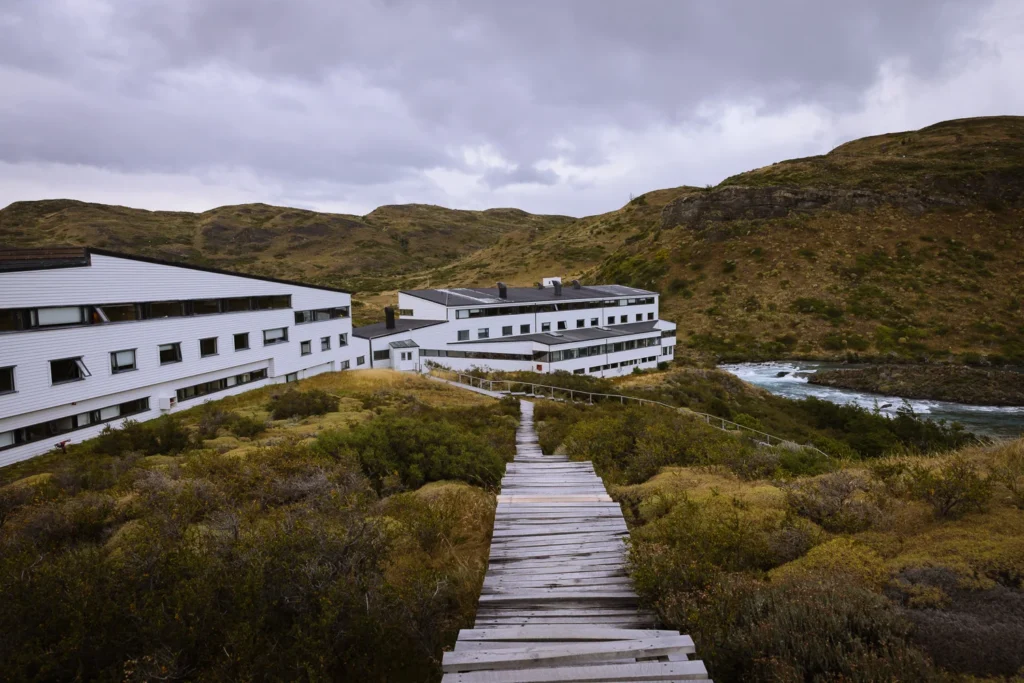
Ecocamp Patagonia ($$$$$)
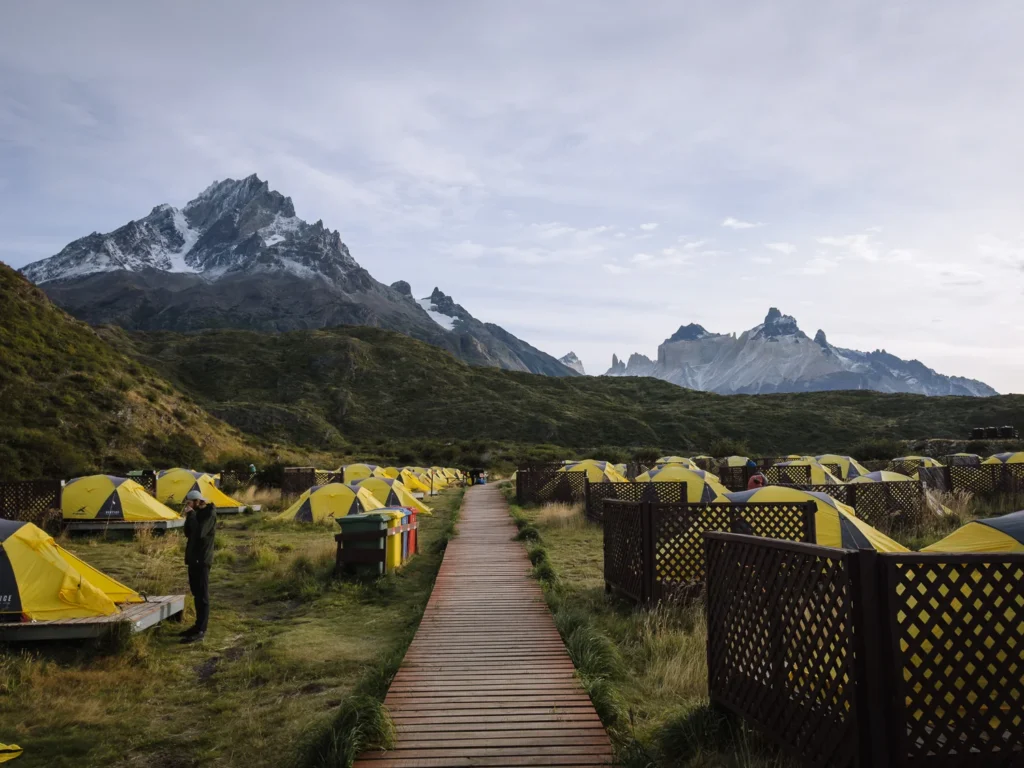
EcoCamp Patagonia is a dome “glamping” just off the W Trek’s eastern trailhead, sold as multi-day all-inclusive packages (typically 4–8 days) covering meals, transfers and guided excursions.
What makes it special is its stripped-back immersive wilderness experience, while still having heating in the rooms. However, some domes have no electricity or shared bathrooms.
The fairly limited number of domes means it books up months in advance. Prices can change dramatically depending on peak season and the standard of dome you want.
Explore Torres del Paine ($$$$$)
Explora Torres del Paine is the original luxury all-inclusive lodge on Lake Pehoé, with a minimum stay of 3 nights (rising to 6 nights over the Christmas/New Year period). Rates cover all meals, drinks, transfers and unlimited guided excursions.
We stayed here on our first trip back in 2009. It is a very special place, in a very special location, for a very special occasion. It is the most luxurious of the three all-inclusive hotels in the park, and it easily has the best views.
Tierra Patagonia ($$$$$)
Tierra Patagonia is an all-inclusive lodge and spa on the shore of Lake Sarmiento with a minimalist, architect-designed feel. Rates include meals, drinks, transfers and guided excursions. We’d position this place alongside Explora as one of the park’s top-tier luxury options. They also have a 3-night minimum.
More Argentina & Chile Guides
- Our top things to do in Buenos Aires.
- Where to stay in Buenos Aires – perfect for first timers.
- How to spend 2 days in Buenos Aires.
- Our favourite things to do in Torres del Paine National Park.
- All the best viewpoints in Torres del Paine National Park.
- Our favourite lodges in Torres del Paine National Park.

reader-supported
When you buy through links on our site, we may earn a small affiliate commission at no extra cost to you.
Thanks for your support // Paul & Mark