

By: Mark Barnes // Last Updated:
After two visits to Torres del Paine, staying in refugios, cosy lodges, budget hotels and all-inclusive resorts, we’ve learnt a lot about booking accommodation. Here is our honest opinion of where to stay in Torres del Paine.
Torres del Paine isn’t cheap, and choosing where to stay is a careful balance between location and cost.
Base yourself inside the park, and you can easily get to sunrise at the Towers or the best lake views in Patagonia. But you’ll pay for the privilege.
Stay in Puerto Natales, and you’ll save a lot of money, but add well over an hour’s drive each way.
We’ve been to Torres del Paine twice now, once in an all-inclusive resort and once travelling independently. Trying to fit as much in as possible, managing costs and going out of our way to be at the right place at the right time, we learnt a lot about where to stay in Torres del Paine.
This guide is our honest breakdown of what to expect in each area and the pitfalls to avoid. We’ve explained each of the different areas, what they are good for and not so good for and provided accommodation options across different buget ranges.
We hope this makes it easy for you to know where you should base yourself in Torres del Paine, but if you have any questions, please ask us in the comments at the end of this guide.
Layout of Torres del Paine National Park
Torres del Paine National Park spans over 900 square miles, but the area you visit is tucked into the south-eastern corner, making it much more manageable than it sounds.
There are 5 different areas you might consider staying when visiting the park:
- Inside the National Park: Towers Section
- Inside the National Park: Pehoé Section
- Outside the National Park: Rio Serrano (Southern Entrance)
- Outside the National Park: Cerro Castillo (Eastern Entrance)
- Outside the National Park: Puerto Natales
Inside the National Park
Inside the park, accommodation can roughly be split into two different areas.
Towers Section
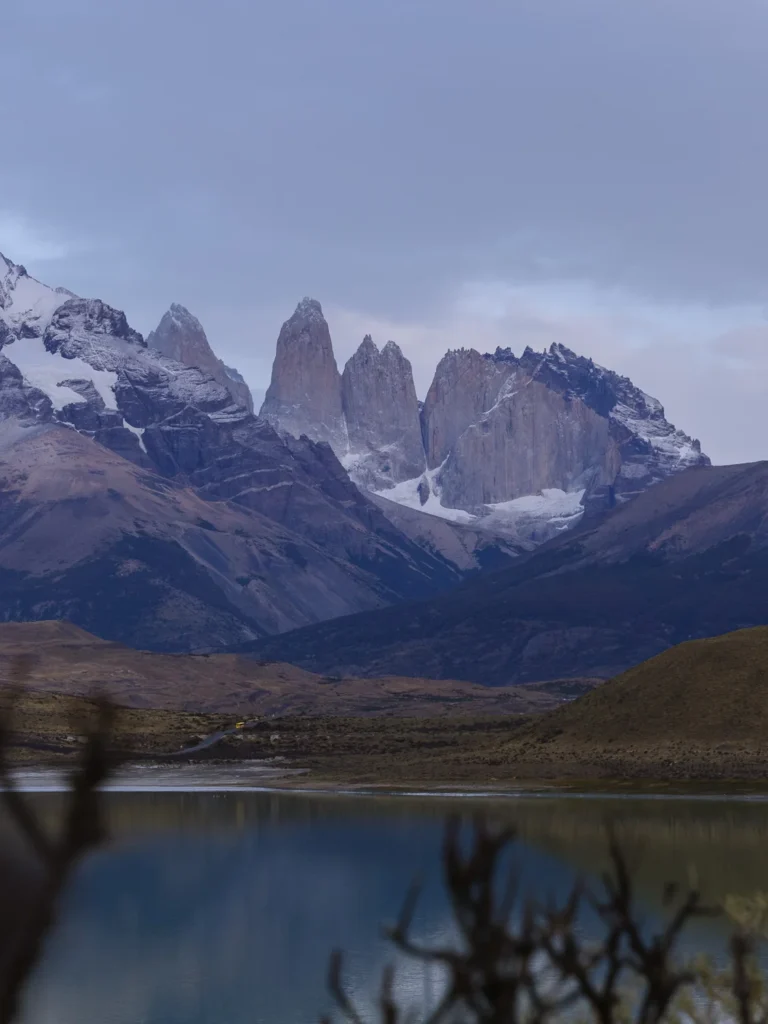
The eastern part of the park is called the Towers Section.
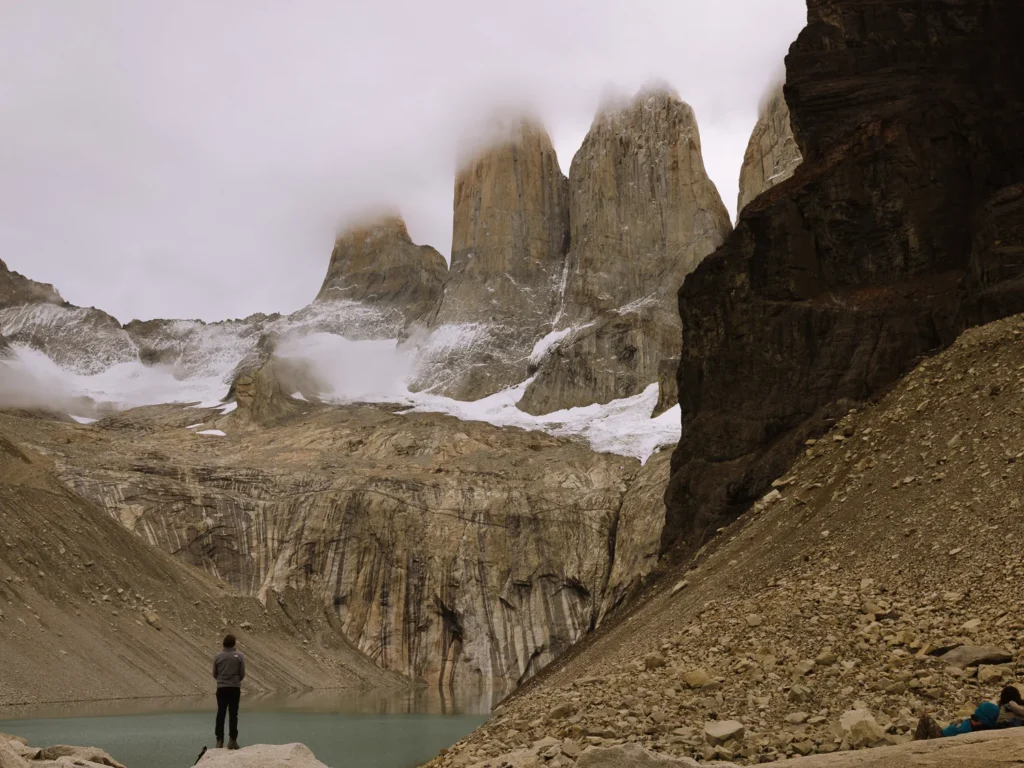
This is where you will find the trailhead for the hike to the Base of the Towers, as well as the beginning/end of the W and O-Treks. The wide open plains are also excellent for spotting wildlife, which are best seen around dawn or dusk.
The closest access is the Eastern Entrance Laguna Amarga Gate.
This is where to stay if you:
- want to hike to the Base of the Towers for dawn.
- want to look for pumas and other wildlife at dawn or dusk.
- are willing to pay a bit more to be in a prime location.
Pehoé Section
The southern part of the park is called the Pehoé Section.
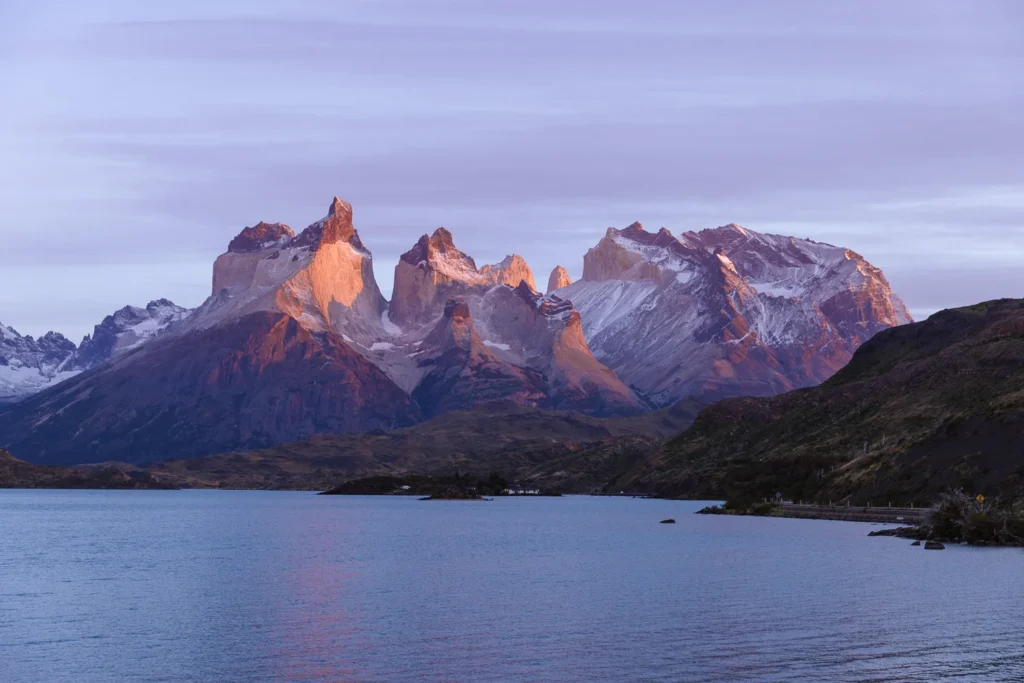
This is where you will find the most famous views of the Paine Massif which we cover in our guide to the best viewpoints in Torres del Paine. It is also where boats leave for sightseeing trips to Grey Glacier and for day hikes from Paine Grande.
It is the most stunningly beautiful part of the park. The closest access is the Southern Entrance Rio Serrano Gate.
This is where to stay if you:
- want to get the best sunrise and sunset photos of the Paine Massif.
- want sensational views from your accommodation.
- are willing to pay a bit more to be in a prime location.
Outside the National Park
There are three different options for staying outside the park.
Cerro Castillo
Cerro Castillo is a small town, about a 40-minute drive from the Eastern Entrance of the park. There is not much going on here: a small shop, snack bar, and restaurant. It doesn’t have much atmosphere, but the guest houses are way cheaper than in the park.
This is where to stay if you want:
- good value accommodation thats just a short drive from the park.
- good access to the wildlife viewing area.
- not too long a drive to the base of the Towers Hike.
Rio Serrano
Rio Serrano is a small settlement of hotels, just a 5-minute drive from the Southern Entrance. There is no local community here, and there are no shops. However, the hotels have dining options, the views are wonderful, and you get (a little) more bang for your buck than the nearby Pehoé Section.
This is where to stay if you want:
- only a 20-minute drive to the best viewpoints in the park.
- better value and wider range of accommodation than in the park.
- very good views from your accommodation.
Puerto Natales
Puerto Natales is the biggest town near the park, with supermarkets, a fuel station, ATMs, and plenty of restaurants and bars. It is 90km south of the park and in the evening has a genuine community feel.
This is where to stay if you want:
- a buzzy town with plenty of facilities and some nightlife.
- don’t mind joining tours or driving 90 minutes to enter the park.
- don’t mind missing the best viewpoints or wildlife at dawn and dusk.
- want the cheapest accommodation in the area.
Map: Where to Stay in Torres del Paine
To help get your bearings, we have put all the accommodation options on the map below, where you can see their location in relation to the national park.
Click on the top right corner to open our map in your Google Maps app. Click the star next to the title to save it to your Google account.
Logistics for Booking Your Stay
Do You Need to Hire a Car
There are four common ways to see the park.
- Hike the W-Trek or the O-Trek, carry your own stuff and stay in refugios or campsites.
- Stay in an all-inclusive with full guided day trips and pick-up from Puerto Natales.
- Stay in Puerto Natales and take organised day tours
- Travel independently and explore on your own
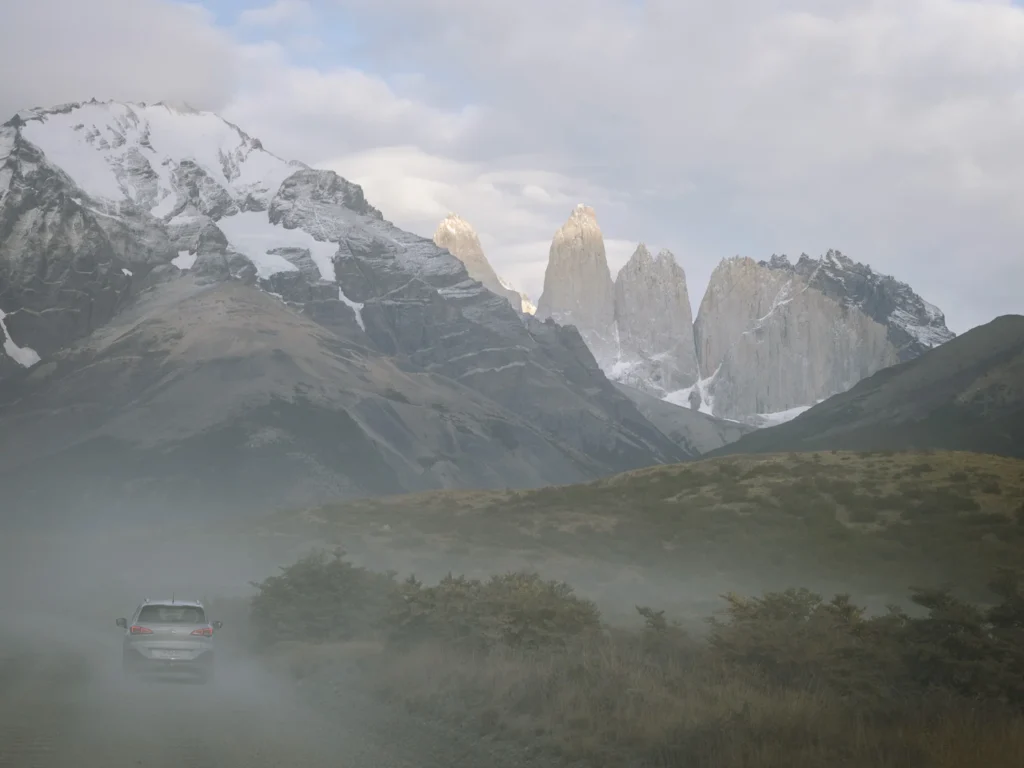
You do not need a car for the first three, but if you plan to stay near or in the park and travel independently, we highly recommend you hire a car. This is how we saw Torres del Paine.
The public transport in the park is very poor, and getting between the sights is either nearly impossible or takes forever.
The most important thing to remember is that, If you do hire a car, there is no fuel inside the park. The nearest gas station is in Puerto Natales (a 90-minute drive).
If you are visiting for 2 days/3 nights, it should not be a problem. But we were in the area for 5 days, so we had to make a trip back to Puerto Natales to fill up.
Deciding Where to Stay
If you are planning to hike the W-Trek or O-Trek then you can either book the refugios yourself or go through an organised tour.
If you are planning to stay at an all-inclusive resort, they will take care of all the driving and getting around, so just choose the lodging that suits you best. We give you the pros and cons of each below.
If you are travelling independently, then we recommend the following:
- For easy access to the best viewpoints, stay in the Park (Pehoé Section) or in Rio Serrano.
- For the Base of the Towers hike and best wildlife, stay in the Park (Towers Section) or in Cerro Castillo.
You can spend your entire stay in one place. Driving between the sections does not take that long, and we did it regularly. Depending on where you are heading, it’s usually only about 1 hour to 90 minutes.
However, to see the best of each section, in the best conditions, we recommend splitting your time and spending two nights in the Towers Section / Cerro Castillo and two or three nights in the Pehoé Section / Rio Serrano area.
This lets you see the best of the park without using too much gas and having to head to Puerto Natales to fill up.
We have highlighted the hotels and lodges in the breakdown below.
When to Visit Torres del Paine
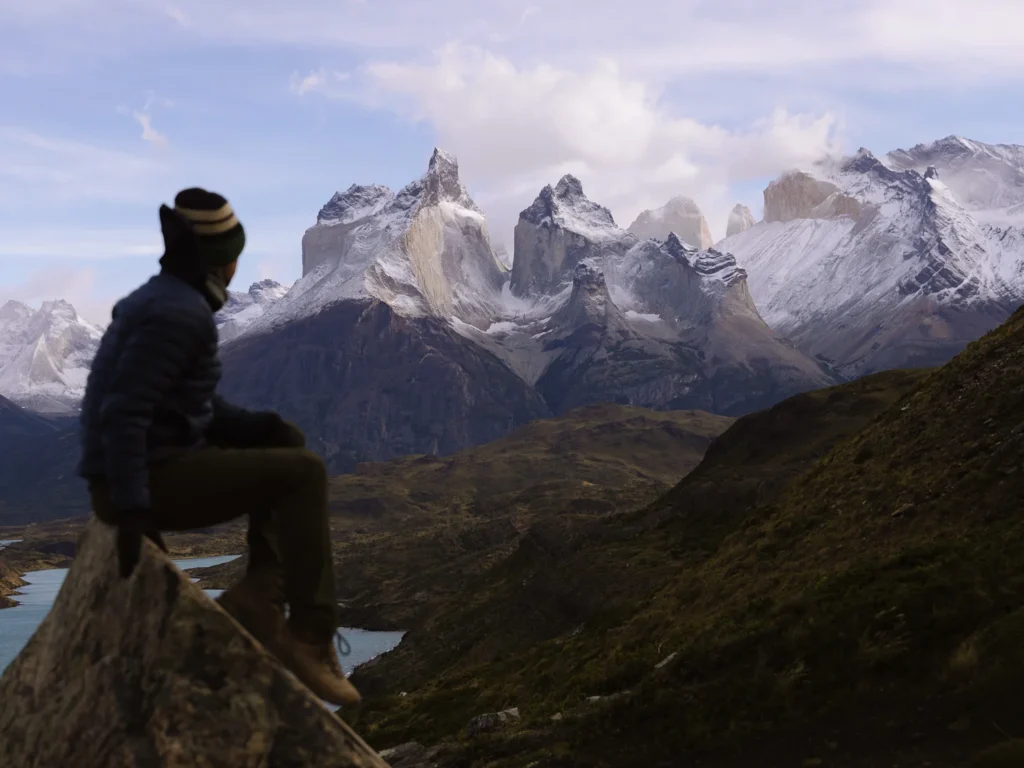
There’s no single best time to visit Torres del Paine. It really depends on whether you’re chasing reliable weather, empty trails, or a specific look to the landscape.
December to February (Peak Season)
December to February is peak season. Temperatures average around 11°C (52°F), with long days for exploring.
This is a good time for the warmest and most reliable conditions for hiking. The downside is that costs are high, and accommodation gets booked up 6 to 12 months in advance.
Late October & November (Spring)
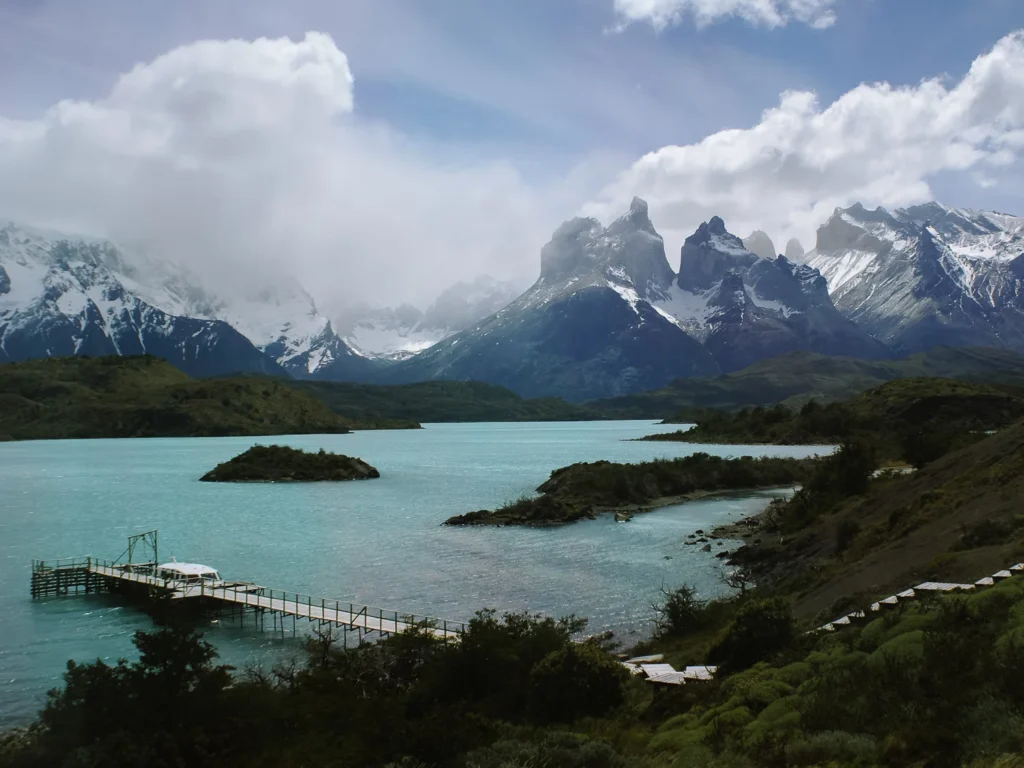
Late October and November is spring, so the park is filled with wildflowers and active wildlife. Lots of glacial particles are still suspended in the lakes, making them a gorgeous blue-green.
Accommodation is cheaper and many of the all-inclusive places offer good value room only deals. The downside is that you are taking a risk with the weather, and snow may still be on many of the higher trails.
The first time we visited Patagonia, we came in mid-November, had pretty decent weather with clear trails. The colours in the lakes were amazing.
Late March & April (Autumn)
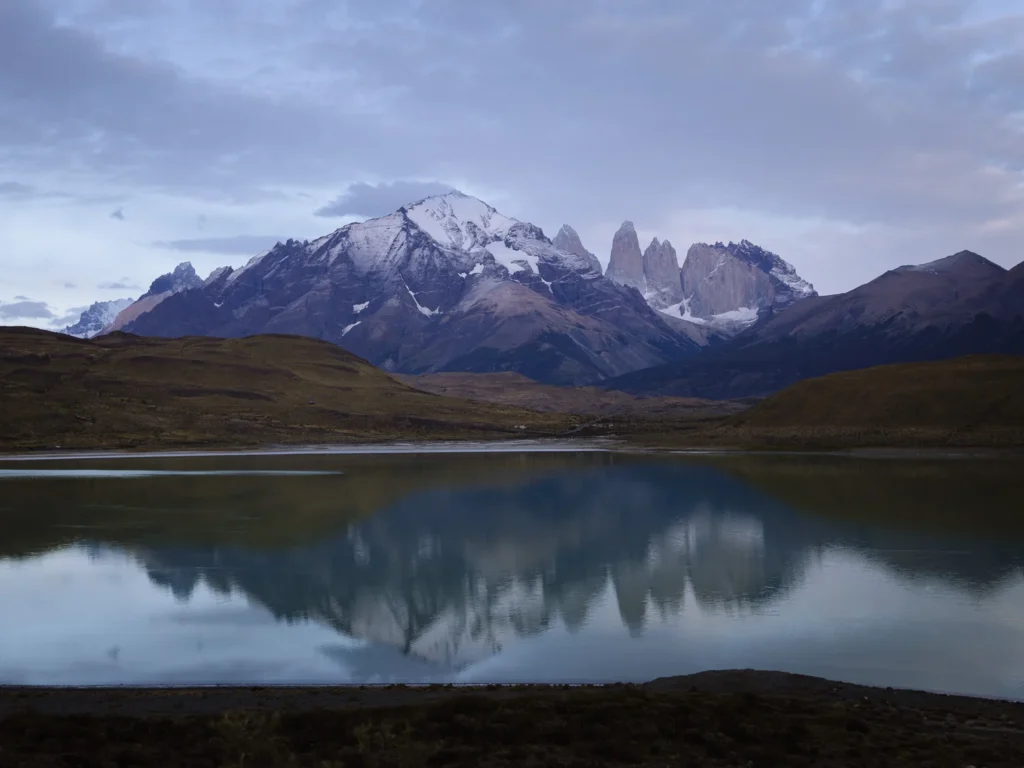
Late March and April are autumn in Patagonia. Golden foliage spreads across the grasslands, accommodation prices are lower, and the fierce winds drop significantly.
It’s a beautiful time for photography with colourful landscapes and a better chance of reflections in the lakes. The big benefit for us was that sunrise wasn’t so early!
However, the later you go, the greater the risk of snow falling on the higher ground and trails becoming inaccessible.
The last time we visited Patagonia, we came in late March. The accommodation was generally cheaper, and we could book about 6 months in advance. The calm conditions were great for photography.
May to September (Avoid)
May to September is best avoided. Winter is extremely cold here; a lot of places shut down, and those that don’t require you to have a guide on most excursions.
How Far Ahead Should You Book
Lodging and refugios in the park book out months in advance. For peak season, we suggest you start planning about a year before you travel.
In the shoulder seasons, you might get away with 6 to 9 months. This is what we did, although we had to move hotels a couple of times.
For a last-minute booking, your best bet is Puerto Natales, which has plenty of accommodation options.
Torres del Paine National Park Tickets
In order to enter the park, you need a valid entrance ticket. This can only be bought online in advance.
As long as you have a ticket, you can enter and exit the park at any time of day.
If the gates are manned, which they are during most daylight hours, you need to stop to show your ticket at the gate when you enter.
Passes are usually still available to buy on the day or 1-day in advance.
Types of Accommodation & Prices
Let’s not beat about the bush; accommodation in Torres del Paine is very expensive. But there is at least lots of choice, from campsites and refugios through hostels and budget hotels to premium lodges and all-inclusive luxury.
Prices are higher during the Christmas holidays from mid-December to early January, but drop off in the shoulder seasons.
Before booking, be careful to check whether the price is for room only, bed & breakfast, full board or all-inclusive. It can make a big difference.
Below is a rough rundown of the prices you might expect to pay. Prices obviously move a lot, so it’s only an indication and better used as a relative pricing guide.
The prices are per room per night (assuming 2 sharing).
| Accommodation | Symbol | Price |
|---|---|---|
| 1. Camping & Hostels | $ | up to $100 |
| 2. Refugios & Budget Hotels | $$ | $100–$300 |
| 3. Mid-Range Hotels | $$$ | $300–$500 |
| 4. Premium Lodges | $$$$ | $500–$1000 |
| 5. Luxury All-Inclusive | $$$$$ | $1000+ |
Accommodation in Torres del Paine
Inside the National Park (Towers Section)
Las Torres ($ – $$$$$)
Accommodation at Las Torres ranges from tent pitches ($), fully equipped camping ($$), dorm beds ($$), mountain cabins ($$$$), glamping domes.
The cost changes dramatically depending on what you choose and which add-ons (meals, sleeping bag, sheets included) you select.
The high-end offering here is Hotel Las Torres which offers rooms with breakfast and dinner, or all-inclusive packages including meals, transfers and guided excursions.
This is a comfortable stay near the Towers hike.
Ecocamp Patagonia ($$$$$)
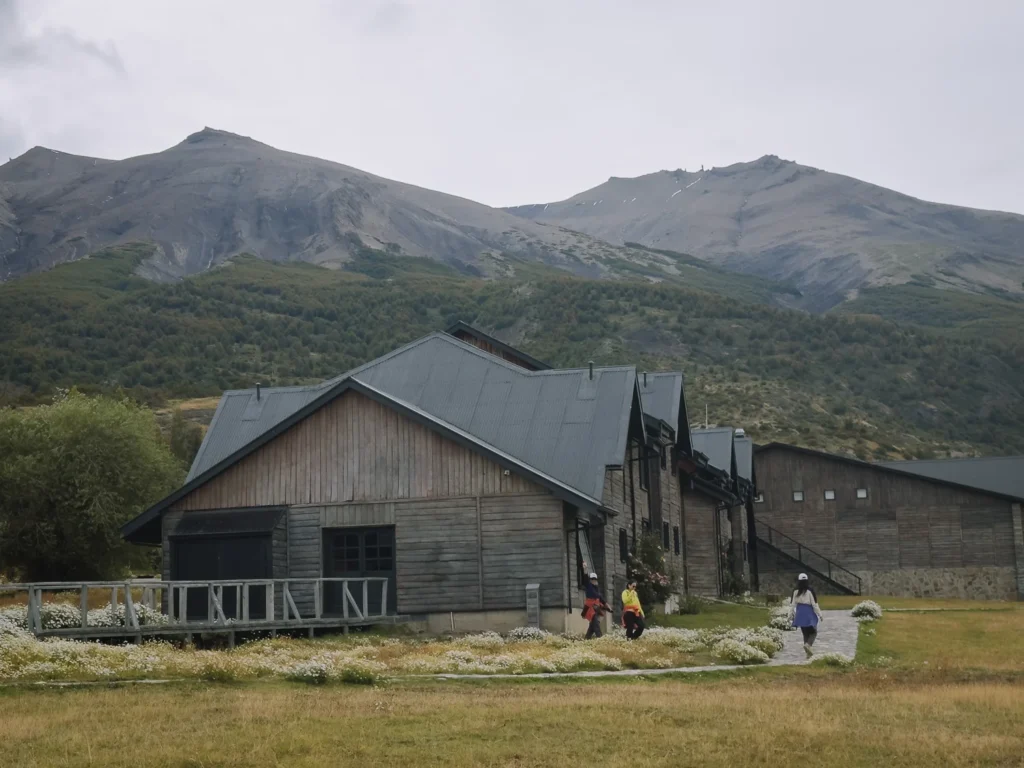
EcoCamp Patagonia is a dome “glamping” just off the W Trek’s eastern trailhead, sold as multi-day all-inclusive packages (typically 4–8 days) covering meals, transfers and guided excursions.
What makes it special is its stripped-back immersive wilderness experience, while still having heating in the rooms. However, some domes have no electricity or shared bathrooms.
The fairly limited number of domes means it books up months in advance. Prices can change dramatically depending on peak season and the standard of dome you want.
Inside the National Park (Pehoé Section)
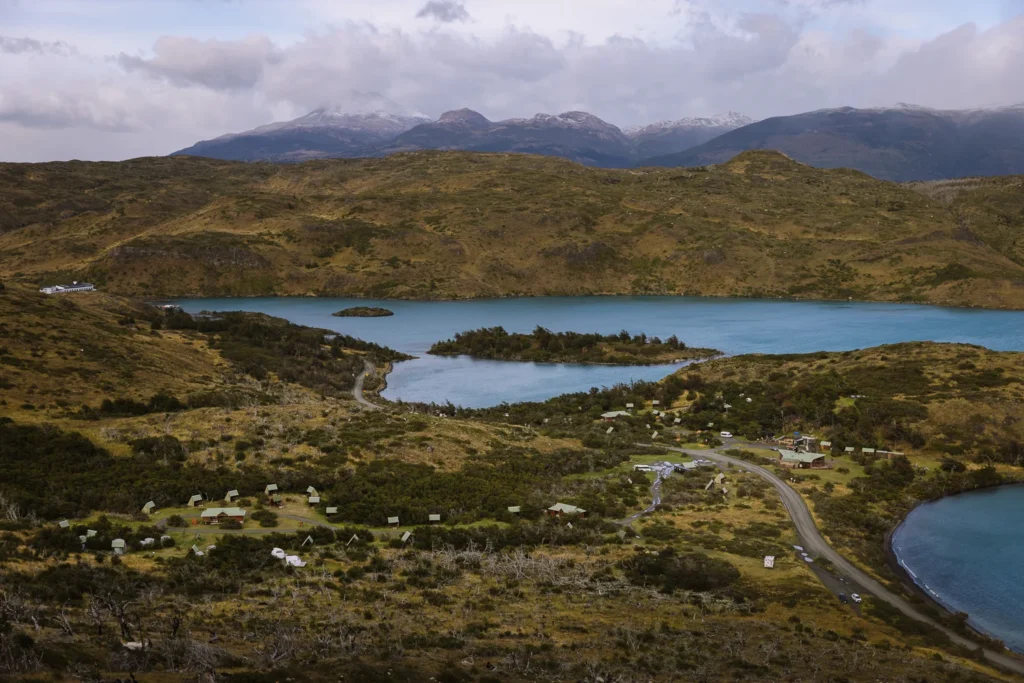
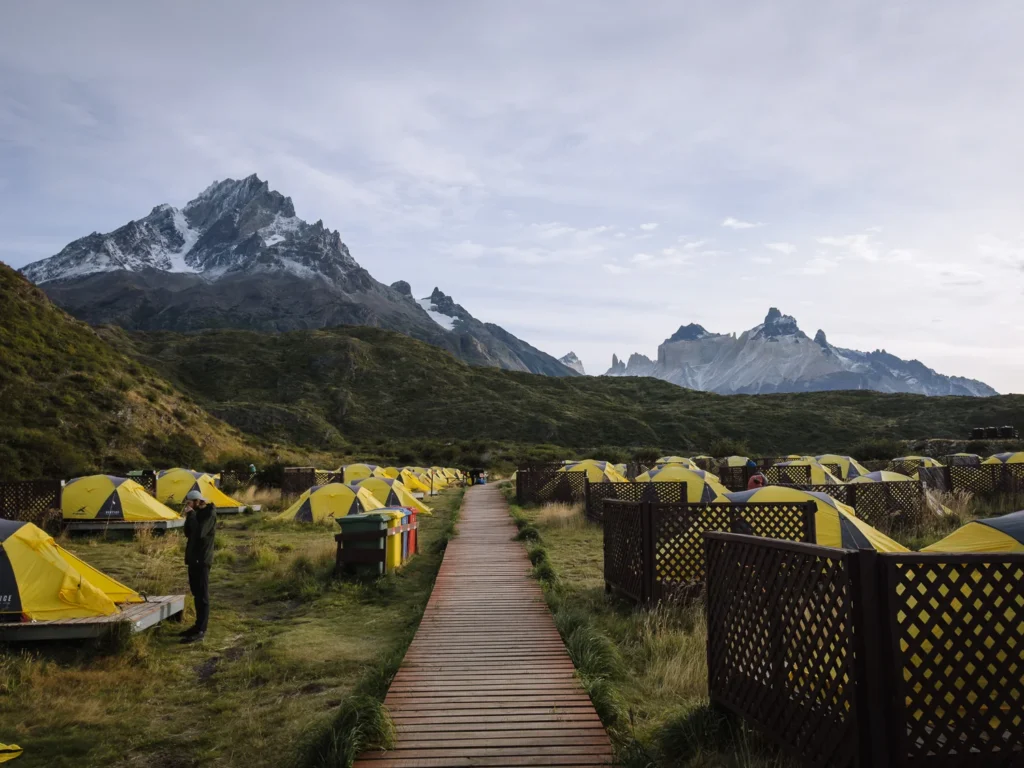
Camping Lago Pehoé ($)
Camping Lago Pehoé is the most budget option on this list. There are no meals included, so you’re self-catering or carrying your own food.
The pitches have a roofed wooden shelter and table, plus access to hot showers and toilets. You can rent a tent if you don’t want to take one with you.
Its superb location by the lake means this is a great option if you want to hire a car and explore yourself, but spend very little on accommodation.
If you take this option, you’ll need to be sure to pick up food in Puerto Natales on the way.
You can also rent domes, although this will push you up a price bracket.
Refugio Paine Grande ($-$$$)
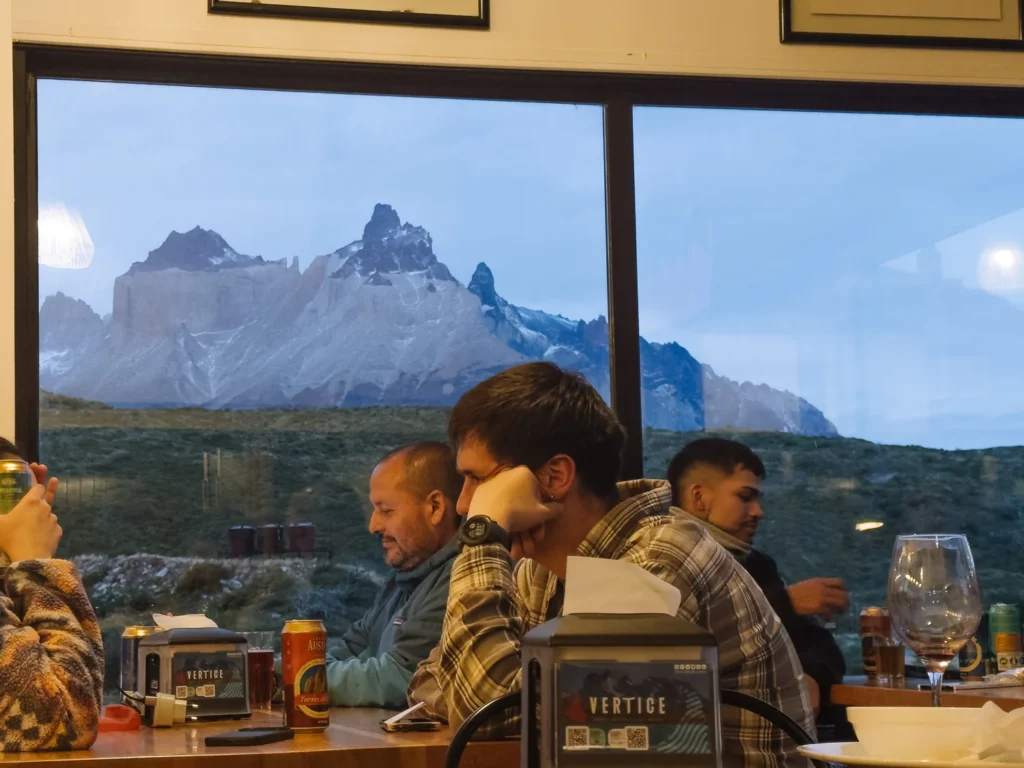
Refugio Paine Grande is the most central refugio on the W-trek. It can only be reached by hiking in or taking the Pehoé Catamaran (you cannot drive there). The refugio accommodation ranges from pitches for tents to shared dorms.
At the very basic level (bring your own tent / no food) it is very cheap ($) but prices quickly rise as you add stuff.
Dorms (4 to 6 beds in a room) are much more expensive. If you want to rent sleeping bags or sheets for dorm beds, the price rises again. You can also get breakfast, packed lunches and dinner.
If you opt for everything, the price ends up in the ($$$) bracket. Having said that, it’s in an amazing location between two of the best sections of the W-Trek.
On our last trip, we parked at Pudeto Pier, got the catamaran, and stayed here one night to hike to Mirador Británico and Glacier Grey, without doing the whole W-Trek.
Hosteria Pehoé ($$$)
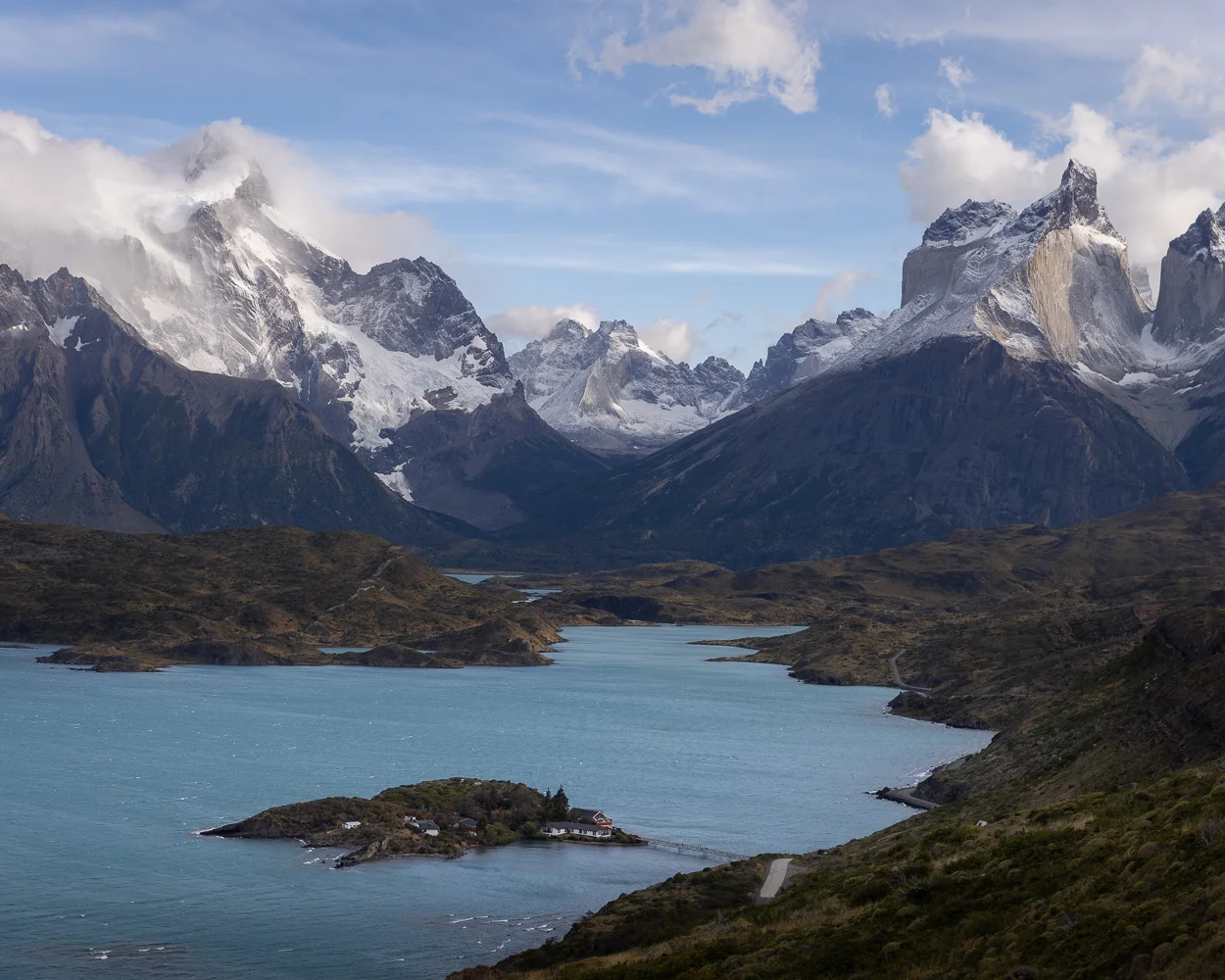
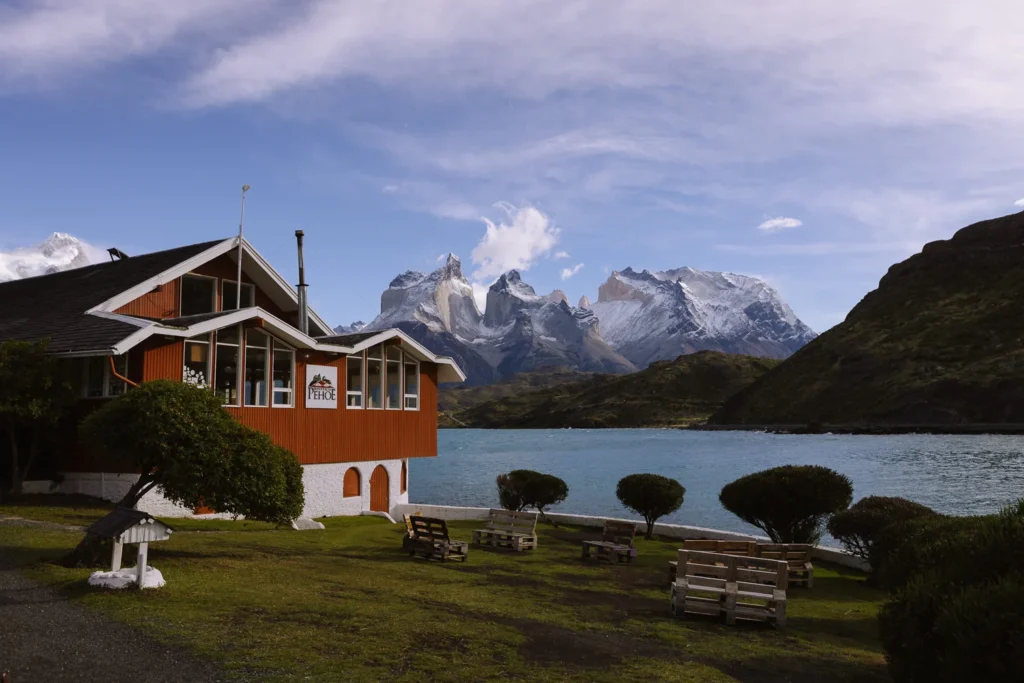
Hosteria Pehoé is a simple, traditional-style hotel on its own island in Lake Pehoé, with one of the best views in Torres del Paine National Park.
However, it is pretty pricey for the level of accommodation, so on our last visit we decided to pay a little more and get a little more somewhere else.
Hotel Lago Grey ($$$$)
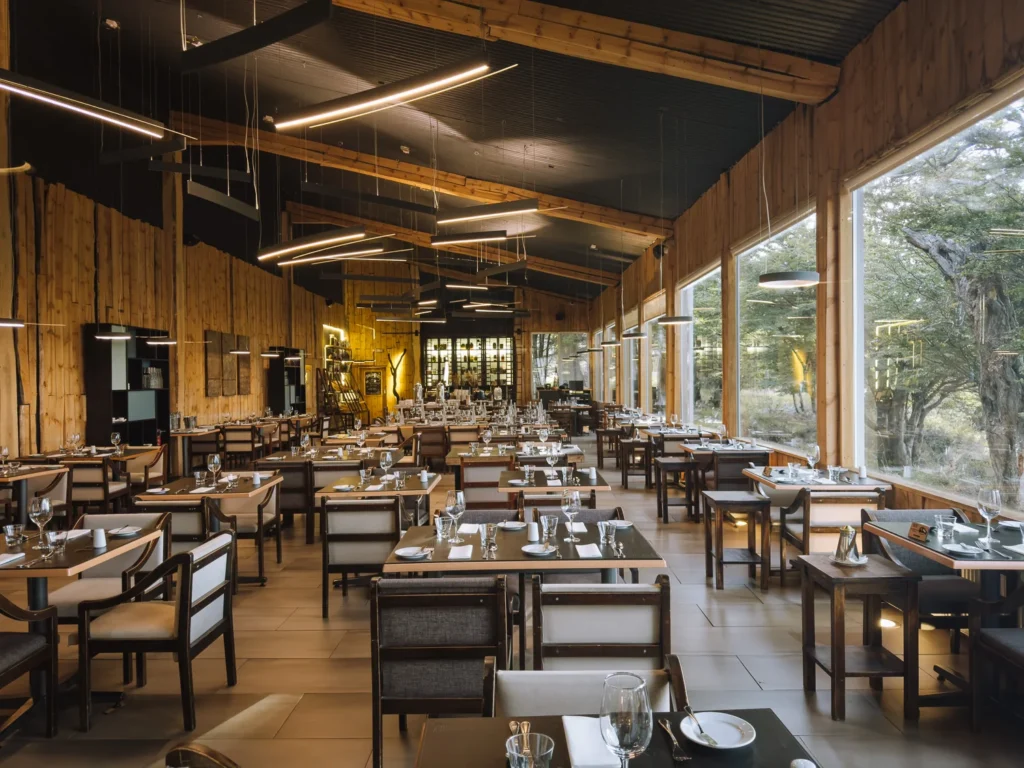
Hotel Lago Grey is a comfortable hotel on the shore of Lago Grey with direct access to Glacier Grey boat tours.
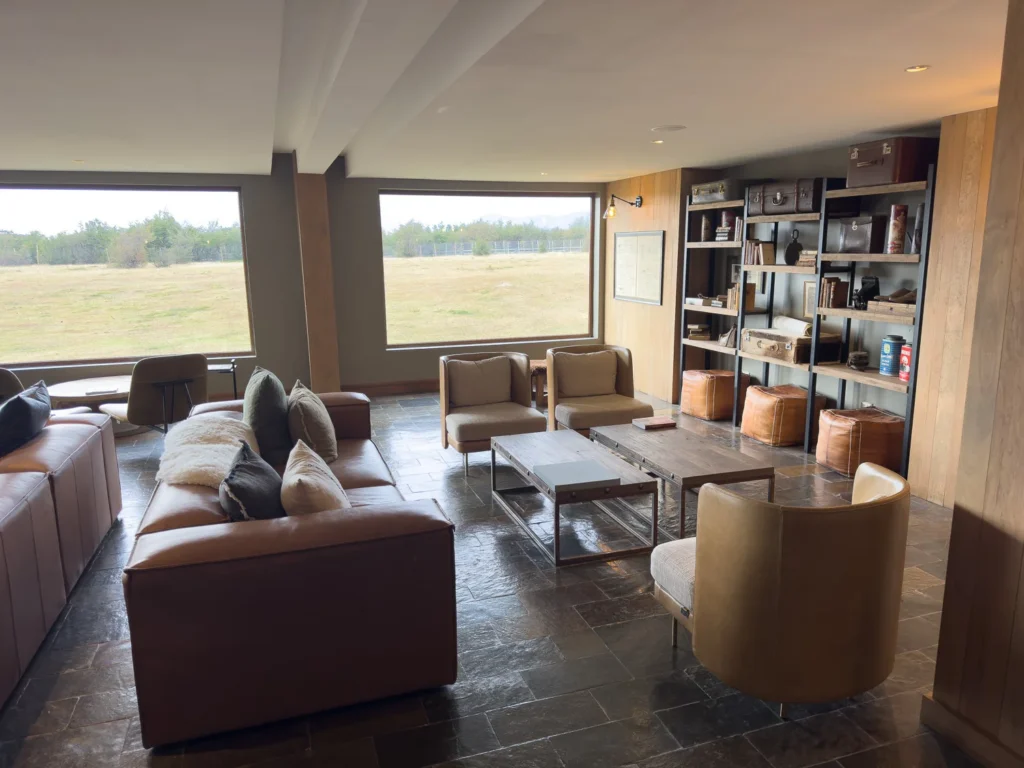
Accommodation is in wooden lodges, and the communal areas are modern and stylish.
We stayed here for a night on our last trip, and it’s an excellent non-all-inclusive option if you want a proper hotel bed without committing to a multi-night package.
Explore Torres del Paine ($$$$$)
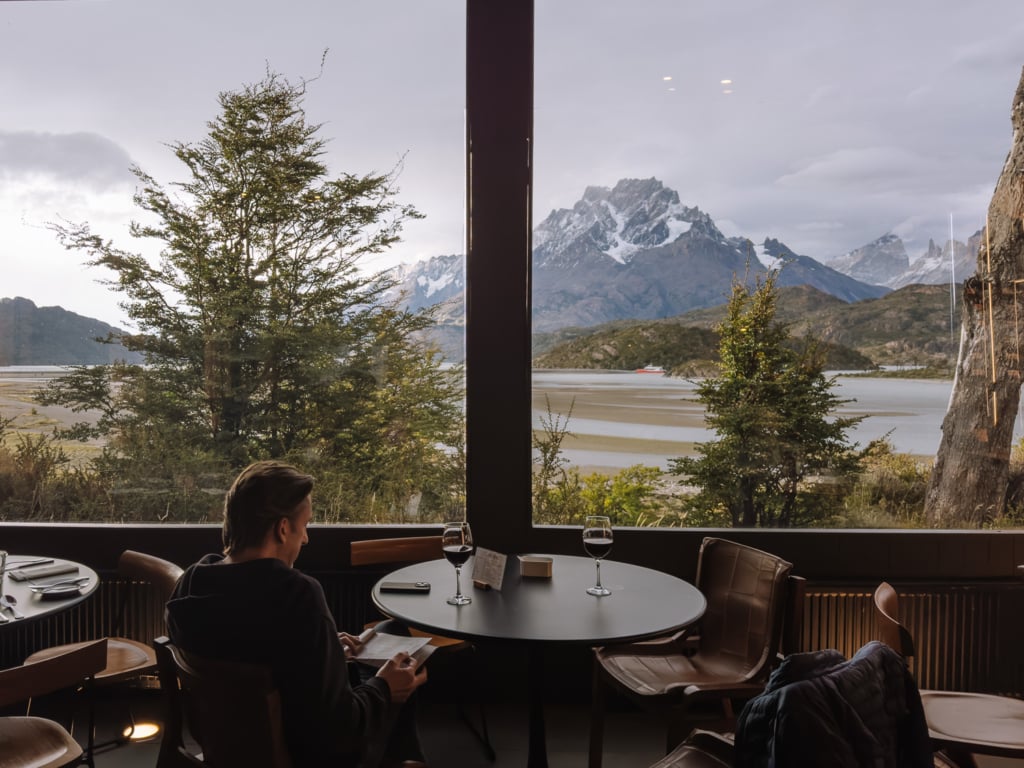
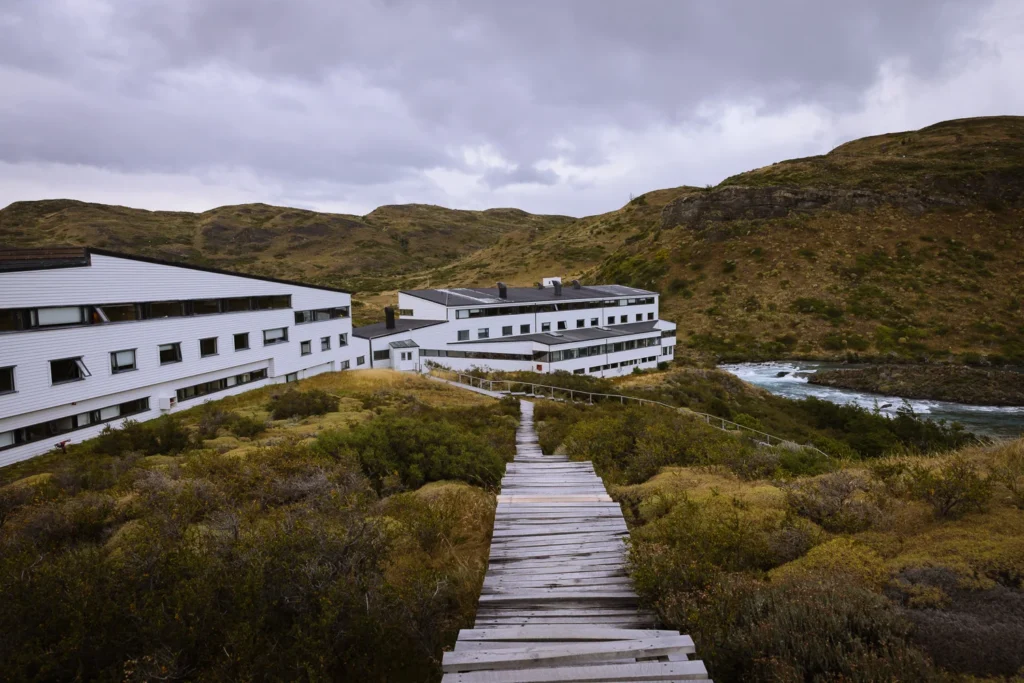
Explora Torres del Paine is the original luxury all-inclusive lodge on Lake Pehoé, with a minimum stay of 3 nights (rising to 6 nights over the Christmas/New Year period). Rates cover all meals, drinks, transfers and unlimited guided excursions.
We stayed here on our first trip back in 2009. It is a very special place, in a very special location, for a very special occasion. It is the most luxurious of the three all-inclusive hotels in the park, and it easily has the best views.
Rio Serrano (Southern Entrance)
Camping Rio Serrano ($-$$)
Camping Rio Serrano is a bring-your-own-tent camping to glamping option near the park’s southern entrance and the village of Río Serrano.
Each site has a three-sided structure that fits a picnic table under a sturdy roof. Shared bathroom and showers. No meals included, self-catering.
Cabaňas Lago Tyndall ($$)
Cabañas Lago Tyndall is rustic self-contained cabin/bungalow-style accommodation in the Río Serrano area, a good option for those wanting a kitchen and more independence than a standard hotel room. Wonderful views of the Paine Massif.
Konkashken Lodge ($$$)
Konkashken Lodge is a simple lodge with cosy, comfortable cabins. They have excellent views with an atmospheric bar and fire pit for the cold evenings. At the lower end of this pricing tier, it’s a good balance between comfort and cost and very close to the park entrance.
Pampa Lodge Patagonia ($$$$)
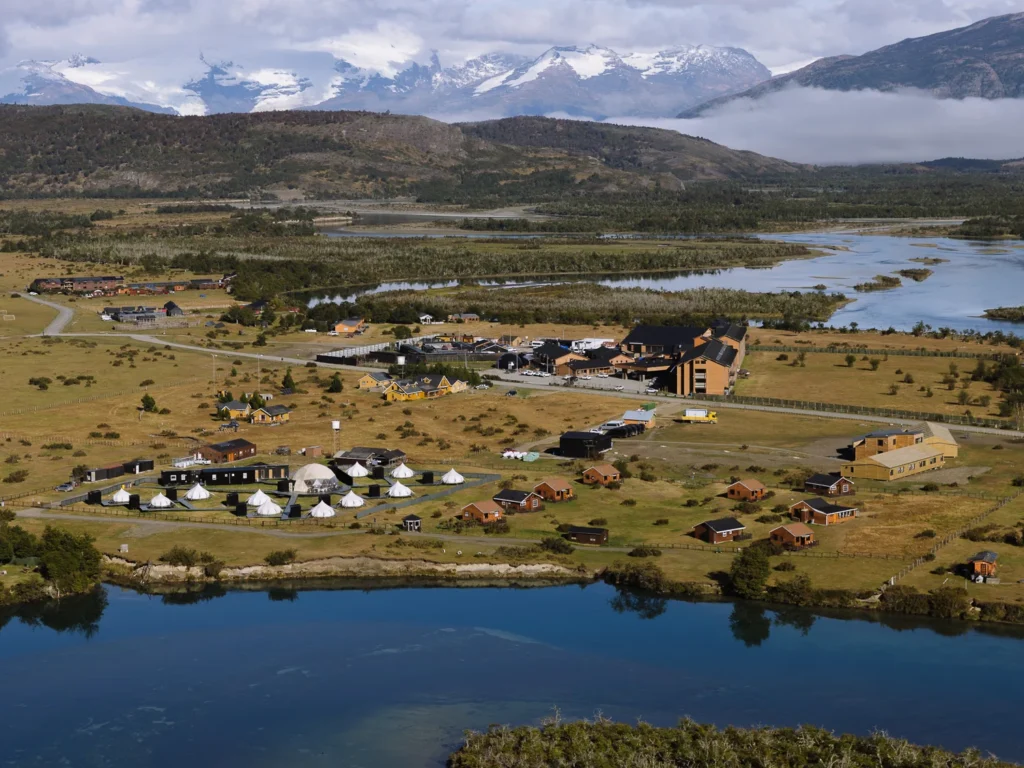
Pampa Lodge Patagonia is at the lower end of the ($$$$) bracket. It’s a quiet lodge with only 20 rooms, all of which have fantastic views through massive windows to the Torres del Paine Massif.
Set right on the banks of the river, rooms can be booked with breakfast only, so you don’t have to fork out for the all-inclusive package.
Rio Serrano Hotel & Spa
Rio Serrano Hotel & Spa is the largest hotel in the area with 108 rooms on the banks of the Serrano River. You can choose from classic, standard and superior room tiers as room-only rates, full board, and all-inclusive.
The communal areas are great for taking in the views of the Paine Massif and the food is very good. They also provide free late-afternoon snacks, free talks, and daily tours.
We stayed here for a couple of days on our last visit and really enjoyed it.
Patagonia Camp ($$$$)
Patagonia Camp has yurt-style luxury glamping near Río Serrano, sold as all-inclusive packages (meals, activities and transfers bundled in), similar in concept to EcoCamp but with a more upscale finish. There is a 3-night minimum.
Cerro Castillo (Eastern Entrance)
Hostería Pionero ($$)
Hostería Pionero is a historic English-style mansion-turned-lodge in Cerro Castillo, offering standard, premium, and family rooms with an on-site restaurant; room-only (bed and breakfast). Reviews are mixed on upkeep despite the building’s character.
Estancia Dos Elianas ($$)
Estancia dos Elianas is a working farm stay, near Laguna Amarga, with family-style rooms and an on-site restaurant serving dinner and lunch. It’s room-only rather than all-inclusive, and breakfast is typically included.
Hotel Estancia el Ovejero Patagónico ($$)
Hotel Estancia El Ovejero Patagónico is in Cerro Castillo, right by the Chile–Argentina border crossing and about 50 minutes from the park. This is another room only situation with no all-inclusive option. The main benefit is that it stays open year-round when many others close for winter.
Tierra Patagonia ($$$$$)
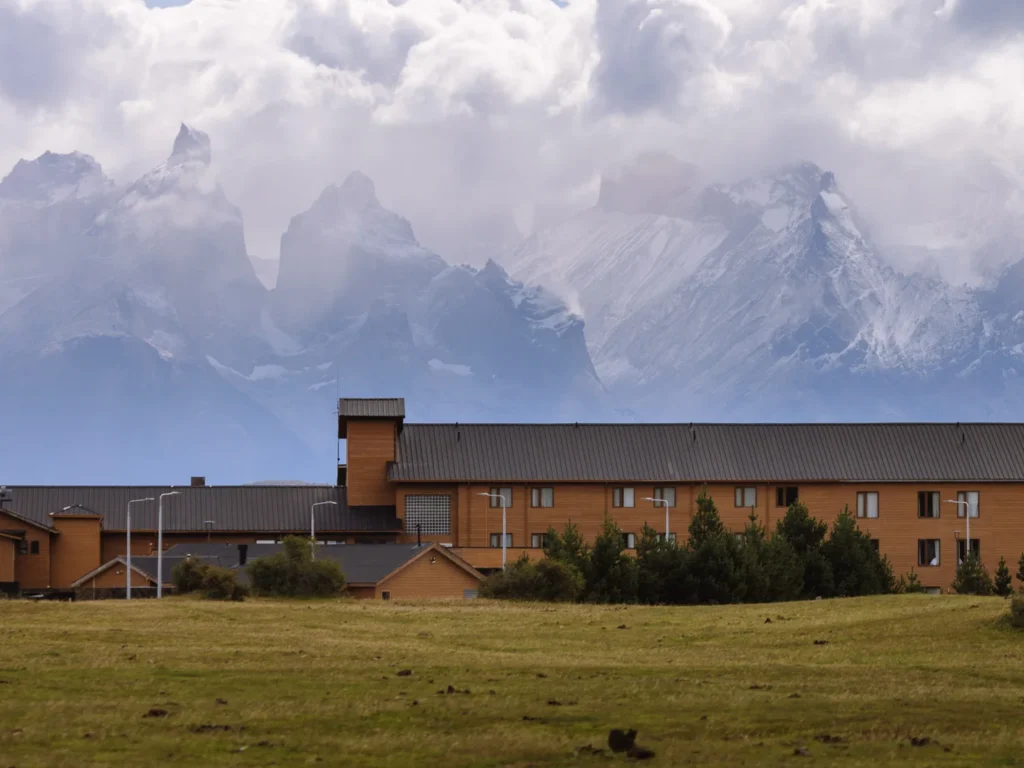
Tierra Patagonia is an all-inclusive lodge and spa on the shore of Lake Sarmiento with a minimalist, architect-designed feel. Rates include meals, drinks, transfers and guided excursions. We’d position this place alongside Explora as one of the park’s top-tier luxury options. They also have a 3-night minimum.
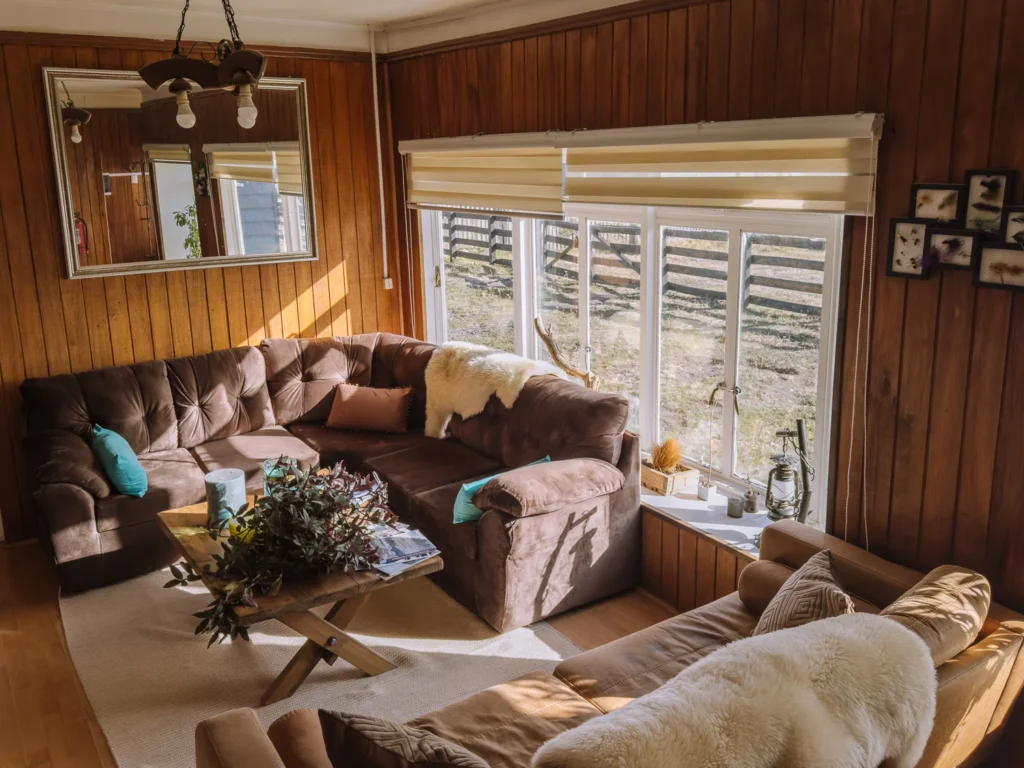
Puerto Natales
Wild Hostel ($)
Wild Hostel is a simple, centrally located hostel in Puerto Natales town, with dorms and private rooms including shared or private bathrooms. Breakfast is included, but they don’t have all-inclusive packages. We like this as a straightforward budget base for stocking up before heading into the park.
Hotel Vendaval ($$)
Hotel Vendaval is another good budget hotel in the centre of Puerto Natales. This is the cheapest hotel in this guide and it’s an excellent option if you are saving money but want your own room and don’t mind the long drive into the park.
Borries Boutique Guest House ($$)
Borries Boutique Guest House is at the upper end of the ($$) range. This small boutique guesthouse in Puerto Natales is well reviewed for breakfast and as a couples’ pick. On the edge of town it manages to have that wilderness feel while still being close to facilities.
Hotel Simple Patagonia ($$$)
Hotel Simple Patagonia is another well-regarded Puerto Natales town hotel. This one is also room-only, and it’s conveniently located near the airport and bus terminal.
More Argentina & Chile Guides
- Our top things to do in Buenos Aires.
- Where to stay in Buenos Aires – perfect for first timers.
- How to spend 2 days in Buenos Aires.
- Our favourite things to do in Torres del Paine National Park.
- All the best viewpoints in Torres del Paine National Park.
- Our favourite lodges in Torres del Paine National Park.

reader-supported
When you buy through links on our site, we may earn a small affiliate commission at no extra cost to you.
Thanks for your support // Paul & Mark