

By: Paul Healy // Last Updated:
The Costa del Sol in Spain is the perfect location for a beach holiday with more sun than anywhere else in Europe. This guide is our honest review of the best areas to stay on the Costa del Sol.
We spend a lot of time in southern Spain, so we’ve got to know the Costa del Sol pretty well.
One of the great things about a holiday here is the variety. You’ll find everything from busy, family-friendly resorts and lively nightlife to whitewashed old towns, protected coves and more relaxed seaside communities.
Where you stay on the Costa del Sol makes a big difference to the type of holiday you’ll have. Some areas are designed around the beach, with bars, shops and restaurants just a few metres from the sand.
Others offer a more local experience, where you can stay in a working town, wander through a historic centre, and get a better feel for everyday Spanish life.
We’ve only included the places we think are worth considering for a Costa del Sol holiday. For each one, we explain what it’s actually like, what you’ll find there, who it suits, why we’d choose it and the drawbacks to consider before booking.


Costa del Sol at a Glance
The Costa del Sol stretches for around 150 kilometres in southern Spain, from Nerja in the east to Sotogrande in the west, and it’s the right place to be looking for a sunny holiday in Spain.
There is a variety of locations, including cities, package-holiday beach strips, upscale resorts, and charming Spanish villages set in the hills.
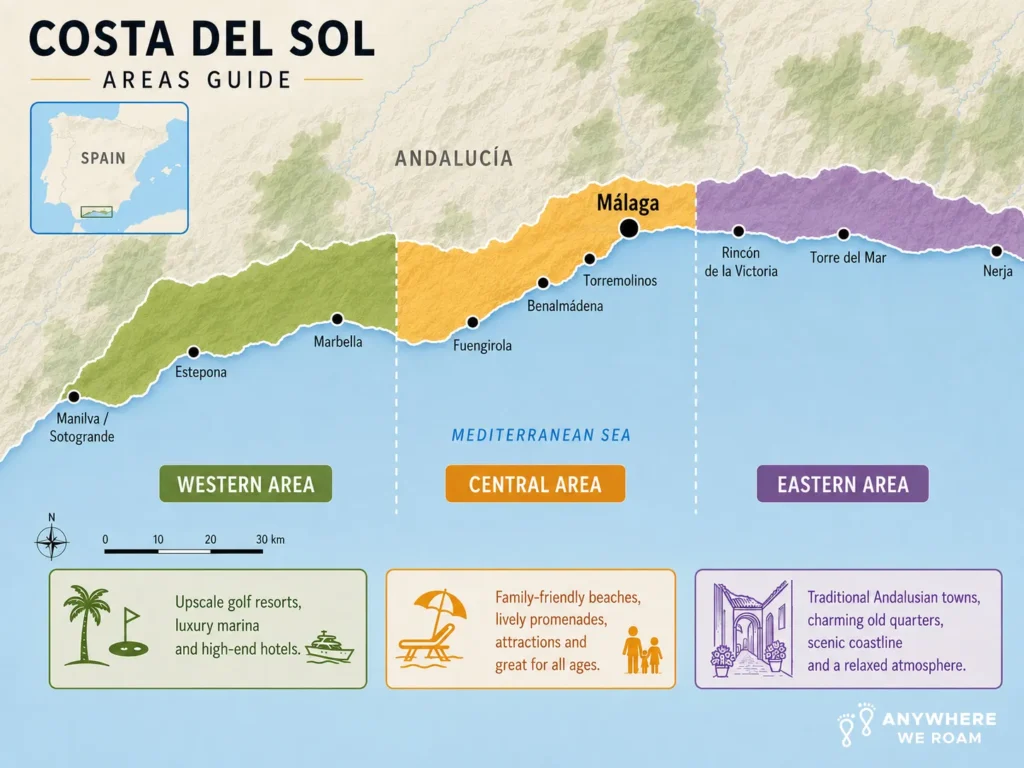
The best way to think of the Costa del Sol is in three main zones:
- Eastern – Málaga and eastwards towards Nerja, which has a more traditional Andalusian feel.
- Central – Málaga westwards to Fuengirola, which is all about family-friendly holiday beaches like Torremolinos and Benalmádena.
- Western – Marbella westward towards Estepona (and extending to Manilva/Sotogrande), where you’ll find upscale golf resorts, luxury marinas and high-end hotels.
How to Choose Your Base
If you want culture, museums and a city break with a beach attached, Málaga is the obvious choice.
For family‑friendly resort living in a convenient location, Torremolinos and Benalmádena are both good for kids’ activities, including Aqualand and Crocodile Park; however, they are also a little clubby in the evening, so it’s a bit of a trade-off.
For a relaxed family break, we would go for Nerja; it’s not as busy as Torremolinos and Benalmádena, but there’s still plenty to do.
Marbella and Puerto Banús are famous for luxury stays and nightlife.
To stay in a charming old town with a more relaxed pace, Estepona and Nerja are two of our favourite options. Mijas Pueblo is very charming, but it’s a little far from the beaches.
For a longer stay, Fuengirola is a good choice; however, we were back last month, and it is getting a little dated now.
If you want something not so beach-focused and you don’t mind driving, Casares and Sotogrande are both good options.
If you are visiting without a car, Benalmádena and Fuengirola are the only places we would recommend, as there is a train from Málaga to Torremolinos. Everywhere else on the coast has limited public transport.
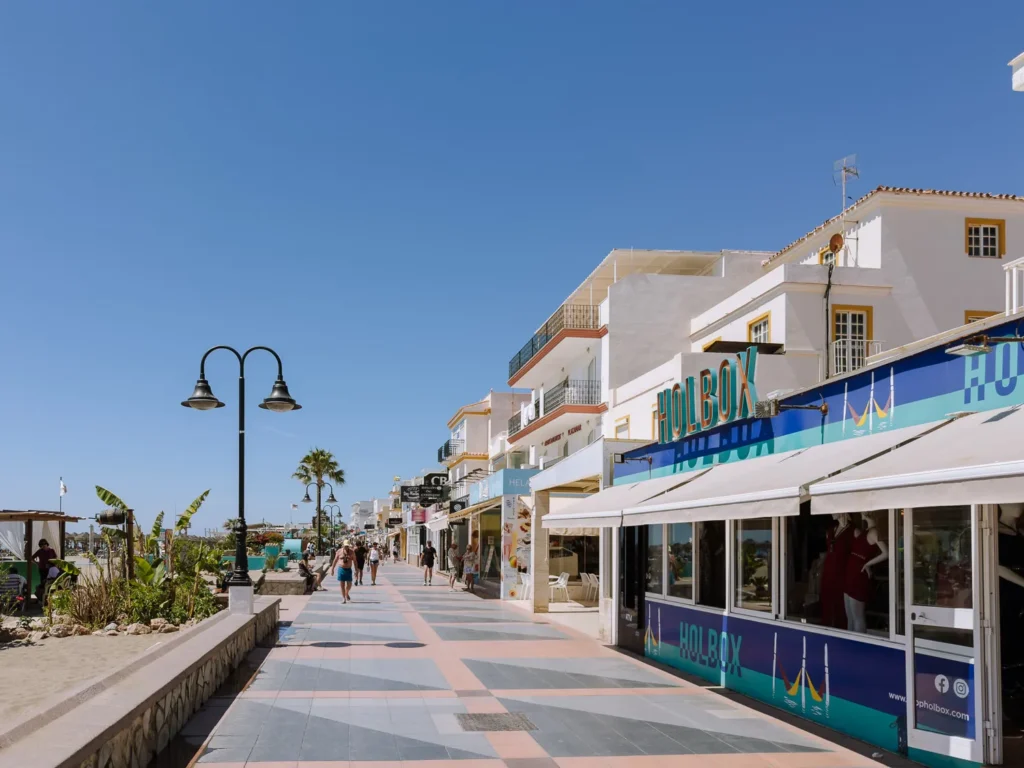
Where to Stay on the Costa del Sol, Spain
1. Málaga
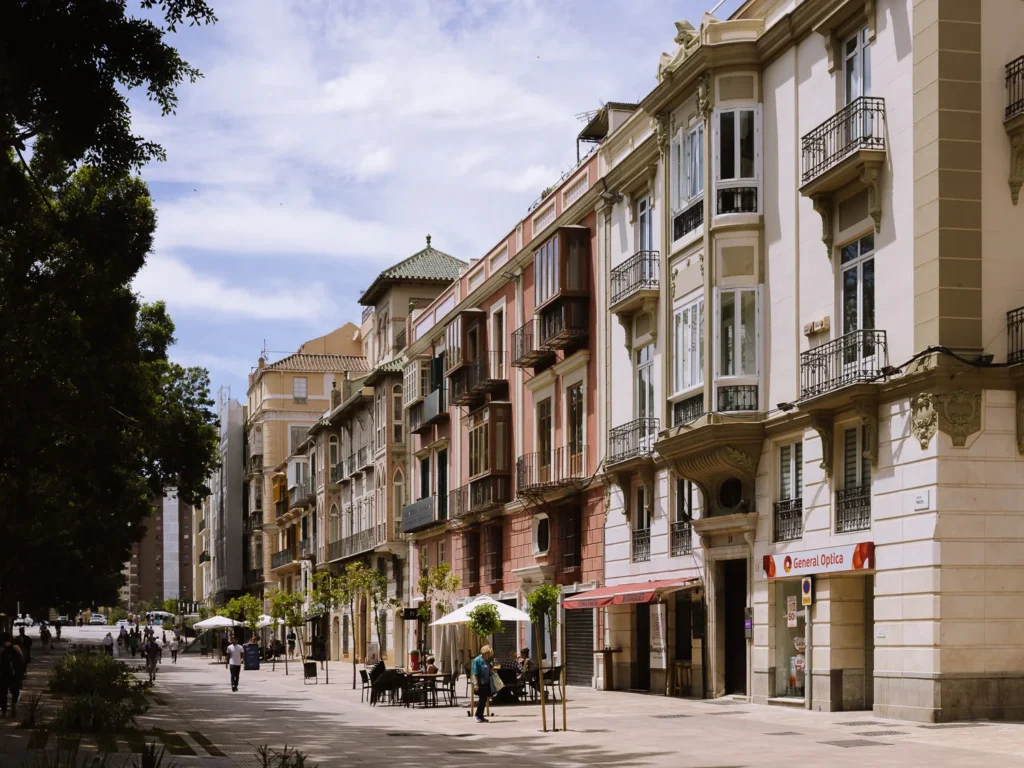
Málaga is the capital of the Costa del Sol and the largest city on the coast. It’s also one of our favourite places to stay if you want to combine the Mediterranean with a proper Spanish city.
Who Is It for?
Málaga is ideal for first‑time visitors and anyone looking for more than just beaches. It’s also an excellent base for exploring Andalucía, with good transport connections and plenty of day-trip options.
We go to Málaga often, and we love it. The historic sights are excellent, the food scene is alive and kicking, and the old town is beautiful. You can read more about it in our guide to the best things to do in Málaga.
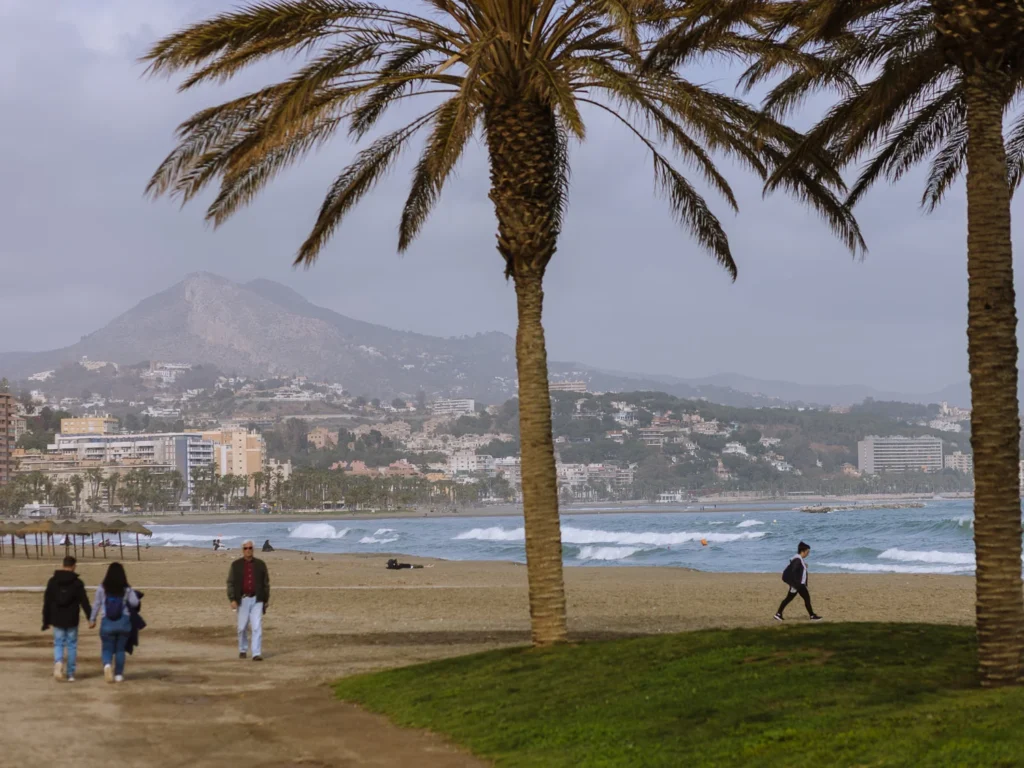
Our Take
Málaga works well if you want a city-and-beach combination.
The port area (Muelle Uno) has been transformed into a lively promenade with restaurants, bars and boat trips. The city beaches are within walking distance, so you don’t need a car.
That said, we wouldn’t choose Málaga for a traditional beach holiday. The beaches are decent and convenient, but there are better stretches of sand elsewhere on the coast.
We’d use Málaga as a base for exploring Andalucía with easy day trips including Ronda, Granada, and Córdoba.

What’s Good About Málaga
- Cultural sights: Alcazaba, Picasso Museum, contemporary art museums, atmospheric historic centre.
- Easy logistics: Málaga airport is close to the city, and trains and buses make it easy to get around.
- City‑plus‑beach combo: Malagueta and nearby beaches are walkable, so you don’t need a car.
- Day trips: Excellent transport connections make Málaga one of the easiest bases on the coast for visiting Ronda, Granada and Córdoba.
What’s Not so Good
You’re in a working city with a busy local population. This is all part of the appeal for us, but if you’re looking for a resort where everything revolves around the beach, that’s not Málaga.
Where to Stay in Málaga
- Booking.com → Browse hotels in Málaga and filter by location, rating and price.
- Airbnb → Browse holiday rentals in Málaga including apartments in central locations like Soho.

2. Torremolinos
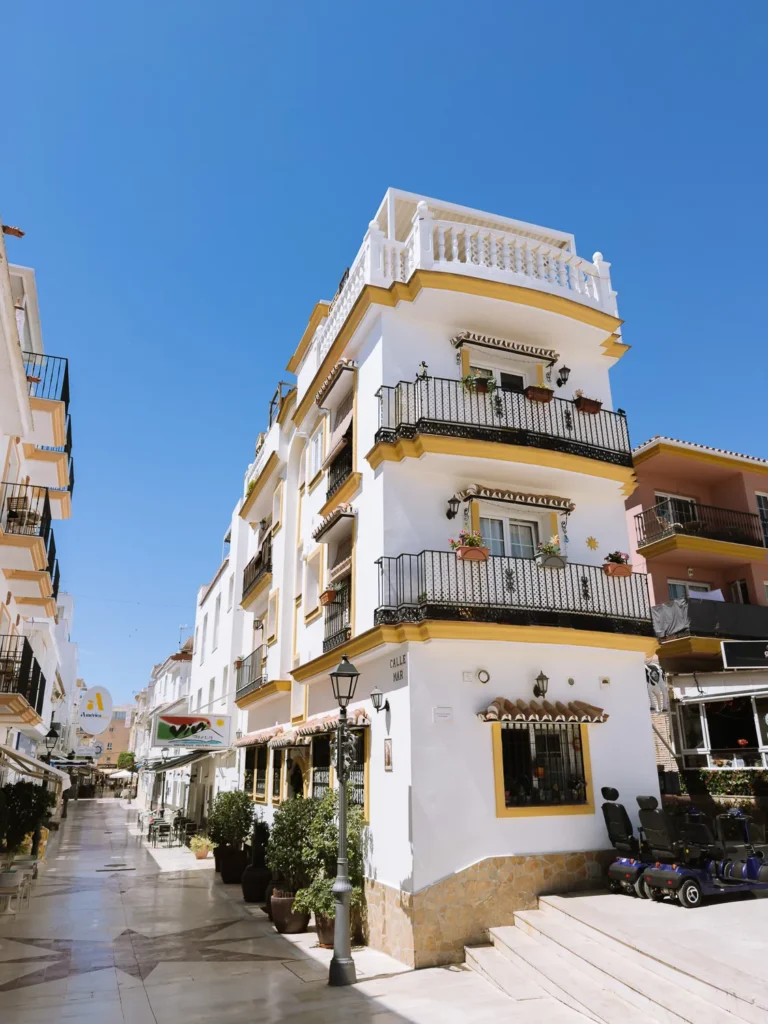
Torremolinos is one of the most established resorts on the Costa del Sol, with a long sandy beach, a huge choice of restaurants and bars and plenty to keep you entertained for a week.
It’s more developed and touristy than Málaga, but recent investment has given parts of the resort a smart new feel.
Who Is It for?
Torremolinos has plenty of family-friendly activities and a long traffic-free promenade.
The trade-off is that it’s also good for holidays with groups of friends, with loads of restaurants and nightlife within easy reach. It also has a well-established LGBT scene. Luckily, the kids and the clubbers seem to coexist.
It’s an easy place to visit without a car. The train from Málaga takes around 20 minutes, the airport is close by, and the resort is well connected by public transport. In fact, we’d recommend leaving the car behind.
Our Take
Torremolinos works well if you want a straightforward beach holiday with plenty to do.
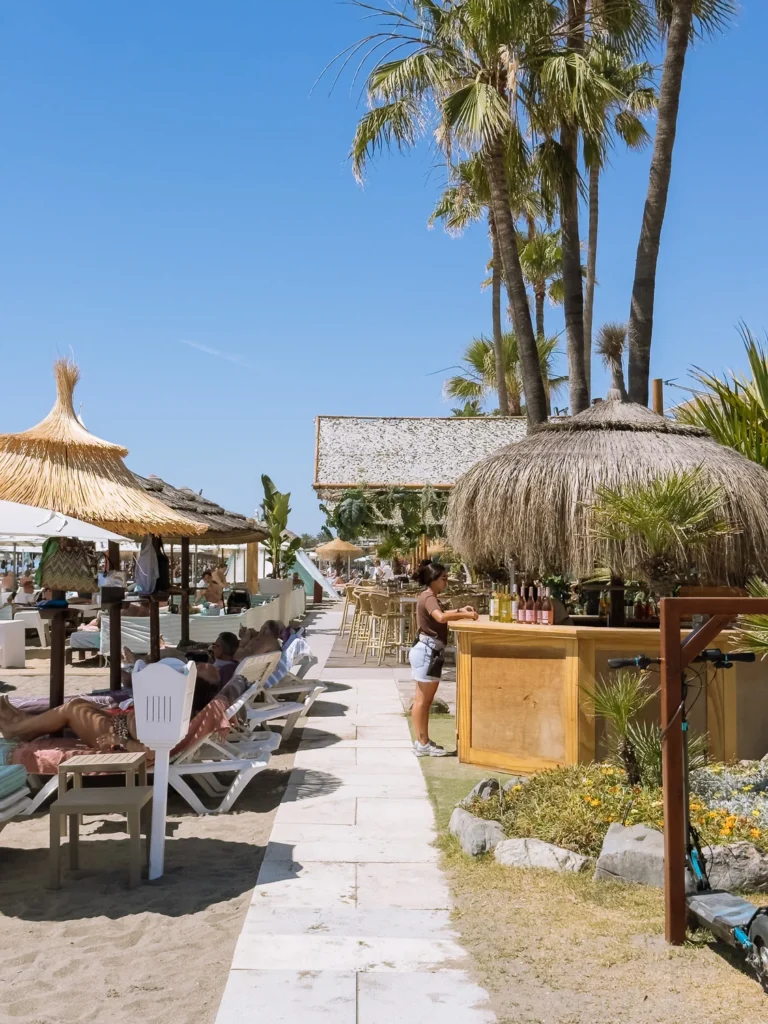
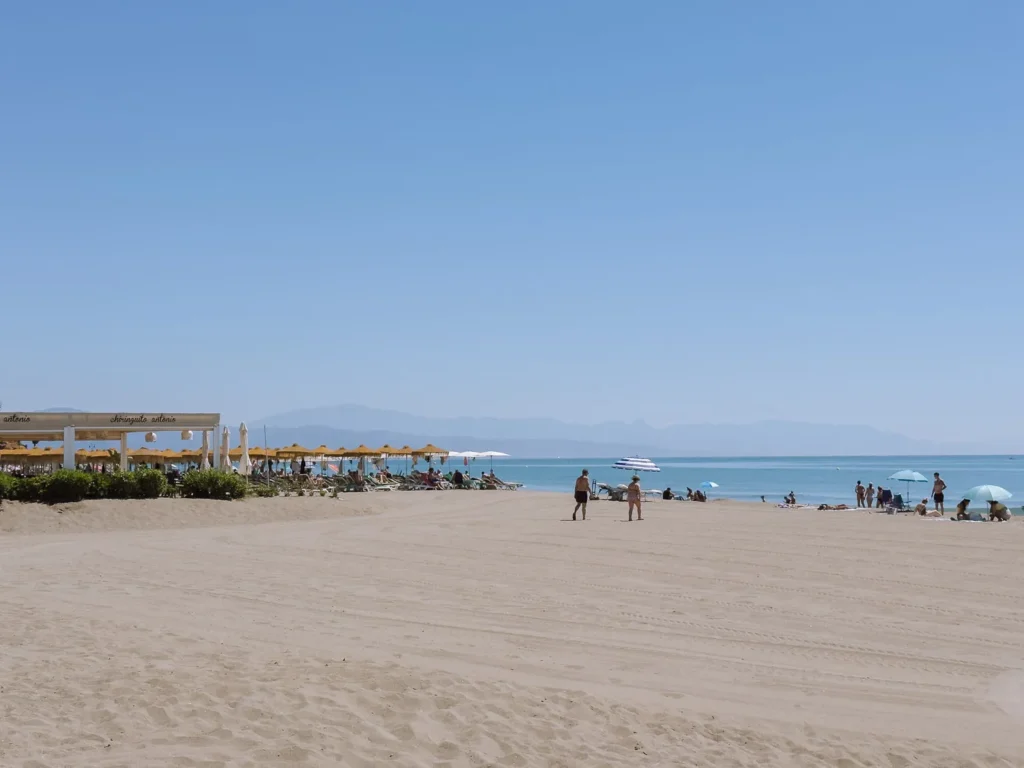
The main attraction is the long, wide sandy beach, stretching for around 7 kilometres. A traffic-free promenade runs alongside it, with loads of chiringuitos. You could easily spend a week here and try a different place for lunch every day.
The mountains rising behind the resort help break up the built-up feel. Torremolinos has a fun, holiday atmosphere that makes it easy to settle in for a few days.
However, Torremolinos is very much a developed resort. High-rise blocks dominate parts of the town, and some of the original village character has been lost. The beaches can also get noisy and busy during peak summer.
What’s Good About Torremolinos
- Something for everyone: Families, groups of friends and LGBT travellers can all find their own scene without the resort feeling too divided.
- Easy beach days: The wide beaches, traffic-free promenade and regular chiringuitos make it simple to spend the whole day by the sea without needing to plan much.
- Family attractions: Aqualand and Crocodile Park add some variety for the kids when you want a break from the beach.
- La Carihuela: The former fishing quarter has a more traditional feel, with seafood restaurants and old-style chiringuitos along the seafront.
- Walk to Benalmádena: The promenade continues south to Benalmádena in one long stretch.
- Málaga on the doorstep: The train makes it easy to get to Málaga without needing to hire a car.
What’s Not so Good
Torremolinos is developed and touristy, and the high-rise buildings are hard to avoid. Some of the original fishing-village character has disappeared as the resort has grown, and the beaches can be busy and noisy in the height of summer.
Where to Stay in Torremolinos
- Booking.com → Browse holidays in Torremolinos including flight and accommodation deals.
- Airbnb → Browse holiday rentals in Torremolinos, perfect for families and groups.
3. Benalmádena
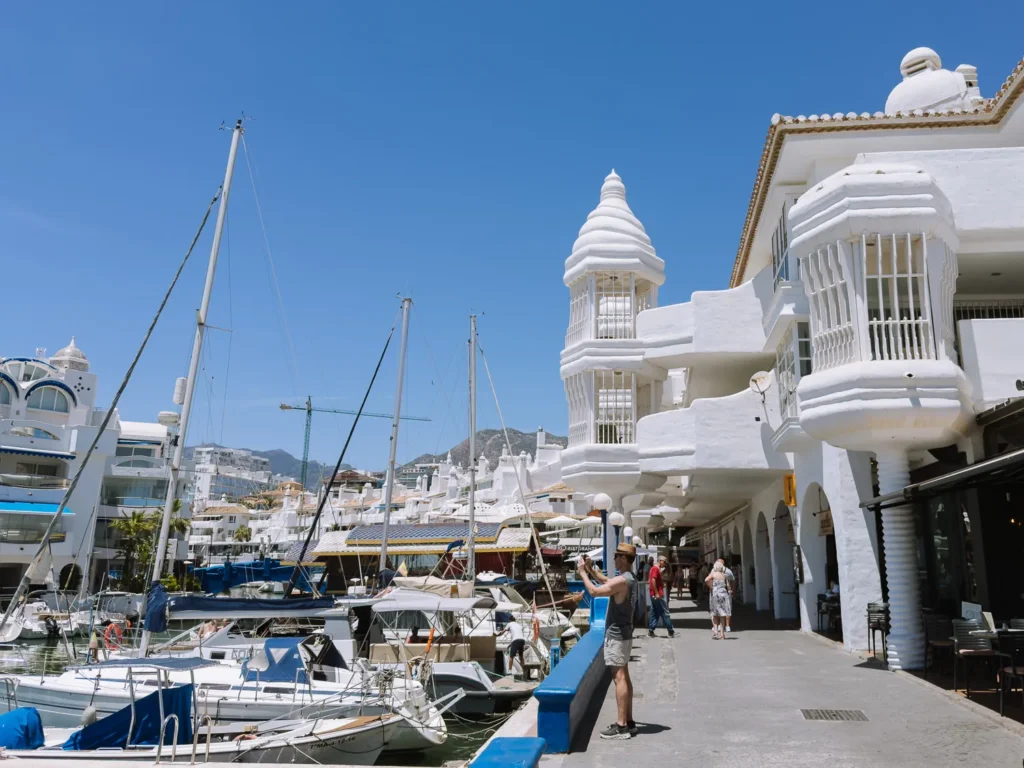
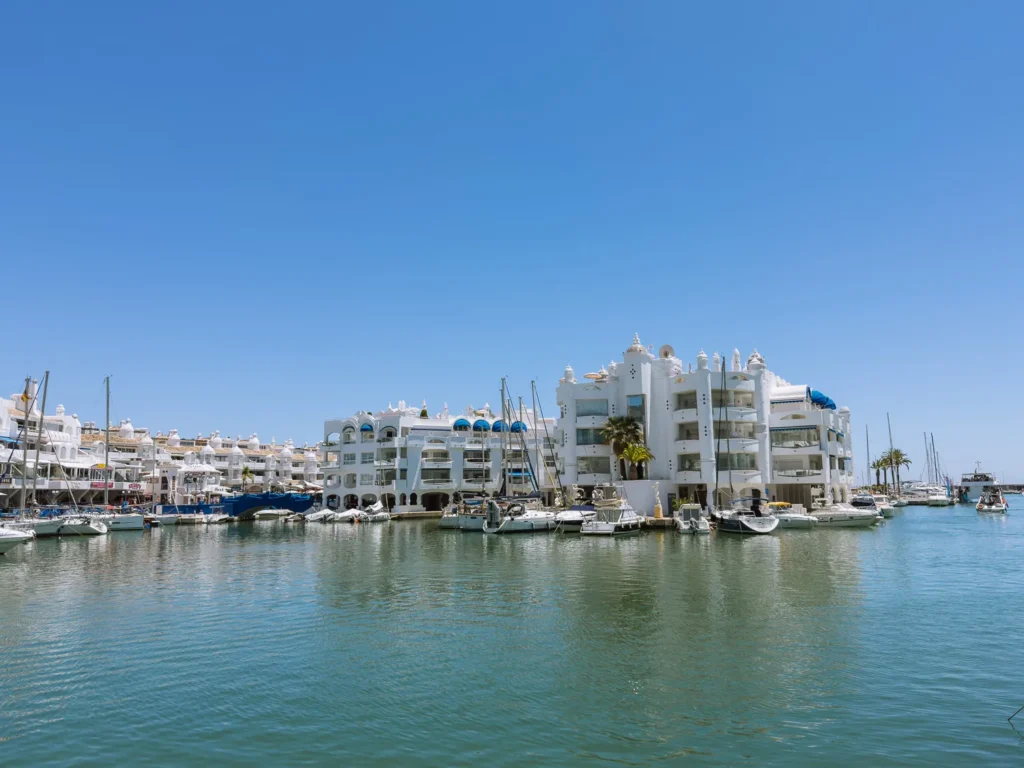
Benalmádena is one of the more varied resorts on the Costa del Sol, with beaches, a buzzing marina and a whitewashed village in the hills above the coast.
It’s still busy and built up, but the three distinct areas of Benalmádena Costa, Arroyo de la Miel and Benalmádena Pueblo give it more variety than some of the larger resorts.
Who Is It for?
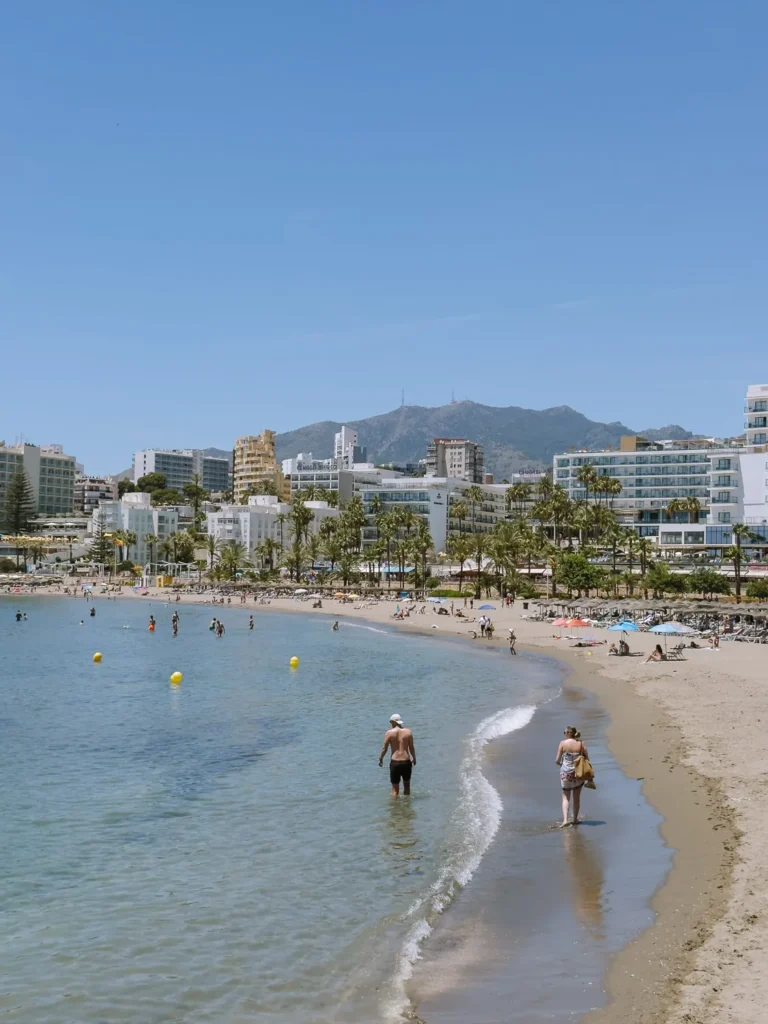
Benalmádena is a good choice for families who want easy beach days with plenty of attractions nearby. There are also lots of restaurants, bars and entertainment around Puerto Marina, so it works well for couples and groups of friends.
It’s particularly good if you want a resort where you can mix up your days. You can spend the morning on the beach, wander around the marina in the evening, or head up into the hills to explore Benalmádena Pueblo.
There’s also a good range of accommodation, from large hotels and resorts to apartments and holiday rentals, making it easy to find somewhere to suit different types of holiday.
Our Take
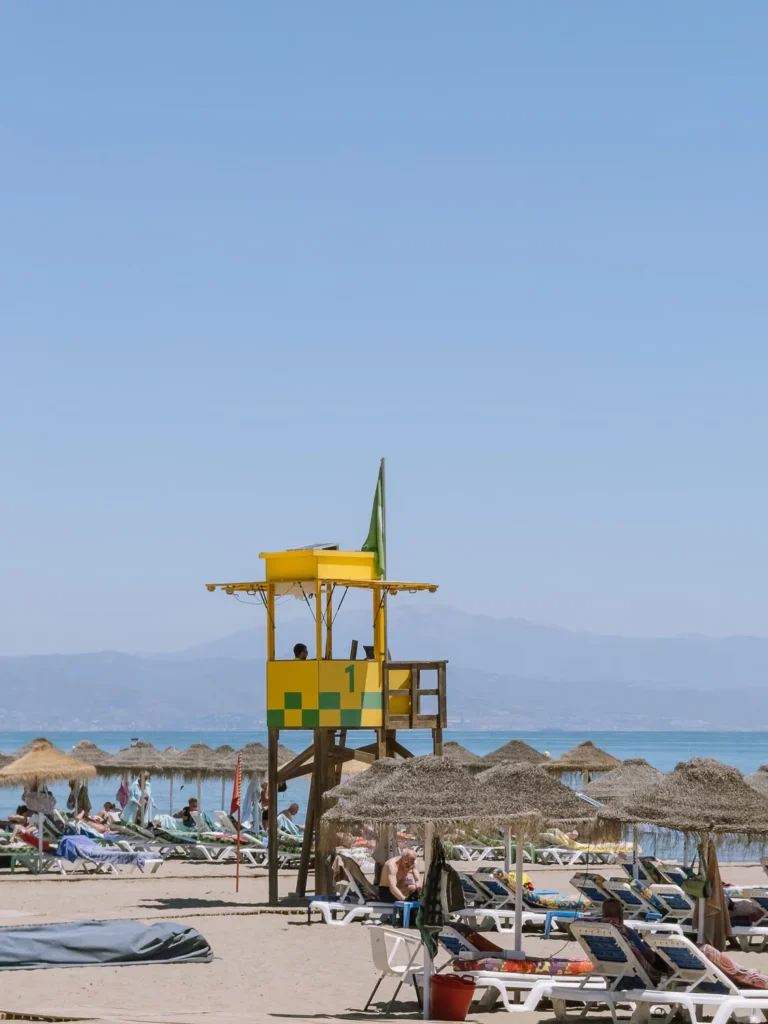
Benalmádena feels a bit more informal than Torremolinos. You can hire a sun lounger and umbrella from vendors on the beach, rather than at a beach club. There are also always more people just throwing a towel down on the sand.
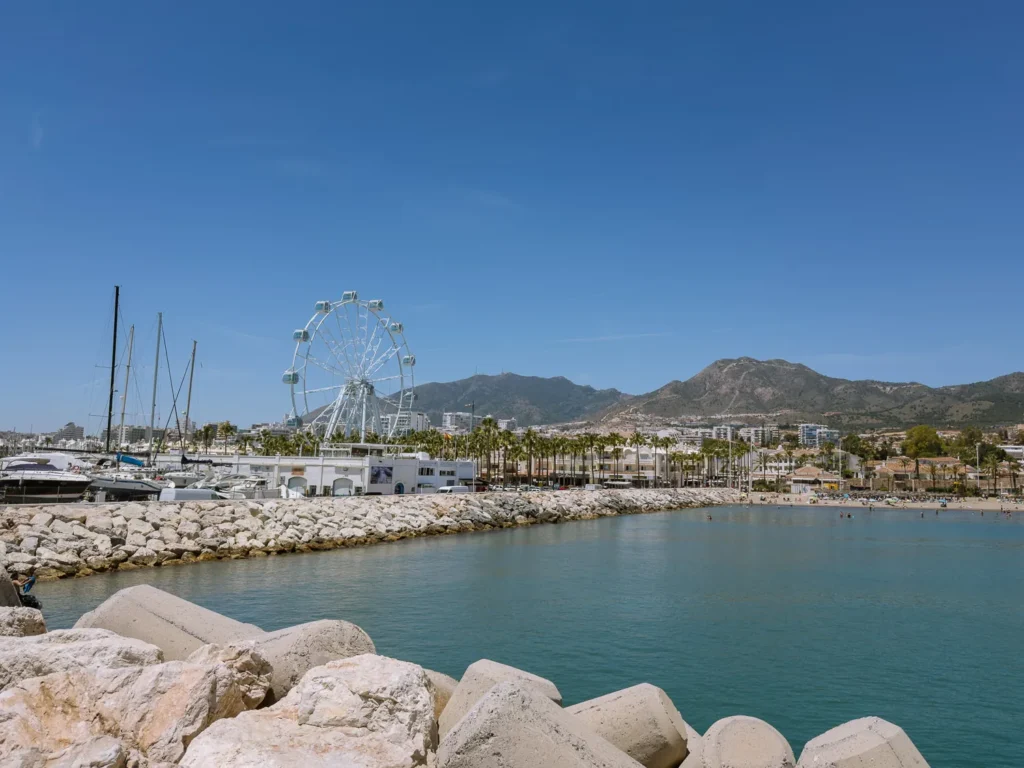
Puerto Marina is great for nightlife with restaurants, bars and entertainment on a built-up, but attractive marina.
There’s plenty to do beyond the beach, including the cable car up Monte Calamorro, family attractions and parks.
What’s Good About Benalmádena
- Parque de la Paloma: A large, landscaped park with a lake and gardens is a useful option when the kids need a break from the beach.
- Colomares Castle: A monument built in the style of a fairytale castle, celebrating Christopher Columbus and the discovery of America.
- Bil-Bil Castle: A neo-Arabic castle built in 1934 and now used for exhibitions and cultural events.
- Cable car to Monte Calamorro: The cable car climbs from Arroyo de la Miel to around 770 metres, with panoramic views over the coast.
- Family attractions: Selwo Marina has penguins and sea lions; Sea Life focuses on marine life and the butterfly park has more than 1,500 exotic butterflies.
- Benalmádena Pueblo: The hilltop village is the best place to see the more traditional side of Benalmádena.
What’s Not so Good
Benalmádena is busy and built up, particularly around the coast. The three different areas also mean you need to choose your accommodation carefully, as staying in Benalmádena Pueblo or Arroyo de la Miel gives you a very different experience from staying beside the beach.
Where to Stay in Benalmádena
- Booking.com → Browse hotels in Benalmádena and filter by price and location. Make sure you book in the right section.
- Airbnb → Browse holiday rentals in Benalmádena, with options close to the beach, marina and village.
4. Fuengirola
Fuengirola is one of the most established resorts on the Costa del Sol, with around 7 kilometres of beaches, a long seafront promenade and a huge choice of restaurants, bars and accommodation.
It’s much less polished than the neighbouring resorts, and it has a large permanent population and an expat community. This gives Fuengirola a more lived-in feel than a beach resort.
Who Is It for?
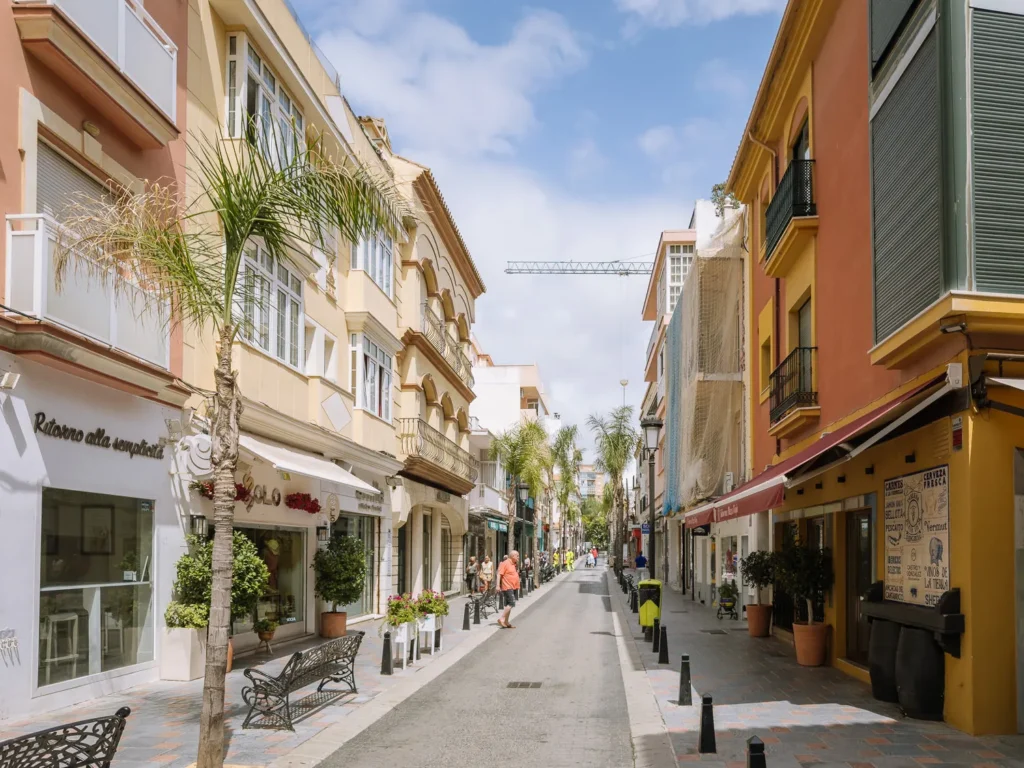
Fuengirola is good if you want a relaxed beach holiday rather than somewhere glamorous.
It has an older demographic than Torremolinos and Benalmádena, with retirees and long-stay visitors. The pace is slower, and it’s missing the party atmosphere, although there are still plenty of restaurants and bars.
There’s a huge choice of apartments, supermarkets and everyday services, while the train makes it easy to get around without a car. Basically, it’s practical.
Our Take
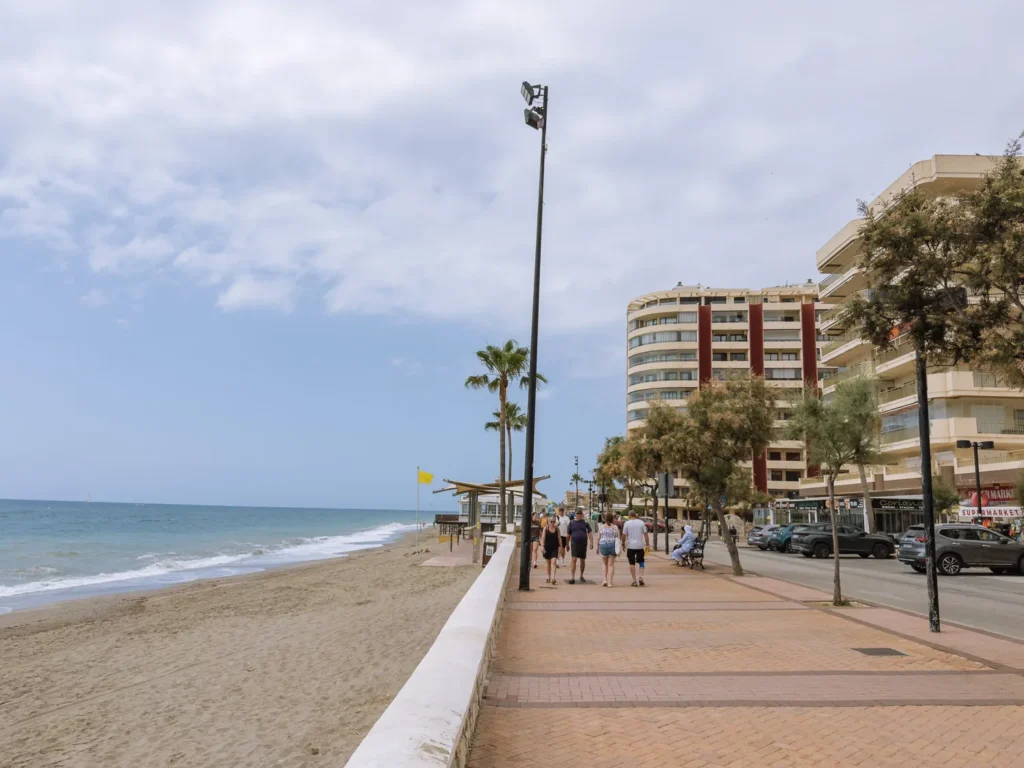
We wouldn’t choose Fuengirola for the prettiest stretch of coast.
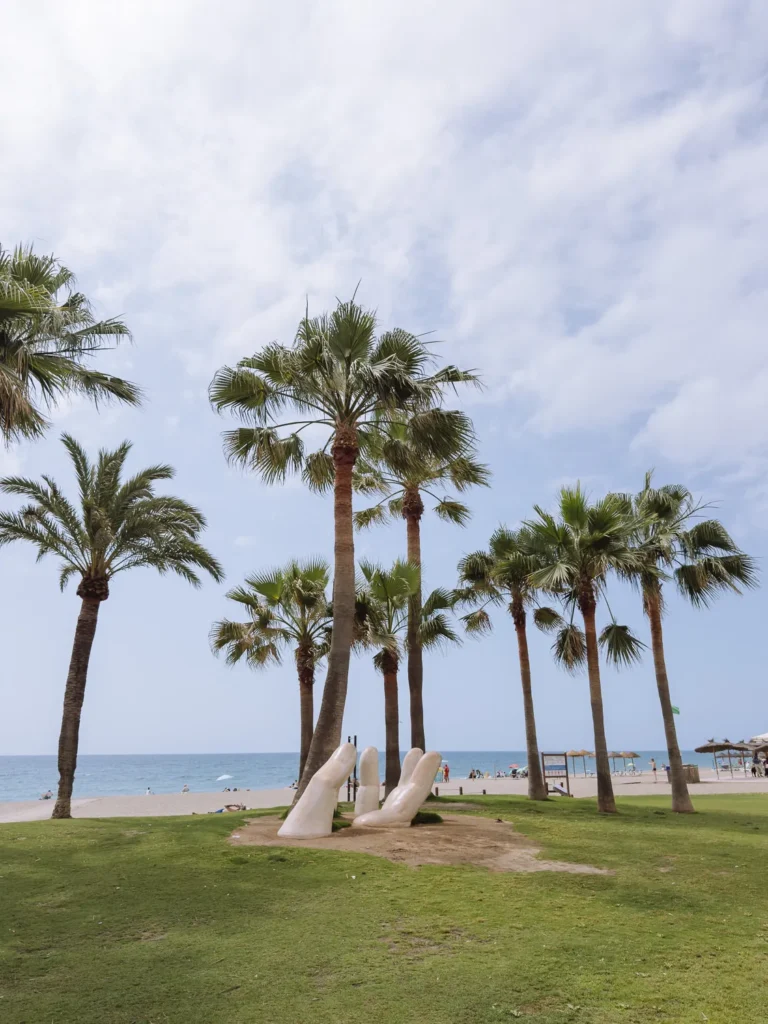
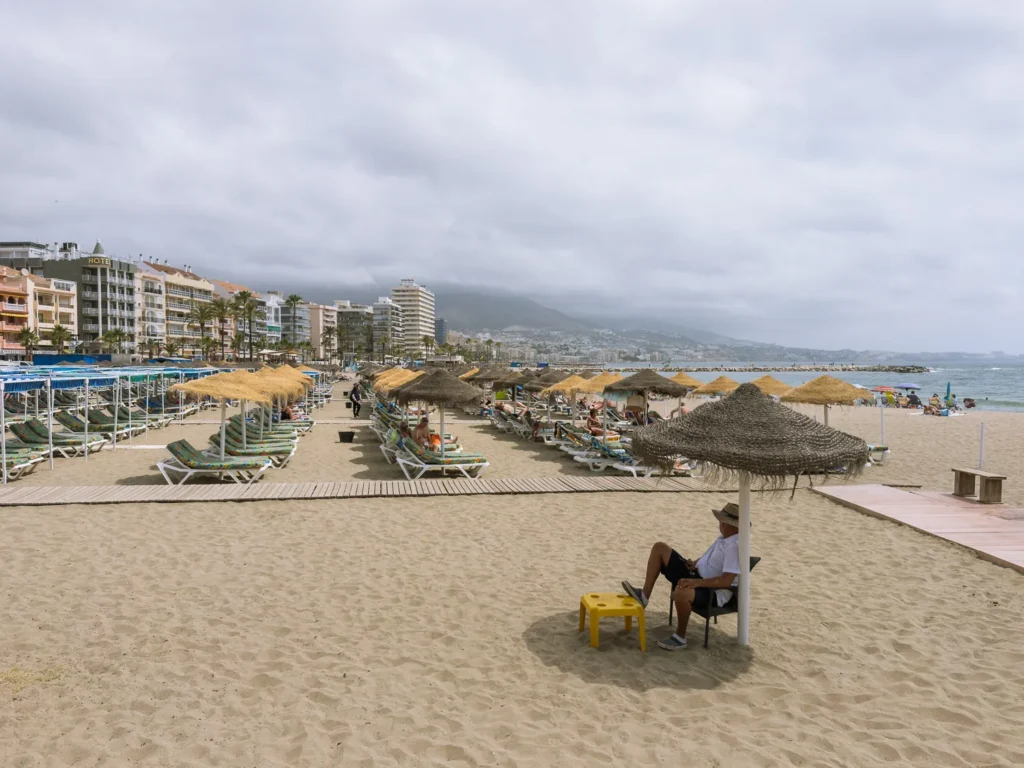
The beaches are long and well serviced, but the sand is coarser and darker. The main road runs alongside parts of the seafront, so it all feels way more urban than Torremolinos or Benalmádena.
There are plenty of chiringuitos along the promenade, but it’s dominated by fast-food chains and inexpensive international-style cafes.
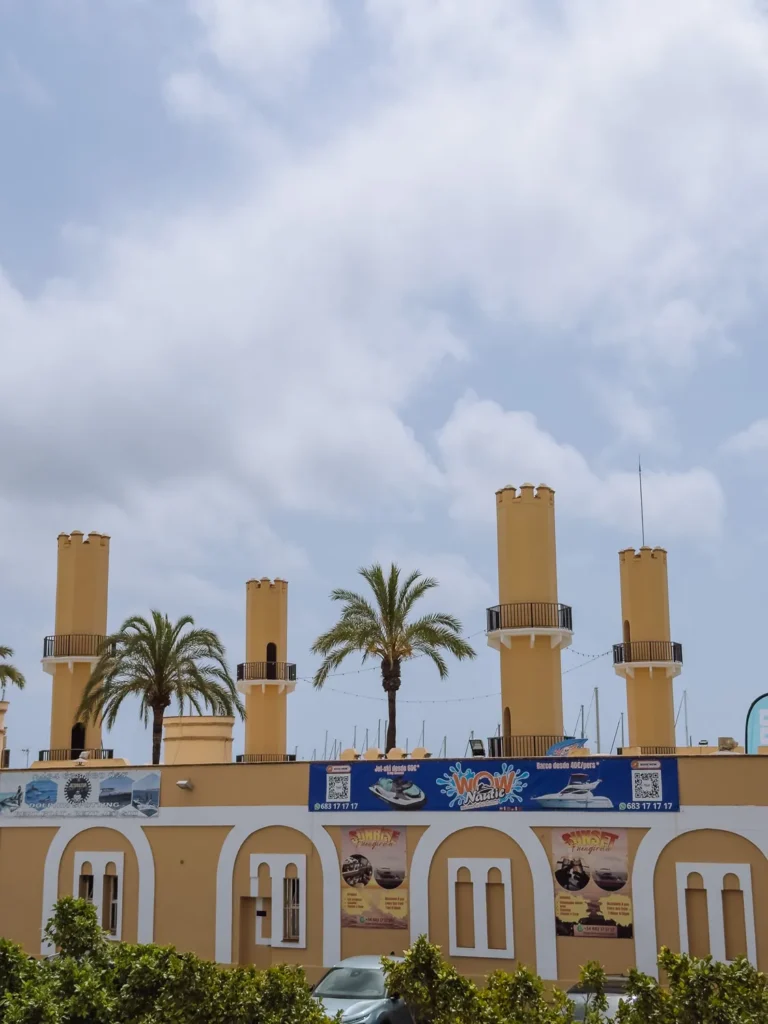
It feels more like a town where people live and work. The port is a working fishing port, rather than a tourist-focused attraction, and it definitely feels more like a place for locals and long-term stays.
So, it’s a bit tired in places, the hotels are generally older, and it’s missed out on the development of the nearby areas.
Of course, this could all be part of Fuengirola’s appeal for many of you. It’s cheaper, more laid-back, practical, and less touristy.
What’s Good About Fuengirola
- Los Boliches: The eastern part of Fuengirola has a more established neighbourhood feel, with traditional restaurants, independent shops and a large international community.
- Sohail Castle: The 10th-century Moorish castle sits above the western end of the beach and has views along the coast. It also hosts concerts and festivals.
- Bioparc Fuengirola: Naturalistic habitats designed around species including gorillas, tigers and lemurs.
- Tuesday market: Fuengirola’s large weekly market is one of the biggest on the Costa del Sol.
- Long-distance promenade: The flat seafront walkway runs for more than 7 kilometres from the Sohail Castle area towards Carvajal.
- Facilities: Fuengirola has supermarkets, everyday services and good public transport so it’s practical for longer stays.
What’s Not so Good
Fuengirola feels more dated and built up than some of the neighbouring resorts. The coastal road sucks out some of the atmosphere, and the seafront isn’t as attractive as Torremolinos or Benalmádena.
The slower pace and large retiree and expat population won’t suit everyone either. If you’re looking for a lively, stylish resort with a strong holiday atmosphere, Málaga, Torremolinos or Benalmádena are better for that.
Where to Stay in Fuengirola
- Booking.com → Browse hotels and apartments in Fuengirola with options close to the beach, town centre and Los Boliches.
- Airbnb → Browse self-catering holiday rentals in Fuengirola with kitchens and more space for longer stays.
5. Marbella & Puerto Banús
Marbella is the Costa del Sol’s best-known luxury resort, but it also has an attractive old town, good restaurants, long beaches and a huge choice of places to stay.
Puerto Banús, about 5 kilometres west of Marbella, is built around a large marina filled with luxury yachts, designer boutiques, restaurants and nightlife. This is where you come to be seen!
Who Is It for?
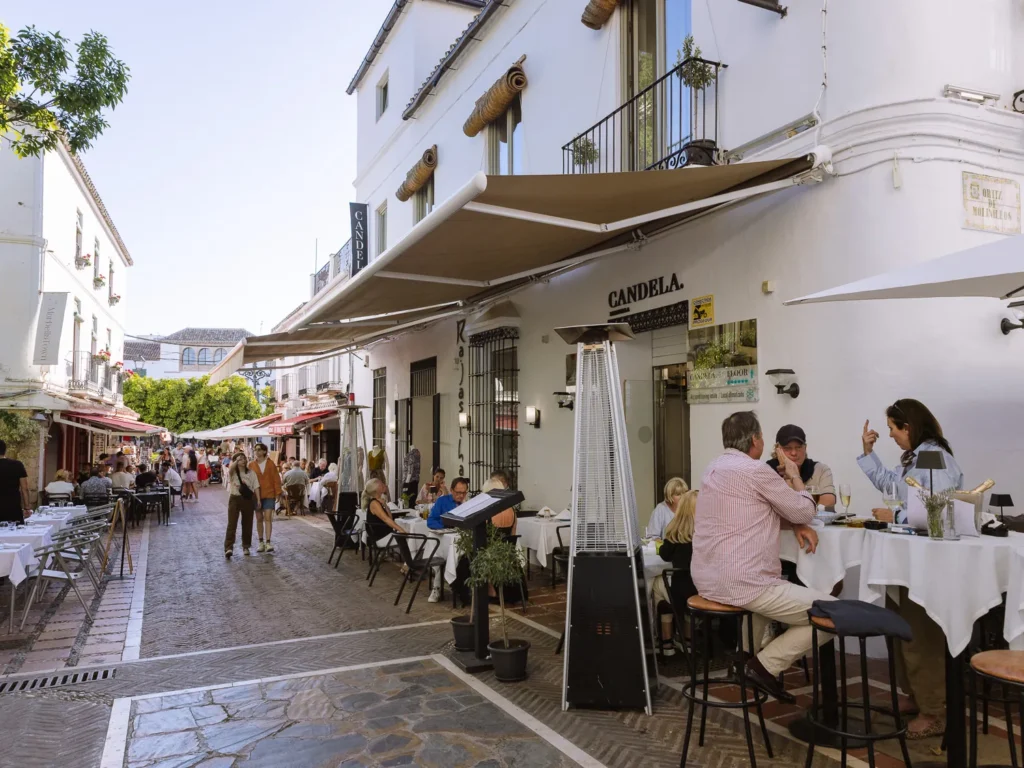
Marbella is where to stay if you want an upmarket resort with plenty of restaurants, shopping and nightlife. The old town feels like a pristine white village with lanes packed with tapas bars, restaurants across all scales and charming squares.
It also works well for couples, groups of friends and families who want lots of choice. There are beaches, golf courses, water sports and plenty of high-end hotels, apartments and villas. Puerto Banús adds a glamorous nightlife and designer shopping.


Our Take
In Marbella’s old town, whitewashed streets, small squares and traditional buildings cluster around Plaza de los Naranjos. We always go in at least once for dinner when we’re in the area, but the shops are very touristy, and there seems to be a hell of a lot of doily boutiques.
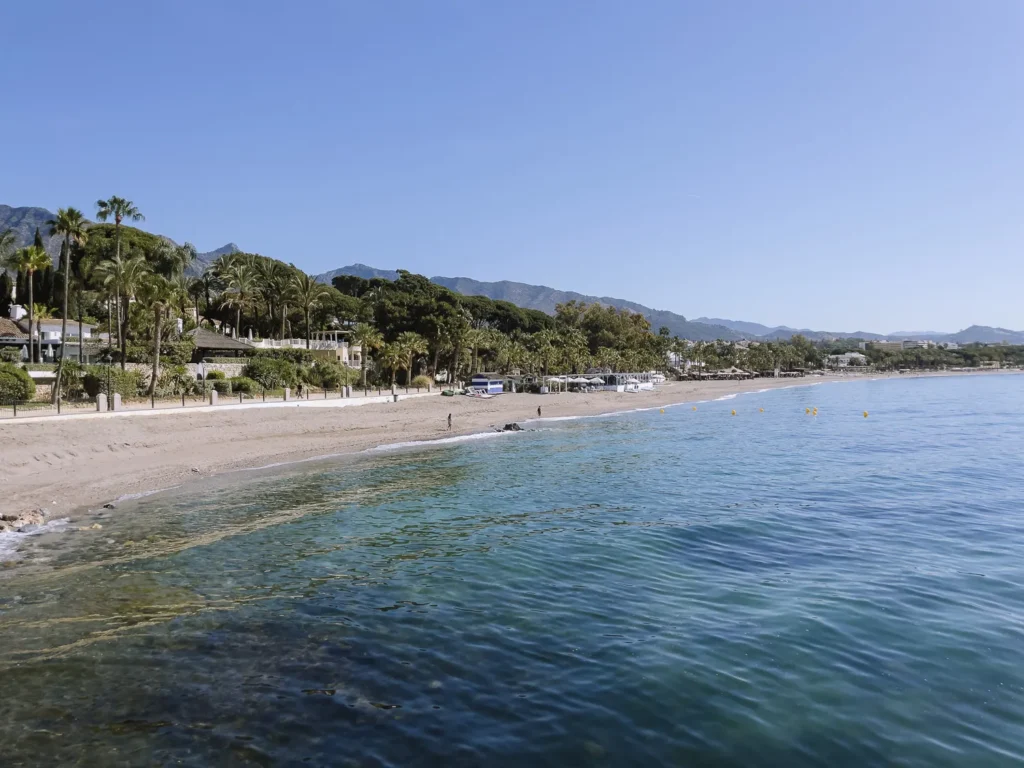
On the front, the character changes. The famous Golden Mile starts in Marbella and continues west towards Puerto Banús, passing some of the most expensive hotels, villas and restaurants on the coast.
The marina at Puerto Banús is full of enormous yachts and surrounded by designer shops, bars and restaurants. The strip behind the marina is full of strip clubs, nightclubs and Irish bars with names like Pandemonium.
The downside is that Marbella can be expensive, and traffic and parking can also be a problem if you have a car.
Puerto Banús is not really our style at all, and the restaurants are overpriced, not particularly Spanish and generally pretty bad from our experience. But, if you want to flash your inheritance, Puerto Banús is the place to do it.

What’s Good About Marbella and Puerto Banús
- Marbella Old Town: Great for a night or two with a wide selection of restaurants; we love Arcos Tapas Bar, Paloma and Bar El Estrecho.
- Puerto Banús spectacle: Yachts, supercars, designer shops and people watching. It’s good for a stroll in our opinion, but we wouldn’t spend too much time here.
- Golf: Marbella has 17 golf courses, so it’s a good choice if golf is in your holiday plans.
- Golden Mile: The stretch between Marbella and Puerto Banús is where you’ll find the poshest hotels, beach clubs, villas and restaurants. It’s also just great for a stroll.
- Beach Bars: This part of the coast has a fantastic selection of beach bars for all different styles and budgets. We cover them more in our Beach Bars Near Marbella guide.
- Shopping: In addition to the super-charged luxury shopping in Puerto Banús, there is also the El Corte Inglés shopping centre.
What’s Not so Good
Marbella is more expensive than the resorts further east, particularly around the Golden Mile and Puerto Banús. The more exclusive areas can feel a little detached from everyday Spain.
Puerto Banús is pretty superficial, but if you are into luxury shopping, it might be your thing.
Where to Stay in Marbella and Puerto Banús
- Booking.com → Browse hotels in Marbella from old-town stays to luxury resorts along the Golden Mile.
- Airbnb → Browse holiday rentals in Marbella and Puerto Banús, with apartments and villas ranging from central Marbella to the Golden Mile and marina.
6. Estepona
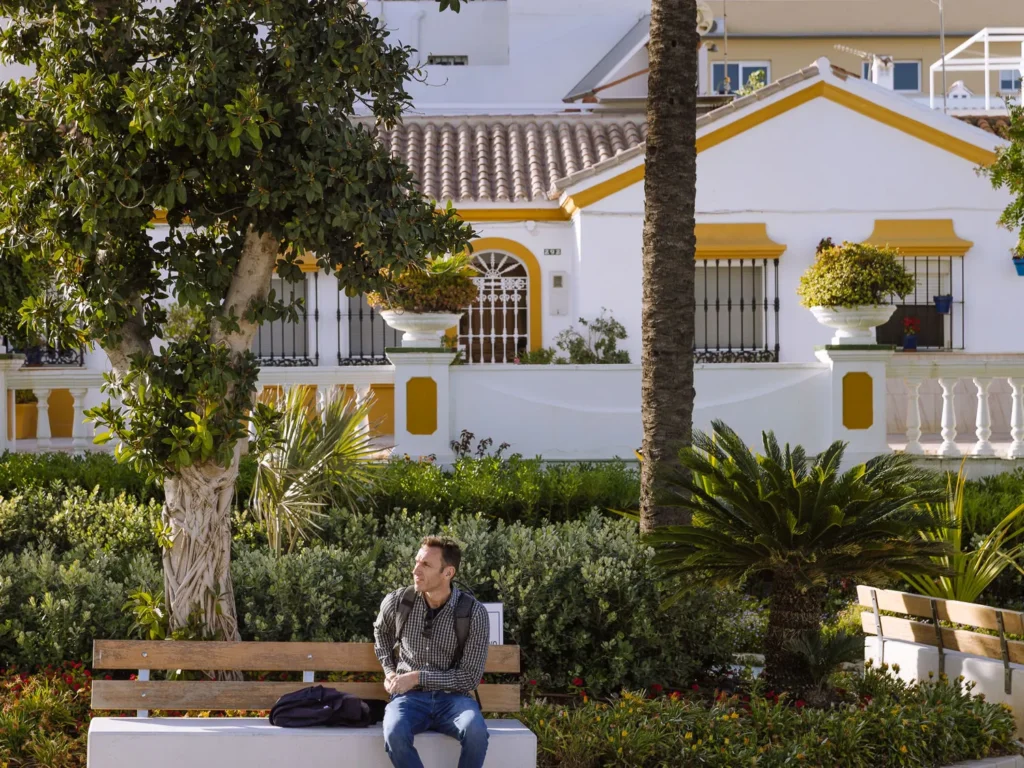
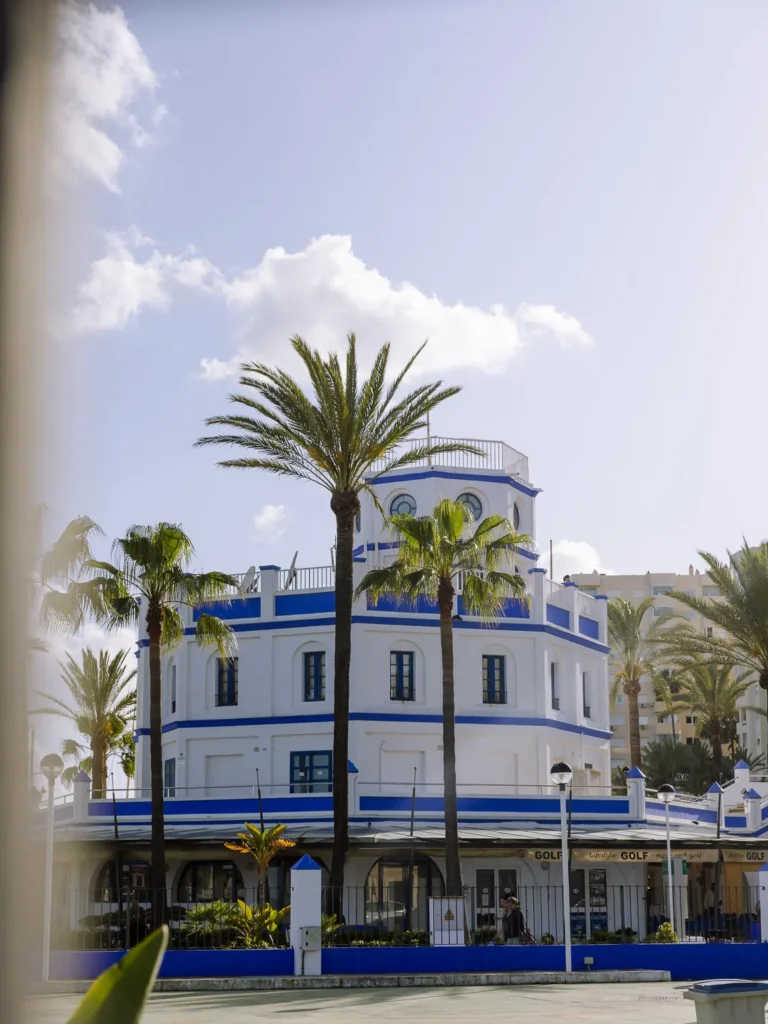
Estepona is one of our favourite places on the Costa del Sol. We spend quite a bit of time here, twice a year, and we love it. The beautiful whitewashed old town with flower-filled streets has an atmosphere we’re worried may be slowly disappearing from southern Spain.
It has developed considerably as a holiday destination, but the centre still feels like a real Andalusian town rather than a resort built entirely around tourism.

Who Is It for?
Estepona is ideal if you want a beach holiday with some genuine Spanish character. It’s good for couples and families looking for a quieter resort with good restaurants and a relaxed evening atmosphere.
It’s also a good choice if you like wandering around an old town rather than spending your entire holiday around a hotel or beach club.
Estepona is probably not for you if you are looking for nightlife or travelling with a group for a party-filled holiday.
Our Take
As we have already mentioned, we love Estepona.
The whitewashed streets are lovely without being focused almost entirely on tourists, which Marbella is.
Small squares open up between the houses with some great places to eat. We always go to La Sureña on the best square in the town. We challenge anyone to find cheaper tapas, with a better location, anywhere on the coast. Casa Wild is doing some great things with food as well.
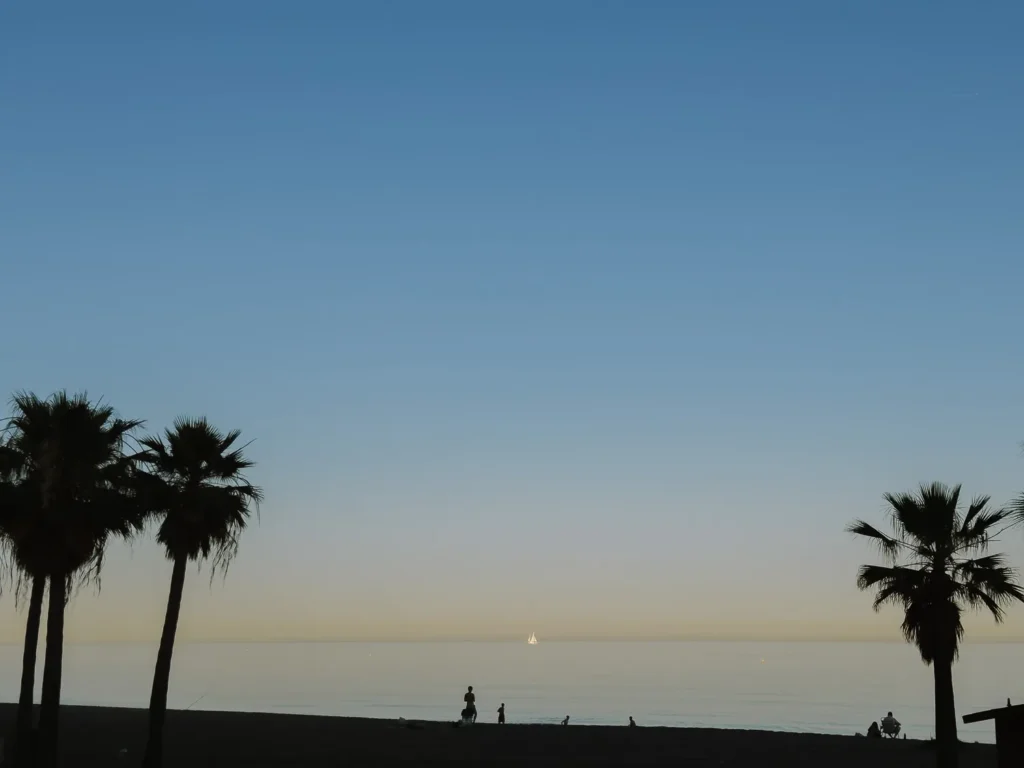
The beaches are also better than you might expect. There are several good stretches of sand, along with smaller protected coves. We’ve tried a few of the chiringuitos on the main beach; El Madero has become a staple. There’s also a branch of Gelato Italia, which is probably the best ice cream I have ever had.
The trade-off is location. Estepona is further west along the coast, so it’s a longer journey from Málaga Airport. It’s also much more subdued than Marbella, so if you’re looking for big nightlife, luxury shopping or a glamorous beach-club scene, we’d stay further east.
What’s Good About Estepona
- Old-town streets: The historic centre is a maze of whitewashed lanes, small squares and flower-filled streets. It’s one of the nicest places on the Costa del Sol for simply wandering around.
- Protected coves: Beyond the main beaches, the coastline has smaller coves and sheltered stretches for good family-friendly options.
- Food without the fuss: Estepona’s restaurant scene has grown considerably, but it still feels relaxed and local.
- La Rada Beach: The main town beach stretches for more than 2 kilometres alongside the seafront promenade, so you can combine a beach day with an easy walk into the old town.
- Subdued evenings: There are plenty of restaurants and bars, but Estepona is much quieter at night than Marbella or Puerto Banús.
What’s Not so Good
As I mentioned above, the trade-off for Estepona is really location. It’s around a 1.5-hour drive from Málaga airport, and you also need a car. So it’s not a good option if you want lots of great nightlife and stay centred around a beach resort without needing a car.
Where to Stay in Estepona
Booking.com → Browse hotels in Estepona from traditional town-centre stays to beachfront resorts.
Airbnb → Browse holiday rentals in Estepona, including apartments close to the old town and quieter properties along the coast.

7. Nerja
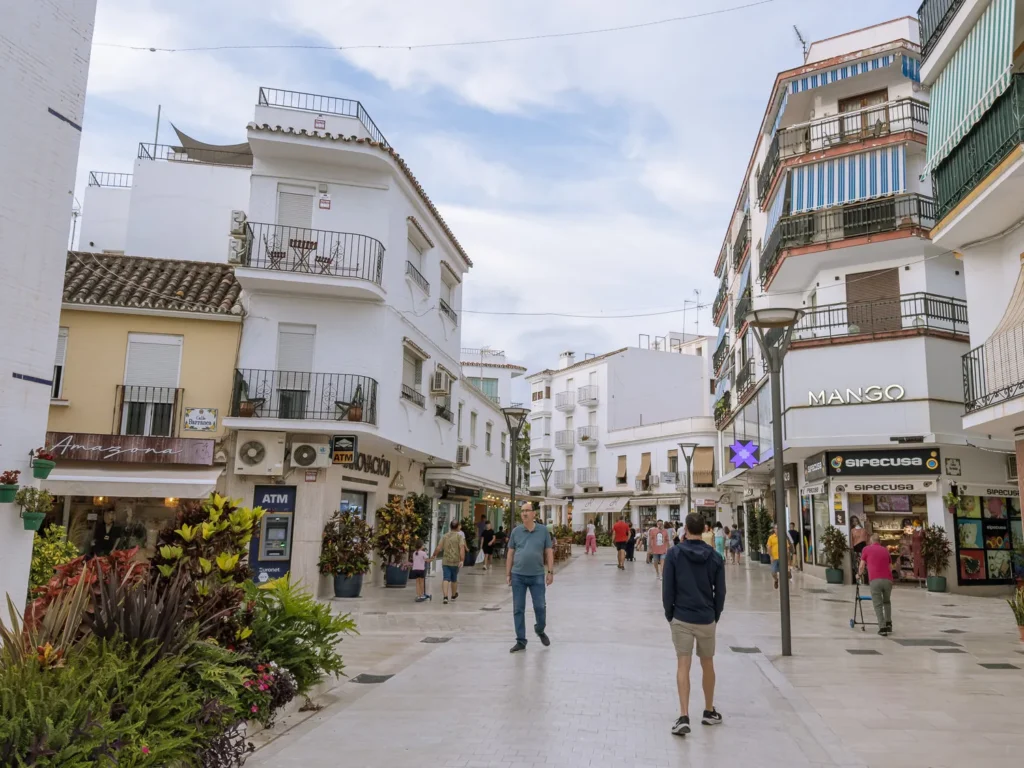
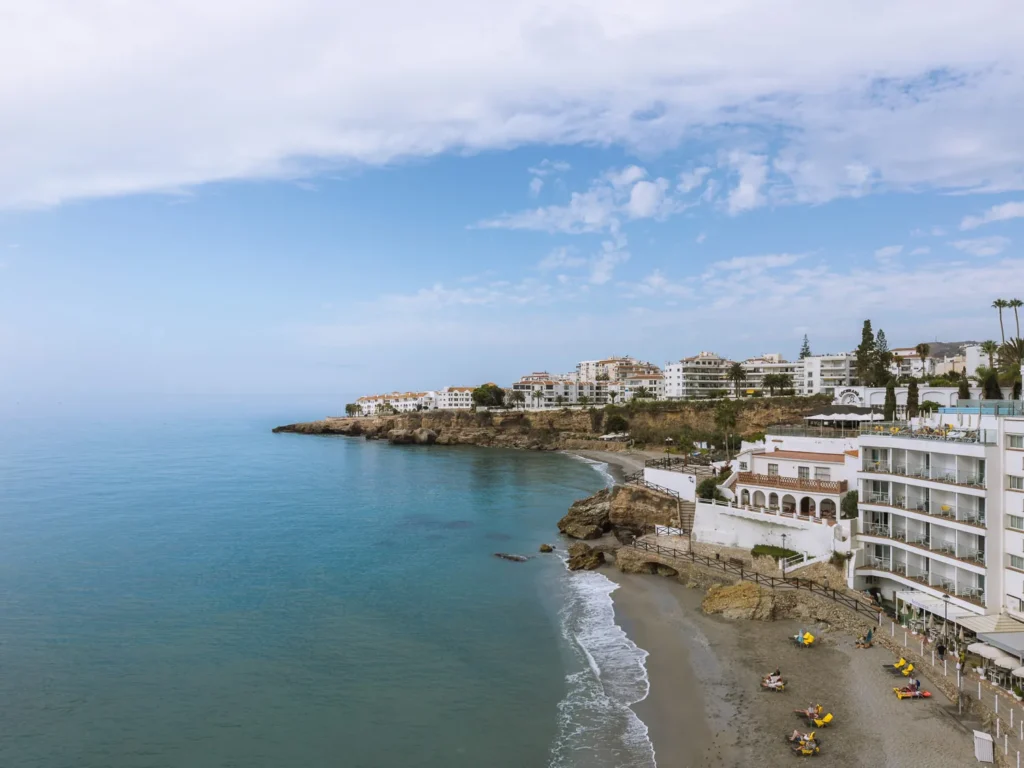
Nerja is smaller, more relaxed and arguably more attractive than the resorts further west, with a whitewashed old town, a dramatic coastline and several different types of beaches.
It’s still a popular holiday destination, but it doesn’t have the large-scale resort feel of Torremolinos or Fuengirola.
Who Is It for?
Nerja is a good choice for families, couples and anyone looking for a quieter beach holiday without giving up restaurants, bars and things to do.
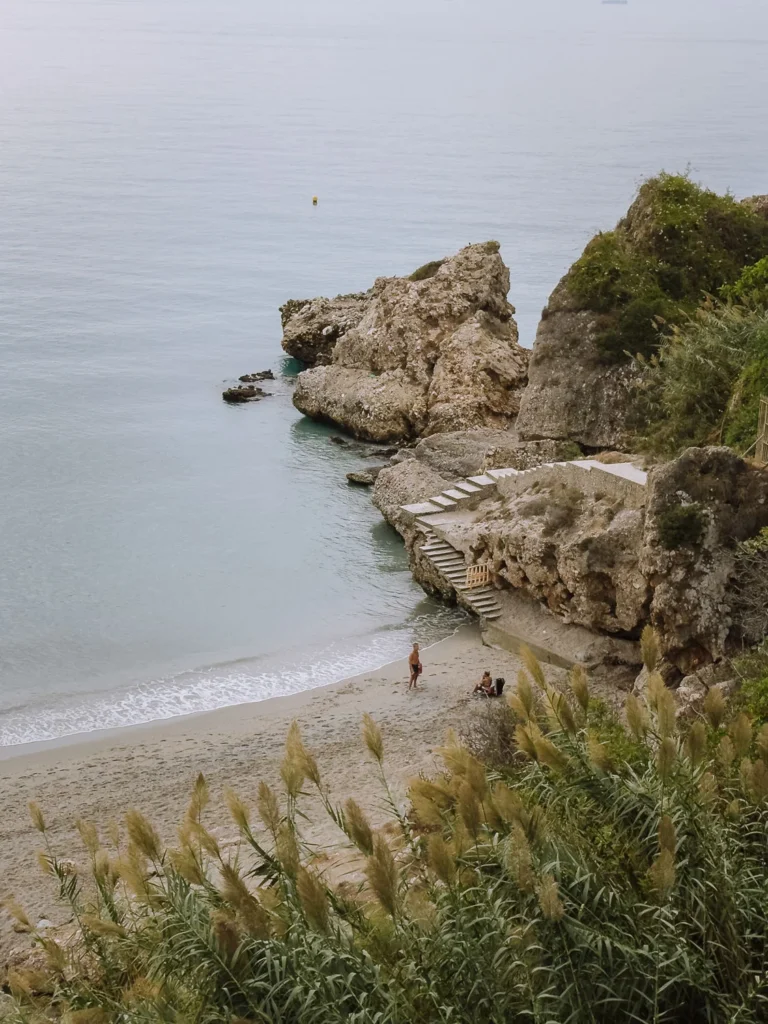
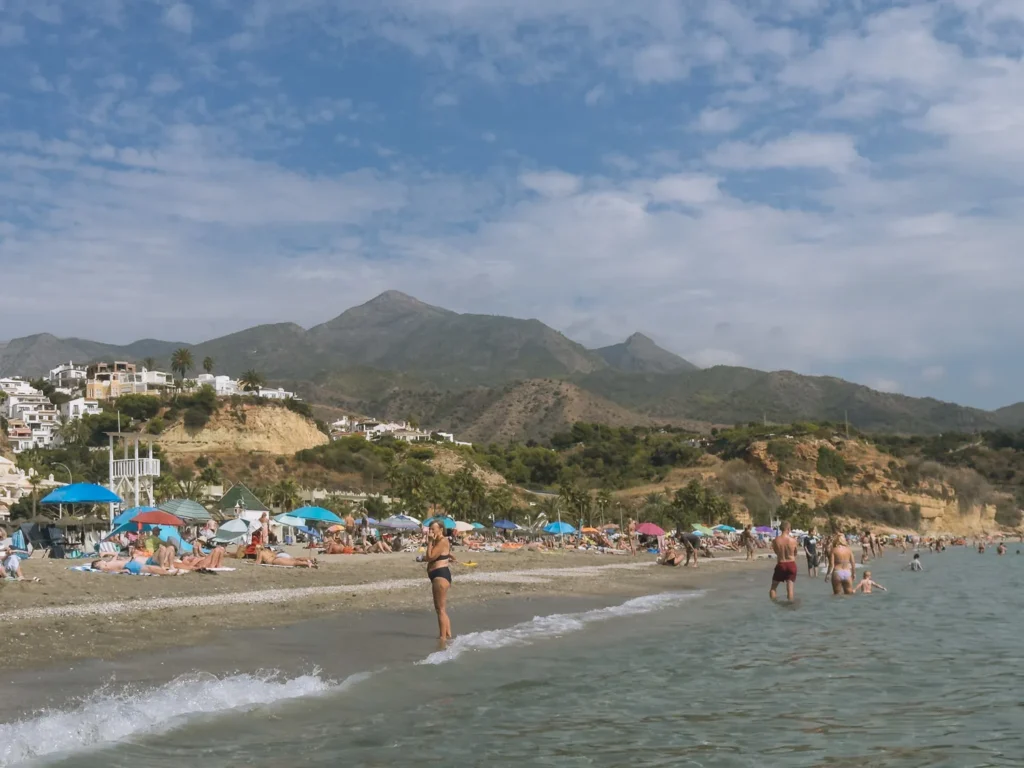
It’s particularly good if you like having different beaches to choose from. There are broad sandy stretches, small coves tucked beneath the cliffs and more rugged sections of coastline.
It’s also a good base for exploring the eastern side of Málaga province. Frigiliana is a beautiful hillside town just a few minutes out of Nerja and the mountains of the Sierra Nevada within reach for a longer day trip.
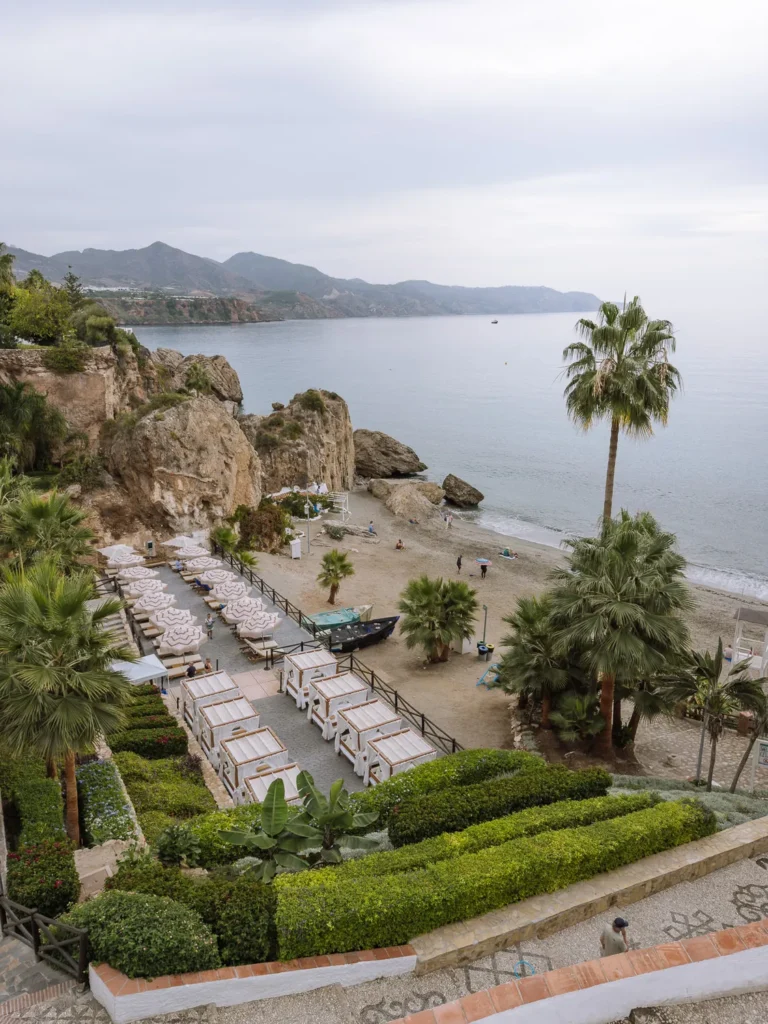
Our Take
Nerja is where we would stay if you want something more relaxed than Torremolinos but still a good-looking, lively town.
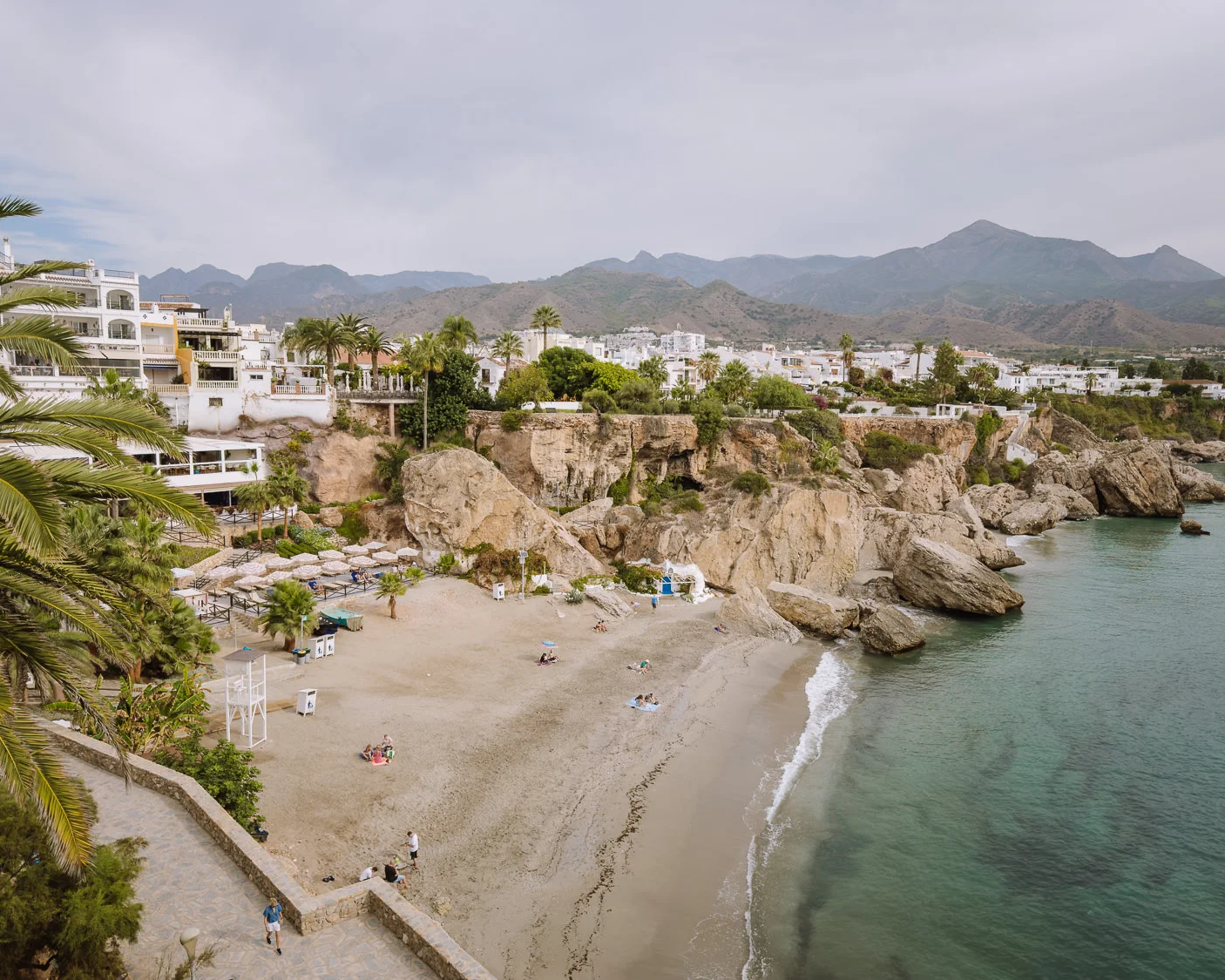
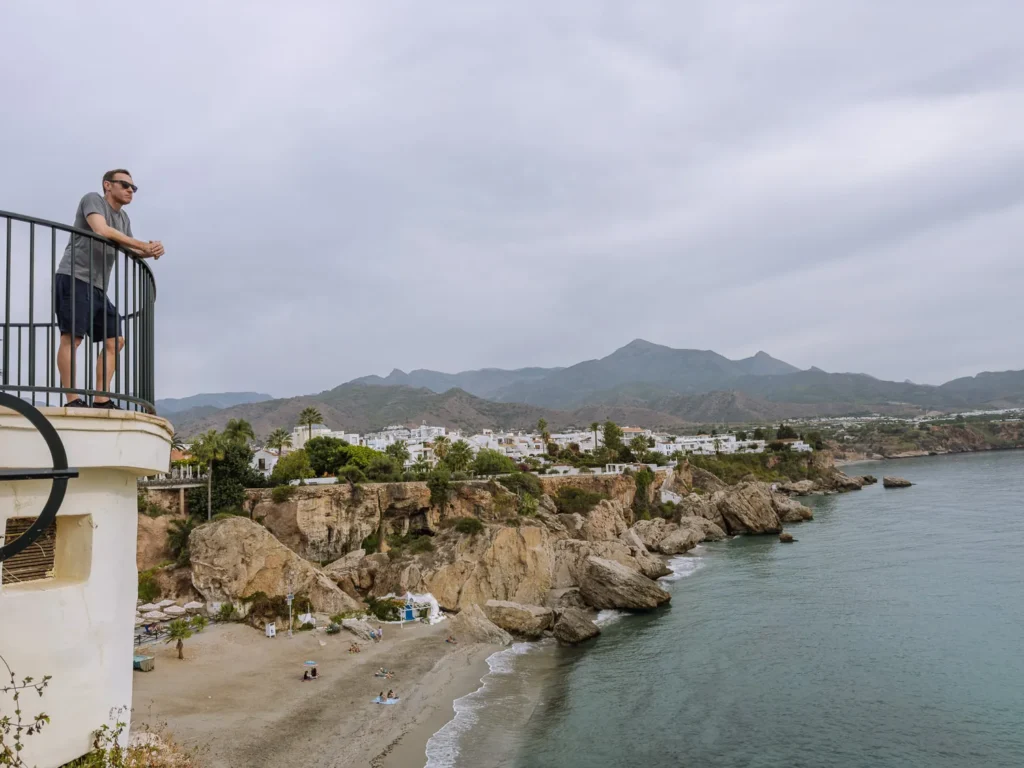
The famous Balcón de Europa sits above the sea, with beaches and rocky coves dropping away below it. You can get an idea of how beautiful this spot is from the photos above.
Burriana is the main family beach, with plenty of facilities and water sports, while smaller coves such as Playa de Maro have a cool, dramatic setting.
Nerja is also well positioned to explore inland Andalucía, including Frigiliana, as mentioned above, and there are plenty of hiking options in the mountains towards the Sierra Nevada.
The main drawback is transport. Nerja isn’t on the railway line, so you can’t simply jump on a train from Málaga or the airport as you can in Torremolinos, Benalmádena and Fuengirola. You need a car for Nerja.
What’s Good About Nerja
- Balcón de Europa: The town’s most famous viewpoint sits on a rocky headland above the Mediterranean, with wide views along the coast.
- Burriana Beach: Nerja’s main family beach has plenty of facilities, restaurants, sun loungers and water sports.
- Maro-Cerro Gordo: The protected coastline east of Nerja has stunning cliffs, coves and clear water. It’s great for kayaking and exploring the coastline.
- Nerja Caves: Just outside town, these enormous caves contain huge stalactites and stalagmites and are one of the area’s main attractions.
- Frigiliana: One of Andalucía’s prettiest white villages is only a short drive from Nerja.
- Outdoor activities: The surrounding cliffs, mountains and protected coastline provide plenty of opportunities for hiking, kayaking, canyoning and other outdoor activities.
What’s Not so Good
Nerja isn’t on the train line, so getting here is less convenient than the resorts closer to Málaga. The town is also hilly in places, particularly along the coastline, and some of the smaller beaches require steps or steep paths to reach.
Nerja is quieter than Torremolinos, but it isn’t sleepy. In peak summer, the main beaches and old town can still get very busy.
Where to Stay in Nerja
- Booking.com → Browse hotels in Nerja from town-centre hotels to beachfront accommodation.
- Airbnb → Browse holiday rentals in Nerja, with apartments near the old town and larger properties suited to families.
More Andalucía Guides
- Spend a glorious 3 days in Seville, the capital of Andalucia.
- How to plan a day trip from Seville to Córdoba.
- Our guide to Málaga includes the best things to do, top beaches and great day trips.
- See the Alhambra with our guide to visiting Granada.
- Take a road trip through these beautiful white villages in Andalucía.
- How to visit Ronda on a day trip from Seville or Málaga.
- Read up on the best things to do in Cádiz.
- See the incredible history of the region in our 2-day itinerary for Córdoba.
- Hike the stunning Garganta Verde.
- Find secluded beaches near Tarifa ideal for kite-surfing or bum-sitting.
- Visit more interesting places in Andalucía.
- Read about all the best things to do on the Costa del Sol.

reader-supported
When you buy through links on our site, we may earn a small affiliate commission at no extra cost to you.
Thanks for your support // Paul & Mark