

This guide covers a 10-day Iceland Ring Road itinerary that takes in the country’s most iconic attractions alongside quieter, off-the-beaten-track experiences that most visitors miss.
By: Paul Healy // Last Updated:
Iceland sits on the mid-Atlantic ridge, where a thin crust and relentless volcanic activity have shaped one of the world’s most dramatic landscapes.
Black lava fields, sulphurous vents, colourful mountains, and crystal-clear lakes, all packed into one relatively compact country.
The Ring Road circles Iceland’s exterior and forms the backbone of this itinerary.
We’ve also included excursions into the central highlands, where the crowds thin out and the scenery is at its most raw and spectacular.
The guide works for both summer and winter travel, with suggestions for extending your trip if you have more time.
For more inspiration, take a look at our Iceland itinerary suggestions and our guide to the best places to visit in Iceland.

Ring Road Itinerary Map
Our Ring Road itinerary spends 10 glorious days taking in some of the best sights Iceland has to offer. The map below includes all the main stops on this itinerary, with each red marker representing a day.
Click on the top right corner to open our map in your Google Maps app. Click the star next to the title to save it to your Google account.
When to Do This Ring Road?
Our favourite time to visit Iceland is over the summer period when the F-roads are open, and the incredible landscapes in the highlands are accessible to anyone with a 4×4 vehicle.
However, we’ve developed this Ring Road itinerary so that it can be followed in both summer and winter.
If you are visiting in winter, you’ll need to skip Day 3 and add another day around the Vatnajökull National Park, where you can go on an ice cave experience. All the details are below.


Our Ring Road Itinerary
Day 1: Reykjavík & Reykjadalur Hot Springs
- Where to stay: Reykjavík
- Driving Time: 45 minutes each way to Reykjadalur
- Distance: ~ 85 km
Spend the morning exploring the streets of charming Reykjavík. In the afternoon, head to Hveragerði. From here, a 1-hour hike takes you to Reykjadalur Thermal River, where you can soak in the naturally heated water while staring out at glorious scenery.
In winter, spend the evening searching for the Northern Lights on the outskirts of Reykjavík. This Northern Lights Bus Tour includes free entry to the Aurora Museum on the day of the tour, and it is fully transferable if the tour doesn’t go ahead due to bad weather.
In the summer, take advantage of Reykjavík’s cool bar scene.
Kaffibarinn is a café by day and a bar by night with regular DJ sets and a cocktail happy hour. Veður Bar has a wide selection of beer and wines in a cosy space with happy hour from 4 pm to 7:30 pm.


Day 2: Golden Circle & Secret Lagoon
- Where to stay: We stayed at Álftröð Guesthouse near Selfoss
- Driving time: 3 hours
- Distance: ~ 240 km. A ~30 km to reach Secret Lagoon near Flúðir.
Today, leave Reykjavík and complete the Golden Circle – a 3-hour, 30-minute circular drive that visits some of the most popular sights on this Iceland Ring Road itinerary.
Stops include Thingvellir National Park, where a fissure runs through Iceland’s historic parliament, Geysir, where geysers erupt every ten to fifteen minutes, and Gullfoss, a powerful and beautiful Icelandic waterfall.
Finish the day at the Secret Lagoon geothermal pool near the town of Flúðir. It’s one of our favourite hot springs in Iceland and remains delightfully natural.


Day 3: Landmannalaugar or Thórsmörk
- Where to stay: We stayed at The Garage, which is very cool.
- Driving Time: 4 to 5 hours return for Landmannalaugar; 20 minutes drive to the Thorsmork bus stop at Hvollsvöllur.
- Distance: ~ 195 km. (Hella to Landmannalaguar, note the deceptively long driving time, F-roads are dlwo)
Iceland is famous for dramatic scenery, but the best of its impressive landscapes is in the highlands – a wild and remote part of the country.
Two of the best areas, Landmannalaugar and Thórsmörk, are accessible from the southwest, and they make a fantastic addition to this itinerary.
Landmannalaugar – Landmannalaugar is an area of colourful mountains in the Fjallabak National Park. It has excellent hiking with amazing views, and it’s one of our favourite places in the country. If you choose this option, all the details are in our Landmannalaugar Guide.
Thórsmörk – The other option is Thórsmörk, where three valleys converge, forming a dramatic wilderness of spectacular scenery. It’s a hiker’s paradise, but even a short 40-minute walk can take you to some wonderful viewpoints. Read more in our Thórsmörk Guide.
You might also like to read our guide to driving the f-roads in Iceland while you’ll need if you go to Landmannalaugar.
SUMMER OR WINTER // Landmannalaugar and Thórsmörk can only be visited in summer, so if you are visiting in winter, skip this day and add an ice cave experience either around Vik or Jökulsárlón.


Day 4: Skógafoss, Dyrhólaey & Vik
- Where to stay: near Hrufines
- Driving Time: 1.5 hrs-2.5 hrs with multiple short detours.
- Distance: ~100 km-130 km.
On day 4, head east along the Ring Road to visit some of Iceland’s best waterfalls in Iceland.
Seljalandsfoss is a 60-metre drop that you can walk behind, Gljufrabui is a smaller waterfall hidden behind rocks, and Skógafoss is a beautiful 25-metre-wide cascade.
Another 30 minutes’ drive brings you to the Dyrhólaey Peninsula. This spot has great views of the black sand beach, but it’s especially known for the great puffin spotting opportunities from April to August.
Depending on how much time you spend at the waterfalls, here are some more options for what you could do today:
- View the dramatic basalt columns of Reynisfjara and the Reynisdrangar sea stacks from the viewing platform above the black sand beach
- Drive up the rough road to Katla for wonderful canyon views.
- Take an Ice Cave tour and Glacier Hike from Vik.
- Walk to the wrecked DC-3 Plane at Sólheimasandur for your Instagram shot.


Day 5: Skaftafell & Jökulsárlón
- Where to stay: Viking Café, Vestrahorn
- Driving time: 3 hrs-3.5 hrs.
- Distance: ~280 km. Note: there are limited fuel stations between Höfn and Egilsstaðir.
Today, head east along the south coast to the far southeast of Iceland.
This drive takes you under the flanks of Vatnajökull Glacier, the largest ice cap in Europe. First stop at the moss-covered Eldhraun Lava Field, then the beautiful Fjaðrárgljúfur Canyon, where a river has cut a jagged path through the gorge.
Next, go to Skaftafell National Park to hike alongside the Vatnajökull glacier.
In 45 minutes (each way), you can see Svartifoss, one of the most beautiful waterfalls in Iceland. In 1 hour 15 minutes (each way), you can reach the Sjónarnípa viewpoint, which overlooks the glacier.
Then visit the magical Jökulsárlón Glacial Lagoon and the massive ice cubes on the black Diamond Beach – two of the best things to do in Iceland right next door to each other.
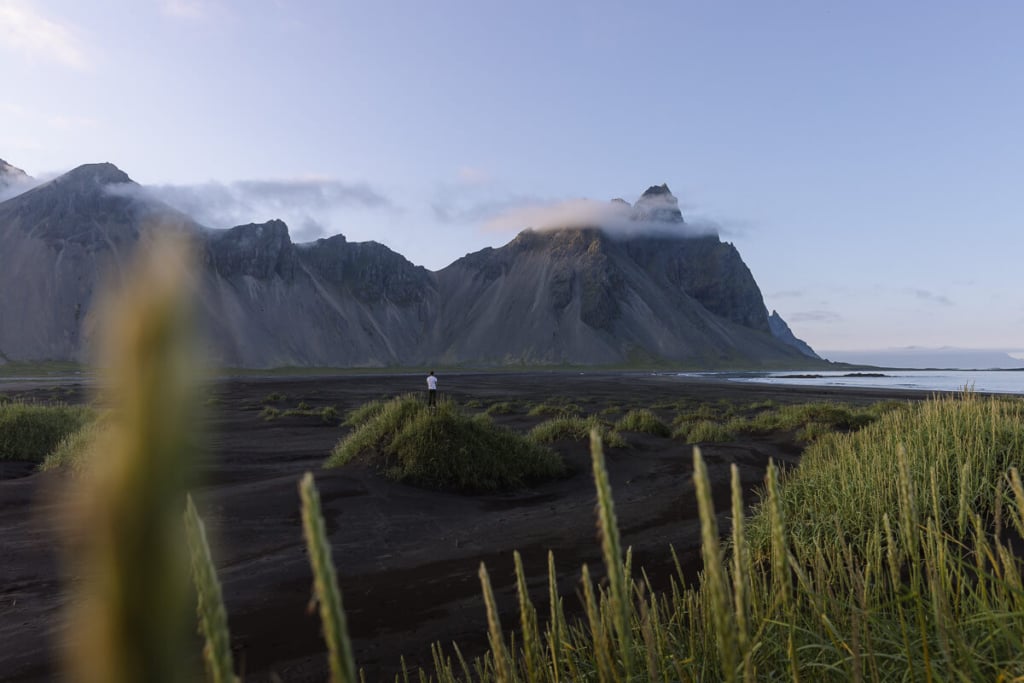
End the day at Vestrahorn, taking photos of the pointed mountains reflecting in the tidal lagoon.
Tomorrow we suggest exploring Vestrahorn, a very undervisited part of the country. The only place to stay is the Viking Café, and it’s the perfect place to catch sunset shots.


Day 6: Eastfjords & Seyðisfjordur
- Where to stay: Seyðisfjordur
- Driving time: 4 to 5 hours
- Distance: ~ 290 km. Add ~60 km return for Hengifoss detour and the extra 30 min each way to Seyðisfjörður, making a total of around 320 km.
Spend this morning getting sunrise shots of Vestrahorn to complement the sunset shots you got yesterday.
Then begin the long drive (3 to 4 hours) up the east coast of Iceland on Route 1 (the Ring Road).
In the summer months, when the road is open, it is well worth taking the shortcut between Breiðdalsvik and Egilsstaðir on Route 95. It’s about an hour shorter, and the scenery, if anything, is better.
Just before Egilsstaðir, take a detour on the 931 west to Hengifoss. From the car park, it’s a 1-hour hike (each way) to the waterfall, and the first 30 minutes are quite steep, but the red rings etched into the rock framing the cascade make it one of the most beautiful falls in Iceland.
There are a host of nice places to stay in the area, but our pick is Seyðisfjordur. It’s an extra 30-minute drive each way from Egilsstaðir, but this colourful town perched at the end of a fjord offers great views and the drive there is breathtaking.
Dinner Tip – The pizza and local beer at Skaftfell Bistro are an excellent addition to your Iceland Ring Road itinerary.


Day 7: Stuðlagil Canyon and Mývatn
- Where to stay: Mývatn
- Travel – around 3 hrs-3.5 hrs
- Distance: ~210 km.
Start today at Stuðlagil Canyon, which was only revealed in 2009 after a dam lowered water levels. All the details are on our Stuðlagil Canyon guide, which includes the hike to the best viewpoints.
From Stuðlagil, follow the Ring Road northeast to the Mývatn area, centred on the village of Reykahlíð.
There are loads of different volcanic oddities to see in the area, and all of them are listed on our Mývatn guide. For this afternoon, we suggest you explore the bubbling mud pots of Hverir and/or the steaming lava fields and volcanic crater at Krafla.
Spend the evening soaking in the geothermal pools of the Mývatn Nature Baths.


Day 8: Husavík & Dettifoss
- Where to stay: Mývatn
- Driving Time: 3.5 hrs
- Distance: ~230 km. Mývatn–Húsavík and the full loop back via Route 85 and 864 including Ásbyrgi, Hljóðaklettar, and Dettifoss.
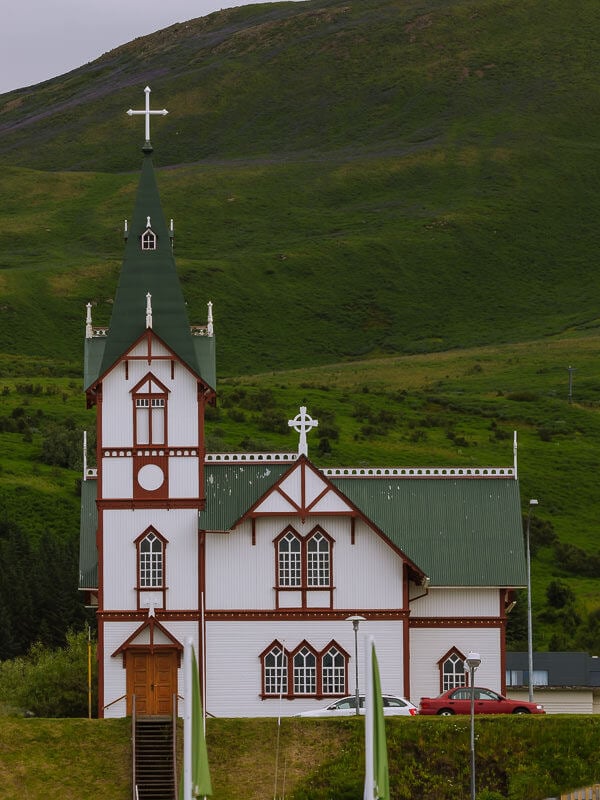
Today, take a detour off the Ring Road and head north on Route 87 to explore the fishing town of Husavík.
From May to September, this is one of the best places in the world to spot whales. They can often be seen from the coast, but increase your chances by taking a Traditional Whale Watching Boat Tour.
In July, humpback whale sightings are almost guaranteed, and from April to August, puffins can be seen fishing in the waters.
In the afternoon, head back to Mývatn via route 85 and 864, where there are a few spots to stop on the way:
- Ásbyrgi is a unique horseshoe-shaped canyon that stretches 3.5 kilometres long and 1.1 kilometres wide.
- Hljóðaklettar is a collection of basalt columns diverging in multiple directions, creating swirls, spirals, roses and arches that are known to produce haunting acoustic effects.
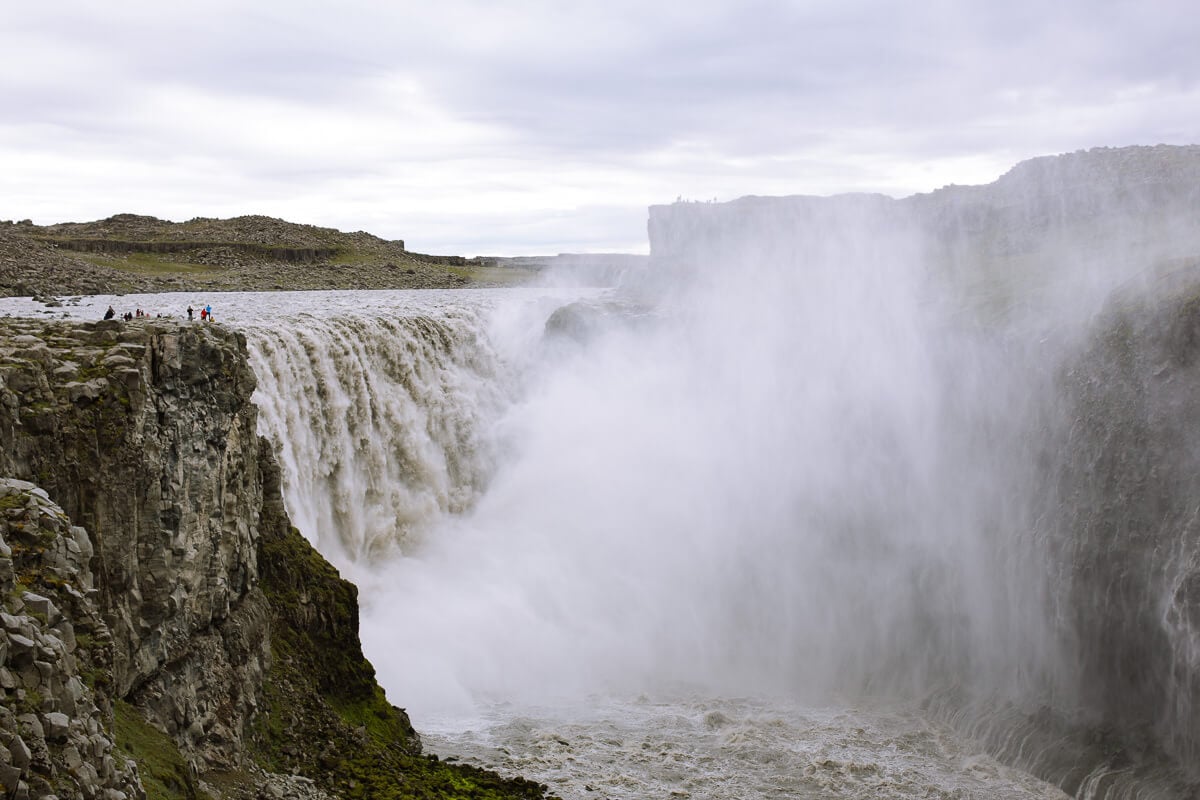
- Dettifoss is the largest waterfall by volume in Iceland and one of the most powerful in Europe. It plunges 44 metres into a canyon, creating a watery spectacle.
Day 9: North Iceland Explore
- Where to stay: Brimslöð Atelier, Blönðuós
- Driving Time: 3 hrs-4.5 hours.
- Distance: ~220km-230 km. Mývatn to Blönduós is 218 km direct; Goðafoss is en route; the Trollaskagi loop adds ~90 km.
It’s a 3-hour drive along the Ring Road from Mývatn to the town of Blönðuós. On the way, stop at Goðafoss, one of the most attractive waterfalls in Iceland.
For the rest of the day, there are several choices –
- Visit more of the volcanic sights around Mývatn, such as the pseudo craters or the lava cave and fissure at Grjótagjá, before you leave for Blönðuós.
- Pop into the fishing town of Akureyri for lunch and a stroll along the harbour.
- Drive a loop around the Trollaskagi Peninsula, where the road twists and turns around steep bends amongst lovely scenery (add 1 hour 30 minutes to the drive).
- If you have a 4×4, you can take a detour (50 minutes each way on the F26) to the waterfalls of Aldeyjarfoss & Hrafnabjargafoss.


Day 10: Fagradalsfjall Volcano & Blue Lagoon
- Where to stay: Northern Light Inn, Blue Lagoon.
- Driving time: 4 hours
- Distance: ~265 km. Blönduós–Reykjavík is 244 km, plus then Reykjavík to Fagradalsfjall area, plus onward to Blue Lagoon.
Today, take the 4-hour drive from Blönduós to Fagradalsfjall Volcano, the site of Iceland’s most recent eruption. If you don’t find anything on the way, you can stop for lunch back in Reykjavík.
A range of different hiking trails offer magnificent views of the steaming black lava fields at Fagradalsfjall. The closest viewpoint to the eruption is the Meradalir Viewpoint via Stórhóll, which takes around 4-5 hours to complete. All the details are in our Fagradalsfjall guide.
End the day soaking in the upmarket geothermal waters of the Blue Lagoon. Advanced bookings are required.
Hot Springs – For more luxurious ways to soak, read our hot springs in Iceland round-up.


Iceland Ring Road Itinerary Extensions
That covers our recommended Ring Road itinerary. But there is plenty more to see in Iceland, so here are some options for extending your trip.
Maelifell
Iceland’s dramatic green volcano, Maelifell, rises out of a sea of black ash and stone, creating a spectacular, desolate scene. There are 3 ways to get here, two of which are very achievable. We cover all of them in our Maelifell guide.
How to add Maelifel — Access is from Hrifunes, just east of Vík, so Maelifel could be added in after day 4 of this itinerary.

Hahfrahvammagljúfur
Hahfrahvammagljúfur is a steep-sided canyon in the highlands, accessible via a bumpy but very achievable mountain road. A few miles away, the thermal river of Laugavallalaug is one of our favourite hot pots in Iceland.
More details about visiting Hahfrahvammagljúfur are in our Iceland highlands guide.
How to add Hahfravammagljúfur — Access is near Hengifoss or Stuðlagil, so this could be added before or after day 4.
Askja
One of the most challenging adventurous day trips is to the calderas and craters of Askja. You’ll need at least a medium-sized 4×4, a sense of adventure, and the ability to control those jangling nerves.
We’ve been 3 times now, and each of them felt like an adventure. It’s not for everyone, so read more in our Askja guide.
How to add Askja — Access is near Mývatn, so you could squeeze a trip to Askja in before or after day 7.
Kerlingarfjöll
A mountain range concealing colourful hills and steaming vents, Kerlingarfjöll is a magical place. The mountain road here is easy to drive and makes an excellent route between Blönðuós, Gullfoss, and Reykjavík, rather than via the Ring Road.
How to add Kerlingarfjöll — Kerlingarfjöll could be added to this itinerary after day 9. Read more on our Kerlingarfjöll guide.


Snaefellsness Peninsula
The Snaefellsnes Peninsula is on the western tip of the country and is often described as a mini-Iceland. Here you’ll find a glacier, basalt columns, and dramatic coasts.
In our opinion, the sights are less good when compared with other parts of Iceland, so we’d save Snaefellsnes for your second trip.
How to add Snaefellsness — If you want to add Snaefellsness, it’s just 2 hours from Reykjavík, so you could add it to the start or end of this itinerary.
Westfjords
Stretching out into the Atlantic Ocean, the Westfjords are a series of rugged peninsulas and massive mountains, including spectacular but remote scenery.
They include one of Europe’s best bird-watching cliffs and wonderful local bars and restaurants. More details are in our guide to visiting the Westfjords.
How to add Westfjords — The Westfjords requires at least 2 days, which is best added at the end of the northern section of this itinerary.


Planning & Logistics
Hiring a Car in Iceland
A self-drive road trip is by far the best way to explore Iceland at your own pace, but choosing the right car and understanding the insurance requirements before you arrive will save you a lot of stress.
For the Ring Road, South Coast, and Golden Circle, a standard 2WD will do the job.
However, if you are going into the F-roads, which we do on this road, you’ll need a 4WD. This is mandatory by law in Iceland.
You also need to understand the insurance requirements. Most car rentals do not cover damage from gravel, sand, ash, or water. Additionally, many car rental companies do not cover you for driving on the F-Roads.
With that in mind, here is some essential reading to help you plan your trip:
- Driving in Iceland – Covering the specifics of driving in Iceland, along with the only car rental company we recommend.
- Driving the F-Roads – Comprehensive guide to driving on the F-Roads, including the best ones you’ll want to go on.

Safety & Weather
The weather in Iceland is famously unpredictable, sunshine, rain, wind, and snow can all happen on the same afternoon – although we’ve never seen much sunshine!
Here are some resources you should check before you set off every day.
- Safetravel.is – Provides a live update of the road conditions.
- Vedur.is -The Iceland Met Office with the most reliable forecast.
Strong crosswinds are one of the biggest hazards in Iceland, particularly on exposed stretches of the Ring Road in the east and on mountain passes.
Budget Guidance
Iceland has worked hard to earn its reputation as one of the most expensive destinations in Europe. And we have to say, it lives up to this reputation.
Here is a rough budget estimation (per person).
| Category | Budget | Mid-Range | Comfortable |
|---|---|---|---|
| Accommodation | £50–70 | £90–130 | £150–220+ |
| Food & drink | £25–40 | £50–80 | £90–130+ |
| Fuel (shared) | £10–15 | £10–15 | £10–15 |
| Activities | £0–20 | £30–60 | £80–150+ |
| Daily Total | ~£85–145 | ~£180–285 | £330–515+ |
The single biggest way to cut your food budget is to buy from one of Iceland’s big supermarket chains and self-cater.
Many guesthouses and farm stays we used on this itinerary include kitchen access. Pack lunch each day and save restaurant meals for evenings in towns.
A free hotel or guesthouse breakfast can also make a significant difference over 10 days.

General Iceland Tips
- Book the Blue Lagoon as soon as your trip dates are confirmed — slots sell out months in advance.
- Reserve whale watching in Húsavík and your Jökulsárlón glacier boat tour at least 3–6 months ahead for June–August travel.
- Book accommodation in remote areas — Vestrahorn, and Seyðisfjörður — well in advance as options are very limited.
- Pack layers, a waterproof jacket, waterproof trousers, and hiking boots — Iceland’s weather changes within hours regardless of season.
- In an emergency, call 112 — Iceland’s emergency services number.
- Carry a portable power bank — charging points are scarce in the highlands and on long driving days

More Iceland Planning Guides
- Working out what to see? Here are our top places to visit in Iceland.
- Where to stay to see the Northern Lights in Iceland.
- All you need to know to plan your next Iceland trip.
- We have 6 epic Iceland itineraries to help you plan your trip.
- Looking for accommodation? Here’s where to stay in Iceland.
- All you need to know about driving in Iceland.
- Explore the stunning Iceland highlands and get off the tourist trail.
- Want to increase your excitement? Consider driving the F-roads.
- If you only visit the highlands once, use this guide to Landmannalaugar.
- Or follow this guide to Thórsmörk and hike the Valley of the Gods.

reader-supported
When you buy through links on our site, we may earn a small affiliate commission at no extra cost to you.
Thanks for your support // Paul & Mark
I’m getting some serious Iceland travel withdrawals after reading your post. I was here a few years ago, and visited many of the places you listed. I didn’t make it to Vik, and seriously regretting it after seeing so many incredible photos of that black sand. I’d also like to see the caldera when I next return, hopefully one day soon.
There’s more to see in Iceland that you’d probably think. The beach at Vik was a highlight.
It is quite expansive to visit Iceland. We live in Europe and the flight cost is actually not high. However, the hotel price and the food cost are too high, specially in the summer two months. So we are still planning the trip and hope make it in the near future. Most of the places you mentioned are also on our list. But one thing I definitely want to do is the Blue Lagoon.
Yes, Iceland is a very expensive place to visit. But, it’s pretty good too!
What I love most about Iceland is that even if you have visited there seems to be an abundance of hidden gems you seemed to have missed or have yet to explore! I visited Iceland in November so it’s interesting to experience through your journey Iceland during the summertime! I definitely would love to go back and see the humpback whales and other wildlife along the Ring Road. I definitely would also to explore more of the fjords you explored since those are closed during the winter months. Great photos!
Summer is a great time to go because many of the mountain roads are closed in winter. Much more of the country is available to see in summer.
I was in Iceland for about 6 days a few years ago and it wasn’t nearly enough! I can’t agree more with your tip about opting in for the car insurance. That is something I rarely do but after having my car struck with a rock (more than once!) while visiting, I learned from the rental company that almost 1/3 of cars come back with some sort or damage. The cost of insurance may seem expensive but it’s worth it.
Oh dear. Yes, car insurance is a very good idea in Iceland.
Whoa! That’s an absolutely fabulous itinerary. I’m hoping to visit Iceland soon, but I’ve gotta get my International Driver’s Permit before that. I don’t think it makes sense to go to Iceland and depend on public transport.
A swimming pool built into the mountain? Now, that’s interesting and it looks so non-touristy! I wouldn’t miss that!
The view from Sjónarnípa is just spectacular. Totally worth the hike.
Thanks for the tip about taking insurance against sand and ash. I wouldn’t have thought of it!
Some of the thermal pools are a little touristy but some of them are very out-of-the-way and great experiences.
Great Itinerary. I have been putting together something very similar myself. Quick question – any reason you didn’t continue on F35 towards Bláskógabyggð and the Golden Circle, instead of turning back?
Thanks a lot, glad to hear it. We heard the F35 from the north was a better road, so not being sure what the conditions were like, we booked our accommodation to return to Blönduós after Kerlingarfjöll. In hindsight, it would have been fine to continue south, and that’s what we would do next time. I think it would be fine to do that if you wanted to connect back up to the Golden Circle.
Really nice to find your blog here. Very useful. I am doing a similar trip this summer and I have a question. On day two, from Landmannalaugar to The Garage, which road did you took? the western road via F225 or the southern road via F208?
Hi Alex, Thanks very much, glad you found it useful. When we did the trip there was a lot of rain and the rivers were quite high, so we took the F225 because it is an easier road with fewer river crossings. The F208 is more dramatic but it has more rivers. Hope this helps and have a great trip.