

So, you’re planning your first trip to England and wondering where to go? This guide covers the best places to visit, how to get there and what to do.
By: Mark Barnes | Last Updated:
If you’re planning a trip to England, you’ve probably realised that it can be difficult to decide where to go.
As one born-and-bred Brit and a long-term resident, I have picked 11 places that capture the essence of this diverse country.
Our guide covers university towns, energetic cities, sleepy honey-coloured villages and dramatic scenery. There’s also British culture, our favourite pubs, iconic landmarks and world-class museums.
This is not an exhaustive bucket list of places in England. We’ve thought hard about destinations that give first-time visitors the best taste of the country.
Each place has been selected not just because it offers something different, but also because many can easily be combined on a single trip.


Best Places to Visit in England
1. London
No list of England’s best places starts anywhere else, and rightly so.
London is one of the great cities of the world — the British Museum, Tate Modern, the Tower of London, Borough Market, and the neighbourhoods of Notting Hill, Soho, and Shoreditch. You could spend a month here and not exhaust it.
But if you’ve already done London, or if you’re here specifically for England beyond the capital, the rest of this guide is really for you. The places that follow are where England becomes something quieter, older, and more distinctly itself.
What to do: Our Things to do in London is a great starting point for first-timers.
Where to stay: The Ned, in the heart of the City, occupies a stunning 1920s banking hall and is one of London’s most atmospheric hotels.
How to get there: International flights into Heathrow, Gatwick, or Stansted. Eurostar from Paris or Brussels to St Pancras.


2. The Cotswolds
The Cotswolds is England as people imagine it before they arrive — honey-stone villages, rolling hills, country pubs with low ceilings and open fires.
Arlington Row in Bibury is one of the most photographed streets in the country. Bourton-on-the-Water, Burford, and Chipping Campden are each worth half a day.
It’s best explored by car. The countryside between villages is as beautiful as the destinations themselves.
What to do: Walk the Cotswold Way, visit Bourton-on-the-Water, explore Burford’s high street, and have lunch in a proper country pub.
Where to stay: Base yourself in or around Burford — it sits at the southern edge of the Cotswolds and makes an excellent hub for exploring in every direction. Our guide to the Cotswolds regions has more details.
How to get there: Train to Moreton-in-Marsh or Kingham from London Paddington (90 minutes). Car recommended for exploring.


3. Bath
Bath is one of the most beautiful cities in England — possibly in Europe — and unlike many places that carry that kind of reputation, it fully delivers.
The Roman Baths are extraordinary: a first-century bathing complex still fed by the same natural hot spring that drew the Romans here in the first place. The Royal Crescent, curving above the city in a sweep of perfect Georgian stone, is one of the finest pieces of urban architecture anywhere in the UK.
It’s small enough to cover entirely on foot, which is exactly how it should be explored. The independent food and café scene — particularly along Walcot Street — is one of the best outside London.
What to do: Roman Baths, Royal Crescent, Pulteney Bridge, Thermae Bath Spa. Read our guide to visiting Bath for more.
Where to stay: The Francis Hotel on Queen Square is a beautifully converted Georgian townhouse right in the heart of the city.
How to get there: 90 minutes by train from London Paddington. An easy day trip, but Bath is worth an overnight stay.


4. The Lake District
England’s largest national park has been drawing writers, artists, and walkers for centuries — Wordsworth was born here, Beatrix Potter lived here, and Alfred Wainwright spent a lifetime mapping its fells.
UNESCO recognised what they all knew in 2017.
Windermere, Coniston Water, Ullswater, and Buttermere — each lake has its own character. The fells above them, from the gentle slopes of Loughrigg to the serious ridges of Helvellyn and Scafell Pike, offer walking at every level.
Avoid the busiest spots around Windermere and Bowness in peak summer if you can — Ullswater and Buttermere are equally beautiful and far quieter.
What to do: Walk a Wainwright, take a steamer on Windermere, visit Dove Cottage in Grasmere, and explore Keswick market. Start with our best Lake District walks for more details.
Where to stay: Ambleside sits right in the heart of the park with good restaurants and easy access to the best walking. Read our Lake District guide for hotel picks.
How to get there: Train to Windermere from Manchester (1.5 hours) or Penrith from London Euston (2.5 hours). A car is recommended, but we have a guide to visiting the Lake District by public transport as well.


5. Yorkshire
The Yorkshire Dales are pastoral and peaceful — dry-stone walls, limestone pavements, and village pubs that look exactly as they should.
The North York Moors are wilder and more dramatic, particularly on a grey autumn morning when the heather is out and there’s nobody else around.
York is one of the best-preserved medieval cities in Europe — the Shambles, the Minster, and the city walls could fill a full day on their own.
What to do: Walk the Yorkshire Dales, visit York Minster and the Shambles, drive the North York Moors, and spend a morning in Whitby. Our guide to the Yorkshire Dales has more details.
Where to stay: For the Dales, base yourself in Grassington — a handsome market village with good access to the best of the national park.
How to get there: Train to York from London King’s Cross (2 hours). A car is recommended for the moors and dales.


6. Cornwall
Cornwall is England at its most elemental — wild Atlantic coastline, dramatic cliff paths, hidden coves, and fishing villages that still feel remote despite the visitors.
St Ives is the obvious starting point — the Tate gallery here is one of the best outside London, and the town itself, spilling down to a harbour with turquoise water, is genuinely beautiful.
Padstow has built a serious food reputation. Porthcurno, with its open-air Minack Theatre carved into the clifftop above the sea, is one of the most dramatic settings for an evening out in England.
What to do: St Ives, Padstow, the Eden Project, walk the South West Coast Path, Porthcurno beach and Minack Theatre. Our guide to the best things to do in Cornwall has all the details.
Where to stay: The Idle Rocks in St Mawes is a quietly luxurious harbourside hotel with some of the best views in Cornwall.
How to get there: Train to St Ives or Newquay from London Paddington (4.5–5 hours). A car is recommended once you arrive.


7. Brighton
Brighton is unlike anywhere else in England — irreverent, colourful, and perpetually fun. It has the energy of a city that has always done things slightly differently and makes no apology for it.
The Lanes are the heart of it — a tight grid of narrow streets packed with independent shops, vintage stores, and restaurants that spill onto the pavements in summer.
The Royal Pavilion, sitting improbably in the middle of the city, was built as a seaside pleasure palace for the Prince Regent and designed to resemble a Mughal-era Indian monument.
On a warm afternoon, there’s nowhere better than the seafront, the pier and pebble beach.
What to do: The Lanes, Royal Pavilion, seafront, day trip to the Seven Sisters. Read our guide to seeing Brighton on a day trip.
Where to stay: Hotel du Vin Brighton occupies a cluster of mock-Tudor buildings in the heart of the Lanes and is one of the most characterful places to stay in the city.
How to get there: 50 minutes by train from London Victoria. Easy day trip, but better as an overnight.


8. The Seven Sisters & South Downs
The walk from Cuckmere Haven to Birling Gap on the Seven Sisters is one of the finest coastal walks in southern England. On a clear day, with the white cliffs dropping sheer to the sea and nothing but open water beyond, it’s one of the great English views.
Go on a weekday in spring or autumn, and you can have long stretches of the path entirely to yourself.
What to do: Walk the cliff tops, photograph the cliffs from the beach at Cuckmere Haven. Read our Seven Sisters guide for the full route.
Where to stay: The Tiger Inn at East Dean is a proper English village pub with rooms, sitting just back from the cliffs.
How to get there: Train to Seaford or Eastbourne from London Bridge, then bus or taxi to Cuckmere Haven.


9. Oxford
Oxford is one of the most beautiful cities in England, and it feels it from the moment you arrive.
The university has been here since the 12th century, and the buildings are extraordinary, including the Bodleian Library, the Radcliffe Camera, Magdalen College, and Christ Church. You could spend a full day just walking between them.
Punting on the Cherwell on a summer afternoon is one of those English experiences that actually lives up to expectations. Port Meadow, a vast stretch of common land just north of the city, is where Oxford goes to breathe.
What to do: Ashmolean Museum, Bodleian Library, Christ Church, punt on the Cherwell, walk in Port Meadow. Read our guide to visiting Oxford for more details.
Where to stay: The Old Parsonage Hotel is a 17th-century building just north of the city centre — intimate, beautifully furnished, and far more characterful than the larger hotels.
How to get there: 1 hour by train from London Paddington or Marylebone.


10. Cambridge
Cambridge is as beautiful as Oxford and, in some ways, more so.
The Backs — the stretch of lawns and gardens behind the colleges that run down to the River Cam — are among the finest views in England.
On a summer morning, with the punts on the water and the willows trailing in the river, it’s hard to imagine anywhere more peaceful.
King’s College Chapel is one of the great Gothic buildings in Europe. The Fitzwilliam Museum is one of the best free museums in the country.
And punting on the Cam, however wobbly your technique, is the perfect way to spend an afternoon.
What to do: Punt on the River Cam, King’s College Chapel, Fitzwilliam Museum, walk the Backs. Read our guide to things to do in Cambridge.
Where to stay: The University Arms, recently restored to its Victorian grandeur, overlooks Parker’s Piece and is the finest hotel in the city.
How to get there: 50 minutes by train from London King’s Cross.


11. The Peak District
England’s first National Park and still one of its best.
The White Peak in the south is all limestone dales, dry-stone walls, and pretty villages. Dovedale is the classic walk — a narrow gorge with a famous stepping-stone crossing that’s been drawing visitors for centuries.
The Monsal Trail runs along a former railway line through a series of dramatic viaducts and tunnels, and is one of the finest cycling routes in England.
The Dark Peak in the north is a different place entirely. Wilder, emptier moorland, with Kinder Scout providing some of the finest walking in the north.
Chatsworth House, sitting in the Derwent Valley between the two, is one of the great English stately homes.
What to do: Walk Dovedale, cycle the Monsal Trail, visit Chatsworth House, walk Kinder Scout.
Where to stay: Bakewell is the best base — a handsome market town right in the heart of the park, and home to the original Bakewell pudding. Read our guide about the best places to stay in the Peak District for more.
How to get there: Train to Sheffield (2 hours from London St Pancras) or Derby (1.5 hours). A car is strongly recommended once you arrive.


12. York
York is one of the best-preserved medieval cities in Europe and one of the easiest to love.
The Shambles is a narrow street of overhanging timber-framed buildings dating back to the 14th century. York Minster is one of the great Gothic cathedrals in the world.
The city walls, which run the full perimeter of the old city, take about an hour, and give you a perspective on York that you simply can’t get from street level.
What to do: York Minster, walk the city walls, the Shambles, the Yorkshire Museum, and the National Railway Museum. Read our day-trip to York guide for all the details.
Where to stay: The Grand York is a restored Edwardian railway headquarters with an impressive spa, right in the heart of the city.
How to get there: Train from London King’s Cross (2 hours).


13. Stonehenge & Salisbury
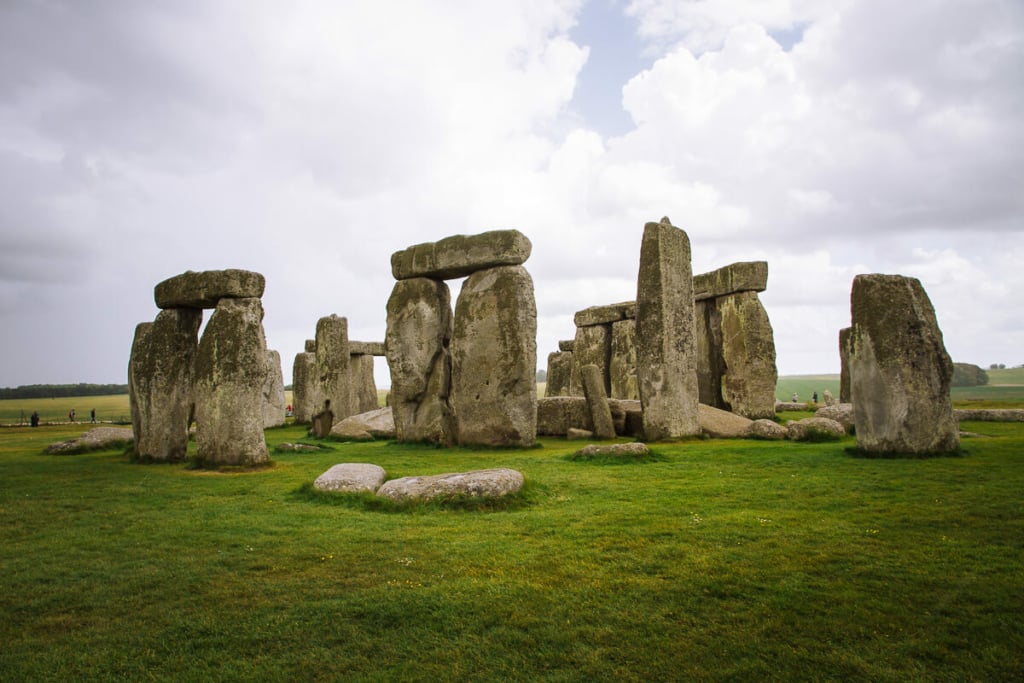
Stonehenge is one of those places you think you know from photographs, and then you arrive and realise the photographs don’t capture it at all.
Standing in front of a stone circle built 5,000 years ago, with no clear explanation of how or why, is a genuinely humbling experience.
Salisbury, nine miles away, is the perfect reason to make a full day of it. The cathedral is one of the finest in England. Inside, one of only four surviving original copies of the Magna Carta sits in its own chamber and is worth the visit entirely on its own.
What to do: Stonehenge, Salisbury Cathedral, Magna Carta, and walk along the River Avon.
Where to stay: The Chapter House at Salisbury is a boutique hotel in a converted Georgian building, a short walk from the cathedral.
How to get there: Train to Salisbury from London Waterloo (90 minutes), then bus or taxi to Stonehenge.


14. The Jurassic Coast
England’s only natural UNESCO World Heritage Site stretches 95 miles from Exmouth in Devon to Old Harry Rocks in Dorset.
Durdle Door, a natural limestone arch jutting into the sea, is the image most people know.
But Lulworth Cove, just along the coast, is just as impressive — an almost perfectly circular bay carved out by millions of years of erosion.
Lyme Regis is the place to go fossil hunting. The cliffs here have yielded some of the most significant prehistoric finds in British history, and guided walks along the beach regularly turn up ammonites.
What to do: Walk to Durdle Door, explore Lulworth Cove, fossil hunt at Lyme Regis, walk to Old Harry Rocks at Studland. Read our Jurassic Coast guide.
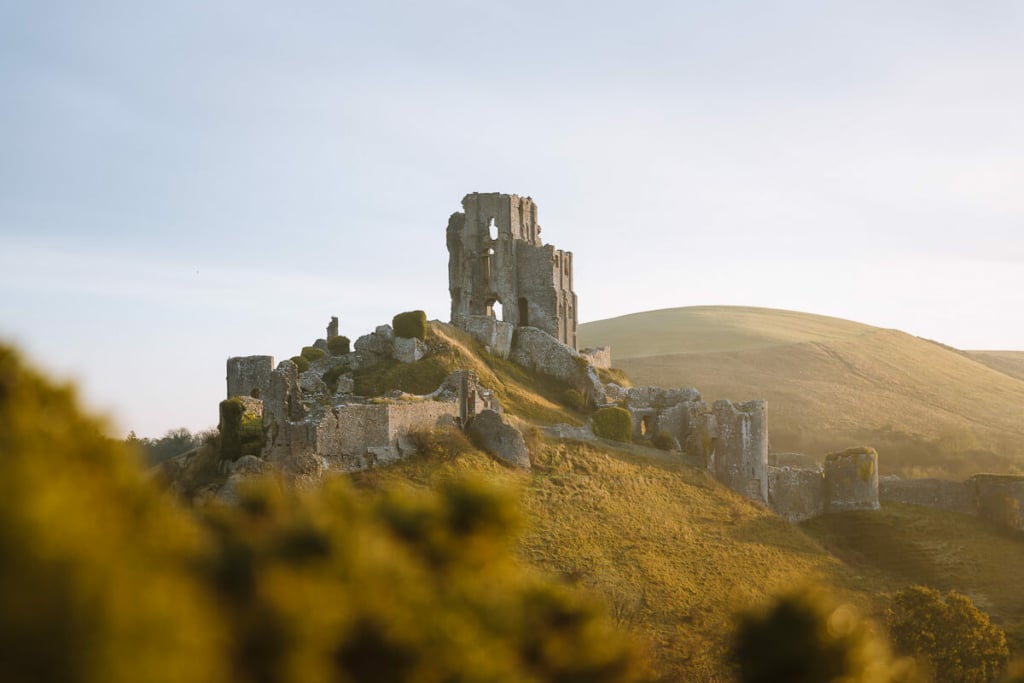
Where to stay: Wareham is a quiet market town that puts you within easy reach of the best of the Dorset coast and Corfe Castle. Our Jurassic Coast accommodation guide has more details.
How to get there: Train to Weymouth or Dorchester from London Waterloo (2.5 hours). A car is essential for exploring the coast.


15. Windsor
Windsor Castle has been a royal residence for nearly 1,000 years and is the oldest and largest occupied castle in the world. It’s 35 minutes from London, which makes it one of the easiest and most rewarding day trips in the country.
St George’s Chapel, where ten monarchs are buried, including Henry VIII and the late Queen Elizabeth II, is one of the finest examples of Gothic architecture in England.
Windsor Great Park stretches for 5,000 acres behind the castle, with the Long Walk one of the great royal landscapes.
What to do: Windsor Castle, St George’s Chapel, Windsor Great Park, the Long Walk, Eton College across the bridge.
Where to stay: Sir Christopher Wren Hotel sits right on the Thames in Windsor with views across to Eton, in a building designed by its namesake.
How to get there: 35 minutes from London Waterloo or Paddington by train.


16. Canterbury
Canterbury Cathedral has been at the centre of English religious life for over 1,400 years.
It’s where Archbishop Thomas Becket was murdered in 1170, and where pilgrims have been coming ever since. Walking through the medieval city gates towards it, all of that history feels surprisingly present.
The city itself is compact and easy to explore on foot. Roman walls, medieval lanes, and the ruins of St Augustine’s Abbey — founded in 597 AD as a burial place for the Anglo-Saxon kings of Kent — fill out a very satisfying day.
What to do: Canterbury Cathedral, St Augustine’s Abbey, Roman Museum, walk the city walls. Read our Canterbury day trip guide.
Where to stay: ABode Canterbury occupies a beautifully restored historic building in the city centre, with one of the best restaurants in Kent.
How to get there: 1 hour from London St Pancras by train.


17. Northumberland
England’s least visited and most quietly spectacular county.
The coastline between Bamburgh and Holy Island is extraordinary, with Bamburgh Castle rising straight from the dunes and Dunstanburgh crumbling dramatically into the sea.
Holy Island is accessible only across a tidal causeway that cuts it off from the mainland twice a day.
Inland, the Northumberland Dark Sky Park is the largest in England and Europe’s biggest protected area of night sky.
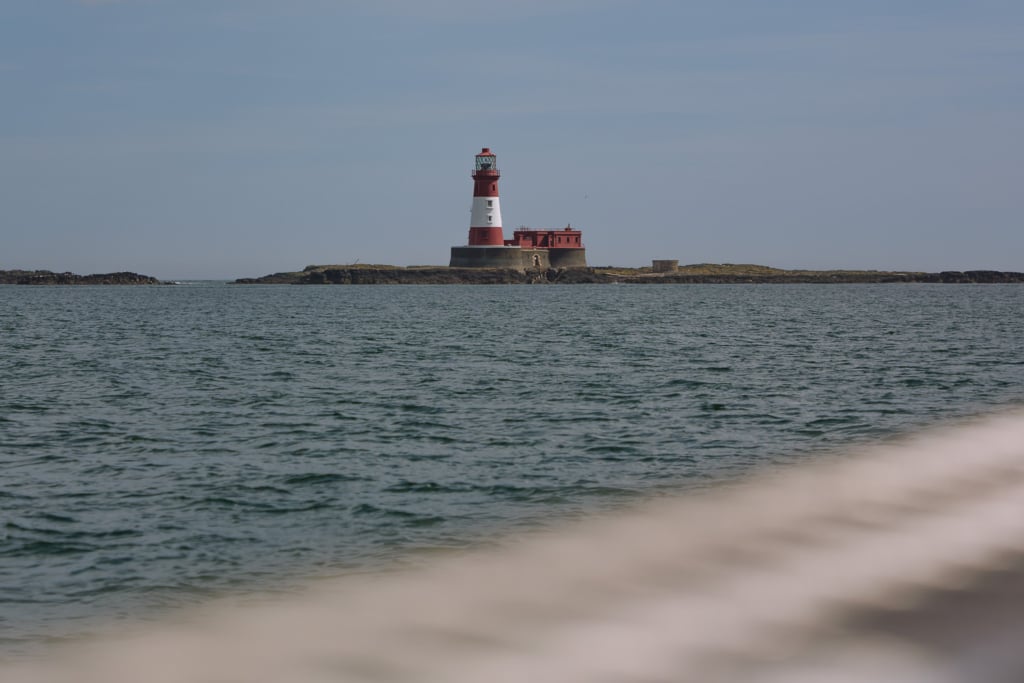
What to do: Bamburgh Castle, Holy Island, Alnwick Castle and its famous Poison Garden, Farne Islands boat trip for puffins and grey seals. Read our guide to Northumberland for more.
Where to stay: Alnwick is the best base — a proper market town with a magnificent castle, and well placed for both the coast and the national park. We cover more options in Where to Stay in Northumberland.
How to get there: Train to Alnmouth or Berwick-upon-Tweed from London King’s Cross (3–3.5 hours). A car is essential once you arrive.


18. Hadrian’s Wall
Built in 122AD to mark the northern frontier of the Roman Empire, Hadrian’s Wall stretches 73 miles from the Solway Firth to the River Tyne.
The central section around Housesteads and Steel Rigg is the one to walk. The wall follows the ridge of the Whin Sill with long views south into Northumberland and north towards Scotland, and it feels exactly as dramatic as it should.
Vindolanda, the Roman fort just south of the wall, has one of the most fascinating museums on the site — still actively excavated every year, still turning up extraordinary finds from everyday Roman life.
What to do: Walk the Housesteads to Steel Rigg section, visit Housesteads Roman Fort, explore Vindolanda and its museum. All the details are in our Hadrian’s Wall walking guide.
Where to stay: The Battlesteads Hotel near Hexham is an award-winning Dark Sky Discovery Site with its own observatory — ideal if you’re combining the Wall with some stargazing.
How to get there: Train to Hexham from Newcastle (30 minutes), then bus along the wall. A car gives you much more flexibility.


19. Dartmoor
One of the last genuinely wild landscapes in southern England — a high, windswept plateau of granite tors, blanket bog, and ancient stone circles.
It’s the only place in England with a statutory right to wild camp, which tells you something about the character of the place.
Hay Tor is the most accessible and most visited of the tors. The views across Devon from the top are extraordinary on a clear day.
On the western edge of the moor, Lydford Gorge is a steep-sided, moss-draped river canyon managed by the National Trust.
What to do: Walk to Hay Tor, visit Grimspound Bronze Age settlement, explore Widecombe-in-the-Moor, and wild camp on the open moor. We have more places to visit in our Dartmoor guide.
Where to stay: Widecombe-in-the-Moor sits right in the heart of the national park and makes the best base for exploring the southern and central moor.
How to get there: Train to Exeter from London Paddington (2 hours), then car onto the moor. A car is essential.


20. The New Forest
One of England’s quietest and most distinctive national parks with 140,000 acres of ancient woodland, open heathland, and village greens.
The ancient woodland is particularly beautiful in autumn when the beech and oak along drives like Rhinefield Ornamental Drive turn gold and copper.
Beaulieu is one of the park’s great set pieces. The National Motor Museum holds over 285 vehicles, and one admission ticket also covers the medieval abbey ruins, Palace House, and a fascinating SOE wartime spy exhibition.
What to do: Cycle the forest trails, visit Beaulieu Motor Museum and abbey, walk in the ancient woodland, explore Lyndhurst.
Where to stay: Chewton Glen near New Milton is the other great option at that level — a 5-star Relais & Châteaux country house hotel set in 130 acres.
How to get there: Train to Brockenhurst from London Waterloo (90 minutes). Cycling is the best way to explore once you arrive.

Plan your trip with our detailed England guides including towns, cities & countryside.
England
21. The Chilterns
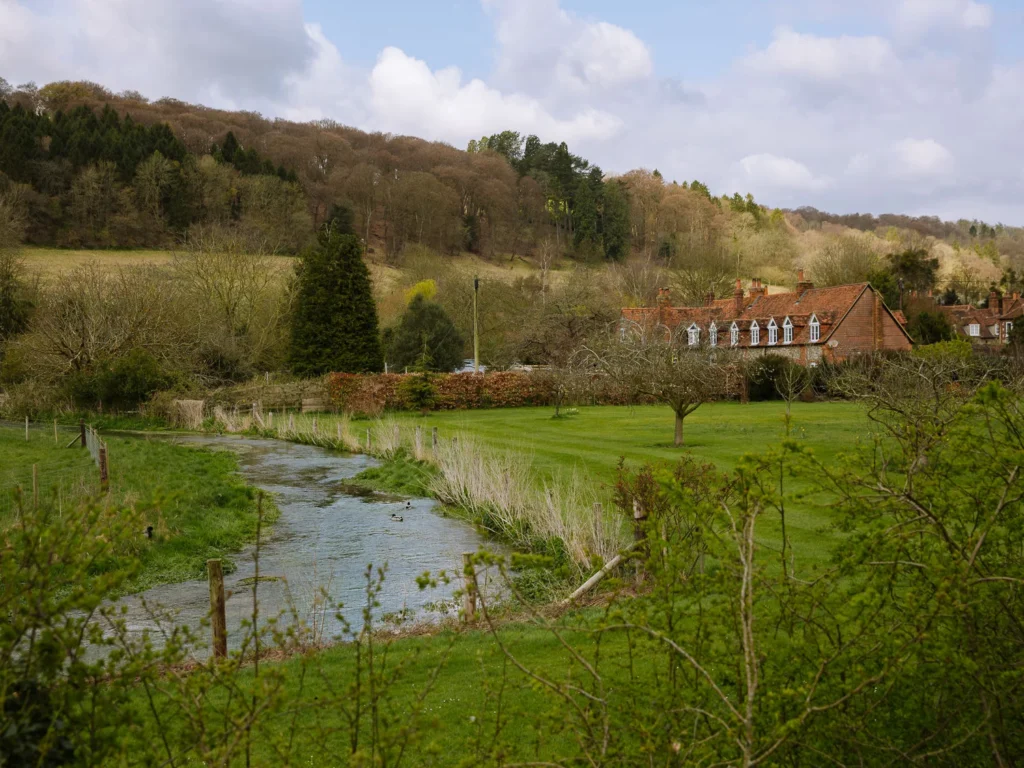
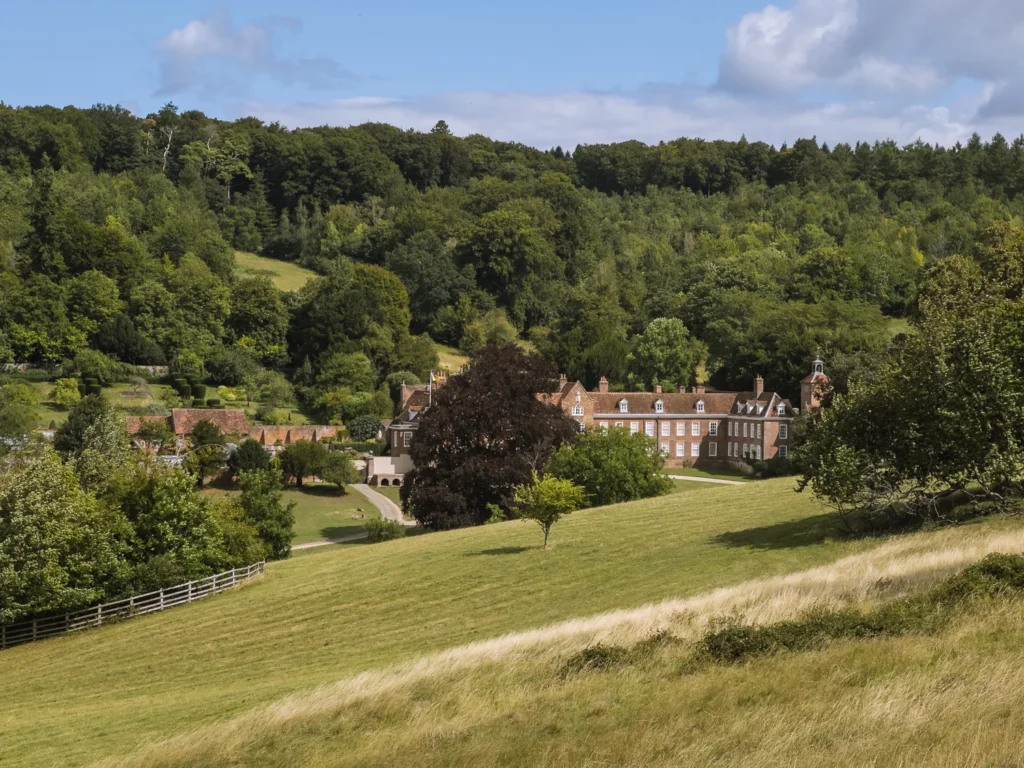
Barely an hour from London, the Chilterns feel like a different world — rolling chalk hills, ancient beech woodland, and quiet villages connected by centuries-old footpaths. The beech woods in autumn are among the most beautiful in England.
The Ridgeway, one of Britain’s oldest roads, runs along the ridge with wide views over the Vale of Aylesbury. Below it, the Thames Path offers some of the finest riverside walking in the country. Henley-on-Thames is the natural base — a handsome riverside town with good food and easy access to the hills.
What to do: Walk the Ridgeway, explore Henley-on-Thames, walk through Burnham Beeches, visit Hughenden Manor. Read our guide to the best pub walks in the Chilterns for a fantastic day out from London.
Where to stay: The White Hart at Nettlebed is a stylish country inn with boutique rooms in the heart of the beech-wood Chilterns.
How to get there: Train to Henley or Princes Risborough from London Marylebone (45–60 minutes).
22. The Malvern Hills
A narrow ridge of ancient hills rising sharply out of the Worcestershire plain, the Malverns are unlike anything else in the Midlands.
The walking is superb with a long ridge path that crosses the 425-metre Worcestershire Beacon and the Iron Age hillfort of British Camp.
Great Malvern itself is a handsome Victorian spa town with good cafes, an impressive priory, and the famous Malvern spring water still flowing from the hillside.
Eastnor Castle, a 19th-century neo-Gothic pile set in a deer park, is a few miles south.
What to do: Walk the full ridge to Worcestershire Beacon, explore British Camp, visit Great Malvern Priory, and walk to Eastnor Castle. Read our Malvern Hills walking guide for more details.
Where to stay: The Cottage in the Wood at Malvern Wells is a well-regarded small hotel in the hills with good food and views over the Severn Valley.
How to get there: Train to Great Malvern from Birmingham (45 minutes) or London Paddington (2 hours 15 minutes).


23. Ludlow
Ludlow is arguably the finest medieval market town in England. It’s a hilltop settlement of half-timbered buildings, with a magnificent castle ruin, and a food culture that punches well above its weight.
It has more Michelin-starred restaurants per head than almost anywhere in the country.
The castle was one of the great border fortresses along the Welsh Marches, and its ruined walls still dominate the town from above the River Teme.
What to do: Explore Ludlow Castle, visit the market, walk the Mortimer Trail, eat well.
Where to stay: The Feathers Hotel is a genuine piece of English heritage — a spectacular Jacobean building right in the town centre.
How to get there: Train to Ludlow from Birmingham (1 hour) or Cardiff (1.5 hours). The town is easily walkable from the station.


24. Cheddar Gorge and the Mendips
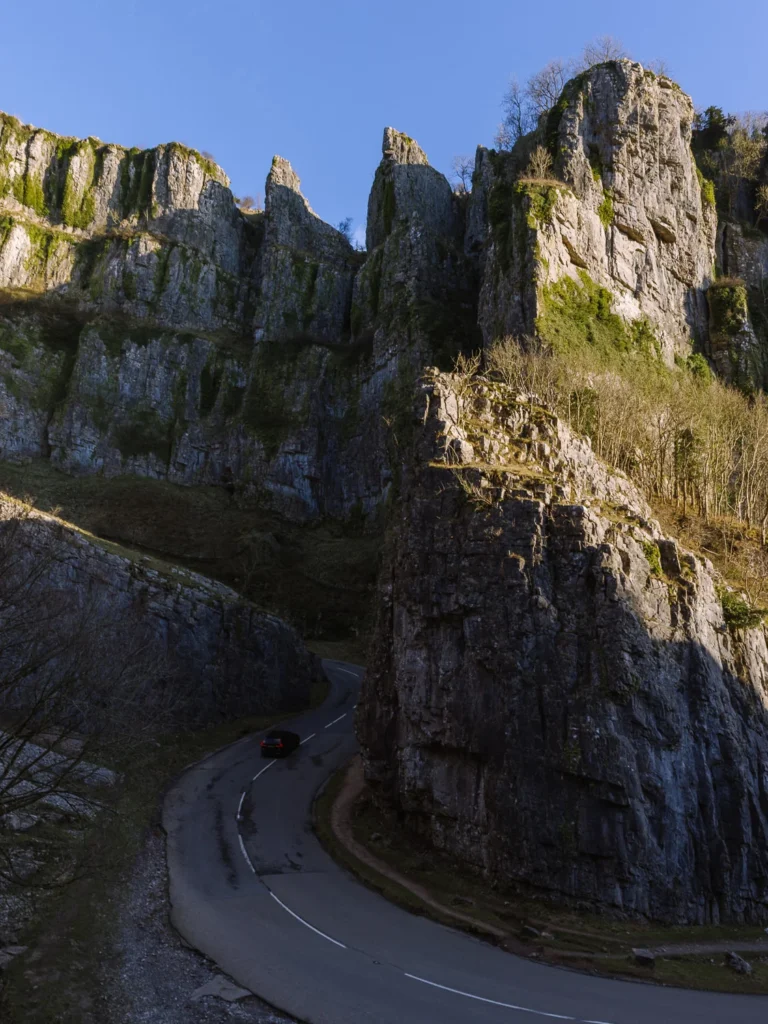
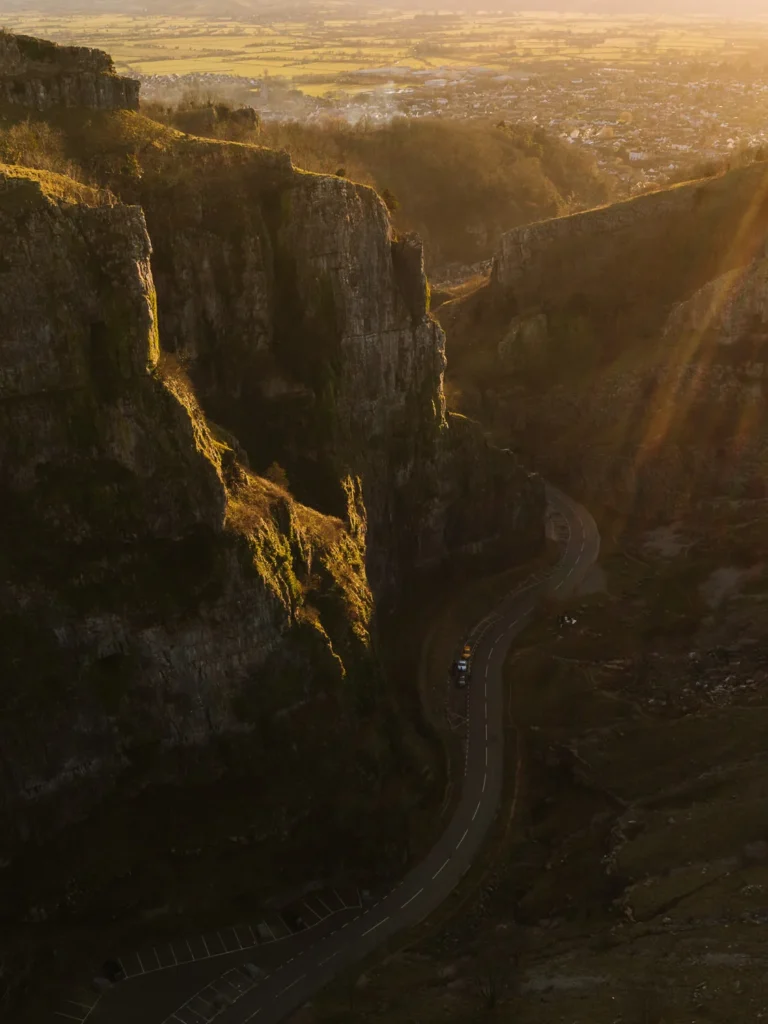
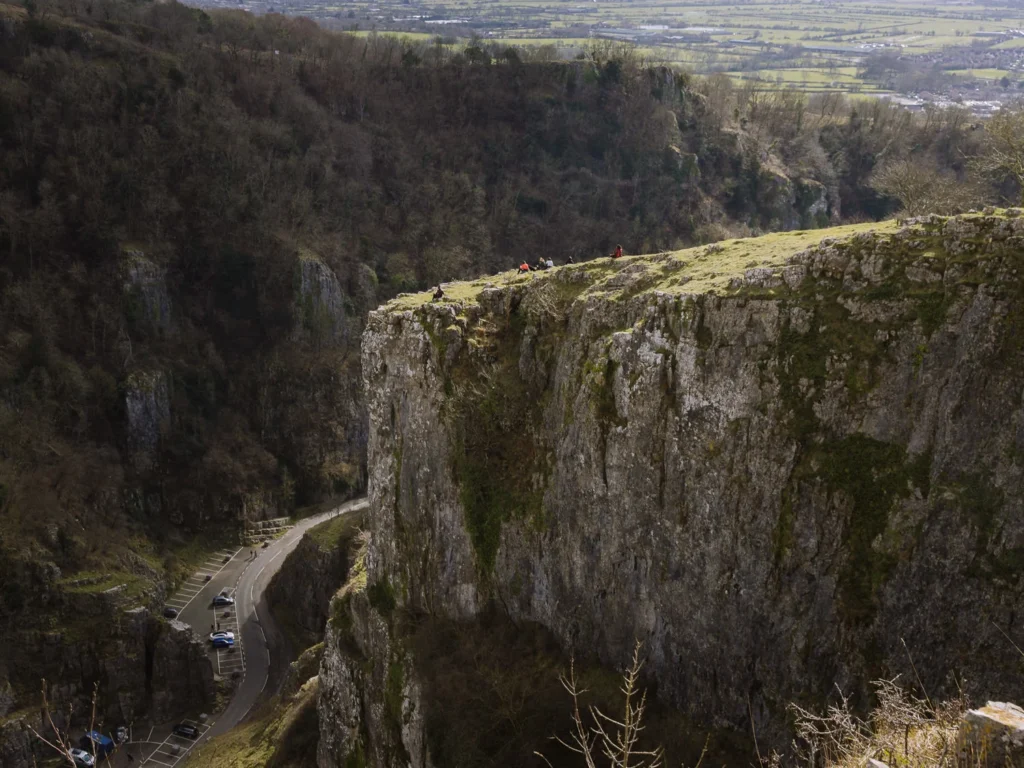
England’s largest gorge cuts through the Mendip Hills in Somerset. The sheer limestone cliffs rise to 137 metres above the narrow road below.
The caves beneath the gorge are extraordinary. Gough’s Cave, where the 10,000-year-old skeleton of Cheddar Man was discovered, has half-million-year-old stalactite and stalagmite formations.
A clifftop walk runs the full length of the gorge with views across the Somerset Levels and, on a clear day, as far as Wales.
What to do: Walk the clifftop trail, visit Gough’s Cave, explore the Mendip Hills, taste cheese at the Cheddar Gorge Cheese Company.
Where to stay: The Bath Arms in Cheddar is a well-regarded inn a short walk from the gorge, with a restaurant and good ratings.
How to get there: Train to Bristol or Bath, then by car. A car is strongly recommended for the Mendips.
25. Ely and the Fens
Ely Cathedral, a vast Norman Gothic building, rises out of the flat Fenland landscape like a vision. From the surrounding fields, it’s visible for miles in every direction.
The Fens themselves are an acquired taste — vast, flat, strange and atmospheric, with enormous skies.
The towns and villages built on the low islands are unlike those anywhere else in the country, and the network of waterways that drain the land is great to explore by boat or bike.
What to do: Visit Ely Cathedral, cycle the Fens, explore the waterways, visit Oliver Cromwell’s house.
Where to stay: The Poets House in Ely is a beautifully restored hotel close to the cathedral.
How to get there: Train to Ely from London King’s Cross (1 hour 15 minutes). Bike hire is available in town.
26. Arundel
Arundel is one of the most complete medieval townscapes in southern England.
A steep, cobbled high street rises to a castle that has stood on this hill since 1067.
Arundel Castle is the seat of the Duke of Norfolk and one of the finest historic houses open to the public in England. The town itself is full of antique shops, good cafes, and independent bookshops, and there are several great riverside walks from the town.
What to do: Visit Arundel Castle and gardens, walk along the River Arun, explore the Wildfowl and Wetlands Trust reserve.
Where to stay: Bailiffscourt Hotel & Spa is a medieval-style manor house set in 30 acres of parkland near Climping, with an indoor and outdoor pool, spa, and a ten-minute walk to the beach.
How to get there: Train to Arundel from London Victoria (1 hour 20 minutes). The town is walkable from the station.

27. Rye and Camber Sands
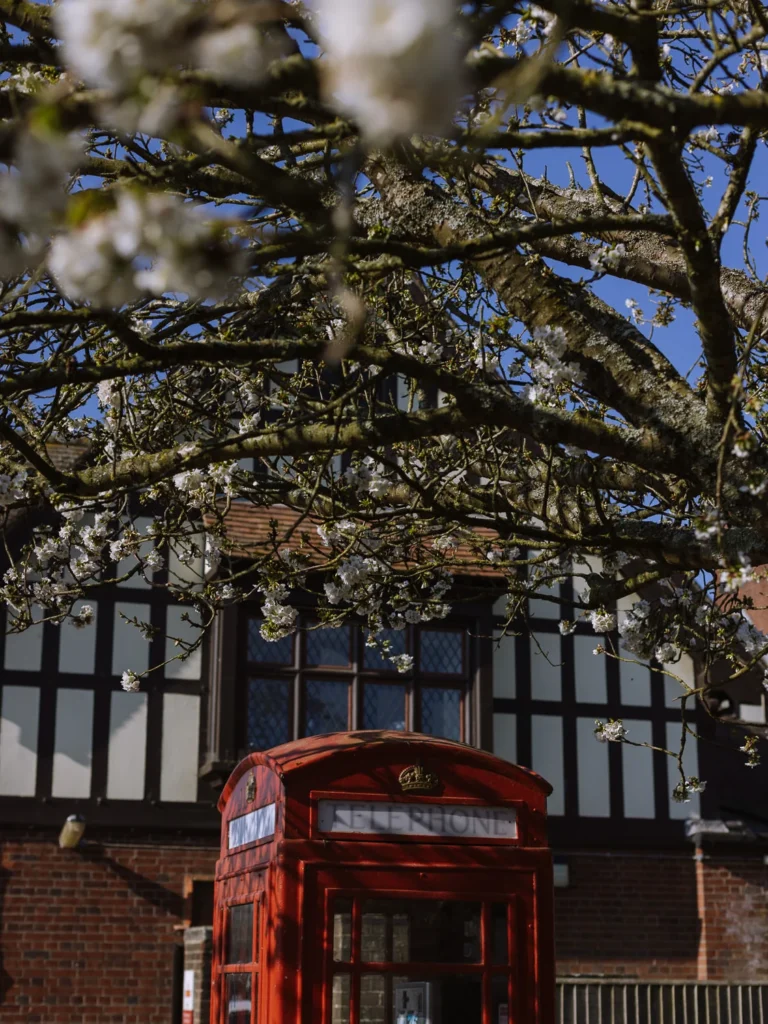
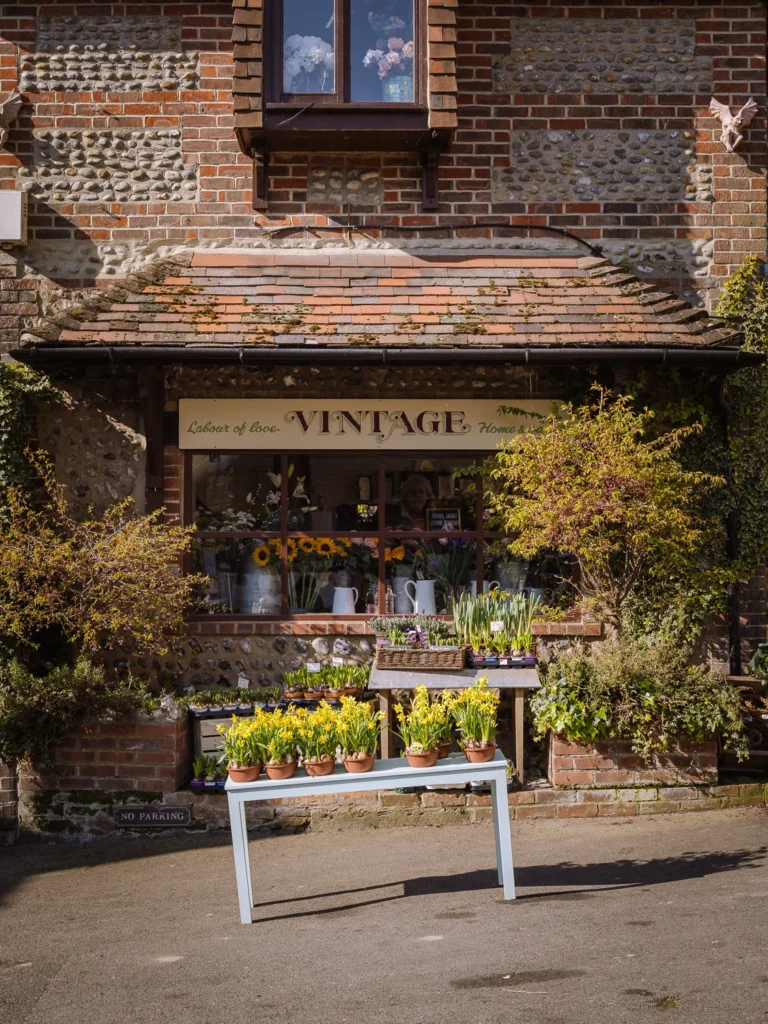
Rye is one of the best-preserved medieval towns in England. It’s a hilltop settlement of cobbled streets, half-timbered buildings, and ancient inns that has barely changed in centuries.
Three miles away, Camber Sands is the only sand dune beach in East Sussex. Here you’ll find a wide, golden beach with dunes backing the shore.
The contrast between the two, town and beach, medieval and elemental, is what makes this corner of East Sussex worth the journey.
What to do: Walk the cobbled streets of Rye, visit Rye Castle, walk the dunes at Camber Sands, explore Rye Harbour Nature Reserve. Our guide to visiting Rye on a day trip has all the details.
Where to stay: The Mermaid Inn is one of England’s great medieval pubs with rooms — timber beams, inglenook fireplaces, and a history stretching back to 1420.
How to get there: Train to Rye from London St Pancras (1 hour 20 minutes via Ashford). Car needed for Camber Sands.


28. Whitstable
Whitstable is a working fishing town on the Kent coast that has somehow managed to become one of the most characterful seaside destinations in England.
Oysters have been harvested here since Roman times and still define the place.
The town is compact and best explored on foot. There’s a shingle beach, a working harbour, a high street of independent shops and seafood restaurants.
It makes an effortless day trip from London or a weekend base for exploring the Kent coast.
What to do: Eat oysters at the harbour, walk the coastal path, explore the old town, visit the Whitstable Oyster Company. Read our day trip to Whitstable guide for more details.
Where to stay: The Marine Hotel sits right on the beach with uninterrupted views across the estuary.
How to get there: Train to Whitstable from London Victoria (1 hour 20 minutes). Walkable from the station.


29. Lewes
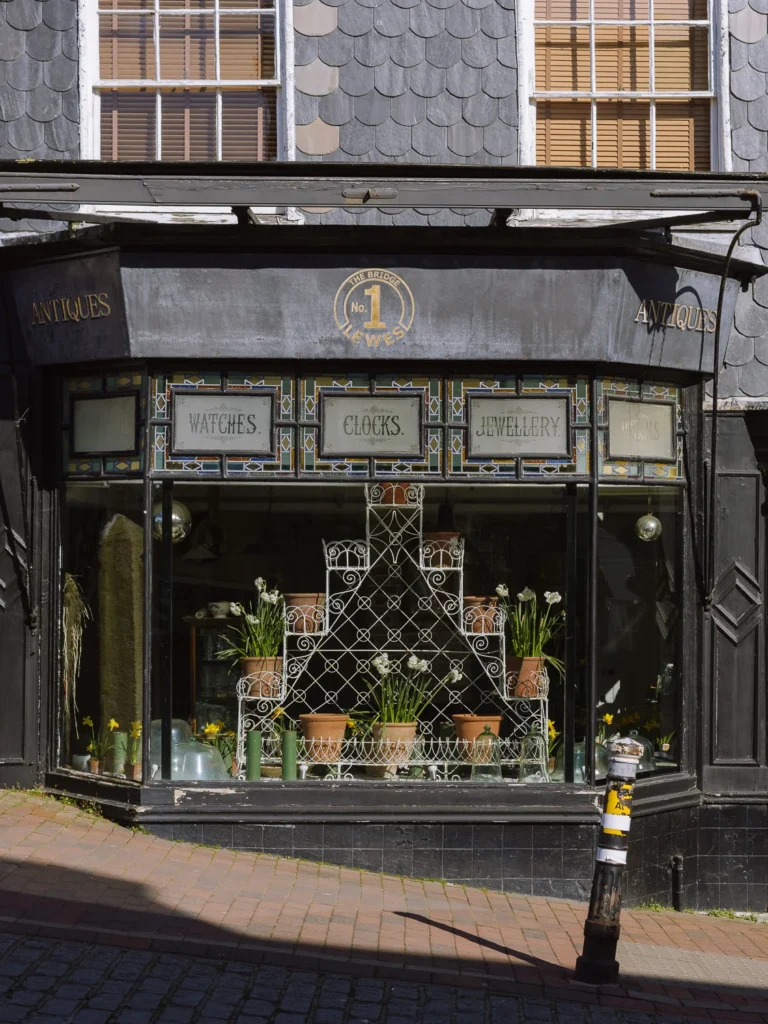
The county town of East Sussex sits above the River Ouse where it cuts through the South Downs. It’s a steep, cobbled market town with a Norman castle, a famous local brewery, and the most extraordinary Bonfire Night celebrations in England.
Thomas Paine lived here before he helped inspire the American and French revolutions.
Glyndebourne, one of the world’s great opera houses, is three miles down the road.
The town is full of independent bookshops, antique dealers and good places to eat.
What to do: Visit Lewes Castle, walk Keere Street, attend the Bonfire Night celebrations (5th November), visit Glyndebourne, walk the South Downs above town.
Where to stay: The White Hart is a 16th-century coaching inn in the centre of town, close to the castle and the high street.
How to get there: Train from London Victoria (1 hour 10 minutes) or Brighton (20 minutes).


30. Pedn Vounder
Very few people know this beach exists. Pedn Vounder sits below the cliffs of the Penwith Peninsula near Treen, reached only on foot via a steep coastal path.
The sand is white, the water is clear, and the cliffs around it are dramatic.
The Minack Theatre is a short walk away along the coast path: an open-air amphitheatre cut into the clifftop above Porthcurno, with performances through the summer and views that make it worth visiting even when nothing is on.
What to do: Walk to Pedn Vounder at low tide, visit the Minack Theatre, walk the coastal path around Logan Rock, swim in the cove. Our guide to Pednr Vounder has all the details.
Where to stay: The Ship Inn sits right on Mousehole Harbour with rooms above the pub and views across the water — simple, well-run and in a great spot.
How to get there: Train to Penzance from London Paddington (5 hours), then car to Treen. A car is strongly recommended.


More Guides for Your UK Trip
- Put your trip together with our 2-week UK itinerary by train.
- Follow our 4-day London Itinerary for the best of the capital.
- Visit York on a day trip from London.
- Plan your stay in the capital with our area & hotel guide to London.
- All our top places to see in England are here.
- Feeling adventurous? Try these outdoor experiences in England & the UK.
- These wild swimming spots in the Lake District are perfect after a long hike.
- Find more great things to do in the Cotswolds here.
- Enjoy one of these country walks in the Cotswolds.
- Our guide to the top places to see in the UK might give you some ideas for your next trip.

reader-supported
When you buy through links on our site, we may earn a small affiliate commission at no extra cost to you.
Thanks for your support // Paul & Mark