

At the very tip of Europe, where the Atlantic meets the Mediterranean, and Africa is close enough to feel real, Tarifa is one of the most exhilarating and distinctive towns on the Spanish coast.
By: Paul Healy // Last Updated:
You can feel Tarifa before you arrive in the form of the famous Levante or Poniente that sweeps in from the Strait of Gibraltar and defines life on this part of the coast.
We’ve been to the windy kitesurfing capital of Spain many times. When we’re relaxing on the Costa del Sol, we’ll always make time for a day trip to Tarifa. It has the best beaches on the coast, and the town’s bohemian vibe is unlike anywhere else.
It’s a whitewashed medieval port where the Moorish old town sits behind ancient walls, and it’s somewhere we love exploring.
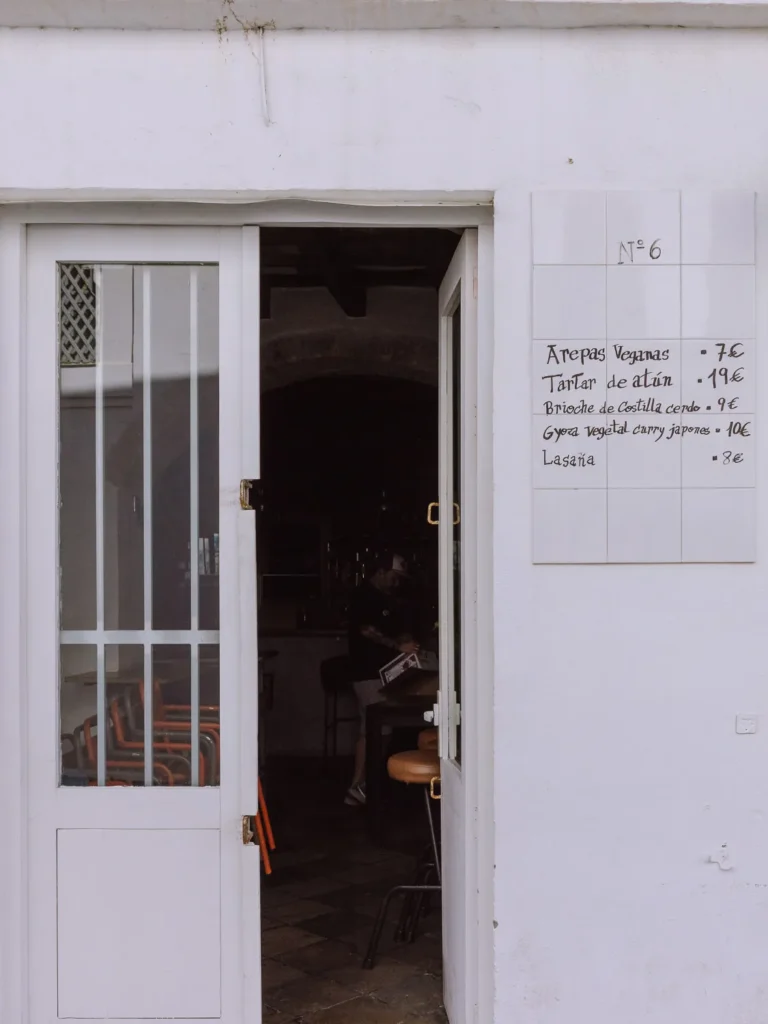
The restaurant scene is a cut above, with popular tapas bars spilling onto the street. Independent boutiques are hidden down narrow lanes, and the virgin beaches are beautiful.
It’s not on most people’s Spain itinerary, but we think it’s a wonderful addition. Here are the best things to do in Tarifa, Spain.
Is Tarifa Right for You?
Tarifa sits between Cádiz and Algeciras on the Costa de la Luz, and a good way to visit is on a road trip from Seville through the Costa del Sol to Granada.
If you’re planning your trip to the wider region, our guide to the best places to visit in Andalucía is a good place to start.
However, at the southernmost point of Spain, it is a bit of a detour.
It doesn’t have major attractions as such, but if you’re looking for a wind-down on your itinerary, it would be a great choice.
Planning your trip? // We have a full Andalucía train itinerary to visit the highlights of the region, plus individual guides to Seville, Cádiz, Granada and the Costa del Sol.
Tarifa is a great fit if you:
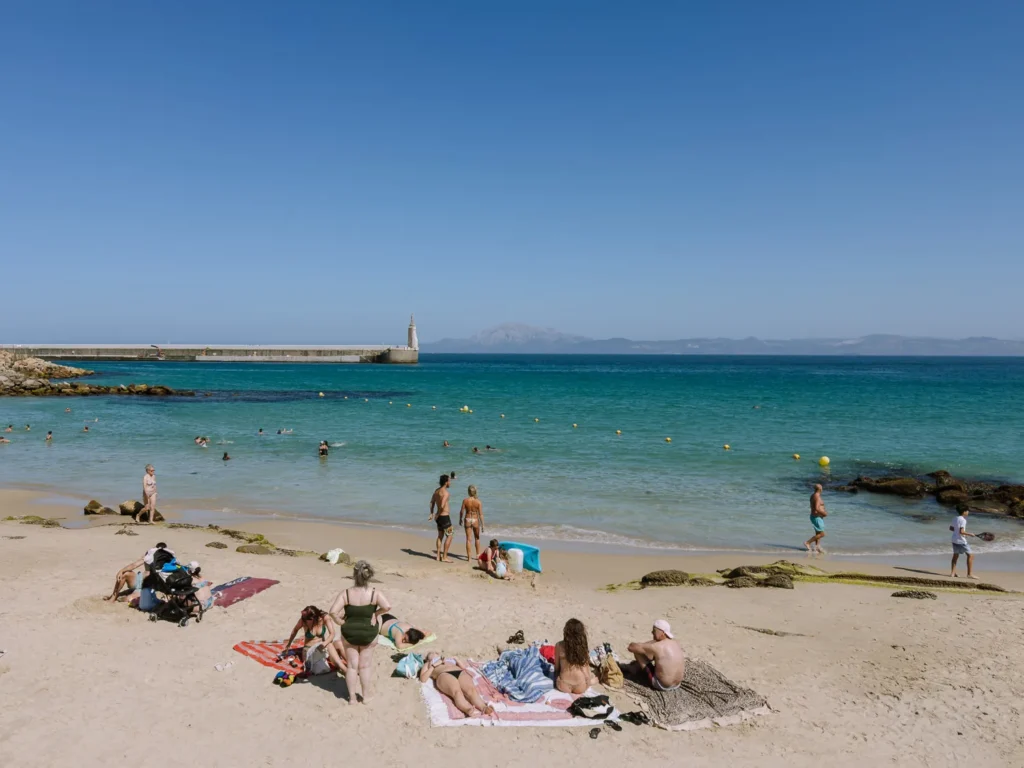
- Love the outdoors and the sea — Tarifa has some of the finest beaches on the Spanish coast, world-class windsurfing and kitesurfing, whale watching in the Strait, and wide open Atlantic skies.
- Want a base for Morocco — the ferry to Tangier takes less than an hour, so Tarifa is the best launchpad for a day trip or overnight crossing to Africa.
- Are drawn to bohemian, independent travel culture — the town has attracted artists, surfers, and free spirits for decades, and it shows in its restaurants, boutiques, and general atmosphere.
- Are already on the Andalucía circuit — Tarifa is an easy 1.5-hour drive from Cádiz and works brilliantly as a two-night extension.
What to Do in Tarifa
Tarifa is a compact town, but the best beaches, viewpoints, and day-trip spots are spread out along the coast. This map pulls together everything mentioned in this guide so you can quickly see where everything is and how it all fits together.
Click on the top right corner to open our map in your Google Maps app. Click the star next to the title to save it to your Google account.
1. Wander Tarifa’s Whitewashed Old Town
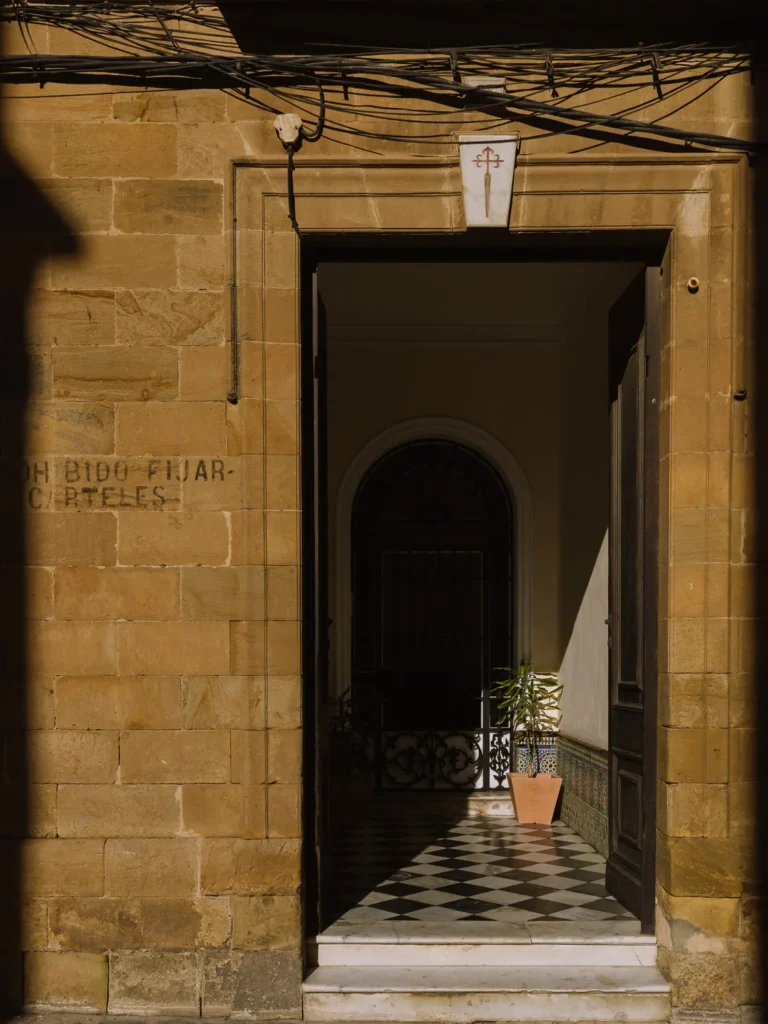
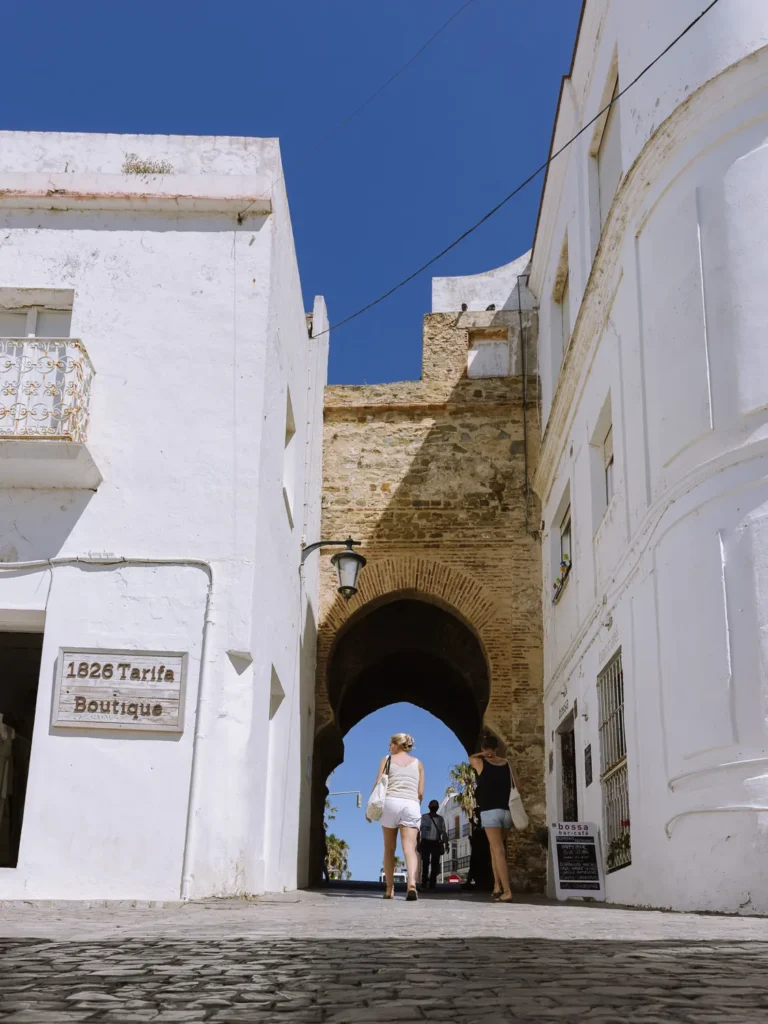
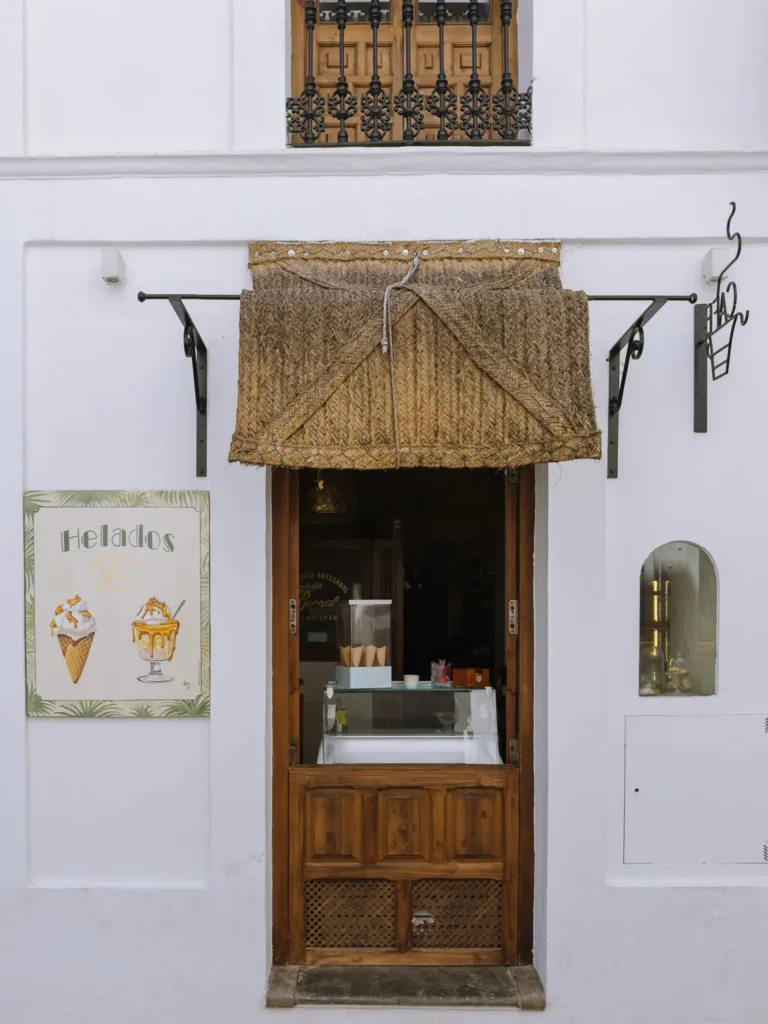
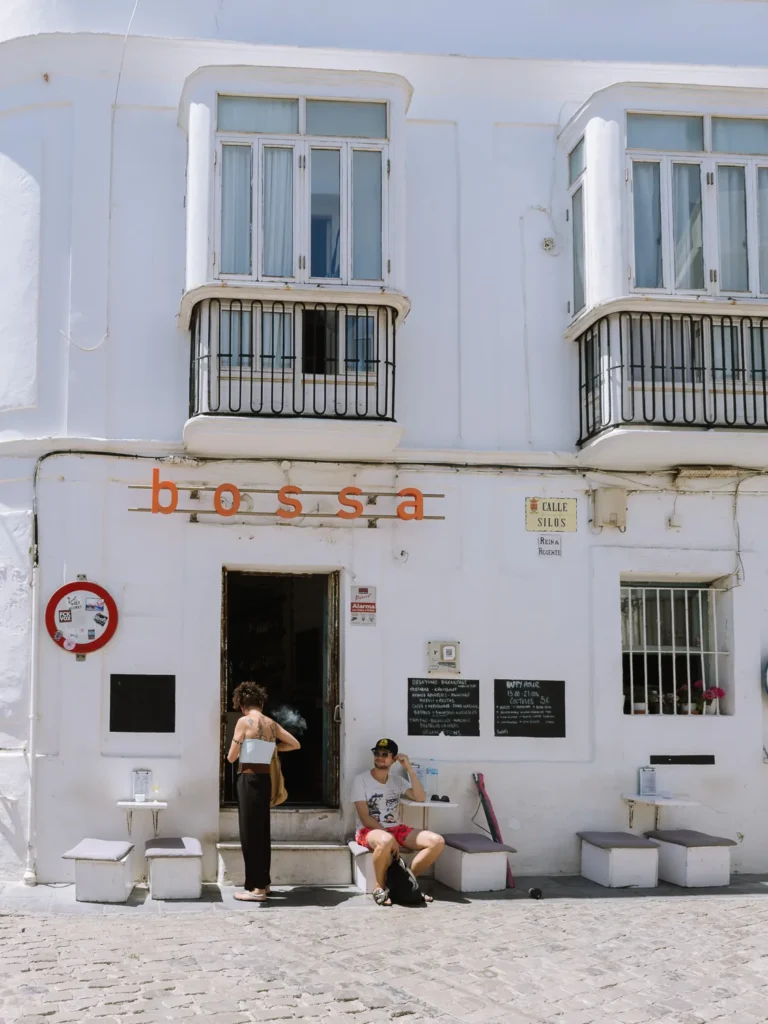
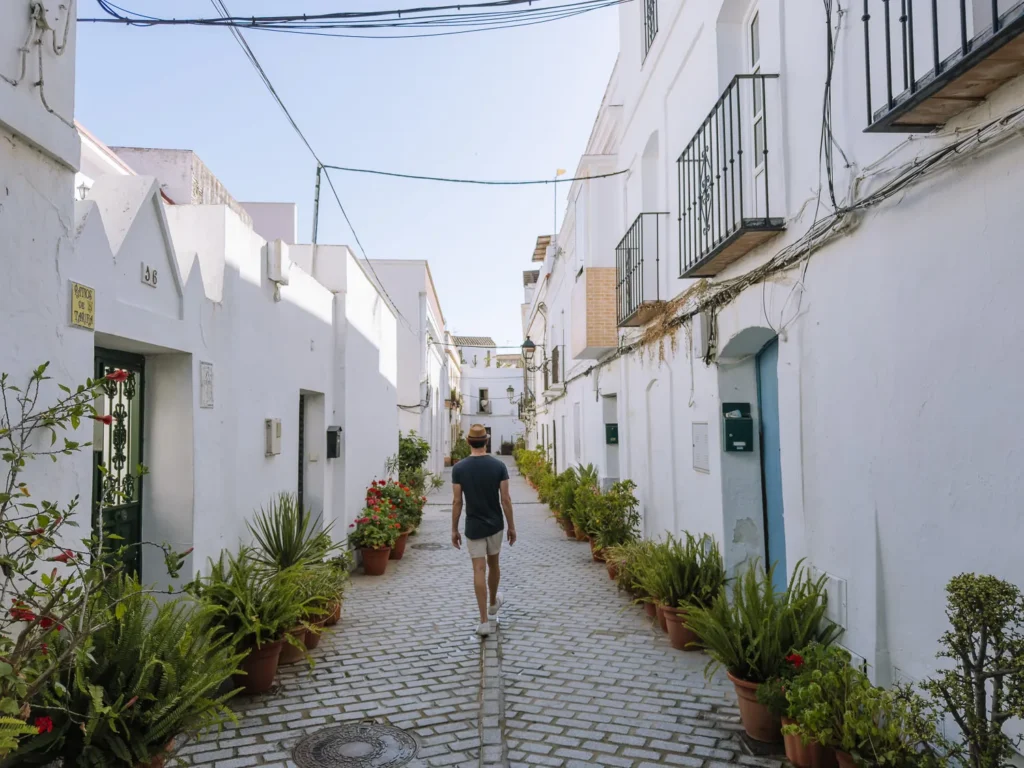
The old town of Tarifa is a maze of whitewashed alleys, crumbling stone archways and flower-draped balconies. It’s one of our favourite white villages in Spain, different to the ones you’ll find dotting the hilltops of Andalucía.
The historic centre preserves the layout of a medieval walled town, with narrow streets cutting between low, white houses.
A good itinerary is to start at Puerta de Jerez, the only surviving medieval gate, and head into the pedestrian lanes around Calle Guzmán el Bueno and Calle Sancho IV el Bravo.
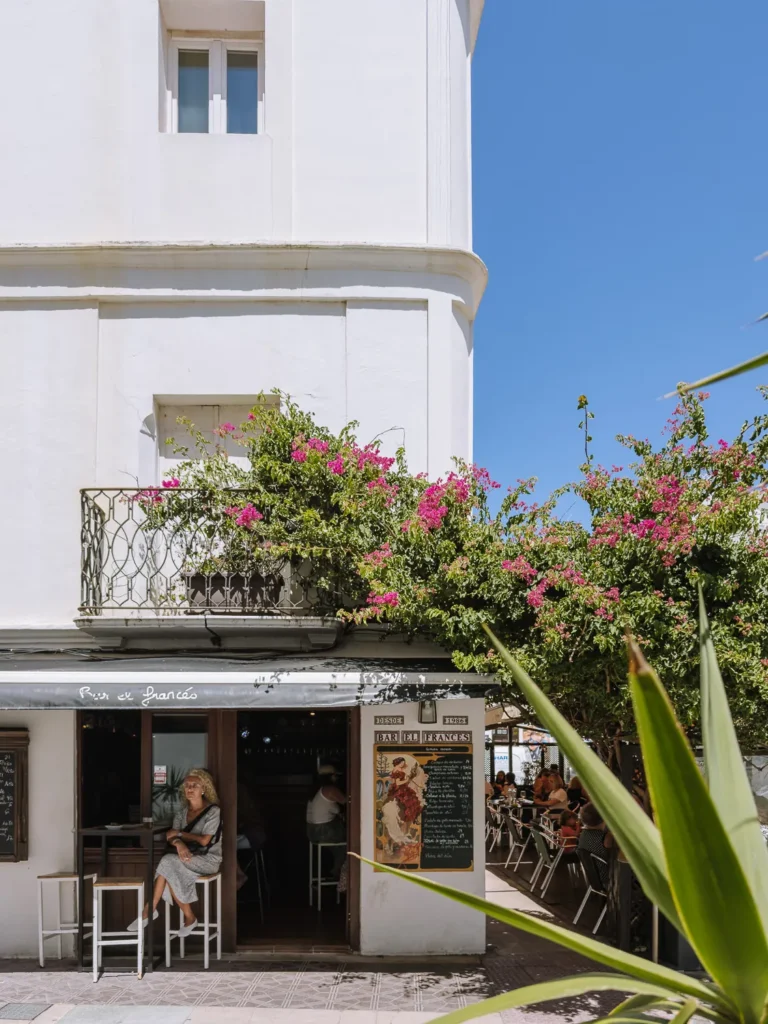
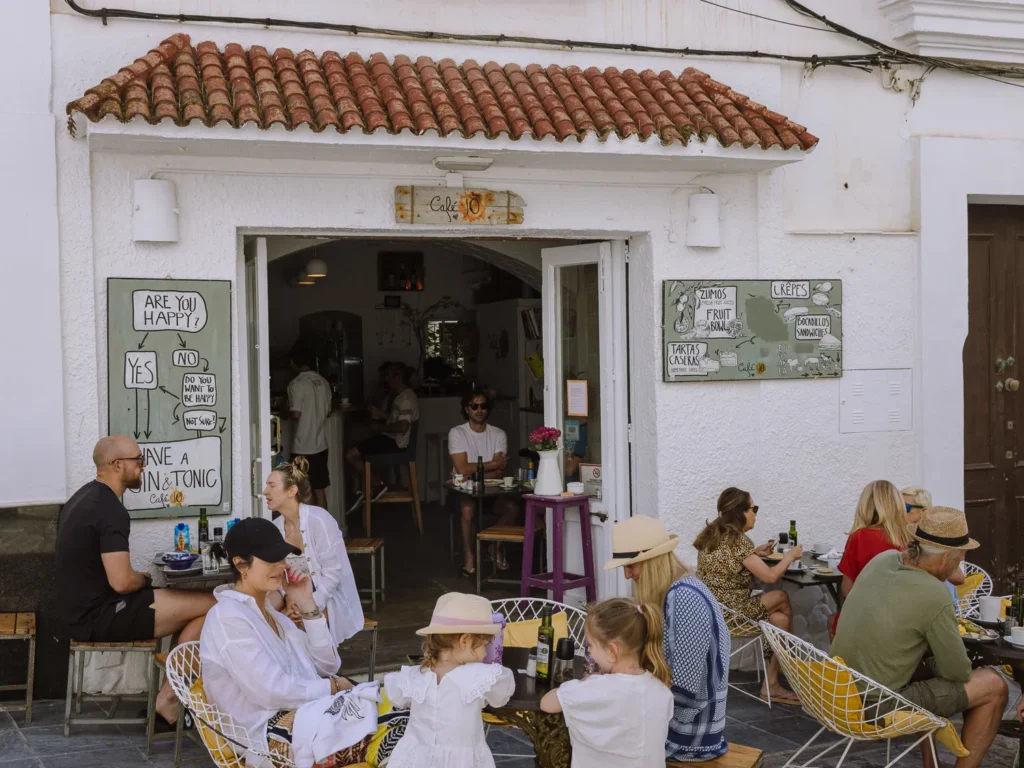
Here you’ll find what Tarifa is all about: small tapas bars with chalkboard menus, tiled taverns specialising in local bluefin tuna, and courtyard cafés hidden behind plain wooden doors.
As you wander around, you’ll notice the remnants of Tarifa’s Moorish and later Christian fortifications. It contrasts beautifully with the town’s youthful, surf-driven energy.
In the evening, the best areas are around Plaza de la Ranita and the streets just inside Puerta de Jerez, where you’ll find bustling tapas bars and outdoor eating.
2. Climb Castillo de Guzmán el Bueno
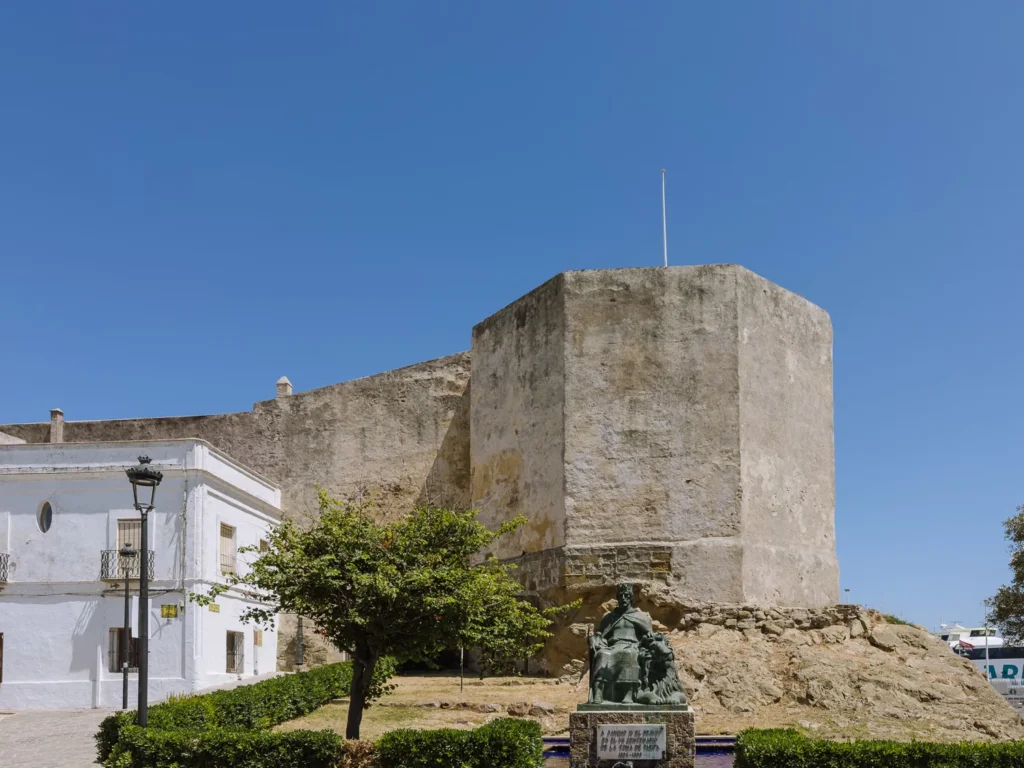
Castillo de Guzmán el Bueno is Tarifa’s signature monument.
The fortress dates back to the 10th century and has watched over the town through Moorish rule and the Christian reconquest.
The name comes from Alonso Pérez de Guzmán, the Christian knight who held the castle against a Moorish siege in 1294. According to legend, he refused to surrender even when the life of his own son was threatened.
Inside, you can walk along the ramparts, climb the towers and take in the views over the rooftops of Tarifa to Morocco in the distance.
- Hours: Wed–Sun 10:00–16:00 (winter); Fri–Sat 10:30–13:30 & 18:30–21:30, Sun 10:00–15:00 (summer). Closed Mon & Tue.
- Cost: €4 adult / €2.50 ages 12–18 / free under 12 / €1.50 seniors & students. Free admission on Sundays during the last two hours of opening.
3. Whale Watching in the Strait of Gibraltar
The Strait of Gibraltar is one of the best places in Europe for whale and dolphin watching.
The deep, narrow strait funnels nutrient-rich waters between the Atlantic and the Mediterranean, attracting sperm whales, orcas, pilot whales, fin whales, and several species of dolphin.
Excursions depart from Tarifa harbour multiple times daily between April and November, and the sighting rate is consistently high.
This Whale & Dolphin Watching Tour includes a 30-minute safety briefing, followed by two hours out on the water.
Late nights, loud markets and the best jamón of our lives. Dive into all our Spain posts.
Spain
4. Relax on Playa de Bolonia
Our absolute top thing to do in Tarifa is lazing on Bolonia Beach. We spend quite a bit of time each year on the Costa del Sol, and we always make a couple of trips out to Bolonia — it’s easily our favourite beach in the area.
Bolonia is a wide, unspoilt Atlantic beach, with a 30-metre sand dune at its southern end and a remarkably complete set of Roman ruins in the middle of it all (see below).
As the kitesurfing capital of Spain, the beaches down here can get very windy. Bolonia is no exception, but, protected by a rising headland, it’s often more comfortable here than on many other beaches.
The water is crystal clear, and there are just a few local fishing villages and little else in the way of development.
Playa de Bolonia is a 25-minute drive from Tarifa, heading north on the N-340, then west on the CA-8202. There is a large car park next to Serenade Chiringuito for €1.50 per day.
A taxi should cost around €30–35 each way.

5. Step Back in Time at Baelo Claudia
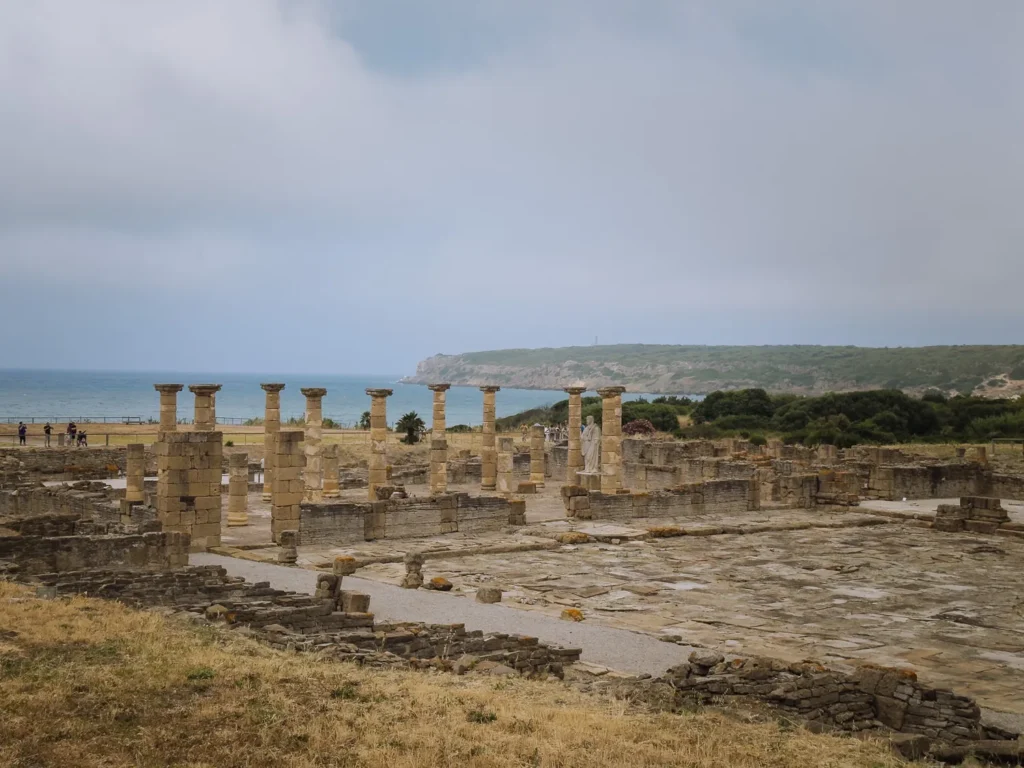
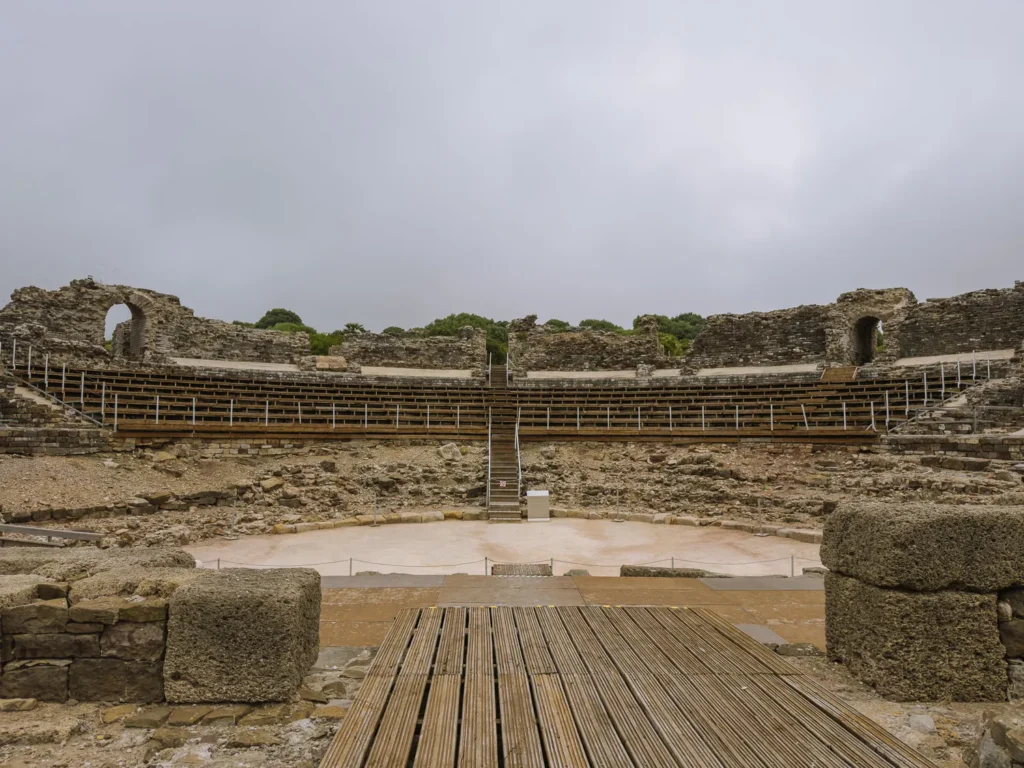
Baelo Claudia was a thriving Roman city from the 2nd century BC that exported salted fish across the empire from its location in the dunes near Tarifa beach.
It’s one of the most unique Roman settlements we’ve seen.
Today you can wander through the remains of the basilica, the forum, the aqueduct, the temple and the fish-salting reservoirs — all with the Bolonia dunes and the Atlantic Ocean as the backdrop.
There is also an on-site museum, but it was closed on our last visit, with no information about when it might reopen.
- Hours: Tue–Sat 09:00–21:00 (Apr–Jun), 09:00–15:00 & 18:00–21:00 (Jul–15 Sep), 09:00–18:00 (16 Sep–Mar). Closed Mondays.
- Cost: Free to UK and EU citizens; otherwise, €1.50.
6. Take the Ferry to Morocco on a Day Trip to Tangier
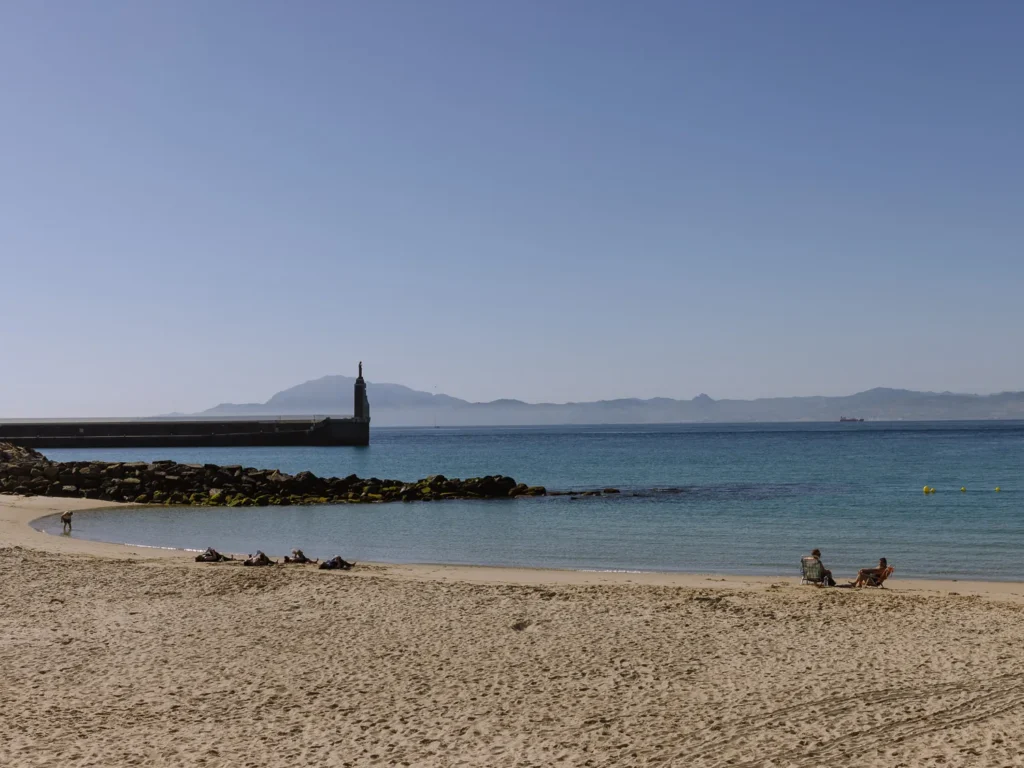
It always amazes us, when we are in this part of the world, just how close Africa is. At just 40 kilometres from Tarifa to Tangier, it’s an easy day trip on the ferry.
Fast ferry services run year-round, and the journey takes just one hour, with around 10 services a day.
Tarifa is by far the most atmospheric and convenient crossing point, docking at Tangier Ville, the port right next to the city centre. The alternative is Tangier Med, a larger commercial port around 40 kilometres from Tangier.
In a day you can easily explore the medina, the kasbah, the seafront and be back in Tarifa in time for dinner.
This tour from Tarifa to Tangier includes the ferry, a bus tour of Cap Spartel, and several photo stops along the way, ending in Tangier Ville.
7. Watch the Kites at Playa de los Lances & Playa de Valdevaqueros
Tarifa markets itself as the ‘city of wind’, which we can attest to after several beach trips cut short by being sandblasted to the point of giving up.
But if it’s too windy to laze on the beach, you can always head to Los Lances and Valdevaqueros, the world’s premier kitesurfing destinations.
Playa de Los Lances stretches for around 10 kilometres north from the edge of town, with a wide, undeveloped Atlantic beach backed by dunes and low scrub. This is the main kitesurfing beach, and on a windy day the sky will be filled with colourful kites.
Playa de Valdevaqueros is around 10 kilometres north of Tarifa. This huge crescent of sand, backed by chiringuitos pumping out both music and mojitos, is the party end of the kitesurfing strip.
As it’s slightly more protected, Playa de Valdevaqueros is the best option if you’re new to kitesurfing and want to give it a try.
We have much more information on the beach in the area in our guide to the best beaches around Tarifa.


8. Stand at Europe’s Southernmost Point on Isla de Las Palomas (Punta de Tarifa)
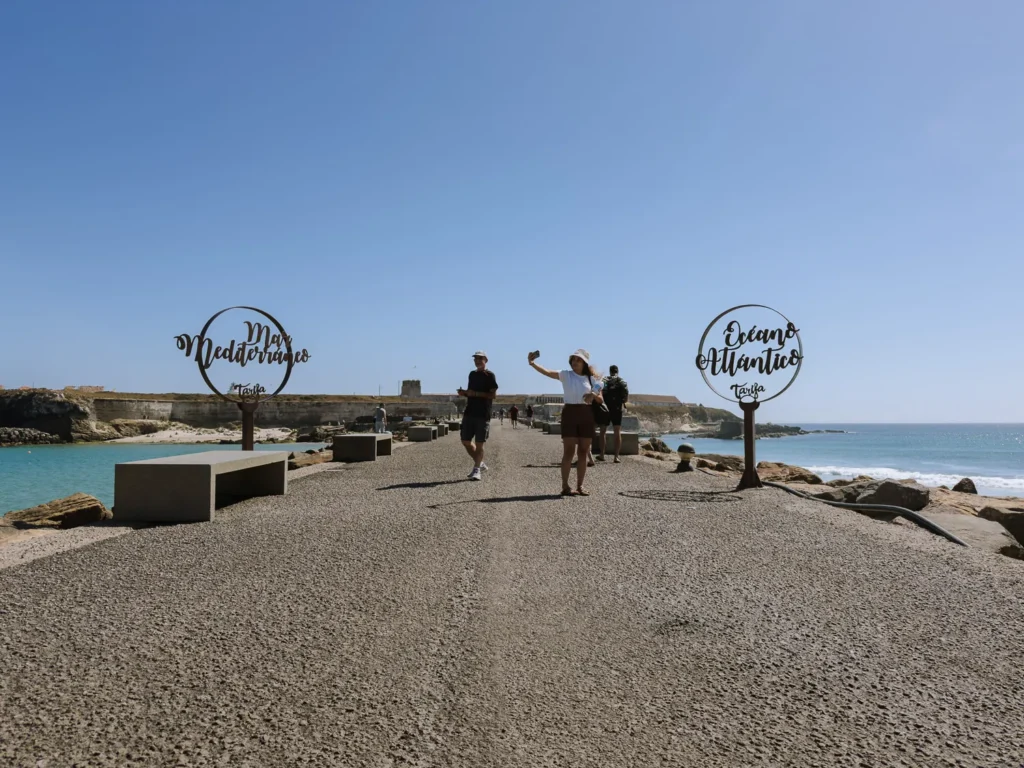
A narrow causeway from the old town leads out to Isla de las Palomas, the southernmost point of the European mainland. The island is a Spanish military zone and is not accessible to the public, but you can walk the causeway and stand at the very tip of Europe, with the Atlantic to your right and the Mediterranean to your left.
To help you get your bearings: to your left you’ll have the Mediterranean and the town beach; on your right, the Atlantic, Los Lances, and Valdevaqueros.
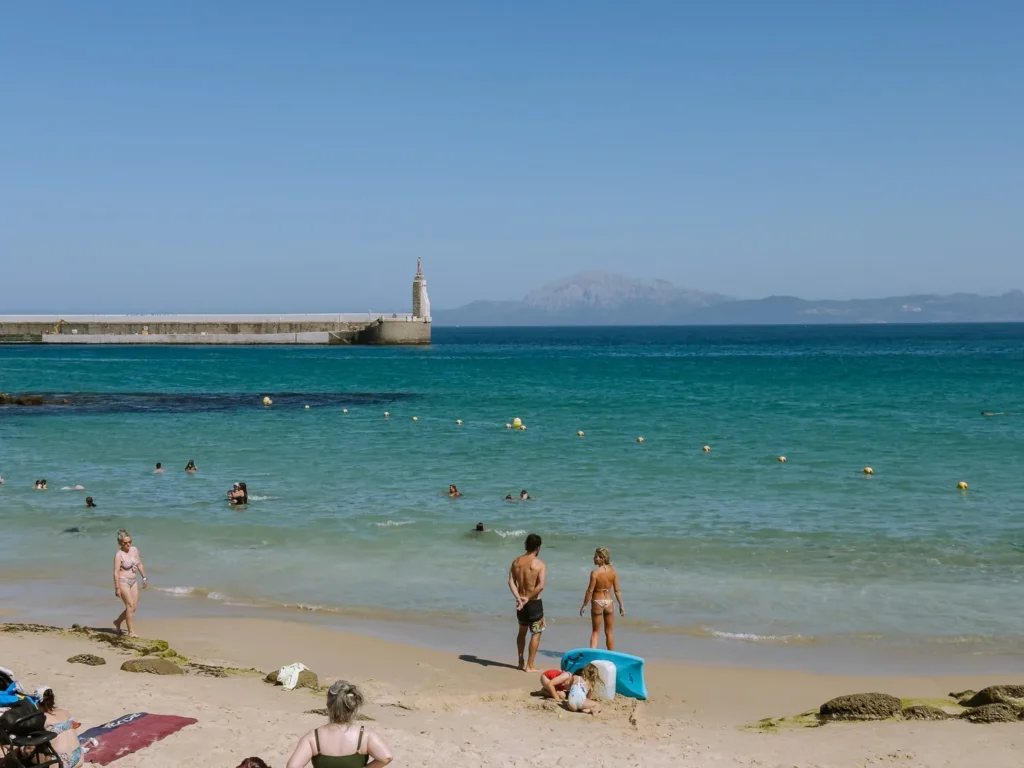
On a clear day, you’ll also have Morocco in front of you, often with the features of the Rif Mountains visible. At the narrowest point, the crossing is only 15 kilometres.
It’s a five-minute walk from the old town.
9. Step Inside the Church of San Mateo
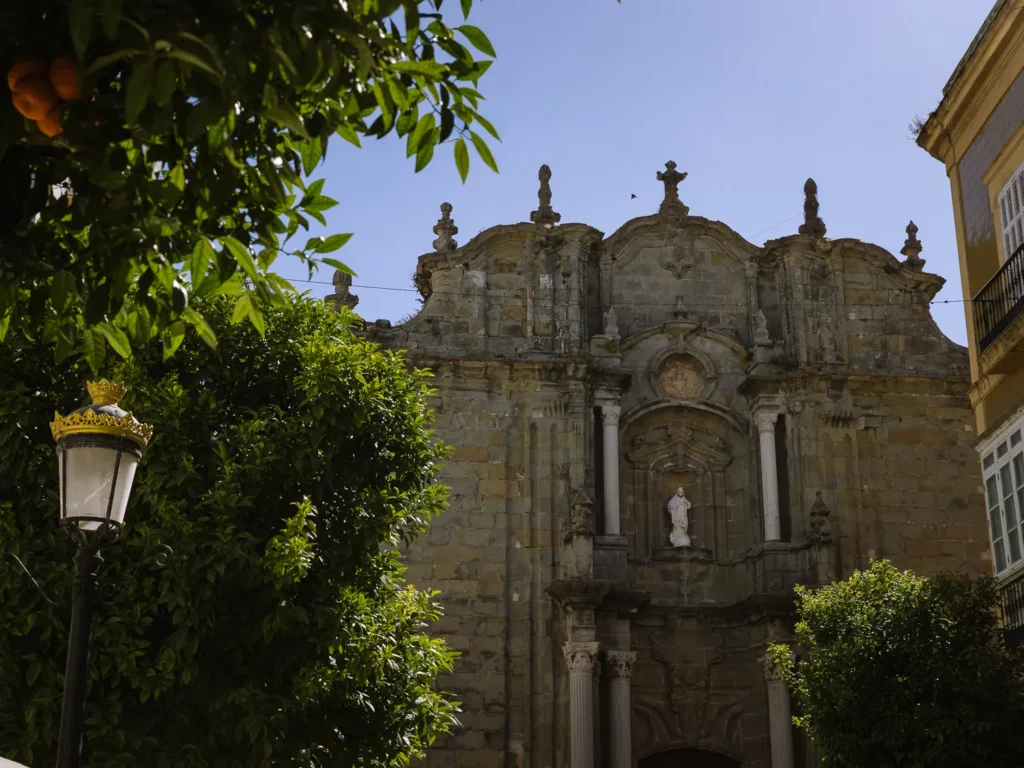
San Mateo, a handsome 16th-century church, is at the centre of Tarifa’s old town. Built over an earlier mosque, it’s a reminder of the town’s shift from frontier stronghold to Christian port after the Reconquista.
The façade is striking, with carved Baroque features, neoclassical stonework, a pink bell tower and a dome. You’ll notice it from several angles as you walk around Tarifa.
The interior is late-Gothic with elaborate vaults over the central nave. You don’t need long, but it’s worth popping in, and it’s free to enter.
For a change of tone, head to the Casino Tarifeño, which is right across the square from the church. Located in a 19th-century townhouse, it has several salons, a wraparound bar, a theatre and plenty of faded grandeur.
10. Browse Local Life at Mercado Público de Tarifa
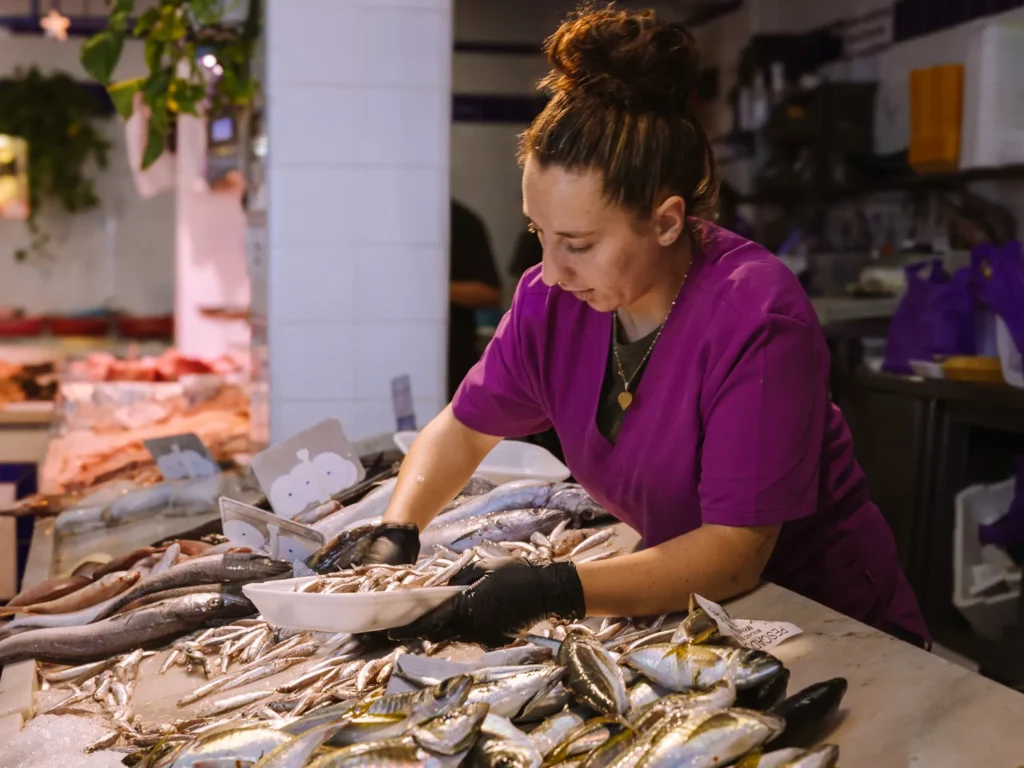
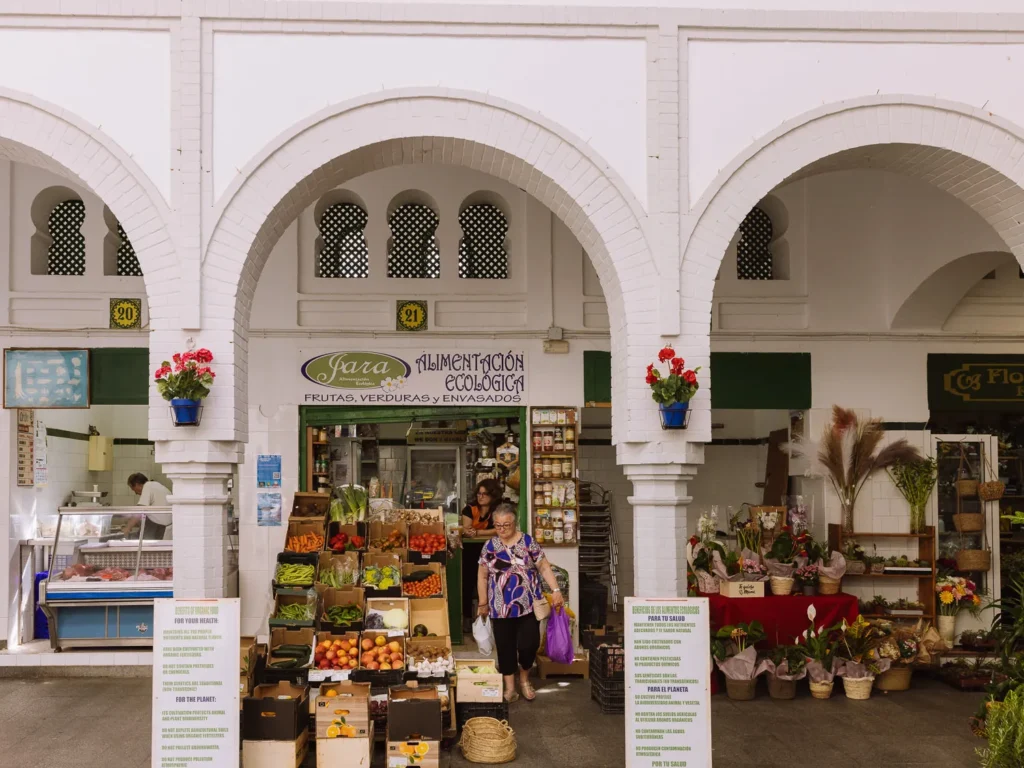
The Mercado Público de Tarifa is the local market and a lovely slice of everyday life. The current market hall dates from 1928 and features Moorish-style arches — a nod to the town’s Arab past.
There are stalls clustered around a central atrium selling everything you’d expect from a working Andalusian market: fish, meat, local cheeses, breads and basic household supplies.
A few cafés and tapas bars occupy the corners of the hall, with seating spilling into the central atrium.
The market is usually open from mid-morning to early afternoon, but exact timings are a bit fluid, in the Spanish way.
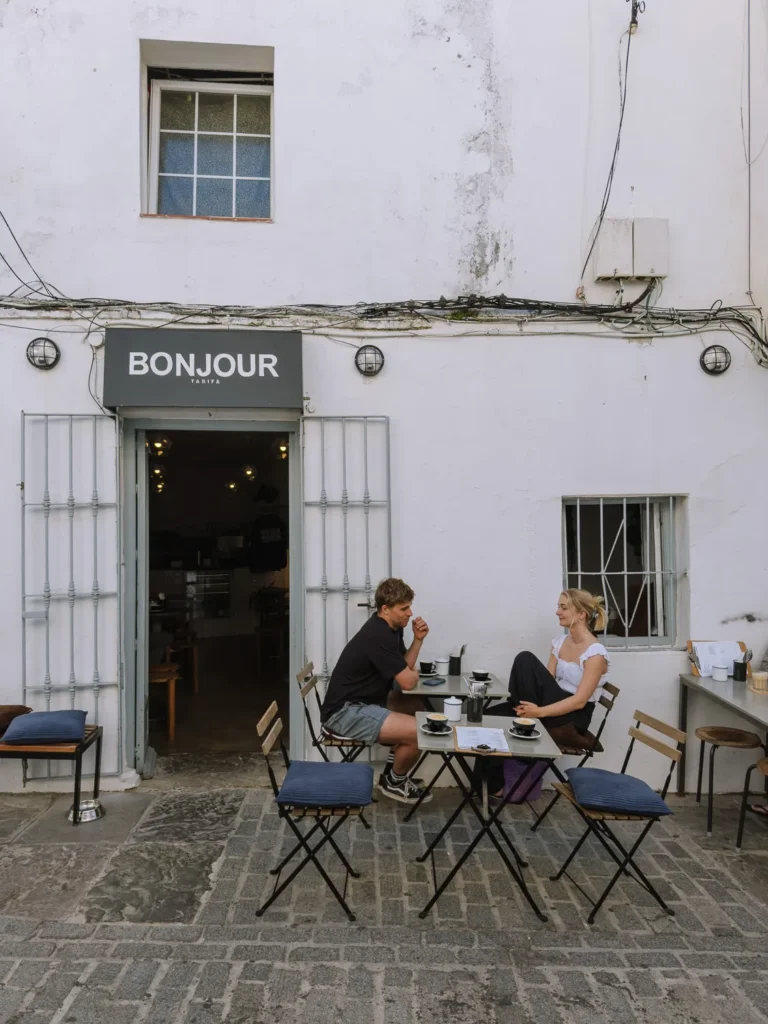
We recommend having a coffee at Café Bonjour, then popping into the market to see what’s going on.
11. Swim Between the Two Seas at Playa Chica and el Balneario
Right beside town, these two compact beaches provide a low-key alternative to the big kitesurfing beaches mentioned above.
Playa Chica is tucked between the old town and Isla de las Palomas. It’s a small cove on the Mediterranean side, naturally sheltered from the wind.
Due to its protected location and shallowness, the water is surprisingly warm and calm. Located close to the town centre, it’s the perfect spot for families.
On the other side of the causeway, Playa El Balneario faces the Atlantic and quickly merges with Los Lances. This is where you’ll often see kites just off the town beach. It’s a great stretch of beach with several chiringuitos lining the shore.
You’ll also walk along one of the graffiti walls to get there, which we mention below.
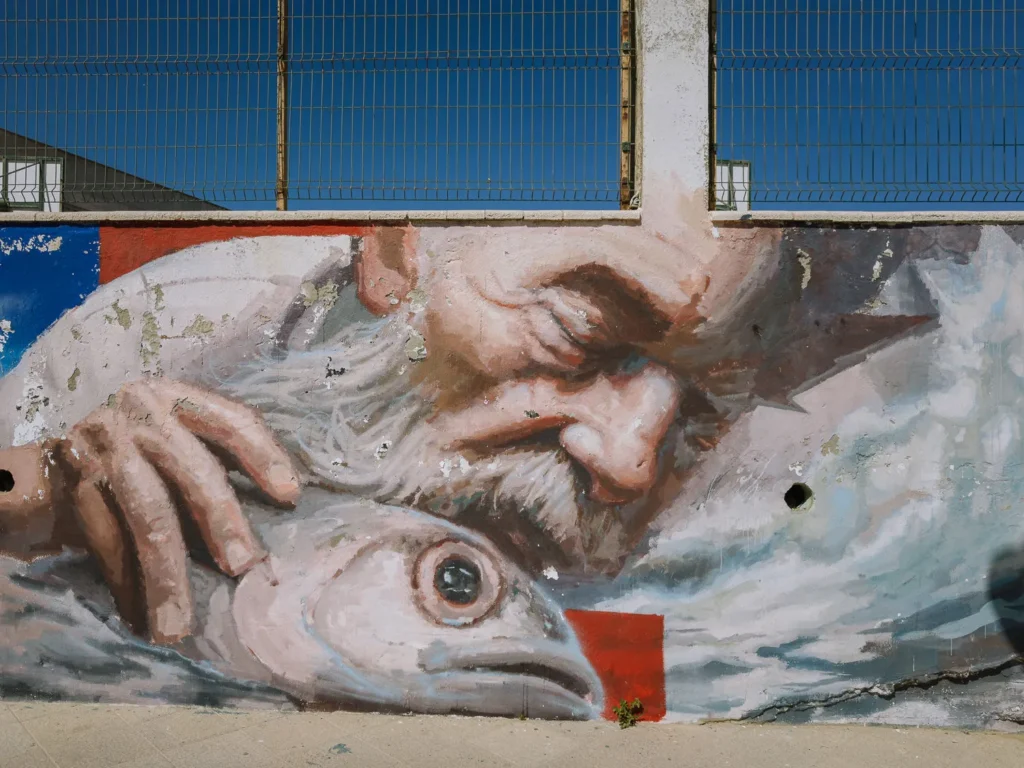
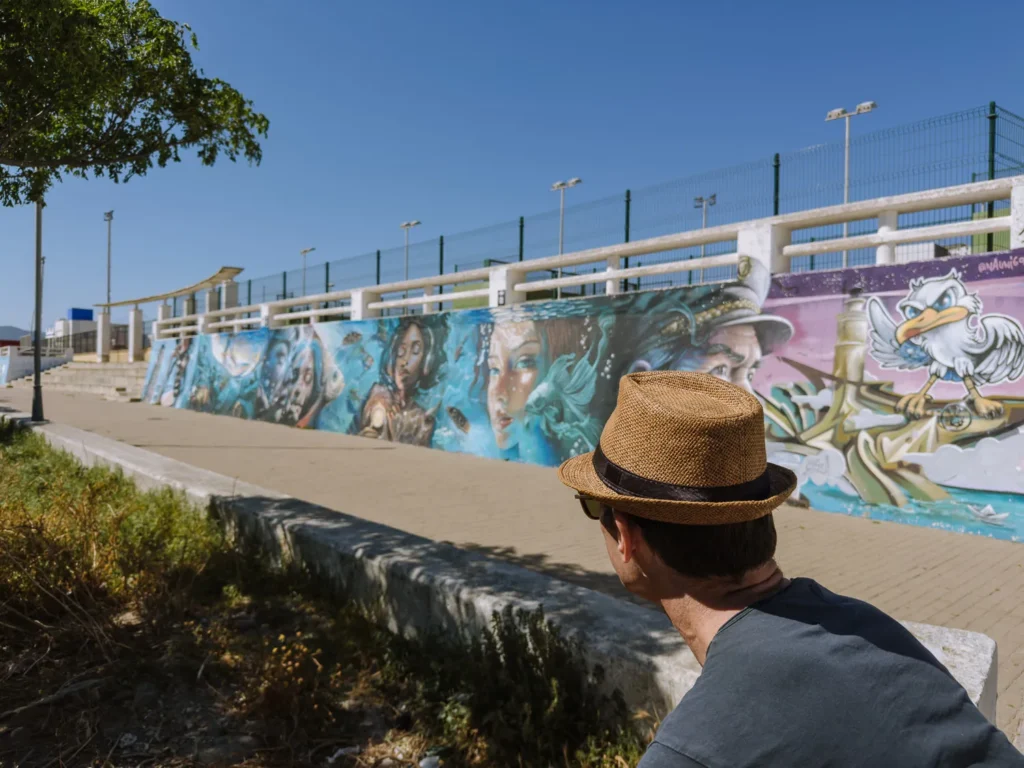
12. Find Tarifa’s Graffiti Wall
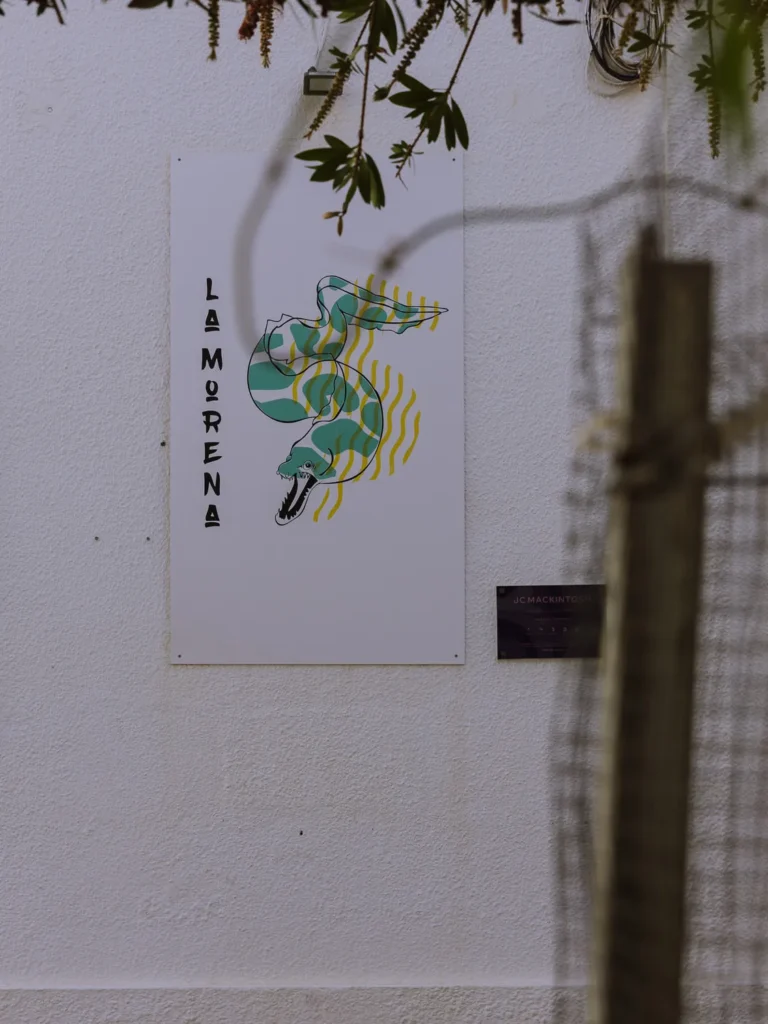
In keeping with Tarifa’s surfing vibe, there’s an eye-catching amount of street art to be found.
You’ll find plenty as you stroll the lanes of the old town, especially tucked into corners, on school walls and down hidden laneways.
A really great stretch of street art is on the wall along Paseo Marítimo, which you can pair with a walk along the front from Isla de las Palomas. We’ve marked the location on the map above.
The other spot we loved was the wall near Plaza de Toros, where many of Tarifa’s largest murals are concentrated.
Both of these sections have top-quality art that really brightens what would otherwise be fairly uninspiring walls. You can see the art in our images below.
13. Eat Your Way Through Tarifa’s Tapas Bars
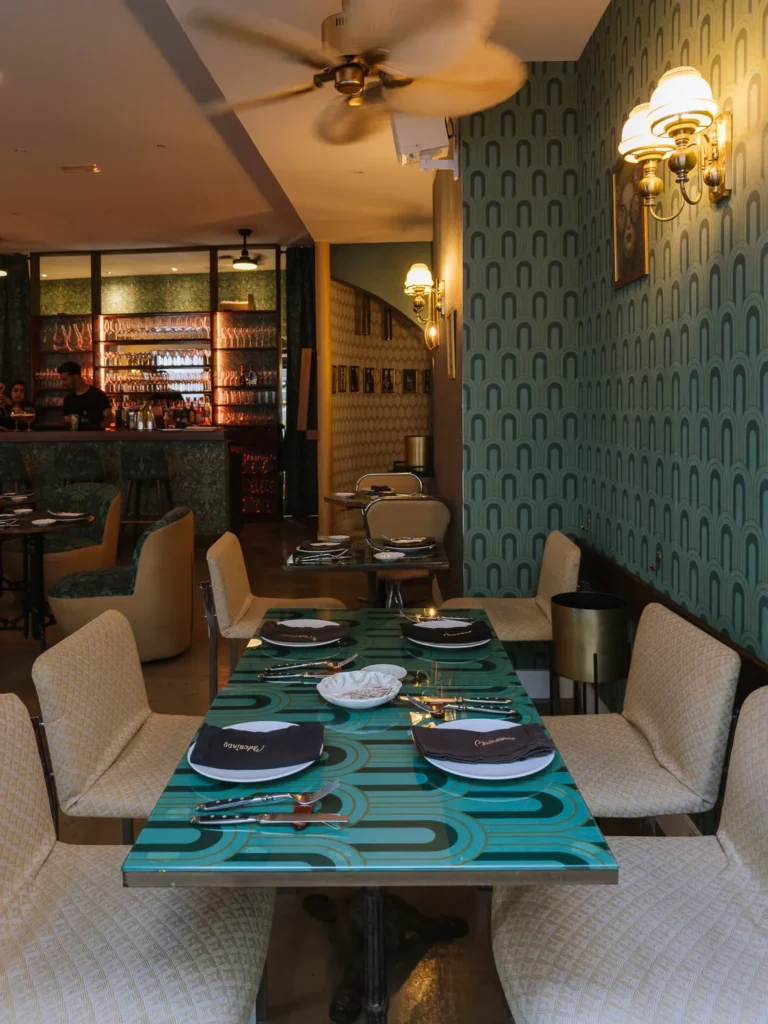
We spend a lot of time in southern Spain, and in our opinion at least, Tarifa has a much better food scene than what you’ll find further east on the Costa del Sol.
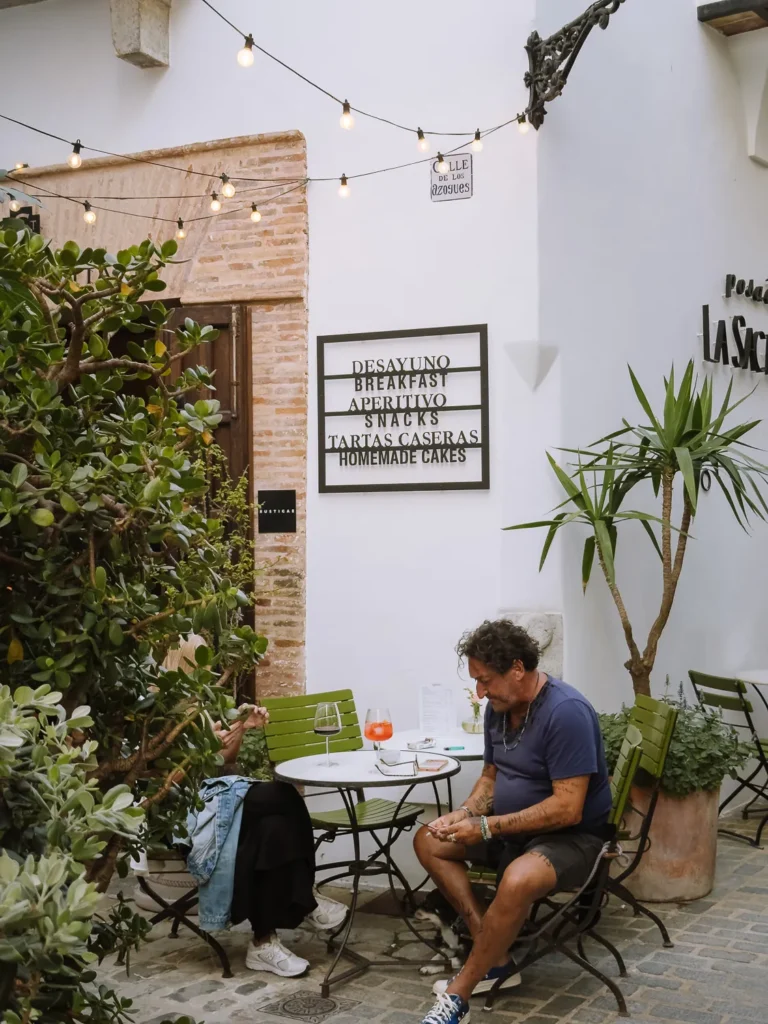
The old town is packed with atmospheric tapas bars spilling out onto the street, but there’s also a surprising number of top-quality restaurants.
The food is heavily influenced by the sea, especially bluefin tuna from the nearby almadraba fisheries and local anchovies. You’ll also notice Moroccan influences popping up in tagines, couscous, and mint tea at several restaurants around town.
Bar El Francés – A beloved old town institution serving Andalusian classics with a French twist — think pigs’ cheeks in red wine, tuna meatballs, and spicy patatas bravas. Arrive early as they don’t take reservations and it fills up fast.
Mesón El Picoteo – A no-frills neighbourhood favourite packed with locals, known for its exceptional tapas and great-value bluefin tuna dishes. Get there early for lunch to claim a spot at the bar.
Bar Los Melli – One of Tarifa’s oldest and most atmospheric bars on Calle Guzmán el Bueno, run by twin brothers and loved by locals for its honest tapas and lively vibe.
Silos 19 – A stylish restaurant in the heart of the old town, popular for creative modern Spanish cooking in a beautifully converted space.
Santai – A highly rated dinner spot on Calle Guzmán el Bueno with a creative menu of small plates — the tuna tartare and langoustine tempura are standouts. Booking recommended.
El Lola – A consistently popular old town bar regularly appearing in Tarifa’s top ten, well regarded for its tapas and convivial atmosphere.
Mandragora – Warmly regarded for its blend of Spanish and Moroccan flavours — tagines, couscous and aromatic sauces — in a characterful old town setting.
14. Take in the View from Mirador del Estrecho
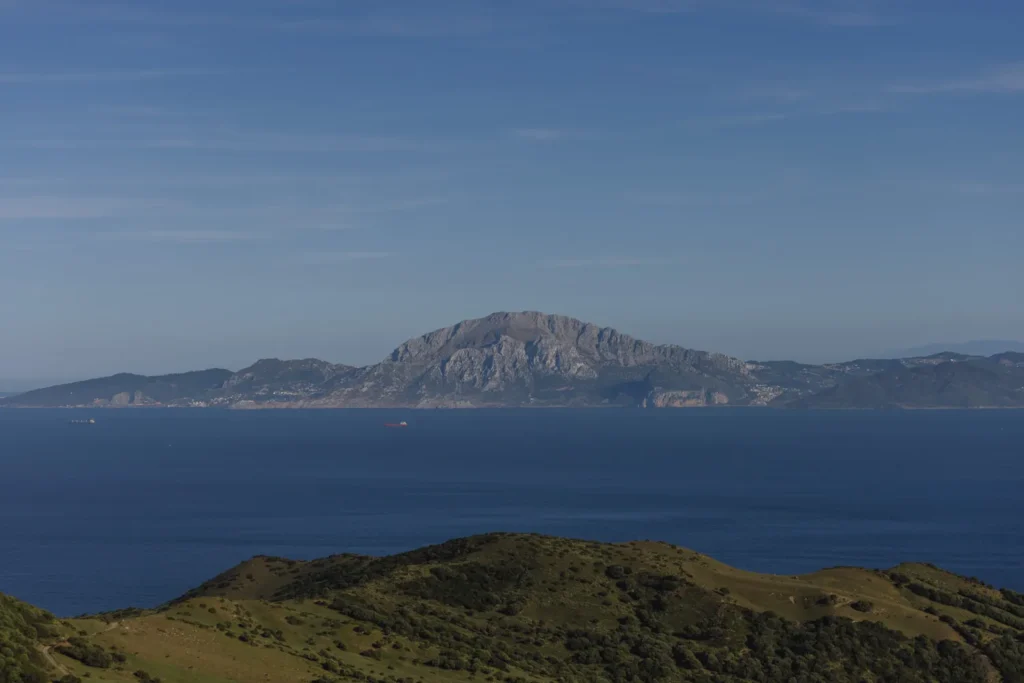
This is a great viewpoint to stop at on your drive to or from Tarifa. The lookout sits around 300 metres above sea level, perched on a bend in the road with an uninterrupted panorama over the Strait of Gibraltar.
On a clear day you can trace the entire arc of the African coast from Ceuta in the east to Tangier in the west, with Mount Musa — one of the classic Pillars of Hercules — rising above the water.
There is a small car park at the mirador with a café.
It’s about 6 kilometres from Tarifa, and the best time to visit is at sunset.
Practical Information
Getting to Tarifa
Tarifa has no train station, and the most convenient way to get there is by car. The town is on the N-340 between Algeciras and Cádiz, around 100 kilometres west of Málaga.
From Málaga, it’s about a two- to two-and-a-half-hour drive depending on traffic, with the N-340 and A-7 hugging the coast for much of the way. Coming from Cádiz or Jerez, you approach from the northwest on the same coastal route.
If you are starting from Málaga, we have a guide to the best things to do in Málaga, to help with your planning.
Getting Around
Tarifa itself is compact and easy to explore on foot. The old town and town beaches are in a small area, with most bars, restaurants and accommodation clustered inside or just outside the historic centre.
To reach the beaches further out, such as the northern stretches of Los Lances or Valdevaqueros, you’ll need a car. In high season, there is a shuttle service from town connecting the main beaches.
Parking near the popular stretches of beach fills up quickly, so aim to arrive early or late in the afternoon when most people are starting to leave.
How Many Days in Tarifa?
Tarifa works well as both a day trip and a longer base. If you only have a day, you can explore the old town, walk the causeway to Isla de las Palomas, spend some time on one of the town beaches and catch a late afternoon watching the kites on Los Lances.
Two or three days will be enough time for a whale watching trip and a day out to Bolonia and Baelo Claudia. You could add a day trip to Tangier or allow some buffer time to factor in wind conditions.
Best Time to Visit Tarifa
Tarifa has a mild year-round climate, so from a weather perspective, any time of year is good. However, the wind dramatically changes your experience.
Spring and autumn are generally the best times of year — it’s warm enough for the beach but cool enough for sightseeing in the town. Summer has the hottest temperatures and busiest crowds, and often the strongest winds; for kitesurfers this can be ideal.
If you are hoping to sit on the beach, you may need to pick your days carefully. We often visit Tarifa on a day trip from the Costa del Sol but usually wait to check the forecast first. The best tool is WindGuru, which has the most accurate wind forecast.
Winter is quieter and cooler with plenty of clear days.
Whale-watching tours typically run from around April to October.
Where to Stay in Tarifa
€€ | Posada La Sacristia — Housed in a 17th-century building in the heart of the old town, Posada La Sacristia is decorated in a style that blends Spain’s Muslim and Christian heritage — candle-lit corridors, a peaceful inner courtyard, and rooms full of quiet character. One of the most charming and atmospheric places to stay in Tarifa.
€€€ | The Riad — A beautifully designed boutique hotel inspired by Tarifa’s Moroccan influence, with traditional tadelakt plasterwork, a plunge pool in the central courtyard, a rooftop terrace with views over the old town, and one of the most welcoming atmospheres of any small hotel in Andalucía. The hammam is a genuine highlight.
€€€€ | Hotel & Spa La Residencia Puerto — The most refined option in Tarifa, with a rooftop pool, an Arab-style courtyard, a full spa with thermal circuit, and a position on the edge of the old town within easy reach of the port. A polished, adult-focused retreat for those who want something quieter and more indulgent.
More Helpful Andalucía Guides
- Read about our favourite places to visit in Andalucía.
- Relax on the Costa del Sol with our guide to the best beach bars near Marbella.
- Our guide to the best things to do in Granada has the top attractions plus the best tapas.
- The Caminito del Rey hike is one of the most stunning in Spain.
- Discover the best places to visit on the Costa del Sol.
- Our top day trips from Málaga.
- Get off-the-beaten track on the El Pinsapar Trail in Sierra de Grazalema.
- Soak up the sun at these beautiful beaches near Tarifa.
- Where to stay on the Costa del Sol.
- Visit el Torreón, the highest peak in Sierra de Grazalema.
- Fancy a strenuous walk? Try the La Concha hike.
- Discover all the best things to do in Seville.
- What to do in Mijas on a day trip.

reader-supported
When you buy through links on our site, we may earn a small affiliate commission at no extra cost to you.
Thanks for your support // Paul & Mark